Introduction
Biomarker testing has revolutionized cancer care by
enabling more precise and personalized treatment strategies
(1). Within this landscape,
comprehensive genomic profiling (CGP) and companion diagnostics
(CDx) serve distinct yet complementary roles. CGP is a broad
genomic testing approach used in cancer genomic medicine to detect
molecular alterations that may be clinically relevant across
multiple cancer types, even if targeted therapies are not yet
available. In contrast, CDx tests identify specific biomarkers that
determine patient eligibility for approved targeted therapies.
Beyond genomic testing, biomarker assessment also
includes methods such as immunohistochemistry (IHC) and general
blood-based biomarkers (e.g., tumor markers), which provide
additional insights into cancer biology. Since the approval of
genomic panel testing in Japan in 2019 as part of Japan's Cancer
Genomic Medicine program, biomarker-based precision treatment has
become increasingly accessible to patients (2). However, because CGP is still
relatively new in Japan and several CDx tests have only recently
become eligible for reimbursement under the national health
insurance system, real-world data on the utilization of biomarker
testing remain limited.
According to Japanese cancer statistics,
approximately one million new cancer cases were diagnosed in 2019.
The most common cancer types were colorectal, lung, and stomach
cancer, with prostate cancer being the most common among males and
breast cancer among females (3).
Biomarker testing, particularly CDx and CGP, plays a critical role
in optimizing treatment for these prevalent cancers (4). CDx tests enable clinicians to select
targeted therapies by identifying biomarkers that predict a
patient's response to treatment, thereby helping to optimize the
risk-benefit profile of the selected therapy (5). In contrast, CGP enables the
simultaneous analysis of multiple genes and molecular alterations,
thereby providing a comprehensive genomic overview of a tumor
(6,7). By identifying potential therapeutic
targets and improving understanding of tumor heterogeneity, CGP
serves as a valuable tool in advancing precision oncology.
Tumor-agnostic approaches, which classify tumors
based on molecular and genomic characteristics rather than tissue
of origin, represent an emerging area of precision oncology.
Biomarkers such as microsatellite instability-high (MSI-H), NTRK
fusions, and high tumor mutational burden (TMB) are used to guide
treatment selection across multiple cancer types.
Numerous biomarker tests have been approved for
various targets since the first CDx was approved in Japan in
2011(8). Additional CDx platforms
are now used in clinical practice and research in Japan for
specific cancer types, including BRACAnalysis CDx® and
myChoice® CDx (9),
OncoBEAM™ RAS Colorectal Cancer (CRC) kit (10), RASKET™-B kit (11) and the Microsatellite Instability
In Vitro Diagnostic (MSI-IVD) kit (12). This study aimed to provide a
comprehensive overview of biomarker testing practices across cancer
types prevalent in Japan, thereby providing insights into the
implementation of precision medicine and personalized treatment
approaches in the Japanese population.
Patients and methods
Data source
This study used claims data from a hospital-based
database maintained by Medical Data Vision Co., Ltd. (MDV) to
examine the real-world utilization of CDx and CGP. This database
contains anonymized hospital-based health insurance claims data
from approximately 40 million patients in Japan (13). It includes inpatient and outpatient
medical care data from approximately 26% of the 440 advanced
treatment hospitals across Japan. Medical claims data are collected
from all insurance types. Approximately 35% of the data are derived
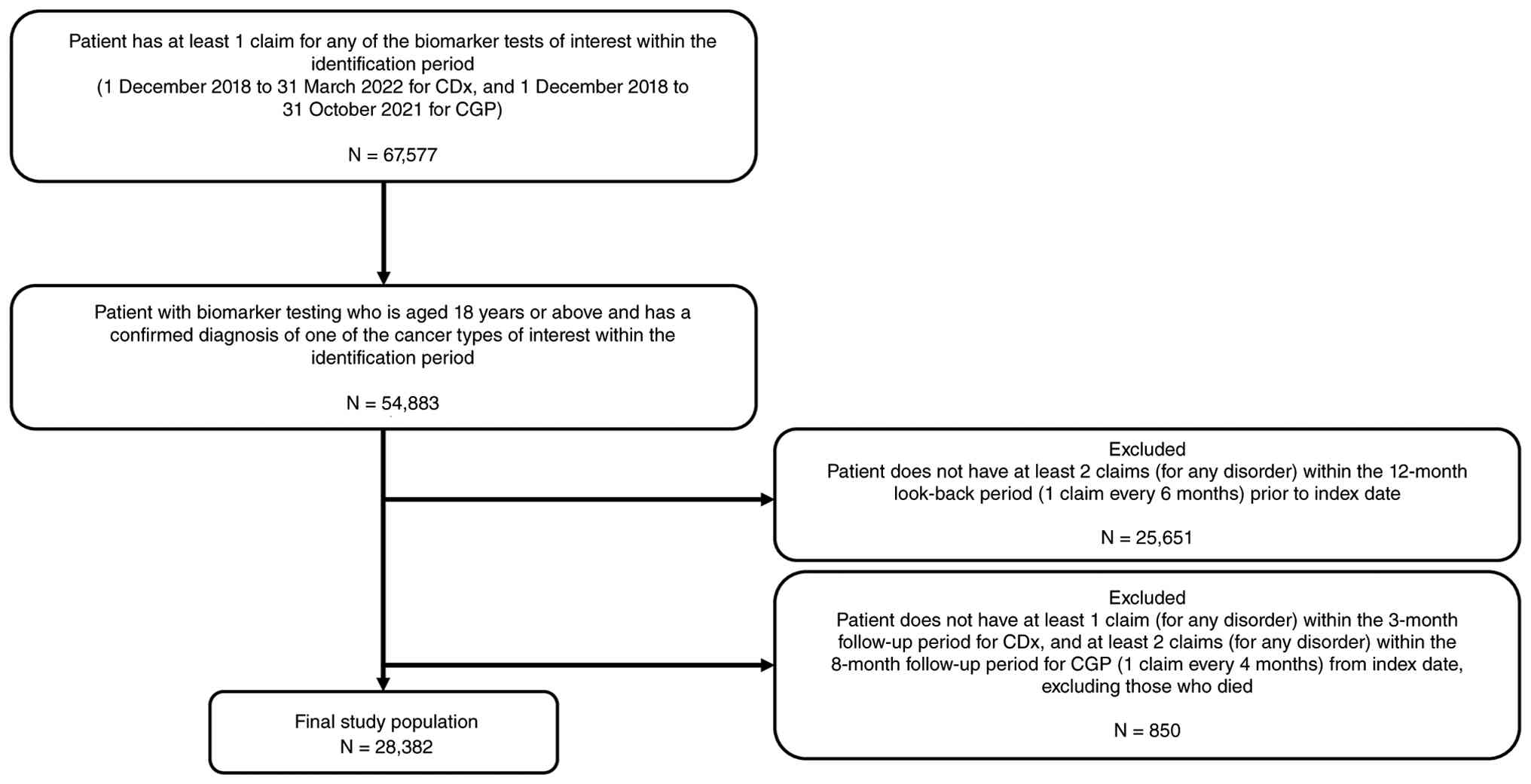
from patients aged 65 years and above (13). The study cohort consisted of 28,382
patients (15,035 males and 13,347 females). The median age was 69
years, with an age range of 18-99 years. The database allows for
longitudinal tracking of patients over time within the same
institution. Patient information includes demographics, clinical
diagnoses (International Classification of Diseases, 10th Revision;
ICD-10), procedures and prescriptions.
Study design
This study was a retrospective cohort study
assessing the frequency and utilization of biomarker tests in
Japan. Patients were identified from the MDV database using
specified ICD-10 diagnosis codes for cancer types of interest and
claims for biomarker tests of interests, enabling a comprehensive
overview of biomarker testing practices (definitions in Table SI). The study period was from 01
December 2017 to 30 June 2022 (see Fig. S1). Index date was defined as the
date of the first claim for any pre-specified biomarker within the
identification period, spanning from 01 December 2018 (coinciding
with approval of the first biomarker test of interest, the MSI-IVD
kit) to 31 March 2022. To ensure sufficient follow-up for the
identification of treatments initiated after biomarker testing,
patients who underwent CDx testing were required to have at least 3
months of follow-up after index date, whereas patients who
underwent CGP testing were required to have 8 months of
follow-up.
Study population
Eligible patients were required to have a confirmed
diagnosis (utagaiflg=0, indicating a confirmed diagnosis record in
the MDV database) of a cancer type of interest and at least one
claim for a relevant biomarker test during the identification
period. Patients aged <18 years and those without at least two
claims within 12-month look-back period or the required follow-up
period (≥3 months for CDx and ≥8 months for CGP) were excluded.
Data analysis
Key variables included the frequency of CDx and CGP
utilization, the types of biomarkers tested, and cancer types for
which these tests were performed. Five genomic biomarkers: BRAF,
BRCA1/2, KRAS/NRAS, homologous recombination deficiency (HRD) and
MSI, were selected based on their availability in the database,
their relevance for patient stratification and treatment decisions,
and their utility for broader comparative analysis across cancer
types. To enhance clarity, the analysis focused on genomic
biomarker tests because many IHC-based biomarkers, including
programmed death-ligand 1 (PD-L1), are approved as complementary
diagnostics. These tests may not directly influence clinical
decision-making in the same manner as CDx. Accordingly, IHC-based
tests were excluded. CGP was included because it is reimbursed
under the national health insurance system and is used to guide
treatment decisions in clinical practice, similar to CDx. Since
biomarker-driven clinical practice has been relatively
well-established in lung and breast cancers, biomarker tests for
these cancer types were excluded from this study.
Newly initiated treatment was defined as any claim
for chemotherapy, targeted therapy or an immune checkpoint
inhibitor (ICI) that did not occur during the 12-month look-back
period prior to index date, and that was recorded after index date
through the end of the study period. For patients with a BRCA1/2 or
HRD test for ovarian cancer on index date, treatment initiation
post-biomarker testing was defined as any claim for newly initiated
treatment that was not recorded during the 12-month period prior to
index date, and that was recorded after index date through the end
of the study period. Data were analyzed using descriptive
statistics, including frequencies, the prevalence and utilization
of CDx and CGP in different cancer types. The primary objective was
to describe real-world biomarker testing utilization, testing
sequences, temporal changes, and treatment initiation patterns;
therefore, the analyses were descriptive rather than
inferential.
Results
Characteristics of the study
population and overall utilization of biomarker testing
A total of 28,382 patients had a confirmed cancer
diagnosis and underwent at least one biomarker test (Fig. 1). Overall, 59.3% (16,819/28,382) of
patients had a metastatic solid tumor, and 98.4% (27,926/28,382)
having any malignancy including lymphoma and leukemia. The mean
follow-up time was 349.8 days (SD: 263.9). A total of 41,191 tests
were recorded from index to end of follow-up.
The cohort had a mean age of 67.5 years (SD: 11.3)
and 53% were male. Mean body weight at index date was 56.9 kg (SD:
13.2) (Table SII). The mean
modified Charlson comorbidity index score was 5.3 (SD: 2.4). Common
comorbidities were mild liver disease (22.6%, 6,400/28,382) and
chronic pulmonary disease (13.7%, 3,889/28,382; Table SII).
Overall biomarker testing frequency increased from
7,198 claims for tests in 2019 to 8,878 claims in 2020 and 10,088
claims in 2021 (full years available in the dataset).
Differences among biomarker tests
The most common claims for biomarker tests by
overall patient count were for CDx, including MSI (70.1%,
19,894/28,382) and RASKET-B for KRAS/NRAS (25.5%, 7,232/28,382) and
BRAF (23.9%, 6,793/28,382). BRCA1/2 testing for prostate cancer was
the least common CDx claim (0.4%, 106/28,382). Finally, 1,557
patients (5.5%) underwent tissue-based CGP, and 35 (0.1%) had
liquid biopsy CGP (Table
SII).
Of the 21,065 MSI tests that were conducted during
the study period, 53.8% (11,323 tests) were performed in patients
with colorectal cancer, while 19.3% (4,074 tests) were for those
with rare cancers (data not shown).
Temporal trends in MSI testing
utilization
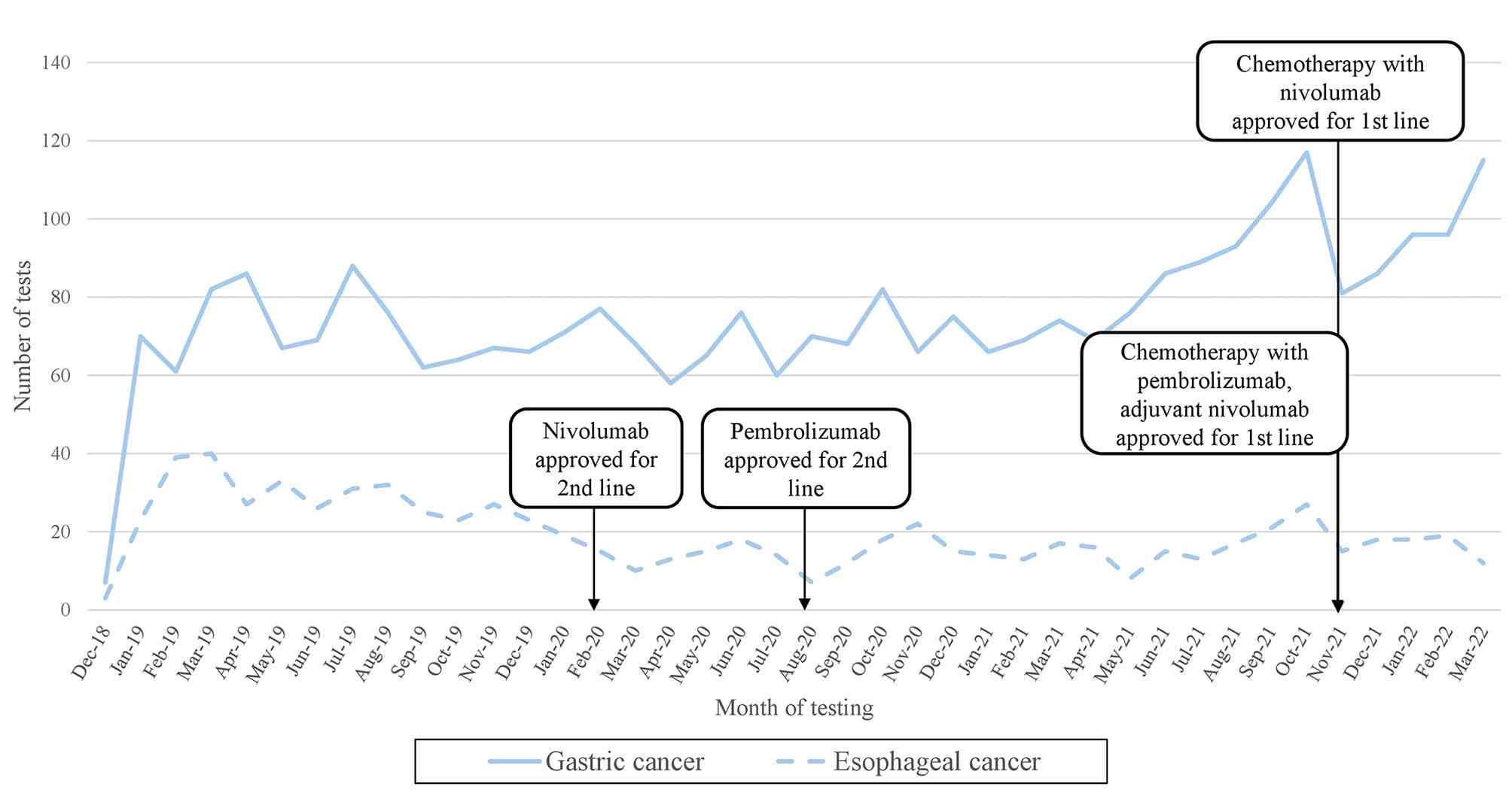
After regulatory approval of MSI testing, the total
monthly number of claims was relatively consistent across tumor
types and indicated treatment (Figs.
1 and 2). This pattern was
relatively consistent across tumor types and indicated treatment.
MSI testing utilization appeared to correspond with the timing of
approvals of specific ICIs, including pembrolizumab and nivolumab,
for specific indications. For example, increases in MSI testing
were observed among patients with gastric and esophageal cancer
following approval of these therapies for the respective
indications (Fig. 2). Despite the
increasing utilization of MSI testing over time, only 1.7%
(342/19,894) of patients subsequently initiated pembrolizumab or
nivolumab following MSI testing. The mean time from MSI testing to
treatment initiation was 38.8 days (SD: 22.3) (Table I).
 | Table ITime to treatment after biomarker
testing at index date; overall cohort, n=28,382. |
Table I
Time to treatment after biomarker
testing at index date; overall cohort, n=28,382.
| A, MSI
(CDx)-pembrolizumab |
|---|
| | | Patients newly
treated with indicated treatment | Time to treatment
initiation from index date, days |
|---|
| Cancer type | Total (n) | n | % | Mean | SD |
| Total | 19,894 | 342 | 1.7 | 38.8 | 22.3 |
| Gastric cancer | 2,936 | 51 | 1.7 | 38.8 | 24.1 |
| Colorectal cancer
(nivolumab) | 10,433 | 34 | 0.3 | 31.3 | 21.0 |
| Colorectal
cancer | 10,433 | 121 | 1.2 | 36.4 | 21.9 |
| Pancreatic
cancer | 2,549 | 27 | 1.1 | 39.9 | 16.7 |
| Biliary tract
cancer | 832 | 14 | 1.7 | 34.9 | 23.7 |
| Prostate
cancer | 663 | 15 | 2.3 | 46.0 | 21.5 |
| Cervical
cancer | 583 | 10 | 1.7 | 38.6 | 22.7 |
| Endometrial
cancer | 1,273 | 98 | 7.7 | 42.0 | 21.7 |
| Ovarian cancer | 930 | 14 | 1.5 | 43.7 | 25.3 |
| Cancer of unknown
primary origin | 1,668 | 39 | 2.3 | 41.7 | 24.1 |
| Rare cancer | 3,875 | 86 | 2.2 | 39.2 | 22.9 |
| B, BRCA 1/2
(CDx)-olaparib |
| | | Patients newly
treated with indicated treatment | Time to treatment
initiation from index date, days |
| Cancer type | Total (n) | n | % | Mean | SD |
| Prostate
cancer | 106 | 4 | 3.8 | 36.5 | 25.7 |
| Other cancers:
Total | 1,422 | 223 | 15.7 | 210.5 | 211.3 |
| Ovarian cancer | 913 | 210 | 23.0 | 220.4 | 213.8 |
| Pancreatic
cancer | 518 | 13 | 2.5 | 51.2 | 23.9 |
Frequency and utilization of biomarker
testing by cancer type
Overall, 22.2% (7,892/35,582) of patients underwent
multiple biomarker tests on the index date. This was most common
among patients with colorectal cancer (42.8%; mean 1.6 tests per
patient), followed by prostate cancer (11.5%; 107/932) and rare
cancers (11.0%; 490/4,471; Table
II). During follow-up, 4.7% of patients (1,681/35,582) had at
least one additional biomarker test.
| Table IIBiomarker testing patterns, overall
and by cancer type. |
Table II
Biomarker testing patterns, overall
and by cancer type.
| | | | Sequence of
biomarker testing including index date and follow-up |
|---|
| | | Patients with more
than 1 biomarker test on index date | Patients with at
least 1 test during follow-up | Sequence 1 | Sequence 2 | Sequence 3 |
|---|
| Cancer type | Total number of
patients | n | % | n | % | Tests | n | % | Tests | n | % | Tests | n | % |
|---|
| Overall
(claims) | 35,582 | 7,892 | 22.2 | 1,681 | 4.7 | | | | | | | | | |
| Gastric cancer | 3,103 | 168 | 5.4 | 66 | 2.1 | MSI | 2,768 | 89.2 | CGP (Tissue
Biopsy) | 165 | 5.3 | MSI-H + RASKET-B
(BRAF) + RASKET-B (KRAS/NRAS) | 143 | 4.6 |
| Esophageal
cancer | 837 | 29 | 3.5 | 26 | 3.1 | MSI | 728 | 87.0 | CGP (Tissue
Biopsy) | 78 | 9.3 | MSI + RASKET-B
(BRAF) + RASKET-B (KRAS/NRAS) | 24 | 2.9 |
| Colorectal
cancer | 15,812 | 6,760 | 42.8 | 699 | 4.4 | MSI | 7,574 | 47.9 | RASKET-B (BRAF) +
RASKET-B (KRAS/NRAS) | 3,898 | 24.7 | MSI + RASKET-B
(BRAF) + RASKET-B (KRAS/NRAS) | 2,376 | 15.0 |
| Pancreatic
cancer | 3,260 | 78 | 2.4 | 258 | 7.9 | MSI | 2,474 | 75.9 | BRCA (other
indications) | 477 | 14.6 | CGP (Tissue
Biopsy) | 226 | 6.9 |
| Biliary tract
cancer | 899 | 13 | 1.4 | 38 | 4.2 | MSI | 819 | 91.1 | CGP (Tissue
Biopsy) | 66 | 7.3 | MSI ->CGP
(Tissue Biopsy) | 26 | 2.9 |
| Prostate
cancer | 932 | 107 | 11.5 | 73 | 7.8 | MSI | 557 | 59.8 | CGP (Tissue
Biopsy) | 153 | 16.4 | BRCA (prostate
cancer) | 105 | 11.3 |
| Cervical
cancer | 647 | 19 | 2.9 | 31 | 4.8 | MSI | 565 | 87.3 | CGP (Tissue
Biopsy) | 62 | 9.6 | MSI ->CGP
(Tissue Biopsy) | 22 | 3.4 |
| Endometrial
cancer | 1,344 | 27 | 2.0 | 38 | 2.8 | MSI | 1,246 | 92.7 | CGP (Tissue
Biopsy) | 71 | 5.3 | MSI ->CGP
(Tissue Biopsy) | 19 | 1.4 |
| Ovarian cancer | 2,202 | 59 | 2.7 | 119 | 5.4 | BRCA (other
indications) | 900 | 40.9 | MSI | 875 | 39.7 | HRD | 279 | 12.7 |
| Lung cancer | 232 | 1 | 0.4 | 5 | 2.2 | CGP (tissue
biopsy) | 227 | 97.8 | CGP (liquid
biopsy) | 4 | 1.7 | CGP (tissue biopsy)
-> CGP (liquid biopsy) | 3 | 1.3 |
| Cancer of unknown
primary origin | 1,843 | 141 | 7.7 | 86 | 4.7 | MSI | 1,528 | 82.9 | CGP (tissue
biopsy) | 173 | 9.4 | MSI + RASKET-B
(BRAF) + RASKET-B (KRAS/NRAS) | 91 | 4.9 |
| Rare cancer | 4,471 | 490 | 11.0 | 242 | 5.4 | MSI | 3,389 | 75.8 | CGP (tissue
biopsy) | 581 | 13.0 | MSI + RASKET-B
(BRAF) + RASKET-B (KRAS/NRAS) | 300 | 6.7 |
Testing sequences varied by cancer type (Table II). For example, among
gynecological cancers, approximately 90% of patients with cervical
cancer (565/647) and endometrial cancer (1,246/1,344) patients
received MSI testing only, while fewer than 10% underwent
tissue-based CGP only, the second most common testing pattern. An
even smaller proportion of patients (<3.5%) underwent MSI
testing on index date followed by tissue-based CGP during
follow-up.
For patients with ovarian cancer, the testing
pattern differed notably. BRCA1/2 testing only was observed in
40.9% (900/2,202), whereas MSI testing only was observed in 39.7%
(875/2,202) of cases. In addition, 12.7% (279/2,202) of patients
underwent HRD testing only, and 4.0% (88/2,202) underwent
tissue-based CGP only (the fourth most common testing sequence,
data not shown). BRCA1/2 testing was used as the second and third
most common biomarker tests among patients with pancreatic cancer
(477/3,260; 14.6%) and prostate cancer (105/932; 11.3%),
respectively, whereas in ovarian cancer it was the most common
testing pattern (900/2,202; 40.9%).
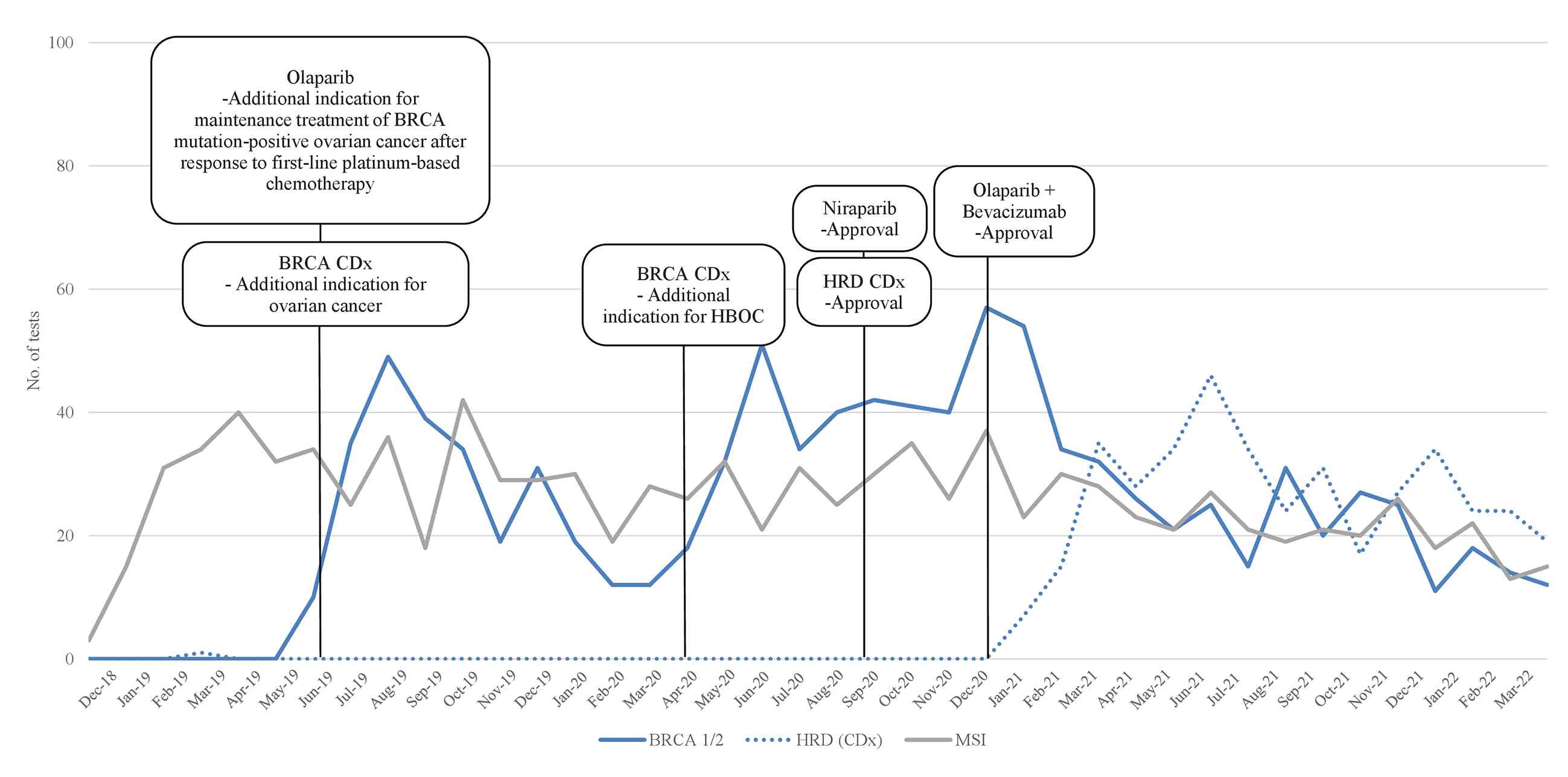
Among patients with ovarian cancer, a total of 913
BRCA1/2 (other cancers) tests and 295 HRD tests were performed at
index date (Table III). BRCA1/2
testing was introduced in May 2019, whereas HRD testing did not
begin until January 2021. Following regulatory approvals related to
BRCA1/2 and HRD testing, MSI testing in ovarian cancer declined,
whereas BRCA1/2 and HRD testing became more common (Fig. 3). Following BRCA1/2 testing, 23.0%
(210/913) of patients initiated olaparib, a poly(ADP-ribose)
polymerase inhibitor (PARPi), with a mean time from testing to
treatment initiation of 220.4 days (SD: 213.8). However, only a
small proportion of patients with prostate cancer and pancreatic
cancer received olaparib as a new treatment during the follow-up
period (Table I). After BRCA1/2
testing, only 3.8% (4/106) of patients with prostate cancer and
2.5% (13/518) of those with pancreatic cancer received new
treatment before the end of their claims record in the database.
Targeted therapies were the most common treatment among patients
with prostate cancer who received treatment after CGP (37.9%;
58/153), whereas chemotherapy was most common treatment among
patients with pancreatic cancer (41.2%; 98/238). The mean time from
testing to treatment initiation with olaparib was 36.5 days (SD:
25.7) for prostate cancer and 51.2 days (SD: 23.9) for pancreatic
cancer.
| Table IIINumber of patients with MSI, BRCA and
CGP tests at index, overall and by cancer type. |
Table III
Number of patients with MSI, BRCA and
CGP tests at index, overall and by cancer type.
| Cancer type | Number of patients
with tests performed | MSI | BRCA 1/2 Prostate
Cancer (CDx) | BRCA 1/2 Other
Cancers (CDx) | HRD (CDx) | Tissue Biopsy
(CGP) |
|---|
| Overall | 28,382 | 19,894 | 106 | 1,422 | 295 | 1,557 |
| Gastric cancer | 3,103 | 2,936 | NA | NA | NA | 167 |
| Esophageal
cancer | 837 | 757 | NA | NA | NA | 78 |
| Colorectal
cancer | 15,812 | 10,433 | NA | NA | NA | 207 |
| Pancreatic
cancer | 3,260 | 2,549 | NA | 518 | NA | 238 |
| Biliary tract
cancer | 899 | 832 | NA | NA | NA | 68 |
| Prostate
cancer | 932 | 663 | 106 | NA | NA | 153 |
| Cervical
cancer | 647 | 583 | NA | NA | NA | 68 |
| Endometrial
cancer | 1,344 | 1,273 | NA | NA | NA | 75 |
| Ovarian cancer | 2,202 | 930 | NA | 913 | 295 | 92 |
| Lung cancer | 232 | NA | NA | NA | NA | 228 |
| Cancer of unknown
primary origin | 1,843 | 1,668 | NA | NA | NA | 177 |
| Rare cancer | 4,471 | 3,875 | NA | NA | NA | 600 |
Approximately 40% of patients across cancer types
received new treatment after CGP. Among patients underwent
tissue-based CGP, 7.1% (110/1,557) subsequently initiated ICI
therapy. The mean time from CGP testing to initiation of treatment
was 86.5 days (SD: 65.6) overall, and 96.2 days (SD: 65.3) for
patients who initiated ICI therapy (Table IV). When stratified by cancer
type, 60% of patients with cancer of unknown primary origin (CUP)
or rare cancers did not receive treatment after tissue-based CGP.
Patients with CUP most frequently received chemotherapy (29/177;
16.4%), whereas those with rare cancers most frequently initiated
targeted therapy (123/600; 20.5%). A plain language summary of
these findings is available as Data
S1.
| Table IVTime to treatment after CGP testing
at index date; overall cohort, n=28,382. |
Table IV
Time to treatment after CGP testing
at index date; overall cohort, n=28,382.
| A, Tissue-based
CGP |
|---|
| | | Patients newly
treated with indicated treatment | Time to treatment
initiation from index date, days |
|---|
| Cancer type | n | Treatment type | n | % | Mean | SD |
|---|
| Total | 1,557 | Total | 637 | 40.9 | 86.5 | 65.6 |
| | | Chemotherapy | 235 | 15.1 | 77.3 | 65.5 |
| | | Targeted
therapy | 312 | 20.0 | 93.5 | 66.4 |
| | | Immune
Checkpoint | 110 | 7.1 | 96.2 | 65.3 |
| | | Inhibitors
(ICI) | | | | |
| Gastric cancer | 167 | Total | 60 | 35.9 | 83.5 | 64.9 |
| | | Chemotherapy | 18 | 10.8 | 86.4 | 65.9 |
| | | Targeted
therapy | 19 | 11.4 | 85.2 | 67.1 |
| | | ICI | 28 | 16.8 | 95.6 | 72.3 |
| Esophageal
cancer | 78 | Total | 21 | 26.9 | 67.0 | 55.9 |
| | | Chemotherapy | 4 | 5.1 | 74.0 | 38.8 |
| | | Targeted
therapy | 5 | 6.4 | 97.8 | 68.8 |
| | | ICI | 12 | 15.4 | 51.9 | 53.5 |
| Colorectal
cancer | 207 | Total | 88 | 42.5 | 78.4 | 59.9 |
| | | Chemotherapy | 15 | 7.2 | 71.5 | 59.9 |
| | | Targeted
therapy | 66 | 31.9 | 80.6 | 61.2 |
| | | ICI | 9 | 4.3 | 89.6 | 59.4 |
| Pancreatic
cancer | 238 | Total | 112 | 47.1 | 79.4 | 62.7 |
| | | Chemotherapy | 98 | 41.2 | 76.8 | 64.0 |
| | | Targeted
therapy | 10 | 4.2 | 109.5 | 49.8 |
| | | ICI | 4 | 1.7 | 69.8 | 46.3 |
| Biliary tract
cancer | 68 | Total | 23 | 33.8 | 61.9 | 59.2 |
| | | Chemotherapy | 20 | 29.4 | 65.7 | 62.3 |
| | | Targeted
therapy | 1 | 1.5 | 8.0 | NA |
| | | ICI | 2 | 2.9 | 51.0 | 7.1 |
| Prostate
cancer | 153 | Total | 71 | 46.4 | 85.0 | 62.7 |
| | | Chemotherapy | 10 | 6.5 | 74.3 | 65.0 |
| | | Targeted
therapy | 58 | 37.9 | 86.4 | 64.4 |
| | | ICI | 5 | 3.3 | 108.2 | 42.4 |
| Cervical
cancer | 68 | Total | 27 | 39.7 | 77.7 | 60.2 |
| | | Chemotherapy | 16 | 23.5 | 74.1 | 62.4 |
| | | Targeted
therapy | 9 | 13.2 | 85.9 | 65.2 |
| | | ICI | 3 | 4.4 | 99.0 | 55.1 |
| Endometrial
cancer | 75 | Total | 36 | 48.0 | 105.0 | 74.0 |
| | | Chemotherapy | 18 | 24.0 | 85.6 | 64.5 |
| | | Targeted
therapy | 14 | 18.7 | 120.9 | 72.1 |
| | | ICI | 8 | 10.7 | 154.3 | 82.2 |
| Ovarian cancer | 92 | Total | 28 | 30.4 | 89.5 | 81.3 |
| | | Chemotherapy | 9 | 9.8 | 53.7 | 72.5 |
| | | Targeted
therapy | 18 | 19.6 | 110.1 | 82.3 |
| | | ICI | 2 | 2.2 | 133.0 | 128.7 |
| Lung cancer | 228 | Total | 95 | 41.7 | 93.2 | 62.7 |
| | | Chemotherapy | 21 | 9.2 | 99.5 | 79.3 |
| | | Targeted
therapy | 49 | 21.5 | 95.6 | 62.3 |
| | | ICI | 29 | 12.7 | 96.2 | 55.0 |
| Cancer of unknown
primary origin | 177 | Total | 71 | 40.1 | 99.0 | 60.2 |
| | | Chemotherapy | 29 | 16.4 | 73.2 | 64.2 |
| | | Targeted
therapy | 23 | 13.0 | 121.9 | 55.4 |
| | | Immune Checkpoint
Inhibitors | 21 | 11.9 | 115.8 | 45.9 |
| Rare cancer | 600 | Total | 245 | 40.8 | 90.4 | 67.2 |
| | | Chemotherapy | 86 | 14.3 | 76.5 | 64.1 |
| | | Targeted
therapy | 123 | 20.5 | 105.2 | 68.4 |
| | | ICI | 47 | 7.8 | 84.4 | 67.1 |
| B, Liquid
biopsy-based CGP |
| | | Patients newly
treated with indicated treatment | Time to treatment
initiation from index date, days |
| Cancer type | n | Treatment type | n | % | Mean | SD |
| Total | 35 | Total | 14 | 40.0 | 89.6 | 63.6 |
| | | Chemotherapy | 5 | 14.3 | 55.8 | 57.0 |
| | | Targeted
therapy | 9 | 25.7 | 108.3 | 62.0 |
| | | ICI | 0 | 0.0 | NA | NA |
Discussion
This study provides a unique nationwide,
multi-cancer perspective on biomarker testing patterns within a
single healthcare system in Japan, addressing limitations of
previous studies focusing on specific tumor types or geographic
regions. Although testing levels quickly plateaued within the first
few years after approval, the initial increase, particularly in MSI
and BRCA1/2 testing, is consistent with global trends in oncology
practice and epidemiology (14,15).
For example, the National Comprehensive Cancer Network (NCCN)
guidelines recommend MSI testing for all patients with a history of
colorectal cancer (16). Recent
real-world studies from the United States and Spain report
relatively high MSI testing rates and increasing utilization over
time (17,18), reflecting improved adherence to
guideline recommendations, although variability across settings
remains. These findings are consistent with our results, which
demonstrated increased MSI testing following regulatory approval in
Japan. Notably, our study extends prior evidence by providing a
nationwide, multi-cancer overview of biomarker testing patterns and
addressing gaps in existing country-specific and tumor-specific
analyses.
Emerging insights from large genomic datasets reveal
differences between ethnicities, such as White and Asian
populations, in genomic alteration patterns, including the
frequency of cancer driver mutations (19), and real-world evidence indicates
that MSI testing uptake also varies by tumor type. Although MSI
testing is relatively well established in colorectal cancer,
earlier studies in endometrial cancer reported lower testing rates
(approximately one-third in Europe), with more recent data
demonstrating increasing uptake over time (20,21).
In Japan, treatment guidelines for genomic medicine primarily focus
on other biomarkers but also recommend MSI testing to guide
decisions regarding further treatment with ICI (22). The observed differences in MSI
testing utilization likely reflect variations in clinical practice
and disease characteristics rather than superiority of testing in
any specific cancer (20,21). These findings suggest that
discrepancies in testing and clinical application may be driven by
a combination of factors, including disease-specific
characteristics, regulatory timelines, and practical barriers in
clinical adoption. Because the MDV database did not include
individual biomarker test results, these discrepancies should be
interpreted as differences in test use and post-testing treatment
initiation, rather than biomarker-positive detection rates.
Furthermore, although biomarker testing plays an important role in
treatment selection, patients in routine clinical practice often
present with more heterogeneous characteristics than those in
clinical trials. Consequently, even when biomarker results are
positive, they may not necessarily lead to the use of the
corresponding recommended therapies in routine care.
The predominance of MSI testing in colorectal cancer
patients and the high frequency of multiple tests in this group
suggest a more integrated role of MSI tests in managing colorectal
cancer. This pattern may reflect the specific molecular
characteristics of colorectal cancer, which require assessment of a
broader range of biomarkers (including KRAS/BRAF) for effective
treatment stratification (23).
The relationship between MSI-H and BRAF mutations in colorectal
cancer is crucial for predicting clinical characteristics and
prognosis, as described in the Japanese treatment guidelines
(24). However, since this study
was based on claims data, biomarker test results were unavailable,
including the percentage of MSI-H and BRAF-mutated cancers. Future
research should further investigate this relationship and its
clinical implications.
Differences in MSI testing utilization across cancer
types may reflect variation in clinical guidelines and the
prevalence of individual cancer types. Akagi et al (25) tested 26,237 clinical samples of
multiple cancer types and reported a relatively high MSI-H
prevalence in several cancers with historically limited treatment
options, including endometrial (16.9%), colorectal (3.8%), gastric
(6.7%), esophageal (1.1%), as well as ovarian (2.2%) and pancreatic
(0.8%) cancers. In the current nationwide analysis, testing rates
were high in gastric cancer (97.3%) and endometrial cancer (98.2%),
but lower in ovarian cancer (47.1%). However, patients in this
study were required to have at least one claim for any of these
five biomarkers. Therefore, the reported testing rates reflect the
distribution of biomarker testing among tested patients rather than
among all patients diagnosed with a given cancer type. This
distinction should be considered when interpreting the results.
During the study period, Japanese treatment
guidelines recommended MSI testing before initiating second-line
treatment, particularly for gastric cancer (26), based on the effectiveness of
pembrolizumab in MSI-H tumors. Similarly, Japanese treatment
guidelines for endometrial cancer also recognize the effectiveness
of pembrolizumab for MSI-H cases (27). In contrast, ovarian cancer
guidelines only make a cautious reference to pembrolizumab use in
patients with MSI-H tumors because of insufficient supporting data
(28). These differences reflect a
more selective and evidence-based application of genomic testing
across cancer-specific treatment strategies.
The relatively stable mean time to treatment
initiation post-MSI testing across tumor types suggests a
relatively uniform response to testing results in routine clinical
practice in Japan. However, the low proportion of patients who
received a new treatment after testing indicates potential barriers
to translating test results into therapeutic action (29). Detection of MSI-H is important for
identifying tumors that may respond to pembrolizumab in gastric
cancer and potentially other ICIs (30). Furthermore, emerging real-world
evidence suggests that not only testing itself but also the time
from biomarker testing to treatment initiation is critical, as
delays in testing or subsequent therapy initiation may be
associated with poorer survival outcomes (31). The relatively low proportion of
patients who newly initiated treatment after biomarker testing may
have several explanations, including negative or non-actionable
test results, prior use of relevant therapy before the index date,
clinical deterioration before treatment initiation, limited
treatment access, or transfer to another institution following
testing, resulting in subsequent therapies not being captured in
the database. Because claims data do not include reasons for
clinical decision-making, these factors could not be separately
evaluated.
BRCA1/2 testing plays an important role not only in
detecting germline mutations but also in guiding treatment
decisions. The introduction of BRCA1/2 testing for hereditary
breast and ovarian cancer (HBOC) syndrome has been a key factor
driving its utilization. Following approval of BRCA analysis as a
CDx for olaparib treatment for BRCA1/2 mutated ovarian cancer, the
number of BRCA1/2 tests increased from 2019 onward (32). Consistent with this observation,
real-world evidence demonstrates a marked increase in BRCA testing
uptake over time, with the proportion of patients tested within one
year of diagnosis increasing substantially across successive years
(33).
However, the adoption of BRCA1/2 testing declined
following approval of HRD tests as CDx for the PAOLA-1 regimen at
the end of 2020(34). Real-world
evidence suggests that, despite widespread BRCA testing, the uptake
of HRD testing remains relatively low, with substantially fewer
patients undergoing HRD testing compared with BRCA testing in
clinical practice. This pattern may reflect the later approval and
gradual adoption of HRD testing, as well as practical
considerations such as testing complexity, and suggests that HRD
testing is likely to increase over time in a manner similar to the
earlier expansion of BRCA testing following its clinical adoption
(35). It indicates that the
landscape of biomarker testing in clinical practice is
substantially influenced by the availability of specific tests and
the approval of associated therapies.
One real-world study in Japan found that 26.8% of
newly diagnosed advanced ovarian cancer patients had tissue BRCA1/2
mutations, with 60.0% having HRD (36). Considering the high prevalence of
HRD in ovarian cancer, and the convenience of MyChoice CDx test
from Myriad Genetics, HRD testing may become more common than
BRCA1/2 testing in current clinical situation (37). The MyChoice CDx test assesses both
HRD positivity and tumor BRCA1/2 mutation status; however, it
cannot distinguish between germline and somatic BRCA1/2
mutations.
Olaparib was approved in Japan in 2020 as a
treatment option for BRCA mutated pancreatic and metastatic
castration-resistant prostate cancer (34). Given this relatively recent
approval during the study inclusion period, the lower testing rates
observed in these cancer types may reflect later adoption of BRCA
CDx testing compared with ovarian cancer, where BRCA testing and
PARP inhibitor use were established earlier. This relatively low
prevalence of BRCA mutations in pancreatic cancer (38) and metastatic castration-resistant
prostate cancer (39) may also
have contributed to the lower utilization of BRCA CDx testing.
The number tissue-based CGP tests was 45-fold higher
than that of liquid biopsy-based CGP during the study period. One
factor contributing to this difference is the earlier regulatory
approval of tissue-based CGP (2018) compared with liquid
biopsy-based CGP (2021) in Japan (40,41).
Given the study period, this difference in timing likely had a
substantial impact on utilization. Although Japanese clinical
oncology practice guidelines authored by the Japanese Cancer
Association, the Japanese Society of Medical Oncology, and the
Japan Society of Clinical Oncology have recommended the use of
liquid biopsy in certain situations (40), several factors may have contributed
to its lower use in practice. These include challenges in
determining the optimal timing of testing, concerns regarding
false-negative results due to limited ctDNA sensitivity, and
practical barriers such as lack of familiarity and variability in
reimbursement. Although specific reasons could not be evaluated in
this descriptive database study, such barriers may nevertheless
exist and may have influenced the observed adoption patterns
(42,43). These include the limited
availability of approved liquid biopsy tests, as well as perceived
differences in sensitivity and reliability compared to tissue
biopsies. Additionally, ICI treatments were frequently initiated
after tissue-based CGP but not after liquid biopsy-based CGP,
suggesting a higher level of clinical confidence in tissue-based
results for guiding immunotherapy decisions. However, a recent
study investigating FoundationOne Liquid testing in Japan between
2021 and 2023 reported increasing utilization over time and
suggested that liquid biopsy testing may provide therapeutic
benefits in several distinct cancer types (44).
Biomarker-driven treatment selection plays a
critical role across multiple cancer types, guiding the use of
targeted therapies and immunotherapies. MSI-H testing helps
identify patients eligible for treatment with ICI (25,41),
while other biomarkers, such as BRAF and KRAS mutations, influence
treatment selection by predicting treatment response or resistance.
Similarly, BRCA1/2 and HRD testing inform the use of PARP
inhibitors, particularly in cancers in which deficiencies in DNA
repair influence therapeutic response.
In the context of CUP and rare cancers, the high
percentage of patients not receiving treatment after CGP testing
warrants attention. The notable low rate of access to treatment
following both tissue-based and liquid biopsy-based CGP highlights
challenges in identifying actionable targets and the limited
availability of testing options for Japanese patients. Limited
access to genotype-matched therapy post-CGP is a known issue in
Japan (45-47).
To address these obstacles, academic institutions are actively
working to enhance patient enrollment in clinical studies guided by
CGP results. For CGP, this gap may reflect the absence of
actionable alterations, limited access to approved genotype-matched
therapies or clinical trials, deterioration of patient condition
before treatment initiation, and institutional restrictions because
CGP is available through designated cancer genomic medicine
institutions.
A recent systematic review has highlighted the
important role for liquid biopsy in prostate cancer for accurately
detecting multiple biomarkers and reducing costly false positives
(48). This situation accentuates
the need for more research and drug development in these areas.
Limitations of the claims database include the
inability to track patients across institutions and the lack of
information on biomarker test results, actionable alterations,
performance status, disease stage, line of therapy, treatment
intent, and reasons for not receiving subsequent treatment.
Therefore, subsequent treatments after transfer to another
institution may have been underestimated. In addition, differences
between CDx and CGP testing may partly reflect institutional
resource differences, because CDx tests are more widely available
whereas CGP is restricted to designated cancer genomic medicine
institutions. These limitations should be considered when
interpreting the observed gap between biomarker testing and
treatment initiation. Therefore, the present study focused on
descriptive analyses of nationwide biomarker testing and treatment
initiation patterns.
Although formal statistical comparisons across
cancer types or trend analyses over time could technically be
performed, we considered such analyses unlikely to provide
clinically meaningful insights within the context of this study.
The included cancer types differ fundamentally with respect to
biomarker indications, clinical practice guidelines, regulatory
approval and reimbursement timelines, and available targeted
therapies, all of which substantially influence testing practices.
As a result, statistical comparisons would largely reflect these
inherent differences rather than differences attributable to
biomarker utilization itself. Furthermore, because study
eligibility criteria required patients to have undergone at least
one biomarker test, the reported proportions describe biomarker
testing patterns within a selected cohort of tested patients rather
than the frequency of biomarker testing among all patients with a
given cancer type. Accordingly, inferential comparisons across
cancer types or formal trend analyses were considered unlikely to
provide additional clinically meaningful insight beyond the
descriptive findings presented.
In conclusion, biomarker testing in routine oncology
care in Japan is still emerging, driven by rapidly expanding
treatment options and growing insights into tumor biology. This
nationwide real-world study provides an early comprehensive view of
biomarker testing prevalence and utilization trends, revealing a
persistent gap between testing and treatment initiation. Although
descriptive in nature, this study provides clinically meaningful
insights, particularly given the lack of available methodologies at
the time of study initiation for comprehensively characterizing
real-world testing patterns.
Although biomarker testing is increasing, its
effective integration into clinical practice remains limited.
Further analyses of large healthcare databases may help identify
barriers and support the development of targeted strategies to
advance precision oncology, including broader dissemination of
guideline-recommended testing and improved integration of biomarker
testing into treatment decision-making. These findings provide
clinically relevant insights to inform strategies for optimizing
the implementation of biomarker-driven treatment in routine
practice.
Supplementary Material
Plain language summary
Study period and index date. CDx,
companion diagnostics; CGP, comprehensive genomic profiling.
Diagnosis codes for cancers of
interest.
Patient characteristics overall and by
biomarker test.
Acknowledgements
The authors thank Ms. Helin Han and Dr Brian Buysse
of Syneos Health Real World Evidence team for operational support
and medical editing support, respectively.
Funding
Funding: This work was supported by MSD K.K., Tokyo, Japan.
Availability of data and materials
The data generated in the present study are not
publicly available due to licensing restrictions but may be
requested from the corresponding author.
Authors' contributions
YY conceptualized the study, performed the formal
analysis, supervised the study, and reviewed and edited the
manuscript. KO performed the formal analysis, supervised the study,
and reviewed and edited the manuscript. HT performed the formal
analysis, supervised the study, and reviewed and edited the
manuscript. KS performed the formal analysis, supervised the study,
and reviewed and edited the manuscript. RM contributed to the study
design, performed the analysis, provided medical writing support
and offered scientific advice. SY performed the formal analysis,
supervised the study, and reviewed and edited the manuscript. RW
conceptualized the study, performed the formal analysis, supervised
the study, and reviewed and edited the manuscript. SY and RM
confirm the authenticity of all the raw data. All authors read and
approved the final manuscript.
Ethics approval and consent to
participate
This research project conforms to the principles of
The Declaration of Helsinki and relied solely on anonymized data.
This study is neither a clinical trial involving human subjects nor
an animal study; therefore, informed consent and registration in a
clinical trial registry were not required or applicable. The study
protocol, including the use of anonymized data without individual
informed consent, was reviewed and approved by Kitamachi Clinic
Ethics Review Committee, a registered external/central ethics
review committee in Japan (approval no. MSD09154).
Patient consent for publication
Not applicable.
Competing interests
Yasushi Yatabe received research grants from Merck
Biopharma, Chugai Pharmaceutical Co., Ltd., Konica-Minolta REALM
Inc. and Optieum Biotechnologies Inc., and has received an advisory
fee from MSD K.K., Tokyo, Japan. Katsutoshi Oda has received
funding for research from AstraZeneca K.K. and Konica Minolta Co.,
Ltd., honoraria for lectures and an advisory fee from MSD K.K.,
Tokyo, Japan, and honoraria for lectures from AstraZeneca K.K.,
Chugai Pharmaceutical Co., Ltd., Takeda Pharmaceutical Company Ltd.
and Konica Minolta Co., Ltd. Hiroya Taniguchi received lecture fees
from Takeda Pharmaceutical Company Ltd., Ono Pharmaceutical Co.,
Ltd., Chugai Pharmaceutical Co., Ltd. and Eli Lilly Japan K.K.,
research funding from Takeda Pharmaceutical Company Ltd. and
Daiichi-Sankyo, and has received an advisory fee from MSD K.K.,
Tokyo, Japan. Kuniko Sunami received a research grant from Sysmex
Corporation and has received an advisory fee from MSD K.K., Tokyo,
Japan. Russell Miller is an employee of Syneos Health Japan K.K.
Shotaro Yasuoka is an employee of MSD K.K., Tokyo, Japan. Ryosuke
Watanabe is employed by BeOne Medicines G.K. and a former employee
of MSD K.K., Tokyo, Japan. The study was designed and funded by MSD
K.K., Tokyo, Japan. All authors had full access to all of the data
in the study and had final responsibility for the decision to
submit for publication.
References
|
1
|
Doherty GJ, Petruzzelli M, Beddowes E,
Ahmad SS, Caldas C and Gilbertson RJ: Cancer treatment in the
genomic Era. Annu Rev Biochem. 88:247–280. 2019.PubMed/NCBI View Article : Google Scholar
|
|
2
|
Mano H: Cancer genomic medicine in Japan.
Proc Jpn Acad Ser B Phys Biol Sci. 96:316–321. 2020.PubMed/NCBI View Article : Google Scholar
|
|
3
|
Foundation for Promotion of Cancer
Research. Cancer Statistics in Japan. Available at: https://ganjoho.jp/public/qa_links/report/statistics/pdf/cancer_statistics_2023_fig_E.pdf.
Published 2023. Accessed 11 November, 2023.
|
|
4
|
Wu L and Qu X: Cancer biomarker detection:
Recent achievements and challenges. Chem Soc Rev. 44:2963–2997.
2015.PubMed/NCBI View Article : Google Scholar
|
|
5
|
U.S. Food & Drug. Companion
Diagnostics. 2018. Available at: https://www.fda.gov/medical-devices/in-vitro-diagnostics/companion-diagnostics.
Accessed Dec 23 2024.
|
|
6
|
Shirota H, Komine K, Takahashi M,
Takahashi S, Miyauchi E, Niizuma H, Tada H, Shimada M, Niihori T,
Aoki Y, et al: Clinical decisions by the molecular tumor board on
comprehensive genomic profiling tests in Japan: A retrospective
observational study. Cancer Med. 12:6170–6181. 2023.PubMed/NCBI View Article : Google Scholar
|
|
7
|
Constâncio V, Nunes SP, Henrique R and
Jerónimo C: DNA methylation-based testing in liquid biopsies as
detection and prognostic biomarkers for the four major cancer
types. Cells. 9(624)2020.PubMed/NCBI View Article : Google Scholar
|
|
8
|
Motoi N and Yatabe Y: Lung cancer
biomarker tests: The history and perspective in Japan. Transl Lung
Cancer Res. 9:879–886. 2020.PubMed/NCBI View Article : Google Scholar
|
|
9
|
Sekine M, Nishino K and Enomoto T: BRCA
genetic test and risk-reducing salpingo-oophorectomy for hereditary
breast and ovarian cancer: State-of-the-art. Cancers (Basel).
13(2562)2021.PubMed/NCBI View Article : Google Scholar
|
|
10
|
Sunakawa Y, Nakamura M, Ishizaki M,
Kataoka M, Satake H, Kitazono M, Yanagisawa H, Kawamoto Y,
Kuramochi H, Ohori H, et al: RAS mutations in circulating tumor DNA
and clinical outcomes of rechallenge treatment with anti-EGFR
antibodies in patients with metastatic colorectal cancer. JCO
Precis Oncol. 4:898–911. 2020.PubMed/NCBI View Article : Google Scholar
|
|
11
|
Ikoma T, Shimokawa M, Kotaka M, Matsumoto
T, Nagai H, Boku S, Shibata N, Yasui H and Satake H: Clinical and
prognostic features of patients with detailed RAS/BRAF-mutant
colorectal cancer in Japan. BMC Cancer. 21(518)2021.PubMed/NCBI View Article : Google Scholar
|
|
12
|
Shimozaki K, Hayashi H, Tanishima S, Horie
S, Chida A, Tsugaru K, Togasaki K, Kawasaki K, Aimono E, Hirata K,
et al: Concordance analysis of microsatellite instability status
between polymerase chain reaction based testing and next generation
sequencing for solid tumors. Sci Rep. 11(20003)2021.PubMed/NCBI View Article : Google Scholar
|
|
13
|
Medical Data Vision Co., Ltd. About MDV
Database. 2024. Available at: https://en.mdv.co.jp/about-mdv-database/mdv-database-overview/.
Accessed Feb 2, 2025.
|
|
14
|
Berardinelli GN, Durães R, Mafra da Costa
A, Bragagnoli A, Antônio de Oliveira M, Pereira R,
Scapulatempo-Neto C, Guimarães DP and Reis RM: Association of
microsatellite instability (MSI) status with the 5-year outcome and
genetic ancestry in a large Brazilian cohort of colorectal cancer.
Eur J Hum Genet. 30:824–832. 2022.PubMed/NCBI View Article : Google Scholar
|
|
15
|
Hasan S, Renz P, Wegner RE, Finely G, Raj
M, Monga D, McCormick J and Kirichenko A: Microsatellite
instability (MSI) as an independent predictor of pathologic
complete response (PCR) in locally advanced rectal cancer: A
National cancer database (NCDB) analysis. Ann Surg. 271:716–723.
2020.PubMed/NCBI View Article : Google Scholar
|
|
16
|
National Comprehensive Cancer Network.
NCCN Clinical Practice Guidelines in Oncology: Rectal Cancer.
Available at: https://www.nccn.org/professionals/physician_gls/pdf/rectal.pdf.
Published 2018. Accessed 11 Nov, 2023.
|
|
17
|
Garcia-Carbonero R, González Astorga B,
Vidal Tocino R, Contreras Toledo D, Pericay C, Fernández Montes A,
Falcó E, González Cordero M, Reina Zoilo JJ, Alonso V, et al:
Real-world study on microsatellite instability and mismatch repair
deficiency testing patterns among patients with metastatic
colorectal cancer in Spain. Clin Transl Oncol. 26:864–871.
2024.PubMed/NCBI View Article : Google Scholar
|
|
18
|
Dhimal T, Colugnati F, Hilty Chu BK, Loria
A, Cupertino P, Mulkerin D and Fleming FJ: Mismatch repair and
microsatellite testing for individuals with colorectal cancer. JAMA
Oncol. 10:1593–1595. 2024.PubMed/NCBI View Article : Google Scholar
|
|
19
|
Horie S, Saito Y, Kogure Y, Mizuno K, Ito
Y, Tabata M, Kanai T, Murakami K, Koya J and Kataoka K: Pan-cancer
comparative and integrative analyses of driver alterations using
Japanese and International genomic databases. Cancer Discov.
14:786–803. 2024.PubMed/NCBI View Article : Google Scholar
|
|
20
|
Kelkar SS, Prabhu VS, Zhang J, Ogando YM,
Roney K, Verma RP, Miles N and Marth C: Real-world prevalence of
microsatellite instability testing and related status in women with
advanced endometrial cancer in Europe. Arch Gynecol Obstet.
309:2833–2841. 2024.PubMed/NCBI View Article : Google Scholar
|
|
21
|
Chen Y, Lubinga SJ, Williams T, Carlson JJ
and Ramsey S: Real-world molecular testing rates and patterns in
patients with primary advanced or recurrent endometrial cancer in
the United States. JCO Precis Oncol. 9(e2400815)2025.PubMed/NCBI View Article : Google Scholar
|
|
22
|
Japan Society of Clinical Oncology.
Guidelines for Cancer Treatment: Genomic Medicine. 2022. Available
at: http://www.jsco-cpg.jp/precision-medicine/guideline/#cq02-1.
Accessed Jan 23, 2025 (In Japanese).
|
|
23
|
Fujiyoshi K, Yamamoto G, Takahashi A, Arai
Y, Yamada M, Kakuta M, Yamaguchi K, Akagi Y, Nishimura Y, Sakamoto
H and Akagi K: High concordance rate of KRAS/BRAF mutations and
MSI-H between primary colorectal cancer and corresponding
metastases. Oncol Rep. 37:785–792. 2017.PubMed/NCBI View Article : Google Scholar
|
|
24
|
Japan Society of Clinical Oncology.
Treatment Guidelines for Colorectal Cancer. 2020. Available at:
http://www.jsco-cpg.jp/colorectal-cancer/. Accessed
Feb 4, 2025 (In Japanese).
|
|
25
|
Akagi K, Oki E, Taniguchi H, Nakatani K,
Aoki D, Kuwata T and Yoshino T: Real-world data on microsatellite
instability status in various unresectable or metastatic solid
tumors. Cancer Sci. 112:1105–1113. 2021.PubMed/NCBI View Article : Google Scholar
|
|
26
|
Japanese Gastric Cancer Association.
Japanese gastric cancer treatment guidelines 2021 (6th edition).
Gastric Cancer. 26:1–25. 2023.PubMed/NCBI View Article : Google Scholar
|
|
27
|
Japan Society of Gynecologic Oncology.
Uterine Cancer Treatment Guidelines: Chapter 4: Treatment
guidelines for unresectable, advanced, or recurrent cancer. 2023.
Available at: https://jsgo.or.jp/guideline/taiganguide2023.html.
Accessed on Feb 1, 2025 (In Japanese).
|
|
28
|
Japan Society of Gynecologic Oncology.
Ovarian, Fallopian Tube, and Peritoneal Cancer Treatment
Guidelines. 2020. Available at: https://jsgo.or.jp/guideline/ransou2020.html. Accessed
on Feb 1, 2025 (In Japanese).
|
|
29
|
Li K, Luo H, Huang L, Luo H and Zhu X:
Microsatellite instability: A review of what the oncologist should
know. Cancer Cell Int. 20(16)2020.PubMed/NCBI View Article : Google Scholar
|
|
30
|
Sato Y, Okamoto K, Kawano Y, Kasai A,
Kawaguchi T, Sagawa T, Sogabe M, Miyamoto H and Takayama T: Novel
Biomarkers of Gastric Cancer: Current Research and Future
Perspectives. J Clin Med. 12(4646)2023.PubMed/NCBI View Article : Google Scholar
|
|
31
|
Okoye C, Emeasoba C, Obialo-Ibeawuchi C,
Olanipekun NL and Amaechi U: Too late to test: Real-world impact of
MSI/MMR testing delays on survival and treatment in colorectal
cancer. J Natl Compr Canc Netw. 24:BPI26–006. 2026.PubMed/NCBI View Article : Google Scholar
|
|
32
|
AstraZeneca. Lynparza approved in Japan
for 1st-line maintenance therapy in BRCA-mutated advanced ovarian
cancer. 2019. Available at: https://www.astrazeneca.com/media-centre/press-releases/2019/lynparza-approved-in-japan-for-1st-line-maintenance-therapy-in-brca-mutated-advanced-ovarian-cancer-19062019.html#.
Accessed on Feb 1, 2025.
|
|
33
|
Huepenbecker SP, Wright JD, Downer MK,
Incerti D, Luhn P, Dolado I, Bastiere-Truchot L, Lin YG, Chan JK
and Meyer LA: Temporal patterns and adoption of germline and
somatic BRCA testing in ovarian cancer. Obstet Gynecol.
140:758–767. 2022.PubMed/NCBI View Article : Google Scholar
|
|
34
|
AstraZeneca. Lynparza approved in Japan
for the treatment of advanced ovarian, prostate and pancreatic
cancers. 2020. Available at: https://www.astrazeneca.com/media-centre/press-releases/2020/lynparza-approved-in-japan-for-three-cancers.html#.
Accessed Feb 1, 2025.
|
|
35
|
Veljovich DS, Penson RT, Birrer MJ, Luo L,
Pyrih N, Pack S, Iu C and Hada M: Real-world biomarker testing,
treatment patterns and outcomes in a US cohort of patients with
advanced ovarian cancer. J Clin Oncol. 42 (Suppl
16)(S5571)2024.
|
|
36
|
Oda K, Aoki D, Tsuda H, Nishihara H,
Aoyama H, Inomata H, Shimada M and Enomoto T: Japanese nationwide
observational multicenter study of tumor BRCA1/2 variant testing in
advanced ovarian cancer. Cancer Sci. 114:271–280. 2023.PubMed/NCBI View Article : Google Scholar
|
|
37
|
Myriad Genetics Inc. Breakthrough HRD
testing for optimizing ovarian cancer treatment. 2025. Available
at: https://myriad.com/genetic-tests/mychoicecdx-tumor-test/#:~:text=MyChoice%20CDx%20is%20the%20only%20FDA-approved%20homologous%20recombination,therapy%20in%20both%20early%20and%20late-line%20settings.%202.
Accessed Feb 1, 2025.
|
|
38
|
Golan T, Hammel P, Reni M, Van Cutsem E,
Macarulla T, Hall MJ, Park JO, Hochhauser D, Arnold D, Oh DY, et
al: Maintenance olaparib for germline BRCA-mutated metastatic
pancreatic cancer. N Engl J Med. 381:317–327. 2019.PubMed/NCBI View Article : Google Scholar
|
|
39
|
Olmos D, Lorente D, Alameda D, Cattrini C,
Romero-Laorden N, Lozano R, Lopez-Casas PP, Jambrina A, Capone C,
Vanden Broecke AM, et al: Treatment patterns and outcomes in
metastatic castration-resistant prostate cancer patients with and
without somatic or germline alterations in homologous recombination
repair genes. Ann Oncol. 35:458–472. 2024.PubMed/NCBI View Article : Google Scholar
|
|
40
|
Naito Y, Aburatani H, Amano T, Baba E,
Furukawa T, Hayashida T, Hiyama E, Ikeda S, Kanai M, Kato M, et al:
Clinical practice guidance for next-generation sequencing in cancer
diagnosis and treatment (edition 2.1). Int J Clin Oncol.
26:233–283. 2021.PubMed/NCBI View Article : Google Scholar
|
|
41
|
Marcus L, Lemery SJ, Keegan P and Pazdur
R: FDA approval summary: Pembrolizumab for the treatment of
microsatellite instability-high solid tumors. Clin Cancer Res.
25:3753–3758. 2019.PubMed/NCBI View Article : Google Scholar
|
|
42
|
Febbo PG, Allo M, Alme EB, Cuyun Carter G,
Dumanois R, Essig A, Kiernan E, Kubler CB, Martin N, Popescu MC and
Leiman LC: Recommendations for the Equitable and Widespread
Implementation of Liquid Biopsy for Cancer Care. JCO Precis Oncol.
8(e2300382)2024.PubMed/NCBI View Article : Google Scholar
|
|
43
|
Pascual J, Attard G, Bidard FC, Curigliano
G, De Mattos-Arruda L, Diehn M, Italiano A, Lindberg J, Merker JD,
Montagut C, et al: ESMO recommendations on the use of circulating
tumour DNA assays for patients with cancer: A report from the ESMO
precision medicine working group. Ann Oncol. 33:750–768.
2022.PubMed/NCBI View Article : Google Scholar
|
|
44
|
Yatabe Y, Watanabe R, Kotera Y, Yasuoka S
and Ennishi D: Nationwide real-world usage of blood-based (Liquid)
biomarker testing in Japan. Cancer Sci. 116:3113–3124.
2025.PubMed/NCBI View Article : Google Scholar
|
|
45
|
Ohtsu A, Goto K and Yoshino T: Improvement
of patient care using cancer genomic profiling:
SCRUM-/CIRCULATE-Japan experience. Proc Jpn Acad Ser B Phys Biol
Sci. 99:241–253. 2023.PubMed/NCBI View Article : Google Scholar
|
|
46
|
Sawada K, Nakayama K, Nakamura K,
Yoshimura Y, Razia S, Ishikawa M, Yamashita H, Ishibashi T, Sato S
and Kyo S: Clinical outcomes of genotype-matched therapy for
recurrent gynecological cancers: A single institutional experience.
Healthcare (Basel). 9(1395)2021.PubMed/NCBI View Article : Google Scholar
|
|
47
|
Sato Y, Okada Y, Fujino Y, Kawaguchi T,
Kida Y, Mitsui Y, Tanaka H, Tomonari T, Kitamura S, Okamoto K, et
al: Clinical outcomes of comprehensive genomic profiling tests for
gastrointestinal cancers: Experience from Tokushima University
Hospital. J Med Invest. 70:154–159. 2023.PubMed/NCBI View Article : Google Scholar
|
|
48
|
Kawada T, Shim SR, Quhal F, Rajwa P,
Pradere B, Yanagisawa T, Bekku K, Laukhtina E, von Deimling M, Teoh
JY, et al: Diagnostic accuracy of liquid biomarkers for clinically
significant prostate cancer detection: A systematic review and
diagnostic meta-analysis of multiple thresholds. Eur Urol Oncol.
7:649–662. 2024.PubMed/NCBI View Article : Google Scholar
|