Spandidos Publications Logo
  • About
    • About Spandidos
    • Aims and Scopes
    • Abstracting and Indexing
    • Editorial Policies
    • Reprints and Permissions
    • Job Opportunities
    • Terms and Conditions
    • Contact
  • Journals
    • All Journals
    • Oncology Letters
      • Oncology Letters
      • Information for Authors
      • Editorial Policies
      • Editorial Board
      • Aims and Scope
      • Abstracting and Indexing
      • Bibliographic Information
      • Archive
    • International Journal of Oncology
      • International Journal of Oncology
      • Information for Authors
      • Editorial Policies
      • Editorial Board
      • Aims and Scope
      • Abstracting and Indexing
      • Bibliographic Information
      • Archive
    • Molecular and Clinical Oncology
      • Molecular and Clinical Oncology
      • Information for Authors
      • Editorial Policies
      • Editorial Board
      • Aims and Scope
      • Abstracting and Indexing
      • Bibliographic Information
      • Archive
    • Experimental and Therapeutic Medicine
      • Experimental and Therapeutic Medicine
      • Information for Authors
      • Editorial Policies
      • Editorial Board
      • Aims and Scope
      • Abstracting and Indexing
      • Bibliographic Information
      • Archive
    • International Journal of Molecular Medicine
      • International Journal of Molecular Medicine
      • Information for Authors
      • Editorial Policies
      • Editorial Board
      • Aims and Scope
      • Abstracting and Indexing
      • Bibliographic Information
      • Archive
    • Biomedical Reports
      • Biomedical Reports
      • Information for Authors
      • Editorial Policies
      • Editorial Board
      • Aims and Scope
      • Abstracting and Indexing
      • Bibliographic Information
      • Archive
    • Oncology Reports
      • Oncology Reports
      • Information for Authors
      • Editorial Policies
      • Editorial Board
      • Aims and Scope
      • Abstracting and Indexing
      • Bibliographic Information
      • Archive
    • Molecular Medicine Reports
      • Molecular Medicine Reports
      • Information for Authors
      • Editorial Policies
      • Editorial Board
      • Aims and Scope
      • Abstracting and Indexing
      • Bibliographic Information
      • Archive
    • World Academy of Sciences Journal
      • World Academy of Sciences Journal
      • Information for Authors
      • Editorial Policies
      • Editorial Board
      • Aims and Scope
      • Abstracting and Indexing
      • Bibliographic Information
      • Archive
    • International Journal of Functional Nutrition
      • International Journal of Functional Nutrition
      • Information for Authors
      • Editorial Policies
      • Editorial Board
      • Aims and Scope
      • Abstracting and Indexing
      • Bibliographic Information
      • Archive
    • International Journal of Epigenetics
      • International Journal of Epigenetics
      • Information for Authors
      • Editorial Policies
      • Editorial Board
      • Aims and Scope
      • Abstracting and Indexing
      • Bibliographic Information
      • Archive
    • Medicine International
      • Medicine International
      • Information for Authors
      • Editorial Policies
      • Editorial Board
      • Aims and Scope
      • Abstracting and Indexing
      • Bibliographic Information
      • Archive
  • Articles
  • Information
    • Information for Authors
    • Information for Reviewers
    • Information for Librarians
    • Information for Advertisers
    • Conferences
  • Language Editing
Spandidos Publications Logo
  • About
    • About Spandidos
    • Aims and Scopes
    • Abstracting and Indexing
    • Editorial Policies
    • Reprints and Permissions
    • Job Opportunities
    • Terms and Conditions
    • Contact
  • Journals
    • All Journals
    • Biomedical Reports
      • Information for Authors
      • Editorial Policies
      • Editorial Board
      • Aims and Scope
      • Abstracting and Indexing
      • Bibliographic Information
      • Archive
    • Experimental and Therapeutic Medicine
      • Information for Authors
      • Editorial Policies
      • Editorial Board
      • Aims and Scope
      • Abstracting and Indexing
      • Bibliographic Information
      • Archive
    • International Journal of Epigenetics
      • Information for Authors
      • Editorial Policies
      • Editorial Board
      • Aims and Scope
      • Abstracting and Indexing
      • Bibliographic Information
      • Archive
    • International Journal of Functional Nutrition
      • Information for Authors
      • Editorial Policies
      • Editorial Board
      • Aims and Scope
      • Abstracting and Indexing
      • Bibliographic Information
      • Archive
    • International Journal of Molecular Medicine
      • Information for Authors
      • Editorial Policies
      • Editorial Board
      • Aims and Scope
      • Abstracting and Indexing
      • Bibliographic Information
      • Archive
    • International Journal of Oncology
      • Information for Authors
      • Editorial Policies
      • Editorial Board
      • Aims and Scope
      • Abstracting and Indexing
      • Bibliographic Information
      • Archive
    • Medicine International
      • Information for Authors
      • Editorial Policies
      • Editorial Board
      • Aims and Scope
      • Abstracting and Indexing
      • Bibliographic Information
      • Archive
    • Molecular and Clinical Oncology
      • Information for Authors
      • Editorial Policies
      • Editorial Board
      • Aims and Scope
      • Abstracting and Indexing
      • Bibliographic Information
      • Archive
    • Molecular Medicine Reports
      • Information for Authors
      • Editorial Policies
      • Editorial Board
      • Aims and Scope
      • Abstracting and Indexing
      • Bibliographic Information
      • Archive
    • Oncology Letters
      • Information for Authors
      • Editorial Policies
      • Editorial Board
      • Aims and Scope
      • Abstracting and Indexing
      • Bibliographic Information
      • Archive
    • Oncology Reports
      • Information for Authors
      • Editorial Policies
      • Editorial Board
      • Aims and Scope
      • Abstracting and Indexing
      • Bibliographic Information
      • Archive
    • World Academy of Sciences Journal
      • Information for Authors
      • Editorial Policies
      • Editorial Board
      • Aims and Scope
      • Abstracting and Indexing
      • Bibliographic Information
      • Archive
  • Articles
  • Information
    • For Authors
    • For Reviewers
    • For Librarians
    • For Advertisers
    • Conferences
  • Language Editing
Login Register Submit
  • This site uses cookies
  • You can change your cookie settings at any time by following the instructions in our Cookie Policy. To find out more, you may read our Privacy Policy.

    I agree
Search articles by DOI, keyword, author or affiliation
Search
Advanced Search
presentation
Medicine International
Join Editorial Board Propose a Special Issue
Print ISSN: 2754-3242 Online ISSN: 2754-1304
Journal Cover
November-December 2022 Volume 2 Issue 6

Full Size Image

Sign up for eToc alerts
Recommend to Library

Journals

International Journal of Molecular Medicine

International Journal of Molecular Medicine

International Journal of Molecular Medicine is an international journal devoted to molecular mechanisms of human disease.

International Journal of Oncology

International Journal of Oncology

International Journal of Oncology is an international journal devoted to oncology research and cancer treatment.

Molecular Medicine Reports

Molecular Medicine Reports

Covers molecular medicine topics such as pharmacology, pathology, genetics, neuroscience, infectious diseases, molecular cardiology, and molecular surgery.

Oncology Reports

Oncology Reports

Oncology Reports is an international journal devoted to fundamental and applied research in Oncology.

Experimental and Therapeutic Medicine

Experimental and Therapeutic Medicine

Experimental and Therapeutic Medicine is an international journal devoted to laboratory and clinical medicine.

Oncology Letters

Oncology Letters

Oncology Letters is an international journal devoted to Experimental and Clinical Oncology.

Biomedical Reports

Biomedical Reports

Explores a wide range of biological and medical fields, including pharmacology, genetics, microbiology, neuroscience, and molecular cardiology.

Molecular and Clinical Oncology

Molecular and Clinical Oncology

International journal addressing all aspects of oncology research, from tumorigenesis and oncogenes to chemotherapy and metastasis.

World Academy of Sciences Journal

World Academy of Sciences Journal

Multidisciplinary open-access journal spanning biochemistry, genetics, neuroscience, environmental health, and synthetic biology.

International Journal of Functional Nutrition

International Journal of Functional Nutrition

Open-access journal combining biochemistry, pharmacology, immunology, and genetics to advance health through functional nutrition.

International Journal of Epigenetics

International Journal of Epigenetics

Publishes open-access research on using epigenetics to advance understanding and treatment of human disease.

Medicine International

Medicine International

An International Open Access Journal Devoted to General Medicine.

Journal Cover
November-December 2022 Volume 2 Issue 6

Full Size Image

Sign up for eToc alerts
Recommend to Library

  • Article
  • Citations
    • Cite This Article
    • Download Citation
    • Create Citation Alert
    • Remove Citation Alert
    • Cited By
  • Similar Articles
    • Related Articles (in Spandidos Publications)
    • Similar Articles (Google Scholar)
    • Similar Articles (PubMed)
  • Download PDF
  • Download XML
  • View XML
Case Report Open Access

‘Hanger‑shaped’ scrotectomy: A novel technique for the management of penoscrotal lymphedema: A case report

  • Authors:
    • Marco Capece
    • Angelo Di Giovanni
    • Massimiliano Creta
    • Alessandro Giordano
    • Carlo D'alterio
    • Alessandro Palmieri
    • Lorenzo Cirigliano
    • Luigi Napolitano
    • Claudia Mirone
    • Gianfranco Orlandino
    • Giuseppe Celentano
    • Gianluigi Califano
    • Luigi Cirillo
    • Claudio Marino
    • Giovanni Maria Fusco
    • Vincenzo Mirone
    • Roberto La Rocca
  • View Affiliations / Copyright

    Affiliations: Department of Neurosciences, Reproductive Sciences and Odontostomatology, University of Naples Federico II, I‑80138 Naples, Italy, Multidisciplinary Department of Medical, Surgical and Dental Sciences, University of Campania Luigi Vanvitelli, I‑80100 Naples, Italy
    Copyright: © Capece et al. This is an open access article distributed under the terms of Creative Commons Attribution License.
  • Article Number: 33
    |
    Published online on: October 20, 2022
       https://doi.org/10.3892/mi.2022.58
  • Expand metrics +
Metrics: Total Views: 0 (Spandidos Publications: | PMC Statistics: )
Metrics: Total PDF Downloads: 0 (Spandidos Publications: | PMC Statistics: )
Cited By (CrossRef): 0 citations Loading Articles...

This article is mentioned in:


Abstract

Massive scrotal elephantiasis is a rare disease that usually requires a surgical approach. Lymphedema of the genitalia can have a different presentation that requires different treatment. The present study describes the case of a 43‑year‑old Caucasian male patient by scrotal elephantiasis of unknown causes with a buried penis. A novel surgical technique was applied for the treatment of massive scrotal elephantiasis and the authors present this single‑center experience. Magnetic resonance imaging revealed the integrity of the corpora cavernosa, the spermatic cords, as well as the testes. The patient underwent a scrotectomy using a ‘hanger‑shaped incision’ followed by scrotal reconstruction to obtain an adequate cosmetic outcome. The surgical approach to this uncommon disease is referred to as a ‘hanger‑shaped incision’. As demonstrated herein, this novel technique permits the formation of a trapezoidal cavity that allows the reconstruction of a neo‑scrotum, a neo‑septum and partially restoring the natural appearance of the genitalia.

Introduction

Scrotal massive lymphedema, also known as scrotal elephantiasis, represents a rare condition that accounts for ~0.6% of all cases of lymphedema (1-4). Although relatively common in areas with endemic filariasis, it is rarely observed in industrialized areas, where such a condition is almost exclusively iatrogenic or congenital (1-4). Scrotal massive lymphedema, is a disease usually caused by obstruction, aplasia, or hypoplasia of the lymphatic vessels draining the scrotum. It can be either congenital or acquired. The most common acquired etiology is infection due to lymphogranuloma venereum or filarial infestation with Wuchereria bancrofti. The scrotal skin usually becomes thickened and in severe cases, it can be affected by ulcerations (5). Scrotal elephantiasis can cause severe functional, social and emotional limitations due to recurrent skin infections, sexual dysfunction, pain and cosmetic deformity, as well as limitations of mobility and ambulation (1-4). The response to medical therapy is poor and the complete excision of the affected tissues, together with reconstructive methods can provide a definitive solution, irrespective of the etiology (1-4). The purpose of surgery is to excise the mass, to reconstruct the scrotum and repair the skin of the penis (6). Although a variety of surgical procedures have been reported, the ideal solution has not yet been identified and no definitive recommendations exist to date, at least to the best of our knowledge (1-4).

The present study describes the case of a Caucasian patient with massive idiopathic penoscrotal lymphedema. A novel surgical technique for scrotal elephantiasis correction was used for the treatment of this patient.

Case report

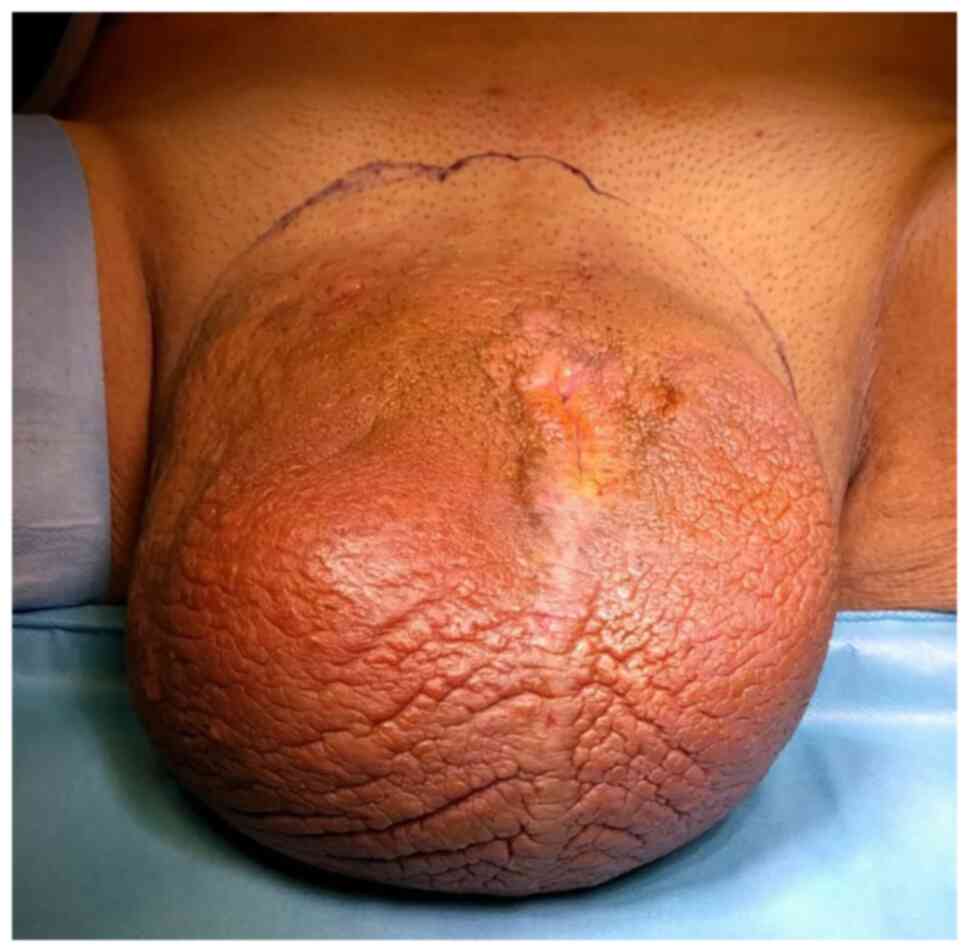
In May, 2020, a 43-year-old Caucasian male patient was admitted to the Department of Urology and Andrology of University Federico II of Naples (Naples, Italy) with massive scrotal elephantiasis. The past medical history of the patient was relevant for arterial hypertension. His previous surgical history included a circumcision at the age of 16. There was no history of sexually transmitted diseases, irradiation, or travel to endemic regions. The onset was spontaneous, and the swelling had substantially increased over the past 4 years. He reported psychological discomfort mainly due to the esthetic appearance of the genitalia and a burning sensation during micturition. No other notable findings were evident at the physical examination. The weight and height of the patient at the time of surgery were 140 kg and 190 cm, respectively (body mass index, 38.7 kg/m2; obesity class II). He presented a massive swelling of the scrotum with cutaneous indurations covering the vast majority of the area (Fig. 1). His penis was completely buried, and the glans was not visible. The penis, the testes and the spermatic cords were not palpable. Laboratory testing (including human immunodeficiency virus, markers for testicular cancer, antibodies to schistosomes, Chlamydia trachomatis and filariae) were negative. Magnetic resonance imaging of the abdomen revealed the integrity of the corpora cavernosa, the spermatic cord, as well as the testis. On the other hand, the status of the glans was uncertain. The patient was thus scheduled for a complete scrotectomy. The various stages of surgery included the following:

Figure 1

Pre-operative status and patient positioning.

Preparation prior to surgery

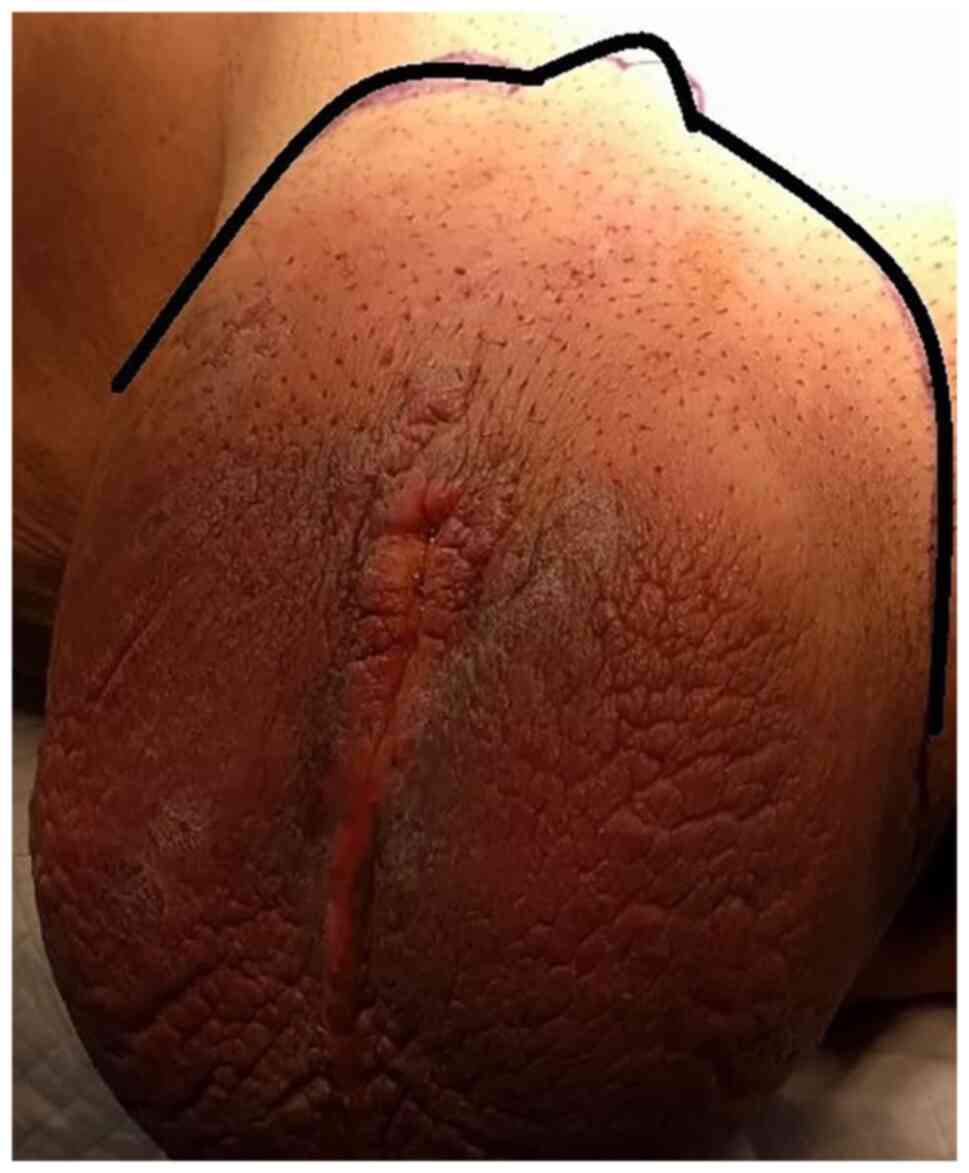
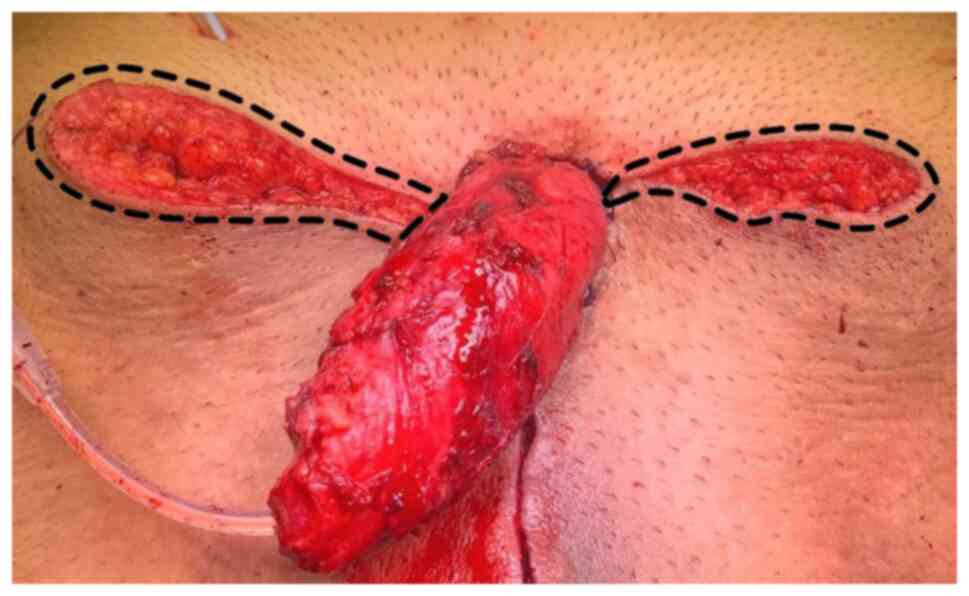
Intravenous broad-spectrum antibiotics (cefazolin, 2 g, intravenous) were administered. Skin preparation and draping of the patient was performed with the patient placed in a simple lithotomy position, with the calves placed on Allen stirrups. A Mayo table was used to sustain the scrotum. The skin to be excised was marked out and a ‘hanger-shaped incision’, allowing the preservation of the penis, spermatic cords and both testes was performed (Fig. 2).

Figure 2

‘Hanger-shaped incision’.

Demolitive phase

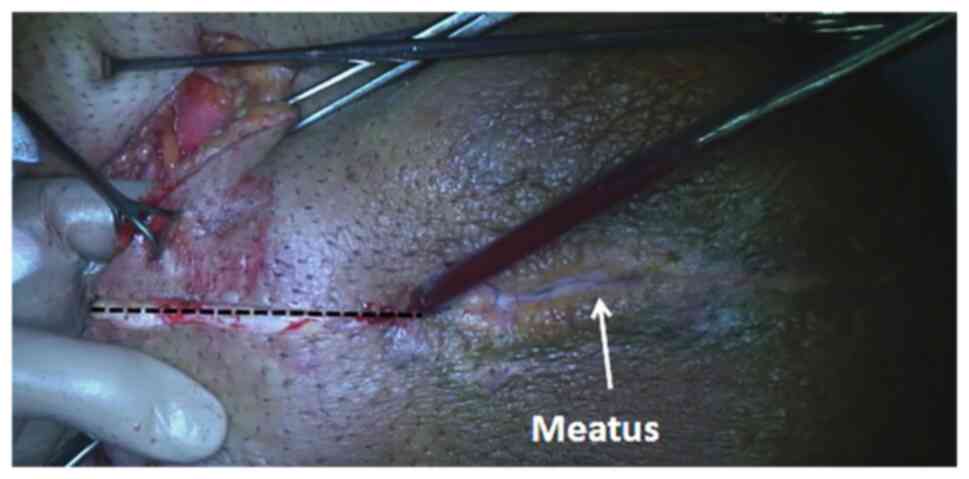
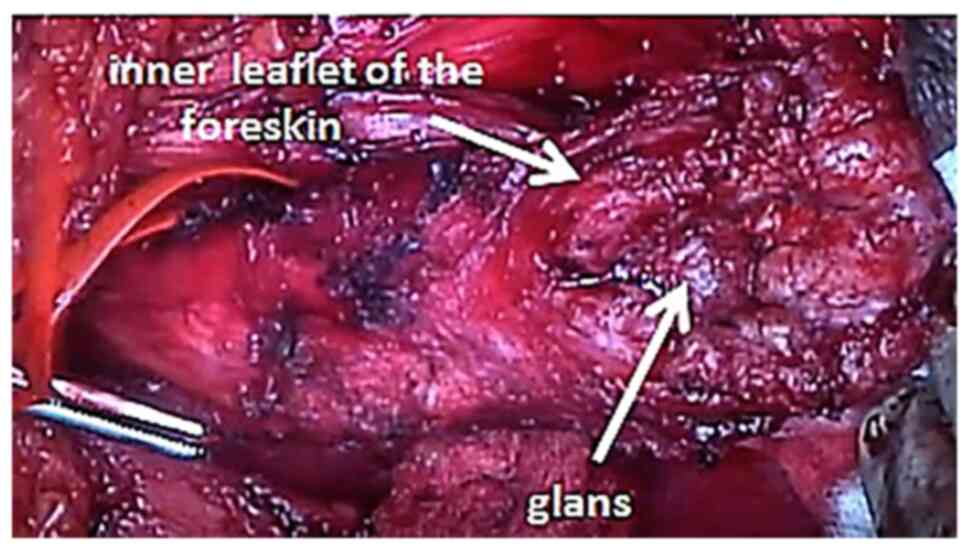
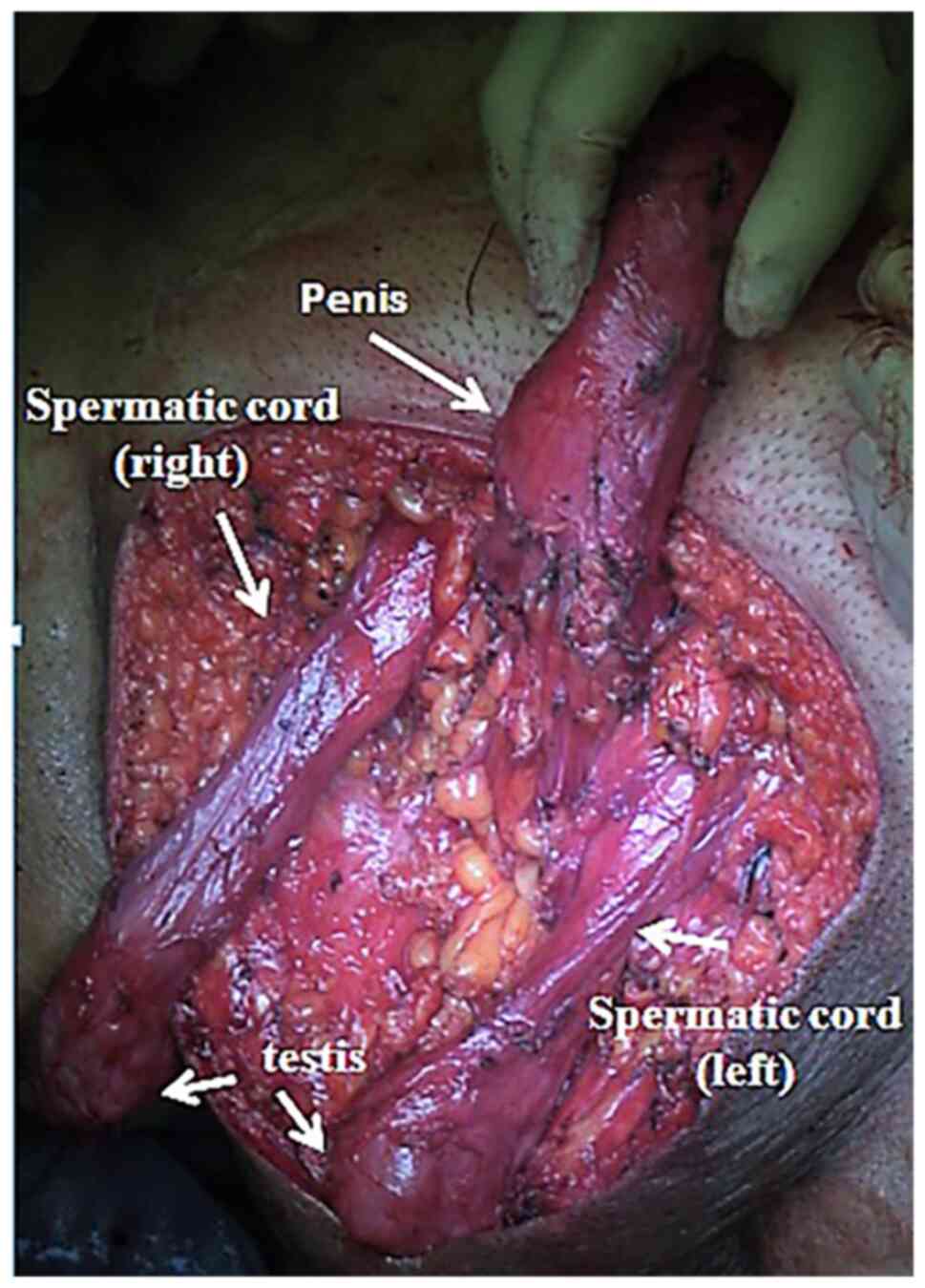
Following the superior incision, the dissection of the tissues was commenced with the aid of LigaSure ImpactTM (Medtronic) aiming to identify the penis first and subsequently, the spermatic cords. Once the penis was identified, a midline incision of the scrotum was performed to reveal the glans (Fig. 3). In this case, the glans appeared completely dysmorphic (Fig. 4). The external meatus was stenotic; however, the patient was we successfully catheterized with the use of a hydrophilic guidewire and urethral dilators. A frozen section of the prepuce and glandular tissue was made to exclude the possibility of a cancerous degeneration. The report was concordant to a non-specific chronic inflammation with areas of epidermal and dermal fibrosis. The spermatic cords and testis were recognized and secured away. Once the noble structures were identified (Fig. 5) the mass was excised from the bottom to the top. The excised scrotal tissue weighed 4,250 g.

Figure 3

Midline incision of the scrotum to reveal the glans.

Figure 4

After the midline incision of the scrotum, the glans and the inner leaflet of the foreskin were identified.

Figure 5

Noble structures following the mass excision.

Reconstructive phase

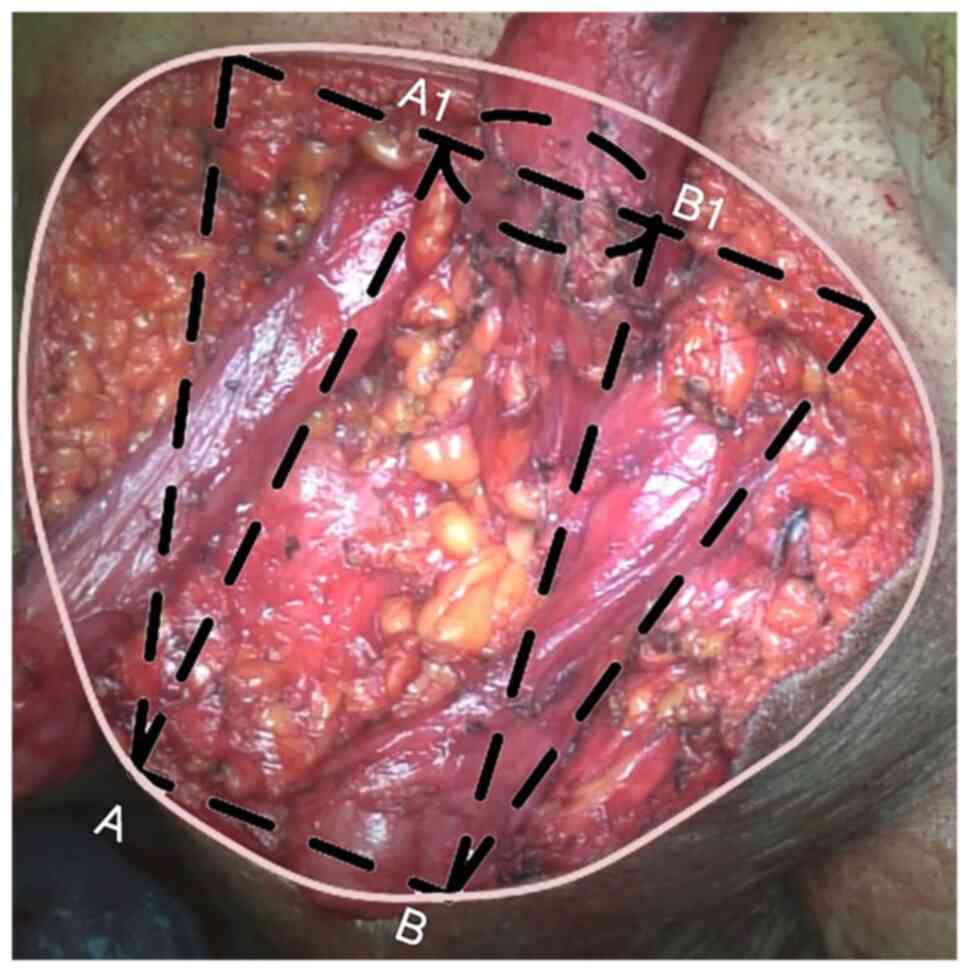
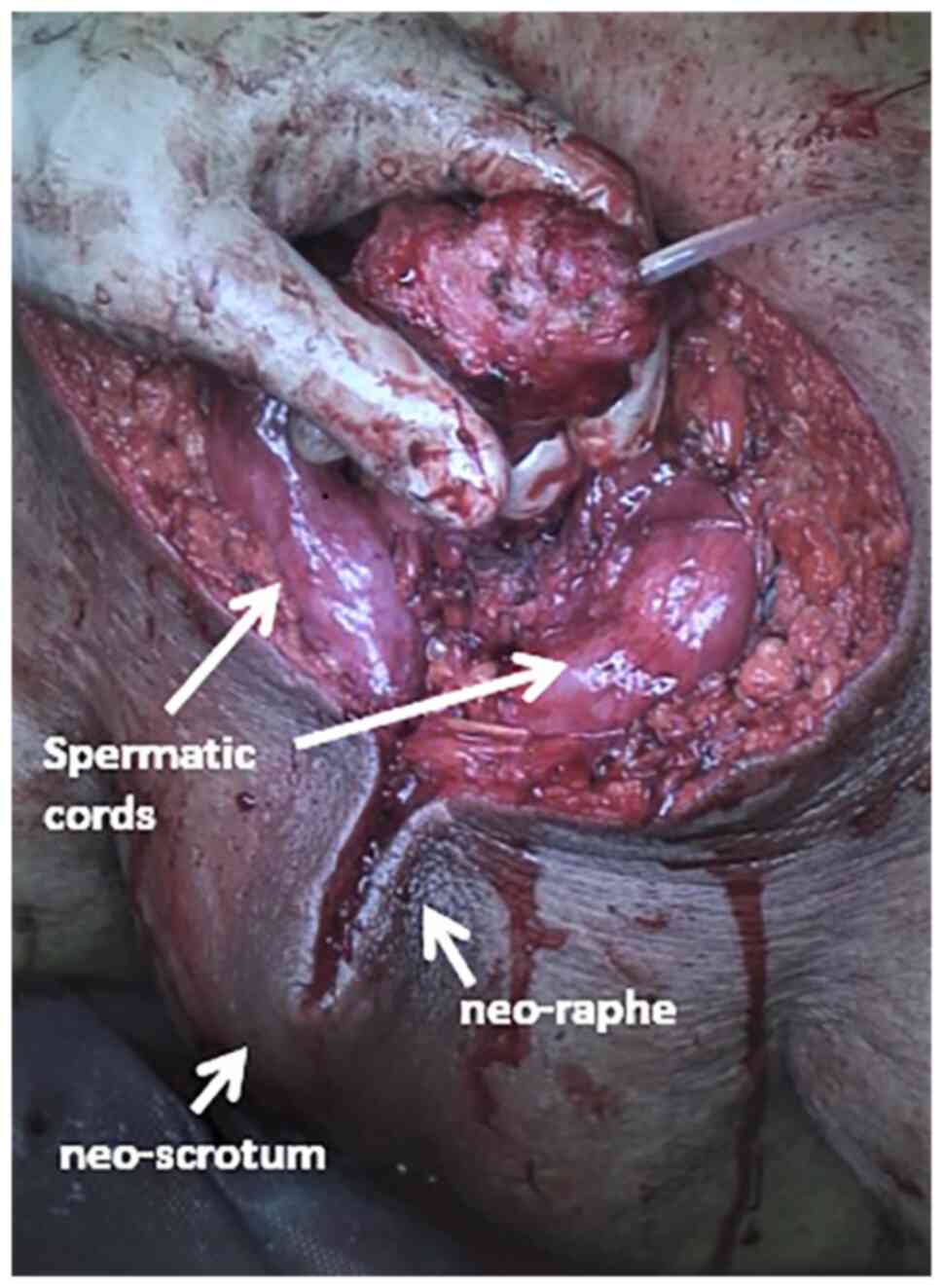
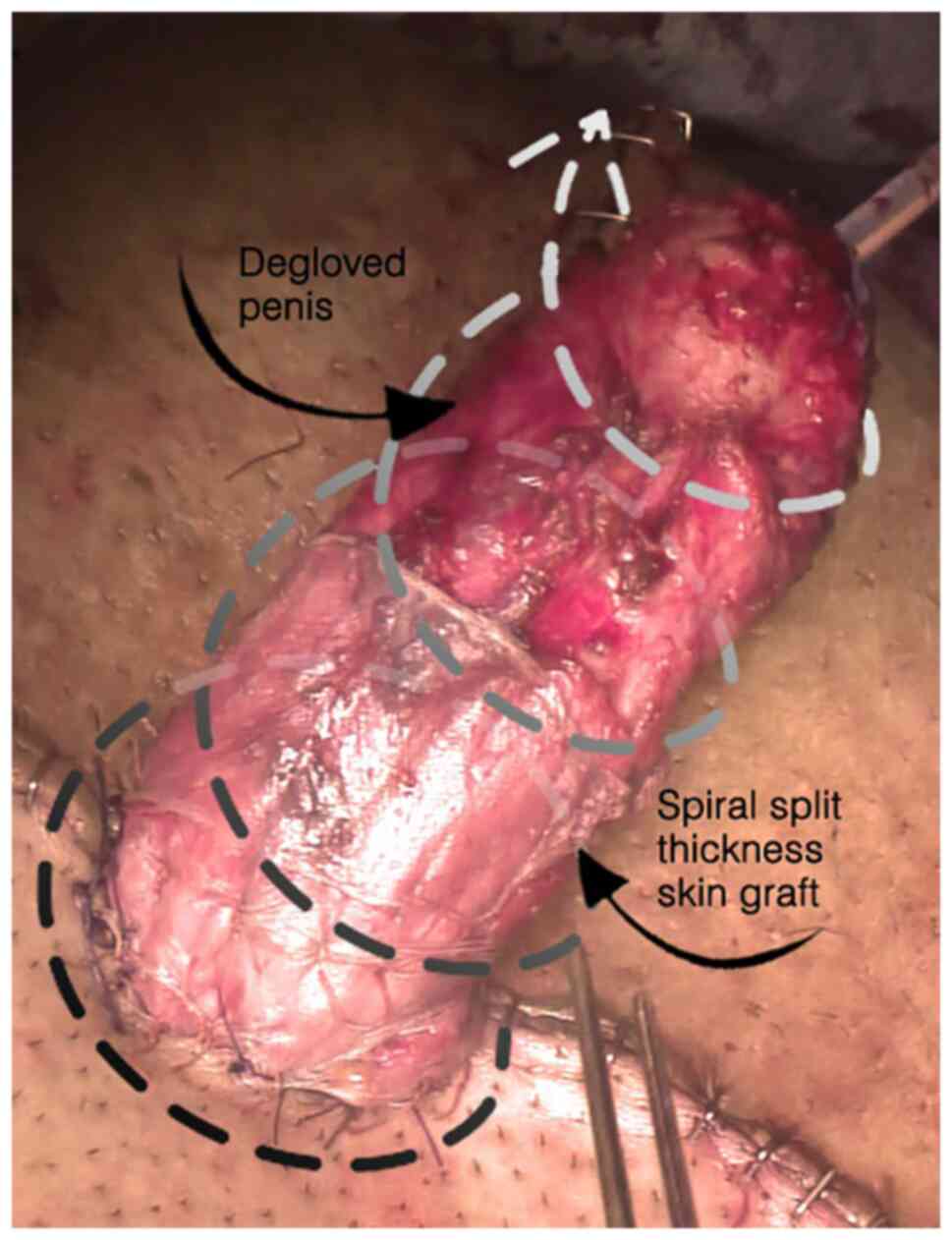
The ‘hanger-shaped incision’ allowed for the reconstruction of a trapezoidal shaped cavity. The perineal subcutaneous tissues were deeply dissected to create a pouch as a ‘neoscrotum’ with a ‘neoseptum’. The latter was created using 2-0 Vicryl stitches between the midline fat and the dermis bilaterally. The reconstruction of the neoscrotum was obtained by closing the trapezoidal area of the perineum into a T-shaped line. More precisely, the inferior corners of the trapezium (Fig. 6A and B) were lifted up and sutured to the base of the penis at the 3' and 9' o'clock positions (Fig. 6A1 and B1). This allowed for the creation of a ‘neo-raphe’ (Fig. 7). The superior corners were approximated using a V-Y advancement flap to solve the ‘doggy ears’ (Fig. 8). A split-thickness skin graft (STSG) of 0.016 inches was harvested from the inner surface of the right leg, in order to cover the penis. The STSG was quilted onto the dartos layer of the penis in a spiral way using 4-0 Vicryl Rapid suture (Fig. 9). The whole glans was completely affected by the inflammatory degeneration (Fig. 4); therefore, a resurfacing of the glans was performed; two 10 ch Redivac (closed drain system) drains were positioned bilaterally.

Figure 6

The reconstruction of the neo-scrotum was obtained by closing the trapezoidal area of the perineum into a T-shaped line. The inferior corners of the trapezium (A and B) were lifted up and sutured to the base of the penis at the 3' and 9' o'clock positions (A1 and B1).

Figure 7

Reconstruction of neo-raphe.

Figure 8

V-Y advancement flap in the treatment of doggy ears resulted from the T-closure of the trapezoidal cavity.

Figure 9

Following penile degloving, the split-thickness skin graft was positioned and quilted in a spiral manner.

Post-operative management

The total time for the procedure was 5 h and 45 min, with an estimated blood loss of 250 ml. Post-operative therapy included paracetamol at 1,000 mg three times a day, cefazoline (2 g) once a day and enoxaparin (6,000 IU) twice a day. The drains were removed after 4 days.

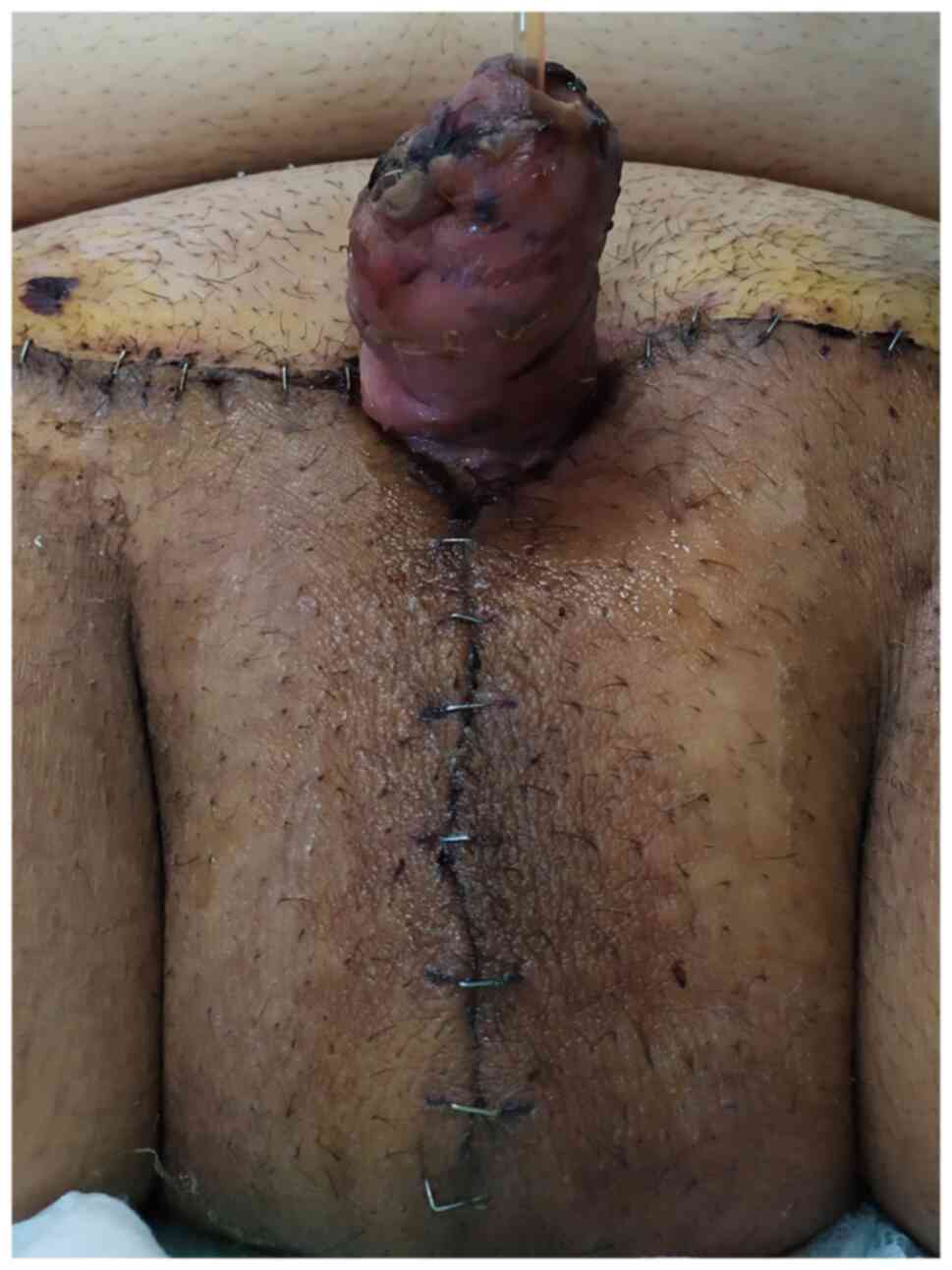
The duration of the hospital stay was 10 days. The post-operative hospitalization was uneventful. The post-operative appearance at 2 weeks is illustrated in Fig. 10 and no complications were reported following 1 year of follow up. The excised tissue was sent for histopathological analysis. Histologically, the tissue was characterized by marked edema with dermal fibrosis, dilatation of lymphatic vessels and chronic inflammatory infiltrates, mainly lymphoplasmacellular into the dermis separated by fibrous bands (data not shown).

Figure 10

The post-operative appearance of the patient at 2 weeks.

Discussion

The management of penoscrotal elephantiasis should be focused on treating the underlying causes. A neoplastic process has to be excluded and medical treatment should be administered when necessary. To complete the treatment a surgical approach is essential. There are several ways to approach such conditions (7-9). In such cases, an excisional approach is the only possible treatment. Several surgical techniques have been presented over the years. In 2008, Garaffa et al (10) described the ‘Scrotal inverted ‘W’ incision’. In 2014, Machol et al (11) demonstrated that lateral-based scrotal flaps (with or without mid-raphe Z-plasty) allowed for a correct anatomical reconstruction. In addition, in 2018, Irdam and Fadhly (12) described a circular incision encircling the scrotum.

Furthermroe, in 2019, Alnajjar et al (13) suggested an innovative approach with a ‘batman incision’ that avoids the need for pedicled flaps and their associated risks of flap ischemia/necrosis, longer surgical times and additional donor site wounds. On the other hand, such technique requires penile transposition and lower abdomen extensive mobilization (13).

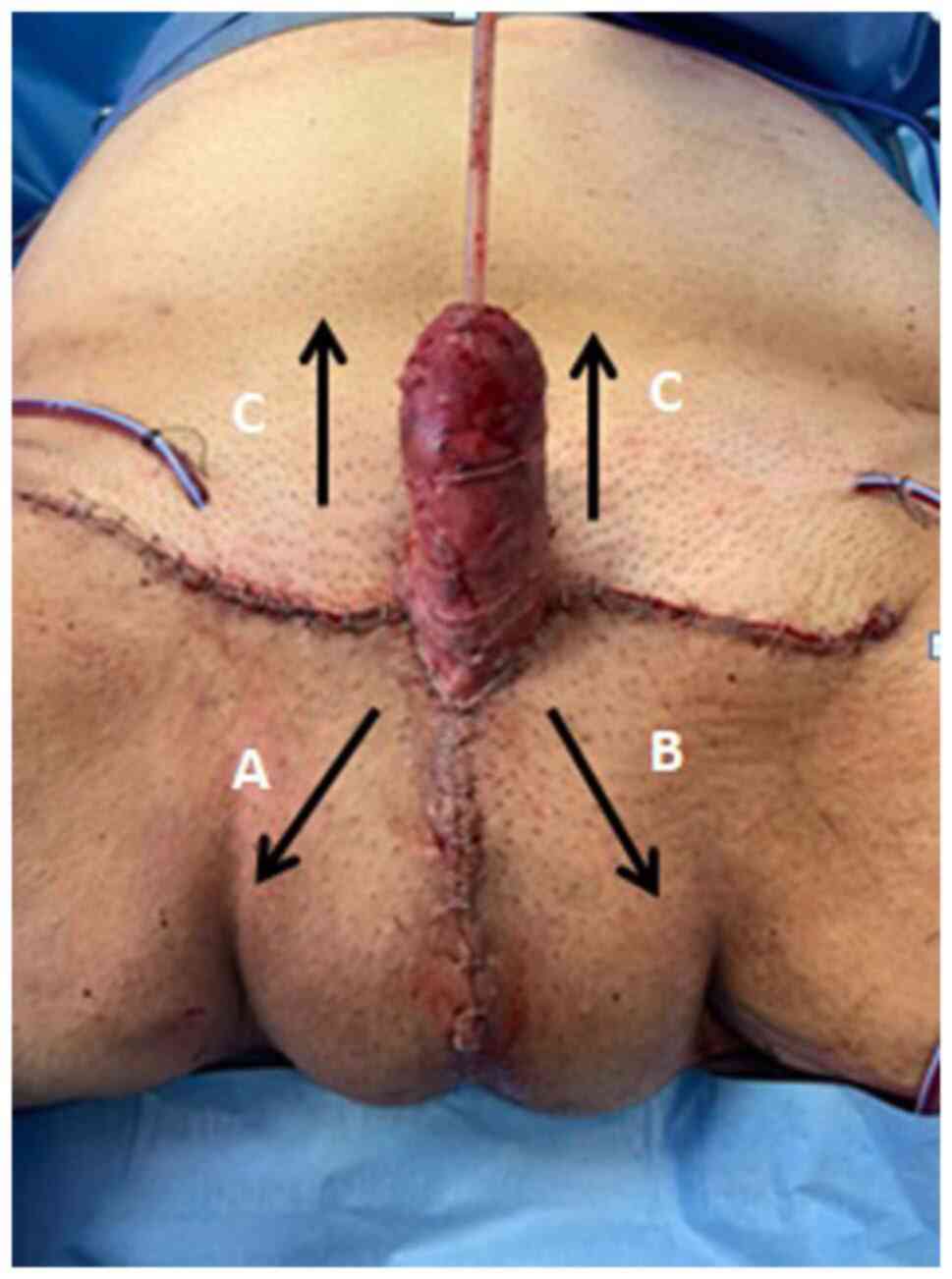
The present study ‘redrew’ the surgical approach to this uncommon disease using a ‘hanger-shaped incision’ in order to obtain a trapezoidal cavity. Such an incision permits the formation of neo-raphe, neo-septum and eventually, the neo-scrotum as a method with which to restore as much as possible the natural appearance of the genitalia. The neo-septum was designed in order to avoid the risk of spermatic cords twisting. In fact, the continuous stretching of the tissues, due to the weight of the mass, could irremediably cause a lengthening of the cords. When approaching such large masses, a top-down approach is suggested, as the identification of the noble structures becomes more feasible and safe. Moreover, the ‘hanger-shaped incision’ permits a T-closure of the wound, preventing the extensive mobilization of the pre-pubic area which will be mandatory for a penile transposition. In addition, a penile transposition requires a perfect ring excision to avoid either difficulty with the grafting or constriction during erection. On the other hand, the T closure ensures a redistribution of the tensile strengths on three different unconnected flaps (Figs. 11 and 12).

Figure 11

The results following the surgery. Arrows indicate tension strengths distributed on three different unconnected flaps. The letters in the image indicate three different tension strengths as follows: A, right diagonal tension force; B, left diagonal tension force; C, vertical tension force.

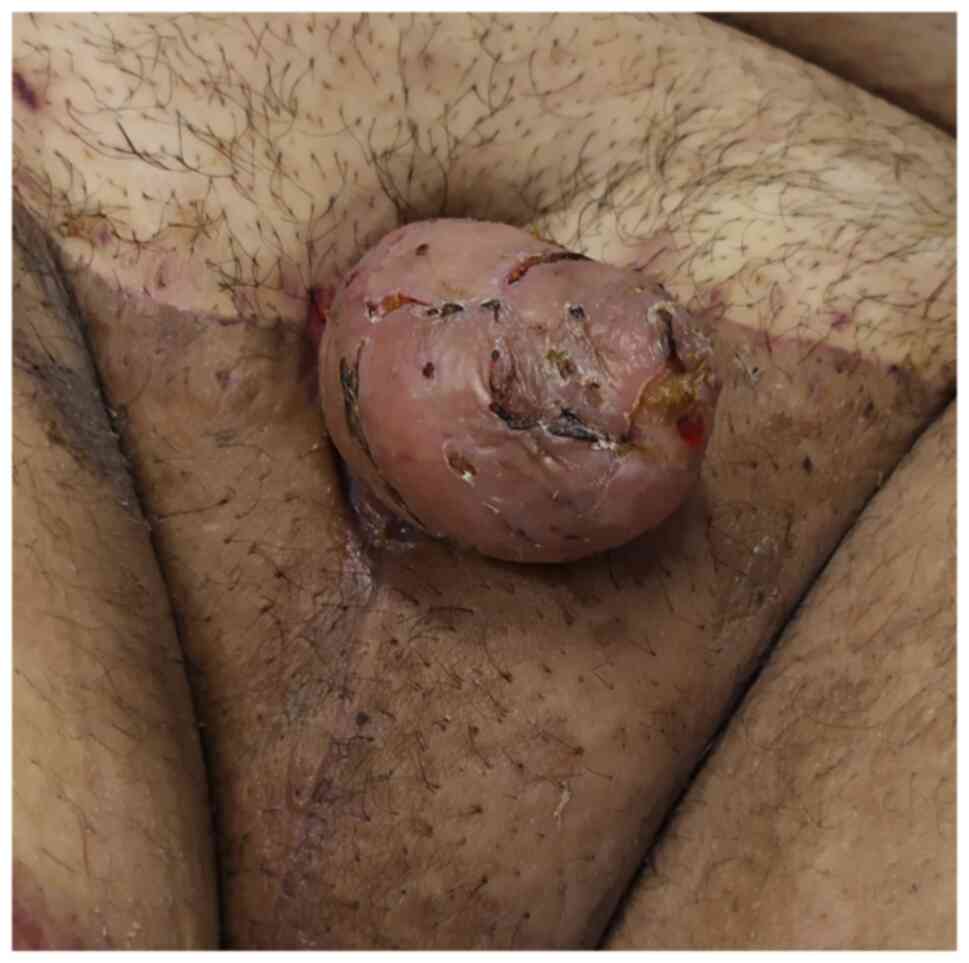
Figure 12

The post-operative appearance of the patient at 6 weeks.

In conclusion, in the case described in the present study, the ‘hanger-shaped incision’ minimized the use of rotation flaps and should reduced the risk of recurrence by eliminating all the cellulitis tissue, restoring the natural compartmentalization of the scrotum and improving the esthetic appearance.

Acknowledgements

Not applicable.

Funding

Funding: No funding was received.

Availability of data and materials

The datasets used and/or analyzed during the current study are available from the corresponding author on reasonable request.

Authors' contributions

MCa was involved in the conceptualization of the study and in the study supervision. ADG was involved in data curation and in the conceptualization of the study. MCr was involved in in the conceptualization of the study and in formal analysis. AG, CDA and LoC were involved in the conceptualization of the study and in the writing of the original draft. AP was involved in the validation of the patient data and in the development or design of the study. LN was involved in patient data analysis and methodology. CMi and GO were involved the study methodology and performed the novel type of surgery. GCe was involved in the study methodology and advised on patient treatment. GCa, LuC, CMa and GMF were involved in the conceptualization of the study, and in the writing, reviewing and editing of the manuscript. VM was involved in the development or design of the study and performed the novel type of surgery. RLR was involved in project administration and methodology, and has performed the novel type of surgery. MCa and ADG confirm the authenticity of all the raw data. All authors have read and approved the final manuscript.

Ethics approval and consent to participate

Written consent has been obtained from the patient for the inclusion of his data in the present case report.

Patient consent for publication

Written consent was obtained from the patient. This consent also included consent for the publication of the patient images.

Competing interests

The authors declare that they have no competing interests.

References

1 

Modolin M, Mitre AI, da Silva JC, Cintra W, Quagliano AP, Arap S and Ferreira MC: Surgical treatment of lymphedema of the penis and scrotum. Clinics (Sao Paulo). 61:289–294. 2006.PubMed/NCBI View Article : Google Scholar

2 

Muehlberger T, Homann HH, Kuhnen C, Vogt PM and Steinau HU: Etiology, clinical aspects and therapy of penoscrotal lymphedema. Chirurg. 72:414–418. 2001.PubMed/NCBI View Article : Google Scholar : (In German).

3 

García-Tutor E, Botellé del Hierro J, San Martín Maya A, Castro García J, España A, Fernández Montero J and Robles García JE: Surgical treatment of penile lymphedema associated with hidradenitis suppurativa. Actas Urol Esp. 29:519–522. 2005.PubMed/NCBI View Article : Google Scholar : (In Spanish).

4 

Lobato RC, Zatz RF, Cintra Junior W, Modolin MLA, Chi A, Van Dunem Filipe de Almeida YK and Gemperli R: Surgical treatment of a penoscrotal massive localized lymphedema: Case report. Int J Surg Case Rep. 59:84–89. 2019.PubMed/NCBI View Article : Google Scholar

5 

Pastor C and Granick MS: Scrotal lymphedema. Eplasty. 11(ic15)2011.PubMed/NCBI

6 

Lin T, Lin YZ, Wu YP, Lin TT, Chen DN, Wei Y, Xue XY and Xu N: Penoscrotal edema: A case report and literature review. BMC Urol. 19(22)2019.PubMed/NCBI View Article : Google Scholar

7 

Aulia I and Yessica EC: Surgical management of male genital lymphedema: A systematic review. Arch Plast Surg. 47:3–8. 2020.PubMed/NCBI View Article : Google Scholar

8 

Pacheco YD, García-Duque O and Fernández-Palacios J: Penile and scrotal lymphedema associated with hidradenitis suppurativa: Case report and review of surgical options. Cir Cir. 86:84–88. 2018.PubMed/NCBI View Article : Google Scholar

9 

Zugor V, Horch RE, Labanaris AP, Schreiber M and Schott GE: Penoscrotal elephantiasis: Diagnostics and treatment options. Urologe A. 47:472–476. 2008.PubMed/NCBI View Article : Google Scholar : (In German).

10 

Garaffa G, Christopher N and Ralph DJ: The management of genital lymphoedema. BJU Int. 102:480–484. 2008.PubMed/NCBI View Article : Google Scholar

11 

Machol JA IV, Langenstroer P and Sanger JR: Surgical reduction of scrotal massive localized lymphedema (MLL) in obesity. J Plast Reconstr Aesthet Surg. 67:1719–1725. 2014.PubMed/NCBI View Article : Google Scholar

12 

Irdam GA and Fadhly S: Scrotal reconstruction on scrotal lymphedema. Urol Case Rep. 20:9–11. 2018.PubMed/NCBI View Article : Google Scholar

13 

Alnajjar HM, Castiglione F, Ahmed K, Haider A, Nigam R and Muneer A: A novel ‘Batman’ scrotectomy technique for the management of scrotal lymphoedema following treatment for penile cancer. Transl Androl Urol. 8:448–456. 2019.PubMed/NCBI View Article : Google Scholar

Related Articles

  • Abstract
  • View
  • Download
Copy and paste a formatted citation
Spandidos Publications style
Capece M, Di Giovanni A, Creta M, Giordano A, D'alterio C, Palmieri A, Cirigliano L, Napolitano L, Mirone C, Orlandino G, Orlandino G, et al: ‘Hanger‑shaped’ scrotectomy: A novel technique for the management of penoscrotal lymphedema: A case report. Med Int 2: 33, 2022.
APA
Capece, M., Di Giovanni, A., Creta, M., Giordano, A., D'alterio, C., Palmieri, A. ... La Rocca, R. (2022). ‘Hanger‑shaped’ scrotectomy: A novel technique for the management of penoscrotal lymphedema: A case report. Medicine International, 2, 33. https://doi.org/10.3892/mi.2022.58
MLA
Capece, M., Di Giovanni, A., Creta, M., Giordano, A., D'alterio, C., Palmieri, A., Cirigliano, L., Napolitano, L., Mirone, C., Orlandino, G., Celentano, G., Califano, G., Cirillo, L., Marino, C., Fusco, G. M., Mirone, V., La Rocca, R."‘Hanger‑shaped’ scrotectomy: A novel technique for the management of penoscrotal lymphedema: A case report". Medicine International 2.6 (2022): 33.
Chicago
Capece, M., Di Giovanni, A., Creta, M., Giordano, A., D'alterio, C., Palmieri, A., Cirigliano, L., Napolitano, L., Mirone, C., Orlandino, G., Celentano, G., Califano, G., Cirillo, L., Marino, C., Fusco, G. M., Mirone, V., La Rocca, R."‘Hanger‑shaped’ scrotectomy: A novel technique for the management of penoscrotal lymphedema: A case report". Medicine International 2, no. 6 (2022): 33. https://doi.org/10.3892/mi.2022.58
Copy and paste a formatted citation
x
Spandidos Publications style
Capece M, Di Giovanni A, Creta M, Giordano A, D'alterio C, Palmieri A, Cirigliano L, Napolitano L, Mirone C, Orlandino G, Orlandino G, et al: ‘Hanger‑shaped’ scrotectomy: A novel technique for the management of penoscrotal lymphedema: A case report. Med Int 2: 33, 2022.
APA
Capece, M., Di Giovanni, A., Creta, M., Giordano, A., D'alterio, C., Palmieri, A. ... La Rocca, R. (2022). ‘Hanger‑shaped’ scrotectomy: A novel technique for the management of penoscrotal lymphedema: A case report. Medicine International, 2, 33. https://doi.org/10.3892/mi.2022.58
MLA
Capece, M., Di Giovanni, A., Creta, M., Giordano, A., D'alterio, C., Palmieri, A., Cirigliano, L., Napolitano, L., Mirone, C., Orlandino, G., Celentano, G., Califano, G., Cirillo, L., Marino, C., Fusco, G. M., Mirone, V., La Rocca, R."‘Hanger‑shaped’ scrotectomy: A novel technique for the management of penoscrotal lymphedema: A case report". Medicine International 2.6 (2022): 33.
Chicago
Capece, M., Di Giovanni, A., Creta, M., Giordano, A., D'alterio, C., Palmieri, A., Cirigliano, L., Napolitano, L., Mirone, C., Orlandino, G., Celentano, G., Califano, G., Cirillo, L., Marino, C., Fusco, G. M., Mirone, V., La Rocca, R."‘Hanger‑shaped’ scrotectomy: A novel technique for the management of penoscrotal lymphedema: A case report". Medicine International 2, no. 6 (2022): 33. https://doi.org/10.3892/mi.2022.58
Follow us
  • Twitter
  • LinkedIn
  • Facebook
About
  • Spandidos Publications
  • Careers
  • Cookie Policy
  • Privacy Policy
How can we help?
  • Help
  • Live Chat
  • Contact
  • Email to our Support Team