Spandidos Publications Logo
  • About
    • About Spandidos
    • Aims and Scopes
    • Abstracting and Indexing
    • Editorial Policies
    • Reprints and Permissions
    • Job Opportunities
    • Terms and Conditions
    • Contact
  • Journals
    • All Journals
    • Oncology Letters
      • Oncology Letters
      • Information for Authors
      • Editorial Policies
      • Editorial Board
      • Aims and Scope
      • Abstracting and Indexing
      • Bibliographic Information
      • Archive
    • International Journal of Oncology
      • International Journal of Oncology
      • Information for Authors
      • Editorial Policies
      • Editorial Board
      • Aims and Scope
      • Abstracting and Indexing
      • Bibliographic Information
      • Archive
    • Molecular and Clinical Oncology
      • Molecular and Clinical Oncology
      • Information for Authors
      • Editorial Policies
      • Editorial Board
      • Aims and Scope
      • Abstracting and Indexing
      • Bibliographic Information
      • Archive
    • Experimental and Therapeutic Medicine
      • Experimental and Therapeutic Medicine
      • Information for Authors
      • Editorial Policies
      • Editorial Board
      • Aims and Scope
      • Abstracting and Indexing
      • Bibliographic Information
      • Archive
    • International Journal of Molecular Medicine
      • International Journal of Molecular Medicine
      • Information for Authors
      • Editorial Policies
      • Editorial Board
      • Aims and Scope
      • Abstracting and Indexing
      • Bibliographic Information
      • Archive
    • Biomedical Reports
      • Biomedical Reports
      • Information for Authors
      • Editorial Policies
      • Editorial Board
      • Aims and Scope
      • Abstracting and Indexing
      • Bibliographic Information
      • Archive
    • Oncology Reports
      • Oncology Reports
      • Information for Authors
      • Editorial Policies
      • Editorial Board
      • Aims and Scope
      • Abstracting and Indexing
      • Bibliographic Information
      • Archive
    • Molecular Medicine Reports
      • Molecular Medicine Reports
      • Information for Authors
      • Editorial Policies
      • Editorial Board
      • Aims and Scope
      • Abstracting and Indexing
      • Bibliographic Information
      • Archive
    • World Academy of Sciences Journal
      • World Academy of Sciences Journal
      • Information for Authors
      • Editorial Policies
      • Editorial Board
      • Aims and Scope
      • Abstracting and Indexing
      • Bibliographic Information
      • Archive
    • International Journal of Functional Nutrition
      • International Journal of Functional Nutrition
      • Information for Authors
      • Editorial Policies
      • Editorial Board
      • Aims and Scope
      • Abstracting and Indexing
      • Bibliographic Information
      • Archive
    • International Journal of Epigenetics
      • International Journal of Epigenetics
      • Information for Authors
      • Editorial Policies
      • Editorial Board
      • Aims and Scope
      • Abstracting and Indexing
      • Bibliographic Information
      • Archive
    • Medicine International
      • Medicine International
      • Information for Authors
      • Editorial Policies
      • Editorial Board
      • Aims and Scope
      • Abstracting and Indexing
      • Bibliographic Information
      • Archive
  • Articles
  • Information
    • Information for Authors
    • Information for Reviewers
    • Information for Librarians
    • Information for Advertisers
    • Conferences
  • Language Editing
Spandidos Publications Logo
  • About
    • About Spandidos
    • Aims and Scopes
    • Abstracting and Indexing
    • Editorial Policies
    • Reprints and Permissions
    • Job Opportunities
    • Terms and Conditions
    • Contact
  • Journals
    • All Journals
    • Biomedical Reports
      • Information for Authors
      • Editorial Policies
      • Editorial Board
      • Aims and Scope
      • Abstracting and Indexing
      • Bibliographic Information
      • Archive
    • Experimental and Therapeutic Medicine
      • Information for Authors
      • Editorial Policies
      • Editorial Board
      • Aims and Scope
      • Abstracting and Indexing
      • Bibliographic Information
      • Archive
    • International Journal of Epigenetics
      • Information for Authors
      • Editorial Policies
      • Editorial Board
      • Aims and Scope
      • Abstracting and Indexing
      • Bibliographic Information
      • Archive
    • International Journal of Functional Nutrition
      • Information for Authors
      • Editorial Policies
      • Editorial Board
      • Aims and Scope
      • Abstracting and Indexing
      • Bibliographic Information
      • Archive
    • International Journal of Molecular Medicine
      • Information for Authors
      • Editorial Policies
      • Editorial Board
      • Aims and Scope
      • Abstracting and Indexing
      • Bibliographic Information
      • Archive
    • International Journal of Oncology
      • Information for Authors
      • Editorial Policies
      • Editorial Board
      • Aims and Scope
      • Abstracting and Indexing
      • Bibliographic Information
      • Archive
    • Medicine International
      • Information for Authors
      • Editorial Policies
      • Editorial Board
      • Aims and Scope
      • Abstracting and Indexing
      • Bibliographic Information
      • Archive
    • Molecular and Clinical Oncology
      • Information for Authors
      • Editorial Policies
      • Editorial Board
      • Aims and Scope
      • Abstracting and Indexing
      • Bibliographic Information
      • Archive
    • Molecular Medicine Reports
      • Information for Authors
      • Editorial Policies
      • Editorial Board
      • Aims and Scope
      • Abstracting and Indexing
      • Bibliographic Information
      • Archive
    • Oncology Letters
      • Information for Authors
      • Editorial Policies
      • Editorial Board
      • Aims and Scope
      • Abstracting and Indexing
      • Bibliographic Information
      • Archive
    • Oncology Reports
      • Information for Authors
      • Editorial Policies
      • Editorial Board
      • Aims and Scope
      • Abstracting and Indexing
      • Bibliographic Information
      • Archive
    • World Academy of Sciences Journal
      • Information for Authors
      • Editorial Policies
      • Editorial Board
      • Aims and Scope
      • Abstracting and Indexing
      • Bibliographic Information
      • Archive
  • Articles
  • Information
    • For Authors
    • For Reviewers
    • For Librarians
    • For Advertisers
    • Conferences
  • Language Editing
Login Register Submit
  • This site uses cookies
  • You can change your cookie settings at any time by following the instructions in our Cookie Policy. To find out more, you may read our Privacy Policy.

    I agree
Search articles by DOI, keyword, author or affiliation
Search
Advanced Search
presentation
Medicine International
Join Editorial Board Propose a Special Issue
Print ISSN: 2754-3242 Online ISSN: 2754-1304
Journal Cover
July-August 2024 Volume 4 Issue 4

Full Size Image

Sign up for eToc alerts
Recommend to Library

Journals

International Journal of Molecular Medicine

International Journal of Molecular Medicine

International Journal of Molecular Medicine is an international journal devoted to molecular mechanisms of human disease.

International Journal of Oncology

International Journal of Oncology

International Journal of Oncology is an international journal devoted to oncology research and cancer treatment.

Molecular Medicine Reports

Molecular Medicine Reports

Covers molecular medicine topics such as pharmacology, pathology, genetics, neuroscience, infectious diseases, molecular cardiology, and molecular surgery.

Oncology Reports

Oncology Reports

Oncology Reports is an international journal devoted to fundamental and applied research in Oncology.

Experimental and Therapeutic Medicine

Experimental and Therapeutic Medicine

Experimental and Therapeutic Medicine is an international journal devoted to laboratory and clinical medicine.

Oncology Letters

Oncology Letters

Oncology Letters is an international journal devoted to Experimental and Clinical Oncology.

Biomedical Reports

Biomedical Reports

Explores a wide range of biological and medical fields, including pharmacology, genetics, microbiology, neuroscience, and molecular cardiology.

Molecular and Clinical Oncology

Molecular and Clinical Oncology

International journal addressing all aspects of oncology research, from tumorigenesis and oncogenes to chemotherapy and metastasis.

World Academy of Sciences Journal

World Academy of Sciences Journal

Multidisciplinary open-access journal spanning biochemistry, genetics, neuroscience, environmental health, and synthetic biology.

International Journal of Functional Nutrition

International Journal of Functional Nutrition

Open-access journal combining biochemistry, pharmacology, immunology, and genetics to advance health through functional nutrition.

International Journal of Epigenetics

International Journal of Epigenetics

Publishes open-access research on using epigenetics to advance understanding and treatment of human disease.

Medicine International

Medicine International

An International Open Access Journal Devoted to General Medicine.

Journal Cover
July-August 2024 Volume 4 Issue 4

Full Size Image

Sign up for eToc alerts
Recommend to Library

  • Article
  • Citations
    • Cite This Article
    • Download Citation
    • Create Citation Alert
    • Remove Citation Alert
    • Cited By
  • Similar Articles
    • Related Articles (in Spandidos Publications)
    • Similar Articles (Google Scholar)
    • Similar Articles (PubMed)
  • Download PDF
  • Download XML
  • View XML
Opinion Open Access

Precision medicine for respiratory diseases: A current viewpoint

  • Authors:
    • Vasiliki Epameinondas Georgakopoulou
    • Ioannis G. Lempesis
    • Pagona Sklapani
    • Nikolaos Trakas
    • Demetrios A. Spandidos
  • View Affiliations / Copyright

    Affiliations: Department of Pathophysiology, Laiko General Hospital, Medical School of National and Kapodistrian University of Athens, 11527 Athens, Greece, Department of Biochemistry, Sismanogleio Hospital, 15126 Athens, Greece
    Copyright: © Georgakopoulou et al. This is an open access article distributed under the terms of Creative Commons Attribution License [CC BY 4.0].
  • Article Number: 31
    |
    Published online on: April 12, 2024
       https://doi.org/10.3892/mi.2024.155
  • Expand metrics +
Metrics: Total Views: 0 (Spandidos Publications: | PMC Statistics: )
Metrics: Total PDF Downloads: 0 (Spandidos Publications: | PMC Statistics: )
Cited By (CrossRef): 0 citations Loading Articles...

This article is mentioned in:


Abstract

In the realm of respiratory illnesses, despite the immense costs and efforts invested in diagnosis and treatment, numerous patients with chronic respiratory conditions or malignancies do not respond well to existing therapies. Delayed diagnoses and inadequate treatments contribute to these challenges, along with adverse reactions or treatment limitations due to side‑effects. However, recent advancements in understanding respiratory diseases have paved the way for personalized medical treatments, considering individual genetic, molecular and environmental factors. Precision medicine, which accommodates individual differences in disease susceptibility and response to treatments, aims to improve patient care by aligning medical research with tailored therapies. Innovative technologies, such as genomic sequencing and biomarker identification contribute to this approach, allowing for customized treatments and the identification of effective therapies. Additionally, the application of precision medicine in lung cancer treatment exemplifies the forefront of individualized care within respiratory medicine. Several studies have explored the role of precision medicine in managing respiratory infectious diseases, asthma and idiopathic pulmonary fibrosis, aiming to categorize diseases more accurately and design targeted therapies. The ultimate goal is to enhance treatment effectiveness, minimize adverse events, and shift towards a patient‑centered approach to managing respiratory conditions. Despite limitations, precision medicine holds promise for improving patient outcomes and emphasizing personalized care in respiratory medicine.

Precision medicine for respiratory diseases

Respiratory illnesses pose a significant cause of illness and mortality on a global scale. Despite the substantial expenses linked to the accurate diagnosis and treatment of these conditions, a number of patients suffering from chronic respiratory diseases or malignancies cannot be effectively treated using current therapies. There are often delays in diagnoses, treatments are frequently subpar, and in several cases, patients do not receive adequate care due to treatment unavailability or poor prognoses. Additionally, some patients encounter adverse reactions or limitations in the usefulness of available treatments due to side-effects (1).

In recent years, there has been a marked improvement in the understanding of the mechanisms through which respiratory diseases develop, allowing for tailored medical treatments based on individual patient traits. Understanding the genetic roots, molecular pathways and environmental influences driving disease development has opened avenues for preventive strategies and has enhanced diagnostic and treatment strategies personalized for each patient (2).

Precision medicine, broadly defined as strategies considering individual differences in preventing and treating ailments, aims to categorize individuals into groups with varying susceptibilities, pathogeneses, manifestations and responses to therapies for specific diseases. This approach seeks to enhance patient care by combining advancements in medical research and computer science, as highlighted by the substantial allocation of funds to the Precision Medicine Initiative (3,4).

Patient stratification based on molecular and phenotypic distinctions is not a new concept in medicine. Over time, disease classifications have evolved with advances in understanding disease origins, manifestations and prognoses (5).

Cutting-edge technologies, such as whole-genome sequencing, transcriptome profiling, proteomics and imaging techniques are transforming the classification of disease subtypes. Progress in comprehending regulatory networks and essential metabolic pathways allows for adjusting immune responses and crafting specific treatments, with some already in active clinical deployment. The goal of therapeutic drug monitoring is to offer customized therapies, aiming to reduce adverse effects, while ongoing efforts focus on pinpointing biomarkers for monitoring treatment responses and refining the duration of therapies. Yet, the challenge remains in managing the vast amount of complex data, requiring integrated knowledge systems and standardized data analysis in precision medicine (6).

In due course, precision medicine is expected to lead to diagnostic tools that identify individuals who will benefit most from specific therapies, while avoiding unnecessary treatments and expenses for those who will not benefit. Sharma et al (7) reported the application of precision medicine in the treatment of lung cancer, an area where tailoring patient care is at the forefront within the field of respiratory medicine. They discussed significant discoveries that have advanced the current knowledge of the molecular pathways underlying the onset and spread of lung cancer, as well as the development of immune checkpoint inhibitor therapy and targeted therapies, which have significantly improved the prognosis of patients with particular subtypes of the disease (7).

Salzer et al (8) provided a thorough overview of the use of precision medicine in the treatment of patients with long-term respiratory infectious diseases, such as tuberculosis, nontuberculous mycobacterial pulmonary disorders and chronic pulmonary aspergillosis. They presented an overview of the use of cutting-edge therapeutic applications and diagnostics in the future, including host-directed therapies that will significantly improve patient prognoses and enable them to be cured of these diseases. They also compared the current state of care to expert management standards (8).

Heaney and McGarvey (9) evaluated the conventional method of treating respiratory conditions (asthma and chronic obstructive pulmonary disease) in stages. The impact of comorbidities on the expression of airway disease was critically examined, along with new developments in the fields of airway inflammometry, biomarkers, and companion diagnostics that characterize endotypes of severe asthma and chronic obstructive pulmonary disease and stratify the response to biologics and small-molecule inhibitors, behavioral psychology, and the introduction of quantitative tools to measure inhaler adherence using digital technologies (9).

An impartial characterization of phenotypes or endotypes (which are phenotypes classified by their mechanisms) is a crucial initial stage in advancing precision medicine for asthma. While there have been definitions and treatment targets established for allergic or eosinophilic asthma categorized as T2-high asthma, identifying non-T2 phenotypes remains a primary focus. The effectiveness of precision medicine also hinges on identifying biomarkers that can distinguish between these phenotypes, aiding in the identification of patients suitable for specific targeted therapies. Hence, precision medicine establishes connections between phenotypes (endotypes) and targeted treatments, aiming for improved outcomes (10).

Recently, Karampitsakos et al (11) summarized the current knowledge of precision medicine in idiopathic pulmonary fibrosis (IPF) and highlighted barriers to translating these research findings into clinical practice. Over the past decade, there has been a surge in scientific advancements, resulting in the identification of multiple biomarkers and two anti-fibrotic compounds that can attenuate the progression of IPF. The current challenge lies in translating these biomarkers into cost-effective tools that offer valuable guidance for clinicians. An essential biomarker should significantly influence decisions of clinicians, whether by aiding in early diagnosis, providing insight into disease activity, or determining the need for treatment adjustments. Achieving this could involve the use of individual biomarkers, comprehensive indexes, or polygenic risk scores (11).

Identifying biomarkers that align with disease activity could play a pivotal role in determining when intervention is necessary. Particularly for patients with interstitial lung abnormalities (ILA) and mild functional impairment, where the initiation of antifibrotic treatment is occasionally delayed, these biomarkers could prove invaluable. Additionally, biomarkers capable of identifying specific endotypes are crucial (12-14). Instead of using the term ‘idiopathic’, categorizing pulmonary fibrosis based on high-risk genomic pulmonary fibrosis, MUC5B-pulmonary fibrosis, or telomeropathy-pulmonary fibrosis may offer a more effective approach. Utilizing precision medicine and endotyping could pave the way for pharmacogenetic approaches and may help guide treatment decisions. Tailoring treatments to specific endotypes based on distinct biomarker expression levels could enhance the effectiveness of future therapies, while minimizing adverse events. Examples include ongoing clinical, such as the TELO-SCOPE Study (NCT04638517) and the study with the title ‘Low-Dose Danazol for the Treatment of Telomere Related Diseases’ (NCT03312400) testing the synthetic androgen, danazol, for patients with short telomeres, based on previous findings suggesting the potential of androgens to restore telomerase activity in IPF, as well as the PRECISIONS trial for NAC involving TOLLIP gene variants (15,16).

Transitioning from a standardized approach to a patient-centered one is crucial. Trials evaluating therapeutic biomarkers alongside the weight-based dosing of antifibrotics or investigating reduced doses in patients with ILA could offer benefits, while minimizing adverse events that often lead to treatment cessation. Encouraging studies focused on managing symptoms in a personalized manner are essential. For instance, the extended-release form of nalbuphine, acting as a dual κ opioid receptor agonist/μ opioid receptor antagonist, exhibits promise in alleviating chronic cough in patients with IPF (17-19).

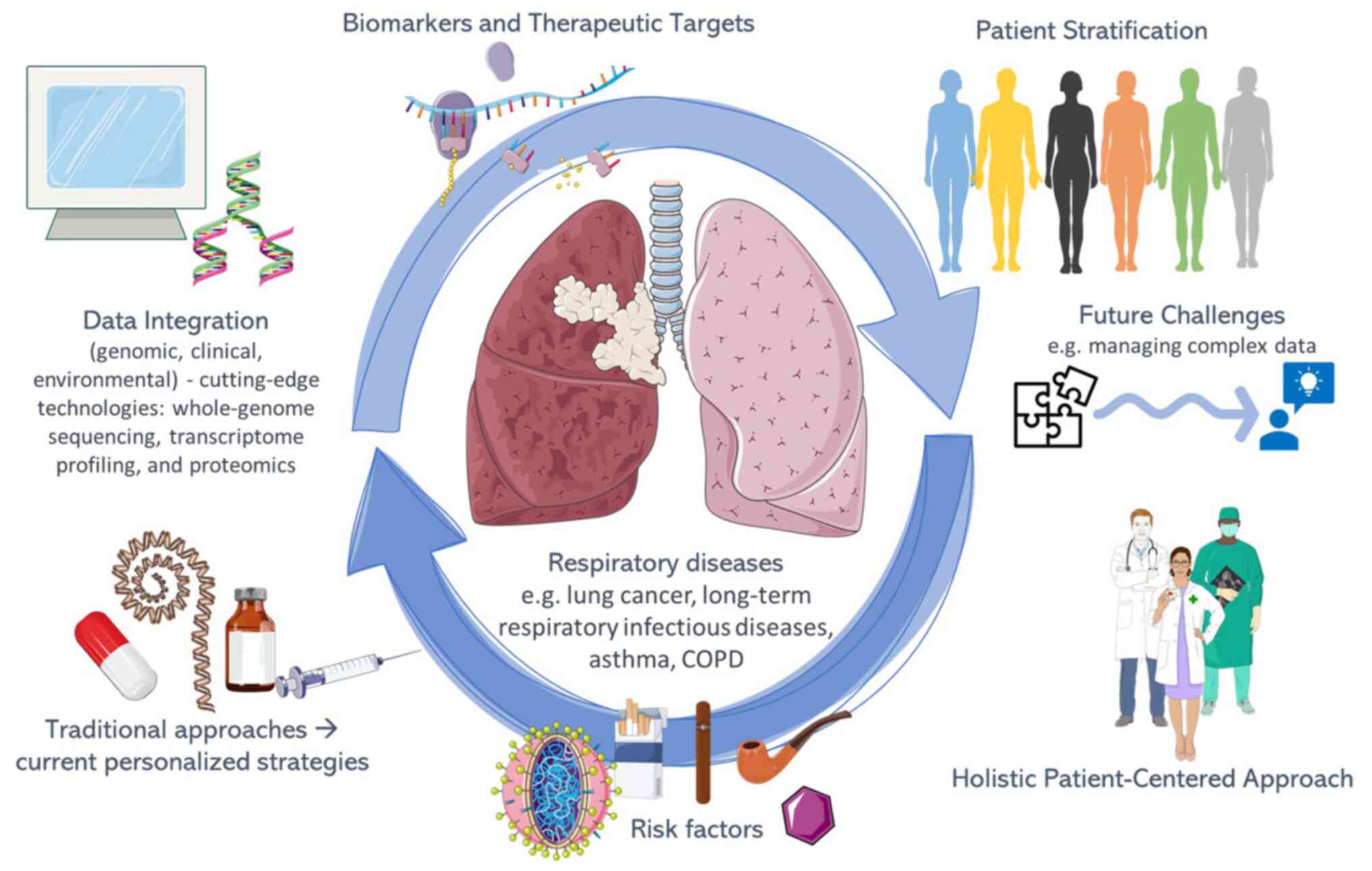
While not all respiratory disease cases can be cured, precision medicine continues to enhance patient prognoses. It emphasizes personalized care, yet a holistic approach centered on the patient beyond scientific advancements ensures a truly individualized and humane medical practice. The concept of precision medicine in the field of respiratory diseases is illustrated in Fig. 1.

Figure 1

Schematic illustration representing the concept of precision medicine in the field of respiratory diseases. Parts of this image were derived from the free medical site http://smart.servier.com/ (accessed on November 15, 2023) by Servier, licenced under a Creative Commons Attribution 3.0 Unported Licence. COPD, chronic obstructive pulmonary disease.

Acknowledgements

Not applicable.

Funding

Funding: No funding was received.

Availability of data and materials

Not applicable.

Authors' contributions

VEG, and DAS conceptualized the study. IGL, VEG, NT, PS and DAS designed and wrote the manuscript. All authors have read and approved the final manuscript. Data authentication is not applicable.

Ethics approval and consent to participate

Not applicable.

Patient consent for publication

Not applicable.

Competing interests

The authors declare that they have no competing interests.

Use of artificial intelligence tools

During the preparation of this work, AI tools were used to improve the readability and language of the manuscript or to generate images, and subsequently, the authors revised and edited the content produced by the AI tools as necessary, taking full responsibility for the ultimate content of the present manuscript.

References

1 

GBD Chronic Respiratory Disease Collaborators. Prevalence and attributable health burden of chronic respiratory diseases, 1990-2017: a systematic analysis for the Global Burden of Disease Study 2017. Lancet Respir Med. 8:585–596. 2020.PubMed/NCBI View Article : Google Scholar

2 

Obeidat M and Hall IP: Genetics of complex respiratory diseases: implications for pathophysiology and pharmacology studies. Br J Pharmacol. 163:96–105. 2011.PubMed/NCBI View Article : Google Scholar

3 

Jameson JL and Longo DL: Precision medicine - personalized, problematic, and promising. N Engl J Med. 372:2229–2234. 2015.PubMed/NCBI View Article : Google Scholar

4 

Collins FS and Varmus H: A new initiative on precision medicine. N Engl J Med. 372:793–795. 2015.PubMed/NCBI View Article : Google Scholar

5 

Haendel MA, Chute CG and Robinson PN: Classification, Ontology, and Precision Medicine. N Engl J Med. 379:1452–1462. 2018.PubMed/NCBI View Article : Google Scholar

6 

Wörheide MA, Krumsiek J, Kastenmüller G and Arnold M: Multi-omics integration in biomedical research - A metabolomics-centric review. Anal Chim Acta. 1141:144–162. 2021.PubMed/NCBI View Article : Google Scholar

7 

Sharma J, Shum E, Chau V, Paucar D, Cheng H and Halmos B: The Evolving Role of Biomarkers in Personalized Lung Cancer Therapy. Respiration. 93:1–14. 2017.PubMed/NCBI View Article : Google Scholar

8 

Salzer HJ, Wassilew N, Köhler N, Olaru ID, Günther G, Herzmann C, Kalsdorf B, Sanchez-Carballo P, Terhalle E, Rolling T, et al: Personalized Medicine for Chronic Respiratory Infectious Diseases: Tuberculosis, Nontuberculous Mycobacterial Pulmonary Diseases, and Chronic Pulmonary Aspergillosis. Respiration. 92:199–214. 2016.PubMed/NCBI View Article : Google Scholar

9 

Heaney LG and McGarvey LP: Personalised Medicine for Asthma and Chronic Obstructive Pulmonary Disease. Respiration. 93:153–161. 2017.PubMed/NCBI View Article : Google Scholar

10 

Chung KF: Precision medicine in asthma: linking phenotypes to targeted treatments. Curr Opin Pulm Med. 24:4–10. 2018.PubMed/NCBI View Article : Google Scholar

11 

Karampitsakos T, Juan-Guardela BM, Tzouvelekis A and Herazo-Maya JD: Precision medicine advances in idiopathic pulmonary fibrosis. EBioMedicine. 95(104766)2023.PubMed/NCBI View Article : Google Scholar

12 

Juan-Guardela BM and Herazo-Maya JD: Immunity, Ciliated Epithelium, and Mortality: Are We Ready to Identify Idiopathic Pulmonary Fibrosis Endotypes With Prognostic Significance? Chest. 161:1440–1441. 2022.PubMed/NCBI View Article : Google Scholar

13 

De Sadeleer LJ, Verleden SE, Schupp JC, McDonough JE, Goos T, Yserbyt J, Bargagli E, Rottoli P, Kaminski N, Prasse A and Wuyts WA: BAL Transcriptomes Characterize Idiopathic Pulmonary Fibrosis Endotypes With Prognostic Impact. Chest. 161:1576–1588. 2022.PubMed/NCBI View Article : Google Scholar

14 

Vassilakis DA, Sourvinos G, Spandidos DA, Siafakas NM and Bouros D: Frequent genetic alterations at the microsatellite level in cytologic sputum samples of patients with idiopathic pulmonary fibrosis. Am J Respir Crit Care Med. 162 (3 Pt 1):1115–1119. 2000.PubMed/NCBI View Article : Google Scholar

15 

Townsley DM, Dumitriu B, Liu D, Biancotto A, Weinstein B, Chen C, Hardy N, Mihalek AD, Lingala S, Kim YJ, et al: Danazol Treatment for Telomere Diseases. N Engl J Med. 374:1922–1931. 2016.PubMed/NCBI View Article : Google Scholar

16 

Podolanczuk AJ, Kim JS, Cooper CB, Lasky JA, Murray S, Oldham JM, Raghu G, Flaherty KR, Spino C, Noth I and Martinez FJ: PRECISIONS Study Team. Design and rationale for the prospective treatment efficacy in IPF using genotype for NAC selection (PRECISIONS) clinical trial. BMC Pulm Med. 22(475)2022.PubMed/NCBI View Article : Google Scholar

17 

Antoniou KM, Tsitoura E, Vasarmidi E, Symvoulakis EK, Aidinis V, Tzilas V, Tzouvelekis A and Bouros D: Precision medicine in idiopathic pulmonary fibrosis therapy: From translational research to patient-centered care. Curr Opin Pharmacol. 57:71–80. 2021.PubMed/NCBI View Article : Google Scholar

18 

Thannickal VJ and Antony VB: Is personalized medicine a realistic goal in idiopathic pulmonary fibrosis? Expert Rev Respir Med. 12:441–443. 2018.PubMed/NCBI View Article : Google Scholar

19 

Maher TM, Avram C, Bortey E, Hart SP, Hirani N, Molyneux PL, Porter JC, Smith JA and Sciascia T: Nalbuphine tablets for cough in patients with idiopathic pulmonary fibrosis. NEJM Evid. 2(EVIDoa2300083)2023.PubMed/NCBI View Article : Google Scholar

Related Articles

  • Abstract
  • View
  • Download
Copy and paste a formatted citation
Spandidos Publications style
Georgakopoulou VE, Lempesis IG, Sklapani P, Trakas N and Spandidos DA: Precision medicine for respiratory diseases: A current viewpoint. Med Int 4: 31, 2024.
APA
Georgakopoulou, V.E., Lempesis, I.G., Sklapani, P., Trakas, N., & Spandidos, D.A. (2024). Precision medicine for respiratory diseases: A current viewpoint. Medicine International, 4, 31. https://doi.org/10.3892/mi.2024.155
MLA
Georgakopoulou, V. E., Lempesis, I. G., Sklapani, P., Trakas, N., Spandidos, D. A."Precision medicine for respiratory diseases: A current viewpoint". Medicine International 4.4 (2024): 31.
Chicago
Georgakopoulou, V. E., Lempesis, I. G., Sklapani, P., Trakas, N., Spandidos, D. A."Precision medicine for respiratory diseases: A current viewpoint". Medicine International 4, no. 4 (2024): 31. https://doi.org/10.3892/mi.2024.155
Copy and paste a formatted citation
x
Spandidos Publications style
Georgakopoulou VE, Lempesis IG, Sklapani P, Trakas N and Spandidos DA: Precision medicine for respiratory diseases: A current viewpoint. Med Int 4: 31, 2024.
APA
Georgakopoulou, V.E., Lempesis, I.G., Sklapani, P., Trakas, N., & Spandidos, D.A. (2024). Precision medicine for respiratory diseases: A current viewpoint. Medicine International, 4, 31. https://doi.org/10.3892/mi.2024.155
MLA
Georgakopoulou, V. E., Lempesis, I. G., Sklapani, P., Trakas, N., Spandidos, D. A."Precision medicine for respiratory diseases: A current viewpoint". Medicine International 4.4 (2024): 31.
Chicago
Georgakopoulou, V. E., Lempesis, I. G., Sklapani, P., Trakas, N., Spandidos, D. A."Precision medicine for respiratory diseases: A current viewpoint". Medicine International 4, no. 4 (2024): 31. https://doi.org/10.3892/mi.2024.155
Follow us
  • Twitter
  • LinkedIn
  • Facebook
About
  • Spandidos Publications
  • Careers
  • Cookie Policy
  • Privacy Policy
How can we help?
  • Help
  • Live Chat
  • Contact
  • Email to our Support Team