Spandidos Publications Logo
  • About
    • About Spandidos
    • Aims and Scopes
    • Abstracting and Indexing
    • Editorial Policies
    • Reprints and Permissions
    • Job Opportunities
    • Terms and Conditions
    • Contact
  • Journals
    • All Journals
    • Oncology Letters
      • Oncology Letters
      • Information for Authors
      • Editorial Policies
      • Editorial Board
      • Aims and Scope
      • Abstracting and Indexing
      • Bibliographic Information
      • Archive
    • International Journal of Oncology
      • International Journal of Oncology
      • Information for Authors
      • Editorial Policies
      • Editorial Board
      • Aims and Scope
      • Abstracting and Indexing
      • Bibliographic Information
      • Archive
    • Molecular and Clinical Oncology
      • Molecular and Clinical Oncology
      • Information for Authors
      • Editorial Policies
      • Editorial Board
      • Aims and Scope
      • Abstracting and Indexing
      • Bibliographic Information
      • Archive
    • Experimental and Therapeutic Medicine
      • Experimental and Therapeutic Medicine
      • Information for Authors
      • Editorial Policies
      • Editorial Board
      • Aims and Scope
      • Abstracting and Indexing
      • Bibliographic Information
      • Archive
    • International Journal of Molecular Medicine
      • International Journal of Molecular Medicine
      • Information for Authors
      • Editorial Policies
      • Editorial Board
      • Aims and Scope
      • Abstracting and Indexing
      • Bibliographic Information
      • Archive
    • Biomedical Reports
      • Biomedical Reports
      • Information for Authors
      • Editorial Policies
      • Editorial Board
      • Aims and Scope
      • Abstracting and Indexing
      • Bibliographic Information
      • Archive
    • Oncology Reports
      • Oncology Reports
      • Information for Authors
      • Editorial Policies
      • Editorial Board
      • Aims and Scope
      • Abstracting and Indexing
      • Bibliographic Information
      • Archive
    • Molecular Medicine Reports
      • Molecular Medicine Reports
      • Information for Authors
      • Editorial Policies
      • Editorial Board
      • Aims and Scope
      • Abstracting and Indexing
      • Bibliographic Information
      • Archive
    • World Academy of Sciences Journal
      • World Academy of Sciences Journal
      • Information for Authors
      • Editorial Policies
      • Editorial Board
      • Aims and Scope
      • Abstracting and Indexing
      • Bibliographic Information
      • Archive
    • International Journal of Functional Nutrition
      • International Journal of Functional Nutrition
      • Information for Authors
      • Editorial Policies
      • Editorial Board
      • Aims and Scope
      • Abstracting and Indexing
      • Bibliographic Information
      • Archive
    • International Journal of Epigenetics
      • International Journal of Epigenetics
      • Information for Authors
      • Editorial Policies
      • Editorial Board
      • Aims and Scope
      • Abstracting and Indexing
      • Bibliographic Information
      • Archive
    • Medicine International
      • Medicine International
      • Information for Authors
      • Editorial Policies
      • Editorial Board
      • Aims and Scope
      • Abstracting and Indexing
      • Bibliographic Information
      • Archive
  • Articles
  • Information
    • Information for Authors
    • Information for Reviewers
    • Information for Librarians
    • Information for Advertisers
    • Conferences
  • Language Editing
Spandidos Publications Logo
  • About
    • About Spandidos
    • Aims and Scopes
    • Abstracting and Indexing
    • Editorial Policies
    • Reprints and Permissions
    • Job Opportunities
    • Terms and Conditions
    • Contact
  • Journals
    • All Journals
    • Biomedical Reports
      • Information for Authors
      • Editorial Policies
      • Editorial Board
      • Aims and Scope
      • Abstracting and Indexing
      • Bibliographic Information
      • Archive
    • Experimental and Therapeutic Medicine
      • Information for Authors
      • Editorial Policies
      • Editorial Board
      • Aims and Scope
      • Abstracting and Indexing
      • Bibliographic Information
      • Archive
    • International Journal of Epigenetics
      • Information for Authors
      • Editorial Policies
      • Editorial Board
      • Aims and Scope
      • Abstracting and Indexing
      • Bibliographic Information
      • Archive
    • International Journal of Functional Nutrition
      • Information for Authors
      • Editorial Policies
      • Editorial Board
      • Aims and Scope
      • Abstracting and Indexing
      • Bibliographic Information
      • Archive
    • International Journal of Molecular Medicine
      • Information for Authors
      • Editorial Policies
      • Editorial Board
      • Aims and Scope
      • Abstracting and Indexing
      • Bibliographic Information
      • Archive
    • International Journal of Oncology
      • Information for Authors
      • Editorial Policies
      • Editorial Board
      • Aims and Scope
      • Abstracting and Indexing
      • Bibliographic Information
      • Archive
    • Medicine International
      • Information for Authors
      • Editorial Policies
      • Editorial Board
      • Aims and Scope
      • Abstracting and Indexing
      • Bibliographic Information
      • Archive
    • Molecular and Clinical Oncology
      • Information for Authors
      • Editorial Policies
      • Editorial Board
      • Aims and Scope
      • Abstracting and Indexing
      • Bibliographic Information
      • Archive
    • Molecular Medicine Reports
      • Information for Authors
      • Editorial Policies
      • Editorial Board
      • Aims and Scope
      • Abstracting and Indexing
      • Bibliographic Information
      • Archive
    • Oncology Letters
      • Information for Authors
      • Editorial Policies
      • Editorial Board
      • Aims and Scope
      • Abstracting and Indexing
      • Bibliographic Information
      • Archive
    • Oncology Reports
      • Information for Authors
      • Editorial Policies
      • Editorial Board
      • Aims and Scope
      • Abstracting and Indexing
      • Bibliographic Information
      • Archive
    • World Academy of Sciences Journal
      • Information for Authors
      • Editorial Policies
      • Editorial Board
      • Aims and Scope
      • Abstracting and Indexing
      • Bibliographic Information
      • Archive
  • Articles
  • Information
    • For Authors
    • For Reviewers
    • For Librarians
    • For Advertisers
    • Conferences
  • Language Editing
Login Register Submit
  • This site uses cookies
  • You can change your cookie settings at any time by following the instructions in our Cookie Policy. To find out more, you may read our Privacy Policy.

    I agree
Search articles by DOI, keyword, author or affiliation
Search
Advanced Search
presentation
Medicine International
Join Editorial Board Propose a Special Issue
Print ISSN: 2754-3242 Online ISSN: 2754-1304
Journal Cover
November-December 2025 Volume 5 Issue 6

Full Size Image

Sign up for eToc alerts
Recommend to Library

Journals

International Journal of Molecular Medicine

International Journal of Molecular Medicine

International Journal of Molecular Medicine is an international journal devoted to molecular mechanisms of human disease.

International Journal of Oncology

International Journal of Oncology

International Journal of Oncology is an international journal devoted to oncology research and cancer treatment.

Molecular Medicine Reports

Molecular Medicine Reports

Covers molecular medicine topics such as pharmacology, pathology, genetics, neuroscience, infectious diseases, molecular cardiology, and molecular surgery.

Oncology Reports

Oncology Reports

Oncology Reports is an international journal devoted to fundamental and applied research in Oncology.

Experimental and Therapeutic Medicine

Experimental and Therapeutic Medicine

Experimental and Therapeutic Medicine is an international journal devoted to laboratory and clinical medicine.

Oncology Letters

Oncology Letters

Oncology Letters is an international journal devoted to Experimental and Clinical Oncology.

Biomedical Reports

Biomedical Reports

Explores a wide range of biological and medical fields, including pharmacology, genetics, microbiology, neuroscience, and molecular cardiology.

Molecular and Clinical Oncology

Molecular and Clinical Oncology

International journal addressing all aspects of oncology research, from tumorigenesis and oncogenes to chemotherapy and metastasis.

World Academy of Sciences Journal

World Academy of Sciences Journal

Multidisciplinary open-access journal spanning biochemistry, genetics, neuroscience, environmental health, and synthetic biology.

International Journal of Functional Nutrition

International Journal of Functional Nutrition

Open-access journal combining biochemistry, pharmacology, immunology, and genetics to advance health through functional nutrition.

International Journal of Epigenetics

International Journal of Epigenetics

Publishes open-access research on using epigenetics to advance understanding and treatment of human disease.

Medicine International

Medicine International

An International Open Access Journal Devoted to General Medicine.

Journal Cover
November-December 2025 Volume 5 Issue 6

Full Size Image

Sign up for eToc alerts
Recommend to Library

  • Article
  • Citations
    • Cite This Article
    • Download Citation
    • Create Citation Alert
    • Remove Citation Alert
    • Cited By
  • Similar Articles
    • Related Articles (in Spandidos Publications)
    • Similar Articles (Google Scholar)
    • Similar Articles (PubMed)
  • Download PDF
  • Download XML
  • View XML
Case Report Open Access

Accessory breast granulomatous mastitis: A case report and mini‑review of the literature

  • Authors:
    • Abdulwahid M. Salih
    • Ari M. Abdullah
    • Lana R.A. Pshtiwan
    • Sakar O. Arif
    • Zuhair D. Hammood
    • Shaban L. Tofiq
    • Hiwa O. Abdullah
    • Masty K. Ahmed
    • Harzal Hiwa Fatih
    • Meer M. Abdulkarim
    • Fahmi H. Kakamad
  • View Affiliations / Copyright

    Affiliations: Department of Scientific Affairs, Smart Health Tower, Sulaymaniyah 46001, Iraq, Department of Surgery, Tikrit Teaching Hospital, Tikrit, Saladin Governorate 34001, Iraq
    Copyright: © Salih et al. This is an open access article distributed under the terms of Creative Commons Attribution License [CC BY 4.0].
  • Article Number: 78
    |
    Published online on: October 23, 2025
       https://doi.org/10.3892/mi.2025.277
  • Expand metrics +
Metrics: Total Views: 0 (Spandidos Publications: | PMC Statistics: )
Metrics: Total PDF Downloads: 0 (Spandidos Publications: | PMC Statistics: )
Cited By (CrossRef): 0 citations Loading Articles...

This article is mentioned in:


Abstract

Granulomatous mastitis (GM) is a rare inflammatory condition that primarily affects the breasts, and its occurrence in accessory breast tissue is even rarer. The present report describes the case of a patient with GM in the accessory breast. A 43‑year‑old female patient presented with a 1‑month history of pain in the left axilla and breast. An analysis of her medical and surgical history did not reveal any notable findings, but she had a history of four full‑term pregnancies and a cumulative lactation period of 4 years. Upon a clinical examination, a palpable, ill‑defined, tender mass was noted along with an accessory breast and nipple in the axilla. The diagnosis was chronic mastitis, and she was treated with oral corticosteroids, amoxicillin, cabergoline and analgesics. Her condition initially improved; however, the symptoms recurred 1 year later. A wide local excision of the left axillary tail was performed. The patient experienced marked improvement post‑surgery and remained stable, with no recurrence, at the 1‑year follow‑up. In addition, in the present study, seven recent cases of GM were included for a brief literature review, involving patients aged 23 to 42 years. Of these cases, 6 cases did not have any notable medical histories. A total of 6 patients had a history of pregnancy, with an average lactation duration of 22.7 months. The right breast was affected in 6 cases. Pain and swelling were the most frequent symptoms. A conservative approach, which included antibiotics, corticosteroids and wound dressing was used for 5 patients. In total, 6 patients achieved recovery. On the whole, the present study demonstrates that accessory breast tissue can develop GM. While corticosteroids may provide favorable short‑term results, they do not necessarily prevent recurrence, whereas surgical management may provide more durable long‑term outcomes.

Introduction

Granulomatous mastitis (GM) is a rare inflammatory condition of the breast that primarily affects women of childbearing age, often with a history of breastfeeding. GM is categorized into idiopathic or primary GM and secondary GM (1,2). It primarily involves the mammary gland, although in rare cases, it can develop in accessory breast tissue (2). While the exact cause of GM remains unclear, the leading hypothesis suggests an autoimmune origin. Various factors, including medications, diabetes, trauma and smoking, may trigger the inflammatory response. However, the strongest associations with GM are pregnancy, lactation and hyperprolactinemia. The disease accounts for <1% of breast biopsies (3). Despite being a benign disease, GM is frequently difficult to detect, as it often masquerades as breast carcinoma, which is the primary concern at the clinical stage (4). Its locally aggressive character causes long-term discomfort and distress for affected patients. Its non-specific imaging findings can lead to delayed diagnosis, misinterpretation and potentially unnecessary invasive procedures. Only a limited number of cases of GM in axillary breast tissue have been documented (1,2). The present report describes the case of a 43-year-old female patient with GM in the accessory breast. The report has been organized following the CaReL guidelines, and only reliable, peer-reviewed sources were included, while excluding any untrustworthy references or data (5,6).

Case report

Patient information

A 43-year-old lactating woman presented to the Breast Clinic at Smart Health Tower (Sulaymaniyah, Iraq) with a 1-month history of pain in the left axilla and breast. An analysis of her past medical and surgical history did not reveal any notable findings. She had a history of four full-term pregnancies and a cumulative lactation period of 4 years.

Clinical examination

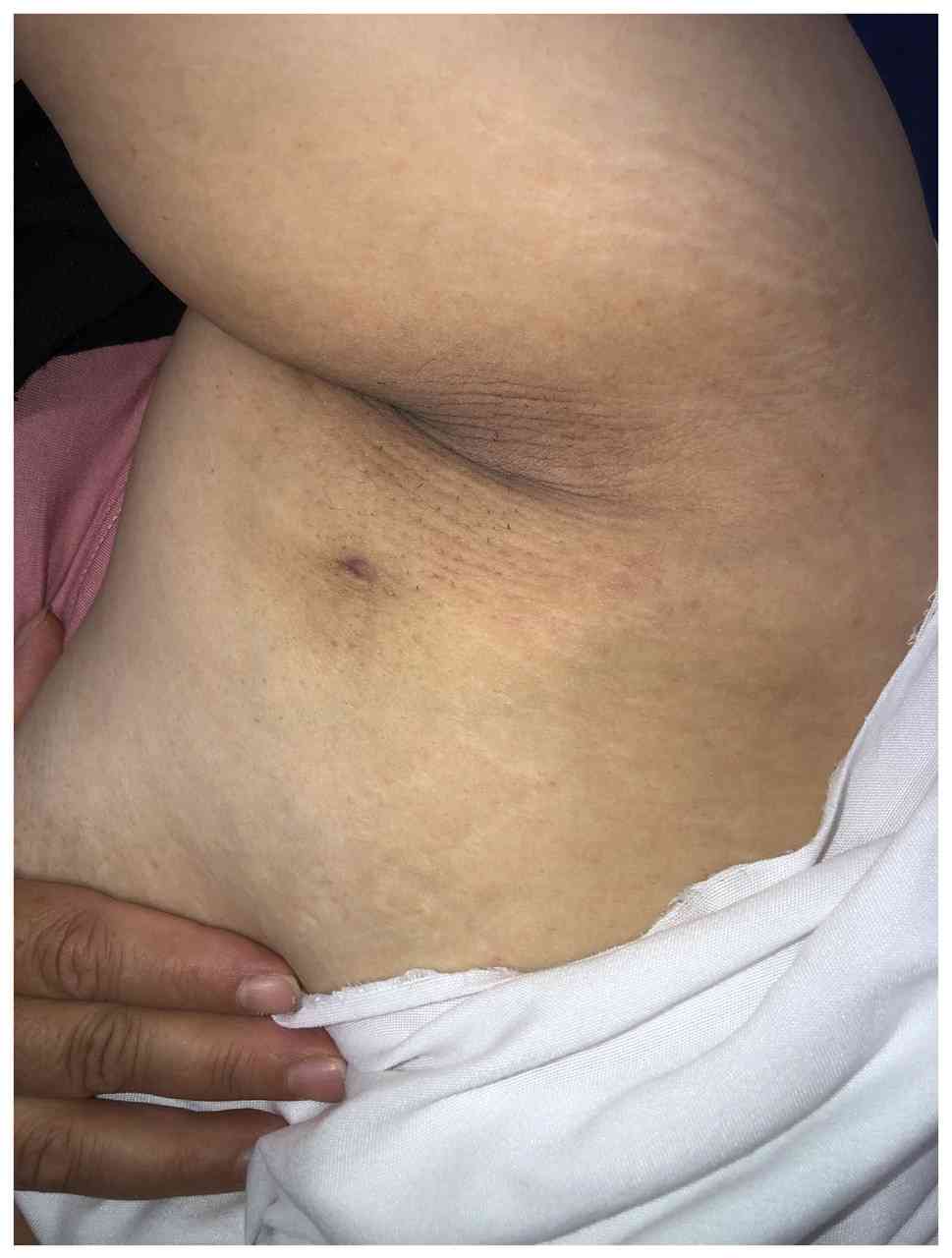
The clinical examination revealed a palpable, ill-defined area of hardness with a firm consistency and tenderness upon palpation. Additionally, an axillary breast with a nipple was noted (Fig. 1).

Image of the axillary region
illustrating an area of hyperpigmentation with an indurated
appearance. A small, isolated sinus tract is visible, indicating
underlying chronic inflammation. The affected region corresponds to
the axillary tail of Spence, where ectopic breast tissue is
present. The surrounding skin appears slightly thickened, with mild
erythema suggesting an ongoing inflammatory process.

Figure 1

Image of the axillary region illustrating an area of hyperpigmentation with an indurated appearance. A small, isolated sinus tract is visible, indicating underlying chronic inflammation. The affected region corresponds to the axillary tail of Spence, where ectopic breast tissue is present. The surrounding skin appears slightly thickened, with mild erythema suggesting an ongoing inflammatory process.

Diagnostic approach

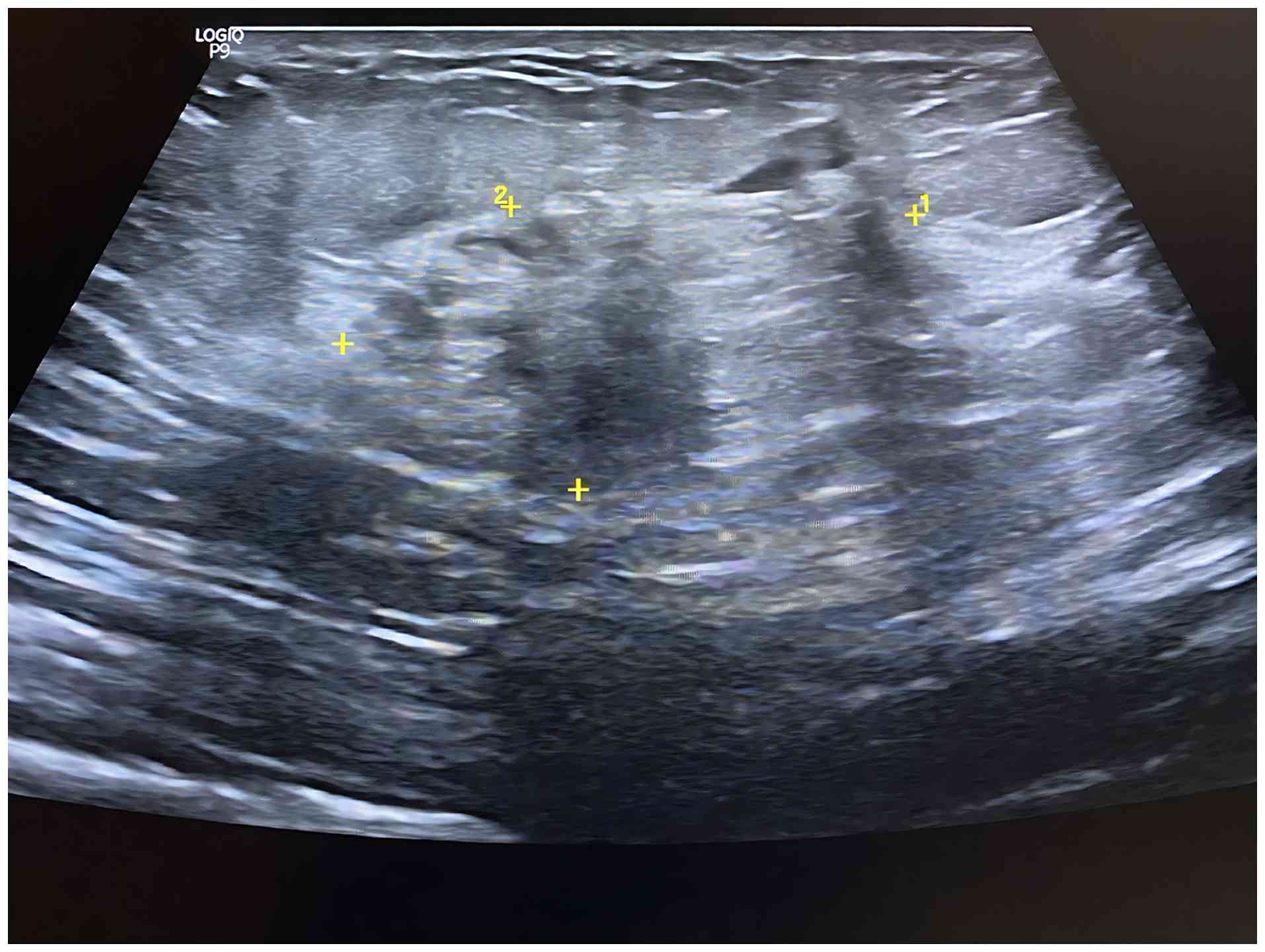
A breast ultrasonography demonstrated bilateral axillary breast tissue, more prominent on the left side, containing two distinct heterogeneous collections, the largest measuring 36x9 mm. Mild edema, skin sinuses and non-specific axillary nodes were also observed. These findings are consistent with chronic mastitis involving axillary breast tissue (Fig. 2) (1).

Grayscale ultrasound of the right
axilla demonstrating accessory breast tissue with heterogeneous
parenchymal echotexture and mild edema, consistent with mastitis.
The numbers ‘1’ and ‘2’ designate the two orthogonal caliper sets
used to measure the long- and short-axis of the lesion,
respectively; the yellow crosses indicate the caliper endpoints.
The recorded dimensions are 36x9 mm (long x short)

Figure 2

Grayscale ultrasound of the right axilla demonstrating accessory breast tissue with heterogeneous parenchymal echotexture and mild edema, consistent with mastitis. The numbers ‘1’ and ‘2’ designate the two orthogonal caliper sets used to measure the long- and short-axis of the lesion, respectively; the yellow crosses indicate the caliper endpoints. The recorded dimensions are 36x9 mm (long x short)

Therapeutic intervention

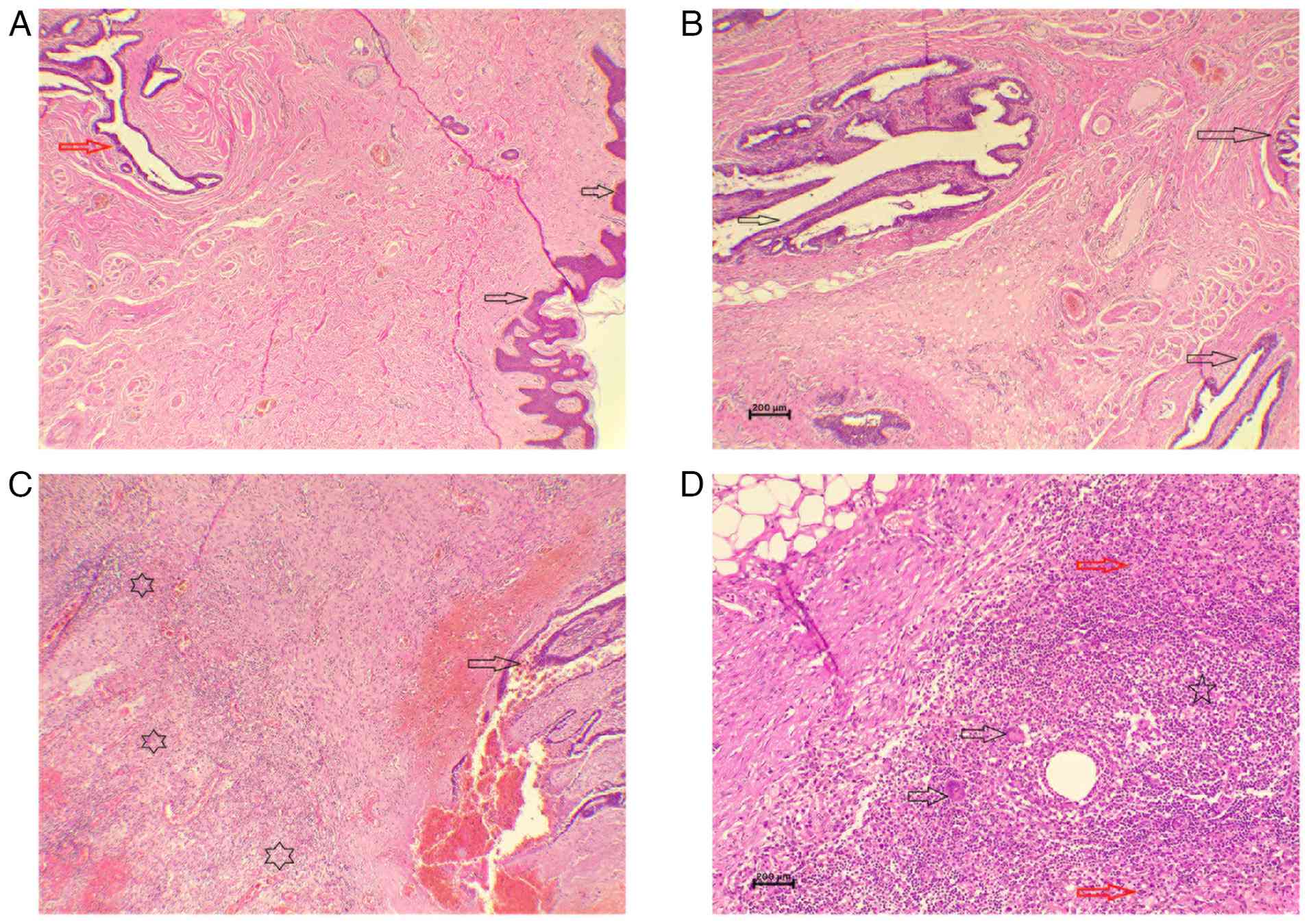
The patient was initially diagnosed with periductal mastitis and managed medically with a tapering course of oral corticosteroids (prednisolone 10 mg once daily for 20 days, followed by 5 mg once daily for an additional 20 days; this was used to suppress the immune-mediated inflammatory process underlying GM and to reduce swelling, pain and disease activity), in combination with amoxicillin (1 g three times daily for 7 days, to cover potential secondary bacterial infection, which may complicate the course of GM, particularly when abscesses, fistulae, or skin involvement are present), cabergoline (0.5 mg once daily for 2 days, to suppress prolactin secretion) and analgesics (co-codamol 500 mg, two tablets as needed for pain control). She demonstrated a good clinical response to this regimen; however, the condition recurred 1 year later. Following multidisciplinary team discussion, a wide local excision of the left axillary tail was performed. A histopathological analysis of the excised specimen was performed on 5-µm-thick sections fixed in 10% neutral-buffered formalin for 24 h, embedded in paraffin, and stained with hematoxylin and eosin (Bio Optica Co.) for 1-2 min at room temperature. Examination under a light microscope (Leica Microsystems GmbH) revealed xanthogranulomatous inflammation involving the axillary accessory breast tissue, along with benign lymph nodes showing acute lymphadenitis (Fig. 3).

(A) Section of skin covered by benign
epidermis (black arrows) with underlying tissue containing a
lactiferous duct (red arrow). Hematoxylin and eosin staining;
magnification, x4. (B) Higher magnification demonstrating multiple
benign lactiferous ducts lined by ductal epithelial cells (black
arrows). Hematoxylin and eosin staining; magnification, x10. (C)
Section illustrating a benign lactiferous duct (black arrow)
surrounded by tissue heavily infiltrated with mixed inflammatory
cells and foamy macrophages (black stars). Hematoxylin and eosin
staining; magnification, x4. (D) Higher magnification image
illustrating multinucleated giant cells (black arrows) with
ill-formed epithelioid histiocyte aggregates (red arrows) and dense
mixed inflammatory cell infiltration (black star). Hematoxylin and
eosin staining; magnification, x10.

Figure 3

(A) Section of skin covered by benign epidermis (black arrows) with underlying tissue containing a lactiferous duct (red arrow). Hematoxylin and eosin staining; magnification, x4. (B) Higher magnification demonstrating multiple benign lactiferous ducts lined by ductal epithelial cells (black arrows). Hematoxylin and eosin staining; magnification, x10. (C) Section illustrating a benign lactiferous duct (black arrow) surrounded by tissue heavily infiltrated with mixed inflammatory cells and foamy macrophages (black stars). Hematoxylin and eosin staining; magnification, x4. (D) Higher magnification image illustrating multinucleated giant cells (black arrows) with ill-formed epithelioid histiocyte aggregates (red arrows) and dense mixed inflammatory cell infiltration (black star). Hematoxylin and eosin staining; magnification, x10.

Follow-up and outcome

At the 2-month follow-up time point, the symptoms of the patient had markedly improved, with no signs of recurrence. At the most recent annual follow-up following surgical excision, she remained in good health and recurrence-free.

Discussion

Accessory breast tissue arises along the embryonic mammary ridge, extending from the axilla to the pubic region, and is susceptible to the same pathological conditions as normally located breast tissue (1). The frequently reported conditions in accessory breast tissue include cancer, mastitis, fibroadenomas, phyllodes tumors and fibrocystic changes (7). The leading hypothesis regarding the pathogenesis of GM suggests that an autoimmune response is initiated within the lobules of the breast parenchyma following ductal injury. This triggers a localized inflammatory reaction in the connective tissue, promoting the recruitment of macrophages and lymphocytes, ultimately resulting in a noncaseating granulomatous response (3).

The influence of ethnicity on GM remains a subject of debate. Vall et al (3) reported no specific ethnic predisposition. By contrast, the studies by Yuan et al (8) and Deng et al (9) indicated a higher prevalence of GM in Middle Eastern populations compared to Western countries. Consistent with the present case, GM predominantly affects women of reproductive age, particularly those with a history of breastfeeding. Among the 7 cases reviewed herein, 4 patients had a prior history of breastfeeding, with an average duration of 22.7 months (Table I) (1-4,7,10,11). However, Nakamura et al (7) and Rajendran et al (10) documented cases of GM in women without a history of breastfeeding.

Table I

Relevant variables of the reviewed cases.

Table I

Relevant variables of the reviewed cases.

First author, year of publicationAge, yearsMedical historyUse of contraceptivesNo. of pregnanciesHistory of lactationDuration of lactation (months)Affected sideSymptomsAxillary involvementTreatment approachOutcomeFollow-up (years)(Refs.)
Vall, 202524UnexceptionalNo1Yes18LeftErythema, pain and edemaYesOral corticosteroid followed by rescue therapy due to poor adherenceA few episodes of recurrence with subsequent recoveryN/A(3)
Salih, 202439Left breast granulomatous mastitisN/A3Yes37RightRight, axillary discomfort, swelling, redness, fever and chillsYesOral amoxicillin and clavulanic acid, followed by excisional biopsyRecovery0.5(1)
Shabani, 202338UnexceptionalNo2Yes12RightPainful mass, thickened skin and warmthNoOral corticosteroidRecovery1(11)
Nakamura, 202224UnexceptionalN/APregnant at the time of presentationNoN/ARightPain and swellingYesIntravenous piperacillin, drainage and surgical removalRecoveryN/A(7)
Oze, 202242UnexceptionalContraceptive device after her last child5N/AN/ARightSwelling, nipple retractionYesAntibiotic therapy and wound dressingsRecovery0.5(4)
Alvand, 202236UnexceptionalNo2Yes24RightPain, swelling and skin thickeningYesPrednisone, naproxenRecovery0.75(2)
Rajendran, 201923UnexceptionalN/A0NoN/ARightPain and swellingYesOral azithromycin and oral prednisoneRecoveryN/A(10)

[i] N/A, not applicable.

Bilateral involvement in GM is rare, as the condition typically presents unilaterally (1). In the patient in the present study, a breast ultrasonography identified two distinct heterogeneous collections within the left axillary breast, accompanied by mild edema and skin sinuses. These imaging findings were consistent with the characteristic manifestations of GM, which commonly include mass formation, skin changes and the development of a sinus tract. Systemic symptoms, such as fever, remain uncommon in GM cases (1). Among the cases reviewed herein, all were unilateral, with fever reported in only 1 patient. Pain was the reported symptom in 6 cases, whereas erythema was observed in only 2 cases.

The diagnosis of GM requires a well-coordinated multidisciplinary approach involving clinicians, radiologists and pathologists, as demonstrated in the present case report. This is particularly critical given that cases with clinical deviance or coexistence with breast cancer have been reported, increasing the risk of misdiagnosis. Multidisciplinary collaboration not only helps to avoid such errors, but also facilitates earlier preoperative diagnosis and ensures the appropriate use of corticosteroid therapy in selected patients (8,12). Due to the absence of specific clinical or radiological characteristics, imaging findings may be non-specific. Mammography often reveals asymmetric density, while an ultrasound may detect irregular, heterogeneous masses suggestive of abscesses. However, these features are not unique to GM and can mimic other breast pathologies (1).

Although no standardized treatment exists for GM to date, at least to the best of our knowledge, steroids are frequently used to reduce lesion size. However, their use is associated with adverse effects, such as weight gain, hyperglycemia, Cushing syndrome and opportunistic infections (7). Additionally, patient non-adherence can compromise treatment efficacy. Vall et al (3) reported a case in which poor adherence led to multiple recurrences, ultimately necessitating rescue therapy. While the studies by Alvand et al (2) Rajendran et al (10) and Oze et al (4) reported favorable outcomes with conservative management, the lack of long-term follow-up in these cases raises concerns about the sustained efficacy and reliability of conservative treatment strategies.

A previous meta-analysis of 138 cases undergoing surgery and 358 cases with steroid therapy revealed improved outcomes with surgery (complete response: 90.6 vs. 71.8%; recurrence: 6.8% vs. 20.9%) (13). Combining surgery with steroids further improved results, with a 94.5% complete response rate and a 4.0% recurrence rate (13). A conservative approach was initially employed for the patient in the present study; however, recurrence occurred after 1 year. By contrast, wide local excision of the axillary tail achieved a favorable outcome, with no recurrence observed at the one-year follow-up.

The case described herein enriches the existing body of knowledge by elucidating the presentation, complex diagnosis, treatment options and favorable outcomes of GM in accessory breast tissue, guiding clinicians in recognizing and managing this rare condition effectively. However, it is worth mentioning that a longer period of monitoring would strengthen this report and the conclusions drawn significantly.

In conclusion, GM can occur in accessory breast tissue. While corticosteroids may provide favorable short-term results, they do not necessarily prevent recurrence, whereas surgical management may offer more durable long-term outcomes.

Acknowledgements

Not applicable.

Funding

Funding: No funding was received.

Availability of data and materials

The data generated in the present study may be requested from the corresponding author.

Authors' contributions

ZDH and AMS were major contributors to the conception of the study, as well as to the literature search for related studies. HOA, MKA and HHF were involved in the literature review, in the design of the study, and in the writing of the manuscript. SOA, SLT, MMA and FHK were involved in the literature review, in the design of the study, in the critical revision of the manuscript, analyzing patient data, and the processing of the table. LRAP was the radiologist who assessed the case. AMA was the pathologist who performed the diagnosis of the case. FHK and MMA confirm the authenticity of all the raw data. All authors have read and approved the final manuscript.

Ethics approval and consent to participate

Written informed consent was obtained from the patient for their participation in the present study.

Patient consent for publication

Written informed consent was obtained from the patient for the publication of the present case report and any accompanying images.

Competing interests

The authors declare that they have no competing interests.

References

1 

Salih AM, Pshtiwan LR, Latif S, Ali HO, Abdullah AM, Baba HO, Hama JI, Hassan SH, Hassan MN, Mohammed SH, et al: Granulomatous mastitis in accessory breast tissue: A rare presentation and surgical management. Biomed Rep. 20(62)2024.PubMed/NCBI View Article : Google Scholar

2 

Alvand S, Hessami A, Kiani L, Makhmalbaf AO and Elahi A: Uncommon location of idiopathic granulomatous mastitis: A case report: Uncommon Location of IGM. Arch Breast Cancer. 9:320–324. 2022.

3 

Vall E, Araya V, Tortajada L, Escobedo V, Nogueiras R and Del Riego J: Idiopathic granulomatous mastitis after mRNA vaccination against COVID-19: A possible association? BJR Case Rep. 11(uaae048)2025.PubMed/NCBI View Article : Google Scholar

4 

Oze KR, Yehouenou Tessi RT, Mendes P, Allali N, Chat L and El Haddad S: Granulomatous mastitis: A case report. SAGE Open Med Case Rep. 10(2050313X221146671)2022.PubMed/NCBI View Article : Google Scholar

5 

Abdullah HO, Abdalla BA, Kakamad FH, Ahmed JO, Baba HO, Hassan MN, Bapir R, Rahim HM, Omar DA, Kakamad SH, et al: Predatory publishing lists: A review on the ongoing battle against fraudulent actions. Barw Med J. 2:26–30. 2024.

6 

Prasad S, Nassar M, Azzam AY, García-Muro-San José F, Jamee M, Sliman RKA, Evola G, Mustafa AM, Abdullah HO, Abdalla BA, et al: CaReL Guidelines: A consensus-based guideline on case reports and literature review (CaReL). Barw Med J. 2:13–19. 2024.

7 

Nakamura J, Tanaka F, Ohtaka K, Sato K and Iyama A: A rare case of granulomatous mastitis in the accessory axillary breast of a pregnant woman successfully treated by surgery. Eur J Breast Health. 18(195)2022.PubMed/NCBI View Article : Google Scholar

8 

Yuan QQ, Xiao SY, Farouk O, Du YT, Sheybani F, Tan QT, Akbulut S, Cetin K, Alikhassi A, Yaghan RJ, et al: Management of granulomatous lobular mastitis: An international multidisciplinary consensus (2021 edition). Mil Med Res. 9(20)2022.PubMed/NCBI View Article : Google Scholar

9 

Deng Y, Xiong Y, Ning P, Wang X, Han XR, Tu GF and He PY: A case management model for patients with granulomatous mastitis: A prospective study. BMC Women's Health. 22(143)2022.PubMed/NCBI View Article : Google Scholar

10 

Rajendran D, See CB, Wan WM and Teik CY: Chronic granulomatous mastitis with axillary lymphadenopathy in a nulliparous woman. Med J Malaysia. 74:564–565. 2019.PubMed/NCBI

11 

Shabani S, Sadeghi B, Zarinfar N and Sarmadian R: Idiopathic granulomatous mastitis: A case report and literature review. Clin Case Rep. 11(e7819)2023.PubMed/NCBI View Article : Google Scholar

12 

Salih AM, Latif S, Ali RM, Pshtiwan LR, Ali HO, Abdullah AM, Salih KM, Hassan SH, Nasralla HA, Hussein BO and Kakamad FH: Granulomatous mastitis co-existing with breast cancer: A case report and mini-review of the literature. World Acad Sci J. 7(101)2025.

13 

Lei X, Chen K, Zhu L, Song E, Su F and Li S: Treatments for idiopathic granulomatous mastitis: Systematic review and meta-analysis. Breastfeed Med. 12:415–421. 2017.PubMed/NCBI View Article : Google Scholar

Related Articles

  • Abstract
  • View
  • Download
Copy and paste a formatted citation
Spandidos Publications style
Salih AM, Abdullah AM, Pshtiwan LR, Arif SO, Hammood ZD, Tofiq SL, Abdullah HO, Ahmed MK, Fatih HH, Abdulkarim MM, Abdulkarim MM, et al: Accessory breast granulomatous mastitis: A case report and mini‑review of the literature. Med Int 5: 78, 2025.
APA
Salih, A.M., Abdullah, A.M., Pshtiwan, L.R., Arif, S.O., Hammood, Z.D., Tofiq, S.L. ... Kakamad, F.H. (2025). Accessory breast granulomatous mastitis: A case report and mini‑review of the literature. Medicine International, 5, 78. https://doi.org/10.3892/mi.2025.277
MLA
Salih, A. M., Abdullah, A. M., Pshtiwan, L. R., Arif, S. O., Hammood, Z. D., Tofiq, S. L., Abdullah, H. O., Ahmed, M. K., Fatih, H. H., Abdulkarim, M. M., Kakamad, F. H."Accessory breast granulomatous mastitis: A case report and mini‑review of the literature". Medicine International 5.6 (2025): 78.
Chicago
Salih, A. M., Abdullah, A. M., Pshtiwan, L. R., Arif, S. O., Hammood, Z. D., Tofiq, S. L., Abdullah, H. O., Ahmed, M. K., Fatih, H. H., Abdulkarim, M. M., Kakamad, F. H."Accessory breast granulomatous mastitis: A case report and mini‑review of the literature". Medicine International 5, no. 6 (2025): 78. https://doi.org/10.3892/mi.2025.277
Copy and paste a formatted citation
x
Spandidos Publications style
Salih AM, Abdullah AM, Pshtiwan LR, Arif SO, Hammood ZD, Tofiq SL, Abdullah HO, Ahmed MK, Fatih HH, Abdulkarim MM, Abdulkarim MM, et al: Accessory breast granulomatous mastitis: A case report and mini‑review of the literature. Med Int 5: 78, 2025.
APA
Salih, A.M., Abdullah, A.M., Pshtiwan, L.R., Arif, S.O., Hammood, Z.D., Tofiq, S.L. ... Kakamad, F.H. (2025). Accessory breast granulomatous mastitis: A case report and mini‑review of the literature. Medicine International, 5, 78. https://doi.org/10.3892/mi.2025.277
MLA
Salih, A. M., Abdullah, A. M., Pshtiwan, L. R., Arif, S. O., Hammood, Z. D., Tofiq, S. L., Abdullah, H. O., Ahmed, M. K., Fatih, H. H., Abdulkarim, M. M., Kakamad, F. H."Accessory breast granulomatous mastitis: A case report and mini‑review of the literature". Medicine International 5.6 (2025): 78.
Chicago
Salih, A. M., Abdullah, A. M., Pshtiwan, L. R., Arif, S. O., Hammood, Z. D., Tofiq, S. L., Abdullah, H. O., Ahmed, M. K., Fatih, H. H., Abdulkarim, M. M., Kakamad, F. H."Accessory breast granulomatous mastitis: A case report and mini‑review of the literature". Medicine International 5, no. 6 (2025): 78. https://doi.org/10.3892/mi.2025.277
Follow us
  • Twitter
  • LinkedIn
  • Facebook
About
  • Spandidos Publications
  • Careers
  • Cookie Policy
  • Privacy Policy
How can we help?
  • Help
  • Live Chat
  • Contact
  • Email to our Support Team