Spandidos Publications Logo
  • About
    • About Spandidos
    • Aims and Scopes
    • Abstracting and Indexing
    • Editorial Policies
    • Reprints and Permissions
    • Job Opportunities
    • Terms and Conditions
    • Contact
  • Journals
    • All Journals
    • Oncology Letters
      • Oncology Letters
      • Information for Authors
      • Editorial Policies
      • Editorial Board
      • Aims and Scope
      • Abstracting and Indexing
      • Bibliographic Information
      • Archive
    • International Journal of Oncology
      • International Journal of Oncology
      • Information for Authors
      • Editorial Policies
      • Editorial Board
      • Aims and Scope
      • Abstracting and Indexing
      • Bibliographic Information
      • Archive
    • Molecular and Clinical Oncology
      • Molecular and Clinical Oncology
      • Information for Authors
      • Editorial Policies
      • Editorial Board
      • Aims and Scope
      • Abstracting and Indexing
      • Bibliographic Information
      • Archive
    • Experimental and Therapeutic Medicine
      • Experimental and Therapeutic Medicine
      • Information for Authors
      • Editorial Policies
      • Editorial Board
      • Aims and Scope
      • Abstracting and Indexing
      • Bibliographic Information
      • Archive
    • International Journal of Molecular Medicine
      • International Journal of Molecular Medicine
      • Information for Authors
      • Editorial Policies
      • Editorial Board
      • Aims and Scope
      • Abstracting and Indexing
      • Bibliographic Information
      • Archive
    • Biomedical Reports
      • Biomedical Reports
      • Information for Authors
      • Editorial Policies
      • Editorial Board
      • Aims and Scope
      • Abstracting and Indexing
      • Bibliographic Information
      • Archive
    • Oncology Reports
      • Oncology Reports
      • Information for Authors
      • Editorial Policies
      • Editorial Board
      • Aims and Scope
      • Abstracting and Indexing
      • Bibliographic Information
      • Archive
    • Molecular Medicine Reports
      • Molecular Medicine Reports
      • Information for Authors
      • Editorial Policies
      • Editorial Board
      • Aims and Scope
      • Abstracting and Indexing
      • Bibliographic Information
      • Archive
    • World Academy of Sciences Journal
      • World Academy of Sciences Journal
      • Information for Authors
      • Editorial Policies
      • Editorial Board
      • Aims and Scope
      • Abstracting and Indexing
      • Bibliographic Information
      • Archive
    • International Journal of Functional Nutrition
      • International Journal of Functional Nutrition
      • Information for Authors
      • Editorial Policies
      • Editorial Board
      • Aims and Scope
      • Abstracting and Indexing
      • Bibliographic Information
      • Archive
    • International Journal of Epigenetics
      • International Journal of Epigenetics
      • Information for Authors
      • Editorial Policies
      • Editorial Board
      • Aims and Scope
      • Abstracting and Indexing
      • Bibliographic Information
      • Archive
    • Medicine International
      • Medicine International
      • Information for Authors
      • Editorial Policies
      • Editorial Board
      • Aims and Scope
      • Abstracting and Indexing
      • Bibliographic Information
      • Archive
  • Articles
  • Information
    • Information for Authors
    • Information for Reviewers
    • Information for Librarians
    • Information for Advertisers
    • Conferences
  • Language Editing
Spandidos Publications Logo
  • About
    • About Spandidos
    • Aims and Scopes
    • Abstracting and Indexing
    • Editorial Policies
    • Reprints and Permissions
    • Job Opportunities
    • Terms and Conditions
    • Contact
  • Journals
    • All Journals
    • Biomedical Reports
      • Information for Authors
      • Editorial Policies
      • Editorial Board
      • Aims and Scope
      • Abstracting and Indexing
      • Bibliographic Information
      • Archive
    • Experimental and Therapeutic Medicine
      • Information for Authors
      • Editorial Policies
      • Editorial Board
      • Aims and Scope
      • Abstracting and Indexing
      • Bibliographic Information
      • Archive
    • International Journal of Epigenetics
      • Information for Authors
      • Editorial Policies
      • Editorial Board
      • Aims and Scope
      • Abstracting and Indexing
      • Bibliographic Information
      • Archive
    • International Journal of Functional Nutrition
      • Information for Authors
      • Editorial Policies
      • Editorial Board
      • Aims and Scope
      • Abstracting and Indexing
      • Bibliographic Information
      • Archive
    • International Journal of Molecular Medicine
      • Information for Authors
      • Editorial Policies
      • Editorial Board
      • Aims and Scope
      • Abstracting and Indexing
      • Bibliographic Information
      • Archive
    • International Journal of Oncology
      • Information for Authors
      • Editorial Policies
      • Editorial Board
      • Aims and Scope
      • Abstracting and Indexing
      • Bibliographic Information
      • Archive
    • Medicine International
      • Information for Authors
      • Editorial Policies
      • Editorial Board
      • Aims and Scope
      • Abstracting and Indexing
      • Bibliographic Information
      • Archive
    • Molecular and Clinical Oncology
      • Information for Authors
      • Editorial Policies
      • Editorial Board
      • Aims and Scope
      • Abstracting and Indexing
      • Bibliographic Information
      • Archive
    • Molecular Medicine Reports
      • Information for Authors
      • Editorial Policies
      • Editorial Board
      • Aims and Scope
      • Abstracting and Indexing
      • Bibliographic Information
      • Archive
    • Oncology Letters
      • Information for Authors
      • Editorial Policies
      • Editorial Board
      • Aims and Scope
      • Abstracting and Indexing
      • Bibliographic Information
      • Archive
    • Oncology Reports
      • Information for Authors
      • Editorial Policies
      • Editorial Board
      • Aims and Scope
      • Abstracting and Indexing
      • Bibliographic Information
      • Archive
    • World Academy of Sciences Journal
      • Information for Authors
      • Editorial Policies
      • Editorial Board
      • Aims and Scope
      • Abstracting and Indexing
      • Bibliographic Information
      • Archive
  • Articles
  • Information
    • For Authors
    • For Reviewers
    • For Librarians
    • For Advertisers
    • Conferences
  • Language Editing
Login Register Submit
  • This site uses cookies
  • You can change your cookie settings at any time by following the instructions in our Cookie Policy. To find out more, you may read our Privacy Policy.

    I agree
Search articles by DOI, keyword, author or affiliation
Search
Advanced Search
presentation
Medicine International
Join Editorial Board Propose a Special Issue
Print ISSN: 2754-3242 Online ISSN: 2754-1304
Journal Cover
March-April 2026 Volume 6 Issue 2

Full Size Image

Sign up for eToc alerts
Recommend to Library

Journals

International Journal of Molecular Medicine

International Journal of Molecular Medicine

International Journal of Molecular Medicine is an international journal devoted to molecular mechanisms of human disease.

International Journal of Oncology

International Journal of Oncology

International Journal of Oncology is an international journal devoted to oncology research and cancer treatment.

Molecular Medicine Reports

Molecular Medicine Reports

Covers molecular medicine topics such as pharmacology, pathology, genetics, neuroscience, infectious diseases, molecular cardiology, and molecular surgery.

Oncology Reports

Oncology Reports

Oncology Reports is an international journal devoted to fundamental and applied research in Oncology.

Experimental and Therapeutic Medicine

Experimental and Therapeutic Medicine

Experimental and Therapeutic Medicine is an international journal devoted to laboratory and clinical medicine.

Oncology Letters

Oncology Letters

Oncology Letters is an international journal devoted to Experimental and Clinical Oncology.

Biomedical Reports

Biomedical Reports

Explores a wide range of biological and medical fields, including pharmacology, genetics, microbiology, neuroscience, and molecular cardiology.

Molecular and Clinical Oncology

Molecular and Clinical Oncology

International journal addressing all aspects of oncology research, from tumorigenesis and oncogenes to chemotherapy and metastasis.

World Academy of Sciences Journal

World Academy of Sciences Journal

Multidisciplinary open-access journal spanning biochemistry, genetics, neuroscience, environmental health, and synthetic biology.

International Journal of Functional Nutrition

International Journal of Functional Nutrition

Open-access journal combining biochemistry, pharmacology, immunology, and genetics to advance health through functional nutrition.

International Journal of Epigenetics

International Journal of Epigenetics

Publishes open-access research on using epigenetics to advance understanding and treatment of human disease.

Medicine International

Medicine International

An International Open Access Journal Devoted to General Medicine.

Journal Cover
March-April 2026 Volume 6 Issue 2

Full Size Image

Sign up for eToc alerts
Recommend to Library

  • Article
  • Citations
    • Cite This Article
    • Download Citation
    • Create Citation Alert
    • Remove Citation Alert
    • Cited By
  • Similar Articles
    • Related Articles (in Spandidos Publications)
    • Similar Articles (Google Scholar)
    • Similar Articles (PubMed)
  • Download PDF
  • Download XML
  • View XML
Case Report Open Access

Pregabalin and atypical NSTEMI presentation in a diabetic woman (masked myocardial ischemia): A case report

  • Authors:
    • David Donkor
    • Tatiana Rodriguez
    • Ruth Abebe
    • Parth Adrejiya
    • Lewam Berhe
  • View Affiliations / Copyright

    Affiliations: Department of Internal Medicine (Residency), WellStar Spalding Medical Center, Griffin, GA 30224, USA, Philadelphia College of Osteopathic Medicine, Moultrie, GA 31768, USA, Department of Internal Medicine (Faculty), WellStar Spalding Medical Center, Griffin, GA 30224, USA
    Copyright: © Donkor et al. This is an open access article distributed under the terms of Creative Commons Attribution License [CC BY 4.0].
  • Article Number: 16
    |
    Published online on: February 4, 2026
       https://doi.org/10.3892/mi.2026.300
  • Expand metrics +
Metrics: Total Views: 0 (Spandidos Publications: | PMC Statistics: )
Metrics: Total PDF Downloads: 0 (Spandidos Publications: | PMC Statistics: )
Cited By (CrossRef): 0 citations Loading Articles...

This article is mentioned in:


Abstract

Women with non‑ST‑elevation myocardial infarction frequently present with atypical symptoms, particularly those with diabetes, in whom autonomic neuropathy can blunt the perception of ischemic pain. The present study reports the case of a 57‑year‑old female patient with type 2 diabetes, chronic obstructive pulmonary disease, hypertension, hyperlipidemia, obesity and chronic pregabalin use who presented with nausea and bilious vomiting without chest pain. An initial evaluation revealed mildly elevated high sensitivity troponin T, non‑specific electrocardiogram (ECG) changes and normal abdominal imaging. Acute coronary syndrome (ACS) was initially considered unlikely, and the patient was discharged following an improvement in her symptoms. However, within 24 h, she re‑presented with recurrent gastrointestinal symptoms and new periumbilical pain. Repeat ECG demonstrated diffuse ST‑segment depressions and T wave inversions with upright T waves in aVR and V1. A subsequent echocardiography revealed a reduced ejection fraction (25‑30%), and coronary angiography confirmed severe multivessel coronary artery disease. The present case report underscores the diagnostic challenge of atypical ACS in diabetic women, highlights the critical value of serial ECGs and biomarker trending in high‑risk patients, and raises awareness of gabapentinoid therapy, such as pregabalin, as a potential contributor to the delayed recognition of myocardial ischemia. Early, repeated ECG evaluations should be prioritized even in the absence of chest pain to prevent the missed or delayed diagnosis of life‑threatening coronary disease.

Introduction

Acute coronary syndrome (ACS) may present with a wide spectrum of symptoms, and the absence of chest pain is well recognized, particularly among women and patients with diabetes. Diabetic autonomic neuropathy can blunt the perception of ischemic pain, leading to atypical manifestations, such as nausea, vomiting, abdominal discomfort or generalized weakness, rather than classic substernal chest pain. These atypical presentations are associated with a delayed diagnosis, suboptimal treatment and worse clinical outcomes, contributing to the higher mortality rates observed among women with myocardial infarction (1-4).

Electrocardiography remains a cornerstone in the evaluation of suspected ACS, and dynamic changes on serial electrocardiograms (ECGs) are critical for detecting evolving ischemia, particularly in non-ST-elevation presentations (5,6). Certain ECG patterns, including diffuse ST-segment depressions and T wave inversions with upright T waves in aVR and V1, have been shown to be associated with severe multivessel or left-main equivalent coronary artery disease and carry significant prognostic implications (7).

Gabapentinoids, including pregabalin and gabapentin, are commonly prescribed for diabetic neuropathy; however, their use has been linked to adverse cardiovascular outcomes and may further obscure the recognition of ischemic symptoms in high-risk patients (8-10). The present case report describes a case of atypical ACS in a diabetic woman receiving pregabalin, ultimately found to have severe multivessel coronary artery disease.

Case report

A 57-year-old woman with type 2 diabetes mellitus, hypertension, hyperlipidemia, obesity, chronic obstructive pulmonary disease, arthritis, migraines, and a 40-pack-year smoking history presented to the Emergency Department of Wellstar Spalding Medical Center (Griffin, GA, USA) on September 27, 2025 with sudden-onset nausea and bilious vomiting without chest pain. She reported constipation and generalized weakness. Her home medications included pregabalin at 300 mg three times daily.

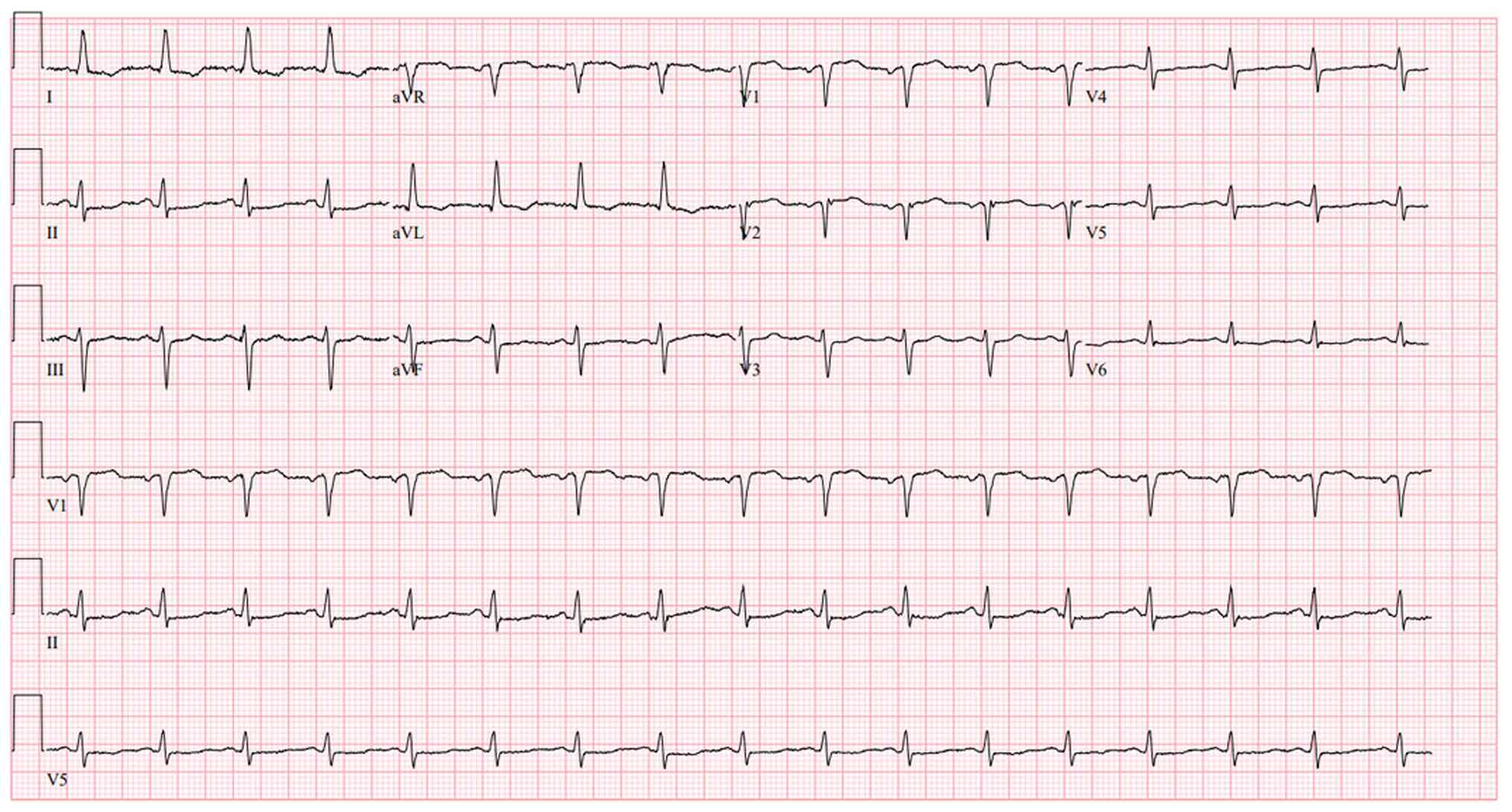
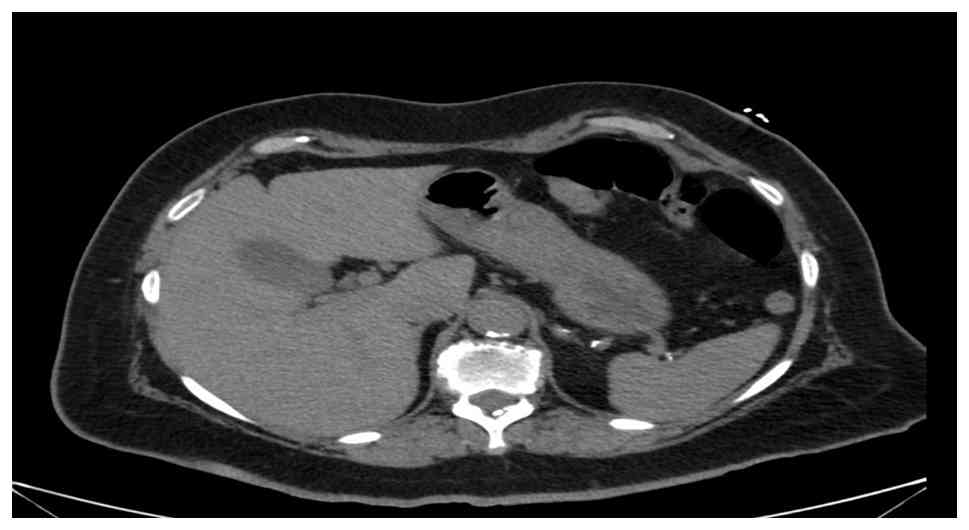
An initial evaluation revealed mildly elevated, yet rising high sensitivity troponin T (103 → 129 → 161 ng/l), non-specific ECG changes characterized by low-voltage QRS complexes and T-wave flattening in V4-V6 (Fig. 1) and a normal chest radiograph; an abdominal computed tomography (CT) scan (Fig. 2) did not reveal any notable findings. Despite the elevated levels of cardiac biomarkers, the absence of chest pain and improving gastrointestinal symptoms led to a working diagnosis of non-cardiac etiology. She received aspirin (81 mg), statin therapy (atorvastatin, 80 mg), β-blocker (metoprolol succinate, 100 mg) and a heparin drip for 48 h and supportive care and was discharged following presumed stabilization.

Electrocardiogram performed at the
initial presentation of the patient. This revealed sinus rhythm,
low-voltage QRS and non-specific ST-T changes.

Figure 1

Electrocardiogram performed at the initial presentation of the patient. This revealed sinus rhythm, low-voltage QRS and non-specific ST-T changes.

Non-contrast computed tomography scan
of the abdomen demonstrating no acute intra-abdominal
abnormality.

Figure 2

Non-contrast computed tomography scan of the abdomen demonstrating no acute intra-abdominal abnormality.

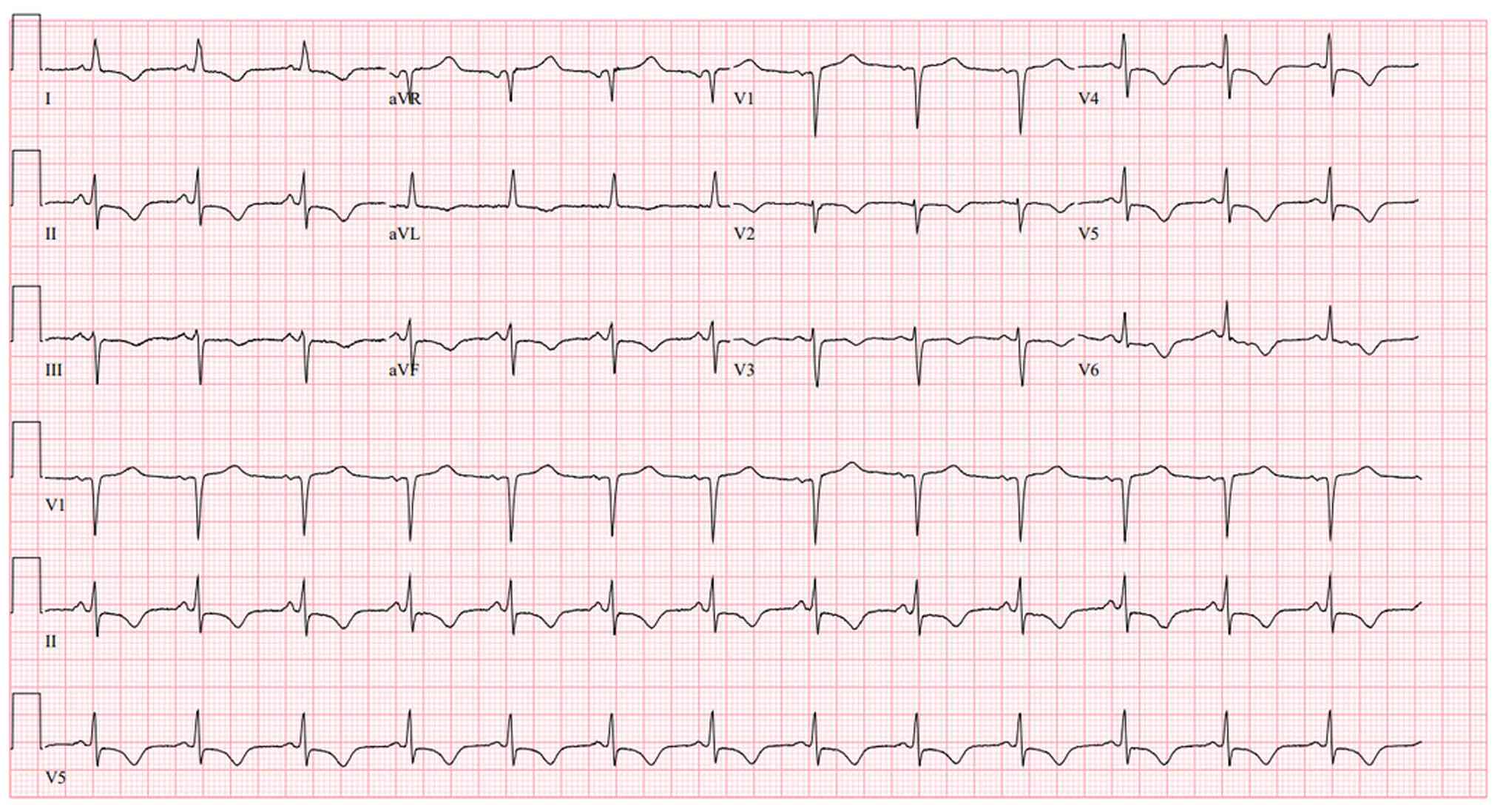
However, within 24 h, the patient returned with persistent nausea, vomiting and new dull periumbilical pain. A repeat ECG demonstrated diffuse ST-segment depressions with T-wave inversions in inferior (II, III and aVF), lateral (I, aVL and V5-V6) and anterior (V2-V4) leads, along with upright T waves in aVR and V1 (Fig. 3). High sensitivity troponin T was down-trending (~64 ng/l). Her thrombolysis in myocardial infarction (TIMI) score was 5, and the Global Registry of Acute Coronary Events (GRACE) score was 103. Transthoracic echocardiography revealed a severely reduced left ventricular ejection fraction (25-30%) and grade I diastolic dysfunction.

Electrocardiogram performed upon the
readmission of the patient. This revealed ST-segment depressions
and T-wave inversions in the inferior (II, III and aVF), lateral
(I, aVL and V5-V6), and anterior (V2-V4) leads, with upright T
waves in aVR and V1.

Figure 3

Electrocardiogram performed upon the readmission of the patient. This revealed ST-segment depressions and T-wave inversions in the inferior (II, III and aVF), lateral (I, aVL and V5-V6), and anterior (V2-V4) leads, with upright T waves in aVR and V1.

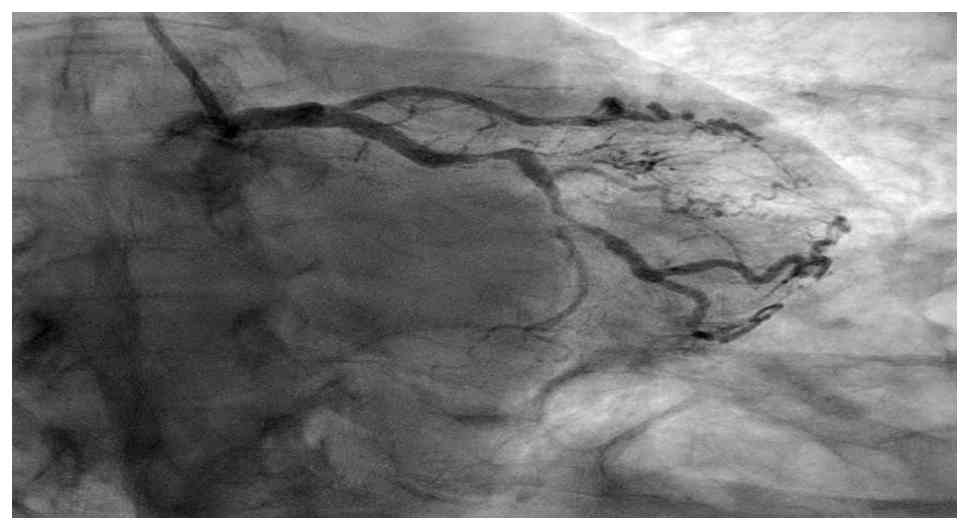
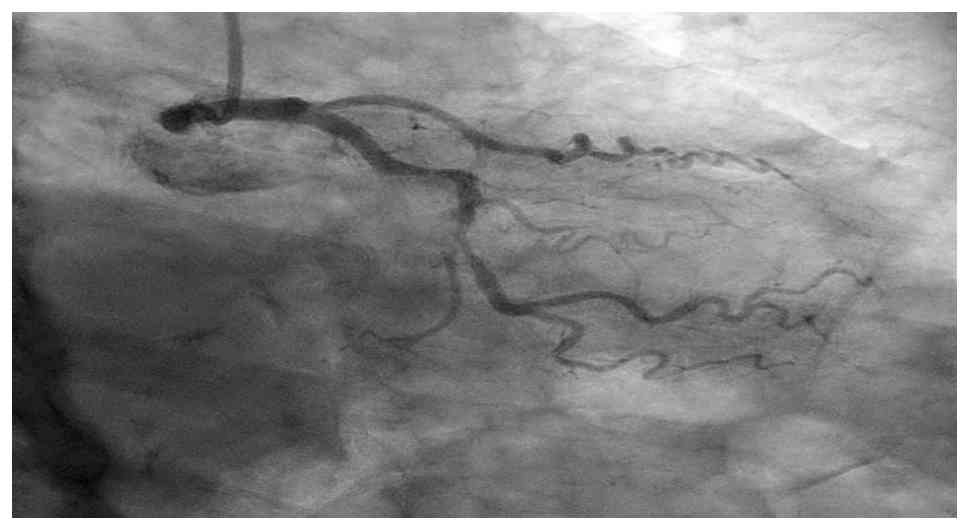
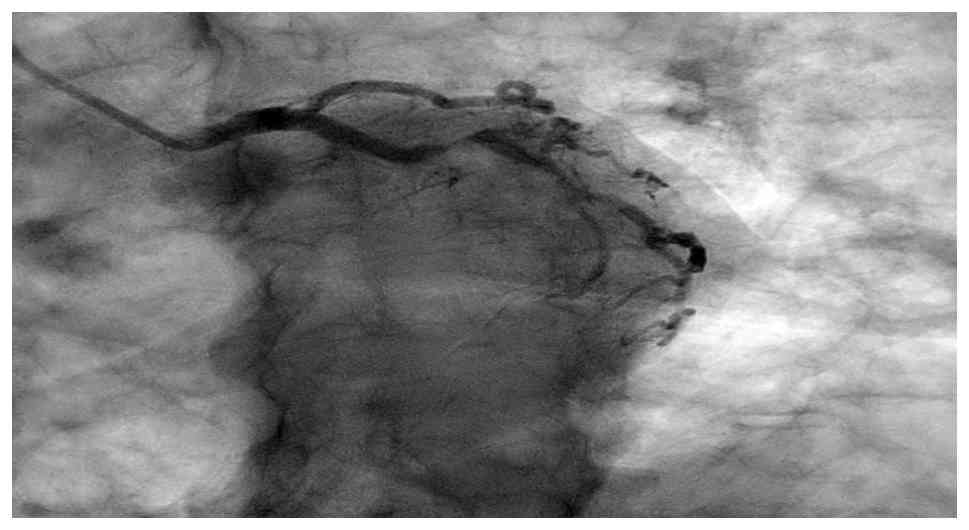
Coronary angiography confirmed severe multivessel coronary artery disease, including the chronic total occlusion of the left anterior descending artery with collateral flow from the right coronary artery, severe mid-circumflex stenosis (80-90%) and proximal right coronary artery stenosis (60-70%) with distal posterolateral branch stenosis (90%) (Fig. 4, Fig. 5 and Fig. 6). Left ventricular end-diastolic pressure measured at 12 mm Hg, and anterior wall hypokinesis was noted. She was managed with guideline-directed medical therapy, including aspirin, 81 mg; clopidogrel, 75 mg; metoprolol succinate, 100 mg; atorvastatin, 80 mg; lisinopril, 40 mg; sublingual nitroglycerin, 0.4 mg; and a heparin drip for 24 h and referred for cardiology evaluation and potential revascularization. She underwent evaluation for coronary artery bypass grafting and subsequently underwent coronary artery bypass graft surgery. She was discharged on post-operative day 5. Her pre-operative left ventricular ejection fraction improved from ~30% to 41-45% post-operatively. At the 4-week follow-up, she was clinically stable and cleared to begin cardiac rehabilitation and return to work as tolerated.

Coronary angiography of the right
coronary artery (RCA) demonstrating reported proximal 60-70%
stenosis, with additional reported 20-30% stenosis in the mid
segment and mild distal disease.

Figure 4

Coronary angiography of the right coronary artery (RCA) demonstrating reported proximal 60-70% stenosis, with additional reported 20-30% stenosis in the mid segment and mild distal disease.

Left circumflex coronary angiography
showing mild proximal disease with reported severe mid-circumflex
stenoses (80-90% and 70-80%), with obtuse marginal branches
demonstrating mild disease, as reported.

Figure 5

Left circumflex coronary angiography showing mild proximal disease with reported severe mid-circumflex stenoses (80-90% and 70-80%), with obtuse marginal branches demonstrating mild disease, as reported.

Coronary angiography of the right
coronary artery demonstrating reported 20-30% stenosis in the
posterior descending artery (PDA) and a reported focal 90% stenosis
in the posterolateral (PL) branch.

Figure 6

Coronary angiography of the right coronary artery demonstrating reported 20-30% stenosis in the posterior descending artery (PDA) and a reported focal 90% stenosis in the posterolateral (PL) branch.

Discussion

Women and patients with diabetes frequently exhibit atypical symptoms during ACS, including nausea, vomiting, abdominal discomfort, or generalized weakness, rather than the classic substernal chest pain. Diabetic autonomic neuropathy may blunt the perception of visceral pain, altering sympathetic and sensory responses and contributing to atypical presentations (1-4). These clinical variations often lead to delayed or missed diagnoses, resulting in worse outcomes and higher mortality among women compared with men (2,4).

In the case presented herein, the initial presentation of the patient with gastrointestinal symptoms led to a diagnostic focus on abdominal pathology, despite elevated troponins and cardiovascular risk factors. The absence of chest pain, coupled with apparent improvement following supportive therapy, created a false sense of reassurance that contributed to her premature discharge. This emphasizes a critical clinical lesson: In high-risk individuals, particularly in diabetic women, a single ECG or biomarker assessment is insufficient to exclude ACS. Instead, serial ECGs and troponin trending are indispensable, even when initial findings are non-diagnostic or symptoms transiently improve, in alignment with consensus recommendations for non-ST elevation ACS evaluation (5,6).

A critical turning point occurred during the return visit of the patient, when a repeat ECG revealed diffuse ST-segment depressions and T wave inversions, with upright T waves in aVR and V1 (Fig. 3), a pattern strongly associated with severe multivessel or left main equivalent ischemia (7). Such global subendocardial changes often indicate widespread coronary insufficiency and should prompt urgent cardiologic evaluation. Notably, her troponin level was declining at this point, underscoring that reliance solely on biomarker trends may overlook evolving ischemia; electrocardiographic monitoring, rather than biochemical data alone, proved decisive in establishing the true severity of her condition (5).

An additional consideration in the case described herein involves the chronic use of pregabalin by the patient. Diabetic autonomic neuropathy is a well-established and likely primary mechanism underlying painless or atypical myocardial infarction in patients with diabetes, due to blunted visceral pain perception and altered autonomic signaling (1-4). Gabapentinoids, such as pregabalin and gabapentin, are widely prescribed for diabetic neuropathy and chronic pain, and have been increasingly linked to adverse cardiovascular events, including myocardial infarction and heart failure (8-10). Proposed mechanisms include fluid retention, autonomic modulation and effects on vascular tone, which may further elevate the threshold for ischemic symptom perception. In this context, pregabalin may have functioned as a contributory or exacerbating factor, amplifying the blunting of symptoms already present due to diabetic neuropathy, rather than serving as the sole cause of the masked ischemic presentation. Clinicians should therefore remain vigilant when evaluating atypical symptoms in high-risk patients receiving these agents (8-10).

In conclusion, the present case report reinforces several key diagnostic principles. First, the atypical presentations of ACS, particularly in women with diabetes, should not diminish clinical suspicion (1-4). Second, symptomatic improvement should never preclude serial cardiac evaluation when risk factors are present. Finally, repeat ECGs, rather than a single initial tracing, may reveal dynamic, high-risk patterns indicative of multivessel coronary disease. In the patient in the present study, the diagnostic turning point was not imaging or laboratory normalization, but rather the recognition of evolving ischemic changes on serial ECG evaluation (5-7). Maintaining a low threshold for ECG repetition and troponin trending in high-risk populations, even in the absence of chest pain, is therefore essential to avoid premature diagnostic closure and prevent missed or delayed identification of life-threatening coronary disease (5,6).

Acknowledgements

Not applicable.

Funding

Funding: No funding was received.

Availability of data and materials

The data generated and/or analyzed during the present study are available from the corresponding author on request.

Authors' contributions

All authors (DD, TR, RA, PA and LB) contributed to the conception of the study, the acquisition and interpretation of the clinical data of the patient, and the drafting and critical revision of the manuscript. All authors have read and approved the final version of the manuscript and agree to be accountable for all aspects of the work. DD and TR confirm the authenticity of all the raw data.

Ethics approval and consent to participate

The present study was conducted in accordance with the ethical principles of the Declaration of Helsinki (1964) and its subsequent amendments. Written informed consent was obtained from the patient for her participation in the present case report.

Patient consent for publication

Written informed consent was obtained from the patient for the publication of the case information and any accompanying images in the present case report. All personal identifiers were removed to ensure confidentiality.

Competing interests

The authors declare that they have no competing interests.

References

1 

Canto JG, Shlipak MG, Rogers WJ, Malmgren JA, Frederick PD, Lambrew CT, Ornato JP, Barron HV and Kiefe CI: Prevalence, clinical characteristics, and mortality among patients with myocardial infarction presenting without chest pain. JAMA. 283:3223–3229. 2000.PubMed/NCBI View Article : Google Scholar

2 

Mehta LS, Beckie TM, DeVon HA, Grines CL, Krumholz HM, Johnson MN, Lindley KJ, Vaccarino V, Wang TY, Watson KE, et al: Acute myocardial infarction in women: A scientific statement from the American heart association. Circulation. 133:916–947. 2016.PubMed/NCBI View Article : Google Scholar

3 

DeVon HA, Ryan CJ, Ochs AL and Shapiro M: Symptoms across the continuum of acute coronary syndromes: Differences between women and men. Am J Crit Care. 17:14–24. 2008.PubMed/NCBI

4 

Haider A, Bengs S, Luu J, Osto E, Siller-Matula JM, Muka T and Gebhard C: Sex and gender in cardiovascular medicine: Presentation and outcomes of acute coronary syndrome. Eur Heart J. 41:1328–1336. 2020.PubMed/NCBI View Article : Google Scholar

5 

Thygesen K, Alpert JS, Jaffe AS, Chaitman BR, Bax JJ, Morrow DA and White HD: Executive Group on behalf of the Joint European Society of Cardiology (ESC)/American College of Cardiology (ACC)/American Heart Association (AHA)/World Heart Federation (WHF) Task Force for the Universal Definition of Myocardial Infarction. Fourth Universal definition of myocardial infarction (2018). J Am Coll Cardiol. 72:2231–2264. 2018.PubMed/NCBI View Article : Google Scholar

6 

Amsterdam EA, Wenger NK, Brindis RG, Casey DE Jr, Ganiats TG, Holmes DR Jr, Jaffe AS, Jneid H, Kelly RF, Kontos MC, et al: 2014 AHA/ACC guideline for the management of patients with non-ST-elevation acute coronary syndromes: A report of the American College of Cardiology/american heart association task force on practice guidelines. J Am Coll Cardiol. 64:e139–e228. 2014.PubMed/NCBI View Article : Google Scholar

7 

Wong CK, Gao W, Stewart RA, French JK, Aylward PE and White HD: HERO-2 Investigators. The prognostic meaning of the full spectrum of aVR ST-segment changes in acute myocardial infarction. Eur Heart J. 33:384–392. 2012.PubMed/NCBI View Article : Google Scholar

8 

Pan Y, Davis PB, Kaebler DC, Blankfield RP and Xu R: Cardiovascular risk of gabapentin and pregabalin in patients with diabetic neuropathy. Cardiovasc Diabetol. 21(170)2022.PubMed/NCBI View Article : Google Scholar

9 

Corriere MA, Dickson AL, Daniel LL, Nepal P, Hall K, Plummer WD, Dupont WD, Murray KT, Stein CM, Ray WA and Chung CP: Duloxetine, gabapentin, and the risk for acute myocardial infarction, stroke, and out-of-hospital death in medicare beneficiaries with non-cancer pain. Clin J Pain. 39:203–208. 2023.PubMed/NCBI View Article : Google Scholar

10 

Dutta D, Mohindra R, Kumar M, Banerjee M, Sharma M and Mukhopadhyay S: Cardiovascular safety of gabapentinoids gabapentin & pregabalin: A systematic review. Indian J Med Res. 161:363–374. 2025.PubMed/NCBI View Article : Google Scholar

Related Articles

  • Abstract
  • View
  • Download
Copy and paste a formatted citation
Spandidos Publications style
Donkor D, Rodriguez T, Abebe R, Adrejiya P and Berhe L: <p>Pregabalin and atypical NSTEMI presentation in a diabetic woman (masked myocardial ischemia): A case report</p>. Med Int 6: 16, 2026.
APA
Donkor, D., Rodriguez, T., Abebe, R., Adrejiya, P., & Berhe, L. (2026). <p>Pregabalin and atypical NSTEMI presentation in a diabetic woman (masked myocardial ischemia): A case report</p>. Medicine International, 6, 16. https://doi.org/10.3892/mi.2026.300
MLA
Donkor, D., Rodriguez, T., Abebe, R., Adrejiya, P., Berhe, L."<p>Pregabalin and atypical NSTEMI presentation in a diabetic woman (masked myocardial ischemia): A case report</p>". Medicine International 6.2 (2026): 16.
Chicago
Donkor, D., Rodriguez, T., Abebe, R., Adrejiya, P., Berhe, L."<p>Pregabalin and atypical NSTEMI presentation in a diabetic woman (masked myocardial ischemia): A case report</p>". Medicine International 6, no. 2 (2026): 16. https://doi.org/10.3892/mi.2026.300
Copy and paste a formatted citation
x
Spandidos Publications style
Donkor D, Rodriguez T, Abebe R, Adrejiya P and Berhe L: <p>Pregabalin and atypical NSTEMI presentation in a diabetic woman (masked myocardial ischemia): A case report</p>. Med Int 6: 16, 2026.
APA
Donkor, D., Rodriguez, T., Abebe, R., Adrejiya, P., & Berhe, L. (2026). <p>Pregabalin and atypical NSTEMI presentation in a diabetic woman (masked myocardial ischemia): A case report</p>. Medicine International, 6, 16. https://doi.org/10.3892/mi.2026.300
MLA
Donkor, D., Rodriguez, T., Abebe, R., Adrejiya, P., Berhe, L."<p>Pregabalin and atypical NSTEMI presentation in a diabetic woman (masked myocardial ischemia): A case report</p>". Medicine International 6.2 (2026): 16.
Chicago
Donkor, D., Rodriguez, T., Abebe, R., Adrejiya, P., Berhe, L."<p>Pregabalin and atypical NSTEMI presentation in a diabetic woman (masked myocardial ischemia): A case report</p>". Medicine International 6, no. 2 (2026): 16. https://doi.org/10.3892/mi.2026.300
Follow us
  • Twitter
  • LinkedIn
  • Facebook
About
  • Spandidos Publications
  • Careers
  • Cookie Policy
  • Privacy Policy
How can we help?
  • Help
  • Live Chat
  • Contact
  • Email to our Support Team