Introduction
In 1999, methotrexate (MTX) became available for use
in Japan for the treatment of rheumatoid arthritis (RA) (1). In 2011, the upper limit of the dose was
extended from 8 to 16 mg per week; however, MTX is only available
as an oral medication for the treatment of RA, and numerous
patients are unable to take sufficient doses due to side-effects,
such as liver dysfunction and gastrointestinal symptoms, such as
stomatitis and anorexia (2). In
other countries, in the early 2000s, subcutaneous MTX (SC-MTX)
injections were reported to be more effective than the oral MTX
(O-MTX) administration (3). However,
in Japan, it was finally approved as a treatment for RA in
September, 2022(1). At Toho Hospital
(Midori, Japan), it has been available since March, 2023, and its
introduction is currently underway. The 2024 Japan RA Clinical
Practice Guidelines Drug Treatment Algorithm states that ‘SC-MTX is
expected to be more effective and have equal or greater safety than
O-MTX, but O-MTX is prioritized for patients who have not yet been
administered MTX due to cost considerations’ (4). However, in countries overseas where MTX
is already in circulation, SC-MTX is reported to be as safe as
O-MTX, but is more useful than O-MTX (5,6). In
addition, the initial introduction of SC-MTX was suggested to have
a high efficacy and high continuation rate (5).
Based on the aforementioned findings, the present
study aimed to compare the usefulness and safety of the use of
O-MTX and SC-MTX injections, the initial administration of SC-MTX,
and switching from O-MTX to SC-MTX in patients with RA.
Patients and methods
Cases
Among patients who visited the Rheumatology
Department of Toho Hospital (Midori, Japan) in June, 2017 and were
diagnosed with RA, 202 out of 237 patients who commenced O-MTX
treatment at the hospital were observed for 24 weeks, 59 out of 69
patients who were observed for 24 weeks were introduced to SC-MTX,
and 25 out of 35 patients who were switched from O-MTX to SC-MTX
were observed for 24 weeks (SWITCH group). For all patients, the
initial doses were 6 mg/week and 7.5 mg/week for O-MTX and SC-MTX,
respectively, based on the Japan College of Rheumatology guideline
(7). In cases of switching,
treatment was commenced with a dose that did not exceed the O-MTX
dose used until then. Subsequently, the O-MTX dose was increased by
2 mg every 4 weeks and SC-MTX by 2.5 mg every 4 weeks, provided
that the therapeutic response was insufficient and no adverse
effects were observed.
Research ethics and informed
consent
The present study was conducted with the approval of
the Institutional Review Board of Toho Hospital (Approval no.
2024-1). In addition, for the analysis of electronic medical record
data, informed consent was not obtained; instead, information
regarding the use of medical records and possibility of public data
presentation was disclosed on the hospital's website (https://www.toho-hp.jp/privacy), in accordance
with the Ministry of Health, Labour and Welfare's ‘Ethical
Guidelines for Life Sciences and Medical Research Involving Human
Subjects’. Patients were provided with adequate opportunity to opt
out of participation. Data collection from electronic medical
records was initiated from July, 2024. In the survey conducted with
patients, written consent was obtained from all participants
(Ethics Review Board approval no. 2024-4).
Evaluation items
The disease activity score in 28 joints with
C-reactive protein (DAS28-CRP) and health assessment questionnaire
(HAQ) were obtained from electronic medical records prior to
administration, and at 4, 12 and 24 weeks following administration
to evaluate the therapeutic effect. In addition, the amount of MTX
used after 24 weeks, renal function by estimated glomerular
filtration rate (eGFR) on initiation and after 24 weeks,
glucocorticoid discontinuation rate (DR) after 24 weeks, the
concomitant use rate of biological agents and JAK inhibitors after
24 weeks, the remission rate with single agents after 24 weeks,
cases of drug discontinuation by 24 weeks and reasons for
discontinuation, and anti-cyclic citrullinated peptide (CCP)
antibody positivity rate on initiation were examined. Furthermore,
to evaluate safety, alanine aminotransferase (ALT), low-density
lipoprotein (LDL) and peripheral blood hemoglobin (Hb) levels,
white blood cell counts and lymphocyte counts were examined prior
to administration, and at 4, 12 and 24 weeks following
administration in the SC-MTX groups (SC-MTX and SWITCH groups) for
24 weeks.
Method for calculating cumulative MTX
amount and eGFR change
The cumulative MTX dose was calculated as follows:
Cumulative MTX (mg)=weekly dose x total no. of weeks of
administration. The change in eGFR was calculated as follows:
Change in eGFR=eGFR value at the time of MTX introduction-eGFR
value at 24 weeks.
SC-MTX pen questionnaire
An anonymous questionnaire was administered to
investigate patient satisfaction in the group that switched from
using syringes to pens (n=43) and the group that had been using
pens from the beginning (n=41) (Ethics Review Board approval no.
2024-4). The questionnaire included the age group and sex. For
those who had been using the SC-MTX pen from the beginning, the
questionnaire items were about: i) The use of the SC-MTX pen; ii)
change in anxiety levels about injections since starting to use
SC-MTX pen; iii) pain of injections; iv) burden of drug costs (MTX
at 8 mg oral administration; 2,388 Yen/month; 30% burden, 716 Yen;
SC-MTX 7.5 mg 7,188 yen/month; 30% burden, 2,156 Yen); and v)
overall satisfaction with the pen. All were rated on a 10-point
scale (higher scores indicate greater satisfaction). The
questionnaire administered to the group that switched from using
syringes to pens included the following six items, each rated on a
10-point scale (10 points): i) Switching from using a syringe to a
pen simplified the operation; ii) switching from using a syringe to
a pen reduced fear; iii) switching from using a syringe to a pen
increased satisfaction with its use or prompted patients to revert
to using a syringe; iv) switching from using a syringe to a pen
minimized the pain or induced much more severe pain; v) switching
to using a pen increased the medication burden or did not cause a
change; and vi) satisfaction with the pen formulation.
Statistical analysis
Statistical analysis was performed using Bell Curve
Excell statistics (ver. 4.08, Social Survey Research Information
Co., Ltd., Tokyo Japan; https://bellcurve.jp/ex/). For comparisons among
multiple groups, the Kruskal-Wallis test (a non-parametric method)
was used. When a significant difference was detected, post hoc
multiple comparisons were conducted using the Steel-Dwass test to
identify differences between groups. To determine whether an
association exhibited between two variables, multiple regression
analysis was conducted, and the corresponding correlation
coefficient was calculated. Fisher's exact test was used to compare
groups regarding the remission rate for 3 groups using EZR software
version 1.70. When a significant difference was detected, post hoc
multiple comparisons were conducted using the Marascullo's method
to identify differences between groups. In order to compare the
e-GFR between baseline and 24 weeks following treatment initiation,
a paired t-test was utilized. A P-value ≤0.05 was considered to
indicate a statistically significant difference.
Results
The SC-MTX group could use higher
doses than the O-MTX group, and switching to SC-MTX aimed to
intensify treatment
A summary of the patient characteristics is
presented in Table I. The present
study included patients who continued MTX treatment for at least 6
months (202/237 cases in the O-MTX group, 59/69 cases in the SC-MTX
group and 25/35 cases in the SWITCH group). The discontinuation
rates were 14.77, 14.49 and 28.57% for the O-MTX, SC-MTX and SWITCH
groups, respectively.
 | Table IDiscontinuation rate of MTX and
treatment rate of stomatitis among the three groups. |
Table I
Discontinuation rate of MTX and
treatment rate of stomatitis among the three groups.
| | Group |
|---|
| Items/parameters | O-MTX | SC-MTX | SWITCH |
|---|
| Initial no. of
patients | 237 | 69 | 35 |
| No. of patients with
discontinuation | 35 | 10 | 10 |
| No. of patients
continuing MTX | 202 | 59 | 25 |
| Age, mean ± SD | 62.0±13.2 | 69.1±10.5 | 57.4±14.4 |
| Female, % | 71.8 | 67.8 | 67.8 |
| P-values (for
comparisons of age) | O-MTX vs. SC-MTX:
P<0.001 |
| | O-MTX vs. SWITCH:
P=0.2722 |
| | SC-MTX vs. SWITCH:
P<0.001 |
| Discontinuation rate,
% | 14.77 | 14.49 | 28.57 |
| No. of patients
following discontinuation | 202 | 59 | 25 |
| MTX dose at 24 weeks,
mg/week, mean ± SD | 8.32±1.74 | 10.00±2.23 | 10.40±2.67 |
| P-values (for
comparisons of MTX dose at 24 weeks) | O-MTX vs. SC-MTX:
P<0.001 |
| | O-MTX vs. SWITCH:
P<0.001 |
| | SC-MTX vs. SWITCH:
NS |
| Anti-CCP
antibody-positive rate at the introduction of MTX, % | 46.53 | 32.20 | 64.00 |
| P-value (for
comparisons of Anti-CCP antibody-positive rate) | P=0.0209 |
| Reason to switch to
SC-MTX from O-MTX (n=25) | | | |
| Strengthening
treatment (difficult to switch to bio/JAKi) | | | 16 (64.00%) |
| Mouth ulcers and
nausea | | | 6 (24.00%) |
| Liver
dysfunction | | | 3 (12.00%) |
| Reasons for
discontinuing MTX within 24 weeks (% per initial no. of
patients) | n=35 (14.77%) | n=10 (14.49%) | n=10 (28.57%) |
| Ineffective | 10 (4.22%) | 1 (1.45%) | 4 (11.43%) |
| stomatitis | 3 (1.27%) | 1 (1.45%) | 2 (5.71%) |
| Anorexia | 7 (2.95%) | 1 (1.45%) | 1 (2.86%) |
| Diarrhea | | 1 (1.45%) | |
| Renal
dysfunction | 8 (3.38%) | | 1 (2.86%) |
| Liver
dysfunction | 3 (1.27%) | | 1 (2.86%) |
| Pneumonia | | 1 (1.45%) | |
| Decreased blood
count and lymph node swelling | 1 (0.42%) | 1 (1.45%) | 1 (2.86%) |
| Discomfort with
injections | | 2 (2.90%) | 1 (2.86%) |
| Skin rash | | 1 (1.45%) | 1 (2.86%) |
| Transfer to another
hospital | 3 (1.27%) | 1 (1.45%) | 1 (2.86%) |
| No. of patients who
received medication for stomatitis and gastrointestinal
symptoms | n=202 | n=59 | n=25 |
| Medication for
stomatitis and gastrointestinal symptoms, With/without symptoms (%
with symptoms) | 64/138
(31.68%) | 6/53 (10.17%) | 5/20 (20.00%) |
| P-value | O-MTX vs. SC-MTX:
P=0.001 |
The ages of the three groups were compared. As
demonstrated in Table I, the
patients in the O-MTX group had a mean age of 62.0±13.2 years with
71.8% females, the patients in the SC-MTX group had a mean age of
69.1±10.5 years with 67.8% females, and the patients in the SWITCH
group had a mean age of 57.4±14.4 years with 67.8% females.
Statistical comparisons for age revealed P-values of <0.001 for
SC-MTX vs. SWITCH, <0.001 for SC-MTX vs. O-MTX, and 0.2722 for
SWITCH vs. O-MTX. These findings suggest that among elderly
patients, the SC-MTX group received significantly more initial
SC-MTX compared with the other groups. Subsequently, the present
study examined the amount of MTX used 24 weeks following the
introduction MTX and this was compared between the O-MTX, SC-MTX
and SWITCH groups. As demonstrated in Table I, a significantly higher dose could
be used in both the SC-MTX and SWITCH groups than in the O-MTX
group (O-MTX vs. SC-MTX, P<0.001; O-MTX vs. SWITCH, P<0.001;
SC-MTX vs. SWITCH, not significant). As presented in Table I, the anti-CCP antibody positivity
rate at the time of introduction was lower in the SC-MTX group than
in the other groups. Moreover, switching from O-MTX to SC-MTX in
the SWITCH group aimed to intensify treatment, accounting for 16 of
25 cases. In these cases, the introduction of biological
disease-modifying antirheumatic drugs or JAK inhibitors was
considered, but could not be administered due to economic reasons
(data not shown; unpublished observation). In addition, the causes
of MTX discontinuation and the ratio of patients receiving
treatment with vitamins for stomatitis were evaluated. As
demonstrated in Table I, stomatitis
and anorexia were observed even in the SC-MTX group, although not
as frequently as in the O-MTX group, and no clear difference was
observed between the groups. Conversely, when comparing the ratio
of patients receiving vitamin B6 to prevent stomatitis, although
not to the extent that they were discontinuing treatment, the ratio
was significantly higher in the O-MTX group than in the SC-MTX
group (P=0.001). These results suggest that SC-MTX can be used at a
higher dose than O-MTX and at the same dosage as in cases initially
introducing SC-MTX even in cases transitioning from O-MTX to
SC-MTX. Among other causes, higher SC-MTX doses could be used in
the SC-MTX and SWITCH groups than in the O-MTX group as the
emergence of stomatitis was not a concern.
The initial SC-MTX introduction group
exhibits higher disease activity (DAS28-CRP) than the O-MTX group
and a higher remission rate than the O-MTX group after 12
weeks
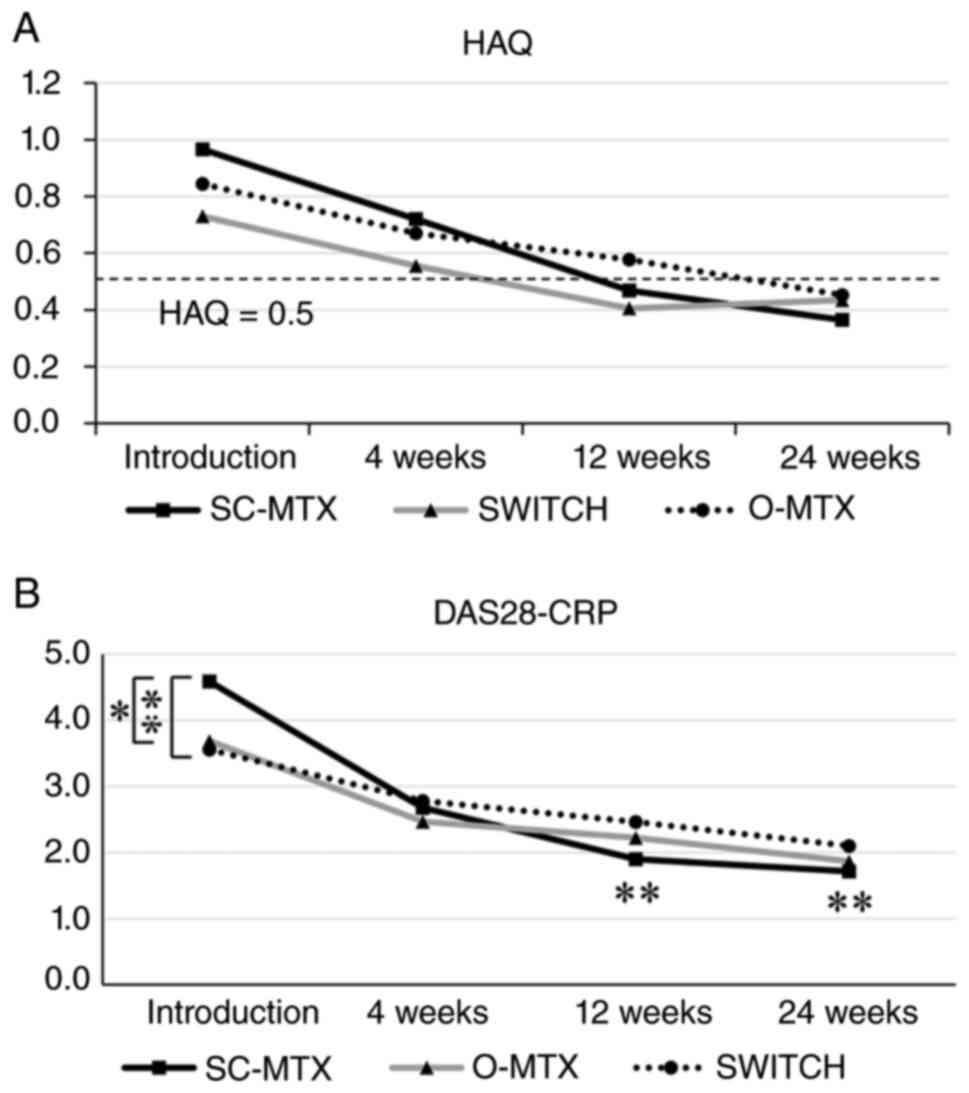
Changes in HAQ and DAS28-CRP scores 24 weeks from
MTX introduction, during SC-MTX introduction, or on switching to
SC-MTX are presented in Fig. 1, and
specific values are presented in Table
SI. No significant differences in HAQ were observed between any
groups at any time points; however, the SC-MTX and SWITCH groups
had HAQ scores <0.5 starting from 12 weeks, whereas the O-MTX
group only scored <0.5 at 24 weeks (Fig. 1A). Conversely, the initial DAS28-CRP
score was significantly higher in the SC-MTX group than in the
other groups (SC-MTX vs. O-MTX, P<0.001; SC-MTX vs. SWITCH,
P=0.0094), and at 12 and 24 weeks later, the SC-MTX group exhibited
significantly lower values than the O-MTX group (12 weeks,
P<0.001; 24 weeks, P=0.0092). The P-values for the comparison
between the other groups comparison at 24 weeks exhibited no
significant differences (0.4155 for O-MTX vs. SWITCH and 0.7221 for
SC-MTX vs. SWITCH). Although the disease activity trends using
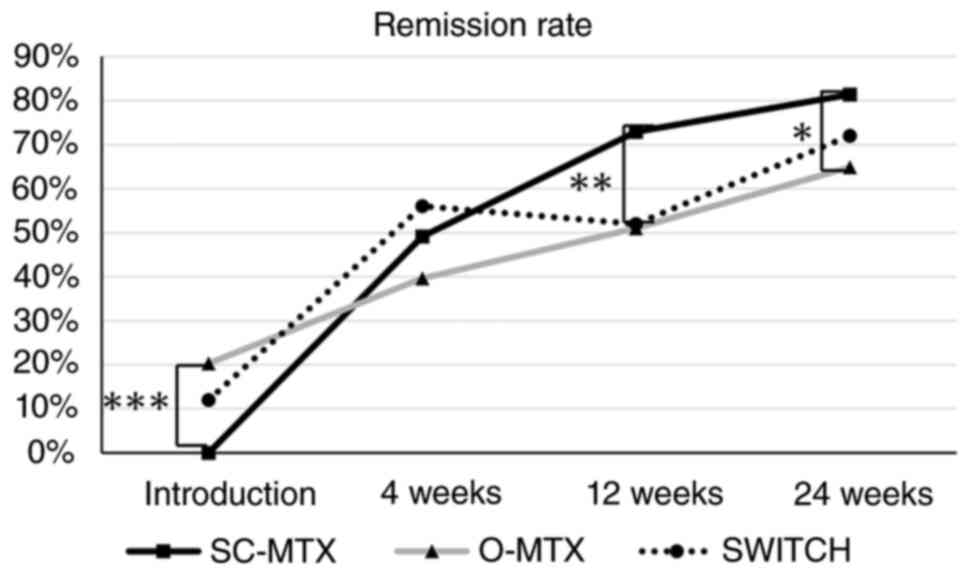
DAS28-CRP for each group are illustrated in Fig. 1, the remission rates based on the
DAS28-CRP are illustrated in Figs. 2
and 3, and Tables SIII and SIV. As illustrated in Figs. 2 and 3, the initial remission rates were 20.30,
0, and 12.00% for the O-MTX, SC-MTX and SWITCH groups,
respectively, indicating the lack of remission cases in the SC-MTX
group at the start. Conversely, among cases with a high disease
activity at introduction, 30 out of the 59 cases (50.848%) were
noted in the SC-MTX group (data not shown). As demonstrated in
Fig. 3, a significant difference in
the initial remission rates was observed among the three groups
using Fisher's exact test (P<0.001), and significant difference
was shown between O-MTX and SC-MTX by pair-wise comparison
(P<0.001) (Fig. 3). However,
remission rates were noted at 4 weeks after starting treatment
among the three groups (P=0.214). After 12 weeks, significant
differences in remission rates were found among the three groups
(P=0.0102) and a significant difference was found between O-MTX and
SC-MTX by pair-wise comparisons (P=0.0054) (Fig. 3), suggesting higher remission rates
in the SC-MTX group than in the other groups. Based on the
aforementioned findings, the HAQ scores suggested that the SC-MTX
group, including the SWITCH group, may achieve remission earlier
than the O-MTX group. By contrast, despite the higher DAS28-CRP
activity at introduction in the SC-MTX group than in the O-MTX
group, early remission could still be achieved in many cases.
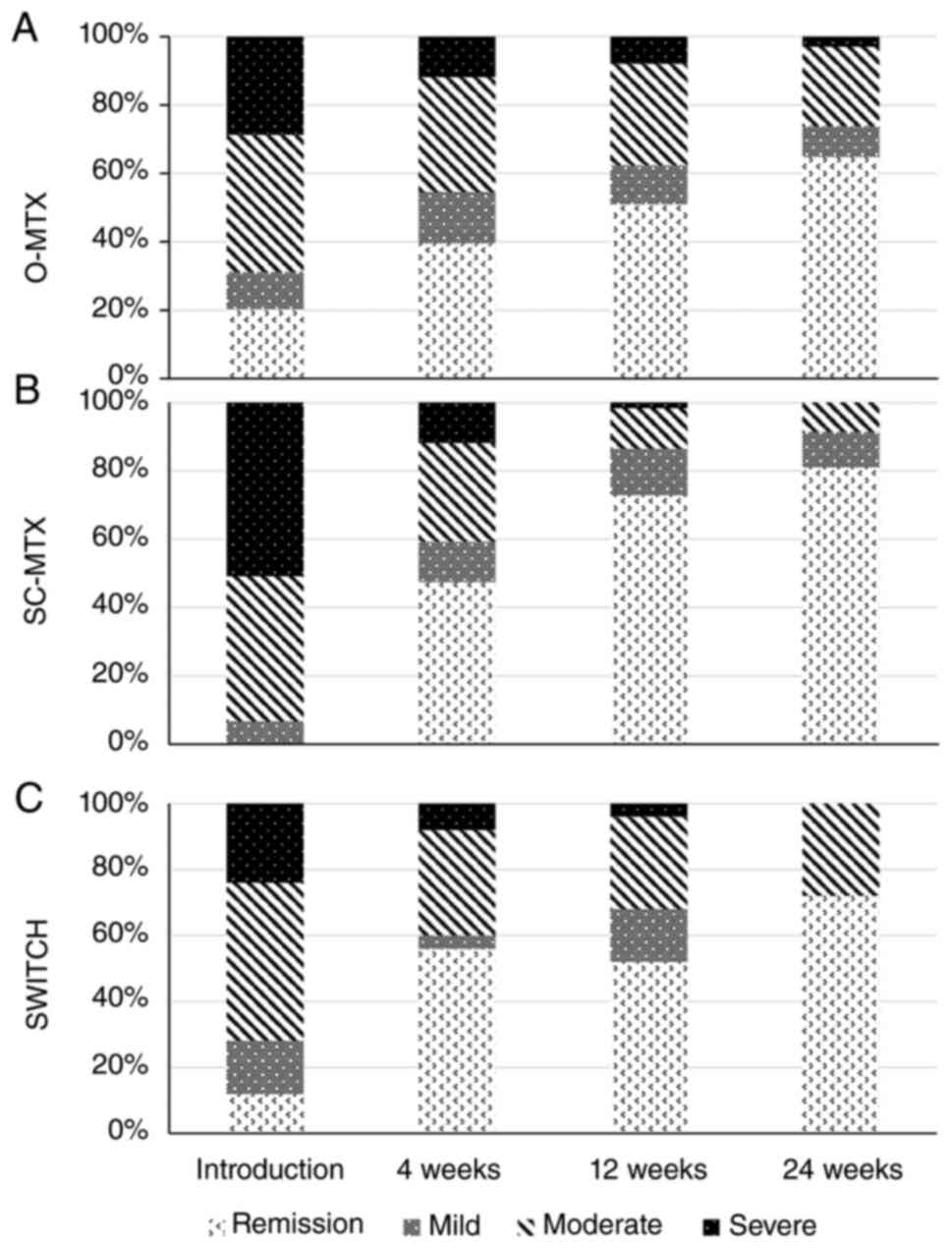 | Figure 2Changes in DAS28-CRP from baseline to
24 weeks in the three groups. The ratios within the groups are
displayed according to disease activity: Remission, low disease
activity, moderate disease activity and high disease activity. (A)
O-MTX group, (B) SC-MTX group, and (C) SWITCH group. DAS28-CRP,
disease activity score in 28 joints with C-reactive protein; MTX,
methotrexate; O-MTX, oral MTX administration; SC-MTX, MTX
subcutaneous injection from the initial induction; SWITCH, switched
group from O-MTX to MTX subcutaneous injection; W, weeks. |
Stratification based on anti-CCP
antibody positivity may reveal differences in responsiveness
according to the MTX administration route
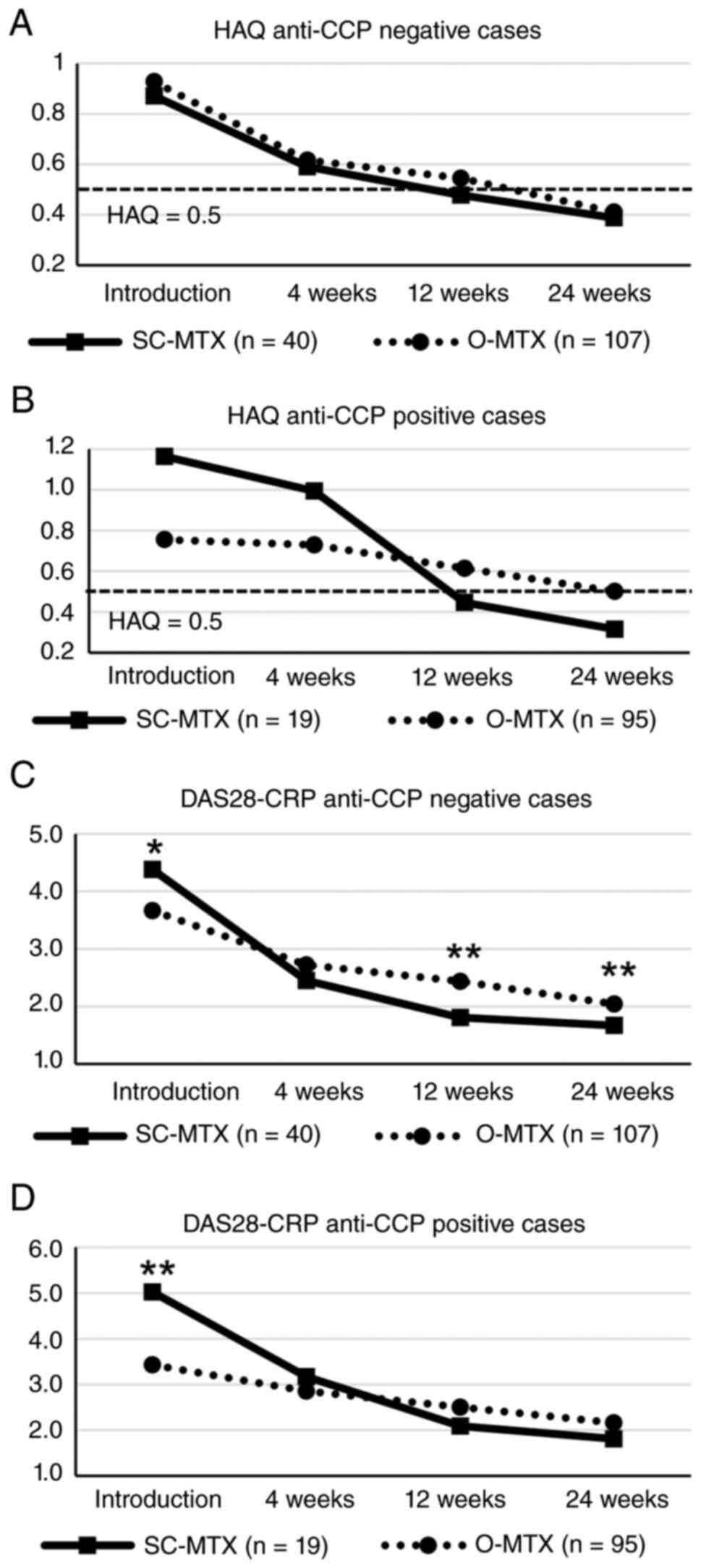
Subsequently, the SC-MTX and O-MTX groups were
divided into anti-CCP antibody-negative and anti-CCP
antibody-positive subgroups, and the changes in HAQ and DAS28-CRP
were examined between the SC-MTX and O-MTX groups. As illustrated
in Fig. 4, no significant difference
in HAQ was observed between the SC-MTX and O-MTX groups,
irrespective of the anti-CCP antibody status (negative or
positive). On the one hand, when stratified by anti-CCP antibody
status, in the antibody-negative group, the DAS28-CRP value was
significantly higher in the SC-MTX than in the O-MTX group at the
time of MTX introduction. However, at 12 and 24 weeks, the
DAS28-CRP values were significantly lower, exhibiting an opposite
trend to that observed at the initial MTX introduction. On the
other hand, similar to that in the antibody-negative group, the
DAS28-CRP value in the antibody-positive group was significantly
higher in the SC-MTX than in the O-MTX group at the time of MTX
introduction. However, no significant difference was observed in
the DAS28-CRP values between the groups after 4 weeks. These
results suggest that treatment responsiveness may vary depending on
both the MTX administration route and anti-CCP antibody status.
The initial introduction of SC-MTX
results in a low concomitant use rate of biological agents and JAK
inhibitors after 24 weeks, a high remission rate with monotherapy,
and a high glucocorticoid DR
The data for the concomitant use rate of biological
agents and JAK inhibitors, the remission rate with monotherapy, and
glucocorticoid DR 24 weeks after SC-MTX or O-MTX introduction are
presented in Table II. The O-MTX
group had a higher concomitant use rate of biological agents and
JAK inhibitors than the other groups, and the remission rate with
MTX monotherapy was higher in the SC-MTX group than in the other
groups. The SC-MTX group also exhibited a higher glucocorticoid DR
than the other groups. These results suggest that the early SC-MTX
introduction is a simple and effective treatment without the need
for multiple drugs.
| Table IIRates of combined use of MTX with
biological DMARDS and JAK inhibitors, remission with MTX alone, and
glucocorticoid discontinuation after 24 weeks among the three
groups. |
Table II
Rates of combined use of MTX with
biological DMARDS and JAK inhibitors, remission with MTX alone, and
glucocorticoid discontinuation after 24 weeks among the three
groups.
| | Group |
|---|
|
Items/parameter | O-MTX (n=202) | SC-MTX (n=59) | SWITCH (n=25) |
|---|
| Bio/JAK adoption
rate within 24 weeks (with/without adoption) | 32.18%
(65/137) | 20.34% (12/47) | 24.00% (6/19) |
| P-value | P=0.1788 |
|
Items/parameter | n=131 | n=47 | n=18 |
| MTX alone case rate
among remission cases at 24 weeks (MTX alone/not MTX alone in
remission case) | 31.30% (41/90) | 65.96% (31/16) | 33.33% (6/12) |
| P-value | P<0.001 |
|
Items/parameter | n=131 | n=47 | n=18 |
| Glucocorticoid
discontinuation rate | 59.3% | 85.7% | 50% |
In the O-MTX group, early SC-MTX
introduction and SWITCH groups, no significant differences are
observed in the trends of liver function, lipids, kidney function
and blood cell counts
The lack of data on the changes in liver function,
lipids, or blood cells during SC-MTX administration in Japan also
required investigation. The data for the progression of ALT, LDL,
eGFR and Hb levels and white blood cell and lymphocyte counts in
the peripheral blood over 24 weeks from treatment initiation are
presented in Fig. 5 and Table SII. Apart from a significant
difference in the white blood cell count at baseline between the
SC-MTX and SWITCH groups (P=0.046), no other significant
differences were observed between the groups for any parameters at
any time point. Conversely, when comparing eGFRs before the
initiation and 24 weeks later, the eGFRs were 73.40±13.91 before
and 69.74±13.67 after in the O- MTX group, 73.61±14.37 before and
68.34±12.34 after in the SC-MTX group, and 77.87±15.23 before and
72.66±14.77 after in the SWITCH group. In the O-MTX and SC-MTX
groups, the eGFR was significantly lower at 24 weeks than that
before the initiation (O-MTX: Introduction vs. 24 weeks; P=0.0081,
SC-MTX: Introduction vs. 24 weeks; P=0.0473, SWITCH: Introduction
vs. 24 weeks; P=0.2307). These results suggest that whether using
O-MTX or SC-MTX, liver function, lipids, kidney function and blood
cell systems exhibited similar trends in all three groups. However,
caution should be exercised with respect to the decline in kidney
function in both O-MTX and SC-MTX groups.
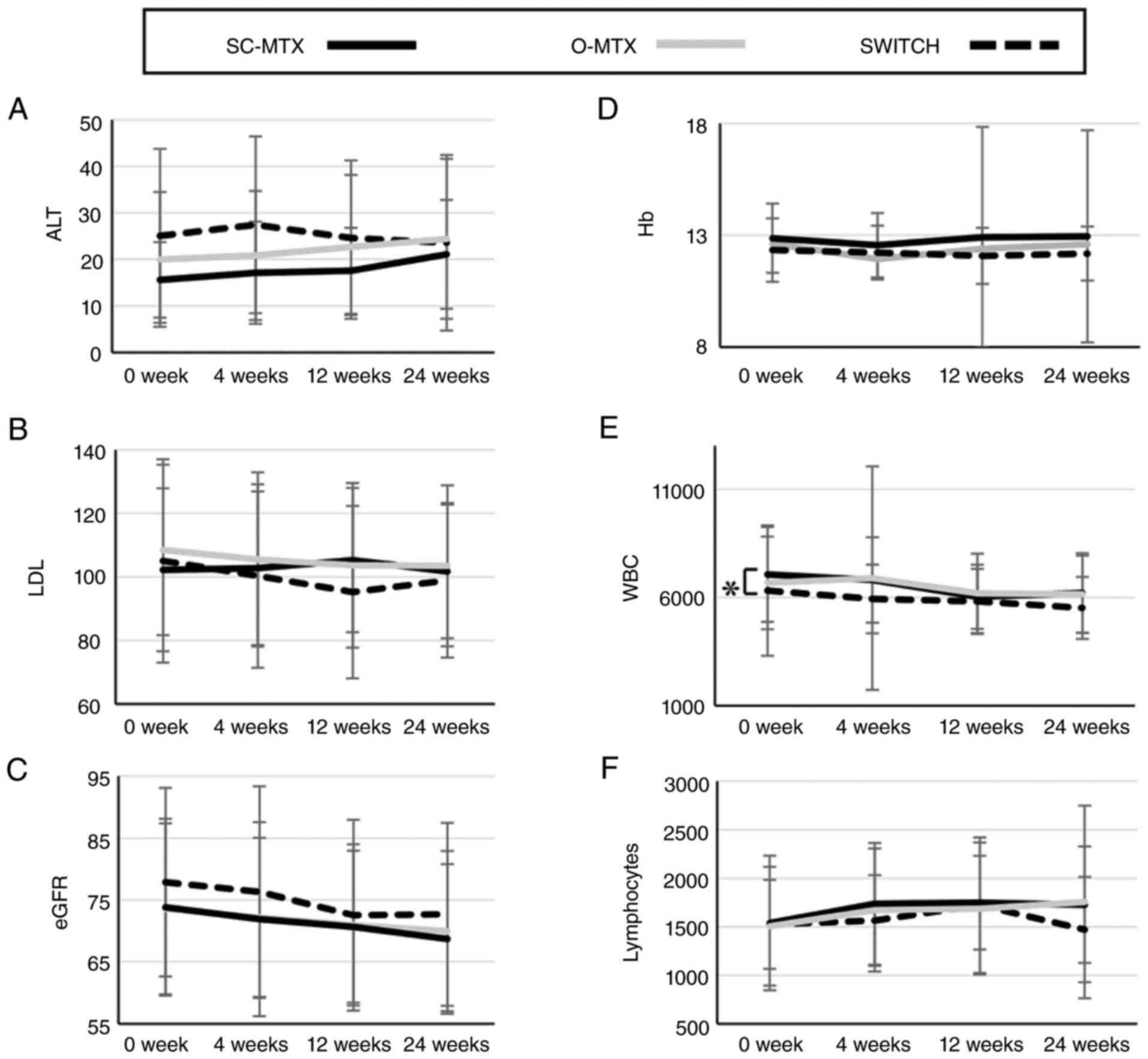 | Figure 5Changes in liver function, lipids, and
blood cells over a 24-week period in the 3 groups. (A) ALT in U/l,
(B) LDL in mg/dl, (C) eGFR in ml/min/1.73 m2, (D) Hb in
g/dl, (E) white blood cell count in cells/µl, and (F) lymphocyte
count in cells/µl. *P<0.05, significant differences
between the groups. ALT, alanine aminotransferase; Hb, hemoglobin;
LDL, low-density lipoprotein; eGFR, estimated glomerular filtration
rate; MTX, methotrexate; O-MTX, oral MTX administration; SC-MTX,
MTX subcutaneous injection from the initial induction; SWITCH,
switched group from O-MTX to MTX subcutaneous injection; W, weeks.
ALT, alanine aminotransferase; LDL, low-density lipoprotein; eGFR,
estimated glomerular filtration rate; Hb, hemoglobin; WBC, white
blood cell count. |
No significant association exists
between the cumulative dose of MTX and the change in eGFR,
regardless of the administration route (oral or subcutaneous)
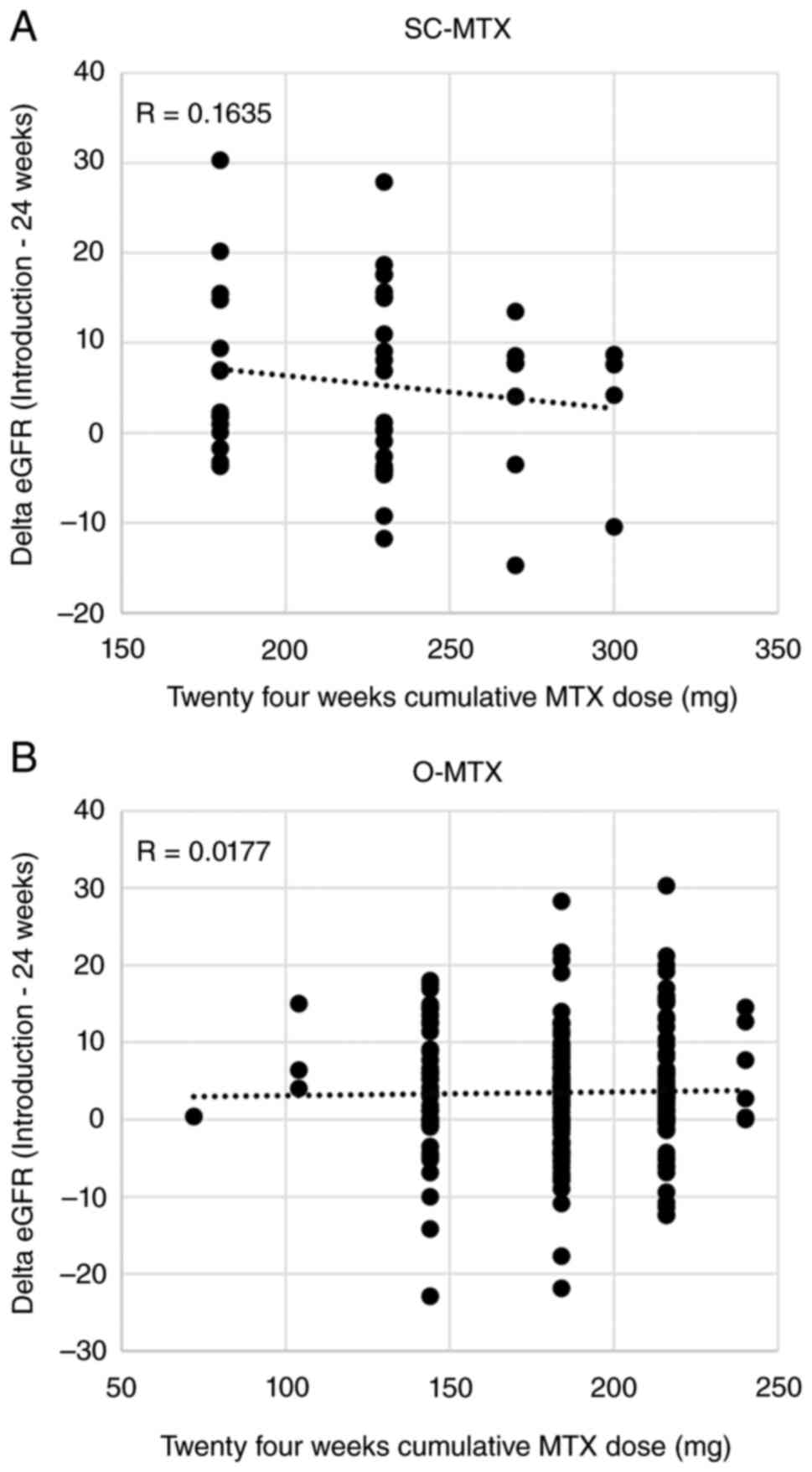
The present study then determined whether an
association exists between the cumulative dose of MTX administered
orally and subcutaneously and the change in eGFR 24 weeks after MTX
administration compared with the time of MTX introduction. As
demonstrated in Fig. 6, no
significant association was observed between the cumulative dose of
MTX and changes in eGFR in either the SC-MTX or O-MTX group. These
results suggest that, over a 24-week period, variations in
cumulative MTX dose are not associated with clinically significant
changes in renal function.
Despite some burden of drug costs,
satisfaction with the SC-MTX pen is high
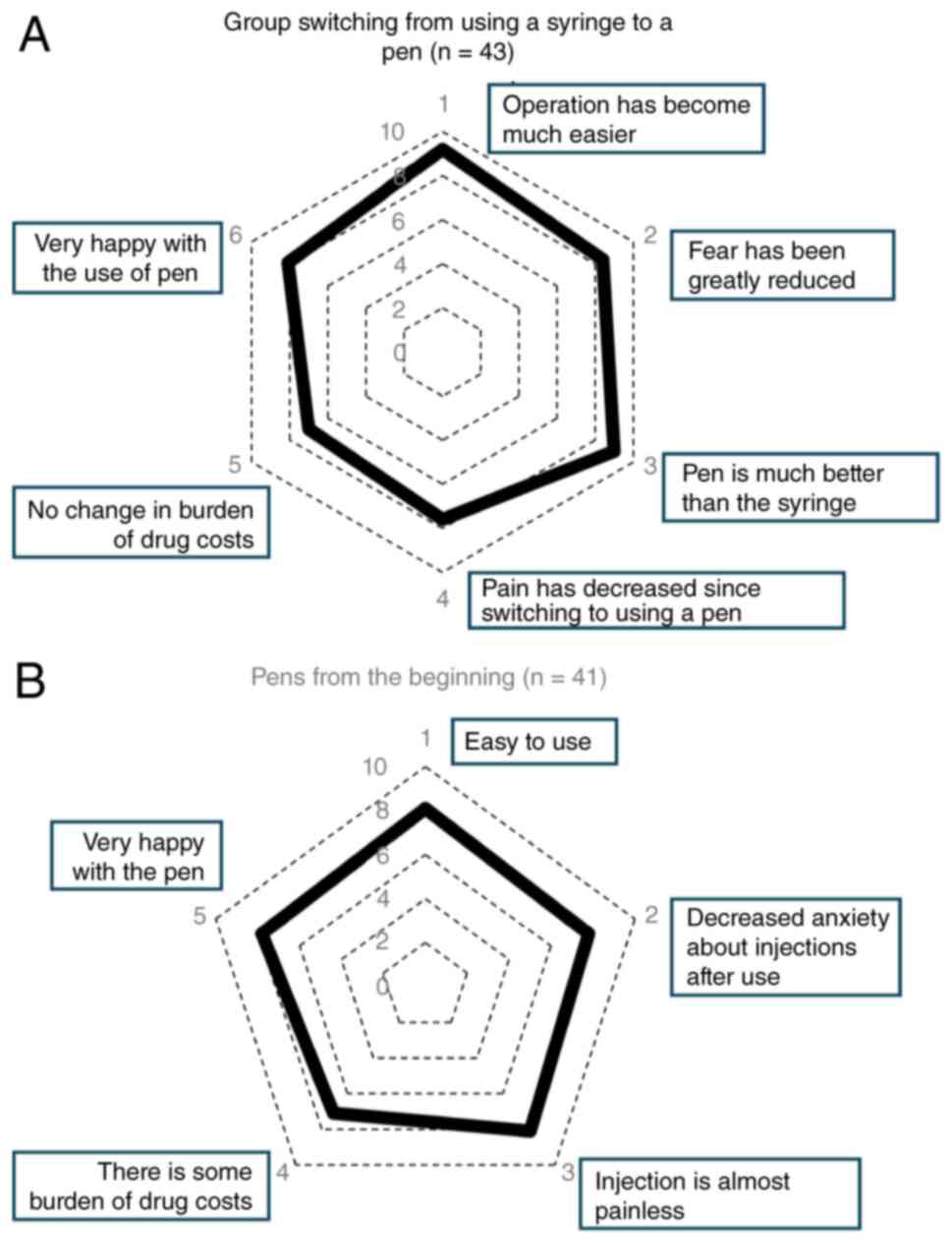
A patient questionnaire survey regarding the SC-MTX
pen was conducted, which focused on changes in operation, pain and
anxiety about injections, burden of drug costs, and overall
satisfaction with the use of a pen (Fig.
7). The participants were divided into a group of 43 patients
who switched from using a syringe to the SC-MTX pen and a group of
41 patients who had used the SC-MTX pen from the beginning. When
rated on a scale of 10 points, with the higher score being better,
regardless of age or sex, the burden of drug costs was rated an
average of 7 points. However, all other participants rated an
average of ≥8 points, indicating high satisfaction with the SC-MTX
pen. Thus, satisfaction with the operation and other aspects of use
would be high due to the effectiveness of the device, which is the
reason for the high continuation rate.
Discussion
In the present study, the SC-MTX group had a higher
mean age than the other groups. However, Braun et al
(8) reported that SC-MTX is more
effective than O-MTX. Furthermore, elderly-onset RA is typically
more active at disease onset than young-onset RA (YORA) (9). Therefore, in the present study,
patients receiving SC-MTX were likely older than those administered
O-MTX in their daily clinical practice. This represents a selection
bias in clinical research; however, it is a limitation of the
present study, as the present study was a retrospective analysis
based on real-world clinical practice. The group that initiated
treatment with SC-MTX had a higher remission rate when using a
single agent than O-MTX or switching from O-MTX, a higher DR of
glucocorticoids, and an earlier reduction in disease activity based
on DAS28-CRP and HAQ scores, which had a significant effect on the
improvement of the condition after 24 weeks. The usefulness of
using SC-MTX early rather than the oral drug has been widely
reported overseas. A 2019 meta-analysis from Boston University also
reported that despite the lack of difference in the risk of adverse
events, parenteral MTX therapy was significantly more likely to
achieve a reduction in disease activity than O-MTX therapy
(6). In addition, a 2015 report from
China compared the two, demonstrated that subcutaneous MTX therapy
may have an earlier therapeutic effect (5). Both reports utilized higher MTX doses
than those used in Japan, which somewhat diverges from the actual
clinical situation in Japan, and the present study is notable, as
it presents a comparative analysis within actual clinical practice.
There are reports that switching from O-MTX to SC-MTX improves
disease activity and may reduce or delay the need for biologic
therapy (10). However, to the best
of my knowledge, no reports have directly compared group that
initially received SC-MTX with the SWITCH group. Furthermore, no
studies have examined the DR of glucocorticoids with the use of
O-MTX and injectable formulations, and the present study also
demonstrated that the DR of glucocorticoids was higher in the
SC-MTX group. As regards the association between MTX administration
and renal function decline, Hayashi et al (11) reported that in long-term
administration (1 and 3 years), the greater the MTX dose, the
greater the eGFR decline. However, that study did not examine the
6-month period or cumulative dose (11). Taken together with the findings of
the present study, the results suggest that there is no clear
association between cumulative MTX dose and the change in eGFR, at
least in short-term observations.
The discontinuation rates due to stomatitis and
anorexia were the same in the O-MTX and SC-MTX groups. In the
present study, 31.7% of the patients who continued O-MTX therapy
were prescribed vitamins and mouthwash to address stomatitis and
antiemetics for anorexia. However, patients expressed reluctance to
increase their dose due to fear of side-effects and preferred not
to do so (unpublished observation). Previous studies have reported
that the emergence of stomatitis and gastrointestinal symptoms
during treatment is a major reason for discontinuing treatment
(12,13) and this has been a major obstacle to
using or increasing the dose of O-MTX until now. With SC-MTX, these
symptoms are rarely observed, so the dose can be easily increased.
In addition, even with increased doses, the frequency of injections
does not increase, and the injection dose does not change
significantly, which is thought to reduce the burden on patients
(unpublished observation). In general, SC-MTX results in fewer
symptoms, such as stomatitis and anorexia, and patients are willing
to increase the SC-MTX dose if the disease activity improves
(unpublished observation). Although the burden of drug costs may
increase slightly, the liquid volume does not change significantly,
and the frequency of injections once a week remains constant, so
the SC-MTX dose can be increased more smoothly than with O-MTX
(unpublished observation). Therefore, the ability to administer
sufficient amounts of SC-MTX as a phase 1 MTX treatment for RA was
suggested to influence the improvement in disease activity.
Early treatment with SC-MTX is already in
circulation overseas, with studies reporting that it is more
effective and has a higher continuation rate than O-MTX (14,15).
This may be attributed to the high long-chain MTX-PG concentration,
which is associated with disease activity and an increased
intracellular MTX retention, resulting in accumulation, which
increases drug availability and effectiveness. SC-MTX has a higher
bioavailability rate (the rate at which the drug is utilized in the
body) (16-20).
In the present study, the use of SC-MTX was significantly higher
than that of O-MTX. Given the high bioavailability of SC-MTX,
administering sufficient amounts of SC-MTX may lead to reductions
in the dose of glucocorticoids, achieve a high remission rate with
a single drug, and further reduce disease activity at an earlier
stage. Taken together with the findings of previous reports
(16-20),
the SWITCH group in the present study likely included patients
whose disease activity was not adequately controlled with O-MTX, as
well as those unable to receive an adequate dose due to adverse
effects. The additional reduction in disease activity observed
after switching to SC-MTX may be explained by its higher
bioavailability and lower incidence of side-effects compared with
O-MTX, which may allow patients to tolerate and maintain a more
effective dose. Overseas reports have demonstrated that the safety
of injectable formulations is equivalent to that of oral
formulations, even though they can be administered in larger
amounts (15). Furthermore, another
study reported a high continuation rate (5). The dose of injectable formulations
could be increased more easily than that of oral formulations, yet
the safety and effectiveness can be expected to be the same.
In the present study, a questionnaire survey was
conducted on patients regarding the SC-MTX pen, which revealed that
the group that switched from using a syringe to a pen was highly
satisfied with the ease of use. Even in the group that used the pen
from the beginning, despite the initial anxiety about injections,
the ease of use and minimal pain caused by the pen greatly reduced
the sense of burden after the injection. Overseas, the results of a
survey of 189 patients and medical professionals regarding the
SC-MTX pen revealed the following points: Simple injection, small
injection volume and short injection time (<5 s) (21-25).
Notably, the questionnaire survey used herein did not compare
satisfaction levels between O-MTX and SC-MTX. In other words, the
results obtained from the questionnaire survey do not indicate the
superiority of SC-MTX over oral MTX, but instead suggest that it is
a more convenient administration method.
The present study has certain limitations that need
to be acknowledged. First, based on the guidelines of the Japan
College of Rheumatology, the initial dose of MTX is 6-8 mg
(7). However, in Japan, the
available dose for oral MTX is 2 mg per tablet, whereas the minimum
dose for subcutaneous MTX is 7.5 mg, increasing in increments of
2.5 mg. Therefore, comparing data with exactly the same dosage in
the present study was not feasible. In clinical studies, such as
phase 3 trials, intention-to-treat (ITT) analysis is generally
employed, where the study proceeds according to the treatment plan.
When per-protocol (PP) analysis is used to verify the pure effect
of ‘the treatment itself’, it is ideal to include only subjects who
completed the treatment as planned. In fact, the PLANETRA trial
incorporated ITT and PP analyses (26). However, the present study had a
retrospective nature, and the analysis was limited to analyzable
cases, rendering it infeasible to conduct the analysis using an
ideal clinical research model. This should be considered a study
limitation. The present study, in which the O-MTX and SC-MTX groups
were divided into the anti-CCP antibody-positive and anti-CCP
antibody-negative subgroups and time-series analysis of HAQ and
DAS28CRP was conducted, demonstrated that the clinical response to
SC-MTX may differ depending on the anti-CCP antibody status.
However, given the limited sample size and the retrospective nature
of the present study, these observations should be considered
exploratory.
In conclusion, the drug cost for SC-MTX may be more
burdensome than that for O-MTX; however, early improvement in
disease activity and a high remission rate with a single drug may
lead to a reduction in long-term drug costs. The present study
suggests that the early introduction of SC-MTX is beneficial to all
patients with RA. However, the early introduction of SC-MTX is
particularly significant for patients with a high disease activity
and should be considered.
Supplementary Material
Changes in DAS28-CRP and HAQ among the
three groups.
Summary of statistical analysis of
clinical data among three groups based on the P-values.
Changes in disease activity in each
group.
Changes in remission rate for each
group.
Acknowledgements
Not applicable.
Funding
Funding: No funding was received.
Availability of data and materials
The data generated in the present study may be
requested from the corresponding author.
Authors' contributions
YS conceived and designed the study as the principal
(sole) investigator and performed data collection, analysis and
manuscript writing.
Ethics approval and consent to
participate
The present study was conducted with the approval of
the Institutional Review Board of Toho Hospital (Approval no.
2024-1). In addition, for the analysis of electronic medical record
data, individual informed consent was not obtained; instead,
information regarding the use of medical records and the
possibility of public data presentation, including publication, was
disclosed on the hospital's website in accordance with the Ministry
of Health, Labour and Welfare's ‘Ethical Guidelines for Life
Sciences and Medical Research Involving Human Subjects’. Patients
were provided with adequate opportunity to withdraw from the study.
In the survey conducted with patients, informed consent was
obtained from all participants for data use and publication.
Patient consent for publication
Not applicable.
Competing interests
The author declares that she has no competing
interests.
References
|
1
|
Tanaka Y: Subcutaneous injection of
methotrexate: Advantages in the treatment of rheumatoid arthritis.
Mod Rheumatol. 33:633–639. 2023.PubMed/NCBI View Article : Google Scholar
|
|
2
|
Hoekstra M, van Ede AE, Haagsma CJ, van de
Laar MA, Huizinga TW, Kruijsen MW and Laan RF: Factors associated
with toxicity, final dose, and efficacy of methotrexate in patients
with rheumatoid arthritis. Ann Rheum Dis. 62:423–426.
2003.PubMed/NCBI View Article : Google Scholar
|
|
3
|
Wegrzyn J, Adeleine P and Miossec P:
Better efficacy of methotrexate given by intramuscular injection
than orally in patients with rheumatoid arthritis. Ann Rheum Dis.
63:1232–1234. 2004.PubMed/NCBI View Article : Google Scholar
|
|
4
|
Harigai M, Kaneko Y, Tanaka E, Hirata S,
Kameda H, Kaneko K, Kishimoto M, Kohno M, Kojima M, Kojima T, et
al: 2024 update of the Japan college of rheumatology clinical
practice guidelines for the management of rheumatoid arthritis:
Secondary publication. Mod Rheumatol. 35:387–401. 2025.PubMed/NCBI View Article : Google Scholar
|
|
5
|
Qiao L, Hu J, Ou D, Liu M, Shi X, Li X, Wu
R, Zhang L, Liu Y, Xiao C, et al: Comparison of the efficacy and
safety of methotrexate injection and methotrexate tablets in active
RA. Rheumatology (Oxford). 64:3426–3433. 2025.PubMed/NCBI View Article : Google Scholar
|
|
6
|
Bujor AM, Janjua S, LaValley MP, Duran J,
Braun J and Felson DT: Comparison of oral versus parenteral
methotrexate in the treatment of rheumatoid arthritis: A
meta-analysis. PLoS One. 14(e0221823)2019.PubMed/NCBI View Article : Google Scholar
|
|
7
|
Kameda H, Yamaoka K, Yamanishi Y, Tada M,
Koike R, Nakajima A, Fusama M and Fujii T: Japan College of
Rheumatology guidance for the use of methotrexate in patients with
rheumatoid arthritis: Secondary publication. Mod Rheumatol.
34:1–10. 2023.PubMed/NCBI View Article : Google Scholar
|
|
8
|
Braun J, Kästner P, Flaxenberg P, Währisch
J, Hanke P, Demary W, von Hinüber U, Rockwitz K, Heitz W,
Pichlmeier U, et al: Comparison of the clinical efficacy and safety
of subcutaneous versus oral administration of methotrexate in
patients with active rheumatoid arthritis: Results of a six-month,
multicenter, randomized, double-blind, controlled, phase IV trial.
Arthritis Rheum. 58:73–81. 2008.PubMed/NCBI View Article : Google Scholar
|
|
9
|
Acuña-Rocha VD, Regalado-Ceballos D,
Salcedo-Soto DA, Ramos-Delgado CA, Esquivel-Valerio JA, Hernandez
Galarza IJ, Galarza-Delgado DA and Flores-Alvarado DE: Clinical
characteristics of young-onset versus elderly-onset rheumatoid
arthritis: A systematic review and meta-analysis. Cureus.
16(e74148)2024.PubMed/NCBI View Article : Google Scholar
|
|
10
|
Mirza A and Nisar MK: Should all patients
trial subcutaneous methotrexate prior to commencing biologic
therapy? A real world study. Mediterr J Rheumatol. 35:115–122.
2023.PubMed/NCBI View Article : Google Scholar
|
|
11
|
Hayashi K, Sada KE, Asano Y, Asano SH,
Yamamura Y, Ohashi K, Morishita M, Watanabe H, Narazaki M,
Matsumoto Y and Wada J: Risk of higher dose methotrexate for renal
impairment in patients with rheumatoid arthritis. Sci Rep.
10(18715)2020.PubMed/NCBI View Article : Google Scholar
|
|
12
|
Pavy S, Constantin A, Pham T, Gossec L,
Maillefert JF, Cantagrel A, Combe B, Flipo RM, Goupille P, Le Loët
X, et al: Methotrexate therapy for rheumatoid arthritis: Clinical
practice guidelines based on published evidence and expert opinion.
Joint Bone Spine. 73:388–395. 2006.PubMed/NCBI View Article : Google Scholar
|
|
13
|
Tanaka Y, Okuda K, Takeuchi Y, Katayama K,
Haji Y, Yamanishi Y, Tribanek M, Guimbal-Schmolck C and Takeuchi T:
Efficacy and tolerability of subcutaneously administered
methotrexate including dose escalation in long-term treatment of
rheumatoid arthritis in a Japanese population. Mod Rheumatol.
33:680–689. 2023.PubMed/NCBI View Article : Google Scholar
|
|
14
|
Villarreal V, Gutierrez N,
Rodriguez-Linares P, Cardozo M, Rojas-Villarraga A and
Santos-Moreno P: POS1386-HPR effectiveness of subcutaneous
methotrexate in patients with rheumatoid arthritis and its
persistence in the long term. Anna Rheum Dis. 82 (Suppl
1):S1046–S1047. 2023.
|
|
15
|
Moura CS, Schieir O, Valois MF, Thorne C,
Bartlett SJ, Pope JE, Hitchon CA, Boire G, Haraoui B, Hazlewood GS,
et al: Treatment strategies in early rheumatoid arthritis
methotrexate management: Results from a prospective cohort.
Arthritis Care Res (Hoboken). 72:1104–1111. 2020.PubMed/NCBI View Article : Google Scholar
|
|
16
|
Dervieux T, Zablocki R and Kremer J: Red
blood cell methotrexate polyglutamates emerge as a function of
dosage intensity and route of administration during pulse
methotrexate therapy in rheumatoid arthritis. Rheumatology
(Oxford). 49:2337–2345. 2010.PubMed/NCBI View Article : Google Scholar
|
|
17
|
Stamp LK, Barclay ML, O'Donnell JL, Zhang
M, Drake J, Frampton C and Chapman PT: Effects of changing from
oral to subcutaneous methotrexate on red blood cell methotrexate
polyglutamate concentrations and disease activity in patients with
rheumatoid arthritis. J Rheumatol. 38:2540–2547. 2011.PubMed/NCBI View Article : Google Scholar
|
|
18
|
Mohamed HJ, Sorich MJ, Kowalski SM,
McKinnon R, Proudman SM, Cleland L and Wiese MD: The role and
utility of measuring red blood cell methotrexate polyglutamate
concentrations in inflammatory arthropathies-a systematic review.
Eur J Clin Pharmacol. 71:411–423. 2015.PubMed/NCBI View Article : Google Scholar
|
|
19
|
Hoekstra M, Haagsma C, Neef C, Proost J,
Knuif A and van de Laar M: Bioavailability of higher dose
methotrexate comparing oral and subcutaneous administration in
patients with rheumatoid arthritis. J Rheumatol. 31:645–648.
2004.PubMed/NCBI
|
|
20
|
Schiff MH, Jaffe JS and Freundlich B:
Head-to-head, randomised, crossover study of oral versus
subcutaneous methotrexate in patients with rheumatoid arthritis:
Drug-exposure limitations of oral methotrexate at doses ≥15 mg may
be overcome with subcutaneous administration. Ann Rheum Dis.
73:1549–1551. 2014.PubMed/NCBI View Article : Google Scholar
|
|
21
|
Roszkiewicz J, Swacha Z and Smolewska E:
Prefilled pen versus prefilled syringe: A pilot study evaluating
two different methods of methotrexate subcutaneous injection in
patients with JIA. Pediatr Rheumatol Online J.
18(64)2020.PubMed/NCBI View Article : Google Scholar
|
|
22
|
Demary W, Schwenke H, Rockwitz K, Kästner
P, Liebhaber A, Schoo U, Hübner G, Pichlmeier U, Guimbal-Schmolck C
and Müller-Ladner U: Subcutaneously administered methotrexate for
rheumatoid arthritis, by prefilled syringes versus prefilled pens:
Patient preference and comparison of the self-injection experience.
Patient Prefer Adherence. 8:1061–1071. 2014.PubMed/NCBI View Article : Google Scholar
|
|
23
|
Pachon JA, Kivitz AJ, Heuer KU and
Pichlmeier U: Assessing usability, label comprehension, pen
robustness and pharmacokinetics of a self-administered prefilled
autoinjector pen of methotrexate in patients with rheumatoid
arthritis. SAGE Open Med. 2(2050312114564241)2014.PubMed/NCBI View Article : Google Scholar
|
|
24
|
Hudry C, Lebrun A, Moura B, Zinovieva E,
Backers O and Herman-Demars H: Evaluation of usability and
acceptance of a new autoinjector intended for methotrexate
subcutaneous self-administration in the management of rheumatoid
arthritis. Rheumatol Ther. 4:183–194. 2017.PubMed/NCBI View Article : Google Scholar
|
|
25
|
Saraux A, Hudry C, Zinovieva E and
Herman-Demars H: Self-I Investigators group. Use of auto-injector
for methotrexate subcutaneous self-injections: High satisfaction
level and good compliance in SELF-I study, a randomized,
open-label, parallel group study. Rheumatol Ther. 6:47–60.
2019.PubMed/NCBI View Article : Google Scholar
|
|
26
|
Yoo DH, Hrycaj P, Miranda P, Ramiterre E,
Piotrowski M, Shevchuk S, Kovalenko V, Prodanovic N, Abello-Banfi
M, Gutierrez-Ureña S, et al: A randomised, double-blind,
parallel-group study to demonstrate equivalence in efficacy and
safety of CT-P13 compared with innovator infliximab when
coadministered with methotrexate in patients with active rheumatoid
arthritis: The PLANETRA study. Ann Rheum Dis. 72:1613–1620.
2013.PubMed/NCBI View Article : Google Scholar
|