Spandidos Publications Logo
  • About
    • About Spandidos
    • Aims and Scopes
    • Abstracting and Indexing
    • Editorial Policies
    • Reprints and Permissions
    • Job Opportunities
    • Terms and Conditions
    • Contact
  • Journals
    • All Journals
    • Oncology Letters
      • Oncology Letters
      • Information for Authors
      • Editorial Policies
      • Editorial Board
      • Aims and Scope
      • Abstracting and Indexing
      • Bibliographic Information
      • Archive
    • International Journal of Oncology
      • International Journal of Oncology
      • Information for Authors
      • Editorial Policies
      • Editorial Board
      • Aims and Scope
      • Abstracting and Indexing
      • Bibliographic Information
      • Archive
    • Molecular and Clinical Oncology
      • Molecular and Clinical Oncology
      • Information for Authors
      • Editorial Policies
      • Editorial Board
      • Aims and Scope
      • Abstracting and Indexing
      • Bibliographic Information
      • Archive
    • Experimental and Therapeutic Medicine
      • Experimental and Therapeutic Medicine
      • Information for Authors
      • Editorial Policies
      • Editorial Board
      • Aims and Scope
      • Abstracting and Indexing
      • Bibliographic Information
      • Archive
    • International Journal of Molecular Medicine
      • International Journal of Molecular Medicine
      • Information for Authors
      • Editorial Policies
      • Editorial Board
      • Aims and Scope
      • Abstracting and Indexing
      • Bibliographic Information
      • Archive
    • Biomedical Reports
      • Biomedical Reports
      • Information for Authors
      • Editorial Policies
      • Editorial Board
      • Aims and Scope
      • Abstracting and Indexing
      • Bibliographic Information
      • Archive
    • Oncology Reports
      • Oncology Reports
      • Information for Authors
      • Editorial Policies
      • Editorial Board
      • Aims and Scope
      • Abstracting and Indexing
      • Bibliographic Information
      • Archive
    • Molecular Medicine Reports
      • Molecular Medicine Reports
      • Information for Authors
      • Editorial Policies
      • Editorial Board
      • Aims and Scope
      • Abstracting and Indexing
      • Bibliographic Information
      • Archive
    • World Academy of Sciences Journal
      • World Academy of Sciences Journal
      • Information for Authors
      • Editorial Policies
      • Editorial Board
      • Aims and Scope
      • Abstracting and Indexing
      • Bibliographic Information
      • Archive
    • International Journal of Functional Nutrition
      • International Journal of Functional Nutrition
      • Information for Authors
      • Editorial Policies
      • Editorial Board
      • Aims and Scope
      • Abstracting and Indexing
      • Bibliographic Information
      • Archive
    • International Journal of Epigenetics
      • International Journal of Epigenetics
      • Information for Authors
      • Editorial Policies
      • Editorial Board
      • Aims and Scope
      • Abstracting and Indexing
      • Bibliographic Information
      • Archive
    • Medicine International
      • Medicine International
      • Information for Authors
      • Editorial Policies
      • Editorial Board
      • Aims and Scope
      • Abstracting and Indexing
      • Bibliographic Information
      • Archive
  • Articles
  • Information
    • Information for Authors
    • Information for Reviewers
    • Information for Librarians
    • Information for Advertisers
    • Conferences
  • Language Editing
Spandidos Publications Logo
  • About
    • About Spandidos
    • Aims and Scopes
    • Abstracting and Indexing
    • Editorial Policies
    • Reprints and Permissions
    • Job Opportunities
    • Terms and Conditions
    • Contact
  • Journals
    • All Journals
    • Biomedical Reports
      • Information for Authors
      • Editorial Policies
      • Editorial Board
      • Aims and Scope
      • Abstracting and Indexing
      • Bibliographic Information
      • Archive
    • Experimental and Therapeutic Medicine
      • Information for Authors
      • Editorial Policies
      • Editorial Board
      • Aims and Scope
      • Abstracting and Indexing
      • Bibliographic Information
      • Archive
    • International Journal of Epigenetics
      • Information for Authors
      • Editorial Policies
      • Editorial Board
      • Aims and Scope
      • Abstracting and Indexing
      • Bibliographic Information
      • Archive
    • International Journal of Functional Nutrition
      • Information for Authors
      • Editorial Policies
      • Editorial Board
      • Aims and Scope
      • Abstracting and Indexing
      • Bibliographic Information
      • Archive
    • International Journal of Molecular Medicine
      • Information for Authors
      • Editorial Policies
      • Editorial Board
      • Aims and Scope
      • Abstracting and Indexing
      • Bibliographic Information
      • Archive
    • International Journal of Oncology
      • Information for Authors
      • Editorial Policies
      • Editorial Board
      • Aims and Scope
      • Abstracting and Indexing
      • Bibliographic Information
      • Archive
    • Medicine International
      • Information for Authors
      • Editorial Policies
      • Editorial Board
      • Aims and Scope
      • Abstracting and Indexing
      • Bibliographic Information
      • Archive
    • Molecular and Clinical Oncology
      • Information for Authors
      • Editorial Policies
      • Editorial Board
      • Aims and Scope
      • Abstracting and Indexing
      • Bibliographic Information
      • Archive
    • Molecular Medicine Reports
      • Information for Authors
      • Editorial Policies
      • Editorial Board
      • Aims and Scope
      • Abstracting and Indexing
      • Bibliographic Information
      • Archive
    • Oncology Letters
      • Information for Authors
      • Editorial Policies
      • Editorial Board
      • Aims and Scope
      • Abstracting and Indexing
      • Bibliographic Information
      • Archive
    • Oncology Reports
      • Information for Authors
      • Editorial Policies
      • Editorial Board
      • Aims and Scope
      • Abstracting and Indexing
      • Bibliographic Information
      • Archive
    • World Academy of Sciences Journal
      • Information for Authors
      • Editorial Policies
      • Editorial Board
      • Aims and Scope
      • Abstracting and Indexing
      • Bibliographic Information
      • Archive
  • Articles
  • Information
    • For Authors
    • For Reviewers
    • For Librarians
    • For Advertisers
    • Conferences
  • Language Editing
Login Register Submit
  • This site uses cookies
  • You can change your cookie settings at any time by following the instructions in our Cookie Policy. To find out more, you may read our Privacy Policy.

    I agree
Search articles by DOI, keyword, author or affiliation
Search
Advanced Search
presentation
Molecular Medicine Reports
Join Editorial Board Propose a Special Issue
Print ISSN: 1791-2997 Online ISSN: 1791-3004
Journal Cover
August 2012 Volume 6 Issue 2

Full Size Image

Sign up for eToc alerts
Recommend to Library

Journals

International Journal of Molecular Medicine

International Journal of Molecular Medicine

International Journal of Molecular Medicine is an international journal devoted to molecular mechanisms of human disease.

International Journal of Oncology

International Journal of Oncology

International Journal of Oncology is an international journal devoted to oncology research and cancer treatment.

Molecular Medicine Reports

Molecular Medicine Reports

Covers molecular medicine topics such as pharmacology, pathology, genetics, neuroscience, infectious diseases, molecular cardiology, and molecular surgery.

Oncology Reports

Oncology Reports

Oncology Reports is an international journal devoted to fundamental and applied research in Oncology.

Experimental and Therapeutic Medicine

Experimental and Therapeutic Medicine

Experimental and Therapeutic Medicine is an international journal devoted to laboratory and clinical medicine.

Oncology Letters

Oncology Letters

Oncology Letters is an international journal devoted to Experimental and Clinical Oncology.

Biomedical Reports

Biomedical Reports

Explores a wide range of biological and medical fields, including pharmacology, genetics, microbiology, neuroscience, and molecular cardiology.

Molecular and Clinical Oncology

Molecular and Clinical Oncology

International journal addressing all aspects of oncology research, from tumorigenesis and oncogenes to chemotherapy and metastasis.

World Academy of Sciences Journal

World Academy of Sciences Journal

Multidisciplinary open-access journal spanning biochemistry, genetics, neuroscience, environmental health, and synthetic biology.

International Journal of Functional Nutrition

International Journal of Functional Nutrition

Open-access journal combining biochemistry, pharmacology, immunology, and genetics to advance health through functional nutrition.

International Journal of Epigenetics

International Journal of Epigenetics

Publishes open-access research on using epigenetics to advance understanding and treatment of human disease.

Medicine International

Medicine International

An International Open Access Journal Devoted to General Medicine.

Journal Cover
August 2012 Volume 6 Issue 2

Full Size Image

Sign up for eToc alerts
Recommend to Library

  • Article
  • Citations
    • Cite This Article
    • Download Citation
    • Create Citation Alert
    • Remove Citation Alert
    • Cited By
  • Similar Articles
    • Related Articles (in Spandidos Publications)
    • Similar Articles (Google Scholar)
    • Similar Articles (PubMed)
  • Download PDF
  • Download XML
  • View XML
Article

Effect of aloe polysaccharide on caspase-3 expression following cerebral ischemia and reperfusion injury in rats

  • Authors:
    • Zhong-Qian Lu
    • Yi-Jun Deng
    • Jian-Xia Lu
  • View Affiliations / Copyright

    Affiliations: The Intensive Care Unit, The First People's Hospital of Yancheng City, Yancheng 224005, P.R. China, Department of Medical Technology, Yancheng Health Vocational and Technical College, Yancheng, Jiangsu 224006, P.R. China
  • Pages: 371-374
    |
    Published online on: May 24, 2012
       https://doi.org/10.3892/mmr.2012.927
  • Expand metrics +
Metrics: Total Views: 0 (Spandidos Publications: | PMC Statistics: )
Metrics: Total PDF Downloads: 0 (Spandidos Publications: | PMC Statistics: )
Cited By (CrossRef): 0 citations Loading Articles...

This article is mentioned in:


Abstract

Stroke is a leading cause of cardiovascular morbidity, economic and social burden and mortality. Novel approaches are needed to address stroke prevention and treatment. The purpose of this study was to explore the effects of aloe polysaccharide on caspase-3 expression following cerebral ischemia reperfusion injury in rats. Male Wister rats were randomly divided into 5 groups (16 rats in each group): aloe polysaccharide, ginkgo leaf tablet, nimodipine, model and sham surgery groups. The rats were administered the appropriate drug or normal saline for 7 days by gavage. A rat model of cerebral ischemia and reperfusion injury was established using the middle cerebral artery occlusion (MCAO) model. Caspase-3 protein and mRNA expression levels in the cerebral cortex were detected by immunohistochemistry and reverse transcription-polymerase chain reaction (RT-PCR), respectively. Results showed that caspase-3 protein and mRNA expression levels in the cerebral cortex in the aloe polysaccharide, ginkgo leaf tablet and nimodipine groups were significantly lower compared with the model group and were higher than the sham surgery group (P<0.05). No significant difference was observed in caspase-3 protein and mRNA expression among the aloe polysaccharide, the ginkgo leaf tablet and the nimodipine groups (P>0.05). In conclusion, aloe polysaccharide has a protective effect on cerebral ischemia that may be due to the inhibition of neuronal cell apoptosis.

Introduction

Cerebrovascular disease, also known as stroke, is a clinically common disease characterized by high morbidity, mortality, disability and recurrence. Ischemic cerebrovascular disease (cerebral infarction) accounts for more than 70% of cerebrovascular disease. Two million individuals in China develop cerebrovascular disease each year, with an incidence rate of 120/100,000 individuals. Cerebrovascular disease has a detrimental effect on the patients’ family and society (1). Therefore, there is an urgent need to understand the pathogenesis of this disease to improve treatment and prevention. Currently, studies concerning stroke pathogenesis mainly involve energy deficit, excitatory amino acid toxicity, cell depolarization, calcium influx, inflammation and apoptosis (2). Of these, neuronal apoptotic mechanisms currently draw the most focus (3). Apoptosis is regulated by various cytokines including the caspase enzyme family (4). Caspase-3 plays a key role in neuronal apoptosis following cerebral ischemia reperfusion (5). In this study, a rat model of cerebral ischemia reperfusion injury was established to observe the effect of aloe polysaccharides on neuronal caspase-3 protein and mRNA expression. This study provides mechanistic insight into the effects of aloe polysaccharides on ischemic brain injury.

Materials and methods

Animals, drugs and reagents

Male Wistar rats (weight, 240–300 g, average 260.3±45.6) were supplied by the Experimental Animal Center of Jiangsu Province (Nanjing City, China). The rats had free access to food and water, but were fasted for 12 h prior to surgery. The aloe polysaccharides were prepared by the Department of Pharmacology, Nanjing University of Chinese Medicine (Nanjing, China). Other supplies included nimodipine tablets (Shanghai SCOND Pharmaceutical Co., Ltd., Shanghai, China), Ginkgo biloba tablets (Shanghai Xingling Science and Technology Pharmaceutical Co., Ltd., Shanghai, China), caspase-3 rabbit anti-mouse polyclonal antibody (Santa Cruz Biotechnology, Inc., Santa Cruz, CA, USA), TRIzol reagent and primer nucleotide fragments (Invitrogen, Carlsbad, CA, USA) and RNA PCR Kit (Toyobo Co., Ltd., Osaka, Japan).

Experimental apparatus

The equipment used in the experiments includes an automatic biological tissue hydroextractor (ZT-12P2, Xiaogan Yaguang Medical Electronics Co., Ltd., Hubei, China), a refrigerated investing machine (YB-6LF, Xiaogan Yaguang Medical Electronics Co., Ltd), semi-automatic rotary microtome (HM340E, Microm, Walldorf, Germany), an optical microscope (CX31, Olympus, Tokyo, Japan), professional digital camera (DPIXEL200, Guangzhou Tykor Computer Co., Ltd.), Image-Pro Plus 6.0 image analysis software (Media Cybernetics, Bethesda, MD, USA), PCR amplification meter (Type 5331, Eppendorf, Hamburg, Germany); DYY-III Type 613 electrophoresis apparatus, Type DYY-33B horizontal electrophoresis tank (Beijing 61 Factory, Beijing, China) and sterilized workstations for medical use (Suzhou Purification Equipment Corporation, Suzhou, China).

Grouping and administration

Rats (n=80) were randomly divided into five groups (n=16 each): aloe polysaccharide (60 mg/kg), nimodipine treatment (21.6 mg/kg), Ginkgo biloba (135 mg/kg), model control and sham surgery groups. The rats were administered an equal volume of saline and received the treatments by gavage continuously for 7 days.

Establishment of model of right middle cerebral artery occlusion

A modified method of that described by Longa et al (6) was used to establish right middle cerebral artery occlusion (MCAO) 30 min after the administration of the final treatment. Following MCAO surgery (30 min after the restoration of consciousness), the neurological deficit of the rats was scored and those with post-MCAO scores of 1–3 were included in the study. The qualified rats from the five groups were then divided into two groups; one group was used to measure caspase-3 protein expression in the cerebral cortex (n=6 rats per group) and the other was used to measure caspase-3 mRNA expression (the remaining rats).

Caspase-3 protein detection

The rats were anesthetized with an intraperitoneal injection of 10% chloral hydrate (350 mg/kg) followed by rapid thoracotomy to expose the heart. The right atrial appendage was cut open, a tube was inserted from the left ventricle into the ascending aorta and approximately 150 ml of heparin saline was infused over 5 min. Then, 200 ml of 0.1 mol/l of phosphate buffer containing 4% paraformaldehyde was infused slowly to allow tissue fixation. When the infusion was complete, a cut was made from the foramen magnum to remove the whole brain. The tissue was placed in the same fixative at 4°C. Paraffin sections were sliced to a thickness of 4 μm and the slices were treated using the SP method. When the reaction was terminated, the slices were re-stained with hematoxylin, then rinsed with clear water, stained blue and treated with gradient ethanol dehydration, dimethylbenzene verification, sealed with neutral resins and observed. The caspase-3 immunohistochemistry results were observed under a light microscope. Images of the slides were captured in 10 high-power fields and 100 cells were counted per field for a total of 1,000 cells. The average positive rate (%) was calculated as (number of positive cells/total cells counted) × 100.

Caspase-3 mRNA detection

Chloral hydrate (10%) was intraperitoneally injected for anesthesia. The fur on the heads of the rats was wetted with 75% ethanol and the head was removed from the neck. The scalp was stripped and a small hole was cut in the skull. After changing gloves, the skull was prised open with vessel pincers to expose the brain tissue. Approximately 100 mg of cortex was cut from the parietal lobe of the cerebral ischemic side, using a surgical blade treated with DEPC water: a cut of 7–11 mm from the coronal plane to frontal pole was made, the fan-shaped ischemic penumbra was separated, and 1/3 of the distance from longitudinal fissure to brain cortex on the lateral brain was removed. The cortex was placed in cold saline to remove the blood and absorb water. The brain tissue was placed in numbered freezing tubes and then into liquid nitrogen and stored in an ultra-low temperature refrigerator at −80°C. The reverse transcription-polymerase chain reaction (RT-PCR) was used to detect caspase-3 mRNA expression.

Statistical analysis

SPSS 13.0 statistical software (SPSS, Inc., Chicago, IL, USA) was used for statistical analysis and data were presented as the mean ± standard deviation. Single-factor analysis of variance was applied to compare the average positive rates of caspase-3 protein and the caspase-3 mRNA/ β-actin ratio among the groups followed by inter-group, pairwise comparison using the SNK method. The above hypothesis test is two-sided with a test level α of 0.05. P-values of <0.05 were considered to indicate a statistically significant result.

Results

Caspase-3 protein expression among the groups

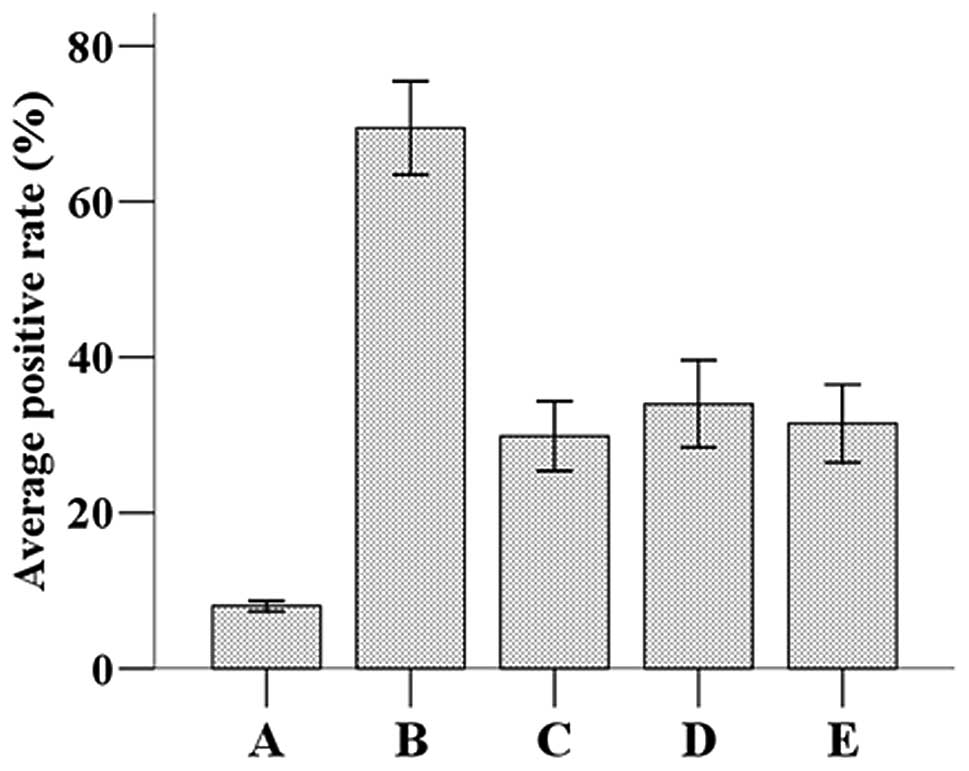
The immunohistochemistry results showed that caspase-3-positive cells exhibited brown particles in the cytoplasm and/or nuclei. Caspase-3 protein expression and the average positive rates among the groups are shown in Fig. 1. The statistical analysis revealed that the average positive rate of caspase-3 protein in the model group (69.453±5.747) was significantly higher compared with the sham surgery group (8.039±0.653; P<0.05). The average positive rates of caspase-3 protein in the nimodipine (29.839±4.294), Ginkgo biloba (33.970±5.328) and the aloe polysaccharide groups (31.479±4.763) were significantly lower than those in the model group, but higher than those in the sham group (P<0.05). However, no significant difference was found in the positive rates of caspase-3 protein among the nimodipine, Ginkgo biloba and aloe polysaccharide groups (P>0.05).

Figure 1

Average positive rate of caspase-3 protein among the groups. A, sham surgery group; B, model group; C, nimodipine group; D, ginkgo leaf tablet group; E, aloe polysaccharide group.

Caspase-3 mRNA expression among the groups

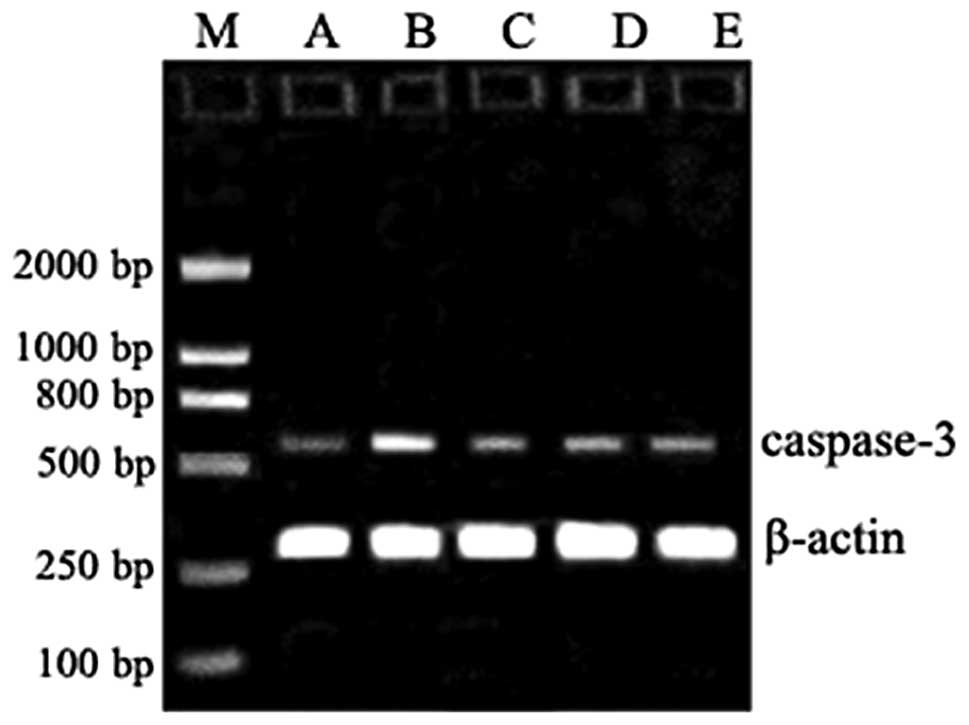
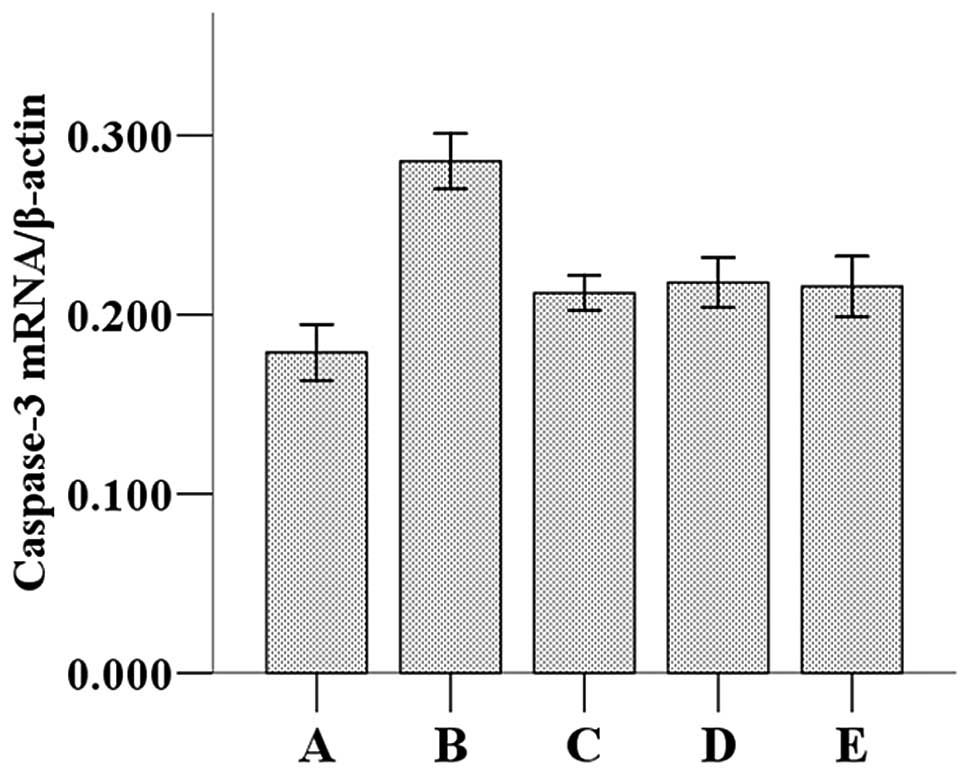
The caspase-3 mRNA expression and mRNA/β-actin values in the groups are shown in Figs. 2 and 3. The statistical analysis revealed that the caspase-3/β-actin ratio (0.286±0.020) was significantly higher compared with the sham group (0.179±0.022, P<0.05). The caspase-3/β-actin values in the nimodipine (0.212±0.012), Ginkgo biloba (0.218±0.017) and the aloe polysaccharide (0.216±0.022) groups were significantly lower than those in the model group but higher than those in the sham group (P<0.05). However, no significant difference was observed between the caspase-3/β-actin ratio among the nimodipine, Ginkgo biloba and the aloe polysaccharide groups (P>0.05).

Figure 2

Expression of caspase-3 mRNA among the groups. M, marker; A, sham surgery group; B, model group; C, nimodipine group; D, ginkgo leaf tablet group; E, aloe polysaccharide group.

Figure 3

Ratio of caspase-3 mRNA/β-actin among the groups. A, sham surgery group; B, model group; C, nimodipine group; D, ginkgo leaf tablet group; E, aloe polysaccharide group.

Discussion

During ischemic brain damage, a series of cell metabolism abnormalities may be induced due to interrupted blood, oxygen and glucose supply. This energy depletion eventually leads to neuronal death or apoptosis (7). Previous studies have revealed that neuronal apoptosis plays a key role in the pathological process of cerebral ischemia-reperfusion injury (7). In the process of apoptosis, proteins that have crucial functions are affected by specific caspase enzymes (8). Caspases belong to a highly conserved cysteine protease family that triggers a cascade of proteolysis. All caspases decompose at substrate-specific aspartic acid residues. Upstream caspases successively activate the downstream apoptosis-promoting executive caspases (9). In the caspase cascade, caspase-8, as an initiating protease, activates a series of proteases, including caspase-9 and -7, and finally activates caspase-3, which is an executor of apoptosis. Caspase-3 is able to incise itself and affect key proteins during apoptosis execution, including the DNA breaks that are typical of apoptosis (10).

In the normal mouse brain, caspase-3 is expressed at low levels (11). Krupinski et al found that following cerebral ischemic injury, caspase-3 peaks at 12–24 h in the zone of infarction and the surrounding penumbra in rats (12). According to a study by Harrison et al, compared with the ipsilateral cortex in the control and sham groups and the contralateral cortex of the MCAO rats, the caspase-3 mRNA expression in the ipsilateral cortex (the side with damage) in MCAO rats significantly increased at 6, 12 and 24 h, suggesting the involvement of caspase-3 in infarction (13). The results of the present study reveal that caspase-3 protein and mRNA expression levels in an ischemia-reperfusion injury model in rats were significantly higher compared with the sham group. This finding indicates that caspase-3 is involved in the pathological process of cerebral ischemia-reperfusion injury.

While the caspase-3 protein and mRNA expression levels in rats treated with aloe polysaccharides were lower compared with those in the sham group, they were not significantly different compared with rats treated with nimodipine and Ginkgo biloba. This observation indicates that aloe polysaccharides are able to downregulate caspase-3 expression and have a preventive effect on neuronal apoptosis following ischemic brain injury. The mechanism by which this occurs may be associated with the prevention of the activation of the caspase cascade by regulating cellular proteins or cytokine secretion. It may also be associated with directing the inhibition of caspase-3 expression and reduced brain neuronal apoptosis. Other relevant anti-ischemic mechanisms require further study and confirmation.

In conclusion, caspase-3 is important during neuronal apoptosis and its downregulation reduces neuronal apoptosis and cerebral ischemia-reperfusion injury. Aloe polysaccharides are able to inhibit caspase-3 expression, limit apoptosis and provide neuroprotection.

References

1 

Caplan LR, Searls DE and Hon FK: Cerebrovascular disease. Med Clin North Am. 93:353–369. 2009. View Article : Google Scholar

2 

Siegel C, Turtzo C and McCullough LD: Sex differences in cerebral ischemia: possible molecular mechanisms. J Neurosci Res. 88:2765–2774. 2010. View Article : Google Scholar : PubMed/NCBI

3 

Broughton BR, Reutens DC and Sobey CG: Apoptotic mechanisms after cerebral ischemia. Stroke. 40:331–339. 2009. View Article : Google Scholar

4 

Kumar S and Dorstyn L: Analysing caspase activation and caspase activity in apoptotic cells. Methods Mol Biol. 559:3–17. 2009. View Article : Google Scholar : PubMed/NCBI

5 

Li M, Li H, Li C, et al: Alpha fetoprotein is a novel protein-binding partner for caspase-3 and blocks the apoptotic signaling pathway in human hepatoma cells. Int J Cancer. 124:2845–2854. 2009. View Article : Google Scholar : PubMed/NCBI

6 

Longa EZ, Weinstein PR, Carlson S, et al: Reversible middle cerebral artery occlusion without craniectomy in rats. Stroke. 20:84–91. 1989. View Article : Google Scholar : PubMed/NCBI

7 

Nakka VP, Gusain A, Mehta SL, et al: Molecular mechanisms of apoptosis in cerebral ischemia: multiple neuroprotective opportunities. Mol Neurobiol. 37:7–38. 2008. View Article : Google Scholar : PubMed/NCBI

8 

Cho BB and Toledo-Pereyra LH: Caspase-independent programmed cell death following ischemic stroke. J Invest Surg. 21:141–147. 2008. View Article : Google Scholar : PubMed/NCBI

9 

Kumar S: Caspase function in programmed cell death. Cell Death Differ. 14:32–43. 2007. View Article : Google Scholar

10 

Walsh JG, Cullen SP, Sheridan C, et al: Executioner caspase-3 and caspase-7 are functionally distinct proteases. Proc Natl Acad Sci USA. 105:12815–12819. 2007. View Article : Google Scholar : PubMed/NCBI

11 

Shimohama S, Tanino H and Fujimoto S: Differential expression of rat brain caspase family proteins during development and aging. Biochem Biophys Res Commun. 289:1063–1066. 2001. View Article : Google Scholar : PubMed/NCBI

12 

Krupinski J, Lopez E, Marti E, et al: Expression of caspases and their substrates in the rat model of focal cerebral ischemia. Neurobiol Dis. 7:332–342. 2001. View Article : Google Scholar : PubMed/NCBI

13 

Harrison DC, Davis RP, Bond BC, et al: Caspase mRNA expression in a rat model of focal cerebral ischemia. Brain Res Mol Brain Res. 89:133–146. 2001. View Article : Google Scholar : PubMed/NCBI

Related Articles

  • Abstract
  • View
  • Download
  • Twitter
Copy and paste a formatted citation
Spandidos Publications style
Lu Z, Deng Y and Lu J: Effect of aloe polysaccharide on caspase-3 expression following cerebral ischemia and reperfusion injury in rats. Mol Med Rep 6: 371-374, 2012.
APA
Lu, Z., Deng, Y., & Lu, J. (2012). Effect of aloe polysaccharide on caspase-3 expression following cerebral ischemia and reperfusion injury in rats. Molecular Medicine Reports, 6, 371-374. https://doi.org/10.3892/mmr.2012.927
MLA
Lu, Z., Deng, Y., Lu, J."Effect of aloe polysaccharide on caspase-3 expression following cerebral ischemia and reperfusion injury in rats". Molecular Medicine Reports 6.2 (2012): 371-374.
Chicago
Lu, Z., Deng, Y., Lu, J."Effect of aloe polysaccharide on caspase-3 expression following cerebral ischemia and reperfusion injury in rats". Molecular Medicine Reports 6, no. 2 (2012): 371-374. https://doi.org/10.3892/mmr.2012.927
Copy and paste a formatted citation
x
Spandidos Publications style
Lu Z, Deng Y and Lu J: Effect of aloe polysaccharide on caspase-3 expression following cerebral ischemia and reperfusion injury in rats. Mol Med Rep 6: 371-374, 2012.
APA
Lu, Z., Deng, Y., & Lu, J. (2012). Effect of aloe polysaccharide on caspase-3 expression following cerebral ischemia and reperfusion injury in rats. Molecular Medicine Reports, 6, 371-374. https://doi.org/10.3892/mmr.2012.927
MLA
Lu, Z., Deng, Y., Lu, J."Effect of aloe polysaccharide on caspase-3 expression following cerebral ischemia and reperfusion injury in rats". Molecular Medicine Reports 6.2 (2012): 371-374.
Chicago
Lu, Z., Deng, Y., Lu, J."Effect of aloe polysaccharide on caspase-3 expression following cerebral ischemia and reperfusion injury in rats". Molecular Medicine Reports 6, no. 2 (2012): 371-374. https://doi.org/10.3892/mmr.2012.927
Follow us
  • Twitter
  • LinkedIn
  • Facebook
About
  • Spandidos Publications
  • Careers
  • Cookie Policy
  • Privacy Policy
How can we help?
  • Help
  • Live Chat
  • Contact
  • Email to our Support Team