Introduction
Osteoarthritis (OA) is the most common cause of
chronic disability in older adults and is a progressive and
multifactorial disease characterized by cartilage degeneration,
osteophytes and synovial fibrosis. To date, pharmacological
management for the majority of OA patients has targeted the
symptoms of the disease rather than the underlying cause and
pathophysiology (1). This means
that there are no satisfactory pharmacological therapies for OA.
The main drugs on the market for OA treatment are analgesics and
non-steroidal anti-inflammatory drugs. These drugs mainly alleviate
the symptoms but have numerous side-effects and poor
cost-effectiveness (2). The
requirement to develop new and relatively inexpensive treatment
strategies for OA, which are able to restore full function or
return the tissue to its native normal state, has gained medical
acknowledgement.
At present, several lines of evidence suggest that
the traditional notion of ‘one drug-one protein’ for one disease is
no longer applicable and that treatment for the most complex
diseases may best be attempted using polypharmacological approaches
(3,4). The model for drug discovery must be
transformed from a single target-based to system biology-oriented
one (4). Herbal remedies are the
most prevalent and effective treatment in the management of chronic
illnesses in a number of Asian countries (5). The synergistic actions of the herbal
ingredients may be responsible for this therapeutic efficacy
(6). In addition, numerous herbs
have shown potential anti-inflammatory mechanisms in a variety of
clinical trials. Extracts from these herbs may be able to alleviate
OA symptoms and incur fewer side effects (7,8).
Thus, it is important to elucidate the synergy and polypharmacology
of traditional Chinese medicine (TCM) to aid the identification of
new OA drugs.
The Duhuo Jisheng Decoction (DHJSD), a TCM from Bei
Ji Qian Jin Yao Fang developed by Sun SM in the Tang Dynasty
(9), has been prescribed to treat
OA in China. The results of animal experiments showed that DHJSD
was able to decrease the levels of tumor necrosis factor (TNF)-α
and matrix metalloproteinase (MMP)-3 in the serum and synovial
fluid of rabbits with OA (10).
The results of clinical experiments showed that DHJSD reduced the
levels of TNF-α and high-sensitivity C-reactive protein (hs-CRP) in
the synovial joints in patients with knee OA (11). Clinical observations also suggested
that the DHJSD was able to reduce pain, stiffness and improve
physical functions (12). To the
best of our knowledge, however, the underlying mechanisms of the
DHJSD in the management of OA are not fully understood. Therefore,
the aim of the present study was to identify the synergy and
polypharmacology of the DHJSD, using well-known computational
methods (4,13), in order to obtain a general method
to benefit modern TCM development.
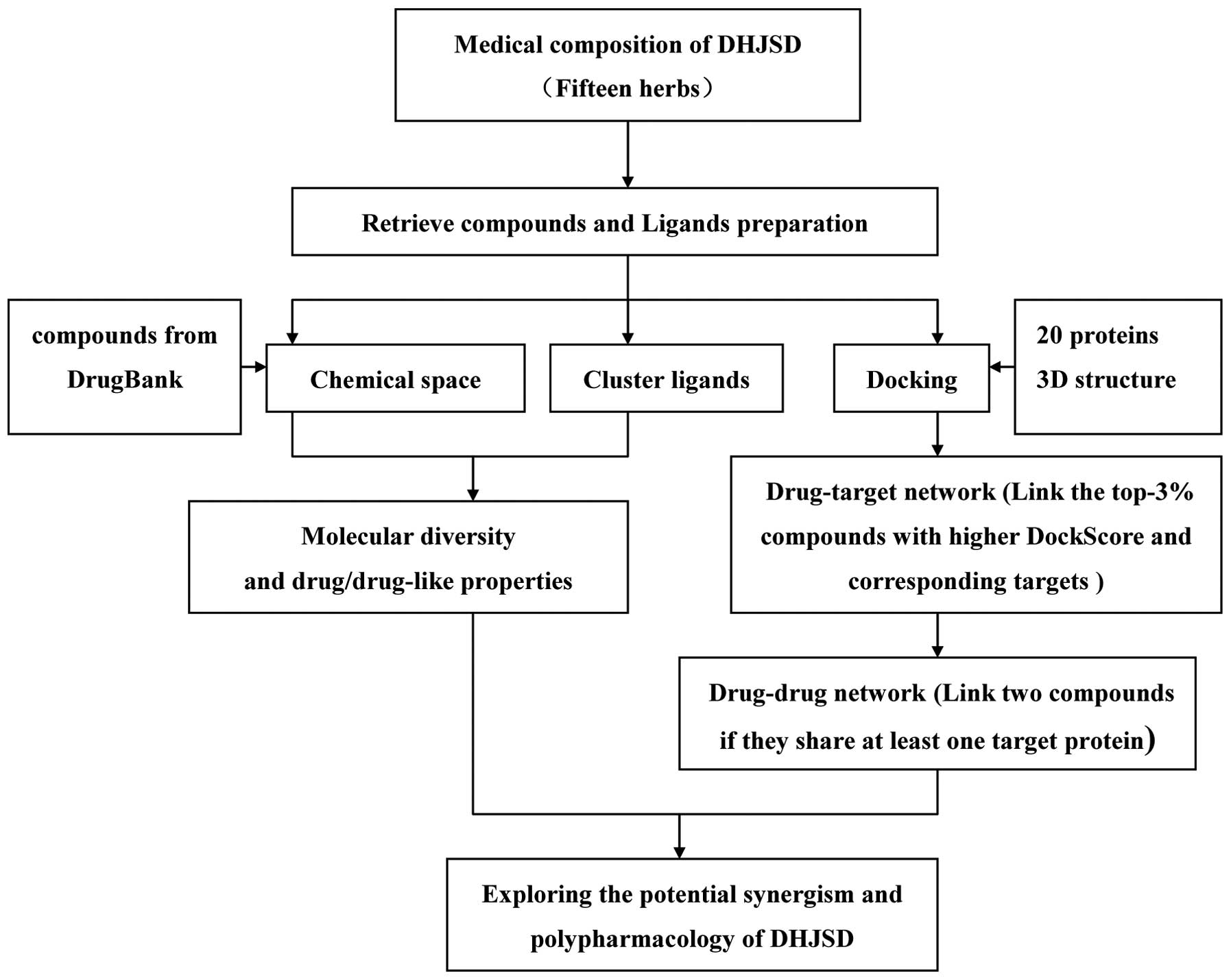
The flow chart of the computational design in the
present study is shown in Fig.
1.
Materials and methods
Ligand preparation and clustering
DHJSD consists of 15 species of medicinal herbs:
Angelica pubescens, Saposhnikovia divaricata,
Ligusticum chuanxiong, Achyranthes bidentata,
Loranthus parasiticus, Gentiana macrophylla,
Eucommia ulmoides, Angelicae sinensis, Poria
cocos, Codonopsis pilosula, Radix rehmanniae
preparata, Radix paeoniae alba, Asarum sieboldii,
Glycyrrhiza uralensis and Cinnamomum cassia. The
compounds identified in the medicinal herbs of the DHJSD were
collected from the Chinese Herbal Drug Database and the Handbook of
the Constituents in Chinese Herb Original Plants (14,15).
Subsequent to excluding the duplicates, the total number of
compounds obtained was 496. All the compounds in the collection
were converted into three-dimensional structures and energy
optimizations were performed using the Discovery Studio 2.0 (DS
2.0) software (Accelrys Inc., San Diego, CA, USA) based on the
Merck molecular forcefield (MMFF). The protocol for the cluster
ligands method was then used to cluster the compounds from the
DHJSD (16).
Molecular descriptors calculation
Chemical space is a generalized data visualization
method used to describe the well-known belief among chemists that
similar compounds may have similar properties (17). Prior to virtual screening, the
chemical space of the compounds from the DHJSD was studied.
Chemical space was defined by calculating a given set of
descriptors for each molecule and using these values as coordinates
in the multi-dimensional space (18). The protocol to calculate the
molecular properties in the quantitative structure-activity
relationship (QSAR) module of DS 2.0 was introduced to characterize
the compounds from the DHJSD and their chemical space was
constructed using 150 diversity descriptors, including the
molecular properties in 1-, 2- and 3-dimensions. Principal
component analysis (PCA) was then performed to map the distribution
of the compounds in chemical space.
Virtual screening
LigandFit, a modern docking program within DS 2.0
was used for each run. The three-dimensional crystal structures of
20 key proteins that were associated with OA (19) were selected as the docking
receptors from the RCSB Protein Data Bank (PDB; Table I). All crystallographic waters were
removed from the file and the hydrogen atoms were added. The
inhibitor from the PDB file was used to define the active site. A
total of 496 compounds from the DHJSD were docked into the protein
models. The DockScore evaluated the ligand position and orientation
based on the most favorable energy production from the interactions
between the ligand conformations and receptor proteins (20). All 496 docked structures were thus
sorted according to their DockScore.
 | Table I20 key proteins related to OA. |
Table I
20 key proteins related to OA.
| Protein | PDB code |
|---|
| ADAMTS-4 | 2RJP |
| TNF-α | 2AZ5 |
| iNOS | 2Y37 |
| COX-1 | 3NT1 |
| COX-2 | 3N8X |
| MMP-1 | 966C |
| MMP-8 | 1ZS0 |
| MMP-9 | 1GKC |
| MMP-11 | 1HV5 |
| MMP-12 | 3RTS |
| MMP-13 | 3I7I |
| Caspase-3 | 2CNN |
| Caspase-8 | 1QDU |
| CDK2 | 3PXY |
| HO-1 | 3TGM |
| PPARγ | 2VSR |
| GSK-3β | 3L1S |
| ER | 1UOM |
| VDR | 1DB1 |
| TGF-β1 | 1RW8 |
Network construction and analysis
Cytoscape 2.8.3 was carried out to construct the
subsequent networks (21).
According to the DockScore sorting of the compounds, the top 14
compounds (the top 3%) were selected (22). These compounds and the
corresponding target proteins were regarded as network nodes.
Therefore, drug-target association networks (D-T networks) were
constructed by linking the compound and proteins. If two compounds
shared ≥1 target proteins, they were linked to map the drug-drug
association networks (D-D networks). Data were analyzed using
Cytoscape plugins.
Results
Clustering of the DHJSD compounds
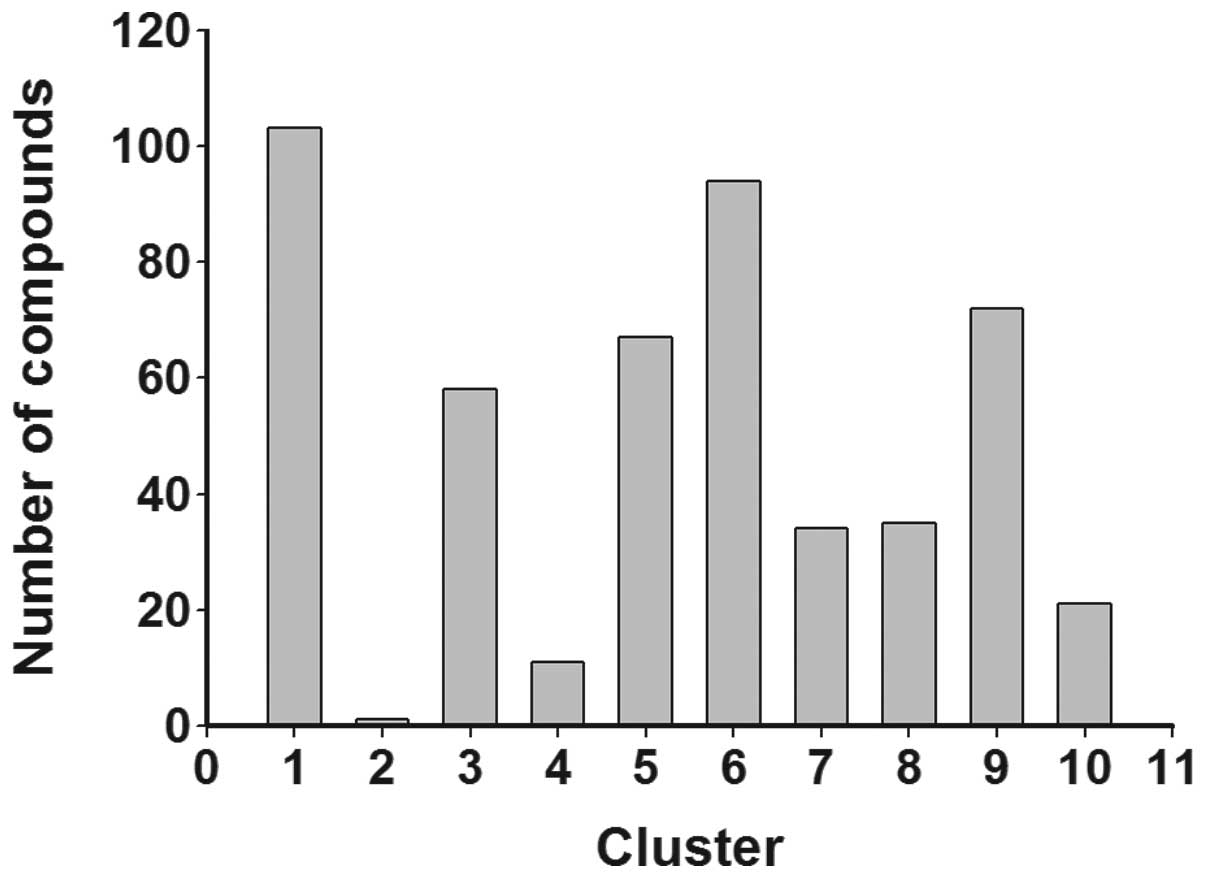
Clustering was used to group the DHJSD compounds by
employing the default settings of the cluster ligands method. In
total, 10 compounds with maximum dissimilarity were selected as the
cluster centers and the other compounds were attached to their
clusters according to the cluster assignment and their properties
with regard to the distance to the center. The distribution of the
various clusters (Fig. 2)
suggested that the DHJSD may be considered a natural combinatorial
chemical library with molecular diversity.
Distribution of the DHJSD compounds in
chemical space
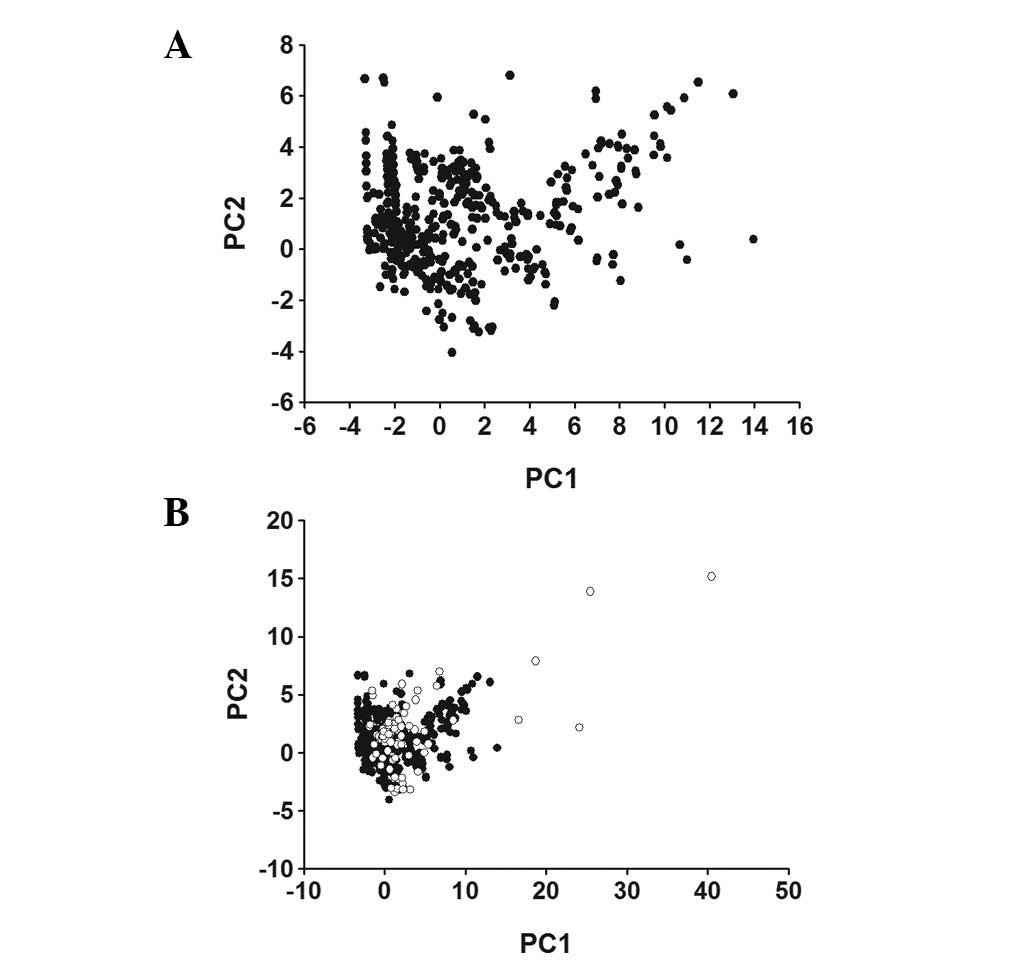
Fig. 3A shows the
global property map of chemical space, starting from 1-, 2-and
3-dimensional-based descriptors of the DHJSD compounds. The DHJSD
compounds possessed a broad diversity in chemical space. Table II shows that the majority of the
DHJSD compounds had good drug-like properties according to
Lipinski’s rule of five (23). To
confirm the drug-like properties of the DHJSD compounds, the
chemical space distribution of the known drug/drug-like compounds
for OA from DrugBank was also charted (24). The overlap fraction (Fig. 3B) represented the drug/drug-like
chemical space, indicating that the nature of the DHJSD compounds
was extremely similar to that of the drug/drug-like compounds.
| Table IIMean, standard deviation, minimum and
maximum values of the key molecular descriptors of the DHJSD
compounds. |
Table II
Mean, standard deviation, minimum and
maximum values of the key molecular descriptors of the DHJSD
compounds.
| Name | Mean | Std dev | Minimum | Maximum |
|---|
| Molecular
weight | 331.51 | 187.99 | 59.11 | 1013.13 |
| Number of hydrogen
acceptors | 5.45 | 5.21 | 0 | 26 |
| Number of hydrogen
donors | 2.74 | 3.11 | 0 | 17 |
| ALogP | 2.44 | 3.26 | −9.55 | 13.60 |
| Molecular
solubility | −3.73 | 2.94 | −15.01 | 1.92 |
| Number of rotatable
bonds | 5.33 | 4.94 | 0 | 32 |
| Nitrogen count | 0.11 | 0.63 | 0 | 8 |
| Oxygen count | 5.41 | 5.20 | 0 | 26 |
Investigation of the multi-target
compounds of the DHJSD
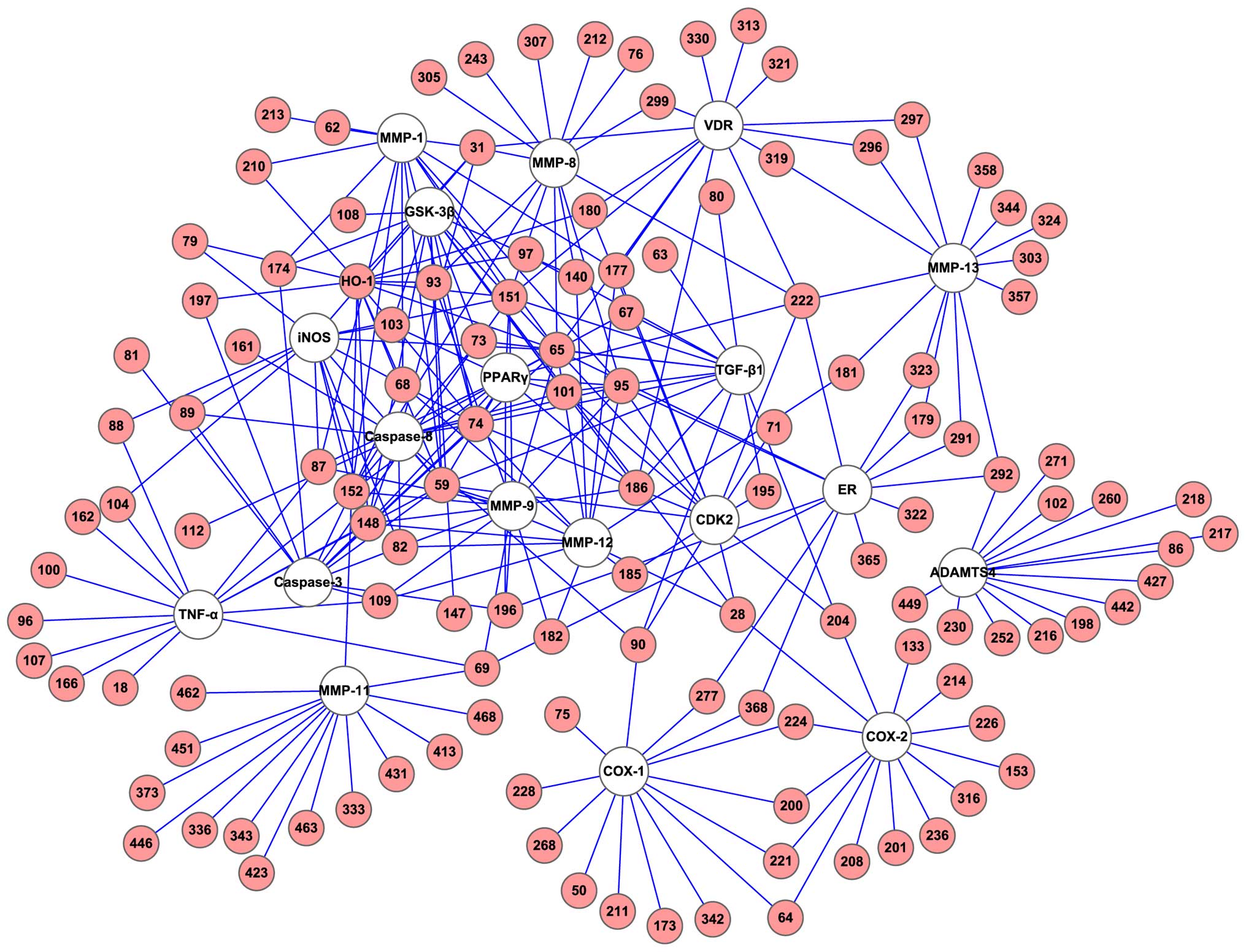
Screening of the DHJSD compounds and their targets
was performed to generate a bipartite graph of the compound-protein
interactions in which a compound and a protein were connected to
each other if the protein was an action target of the drug, thus
leading to a D-T network (Fig. 4).
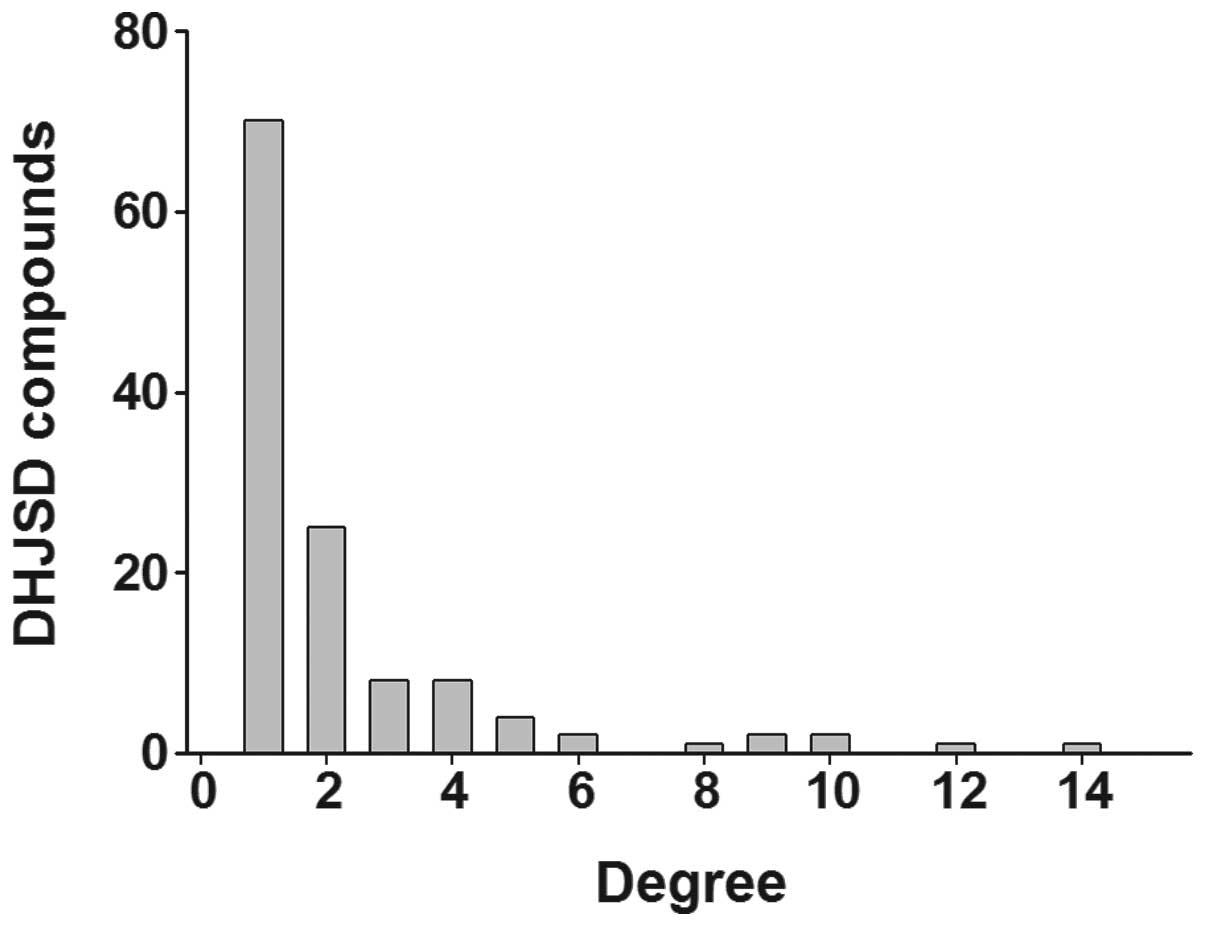
The histogram of the number of targets associated with each
compound is shown in Fig. 5. The
majority of compounds acted on only one target, but a small number
of compounds acted on a large number of targets, up to a maximum of
14. The general network properties and key compounds of the D-T
networks are listed in Tables
III and IV, respectively.
| Table IIINetwork properities of the D-T and
D-D networks. |
Table III
Network properities of the D-T and
D-D networks.
| Parameters | D-T network | D-D network |
|---|
| Network
density | 0.027 | 0.169 |
| Network
heterogeneity | 1.185 | 0.568 |
| Network
centralization | 0.072 | 0.39 |
| Characteristic path
length | 4.138 | 2.204 |
| Mean number of
neighbors | 3.875 | 20.839 |
| Shortest paths, n
(%) | 20592 (100) | 15252 (100) |
| Cluster
coefficient | 0 | 0.829 |
| Table IVTop-10 key compounds in the D-T
network that acted on the largest number (degree) of targets. |
Table IV
Top-10 key compounds in the D-T
network that acted on the largest number (degree) of targets.
| Index | Known | Chemical name | Degree |
|---|
| 65 | Yes | Chlorogenic
acid | 14 |
| 59 | Yes | Avicularin | 12 |
| 152 | Yes | Macrophylloside
D | 10 |
| 74 | No |
Erytho-dihydroxydehydrodiconiferyl
alcohol | 10 |
| 151 | Yes | Macrophylloside
C | 9 |
| 148 | No | 6′-O-β-D-Glucosyl
Gentiopicroside | 9 |
| 95 | No | Methyl
chlorogenate | 8 |
| 222 | No | Folic acid | 6 |
| 31 | No | Marmesin | 6 |
| 82 | Yes | Geniposidic
acid | 5 |
Combination therapy of the DHJSD for
OA
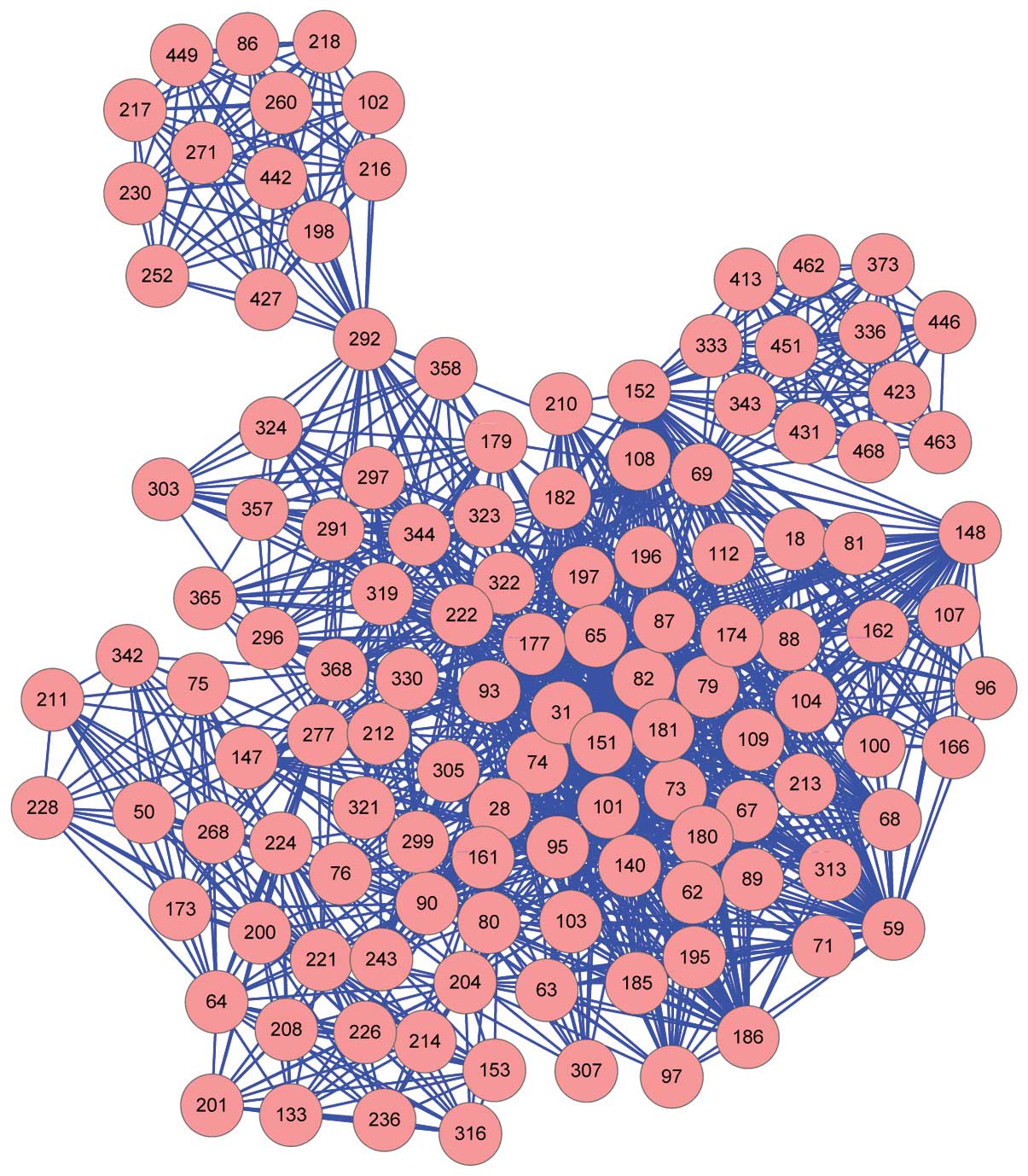
In the D-D network (Fig. 6), the nodes represented the
compounds, two of which were connected to each other if they shared
at least one target protein. The general network properties of the
D-D networks are listed in Table
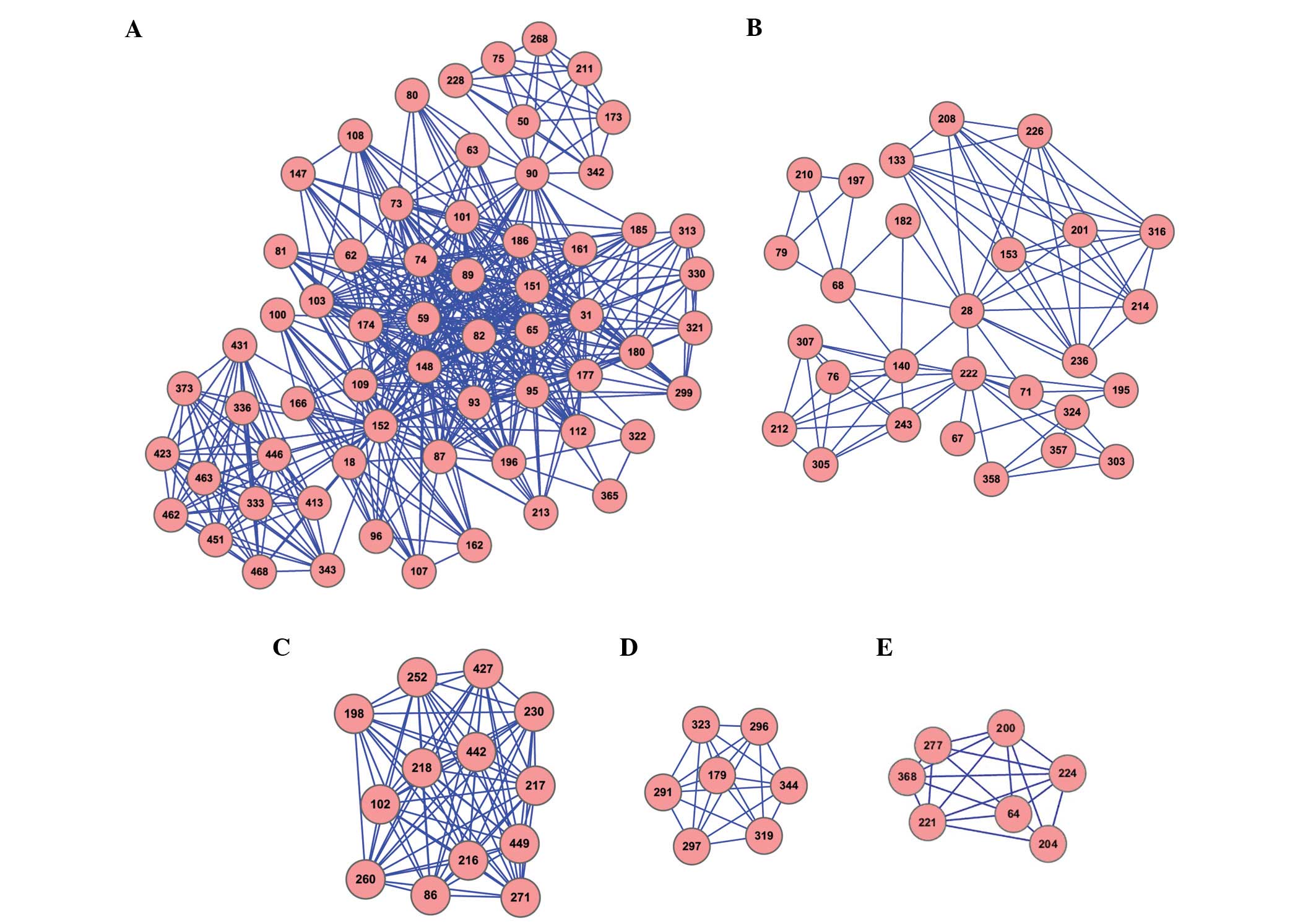
III. MCODE, a Cytoscape plugin, was used to identify five
clusters in the D-D networks (Fig.
7; Table V) and to show the
various compounds in different types of networks and the various
clusters with their effect targets. This revealed the combination
therapy mechanism of the DHJSD for OA.
| Table VInformation related to the categories
of the subnetworks. |
Table V
Information related to the categories
of the subnetworks.
| Cluster | Effect targets | Botanical sources
of compounds |
|---|
| 1 | MMP-1, MMP-8,
MMP-9, MMP-11, MMP-12, PPARγ, GSK-3β, VDR, iNOS, ER, Caspase-3,
Caspase-8, CDK2, HO-1, TGF-β1, COX-1, TNF-α | Angelica
pubescens, Saposhnikovia divaricata, Ligusticum chuanxiong,
Achyranthes bidentata, Loranthus parasiticus, Gentiana macrophylla,
Eucommia ulmoides, Poria cocos, Codonopsis pilosula, Radix
rehmanniae preparata, Radix paeoniae alba, Glycyrrhiza uralensis,
Cinnamomum cassia |
| 2 | MMP-1, MMP-8,
MMP-9, MMP-12, MMP-13, PPARγ, GSK-3β, VDR, iNOS, ER, Caspase-3,
CDK2, HO-1, TGF-β1, COX-2 | Angelica
pubescens, Saposhnikovia divaricata, Ligusticum chuanxiong,
Gentiana macrophylla, Eucommia ulmoides, Angelicae sinensis,
Codonopsis pilosula, Asarum sieboldii, Glycyrrhiza
uralensis |
| 3 | ADAMTS4 | Saposhnikovia
divaricata, Ligusticum chuanxiong, Eucommia ulmoides, Angelicae
sinensis, Codonopsis pilosula, Radix rehmanniae preparata |
| 4 | MMP-13, ER,
VDR | Saposhnikovia
divaricata, Glycyrrhiza uralensis |
| 5 | COX-1, COX-2, ER,
TGF-β1 | Ligusticum
chuanxiong, Achyranthes bidentata, Angelicae sinensis, Codonopsis
pilosula, Glycyrrhiza uralensis |
Discussion
OA is much more complex than initially anticipated
as it is often caused by multiple molecular abnormalities, rather
than being the result of a single effect (25). In this regard, the application of
combinational drugs or multi-target drugs, in which ≥2 drugs
interact with multiple targets simultaneously, may be considered as
a rational and effective treatment strategy for OA. Notably, TCM is
a holistic approach to health that attempts to bring the body, mind
and spirit into harmony, thus it advocates drug-combined
administrations (26). Several
studies have demonstrated that Chinese medicinal herbs have the
potential to ameliorate the progress of OA and such herbs have
received increasing attention (7,8).
DHJSD, an extremely common TCM, has been used in the
treatment of patients with OA in China. In the present study, a
system using the compounds in the original plants of the DHJSD were
chosen. The compounds were classified into 10 groups and possessed
a broader diversity in chemical space. The corresponding means of
the molecular descriptors, including the molecular weight, number
of hydrogen acceptors, number of hydrogen donors and ALogP were
331.51, 5.45, 2.74 and 2.44, respectively. This showed that the
majority of the compounds satisfied Lipinski’s rule of five.
Moreover, common chemical space was observed between the two
compounds sets from the DHJSD and DrugBank. Any overlap was
extremely likely to contain active compounds and synergistic
therapeutic actions, therefore, the present study used drug-target
interaction model experiments to aid in clarifying the effect of
the DHJSD compounds on OA.
A virtual screening study was performed in the
search for the DHJSD compounds with the potential to inhibit
targets related to OA. The top 3% of the compounds with the highest
DockScores and the corresponding target proteins were linked to
construct the D-T networks, which were used to search for
multi-target compounds (promiscuous drugs) in the DHJSD. The
results demonstrated that the DHJSD is a broad-spectrum recipe
inhibiting a number of significant target proteins. Each compound
from the DHJSD was correlated with 2.26 targets on average and the
maximum number of targets a compound acted on was 14. Table III shows the biological
activities of certain compounds that have been reported in the
literature (27–30). Investigators have shown that
multi-targeted or ‘promiscuous’ drugs may often more effective than
precisely targeted drugs, particularly in complex diseases
(31). This may be one reason to
explain for DHJSD being effective in curing OA.
To gain an improved understanding of the functions
of the DHJSD, the D-D network was contructed and five clusters were
identified that were used to classify the DHJSD compounds into
varying network types. Each cluster represented a separate
multi-drug combination and function. The botanical sources of each
cluster also varied (Table V). The
compounds in cluster 1 were associated with 17 target proteins and
the compounds in cluster 2 had interactions with 15 target
proteins. The compounds in the two clusters interacted with 14
common target proteins. The results indicated that the compounds of
cluster 1 and 2 appeared to target multiple pathological processes
and had combined synergistic effects. In addition, other
combination patterns (clusters 3 and 4 or clusters 4 and 5) may
produce alternative synergistic effects. Generally, multiple agents
are used to achieve a maximum efficacy by aggressively attacking
several targets simultaneously to exploit synergy and to minimize
individual toxicity (32).
Clinical observation has demonstrated that the effect of DHJSD on
knee OA is superior to the efficacy of glucosamine sulfate and has
good safety (33).Therefore, the
DHJSD compounds with various mechanisms of anti-OA action interact
principally in an additive or synergistic manner. This is easily
explained by the fact that clusters (DHJSD) in various holistic
combinations attack various targets or steps in the pathological
process of OA.
In summary, in the present study, DHJSD was
identified as diverse and drug-like in molecular composition. The
DHJSD possessed abundant multi-target compounds and had significant
potential for synergistic drug combinations against OA. The results
demonstrated that potential synergy and polypharmacology properties
exist in the curative mechanism of the TCM recipe.
Acknowledgements
This study was supported by the Developmental Fund
of Chen Keji Integrative Medicine (CKJ2010032) and the National
Natural Science Foundation of China (81202713).
Abbreviations:
|
ADAMTS-4
|
Aggrecanase-1
|
|
MMP
|
matrix metalloproteinase
|
|
TNF-α
|
tumor necrosis factor α
|
|
iNOS
|
inducible nitric oxide synthase
|
|
COX
|
cyclooxygenase
|
|
CDK
|
cyclin-dependent kinase
|
|
HO
|
heme oxygenase
|
|
PPARγ
|
peroxisome proliferator activated
receptor-γ
|
|
GSK-3β
|
glycogen synthase kinase-3β
|
|
ER
|
estrogen receptor
|
|
VDR
|
vitamin D nuclear receptor
|
|
TGF-β1
|
transforming growth factor-β
|
|
type I; Std Dev
|
standard deviation
|
References
|
1
|
Das SK and Farooqi A: Osteoarthritis. Best
Pract Res Clin Rheumatol. 22:657–675. 2008. View Article : Google Scholar
|
|
2
|
McKellar G, Madhok R and Singh G: The
problem with NSAIDs: what data to believe? Curr Pain Headache Rep.
11:423–427. 2007. View Article : Google Scholar : PubMed/NCBI
|
|
3
|
Janga SC and Tzakos A: Structure and
organization of drug-target networks: insights from genomic
approaches for drug discovery. Mol Biosyst. 5:1536–1548. 2009.
View Article : Google Scholar : PubMed/NCBI
|
|
4
|
Kitano H: A robustness-based approach to
systems-oriented drug design. Nat Rev Drug Discov. 6:202–210. 2007.
View Article : Google Scholar : PubMed/NCBI
|
|
5
|
Chen M, Feng W, Cao H, Zou L, Chen C,
Baatrup A, Nielsen AB, Li H, Kassem M, Zou X and Bünger C: A
traditional Chinese medicine formula extracts stimulate
proliferation and inhibit mineralization of human mesenchymal stem
cells in vitro. J Ethnopharmacol. 125:75–82. 2009. View Article : Google Scholar
|
|
6
|
Ma XH, Zheng CJ, Han LY, Xie B, Jia J, Cao
ZW, Li YX and Chen YZ: Synergistic therapeutic actions of herbal
ingredients and their mechanisms from molecular interaction and
network perspectives. Drug Discov Today. 14:579–588. 2009.
View Article : Google Scholar : PubMed/NCBI
|
|
7
|
Khanna D, Sethi G, Ahn KS, Pandey MK,
Kunnumakkara AB, Sung B, Aggarwal A and Aggarwal BB: Natural
products as a gold mine for arthritis treatment. Current Opinion in
Rheumatol. 7:344–351. 2007.PubMed/NCBI
|
|
8
|
Huh JE, Lee WI, Seo BK, Baek YH, Lee JD,
Choi DY and Park DS: Gastroprotective and safety effects of
WIN-34B, a novel treatment for osteoarthritis, compared to NSAIDs.
J Ethnopharmacol. 137:1011–1017. 2011. View Article : Google Scholar : PubMed/NCBI
|
|
9
|
Zhang EQ: Bi Syndrome (Arthralgia
Syndrome). J Tradit Chin Med. 30:145–152. 2010. View Article : Google Scholar : PubMed/NCBI
|
|
10
|
Shu JS: Effect of Duhuo Jisheng Decoction
on TNF-α and MMP-3 in Rabbit with Osteoarthritis. J Hubei UNIV TCM.
14:3–5. 2012.
|
|
11
|
Chen W and Zhang YH: Influence of Duhuo
Jisheng Decoction on cytokines from joint synovial fluid in
patients with knee osteoarthritis. J Liaoning UNIV TCM. 13:216–217.
2011.
|
|
12
|
Lai JN, Chen HJ, Chen CC, Lin JH, Hwang JS
and Wang JD: Duhuo jisheng tang for treating osteoarthritis of the
knee: a prospective clinical observation. Chin Med. 2:42007.
View Article : Google Scholar : PubMed/NCBI
|
|
13
|
Xu X: New concepts and approaches for drug
discovery based on traditional Chinese medicine. Drug Discov Today.
3:247–253. 2006. View Article : Google Scholar : PubMed/NCBI
|
|
14
|
Qiao X, Hou T, Zhang W, Guo S and Xu X: A
3D structure database of components from Chinese traditional
medicinal herbs. J Chem Inf Comput Sci. 42:481–489. 2002.
View Article : Google Scholar : PubMed/NCBI
|
|
15
|
Zhou JX, Xie GR and Yang XD: Handbook Of
The Constituents. Chinese Herb Original Plants. 1st edition.
Chemical Industry Press; Beijing: pp. 1165–1211. 2004
|
|
16
|
Hassan M, Bielawski JP, Hempel JC and
Waldman M: Optimization and visualization of molecular diversity of
combinatorial libraries. Mol Divers. 2:64–74. 1996. View Article : Google Scholar : PubMed/NCBI
|
|
17
|
Dobson CM: Chemical space and biology.
Nature. 432:824–828. 2004. View Article : Google Scholar : PubMed/NCBI
|
|
18
|
Zheng CS, Ye HZ, Xu XJ and Liu XX:
Computational pharmacology study of tougu xiaotong granule in
preventing and treating knee osteoarthritis. Chin J Integr Med.
15:371–376. 2009. View Article : Google Scholar : PubMed/NCBI
|
|
19
|
Zheng CS, Xu XJ and Ye HZ: Computational
simulation of multi-target research on the material basis of
Caulis sinomenii in treating osteoarthritis. Zhongguo Zhong
Xi Yi Jie He Za Zhi. 32:375–379. 2012.(In Chinese).
|
|
20
|
Montes M, Braud E, Miteva MA, Goddard ML,
Mondésert O, Kolb S, Brun MP, Ducommun B, Garbay C and Villoutreix
BO: Receptor-based virual ligand screening for the identification
of novel CDC25 phosphatase inhibitors. J Chem Inf Model.
48:157–165. 2008. View Article : Google Scholar : PubMed/NCBI
|
|
21
|
Smoot ME, Ono K, Ruscheinski J, Wang PL
and Ideker T: Cytoscape 2.8: new features for data integration and
network visualization. Bioinformatics. 27:431–432. 2011. View Article : Google Scholar : PubMed/NCBI
|
|
22
|
Gu J, Zhang H, Chen L, Xu S, Yuan G and Xu
X: Drug-target network and polypharmacology studies of a
Traditional Chinese Medicine for type II diabetes mellitus. Comput
Biol Chem. 35:293–297. 2011. View Article : Google Scholar : PubMed/NCBI
|
|
23
|
Lipinski CA, Lombardo F, Dominy BW and
Feeney PJ: Experimental and computational approaches to estimate
solubility and permeability in drug discovery and development
settings. Adv Drug Deliv Rev. 46:3–26. 2001. View Article : Google Scholar : PubMed/NCBI
|
|
24
|
Wishart DS, Knox C, Guo AC, Cheng D,
Shrivastava S, Tzur D, Gautam B and Hassanali M: DrugBank: a
knowledgebase for drugs, drug actions and drug targets. Nucleic
Acids Res. 36:D901–D906. 2008. View Article : Google Scholar : PubMed/NCBI
|
|
25
|
Garstang SV and Stitik TP: Osteoarthritis:
epidemiology, risk factors, and pathophysiology. Am J Phys Med
Rehabil. 85(11 Suppl): S2–S11. 2006. View Article : Google Scholar : PubMed/NCBI
|
|
26
|
Chan E, Tan M, Xin J, Sudarsanam S and
Johnson DE: Interactions between traditional Chinese medicines and
Western therapeutics. Curr Opin Drug Discov Devel. 13:50–65.
2010.PubMed/NCBI
|
|
27
|
Chen WP, Tang JL, Bao JP, Hu PF, Shi ZL
and Wu LD: Anti-arthritic effects of chlorogenic acid in
interleukin-1β-induced rabbit chondrocytes and a rabbit
osteoarthritis model. Int Immunopharmacol. 11:23–28.
2011.PubMed/NCBI
|
|
28
|
Gründemann C, Gruber CW, Hertrampf A, Zehl
M, Kopp B and Huber R: An aqueous birch leaf extract of Betula
pendula inhibits the growth and cell division of inflammatory
lymphocytes. J Ethnopharmacol. 136:444–451. 2011.PubMed/NCBI
|
|
29
|
He T, Yang LN and Zhao ZG: Embryogenesis
of Gentiana straminea and assessment of genetic stability of
regenerated plants using inter simple sequence repeat (ISSR)
marker. Afr J Biotechnol. 10:7604–7610. 2011.
|
|
30
|
Li Y, Sato T, Metori K, Koike K, Che QM
and Takahashi S: The promoting effects of geniposidic acid and
aucubin in Eucommia ulmoides Oliver leaves on collagen
synthesis. Biol Pharm Bull. 21:1306–1310. 1998. View Article : Google Scholar : PubMed/NCBI
|
|
31
|
Brown JB and Okuno Y: Systems biology and
systems chemistry: new directions for drug discovery. Chem Biol.
19:23–28. 2012. View Article : Google Scholar : PubMed/NCBI
|
|
32
|
Dhillon S: Naproxen/esomeprazole
fixed-dose combination: for the treatment of arthritic symptoms and
to reduce the risk of gastric ulcers. Drugs Aging. 28:237–248.
2011. View Article : Google Scholar : PubMed/NCBI
|
|
33
|
Yu JH and Zhang H: Duhuo Jisheng tang of
knee osteoarthritis clinical observation. Chin J Exp Tradit Med
Formulae. 16:215–217. 2010.
|