Spandidos Publications Logo
  • About
    • About Spandidos
    • Aims and Scopes
    • Abstracting and Indexing
    • Editorial Policies
    • Reprints and Permissions
    • Job Opportunities
    • Terms and Conditions
    • Contact
  • Journals
    • All Journals
    • Oncology Letters
      • Oncology Letters
      • Information for Authors
      • Editorial Policies
      • Editorial Board
      • Aims and Scope
      • Abstracting and Indexing
      • Bibliographic Information
      • Archive
    • International Journal of Oncology
      • International Journal of Oncology
      • Information for Authors
      • Editorial Policies
      • Editorial Board
      • Aims and Scope
      • Abstracting and Indexing
      • Bibliographic Information
      • Archive
    • Molecular and Clinical Oncology
      • Molecular and Clinical Oncology
      • Information for Authors
      • Editorial Policies
      • Editorial Board
      • Aims and Scope
      • Abstracting and Indexing
      • Bibliographic Information
      • Archive
    • Experimental and Therapeutic Medicine
      • Experimental and Therapeutic Medicine
      • Information for Authors
      • Editorial Policies
      • Editorial Board
      • Aims and Scope
      • Abstracting and Indexing
      • Bibliographic Information
      • Archive
    • International Journal of Molecular Medicine
      • International Journal of Molecular Medicine
      • Information for Authors
      • Editorial Policies
      • Editorial Board
      • Aims and Scope
      • Abstracting and Indexing
      • Bibliographic Information
      • Archive
    • Biomedical Reports
      • Biomedical Reports
      • Information for Authors
      • Editorial Policies
      • Editorial Board
      • Aims and Scope
      • Abstracting and Indexing
      • Bibliographic Information
      • Archive
    • Oncology Reports
      • Oncology Reports
      • Information for Authors
      • Editorial Policies
      • Editorial Board
      • Aims and Scope
      • Abstracting and Indexing
      • Bibliographic Information
      • Archive
    • Molecular Medicine Reports
      • Molecular Medicine Reports
      • Information for Authors
      • Editorial Policies
      • Editorial Board
      • Aims and Scope
      • Abstracting and Indexing
      • Bibliographic Information
      • Archive
    • World Academy of Sciences Journal
      • World Academy of Sciences Journal
      • Information for Authors
      • Editorial Policies
      • Editorial Board
      • Aims and Scope
      • Abstracting and Indexing
      • Bibliographic Information
      • Archive
    • International Journal of Functional Nutrition
      • International Journal of Functional Nutrition
      • Information for Authors
      • Editorial Policies
      • Editorial Board
      • Aims and Scope
      • Abstracting and Indexing
      • Bibliographic Information
      • Archive
    • International Journal of Epigenetics
      • International Journal of Epigenetics
      • Information for Authors
      • Editorial Policies
      • Editorial Board
      • Aims and Scope
      • Abstracting and Indexing
      • Bibliographic Information
      • Archive
    • Medicine International
      • Medicine International
      • Information for Authors
      • Editorial Policies
      • Editorial Board
      • Aims and Scope
      • Abstracting and Indexing
      • Bibliographic Information
      • Archive
  • Articles
  • Information
    • Information for Authors
    • Information for Reviewers
    • Information for Librarians
    • Information for Advertisers
    • Conferences
  • Language Editing
Spandidos Publications Logo
  • About
    • About Spandidos
    • Aims and Scopes
    • Abstracting and Indexing
    • Editorial Policies
    • Reprints and Permissions
    • Job Opportunities
    • Terms and Conditions
    • Contact
  • Journals
    • All Journals
    • Biomedical Reports
      • Information for Authors
      • Editorial Policies
      • Editorial Board
      • Aims and Scope
      • Abstracting and Indexing
      • Bibliographic Information
      • Archive
    • Experimental and Therapeutic Medicine
      • Information for Authors
      • Editorial Policies
      • Editorial Board
      • Aims and Scope
      • Abstracting and Indexing
      • Bibliographic Information
      • Archive
    • International Journal of Epigenetics
      • Information for Authors
      • Editorial Policies
      • Editorial Board
      • Aims and Scope
      • Abstracting and Indexing
      • Bibliographic Information
      • Archive
    • International Journal of Functional Nutrition
      • Information for Authors
      • Editorial Policies
      • Editorial Board
      • Aims and Scope
      • Abstracting and Indexing
      • Bibliographic Information
      • Archive
    • International Journal of Molecular Medicine
      • Information for Authors
      • Editorial Policies
      • Editorial Board
      • Aims and Scope
      • Abstracting and Indexing
      • Bibliographic Information
      • Archive
    • International Journal of Oncology
      • Information for Authors
      • Editorial Policies
      • Editorial Board
      • Aims and Scope
      • Abstracting and Indexing
      • Bibliographic Information
      • Archive
    • Medicine International
      • Information for Authors
      • Editorial Policies
      • Editorial Board
      • Aims and Scope
      • Abstracting and Indexing
      • Bibliographic Information
      • Archive
    • Molecular and Clinical Oncology
      • Information for Authors
      • Editorial Policies
      • Editorial Board
      • Aims and Scope
      • Abstracting and Indexing
      • Bibliographic Information
      • Archive
    • Molecular Medicine Reports
      • Information for Authors
      • Editorial Policies
      • Editorial Board
      • Aims and Scope
      • Abstracting and Indexing
      • Bibliographic Information
      • Archive
    • Oncology Letters
      • Information for Authors
      • Editorial Policies
      • Editorial Board
      • Aims and Scope
      • Abstracting and Indexing
      • Bibliographic Information
      • Archive
    • Oncology Reports
      • Information for Authors
      • Editorial Policies
      • Editorial Board
      • Aims and Scope
      • Abstracting and Indexing
      • Bibliographic Information
      • Archive
    • World Academy of Sciences Journal
      • Information for Authors
      • Editorial Policies
      • Editorial Board
      • Aims and Scope
      • Abstracting and Indexing
      • Bibliographic Information
      • Archive
  • Articles
  • Information
    • For Authors
    • For Reviewers
    • For Librarians
    • For Advertisers
    • Conferences
  • Language Editing
Login Register Submit
  • This site uses cookies
  • You can change your cookie settings at any time by following the instructions in our Cookie Policy. To find out more, you may read our Privacy Policy.

    I agree
Search articles by DOI, keyword, author or affiliation
Search
Advanced Search
presentation
Molecular Medicine Reports
Join Editorial Board Propose a Special Issue
Print ISSN: 1791-2997 Online ISSN: 1791-3004
Journal Cover
August 2013 Volume 8 Issue 2

Full Size Image

Sign up for eToc alerts
Recommend to Library

Journals

International Journal of Molecular Medicine

International Journal of Molecular Medicine

International Journal of Molecular Medicine is an international journal devoted to molecular mechanisms of human disease.

International Journal of Oncology

International Journal of Oncology

International Journal of Oncology is an international journal devoted to oncology research and cancer treatment.

Molecular Medicine Reports

Molecular Medicine Reports

Covers molecular medicine topics such as pharmacology, pathology, genetics, neuroscience, infectious diseases, molecular cardiology, and molecular surgery.

Oncology Reports

Oncology Reports

Oncology Reports is an international journal devoted to fundamental and applied research in Oncology.

Experimental and Therapeutic Medicine

Experimental and Therapeutic Medicine

Experimental and Therapeutic Medicine is an international journal devoted to laboratory and clinical medicine.

Oncology Letters

Oncology Letters

Oncology Letters is an international journal devoted to Experimental and Clinical Oncology.

Biomedical Reports

Biomedical Reports

Explores a wide range of biological and medical fields, including pharmacology, genetics, microbiology, neuroscience, and molecular cardiology.

Molecular and Clinical Oncology

Molecular and Clinical Oncology

International journal addressing all aspects of oncology research, from tumorigenesis and oncogenes to chemotherapy and metastasis.

World Academy of Sciences Journal

World Academy of Sciences Journal

Multidisciplinary open-access journal spanning biochemistry, genetics, neuroscience, environmental health, and synthetic biology.

International Journal of Functional Nutrition

International Journal of Functional Nutrition

Open-access journal combining biochemistry, pharmacology, immunology, and genetics to advance health through functional nutrition.

International Journal of Epigenetics

International Journal of Epigenetics

Publishes open-access research on using epigenetics to advance understanding and treatment of human disease.

Medicine International

Medicine International

An International Open Access Journal Devoted to General Medicine.

Journal Cover
August 2013 Volume 8 Issue 2

Full Size Image

Sign up for eToc alerts
Recommend to Library

  • Article
  • Citations
    • Cite This Article
    • Download Citation
    • Create Citation Alert
    • Remove Citation Alert
    • Cited By
  • Similar Articles
    • Related Articles (in Spandidos Publications)
    • Similar Articles (Google Scholar)
    • Similar Articles (PubMed)
  • Download PDF
  • Download XML
  • View XML
Article

Concentration of tissue angiotensin II increases with severity of experimental pancreatitis

  • Authors:
    • Hiroyuki Furukawa
    • Atsushi Shinmura
    • Hidehiro Tajima
    • Tomoya Tsukada
    • Shin‑Ichi Nakanuma
    • Koichi Okamoto
    • Seisho Sakai
    • Isamu Makino
    • Keishi Nakamura
    • Hironori Hayashi
    • Katsunobu Oyama
    • Masafumi Inokuchi
    • Hisatoshi Nakagawara
    • Tomoharu Miyashita
    • Hideto Fujita
    • Hiroyuki Takamura
    • Itasu Ninomiya
    • Hirohisa Kitagawa
    • Sachio Fushida
    • Takashi Fujimura
    • Tetsuo Ohta
    • Tomohiko Wakayama
    • Shoichi Iseki
  • View Affiliations / Copyright

    Affiliations: Department of Gastroenterological Surgery, Division of Cancer Medicine, Graduate School of Medical Science, Kanazawa University, Kanazawa, Ishikawa 920‑8641, Japan, Department of Histology and Embryology, Graduate School of Medical Science, Kanazawa University, Kanazawa, Ishikawa 920‑8641, Japan
  • Pages: 335-338
    |
    Published online on: June 6, 2013
       https://doi.org/10.3892/mmr.2013.1509
  • Expand metrics +
Metrics: Total Views: 0 (Spandidos Publications: | PMC Statistics: )
Metrics: Total PDF Downloads: 0 (Spandidos Publications: | PMC Statistics: )
Cited By (CrossRef): 0 citations Loading Articles...

This article is mentioned in:


Abstract

Necrotizing pancreatitis is a serious condition that is associated with high morbidity and mortality. Although vasospasm is reportedly involved in necrotizing pancreatitis, the underlying mechanism is not completely clear. In addition, the local renin‑angiotensin system has been hypothesized to be involved in the progression of pancreatitis and trypsin has been shown to generate angiotensin II under weakly acidic conditions. However, to the best of our knowledge, no studies have reported elevated angiotensin II levels in tissue with pancreatitis. In the present study, the concentration of pancreatic angiotensin II in rats with experimentally induced acute pancreatitis was measured. Acute pancreatitis was induced by retrograde injection of 6% sodium taurocholate into the biliopancreatic duct. Control rats were sacrificed without injection into the biliopancreatic duct. The concentration of tissue angiotensin II was measured using the florisil method. Angiotensin II concentration in tissues with acute pancreatitis measured at 3, 6, 12 and 24 h following taurocholate injection were significantly higher than that of normal pancreatic tissue. In addition, the concentration of angiotensin II increased in a time‑dependent manner. The results demonstrated that the angiotensin II generating system is involved in the transition from edematous to necrotizing pancreatitis in experimental animals. We hypothesize that locally formed angiotensin II affects the microenvironment in pancreatitis.

Introduction

Acute pancreatitis, particularly the necrotizing type, is associated with high morbidity and mortality. Necrotizing pancreatitis is characterized by parenchymal non-enhancement on contrast-enhanced computed tomography images (1). Although necrosis is irreversible, certain patients exhibiting this pancreatic parenchymal non-enhancement recover with normal pancreatic conditions (2). Vasospasm has been implicated in the development of pancreatic ischemia and necrosis (3); however, the precise underlying mechanism is unclear.

The local pancreatic renin-angiotensin system (RAS) may be a significant etiological factor of pancreatitis (4–9). Angiotensin II receptors have been detected in the endothelium of blood vessels and the epithelium of the pancreatic ductal system (8). Previous studies have revealed that experimental pancreatitis upregulates the RAS components in the pancreas (10,11). However, elevated local angiotensin II levels in pancreatitis tissues have not been reported. Trypsin may directly induce the generation of the pressor angiotensin II from angiotensinogen at a weakly acidic pH, independent of the action of angiotensin-converting enzyme (12,13).

In the present study, pancreatic angiotensin II concentration was measured in experimental animals with pancreatitis to evaluate the involvement of the local angiotensin II generating system in acute pancreatitis.

Materials and methods

Animal and experimental acute pancreatitis model

The present study was conducted in compliance with the Division for Animal Research Resources, Institute of Kanazawa University. The experiments and procedures were approved by the Animal Care and Use Committee of the Kanazawa University (Ishikawa, Japan).

Male Wistar rats (weight, 250–350 g) were maintained on a 12-h light/dark cycle at an ambient temperature of 23°C. The rats were fasted with free access to water for 12 h prior to surgery. Rats were anesthetized with diethyl ether inhalation and laparotomy was performed using a midline abdominal incision. Acute pancreatitis was induced by retrograde injection of 6% sodium taurocholate (Wako Pure Chemical Industries, Osaka, Japan) into the biliopancreatic duct at a dose of 0.4 ml/kg body weight to induce acute pancreatitis. Time 0 indicates the time of injection of sodium taurocholate. The rats were divided into groups and sacrificed at 3, 6, 12, 24 or 36 h following the induction of acute pancreatitis. Control rats were sacrificed without injection into the biliopancreatic duct.

Sample collection and preparation

Blood samples were collected by cardiac puncture for the measurement of plasma amylase levels. Pancreatic tissue samples were fixed in 10% neutral-buffered formalin and embedded in paraffin for histological examination. Parallel samples of pancreatic tissue were prepared for the measurement of angiotensin II concentration by immediately freezing in liquid nitrogen, followed by storage at −80°C until the time of assay.

Measurements of angiotensin II in tissues

Frozen tissue samples were homogenized at 4°C in saline containing 0.1% NHCl and 5% urinastatin. The homogenate was centrifuged at 10,000 × g for 30 min at 4°C and the supernatant was collected for radioimmunoassay of angiotensin II using the florisil method, as described previously (14).

Statistical analysis

Data were analyzed using the Welch’s t-test. P<0.05 was considered to indicate a statistically significant difference.

Results

Plasma amylase levels

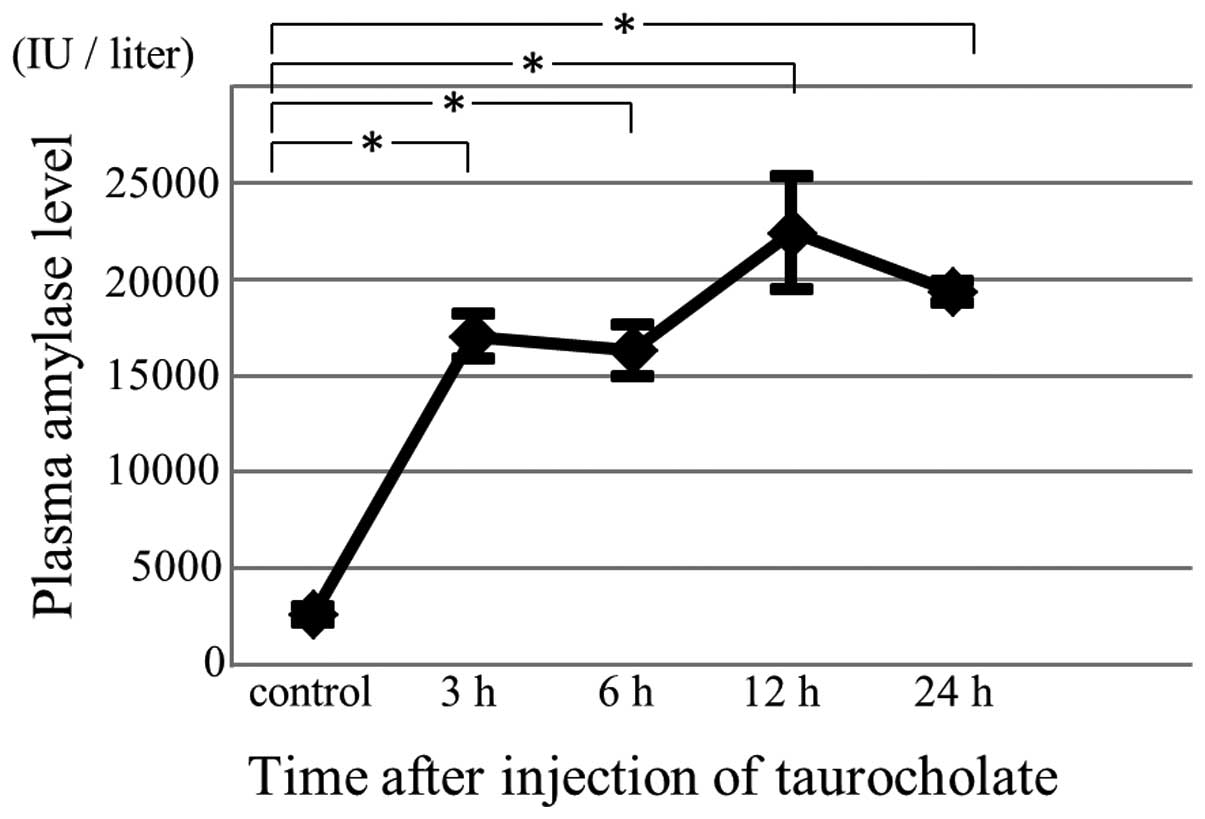
Plasma amylase levels were measured to confirm the successful induction of acute pancreatitis. Following this induction, plasma amylase levels were elevated (Fig. 1).

Figure 1

Plasma amylase levels in rats with taurocholate-induced pancreatitis were significantly higher than those of the control (*P<0.05). Data are presented as the mean ± SD.

Histological examination

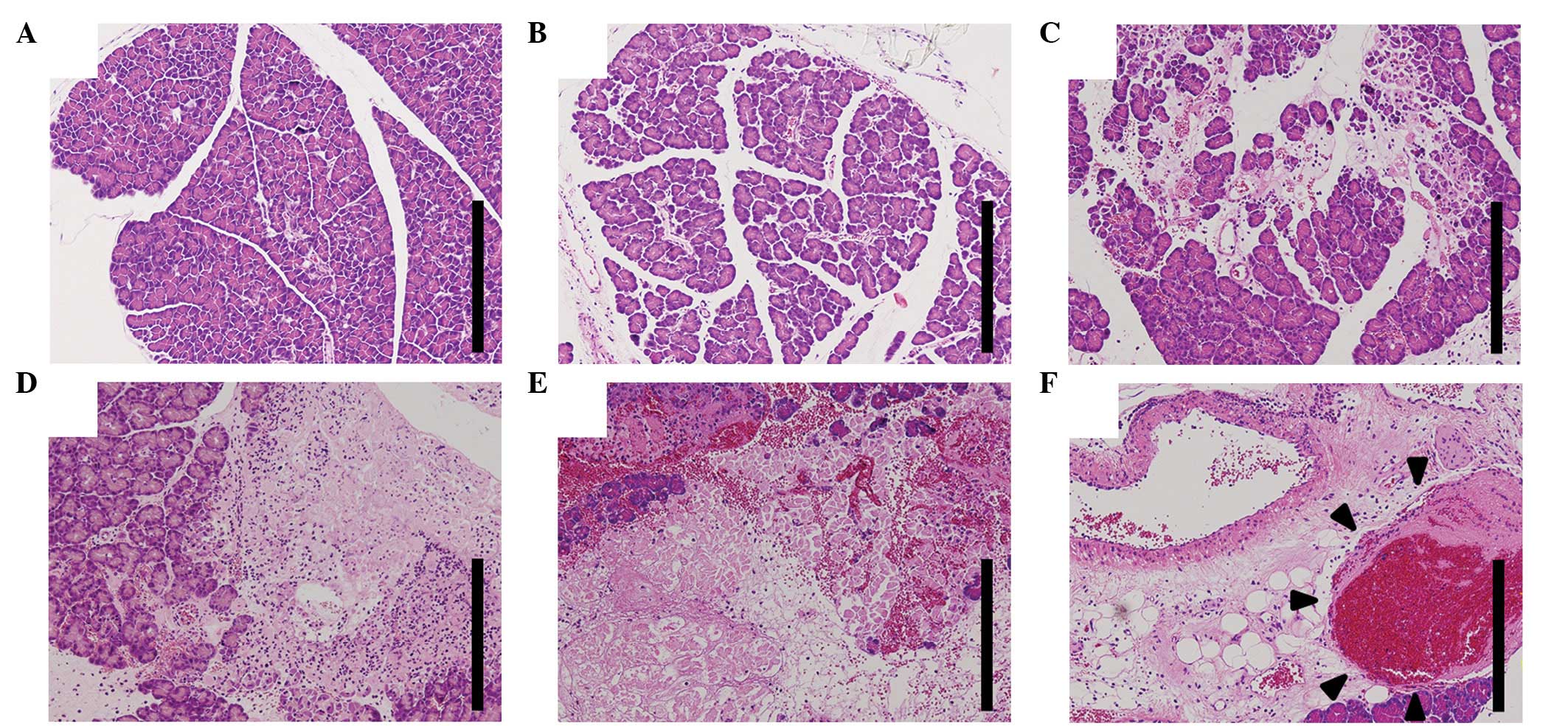
In the early stages of pancreatitis, histological examination indicated subcapsular and interlobular edema, slight inflammatory neutrophilic infiltration and a small number of intralobular necrotic lesions. The extent of inflammatory cell infiltration and areas of necrosis progressed with time. At 24 h following taurocholate injection, marked inflammatory and necrotic changes were noted (Fig. 2A-E). In addition, intravenous thromboses were observed, but there was no evidence of arterial thrombosis (Fig. 2F).

Figure 2

Histological examination of rat pancreatic tissue in taurocholate-induced pancreatitis. (A) Control, (B) 3, (C) 6, (D) 12 and (E) 24 h following taurocholate injection (H&E stain; magnification, ×100; bar length, 250 μm). Histopathological sections reveal (A) subcapsular and interlobular edema, slight inflammatory cell infiltration and (B) a small number of intralobular necrotic lesions; (C and D) inflammatory cell infiltration and areas of necrosis progressed in a time-dependent manner and (E) a large amount of necrosis and hemorrhage was observed. (F) Intravenous thromboses were observed (arrowheads), but arterial thrombosis was not noted. H&E, hematoxylin and eosin.

Angiotensin II concentration in experimental pancreatitis tissue

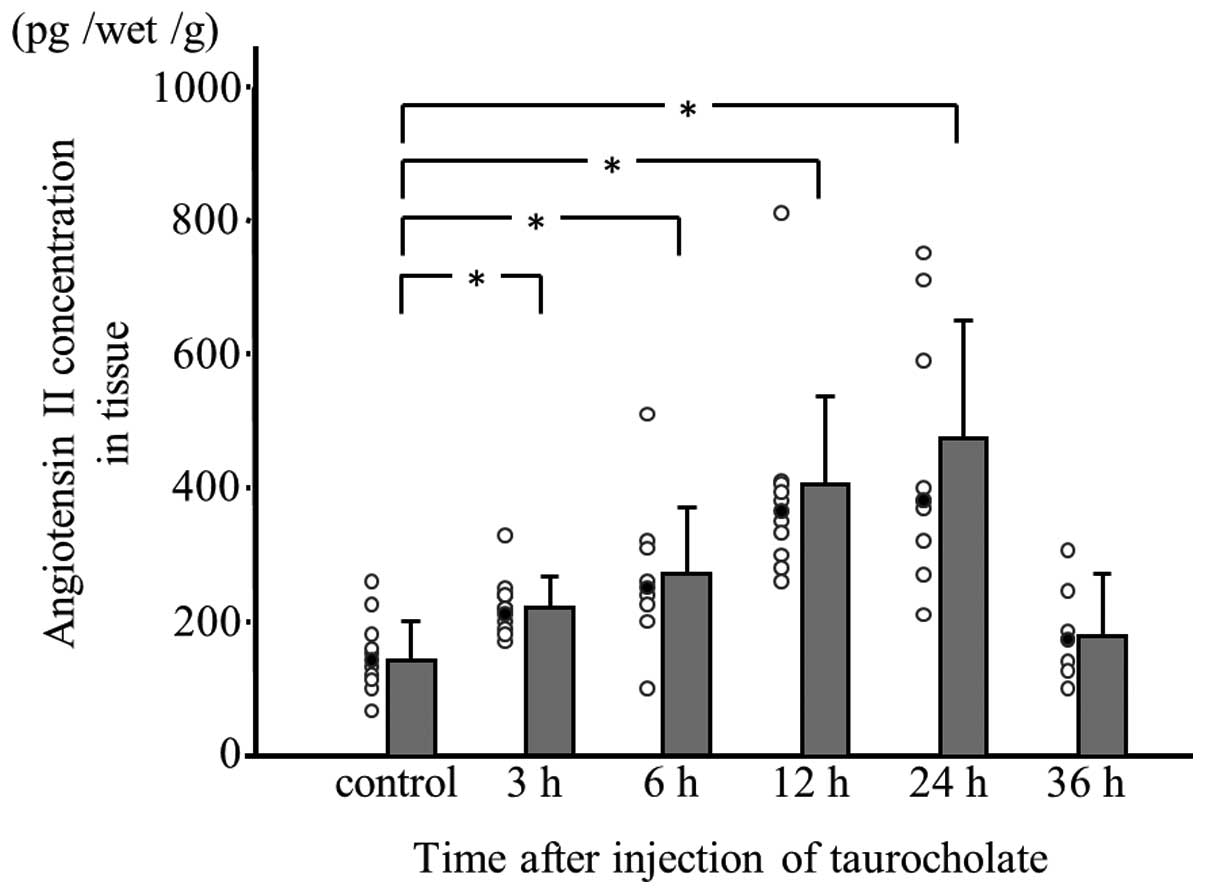
Angiotensin II concentration was measured in pancreatic tissue samples obtained at 3, 6, 12, 24 and 36 h following taurocholate injection. Up to 24 h, the angiotensin II concentration was significantly higher in rats with taurocholate-induced pancreatitis compared with controls and the enzyme levels were found to increase in a time-dependent manner. However, the angiotensin II concentration in pancreatitis tissue at 36 h following taurocholate injection was lower than that in pancreatitis tissue at 24 h following injection (Fig. 3).

Figure 3

Pancreatic angiotensin II concentrations in rats with taurocholate-induced pancreatitis. Angiotensin II concentration was 151.2±58.5 pg/g wet tissue in control pancreatic tissue and 225.5±43.9, 270±118.6, 414.5±156.9 and 464.4±192.9 pg/g wet tissue in pancreatic tissue at 3, 6, 12 and 24 h following injection of taurocholate, respectively. Tissue angiotensin II concentrations in pancreatitis at 3, 6, 12 and 24 h following injection were significantly higher than that in control pancreatic tissue (*P<0.05). The concentration of angiotensin II in pancreatitis tissue at 36 h following injection was 182.4±72.1 pg/g, lower than that at 24 h following injection. Each point represents the value and each bar represents the mean ± SD.

Discussion

Premature activation of trypsin within pancreatic acinar cells by various proteases, which in turn are activated by ectopic activation of trypsinogen, is hypothesized to represent the main etiological factor in pancreatitis. A number of studies in acute pancreatitis have examined the mechanisms by which edematous injury progresses to necrosis. In experimental models, pancreatic vascular perfusion failure has been implicated in the development of pancreatitis. Spormann et al(15) demonstrated that temporary ischemia significantly augmented the severity of pathology and Klar et al(16) revealed that vasoconstrictor administration has adverse effects in experimental acute pancreatitis. Intravascular thromboses have been indicated to represent a significant factor (17). Although intravenous thromboses were noted in the present study, arterial thromboses were not observed.

Deterioration of the balance between nitric oxide and endothelins has also been hypothesized to account for the development of necrotizing pancreatitis (18,19); however, the association between this abnormal balance and trypsin, the key molecule in the etiology of pancreatitis, is unclear.

It has been hypothesized that an intrinsic tissue RAS may be present in the pancreas (4). Chan et al(20) have demonstrated activation of the pancreatic RAS in a rat model of chronic hypoxia. Leung et al(10) revealed that experimental pancreatitis induced upregulation of several key RAS components in the pancreas. Several other studies have reported that RAS blockers are effective in the treatment of experimental pancreatitis (21–23).

Hypovascularity is a key characteristic of not only necrotizing pancreatitis but also pancreatic ductal cancer. The majority of pancreatic ductal cancers are hypovascular or avascular on angiography, but the angiography of surgically resected specimens cannot always accurately confirm poor circulation. Figarella et al(24) reported that cationic trypsinogen is spontaneously converted to trypsin under acidic conditions and Tajima et al(25) demonstrated that tumor-derived trypsin, activated by acidic conditions, was a key factor in tumor invasion. Ohta et al(26) found that angiotensin II acts on the pre-existing pancreatic arteries around the tumor leading to formation of hypovascular regions. Since the microenvironment around the tumor cells is more acidic than that of the majority of normal tissues, this phenomenon may be associated with tumor-derived trypsin, directly generating angiotensin II from angiotensinogen (27,28).

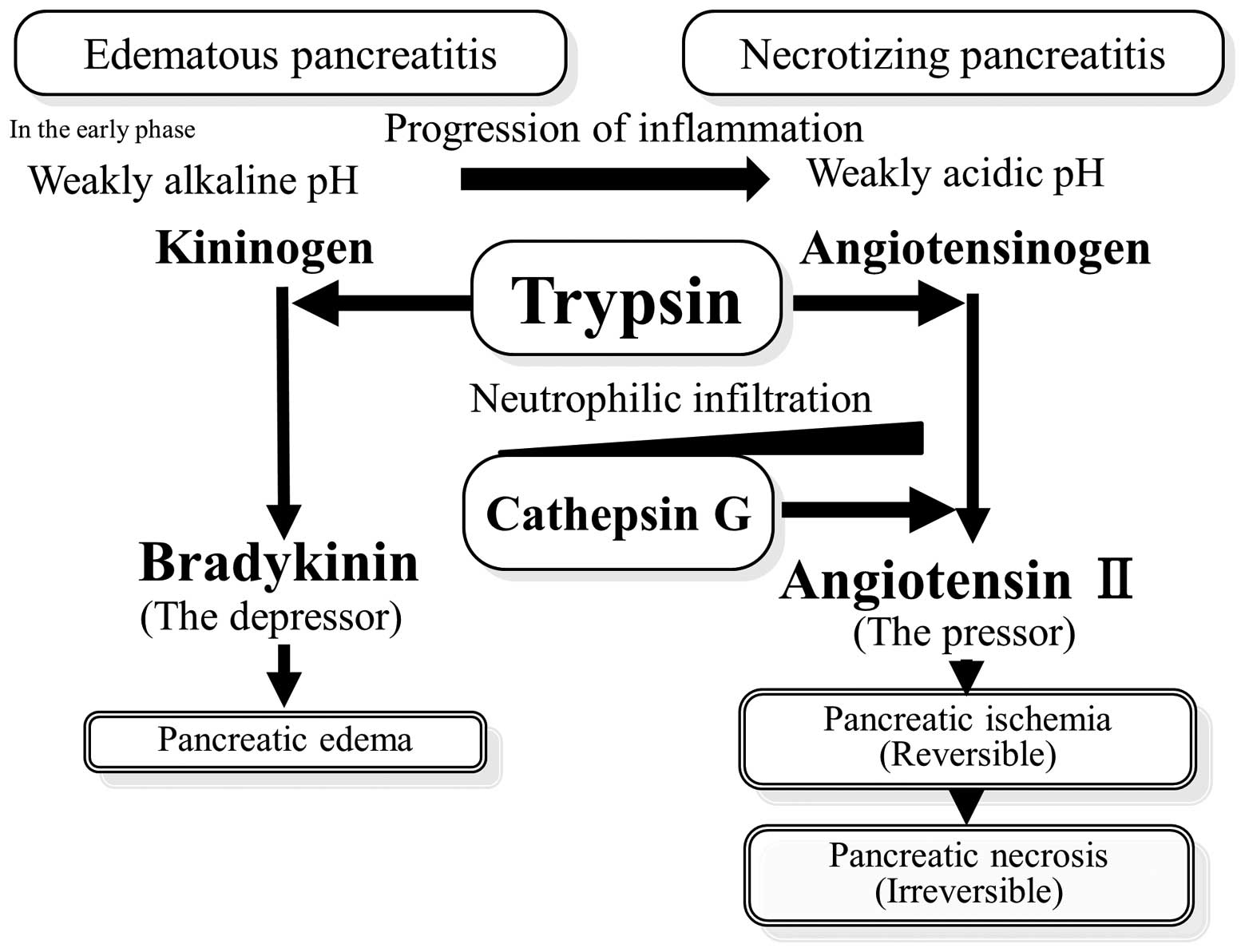
It was reported that the pH of the inflammatory exudate decreases with time (29–31) due to local acid production by glycolytic infiltrating neutrophils and low oxygen tension in inflammatory lesions. In the early phase of pancreatitis development, the depressor, bradykinin, was produced at a weakly alkaline pH. Therefore, pancreatic hyperemia and edema were observed. With time, the inflammation progressed, pH decreased and angiotensin II was produced under weakly acidic conditions by trypsin. In addition, pancreatic ischemia and necrosis were observed (Fig. 4). In our model of experimental pancreatitis, angiotensin II concentration decreased at 36 h, as compared with that at 24 h. We hypothesize that pancreatic tissue destruction may be responsible for the degradation of angiotensin II.

Figure 4

Proposed mechanism of the trypsin-related and cathepsin G-related angiotensin II generating system, and evolution of edematous pancreatitis into necrotizing pancreatitis. In the early phases of pancreatitis, the depressor bradykinin, is produced from kininogen by trypsin at a weakly alkaline pH. Thereafter, pancreatic hyperemia and edema develop (edematous pancreatitis). Inflammation progresses with time, as the pH decreases. Pressor angiotensin II is produced from angiotensinogen at a weakly acidic pH. Similarly, the inflammation progresses with time, as neutrophils infiltrate. Angiotensin II is produced by cathepsin G released by infiltrating neutrophils and pancreatic ischemia and necrosis develop (necrotizing pancreatitis).

Cathepsin G, one of the serine proteinases expressed in the azurophilic granules of neutrophils, has the potential to induce angiotensin II production (32). In the early phases of acute pancreatitis, the presence of subcapsular and intralobular edema, slight neutrophil infiltration and a small number of intralobular necrotic lesions were noted. The extent of neutrophil infiltration and areas of necrosis progressed over time. Cathepsin G released by infiltrating neutrophils may be involved in angiotensin II generation (33). As the inflammation progressed with time, angiotensin II was produced by cathepsin G released by infiltrating neutrophils (Fig. 4). A number of studies have reported that the neutrophil elastase inhibitor prevents neutrophil infiltration into the extravascular tissue (34,35). Although there are no cathepsin G inhibitors available for clinical use today, the neutrophil elastase inhibitor may suppress the angiotensin II generated by the cathepsin G released by infiltrating neutrophils.

In conclusion, the present study indicates that angiotensin II generation is instrumental in the transition from experimental edematous pancreatitis to necrotizing pancreatitis. We hypothesize that locally formed angiotensin II may act on the pancreatic arteries leading to regional hypovascularity. Therefore, inhibition of the angiotensin II generating system by administration of angiotensin receptor blockers, serine protease inhibitors or elastase inhibitors may be useful for preventing the evolution of edematous pancreatitis into necrotizing pancreatitis.

References

1 

Bollen TL, van Santvoort HC, Besselink MG, et al: The Atlanta Classification of acute pancreatitis revisited. Br J Surg. 95:6–21. 2008. View Article : Google Scholar : PubMed/NCBI

2 

Traverso LW and Kozarek RA: Pancreatic necrosectomy: definitions and technique. J Gastrointest Surg. 9:436–439. 2005. View Article : Google Scholar : PubMed/NCBI

3 

Takeda K, Mikami Y, Fukuyama S, et al: Pancreatic ischemia associated with vasospasm in the early phase of human acute necrotizing pancreatitis. Pancreas. 30:40–49. 2005.PubMed/NCBI

4 

Paul M, Poyan Mehr A and Kreutz R: Physiology of local renin-angiotensin systems. Physiol Rev. 86:747–803. 2006. View Article : Google Scholar : PubMed/NCBI

5 

Chappell MC, Millsted A, Diz DI, et al: Evidence for an intrinsic angiotensin system in the carine pancreas. J Hypertens. 9:751–759. 1991. View Article : Google Scholar : PubMed/NCBI

6 

Chappell MC, Jacobsen DW and Tallant EA: Characterization of angiotensin II receptor subtypes in pancreatic acinar AR42J cells. Peptides. 16:741–747. 1995. View Article : Google Scholar

7 

Ghiani BU and Masini MA: Angiotensin II binding sites in the rat pancreas and their modulation after sodium. Comp Biochem Physiol A Physiol. 111:439–444. 1995. View Article : Google Scholar : PubMed/NCBI

8 

Leung PS, Chan WP, Wong TP, et al: Expression and localization of the renin-angiotensin system in the rat pancreas. J Endocrinol. 160:13–19. 1999. View Article : Google Scholar : PubMed/NCBI

9 

Tahmasebi M, Puddefoot JR, Inwang ER, et al: The tissue renin-angiotensin system in human pancreas. J Endocrinol. 161:317–322. 1999. View Article : Google Scholar : PubMed/NCBI

10 

Leung PS, Chan WP and Nobiling R: Regulated expression of pancreatic renin-angiotensin system in experimental pancreatitis. Mol Cell Endocrinol. 166:121–128. 2000. View Article : Google Scholar : PubMed/NCBI

11 

Ip SP, Kwan PC, Williams CH, et al: Changes of angiotensin-converting enzyme activity in the pancreas of chronic hypoxia and acute pancreatitis. Int J Biochem Cell Biol. 35:944–954. 2003. View Article : Google Scholar : PubMed/NCBI

12 

Arakawa K, Ikeda M, Fukuyama J, et al: A pressor formation by trypsin from renin-denatured human plasma protein. J Clin Endocrinol Metab. 42:599–602. 1976. View Article : Google Scholar : PubMed/NCBI

13 

Arakawa K and Maruta H: Ability of kallikrein to generate angiotensin II-like pressor substance and a proposed ‘kinin-tensin enzyme system’. Nature. 288:705–706. 1980.PubMed/NCBI

14 

Morimoto T, Aoyama M, Gotoh E, et al: A method of radioimmunoassay of plasma angiotensin II using florisil. Nihon Naibunpi Gakkai Zasshi. 59:15–29. 1983.(In Japanese).

15 

Spormann H, Sokolowski A and Letko G: Effect of temporary ischemia upon development and histological patterns of acute pancreatitis in the rat. Pathol Res Pract. 184:507–513. 1989. View Article : Google Scholar : PubMed/NCBI

16 

Klar E, Rattner DW, Compton C, et al: Adverse effect of theraeuic vasoconstrictors in experimental acute pancreatitis. Ann Surg. 214:168–174. 1991. View Article : Google Scholar : PubMed/NCBI

17 

Menger MD, Plusczyk T and Vollmar B: Microcirculatory derangements in acute pancreatitis. J Hepatobiliary Pancreat Surg. 8:187–194. 2001. View Article : Google Scholar : PubMed/NCBI

18 

Liu XH, Kimura T, Ishikawa H, et al: Effect of endothelin-1 on the decelopment of hemorrhagic pancreatitis in rats. Scand J Gastroenterol. 30:276–282. 1995. View Article : Google Scholar : PubMed/NCBI

19 

Foitzik T, Faulhaber J, Hotz HG, et al: Endothelin mediates local and systemic disease sequelae in severe experimental pancreatitis. Pancreas. 22:248–254. 2001. View Article : Google Scholar : PubMed/NCBI

20 

Chan WP, Fung ML, Nobiling R, et al: Activation of local renin-angiotensin system by chronic hypoxia in rat pancreas. Mol Cell Endocrinol. 160:107–114. 2000. View Article : Google Scholar : PubMed/NCBI

21 

Tsang SW, Cheng CH and Leung PS: The role of the pancreatic rennin-angiotensin system in acinar digestive enzyme secretion and in acute pancreatitis. Regul Pept. 119:213–219. 2004. View Article : Google Scholar : PubMed/NCBI

22 

Chan YC and Leung PS: Angiotensin II type 1 receptor-dependent nuclear factor-kB activation-mediated proinflammatory actions in a rat model of obstructive acute pancreatitis. J Pharmacol Exp Ther. 323:10–18. 2007. View Article : Google Scholar : PubMed/NCBI

23 

Oruc N, Ozutemiz O, Nart D, et al: Inhibition of renin-angiotensin systems in experimental acute pancreatitis in rats: A new therapeutic target? Exp Toxicol Pathol. 62:353–360. 2010. View Article : Google Scholar : PubMed/NCBI

24 

Figarella C, Miszczuk-Jamska B and Barrett AJ: Possible lysosomal activation of pancreatic zymogens. Activation of both human trypsinogens by cathepsin B and spontaneous acid Activation of human trypsinogen 1. Biol Chem Hoppe Seyler. 369:293–298. 1988.PubMed/NCBI

25 

Tajima H, Ohta T, Elnemr A, et al: Enhanced incasiveness of pancreatic adenocarcinoma cells stably transfected with cationic trypsinogen cDNA. Int J Cancer. 94:699–704. 2001. View Article : Google Scholar : PubMed/NCBI

26 

Ohta T, Amaya K, Yi S, et al: Angiotensin converting enzyme-independent, local angiotensin II-generation in human pancreatic ductal cancer tissue. Int J Oncol. 23:593–598. 2003.PubMed/NCBI

27 

Montcourrier P, Silver I, Farnoud R, et al: Breast cancer cells have a higher capacity to acidify extracellular milieu by a ductal mechanism. Clin Exp Metastasis. 15:382–392. 1997. View Article : Google Scholar : PubMed/NCBI

28 

Ohta T, Numata M, Yagishita H, et al: Expression of 16 kDa proteolipid of vacuolar-type H(+)-ATPase in human pancreatic cancer. Br J Cancer. 73:1511–1517. 1996.

29 

Donald WE and Walter HS: The pH of inflammatory exudates. Proc Soc Exp Biol Med. 137:1328–1332. 1971. View Article : Google Scholar

30 

Simmen HP, Battaglia H, Giovanoli P, et al: Analysis of pH, pO2 and pCO2 in drainage fluid allows for rapid detection of infectious complications during the follow-up period after abdominal surgery. Infection. 22:386–389. 1994.PubMed/NCBI

31 

Ward TT and Steigbigel RT: Acidosis of synovial fluid correlates with synovial fluid leukocytosis. Am J Med. 64:933–936. 1978. View Article : Google Scholar : PubMed/NCBI

32 

Wintroub BU, Klickstein LB and Watt KW: A human neutrophil-dependent pathway for generation of angiotensin II. Purification of the product and identification as angiotensin II. J Clin Invest. 68:484–490. 1981. View Article : Google Scholar : PubMed/NCBI

33 

Rykl J, Thiemann J, Kuzawski S, et al: Renal cathepsin G and angiotensin II generation. J Hypertens. 24:1797–1807. 2006. View Article : Google Scholar : PubMed/NCBI

34 

Kawabata K, Hagio T, Matsumoto S, et al: Delayed neutrophil elastase inhibition prevents subsequent progression of acute lung injury induced by endotoxin inhalation in hamsters. Am J Respir Crit Care Med. 161:2013–2018. 2000. View Article : Google Scholar : PubMed/NCBI

35 

Young RE, Voisin MB, Wang S, et al: Role of neutrophil elastase in LTB4-induced neutrophil transmigration in vivo assessed with a specific inhibitor and neutrophil elastase deficient mice. Br J Pharmacol. 151:628–637. 2007. View Article : Google Scholar : PubMed/NCBI

Related Articles

  • Abstract
  • View
  • Download
  • Twitter
Copy and paste a formatted citation
Spandidos Publications style
Furukawa H, Shinmura A, Tajima H, Tsukada T, Nakanuma SI, Okamoto K, Sakai S, Makino I, Nakamura K, Hayashi H, Hayashi H, et al: Concentration of tissue angiotensin II increases with severity of experimental pancreatitis. Mol Med Rep 8: 335-338, 2013.
APA
Furukawa, H., Shinmura, A., Tajima, H., Tsukada, T., Nakanuma, S., Okamoto, K. ... Iseki, S. (2013). Concentration of tissue angiotensin II increases with severity of experimental pancreatitis. Molecular Medicine Reports, 8, 335-338. https://doi.org/10.3892/mmr.2013.1509
MLA
Furukawa, H., Shinmura, A., Tajima, H., Tsukada, T., Nakanuma, S., Okamoto, K., Sakai, S., Makino, I., Nakamura, K., Hayashi, H., Oyama, K., Inokuchi, M., Nakagawara, H., Miyashita, T., Fujita, H., Takamura, H., Ninomiya, ., Kitagawa, H., Fushida, S., Fujimura, T., Ohta, T., Wakayama, T., Iseki, S."Concentration of tissue angiotensin II increases with severity of experimental pancreatitis". Molecular Medicine Reports 8.2 (2013): 335-338.
Chicago
Furukawa, H., Shinmura, A., Tajima, H., Tsukada, T., Nakanuma, S., Okamoto, K., Sakai, S., Makino, I., Nakamura, K., Hayashi, H., Oyama, K., Inokuchi, M., Nakagawara, H., Miyashita, T., Fujita, H., Takamura, H., Ninomiya, ., Kitagawa, H., Fushida, S., Fujimura, T., Ohta, T., Wakayama, T., Iseki, S."Concentration of tissue angiotensin II increases with severity of experimental pancreatitis". Molecular Medicine Reports 8, no. 2 (2013): 335-338. https://doi.org/10.3892/mmr.2013.1509
Copy and paste a formatted citation
x
Spandidos Publications style
Furukawa H, Shinmura A, Tajima H, Tsukada T, Nakanuma SI, Okamoto K, Sakai S, Makino I, Nakamura K, Hayashi H, Hayashi H, et al: Concentration of tissue angiotensin II increases with severity of experimental pancreatitis. Mol Med Rep 8: 335-338, 2013.
APA
Furukawa, H., Shinmura, A., Tajima, H., Tsukada, T., Nakanuma, S., Okamoto, K. ... Iseki, S. (2013). Concentration of tissue angiotensin II increases with severity of experimental pancreatitis. Molecular Medicine Reports, 8, 335-338. https://doi.org/10.3892/mmr.2013.1509
MLA
Furukawa, H., Shinmura, A., Tajima, H., Tsukada, T., Nakanuma, S., Okamoto, K., Sakai, S., Makino, I., Nakamura, K., Hayashi, H., Oyama, K., Inokuchi, M., Nakagawara, H., Miyashita, T., Fujita, H., Takamura, H., Ninomiya, ., Kitagawa, H., Fushida, S., Fujimura, T., Ohta, T., Wakayama, T., Iseki, S."Concentration of tissue angiotensin II increases with severity of experimental pancreatitis". Molecular Medicine Reports 8.2 (2013): 335-338.
Chicago
Furukawa, H., Shinmura, A., Tajima, H., Tsukada, T., Nakanuma, S., Okamoto, K., Sakai, S., Makino, I., Nakamura, K., Hayashi, H., Oyama, K., Inokuchi, M., Nakagawara, H., Miyashita, T., Fujita, H., Takamura, H., Ninomiya, ., Kitagawa, H., Fushida, S., Fujimura, T., Ohta, T., Wakayama, T., Iseki, S."Concentration of tissue angiotensin II increases with severity of experimental pancreatitis". Molecular Medicine Reports 8, no. 2 (2013): 335-338. https://doi.org/10.3892/mmr.2013.1509
Follow us
  • Twitter
  • LinkedIn
  • Facebook
About
  • Spandidos Publications
  • Careers
  • Cookie Policy
  • Privacy Policy
How can we help?
  • Help
  • Live Chat
  • Contact
  • Email to our Support Team