Spandidos Publications Logo
  • About
    • About Spandidos
    • Aims and Scopes
    • Abstracting and Indexing
    • Editorial Policies
    • Reprints and Permissions
    • Job Opportunities
    • Terms and Conditions
    • Contact
  • Journals
    • All Journals
    • Oncology Letters
      • Oncology Letters
      • Information for Authors
      • Editorial Policies
      • Editorial Board
      • Aims and Scope
      • Abstracting and Indexing
      • Bibliographic Information
      • Archive
    • International Journal of Oncology
      • International Journal of Oncology
      • Information for Authors
      • Editorial Policies
      • Editorial Board
      • Aims and Scope
      • Abstracting and Indexing
      • Bibliographic Information
      • Archive
    • Molecular and Clinical Oncology
      • Molecular and Clinical Oncology
      • Information for Authors
      • Editorial Policies
      • Editorial Board
      • Aims and Scope
      • Abstracting and Indexing
      • Bibliographic Information
      • Archive
    • Experimental and Therapeutic Medicine
      • Experimental and Therapeutic Medicine
      • Information for Authors
      • Editorial Policies
      • Editorial Board
      • Aims and Scope
      • Abstracting and Indexing
      • Bibliographic Information
      • Archive
    • International Journal of Molecular Medicine
      • International Journal of Molecular Medicine
      • Information for Authors
      • Editorial Policies
      • Editorial Board
      • Aims and Scope
      • Abstracting and Indexing
      • Bibliographic Information
      • Archive
    • Biomedical Reports
      • Biomedical Reports
      • Information for Authors
      • Editorial Policies
      • Editorial Board
      • Aims and Scope
      • Abstracting and Indexing
      • Bibliographic Information
      • Archive
    • Oncology Reports
      • Oncology Reports
      • Information for Authors
      • Editorial Policies
      • Editorial Board
      • Aims and Scope
      • Abstracting and Indexing
      • Bibliographic Information
      • Archive
    • Molecular Medicine Reports
      • Molecular Medicine Reports
      • Information for Authors
      • Editorial Policies
      • Editorial Board
      • Aims and Scope
      • Abstracting and Indexing
      • Bibliographic Information
      • Archive
    • World Academy of Sciences Journal
      • World Academy of Sciences Journal
      • Information for Authors
      • Editorial Policies
      • Editorial Board
      • Aims and Scope
      • Abstracting and Indexing
      • Bibliographic Information
      • Archive
    • International Journal of Functional Nutrition
      • International Journal of Functional Nutrition
      • Information for Authors
      • Editorial Policies
      • Editorial Board
      • Aims and Scope
      • Abstracting and Indexing
      • Bibliographic Information
      • Archive
    • International Journal of Epigenetics
      • International Journal of Epigenetics
      • Information for Authors
      • Editorial Policies
      • Editorial Board
      • Aims and Scope
      • Abstracting and Indexing
      • Bibliographic Information
      • Archive
    • Medicine International
      • Medicine International
      • Information for Authors
      • Editorial Policies
      • Editorial Board
      • Aims and Scope
      • Abstracting and Indexing
      • Bibliographic Information
      • Archive
  • Articles
  • Information
    • Information for Authors
    • Information for Reviewers
    • Information for Librarians
    • Information for Advertisers
    • Conferences
  • Language Editing
Spandidos Publications Logo
  • About
    • About Spandidos
    • Aims and Scopes
    • Abstracting and Indexing
    • Editorial Policies
    • Reprints and Permissions
    • Job Opportunities
    • Terms and Conditions
    • Contact
  • Journals
    • All Journals
    • Biomedical Reports
      • Information for Authors
      • Editorial Policies
      • Editorial Board
      • Aims and Scope
      • Abstracting and Indexing
      • Bibliographic Information
      • Archive
    • Experimental and Therapeutic Medicine
      • Information for Authors
      • Editorial Policies
      • Editorial Board
      • Aims and Scope
      • Abstracting and Indexing
      • Bibliographic Information
      • Archive
    • International Journal of Epigenetics
      • Information for Authors
      • Editorial Policies
      • Editorial Board
      • Aims and Scope
      • Abstracting and Indexing
      • Bibliographic Information
      • Archive
    • International Journal of Functional Nutrition
      • Information for Authors
      • Editorial Policies
      • Editorial Board
      • Aims and Scope
      • Abstracting and Indexing
      • Bibliographic Information
      • Archive
    • International Journal of Molecular Medicine
      • Information for Authors
      • Editorial Policies
      • Editorial Board
      • Aims and Scope
      • Abstracting and Indexing
      • Bibliographic Information
      • Archive
    • International Journal of Oncology
      • Information for Authors
      • Editorial Policies
      • Editorial Board
      • Aims and Scope
      • Abstracting and Indexing
      • Bibliographic Information
      • Archive
    • Medicine International
      • Information for Authors
      • Editorial Policies
      • Editorial Board
      • Aims and Scope
      • Abstracting and Indexing
      • Bibliographic Information
      • Archive
    • Molecular and Clinical Oncology
      • Information for Authors
      • Editorial Policies
      • Editorial Board
      • Aims and Scope
      • Abstracting and Indexing
      • Bibliographic Information
      • Archive
    • Molecular Medicine Reports
      • Information for Authors
      • Editorial Policies
      • Editorial Board
      • Aims and Scope
      • Abstracting and Indexing
      • Bibliographic Information
      • Archive
    • Oncology Letters
      • Information for Authors
      • Editorial Policies
      • Editorial Board
      • Aims and Scope
      • Abstracting and Indexing
      • Bibliographic Information
      • Archive
    • Oncology Reports
      • Information for Authors
      • Editorial Policies
      • Editorial Board
      • Aims and Scope
      • Abstracting and Indexing
      • Bibliographic Information
      • Archive
    • World Academy of Sciences Journal
      • Information for Authors
      • Editorial Policies
      • Editorial Board
      • Aims and Scope
      • Abstracting and Indexing
      • Bibliographic Information
      • Archive
  • Articles
  • Information
    • For Authors
    • For Reviewers
    • For Librarians
    • For Advertisers
    • Conferences
  • Language Editing
Login Register Submit
  • This site uses cookies
  • You can change your cookie settings at any time by following the instructions in our Cookie Policy. To find out more, you may read our Privacy Policy.

    I agree
Search articles by DOI, keyword, author or affiliation
Search
Advanced Search
presentation
Molecular Medicine Reports
Join Editorial Board Propose a Special Issue
Print ISSN: 1791-2997 Online ISSN: 1791-3004
Journal Cover
2014-January Volume 9 Issue 1

Full Size Image

Sign up for eToc alerts
Recommend to Library

Journals

International Journal of Molecular Medicine

International Journal of Molecular Medicine

International Journal of Molecular Medicine is an international journal devoted to molecular mechanisms of human disease.

International Journal of Oncology

International Journal of Oncology

International Journal of Oncology is an international journal devoted to oncology research and cancer treatment.

Molecular Medicine Reports

Molecular Medicine Reports

Covers molecular medicine topics such as pharmacology, pathology, genetics, neuroscience, infectious diseases, molecular cardiology, and molecular surgery.

Oncology Reports

Oncology Reports

Oncology Reports is an international journal devoted to fundamental and applied research in Oncology.

Experimental and Therapeutic Medicine

Experimental and Therapeutic Medicine

Experimental and Therapeutic Medicine is an international journal devoted to laboratory and clinical medicine.

Oncology Letters

Oncology Letters

Oncology Letters is an international journal devoted to Experimental and Clinical Oncology.

Biomedical Reports

Biomedical Reports

Explores a wide range of biological and medical fields, including pharmacology, genetics, microbiology, neuroscience, and molecular cardiology.

Molecular and Clinical Oncology

Molecular and Clinical Oncology

International journal addressing all aspects of oncology research, from tumorigenesis and oncogenes to chemotherapy and metastasis.

World Academy of Sciences Journal

World Academy of Sciences Journal

Multidisciplinary open-access journal spanning biochemistry, genetics, neuroscience, environmental health, and synthetic biology.

International Journal of Functional Nutrition

International Journal of Functional Nutrition

Open-access journal combining biochemistry, pharmacology, immunology, and genetics to advance health through functional nutrition.

International Journal of Epigenetics

International Journal of Epigenetics

Publishes open-access research on using epigenetics to advance understanding and treatment of human disease.

Medicine International

Medicine International

An International Open Access Journal Devoted to General Medicine.

Journal Cover
2014-January Volume 9 Issue 1

Full Size Image

Sign up for eToc alerts
Recommend to Library

  • Article
  • Citations
    • Cite This Article
    • Download Citation
    • Create Citation Alert
    • Remove Citation Alert
    • Cited By
  • Similar Articles
    • Related Articles (in Spandidos Publications)
    • Similar Articles (Google Scholar)
    • Similar Articles (PubMed)
  • Download PDF
  • Download XML
  • View XML
Article

Caffeine inhibits paclitaxel‑induced apoptosis in colorectal cancer cells through the upregulation of Mcl‑1 levels

  • Authors:
    • Nizar M. Mhaidat
    • Karem H. Alzoubi
    • Sayer I. Al‑Azzam
    • Alhareth A. Alsaad
  • View Affiliations / Copyright

    Affiliations: Department of Clinical Pharmacy, Faculty of Pharmacy, Jordan University of Science and Technology, Irbid 22110, Jordan
  • Pages: 243-248
    |
    Published online on: October 29, 2013
       https://doi.org/10.3892/mmr.2013.1763
  • Expand metrics +
Metrics: Total Views: 0 (Spandidos Publications: | PMC Statistics: )
Metrics: Total PDF Downloads: 0 (Spandidos Publications: | PMC Statistics: )
Cited By (CrossRef): 0 citations Loading Articles...

This article is mentioned in:


Abstract

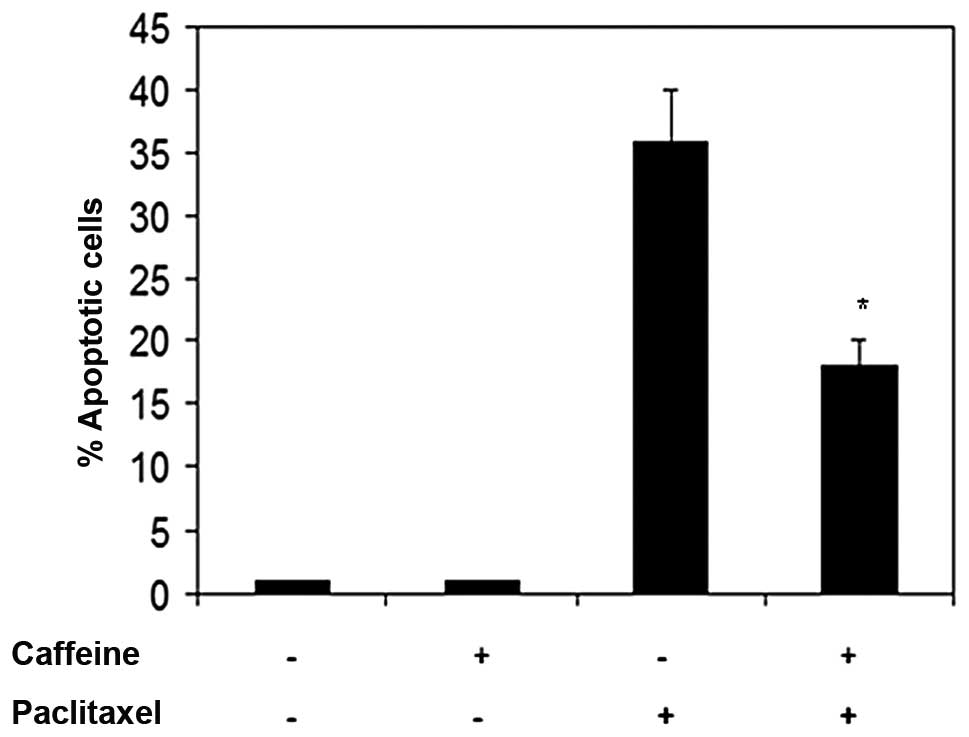
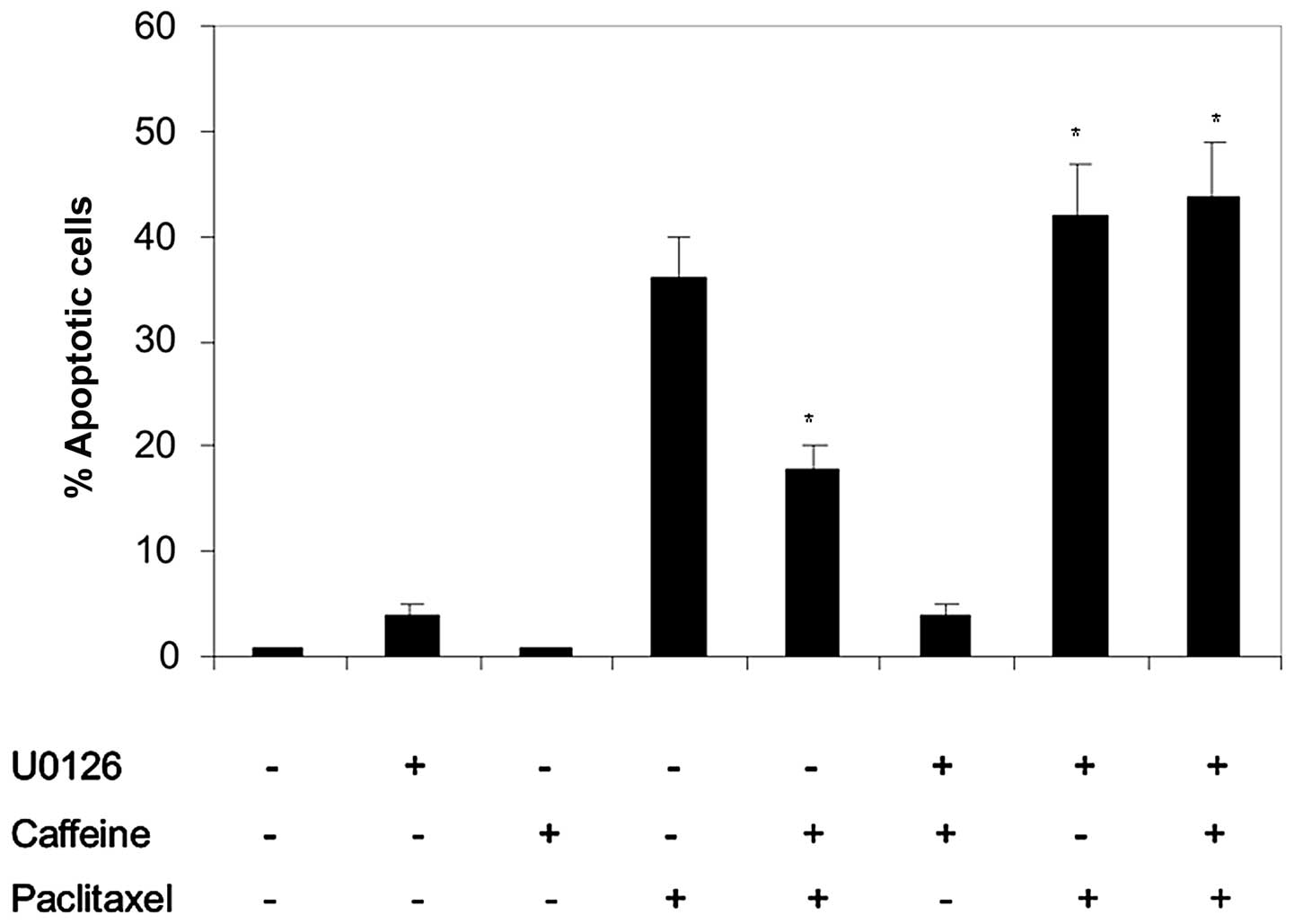
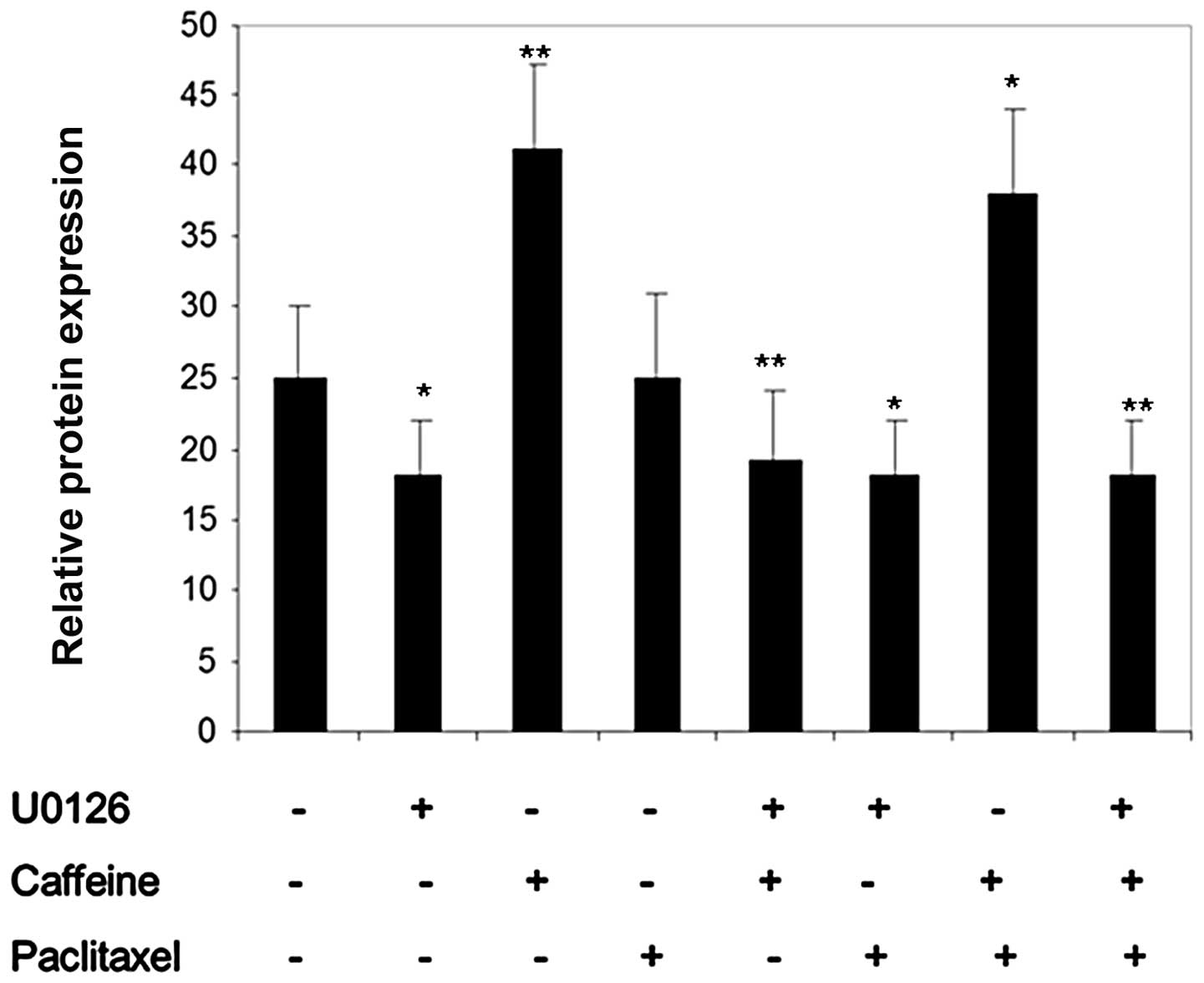
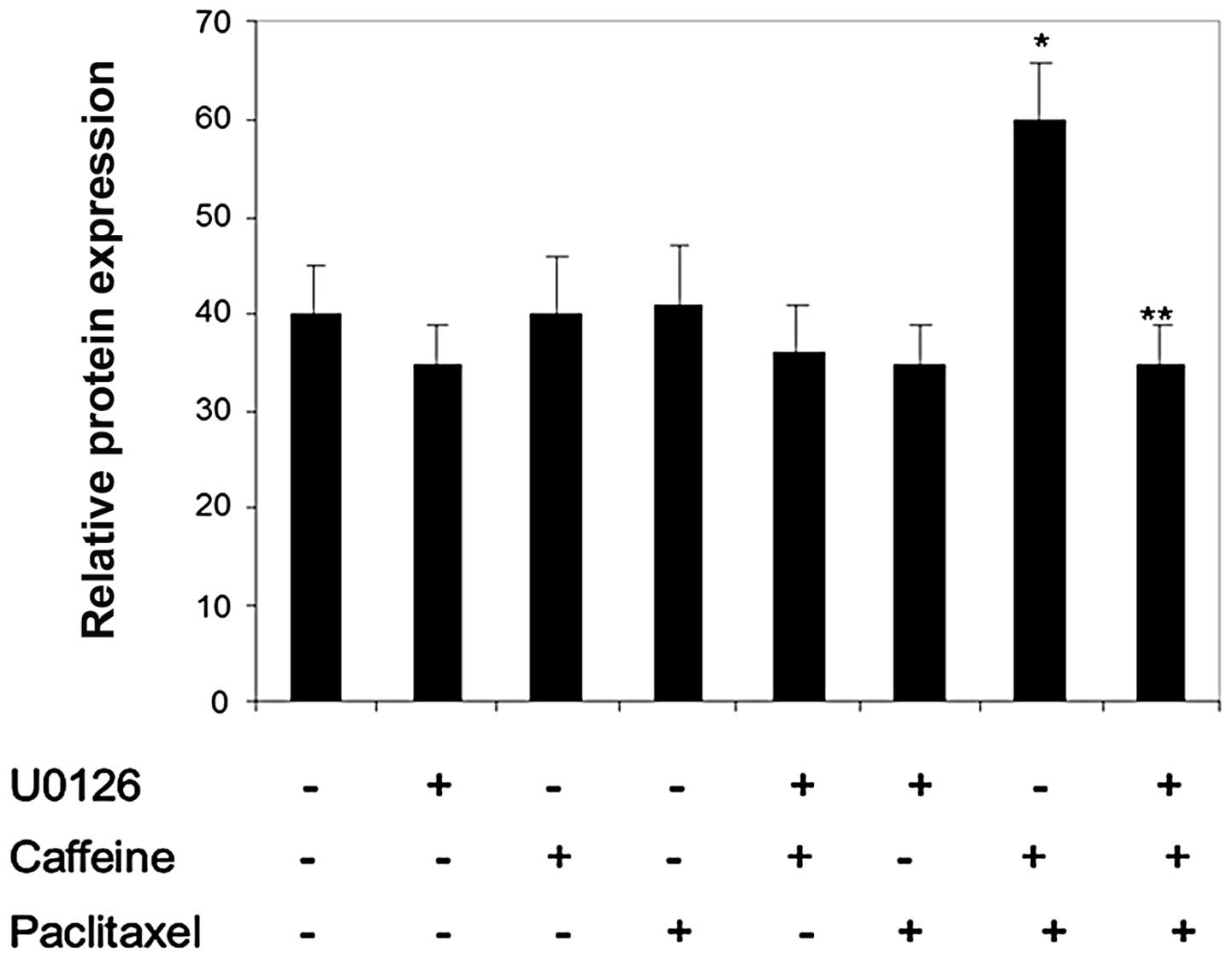
Colorectal cancer (CRC) cells have been previously observed to be resistant to paclitaxel‑induced apoptosis by activation of the mitogen‑activated protein/extracellular signal‑regulated kinase (MEK)/ERK signaling pathway and increased expression of glucose‑regulated protein 78 (GRP78). Caffeine, the most widely used neuroactive compound, has antiproliferative activity and the ability to induce cell cycle arrest and apoptosis. In the current study, the effect of concomitant use of caffeine on paclitaxel‑induced apoptosis in CRC cells was investigated. The results revealed that treatment of Colo205 cells with varying caffeine concentrations did not induce apoptosis. Pretreatment of CRC cells with caffeine significantly inhibited paclitaxel‑induced cytotoxicity by increasing the levels of the antiapoptotic Bcl‑2 family member, Mcl‑1. This effect was inhibited by pretreatment of Colo205 cells with the MEK‑ERK chemical inhibitor, U0126. In addition to GRP78, these results indicated that Mcl‑1 may be a downstream target of the MEK‑ERK signaling pathway. Moreover, administration of caffeine may decrease chemotherapeutic responses to paclitaxel by the MEK‑ERK mediated upregulation of Mcl‑1. In conclusion, coadministration of cell cycle‑modifying agents, including caffeine should be avoided in CRC patients treated with paclitaxel.
View Figures

Figure 1

Figure 2

Figure 3

Figure 4

View References

1 

Jemal A, Siegel R, Ward E, et al: Cancer statistics, 2008. CA Cancer J Clin. 58:71–96. 2008. View Article : Google Scholar

2 

Al-Tarawneh M, Khatib S and Arqub K: Cancer incidence in Jordan, 1996–2005. East Mediterr Health J. 16:837–845. 2010.

3 

Rowinsky EK and Donehower RC: Paclitaxel (taxol). N Engl J Med. 332:1004–1014. 1995. View Article : Google Scholar : PubMed/NCBI

4 

Gonçalves A, Braguer D, Carles G, André N, Prevôt C and Briand C: Caspase-8 activation independent of CD95/CD95-L interaction during paclitaxel-induced apoptosis in human colon cancer cells (HT29-D4). Biochem Pharmacol. 60:1579–1584. 2000.PubMed/NCBI

5 

Bhalla KN: Microtubule-targeted anticancer agents and apoptosis. Oncogene. 22:9075–9086. 2003. View Article : Google Scholar : PubMed/NCBI

6 

Childs S, Yeh RL, Hui D and Ling V: Taxol resistance mediated by transfection of the liver-specific sister gene of P-glycoprotein. Cancer Res. 58:4160–4167. 1998.PubMed/NCBI

7 

Lecureur V, Sun D, Hargrove P, et al: Cloning and expression of murine sister of P-glycoprotein reveals a more discriminating transporter than MDR1/P-glycoprotein. Mol Pharmacol. 57:24–35. 2000.PubMed/NCBI

8 

Subbaramaiah K, Hart JC, Norton L and Dannenberg AJ: Microtubule-interfering agents stimulate the transcription of cyclooxygenase-2. Evidence for involvement of ERK1/2 and p38 mitogen-activated protein kinase pathways. J Biol Chem. 275:14838–14845. 2000. View Article : Google Scholar : PubMed/NCBI

9 

McDaid HM and Horwitz SB: Selective potentiation of paclitaxel (taxol)-induced cell death by mitogen-activated protein kinase kinase inhibition in human cancer cell lines. Mol Pharmacol. 60:290–301. 2001.PubMed/NCBI

10 

Mhaidat NM, Thorne RF, Zhang XD and Hersey P: Regulation of docetaxel-induced apoptosis of human melanoma cells by different isoforms of protein kinase C. Mol Cancer Res. 5:1073–1081. 2007. View Article : Google Scholar : PubMed/NCBI

11 

Troppmair J, Bruder JT, Munoz H, et al: Mitogen-activated protein kinase/extracellular signal-regulated protein kinase activation by oncogenes, serum, and 12-O-tetradecanoylphorbol-13-acetate requires Raf and is necessary for transformation. J Biol Chem. 269:7030–7035. 1994.

12 

Hommes DW, Peppelenbosch MP and van Deventer SJ: Mitogen activated protein (MAP) kinase signal transduction pathways and novel anti-inflammatory targets. Gut. 52:144–151. 2003. View Article : Google Scholar : PubMed/NCBI

13 

Davis RJ: Signal transduction by the JNK group of MAP kinases. Cell. 103:239–252. 2000. View Article : Google Scholar : PubMed/NCBI

14 

Alessi DR, Saito Y, Campbell DG, et al: Identification of the sites in MAP kinase kinase-1 phosphorylated by p74raf-1. EMBO J. 13:1610–1619. 1994.PubMed/NCBI

15 

Kavallaris M, Kuo DY, Burkhart CA, et al: Taxol-resistant epithelial ovarian tumors are associated with altered expression of specific beta-tubulin isotypes. J Clin Invest. 100:1282–1293. 1997. View Article : Google Scholar : PubMed/NCBI

16 

Ranganathan S, Benetatos CA, Colarusso PJ, Dexter DW and Hudes GR: Altered beta-tubulin isotype expression in paclitaxel-resistant human prostate carcinoma cells. Br J Cancer. 77:562–566. 1998. View Article : Google Scholar : PubMed/NCBI

17 

Mhaidat NM, Thorne R, Zhang XD and Hersey P: Involvement of endoplasmic reticulum stress in Docetaxel-induced JNK-dependent apoptosis of human melanoma. Apoptosis. 13:1505–1512. 2008. View Article : Google Scholar : PubMed/NCBI

18 

Lee AS: GRP78 induction in cancer: therapeutic and prognostic implications. Cancer Res. 67:3496–3499. 2007. View Article : Google Scholar : PubMed/NCBI

19 

Ma Y and Hendershot LM: ER chaperone functions during normal and stress conditions. J Chem Neuroanat. 28:51–65. 2004. View Article : Google Scholar : PubMed/NCBI

20 

Wierzejska R: Caffeine - common ingredient in a diet and its influence on human health. Rocz Panstw Zakl Hig. 63:141–147. 2012.(In Polish).

21 

Tavares C and Sakata RK: Caffeine in the treatment of pain. Rev Bras Anestesiol. 62:387–401. 2012. View Article : Google Scholar : PubMed/NCBI

22 

Roehrs T and Roth T: Caffeine: sleep and daytime sleepiness. Sleep Med Rev. 12:153–162. 2008. View Article : Google Scholar

23 

Glade MJ: Caffeine-not just a stimulant. Nutrition. 26:932–938. 2010. View Article : Google Scholar : PubMed/NCBI

24 

Okano J, Nagahara T, Matsumoto K and Murawaki Y: Caffeine inhibits the proliferation of liver cancer cells and activates the MEK/ERK/EGFR signalling pathway. Basic Clin Pharmacol Toxicol. 102:543–551. 2008. View Article : Google Scholar : PubMed/NCBI

25 

Saunders DE, Lawrence WD, Christensen C, Wappler NL, Ruan H and Deppe G: Paclitaxel-induced apoptosis in MCF-7 breast-cancer cells. Int J Cancer. 70:214–220. 1997. View Article : Google Scholar : PubMed/NCBI

26 

Ribeiro JC, Barnetson AR, Jackson P, Ow K, Links M and Russell PJ: Caffeine-increased radiosensitivity is not dependent on a loss of G2/M arrest or apoptosis in bladder cancer cell lines. Int J Radiat Biol. 75:481–492. 1999. View Article : Google Scholar : PubMed/NCBI

27 

Lu YP, Lou YR, Lin Y, et al: Inhibitory effects of orally administered green tea, black tea, and caffeine on skin carcinogenesis in mice previously treated with ultraviolet B light (high-risk mice): relationship to decreased tissue fat. Cancer Res. 61:5002–5009. 2001.PubMed/NCBI

28 

Lu YP, Lou YR, Peng QY, Xie JG and Conney AH: Stimulatory effect of topical application of caffeine on UVB-induced apoptosis in the epidermis of p53 and Bax knockout mice. Cancer Res. 64:5020–5027. 2004. View Article : Google Scholar : PubMed/NCBI

29 

Nomura M, Ichimatsu D, Moritani S, et al: Inhibition of epidermal growth factor-induced cell transformation and Akt activation by caffeine. Mol Carcinog. 44:67–76. 2005. View Article : Google Scholar : PubMed/NCBI

30 

He Z, Ma WY, Hashimoto T, Bode AM, Yang CS and Dong Z: Induction of apoptosis by caffeine is mediated by the p53, Bax, and caspase 3 pathways. Cancer Res. 63:4396–4401. 2003.PubMed/NCBI

31 

Hashimoto T, He Z, Ma WY, et al: Caffeine inhibits cell proliferation by G0/G1 phase arrest in JB6 cells. Cancer Res. 64:3344–3349. 2004. View Article : Google Scholar : PubMed/NCBI

32 

Bode AM and Dong Z: The enigmatic effects of caffeine in cell cycle and cancer. Cancer Lett. 247:26–39. 2007. View Article : Google Scholar : PubMed/NCBI

33 

Mhaidat NM, Alali FQ, Matalqah SM, et al: Inhibition of MEK sensitizes paclitaxel-induced apoptosis of human colorectal cancer cells by downregulation of GRP78. Anticancer Drugs. 20:601–606. 2009. View Article : Google Scholar : PubMed/NCBI

34 

Zhang K and Kaufman RJ: Protein folding in the endoplasmic reticulum and the unfolded protein response. Handb Exp Pharmacol. 69–91. 2006. View Article : Google Scholar

35 

Szegezdi E, Logue SE, Gorman AM and Samali A: Mediators of endoplasmic reticulum stress-induced apoptosis. EMBO Rep. 7:880–885. 2006. View Article : Google Scholar : PubMed/NCBI

36 

Tabas I and Ron D: Integrating the mechanisms of apoptosis induced by endoplasmic reticulum stress. Nat Cell Biol. 13:184–190. 2011. View Article : Google Scholar : PubMed/NCBI

37 

Lyles MB and Cameron IL: Caffeine and other xanthines as cytochemical blockers and removers of heterocyclic DNA intercalators from chromatin. Cell Biol Int. 26:145–154. 2002. View Article : Google Scholar : PubMed/NCBI

38 

Geraets L, Moonen HJ, Wouters EF, Bast A and Hageman GJ: Caffeine metabolites are inhibitors of the nuclear enzyme poly(ADP-ribose)polymerase-1 at physiological concentrations. Biochem Pharmacol. 72:902–910. 2006. View Article : Google Scholar : PubMed/NCBI

39 

Howell LL: Comparative effects of caffeine and selective phosphodiesterase inhibitors on respiration and behavior in rhesus monkeys. J Pharmacol Exp Ther. 266:894–903. 1993.PubMed/NCBI

40 

Shinomiya N, Shinomiya M, Wakiyama H, Katsura Y and Rokutanda M: Enhancement of CDDP cytotoxicity by caffeine is characterized by apoptotic cell death. Exp Cell Res. 210:236–242. 1994. View Article : Google Scholar : PubMed/NCBI

41 

Lock RB, Galperina OV, Feldhoff RC and Rhodes LJ: Concentration-dependent differences in the mechanisms by which caffeine potentiates etoposide cytotoxicity in HeLa cells. Cancer Res. 54:4933–4939. 1994.PubMed/NCBI

42 

Kitamoto Y, Sakurai H, Mitsuhashi N, Akimoto T and Nakano T: Caffeine diminishes cytotoxic effects of paclitaxel on a human lung adenocarcinoma cell line. Cancer Lett. 191:101–107. 2003. View Article : Google Scholar : PubMed/NCBI

43 

Zhang PL, Lun M, Teng J, et al: Preinduced molecular chaperones in the endoplasmic reticulum protect cardiomyocytes from lethal injury. Ann Clin Lab Sci. 34:449–457. 2004.PubMed/NCBI

44 

Ostergaard L, Simonsen U, Eskildsen-Helmond Y, et al: Proteomics reveals lowering oxygen alters cytoskeletal and endoplasmatic stress proteins in human endothelial cells. Proteomics. 9:4457–4467. 2009. View Article : Google Scholar

45 

Martinou JC and Green DR: Breaking the mitochondrial barrier. Nat Rev Mol Cell Biol. 2:63–67. 2001. View Article : Google Scholar : PubMed/NCBI

46 

Adams JM and Cory S: The Bcl-2 protein family: arbiters of cell survival. Science. 281:1322–1326. 1998. View Article : Google Scholar : PubMed/NCBI

47 

Ding Q, Huo L, Yang JY, et al: Down-regulation of myeloid cell leukemia-1 through inhibiting Erk/Pin 1 pathway by sorafenib facilitates chemosensitization in breast cancer. Cancer Res. 68:6109–6117. 2008. View Article : Google Scholar : PubMed/NCBI

48 

Wesarg E, Hoffarth S, Wiewrodt R, et al: Targeting BCL-2 family proteins to overcome drug resistance in non-small cell lung cancer. Int J Cancer. 121:2387–2394. 2007. View Article : Google Scholar : PubMed/NCBI

49 

Wang Z, Xie Y and Wang H: Changes in survivin messenger RNA level during chemotherapy treatment in ovarian cancer cells. Cancer Biol Ther. 4:716–719. 2005. View Article : Google Scholar : PubMed/NCBI

50 

Boucher MJ, Morisset J, Vachon PH, Reed JC, Lainé J and Rivard N: MEK/ERK signaling pathway regulates the expression of Bcl-2, Bcl-X(L), and Mcl-1 and promotes survival of human pancreatic cancer cells. J Cell Biochem. 79:355–369. 2000. View Article : Google Scholar : PubMed/NCBI

51 

Hu P, Han Z, Couvillon AD and Exton JH: Critical role of endogenous Akt/IAPs and MEK1/ERK pathways in counteracting endoplasmic reticulum stress-induced cell death. J Biol Chem. 279:49420–49429. 2004. View Article : Google Scholar : PubMed/NCBI

52 

Wang YF, Jiang CC, Kiejda KA, Gillespie S, Zhang XD and Hersey P: Apoptosis induction in human melanoma cells by inhibition of MEK is caspase-independent and mediated by the Bcl-2 family members PUMA, Bim, and Mcl-1. Clin Cancer Res. 13:4934–4942. 2007. View Article : Google Scholar : PubMed/NCBI

53 

O'Connor L, Strasser A, O'Reilly LA, et al: Bim: a novel member of the Bcl-2 family that promotes apoptosis. EMBO J. 17:384–395. 1998. View Article : Google Scholar

54 

Cheng EH, Wei MC, Weiler S, et al: BCL-2, BCL-X(L) sequester BH3 domain-only molecules preventing BAX- and BAK-mediated mitochondrial apoptosis. Mol Cell. 8:705–711. 2001. View Article : Google Scholar : PubMed/NCBI

55 

Korsmeyer SJ, Wei MC, Saito M, Weiler S, Oh KJ and Schlesinger PH: Pro-apoptotic cascade activates BID, which oligomerizes BAK or BAX into pores that result in the release of cytochrome c. Cell Death Differ. 7:1166–1173. 2000. View Article : Google Scholar : PubMed/NCBI

56 

Bouillet P, Purton JF, Godfrey DI, et al: BH3-only Bcl-2 family member Bim is required for apoptosis of autoreactive thymocytes. Nature. 415:922–926. 2002. View Article : Google Scholar : PubMed/NCBI

Related Articles

  • Abstract
  • View
  • Download
  • Twitter
Copy and paste a formatted citation
Spandidos Publications style
Mhaidat NM, Alzoubi KH, Al‑Azzam SI and Alsaad AA: Caffeine inhibits paclitaxel‑induced apoptosis in colorectal cancer cells through the upregulation of Mcl‑1 levels. Mol Med Rep 9: 243-248, 2014.
APA
Mhaidat, N.M., Alzoubi, K.H., Al‑Azzam, S.I., & Alsaad, A.A. (2014). Caffeine inhibits paclitaxel‑induced apoptosis in colorectal cancer cells through the upregulation of Mcl‑1 levels. Molecular Medicine Reports, 9, 243-248. https://doi.org/10.3892/mmr.2013.1763
MLA
Mhaidat, N. M., Alzoubi, K. H., Al‑Azzam, S. I., Alsaad, A. A."Caffeine inhibits paclitaxel‑induced apoptosis in colorectal cancer cells through the upregulation of Mcl‑1 levels". Molecular Medicine Reports 9.1 (2014): 243-248.
Chicago
Mhaidat, N. M., Alzoubi, K. H., Al‑Azzam, S. I., Alsaad, A. A."Caffeine inhibits paclitaxel‑induced apoptosis in colorectal cancer cells through the upregulation of Mcl‑1 levels". Molecular Medicine Reports 9, no. 1 (2014): 243-248. https://doi.org/10.3892/mmr.2013.1763
Copy and paste a formatted citation
x
Spandidos Publications style
Mhaidat NM, Alzoubi KH, Al‑Azzam SI and Alsaad AA: Caffeine inhibits paclitaxel‑induced apoptosis in colorectal cancer cells through the upregulation of Mcl‑1 levels. Mol Med Rep 9: 243-248, 2014.
APA
Mhaidat, N.M., Alzoubi, K.H., Al‑Azzam, S.I., & Alsaad, A.A. (2014). Caffeine inhibits paclitaxel‑induced apoptosis in colorectal cancer cells through the upregulation of Mcl‑1 levels. Molecular Medicine Reports, 9, 243-248. https://doi.org/10.3892/mmr.2013.1763
MLA
Mhaidat, N. M., Alzoubi, K. H., Al‑Azzam, S. I., Alsaad, A. A."Caffeine inhibits paclitaxel‑induced apoptosis in colorectal cancer cells through the upregulation of Mcl‑1 levels". Molecular Medicine Reports 9.1 (2014): 243-248.
Chicago
Mhaidat, N. M., Alzoubi, K. H., Al‑Azzam, S. I., Alsaad, A. A."Caffeine inhibits paclitaxel‑induced apoptosis in colorectal cancer cells through the upregulation of Mcl‑1 levels". Molecular Medicine Reports 9, no. 1 (2014): 243-248. https://doi.org/10.3892/mmr.2013.1763
Follow us
  • Twitter
  • LinkedIn
  • Facebook
About
  • Spandidos Publications
  • Careers
  • Cookie Policy
  • Privacy Policy
How can we help?
  • Help
  • Live Chat
  • Contact
  • Email to our Support Team