Spandidos Publications Logo
  • About
    • About Spandidos
    • Aims and Scopes
    • Abstracting and Indexing
    • Editorial Policies
    • Reprints and Permissions
    • Job Opportunities
    • Terms and Conditions
    • Contact
  • Journals
    • All Journals
    • Oncology Letters
      • Oncology Letters
      • Information for Authors
      • Editorial Policies
      • Editorial Board
      • Aims and Scope
      • Abstracting and Indexing
      • Bibliographic Information
      • Archive
    • International Journal of Oncology
      • International Journal of Oncology
      • Information for Authors
      • Editorial Policies
      • Editorial Board
      • Aims and Scope
      • Abstracting and Indexing
      • Bibliographic Information
      • Archive
    • Molecular and Clinical Oncology
      • Molecular and Clinical Oncology
      • Information for Authors
      • Editorial Policies
      • Editorial Board
      • Aims and Scope
      • Abstracting and Indexing
      • Bibliographic Information
      • Archive
    • Experimental and Therapeutic Medicine
      • Experimental and Therapeutic Medicine
      • Information for Authors
      • Editorial Policies
      • Editorial Board
      • Aims and Scope
      • Abstracting and Indexing
      • Bibliographic Information
      • Archive
    • International Journal of Molecular Medicine
      • International Journal of Molecular Medicine
      • Information for Authors
      • Editorial Policies
      • Editorial Board
      • Aims and Scope
      • Abstracting and Indexing
      • Bibliographic Information
      • Archive
    • Biomedical Reports
      • Biomedical Reports
      • Information for Authors
      • Editorial Policies
      • Editorial Board
      • Aims and Scope
      • Abstracting and Indexing
      • Bibliographic Information
      • Archive
    • Oncology Reports
      • Oncology Reports
      • Information for Authors
      • Editorial Policies
      • Editorial Board
      • Aims and Scope
      • Abstracting and Indexing
      • Bibliographic Information
      • Archive
    • Molecular Medicine Reports
      • Molecular Medicine Reports
      • Information for Authors
      • Editorial Policies
      • Editorial Board
      • Aims and Scope
      • Abstracting and Indexing
      • Bibliographic Information
      • Archive
    • World Academy of Sciences Journal
      • World Academy of Sciences Journal
      • Information for Authors
      • Editorial Policies
      • Editorial Board
      • Aims and Scope
      • Abstracting and Indexing
      • Bibliographic Information
      • Archive
    • International Journal of Functional Nutrition
      • International Journal of Functional Nutrition
      • Information for Authors
      • Editorial Policies
      • Editorial Board
      • Aims and Scope
      • Abstracting and Indexing
      • Bibliographic Information
      • Archive
    • International Journal of Epigenetics
      • International Journal of Epigenetics
      • Information for Authors
      • Editorial Policies
      • Editorial Board
      • Aims and Scope
      • Abstracting and Indexing
      • Bibliographic Information
      • Archive
    • Medicine International
      • Medicine International
      • Information for Authors
      • Editorial Policies
      • Editorial Board
      • Aims and Scope
      • Abstracting and Indexing
      • Bibliographic Information
      • Archive
  • Articles
  • Information
    • Information for Authors
    • Information for Reviewers
    • Information for Librarians
    • Information for Advertisers
    • Conferences
  • Language Editing
Spandidos Publications Logo
  • About
    • About Spandidos
    • Aims and Scopes
    • Abstracting and Indexing
    • Editorial Policies
    • Reprints and Permissions
    • Job Opportunities
    • Terms and Conditions
    • Contact
  • Journals
    • All Journals
    • Biomedical Reports
      • Information for Authors
      • Editorial Policies
      • Editorial Board
      • Aims and Scope
      • Abstracting and Indexing
      • Bibliographic Information
      • Archive
    • Experimental and Therapeutic Medicine
      • Information for Authors
      • Editorial Policies
      • Editorial Board
      • Aims and Scope
      • Abstracting and Indexing
      • Bibliographic Information
      • Archive
    • International Journal of Epigenetics
      • Information for Authors
      • Editorial Policies
      • Editorial Board
      • Aims and Scope
      • Abstracting and Indexing
      • Bibliographic Information
      • Archive
    • International Journal of Functional Nutrition
      • Information for Authors
      • Editorial Policies
      • Editorial Board
      • Aims and Scope
      • Abstracting and Indexing
      • Bibliographic Information
      • Archive
    • International Journal of Molecular Medicine
      • Information for Authors
      • Editorial Policies
      • Editorial Board
      • Aims and Scope
      • Abstracting and Indexing
      • Bibliographic Information
      • Archive
    • International Journal of Oncology
      • Information for Authors
      • Editorial Policies
      • Editorial Board
      • Aims and Scope
      • Abstracting and Indexing
      • Bibliographic Information
      • Archive
    • Medicine International
      • Information for Authors
      • Editorial Policies
      • Editorial Board
      • Aims and Scope
      • Abstracting and Indexing
      • Bibliographic Information
      • Archive
    • Molecular and Clinical Oncology
      • Information for Authors
      • Editorial Policies
      • Editorial Board
      • Aims and Scope
      • Abstracting and Indexing
      • Bibliographic Information
      • Archive
    • Molecular Medicine Reports
      • Information for Authors
      • Editorial Policies
      • Editorial Board
      • Aims and Scope
      • Abstracting and Indexing
      • Bibliographic Information
      • Archive
    • Oncology Letters
      • Information for Authors
      • Editorial Policies
      • Editorial Board
      • Aims and Scope
      • Abstracting and Indexing
      • Bibliographic Information
      • Archive
    • Oncology Reports
      • Information for Authors
      • Editorial Policies
      • Editorial Board
      • Aims and Scope
      • Abstracting and Indexing
      • Bibliographic Information
      • Archive
    • World Academy of Sciences Journal
      • Information for Authors
      • Editorial Policies
      • Editorial Board
      • Aims and Scope
      • Abstracting and Indexing
      • Bibliographic Information
      • Archive
  • Articles
  • Information
    • For Authors
    • For Reviewers
    • For Librarians
    • For Advertisers
    • Conferences
  • Language Editing
Login Register Submit
  • This site uses cookies
  • You can change your cookie settings at any time by following the instructions in our Cookie Policy. To find out more, you may read our Privacy Policy.

    I agree
Search articles by DOI, keyword, author or affiliation
Search
Advanced Search
presentation
Molecular Medicine Reports
Join Editorial Board Propose a Special Issue
Print ISSN: 1791-2997 Online ISSN: 1791-3004
Journal Cover
2014-January Volume 9 Issue 1

Full Size Image

Sign up for eToc alerts
Recommend to Library

Journals

International Journal of Molecular Medicine

International Journal of Molecular Medicine

International Journal of Molecular Medicine is an international journal devoted to molecular mechanisms of human disease.

International Journal of Oncology

International Journal of Oncology

International Journal of Oncology is an international journal devoted to oncology research and cancer treatment.

Molecular Medicine Reports

Molecular Medicine Reports

Covers molecular medicine topics such as pharmacology, pathology, genetics, neuroscience, infectious diseases, molecular cardiology, and molecular surgery.

Oncology Reports

Oncology Reports

Oncology Reports is an international journal devoted to fundamental and applied research in Oncology.

Experimental and Therapeutic Medicine

Experimental and Therapeutic Medicine

Experimental and Therapeutic Medicine is an international journal devoted to laboratory and clinical medicine.

Oncology Letters

Oncology Letters

Oncology Letters is an international journal devoted to Experimental and Clinical Oncology.

Biomedical Reports

Biomedical Reports

Explores a wide range of biological and medical fields, including pharmacology, genetics, microbiology, neuroscience, and molecular cardiology.

Molecular and Clinical Oncology

Molecular and Clinical Oncology

International journal addressing all aspects of oncology research, from tumorigenesis and oncogenes to chemotherapy and metastasis.

World Academy of Sciences Journal

World Academy of Sciences Journal

Multidisciplinary open-access journal spanning biochemistry, genetics, neuroscience, environmental health, and synthetic biology.

International Journal of Functional Nutrition

International Journal of Functional Nutrition

Open-access journal combining biochemistry, pharmacology, immunology, and genetics to advance health through functional nutrition.

International Journal of Epigenetics

International Journal of Epigenetics

Publishes open-access research on using epigenetics to advance understanding and treatment of human disease.

Medicine International

Medicine International

An International Open Access Journal Devoted to General Medicine.

Journal Cover
2014-January Volume 9 Issue 1

Full Size Image

Sign up for eToc alerts
Recommend to Library

  • Article
  • Citations
    • Cite This Article
    • Download Citation
    • Create Citation Alert
    • Remove Citation Alert
    • Cited By
  • Similar Articles
    • Related Articles (in Spandidos Publications)
    • Similar Articles (Google Scholar)
    • Similar Articles (PubMed)
  • Download PDF
  • Download XML
  • View XML
Article

Anti‑inflammatory and anti‑proliferative effects of Rhus verniciflua Stokes in RAW264.7 cells

  • Authors:
    • Han‑Seok Choi
    • Hye Sook Seo
    • Soon Re Kim
    • Youn Kyung Choi
    • Bo-Hyoung Jang
    • Yong‑Cheol Shin
    • Seong‑Gyu Ko
  • View Affiliations / Copyright

    Affiliations: Laboratory of Clinical Biology and Pharmacogenomics and Center for Clinical Research and Genomics, Institute of Oriental Medicine, Kyung Hee University, Seoul, 130‑701, Republic of Korea
  • Pages: 311-315
    |
    Published online on: November 4, 2013
       https://doi.org/10.3892/mmr.2013.1775
  • Expand metrics +
Metrics: Total Views: 0 (Spandidos Publications: | PMC Statistics: )
Metrics: Total PDF Downloads: 0 (Spandidos Publications: | PMC Statistics: )
Cited By (CrossRef): 0 citations Loading Articles...

This article is mentioned in:


Abstract

Inflammatory response is a major defense mechanism against pathogens and chemical or mechanical injury. Rhus verniciflua Stokes (RVS) has traditionally been used as an ingredient in East Asian medicine for the treatment of gastritis, stomach cancer and atherosclerosis. The aim of the current study was to analyze the effect of RVS on LPS‑induced inflammatory responses in the RAW264.7 mouse macrophage cell line. RAW264.7 cells were treated with various concentrations of RVS and LPS at specific time points. WST assay, trypan blue assay and quantification of activated cells revealed that RVS suppressed cell proliferation in a dose‑dependent manner. RVS induced G1 cell cycle arrest, suppressed iNOS and COX‑2 mRNA expression induced by LPS and decreased intracellular ROS levels induced by LPS. In addition, RVS induced PARP and caspase‑3 cleavage suggesting that RVS causes cell death. Results of the present study indicate that RVS may be advantageous in treating inflammatory disease.

Introduction

Inflammatory response is a major defense mechanism against pathogens and chemical or mechanical injury. This mechanism is mediated by inflammatory cells, including macrophages. Activated macrophages produce reactive oxygen species (ROS) and nitric oxide (NO) and cause substantial oxidant injury to surrounding tissue (1). Chronic inflammation is known to contribute to cancer (2). Oxidative stress-induced neuron injury induces a variety of neurodegenerative diseases, including Alzheimer’s disease, Parkinson’s disease and cerebral ischemia (3).

The bacterial peptidoglycan, recognized by toll-like receptor (TLR) 2 on monocytes/macrophages, induces inflammatory responses by activating MAPKs and NF-κB (4). Macrophages are important in host defense mechanisms against tissue injury and microbial invasion and are also involved in various processes in autoimmune disease, infection and inflammatory disorders (5). Lipopolysaccharide (LPS) is a potent macrophage activator that binds to the TLR4 on the macrophage cell surface. LPS stimulation of macrophages produces various pro-inflammatory cytokines as well as prostaglandin E2 and nitric oxide (NO) (6).

Rhus verniciflua Stokes (RVS) has traditionally been used as an ingredient in East Asian medicine for the treatment of gastritis, stomach cancer and atherosclerosis. The compounds identified from RVS are as follows: gallic acid, protocatechuic acid, quercetin, fustin, fisetin, sulfuretin and butein (7). RVS protects against oxidative damage by scavenging ROS (8), causes antiproliferative activity and anticancer and anti-inflammatory effects (9).

The effect of RVS on LPS-induced inflammatory responses in the RAW264.7 mouse macrophage cell line was investigated in this study. We examined whether ethanol (EtOH) extract from RVS herbal medicine suppresses the LPS-induced inflammatory responses in RAW264.7. We also analyzed whether RVS exhibits anti-proliferative activity regulating intracellular molecules associated with cell survival and apoptosis.

Materials and methods

Cell culture

RAW264.7 mouse macrophage cells were obtained from the Korean Cell Line Bank (Seoul, Korea). The cells were cultured in Dulbecco’s modified Eagle’s medium supplemented with 10% heat-inactivated fetal bovine serum and 1% antibiotics at 37°C in a 5% CO2 humidified incubator.

Extraction of RVS

RVS used in this study was purchased from Omniherb (Gyeongsangbuk-do, Korea). A 100 g ground powder was extracted twice from the wood and fruit with 80% v/v ethanol (Duksan Pharmaceutical Co. Ltd., Korea) using an Ultra-sonicator (Branson, Danbury, CT, USA) for 30 min at room temperature. Alcoholic extract was filtered through a 0.22 μm filter, evaporated at 40°C and freeze-dried. The extract yield of RVS was 13.7% w/w.

Cell proliferation assay

The cell proliferation rate was determined using the WST assay following RVS treatment. The WST assay is based on the cleavage of yellow tetrazolium salt to purple formazan crystals by metabolically active cells.

RAW264.7 cells (1×10⁴cells/well) were seeded into 96-well plates, incubated overnight and treated with RVS for 24 h. WST solution (10 μl) was added to 100 μl cell culture medium and the plates were incubated for 2 h. Optical density was determined at 490 nm using an ELISA reader (Molecular Devices, Sunnyvale, CA, USA).

Cell death assay

Cell death was determined using trypan blue assay following RVS treatment. Trypan blue selectively stains dead cells. RAW264.7 cells were treated with RVS for 12 and 24 h. Cells were suspended and stained with trypan blue solution (Sigma-Aldrich, St. Louis, MO, USA). The cell number was quantified using a hemocytometer.

Cell surface observation

Cells were seeded into 60-mm culture dishes at a density of 3×10⁵ cells/dish. The following day, cells were treated with RVS for 12 h. The cell surface was imaged using a camera (Olympus Corporation, Tokyo, Japan) attached to a light microscope.

Mitochondrial membrane potential analysis

Loss of mitochondrial membrane potential is a specific characteristic of apoptosis. JC-1 is a membrane-permeable dye widely used for determining mitochondrial membrane potential in flow cytometry and fluorescent microscopy. Cells were seeded into 60-mm culture dishes at a density of 3×10⁵ cells/dish. The following day, the cells were treated with RVS for 24 h. The cells were harvested from each culture dish, washed with PBS, suspended in PBS containing 2 μM JC-1 and incubated for 30 min at 37°C in the dark. The data were analyzed by FACSCalibur flow cytometry (BD Biosciences, Franklin Lakes, NJ, USA).

Intracellular ROS level measurement

The molecule 2′,7′-dichlorofluorescein diacetate (DCFH-DA) permeates cells where it is converted into fluorescent 2,7-dichlorofluorescein (DCF) by oxidative substances, revealing the intracellular production of redox-active substances. DCFH-DA has been widely used to investigate oxidative damage in intact cells. Cells were seeded into 35-mm culture dishes containing glass coverslips. Following various pretreatments, the cells were washed with PBS and incubated with 20 μM DCFH-DA for 30 min at 37°C in the dark. Following washing with cold PBS, the fluorescence was captured by confocal laser scanning microscopy (LSM 510; Carl Zeiss, Thornwood, NY, USA) and FACSCalibur flow cytometry. DCF fluorescence was measured at an excitation wavelength of 488 nm and emission at 515–540 nm.

RNA extraction and reverse transcription-polymerase chain reaction (RT-PCR)

Cells were harvested by centrifugation (1,500 × g) and the pellet was washed with ice-cold PBS. RNA was isolated from the pellet using an Invitrogen Life Technologies kit (Carlsbad, CA, USA) according to the manufacturer’s instructions. Isolated RNA content was measured using the NanoDrop ND-1000 spectrophotometer (NanoDrop Technologies Inc, Wilmington, DE, USA). Total cellular RNA (2 μg) from each sample was reverse transcribed using cDNA synthesis kit (Takara, Japan). PCR was conducted in a 20 μl reaction mixture consisting of DNA template, 10 pM of each gene-specific primer, 10X Taq buffer, 2.5 mM dNTP mixture and 1 unit of Taq DNA polymerase (Takara). PCR was performed using the specific primer. The following primers were used: COX-2 sense, 5′-GGAGAGACTATCAAGATAGT-3′ and antisense, 5′-ATGGTCAGTAGACTTTTACA-3′; iNOS sense, 5′-AATGGCAA CATCAGGTCGGCCATCACT-3′ and antisense, 5′-GCTGTGTGTCACAGAAGTCTCGAACTC-3′; and GAPDH sense, 5′-TGAAGGTCGGTGTGAACGGAT TTGGC-3′ and antisense, 5′-CATGTAGGCCATGAGGTC CACCAC-3′. The sequencing involved 30 cycles with denaturation at 94°C for 45 sec, annealing at 55°C for 45 sec and extension at 72°C for 45 sec. The resulting PCR products were resolved on 1% agarose gels containing ethidium bromide.

Western blot analysis

Cells were lysed in modified RIPA buffer [150 mM NaCl, 1% NP-40, 0.5% deoxycholate, 0.1% SDS, 50 mM Tris (pH 8.0), 1 mM EDTA, 1 mM phenylmethylsulfonyl fluoride (PMSF), 1 mM NaF, 1 mM Na3VO4, and protease inhibitor mixture]. The lysates were cleared by centrifugation at 10,000 × g for 15 min and the supernatants were collected. The protein concentration was quantified using a Bio-Rad Bradford protein assay (Bio-rad, Hercules, CA, USA). Equal amounts of protein lysates were used for western blot analyses with the indicated antibodies (p-AKT, p-ERK, p-JNK, p-p38, p-NFκB, α-tubulin, PARP, Pro-caspase-9, cleaved caspase-3, Bcl-xL, Bcl-2, Bax, LC3). Immunoreactive protein bands were detected with an EZ-Western Detection kit (Daeillab service Co., Ltd., Seoul, Korea).

Statistical analysis

The experiments were performed in triplicate. The data are expressed as the means ± standard deviation (SD). SDs for all measured biological parameters are displayed in the appropriate figures. Student’s t-test was used for single variable comparisons. P<0.05 was considered to indicate a statistically significant difference.

Results

Effects of RVS on cell viability

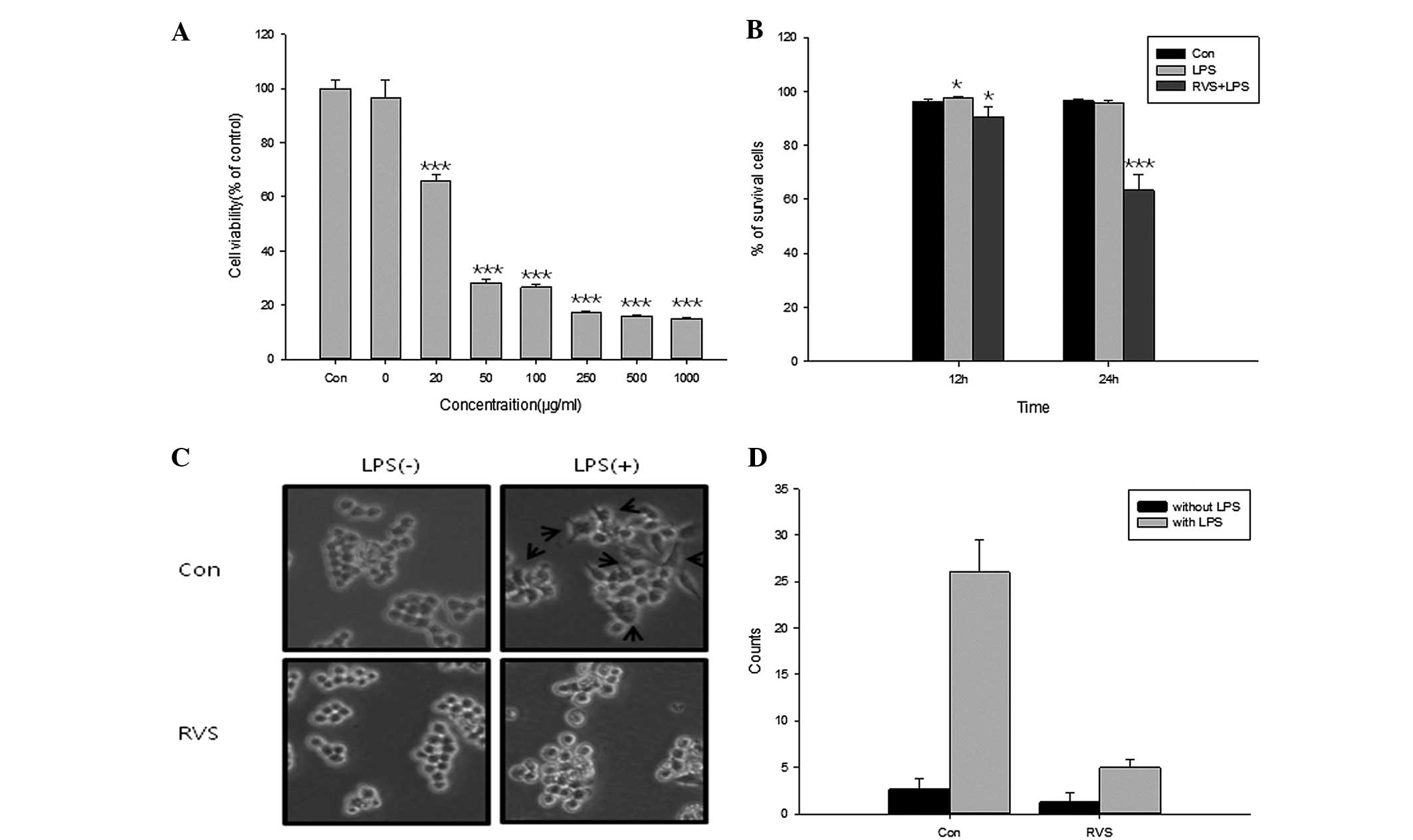
Anti-proliferative effects of RVS were determined in RAW264.7 mouse macrophage cells using a WST assay (Fig. 1A). Cells were treated with RVS at concentrations between 0 and 1,000 μg/ml and 1 μg/ml LPS for 12 h. LPS alone did not show proliferative activity in RAW264.7 cells. However, RVS significantly inhibited cell proliferation at concentrations between 50 and 1,000 μg/ml, indicating that RVS inhibits the growth of RAW264.7 cells. Cell death rate was determined using a trypan blue assay following RVS treatment (Fig. 1B). At 24 h, RVS significantly decreased the percentage of surviving cells. In addtion, changes in cellular morphology under LPS and RVS treatment were observed (Fig. 1C). Untreated RAW264.7 cells are circular, however, under LPS-stimulated conditions, the cells presented as an irregular shape and became elongated. Microscopic examination of cell cultures showed a reversal of LPS-induced alteration in cell morphology when treated with RVS. Fig. 1D shows the number of cell surface changes under LPS and/or RVS treatment in RAW 264.7 cells. RVS significantly decreased the number of cell surface changes induced by LPS. These results indicate that RVS inhibits the proliferation of RAW264.7 cells and blocks the LPS-induced activation of RAW264.7 cells.

Figure 1

Effect of RVS on cell proliferation and death in RAW264.7 cells. (A) Cell proliferation rate was determined by WST assay. RAW264.7 cells were treated with RVS at concentrations between 0 and 1,000 μg/ml in the absence or presence of 1 μg/ml LPS for 24 h. RVS significantly inhibited cell proliferation at concentrations between 50 and 1,000 μg/ml. Each value presents the mean ± SD (*P<0.01, ***P<0.001 compared to 0 mg/ml RVS in the presence of LPS; Student’s t-test). (B) Cell death rate was determined using trypan blue assay. RAW264.7 cells were treated with 15 μg/ml RVS in the absence or presence of 1 μg/ml LPS for 12 and 24 h. RVS caused cell death in a time-dependent manner. (C) LPS-induced morphological changes were reversed by RVS in RAW264.7 cells. Cells were treated with RVS in the absence or presence of 1 μg/ml LPS for 12 h. RVS inhibited the activation of RAW264.7 cells induced by LPS. (D) Number of cell surface changes in RAW264.7 cells. Cells were treated with RVS in the absence or presence of 1 μg/ml LPS for 12 h and observed by microscopy. RVS, Rhus verniciflua Stokes; LPS, lipopolysaccharide.

RVS decreases iNOS and COX-2 mRNA expression in RAW264.7 cells

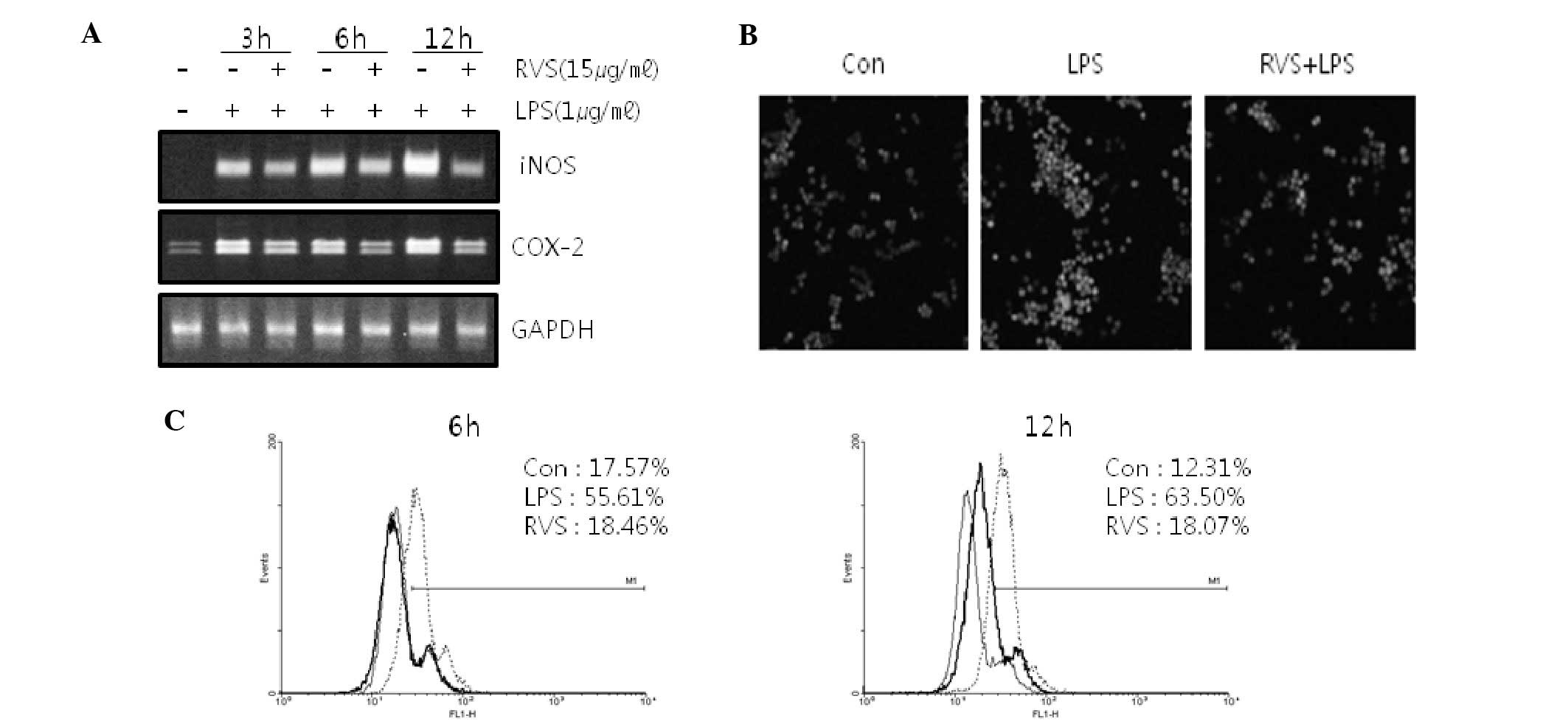
Since NO and ROS are mediators in inflammatory reactions, iNOS mRNA and COX-2 mRNA expression in RAW264.7 cells was measured. RVS suppressed iNOS mRNA and COX-2 mRNA expression induced by LPS in RAW264.7 cells (Fig. 2A), suggesting that RVS suppresses inflammatory reactions.

Figure 2

RVS decreased iNOX and COX-2 mRNA expression and suppressed intracellular ROS levels induced by LPS in RAW264.7 cells. (A) Expression of iNOS and COX-2 mRNA was assayed by RT-PCR. Cells were treated with 15 μg/ml RVS in the absence or presence of 1 μg/ml LPS for 12 h. RVS suppressed iNOS and COX-2 mRNA expression induced by LPS. Intracellular ROS was detected by (B) laser confocal scanning microscopy and (C) FACSCalibur with DCFH-DA. Cells were treated with 15 μg/ml RVS in the absence or presence of 1 μg/ml LPS for 6 h and incubated with DCFH-DA for 30 min. DCF fluorescence was measured using a confocal laser-scanning microscopy and FACSCalibur. RVS inhibited ROS generation induced by LPS. RVS, Rhus verniciflua Stokes; RT-PCR, reverse transcription-polymerase chain reaction; LPS, lipopolysaccharide; ROS, reactive oxygen species; DCFH-DA, 2′7′-dichlorofluorescein diacetate; DCF, fluorescent 2,7-dichlorofluorescein.

RVS decreases ROS level in RAW264.7 cells

ROS levels were measured using confocal microscopy (Fig. 2B) and FACS analysis (Fig. 2C) stained with DCFH-DA. Following LPS treatment, cellular ROS levels were increased. However, RVS co-treatment inhibited ROS generation induced by LPS in a time-dependent manner.

RVS affects the cell cycle

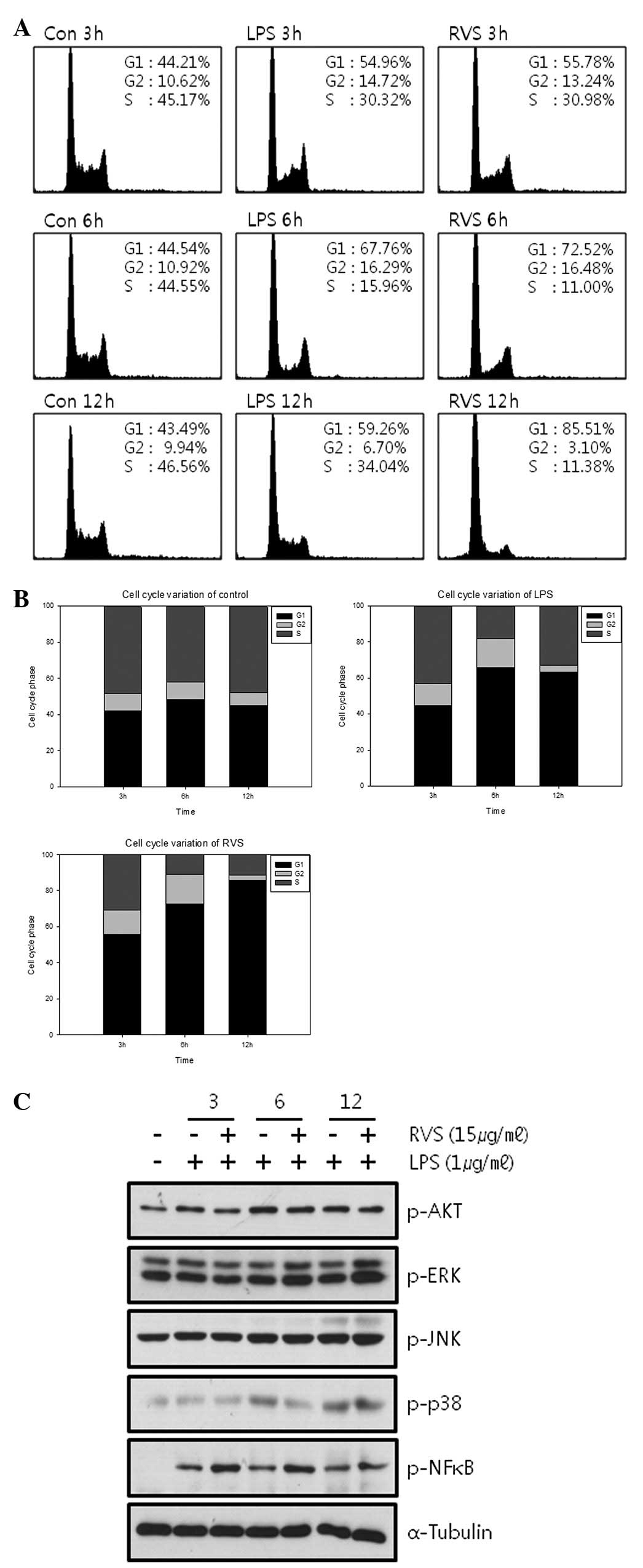
Cell cycle changes induced by RVS were analyzed by FACs analysis. RVS caused G1 arrest at 6 and 12 h in a time-dependent manner (Fig. 3A and B). The expression of intracellular molecules associated with cell proliferation was measured by western blot analysis (Fig. 3C). RVS failed to decrease the phosphorylation of AKT, ERK, JNK, p38 and NF-κB.

Figure 3

RVS affects the cell cycle. (A) The cell cycle was analyzed using a FACSCalibur flow cytometer. Cells were treated with RVS (15 μg/ml) in the absence or presence of 1 μg/ml LPS for 3, 6 and 12 h. Cells were stained with propidium iodide staining solution and analyzed using a FACSCalibur. RVS caused G1 arrest. (B) G1, S and G2/M phase fractions were quantified from DNA histogram data in (A). (C) Effect of RVS on the expression of intracellular molecules in RAW264.7 cells. The cells were treated with RVS (15 μg/ml) in the absence or presence of 1 μg/ml LPS for 3, 6 and 12 h. Cell extracts were subjected to western blot analysis with specific antibodies. RVS did not have an inhibitory effect on AKT, ERK, JNK, p38 or NF-κB phosphorylation. RVS, Rhus verniciflua Stokes; LPS, lipopolysaccharide.

RVS induces cell apoptosis via a mitochondrial-independent pathway

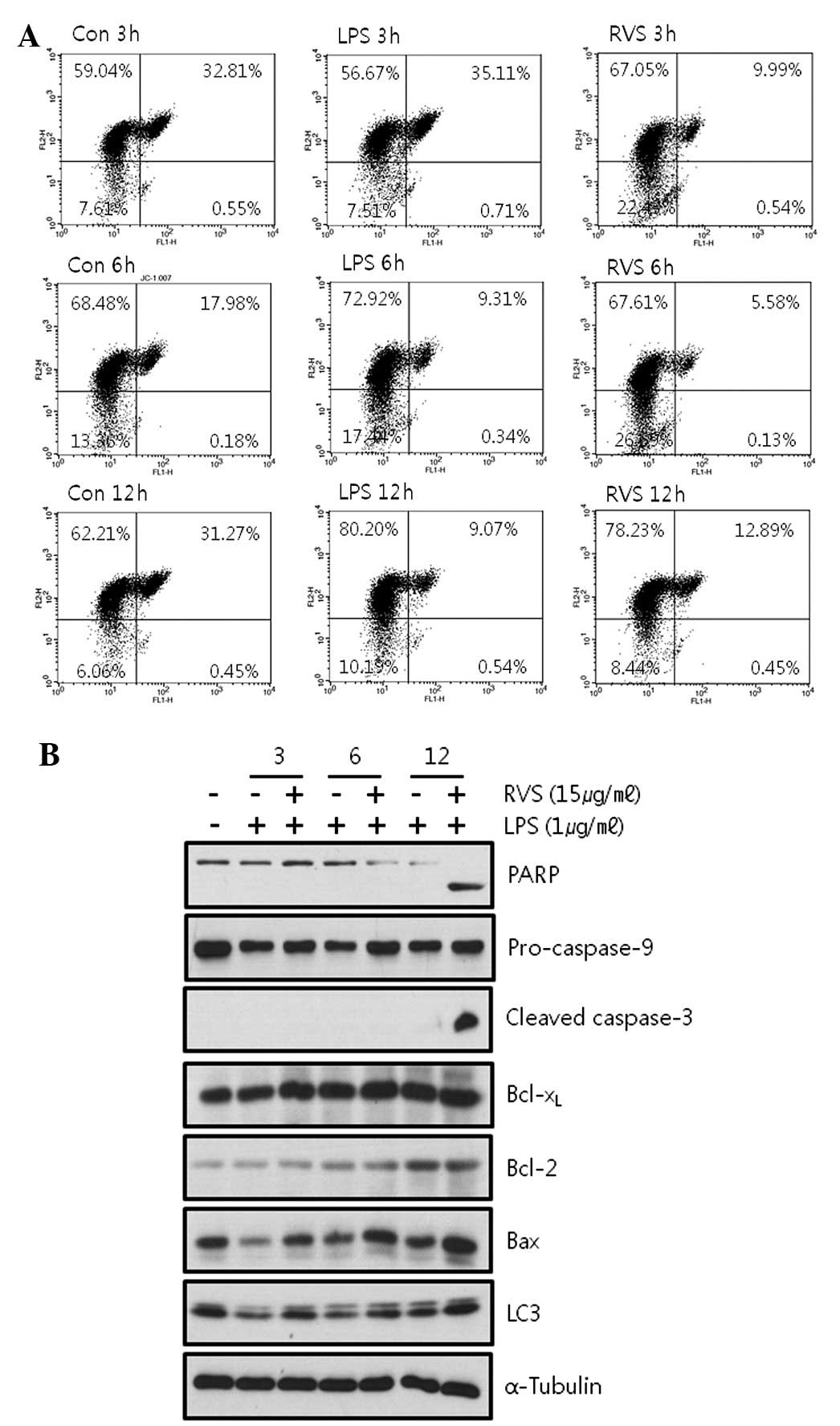
Loss of the mitochondrial membrane potential (ΔΨ) is a hallmark for apoptosis. The mitochondrial permeability transition is an important step in the induction of cell apoptosis. During this process, several key events occur in the mitochondria, including the release of caspase activators such as cytochrome c, changes in electron transport and loss of mitochondrial transmembrane potential. JC-1 selectively enters the mitochondria and reversibly changes color from red to green as the membrane potential decreases. Thus, cells were stained with JC-1 and FACS analysis was used to determine whether mitochondrial membrane potential is decreased by RVS. It was observed that RVS did not decrease mitochondrial membrane potential in RAW264.7 cells (Fig. 4A). LPS alone showed a more stable mitochondrial membrane potential (green fluorescence, 9.61% at 12 h) than the control (green fluorescence, 31.72% at 12 h). RVS failed to alter this stability induced by LPS (green fluorescence, 13.34% at 12 h) indicating that RVS induces cell death via a mitochondrial-independent pathway.

Figure 4

RVS induces cell apoptosis via a mitochondrial-independent pathway. (A) The cells were treated with RVS (15 μg/ml) in the absence or presence of 1 μg/ml LPS for 3, 6 and 12 h. Following incubation with JC-1, the cells were analyzed using a FACSCalibur flow cytometer. RVS failed to decrease mitochondrial membrane potential. (B) Effect of RVS on caspase activity and apoptosis in RAW264.7 cells. The cells were treated with RVS (15 μg/ml) in the absence or presence of 1 μg/ml LPS for 3, 6 and 12 h. Cell extracts were subjected to western blot analysis with specific antibodies. RVS cleaved PARP and caspase-3. RVS, Rhus verniciflua Stokes; LPS, lipopolysaccharide.

In addition, RVS was confirmed to regulate the expression of apoptosis-related molecules. RVS induced cleavage of apoptotic products, PARP and caspase-3, indicating that RVS induces apoptosis (Fig 4B).

Discussion

In the current study, EtOH-extracted RVS was found to suppress LPS-induced inflammatory responses in the RAW264.7 mouse macrophage cell line. Inflammation is a host protection method against pathogens and is stimulated by diverse microbial products (10). Pro-inflammatory cytokines have been reported to aggravate the severity of multiple inflammatory diseases (11). Diverse inflammatory agents are known to activate NF-κB and activation induces inflammation and increases cell survival and tumor cell transformation (12). MAPK pathways are associated with inflammation, for example, the ERK pathway is activated by inflammation (13).

Results of the present study indicate that RVS effectively inhibits growth stimulation and the activation of RAW264.7 cells induced by LPS. RVS significantly inhibited cell growth at concentrations between 50 and 1,000 μg/ml and induced cell death at 15 μg/ml (24 h). In addition, RVS negated morphological changes of RAW264.7 cells induced by LPS. RVS decreased intracellular ROS levels and suppressed iNOS and COX-2 mRNA expression induced by LPS. RVS failed to decrease mitochondrial membrane potential but cleaved caspase-3 and PARP indicating that RVS induces apoptosis via a mitochondrial-independent pathway.

Since RVS has an anti-inflammatory effect it may be used for the treatment of inflammatory diseases, including rheumatoid arthritis and asthma (14). Transformation of a normal cell into a tumor cell is closely associated with chronic inflammation (15), therefore, RVS may represent a useful compound for cancer prevention.

Acknowledgements

This study was supported by a grant from the Traditional Korean Medicine R and D Project, Ministry of Health and Welfare, Republic of Korea (no. B110043).

References

1 

Oh PS, Lee SJ and Lim KT: Glycoprotein isolated from Rhus verniciflua Stokes inhibits inflammation-related protein and nitric oxide production in LPS-stimulated RAW 264.7 cells. Biol Pharm Bull. 30:111–116. 2007.

2 

Hofseth LJ and Wargovich MJ: Inflammation, cancer and targets of ginseng. J Nutr. 137(1 Suppl): S183–S185. 2007.

3 

Liu Q, Kou JP and Yu BY: Ginsenoside Rg1 protects against hydrogen peroxide-induced cell death in PC12 cells via inhibiting NF-κB activation. Neurochem Int. 58:119–125. 2011.PubMed/NCBI

4 

Ahn JY, Choi IS, Shim JY, Yun EK, Yun YS, Jeong G and Song JY: The immunomodulator ginsan induces resistance to experimental sepsis by inhibiting Toll-like receptor-mediated inflammatory signals. Eur J Immunol. 36:37–45. 2006. View Article : Google Scholar : PubMed/NCBI

5 

Park HJ, Han ES, Park DK, Lee C and Lee KW: An extract of Phellinus linteus grown on germinated brown rice inhibits inflammation markers in RAW264.7 macrophages by suppressing inflammatory cytokines, chemokines and mediators and up-regulating antioxidant activity. J Med Food. 13:1468–1477. 2010.

6 

Yang JH, Suh SJ, Lu Y, Li X, Lee YK, Chang YC, Na MK, Choi JH, Kim CH, Son JK and Chang HW: Anti-inflammatory activity of ethylacetate fraction of Cliona celata. Immunopharmacol Immunotoxicol. 33:373–379. 2011. View Article : Google Scholar : PubMed/NCBI

7 

Jung CH, Jun CY, Lee S, Park CH, Cho K and Ko SG: Rhus verniciflua stokes extract: radical scavenging activities and protective effects on H2O2-induced cytotoxicity in macrophage RAW 264.7 cell lines. Biol Pharm Bull. 29:1603–1637. 2006. View Article : Google Scholar

8 

Jung CH, Kim JH, Hong MH, Seog HM, Oh SH, Lee PJ, Kim GJ, Kim HM, Um JY and Ko SG: Phenolic-rich fraction from Rhus verniciflua Stokes (RVS) suppress inflammatory response via NF-κB and JNK pathway in lipopolysaccharide-induced RAW 264.7 macrophages. J Ethnopharmacol. 110:490–497. 2007.

9 

Hong MH, Kim JH, Lee SY, Go HY, Kim JH, Shin YC, Kim SH and Ko SG: Early antiallergic inflammatory effects of Rhus verniciflua Stokes on human mast cells. Phytother Res. 24:288–294. 2010.PubMed/NCBI

10 

Lee HJ, Maeng K, Dang HT, Kang GJ, Ryou C, Jung JH, Kang HK, Prchal JT, Yoo ES and Yoon D: Anti-inflammatory effect of methyl dehydrojasmonate (J2) is mediated by the NF-κB pathway. J Mol Med (Berl). 89:83–90. 2011.PubMed/NCBI

11 

Tang S, Shen XY, Huang HQ, Xu SW, Yu Y, Zhou CH, Chen SR, Le K, Wang YH and Liu PQ: Cryptotanshinone suppressed inflammatory cytokines secretion in RAW264.7 macrophages through inhibition of the NF-κB and MAPK signaling pathways. Inflammation. 34:111–118. 2011.PubMed/NCBI

12 

Reuter S, Prasad S, Phromnoi K, Ravindran J, Sung B, Yadav VR, Kannappan R, Chaturvedi MM and Aggarwal BB: Thiocolchicoside exhibits anticancer effects through downregulation of NF-κB pathway and its regulated gene products linked to inflammation and cancer. Cancer Prev Res (Phila). 3:1462–1472. 2010.PubMed/NCBI

13 

Fan J, Liu K, Zhang Z, Luo T, Xi Z, Song J and Liu B: Modified Si-Miao-San extract inhibits the release of inflammatory mediators from lipopolysaccharide-stimulated mouse macrophages. J Ethnopharmacol. 129:5–9. 2010. View Article : Google Scholar : PubMed/NCBI

14 

Jeong JB and Jeong HJ: Rheosmin, a naturally occurring phenolic compound inhibits LPS-induced iNOS and COX-2 expression in RAW264.7 cells by blocking NF-κB activation pathway. Food Chem Toxicol. 48:2148–2153. 2010.PubMed/NCBI

15 

Reuter S, Gupta SC, Chaturvedi MM and Aggarwal BB: Oxidative stress, inflammation and cancer: how are they linked? Free Radic Biol Med. 49:1603–1616. 2010. View Article : Google Scholar : PubMed/NCBI

Related Articles

  • Abstract
  • View
  • Download
  • Twitter
Copy and paste a formatted citation
Spandidos Publications style
Choi HS, Seo HS, Kim SR, Choi YK, Jang B, Shin YC and Ko SG: Anti‑inflammatory and anti‑proliferative effects of Rhus verniciflua Stokes in RAW264.7 cells. Mol Med Rep 9: 311-315, 2014.
APA
Choi, H., Seo, H.S., Kim, S.R., Choi, Y.K., Jang, B., Shin, Y., & Ko, S. (2014). Anti‑inflammatory and anti‑proliferative effects of Rhus verniciflua Stokes in RAW264.7 cells. Molecular Medicine Reports, 9, 311-315. https://doi.org/10.3892/mmr.2013.1775
MLA
Choi, H., Seo, H. S., Kim, S. R., Choi, Y. K., Jang, B., Shin, Y., Ko, S."Anti‑inflammatory and anti‑proliferative effects of Rhus verniciflua Stokes in RAW264.7 cells". Molecular Medicine Reports 9.1 (2014): 311-315.
Chicago
Choi, H., Seo, H. S., Kim, S. R., Choi, Y. K., Jang, B., Shin, Y., Ko, S."Anti‑inflammatory and anti‑proliferative effects of Rhus verniciflua Stokes in RAW264.7 cells". Molecular Medicine Reports 9, no. 1 (2014): 311-315. https://doi.org/10.3892/mmr.2013.1775
Copy and paste a formatted citation
x
Spandidos Publications style
Choi HS, Seo HS, Kim SR, Choi YK, Jang B, Shin YC and Ko SG: Anti‑inflammatory and anti‑proliferative effects of Rhus verniciflua Stokes in RAW264.7 cells. Mol Med Rep 9: 311-315, 2014.
APA
Choi, H., Seo, H.S., Kim, S.R., Choi, Y.K., Jang, B., Shin, Y., & Ko, S. (2014). Anti‑inflammatory and anti‑proliferative effects of Rhus verniciflua Stokes in RAW264.7 cells. Molecular Medicine Reports, 9, 311-315. https://doi.org/10.3892/mmr.2013.1775
MLA
Choi, H., Seo, H. S., Kim, S. R., Choi, Y. K., Jang, B., Shin, Y., Ko, S."Anti‑inflammatory and anti‑proliferative effects of Rhus verniciflua Stokes in RAW264.7 cells". Molecular Medicine Reports 9.1 (2014): 311-315.
Chicago
Choi, H., Seo, H. S., Kim, S. R., Choi, Y. K., Jang, B., Shin, Y., Ko, S."Anti‑inflammatory and anti‑proliferative effects of Rhus verniciflua Stokes in RAW264.7 cells". Molecular Medicine Reports 9, no. 1 (2014): 311-315. https://doi.org/10.3892/mmr.2013.1775
Follow us
  • Twitter
  • LinkedIn
  • Facebook
About
  • Spandidos Publications
  • Careers
  • Cookie Policy
  • Privacy Policy
How can we help?
  • Help
  • Live Chat
  • Contact
  • Email to our Support Team