Introduction
Cyclin-dependent kinase (CDK2) is a serine/threonine
protein kinase and regulates the cell cycle transition from G1- to
S-phase. It is therefore a key factor in the control of cell
proliferation (1–3). Overexpression of CDK2 has been
reported in numerous types of human neoplasia, including
colorectal, ovarian, breast and prostate cancers (4,5).
Therefore, CDK2 inhibitors have the potential to be effective
anti-cancer agents. Numerous CDK2 inhibitors have been reported in
the literature, including flavopiridol, roscovitine and olomoucine
(6–8). However, to date, CDK2 inhibitors are
not available for clinical use due to their high toxicity and low
selectivity.
The present study used the free and open-source
protein-ligand docking software idock (9,10) to
identify US Food and Drug Administration (FDA)-approved small
molecular drugs with the ability to inhibit CDK2. Among the top
compounds identified by their idock score, nine were selected for
further study. Among them, adapalene (ADA,
CD271,6-[3-(1-adamantyl)-4-methoxyphenyl]-2-naphtoic acid)
exhibited the highest anti-cancer effects in the LoVo and DLD1
human colorectal cell lines.
ADA is a third-generation synthetic retinoid. At
present, it is mainly used for topical therapy of acne vulgaris
(11). Its anti-proliferative and
pro-apoptotic effects were first reported by Ocker et al
(12) in vitro in colon
carcinoma (CC-531, HT-29 and LoVo) and hepatoma (HepG2, Hep1B) cell
lines; these effects were based on increasing the activity of
caspase-3 via upregulating B-cell lymphoma-2 (Bcl-2)-associated X
(Bax) and down-regulating Bcl-2 (12,13).
The present study assessed the effects of ADA on the
viability and cell cycle of colorectal cancer cells, as well as the
expression of CDK2, cyclin E and retinoblastoma protein (Rb), and
the phosphorylation of CDK2 (on Thr-160) and Rb (on Ser-795).
Furthermore, ADA was evaluated in vivo in a BALB/C nude
mouse xenograft model using a DLD1 human colorectal cancer cells
alone or in combination with oxaliplatin. As ADA is an FDA-approved
drug, its clinical use is facilitated compared with that of novel
drugs; therefore, its potential use as a drug for the treatment of
human colorectal cancer, particularly in combination with
oxaliplatin, should be further investigated.
Materials and methods
Docking
A total of 44 X-ray crystallographic structures of
CDK2 in complex with a ligand were collected from the Protein Data
Bank (PDB) (14). The
co-crystallized ligands and water molecules were manually removed.
The structures of FDA-approved drugs were collected from the Drug
Bank-approved (DBAP) and FDA catalogs of the ZINC database
(15,16). The DBAP catalog (version
2014-03-19) comprising 1,738 compounds and the FDA catalog (version
2012-07-25) comprising 3,176 compounds were downloaded. The 44 CDK2
structures in PDB format and the 4,914 compounds in Mol2 format
were then converted into PDBQT format using AutoDockTools (17). The free and open-source docking
software idock v2.1.2 (9,10) developed by our group was then
applied to dock all of the 4,914 compounds onto all of the 44 CDK2
structures, and to predict their binding conformations as well as
their binding affinities. Finally, the compounds were sorted in an
ascending order according to their predicted binding free energy
averaged across the 44 CDK2 structures, and the top nine
commercially available compounds were purchased (Sigma-Aldrich, St.
Louis, MO, USA) and biologically evaluated.
Chemicals and antibodies
ADA, oxaliplatin, nilotinib, LS-194959, estradiol
benzoate, nandrolone phenylpropionate, vilazodone, azelastine
hydrochloride, latuda and paliperidone were purchased from
Sigma-Aldrich. Anti-cyclin D, -B1 and -E as well as anti-CDK2, -Rb,
phosphorylated (pho)-CDK2 (Thr-160), pho-Rb (Ser-795) and GAPDH
were obtained from Cell Signaling Technology, Inc. (Danvers, MA,
USA).
Cell lines and cell culture
The colorectal cancer cell lines LoVo and DLD1 were
obtained from the American Type Culture Collection (Manassas, VA,
USA). These cell lines were cultured in RPMI 1640 medium (GE
Healthcare Life Sciences, Shanghai, China) containing 10% fetal
bovine serum (FBS) (Invitrogen Life Technologies, Carlsbad, CA,
USA) at 37°C in 5% CO2 and 95% humidified air. The
present study was approved by the ethics committee of the Kunming
Medical University (Kunming, China).
Cell culture experimental conditions
Cells were plated in 96-, 24-, or six-well plates
(Corning Incorporated, Corning, NY, USA) with medium containing
0.125% FBS for 24 h and then treated with medium containing 10% FBS
and the test compounds at various concentrations as indicated (1,
3, 10 and 30 µM), and incubated for 6, 12, 24, 48 or 72
h.
MTT assay
For the MTT assay (Sigma-Aldrich), cells were plated
at an initial density of 9×10³ cells/well in 96-well
plates and incubated with 0.5 mg/ml MTT (Sigma-Aldrich) for 4 h.
The medium was then discarded and 200 µl dimethyl-sulfoxide
(Sigma-Aldrich) was added to dissolve the formed formazan crystals.
The absorbance was measured at 570 nm with a Synergy 2 microplate
reader (Bio-Tek Instruments, Inc., Winooski, VT, USA) according the
standard protocol.
Cell cycle analysis
LoVo or DLD1 cells (4×10⁴) were seeded in
24-well plates in RPMI 1640 medium containing 0.125% FBS, and
cultured for 24 h. The cells were incubated in medium containing
10% FBS and various doses of ADA (1, 3, 10 or 30 µM) for 6,
12 or 24 h at 37°C, then fixed in ice-cold 70% ethanol and stained
using a Coulter DNA-Prep Reagents kit (Beckman Coulter, Brea, CA,
USA). Cellular DNA content of 1×10⁴ cells from each
sample was determined using an EPICS xL4 flow cytometer (Beckman
Coulter). The cell cycle phase distribution was analyzed using
ModFit LT 2.0 software (Verity Software House, Topsham, ME, USA).
All data were obtained from two separate experiments of which each
was performed in triplicate.
Western blot analysis
Cells were lysed in radioimmunoprecipitation assay
buffer (Beijing Solarbio Science & Technology Co., Ltd.,
Beijing, China) containing 1 mM phenylmethanesulfonylfluoride
(Beijing Solarbio Science & Technology Co., Ltd.) and protease
inhibitor cocktail (Beijing Solarbio Science & Technology Co.,
Ltd.) for 30 min at 4°C. After centrifugation for 15 min at 5,668 ×
g, the supernatants were recovered and the protein concentration
was measured using a bicinchoninic acid Protein Assay kit (Thermo
Fisher Scientific, Waltham, MA, USA). Equal amounts of cell lysates
were resolved using 10% SDS-PAGE and transferred onto
nitrocellulose membranes (Sigma-Aldrich). After blocking, the
membranes were incubated sequentially with the following primary
antibodies (Cell Signaling Technology, Inc.) in 5% w/v bovine serum
albumin (Sigma-Aldrich), 1X Tris-buffered saline, and 0.1%
Tween® 20 (MP Biomedicals, Illkirch, France) at 4°C
overnight, with gentle agitation: Rabbit monoclonal anti-cyclin D1
(cat. no. 2978), rabbit monoclonal anti-cyclin B1 (cat. no. 12231),
mouse monoclonal anti-cyclin E (cat. no. 4129), rabbit monoclonal
anti-CDK2 (cat. no. 2546), mouse monoclonal anti-Rb (cat. no.
9313), polyclonal anti-phospho-CDK2 (cat. no. 2561), polyclonal
anti-Rb (cat. no. 9301), rabbit monoclonal anti-GAPDH (cat. no.
5174; 1:1,000 dilution for all antibodies). The membranes were then
incubated with the appropriate secondary antibodies, including goat
anti-rabbit IgG horseradish peroxidase (HRP)-linked antibody (Cell
Signalling Technology, Inc.; cat. no. 7074; 1:1,000–3,000 dilution)
and horse anti-mouse IgG HRP-linked antibody (Cell Signalling
Technology, Inc.; cat. no. 7076; 1:1,000–3,000 dilution). Proteins
were detected using an enhanced chemiluminescence detection system
(Amersham, Piscataway, NJ, USA). To ensure equal loading of the
samples, the membranes were re-probed with an anti-GAPDH antibody
(Cell Signalling Technology, Inc.).
Evaluation of ADA in vivo in nude mice
xenografted with colorectal cancer DLD1 cells
Female BALB/C nude mice (n=50; weighing 15 g; 4–5
weeks old; Vital River Laboratory Technology Co. Ltd., Beijing,
China), were housed under specific pathogen-free conditions with a
12 h light/dark cycle, in an environment containing 50–80% humidity
at 15–27°C, and cared for in accordance with the guidelines of the
laboratory animal ethics committee of Kunming University (Kunming,
China). The cages, food, and water of the mice were sterilized. In
order to establish the xenograft model, 1×10⁶ DLD1 cells
in 0.2 ml phosphate-buffered saline were injected subcutaneously
into the right flank of the mice (n=3) and the tumor size was
measured every day using a caliper. One week after inoculation,
when the tumors grew to a volume of 80–100 m3, the mice
were randomly divided into groups (5 mice/group) and gavaged daily
for 21 days with 0.5% carboxymethylcellulose (CMC)-NaCl
(Sigma-Aldrich) containing various doses of ADA (15, 20, 65 and 100
mg/kg) and oxaliplatin (Sigma-Aldrich; 40 mg/kg). Mice were
sacrificed by cervical dislocation, tumors were excised and
weighed, and their images were captured. The tumor volume was
calculated using the formula V=ab2/2 (a=longest axis;
b=shortest axis).
Statistical analysis
Data were obtained from at least three experiments.
Values are expressed as the mean ± standard deviation. Statistical
analysis was performed by Student's t-test, and the results
were analyzed using SPSS 16.0 (SPSS, Inc., Chicago, IL, USA).
P<0.05 was considered to indicate a statistically significant
difference between values.
Results
Selection of candidate inhibitors of
CDK2
A total of 4,914 FDA-approved drugs were extracted
from the DBAP and FDA catalogs of the ZINC database. The drugs were
docked onto CDK2 and ranked according to their average predicted
binding affinity. Nine top-scoring compounds were selected based on
their commercial availability and further examined (Table I) (18–26).
The selected drugs were nilotinib, LS-194959, ADA, estradiol
benzoate, nandrolone phenylpropionate, vilazodone, azelastine
hydrochloride, latuda and paliperidone.
 | Table INine candidate cyclin-dependent
kinase 2 inhibitors selected from US Food and Drug
Administration-approved drugs using structure-based virtual
screening by idock. |
Table I
Nine candidate cyclin-dependent
kinase 2 inhibitors selected from US Food and Drug
Administration-approved drugs using structure-based virtual
screening by idock.
| Name | ZINC ID | idock score
(kcal/mol)a | Clinical
application | Ref. |
|---|
| Nilotinib | 6716957 | −10.46 | Chronic myeloid
leukemia | 18 |
| LS-194959 | 3830332 | −10.43 | Food, drug
additive | 19 |
| Adapalene | 3784182 | −10.38 | Acne | 20 |
| Estradiol
benzoate | 3830768 | −10.23 | Estrogen | 21 |
| Nandrolone
phenylpropionate | 3881613 | −10.08 | Osteoporosis | 22 |
| Vilazodone | 1542113 | −10.06 | Major depressive
disorder | 23 |
| Azelastine
hydrochloride | 897240 | −10.01 | Seasonal allergic
rhinitis and perennial | |
| | | Allergic
rhinitis | 24 |
| Latuda | 33974796 | −9.98 | Schizophrenia | 25 |
| Paliperidone | 1481956 | −9.95 | Schizophrenia | 26 |
ADA decreases the viability of LoVo and
DLD1 colorectal cancer cell lines
The present study first evaluated the anti-cancer
effects of the nine compounds using MTT assays. The nine compounds
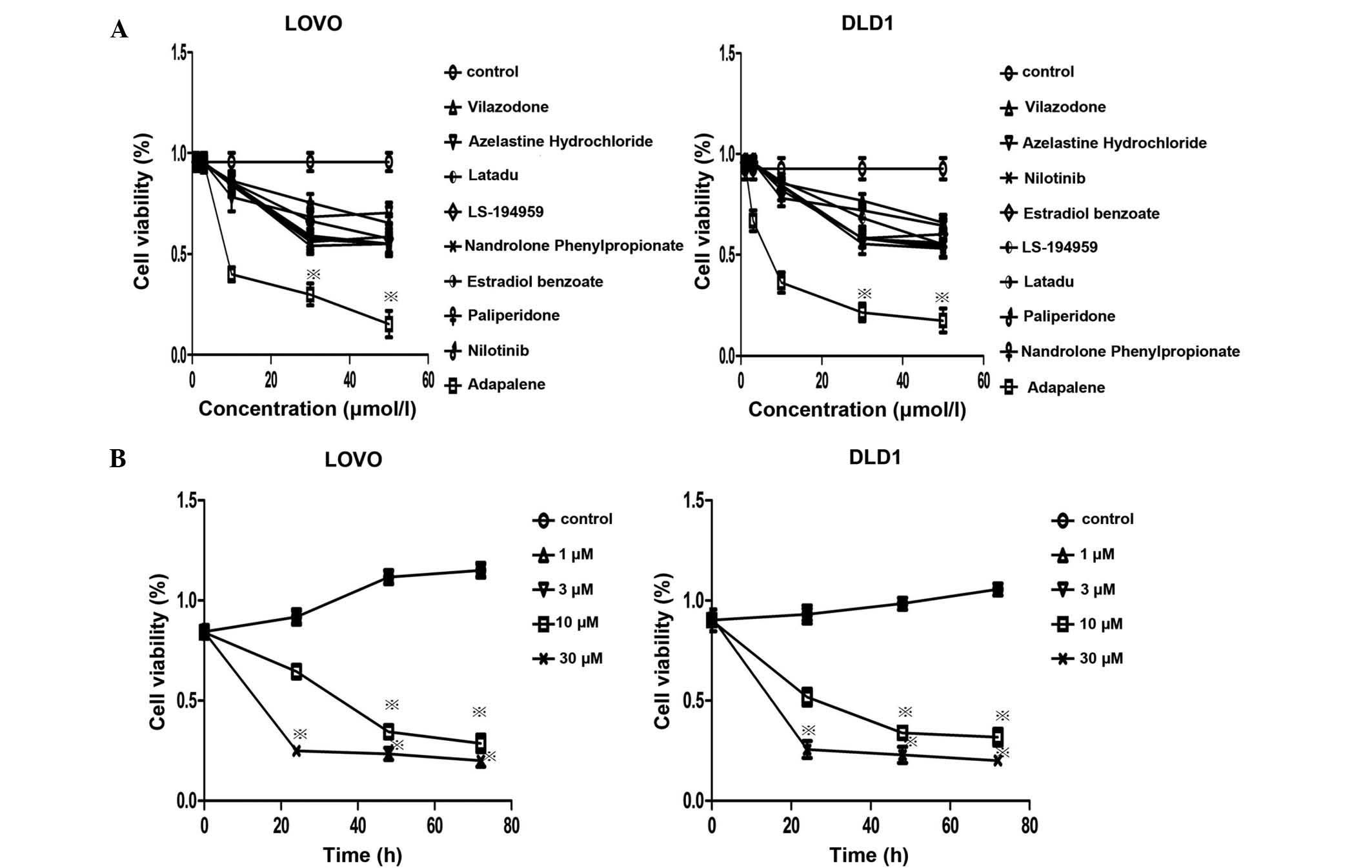
all decreased the viability of LoVo and DLD1 cells. The
IC50-values were calculated using GraphPad Prime5
(GraphPad, Inc., La Jolla, CA, USA). Among them, ADA had the lowest
IC50 (4.43 µM for DLD1 and 7.135 µM for
LoVo) (Fig. 1A). The growth
inhibitory effect of ADA was dose- and time-dependent (P<0.05;
Fig. 1B), with marked inhibition
observed at concentrations >3 µM.
ADA causes cell cycle arrest in G1
phase
In order to assess whether ADA inhibited the
activity of CDK2 in colorectal cancer cells, LoVo or DLD1 cells
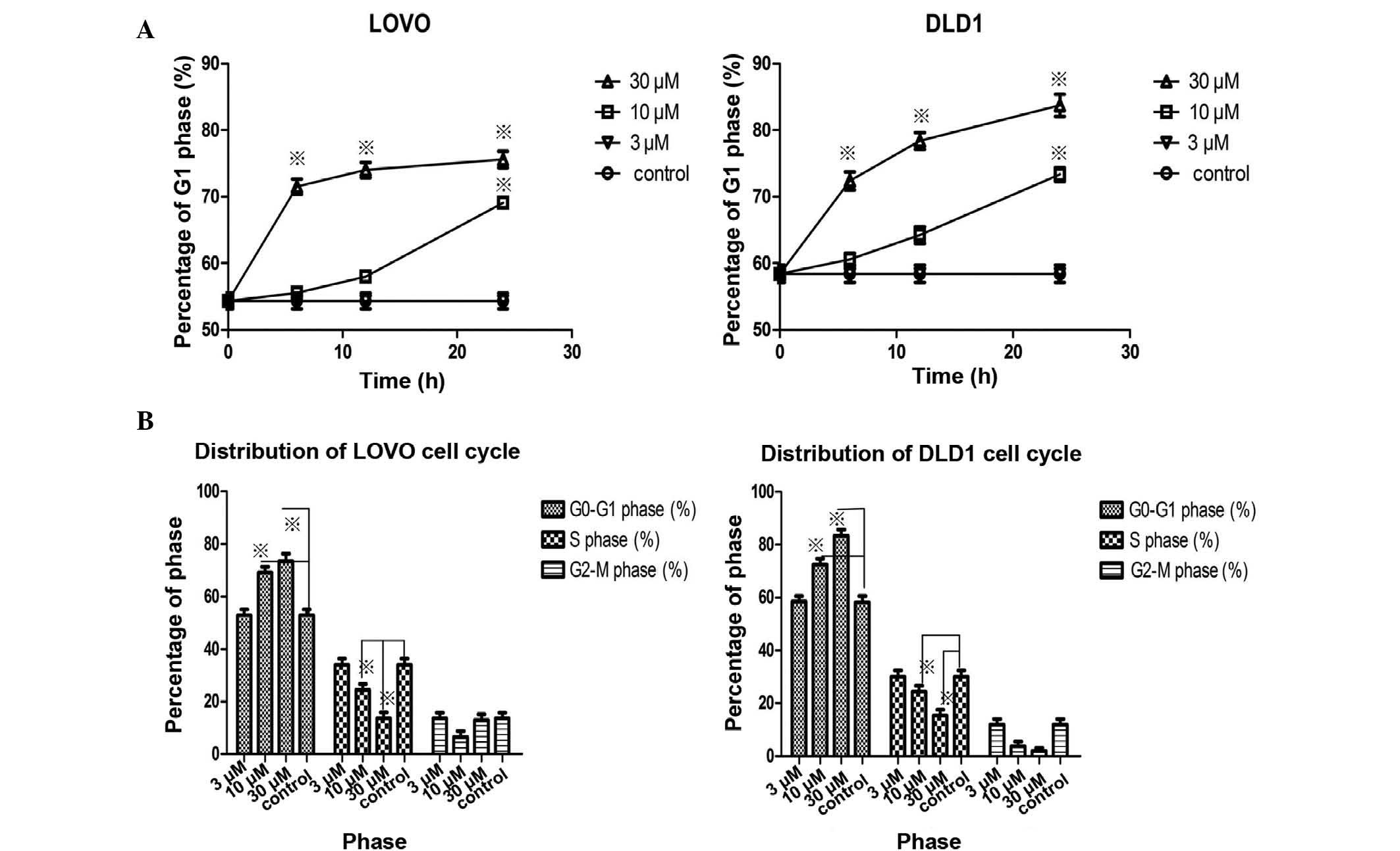
were treated with ADA (3, 10 or 30 µM) for 6, 12 or 24 h,
and its effects on the cell cycle profile were assessed using flow
cytometry. ADA significantly increased the G1-phase population as
compared to that in the control group in a dose- and time-dependent
manner (P<0.05) (Fig. 2A).
After 24 h of incubation with ADA, increases in the G1-phase
populations accompanied by simultaneous and significant decreases
in the S- and G2/M-phase populations were apparent (Fig. 2B).
ADA treatment decreases the expression of
CDK2, Rb, cyclin E, pho-CDK2 and pho-Rb, but not cyclin D and
cyclin B1 in LoVo and DLD1 cells
The present study investigated the effects of ADA on
the expression of significant proteins involved in G1-to-S-phase
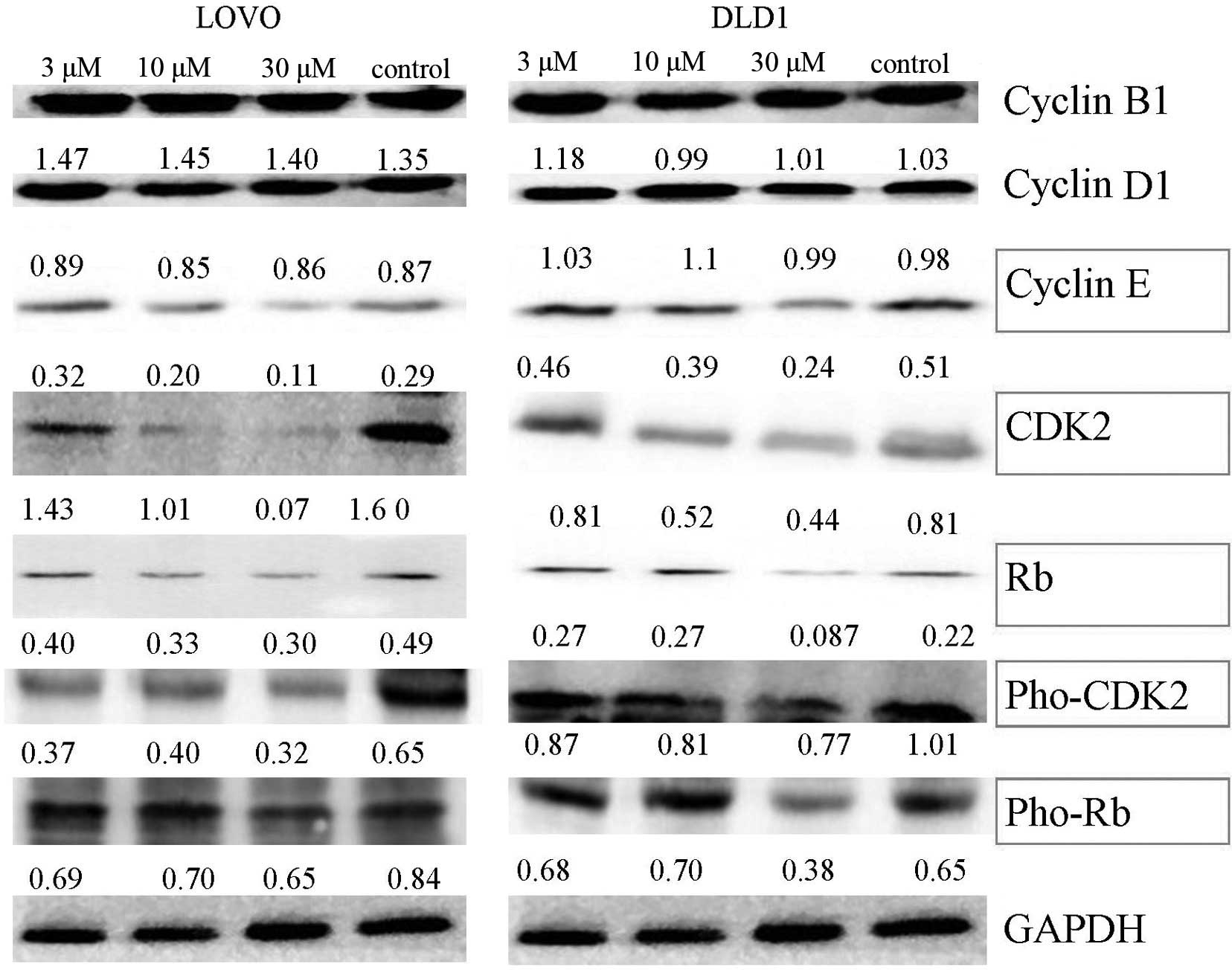
transition, including CDK2, cyclin E, Rb, pho-CDK2 and pho-Rb by
western blot analysis in LoVo and DLD1 cells. As shown in Fig. 3A and B, ADA reduced the expression
of CDK2, Rb, pho-CDK2, pho-Rb and cyclin E (Fig. 3). By contrast, the expression of
cyclin D1 and cyclin B1 was not affected. This observed activity
pattern was typical for CDK2 inhibitors (27).
Daily oral ADA administration reduces the
growth of DLD1 cell-derived xenograft tumors in BALB/C nude mice in
vivo
In order to assess the inhibitory potential of
adapalene on the growth of colorectal carcinoma in vivo,
DLD1 cell-derived xenograft tumors were established in BALB/C nude
mice. Carcinoma volumes were measured every 3–4 days after the
appearance of the tumors. At 7 days after tumor inoculation, the
volume of the tumors reached 80–100 mm3, and animals
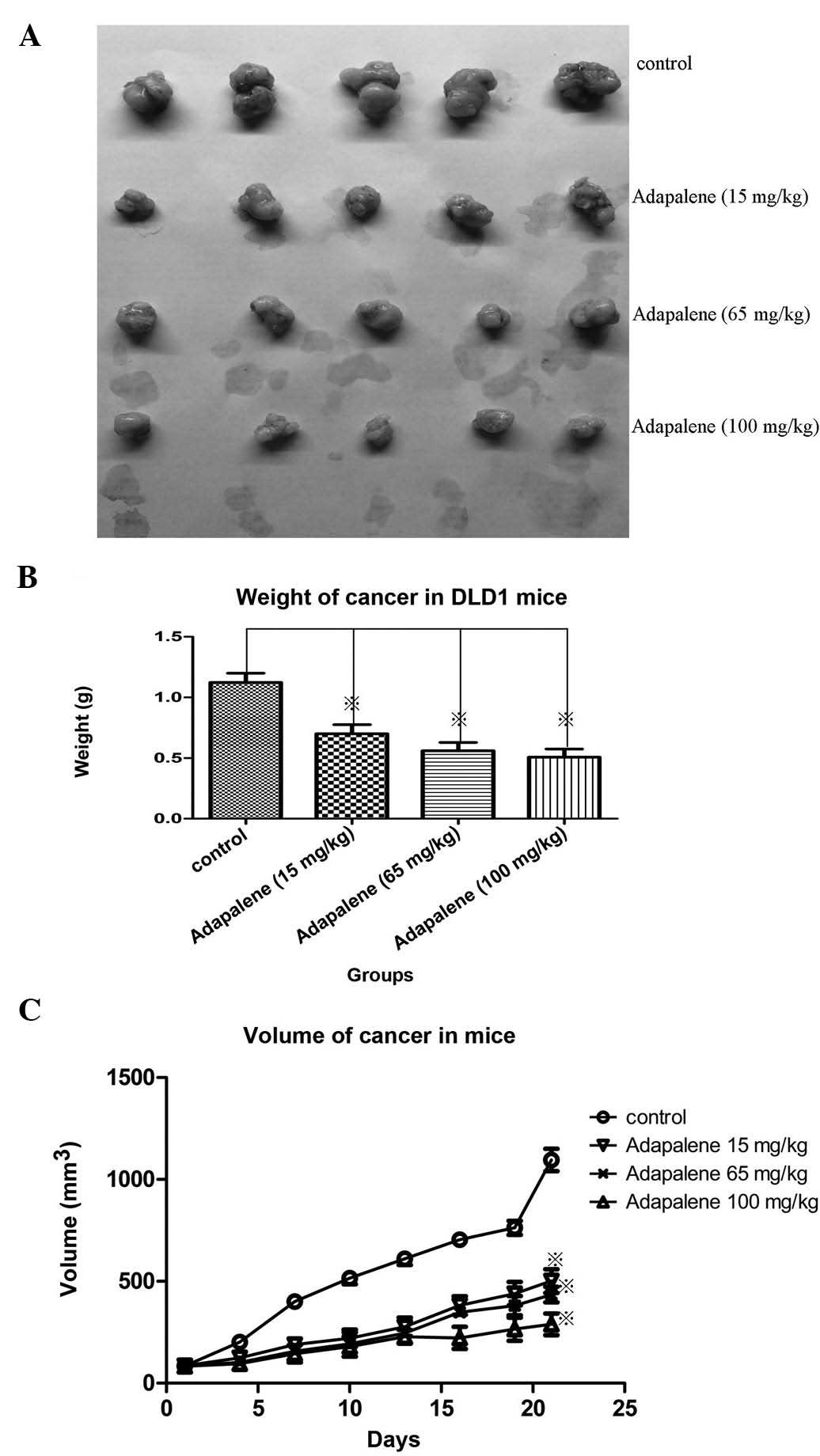
were administered various doses of ADA (15, 65 or 100 mg/kg in 0.5%
CMC-NaCl) daily for 21 days by oral gavage. In a separate
experiment, the efficacy of ADA (20 mg/kg), oxaliplatin (40 mg/kg)
and the combination of ADA (20 mg/kg) plus oxaliplatin (40 mg/kg)
was compared.
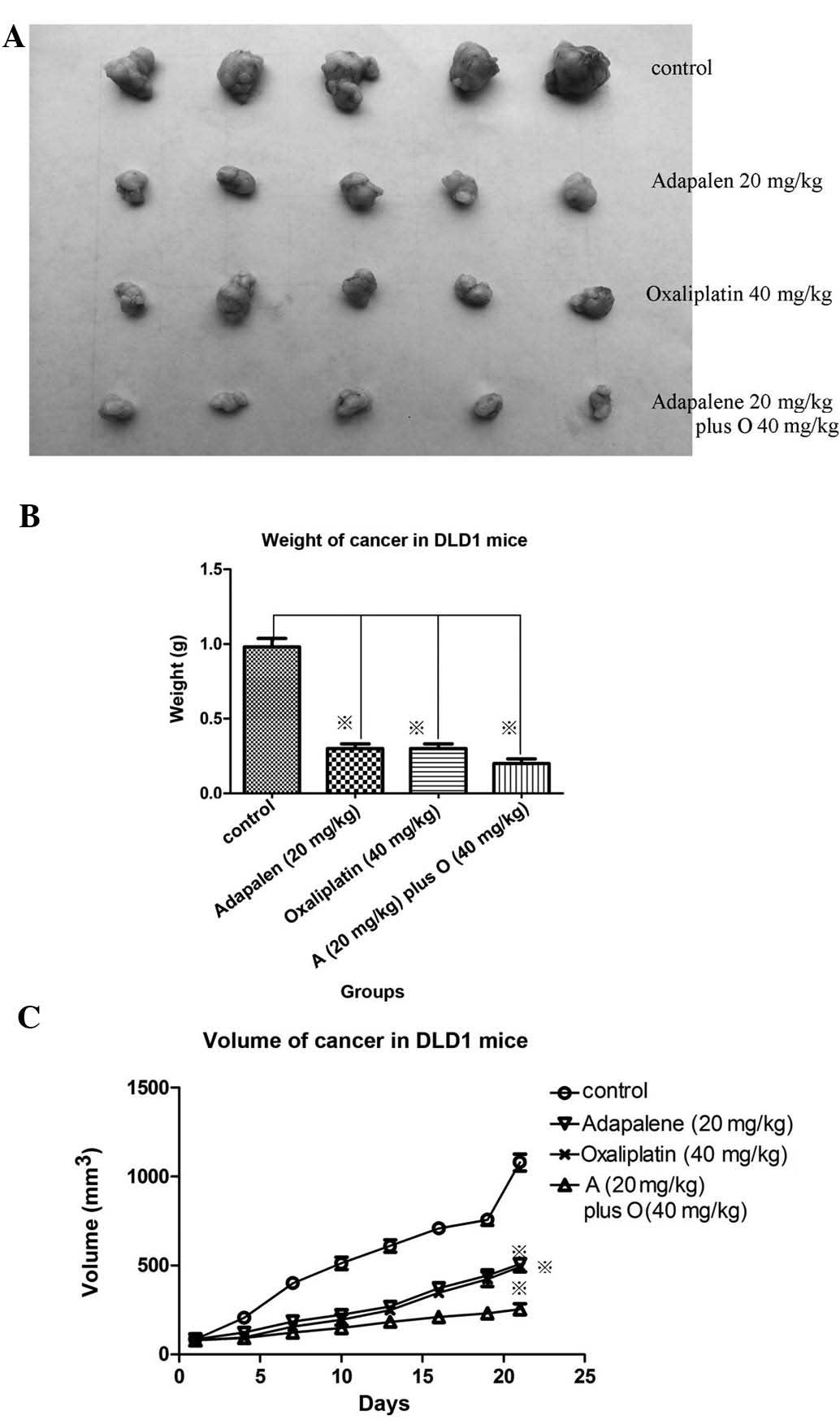
The results showed that oral administration of ADA
significantly inhibited tumor growth (P<0.05). Following 21 days
of treatment a dose of ADA of as low as 15 mg/kg achieved a
significant reduction in tumor weight and volume as compared with
that in the control (P<0.05) (Fig.
4A–C). There was no significant difference between 15 and 65
mg/kg ADA treatment.
In addition, the potency of of ADA (20 mg/kg) was
similar to that of oxaliplatin (40 mg/kg). Of note, combined
administration produced the highest therapeutic effect (Fig. 5A–C). To the best of our knowledge,
the present study was the first to demonstrate the anti-cancer
activity of ADA in vivo, which may be a suitable
CDK2-targeting drug for the treatment of human colorectal
cancer.
Structural analysis of the predicted
conformation of ADA docked onto CDK2
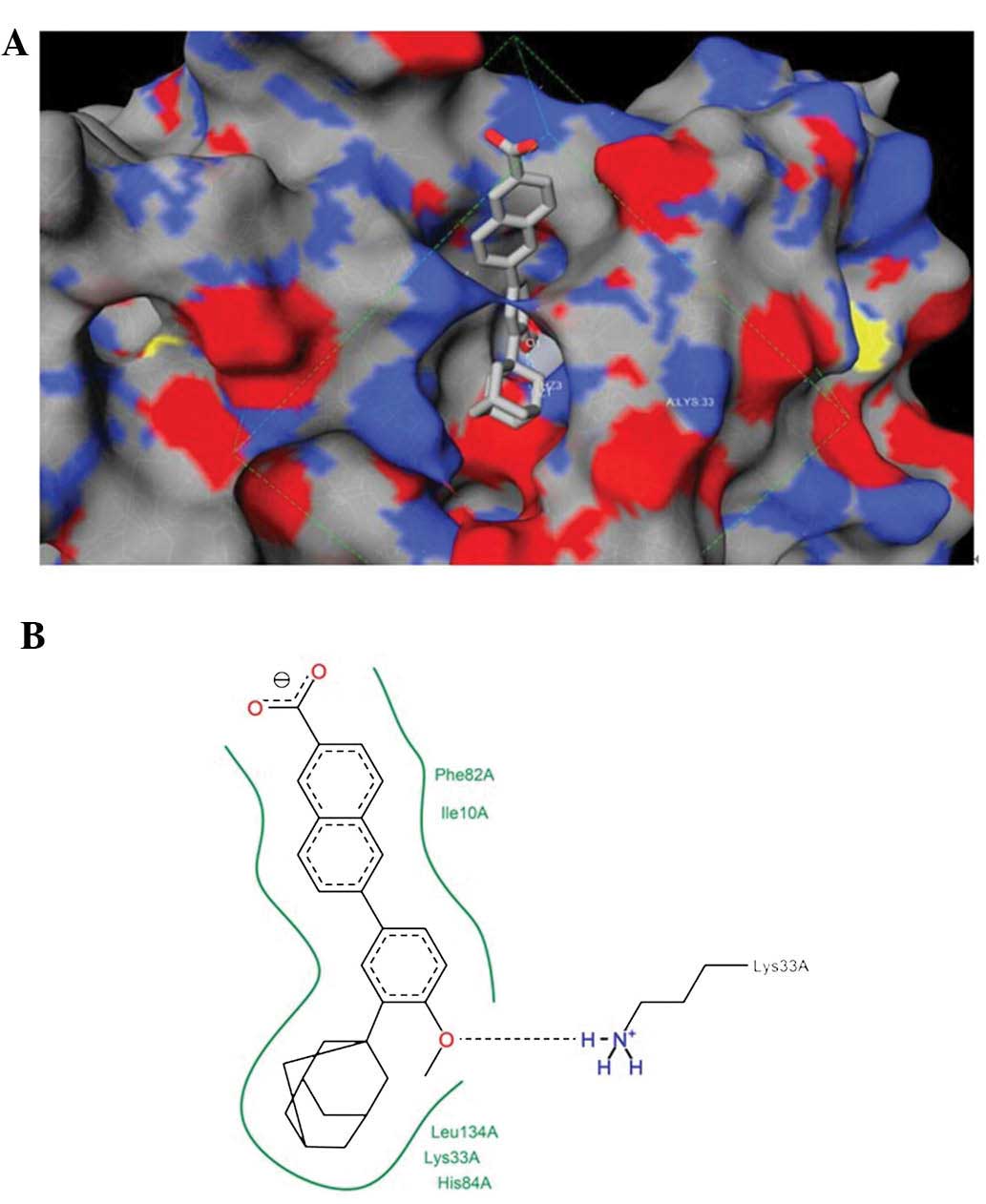
Fig. 6A illustrates
the conformation of CDK2 in complex with ADA in a three-dimensional
manner predicted by iview (28).
Fig. 6B shows the intermolecular
interaction diagram in a two-dimensional manner using PoseView
(29). ADA was predicted to reside
in the adenosine triphosphate-binding site of CDK2 and interact
with CDK2 mainly through hydrophobic contacts with Phe82, Ile10,
Leu134, Lys33 and His84.
Discussion
The present study adopted the computational
methodology of structure-based virtual screening (SBVS) by
protein-ligand docking to shortlist candidates from FDA-approved
small molecular drugs. SBVS has become a routine task in
pharmaceutical institutions.
CDK2 is an important target for cancer therapy.
Through the interaction of CDKs and cyclins, cell cycle progression
is regulated in a sequential and highly organized manner (30). Various cyclin/CDK complexes are
activated at different stages of the cell cycle (31–33).
During G1-to-S-phase transition, the cyclinD1-CDK4/6 and
cyclinE-CDK2 complexes are sequentially activated and Rb is
hyperphosphorylated on serine and threonine residues (34,35).
Upon hyperphosphorylation, Rb stimulates the release of E2F
transcription factors, which in turn facilitates the transcription
of numerous genes required for G1-to-S transition and S-phase
progression (36). A large number
of CDK2 inhibitors have been reported by previous studies (Table II) (6–8,37–45).
However, to date, due to drug toxicity and low selectivity, these
compounds are currently not available for clinical use.
| Table IICyclin-dependent kinase 2 inhibitors
in the literature. |
Table II
Cyclin-dependent kinase 2 inhibitors
in the literature.
| Name | Research
institution | Ref. |
|---|
| AG-24322 | Agouron | 36 |
| AT-7519 | Astex | 37 |
| AT-9311 | Astex | 38 |
| AZD-5438 | AstraZeneca | 39 |
| AZD-5597 | AstraZeneca | 40,41 |
| Compound 6b | Palacký
University | 42 |
| SCH-727965 |
Schering-Plough | 43,44 |
| Flavopiridol | Sanofi-Aventis | 6 |
| Roscovitine | Emory University
and Imperial College | 7 |
| Olomoucine | Laboratoire de
PhysiologieVégétaleMoléculaire CNRS | 8 |
The present study was the first to perform a
successful prospective application of idock (9,10) in
identifying CDK2 inhibitors using a re-purposing strategy. idock is
a novel and promising software developed by our group, which is
free and open source under a permissive license, and which has been
demonstrated to outperform the state-of-the-art docking software
AutoDock Vina (46) in terms of
docking speed by 8.69–37.51 times, while maintaining comparable
re-docking success rates (10).
Due to its free availability, users from industry as well as
academia can utilize idock for protein-ligand docking projects.
idock was designed to be user-friendly by featuring
input terms and output results similar to those of AutoDock Vina,
allowing existing users to easily adapt to using idock and benefit
from the considerably increased speed of the SBVS performance. In
addition, to facilitate prospective SBVS by idock, a web server
named istar (10) was developed by
our group. istar is freely available at http://istar.cse.cuhk.edu.hk and contains 23,129,083
purchasable small molecular compounds ready for docking against any
protein provided by the user. Therefore, idock (9) and istar (10) are able to supplement the efforts of
medicinal chemists in drug discovery research.
In the present study, ADA was selected out of nine
compounds for in-depth study, as its IC50-value was
<10 µmol/l according to an MTT assay. At present, ADA is
used for topical application for the treatment of acne vulgaris
(11). ADA has previously been
shown to have anti-proliferative and pro-apoptotic effects in colon
carcinoma (CC-531, HT-29 and LoVo) and hepatoma (HepG2, Hep1B) cell
lines by increasing the activity of caspase-3 via upregulating Bax
and decreasing levels of Bcl2 (12,13).
To the best of our knowledge, the present study was the first to
report that ADA inhibits CDK2, and that oral administration of ADA
(20 mg/kg) exhibited significant anti-cancer efficacy, which was
comparable to that of the clinically used anti-cancer drug
oxaliplatin (40 mg/kg) DLD1 cell-derived xenograft tumors in nude
mice in vivo. Of note, the combination of an effective dose
of ADA and oxaliplatin enhanced their therapeutic effects,
suggesting that ADA, which has a different mechanism of action from
that of oxaliplatin, may be combined with other chemotherapeutic
drugs to maximize therapeutic effects.
A previous study indicated that ADA had no obvious
toxic effects following either intraperitoneal (i.p.) injection at
100 mg/kg in rats with carrageenan-induced paw oedema or topical
use at 10% (10 mg/ml) on guinea pigs with ultraviolet light-induced
erythema (47). The present study
did not observe any significant changes in the body weight of the
nude mice orally administered with ADA (15–100 mg/kg) over 21 days.
All of these results suggested that oral administration or i.p.
injection of ADA is relatively safe. Tashiro et al (48) reported that i.p. injection of 5 and
10 mg/kg oxaliplatin on day 2 in B6D2F mice subcutaneously
xenografted with colon 38 carcinoma cells significantly reduced the
tumor weight to 16 and 38%, respectively, of that in the control
group following 21 days of treatment. In the present study
oxaliplatin was administered by oral gavage doses of 10, 20 and 40
mg/kg, which significantly reduced the tumor weight to 28% of that
in the control group on following 21 days of treatment without
showing any changes in body weight, suggesting that oral
administration of oxaliplatin is relatively safe and effective.
In recent years, a large number of CDK inhibitors
have been reported by previous studies. However, due to high
toxicity and low selectivity, they have not been made available for
clinical use. As an FDA-approved drug, ADA alone or in combination
with other chemotherapeutic drugs may be suitable for the treatment
of colorectal neoplasms and other cancer types, which should be
further evaluated in future studies.
Acknowledgments
The present study was supported by grants from the
Hsiang-fu Kung academician workstation of Kunming Medical
University, (no. NSFC 81272549), the Key Lab project of Shenzhen of
the P.R. China (no. ZDSY 20130329101130496), the Direct Grant from
the Chinese University of Hong Kong and the GRF Grant from the
Research Grants Council of Hong Kong SAR (project nos. 414413,
772910 and 470911).
References
|
1
|
Morgan DO: Cyclin-depend kinases: engines,
clocks, and microprocessors. Ann Rev Cell Dev Biol. 13:261–291.
1997. View Article : Google Scholar
|
|
2
|
Sherr CJ and Roberts JM: CDK inhibitor:
Positive and negative regulators of G1-phase progression. Genes
Dev. 13:1501–1512. 1999. View Article : Google Scholar : PubMed/NCBI
|
|
3
|
Murray AW: Recycling the cell cycle:
Cyclins revisited. Cell. 116:221–234. 2004. View Article : Google Scholar : PubMed/NCBI
|
|
4
|
Carnero A: Targeting the cell cycle for
cancer therapy. Br J Cancer. 87:129–133. 2002. View Article : Google Scholar : PubMed/NCBI
|
|
5
|
Webster KR and Kimball D: Novel drugs
targeting the cell cycle. Emerging Drugs. 5:45–59. 2000. View Article : Google Scholar
|
|
6
|
Senderowicz AM: Flavopiridol: The first
cyclin-dependent kinase inhibitor in human clinical trials. Invest
New Drugs. 17:313–320. 1999. View Article : Google Scholar
|
|
7
|
De Azevedo WF, Leclerc S, Meijer L,
Havlicek L, Strnad M and Kim SH: Inhibition of cyclin-dependent
kinases by purine analogues: crystal structure of human cdk2
complexed with roscovitine. Eur J Biochem. 243:518–526. 1997.
View Article : Google Scholar : PubMed/NCBI
|
|
8
|
Glab N, Labidi B, Qin LX, Trehin C,
Bergounioux C and Meijer L: Olomoucine, an inhibitor of the
cdc2/cdk2 kinases activity, blocks plant cells at the G1 to S and
G2 to M cell cycle transitions. FEBS Lett. 353:207–211. 1994.
View Article : Google Scholar : PubMed/NCBI
|
|
9
|
Li H, Leung KS and Wong MH: idock: A
multithreaded virtual screening tool for flexible ligand docking.
Proceedings of the 2012 IEEE Symposium on Computational
Intelligence in Bioinformatics and Computational Biology (CIBCB);
San Diego. pp. 77–84. 2012
|
|
10
|
Li H, Leung KS, Ballester PJ and Wong MH:
Istar: A web platform for large-scale protein-ligand docking. PLoS
One. 9:e856782014. View Article : Google Scholar : PubMed/NCBI
|
|
11
|
Millikan LE: Adapalene: An update on newer
comparative studies between the various retinoids. Int J Dermatol.
39:784–788. 2000. View Article : Google Scholar : PubMed/NCBI
|
|
12
|
Ocker M, Herold C, Ganslmayer M, Hahn EG
and Schuppan D: The synthetic retinoid adapalene inhibites
proliferation and induces apoptosis in colorectal cancer cells in
vitro. Int J Cancer. 107:453–459. 2003. View Article : Google Scholar : PubMed/NCBI
|
|
13
|
Ocker M, Herold C, Ganslmayer M, Zopf S,
Hahn EG and Schuppan D: Potentiated anticancer effects on hepatoma
cells by the retinoid adapalene. Cancer Lett. 208:51–58. 2004.
View Article : Google Scholar : PubMed/NCBI
|
|
14
|
Berman HM, Westbrook J, Feng Z, Gilliland
G, Bhat TN, Weissig H, Shindyalov IN and Bourne PE: The protein
data bank. Nucleic Acids Res. 28:235–242. 2000. View Article : Google Scholar
|
|
15
|
Irwin JJ and Shoichet BK: ZINC-a free
database of commercially available compounds for virtual screening.
J Chem Inf Model. 45:177–182. 2005. View Article : Google Scholar : PubMed/NCBI
|
|
16
|
Irwin JJ, Sterling T, Mysinger MM, Bolstad
ES and Coleman RG: ZINC: A free tool to discover chemistry for
biology. J Chem Inf Model. 52:1757–1768. 2012. View Article : Google Scholar : PubMed/NCBI
|
|
17
|
Morris GM, Huey R, Lindstrom W, Sanner MF,
Belew RK, Goodsell DS and Olson AJ: AutoDock4 and AutoDockTools4:
Automated docking with selective receptor flexibility. J Comput
Chem. 30:2785–2791. 2009. View Article : Google Scholar : PubMed/NCBI
|
|
18
|
Weisberg E, Manley PW, Breitenstein W,
Brüggen J, Cowan-Jacob SW, Ray A, Huntly B, Fabbro D, Fendrich G,
Hall-Meyers E, et al: Characterization of AMN107, a selective
inhibitor of native and mutant Bcr-Abl. Cancer Cell. 7:129–141.
2005. View Article : Google Scholar : PubMed/NCBI
|
|
19
|
Abrahart EN: Dyes and their intermediates.
Pergamon Press; Oxford: 1968
|
|
20
|
Bernard BA: Adapalene, a newchemical
entity with retinoid activity. Skin Pharmacol. 6(Suppl 1): S61–S69.
1993. View Article : Google Scholar
|
|
21
|
Fremont-Smith M, Meigs JV, Graham RM and
Gilbert HH: Cancer of endometrium and prolonged estrogen therapy. J
Am Med Assoc. 131:805–808. 1946. View Article : Google Scholar : PubMed/NCBI
|
|
22
|
Overbeek GA and de Visser: A comparison of
the myotrophic and androgenic activities of the phenylpropionates
and decanoates of testosterone and nandrolone. Acta Endocrinol
(Copenh). 38:285–292. 1961.
|
|
23
|
Bartoszyk GD, Hegenbart R and Ziegler H:
EMD 68843, a serotonin reuptake inhibitor with selective
presynaptic 5-HT1A receptor agonistic properties. Eur J Pharmacol.
322:147–153. 1997. View Article : Google Scholar : PubMed/NCBI
|
|
24
|
Tasaka K and Akagi M: Anti-allergic
properties of a new histamine antagonist,
4-(p-chlorobenzyl)-2-[N-methyl-perhy-droazepinyl-(4)]-1-(2H)-phthalazinone
hydrochloride (azelastine). Arzneimittelforschung. 29:488–493.
1079.
|
|
25
|
Ishiyama T, Tokuda K, Ishibashi T, Ito A,
Toma S and Ohno Y: Lurasidone (SM-13496), a novel atypical
antipsychotic drug, reverses MK-801-induced impairment of learning
and memory in the rat passive-avoidance test. Eur J Pharmacol.
572:160–170. 2007. View Article : Google Scholar : PubMed/NCBI
|
|
26
|
Kramer M, Simpson G, Maciulis V, Kushner
S, Vijapurkar U, Lim P and Eerdekens M: Paliperidone
extended-release tablets for prevention of symptom recurrence in
patients with schizophrenia: a randomized, double-blind,
placebo-controlled study. J Clin Psychopharmacol. 27:6–14. 2007.
View Article : Google Scholar : PubMed/NCBI
|
|
27
|
Dolman ME, Poon E, Ebus ME, den Hartog IJ,
van Noesel CJ, Jamin Y, Mr Hallsworth A , Robinson SP, Petrie K,
Sparidans RW, et al: Cyclin-dependent kinase inhibitor AT7519 as a
potential drug for MYCN-dependent neuroblastoma. Clin Cancer Res.
pii: clincanres.0313.2015 [Epub ahead of print]. 2015. View Article : Google Scholar : PubMed/NCBI
|
|
28
|
Li H, Leung KS, Nakane T and Wong MH:
iview: An interactive WebGL visualizer for protein-ligand complex.
BMC Bioinformatics. 15:562014. View Article : Google Scholar : PubMed/NCBI
|
|
29
|
Stierand K and Rarey M: PoseView-molecular
interaction patterns at a glance. J Cheminform. 2(Suppl 1):
P502010. View Article : Google Scholar
|
|
30
|
Pines J: Four-dimensional control of the
cell cycle. Nat Cell Biol. 1:E73–E79. 1999. View Article : Google Scholar : PubMed/NCBI
|
|
31
|
Furuno N, den Elzen N and Pines J: Human
cyclin A is required for mitosis until mid prophase. J Cell Biol.
147:295–306. 1999. View Article : Google Scholar : PubMed/NCBI
|
|
32
|
Juan G and Cordon-Cardo C: Intranuclear
compartmentalization of cyclin E during the cell cycle: Disruption
of the nucleoplasm-nucleolar shuttling of cyclin E in bladder
cancer. Cancer Res. 61:1220–1226. 2001.PubMed/NCBI
|
|
33
|
Ohi R and Gould KL: Regulating the onset
of mitosis. Curr Opin Cell Biol. 11:267–273. 1999. View Article : Google Scholar : PubMed/NCBI
|
|
34
|
Reed SI: Control of the G1/S transition.
Cancer Surv. 29:7–23. 1997.PubMed/NCBI
|
|
35
|
Cobrinik D: Pocket proteins and cell cycle
control. Oncogene. 24:2796–2809. 2005. View Article : Google Scholar : PubMed/NCBI
|
|
36
|
Meraldi P, Lukas J, Fry AM, Bartek J and
Nigg EA: Centrosome duplication in mammalian somatic cells requires
E2F and Cdk2-cyclin A. Nat Cell Biol. 1:88–93. 1999. View Article : Google Scholar : PubMed/NCBI
|
|
37
|
Agouron: 3,5-Disubstituted indazole
compounds. Pharmaceutical compositions, or method for mediating or
inhibiting cell proliferation. US 0142345. 2006
|
|
38
|
Astex: Preparation of 3,4-disubstituted 1
h-pyrazole compounds and their use as cyclin dependent kinases
(cdk) and glycogen synthase kinase-3 (gsk-3) modulators. WO 012256.
2005
|
|
39
|
Astex: Preparation of 3,4-disubstituted
pyrazoles as inhibitors of cyclin dependent kinases (CDK), Aurora A
kinase or glycogen synthase kinase 3 (GSK3). WO 003440. 2006
|
|
40
|
Boss DS, Schwartz GK, Middleton MR, Amakye
DD, Swaisland H, Midgley RS, Ranson M, Danson S, Calvert H, Plummer
R, et al: Safety, tolerability, pharmacokinetics and
pharmacodynamics of the oral cyclin-dependent kinase inhibitor
AZD5438 when administered at intermittent and continuous dosing
schedules in patients with advanced solid tumours. Ann Oncol.
21:884–894. 2010. View Article : Google Scholar :
|
|
41
|
Jones CD, Andrews DM, Barker AJ, Blades K,
Byth KF, Finlay MR, Geh C, Green CP, Johannsen M, Walker M and Weir
HM: Imidazole pyrimidine amides as potent, orally bioavailable
cyclin-dependent kinase inhibitors. Bioorg Med Chem Lett.
18:6486–6489. 2008. View Article : Google Scholar : PubMed/NCBI
|
|
42
|
Jones CD, Andrews DM, Barker AJ, Blades K,
Daunt P, East S, Geh C, Graham MA, Johnson KM, Loddick SA, et al:
The discovery of AZD5597, a potent imidazole pyrimidine amide CDK
inhibitor suitable for intravenous dosing. Bioorg Med Chem Lett.
18:6369–6373. 2008. View Article : Google Scholar : PubMed/NCBI
|
|
43
|
Gucký T, Jorda R, Zatloukal M, Bazgier V,
Berka K, Řezníčková E, Béres T, Strnad M and Kryštof V: A novel
series of highly potent 2,6,9-trisubstituted purine
cyclin-dependent kinase inhibitors. J Med Chem. 56:6234–6247. 2013.
View Article : Google Scholar : PubMed/NCBI
|
|
44
|
Shapiro GI, Bannerji R, Small K, et al: A
phase I dose-escalation study of the safety, pharmacokinetics (PK)
and pharmacodynamics (PD) of the novel cyclin-dependent kinase
inhibitor SCH 727965 administered every 3 weeks in subjects with
advanced malignancies. J Clin Oncol (Meeting Abstracts).
26:35322008.
|
|
45
|
Nemunaitis J, Saltzman M, Rosenberg MA, et
al: A phase I dose-escalation study of the safety, pharmacokinetics
(PK) and pharmacodynamics (PD) of SCH 727965, a novel
cyclin-dependent kinase inhibitor, administered weekly in subjects
with advanced malignancies. J Clin Oncol (Meeting Abstracts).
27:35352009.
|
|
46
|
Trott O and Olson AJ: AutoDock Vina:
Improving the speed and accuracy of docking with a new scoring
function, efficient optimization and multithreading. J Comput Chem.
31:455–461. 2010.
|
|
47
|
Hensby C, Cavey D, Bouclier M, Chatelus A,
Algate D, Eustache J and Shroot B: The in vivo and in vitro
anti-inflammatory activity of CD271: A new retinoid-like modulator
of cell differentiation. Agents Actions. 29:56–58. 1990. View Article : Google Scholar : PubMed/NCBI
|
|
48
|
Tashiro T, Kawada Y, Samurai Y and Kidan
Y: Antitumor activity of a new platinum complex,
Oxalato(trans-l-1,2-diaminocyclohexane) platinum(II): New
experimental data. Bioed Pharmacother. 43:251–260. 1989. View Article : Google Scholar
|