Spandidos Publications Logo
  • About
    • About Spandidos
    • Aims and Scopes
    • Abstracting and Indexing
    • Editorial Policies
    • Reprints and Permissions
    • Job Opportunities
    • Terms and Conditions
    • Contact
  • Journals
    • All Journals
    • Oncology Letters
      • Oncology Letters
      • Information for Authors
      • Editorial Policies
      • Editorial Board
      • Aims and Scope
      • Abstracting and Indexing
      • Bibliographic Information
      • Archive
    • International Journal of Oncology
      • International Journal of Oncology
      • Information for Authors
      • Editorial Policies
      • Editorial Board
      • Aims and Scope
      • Abstracting and Indexing
      • Bibliographic Information
      • Archive
    • Molecular and Clinical Oncology
      • Molecular and Clinical Oncology
      • Information for Authors
      • Editorial Policies
      • Editorial Board
      • Aims and Scope
      • Abstracting and Indexing
      • Bibliographic Information
      • Archive
    • Experimental and Therapeutic Medicine
      • Experimental and Therapeutic Medicine
      • Information for Authors
      • Editorial Policies
      • Editorial Board
      • Aims and Scope
      • Abstracting and Indexing
      • Bibliographic Information
      • Archive
    • International Journal of Molecular Medicine
      • International Journal of Molecular Medicine
      • Information for Authors
      • Editorial Policies
      • Editorial Board
      • Aims and Scope
      • Abstracting and Indexing
      • Bibliographic Information
      • Archive
    • Biomedical Reports
      • Biomedical Reports
      • Information for Authors
      • Editorial Policies
      • Editorial Board
      • Aims and Scope
      • Abstracting and Indexing
      • Bibliographic Information
      • Archive
    • Oncology Reports
      • Oncology Reports
      • Information for Authors
      • Editorial Policies
      • Editorial Board
      • Aims and Scope
      • Abstracting and Indexing
      • Bibliographic Information
      • Archive
    • Molecular Medicine Reports
      • Molecular Medicine Reports
      • Information for Authors
      • Editorial Policies
      • Editorial Board
      • Aims and Scope
      • Abstracting and Indexing
      • Bibliographic Information
      • Archive
    • World Academy of Sciences Journal
      • World Academy of Sciences Journal
      • Information for Authors
      • Editorial Policies
      • Editorial Board
      • Aims and Scope
      • Abstracting and Indexing
      • Bibliographic Information
      • Archive
    • International Journal of Functional Nutrition
      • International Journal of Functional Nutrition
      • Information for Authors
      • Editorial Policies
      • Editorial Board
      • Aims and Scope
      • Abstracting and Indexing
      • Bibliographic Information
      • Archive
    • International Journal of Epigenetics
      • International Journal of Epigenetics
      • Information for Authors
      • Editorial Policies
      • Editorial Board
      • Aims and Scope
      • Abstracting and Indexing
      • Bibliographic Information
      • Archive
    • Medicine International
      • Medicine International
      • Information for Authors
      • Editorial Policies
      • Editorial Board
      • Aims and Scope
      • Abstracting and Indexing
      • Bibliographic Information
      • Archive
  • Articles
  • Information
    • Information for Authors
    • Information for Reviewers
    • Information for Librarians
    • Information for Advertisers
    • Conferences
  • Language Editing
Spandidos Publications Logo
  • About
    • About Spandidos
    • Aims and Scopes
    • Abstracting and Indexing
    • Editorial Policies
    • Reprints and Permissions
    • Job Opportunities
    • Terms and Conditions
    • Contact
  • Journals
    • All Journals
    • Biomedical Reports
      • Information for Authors
      • Editorial Policies
      • Editorial Board
      • Aims and Scope
      • Abstracting and Indexing
      • Bibliographic Information
      • Archive
    • Experimental and Therapeutic Medicine
      • Information for Authors
      • Editorial Policies
      • Editorial Board
      • Aims and Scope
      • Abstracting and Indexing
      • Bibliographic Information
      • Archive
    • International Journal of Epigenetics
      • Information for Authors
      • Editorial Policies
      • Editorial Board
      • Aims and Scope
      • Abstracting and Indexing
      • Bibliographic Information
      • Archive
    • International Journal of Functional Nutrition
      • Information for Authors
      • Editorial Policies
      • Editorial Board
      • Aims and Scope
      • Abstracting and Indexing
      • Bibliographic Information
      • Archive
    • International Journal of Molecular Medicine
      • Information for Authors
      • Editorial Policies
      • Editorial Board
      • Aims and Scope
      • Abstracting and Indexing
      • Bibliographic Information
      • Archive
    • International Journal of Oncology
      • Information for Authors
      • Editorial Policies
      • Editorial Board
      • Aims and Scope
      • Abstracting and Indexing
      • Bibliographic Information
      • Archive
    • Medicine International
      • Information for Authors
      • Editorial Policies
      • Editorial Board
      • Aims and Scope
      • Abstracting and Indexing
      • Bibliographic Information
      • Archive
    • Molecular and Clinical Oncology
      • Information for Authors
      • Editorial Policies
      • Editorial Board
      • Aims and Scope
      • Abstracting and Indexing
      • Bibliographic Information
      • Archive
    • Molecular Medicine Reports
      • Information for Authors
      • Editorial Policies
      • Editorial Board
      • Aims and Scope
      • Abstracting and Indexing
      • Bibliographic Information
      • Archive
    • Oncology Letters
      • Information for Authors
      • Editorial Policies
      • Editorial Board
      • Aims and Scope
      • Abstracting and Indexing
      • Bibliographic Information
      • Archive
    • Oncology Reports
      • Information for Authors
      • Editorial Policies
      • Editorial Board
      • Aims and Scope
      • Abstracting and Indexing
      • Bibliographic Information
      • Archive
    • World Academy of Sciences Journal
      • Information for Authors
      • Editorial Policies
      • Editorial Board
      • Aims and Scope
      • Abstracting and Indexing
      • Bibliographic Information
      • Archive
  • Articles
  • Information
    • For Authors
    • For Reviewers
    • For Librarians
    • For Advertisers
    • Conferences
  • Language Editing
Login Register Submit
  • This site uses cookies
  • You can change your cookie settings at any time by following the instructions in our Cookie Policy. To find out more, you may read our Privacy Policy.

    I agree
Search articles by DOI, keyword, author or affiliation
Search
Advanced Search
presentation
Molecular Medicine Reports
Join Editorial Board Propose a Special Issue
Print ISSN: 1791-2997 Online ISSN: 1791-3004
Journal Cover
June-2017 Volume 15 Issue 6

Full Size Image

Sign up for eToc alerts
Recommend to Library

Journals

International Journal of Molecular Medicine

International Journal of Molecular Medicine

International Journal of Molecular Medicine is an international journal devoted to molecular mechanisms of human disease.

International Journal of Oncology

International Journal of Oncology

International Journal of Oncology is an international journal devoted to oncology research and cancer treatment.

Molecular Medicine Reports

Molecular Medicine Reports

Covers molecular medicine topics such as pharmacology, pathology, genetics, neuroscience, infectious diseases, molecular cardiology, and molecular surgery.

Oncology Reports

Oncology Reports

Oncology Reports is an international journal devoted to fundamental and applied research in Oncology.

Experimental and Therapeutic Medicine

Experimental and Therapeutic Medicine

Experimental and Therapeutic Medicine is an international journal devoted to laboratory and clinical medicine.

Oncology Letters

Oncology Letters

Oncology Letters is an international journal devoted to Experimental and Clinical Oncology.

Biomedical Reports

Biomedical Reports

Explores a wide range of biological and medical fields, including pharmacology, genetics, microbiology, neuroscience, and molecular cardiology.

Molecular and Clinical Oncology

Molecular and Clinical Oncology

International journal addressing all aspects of oncology research, from tumorigenesis and oncogenes to chemotherapy and metastasis.

World Academy of Sciences Journal

World Academy of Sciences Journal

Multidisciplinary open-access journal spanning biochemistry, genetics, neuroscience, environmental health, and synthetic biology.

International Journal of Functional Nutrition

International Journal of Functional Nutrition

Open-access journal combining biochemistry, pharmacology, immunology, and genetics to advance health through functional nutrition.

International Journal of Epigenetics

International Journal of Epigenetics

Publishes open-access research on using epigenetics to advance understanding and treatment of human disease.

Medicine International

Medicine International

An International Open Access Journal Devoted to General Medicine.

Journal Cover
June-2017 Volume 15 Issue 6

Full Size Image

Sign up for eToc alerts
Recommend to Library

  • Article
  • Citations
    • Cite This Article
    • Download Citation
    • Create Citation Alert
    • Remove Citation Alert
    • Cited By
  • Similar Articles
    • Related Articles (in Spandidos Publications)
    • Similar Articles (Google Scholar)
    • Similar Articles (PubMed)
  • Download PDF
  • Download XML
  • View XML
Article Open Access

Chemokine (C‑C motif) ligand 21/C‑C chemokine receptor type 7 triggers migration and invasion of human lung cancer cells by epithelial‑mesenchymal transition via the extracellular signal‑regulated kinase signaling pathway

  • Authors:
    • Guangxin Zhong
    • Lu Chen
    • Ruihong Yin
    • Yan Qu
    • Yongxing Bao
    • Qiong Xiao
    • Zhaolin Zhang
    • Yaqian Shen
    • Cailing Li
    • Yun Xu
    • Zhigeng Zou
    • Hua Tian
  • View Affiliations / Copyright

    Affiliations: Institute of Anatomy and Histology and Embryology, School of Medicine, Shandong University, Jinan, Shandong 250012, P.R. China, Department of Internal Medicine, Jinan First People's Hospital, Jinan, Shandong 250000, P.R. China, Blood Center of General Hospital of Jinan Military Region, Jinan, Shandong 250031, P.R. China, Department of Special Examination, Penglai People's Hospital, Penglai, Shandong 265600, P.R. China, Department of Anatomy, Jining Medical University, Jining, Shandong 272000, P.R. China, Cancer Treatment Center, Shandong Provincial Hospital, Shandong University, Jinan, Shandong 250021, P.R. China
    Copyright: © Zhong et al. This is an open access article distributed under the terms of Creative Commons Attribution License.
  • Pages: 4100-4108
    |
    Published online on: May 2, 2017
       https://doi.org/10.3892/mmr.2017.6534
  • Expand metrics +
Metrics: Total Views: 0 (Spandidos Publications: | PMC Statistics: )
Metrics: Total PDF Downloads: 0 (Spandidos Publications: | PMC Statistics: )
Cited By (CrossRef): 0 citations Loading Articles...

This article is mentioned in:


Abstract

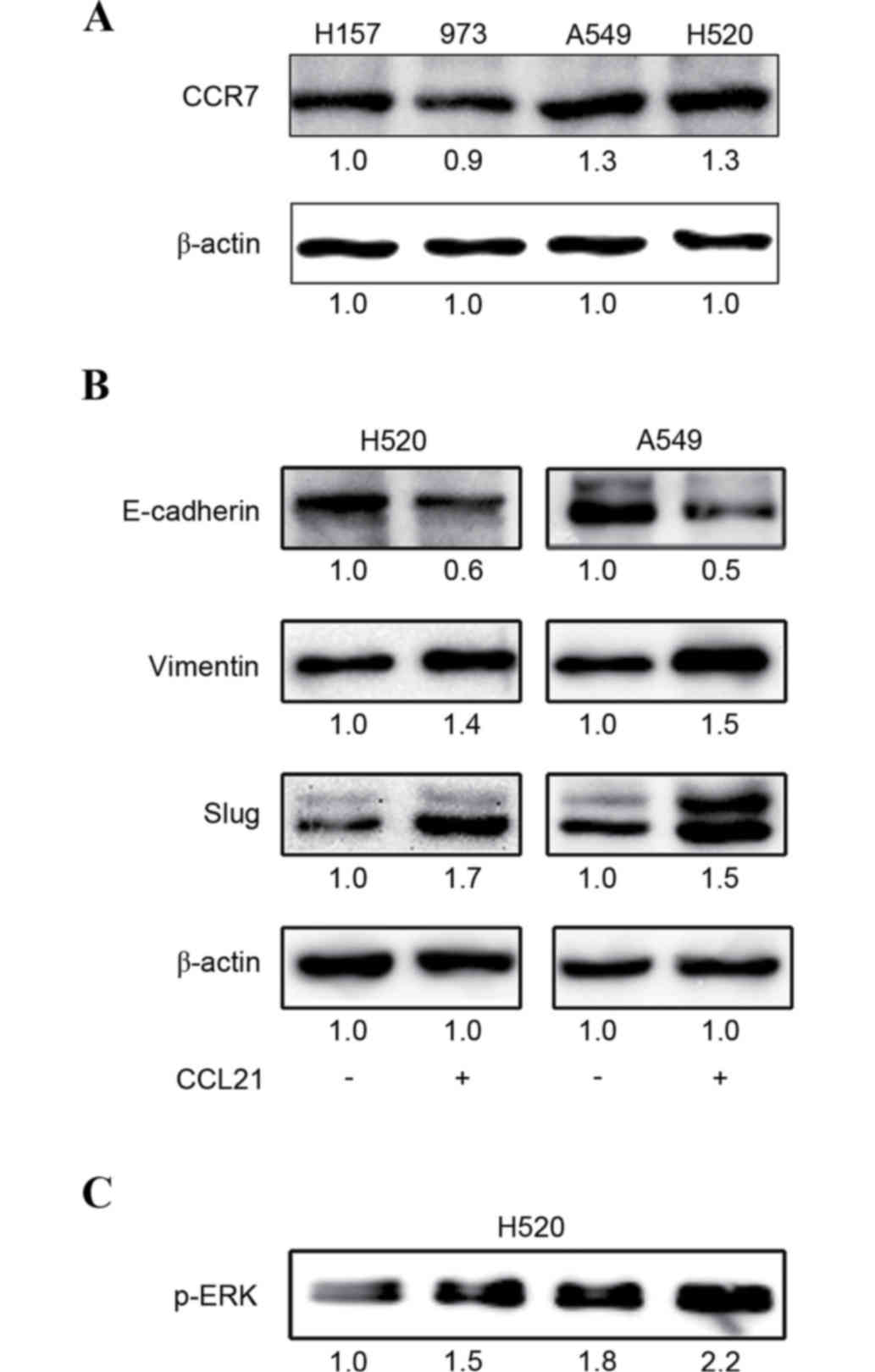
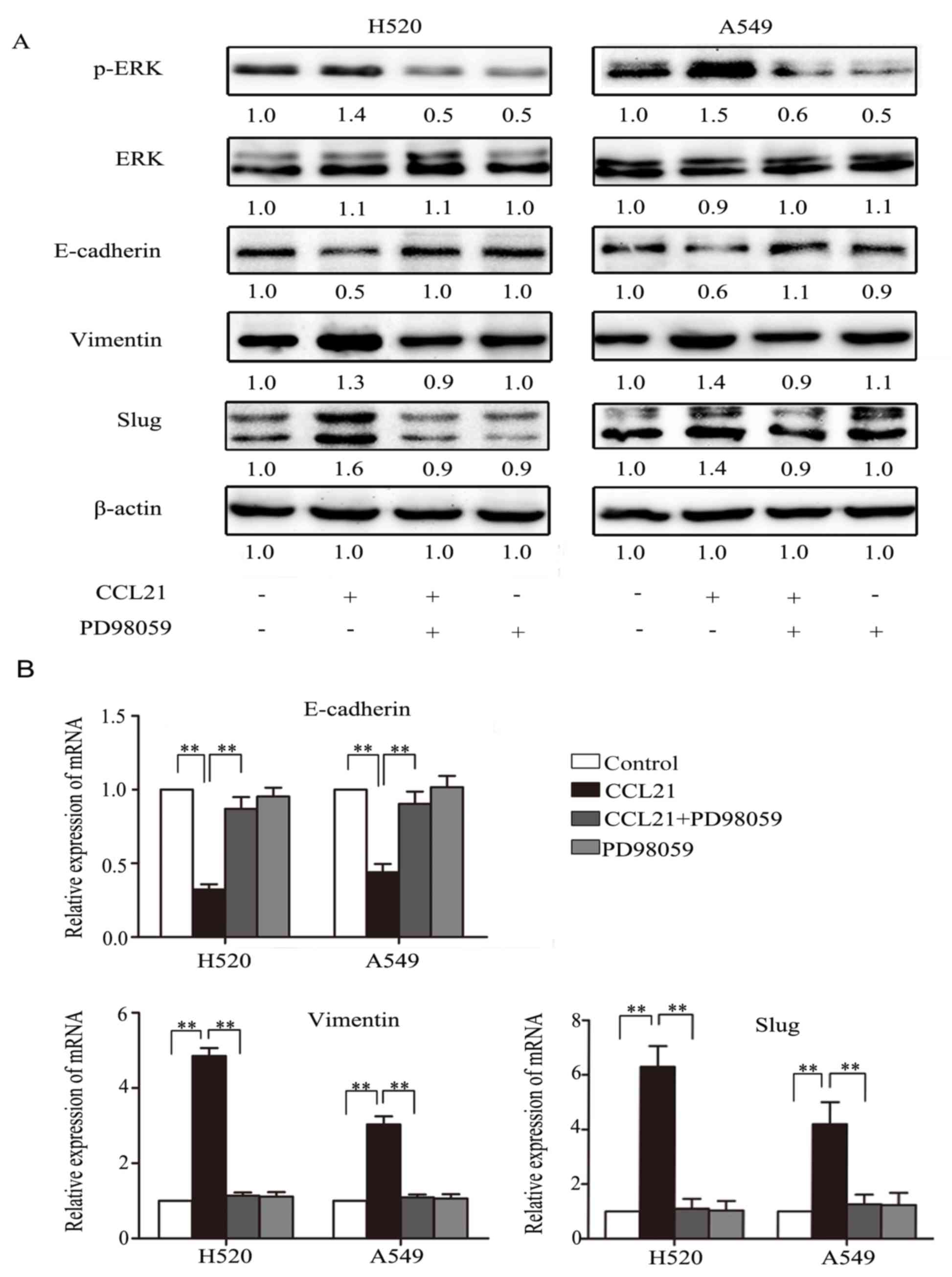
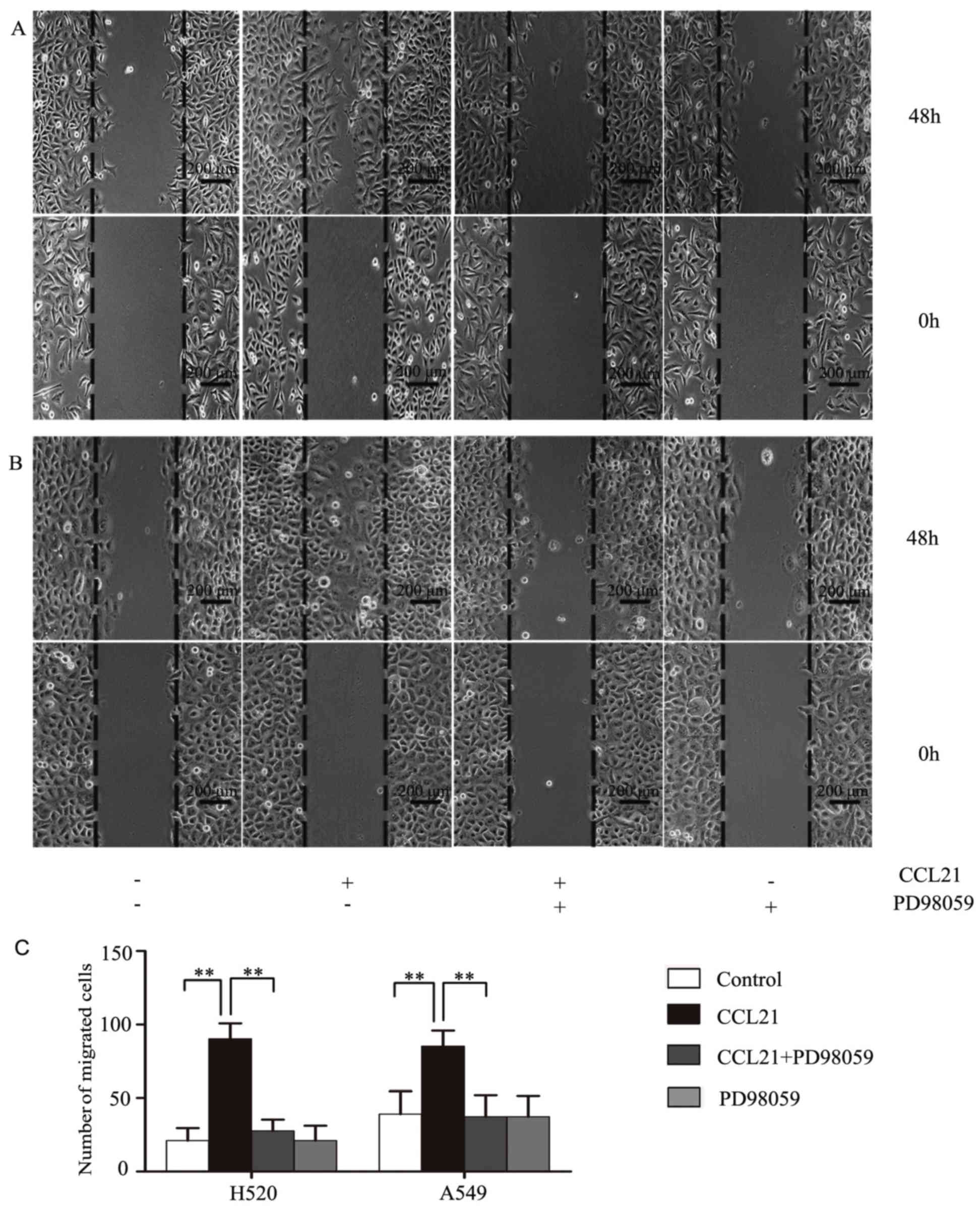
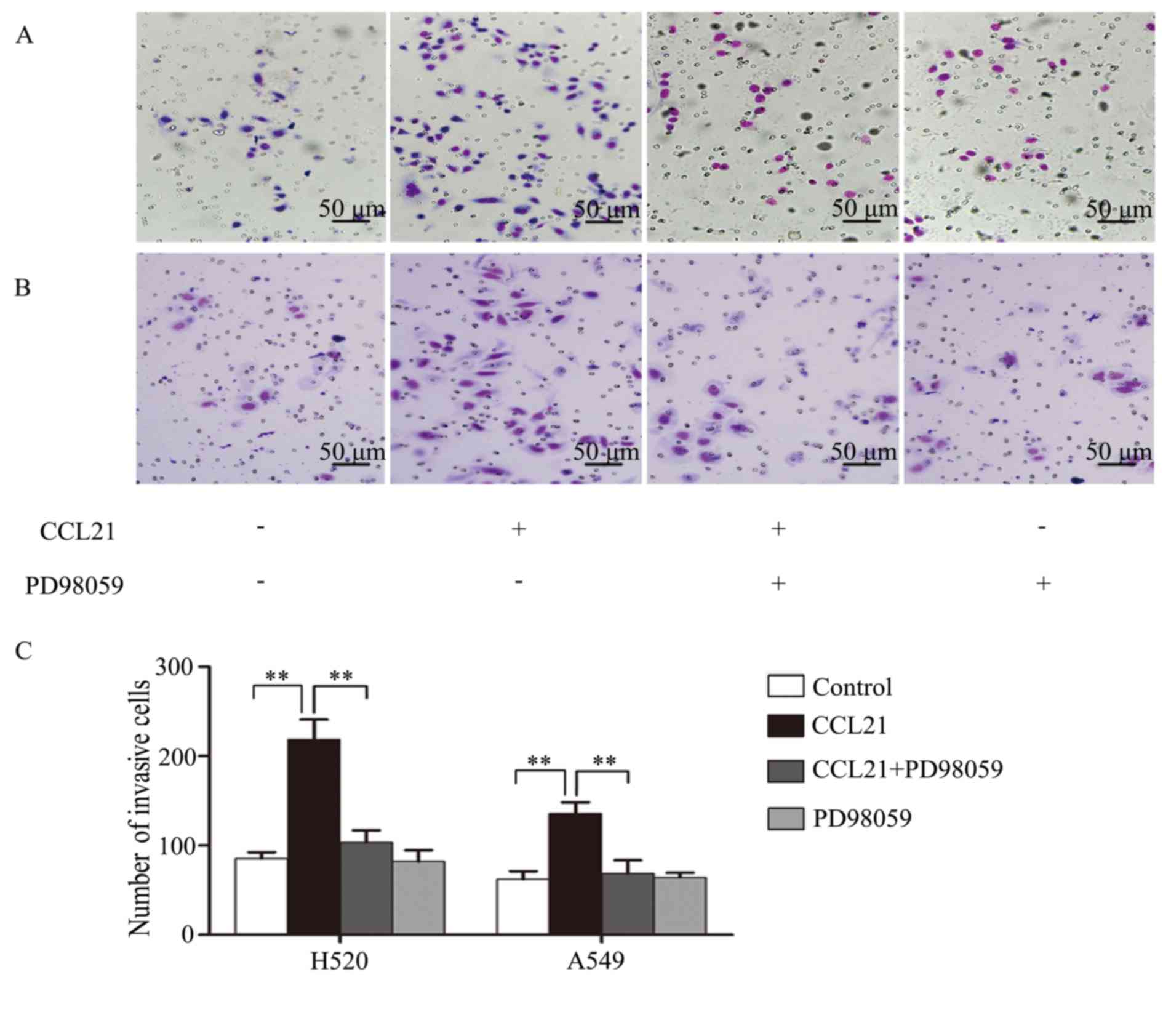
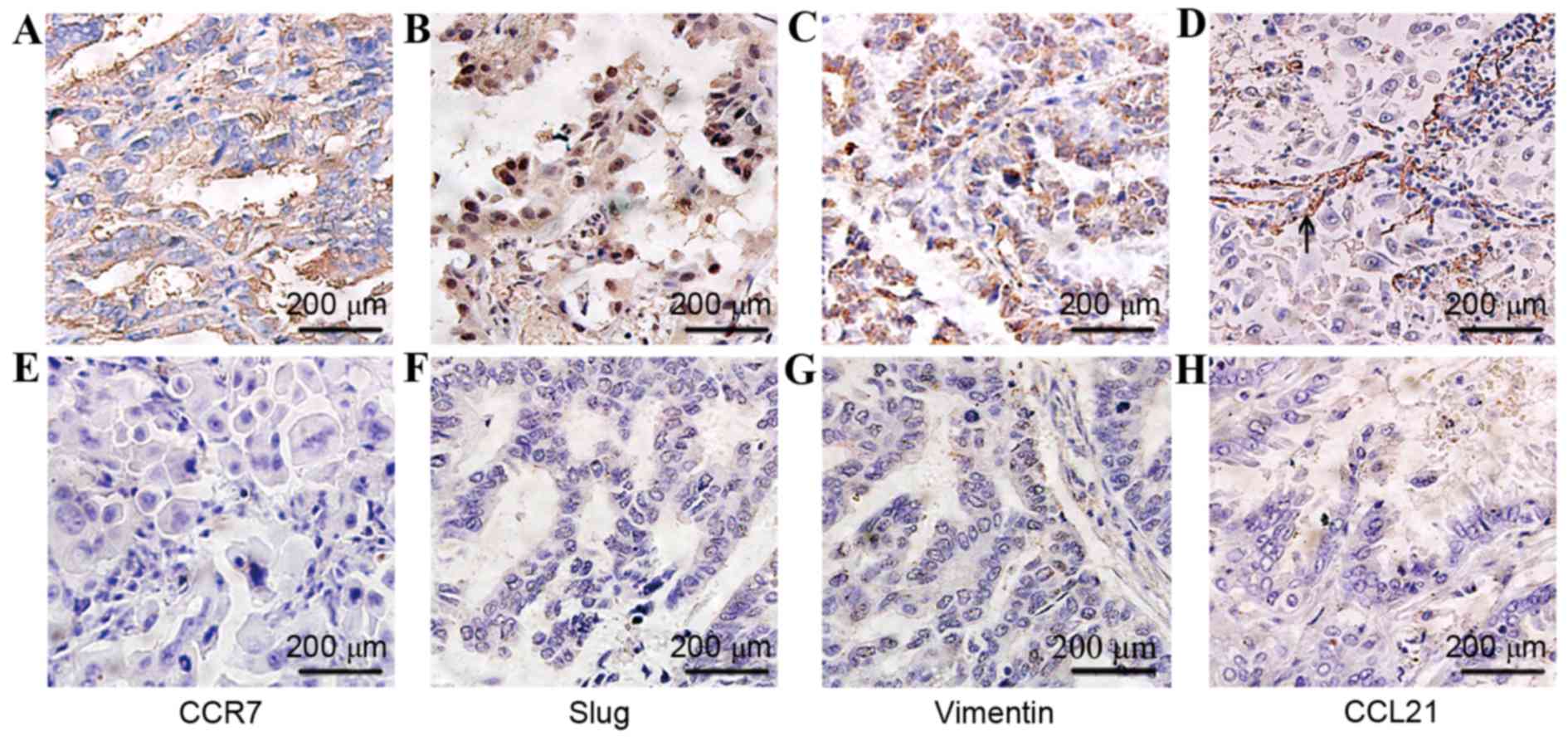
C-C chemokine receptor type 7 (CCR7) has been implicated in lymph node metastasis of various cancers. Previous studies have revealed that epithelial‑mesenchymal transition (EMT) is involved in the chemotactic process mediated by CCR7 and its ligands in various types of carcinoma. However, the underlying mechanism of this process remains to be fully elucidated. The present study investigated whether chemokine (C‑C motif) ligand 21 (CCL21)/CCR7 may activate EMT of lung cancer cells and their associated signaling pathways. A549 and H520 lung cancer cell lines were examined in vitro in the present study. The results indicated that A549 and H520 expressed CCR7, but reduced levels of CCL21. Following stimulation of lung cancer cell lines with CCL21, the expression of the epithelial marker E‑cadherin was downregulated, and the mesenchymal markers Vimentin/Slug and extracellular signal‑regulated kinase (ERK) were upregulated. In addition, the ERK inhibitor PD98059 may inhibit EMT caused by CCL21, and decreased cell migration and invasion initiated by CCL21. Furthermore, lung adenocarcinoma tissues from 50 patients who underwent lung cancer operations were investigated by immunohistochemistry. The findings revealed that CCR7, Slug and Vimentin were highly expressed in lung carcinoma tissues, and were significantly associated with lymph node metastasis and clinical pathological stages, respectively. CCR7 expression was correlated positively with expression levels of Slug and Vimentin. CCL21 was expressed positively in the endothelium of lymphatic vessels adjacent to cancer cells, and weakly in lung cancer cells. Collectively, these results demonstrated that CCL21/CCR7 may activate EMT in lung cancer cells via the ERK1/2 signaling pathway. The current study provides evidence that a close interaction exists between CCL21/CCR7chemotaxis and EMT procedures in lung cancer metastasis, providing a basis for the development of therapeutic targets.
View Figures

Figure 1

Figure 2

Figure 3

Figure 4

Figure 5

View References

1 

Thiery JP, Acloque H, Huang RY and Nieto MA: Epithelial-mesenchymal transitions in development and disease. Cell. 139:871–890. 2009. View Article : Google Scholar

2 

De Craene B and Berx G: Regulatory networks defining EMT during cancer initiation and progression. Nat Rev Cancer. 13:97–110. 2013. View Article : Google Scholar

3 

Mukaida N and Baba T: Chemokines in tumor development and progression. Exp Cell Res. 318:95–102. 2012. View Article : Google Scholar

4 

Zlotnik A, Burkhardt AM and Homey B: Homeostatic chemokine receptors and organ-specific metastasis. Nat Rev Immunol. 11:597–606. 2011. View Article : Google Scholar

5 

Förster R, Davalos-Misslitz AC and Rot A: CCR7 and its ligands: Balancing immunity and tolerance. Nat Rev Immunol. 8:362–371. 2008. View Article : Google Scholar

6 

Carlsen HS, Haraldsen G, Brandtzaeg P and Baekkevold ES: Disparate lymphoid chemokine expression in mice and men: No evidence of CCL21 synthesis by human high endothelial venules. Blood. 106:444–446. 2005. View Article : Google Scholar

7 

Baekkevold ES, Yamanaka T, Palframan RT, Carlsen HS, Reinholt FP, von Andrian UH, Brandtzaeg P and Haraldsen G: The CCR7 ligand ELC (CCL19) is transcytosed in high endothelial venules and mediates T cell recruitment. J Exp Med. 193:1105–1112. 2001. View Article : Google Scholar :

8 

Gunn MD, Tangemann K, Tam C, Cyster JG, Rosen SD and Williams LT: A chemokine expressed in lymphoid high endothelial venules promotes the adhesion and chemotaxis of naive T lymphocytes. Proc Natl Acad Sci USA. 95:pp. 258–263. 1998; View Article : Google Scholar :

9 

Sperveslage J, Frank S, Heneweer C, Egberts J, Schniewind B, Buchholz M, Bergmann F, Giese N, Munding J, Hahn SA, et al: Lack of CCR7 expression is rate limiting for lymphatic spread of pancreatic ductal adenocarcinoma. Int J Cancer. 131:E371–E381. 2012. View Article : Google Scholar

10 

Legler DF, Uetz-von Allmen E and Hauser MA: CCR7: Roles in cancer cell dissemination, migration and metastasis formation. Int J Biochem Cell Biol. 54:78–82. 2014. View Article : Google Scholar

11 

Li X, Ma Q, Xu Q, Liu H, Lei J, Duan W, Bhat K, Wang F, Wu E and Wang Z: SDF-1/CXCR4 signaling induces pancreatic cancer cell invasion and epithelial-mesenchymal transition in vitro through non-canonical activation of Hedgehog pathway. Cancer Lett. 322:169–176. 2012. View Article : Google Scholar :

12 

Chen K, Li Z, Jiang P, Zhang X, Zhang Y, Jiang Y, He Y and Li X: Co-expression of CD133, CD44v6 and human tissue factor is associated with metastasis and poor prognosis in pancreatic carcinoma. Oncol Rep. 32:755–763. 2014.

13 

Lee SH, Kang HY, Kim KS, Nam BY, Paeng J, Kim S, Li JJ, Park JT, Kim DK, Han SH, et al: The monocyte chemoattractant protein-1 (MCP-1)/CCR2 system is involved in peritoneal dialysis-related epithelial-mesenchymal transition of peritoneal mesothelial cells. Lab Invest. 92:1698–1711. 2012. View Article : Google Scholar

14 

Marsigliante S, Vetrugno C and Muscella A: Paracrine CCL20 loop induces epithelial-mesenchymal transition in breast epithelial cells. Mol Carcinog. 55:1175–1186. 2016. View Article : Google Scholar

15 

Li F, Zou Z, Suo N, Zhang Z, Wan F, Zhong G, Qu Y, Ntaka KS and Tian H: CCL21/CCR7 axis activating chemotaxis accompanied with epithelial-mesenchymal transition in human breast carcinoma. Med Oncol. 31:1802014. View Article : Google Scholar

16 

Zhang J, Zhou Y and Yang Y: CCR7 pathway induces epithelial-mesenchymal transition through up-regulation of Snail signaling in gastric cancer. Med Oncol. 32:4672015.

17 

Siegel RL, Miller KD and Jemal A: Cancer Statistics, 2017. CA Cancer J Clin. 67:7–30. 2017. View Article : Google Scholar

18 

Livak KJ and Schmittgen TD: Analysis of relative gene expression data using real-time quantitative PCR and the 2(−Delta Delta C(T)) Method. Methods. 25:402–408. 2001. View Article : Google Scholar

19 

Goldstraw P, Chansky K, Crowley J, Rami-Porta R, Asamura H, Eberhardt WE, Nicholson AG, Groome P, Mitchell A, Bolejack V, et al: The IASLC lung cancer staging project: proposals for revision of the TNM stage groupings in the forthcoming (Eighth) edition of the TNM classification for lung cancer. J Thorac Oncol. 11:39–51. 2016. View Article : Google Scholar

20 

Chen X, Ye S, Xiao W, Wang W, Luo L and Liu Y: ERK1/2 pathway mediates epithelial-mesenchymal transition by cross-interacting with TGFβ/Smad and Jagged/Notch signaling pathways in lens epithelial cells. Int J Mol Med. 33:1664–1670. 2014.

21 

Buonato JM and Lazzara MJ: ERK1/2 blockade prevents epithelial-mesenchymal transition in lung cancer cells and promotes their sensitivity to EGFR inhibition. Cancer Res. 74:309–319. 2014. View Article : Google Scholar

22 

Maekawa S, Iwasaki A, Shirakusa T, Kawakami T, Yanagisawa J, Tanaka T, Shibaguchi H, Kinugasa T and Kuroki M and Kuroki M: Association between the expression of chemokine receptors CCR7 and CXCR3, and lymph node metastatic potential in lung adenocarcinoma. Oncol Rep. 19:1461–1468. 2008.

23 

Shields JD, Fleury ME, Yong C, Tomei AA, Randolph GJ and Swartz MA: Autologous chemotaxis as a mechanism of tumor cell homing to lymphatics via interstitial flow and autocrine CCR7 signaling. Cancer Cell. 11:526–538. 2007. View Article : Google Scholar

24 

Li Y, Zhang Q, Jiang L, Qiu X and Wang E: Upregulation of the Chemokine Receptor CCR7 expression by HIF-1alpha and HIF-2alpha in non-small cell lung cancer. Zhongguo Fei Ai Za Zhi. 11:724–728. 2008.(In Chinese).

25 

Li Y, Zhang Q, Wang Y, Qiu X and Wang E: Effects of hypoxia on the expression of CCR7 and proliferation, invasiveness of A549 cells. Zhongguo Fei Ai Za Zhi. 11:704–706. 2008.(In Chinese).

26 

Pang MF, Georgoudaki AM, Lambut L, Johansson J, Tabor V, Hagikura K, Jin Y, Jansson M, Alexander JS, Nelson CM, et al: TGF-β1-induced EMT promotes targeted migration of breast cancer cells through the lymphatic system by the activation of CCR7/CCL21-mediated chemotaxis. Oncogene. 35:748–760. 2016. View Article : Google Scholar

27 

Papageorgis P: TGFβ signaling in tumor initiation, epithelial-to-mesenchymal transition and metastasis. J Oncol. 2015:5871932015. View Article : Google Scholar :

Related Articles

  • Abstract
  • View
  • Download
  • Twitter
Copy and paste a formatted citation
Spandidos Publications style
Zhong G, Chen L, Yin R, Qu Y, Bao Y, Xiao Q, Zhang Z, Shen Y, Li C, Xu Y, Xu Y, et al: Chemokine (C‑C motif) ligand 21/C‑C chemokine receptor type 7 triggers migration and invasion of human lung cancer cells by epithelial‑mesenchymal transition via the extracellular signal‑regulated kinase signaling pathway. Mol Med Rep 15: 4100-4108, 2017.
APA
Zhong, G., Chen, L., Yin, R., Qu, Y., Bao, Y., Xiao, Q. ... Tian, H. (2017). Chemokine (C‑C motif) ligand 21/C‑C chemokine receptor type 7 triggers migration and invasion of human lung cancer cells by epithelial‑mesenchymal transition via the extracellular signal‑regulated kinase signaling pathway. Molecular Medicine Reports, 15, 4100-4108. https://doi.org/10.3892/mmr.2017.6534
MLA
Zhong, G., Chen, L., Yin, R., Qu, Y., Bao, Y., Xiao, Q., Zhang, Z., Shen, Y., Li, C., Xu, Y., Zou, Z., Tian, H."Chemokine (C‑C motif) ligand 21/C‑C chemokine receptor type 7 triggers migration and invasion of human lung cancer cells by epithelial‑mesenchymal transition via the extracellular signal‑regulated kinase signaling pathway". Molecular Medicine Reports 15.6 (2017): 4100-4108.
Chicago
Zhong, G., Chen, L., Yin, R., Qu, Y., Bao, Y., Xiao, Q., Zhang, Z., Shen, Y., Li, C., Xu, Y., Zou, Z., Tian, H."Chemokine (C‑C motif) ligand 21/C‑C chemokine receptor type 7 triggers migration and invasion of human lung cancer cells by epithelial‑mesenchymal transition via the extracellular signal‑regulated kinase signaling pathway". Molecular Medicine Reports 15, no. 6 (2017): 4100-4108. https://doi.org/10.3892/mmr.2017.6534
Copy and paste a formatted citation
x
Spandidos Publications style
Zhong G, Chen L, Yin R, Qu Y, Bao Y, Xiao Q, Zhang Z, Shen Y, Li C, Xu Y, Xu Y, et al: Chemokine (C‑C motif) ligand 21/C‑C chemokine receptor type 7 triggers migration and invasion of human lung cancer cells by epithelial‑mesenchymal transition via the extracellular signal‑regulated kinase signaling pathway. Mol Med Rep 15: 4100-4108, 2017.
APA
Zhong, G., Chen, L., Yin, R., Qu, Y., Bao, Y., Xiao, Q. ... Tian, H. (2017). Chemokine (C‑C motif) ligand 21/C‑C chemokine receptor type 7 triggers migration and invasion of human lung cancer cells by epithelial‑mesenchymal transition via the extracellular signal‑regulated kinase signaling pathway. Molecular Medicine Reports, 15, 4100-4108. https://doi.org/10.3892/mmr.2017.6534
MLA
Zhong, G., Chen, L., Yin, R., Qu, Y., Bao, Y., Xiao, Q., Zhang, Z., Shen, Y., Li, C., Xu, Y., Zou, Z., Tian, H."Chemokine (C‑C motif) ligand 21/C‑C chemokine receptor type 7 triggers migration and invasion of human lung cancer cells by epithelial‑mesenchymal transition via the extracellular signal‑regulated kinase signaling pathway". Molecular Medicine Reports 15.6 (2017): 4100-4108.
Chicago
Zhong, G., Chen, L., Yin, R., Qu, Y., Bao, Y., Xiao, Q., Zhang, Z., Shen, Y., Li, C., Xu, Y., Zou, Z., Tian, H."Chemokine (C‑C motif) ligand 21/C‑C chemokine receptor type 7 triggers migration and invasion of human lung cancer cells by epithelial‑mesenchymal transition via the extracellular signal‑regulated kinase signaling pathway". Molecular Medicine Reports 15, no. 6 (2017): 4100-4108. https://doi.org/10.3892/mmr.2017.6534
Follow us
  • Twitter
  • LinkedIn
  • Facebook
About
  • Spandidos Publications
  • Careers
  • Cookie Policy
  • Privacy Policy
How can we help?
  • Help
  • Live Chat
  • Contact
  • Email to our Support Team