Spandidos Publications Logo
  • About
    • About Spandidos
    • Aims and Scopes
    • Abstracting and Indexing
    • Editorial Policies
    • Reprints and Permissions
    • Job Opportunities
    • Terms and Conditions
    • Contact
  • Journals
    • All Journals
    • Oncology Letters
      • Oncology Letters
      • Information for Authors
      • Editorial Policies
      • Editorial Board
      • Aims and Scope
      • Abstracting and Indexing
      • Bibliographic Information
      • Archive
    • International Journal of Oncology
      • International Journal of Oncology
      • Information for Authors
      • Editorial Policies
      • Editorial Board
      • Aims and Scope
      • Abstracting and Indexing
      • Bibliographic Information
      • Archive
    • Molecular and Clinical Oncology
      • Molecular and Clinical Oncology
      • Information for Authors
      • Editorial Policies
      • Editorial Board
      • Aims and Scope
      • Abstracting and Indexing
      • Bibliographic Information
      • Archive
    • Experimental and Therapeutic Medicine
      • Experimental and Therapeutic Medicine
      • Information for Authors
      • Editorial Policies
      • Editorial Board
      • Aims and Scope
      • Abstracting and Indexing
      • Bibliographic Information
      • Archive
    • International Journal of Molecular Medicine
      • International Journal of Molecular Medicine
      • Information for Authors
      • Editorial Policies
      • Editorial Board
      • Aims and Scope
      • Abstracting and Indexing
      • Bibliographic Information
      • Archive
    • Biomedical Reports
      • Biomedical Reports
      • Information for Authors
      • Editorial Policies
      • Editorial Board
      • Aims and Scope
      • Abstracting and Indexing
      • Bibliographic Information
      • Archive
    • Oncology Reports
      • Oncology Reports
      • Information for Authors
      • Editorial Policies
      • Editorial Board
      • Aims and Scope
      • Abstracting and Indexing
      • Bibliographic Information
      • Archive
    • Molecular Medicine Reports
      • Molecular Medicine Reports
      • Information for Authors
      • Editorial Policies
      • Editorial Board
      • Aims and Scope
      • Abstracting and Indexing
      • Bibliographic Information
      • Archive
    • World Academy of Sciences Journal
      • World Academy of Sciences Journal
      • Information for Authors
      • Editorial Policies
      • Editorial Board
      • Aims and Scope
      • Abstracting and Indexing
      • Bibliographic Information
      • Archive
    • International Journal of Functional Nutrition
      • International Journal of Functional Nutrition
      • Information for Authors
      • Editorial Policies
      • Editorial Board
      • Aims and Scope
      • Abstracting and Indexing
      • Bibliographic Information
      • Archive
    • International Journal of Epigenetics
      • International Journal of Epigenetics
      • Information for Authors
      • Editorial Policies
      • Editorial Board
      • Aims and Scope
      • Abstracting and Indexing
      • Bibliographic Information
      • Archive
    • Medicine International
      • Medicine International
      • Information for Authors
      • Editorial Policies
      • Editorial Board
      • Aims and Scope
      • Abstracting and Indexing
      • Bibliographic Information
      • Archive
  • Articles
  • Information
    • Information for Authors
    • Information for Reviewers
    • Information for Librarians
    • Information for Advertisers
    • Conferences
  • Language Editing
Spandidos Publications Logo
  • About
    • About Spandidos
    • Aims and Scopes
    • Abstracting and Indexing
    • Editorial Policies
    • Reprints and Permissions
    • Job Opportunities
    • Terms and Conditions
    • Contact
  • Journals
    • All Journals
    • Biomedical Reports
      • Information for Authors
      • Editorial Policies
      • Editorial Board
      • Aims and Scope
      • Abstracting and Indexing
      • Bibliographic Information
      • Archive
    • Experimental and Therapeutic Medicine
      • Information for Authors
      • Editorial Policies
      • Editorial Board
      • Aims and Scope
      • Abstracting and Indexing
      • Bibliographic Information
      • Archive
    • International Journal of Epigenetics
      • Information for Authors
      • Editorial Policies
      • Editorial Board
      • Aims and Scope
      • Abstracting and Indexing
      • Bibliographic Information
      • Archive
    • International Journal of Functional Nutrition
      • Information for Authors
      • Editorial Policies
      • Editorial Board
      • Aims and Scope
      • Abstracting and Indexing
      • Bibliographic Information
      • Archive
    • International Journal of Molecular Medicine
      • Information for Authors
      • Editorial Policies
      • Editorial Board
      • Aims and Scope
      • Abstracting and Indexing
      • Bibliographic Information
      • Archive
    • International Journal of Oncology
      • Information for Authors
      • Editorial Policies
      • Editorial Board
      • Aims and Scope
      • Abstracting and Indexing
      • Bibliographic Information
      • Archive
    • Medicine International
      • Information for Authors
      • Editorial Policies
      • Editorial Board
      • Aims and Scope
      • Abstracting and Indexing
      • Bibliographic Information
      • Archive
    • Molecular and Clinical Oncology
      • Information for Authors
      • Editorial Policies
      • Editorial Board
      • Aims and Scope
      • Abstracting and Indexing
      • Bibliographic Information
      • Archive
    • Molecular Medicine Reports
      • Information for Authors
      • Editorial Policies
      • Editorial Board
      • Aims and Scope
      • Abstracting and Indexing
      • Bibliographic Information
      • Archive
    • Oncology Letters
      • Information for Authors
      • Editorial Policies
      • Editorial Board
      • Aims and Scope
      • Abstracting and Indexing
      • Bibliographic Information
      • Archive
    • Oncology Reports
      • Information for Authors
      • Editorial Policies
      • Editorial Board
      • Aims and Scope
      • Abstracting and Indexing
      • Bibliographic Information
      • Archive
    • World Academy of Sciences Journal
      • Information for Authors
      • Editorial Policies
      • Editorial Board
      • Aims and Scope
      • Abstracting and Indexing
      • Bibliographic Information
      • Archive
  • Articles
  • Information
    • For Authors
    • For Reviewers
    • For Librarians
    • For Advertisers
    • Conferences
  • Language Editing
Login Register Submit
  • This site uses cookies
  • You can change your cookie settings at any time by following the instructions in our Cookie Policy. To find out more, you may read our Privacy Policy.

    I agree
Search articles by DOI, keyword, author or affiliation
Search
Advanced Search
presentation
Molecular Medicine Reports
Join Editorial Board Propose a Special Issue
Print ISSN: 1791-2997 Online ISSN: 1791-3004
Journal Cover
August-2017 Volume 16 Issue 2

Full Size Image

Sign up for eToc alerts
Recommend to Library

Journals

International Journal of Molecular Medicine

International Journal of Molecular Medicine

International Journal of Molecular Medicine is an international journal devoted to molecular mechanisms of human disease.

International Journal of Oncology

International Journal of Oncology

International Journal of Oncology is an international journal devoted to oncology research and cancer treatment.

Molecular Medicine Reports

Molecular Medicine Reports

Covers molecular medicine topics such as pharmacology, pathology, genetics, neuroscience, infectious diseases, molecular cardiology, and molecular surgery.

Oncology Reports

Oncology Reports

Oncology Reports is an international journal devoted to fundamental and applied research in Oncology.

Experimental and Therapeutic Medicine

Experimental and Therapeutic Medicine

Experimental and Therapeutic Medicine is an international journal devoted to laboratory and clinical medicine.

Oncology Letters

Oncology Letters

Oncology Letters is an international journal devoted to Experimental and Clinical Oncology.

Biomedical Reports

Biomedical Reports

Explores a wide range of biological and medical fields, including pharmacology, genetics, microbiology, neuroscience, and molecular cardiology.

Molecular and Clinical Oncology

Molecular and Clinical Oncology

International journal addressing all aspects of oncology research, from tumorigenesis and oncogenes to chemotherapy and metastasis.

World Academy of Sciences Journal

World Academy of Sciences Journal

Multidisciplinary open-access journal spanning biochemistry, genetics, neuroscience, environmental health, and synthetic biology.

International Journal of Functional Nutrition

International Journal of Functional Nutrition

Open-access journal combining biochemistry, pharmacology, immunology, and genetics to advance health through functional nutrition.

International Journal of Epigenetics

International Journal of Epigenetics

Publishes open-access research on using epigenetics to advance understanding and treatment of human disease.

Medicine International

Medicine International

An International Open Access Journal Devoted to General Medicine.

Journal Cover
August-2017 Volume 16 Issue 2

Full Size Image

Sign up for eToc alerts
Recommend to Library

  • Article
  • Citations
    • Cite This Article
    • Download Citation
    • Create Citation Alert
    • Remove Citation Alert
    • Cited By
  • Similar Articles
    • Related Articles (in Spandidos Publications)
    • Similar Articles (Google Scholar)
    • Similar Articles (PubMed)
  • Download PDF
  • Download XML
  • View XML
Article Open Access

Sorafenib controls the epithelial‑mesenchymal transition of ovarian cancer cells via EGF and the CD44‑HA signaling pathway in a cell type‑dependent manner

  • Authors:
    • Ga Bin Park
    • Hyun‑Suk Ko
    • Daejin Kim
  • View Affiliations / Copyright

    Affiliations: Department of Biochemistry, Kosin University College of Medicine, Busan 49267, Republic of Korea, Department of Anatomy, Inje University College of Medicine, Busan 47392, Republic of Korea
    Copyright: © Park et al. This is an open access article distributed under the terms of Creative Commons Attribution License.
  • Pages: 1826-1836
    |
    Published online on: June 14, 2017
       https://doi.org/10.3892/mmr.2017.6773
  • Expand metrics +
Metrics: Total Views: 0 (Spandidos Publications: | PMC Statistics: )
Metrics: Total PDF Downloads: 0 (Spandidos Publications: | PMC Statistics: )
Cited By (CrossRef): 0 citations Loading Articles...

This article is mentioned in:


Abstract

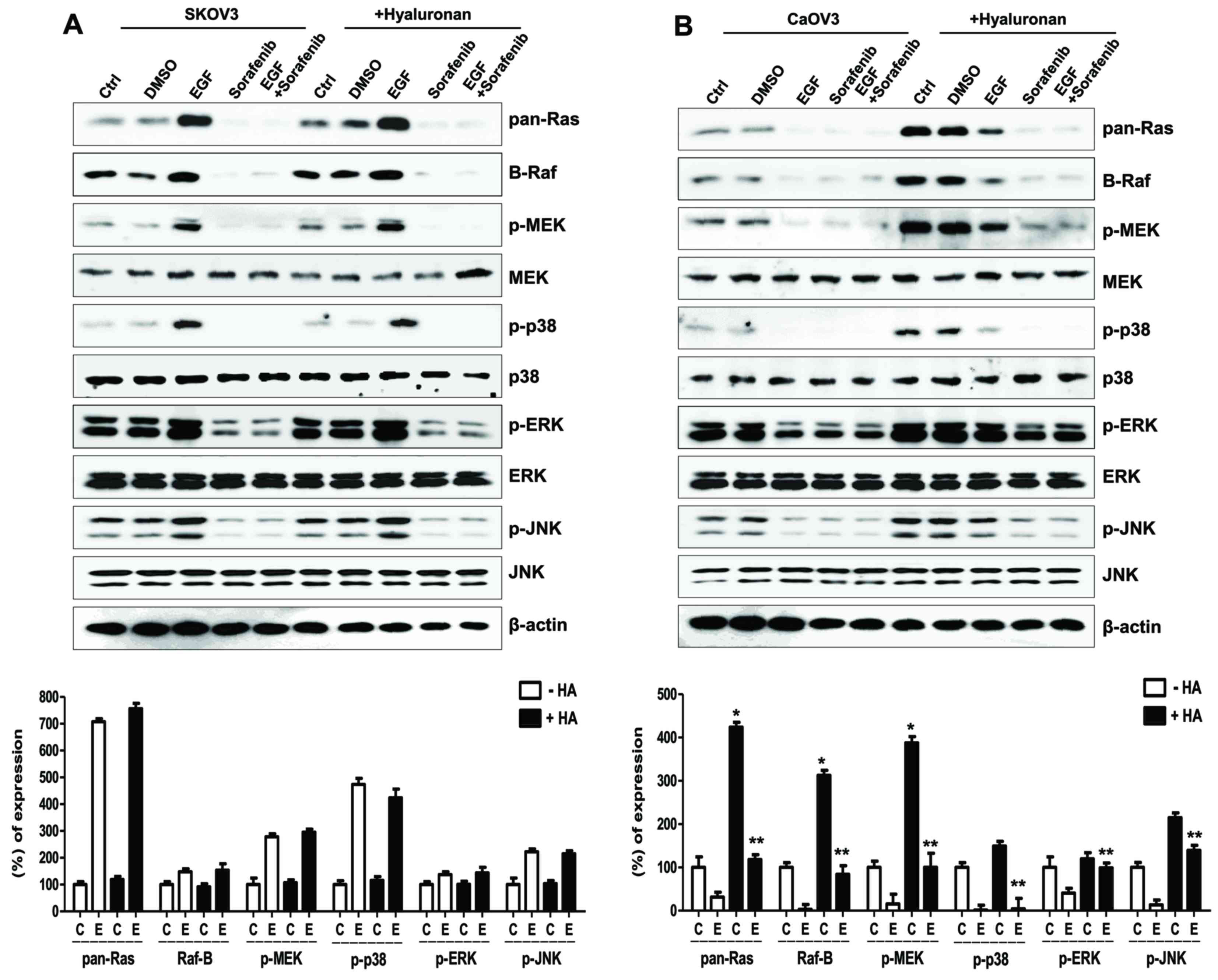
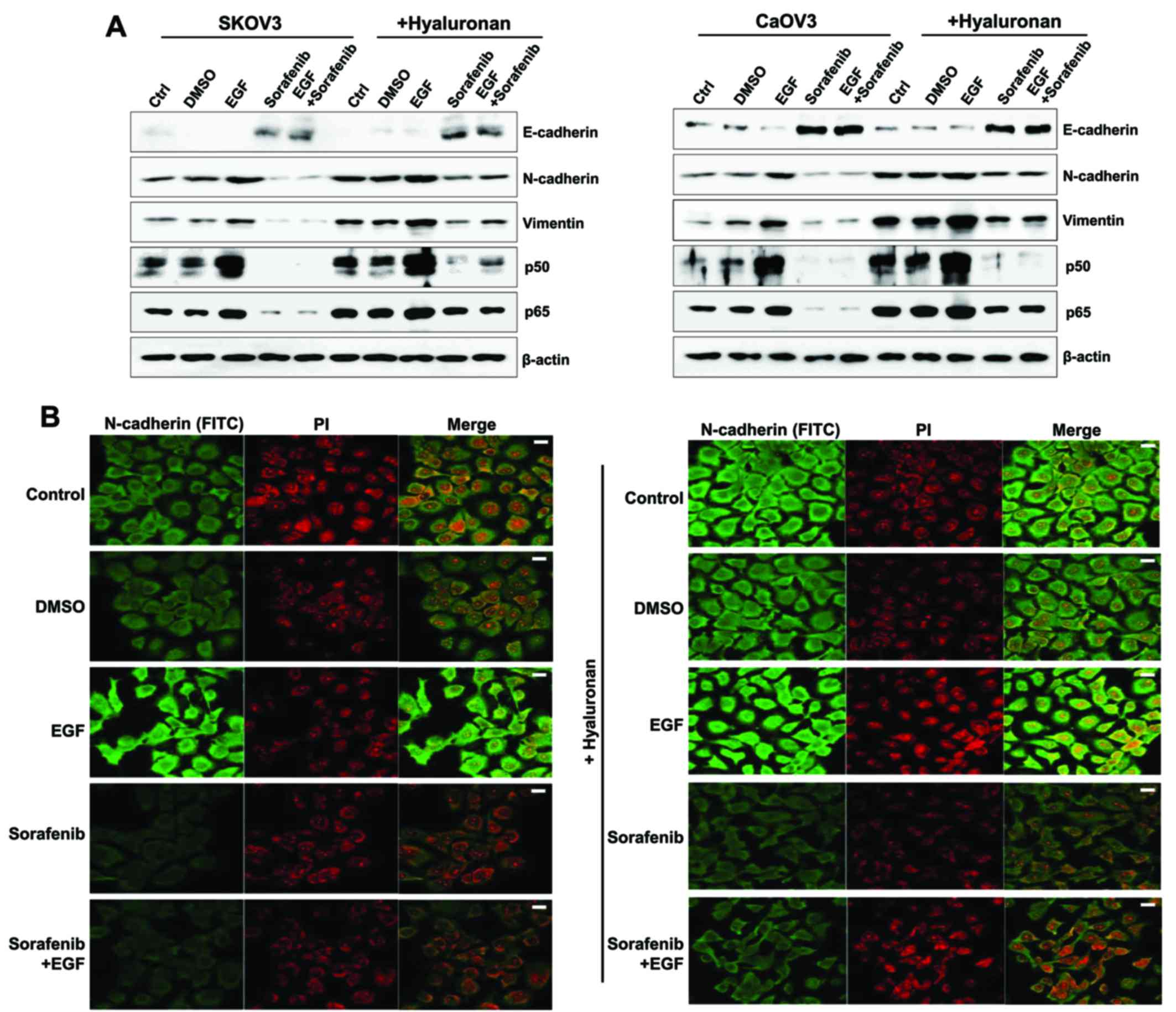
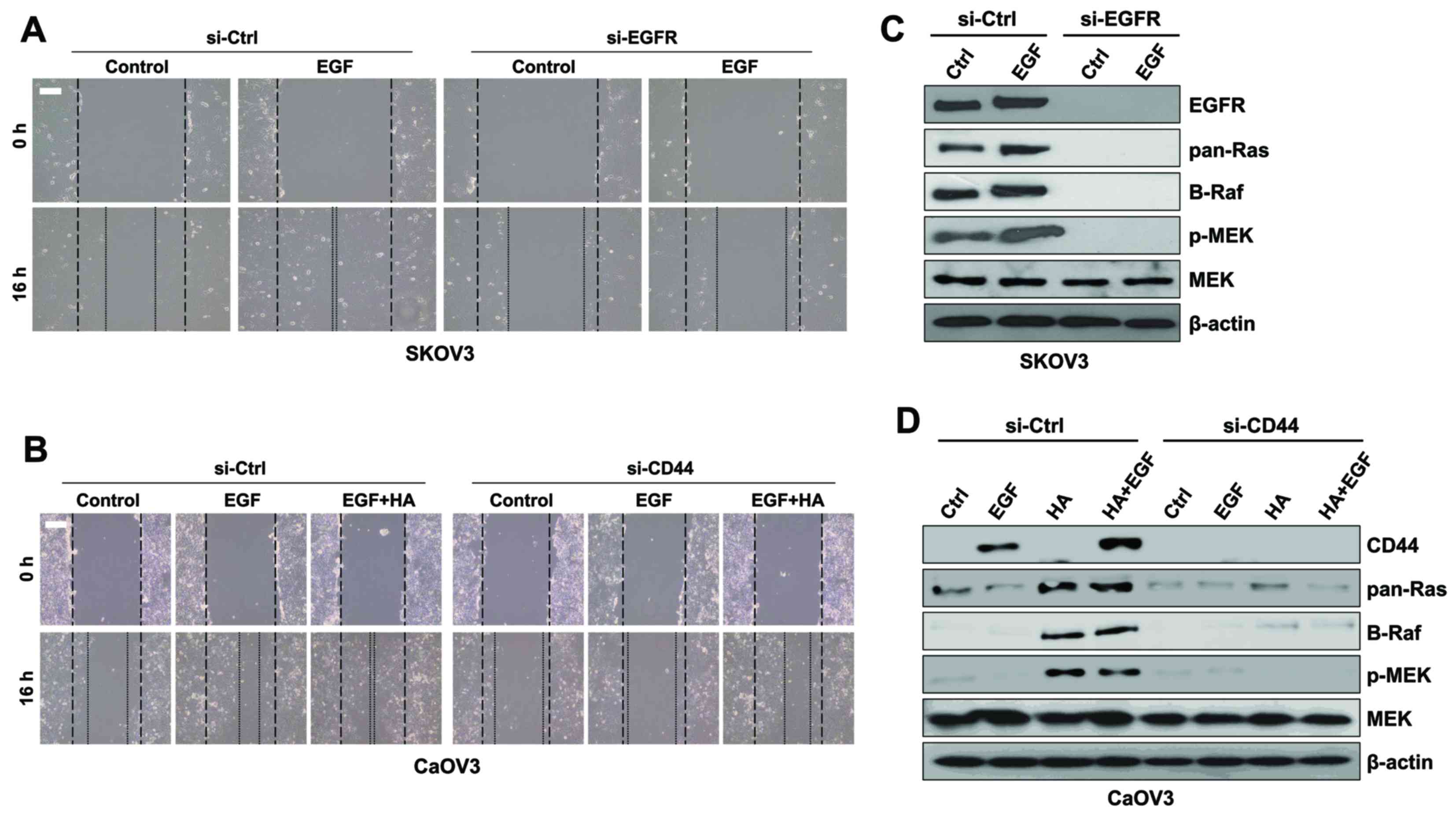
Cluster of differentiation (CD) 44 and epidermal growth factor (EGF) are closely involved in cellular migration and have been used as stem cell markers. Although the hyaluronan (HA)‑binding CD44 is responsible for enhanced cellular motility, the mechanism underlying its actions in various cell types and clinical conditions have yet to be elucidated. In the present study, the multikinase inhibitor sorafenib was used to investigate the diverse effects of EGF stimulation on epithelial‑mesenchymal transition (EMT) in ovarian cancer cells using immunoblotting and reverse transcription‑polymerase chain reaction. In addition, the association between EGF and CD44/HA signaling pathways in the control of mesenchymal phenotype was determined by gene silencing with small interfering RNA transfection. EGF stimulation of ovarian cancer cells increased cellular migration, mesenchymal transition, CD44 expression and the activation of matrix metalloproteinase (MMP)‑2 and MMP‑9. Sorafenib effectively suppressed the loss of epithelial characteristics in EGF‑treated SK‑OV‑3 ovarian cancer cells, via targeting the mitogen‑activated protein kinase (MAPK)/extracellular signal‑regulated kinase (ERK) pathway. Although treatment of Caov‑3 ovarian cancer cells with sorafenib blocked the expression of mesenchymal phenotypes following EGF stimulation, EGF‑activated Caov‑3 cells exhibited reduced MAPK/ERK signaling. Furthermore, EGF‑activated Caov‑3 cells increased the expression of hyaluronan synthase 2 and HA‑CD44 ligation in EGF‑exposed Caov‑3 cells, which resulted in the activation of the Ras/Raf/MEK signaling pathway, amplification of migratory activity and the expression of mesenchymal markers, including N‑cadherin and vimentin. Furthermore, silencing EGFR in SK‑OV‑3 cells and CD44 in Caov‑3 cells suppressed their migratory activity, through inhibition of the MAPK/ERK pathway. The present results suggested that EGF‑mediated signaling may regulate metastasis and invasion of ovarian cancer cells, in a cancer cell type‑dependent manner.
View Figures

Figure 1

Figure 2

Figure 3

Figure 4

Figure 5

Figure 6

Figure 7

View References

1 

Heppner G, Yamashina K, Miller B and Miller F: Tumor heterogeneity in metastasis. Prog Clin Biol Res. 212:45–59. 1986.PubMed/NCBI

2 

Jemal A, Bray F, Center MM, Ferlay J, Ward E and Forman D: Global cancer statistics. CA Cancer J Clin. 61:69–90. 2011. View Article : Google Scholar : PubMed/NCBI

3 

Gadducci A, Sartori E, Maggino T, Zola P, Landoni F, Fanucchi A, Palai N, Alessi C, Ferrero AM, Cosio S and Cristofani R: Analysis of failures after negative second-look in patients with advanced ovarian cancer: An Italian multicenter study. Gynecol Oncol. 68:150–155. 1998. View Article : Google Scholar : PubMed/NCBI

4 

Bagnato A and Rosanò L: Epithelial-mesenchymal transition in ovarian cancer progression: A crucial role for the endothelin axis. Cells Tissues Organs. 185:85–94. 2007. View Article : Google Scholar : PubMed/NCBI

5 

Salomon DS, Brandt R, Ciardiello F and Normanno N: Epidermal growth factor-related peptides and their receptors in human malignancies. Crit Rev Oncol Hematol. 19:183–232. 1995. View Article : Google Scholar : PubMed/NCBI

6 

Auersperg N, Wong AS, Choi KC, Kang SK and Leung PC: Ovarian surface epithelium: Biology, endocrinology and pathology. Endocr Rev. 22:255–288. 2001. View Article : Google Scholar : PubMed/NCBI

7 

Lafky JM, Wilken JA, Baron AT and Maihle NJ: Clinical implications of the ErbB/epidermal growth factor (EGF) receptor family and its ligands in ovarian cancer. Biochim Biophys Acta. 1785:232–265. 2008.PubMed/NCBI

8 

Lassus H, Sihto H, Leminen A, Joensuu H, Isola J, Nupponen NN and Butzow R: Gene amplification, mutation, and protein expression of EGFR and mutations of ERBB2 in serous ovarian carcinoma. J Mol Med (Berl). 84:671–681. 2006. View Article : Google Scholar : PubMed/NCBI

9 

Nagano O and Saya H: Mechanism and biological significance of CD44 cleavage. Cancer Sci. 95:930–935. 2004. View Article : Google Scholar : PubMed/NCBI

10 

Kim Y, Lee YS, Choe J, Lee H, Kim YM and Jeoung D: CD44-epidermal growth factor receptor interaction mediates hyaluronic acid-promoted cell motility by activating protein kinase C signaling involving Akt, Rac1, Phox, reactive oxygen species, focal adhesion kinase and MMP-2. J Biol Chem. 283:22513–22528. 2008. View Article : Google Scholar : PubMed/NCBI

11 

Murai T, Miyauchi T, Yanagida T and Sako Y: Epidermal growth factor-regulated activation of Rac GTPase enhances CD44 cleavage by metalloproteinase disintegrin ADAM10. Biochem J. 39:65–71. 2006. View Article : Google Scholar

12 

Ellis IR, Schor AM and Schor SL: EGF AND TGF-alpha motogenic activities are mediated by the EGF receptor via distinct matrix-dependent mechanisms. Exp Cell Res. 313:732–741. 2007. View Article : Google Scholar : PubMed/NCBI

13 

Grass GD, Tolliver LB, Bratoeva M and Toole BP: CD147, CD44, and the epidermal growth factor receptor (EGFR) signaling pathway cooperate to regulate breast epithelial cell invasiveness. J Biol Chem. 288:26089–26104. 2013. View Article : Google Scholar : PubMed/NCBI

14 

Judd NP, Winkler AE, Murillo-Sauca O, Brotman JJ, Law JH, Lewis JS Jr, Dunn GP, Bui JD, Sunwoo JB and Uppaluri R: ERK1/2 regulation of CD44 modulates oral cancer aggressiveness. Cancer Res. 72:365–374. 2012. View Article : Google Scholar : PubMed/NCBI

15 

Frémin C and Meloche S: From basic research to clinical development of MEK1/2 inhibitors for cancer therapy. J Hematol Oncol. 3:82010. View Article : Google Scholar : PubMed/NCBI

16 

Wilhelm SM, Carter C, Tang L, Wilkie D, McNabola A, Rong H, Chen C, Zhang X, Vincent P, McHugh M, et al: BAY 43–9006 exhibits broad spectrum oral antitumor activity and targets the RAF/MEK/ERK pathway and receptor tyrosine kinases involved in tumor progression and angiogenesis. Cancer Res. 64:7099–7109. 2004. View Article : Google Scholar : PubMed/NCBI

17 

Zhang J, Chen YL, Ji G, Fang W, Gao Z, Liu Y, Wang J, Ding X and Gao F: Sorafenib inhibits epithelial-mesenchymal transition through an epigenetic-based mechanism in human lung epithelial cells. PLoS One. 8:e649542013. View Article : Google Scholar : PubMed/NCBI

18 

Yu D, Wolf JK, Scanlon M, Price JE and Hung MC: Enhanced c-erbB-2/neu expression in human ovarian cancer cells correlates with more severe malignancy that can be suppressed by E1A. Cancer Res. 53:891–898. 1993.PubMed/NCBI

19 

Buick RN, Pullano R and Trent JM: Comparative properties of five human ovarian adenocarcinoma cell lines. Cancer Res. 45:3668–3676. 1985.PubMed/NCBI

20 

Yan L, Zucker S and Toole BP: Roles of the multifunctional glycoprotein, emmprin (basigin; CD147), in tumour progression. Thromb Haemost. 93:199–204. 2005.PubMed/NCBI

21 

Marieb EA, Zoltan-Jones A, Li R, Misra S, Ghatak S, Cao J, Zucker S and Toole BP: Emmprin promotes anchorage-independent growth in human mammary carcinoma cells by stimulating hyaluronan production. Cancer Res. 64:1229–1232. 2004. View Article : Google Scholar : PubMed/NCBI

22 

Toole BP and Slomiany MG: Hyaluronan, CD44 and Emmprin: Partners in cancer cell chemoresistance. Drug Resist Updat. 11:110–121. 2008. View Article : Google Scholar : PubMed/NCBI

23 

La Fleur L, Johansson AC and Roberg K: A CD44high/EGFRlow subpopulation within head and neck cancer cell lines shows an epithelial-mesenchymal transition phenotype and resistance to treatment. PLoS One. 7:e440712012. View Article : Google Scholar : PubMed/NCBI

24 

Grandis JR and Sok JC: Signaling through the epidermal growth factor receptor during the development of malignancy. Pharmacol Ther. 102:37–46. 2004. View Article : Google Scholar : PubMed/NCBI

25 

Kim HR, Wheeler MA, Wilson CM, Iida J, Eng D, Simpson MA, McCarthy JB and Bullard KM: Hyaluronan facilitates invasion of colon carcinoma cells in vitro via interaction with CD44. Cancer Res. 64:4569–4576. 2004. View Article : Google Scholar : PubMed/NCBI

26 

Cook AC, Chambers AF, Turley EA and Tuck AB: Osteopontin induction of hyaluronan synthase 2 expression promotes breast cancer malignancy. J Biol Chem. 281:24381–24389. 2006. View Article : Google Scholar : PubMed/NCBI

27 

Nedvetzki S, Gonen E, Assayag N, Reich R, Williams RO, Thurmond RL, Huang JF, Neudecker BA, Wang FS, Turley EA and Naor D: RHAMM, a receptor for hyaluronan-mediated motility, compensates for CD44 in inflamed CD44-knockout mice: A different interpretation of redundancy. Proc Natl Acad Sci USA. 101:18081–18086. 2004. View Article : Google Scholar : PubMed/NCBI

28 

Kim MS, Park MJ, Kim SJ, Lee CH, Yoo H, Shin SH, Song ES and Lee SH: Emodin suppresses hyaluronic acid-induced MMP-9 secretion and invasion of glioma cells. Int J Oncol. 27:839–846. 2005.PubMed/NCBI

29 

Caudroy S, Polette M, Tournier JM, Burlet H, Toole B, Zucker S and Birembaut P: Expression of the extracellular matrix metalloproteinase inducer (EMMPRIN) and the matrix metalloproteinase-2 in bronchopulmonary and breast lesions. J Histochem Cytochem. 47:1575–1580. 1999. View Article : Google Scholar : PubMed/NCBI

30 

Weidle UH, Scheuer W, Eggle D, Klostermann S and Stockinger H: Cancer-related issues of CD147. Cancer Genomics Proteomics. 7:157–169. 2010.PubMed/NCBI

31 

Toole BP: Hyaluronan-CD44 interactions in cancer: Paradoxes and possibilities. Clin Cancer Res. 15:7462–7468. 2009. View Article : Google Scholar : PubMed/NCBI

32 

Jacobson A, Rahmanian M, Rubin K and Heldin P: Expression of hyaluronan synthase 2 or hyaluronidase 1 differentially affect the growth rate of transplantable colon carcinoma cell tumors. Int J Cancer. 102:212–219. 2002. View Article : Google Scholar : PubMed/NCBI

33 

Chen H, Zhu G, Li Y, Padia RN, Dong Z, Pan ZK, Liu K and Huang S: Extracellular signal-regulated kinase signaling pathway regulates breast cancer cell migration by maintaining slug expression. Cancer Res. 69:9228–9235. 2009. View Article : Google Scholar : PubMed/NCBI

34 

Boregowda RK, Appaiah HN, Siddaiah M, Kumarswamy SB, Sunila S, Thimmaiah KN, Mortha K, Toole B and Banerjee Sd: Expression of hyaluronan in human tumor progression. J Carcinog. 5:22006. View Article : Google Scholar : PubMed/NCBI

35 

Li Y and Heldin P: Hyaluronan production increases the malignant properties of mesothelioma cells. Br J Cancer. 85:600–607. 2001. View Article : Google Scholar : PubMed/NCBI

36 

Tamada Y, Takeuchi H, Suzuki N, Aoki D and Irimura T: Cell surface expression of hyaluronan on human ovarian cancer cells inversely correlates with their adhesion to peritoneal mesothelial cells. Tumour Biol. 33:1215–1222. 2012. View Article : Google Scholar : PubMed/NCBI

37 

Ricciardelli C, Ween MP, Lokman NA, Tan IA, Pyragius CE and Oehler MK: Chemotherapy-induced hyaluronan production: A novel chemoresistance mechanism in ovarian cancer. BMC Cancer. 13:4762013. View Article : Google Scholar : PubMed/NCBI

38 

Fitzgerald KA, Bowie AG, Skeffington BS and O'Neill LA: Ras, protein kinase C zeta, and I kappa B kinases 1 and 2 are downstream effectors of CD44 during the activation of NF-kappa B by hyaluronic acid fragments in T-24 carcinoma cells. J Immunol. 164:2053–2063. 2000. View Article : Google Scholar : PubMed/NCBI

39 

Dudgeon C, Peng R, Wang P, Sebastiani A, Yu J and Zhang L: Inhibiting oncogenic signaling by sorafenib activates PUMA via GSK3β and NF-κB to suppress tumor cell growth. Oncogene. 31:4848–4858. 2012. View Article : Google Scholar : PubMed/NCBI

40 

Kurman RJ, Visvanathan K, Roden R, Wu TC and Shih IeM: Early detection and treatment of ovarian cancer: Shifting from early stage to minimal volume of disease based on a new model of carcinogenesis. Am J Obstet Gynecol. 198:351–356. 2008. View Article : Google Scholar : PubMed/NCBI

41 

Gemignani ML, Schlaerth AC, Bogomolniy F, Barakat RR, Lin O, Soslow R, Venkatraman E and Boyd J: Role of KRAS and BRAF gene mutations in mucinous ovarian carcinoma. Gynecol Oncol. 90:378–381. 2003. View Article : Google Scholar : PubMed/NCBI

Related Articles

  • Abstract
  • View
  • Download
  • Twitter
Copy and paste a formatted citation
Spandidos Publications style
Park G, Ko HS and Kim D: Sorafenib controls the epithelial‑mesenchymal transition of ovarian cancer cells via EGF and the CD44‑HA signaling pathway in a cell type‑dependent manner. Mol Med Rep 16: 1826-1836, 2017.
APA
Park, G., Ko, H., & Kim, D. (2017). Sorafenib controls the epithelial‑mesenchymal transition of ovarian cancer cells via EGF and the CD44‑HA signaling pathway in a cell type‑dependent manner. Molecular Medicine Reports, 16, 1826-1836. https://doi.org/10.3892/mmr.2017.6773
MLA
Park, G., Ko, H., Kim, D."Sorafenib controls the epithelial‑mesenchymal transition of ovarian cancer cells via EGF and the CD44‑HA signaling pathway in a cell type‑dependent manner". Molecular Medicine Reports 16.2 (2017): 1826-1836.
Chicago
Park, G., Ko, H., Kim, D."Sorafenib controls the epithelial‑mesenchymal transition of ovarian cancer cells via EGF and the CD44‑HA signaling pathway in a cell type‑dependent manner". Molecular Medicine Reports 16, no. 2 (2017): 1826-1836. https://doi.org/10.3892/mmr.2017.6773
Copy and paste a formatted citation
x
Spandidos Publications style
Park G, Ko HS and Kim D: Sorafenib controls the epithelial‑mesenchymal transition of ovarian cancer cells via EGF and the CD44‑HA signaling pathway in a cell type‑dependent manner. Mol Med Rep 16: 1826-1836, 2017.
APA
Park, G., Ko, H., & Kim, D. (2017). Sorafenib controls the epithelial‑mesenchymal transition of ovarian cancer cells via EGF and the CD44‑HA signaling pathway in a cell type‑dependent manner. Molecular Medicine Reports, 16, 1826-1836. https://doi.org/10.3892/mmr.2017.6773
MLA
Park, G., Ko, H., Kim, D."Sorafenib controls the epithelial‑mesenchymal transition of ovarian cancer cells via EGF and the CD44‑HA signaling pathway in a cell type‑dependent manner". Molecular Medicine Reports 16.2 (2017): 1826-1836.
Chicago
Park, G., Ko, H., Kim, D."Sorafenib controls the epithelial‑mesenchymal transition of ovarian cancer cells via EGF and the CD44‑HA signaling pathway in a cell type‑dependent manner". Molecular Medicine Reports 16, no. 2 (2017): 1826-1836. https://doi.org/10.3892/mmr.2017.6773
Follow us
  • Twitter
  • LinkedIn
  • Facebook
About
  • Spandidos Publications
  • Careers
  • Cookie Policy
  • Privacy Policy
How can we help?
  • Help
  • Live Chat
  • Contact
  • Email to our Support Team