Spandidos Publications Logo
  • About
    • About Spandidos
    • Aims and Scopes
    • Abstracting and Indexing
    • Editorial Policies
    • Reprints and Permissions
    • Job Opportunities
    • Terms and Conditions
    • Contact
  • Journals
    • All Journals
    • Oncology Letters
      • Oncology Letters
      • Information for Authors
      • Editorial Policies
      • Editorial Board
      • Aims and Scope
      • Abstracting and Indexing
      • Bibliographic Information
      • Archive
    • International Journal of Oncology
      • International Journal of Oncology
      • Information for Authors
      • Editorial Policies
      • Editorial Board
      • Aims and Scope
      • Abstracting and Indexing
      • Bibliographic Information
      • Archive
    • Molecular and Clinical Oncology
      • Molecular and Clinical Oncology
      • Information for Authors
      • Editorial Policies
      • Editorial Board
      • Aims and Scope
      • Abstracting and Indexing
      • Bibliographic Information
      • Archive
    • Experimental and Therapeutic Medicine
      • Experimental and Therapeutic Medicine
      • Information for Authors
      • Editorial Policies
      • Editorial Board
      • Aims and Scope
      • Abstracting and Indexing
      • Bibliographic Information
      • Archive
    • International Journal of Molecular Medicine
      • International Journal of Molecular Medicine
      • Information for Authors
      • Editorial Policies
      • Editorial Board
      • Aims and Scope
      • Abstracting and Indexing
      • Bibliographic Information
      • Archive
    • Biomedical Reports
      • Biomedical Reports
      • Information for Authors
      • Editorial Policies
      • Editorial Board
      • Aims and Scope
      • Abstracting and Indexing
      • Bibliographic Information
      • Archive
    • Oncology Reports
      • Oncology Reports
      • Information for Authors
      • Editorial Policies
      • Editorial Board
      • Aims and Scope
      • Abstracting and Indexing
      • Bibliographic Information
      • Archive
    • Molecular Medicine Reports
      • Molecular Medicine Reports
      • Information for Authors
      • Editorial Policies
      • Editorial Board
      • Aims and Scope
      • Abstracting and Indexing
      • Bibliographic Information
      • Archive
    • World Academy of Sciences Journal
      • World Academy of Sciences Journal
      • Information for Authors
      • Editorial Policies
      • Editorial Board
      • Aims and Scope
      • Abstracting and Indexing
      • Bibliographic Information
      • Archive
    • International Journal of Functional Nutrition
      • International Journal of Functional Nutrition
      • Information for Authors
      • Editorial Policies
      • Editorial Board
      • Aims and Scope
      • Abstracting and Indexing
      • Bibliographic Information
      • Archive
    • International Journal of Epigenetics
      • International Journal of Epigenetics
      • Information for Authors
      • Editorial Policies
      • Editorial Board
      • Aims and Scope
      • Abstracting and Indexing
      • Bibliographic Information
      • Archive
    • Medicine International
      • Medicine International
      • Information for Authors
      • Editorial Policies
      • Editorial Board
      • Aims and Scope
      • Abstracting and Indexing
      • Bibliographic Information
      • Archive
  • Articles
  • Information
    • Information for Authors
    • Information for Reviewers
    • Information for Librarians
    • Information for Advertisers
    • Conferences
  • Language Editing
Spandidos Publications Logo
  • About
    • About Spandidos
    • Aims and Scopes
    • Abstracting and Indexing
    • Editorial Policies
    • Reprints and Permissions
    • Job Opportunities
    • Terms and Conditions
    • Contact
  • Journals
    • All Journals
    • Biomedical Reports
      • Information for Authors
      • Editorial Policies
      • Editorial Board
      • Aims and Scope
      • Abstracting and Indexing
      • Bibliographic Information
      • Archive
    • Experimental and Therapeutic Medicine
      • Information for Authors
      • Editorial Policies
      • Editorial Board
      • Aims and Scope
      • Abstracting and Indexing
      • Bibliographic Information
      • Archive
    • International Journal of Epigenetics
      • Information for Authors
      • Editorial Policies
      • Editorial Board
      • Aims and Scope
      • Abstracting and Indexing
      • Bibliographic Information
      • Archive
    • International Journal of Functional Nutrition
      • Information for Authors
      • Editorial Policies
      • Editorial Board
      • Aims and Scope
      • Abstracting and Indexing
      • Bibliographic Information
      • Archive
    • International Journal of Molecular Medicine
      • Information for Authors
      • Editorial Policies
      • Editorial Board
      • Aims and Scope
      • Abstracting and Indexing
      • Bibliographic Information
      • Archive
    • International Journal of Oncology
      • Information for Authors
      • Editorial Policies
      • Editorial Board
      • Aims and Scope
      • Abstracting and Indexing
      • Bibliographic Information
      • Archive
    • Medicine International
      • Information for Authors
      • Editorial Policies
      • Editorial Board
      • Aims and Scope
      • Abstracting and Indexing
      • Bibliographic Information
      • Archive
    • Molecular and Clinical Oncology
      • Information for Authors
      • Editorial Policies
      • Editorial Board
      • Aims and Scope
      • Abstracting and Indexing
      • Bibliographic Information
      • Archive
    • Molecular Medicine Reports
      • Information for Authors
      • Editorial Policies
      • Editorial Board
      • Aims and Scope
      • Abstracting and Indexing
      • Bibliographic Information
      • Archive
    • Oncology Letters
      • Information for Authors
      • Editorial Policies
      • Editorial Board
      • Aims and Scope
      • Abstracting and Indexing
      • Bibliographic Information
      • Archive
    • Oncology Reports
      • Information for Authors
      • Editorial Policies
      • Editorial Board
      • Aims and Scope
      • Abstracting and Indexing
      • Bibliographic Information
      • Archive
    • World Academy of Sciences Journal
      • Information for Authors
      • Editorial Policies
      • Editorial Board
      • Aims and Scope
      • Abstracting and Indexing
      • Bibliographic Information
      • Archive
  • Articles
  • Information
    • For Authors
    • For Reviewers
    • For Librarians
    • For Advertisers
    • Conferences
  • Language Editing
Login Register Submit
  • This site uses cookies
  • You can change your cookie settings at any time by following the instructions in our Cookie Policy. To find out more, you may read our Privacy Policy.

    I agree
Search articles by DOI, keyword, author or affiliation
Search
Advanced Search
presentation
Molecular Medicine Reports
Join Editorial Board Propose a Special Issue
Print ISSN: 1791-2997 Online ISSN: 1791-3004
Journal Cover
August-2017 Volume 16 Issue 2

Full Size Image

Sign up for eToc alerts
Recommend to Library

Journals

International Journal of Molecular Medicine

International Journal of Molecular Medicine

International Journal of Molecular Medicine is an international journal devoted to molecular mechanisms of human disease.

International Journal of Oncology

International Journal of Oncology

International Journal of Oncology is an international journal devoted to oncology research and cancer treatment.

Molecular Medicine Reports

Molecular Medicine Reports

Covers molecular medicine topics such as pharmacology, pathology, genetics, neuroscience, infectious diseases, molecular cardiology, and molecular surgery.

Oncology Reports

Oncology Reports

Oncology Reports is an international journal devoted to fundamental and applied research in Oncology.

Experimental and Therapeutic Medicine

Experimental and Therapeutic Medicine

Experimental and Therapeutic Medicine is an international journal devoted to laboratory and clinical medicine.

Oncology Letters

Oncology Letters

Oncology Letters is an international journal devoted to Experimental and Clinical Oncology.

Biomedical Reports

Biomedical Reports

Explores a wide range of biological and medical fields, including pharmacology, genetics, microbiology, neuroscience, and molecular cardiology.

Molecular and Clinical Oncology

Molecular and Clinical Oncology

International journal addressing all aspects of oncology research, from tumorigenesis and oncogenes to chemotherapy and metastasis.

World Academy of Sciences Journal

World Academy of Sciences Journal

Multidisciplinary open-access journal spanning biochemistry, genetics, neuroscience, environmental health, and synthetic biology.

International Journal of Functional Nutrition

International Journal of Functional Nutrition

Open-access journal combining biochemistry, pharmacology, immunology, and genetics to advance health through functional nutrition.

International Journal of Epigenetics

International Journal of Epigenetics

Publishes open-access research on using epigenetics to advance understanding and treatment of human disease.

Medicine International

Medicine International

An International Open Access Journal Devoted to General Medicine.

Journal Cover
August-2017 Volume 16 Issue 2

Full Size Image

Sign up for eToc alerts
Recommend to Library

  • Article
  • Citations
    • Cite This Article
    • Download Citation
    • Create Citation Alert
    • Remove Citation Alert
    • Cited By
  • Similar Articles
    • Related Articles (in Spandidos Publications)
    • Similar Articles (Google Scholar)
    • Similar Articles (PubMed)
  • Download PDF
  • Download XML
  • View XML
Article Open Access

High glucose induces the aging of mesenchymal stem cells via Akt/mTOR signaling

  • Authors:
    • Dayong Zhang
    • Huifei Lu
    • Zhongxing Chen
    • Yayan Wang
    • Jiuzhou Lin
    • Shan Xu
    • Chong Zhang
    • Baoming Wang
    • Zhanggen Yuan
    • Xiao Feng
    • Xuefan Jiang
    • Jianping Pan
  • View Affiliations / Copyright

    Affiliations: Department of Clinical Medicine, Zhejiang University City College School of Medicine, Hangzhou, Zhejiang 310015, P.R. China, Clinical Laboratory, The Second People's Hospital of Hangzhou, Hangzhou, Zhejiang 310015, P.R. China, Department of Otorhinolaryngology, Zhejiang Provincial People's Hospital, Hangzhou, Zhejiang 310014, P.R. China
    Copyright: © Zhang et al. This is an open access article distributed under the terms of Creative Commons Attribution License.
  • Pages: 1685-1690
    |
    Published online on: June 21, 2017
       https://doi.org/10.3892/mmr.2017.6832
  • Expand metrics +
Metrics: Total Views: 0 (Spandidos Publications: | PMC Statistics: )
Metrics: Total PDF Downloads: 0 (Spandidos Publications: | PMC Statistics: )
Cited By (CrossRef): 0 citations Loading Articles...

This article is mentioned in:


Abstract

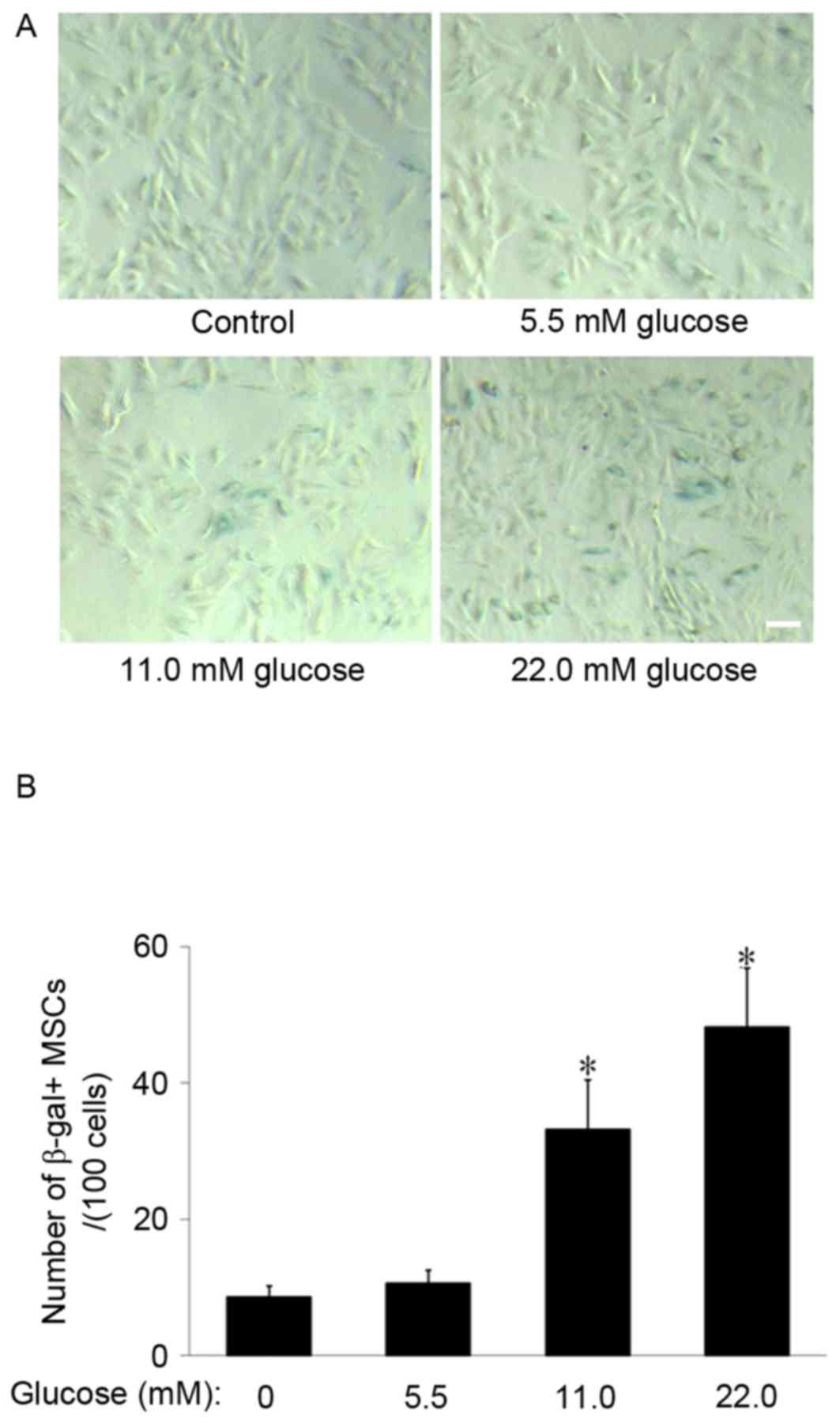
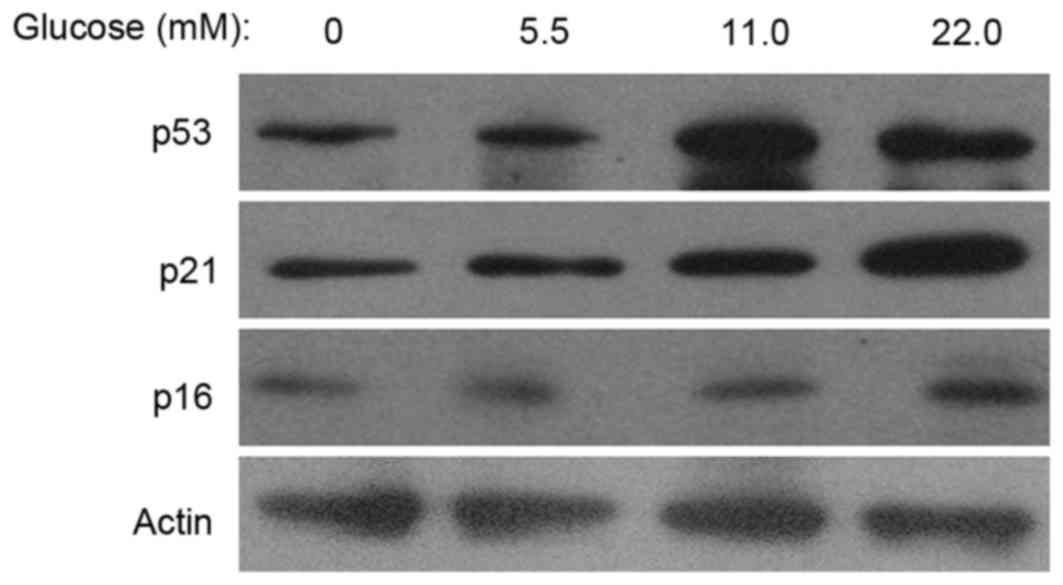
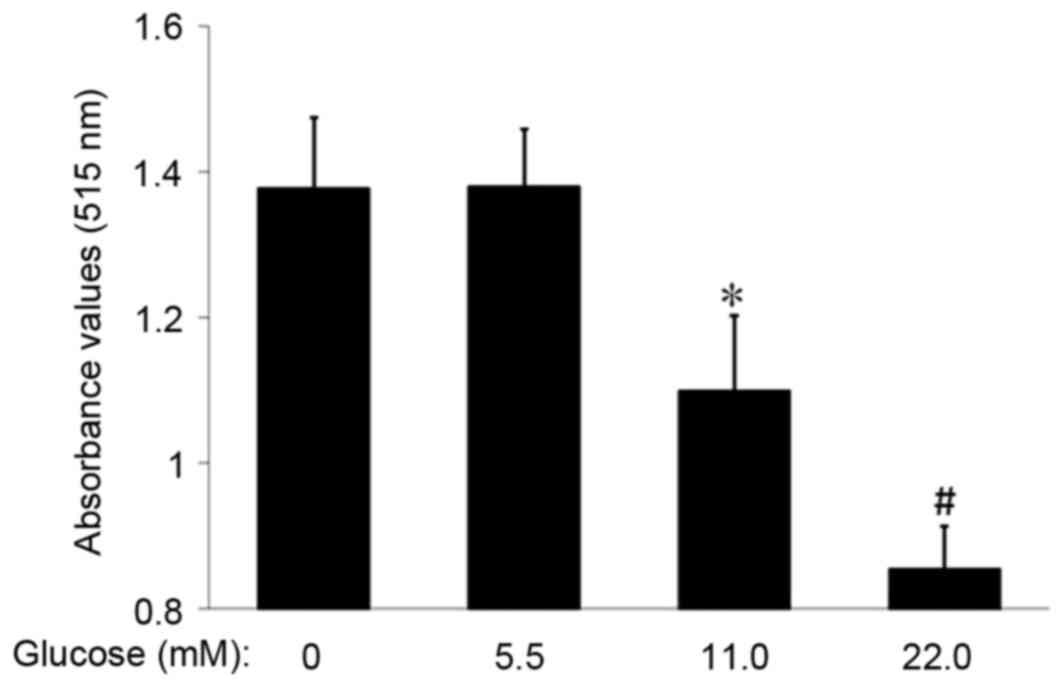
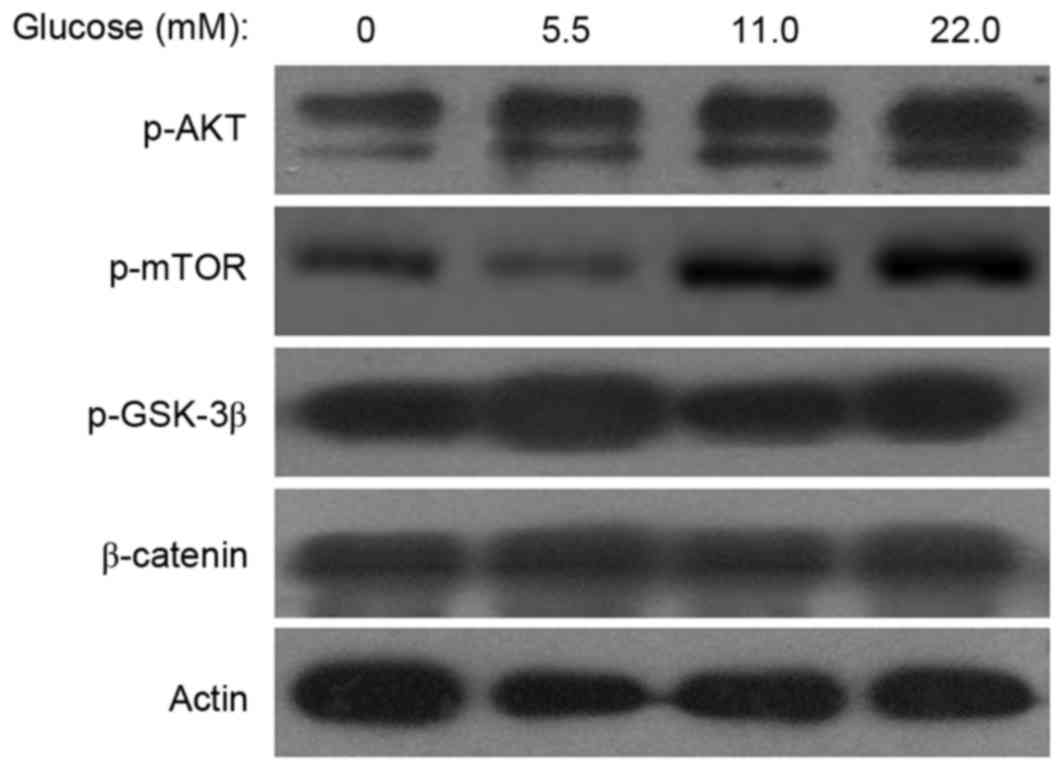
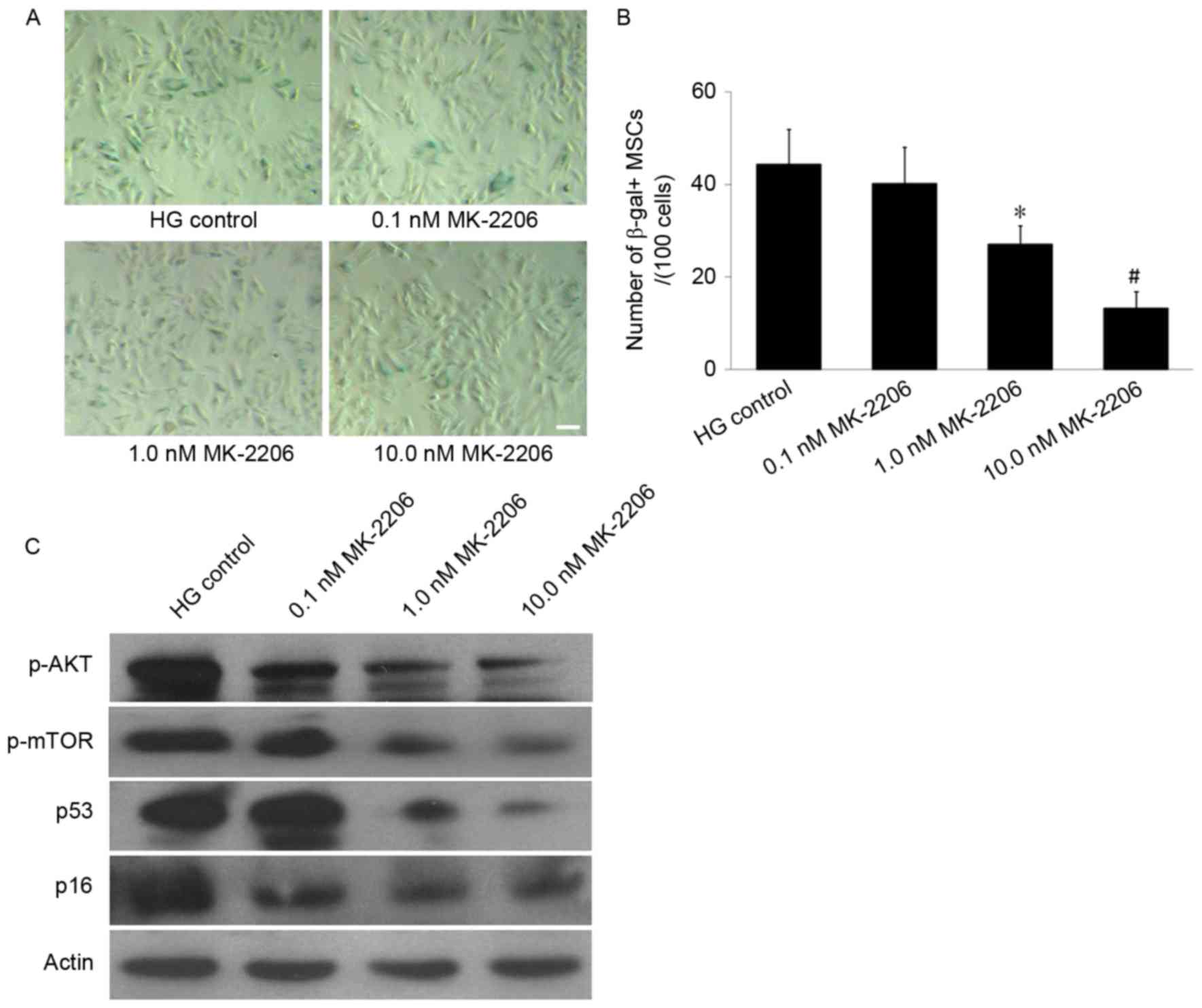
It has previously been demonstrated that glucose is important in the process of stem cell aging. However, the mechanisms of cell senescence induced by high glucose (HG) remain to be elucidated. The preliminary study indicated that D‑galactose induced mesenchymal stem cell (MSCs) aging. The present study demonstrated, following treatment with 11.0 or 22.0 mM HG for 14 days, that HG significantly promoted MSCs aging and the expression levels of phosphorylated (p-)phosphatidylinositol 3-kinase/protein kinase B (Akt) and p‑mammalian target of rapamycin signaling (mTOR) in the HG groups were increased compared with the control group. However, following Akt inhibition with 1.0 or 10.0 nM MK‑2206, which is an Akt‑specific small molecule inhibitor, the senescence‑cell value in the HG group was significantly decreased compared with the control group. These results indicated that HG induced MSCs senescence and this effect was primarily mediated via the Akt/mTOR signaling pathway.
View Figures

Figure 1

Figure 2

Figure 3

Figure 4

Figure 5

View References

1 

Schultz MB and Sinclair DA: When stem cells grow old: Phenotypes and mechanisms of stem cell aging. Development. 143:3–14. 2016. View Article : Google Scholar : PubMed/NCBI

2 

Brunauer R and Kennedy BK: Medicine. Progeria accelerates adult stem cell aging. Science. 348:1093–1094. 2015. View Article : Google Scholar : PubMed/NCBI

3 

Miura Y: Guest editorial: Human mesenchymal stromal/stem cell (MSC). Int J Hematol. 103:119–121. 2016. View Article : Google Scholar : PubMed/NCBI

4 

Asumda FZ: Age-associated changes in the ecological niche: Implications for mesenchymal stem cell aging. Stem Cell Res Ther. 4:472013. View Article : Google Scholar : PubMed/NCBI

5 

de Miguel MP, Fuentes-Julián S, Blázquez-Martínez A, Pascual CY, Aller MA, Arias J and Arnalich-Montiel F: Immunosuppressive properties of mesenchymal stem cells: Advances and applications. Curr Mol Med. 12:574–591. 2012. View Article : Google Scholar : PubMed/NCBI

6 

Ankrum J and Karp JM: Mesenchymal stem cell therapy: Two steps forward, one step back. Trends Mol Med. 16:203–209. 2010. View Article : Google Scholar : PubMed/NCBI

7 

Alt EU, Senst C, Murthy SN, Slakey DP, Dupin CL, Chaffin AE, Kadowitz PJ and Izadpanah R: Aging alters tissue resident mesenchymal stem cell properties. Stem Cell Res. 8:215–225. 2012. View Article : Google Scholar : PubMed/NCBI

8 

Ting CH, Ho PJ and Yen BL: Age-related decreases of serum-response factor levels in human mesenchymal stem cells are involved in skeletal muscle differentiation and engraftment capacity. Stem Cells Dev. 23:1206–1216. 2014. View Article : Google Scholar : PubMed/NCBI

9 

Khan M, Mohsin S, Khan SN and Riazuddin S: Repair of senescent myocardium by mesenchymal stem cells is dependent on the age of donor mice. J Cell Mol Med. 15:1515–1527. 2011. View Article : Google Scholar : PubMed/NCBI

10 

Zhang DY, Wang HJ and Tan YZ: Wnt/β-catenin signaling induces the aging of mesenchymal stem cells through the DNA damage response and the p53/p21 pathway. PLoS One. 6:e213972011. View Article : Google Scholar : PubMed/NCBI

11 

Zhang E, Guo Q, Gao H, Xu R, Teng S and Wu Y: Metformin and resveratrol inhibited high glucose-induced metabolic memory of endothelial senescence through SIRT1/p300/p53/p21 pathway. PLoS One. 10:e01438142015. View Article : Google Scholar : PubMed/NCBI

12 

del Nogal M, Troyano N, Calleros L, Griera M, Rodriguez-Puyol M, Rodriguez-Puyol D and Ruiz-Torres MP: Hyperosmolarity induced by high glucose promotes senescence in human glomerular mesangial cells. Int J Biochem Cell Biol. 54:98–110. 2014. View Article : Google Scholar : PubMed/NCBI

13 

Güemes M, Rahman SA and Hussain K: What is a normal blood glucose? Arch Dis Child. 101:569–574. 2016. View Article : Google Scholar : PubMed/NCBI

14 

Cheng NC, Hsieh TY, Lai HS and Young TH: High glucose-induced reactive oxygen species generation promotes stemness in human adipose-derived stem cells. Cytotherapy. 18:371–383. 2016. View Article : Google Scholar : PubMed/NCBI

15 

Ferraro F, Lymperi S, Méndez-Ferrer S, Saez B, Spencer JA, Yeap BY, Masselli E, Graiani G, Prezioso L, Rizzini EL, et al: Diabetes impairs hematopoietic stem cell mobilization by altering niche function. Sci Transl Med. 3:104ra1012011. View Article : Google Scholar : PubMed/NCBI

16 

Kočí Z, Turnovcová K, Dubský M, Baranovičová L, Holáň V, Chudíčková M, Syková E and Kubinová S: Characterization of human adipose tissue-derived stromal cells isolated from diabetic patient's distal limbs with critical ischemia. Cell Biochem Funct. 32:597–604. 2014. View Article : Google Scholar : PubMed/NCBI

17 

Stolzing A, Coleman N and Scutt A: Glucose-induced replicative senescence in mesenchymal stem cells. Rejuvenation Res. 9:31–35. 2006. View Article : Google Scholar : PubMed/NCBI

18 

Parsch D, Fellenberg J, Brummendorf TH, Eschlbeck AM and Richter W: Telomere length and telomerase activity during expansion and differentiation of human mesenchymal stem cells and chondrocytes. J Mol Med (Berl). 82:49–55. 2004. View Article : Google Scholar : PubMed/NCBI

19 

Estrada JC, Torres Y, Benguría A, Dopazo A, Roche E, Carrera-Quintanar L, Pérez RA, Enríquez JA, Torres R, Ramírez JC, et al: Human mesenchymal stem cell-replicative senescence and oxidative stress are closely linked to aneuploidy. Cell Death Dis. 4:e6912013. View Article : Google Scholar : PubMed/NCBI

20 

Liu S, Liu S, Wang X, Zhou J, Cao Y, Wang F and Duan E: The PI3K-Akt pathway inhibits senescence and promotes self-renewal of human skin-derived precursors in vitro. Aging Cell. 10:661–674. 2011. View Article : Google Scholar : PubMed/NCBI

21 

Iglesias-Bartolome R, Patel V, Cotrim A, Leelahavanichkul K, Molinolo AA, Mitchell JB and Gutkind JS: mTOR inhibition prevents epithelial stem cell senescence and protects from radiation-induced mucositis. Cell Stem Cell. 11:401–414. 2012. View Article : Google Scholar : PubMed/NCBI

22 

Zhang D, Yan B, Yu S, Zhang C, Wang B, Wang Y, Wang J, Yuan Z, Zhang L and Pan J: Coenzyme Q10 inhibits the aging of mesenchymal stem cells induced by D-galactose through Akt/mTOR signaling. Oxid Med Cell Longev. 2015:8672932015. View Article : Google Scholar : PubMed/NCBI

23 

Wang XM, Yao M, Liu SX, Hao J, Liu QJ and Gao F: Interplay between the notch and PI3K/Akt pathways in high glucose-induced podocyte apoptosis. Am J Physiol Renal Physiol. 306:F205–F213. 2014. View Article : Google Scholar : PubMed/NCBI

24 

Montes DK, Brenet M, Muñoz VC, Burgos PV, Villanueva CI, Figueroa CD and González CB: Vasopressin activates Akt/mTOR pathway in smooth muscle cells cultured in high glucose concentration. Biochem Biophys Res Commun. 441:923–928. 2013. View Article : Google Scholar : PubMed/NCBI

25 

Guan G, Han H, Yang Y, Jin Y, Wang X and Liu X: Neferine prevented hyperglycemia-induced endothelial cell apoptosis through suppressing ROS/Akt/NF-κB signal. Endocrine. 47:764–771. 2014. View Article : Google Scholar : PubMed/NCBI

26 

Wakao S, Kuroda Y, Ogura F, Shigemoto T and Dezawa M: Regenerative effects of mesenchymal stem cells: Contribution of muse cells, a novel pluripotent stem cell type that resides in mesenchymal cells. Cells. 1:1045–1060. 2012. View Article : Google Scholar : PubMed/NCBI

27 

Tomé M, Sepúlveda JC, Delgado M, Andrades JA, Campisi J, González MA and Bernad A: miR-335 correlates with senescence/aging in human mesenchymal stem cells and inhibits their therapeutic actions through inhibition of AP-1 activity. Stem Cells. 32:2229–2244. 2014. View Article : Google Scholar : PubMed/NCBI

28 

Raggi C and Berardi AC: Mesenchymal stem cells, aging and regenerative medicine. Muscles Ligaments Tendons J. 2:239–242. 2012.PubMed/NCBI

29 

Rachmiel M, Cohen M, Heymen E, Lezinger M, Inbar D, Gilat S, Bistritzer T, Leshem G, Kan-Dror E, Lahat E and Ekstein D: Hyperglycemia is associated with simultaneous alterations in electrical brain activity in youths with type 1 diabetes mellitus. Clin Neurophysiol. 127:1188–1195. 2016. View Article : Google Scholar : PubMed/NCBI

30 

Galindo RJ and Wallia A: Hyperglycemia and diabetes mellitus following organ transplantation. Curr Diab Rep. 16:142016. View Article : Google Scholar : PubMed/NCBI

31 

Kojima H, Kim J and Chan L: Emerging roles of hematopoietic cells in the pathobiology of diabetic complications. Trends Endocrinol Metab. 25:178–187. 2014. View Article : Google Scholar : PubMed/NCBI

32 

Chang TC, Hsu MF and Wu KK: High glucose induces bone marrow-derived mesenchymal stem cell senescence by upregulating autophagy. PLoS One. 10:e01265372015. View Article : Google Scholar : PubMed/NCBI

33 

Zhang DY, Pan Y, Zhang C, Yan BX, Yu SS, Wu DL, Shi MM, Shi K, Cai XX, Zhou SS, et al: Wnt/β-catenin signaling induces the aging of mesenchymal stem cells through promoting the ROS production. Mol Cell Biochem. 374:13–20. 2013. View Article : Google Scholar : PubMed/NCBI

34 

Liu L, Hu X, Cai GY, Lv Y, Zhuo L, Gao JJ, Cui SY, Feng Z, Fu B and Chen XM: High glucose-induced hypertrophy of mesangial cells is reversed by connexin43 overexpression via PTEN/Akt/mTOR signaling. Nephrol Dial Transplant. 27:90–100. 2012. View Article : Google Scholar : PubMed/NCBI

35 

Montani MS Gilardini, Granato M, Cuomo L, Valia S, Di Renzo L, D'Orazi G, Faggioni A and Cirone M: High glucose and hyperglycemic sera from type 2 diabetic patients impair DC differentiation by inducing ROS and activating Wnt/β-catenin and p38 MAPK. Biochim Biophys Acta. 1862:805–813. 2016. View Article : Google Scholar : PubMed/NCBI

36 

Mehrfarjam Z, Esmaeili F, Shabani L and Ebrahimie E: Induction of pancreatic β cell gene expression in mesenchymal stem cells. Cell Biol Int. 40:486–500. 2016. View Article : Google Scholar : PubMed/NCBI

37 

Sun Y, Chen L, Hou XG, Hou WK, Dong JJ, Sun L, Tang KX, Wang B, Song J, Li H and Wang KX: Differentiation of bone marrow-derived mesenchymal stem cells from diabetic patients into insulin-producing cells in vitro. Chin Med J (Engl). 120:771–776. 2007.PubMed/NCBI

38 

Hashemian SJ, Kouhnavard M and Nasli-Esfahani E: Mesenchymal stem cells: Rising concerns over their application in treatment of type one diabetes mellitus. J Diabetes Res. 2015:6751032015. View Article : Google Scholar : PubMed/NCBI

39 

Rekittke NE, Ang M, Rawat D, Khatri R and Linn T: Regenerative therapy of type 1 diabetes mellitus: From pancreatic islet transplantation to mesenchymal stem cells. Stem Cells Int. 2016:37646812016. View Article : Google Scholar : PubMed/NCBI

40 

Fadini GP, Sartore S, Schiavon M, Albiero M, Baesso I, Cabrelle A, Agostini C and Avogaro A: Diabetes impairs progenitor cell mobilisation after hindlimb ischaemia-reperfusion injury in rats. Diabetologia. 49:3075–3084. 2006. View Article : Google Scholar : PubMed/NCBI

41 

Shin L and Peterson DA: Impaired therapeutic capacity of autologous stem cells in a model of type 2 diabetes. Stem Cells Transl Med. 1:125–135. 2012. View Article : Google Scholar : PubMed/NCBI

Related Articles

  • Abstract
  • View
  • Download
  • Twitter
Copy and paste a formatted citation
Spandidos Publications style
Zhang D, Lu H, Chen Z, Wang Y, Lin J, Xu S, Zhang C, Wang B, Yuan Z, Feng X, Feng X, et al: High glucose induces the aging of mesenchymal stem cells via Akt/mTOR signaling. Mol Med Rep 16: 1685-1690, 2017.
APA
Zhang, D., Lu, H., Chen, Z., Wang, Y., Lin, J., Xu, S. ... Pan, J. (2017). High glucose induces the aging of mesenchymal stem cells via Akt/mTOR signaling. Molecular Medicine Reports, 16, 1685-1690. https://doi.org/10.3892/mmr.2017.6832
MLA
Zhang, D., Lu, H., Chen, Z., Wang, Y., Lin, J., Xu, S., Zhang, C., Wang, B., Yuan, Z., Feng, X., Jiang, X., Pan, J."High glucose induces the aging of mesenchymal stem cells via Akt/mTOR signaling". Molecular Medicine Reports 16.2 (2017): 1685-1690.
Chicago
Zhang, D., Lu, H., Chen, Z., Wang, Y., Lin, J., Xu, S., Zhang, C., Wang, B., Yuan, Z., Feng, X., Jiang, X., Pan, J."High glucose induces the aging of mesenchymal stem cells via Akt/mTOR signaling". Molecular Medicine Reports 16, no. 2 (2017): 1685-1690. https://doi.org/10.3892/mmr.2017.6832
Copy and paste a formatted citation
x
Spandidos Publications style
Zhang D, Lu H, Chen Z, Wang Y, Lin J, Xu S, Zhang C, Wang B, Yuan Z, Feng X, Feng X, et al: High glucose induces the aging of mesenchymal stem cells via Akt/mTOR signaling. Mol Med Rep 16: 1685-1690, 2017.
APA
Zhang, D., Lu, H., Chen, Z., Wang, Y., Lin, J., Xu, S. ... Pan, J. (2017). High glucose induces the aging of mesenchymal stem cells via Akt/mTOR signaling. Molecular Medicine Reports, 16, 1685-1690. https://doi.org/10.3892/mmr.2017.6832
MLA
Zhang, D., Lu, H., Chen, Z., Wang, Y., Lin, J., Xu, S., Zhang, C., Wang, B., Yuan, Z., Feng, X., Jiang, X., Pan, J."High glucose induces the aging of mesenchymal stem cells via Akt/mTOR signaling". Molecular Medicine Reports 16.2 (2017): 1685-1690.
Chicago
Zhang, D., Lu, H., Chen, Z., Wang, Y., Lin, J., Xu, S., Zhang, C., Wang, B., Yuan, Z., Feng, X., Jiang, X., Pan, J."High glucose induces the aging of mesenchymal stem cells via Akt/mTOR signaling". Molecular Medicine Reports 16, no. 2 (2017): 1685-1690. https://doi.org/10.3892/mmr.2017.6832
Follow us
  • Twitter
  • LinkedIn
  • Facebook
About
  • Spandidos Publications
  • Careers
  • Cookie Policy
  • Privacy Policy
How can we help?
  • Help
  • Live Chat
  • Contact
  • Email to our Support Team