Spandidos Publications Logo
  • About
    • About Spandidos
    • Aims and Scopes
    • Abstracting and Indexing
    • Editorial Policies
    • Reprints and Permissions
    • Job Opportunities
    • Terms and Conditions
    • Contact
  • Journals
    • All Journals
    • Oncology Letters
      • Oncology Letters
      • Information for Authors
      • Editorial Policies
      • Editorial Board
      • Aims and Scope
      • Abstracting and Indexing
      • Bibliographic Information
      • Archive
    • International Journal of Oncology
      • International Journal of Oncology
      • Information for Authors
      • Editorial Policies
      • Editorial Board
      • Aims and Scope
      • Abstracting and Indexing
      • Bibliographic Information
      • Archive
    • Molecular and Clinical Oncology
      • Molecular and Clinical Oncology
      • Information for Authors
      • Editorial Policies
      • Editorial Board
      • Aims and Scope
      • Abstracting and Indexing
      • Bibliographic Information
      • Archive
    • Experimental and Therapeutic Medicine
      • Experimental and Therapeutic Medicine
      • Information for Authors
      • Editorial Policies
      • Editorial Board
      • Aims and Scope
      • Abstracting and Indexing
      • Bibliographic Information
      • Archive
    • International Journal of Molecular Medicine
      • International Journal of Molecular Medicine
      • Information for Authors
      • Editorial Policies
      • Editorial Board
      • Aims and Scope
      • Abstracting and Indexing
      • Bibliographic Information
      • Archive
    • Biomedical Reports
      • Biomedical Reports
      • Information for Authors
      • Editorial Policies
      • Editorial Board
      • Aims and Scope
      • Abstracting and Indexing
      • Bibliographic Information
      • Archive
    • Oncology Reports
      • Oncology Reports
      • Information for Authors
      • Editorial Policies
      • Editorial Board
      • Aims and Scope
      • Abstracting and Indexing
      • Bibliographic Information
      • Archive
    • Molecular Medicine Reports
      • Molecular Medicine Reports
      • Information for Authors
      • Editorial Policies
      • Editorial Board
      • Aims and Scope
      • Abstracting and Indexing
      • Bibliographic Information
      • Archive
    • World Academy of Sciences Journal
      • World Academy of Sciences Journal
      • Information for Authors
      • Editorial Policies
      • Editorial Board
      • Aims and Scope
      • Abstracting and Indexing
      • Bibliographic Information
      • Archive
    • International Journal of Functional Nutrition
      • International Journal of Functional Nutrition
      • Information for Authors
      • Editorial Policies
      • Editorial Board
      • Aims and Scope
      • Abstracting and Indexing
      • Bibliographic Information
      • Archive
    • International Journal of Epigenetics
      • International Journal of Epigenetics
      • Information for Authors
      • Editorial Policies
      • Editorial Board
      • Aims and Scope
      • Abstracting and Indexing
      • Bibliographic Information
      • Archive
    • Medicine International
      • Medicine International
      • Information for Authors
      • Editorial Policies
      • Editorial Board
      • Aims and Scope
      • Abstracting and Indexing
      • Bibliographic Information
      • Archive
  • Articles
  • Information
    • Information for Authors
    • Information for Reviewers
    • Information for Librarians
    • Information for Advertisers
    • Conferences
  • Language Editing
Spandidos Publications Logo
  • About
    • About Spandidos
    • Aims and Scopes
    • Abstracting and Indexing
    • Editorial Policies
    • Reprints and Permissions
    • Job Opportunities
    • Terms and Conditions
    • Contact
  • Journals
    • All Journals
    • Biomedical Reports
      • Information for Authors
      • Editorial Policies
      • Editorial Board
      • Aims and Scope
      • Abstracting and Indexing
      • Bibliographic Information
      • Archive
    • Experimental and Therapeutic Medicine
      • Information for Authors
      • Editorial Policies
      • Editorial Board
      • Aims and Scope
      • Abstracting and Indexing
      • Bibliographic Information
      • Archive
    • International Journal of Epigenetics
      • Information for Authors
      • Editorial Policies
      • Editorial Board
      • Aims and Scope
      • Abstracting and Indexing
      • Bibliographic Information
      • Archive
    • International Journal of Functional Nutrition
      • Information for Authors
      • Editorial Policies
      • Editorial Board
      • Aims and Scope
      • Abstracting and Indexing
      • Bibliographic Information
      • Archive
    • International Journal of Molecular Medicine
      • Information for Authors
      • Editorial Policies
      • Editorial Board
      • Aims and Scope
      • Abstracting and Indexing
      • Bibliographic Information
      • Archive
    • International Journal of Oncology
      • Information for Authors
      • Editorial Policies
      • Editorial Board
      • Aims and Scope
      • Abstracting and Indexing
      • Bibliographic Information
      • Archive
    • Medicine International
      • Information for Authors
      • Editorial Policies
      • Editorial Board
      • Aims and Scope
      • Abstracting and Indexing
      • Bibliographic Information
      • Archive
    • Molecular and Clinical Oncology
      • Information for Authors
      • Editorial Policies
      • Editorial Board
      • Aims and Scope
      • Abstracting and Indexing
      • Bibliographic Information
      • Archive
    • Molecular Medicine Reports
      • Information for Authors
      • Editorial Policies
      • Editorial Board
      • Aims and Scope
      • Abstracting and Indexing
      • Bibliographic Information
      • Archive
    • Oncology Letters
      • Information for Authors
      • Editorial Policies
      • Editorial Board
      • Aims and Scope
      • Abstracting and Indexing
      • Bibliographic Information
      • Archive
    • Oncology Reports
      • Information for Authors
      • Editorial Policies
      • Editorial Board
      • Aims and Scope
      • Abstracting and Indexing
      • Bibliographic Information
      • Archive
    • World Academy of Sciences Journal
      • Information for Authors
      • Editorial Policies
      • Editorial Board
      • Aims and Scope
      • Abstracting and Indexing
      • Bibliographic Information
      • Archive
  • Articles
  • Information
    • For Authors
    • For Reviewers
    • For Librarians
    • For Advertisers
    • Conferences
  • Language Editing
Login Register Submit
  • This site uses cookies
  • You can change your cookie settings at any time by following the instructions in our Cookie Policy. To find out more, you may read our Privacy Policy.

    I agree
Search articles by DOI, keyword, author or affiliation
Search
Advanced Search
presentation
Molecular Medicine Reports
Join Editorial Board Propose a Special Issue
Print ISSN: 1791-2997 Online ISSN: 1791-3004
Journal Cover
December-2017 Volume 16 Issue 6

Full Size Image

Sign up for eToc alerts
Recommend to Library

Journals

International Journal of Molecular Medicine

International Journal of Molecular Medicine

International Journal of Molecular Medicine is an international journal devoted to molecular mechanisms of human disease.

International Journal of Oncology

International Journal of Oncology

International Journal of Oncology is an international journal devoted to oncology research and cancer treatment.

Molecular Medicine Reports

Molecular Medicine Reports

Covers molecular medicine topics such as pharmacology, pathology, genetics, neuroscience, infectious diseases, molecular cardiology, and molecular surgery.

Oncology Reports

Oncology Reports

Oncology Reports is an international journal devoted to fundamental and applied research in Oncology.

Experimental and Therapeutic Medicine

Experimental and Therapeutic Medicine

Experimental and Therapeutic Medicine is an international journal devoted to laboratory and clinical medicine.

Oncology Letters

Oncology Letters

Oncology Letters is an international journal devoted to Experimental and Clinical Oncology.

Biomedical Reports

Biomedical Reports

Explores a wide range of biological and medical fields, including pharmacology, genetics, microbiology, neuroscience, and molecular cardiology.

Molecular and Clinical Oncology

Molecular and Clinical Oncology

International journal addressing all aspects of oncology research, from tumorigenesis and oncogenes to chemotherapy and metastasis.

World Academy of Sciences Journal

World Academy of Sciences Journal

Multidisciplinary open-access journal spanning biochemistry, genetics, neuroscience, environmental health, and synthetic biology.

International Journal of Functional Nutrition

International Journal of Functional Nutrition

Open-access journal combining biochemistry, pharmacology, immunology, and genetics to advance health through functional nutrition.

International Journal of Epigenetics

International Journal of Epigenetics

Publishes open-access research on using epigenetics to advance understanding and treatment of human disease.

Medicine International

Medicine International

An International Open Access Journal Devoted to General Medicine.

Journal Cover
December-2017 Volume 16 Issue 6

Full Size Image

Sign up for eToc alerts
Recommend to Library

  • Article
  • Citations
    • Cite This Article
    • Download Citation
    • Create Citation Alert
    • Remove Citation Alert
    • Cited By
  • Similar Articles
    • Related Articles (in Spandidos Publications)
    • Similar Articles (Google Scholar)
    • Similar Articles (PubMed)
  • Download PDF
  • Download XML
  • View XML
Article Open Access

Defective insulin signaling and the protective effects of dimethyldiguanide during follicular development in the ovaries of polycystic ovary syndrome

  • Authors:
    • Fan Wang
    • Shaobing Wang
    • Zhenghong Zhang
    • Qingqiang Lin
    • Yiping Liu
    • Yijun Xiao
    • Kaizhuan Xiao
    • Zhengchao Wang
  • View Affiliations / Copyright

    Affiliations: Provincial Key Laboratory for Developmental Biology and Neurosciences, College of Life Sciences, Fujian Normal University, Fuzhou, Fujian 350007, P.R. China, State Key Laboratory for Evaluation of Exercise Physiological Functions from General Administration of Sport of China, School of Physical Education and Sport Sciences, Fujian Normal University, Fuzhou, Fujian 350007, P.R. China
    Copyright: © Wang et al. This is an open access article distributed under the terms of Creative Commons Attribution License.
  • Pages: 8164-8170
    |
    Published online on: September 29, 2017
       https://doi.org/10.3892/mmr.2017.7678
  • Expand metrics +
Metrics: Total Views: 0 (Spandidos Publications: | PMC Statistics: )
Metrics: Total PDF Downloads: 0 (Spandidos Publications: | PMC Statistics: )
Cited By (CrossRef): 0 citations Loading Articles...

This article is mentioned in:


Abstract

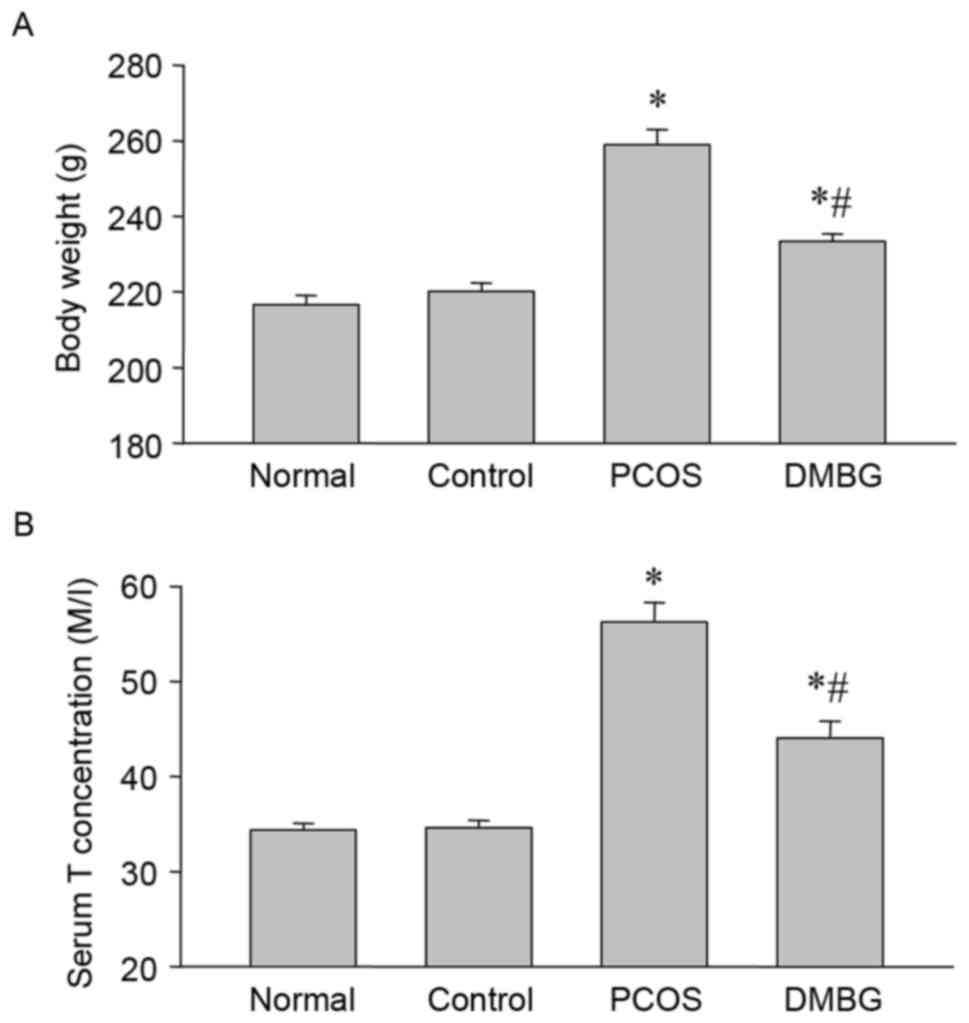
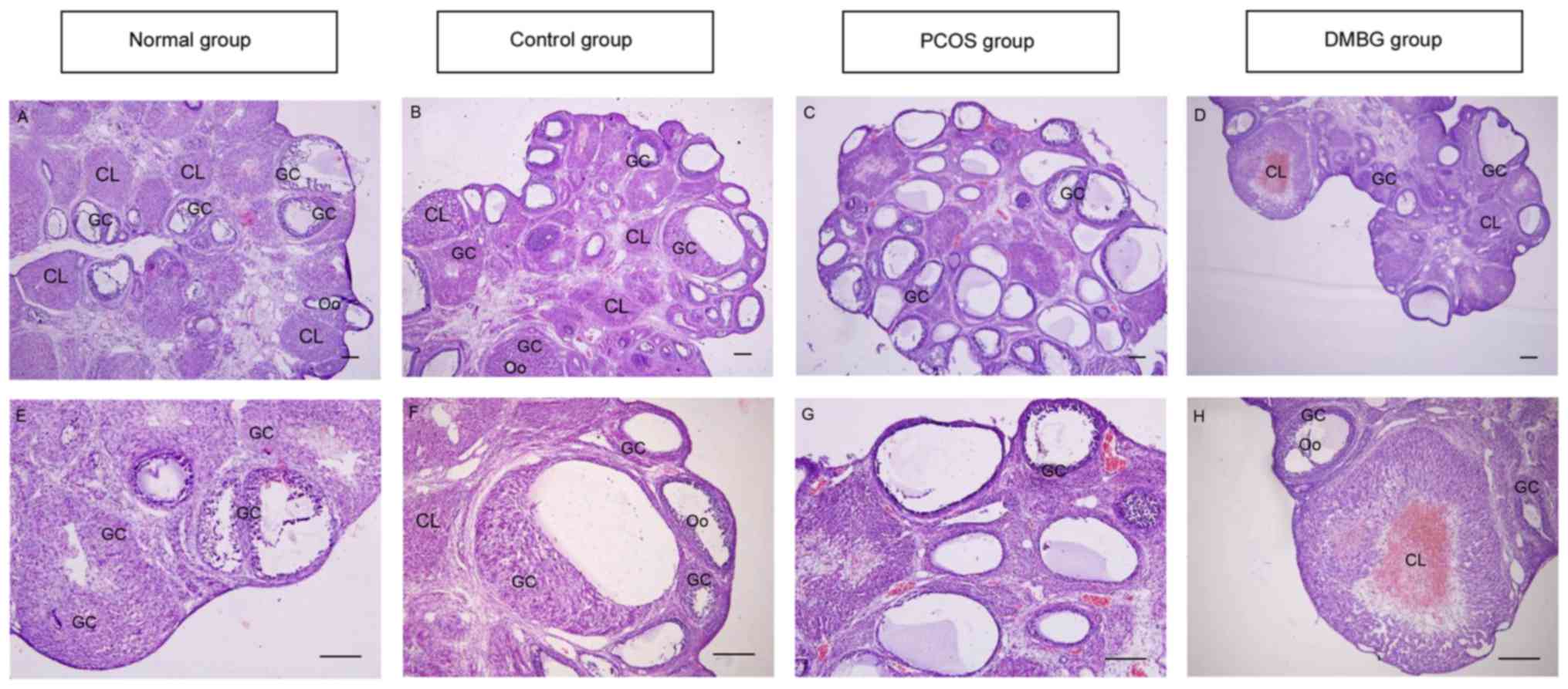
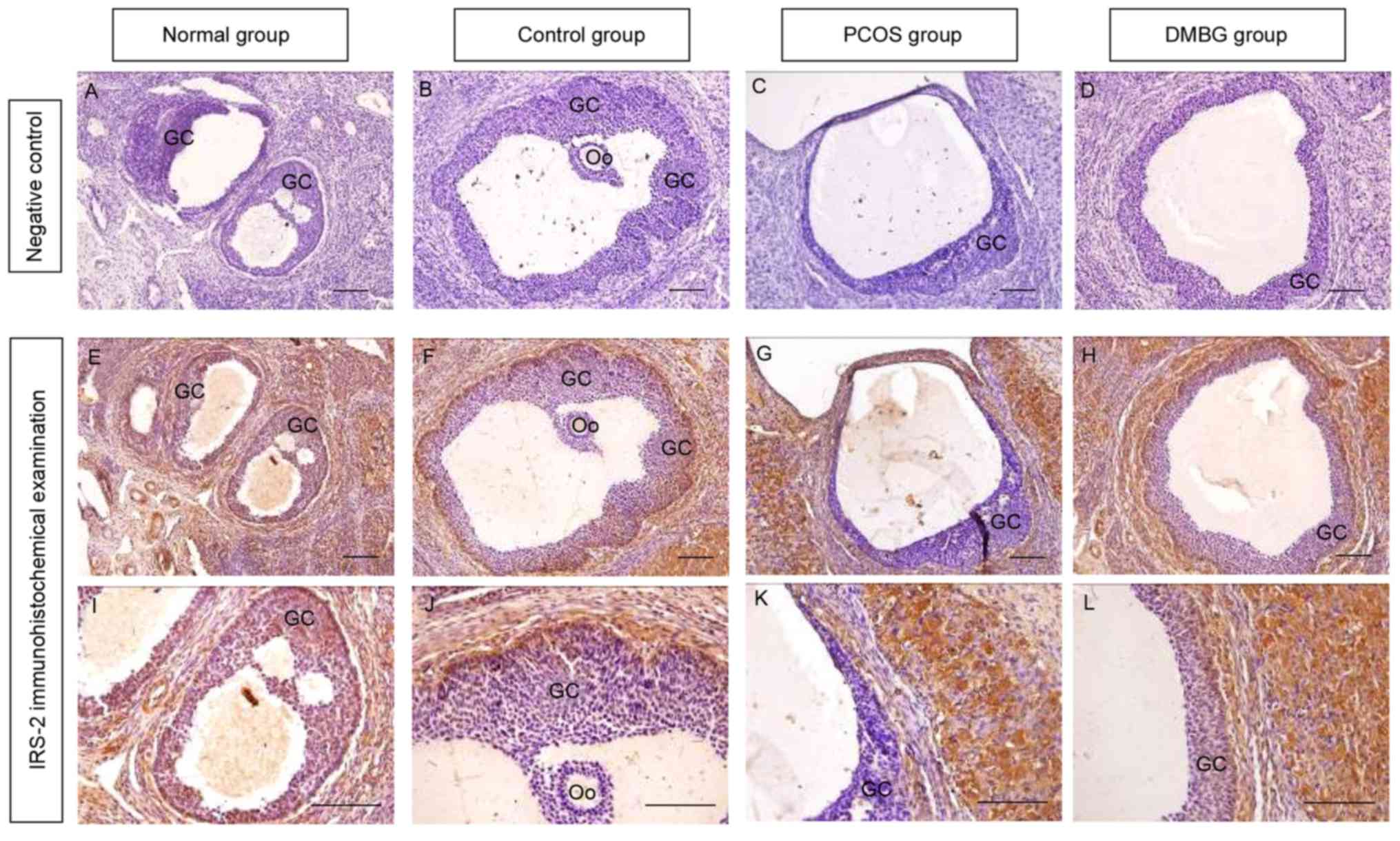
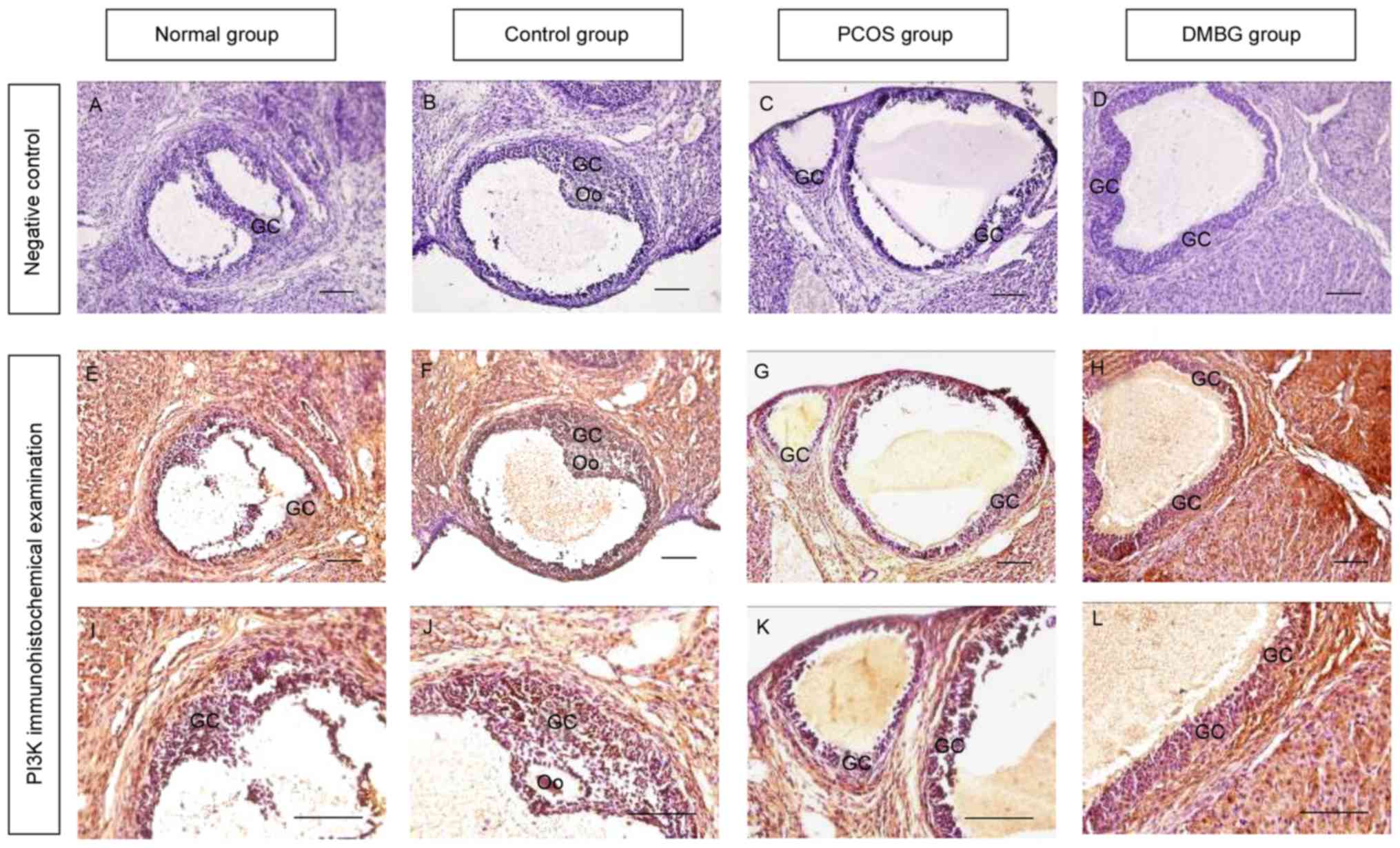
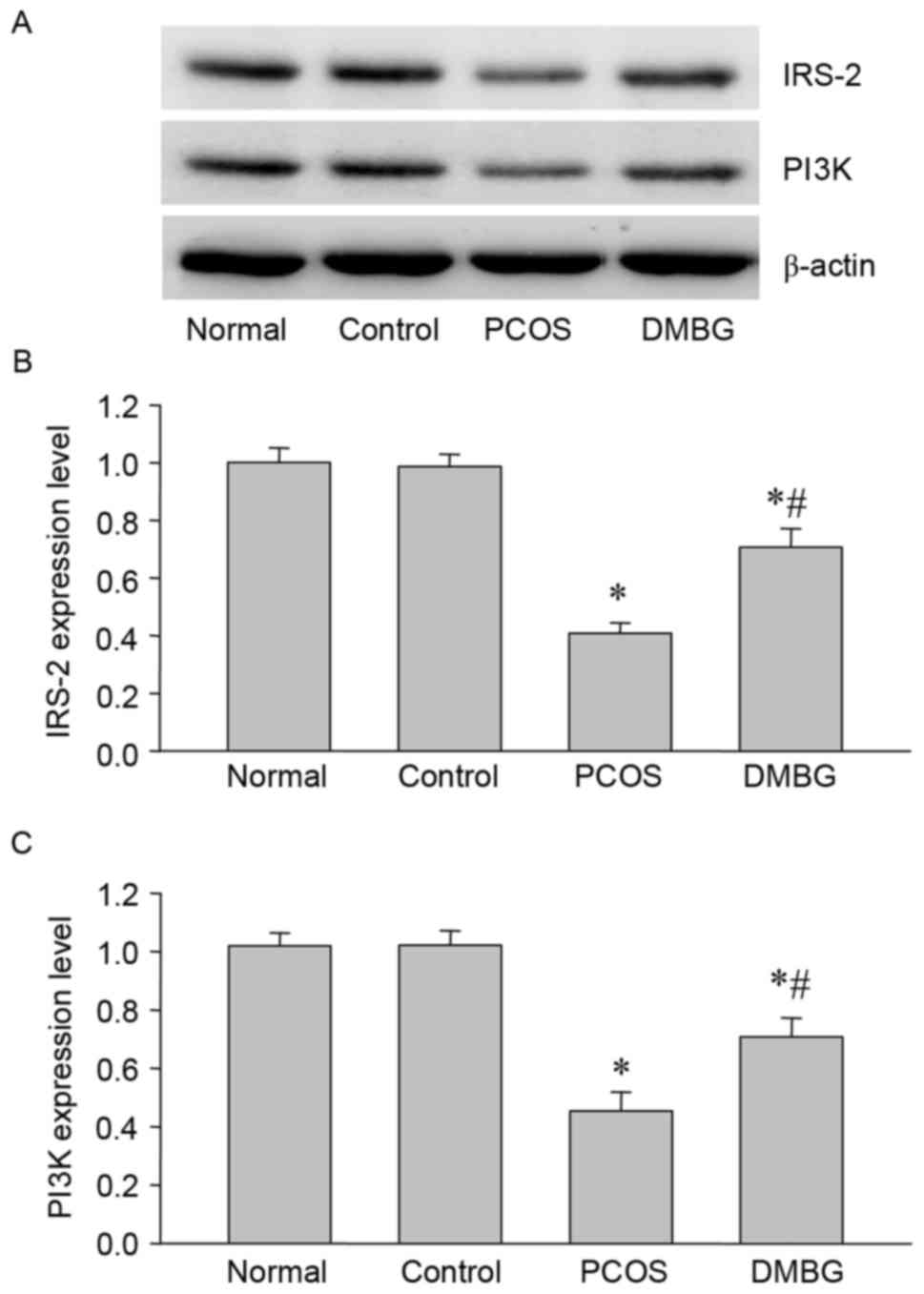
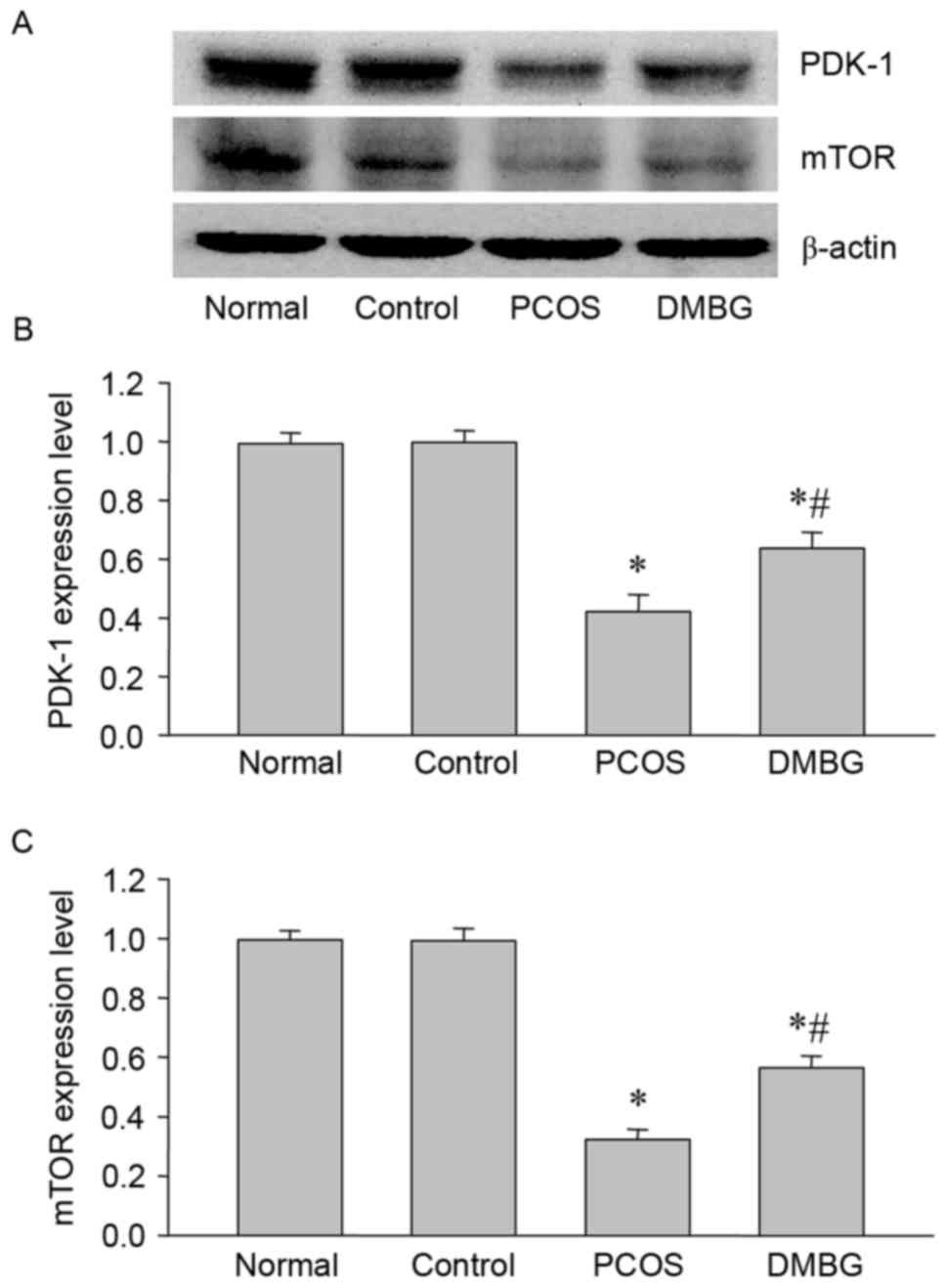
It is established that the physiological effects of insulin are primarily mediated by the insulin signaling pathway. However, a defective insulin signaling is closely associated with the clinical manifestations of polycystic ovary syndrome (PCOS), which include excess androgen levels, insulin resistance and anovulation, and is involved in the pathophysiology of PCOS at the molecular level. Dimethyldiguanide (DMBG) has been widely employed to alleviate reproduction dysfunction in women with PCOS, however, the exact mechanism of this effect remains unclear. The objective of the present study was to investigate the effects of DMBG on the expression of the insulin signaling pathway in the ovaries of rats with PCOS, and to identify the potential underlying molecular mechanisms of these effects in PCOS. In the present study, a PCOS rat model was induced by letrozole, and successful establishment of the model was confirmed by examining ovarian histology and determining serum testosterone levels, by hematoxylin and eosin staining and ELISA, respectively. Subsequently, the expression of two key elements of insulin signaling, insulin receptor substrate (IRS)‑2 and phosphatidylinositol 3‑kinase (PI3K), was determined by immunohistochemistry and western blot analysis. The results demonstrated that IRS‑2 and PI3K expression was markedly decreased in PCOS ovaries, which was rescued by DMBG treatment. These results indicate that IRS‑2/PI3K signaling may be involved in the development of PCOS and the therapeutic effects of DMBG on PCOS. To further confirm the effects of DMBG on insulin signaling expression during this process, the expression of an additional two downstream proteins, phosphoinositide‑dependent kinase‑1 (PDK‑1) and the mammalian target of rapamycin (mTOR), was also investigated in the present study, and the results demonstrated that the expression of PDK‑1 and mTOR was significantly reduced in PCOS ovaries and increased following DMBG treatment, further indicating that altered insulin signaling may have an important role in the development and treatment of PCOS. In conclusion, the results of the present study indicate that the reduced expression of proteins involved in insulin signaling may contribute to the development of the clinical features of PCOS, and DMBG reverses reduced expression of insulin signaling components, by a mechanism that is yet to be determined, to attenuate certain symptoms of PCOS, such as obesity. To the best of our knowledge, the present study is the first to provide data regarding the detailed changes of insulin signaling during the development and treatment of PCOS, and may provide an important reference for clinical PCOS treatment.
View Figures

Figure 1

Figure 2

Figure 3

Figure 4

Figure 5

Figure 6

View References

1 

Broekmans FJ and Fauser BC: Diagnostic criteria for polycystic ovarian syndrome. Endocrine. 30:3–11. 2006. View Article : Google Scholar : PubMed/NCBI

2 

Lane DE: Polycystic ovary syndrome and its differential diagnosis. Obstet Gynecol Surv. 61:125–135. 2006. View Article : Google Scholar : PubMed/NCBI

3 

Makker A, Goel MM, Das V and Agarwal A: PI3K-Akt-mTOR and MAPK signaling pathways in polycystic ovarian syndrome, uterine leiomyomas and endometriosis: An update. Gynecol Endocrinol. 28:175–181. 2012. View Article : Google Scholar : PubMed/NCBI

4 

Zhao Y, Zhang C, Huang Y, Yu Y, Li R, Li M, Liu N, Liu P and Qiao J: Up-regulated expression of WNT5a increases inflammation and oxidative stress via PI3K/AKT/NF-κB signaling in the granulosa cells of PCOS patients. J Clin Endocrinol Metab. 100:201–211. 2015. View Article : Google Scholar : PubMed/NCBI

5 

Li T, Mo H, Chen W, Li L, Xiao Y, Zhang J, Li X and Lu Y: Role of the PI3K-Akt signaling pathway in the pathogenesis of polycystic ovary syndrome. Reprod Sci. 24:646–655. 2017. View Article : Google Scholar : PubMed/NCBI

6 

Azziz R: Polycystic ovary syndrome, insulin resistance and molecular defects of insulin signaling. J Clin Endocrinol Metab. 87:4085–4087. 2002. View Article : Google Scholar : PubMed/NCBI

7 

Dunaif A: Insulin resistance in women with polycystic ovary syndrome. Fertil Steril. 86 Suppl 1:S13–S14. 2006. View Article : Google Scholar : PubMed/NCBI

8 

Vollenweider P: Insulin resistant states and insulin signaling. Clin Chem Lab Med. 41:1107–1119. 2003. View Article : Google Scholar : PubMed/NCBI

9 

Skrgatić L, Baldani DP, Gersak K, Cerne JZ, Ferk P and Corić M: Genetic polymorphisms of INS, INSR and IRS-1 genes are not associated with polycystic ovary syndrome in Croatian women. Coll Antropol. 37:141–146. 2013.

10 

Ciaraldi TP: Molecular defects of insulin action in the polycystic ovary syndrome: Possible tissue specificity. J Pediatr Endocrinol Metab. 13 Suppl 5:S1291–S1293. 2000.

11 

Diamanti-Kandarakis E, Argyrakopoulou G, Economou F, Kandaraki E and Koutsilieris M: Defects in insulin signaling pathways in ovarian steroidogenesis and other tissues in polycystic ovary syndrome (PCOS). J Steroid Biochem Mol Biol. 109:242–246. 2008. View Article : Google Scholar : PubMed/NCBI

12 

Book CB and Dunaif A: Selective insulin resistance in the polycystic ovary syndrome. J Clin Endocrinol Metab. 84:3110–3116. 1999. View Article : Google Scholar : PubMed/NCBI

13 

Wu XK, Zhou SY, Liu JX, Pöllänen P, Sallinen K, Mäkinen M and Erkkola R: Selective ovary resistance to insulin signaling in women with polycystic ovary syndrome. Fertil Steril. 80:954–965. 2003. View Article : Google Scholar : PubMed/NCBI

14 

Venkatesan AM, Dunaif A and Corbould A: Insulin resistance in polycystic ovary syndrome: Progress and paradoxes. Recent Prog Horm Res. 56:295–308. 2001. View Article : Google Scholar : PubMed/NCBI

15 

Shah KN and Patel SS: Phosphatidylinositide-3 kinase: A newer molecular target in metabolic and hormonal pathway of polycystic ovary syndrome. Exp Clin Endocrinol Diabetes. 122:261–267. 2014. View Article : Google Scholar : PubMed/NCBI

16 

Saltiel AR and Pessin JE: Insulin signaling pathways in time and space. Trends Cell Biol. 12:65–71. 2002. View Article : Google Scholar : PubMed/NCBI

17 

Tan MH, Alquraini H, Mizokami-Stout K and MacEachern M: Metformin: From research to clinical practice. Endocrinol Metab Clin North Am. 45:819–843. 2016. View Article : Google Scholar : PubMed/NCBI

18 

Genazzani AD, Ricchieri F and Lanzoni C: Use of metformin in the treatment of polycystic ovary syndrome. Womens Health (Lond). 6:577–593. 2010. View Article : Google Scholar : PubMed/NCBI

19 

Fruzzetti F, Perini D, Russo M, Bucci F and Gadducci A: Comparison of two insulin sensitizers, metformin and myo-inositol, in women with polycystic ovary syndrome (PCOS). Gynecol Endocrinol. 33:39–42. 2017. View Article : Google Scholar : PubMed/NCBI

20 

Tan X, Li S, Chang Y, Fang C, Liu H, Zhang X and Wang Y: Effect of metformin treatment during pregnancy on women with PCOS: A systematic review and meta-analysis. Clin Invest Med. 39:E120–E131. 2016. View Article : Google Scholar : PubMed/NCBI

21 

Genazzani AD, Strucchi C, Luisi M, Casarosa E, Lanzoni C, Baraldi E, Ricchieri F, Mehmeti H and Genazzani AR: Metformin administration modulates neurosteroids secretion in non-obese amenorrhoic patients with polycystic ovary syndrome. Gynecol Endocrinol. 22:36–43. 2006. View Article : Google Scholar : PubMed/NCBI

22 

Genazzani AD, Lanzoni C, Ricchieri F, Baraldi E, Casarosa E and Jasonni VM: Metformin administration is more effective when non-obese patients with polycystic ovary syndrome show both hyperandrogenism and hyperinsulinemia. Gynecol Endocrinol. 23:146–152. 2007. View Article : Google Scholar : PubMed/NCBI

23 

Wang F, Zhang Z and Wang Z, Xiao K, Wang Q, Su J and Wang Z: Expression and clinical significance of the HIF-1a/ET-2 signaling pathway during the development and treatment of polycystic ovary syndrome. J Mol Histol. 46:173–181. 2015. View Article : Google Scholar : PubMed/NCBI

24 

Palomba S, Falbo A, Zullo F and Orio F Jr: Evidence-based and potential benefits of metformin in the polycystic ovary syndrome: A comprehensive review. Endocr Rev. 30:1–50. 2009. View Article : Google Scholar : PubMed/NCBI

25 

Li X, Guo YR, Lin JF, Feng Y, Billig H and Shao RJ: Combination of diane-35 and metformin to treat early endometrial carcinoma in PCOS women with insulin resistance. J Cancer. 5:173–181. 2014. View Article : Google Scholar : PubMed/NCBI

26 

White MF: The IRS-signaling system: A network of docking proteins that mediate insulin and cytokine action. Recent Prog Horm Res. 53:119–138. 1998.PubMed/NCBI

27 

Withers DJ, Gutierrez JS, Towery H, Burks DJ, Ren JM, Previs S, Zhang Y, Bernal D, Pons S, Shulman GI, et al: Disruption of IRS-2 causes type 2 diabetes in mice. Nature. 391:900–904. 1998. View Article : Google Scholar : PubMed/NCBI

28 

Kubota N, Tobe K, Terauchi Y, Eto K, Yamauchi T, Suzuki R, Tsubamoto Y, Komeda K, Nakano R, Miki H, et al: Disruption of insulin receptor substrate 2 causes type 2 diabetes because of liver insulin resistance and lack of compensatory beta-cell hyperplasia. Diabetes. 49:1880–1889. 2000. View Article : Google Scholar : PubMed/NCBI

29 

Burks DJ, de Mora J Font, Schubert M, Withers DJ, Myers MG, Towery HH, Altamuro SL, Flint CL and White MF: IRS-2 pathways integrate female reproduction and energy homeostasis. Nature. 407:377–382. 2000. View Article : Google Scholar : PubMed/NCBI

30 

Mlinar B, Marc J, Janez A and Pfeifer M: Molecular mechanisms of insulin resistance and associated diseases. Clin Chim Acta. 375:20–35. 2007. View Article : Google Scholar : PubMed/NCBI

31 

Shepherd PR, Withers DJ and Siddle K: Phosphoinositide 3-kinase: The key switch mechanism in insulin signalling. Biochem J. 333:471–490. 1998. View Article : Google Scholar : PubMed/NCBI

32 

Wang LH, Wang X, Yu XZ and Xu WT: Potent therapeutic effects of shouwu jiangqi decoction on polycystic ovary syndrome with insulin resistance in rats. Chin J Integr Med. 22:116–123. 2016. View Article : Google Scholar : PubMed/NCBI

33 

Gagliardi PA, di Blasio L and Primo L: PDK1: A signaling hub for cell migration and tumor invasion. Biochim Biophys Acta. 1856:178–188. 2015.PubMed/NCBI

34 

Li Y, Yang KJ and Park J: Multiple implications of 3-phosphoinositide-dependent protein kinase 1 in human cancer. World J Biol Chem. 1:239–247. 2010. View Article : Google Scholar : PubMed/NCBI

35 

Siddappa D, Kalaiselvanraja A, Bordignon V, Dupuis L, Gasperin BG, Roux PP and Duggavathi R: Mechanistic target of rapamycin (MTOR) signaling during ovulation in mice. Mol Reprod Dev. 81:655–665. 2014. View Article : Google Scholar : PubMed/NCBI

Related Articles

  • Abstract
  • View
  • Download
  • Twitter
Copy and paste a formatted citation
Spandidos Publications style
Wang F, Wang S, Zhang Z, Lin Q, Liu Y, Xiao Y, Xiao K and Wang Z: Defective insulin signaling and the protective effects of dimethyldiguanide during follicular development in the ovaries of polycystic ovary syndrome. Mol Med Rep 16: 8164-8170, 2017.
APA
Wang, F., Wang, S., Zhang, Z., Lin, Q., Liu, Y., Xiao, Y. ... Wang, Z. (2017). Defective insulin signaling and the protective effects of dimethyldiguanide during follicular development in the ovaries of polycystic ovary syndrome. Molecular Medicine Reports, 16, 8164-8170. https://doi.org/10.3892/mmr.2017.7678
MLA
Wang, F., Wang, S., Zhang, Z., Lin, Q., Liu, Y., Xiao, Y., Xiao, K., Wang, Z."Defective insulin signaling and the protective effects of dimethyldiguanide during follicular development in the ovaries of polycystic ovary syndrome". Molecular Medicine Reports 16.6 (2017): 8164-8170.
Chicago
Wang, F., Wang, S., Zhang, Z., Lin, Q., Liu, Y., Xiao, Y., Xiao, K., Wang, Z."Defective insulin signaling and the protective effects of dimethyldiguanide during follicular development in the ovaries of polycystic ovary syndrome". Molecular Medicine Reports 16, no. 6 (2017): 8164-8170. https://doi.org/10.3892/mmr.2017.7678
Copy and paste a formatted citation
x
Spandidos Publications style
Wang F, Wang S, Zhang Z, Lin Q, Liu Y, Xiao Y, Xiao K and Wang Z: Defective insulin signaling and the protective effects of dimethyldiguanide during follicular development in the ovaries of polycystic ovary syndrome. Mol Med Rep 16: 8164-8170, 2017.
APA
Wang, F., Wang, S., Zhang, Z., Lin, Q., Liu, Y., Xiao, Y. ... Wang, Z. (2017). Defective insulin signaling and the protective effects of dimethyldiguanide during follicular development in the ovaries of polycystic ovary syndrome. Molecular Medicine Reports, 16, 8164-8170. https://doi.org/10.3892/mmr.2017.7678
MLA
Wang, F., Wang, S., Zhang, Z., Lin, Q., Liu, Y., Xiao, Y., Xiao, K., Wang, Z."Defective insulin signaling and the protective effects of dimethyldiguanide during follicular development in the ovaries of polycystic ovary syndrome". Molecular Medicine Reports 16.6 (2017): 8164-8170.
Chicago
Wang, F., Wang, S., Zhang, Z., Lin, Q., Liu, Y., Xiao, Y., Xiao, K., Wang, Z."Defective insulin signaling and the protective effects of dimethyldiguanide during follicular development in the ovaries of polycystic ovary syndrome". Molecular Medicine Reports 16, no. 6 (2017): 8164-8170. https://doi.org/10.3892/mmr.2017.7678
Follow us
  • Twitter
  • LinkedIn
  • Facebook
About
  • Spandidos Publications
  • Careers
  • Cookie Policy
  • Privacy Policy
How can we help?
  • Help
  • Live Chat
  • Contact
  • Email to our Support Team