Spandidos Publications Logo
  • About
    • About Spandidos
    • Aims and Scopes
    • Abstracting and Indexing
    • Editorial Policies
    • Reprints and Permissions
    • Job Opportunities
    • Terms and Conditions
    • Contact
  • Journals
    • All Journals
    • Oncology Letters
      • Oncology Letters
      • Information for Authors
      • Editorial Policies
      • Editorial Board
      • Aims and Scope
      • Abstracting and Indexing
      • Bibliographic Information
      • Archive
    • International Journal of Oncology
      • International Journal of Oncology
      • Information for Authors
      • Editorial Policies
      • Editorial Board
      • Aims and Scope
      • Abstracting and Indexing
      • Bibliographic Information
      • Archive
    • Molecular and Clinical Oncology
      • Molecular and Clinical Oncology
      • Information for Authors
      • Editorial Policies
      • Editorial Board
      • Aims and Scope
      • Abstracting and Indexing
      • Bibliographic Information
      • Archive
    • Experimental and Therapeutic Medicine
      • Experimental and Therapeutic Medicine
      • Information for Authors
      • Editorial Policies
      • Editorial Board
      • Aims and Scope
      • Abstracting and Indexing
      • Bibliographic Information
      • Archive
    • International Journal of Molecular Medicine
      • International Journal of Molecular Medicine
      • Information for Authors
      • Editorial Policies
      • Editorial Board
      • Aims and Scope
      • Abstracting and Indexing
      • Bibliographic Information
      • Archive
    • Biomedical Reports
      • Biomedical Reports
      • Information for Authors
      • Editorial Policies
      • Editorial Board
      • Aims and Scope
      • Abstracting and Indexing
      • Bibliographic Information
      • Archive
    • Oncology Reports
      • Oncology Reports
      • Information for Authors
      • Editorial Policies
      • Editorial Board
      • Aims and Scope
      • Abstracting and Indexing
      • Bibliographic Information
      • Archive
    • Molecular Medicine Reports
      • Molecular Medicine Reports
      • Information for Authors
      • Editorial Policies
      • Editorial Board
      • Aims and Scope
      • Abstracting and Indexing
      • Bibliographic Information
      • Archive
    • World Academy of Sciences Journal
      • World Academy of Sciences Journal
      • Information for Authors
      • Editorial Policies
      • Editorial Board
      • Aims and Scope
      • Abstracting and Indexing
      • Bibliographic Information
      • Archive
    • International Journal of Functional Nutrition
      • International Journal of Functional Nutrition
      • Information for Authors
      • Editorial Policies
      • Editorial Board
      • Aims and Scope
      • Abstracting and Indexing
      • Bibliographic Information
      • Archive
    • International Journal of Epigenetics
      • International Journal of Epigenetics
      • Information for Authors
      • Editorial Policies
      • Editorial Board
      • Aims and Scope
      • Abstracting and Indexing
      • Bibliographic Information
      • Archive
    • Medicine International
      • Medicine International
      • Information for Authors
      • Editorial Policies
      • Editorial Board
      • Aims and Scope
      • Abstracting and Indexing
      • Bibliographic Information
      • Archive
  • Articles
  • Information
    • Information for Authors
    • Information for Reviewers
    • Information for Librarians
    • Information for Advertisers
    • Conferences
  • Language Editing
Spandidos Publications Logo
  • About
    • About Spandidos
    • Aims and Scopes
    • Abstracting and Indexing
    • Editorial Policies
    • Reprints and Permissions
    • Job Opportunities
    • Terms and Conditions
    • Contact
  • Journals
    • All Journals
    • Biomedical Reports
      • Information for Authors
      • Editorial Policies
      • Editorial Board
      • Aims and Scope
      • Abstracting and Indexing
      • Bibliographic Information
      • Archive
    • Experimental and Therapeutic Medicine
      • Information for Authors
      • Editorial Policies
      • Editorial Board
      • Aims and Scope
      • Abstracting and Indexing
      • Bibliographic Information
      • Archive
    • International Journal of Epigenetics
      • Information for Authors
      • Editorial Policies
      • Editorial Board
      • Aims and Scope
      • Abstracting and Indexing
      • Bibliographic Information
      • Archive
    • International Journal of Functional Nutrition
      • Information for Authors
      • Editorial Policies
      • Editorial Board
      • Aims and Scope
      • Abstracting and Indexing
      • Bibliographic Information
      • Archive
    • International Journal of Molecular Medicine
      • Information for Authors
      • Editorial Policies
      • Editorial Board
      • Aims and Scope
      • Abstracting and Indexing
      • Bibliographic Information
      • Archive
    • International Journal of Oncology
      • Information for Authors
      • Editorial Policies
      • Editorial Board
      • Aims and Scope
      • Abstracting and Indexing
      • Bibliographic Information
      • Archive
    • Medicine International
      • Information for Authors
      • Editorial Policies
      • Editorial Board
      • Aims and Scope
      • Abstracting and Indexing
      • Bibliographic Information
      • Archive
    • Molecular and Clinical Oncology
      • Information for Authors
      • Editorial Policies
      • Editorial Board
      • Aims and Scope
      • Abstracting and Indexing
      • Bibliographic Information
      • Archive
    • Molecular Medicine Reports
      • Information for Authors
      • Editorial Policies
      • Editorial Board
      • Aims and Scope
      • Abstracting and Indexing
      • Bibliographic Information
      • Archive
    • Oncology Letters
      • Information for Authors
      • Editorial Policies
      • Editorial Board
      • Aims and Scope
      • Abstracting and Indexing
      • Bibliographic Information
      • Archive
    • Oncology Reports
      • Information for Authors
      • Editorial Policies
      • Editorial Board
      • Aims and Scope
      • Abstracting and Indexing
      • Bibliographic Information
      • Archive
    • World Academy of Sciences Journal
      • Information for Authors
      • Editorial Policies
      • Editorial Board
      • Aims and Scope
      • Abstracting and Indexing
      • Bibliographic Information
      • Archive
  • Articles
  • Information
    • For Authors
    • For Reviewers
    • For Librarians
    • For Advertisers
    • Conferences
  • Language Editing
Login Register Submit
  • This site uses cookies
  • You can change your cookie settings at any time by following the instructions in our Cookie Policy. To find out more, you may read our Privacy Policy.

    I agree
Search articles by DOI, keyword, author or affiliation
Search
Advanced Search
presentation
Molecular Medicine Reports
Join Editorial Board Propose a Special Issue
Print ISSN: 1791-2997 Online ISSN: 1791-3004
Journal Cover
December-2017 Volume 16 Issue 6

Full Size Image

Sign up for eToc alerts
Recommend to Library

Journals

International Journal of Molecular Medicine

International Journal of Molecular Medicine

International Journal of Molecular Medicine is an international journal devoted to molecular mechanisms of human disease.

International Journal of Oncology

International Journal of Oncology

International Journal of Oncology is an international journal devoted to oncology research and cancer treatment.

Molecular Medicine Reports

Molecular Medicine Reports

Covers molecular medicine topics such as pharmacology, pathology, genetics, neuroscience, infectious diseases, molecular cardiology, and molecular surgery.

Oncology Reports

Oncology Reports

Oncology Reports is an international journal devoted to fundamental and applied research in Oncology.

Experimental and Therapeutic Medicine

Experimental and Therapeutic Medicine

Experimental and Therapeutic Medicine is an international journal devoted to laboratory and clinical medicine.

Oncology Letters

Oncology Letters

Oncology Letters is an international journal devoted to Experimental and Clinical Oncology.

Biomedical Reports

Biomedical Reports

Explores a wide range of biological and medical fields, including pharmacology, genetics, microbiology, neuroscience, and molecular cardiology.

Molecular and Clinical Oncology

Molecular and Clinical Oncology

International journal addressing all aspects of oncology research, from tumorigenesis and oncogenes to chemotherapy and metastasis.

World Academy of Sciences Journal

World Academy of Sciences Journal

Multidisciplinary open-access journal spanning biochemistry, genetics, neuroscience, environmental health, and synthetic biology.

International Journal of Functional Nutrition

International Journal of Functional Nutrition

Open-access journal combining biochemistry, pharmacology, immunology, and genetics to advance health through functional nutrition.

International Journal of Epigenetics

International Journal of Epigenetics

Publishes open-access research on using epigenetics to advance understanding and treatment of human disease.

Medicine International

Medicine International

An International Open Access Journal Devoted to General Medicine.

Journal Cover
December-2017 Volume 16 Issue 6

Full Size Image

Sign up for eToc alerts
Recommend to Library

  • Article
  • Citations
    • Cite This Article
    • Download Citation
    • Create Citation Alert
    • Remove Citation Alert
    • Cited By
  • Similar Articles
    • Related Articles (in Spandidos Publications)
    • Similar Articles (Google Scholar)
    • Similar Articles (PubMed)
  • Download PDF
  • Download XML
  • View XML
Article

3,3'‑Diindolylmethane attenuates cardiomyocyte hypoxia by modulating autophagy in H9c2 cells

  • Authors:
    • Kai Liang
    • Wen‑Hao Qian
    • Jing Zong
  • View Affiliations / Copyright

    Affiliations: Institute of Cardiovascular Disease Research, Xuzhou Medical University, Xuzhou, Jiangsu 221002, P.R. China
  • Pages: 9553-9560
    |
    Published online on: October 13, 2017
       https://doi.org/10.3892/mmr.2017.7788
  • Expand metrics +
Metrics: Total Views: 0 (Spandidos Publications: | PMC Statistics: )
Metrics: Total PDF Downloads: 0 (Spandidos Publications: | PMC Statistics: )
Cited By (CrossRef): 0 citations Loading Articles...

This article is mentioned in:


Abstract

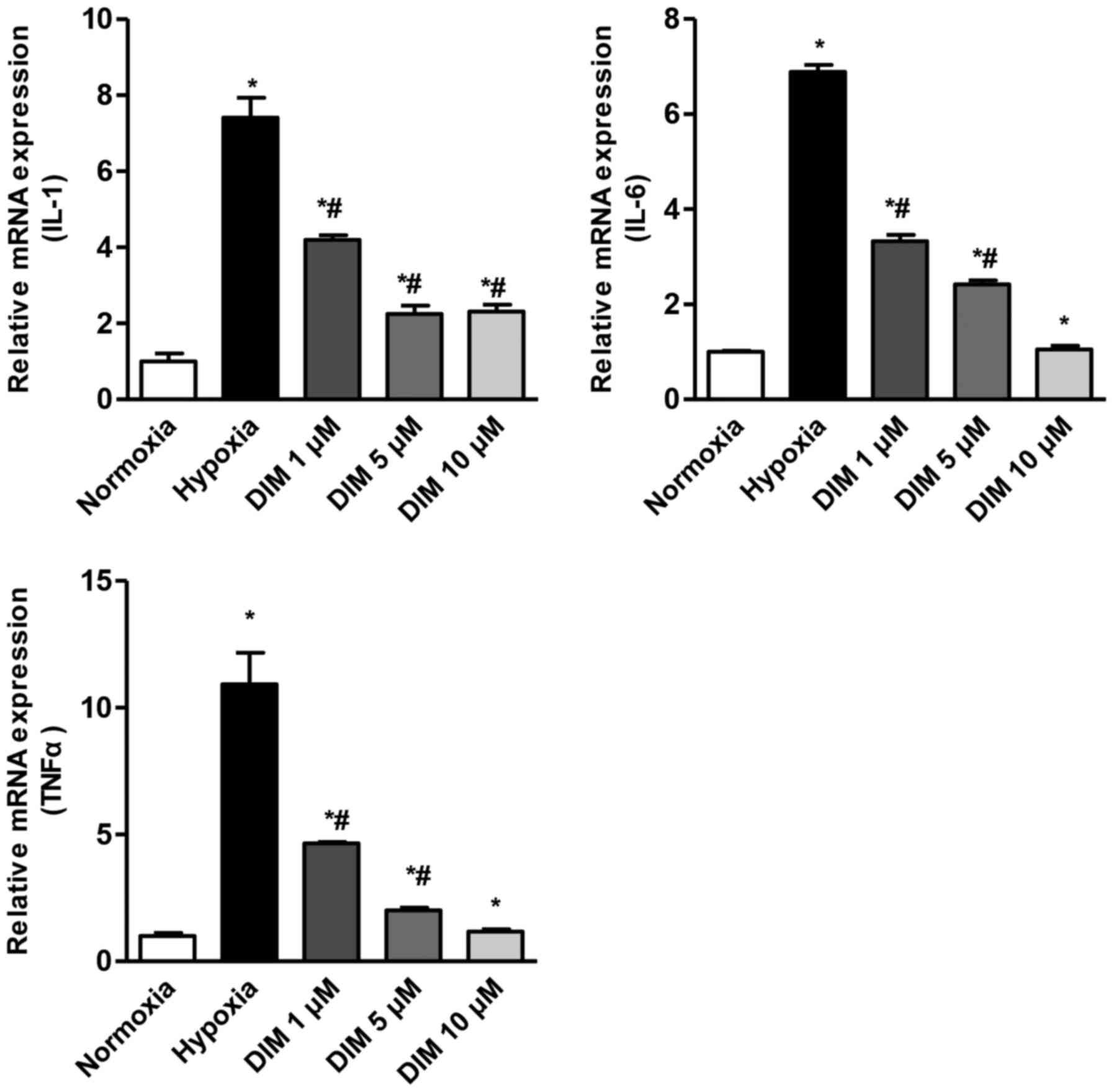
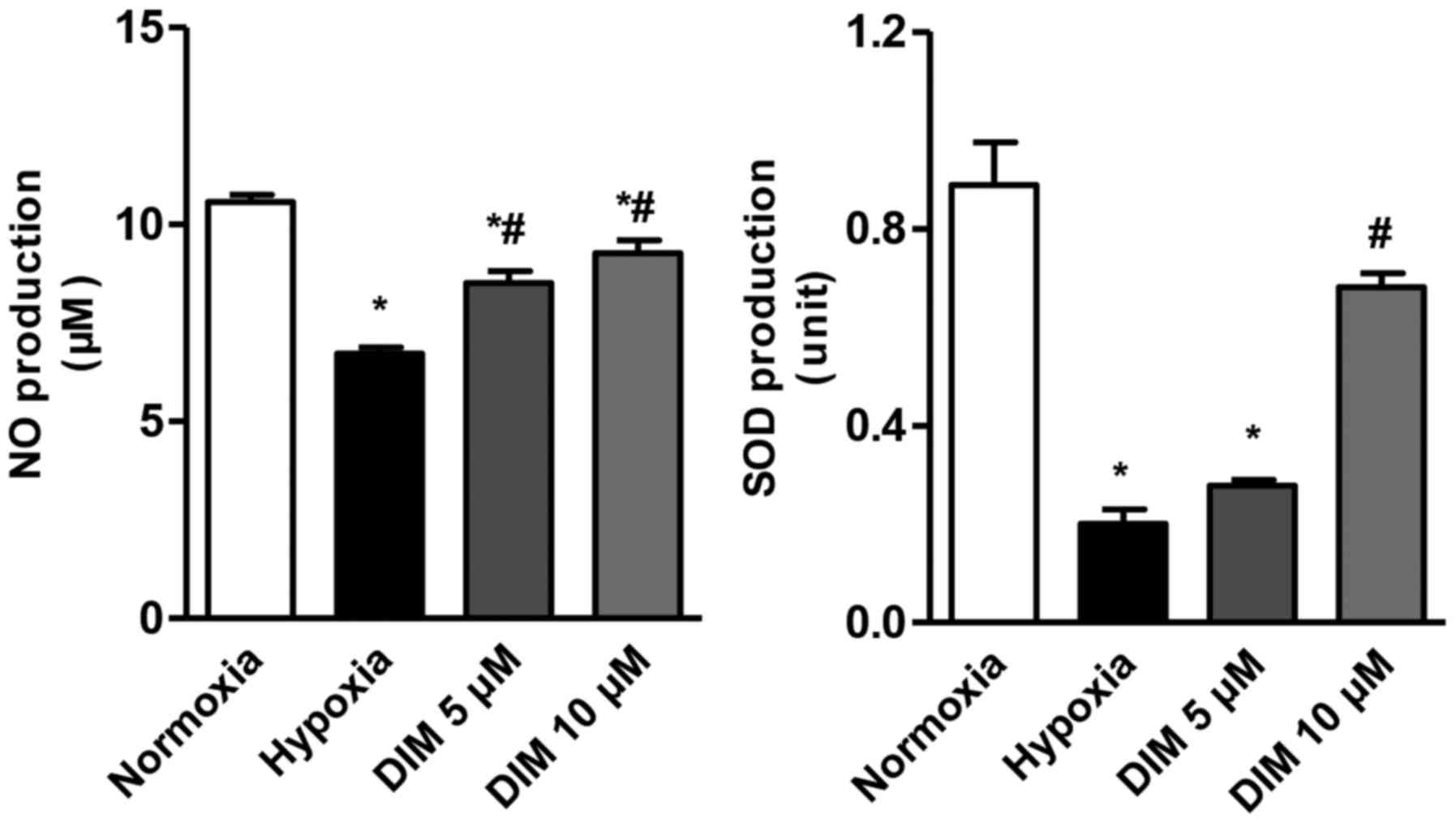
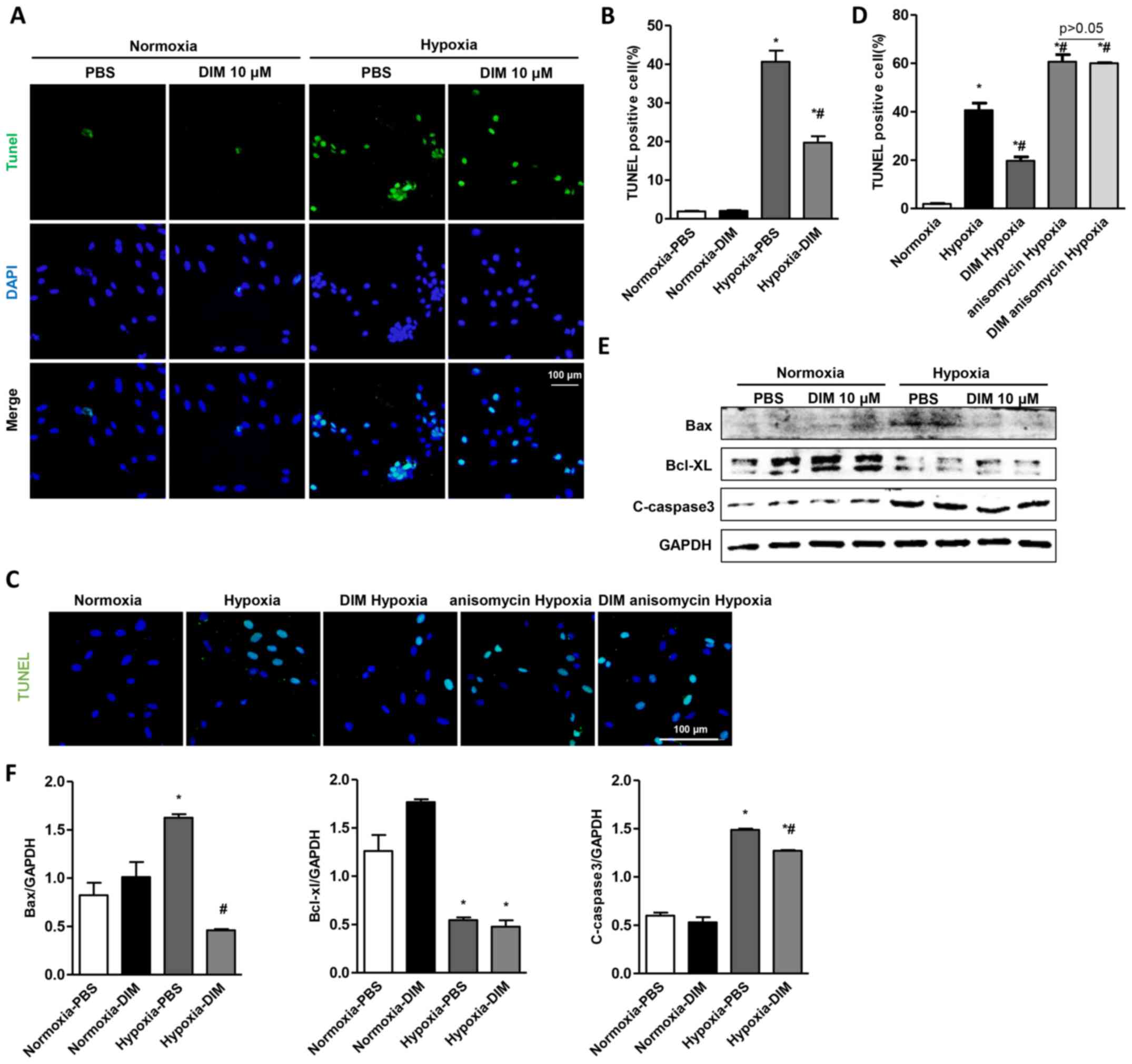
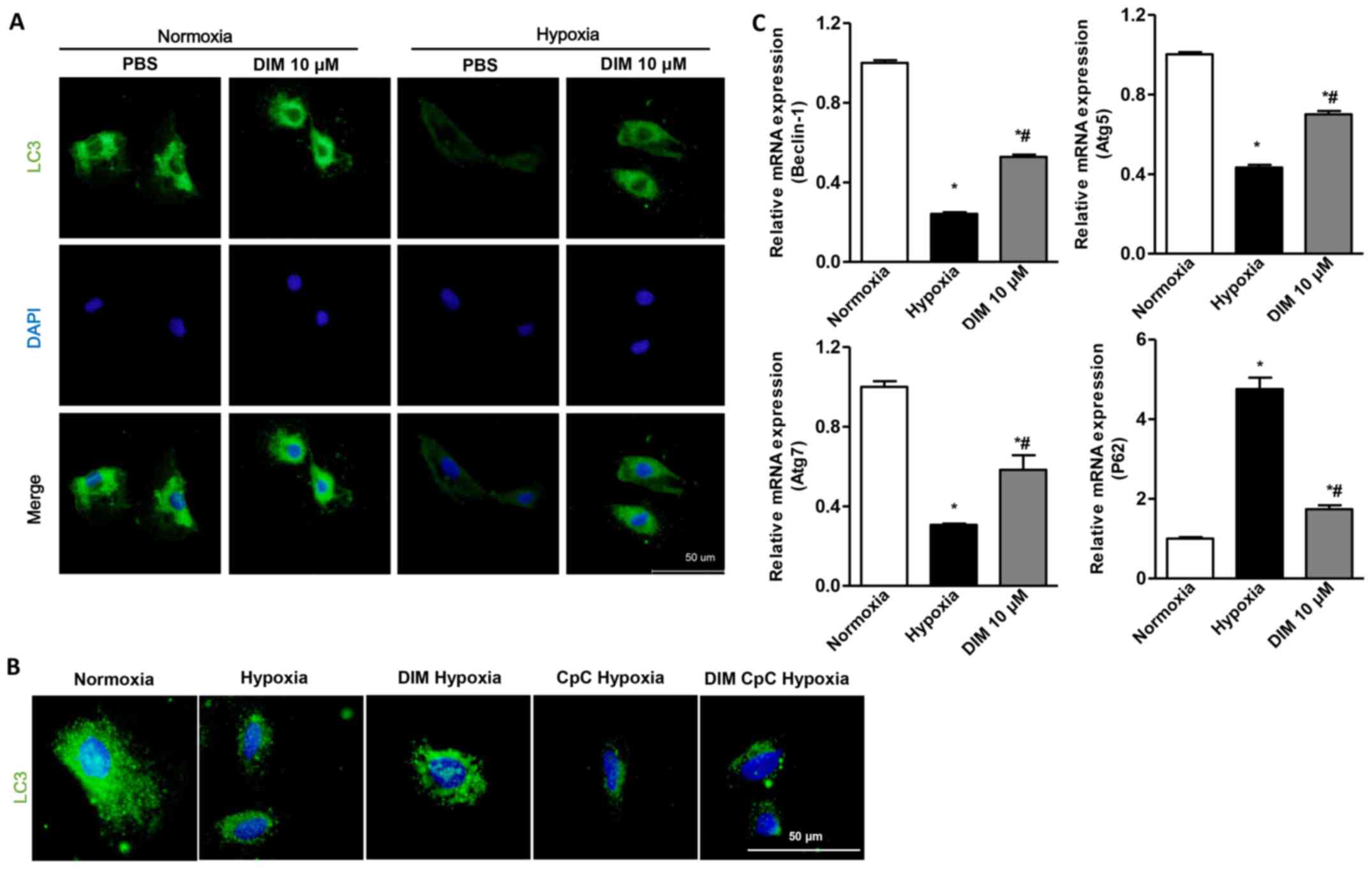
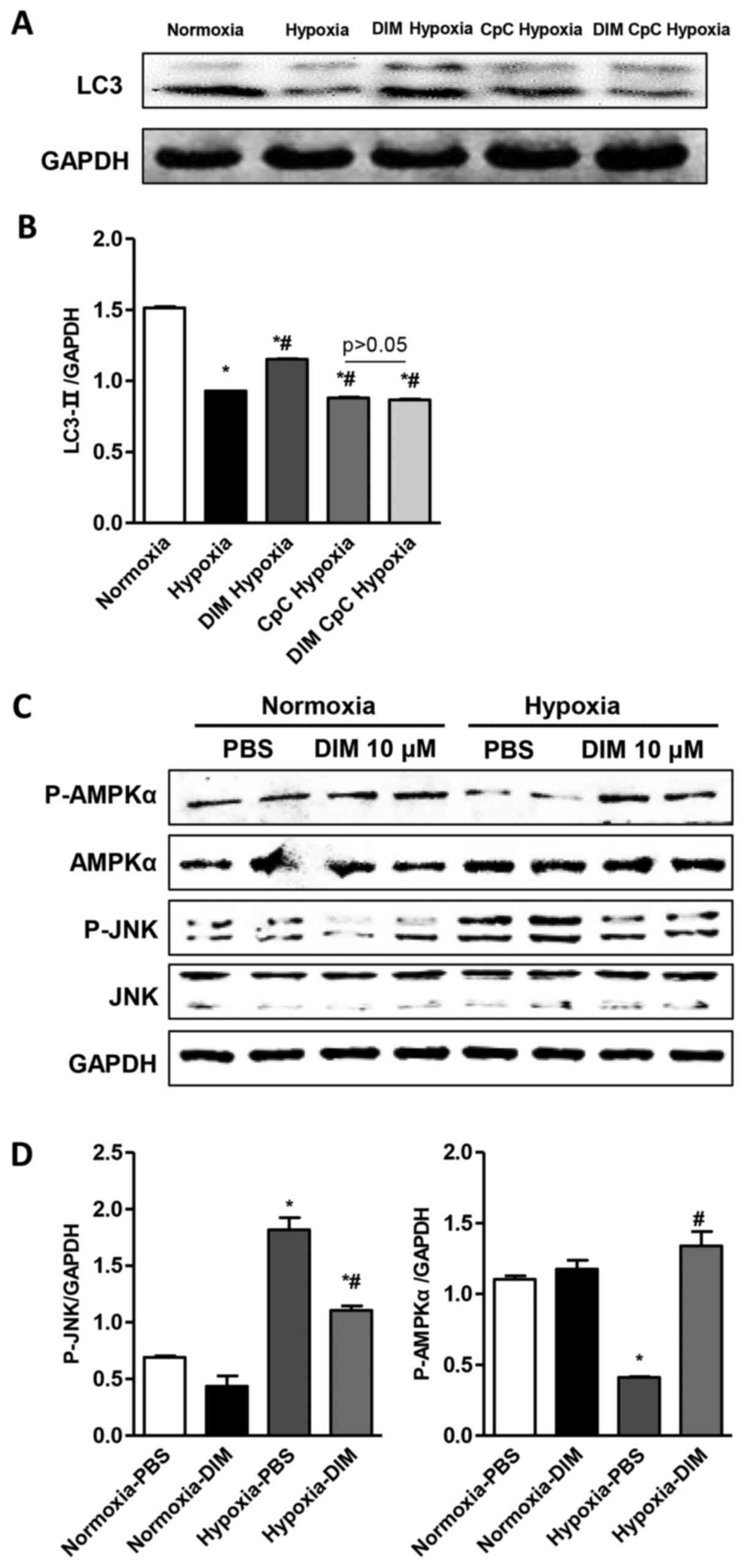
Autophagy is activated in the ischemic heart and is a process that is essential for survival, differentiation, development and homeostasis. 3,3'‑Diindolylmethane (DIM) is a natural product of the acid‑catalyzed condensation of indole‑3‑carbinol in cruciferous vegetables. Numerous studies have suggested that DIM has various pharmacological effects, including antioxidant, antitumor, anti‑angiogenic and anti‑apoptotic properties. However, the function of DIM on hypoxia‑induced cardiac injury remains to be elucidated. In the present study, H9c2 cells were pretreated with DIM (1, 5 and 10 µM) for 12 h and exposed to hypoxia for 12 h. It was demonstrated that DIM markedly attenuated the increased transcription of interleukin (IL)‑1β, IL‑6 and tumor necrosis factor‑α induced by hypoxia. In addition, the transcription of autophagy associated genes increased in the DIM pretreated group, compared with the hypoxia group. DIM additionally attenuated the increased apoptosis, as determined by terminal deoxynucleotidyl transferase dUTP nick end labeling staining, and regulated the relative protein expression level of B cell lymphoma (Bcl) 2 associated X protein, Bcl‑xL and cleaved caspase 3. Furthermore, the phosphorylation of the 5' AMP‑activated protein kinase a (AMPKa) was activated and the phosphorylation of c‑Jun N‑terminal kinase (JNK) was inhibited. The effect of DIM on hypoxia‑induced apoptosis was abolished following pretreatment with JNK activator (anisomycin, 40 ng/ml). The effect of DIM on autophagy was reversed following pretreatment with AMPKa inhibitor (CpC, 20 µM) following stimulation with hypoxia. The results demonstrated that DIM prevented hypoxia‑induced inflammation and apoptosis and activated cardiomyocyte autophagy, which may be mediated by activation of AMPKa and inhibition of JNK pathways.
View Figures

Figure 1

Figure 2

Figure 3

Figure 4

Figure 5

View References

1 

Frangogiannis NG: Pathophysiology of myocardial infarction. Compr Physiol. 5:1841–1875. 2015. View Article : Google Scholar : PubMed/NCBI

2 

Levine B and Kroemer G: Autophagy in the pathogenesis of disease. Cell. 132:27–42. 2008. View Article : Google Scholar : PubMed/NCBI

3 

Rothermel BA and Hill JA: Myocyte autophagy in heart disease: Friend or foe? Autophagy. 3:632–634. 2007. View Article : Google Scholar : PubMed/NCBI

4 

Yan WJ, Dong HL and Xiong LZ: The protective roles of autophagy in ischemic preconditioning. Acta Pharmacol Sin. 34:636–643. 2013. View Article : Google Scholar : PubMed/NCBI

5 

Jayakumar P, Pugalendi KV and Sankaran M: Attenuation of hyperglycemia-mediated oxidative stress by indole-3-carbinol and its metabolite 3,3′-diindolylmethane in C57BL/6J mice. J Physiol Biochem. 70:525–534. 2014. View Article : Google Scholar : PubMed/NCBI

6 

Kunimasa K, Kobayashi T, Kaji K and Ohta T: Antiangiogenic effects of indole-3-carbinol and 3,3′-diindolylmethane are associated with their differential regulation of ERK1/2 and Akt in tube-forming HUVEC. J Nutr. 140:1–6. 2010. View Article : Google Scholar : PubMed/NCBI

7 

Cho HJ, Seon MR, Lee YM, Kim J, Kim JK, Kim SG and Park JH: 3,3′-Diindolylmethane suppresses the inflammatory response to lipopolysaccharide in murine macrophages. J Nutr. 138:17–23. 2008.PubMed/NCBI

8 

Azmi AS, Ahmad A, Banerjee S, Rangnekar VM, Mohammad RM and Sarkar FH: Chemoprevention of pancreatic cancer: Characterization of Par-4 and its modulation by 3,3′ diindolylmethane (DIM). Pharm Res. 25:2117–2124. 2008. View Article : Google Scholar : PubMed/NCBI

9 

Chen D, Banerjee S, Cui QC, Kong D, Sarkar FH and Dou Q: Activation of AMP-activated protein kinase by 3,3′-Diindolylmethane (DIM) is associated with human prostate cancer cell death in vitro and in vivo. PloS One. 7:e471862012. View Article : Google Scholar : PubMed/NCBI

10 

Xue L, Firestone GL and Bjeldanes LF: DIM stimulates IFNgamma gene expression in human breast cancer cells via the specific activation of JNK and p38 pathways. Oncogene. 24:2343–2353. 2005. View Article : Google Scholar : PubMed/NCBI

11 

Ye Y, Fang Y, Xu W, Wang Q, Zhou J and Lu R: 3,3′-Diindolylmethane induces anti-human gastric cancer cells by the miR-30e-ATG5 modulating autophagy. Biochem Pharmacol. 115:77–84. 2016. View Article : Google Scholar : PubMed/NCBI

12 

Li J, Zhang W, Jiao R, Yang Z, Yuan Y, Wu Q, Hu Z, Xiang S and Tang Q: DIM attenuates TGF-β1-induced myofibroblast differentiation in neonatal rat cardiac fibroblasts. Int J Clin Exp Pathol. 8:5121–5128. 2015.PubMed/NCBI

13 

Zong J, Wu QQ, Zhou H, Zhang JY, Yuan Y, Bian ZY, Deng W, Dai J, Li FF, Xu M, et al: 3,3′-Diindolylmethane attenuates cardiac H9c2 cell hypertrophy through 5′-adenosine monophosphate-activatedprotein kinase-α. Mol Med Rep. 12:1247–1252. 2015. View Article : Google Scholar : PubMed/NCBI

14 

Deng W, Zong J, Wei L, Guo H, Cheng Z, Zhang R, Lin Y and Tang Q: 3,3′-Diindolylmethane improves myocardial energy metabolism imbalance induced by pressure overload via AMPKα in mice. Int J Cardiol. 177:235–237. 2014. View Article : Google Scholar : PubMed/NCBI

15 

Liu S, Mao J, Wang T and Fu X: Downregulation of aquaporin-4 protects brain against hypoxia ischemia via anti-inflammatory mechanism. Mol Neurobiol. Oct 10–2016.(Epub ahead of print).

16 

Cheng CY: Anti-inflammatory effects of traditional Chinese medicines against ischemic injury in in vivo models of cerebral ischemia. Evid Based Complement Alternat Med. 2016:57394342016. View Article : Google Scholar : PubMed/NCBI

17 

González A, Ravassa S, Beaumont J, López B and Díez J: New targets to treat the structural remodeling of the myocardium. J Am Coll Cardiol. 58:1833–1843. 2011. View Article : Google Scholar : PubMed/NCBI

18 

Cuenca-López MD, Brea D, Galindo MF, Antón-Martínez D, Sanz MJ, Agulla J, Castillo J and Jordán J: Inflammatory response during ischaemic processes: Adhesion molecules and immunomodulation. Rev Neurol. 51:30–40. 2010.(In Spanish). PubMed/NCBI

19 

Jeon EJ, Davaatseren M, Hwang JT, Park JH, Hur HJ, Lee AS and Sung MJ: Effect of oral administration of 3,3′-diindolylmethane on dextran sodium sulfate-induced acute colitis in mice. J Agric Food Chem. Oct 4–2016.(Epub ahead of print). View Article : Google Scholar

20 

Rzemieniec J, Litwa E, Wnuk A, Lason W, Krzeptowski W and Kajta M: Selective aryl hydrocarbon receptor modulator 3,3′-diindolylmethane impairs AhR and ARNT signaling and protects mouse neuronal cells against hypoxia. Mol Neurobiol. 53:5591–5606. 2016. View Article : Google Scholar : PubMed/NCBI

21 

Sun HJ, Wang Y, Hao T, Wang CY, Wang QY and Jiang XX: Efficient GSH delivery using PAMAM-GSH into MPP-induced PC12 cellular model for Parkinson's disease. Regen Biomater. 3:299–307. 2016. View Article : Google Scholar : PubMed/NCBI

22 

Rong B, Xie F, Sun T, Hao L, Lin MJ and Zhong JQ: Nitric oxide, PKC-ε, and connexin43 are crucial for ischemic preconditioning-induced chemical gap junction uncoupling. Oncotarget. 7:69243–69255. 2016.PubMed/NCBI

23 

Zhang WP, Zong QF, Gao Q, Yu Y, Gu XY, Wang Y, Li ZH and Ge M: Effects of endomorphin-1 postconditioning on myocardial ischemia/reperfusion injury and myocardial cell apoptosis in a rat model. Mol Med Rep. 14:3992–3998. 2016. View Article : Google Scholar : PubMed/NCBI

24 

Corbalan J Jose, Vatner DE and Vatner SF: Myocardial apoptosis in heart disease: Does the emperor have clothes? Basic Res Cardiol. 111:312016. View Article : Google Scholar : PubMed/NCBI

25 

Tichý A: Apoptotic machinery: The Bcl-2 family proteins in the role of inspectors and superintendents. Acta Medica (Hradec Kralove). 49:13–18. 2006.PubMed/NCBI

26 

Wu X, Gu W, Lu H, Liu C, Yu B, Xu H, Tang Y, Li S, Zhou J and Shao C: Soluble receptor for advanced glycation end product ameliorates chronic intermittent hypoxia induced renal injury, inflammation and apoptosis via P38/JNK signaling pathways. Oxid Med Cell Longev. 2016:10153902016. View Article : Google Scholar : PubMed/NCBI

27 

Balakumar P and Jagadeesh G: Multifarious molecular signaling cascades of cardiac hypertrophy: Can the muddy waters be cleared? Pharmacol Res. 62:365–383. 2010. View Article : Google Scholar : PubMed/NCBI

28 

Liang Q and Molkentin JD: Redefining the roles of p38 and JNK signaling in cardiac hypertrophy: Dichotomy between cultured myocytes and animal models. J Mol Cell Cardiol. 35:1385–1394. 2003. View Article : Google Scholar : PubMed/NCBI

29 

Liu T, Wang G, Tao H, Yang Z, Wang Y, Meng Z, Cao R, Xiao Y, Wang X and Zhou J: Capsaicin mediates caspases activation and induces apoptosis through P38 and JNK MAPK pathways in human renal carcinoma. BMC Cancer. 16:7902016. View Article : Google Scholar : PubMed/NCBI

30 

Tien YC, Lin JY, Lai CH, Kuo CH, Lin WY, Tsai CH, Tsai FJ, Cheng YC, Peng WH and Huang CY: Carthamus tinctorius L. prevents LPS-induced TNFalpha signaling activation and cell apoptosis through JNK1/2-NFkappaB pathway inhibition in H9c2 cardiomyoblast cells. J Ethnopharmacol. 130:505–513. 2010. View Article : Google Scholar : PubMed/NCBI

31 

Klionsky DJ and Emr SD: Autophagy as a regulated pathway of cellular degradation. Science. 290:1717–1721. 2000. View Article : Google Scholar : PubMed/NCBI

32 

Costa R, Morrison A, Wang J, Manithody C, Li J and Rezaie AR: Activated protein C modulates cardiac metabolism and augments autophagy in the ischemic heart. J Thromb Haemost. 10:1736–1744. 2012. View Article : Google Scholar : PubMed/NCBI

33 

Yan L, Vatner DE, Kim SJ, Ge H, Masurekar M, Massover WH, Yang G, Matsui Y, Sadoshima J and Vanter SF: Autophagy in chronically ischemic myocardium. Proc Natl Acad Sci USA. 102:pp. 13807–13812. 2005; View Article : Google Scholar : PubMed/NCBI

34 

Hamacher-Brady A, Brady NR and Gottlieb RA: Enhancing macroautophagy protects against ischemia/reperfusion injury in cardiac myocytes. J Biol Chem. 281:29776–29787. 2006. View Article : Google Scholar : PubMed/NCBI

35 

Matsui Y, Takagi H, Qu X, Abdellatif M, Sakoda H, Asano T, Levine B and Sadoshima J: Distinct roles of autophagy in the heart during ischemia and reperfusion: Roles of AMP-activated protein kinase and Beclin 1 in mediating autophagy. Circ Res. 100:914–922. 2007. View Article : Google Scholar : PubMed/NCBI

36 

Peng W, Liu Y, Xu WJ and Xia QH: Role of Beclin 1-dependent autophagy in cardioprotection of ischemic preconditioning. J Huazhong Univ Sci Technolog Med Sci. 33:51–56. 2007. View Article : Google Scholar

37 

Li S, Liu C, Gu L, Wang L, Shang Y, Liu Q, Wan J, Shi J, Wang F, Xu Z, et al: Autophagy protects cardiomyocytes from the myocardial ischaemia-reperfusion injury through the clearance of CLP36. Open Biol. 6:1601772016. View Article : Google Scholar : PubMed/NCBI

38 

Nishida K, Kyoi S, Yamaguchi O, Sadoshima J and Otsu K: The role of autophagy in the heart. Cell Death Differ. 16:31–38. 2009. View Article : Google Scholar : PubMed/NCBI

39 

Shackelford DB and Shaw RJ: The LKB1-AMPK pathway: Metabolism and growth control in tumour suppression. Nat Rev Cancer. 9:563–575. 2009. View Article : Google Scholar : PubMed/NCBI

40 

Kim J, Kundu M, Viollet B and Guan KL: AMPK and mTOR regulate autophagy through direct phosphorylation of Ulk1. Nat Cell Biol. 13:132–141. 2009. View Article : Google Scholar

41 

Kang R, Zeh HJ, Lotze MT and Tang D: The Beclin 1 network regulates autophagy and apoptosis. Cell Death Differ. 18:571–580. 2011. View Article : Google Scholar : PubMed/NCBI

42 

Barth S, Glick D and Macleod KF: Autophagy: Assays and artifacts. J Pathol. 221:117–124. 2010. View Article : Google Scholar : PubMed/NCBI

43 

Itakura E and Mizushima N: p62 targeting to the autophagosome formation site requires self-oligomerization but not LC3 binding. J Cell Biol. 192:17–27. 2011. View Article : Google Scholar : PubMed/NCBI

44 

Liu SM, Dong YJ and Liu B: Progress of study on p62 and protein degradation pathways. Sheng Li Xue Bao. 67:48–58. 2015.PubMed/NCBI

Related Articles

  • Abstract
  • View
  • Download
  • Twitter
Copy and paste a formatted citation
Spandidos Publications style
Liang K, Qian WH and Zong J: 3,3'‑Diindolylmethane attenuates cardiomyocyte hypoxia by modulating autophagy in H9c2 cells. Mol Med Rep 16: 9553-9560, 2017.
APA
Liang, K., Qian, W., & Zong, J. (2017). 3,3'‑Diindolylmethane attenuates cardiomyocyte hypoxia by modulating autophagy in H9c2 cells. Molecular Medicine Reports, 16, 9553-9560. https://doi.org/10.3892/mmr.2017.7788
MLA
Liang, K., Qian, W., Zong, J."3,3'‑Diindolylmethane attenuates cardiomyocyte hypoxia by modulating autophagy in H9c2 cells". Molecular Medicine Reports 16.6 (2017): 9553-9560.
Chicago
Liang, K., Qian, W., Zong, J."3,3'‑Diindolylmethane attenuates cardiomyocyte hypoxia by modulating autophagy in H9c2 cells". Molecular Medicine Reports 16, no. 6 (2017): 9553-9560. https://doi.org/10.3892/mmr.2017.7788
Copy and paste a formatted citation
x
Spandidos Publications style
Liang K, Qian WH and Zong J: 3,3'‑Diindolylmethane attenuates cardiomyocyte hypoxia by modulating autophagy in H9c2 cells. Mol Med Rep 16: 9553-9560, 2017.
APA
Liang, K., Qian, W., & Zong, J. (2017). 3,3'‑Diindolylmethane attenuates cardiomyocyte hypoxia by modulating autophagy in H9c2 cells. Molecular Medicine Reports, 16, 9553-9560. https://doi.org/10.3892/mmr.2017.7788
MLA
Liang, K., Qian, W., Zong, J."3,3'‑Diindolylmethane attenuates cardiomyocyte hypoxia by modulating autophagy in H9c2 cells". Molecular Medicine Reports 16.6 (2017): 9553-9560.
Chicago
Liang, K., Qian, W., Zong, J."3,3'‑Diindolylmethane attenuates cardiomyocyte hypoxia by modulating autophagy in H9c2 cells". Molecular Medicine Reports 16, no. 6 (2017): 9553-9560. https://doi.org/10.3892/mmr.2017.7788
Follow us
  • Twitter
  • LinkedIn
  • Facebook
About
  • Spandidos Publications
  • Careers
  • Cookie Policy
  • Privacy Policy
How can we help?
  • Help
  • Live Chat
  • Contact
  • Email to our Support Team