Introduction
Benign prostate hyperplasia (BPH) is one of the most
common diseases in the aging male population that seriously affects
patients' quality of life (1). It
is estimated that BPH occurs in 30–60% of men ≥50 years in mainland
China, with the disease incidence increasing with age (2). In an aging population, this disease
is emerging as an important clinical topic. Although a wide variety
of drugs may be used to treat BPH, there are limitations in the
application of these drugs due to drug dependence and severe side
effects (3,4). A previous study demonstrated that
microRNA (miRNA) dysregulation is involved in the development and
progression of BPH (5). However,
the exact involvement of miRNAs in BPH is not fully understood, due
to the complex interaction between miRNAs and gene expression
levels.
miRNAs are single-stranded non-coding RNAs of ~22
nucleotides (6) that control gene
expression at the post-transcriptional level by mRNA cleavage or
translational suppression (6).
Currently, there are 2,603 human mature miRNAs registered at miRNA
database miRBase release 21.0, and the number of newly discovered
miRNAs is gradually increasing. Previous studies demonstrated that
miRNAs have key regulatory roles in numerous biological processes,
including development, differentiation, signal transduction and
cell maintenance (7,8). miRNA dysregulation is also a common
feature of various diseases, including cancer, inflammation,
autoimmune disease and prostate hyperplasia (9,10).
To date, despite several studies reporting that
miRNA mediates prostate cancer, few articles have investigated
miRNA regulation in BPH (11–13).
To the best of our knowledge, only two studies have examined miRNA
expression in BPH and healthy controls, which provided inconsistent
findings (14,15). Furthermore, limited microarray data
has been confirmed by reverse transcription-quantitative polymerase
chain reaction (RT-qPCR), and only one previous study has reported
an association between Homo sapiens (hsa)-miR-143 or
hsa-miR-145 and clinicopathological data in BPH (14). In the present study, miRNA and gene
expression profiles in prostate tissue of patients with BPH and
healthy men were investigated using microarray analysis and
RT-qPCR.
Materials and methods
Patients and tissue samples
Prostate tissue samples were collected from 5
patients with BPH and 5 healthy volunteers (aged 42±10 years) at
The Second Affiliated Hospital, Zhejiang University School of
Medicine (Hangzhou, China) between December 2016 and January 2017.
The participants included in the current study had not received any
medical treatment prior to tissue collection. A total of 10
prostate tissue samples were immediately snap-frozen in liquid
nitrogen following radical prostatectomy. Extracted RNA was used
for microarray analyses and RT-qPCR. An additional 25 BPH samples
(aged 43±8 years) were included in the RT-qPCR assay between
January 2017 and April 2017 at The Second Affiliated Hospital,
Zhejiang University School of Medicine. Clinicopathological
information for each patient was obtained, including age and levels
of preoperative prostate-specific antigen. The present study was
conducted with the approval of The Ethics Review Board at Zhejiang
University School of Medicine (Hangzhou, China) and all
participants provided written informed consent.
Cell culture
WPMY-1 cells obtained from the cell bank at the
Chinese Academy of Sciences (Shanghai, China) were cultured in DMEM
medium (11965–092; Gibco; Thermo Fisher Scientific, Inc., Waltham,
MA, USA) containing 100 U/ml penicillin/streptomycin and 10% fetal
bovine serum (15140–122 and 10099–141 both from Gibco; Thermo
Fisher Scientific, Inc.) at 37°C in 5% CO2, as
previously described (16).
RNA extraction
RNA was extracted with the miRNeasy Mini kit (Qiagen
GmbH, Hilden, Germany) according to the manufacturer's protocol. A
NanoDrop ND-1000 spectrometer (Thermo Fisher Scientific, Inc.,
Pittsburgh, PA, USA) was used to detect the RNA yield and 260/280
nm ratio. A 2100 Bioanalyzer (Agilent Technologies, Inc., Santa
Clara, CA, USA) was used to quantify the RNA integrity number.
miRNA and mRNA microarray
experiments
Differential expression analysis of miRNAs and mRNA
between the pooled samples was performed using Affymetrix MiRNA
Microarray technology version 4.0 (Affymetrix; Thermo Fisher
Scientific, Inc.) (17) and
GeneChip Human Transcriptome Array 2.0 (Thermo Fisher Scientific,
Inc.) (18,19).
miRNA RT-qPCR
A TaqMan miRNA assay (Thermo Fisher Scientific,
Inc.) was used to detect mature miRNAs using a Bio-Rad IQ5 (Bio-Rad
Laboratories, Inc., Hercules, CA, USA) according to the
manufacturer's protocol, as previously described (6). The reactions were performed using the
following parameters: 95°C for 2 min followed by 40 cycles of 95°C
for 15 sec and 60°C for 30 sec. RNU6-1 small nuclear RNA was used
as an endogenous control for data normalization. Relative
expression was calculated using the comparative threshold cycle
method (20). Experiments were
performed in triplicate. RT-qPCR analyses for the mRNA expression
of target genes were performed using PrimeScript RT-PCR kits
(Takara Biotechnology Co., Ltd., Dalian, China). The reactions were
performed using the following parameters: 95°C for 2 min followed
by 40 cycles of 95°C for 30 sec, 60°C for 30 sec, 72°C for 20 sec,
and then 72°C for 10 min. β-actin was used as an internal control
(20). The primer sequences used
are presented in Table I.
 | Table I.Primer sequences used in reverse
transcription quantitative-polymerase chain reaction. |
Table I.
Primer sequences used in reverse
transcription quantitative-polymerase chain reaction.
| Gene | Direction | Primer sequence (5′-
3′) |
|---|
| MTOR | F |
ACAGCCCAGGCCGCATTGTC |
|
| R |
TCCAGGGACTCCGTCAGGCG |
| RICTOR | F |
TCCGAAGAAATGTCAGTCAG |
|
| R |
GGCAGTGGCACAAGTGTT |
| STX10 | F |
ATCCCACATGACGAGTGGTG |
|
| R |
GGTCTGGGAACGAGAAGGTC |
| GRB2 | F |
CCAGAGCCAAGGCAGAAGAA |
|
| R |
AGTACTTCCCGGCTCCATCT |
| ATG9A | F | CGTGTGGGAAGGACAG |
|
| R | GGCGCTTTCTCCACTC |
| ZEB1 | F |
TTAGTTGCTCCCTGTGCAGTT |
|
| R |
TAGGAGCCAGAATGGGAAAAG |
| CASP2 | F |
TCCAGCACAAGGAGCTGATG |
|
| R |
GCTAGCACCACTCGGTTCTT |
| PRKCE | F |
CACTGCAGTTGGACTTTGCC |
|
| R |
GACAGTGGACATGGGACTGG |
| ACTB | F |
TTCCTTCCTGGGCATGGAGTCC |
|
| R |
TGGCGTACAGGTCTTTGCGG |
Gene ontology (GO) enrichment and
Kyoto Encyclopedia of Genes and Genomes (KEGG) pathway
analysis
In order to further understand the functions of
miRNA and their targets, GO enrichment and KEGG pathway analysis
for all annotated miRNAs and their targets were performed. Blast2GO
was employed to store information from the GO (http://www.geneontology.org/) and KEGG (http://www.kegg.jp) pathway databases. All the
sequences were identified by BLASTx searches against the GO protein
database. A combined query was used in order to complete the GO
annotation and pathway analysis against the GO and KEGG databases
(21).
Transfection experiment
Mimic and control miR-96-5p were purchased from
Shanghai GenePharma Co., Ltd. (Shanghai, China) and transfections
were performed with DharmaFECT 1 transfection reagent (Thermo
Fisher Scientific, Inc.). WPMY-1 cells were transfected with 100 nM
mimic or miRNA control for 48 h, and then mRNA expression was
subsequently assessed by RT-qPCR.
Statistical analysis
Data are expressed as the mean ± standard error of
the mean. Statistical analysis was performed using the Student's
t-test for comparison of two groups in microarray analysis, and
analysis of variance for comparisons of expression of selected
aberrant miRNAs in RT-qPCR assay, using SPSS version 17.0 (SPSS,
Inc., Chicago, IL, USA). P<0.05 was considered to indicate a
statistically significant difference.
Results
miRNA expression profiles in the
prostate of patients with BPH and healthy controls
To investigate the miRNA expression profiles in the
BPH and control group, array-based miRNA profiling of the prostate
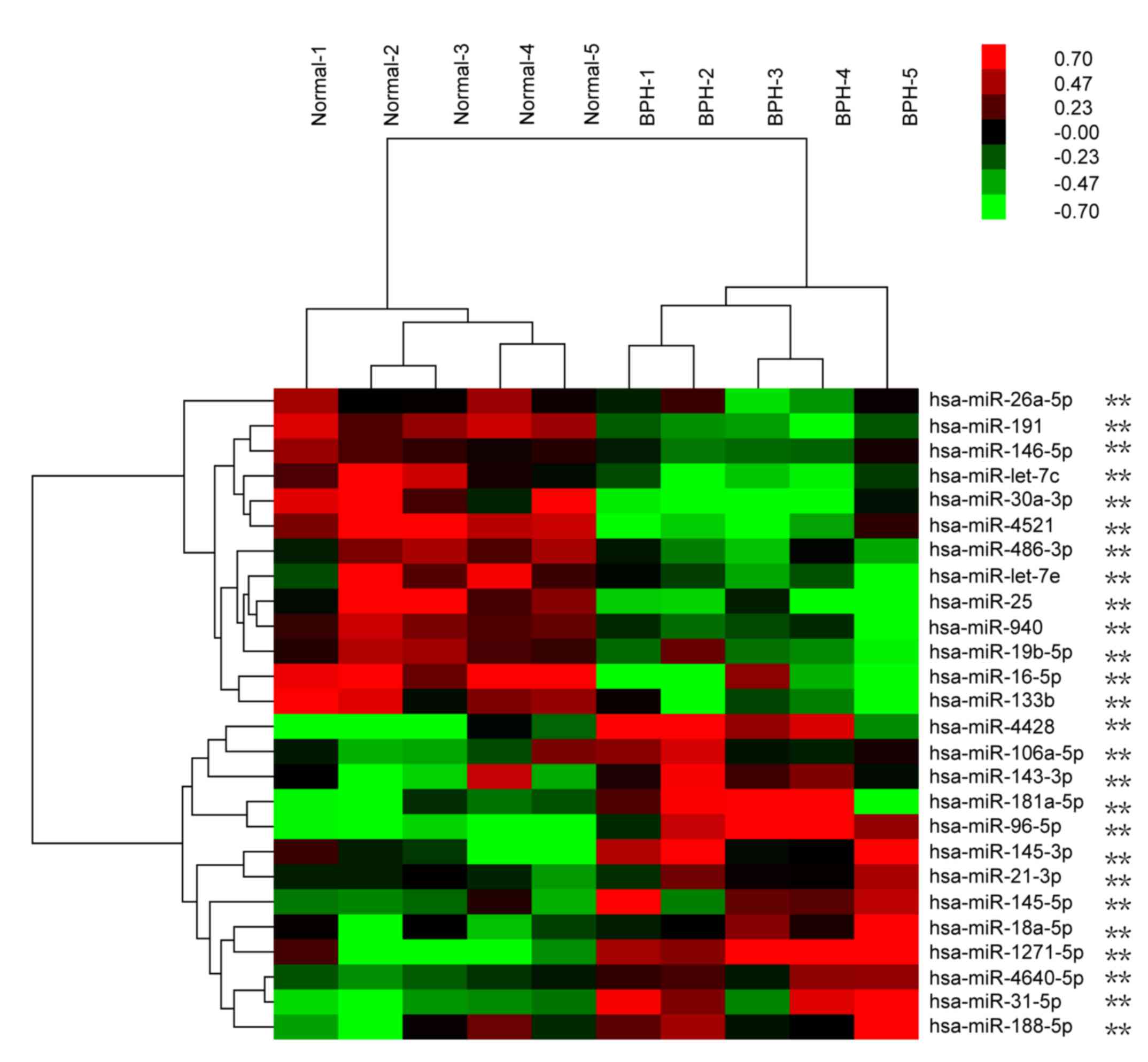
tissues from patients with BPH was performed. Of the 1,872 human
miRNAs assayed, 23 miRNAs including miR-4428, miR-106a-5p,
miR-96-5p and miR-1271-5p had higher expression levels in the
prostate of patients with BPH when compared with healthy controls.
The expression levels of 15 miRNAs including miR-16-5p, miR-19b-5p,
miR-940, and miR-25 were reduced in the prostate of patients with
BPH compared with healthy controls (Fig. 1). Of these 26 miRNAs, miR-96-5p and
miR-1271-5p were significantly overexpressed, whereas miR-30a was
significantly downregulated in the prostates of men with BPH.
Validation of miRNA dysregulation by
miRNA RT-qPCR analysis
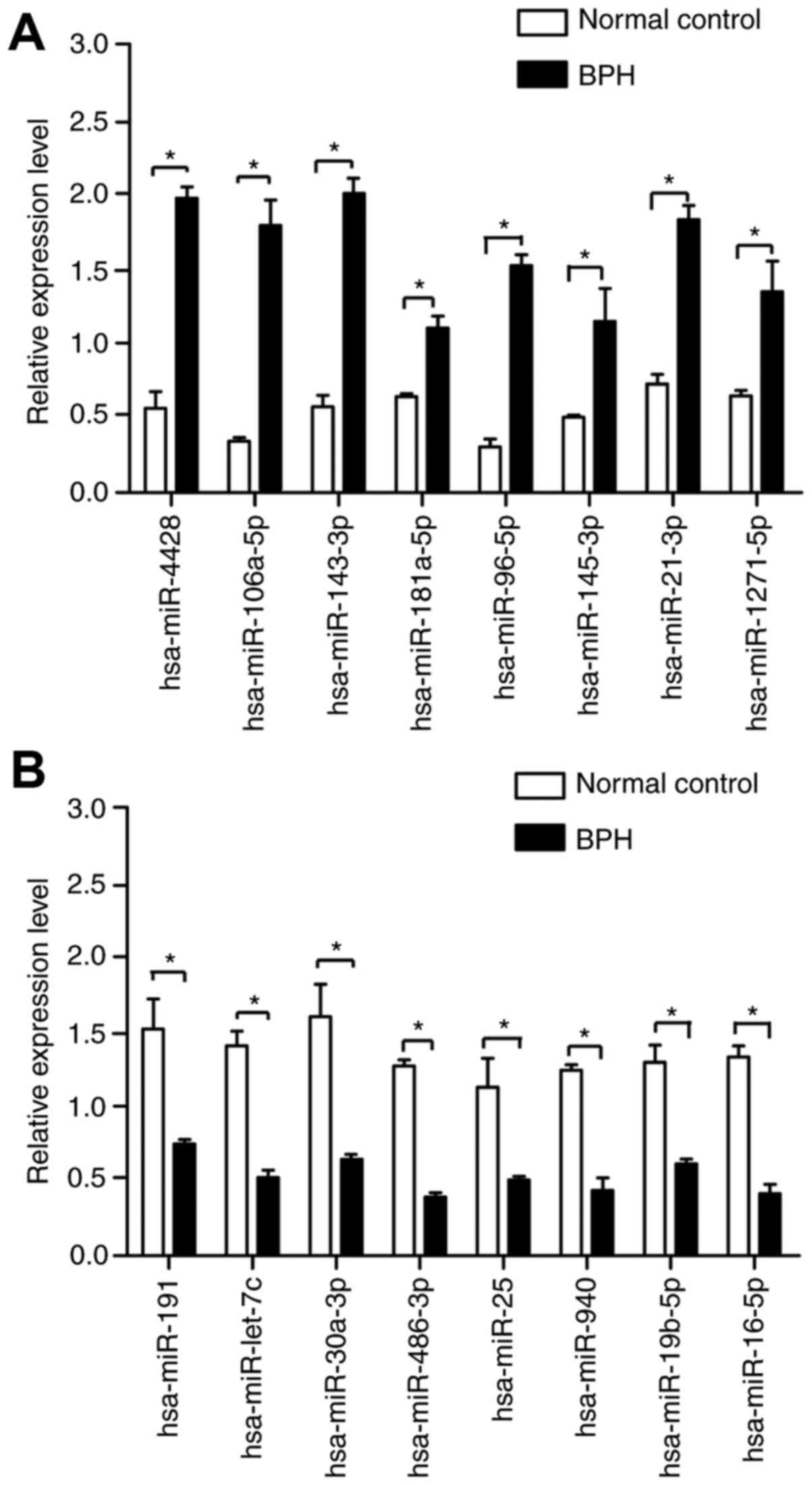
To confirm the microarray findings, the relative
expression of each dysregulated miRNA was examined with miRNA
RT-qPCR in all 30 BPH samples and the 5 healthy controls. The
expression levels of hsa-miR-96-5p, hsa-miR-1271-5p, hsa-miR-21-3p,
hsa-miR-96-5p, hsa-miR-181a-5p, hsa-miR-143-3p, hsa-miR-4428 and
hsa-miR-106a-5p were significantly upregulated in the BPH group
compared with healthy controls. The expression levels of
hsa-miR-16-5p, hsa-miR-19b-5p, hsa-miR-940, hsa-miR-25,
hsa-miR-486-3p, hsa-miR-30a-3p, hsa-miR-let-7c and hsa-miR-191 were
significantly downregulated compared with the control (Fig. 2). These findings were in
concordance with the microarray assay results. Notably,
hsa-miR-96-5p and hsa-miR-1271-5p have the same seed sequence and
were classified in the same cluster.
Bioinformatics analysis
Gene ontology and KEGG pathway analysis of the
signaling pathways regulated by miRNAs (as identified by RT-qPCR)
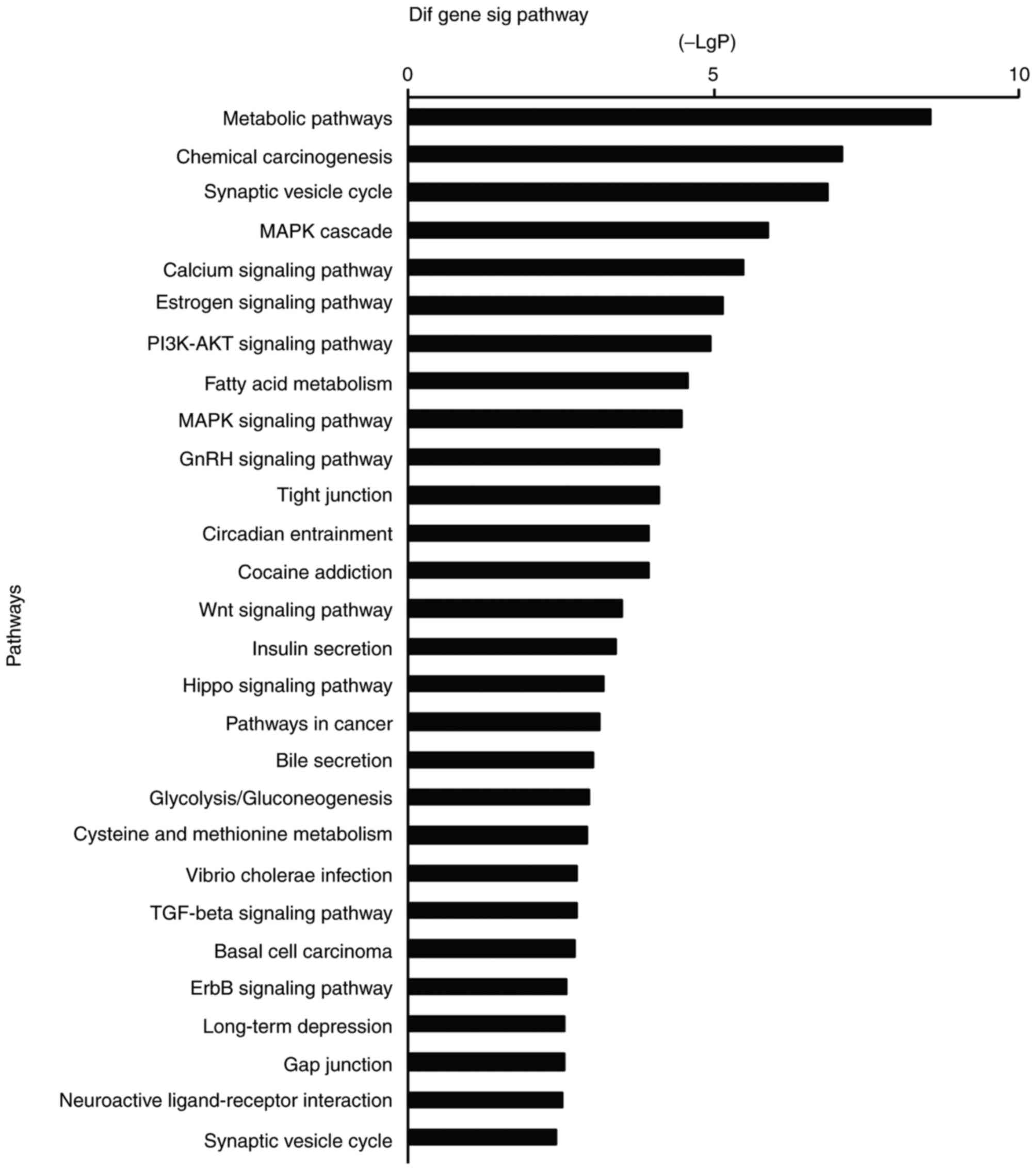
revealed 47 upregulated signaling pathways and 28 downregulated
signaling pathways in the BPH group compared to healthy controls.
These regulated signaling pathways were involved in numerous
cellular processes, including metabolic (pyrimidine, glutathione,
phenylalanine, gluconeogenesis, and pyruvate), oncogenic (prostate
cancer, colorectal cancer, and bladder cancer) and adhesive and
signal transduction [estrogen, phosphoinositide 3-kinase
(PI3K-AKT), Wnt, transforming growth factor β (TGF-β) and
mitogen-activated protein kinase (MAPK)] signaling pathways. In
addition, according to the enrichments of the significantly
downregulated signal genes, there were 28 downregulated signaling
pathways (Fig. 3).
The miRNA-gene network of overlapping target genes
identified the involvement of hsa-miR-96-5p (Fig. 4A). The major target genes of
hsa-miR-96-5p were identified by TargetScan version 7.1 (www.targetscan.org), include mechanistic target of
rapamycin (MTOR), RPTOR independent companion of MTOR complex 2
(RICTOR), syntaxin 10 (STX10), growth receptor bound protein 2
(GRB2), autophagy related 9A, zinc finger E-box binding homeobox 1
(ZEB1), caspase 2 (CASP2) and protein kinase c ε (PRKCE). In order
to determine whether these genes were miR-96 target genes, WPMY-1
cells were transfected with miR-96-5p mimics or miR-96-5p control.
As presented in Fig. 4B, miR-96
had an inhibitory effect on the mRNA expression level of these
target genes, excluding GRB2. This verified that miR-96 may
downregulate these target genes.
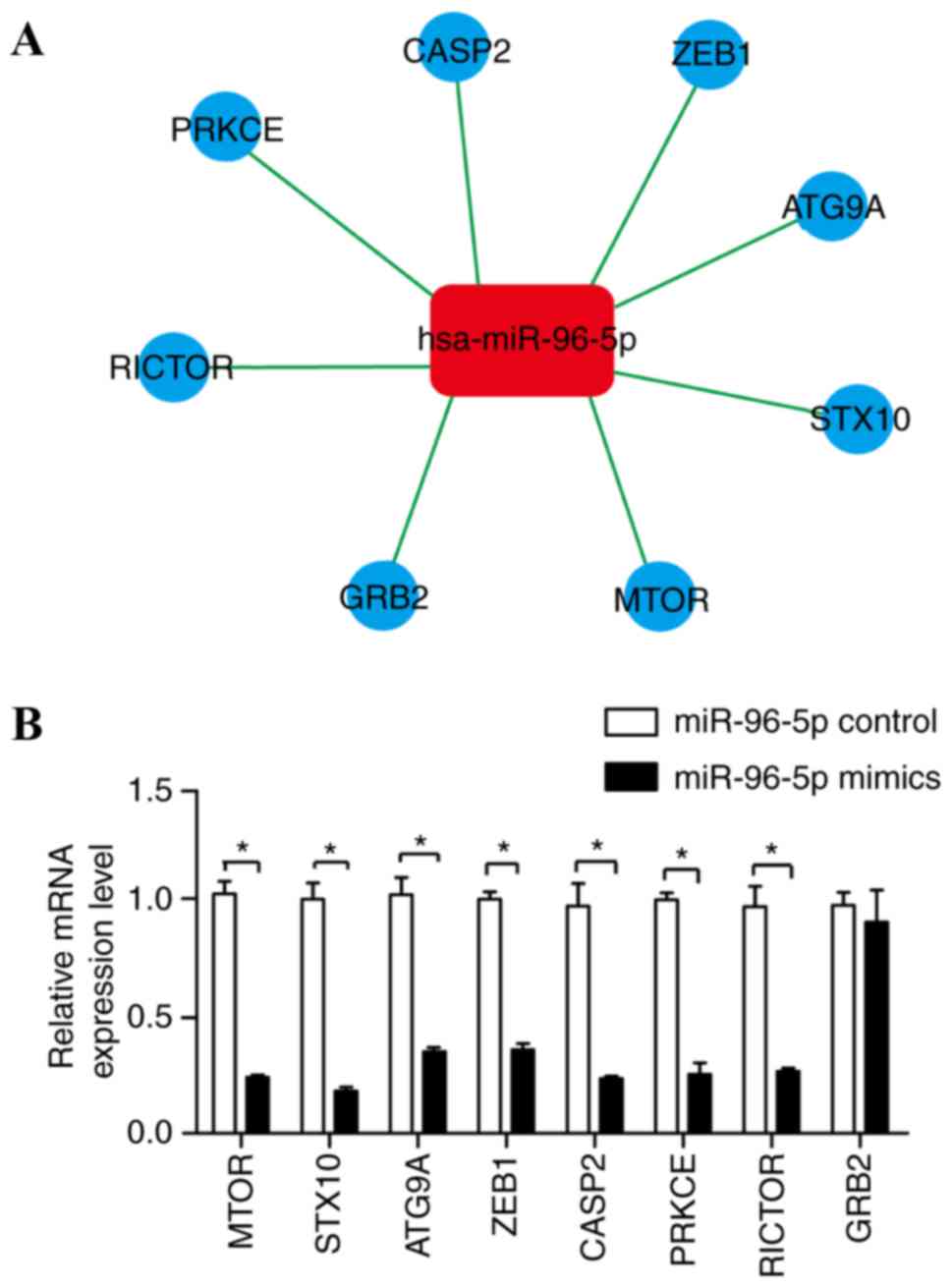 | Figure 4.Major target genes of hsa-miR-96-5p.
(A) miRNA-gene network. Red and blue box nodes represent
upregulated miR-96-5p and downregulated genes, respectively. Edges
represent the inhibitory effect of the miRNA on gene expression.
(B) WPMY-1 cells were transfected with 100 nM miR-96-5p mimic or
control at 48 h. The mRNA levels of these target genes were
determined by reverse transcription quantitative-polymerase chain
reaction. *P<0.05. miRNA, microRNA; hsa-miR, Homo sapiens
microRNA; MTOR, mechanistic target of rapamycin; STX10, syntaxin
10; ATG9A, autophagy-related protein 9A; ZEB1, zinc finger E-box
binding homeobox 1; CASP2, caspase-2; PRKCE, protein kinase c ε;
RICTOR, RPTOR independent companion of MTOR complex 2; GRB2, growth
factor receptor-bound protein 2. |
Discussion
miRNAs may regulate gene expression in various
biological processes, including cancer, development,
differentiation, signal transduction and cell maintenance (22,23).
However, there are limited studies regarding differential miRNA
expression in BPH. In the present study, miRNA expression profiles
in the BPH and control group were evaluated to identify advanced
BPH signatures. RT-qPCR was also used to identify some
differentially expressed miRNAs. These findings are of note for
future studies on BPH as miRNAs are a major determinant of cell
proliferation.
The results of microarray analysis in the prostate
specimens of 5 BPH and 5 healthy men revealed that 26 miRNAs were
dysregulated. Among these differentially expressed miRNAs,
miR-106a, miR-143, miR-96 and miR-1271 were overexpressed in the
BPH group compared with controls, whereas the remaining 13 miRNAs
were downregulated. A total of 8 upregulated miRNAs and 8
downregulated miRNAs were identified by RT-qPCR, suggesting that
aberrantly expressed miRNAs may be involved in BPH development.
Altered miR-143, miR-106, miR-181, miR-21, miR-30a
and miR-16 expression has been previously demonstrated to be
involved in numerous types of cancer, including pancreatic,
colorectal, prostate and breast cancer (24–29).
The microarray profile data of the current study revealed that
these 6 miRNAs were also dysregulated in the BPH group, which may
indicate their contribution to the pathogenesis of BPH and prostate
cancer. Additionally, Viana et al (14) reported that miR-143 and miR-145 may
be involved in the pathogenesis of BPH by inhibiting target genes,
that include MAP kinase kinase kinase kinase 4, KRAS
proto-oncogene, GTPase and MAP kinase kinase kinase 3. Consistent
with these findings, miR-143 was overexpressed in the BPH group
compared with controls in the present study. Therefore,
overexpression of miR-143 may contribute to BPH and further study
of miR-143 dysregulation may provide an insight into the disease
pathogenesis.
The miR-96-1271 cluster has been previously
demonstrated to have different roles in various disease processes
and may act as an oncogene or a tumor suppressor (30,31).
Fendler et al (32)
identified that dysregulation of the miR-96 cluster in prostate
cancer resulted in forkhead box O1 inhibition, demonstrating its
function as an oncogene. In the present study, several target genes
of the miR-96-1271 cluster were predicted in silico,
including MTOR, STX10, RICTOR, ZEB1, CASP2 and PRKCE. To date, many
genes have been experimentally validated as targets of the
miR-96-1271 cluster, including receptors, transcriptional
regulatory proteins, kinases and oncogenes (33–36).
In the present study, WPMY-1 cells were transfected with miR-96-5p
mimic or control and the mRNA expression of these genes was
detected with RT-qPCR. MiR-96 was demonstrated to have an
inhibitory effect on the mRNA expression level of these target
genes, excluding GRB2.
Gene ontology enrichment analysis identified target
genes that were differentially regulated by miRNAs and also had
different functions in biological processes between the BPH and
control group, including cell proliferation, differentiation,
adhesion, cycle, apoptosis and metabolism. In the current study, 47
upregulated and 28 downregulated pathways were identified to have
potential involvement in BPH development. These signal pathways
were abundant among the significantly enriched pathways, including
metabolic (pyruvate, phenylalanine, and gluconeogenesis), oncogenic
(prostate, colorectal and bladder cancer), and adhesive and
signaling (estrogen, PI3K-AKT, Wnt, TGF-β and MAPK) pathways. These
results demonstrate that miRNAs may influence several signaling
pathways that affect BPH progression.
In summary, dysregulated miRNA expression may be
involved in the progression of BPH through miRNA target gene
inhibition. The specific mechanism of miRNA involvement in BPH
remains to be determined. However, the present study provides a
foundation for further study of the role of miRNAs in BPH.
Acknowledgements
The current study was supported by a grant from The
National Natural Science Foundation of China (grant nos. 81400756
and 81402099), the projects of the Medical and Health Technology
Development Program in Zhejiang Province (grant no. 2016147031) and
The Public Welfare Technology Project of Science Technology
Department of Zhejiang Province (grant no. 2017C33063).
References
|
1
|
Cindolo L, Alvarez-Maestro M, Castellucci
R and Schips L: Efficacy and safety of dutasteride for the
treatment of symptomatic benign prostatic hyperplasia (BPH): A
systematic review and meta-analysis. World J Urol. 33:441–442.
2015. View Article : Google Scholar : PubMed/NCBI
|
|
2
|
Kaplan SA: Re: Influence of immune
inflammation on androgen receptor expression in benign prostatic
hyperplasia tissue. J Urol. 189:10022013. View Article : Google Scholar : PubMed/NCBI
|
|
3
|
Gacci M, Salvi M, Sebastianelli A,
Vignozzi L, Corona G, McVary KT, Kaplan SA, Maggi M, Carini M and
Oelke M: The use of a single daily dose of tadalafil to treat signs
and symptoms of benign prostatic hyperplasia and erectile
dysfunction. Res Rep Urol. 5:99–111. 2013.PubMed/NCBI
|
|
4
|
Gao YA, Huang Y, Zhang R, Yang YD, Zhang
Q, Hou M and Wang Y: Benign prostatic hyperplasia: Prostatic
arterial embolization versus transurethral resection of the
prostate-a prospective, randomized and controlled clinical trial.
Radiology. 270:920–928. 2014. View Article : Google Scholar : PubMed/NCBI
|
|
5
|
Cochetti G, Poli G, Guelfi G, Boni A,
Egidi MG and Mearini E: Different levels of serum microRNAs in
prostate cancer and benign prostatic hyperplasia: Evaluation of
potential diagnostic and prognostic role. Onco Targets Ther.
9:7545–7553. 2016. View Article : Google Scholar : PubMed/NCBI
|
|
6
|
Tang B, Li N, Gu J, Zhuang Y, Li Q, Wang
HG, Fang Y, Yu B, Zhang JY, Xie QH, et al: Compromised autophagy by
MIR30B benefits the intracellular survival of Helicobacter pylori.
Autophagy. 8:1045–1057. 2012. View Article : Google Scholar : PubMed/NCBI
|
|
7
|
Andersen GB, Knudsen A, Hager H, Hansen LL
and Tost J: miRNA profiling identifies deregulated miRNAs
associated with osteosarcoma development and time to metastasis in
two large cohorts. Mol Oncol. Nov 9–2017.(Epub ahead of print).
|
|
8
|
Elliott KJ, Bourne AM, Takayanagi T,
Takaguri A, Kobayashi T, Eguchi K and Eguchi S: ADAM17 silencing by
adenovirus encoding miRNA-embedded siRNA revealed essential signal
transduction by angiotensin II in vascular smooth muscle cells. J
Mol Cell Cardiol. 62:1–7. 2013. View Article : Google Scholar : PubMed/NCBI
|
|
9
|
Bordinhao AL, Evangelista AF, Oliveira RJ,
Macedo T, Silveira HC, Reis RM and Marques MM: MicroRNA profiling
in human breast cancer cell lines exposed to the anti-neoplastic
drug cediranib. Oncol Rep. 36:3197–3206. 2016. View Article : Google Scholar : PubMed/NCBI
|
|
10
|
Chen P, Zhao H, Huang J, Yan X, Zhang Y
and Gao Y: MicroRNA-17-5p promotes gastric cancer proliferation,
migration and invasion by directly targeting early growth response
2. Am J Cancer Res. 6:2010–2020. 2016.PubMed/NCBI
|
|
11
|
Fu Y and Cao F: MicroRNA-125a-5p regulates
cancer cell proliferation and migration through NAIF1 in prostate
carcinoma. Onco Targets Ther. 8:3827–3835. 2015. View Article : Google Scholar : PubMed/NCBI
|
|
12
|
Chen WY, Liu SY, Chang YS, Yin JJ, Yeh HL,
Mouhieddine TH, Hadadeh O, Abou-Kheir W and Liu YN: MicroRNA-34a
regulates WNT/TCF7 signaling and inhibits bone metastasis in
Ras-activated prostate cancer. Oncotarget. 6:441–457.
2015.PubMed/NCBI
|
|
13
|
Katz B, Reis ST, Viana NI, Morais DR,
Moura CM, Dip N, Silva IA, Iscaife A, Srougi M and Leite KR:
Comprehensive study of gene and microRNA expression related to
epithelial-mesenchymal transition in prostate cancer. PLoS One.
9:e1137002014. View Article : Google Scholar : PubMed/NCBI
|
|
14
|
Viana NI, Reis ST, Dip NG, Morais DR,
Moura CM, Silva IA, Katz B, Srougi M, Leite KR and Antunes AA:
MicroRNAs 143 and 145 may be involved in benign prostatic
hyperplasia pathogenesis through regulation of target genes and
proteins. Int J Biol Markers. 29:e246–252. 2014. View Article : Google Scholar : PubMed/NCBI
|
|
15
|
Haj-Ahmad TA, Abdalla MA and Haj-Ahmad Y:
Potential urinary miRNA biomarker candidates for the accurate
detection of prostate cancer among benign prostatic hyperplasia
patients. J Cancer. 5:182–191. 2014. View
Article : Google Scholar : PubMed/NCBI
|
|
16
|
Zhang N, Ji N, Jiang WM, Li ZY, Wang M,
Wen JM, Li Y, Chen X and Chen JM: Hypoxia-induced autophagy
promotes human prostate stromal cells survival and ER-stress.
Biochem Biophys Res Commun. 464:1107–1112. 2015. View Article : Google Scholar : PubMed/NCBI
|
|
17
|
Wu D and Gantier MP: Normalization of
Affymetrix miRNA microarrays for the analysis of cancer samples.
Methods Mol Biol. 1375:1–10. 2016. View Article : Google Scholar : PubMed/NCBI
|
|
18
|
Feber A, Xi L, Pennathur A, Gooding WE,
Bandla S, Wu M, Luketich JD, Godfrey TE and Litle VR: MicroRNA
prognostic signature for nodal metastases and survival in
esophageal adenocarcinoma. Ann Thorac Surg. 91:1523–1530. 2011.
View Article : Google Scholar : PubMed/NCBI
|
|
19
|
Smeets A, Daemen A, Vanden Bempt I,
Gevaert O, Claes B, Wildiers H, Drijkoningen R, Van Hummelen P,
Lambrechts D, De Moor B, et al: Prediction of lymph node
involvement in breast cancer from primary tumor tissue using gene
expression profiling and miRNAs. Breast Cancer Res Treat.
129:767–776. 2011. View Article : Google Scholar : PubMed/NCBI
|
|
20
|
Livak KJ and Schmittgen TD: Analysis of
relative gene expression data using real-time quantitative PCR and
the 2(-Delta Delta C(T)) method. Methods. 25:402–408. 2001.
View Article : Google Scholar : PubMed/NCBI
|
|
21
|
Gao F, Nan F, Feng J, Lv J, Liu Q and Xie
S: Identification and characterization of microRNAs in Eucheuma
denticulatum by high-throughput sequencing and bioinformatics
analysis. RNA Biol. 13:343–352. 2016. View Article : Google Scholar : PubMed/NCBI
|
|
22
|
Hayashi K, Chuva de Sousa Lopes SM, Kaneda
M, Tang F, Hajkova P, Lao K, O'Carroll D, Das PP, Tarakhovsky A,
Miska EA and Surani MA: MicroRNA biogenesis is required for mouse
primordial germ cell development and spermatogenesis. PLoS One.
3:e17382008. View Article : Google Scholar : PubMed/NCBI
|
|
23
|
Zhang C: MicroRNomics: A newly emerging
approach for disease biology. Physiol Genomics. 33:139–147. 2008.
View Article : Google Scholar : PubMed/NCBI
|
|
24
|
Su J, Liang H, Yao W, Wang N, Zhang S, Yan
X, Feng H, Pang W, Wang Y, Wang X, et al: MiR-143 and MiR-145
regulate IGF1R to suppress cell proliferation in colorectal cancer.
PLoS One. 9:e1144202014. View Article : Google Scholar : PubMed/NCBI
|
|
25
|
Xu YF, Li YQ, Guo R, He QM, Ren XY, Tang
XR, Jia WH, Kang TB, Zeng MS, Sun Y, et al: Identification of
miR-143 as a tumour suppressor in nasopharyngeal carcinoma based on
microRNA expression profiling. Int J Biochem Cell Biol. 61:120–128.
2015. View Article : Google Scholar : PubMed/NCBI
|
|
26
|
Zhang GJ, Li JS, Zhou H, Xiao HX, Li Y and
Zhou T: MicroRNA-106b promotes colorectal cancer cell migration and
invasion by directly targeting DLC1. J Exp Clin Cancer Res.
34:732015. View Article : Google Scholar : PubMed/NCBI
|
|
27
|
Huang P, Ye B, Yang Y, Shi J and Zhao H:
MicroRNA-181 functions as a tumor suppressor in non-small cell lung
cancer (NSCLC) by targeting Bcl-2. Tumour Biol. 36:3381–3387. 2015.
View Article : Google Scholar : PubMed/NCBI
|
|
28
|
Khan K, Cunningham D, Peckitt C, Barton S,
Tait D, Hawkins M, Watkins D, Starling N, Rao S, Begum R, et al:
miR-21 expression and clinical outcome in locally advanced
pancreatic cancer: Exploratory analysis of the pancreatic cancer
Erbitux, radiotherapy and UFT (PERU) trial. Oncotarget.
7:12672–12681. 2016. View Article : Google Scholar : PubMed/NCBI
|
|
29
|
Cheng CW, Wang HW, Chang CW, Chu HW, Chen
CY, Yu JC, Chao JI, Liu HF, Ding SL and Shen CY: MicroRNA-30a
inhibits cell migration and invasion by downregulating vimentin
expression and is a potential prognostic marker in breast cancer.
Breast Cancer Res Treat. 134:1081–1093. 2012. View Article : Google Scholar : PubMed/NCBI
|
|
30
|
Haflidadottir BS, Larne O, Martin M,
Persson M, Edsjö A, Bjartell A and Ceder Y: Upregulation of miR-96
enhances cellular proliferation of prostate cancer cells through
FOXO1. PLoS One. 8:e724002013. View Article : Google Scholar : PubMed/NCBI
|
|
31
|
Ress AL, Stiegelbauer V, Winter E,
Schwarzenbacher D, Kiesslich T, Lax S, Jahn S, Deutsch A,
Bauernhofer T, Ling H, et al: MiR-96-5p influences cellular growth
and is associated with poor survival in colorectal cancer patients.
Mol Carcinog. 54:1442–1450. 2015. View
Article : Google Scholar : PubMed/NCBI
|
|
32
|
Fendler A, Jung M, Stephan C, Erbersdobler
A, Jung K and Yousef GM: The antiapoptotic function of miR-96 in
prostate cancer by inhibition of FOXO1. PLoS One. 8:e808072013.
View Article : Google Scholar : PubMed/NCBI
|
|
33
|
Assal RA, El Tayebi HM, Hosny KA, Esmat G
and Abdelaziz AI: A pleiotropic effect of the single clustered
hepatic metastamiRs miR-96-5p and miR-182-5p on insulin-like growth
factor II, insulin-like growth factor-1 receptor and insulin-like
growth factor-binding protein-3 in hepatocellular carcinoma. Mol
Med Rep. 12:645–650. 2015. View Article : Google Scholar : PubMed/NCBI
|
|
34
|
Vishwamitra D, Li Y, Wilson D, Manshouri
R, Curry CV, Shi B, Tang XM, Sheehan AM, Wistuba II, Shi P and Amin
HM: MicroRNA 96 is a post-transcriptional suppressor of anaplastic
lymphoma kinase expression. Am J Pathol. 180:1772–1780. 2012.
View Article : Google Scholar : PubMed/NCBI
|
|
35
|
Wu Z, Liu K, Wang Y, Xu Z, Meng J and Gu
S: Upregulation of microRNA-96 and its oncogenic functions by
targeting CDKN1A in bladder cancer. Cancer Cell Int. 15:1072015.
View Article : Google Scholar : PubMed/NCBI
|
|
36
|
Yu S, Lu Z, Liu C, Meng Y, Ma Y, Zhao W,
Liu J, Yu J and Chen J: miRNA-96 suppresses KRAS and functions as a
tumor suppressor gene in pancreatic cancer. Cancer Res.
70:6015–6025. 2010. View Article : Google Scholar : PubMed/NCBI
|