Spandidos Publications Logo
  • About
    • About Spandidos
    • Aims and Scopes
    • Abstracting and Indexing
    • Editorial Policies
    • Reprints and Permissions
    • Job Opportunities
    • Terms and Conditions
    • Contact
  • Journals
    • All Journals
    • Oncology Letters
      • Oncology Letters
      • Information for Authors
      • Editorial Policies
      • Editorial Board
      • Aims and Scope
      • Abstracting and Indexing
      • Bibliographic Information
      • Archive
    • International Journal of Oncology
      • International Journal of Oncology
      • Information for Authors
      • Editorial Policies
      • Editorial Board
      • Aims and Scope
      • Abstracting and Indexing
      • Bibliographic Information
      • Archive
    • Molecular and Clinical Oncology
      • Molecular and Clinical Oncology
      • Information for Authors
      • Editorial Policies
      • Editorial Board
      • Aims and Scope
      • Abstracting and Indexing
      • Bibliographic Information
      • Archive
    • Experimental and Therapeutic Medicine
      • Experimental and Therapeutic Medicine
      • Information for Authors
      • Editorial Policies
      • Editorial Board
      • Aims and Scope
      • Abstracting and Indexing
      • Bibliographic Information
      • Archive
    • International Journal of Molecular Medicine
      • International Journal of Molecular Medicine
      • Information for Authors
      • Editorial Policies
      • Editorial Board
      • Aims and Scope
      • Abstracting and Indexing
      • Bibliographic Information
      • Archive
    • Biomedical Reports
      • Biomedical Reports
      • Information for Authors
      • Editorial Policies
      • Editorial Board
      • Aims and Scope
      • Abstracting and Indexing
      • Bibliographic Information
      • Archive
    • Oncology Reports
      • Oncology Reports
      • Information for Authors
      • Editorial Policies
      • Editorial Board
      • Aims and Scope
      • Abstracting and Indexing
      • Bibliographic Information
      • Archive
    • Molecular Medicine Reports
      • Molecular Medicine Reports
      • Information for Authors
      • Editorial Policies
      • Editorial Board
      • Aims and Scope
      • Abstracting and Indexing
      • Bibliographic Information
      • Archive
    • World Academy of Sciences Journal
      • World Academy of Sciences Journal
      • Information for Authors
      • Editorial Policies
      • Editorial Board
      • Aims and Scope
      • Abstracting and Indexing
      • Bibliographic Information
      • Archive
    • International Journal of Functional Nutrition
      • International Journal of Functional Nutrition
      • Information for Authors
      • Editorial Policies
      • Editorial Board
      • Aims and Scope
      • Abstracting and Indexing
      • Bibliographic Information
      • Archive
    • International Journal of Epigenetics
      • International Journal of Epigenetics
      • Information for Authors
      • Editorial Policies
      • Editorial Board
      • Aims and Scope
      • Abstracting and Indexing
      • Bibliographic Information
      • Archive
    • Medicine International
      • Medicine International
      • Information for Authors
      • Editorial Policies
      • Editorial Board
      • Aims and Scope
      • Abstracting and Indexing
      • Bibliographic Information
      • Archive
  • Articles
  • Information
    • Information for Authors
    • Information for Reviewers
    • Information for Librarians
    • Information for Advertisers
    • Conferences
  • Language Editing
Spandidos Publications Logo
  • About
    • About Spandidos
    • Aims and Scopes
    • Abstracting and Indexing
    • Editorial Policies
    • Reprints and Permissions
    • Job Opportunities
    • Terms and Conditions
    • Contact
  • Journals
    • All Journals
    • Biomedical Reports
      • Information for Authors
      • Editorial Policies
      • Editorial Board
      • Aims and Scope
      • Abstracting and Indexing
      • Bibliographic Information
      • Archive
    • Experimental and Therapeutic Medicine
      • Information for Authors
      • Editorial Policies
      • Editorial Board
      • Aims and Scope
      • Abstracting and Indexing
      • Bibliographic Information
      • Archive
    • International Journal of Epigenetics
      • Information for Authors
      • Editorial Policies
      • Editorial Board
      • Aims and Scope
      • Abstracting and Indexing
      • Bibliographic Information
      • Archive
    • International Journal of Functional Nutrition
      • Information for Authors
      • Editorial Policies
      • Editorial Board
      • Aims and Scope
      • Abstracting and Indexing
      • Bibliographic Information
      • Archive
    • International Journal of Molecular Medicine
      • Information for Authors
      • Editorial Policies
      • Editorial Board
      • Aims and Scope
      • Abstracting and Indexing
      • Bibliographic Information
      • Archive
    • International Journal of Oncology
      • Information for Authors
      • Editorial Policies
      • Editorial Board
      • Aims and Scope
      • Abstracting and Indexing
      • Bibliographic Information
      • Archive
    • Medicine International
      • Information for Authors
      • Editorial Policies
      • Editorial Board
      • Aims and Scope
      • Abstracting and Indexing
      • Bibliographic Information
      • Archive
    • Molecular and Clinical Oncology
      • Information for Authors
      • Editorial Policies
      • Editorial Board
      • Aims and Scope
      • Abstracting and Indexing
      • Bibliographic Information
      • Archive
    • Molecular Medicine Reports
      • Information for Authors
      • Editorial Policies
      • Editorial Board
      • Aims and Scope
      • Abstracting and Indexing
      • Bibliographic Information
      • Archive
    • Oncology Letters
      • Information for Authors
      • Editorial Policies
      • Editorial Board
      • Aims and Scope
      • Abstracting and Indexing
      • Bibliographic Information
      • Archive
    • Oncology Reports
      • Information for Authors
      • Editorial Policies
      • Editorial Board
      • Aims and Scope
      • Abstracting and Indexing
      • Bibliographic Information
      • Archive
    • World Academy of Sciences Journal
      • Information for Authors
      • Editorial Policies
      • Editorial Board
      • Aims and Scope
      • Abstracting and Indexing
      • Bibliographic Information
      • Archive
  • Articles
  • Information
    • For Authors
    • For Reviewers
    • For Librarians
    • For Advertisers
    • Conferences
  • Language Editing
Login Register Submit
  • This site uses cookies
  • You can change your cookie settings at any time by following the instructions in our Cookie Policy. To find out more, you may read our Privacy Policy.

    I agree
Search articles by DOI, keyword, author or affiliation
Search
Advanced Search
presentation
Molecular Medicine Reports
Join Editorial Board Propose a Special Issue
Print ISSN: 1791-2997 Online ISSN: 1791-3004
Journal Cover
March-2018 Volume 17 Issue 3

Full Size Image

Sign up for eToc alerts
Recommend to Library

Journals

International Journal of Molecular Medicine

International Journal of Molecular Medicine

International Journal of Molecular Medicine is an international journal devoted to molecular mechanisms of human disease.

International Journal of Oncology

International Journal of Oncology

International Journal of Oncology is an international journal devoted to oncology research and cancer treatment.

Molecular Medicine Reports

Molecular Medicine Reports

Covers molecular medicine topics such as pharmacology, pathology, genetics, neuroscience, infectious diseases, molecular cardiology, and molecular surgery.

Oncology Reports

Oncology Reports

Oncology Reports is an international journal devoted to fundamental and applied research in Oncology.

Experimental and Therapeutic Medicine

Experimental and Therapeutic Medicine

Experimental and Therapeutic Medicine is an international journal devoted to laboratory and clinical medicine.

Oncology Letters

Oncology Letters

Oncology Letters is an international journal devoted to Experimental and Clinical Oncology.

Biomedical Reports

Biomedical Reports

Explores a wide range of biological and medical fields, including pharmacology, genetics, microbiology, neuroscience, and molecular cardiology.

Molecular and Clinical Oncology

Molecular and Clinical Oncology

International journal addressing all aspects of oncology research, from tumorigenesis and oncogenes to chemotherapy and metastasis.

World Academy of Sciences Journal

World Academy of Sciences Journal

Multidisciplinary open-access journal spanning biochemistry, genetics, neuroscience, environmental health, and synthetic biology.

International Journal of Functional Nutrition

International Journal of Functional Nutrition

Open-access journal combining biochemistry, pharmacology, immunology, and genetics to advance health through functional nutrition.

International Journal of Epigenetics

International Journal of Epigenetics

Publishes open-access research on using epigenetics to advance understanding and treatment of human disease.

Medicine International

Medicine International

An International Open Access Journal Devoted to General Medicine.

Journal Cover
March-2018 Volume 17 Issue 3

Full Size Image

Sign up for eToc alerts
Recommend to Library

  • Article
  • Citations
    • Cite This Article
    • Download Citation
    • Create Citation Alert
    • Remove Citation Alert
    • Cited By
  • Similar Articles
    • Related Articles (in Spandidos Publications)
    • Similar Articles (Google Scholar)
    • Similar Articles (PubMed)
  • Download PDF
  • Download XML
  • View XML
Article

Prostaglandin E2 receptor EP4 is involved in the cell growth and invasion of prostate cancer via the cAMP‑PKA/PI3K‑Akt signaling pathway

  • Authors:
    • Song Xu
    • Wenquan Zhou
    • Jingping Ge
    • Zhengyu Zhang
  • View Affiliations / Copyright

    Affiliations: Department of Urology, Jinling Hospital, School of Medicine, Nanjing University, Nanjing, Jiangsu 210002, P.R. China
  • Pages: 4702-4712
    |
    Published online on: January 9, 2018
       https://doi.org/10.3892/mmr.2018.8415
  • Expand metrics +
Metrics: Total Views: 0 (Spandidos Publications: | PMC Statistics: )
Metrics: Total PDF Downloads: 0 (Spandidos Publications: | PMC Statistics: )
Cited By (CrossRef): 0 citations Loading Articles...

This article is mentioned in:


Abstract

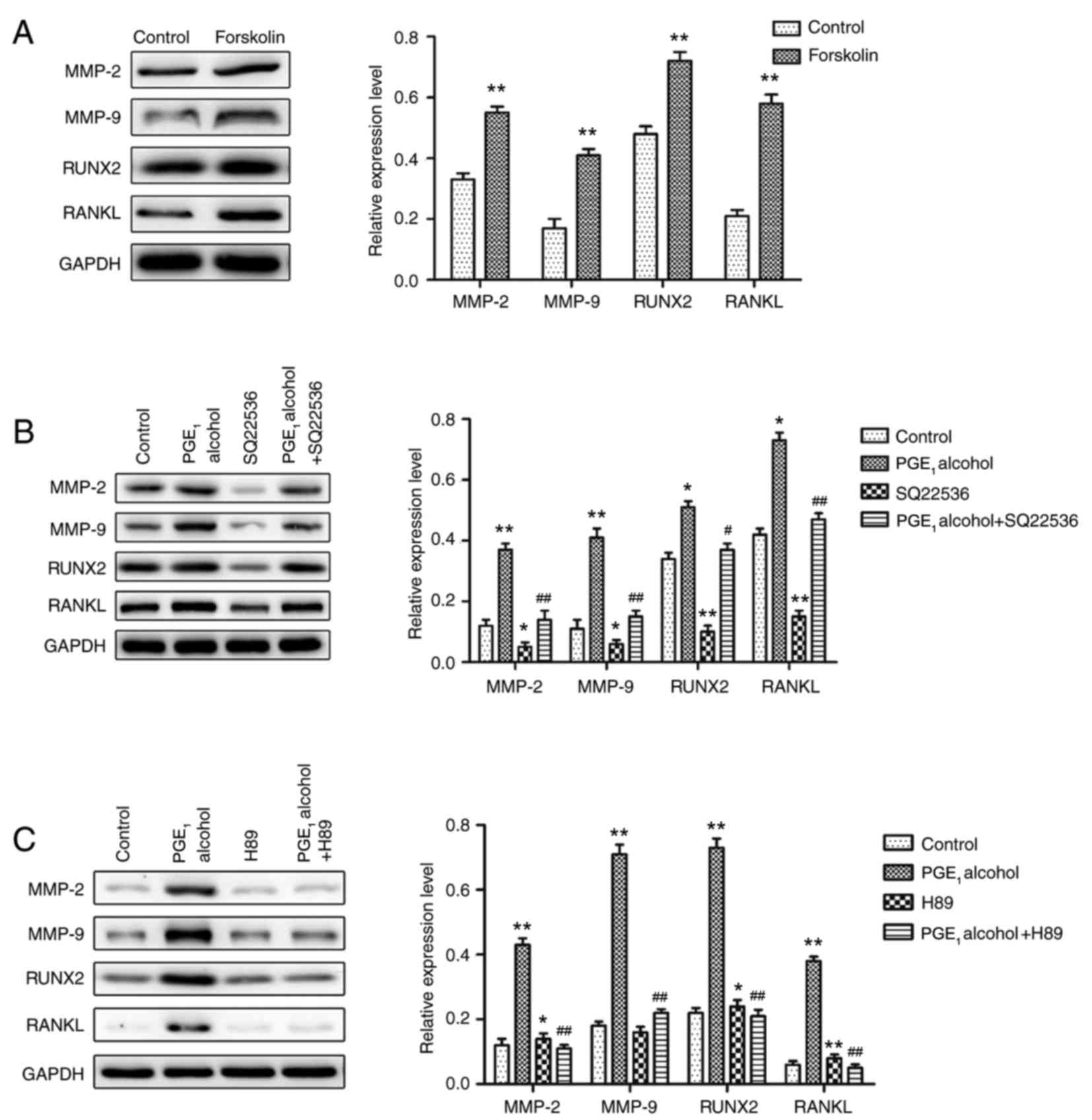
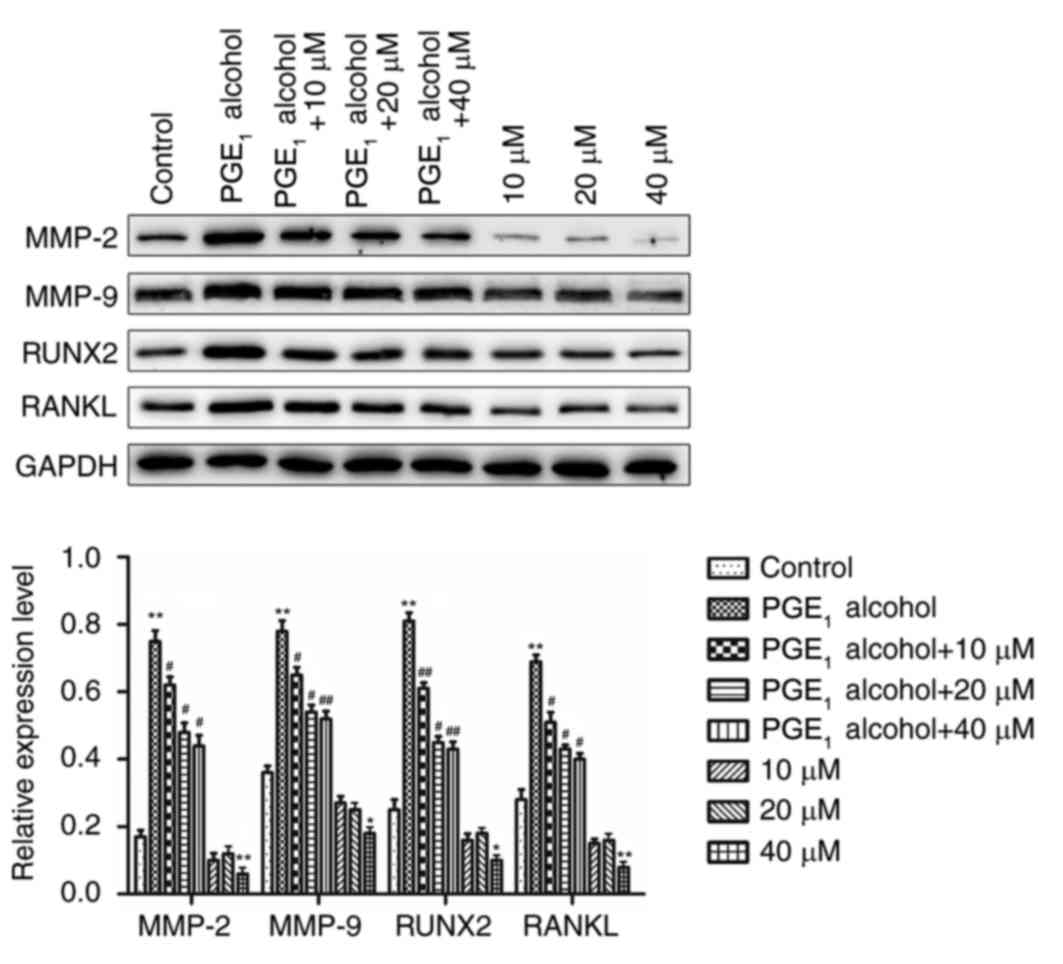
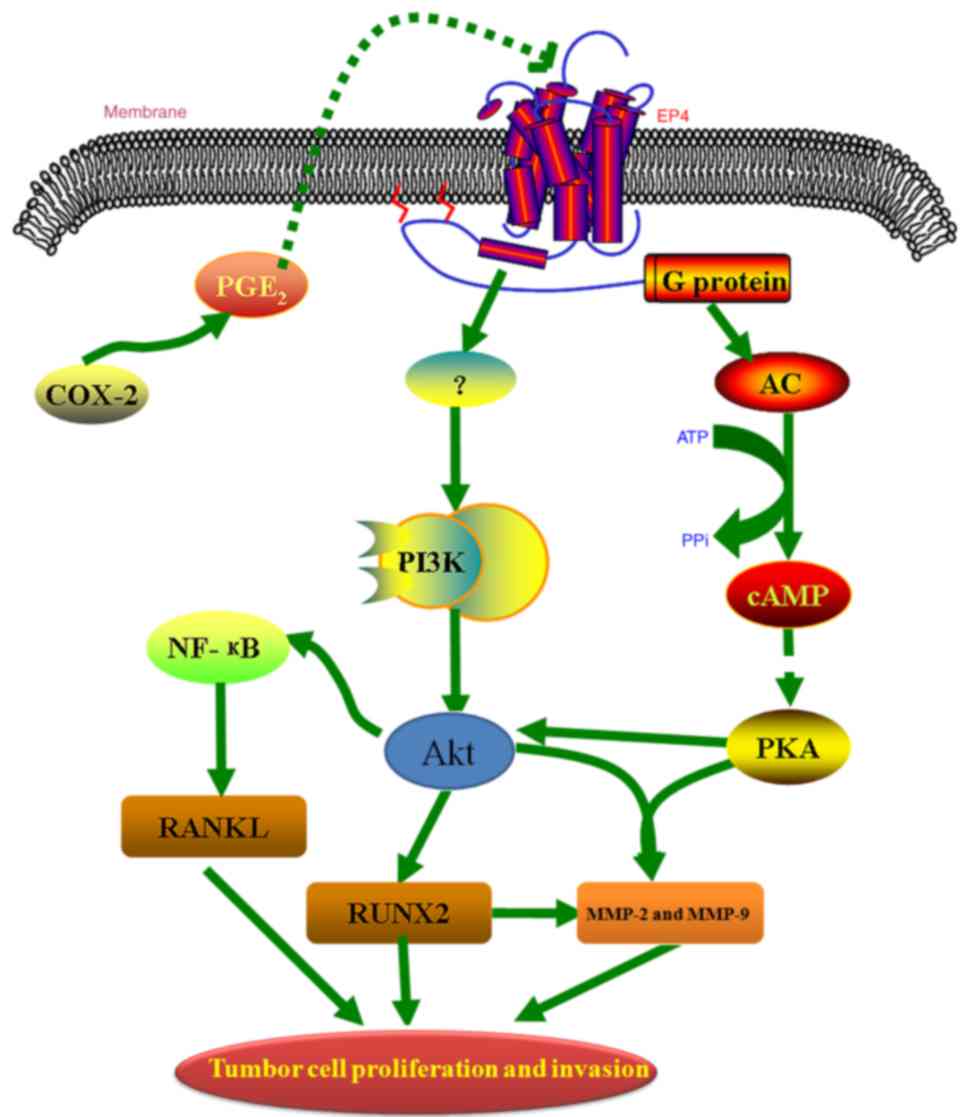
Prostate cancer (PCa) is one of the most prevalent diagnosed malignancies globally. Previous studies have demonstrated that prostaglandin E2 (PGE2) is closely associated with the tumorigenesis and progression of PCa. However, the underlying molecular mechanisms remain unclear and require further investigation. Matrix metalloproteinases (MMPs), receptor activator of nuclear factor‑κB ligand (RANKL) and runt‑related transcription factor 2 (RUNX2), which are involved in cell growth and bone metastasis, are frequently activated or overexpressed in various types of cancer, including PCa. The present study was designed to investigate the associations between PGE2 and the PGE2 receptor EP4, and MMPs, RANKL and RUNX2 in PCa, and to define their roles in PCa cell proliferation and invasion in addition to understanding the molecular mechanisms. The results of western blotting and reverse transcription‑quantitative polymerase chain reaction demonstrated that the protein and the mRNA expression levels of MMP‑2, MMP‑9, RANKL and RUNX2 in PC‑3 cells were significantly upregulated by treatment with PGE2, respectively, and knockdown of these proteins blocked PGE2‑induced cell proliferation and invasion in PC‑3 cells, as determined by Cell Counting Kit‑8 and Matrigel invasion assays, respectively. The effect of PGE2 on the protein and mRNA expression levels was primarily regulated via the EP4 receptor. EP4 receptor signaling activates the cyclic (c)AMP‑protein kinase A (PKA) signaling pathway, and forskolin, an activator of adenylate cyclase (AC), exhibited similar effects to an EP4 receptor agonist on the protein expression, while SQ22536, an inhibitor of AC, inhibited the protein expression. These results confirmed that the AC/cAMP pathway may be involved in EP4 receptor‑mediated upregulation of protein expression. By using a specific inhibitor of PKA, it was also demonstrated that cAMP/PKA was also involved in the EP4 receptor‑mediated upregulation of protein expression. In addition to the signaling pathway involving PKA, the EP4 receptor also exerts activities through activation of Akt kinase. The results in the present study confirmed the hypothesis that EP4 receptor‑mediated protein expression in PCa cells that were pretreated with a specific inhibitor of phosphatidylinositol 3‑kinase (PI3K) was significantly inhibited. In conclusion, the results of the present study indicate that PGE2 significantly upregulated the mRNA and protein expression levels of the MMP‑2, MMP‑9, RANKL and RUNX2, and the EP4 receptor was involved in the cell proliferation and invasion of PCa via the cAMP‑PKA/PI3K‑Akt signaling pathway. These results may provide novel insight into potential therapeutic strategies for the prevention and treatment of PCa.
View Figures

Figure 1

Figure 2

Figure 3

Figure 4

Figure 5

Figure 6

Figure 7

View References

1 

Bashir MN: Epidemiology of prostate cancer. Asian Pac J Cancer Prev. 16:5137–5141. 2015. View Article : Google Scholar : PubMed/NCBI

2 

Carroll PR: Early stage prostate cancer-do we have a problem with over-detection, overtreatment or both? J Urol. 173:1061–1062. 2005. View Article : Google Scholar : PubMed/NCBI

3 

Siegel R, Naishadham D and Jemal A: Cancer statistic, 2012. CA Cancer J Clin. 62:10–29. 2012. View Article : Google Scholar : PubMed/NCBI

4 

Siegel R, DeSantis C, Virgo K, Stein K, Mariotto A, Smith T, Cooper D, Gansler T, Lerro C, Fedewa S, et al: Cancer treatment and survivorship statistics, 2012. CA Cancer J Clin. 62:220–241. 2012. View Article : Google Scholar : PubMed/NCBI

5 

Ferlay J, Soerjomataram I, Dikshit R, Eser S, Mathers C, Rebelo M, Parkin DM, Forman D and Bray F: Cancer incidence and mortality worldwide: sources, methods and major patterns in GLOBOCAN 2012. Int J Cancer. 136:E359–E386. 2015. View Article : Google Scholar : PubMed/NCBI

6 

Berasain C, Castillo J, Perugorria MJ, Latasa MU, Prieto J and Avila MA: Inflammation and liver cancer: New molecular links. Ann N Y Acad Sci. 1155:206–221. 2009. View Article : Google Scholar : PubMed/NCBI

7 

Nakagawa H and Maeda S: Inflammation- and stress-related signaling pathways in hepatocarcinogenesis. World J Gastroenterol. 18:4071–4081. 2012. View Article : Google Scholar : PubMed/NCBI

8 

Ramakrishna G, Rastogi A, Trehanpati N, Sen B, Khosla R and Sarin SK: From cirrhosis to hepatocellular carcinoma: New molecular insights on inflammation and cellular senescence. Liver cancer. 2:367–383. 2013. View Article : Google Scholar : PubMed/NCBI

9 

Ono K, Akatsu T, Murakami T, Kitamura R, Yamamoto M, Shinomiya N, Rokutanda M, Sasaki T, Amizuka N, Ozawa H, et al: Involvement of cyclo-oxygenase-2 in osteoclast formation and bone destruction in bone metastasis of mammary carcinoma cell lines. J Bone Miner Res. 17:774–781. 2002. View Article : Google Scholar : PubMed/NCBI

10 

Rizzo MT: Cyclooxygenase-2 in oncogenesis. Clin Chim Acta. 412:671–687. 2011. View Article : Google Scholar : PubMed/NCBI

11 

Hawk ET, Viner JL, Dannenberg A and DuBois RN: COX-2 in cancer-a player that's defining the rules. J Natl Cancer Inst. 94:545–546. 2002. View Article : Google Scholar : PubMed/NCBI

12 

Lee KS, Lee HJ, Ahn KS and Kim SH, Nam D, Kim DK, Choi DY, Ahn KS, Lu J and Kim SH: Cyclooxygenase-2/prostaglandin E2 pathway mediates icariside II induced apoptosis in human PC-3 prostate cancer cells. Cancer Lett. 280:93–100. 2009. View Article : Google Scholar : PubMed/NCBI

13 

Takahashi T, Uehara H, Bando Y and Izumi K: Soluble EP2 neutralizes prostaglandin E2-induced cell signaling and inhibits osteolytic tumor growth. Mol Cancer Ther. 7:2807–2816. 2008. View Article : Google Scholar : PubMed/NCBI

14 

Richie-Jannetta R, Nirodi CS, Crews BC, Woodward DF, Wang JW, Duff PT and Marnett LJ: Structural determinants for calcium mobilization by prostaglandin E2 and prostaglandin F2alpha glyceryl esters in RAW 264.7 cells and H1819 cells. Prostaglandins Other Lipid Mediat. 92:19–24. 2010. View Article : Google Scholar : PubMed/NCBI

15 

Murakami M and Kudo I: Recent advances in molecular biology and physiology of the prostaglandin E2-biosynthetic pathway. Prog Lipid Res. 43:3–35. 2004. View Article : Google Scholar : PubMed/NCBI

16 

Hata AN and Breyer RM: Pharmacology and signaling of prostaglandin receptors: Multiple roles in inflammation and immune modulation. Pharmacol Ther. 103:147–166. 2004. View Article : Google Scholar : PubMed/NCBI

17 

Negishi M, Sugimoto Y and Ichikawa A: Prostaglandin E receptors. J Lipid Mediat Cell Signal. 12:379–391. 1995. View Article : Google Scholar : PubMed/NCBI

18 

George RJ, Sturmoski MA, Anant S and Houchen CW: EP4 mediates PGE2 dependent cell survival through the PI3 kinase/AKT pathway. Prostaglandins Other Lipid Mediat. 83:112–120. 2007. View Article : Google Scholar : PubMed/NCBI

19 

Huang HF, Shu P, Murphy TF, Aisner S, Fitzhugh VA and Jordan ML: Significance of divergent expression of prostaglandin EP4 and EP3 receptors in human prostate cancer. Mol Cancer Res. 11:427–439. 2013. View Article : Google Scholar : PubMed/NCBI

20 

Madrigal-Martinez A, Cazana FJ and Fernandez-Martinez yA: Role of intracellular prostaglandin E2 in cancer-related phenotypes in PC3 cells. Int J Biochem Cell Biol. 59:52–61. 2015. View Article : Google Scholar : PubMed/NCBI

21 

Yen JH, Kocieda VP, Jing H and Ganea D: Prostaglandin E2 induces matrix metalloproteinase 9 expression in dendritic cells through two independent signaling pathways leading to activator protein 1 (AP-1) Activation. J Biol Chem. 286:38913–38923. 2011. View Article : Google Scholar : PubMed/NCBI

22 

Miao L, Grebhardt S, Shi J, Peipe I, Zhang J and Mayer D: Prostaglandin E2 stimulates S100A8 expression by activating protein kinase A and CCAAT/enhancer-binding-protein-beta in prostate cancer cells. Int J Biochem Cell Biol. 44:1919–1928. 2012. View Article : Google Scholar : PubMed/NCBI

23 

Surhone LM, Tennoe MT and Henssonow SF: Ep4 Receptor. Betascript Publishing; 2011

24 

Kundu N, Ma X, Kochel T, Goloubeva O, Staats P, Thompson K, Martin S, Reader J, Take Y, Collin P and Fulton A: Prostaglandin E receptor EP4 is a therapeutic target in breast cancer cells with stem-like properties. Breast Cancer Res Treat. 143:19–31. 2014. View Article : Google Scholar : PubMed/NCBI

25 

Ma X, Holt D, Kundu N, Reader J, Goloubeva O, Take Y and Fulton AM: A prostaglandin E (PGE) receptor EP4 antagonist protects natural killer cells from PGE2-mediated immunosuppression and inhibits breast cancer metastasis. Oncoimmunology. 2:e226472013. View Article : Google Scholar : PubMed/NCBI

26 

Xia S, Ma J, Bai X, Zhang H, Cheng S, Zhang M, Zhang L, Du M, Wang Y, Li H, et al: Prostaglandin E2 promotes the cell growth and invasive ability of hepatocellular carcinoma cells by upregulating c-Myc expression via EP4 receptor and the PKA signaling pathway. Oncol Rep. 32:1521–1530. 2014. View Article : Google Scholar : PubMed/NCBI

27 

Xu S, Zhang Z, Ogawa O, Yoshikawa T, Sakamoto H, Shibasaki N, Goto T, Wang L and Terada N: An EP4 antagonist ONO-AE3-208 suppresses cell invasion, migration and metastasis of prostate cancer. Cell Biochem Biophys. 70:521–527. 2014. View Article : Google Scholar : PubMed/NCBI

28 

Xu S, Goto T, Yoshikawa T, Zhang Z, Wang L, Terada N and Ogawa O: Abstract 2813: EP4 antagonist suppresses bone metastasis in prostate cancer. Cancer Res (AACR Annual Meeting abstracts). 73:2813. 2014.

29 

Xu S, Wang L, Ge LP, Zhou W and Zhang Z: Effect of EP4 receptor antagonist on malignant phenotypes of androgen-independent prostate cancer cells PC3. Jiangsu Med J. 40:R7372014.(In Chinese).

30 

Xu S, Ge JP, Zhou WQ and Zhang ZY: Inhibitory effect of ONO-AE3-208 on the formation of bone metastasis of prostate cancer in mice. Zhonghua Nan Ke Xue. 20:684–689. 2014.(In Chinese). PubMed/NCBI

31 

Harris RE: Cyclooxygenase-2 (cox-2) blockade in the chemoprevention of cancers of the colon, breast, prostate and lung. Inflammopharmacology. 17:55–67. 2009. View Article : Google Scholar : PubMed/NCBI

32 

Nagase H and Woessner JF Jr: Matrix metalloproteinases. J Biol Chem. 274:21491–21494. 1999. View Article : Google Scholar : PubMed/NCBI

33 

Verma RP and Hansch C: Matrix metalloproteinases (MMPs): Chemical-biological functions and (Q)SARs. Bioorg Med Chem. 15:2223–2268. 2007. View Article : Google Scholar : PubMed/NCBI

34 

Chen S, Chen W, Zhang X, Lin S and Chen Z: Overexpression of KiSS-1 reduces colorectal cancer cell invasion by downregulating MMP-9 via blocking PI3K/Akt/NF-κB signal pathway. Int J Oncol. 48:1391–1398. 2016. View Article : Google Scholar : PubMed/NCBI

35 

Wong BR, Rho J, Arron J, Robinson E, Orlinick J, Chao M, Kalachikov S, Cayani E, Bartlett FS III, Frankel WN, et al: TRANCE is a novel ligand of the tumor necrosis factor receptor family that activates c-jun n-terminal kinase in T cells. J Biol Chem. 272:251901997. View Article : Google Scholar : PubMed/NCBI

36 

Anderson DM, Maraskovsky E, Billingsley WL, Dougall WC, Tometsko ME, Roux ER, Teepe MC, DuBose RF, Cosman D and Galibert L: A homologue of the TNF receptor and its ligand enhance T-cell growth and dendritic-cell function. Nature. 390:175–179. 1997. View Article : Google Scholar : PubMed/NCBI

37 

Mayahara K, Yamaguchi A, Takenouchi H, Kariya T, Taguchi H and Shimizu N: Osteoblasts stimulate osteoclastogenesis via RANKL expression more strongly than periodontal ligament cells do in response to PGE(2). Arch Oral Biol. 57:1377–1384. 2012. View Article : Google Scholar : PubMed/NCBI

38 

Schmiedel BJ, Scheible CA, Nuebling T, Kopp HG, Wirths S, Azuma M, Schneider P, Jung G, Grosse-Hovest L and Salih HR: RANKL expression, function and therapeutic targeting in multiple myeloma and chronic lymphocytic leukemia. Cancer Res. 73:683–694. 2013. View Article : Google Scholar : PubMed/NCBI

39 

Akech J, Wixted JJ, Bedard K, van der Deen M, Hussain S, Guise TA, van Wijnen AJ, Stein JL, Languino LR, Altieri DC, et al: Runx2 association with progression of prostate cancer in patients: Mechanisms mediating bone osteolysis and osteoblastic metastatic lesions. Oncogene. 29:811–821. 2010. View Article : Google Scholar : PubMed/NCBI

40 

Wang X and Klein RD: Prostaglandin E2 induces vascular endothelial growth factor secretion in prostate cancer cells through EP2 receptor-mediated cAMP pathway. Mol Carcinog. 46:912–923. 2007. View Article : Google Scholar : PubMed/NCBI

41 

Sha W, Olesch C, Hanaka H, Radmark O, Weigert A and Brune B: Necrosis in DU145 prostate cancer spheroids induces COX-2/mPGES-1-derived PGE2 to promote tumor growth and to inhibit T cell activation. Int J Cancer. 133:1578–1588. 2013. View Article : Google Scholar : PubMed/NCBI

42 

Kim JI, Lakshmikanthan V, Frilot N and Daaka Y: Prostaglandin E2 promotes lung cancer cell migration via EP4-betaArrestin1-c-Src signalsome. Mol Cancer Res. 8:569–577. 2010. View Article : Google Scholar : PubMed/NCBI

43 

Livak KJ and Schmittgen TD: Analysis of relative gene expression data using real-time quantitative PCR and the 2(-Delta Delta C(T)) method. Methods. 25:402–408. 2001. View Article : Google Scholar : PubMed/NCBI

44 

Cooper DM: Regulation and organization of adenylyl cyclases and cAMP. Biochem J. 375:517–529. 2003. View Article : Google Scholar : PubMed/NCBI

45 

Vo BT, Morton D Jr, Komaragiri S, Millena AC, Leath C and Khan SA: TGF-β effects on prostate cancer cell migration and invasion are mediated by PGE2 through activation of PI3K/AKT/mTOR pathway. Endocrinology. 154:1768–1779. 2013. View Article : Google Scholar : PubMed/NCBI

46 

Kisslov L, Hadad N, Rosengraten M and Levy R: HT-29 human colon cancer cell proliferation is regulated by cytosolic phospholipase A(2)α dependent PGE(2)via both PKA and PKB pathways. Biochim Biophys Acta. 1821:1224–1234. 2012. View Article : Google Scholar : PubMed/NCBI

47 

Han C, Michalopoulos GK and Wu T: Prostaglandin E2 receptor EP1 transactivates EGFR/MET receptor tyrosine kinases and enhances invasiveness in human hepatocellular carcinoma cells. J Cell Physiol. 207:261–270. 2006. View Article : Google Scholar : PubMed/NCBI

48 

Bai X, Wang J, Zhang L, Ma J, Zhang H, Xia S, Zhang M, Ma X, Guo Y, Rong R, et al: Prostaglandin E2 receptor EP1-mediated phosphorylation of focal adhesion kinase enhances cell adhesion and migration in hepatocellular carcinoma cells. Int J Oncol. 42:1833–1841. 2013. View Article : Google Scholar : PubMed/NCBI

49 

Peng Y, Shi J, Du X, Wang L, Klocker H, Mo L, Mo Z and Zhang J: Prostaglandin E2 induces stromal cell-derived factor-1 expression in prostate stromal cells by activating protein kinase A and transcription factor Sp1. Int J Biochem Cell Biol. 45:521–530. 2013. View Article : Google Scholar : PubMed/NCBI

50 

Wu J, Zhang Y, Frilot N, Kim JI, Kim WJ and Daaka Y: Prostaglandin E2 regulates renal cell carcinoma invasion through the EP4 receptor-Rap GTPase signal transduction pathway. J Biol Chem. 286:33954–33962. 2011. View Article : Google Scholar : PubMed/NCBI

51 

Jain S, Chakraborty G, Raja R, Kale S and Kundu GC: Prostaglandin E2 regulates tumor angiogenesis in prostate cancer. Cancer Res. 68:7750–7759. 2008. View Article : Google Scholar : PubMed/NCBI

52 

Reader J, Holt D and Fulton A: Prostaglandin E2 EP receptors as therapeutic targets in breast cancer. Cancer Metastasis Rev. 30:449–463. 2011. View Article : Google Scholar : PubMed/NCBI

53 

Bai XM, Zhang W, Liu NB, Jiang H, Lou KX, Peng T, Ma J, Zhang L, Zhang H and Leng J: Focal adhesion kinase: Important to prostaglandin E2-mediated adhesion, migration and invasion in hepatocellular carcinoma cells. Oncol Rep. 21:129–136. 2009.PubMed/NCBI

54 

Cherukuri DP, Goulet AC, Young RN, Meuillet E, Regan WJ and Nelson MA: Prostagland in E2 (PGE2)-induced etracellular-regulated kinase (ERK1/2)-phosphorylation is mediated by EP4 receptor in human colon cancer cells. Cancer Res. 47:3872006.

55 

Friis UG, Stubbe J, Uhrenhoil TR, Svenningsen P, Nüsing RM, Skøtt O and Jensen BL: Prostaglandin E2 EP2 and EP4 receptor activation mediates cAMP-dependent hyperpolarization and exocytosis of renin in juxtaglomerular cells. Am J Physiol Renal Physiol. 289:F989–F997. 2005. View Article : Google Scholar : PubMed/NCBI

56 

Tauro M, Laghezza A, Tortorella P and Lynch CC: Abstract 4858: A novel strategy for the selective and tissue specific inhibition of MMPs in active breast cancer to bone metastases. Cancer Res (AACR Annual Meeting abstracts). 74:pp. 48582014;

57 

Jones DH, Nakashima T, Sanchez OH, Kozieradzki I, Komarova SV, Sarosi I, Morony S, Rubin E, Sarao R, Hojilla CV, et al: Regulation of cancer cell migration and bone metastasis by RANKL. Nature. 440:692–696. 2006. View Article : Google Scholar : PubMed/NCBI

58 

Baniwal SK, Khalid O, Gabet Y, Shah RR, Purcell DJ, Mav D, Kohn-Gabet AE, Shi Y, Coetzee GA and Frenkel B: Runx2 transcriptome of prostate cancer cells: Insights into invasiveness and bone metastasis. Mol Cancer. 9:2582010. View Article : Google Scholar : PubMed/NCBI

59 

Hussain A and Jayasekera O: Characteristics of stage III and IV M0 prostate cancer patients in Seer-medicare who develop bone Metastasis following diagnosis.

60 

Sassone-Corsi P: The cyclic AMP pathway. Cold Spring Harb Perspect Biol. 4:a0111482012. View Article : Google Scholar : PubMed/NCBI

61 

Fimia GM and Sassone-Corsi P: Cyclic AMP signalling. J Cell Sci. 114:1971–1972. 2001.PubMed/NCBI

62 

Manning BD and Cantley LC: AKT/PKB signaling: Navigating downstream. Cell. 129:1261–1274. 2007. View Article : Google Scholar : PubMed/NCBI

Related Articles

  • Abstract
  • View
  • Download
  • Twitter
Copy and paste a formatted citation
Spandidos Publications style
Xu S, Zhou W, Ge J and Zhang Z: Prostaglandin E2 receptor EP4 is involved in the cell growth and invasion of prostate cancer via the cAMP‑PKA/PI3K‑Akt signaling pathway. Mol Med Rep 17: 4702-4712, 2018.
APA
Xu, S., Zhou, W., Ge, J., & Zhang, Z. (2018). Prostaglandin E2 receptor EP4 is involved in the cell growth and invasion of prostate cancer via the cAMP‑PKA/PI3K‑Akt signaling pathway. Molecular Medicine Reports, 17, 4702-4712. https://doi.org/10.3892/mmr.2018.8415
MLA
Xu, S., Zhou, W., Ge, J., Zhang, Z."Prostaglandin E2 receptor EP4 is involved in the cell growth and invasion of prostate cancer via the cAMP‑PKA/PI3K‑Akt signaling pathway". Molecular Medicine Reports 17.3 (2018): 4702-4712.
Chicago
Xu, S., Zhou, W., Ge, J., Zhang, Z."Prostaglandin E2 receptor EP4 is involved in the cell growth and invasion of prostate cancer via the cAMP‑PKA/PI3K‑Akt signaling pathway". Molecular Medicine Reports 17, no. 3 (2018): 4702-4712. https://doi.org/10.3892/mmr.2018.8415
Copy and paste a formatted citation
x
Spandidos Publications style
Xu S, Zhou W, Ge J and Zhang Z: Prostaglandin E2 receptor EP4 is involved in the cell growth and invasion of prostate cancer via the cAMP‑PKA/PI3K‑Akt signaling pathway. Mol Med Rep 17: 4702-4712, 2018.
APA
Xu, S., Zhou, W., Ge, J., & Zhang, Z. (2018). Prostaglandin E2 receptor EP4 is involved in the cell growth and invasion of prostate cancer via the cAMP‑PKA/PI3K‑Akt signaling pathway. Molecular Medicine Reports, 17, 4702-4712. https://doi.org/10.3892/mmr.2018.8415
MLA
Xu, S., Zhou, W., Ge, J., Zhang, Z."Prostaglandin E2 receptor EP4 is involved in the cell growth and invasion of prostate cancer via the cAMP‑PKA/PI3K‑Akt signaling pathway". Molecular Medicine Reports 17.3 (2018): 4702-4712.
Chicago
Xu, S., Zhou, W., Ge, J., Zhang, Z."Prostaglandin E2 receptor EP4 is involved in the cell growth and invasion of prostate cancer via the cAMP‑PKA/PI3K‑Akt signaling pathway". Molecular Medicine Reports 17, no. 3 (2018): 4702-4712. https://doi.org/10.3892/mmr.2018.8415
Follow us
  • Twitter
  • LinkedIn
  • Facebook
About
  • Spandidos Publications
  • Careers
  • Cookie Policy
  • Privacy Policy
How can we help?
  • Help
  • Live Chat
  • Contact
  • Email to our Support Team