Spandidos Publications Logo
  • About
    • About Spandidos
    • Aims and Scopes
    • Abstracting and Indexing
    • Editorial Policies
    • Reprints and Permissions
    • Job Opportunities
    • Terms and Conditions
    • Contact
  • Journals
    • All Journals
    • Oncology Letters
      • Oncology Letters
      • Information for Authors
      • Editorial Policies
      • Editorial Board
      • Aims and Scope
      • Abstracting and Indexing
      • Bibliographic Information
      • Archive
    • International Journal of Oncology
      • International Journal of Oncology
      • Information for Authors
      • Editorial Policies
      • Editorial Board
      • Aims and Scope
      • Abstracting and Indexing
      • Bibliographic Information
      • Archive
    • Molecular and Clinical Oncology
      • Molecular and Clinical Oncology
      • Information for Authors
      • Editorial Policies
      • Editorial Board
      • Aims and Scope
      • Abstracting and Indexing
      • Bibliographic Information
      • Archive
    • Experimental and Therapeutic Medicine
      • Experimental and Therapeutic Medicine
      • Information for Authors
      • Editorial Policies
      • Editorial Board
      • Aims and Scope
      • Abstracting and Indexing
      • Bibliographic Information
      • Archive
    • International Journal of Molecular Medicine
      • International Journal of Molecular Medicine
      • Information for Authors
      • Editorial Policies
      • Editorial Board
      • Aims and Scope
      • Abstracting and Indexing
      • Bibliographic Information
      • Archive
    • Biomedical Reports
      • Biomedical Reports
      • Information for Authors
      • Editorial Policies
      • Editorial Board
      • Aims and Scope
      • Abstracting and Indexing
      • Bibliographic Information
      • Archive
    • Oncology Reports
      • Oncology Reports
      • Information for Authors
      • Editorial Policies
      • Editorial Board
      • Aims and Scope
      • Abstracting and Indexing
      • Bibliographic Information
      • Archive
    • Molecular Medicine Reports
      • Molecular Medicine Reports
      • Information for Authors
      • Editorial Policies
      • Editorial Board
      • Aims and Scope
      • Abstracting and Indexing
      • Bibliographic Information
      • Archive
    • World Academy of Sciences Journal
      • World Academy of Sciences Journal
      • Information for Authors
      • Editorial Policies
      • Editorial Board
      • Aims and Scope
      • Abstracting and Indexing
      • Bibliographic Information
      • Archive
    • International Journal of Functional Nutrition
      • International Journal of Functional Nutrition
      • Information for Authors
      • Editorial Policies
      • Editorial Board
      • Aims and Scope
      • Abstracting and Indexing
      • Bibliographic Information
      • Archive
    • International Journal of Epigenetics
      • International Journal of Epigenetics
      • Information for Authors
      • Editorial Policies
      • Editorial Board
      • Aims and Scope
      • Abstracting and Indexing
      • Bibliographic Information
      • Archive
    • Medicine International
      • Medicine International
      • Information for Authors
      • Editorial Policies
      • Editorial Board
      • Aims and Scope
      • Abstracting and Indexing
      • Bibliographic Information
      • Archive
  • Articles
  • Information
    • Information for Authors
    • Information for Reviewers
    • Information for Librarians
    • Information for Advertisers
    • Conferences
  • Language Editing
Spandidos Publications Logo
  • About
    • About Spandidos
    • Aims and Scopes
    • Abstracting and Indexing
    • Editorial Policies
    • Reprints and Permissions
    • Job Opportunities
    • Terms and Conditions
    • Contact
  • Journals
    • All Journals
    • Biomedical Reports
      • Information for Authors
      • Editorial Policies
      • Editorial Board
      • Aims and Scope
      • Abstracting and Indexing
      • Bibliographic Information
      • Archive
    • Experimental and Therapeutic Medicine
      • Information for Authors
      • Editorial Policies
      • Editorial Board
      • Aims and Scope
      • Abstracting and Indexing
      • Bibliographic Information
      • Archive
    • International Journal of Epigenetics
      • Information for Authors
      • Editorial Policies
      • Editorial Board
      • Aims and Scope
      • Abstracting and Indexing
      • Bibliographic Information
      • Archive
    • International Journal of Functional Nutrition
      • Information for Authors
      • Editorial Policies
      • Editorial Board
      • Aims and Scope
      • Abstracting and Indexing
      • Bibliographic Information
      • Archive
    • International Journal of Molecular Medicine
      • Information for Authors
      • Editorial Policies
      • Editorial Board
      • Aims and Scope
      • Abstracting and Indexing
      • Bibliographic Information
      • Archive
    • International Journal of Oncology
      • Information for Authors
      • Editorial Policies
      • Editorial Board
      • Aims and Scope
      • Abstracting and Indexing
      • Bibliographic Information
      • Archive
    • Medicine International
      • Information for Authors
      • Editorial Policies
      • Editorial Board
      • Aims and Scope
      • Abstracting and Indexing
      • Bibliographic Information
      • Archive
    • Molecular and Clinical Oncology
      • Information for Authors
      • Editorial Policies
      • Editorial Board
      • Aims and Scope
      • Abstracting and Indexing
      • Bibliographic Information
      • Archive
    • Molecular Medicine Reports
      • Information for Authors
      • Editorial Policies
      • Editorial Board
      • Aims and Scope
      • Abstracting and Indexing
      • Bibliographic Information
      • Archive
    • Oncology Letters
      • Information for Authors
      • Editorial Policies
      • Editorial Board
      • Aims and Scope
      • Abstracting and Indexing
      • Bibliographic Information
      • Archive
    • Oncology Reports
      • Information for Authors
      • Editorial Policies
      • Editorial Board
      • Aims and Scope
      • Abstracting and Indexing
      • Bibliographic Information
      • Archive
    • World Academy of Sciences Journal
      • Information for Authors
      • Editorial Policies
      • Editorial Board
      • Aims and Scope
      • Abstracting and Indexing
      • Bibliographic Information
      • Archive
  • Articles
  • Information
    • For Authors
    • For Reviewers
    • For Librarians
    • For Advertisers
    • Conferences
  • Language Editing
Login Register Submit
  • This site uses cookies
  • You can change your cookie settings at any time by following the instructions in our Cookie Policy. To find out more, you may read our Privacy Policy.

    I agree
Search articles by DOI, keyword, author or affiliation
Search
Advanced Search
presentation
Molecular Medicine Reports
Join Editorial Board Propose a Special Issue
Print ISSN: 1791-2997 Online ISSN: 1791-3004
Journal Cover
March-2018 Volume 17 Issue 3

Full Size Image

Sign up for eToc alerts
Recommend to Library

Journals

International Journal of Molecular Medicine

International Journal of Molecular Medicine

International Journal of Molecular Medicine is an international journal devoted to molecular mechanisms of human disease.

International Journal of Oncology

International Journal of Oncology

International Journal of Oncology is an international journal devoted to oncology research and cancer treatment.

Molecular Medicine Reports

Molecular Medicine Reports

Covers molecular medicine topics such as pharmacology, pathology, genetics, neuroscience, infectious diseases, molecular cardiology, and molecular surgery.

Oncology Reports

Oncology Reports

Oncology Reports is an international journal devoted to fundamental and applied research in Oncology.

Experimental and Therapeutic Medicine

Experimental and Therapeutic Medicine

Experimental and Therapeutic Medicine is an international journal devoted to laboratory and clinical medicine.

Oncology Letters

Oncology Letters

Oncology Letters is an international journal devoted to Experimental and Clinical Oncology.

Biomedical Reports

Biomedical Reports

Explores a wide range of biological and medical fields, including pharmacology, genetics, microbiology, neuroscience, and molecular cardiology.

Molecular and Clinical Oncology

Molecular and Clinical Oncology

International journal addressing all aspects of oncology research, from tumorigenesis and oncogenes to chemotherapy and metastasis.

World Academy of Sciences Journal

World Academy of Sciences Journal

Multidisciplinary open-access journal spanning biochemistry, genetics, neuroscience, environmental health, and synthetic biology.

International Journal of Functional Nutrition

International Journal of Functional Nutrition

Open-access journal combining biochemistry, pharmacology, immunology, and genetics to advance health through functional nutrition.

International Journal of Epigenetics

International Journal of Epigenetics

Publishes open-access research on using epigenetics to advance understanding and treatment of human disease.

Medicine International

Medicine International

An International Open Access Journal Devoted to General Medicine.

Journal Cover
March-2018 Volume 17 Issue 3

Full Size Image

Sign up for eToc alerts
Recommend to Library

  • Article
  • Citations
    • Cite This Article
    • Download Citation
    • Create Citation Alert
    • Remove Citation Alert
    • Cited By
  • Similar Articles
    • Related Articles (in Spandidos Publications)
    • Similar Articles (Google Scholar)
    • Similar Articles (PubMed)
  • Download PDF
  • Download XML
  • View XML
Article

Propofol postconditioning protects H9c2 cells from hypoxia/reoxygenation injury by inducing autophagy via the SAPK/JNK pathway

  • Authors:
    • Hao Li
    • Xuan Zhang
    • Jian Tan
    • Li Sun
    • Long‑He Xu
    • Yu‑Ge Jiang
    • Jing‑Sheng Lou
    • Xue‑Yin Shi
    • Wei‑Dong Mi
  • View Affiliations / Copyright

    Affiliations: Anesthesia and Operation Center, Chinese PLA General Hospital, Beijing 100853, P.R. China, Department of Thoracic Surgery, PLA Army General Hospital, Beijing 100700, P.R. China, Department of Anesthesiology, Changzheng Hospital, Second Military Medical University, Shanghai 200003, P.R. China
  • Pages: 4573-4580
    |
    Published online on: January 11, 2018
       https://doi.org/10.3892/mmr.2018.8424
  • Expand metrics +
Metrics: Total Views: 0 (Spandidos Publications: | PMC Statistics: )
Metrics: Total PDF Downloads: 0 (Spandidos Publications: | PMC Statistics: )
Cited By (CrossRef): 0 citations Loading Articles...

This article is mentioned in:


Abstract

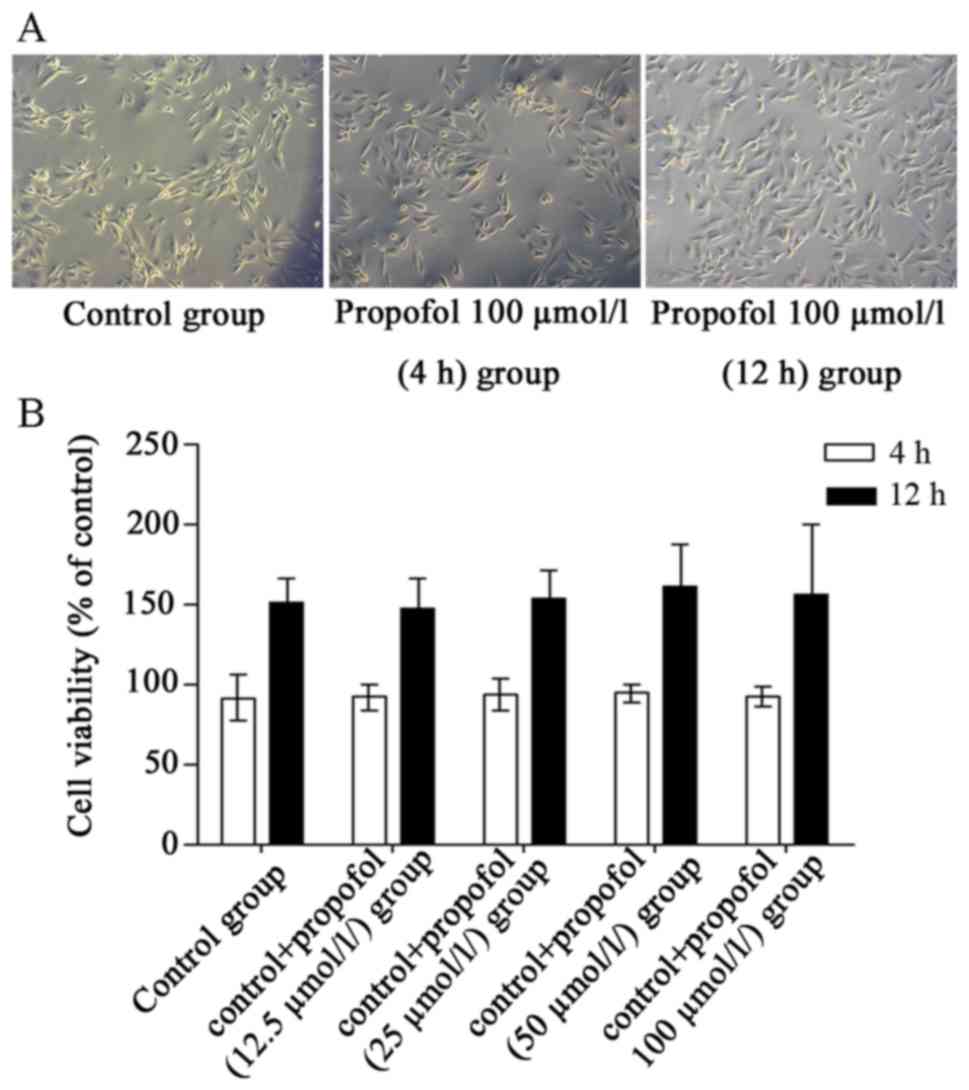
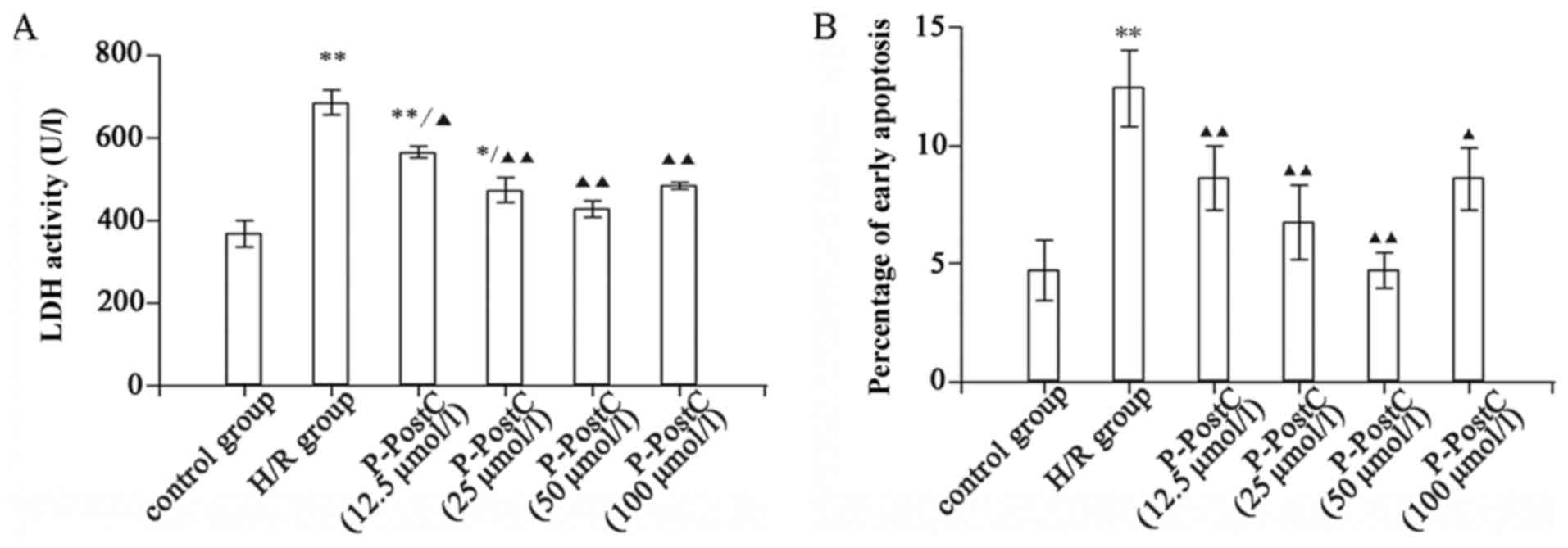
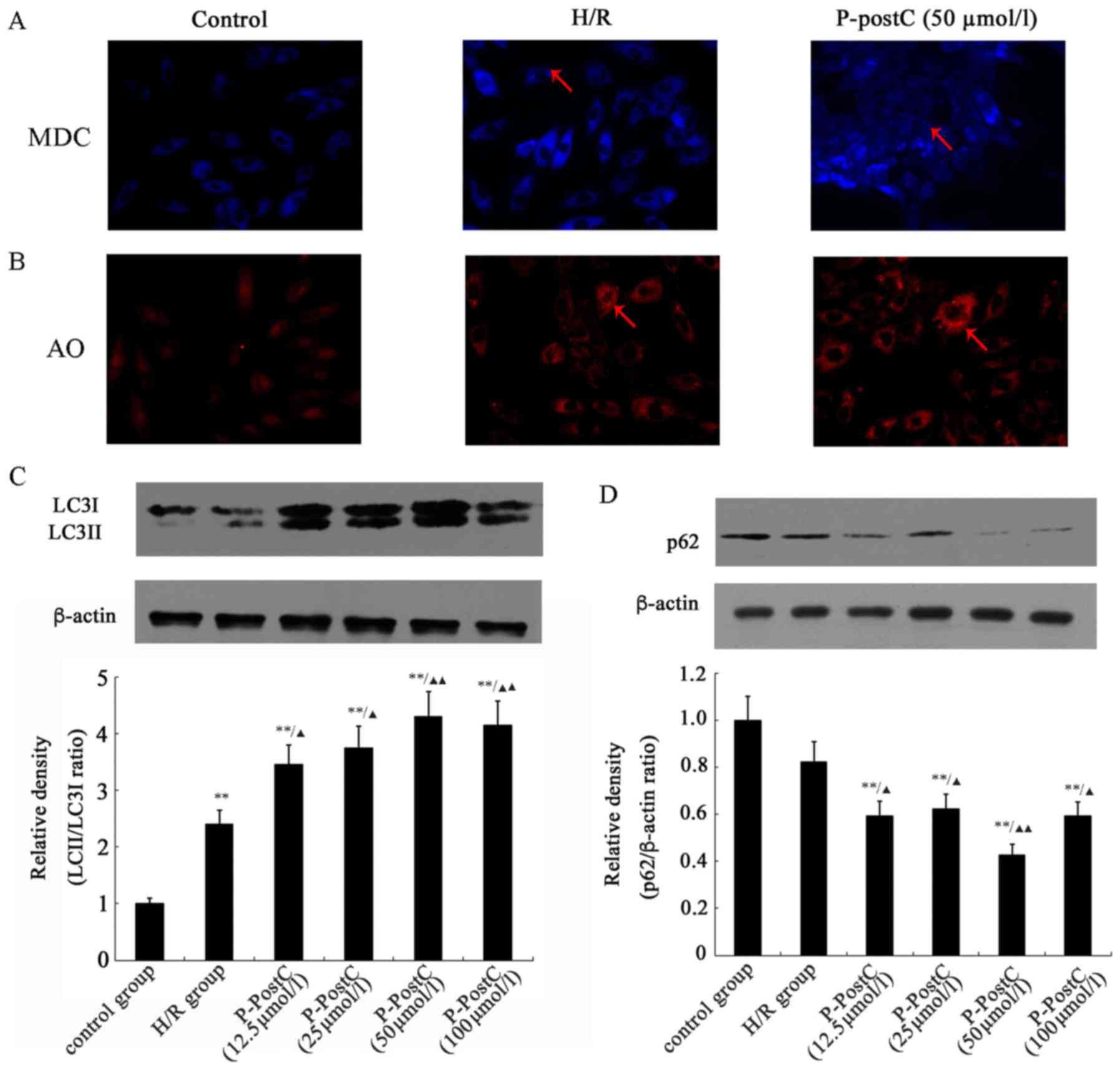
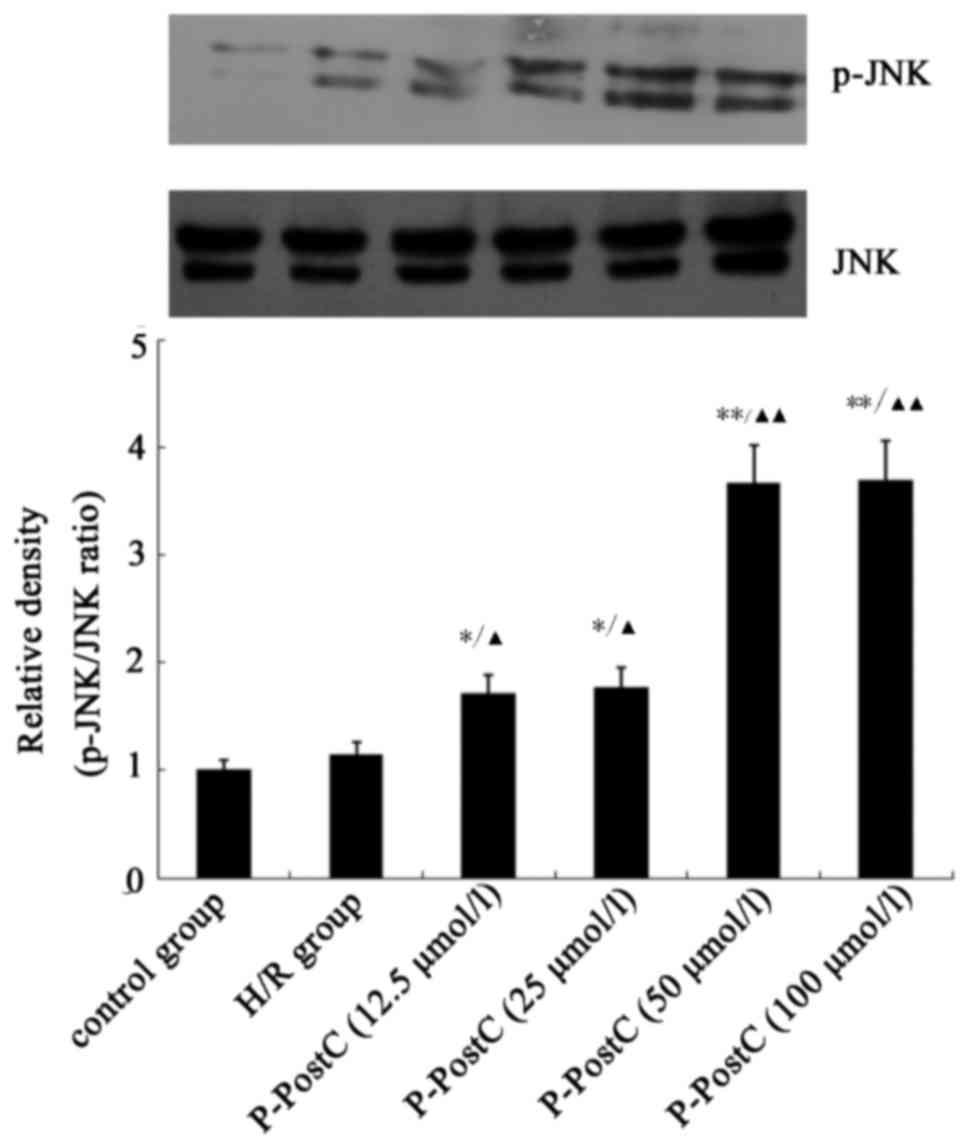
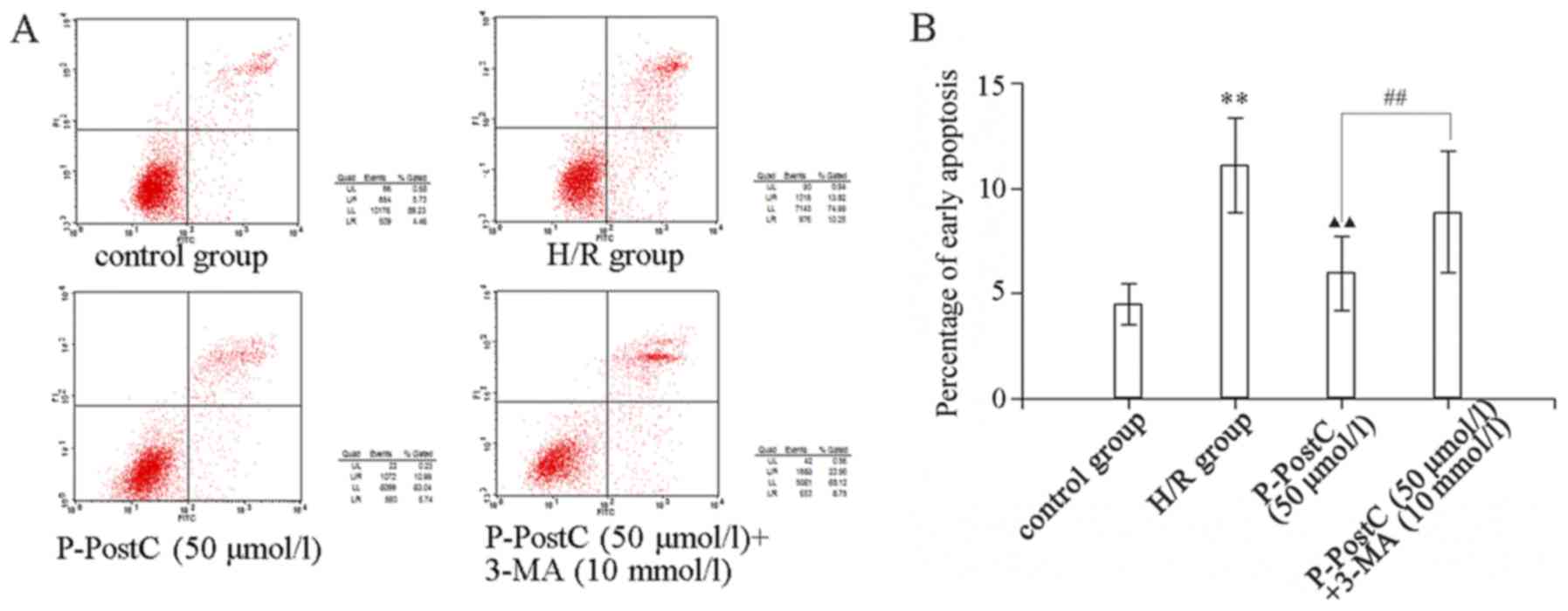
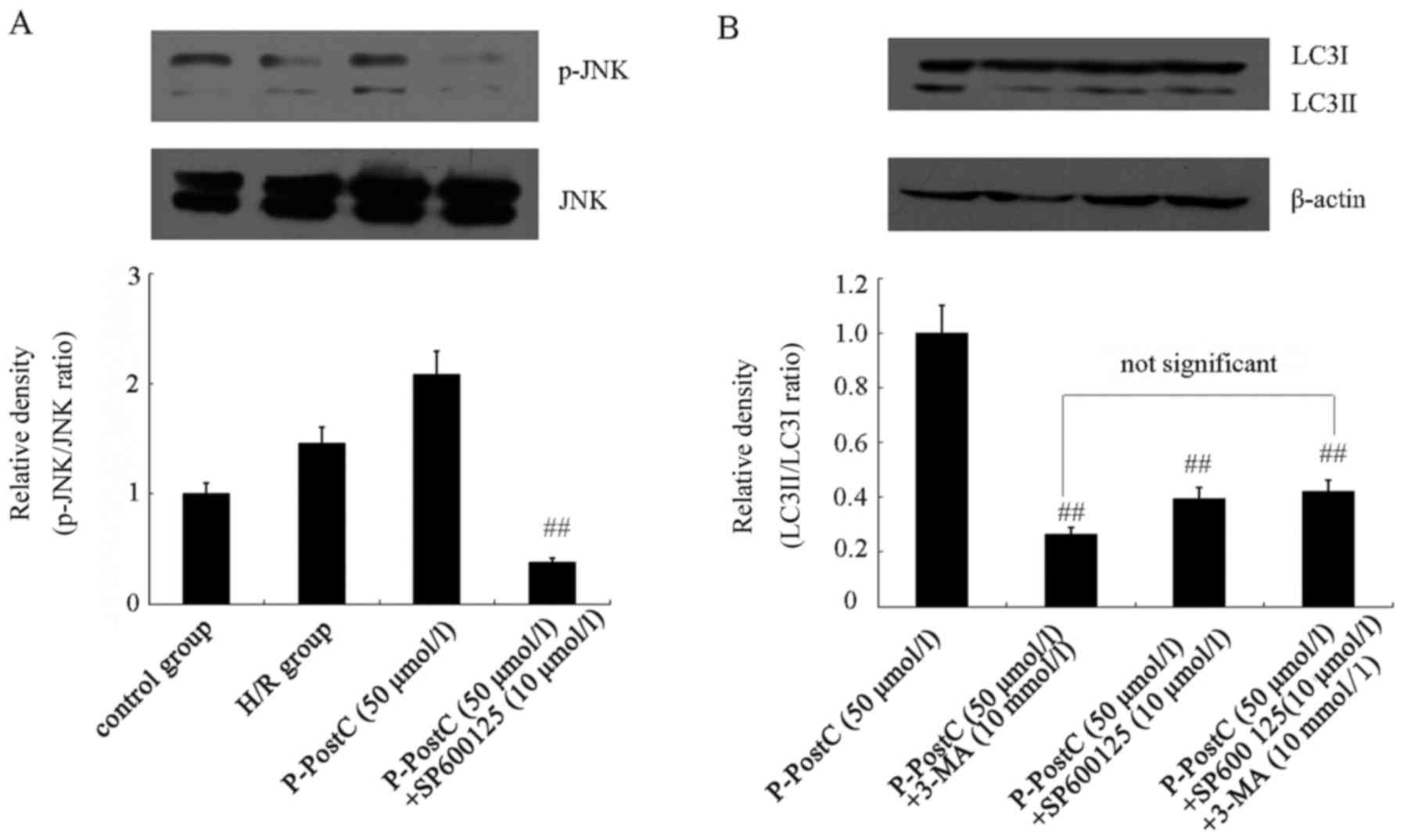
Propofol postconditioning (P‑PostC) offers cardioprotection in mice, and the upregulation of autophagy protects cardiac cells against ischemia/reperfusion injury. The present study aimed to examine the effects of P‑PostC on the induction of autophagy and its potential roles in hypoxia/reoxygenation (H/R) injury. Rat heart‑derived H9c2 cells were exposed to H/R, comprising 6 h of hypoxia followed by 4 h of reoxygenation, as well as postconditioning with various concentrations of propofol at the onset of reperfusion. Lactate dehydrogenase (LDH) activity and the rate of cell apoptosis were measured to evaluate the degree of cardiomyocyte H/R injury. The induction of autophagy in myocytes subjected to H/R injury and P‑PostC was detected by western blotting and immunofluorescence. Furthermore, the activation of c‑Jun N‑terminal kinase (JNK) in cells treated with P‑PostC with or without co‑treatment with SP600125, an inhibitor of JNK, was also determined by western blotting. P‑PostC reduced the activity of LDH in the culture medium and the percentage of apoptotic cells compared with cells in the untreated H/R group. In addition, P‑PostC induced autophagy and promoted survival signaling in H9c2 cardiac myoblast cells. The inhibition of autophagy by 3‑methyladenine treatment diminished the cardioprotective effects of P‑PostC. These results indicated that propofol postconditioning promoted cell survival through the induction of autophagy in H9c2 cardiac cells, and that the stress‑activated protein kinase/JNK survival pathway may be partly involved in P‑PostC‑induced autophagy.
View Figures

Figure 1

Figure 2

Figure 3

Figure 4

Figure 5

Figure 6

View References

1 

Badner NH, Knill RL, Brown JE, Novick TV and Gelb AW: Myocardial infarction after noncardiac surgery. Anesthesiology. 88:572–578. 1998. View Article : Google Scholar : PubMed/NCBI

2 

Murry CE, Jennings RB and Reimer KA: Preconditioning with ischemia: A delay of lethal cell injury in ischemic myocardium. Circulation. 74:1124–1136. 1986. View Article : Google Scholar : PubMed/NCBI

3 

Zhao ZQ, Corvera JS, Halkos ME, Kerendi F, Wang NP, Guyton RA and Vinten-Johansen J: Inhibition of myocardial injury by ischemic postconditioning during reperfusion: comparison with ischemic preconditioning. Am J Physiol Heart Circ Physiol. 285:H579–H588. 2003. View Article : Google Scholar : PubMed/NCBI

4 

Vinten-Johansen J, Zhao ZQ, Jiang R and Zatta AJ: Myocardial protection in reperfusion with postconditioning. Expert Rev Cardiovasc Ther. 3:1035–1045. 2005. View Article : Google Scholar : PubMed/NCBI

5 

Wang JK, Yu LN, Zhang FJ, Yang MJ, Yu J, Yan M and Chen G: Postconditioning with sevoflurane protects against focal cerebral ischemia and reperfusion injury via PI3K/Akt pathway. Brain Res. 1357:142–151. 2010. View Article : Google Scholar : PubMed/NCBI

6 

Marik PE: Propofol: Therapeutic indications and side-effects. Curr Pharm Des. 10:3639–3649. 2004. View Article : Google Scholar : PubMed/NCBI

7 

Li H, Tan J, Zou Z, Huang CG and Shi XY: Propofol post-conditioning protects against cardiomyocyte apoptosis in hypoxia/reoxygenation injury by suppressing nuclear factor-kappa B translocation via extracellular signal-regulated kinase mitogen-activated protein kinase pathway. Eur J Anaesthesiol. 28:525–534. 2011. View Article : Google Scholar : PubMed/NCBI

8 

Klionsky DJ and Emr SD: Autophagy as a regulated pathway of cellular degradation. Science. 290:1717–1721. 2000. View Article : Google Scholar : PubMed/NCBI

9 

Levine B and Klionsky DJ: Development by self-digestion: Molecular mechanisms and biological functions of autophagy. Dev Cell. 6:463–477. 2004. View Article : Google Scholar : PubMed/NCBI

10 

Powell SR: The ubiquitin-proteasome system in cardiac physiology and pathology. Am J Physiol Heart Circ Physiol. 291:H1–19H. 2006. View Article : Google Scholar : PubMed/NCBI

11 

Dosenko VE, Nagibin VS, Tumanovska LV and Moibenko AA: Protective effect of autophagy in anoxia-reoxygenation of isolated cardiomyocyte? Autophagy. 2:305–306. 2006. View Article : Google Scholar : PubMed/NCBI

12 

Gurusamy N, Lekli I, Gherghiceanu M, Popescu LM and Das DK: BAG-1 induces autophagy for cardiac cell survival. Autophagy. 5:120–121. 2009. View Article : Google Scholar : PubMed/NCBI

13 

Yan WJ, Dong HL and Xiong LZ: The protective roles of autophagy in ischemic preconditioning. Acta Pharmacol Sin. 34:636–643. 2013. View Article : Google Scholar : PubMed/NCBI

14 

Zhou YY, Li Y, Jiang WQ and Zhou LF: MAPK/JNK signalling: A potential autophagy regulation pathway. Biosci Rep. 35:pii: e001992015.

15 

Tanida I, Ueno T and Kominami E: LC3 and autophagy. Methods Mol Biol. 445:77–88. 2008. View Article : Google Scholar : PubMed/NCBI

16 

Shvets E, Fas E, Scherz-Shouval R and Elazar Z: The N-terminus and Phe52 residue of LC3 recruit p62/SQSTM1 into autophagosomes. J Cell Sci. 121:2685–2695. 2008. View Article : Google Scholar : PubMed/NCBI

17 

Guo C, Wang SL, Xu ST, Wang JG and Song GH: SP600125 reduces lipopolysaccharide-induced apoptosis and restores the early-stage differentiation of osteoblasts inhibited by LPS through the MAPK pathway in MC3T3-E1 cells. Int J Mol Med. 35:1427–1434. 2015. View Article : Google Scholar : PubMed/NCBI

18 

Song L, Liu H, Ma L, Zhang X, Jiang Z and Jiang C: Inhibition of autophagy by 3-MA enhances endoplasmic reticulum stress-induced apoptosis in human nasopharyngeal carcinoma cells. Oncol Lett. 6:1031–1038. 2013. View Article : Google Scholar : PubMed/NCBI

19 

Hoch B, Haase H, Schulze W, Hagemann D, Morano I, Krause EG and Karczewski P: Differentiation-dependent expression of cardiac delta-CaMKII isoforms. J Cell Biochem. 68:259–268. 1998. View Article : Google Scholar : PubMed/NCBI

20 

Danpure CJ: Lactate dehydrogenase and cell injury. Cell Biochem Funct. 2:144–148. 1984. View Article : Google Scholar : PubMed/NCBI

21 

Mizushima N: Methods for monitoring autophagy. Int J Biochem Cell Biol. 36:2491–2502. 2004. View Article : Google Scholar : PubMed/NCBI

22 

Makoto S, Hajime I and Takashi N: Propofol protects the immature rabbit heart against ischemia and reperfusion injury: Impact on functional recovery and histopathological changes. Biomed Res Int. 2014:6012502014.PubMed/NCBI

23 

Dong Y, Undyala VV, Gottlieb RA, Mentzer RM Jr and Przyklenk K: Autophagy: Definition, molecular machinery, and potential role in myocardial ischemia-reperfusion injury. J Cardiovasc Pharmacol Ther. 15:220–230. 2010. View Article : Google Scholar : PubMed/NCBI

24 

Gustafsson AB and Gottlieb RA: Eat your heart out: Role of autophagy in myocardial ischemia/reperfusion. Autophagy. 4:416–421. 2008. View Article : Google Scholar : PubMed/NCBI

25 

Gustafsson AB and Gottlieb RA: Recycle or die: The role of autophagy in cardioprotection. J Mol Cell Cardiol. 44:654–661. 2008. View Article : Google Scholar : PubMed/NCBI

26 

Matsui Y, Kyoi S, Takagi H, Hsu CP, Hariharan N, Ago T, Vatner SF and Sadoshima J: Molecular mechanisms and physiological significance of autophagy during myocardial ischemia and reperfusion. Autophagy. 4:409–415. 2008. View Article : Google Scholar : PubMed/NCBI

27 

Davis RJ: Signal transduction by the JNK group of MAP kinases. Cell. 103:239–252. 2000. View Article : Google Scholar : PubMed/NCBI

28 

Uehara T, Bennett B, Sakata ST, Satoh Y, Bilter GK, Westwick JK and Brenner DA: JNK mediates hepatic ischemia reperfusion injury. J Hepatol. 42:850–859. 2005. View Article : Google Scholar : PubMed/NCBI

29 

Shimizu S, Konishi A, Nishida Y, Mizuta T, Nishina H, Yamamoto A and Tsujimoto Y: Involvement of JNK in the regulation of autophagic cell death. Oncogene. 29:2070–2082. 2010. View Article : Google Scholar : PubMed/NCBI

30 

Ogata M, Hino S, Saito A, Morikawa K, Kondo S, Kanemoto S, Murakami T, Taniguchi M, Tanii I, Yoshinaga K, et al: Autophagy is activated for cell survival after endoplasmic reticulum stress. Mol Cell Biol. 26:9220–9231. 2006. View Article : Google Scholar : PubMed/NCBI

31 

Shimizu S, Kanaseki T, Mizushima N, Mizuta T, Arakawa-Kobayashi S, Thompson CB and Tsujimoto Y: Role of Bcl-2 family proteins in a non-apoptotic programmed cell death dependent on autophagy genes. Nat Cell Biol. 6:1221–1228. 2004. View Article : Google Scholar : PubMed/NCBI

32 

Maiuri MC, Zalckvar E, Kimchi A and Kroemer G: Self-eating and self-killing: Crosstalk between autophagy and apoptosis. Nat Rev Mol Cell Biol. 8:741–752. 2007. View Article : Google Scholar : PubMed/NCBI

33 

Valentim L, Laurence KM, Townsend PA, Carroll CJ, Soond S, Scarabelli TM, Knight RA, Latchman DS and Stephanou A: Urocortin inhibits Beclin1-mediated autophagic cell death in cardiac myocytes exposed to ischaemia/reperfusion injury. J Mol Cell Cardiol. 40:846–852. 2006. View Article : Google Scholar : PubMed/NCBI

34 

Huang C, Yitzhaki S, Perry CN, Liu W, Giricz Z, Mentzer RM Jr and Gottlieb RA: Autophagy induced by ischemic preconditioning is essential for cardioprotection. J Cardiovasc Transl Res. 3:365–373. 2010. View Article : Google Scholar : PubMed/NCBI

35 

Zakeri Z, Melendez A and Lockshin RA: Detection of autophagy in cell death. Methods Enzymol. 442:289–306. 2008. View Article : Google Scholar : PubMed/NCBI

Related Articles

  • Abstract
  • View
  • Download
  • Twitter
Copy and paste a formatted citation
Spandidos Publications style
Li H, Zhang X, Tan J, Sun L, Xu LH, Jiang YG, Lou JS, Shi XY and Mi WD: Propofol postconditioning protects H9c2 cells from hypoxia/reoxygenation injury by inducing autophagy via the SAPK/JNK pathway. Mol Med Rep 17: 4573-4580, 2018.
APA
Li, H., Zhang, X., Tan, J., Sun, L., Xu, L., Jiang, Y. ... Mi, W. (2018). Propofol postconditioning protects H9c2 cells from hypoxia/reoxygenation injury by inducing autophagy via the SAPK/JNK pathway. Molecular Medicine Reports, 17, 4573-4580. https://doi.org/10.3892/mmr.2018.8424
MLA
Li, H., Zhang, X., Tan, J., Sun, L., Xu, L., Jiang, Y., Lou, J., Shi, X., Mi, W."Propofol postconditioning protects H9c2 cells from hypoxia/reoxygenation injury by inducing autophagy via the SAPK/JNK pathway". Molecular Medicine Reports 17.3 (2018): 4573-4580.
Chicago
Li, H., Zhang, X., Tan, J., Sun, L., Xu, L., Jiang, Y., Lou, J., Shi, X., Mi, W."Propofol postconditioning protects H9c2 cells from hypoxia/reoxygenation injury by inducing autophagy via the SAPK/JNK pathway". Molecular Medicine Reports 17, no. 3 (2018): 4573-4580. https://doi.org/10.3892/mmr.2018.8424
Copy and paste a formatted citation
x
Spandidos Publications style
Li H, Zhang X, Tan J, Sun L, Xu LH, Jiang YG, Lou JS, Shi XY and Mi WD: Propofol postconditioning protects H9c2 cells from hypoxia/reoxygenation injury by inducing autophagy via the SAPK/JNK pathway. Mol Med Rep 17: 4573-4580, 2018.
APA
Li, H., Zhang, X., Tan, J., Sun, L., Xu, L., Jiang, Y. ... Mi, W. (2018). Propofol postconditioning protects H9c2 cells from hypoxia/reoxygenation injury by inducing autophagy via the SAPK/JNK pathway. Molecular Medicine Reports, 17, 4573-4580. https://doi.org/10.3892/mmr.2018.8424
MLA
Li, H., Zhang, X., Tan, J., Sun, L., Xu, L., Jiang, Y., Lou, J., Shi, X., Mi, W."Propofol postconditioning protects H9c2 cells from hypoxia/reoxygenation injury by inducing autophagy via the SAPK/JNK pathway". Molecular Medicine Reports 17.3 (2018): 4573-4580.
Chicago
Li, H., Zhang, X., Tan, J., Sun, L., Xu, L., Jiang, Y., Lou, J., Shi, X., Mi, W."Propofol postconditioning protects H9c2 cells from hypoxia/reoxygenation injury by inducing autophagy via the SAPK/JNK pathway". Molecular Medicine Reports 17, no. 3 (2018): 4573-4580. https://doi.org/10.3892/mmr.2018.8424
Follow us
  • Twitter
  • LinkedIn
  • Facebook
About
  • Spandidos Publications
  • Careers
  • Cookie Policy
  • Privacy Policy
How can we help?
  • Help
  • Live Chat
  • Contact
  • Email to our Support Team