Spandidos Publications Logo
  • About
    • About Spandidos
    • Aims and Scopes
    • Abstracting and Indexing
    • Editorial Policies
    • Reprints and Permissions
    • Job Opportunities
    • Terms and Conditions
    • Contact
  • Journals
    • All Journals
    • Oncology Letters
      • Oncology Letters
      • Information for Authors
      • Editorial Policies
      • Editorial Board
      • Aims and Scope
      • Abstracting and Indexing
      • Bibliographic Information
      • Archive
    • International Journal of Oncology
      • International Journal of Oncology
      • Information for Authors
      • Editorial Policies
      • Editorial Board
      • Aims and Scope
      • Abstracting and Indexing
      • Bibliographic Information
      • Archive
    • Molecular and Clinical Oncology
      • Molecular and Clinical Oncology
      • Information for Authors
      • Editorial Policies
      • Editorial Board
      • Aims and Scope
      • Abstracting and Indexing
      • Bibliographic Information
      • Archive
    • Experimental and Therapeutic Medicine
      • Experimental and Therapeutic Medicine
      • Information for Authors
      • Editorial Policies
      • Editorial Board
      • Aims and Scope
      • Abstracting and Indexing
      • Bibliographic Information
      • Archive
    • International Journal of Molecular Medicine
      • International Journal of Molecular Medicine
      • Information for Authors
      • Editorial Policies
      • Editorial Board
      • Aims and Scope
      • Abstracting and Indexing
      • Bibliographic Information
      • Archive
    • Biomedical Reports
      • Biomedical Reports
      • Information for Authors
      • Editorial Policies
      • Editorial Board
      • Aims and Scope
      • Abstracting and Indexing
      • Bibliographic Information
      • Archive
    • Oncology Reports
      • Oncology Reports
      • Information for Authors
      • Editorial Policies
      • Editorial Board
      • Aims and Scope
      • Abstracting and Indexing
      • Bibliographic Information
      • Archive
    • Molecular Medicine Reports
      • Molecular Medicine Reports
      • Information for Authors
      • Editorial Policies
      • Editorial Board
      • Aims and Scope
      • Abstracting and Indexing
      • Bibliographic Information
      • Archive
    • World Academy of Sciences Journal
      • World Academy of Sciences Journal
      • Information for Authors
      • Editorial Policies
      • Editorial Board
      • Aims and Scope
      • Abstracting and Indexing
      • Bibliographic Information
      • Archive
    • International Journal of Functional Nutrition
      • International Journal of Functional Nutrition
      • Information for Authors
      • Editorial Policies
      • Editorial Board
      • Aims and Scope
      • Abstracting and Indexing
      • Bibliographic Information
      • Archive
    • International Journal of Epigenetics
      • International Journal of Epigenetics
      • Information for Authors
      • Editorial Policies
      • Editorial Board
      • Aims and Scope
      • Abstracting and Indexing
      • Bibliographic Information
      • Archive
    • Medicine International
      • Medicine International
      • Information for Authors
      • Editorial Policies
      • Editorial Board
      • Aims and Scope
      • Abstracting and Indexing
      • Bibliographic Information
      • Archive
  • Articles
  • Information
    • Information for Authors
    • Information for Reviewers
    • Information for Librarians
    • Information for Advertisers
    • Conferences
  • Language Editing
Spandidos Publications Logo
  • About
    • About Spandidos
    • Aims and Scopes
    • Abstracting and Indexing
    • Editorial Policies
    • Reprints and Permissions
    • Job Opportunities
    • Terms and Conditions
    • Contact
  • Journals
    • All Journals
    • Biomedical Reports
      • Information for Authors
      • Editorial Policies
      • Editorial Board
      • Aims and Scope
      • Abstracting and Indexing
      • Bibliographic Information
      • Archive
    • Experimental and Therapeutic Medicine
      • Information for Authors
      • Editorial Policies
      • Editorial Board
      • Aims and Scope
      • Abstracting and Indexing
      • Bibliographic Information
      • Archive
    • International Journal of Epigenetics
      • Information for Authors
      • Editorial Policies
      • Editorial Board
      • Aims and Scope
      • Abstracting and Indexing
      • Bibliographic Information
      • Archive
    • International Journal of Functional Nutrition
      • Information for Authors
      • Editorial Policies
      • Editorial Board
      • Aims and Scope
      • Abstracting and Indexing
      • Bibliographic Information
      • Archive
    • International Journal of Molecular Medicine
      • Information for Authors
      • Editorial Policies
      • Editorial Board
      • Aims and Scope
      • Abstracting and Indexing
      • Bibliographic Information
      • Archive
    • International Journal of Oncology
      • Information for Authors
      • Editorial Policies
      • Editorial Board
      • Aims and Scope
      • Abstracting and Indexing
      • Bibliographic Information
      • Archive
    • Medicine International
      • Information for Authors
      • Editorial Policies
      • Editorial Board
      • Aims and Scope
      • Abstracting and Indexing
      • Bibliographic Information
      • Archive
    • Molecular and Clinical Oncology
      • Information for Authors
      • Editorial Policies
      • Editorial Board
      • Aims and Scope
      • Abstracting and Indexing
      • Bibliographic Information
      • Archive
    • Molecular Medicine Reports
      • Information for Authors
      • Editorial Policies
      • Editorial Board
      • Aims and Scope
      • Abstracting and Indexing
      • Bibliographic Information
      • Archive
    • Oncology Letters
      • Information for Authors
      • Editorial Policies
      • Editorial Board
      • Aims and Scope
      • Abstracting and Indexing
      • Bibliographic Information
      • Archive
    • Oncology Reports
      • Information for Authors
      • Editorial Policies
      • Editorial Board
      • Aims and Scope
      • Abstracting and Indexing
      • Bibliographic Information
      • Archive
    • World Academy of Sciences Journal
      • Information for Authors
      • Editorial Policies
      • Editorial Board
      • Aims and Scope
      • Abstracting and Indexing
      • Bibliographic Information
      • Archive
  • Articles
  • Information
    • For Authors
    • For Reviewers
    • For Librarians
    • For Advertisers
    • Conferences
  • Language Editing
Login Register Submit
  • This site uses cookies
  • You can change your cookie settings at any time by following the instructions in our Cookie Policy. To find out more, you may read our Privacy Policy.

    I agree
Search articles by DOI, keyword, author or affiliation
Search
Advanced Search
presentation
Molecular Medicine Reports
Join Editorial Board Propose a Special Issue
Print ISSN: 1791-2997 Online ISSN: 1791-3004
Journal Cover
April-2018 Volume 17 Issue 4

Full Size Image

Sign up for eToc alerts
Recommend to Library

Journals

International Journal of Molecular Medicine

International Journal of Molecular Medicine

International Journal of Molecular Medicine is an international journal devoted to molecular mechanisms of human disease.

International Journal of Oncology

International Journal of Oncology

International Journal of Oncology is an international journal devoted to oncology research and cancer treatment.

Molecular Medicine Reports

Molecular Medicine Reports

Covers molecular medicine topics such as pharmacology, pathology, genetics, neuroscience, infectious diseases, molecular cardiology, and molecular surgery.

Oncology Reports

Oncology Reports

Oncology Reports is an international journal devoted to fundamental and applied research in Oncology.

Experimental and Therapeutic Medicine

Experimental and Therapeutic Medicine

Experimental and Therapeutic Medicine is an international journal devoted to laboratory and clinical medicine.

Oncology Letters

Oncology Letters

Oncology Letters is an international journal devoted to Experimental and Clinical Oncology.

Biomedical Reports

Biomedical Reports

Explores a wide range of biological and medical fields, including pharmacology, genetics, microbiology, neuroscience, and molecular cardiology.

Molecular and Clinical Oncology

Molecular and Clinical Oncology

International journal addressing all aspects of oncology research, from tumorigenesis and oncogenes to chemotherapy and metastasis.

World Academy of Sciences Journal

World Academy of Sciences Journal

Multidisciplinary open-access journal spanning biochemistry, genetics, neuroscience, environmental health, and synthetic biology.

International Journal of Functional Nutrition

International Journal of Functional Nutrition

Open-access journal combining biochemistry, pharmacology, immunology, and genetics to advance health through functional nutrition.

International Journal of Epigenetics

International Journal of Epigenetics

Publishes open-access research on using epigenetics to advance understanding and treatment of human disease.

Medicine International

Medicine International

An International Open Access Journal Devoted to General Medicine.

Journal Cover
April-2018 Volume 17 Issue 4

Full Size Image

Sign up for eToc alerts
Recommend to Library

  • Article
  • Citations
    • Cite This Article
    • Download Citation
    • Create Citation Alert
    • Remove Citation Alert
    • Cited By
  • Similar Articles
    • Related Articles (in Spandidos Publications)
    • Similar Articles (Google Scholar)
    • Similar Articles (PubMed)
  • Download PDF
  • Download XML
  • View XML
Article Open Access

Erythropoietin alleviates post-resuscitation myocardial dysfunction in rats potentially through increasing the expression of angiotensin II receptor type 2 in myocardial tissues

  • Authors:
    • Hourong Zhou
    • Jia Huang
    • Li Zhu
    • Yu Cao
  • View Affiliations / Copyright

    Affiliations: Department of Emergency Medicine, West China Hospital, Sichuan University, Chengdu, Sichuan 610041, P.R. China, Emergency Department, Guizhou Provincial People's Hospital, Guiyang, Guizhou 550002, P.R. China, Institute of Anesthesia, Guizhou Medical University, Guiyang, Guizhou 550002, P.R. China
    Copyright: © Zhou et al. This is an open access article distributed under the terms of Creative Commons Attribution License.
  • Pages: 5184-5192
    |
    Published online on: January 24, 2018
       https://doi.org/10.3892/mmr.2018.8473
  • Expand metrics +
Metrics: Total Views: 0 (Spandidos Publications: | PMC Statistics: )
Metrics: Total PDF Downloads: 0 (Spandidos Publications: | PMC Statistics: )
Cited By (CrossRef): 0 citations Loading Articles...

This article is mentioned in:


Abstract

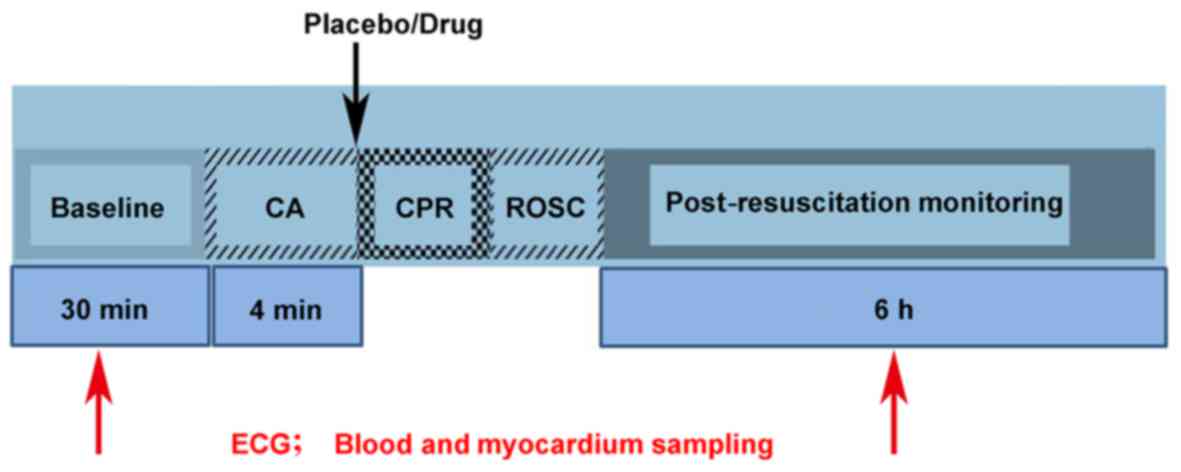
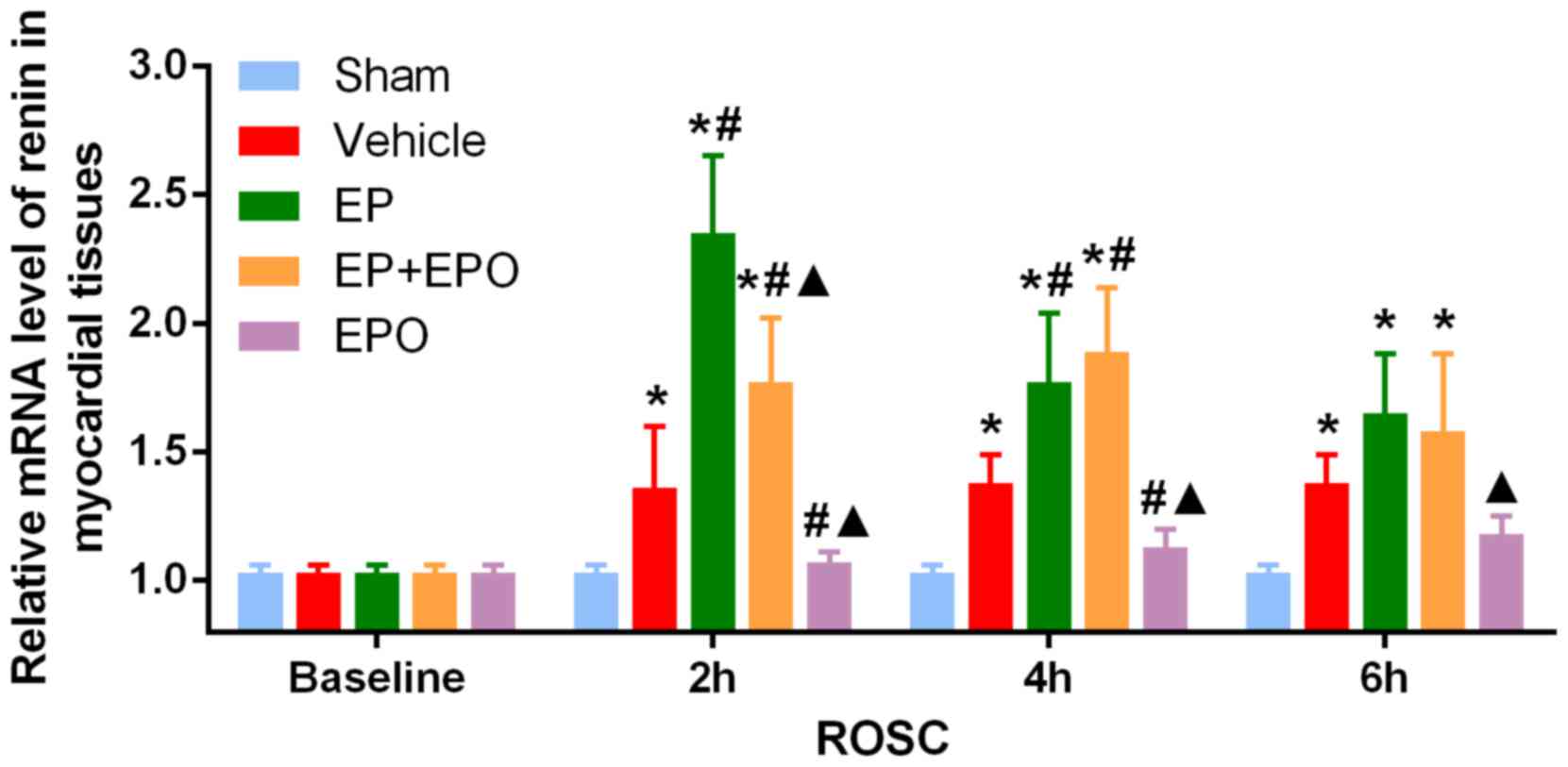
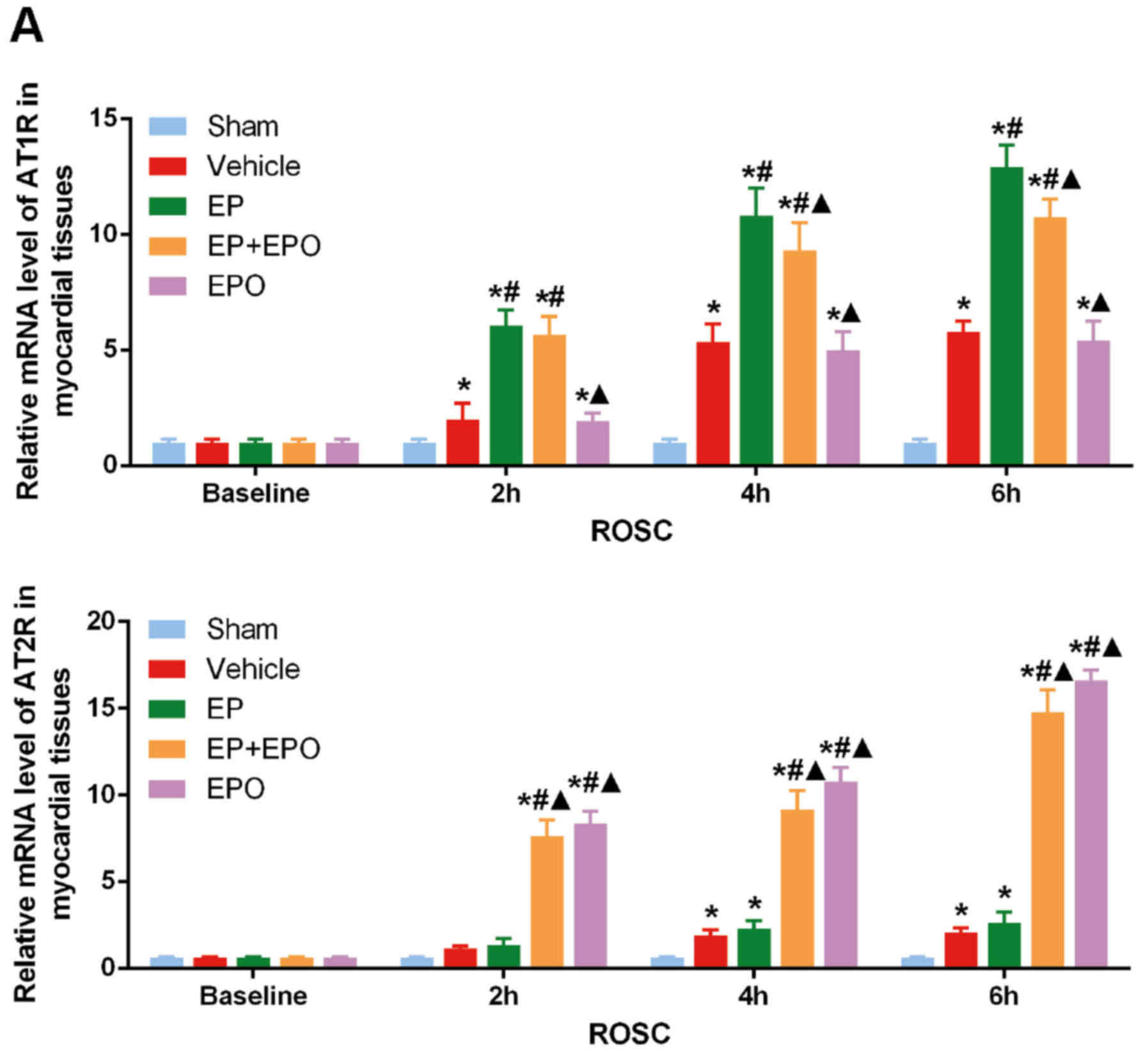
Activation of renin-angiotensin system (RAS) is one of the pathological mechanisms associated with myocardial ischemia-reperfusion injury following resuscitation. The present study aimed to determine whether erythropoietin (EPO) improves post‑resuscitation myocardial dysfunction and how it affects the renin‑angiotensin system. Sprague‑Dawley rats were randomly divided into sham, vehicle, epinephrine (EP), EPO and EP + EPO groups. Excluding the sham group, all groups underwent cardiopulmonary resuscitation (CPR) 4 min after asphyxia‑induced cardiac arrest (CA). EP and/or EPO was administrated by intravenous injection when CPR began. The results demonstrated that the vehicle group exhibited lower mean arterial pressure, left ventricular systolic pressure, maximal ascending rate of left ventricular pressure during left ventricular isovolumic contraction and maximal descending rate of left ventricular pressure during left ventricular isovolumic relaxation (+LVdP/dt max and ‑LVdP/dt max, respectively), and higher left ventricular end‑diastolic pressure, compared with the sham group following return of spontaneous circulation (ROSC). Few significant differences were observed concerning the myocardial function between the vehicle and EP groups; however, compared with the vehicle group, EPO reversed myocardial function indices following ROSC, excluding‑LVdP/dt max. Serum renin and angiotensin (Ang) II levels were measured by ELISA. The serum levels of renin and Ang II were significantly increased in the vehicle group compared with the sham group, which was also observed for the myocardial expression of renin and Ang II receptor type 1 (AT1R), as determined by reverse transcription‑quantitative polymerase chain reaction and western blotting. EPO alone did not significantly reduce the high serum levels of renin and Ang II post-resuscitation, but changed the protein levels of renin and AT1R expression in myocardial tissues. However, EPO enhanced the myocardial expression of Ang II receptor type 2 (AT2R) following ROSC. In conclusion, the present study confirmed that CA resuscitation activated the renin‑Ang II‑AT1R signaling pathway, which may contribute to myocardial dysfunction in rats. The present study confirmed that EPO treatment is beneficial for protecting cardiac function post‑resuscitation, and the roles of EPO in alleviating post‑resuscitation myocardial dysfunction may potentially be associated with enhanced myocardial expression of AT2R.
View Figures

Figure 1

Figure 2

Figure 3

View References

1 

Jentzer JC, Chonde MD and Dezfulian C: Myocardial dysfunction and shock after cardiac arrest. Biomed Res Int. 2015:3147962015. View Article : Google Scholar : PubMed/NCBI

2 

Bougouin W and Cariou A: Management of postcardiac arrest myocardial dysfunction. Curr Opin Crit Care. 19:195–201. 2013. View Article : Google Scholar : PubMed/NCBI

3 

Rivers EP, Wortsman J, Rady MY, Blake HC, McGeorge FT and Buderer NM: The effect of the total cumulative epinephrine dose administered during human CPR on hemodynamic, oxygen transport, and utilization variables in the postresuscitation period. Chest. 106:1499–1507. 1994. View Article : Google Scholar : PubMed/NCBI

4 

Wang G, Zhang Q, Yuan W, Wu J and Li C: Sildenafil protects against myocardial ischemia-reperfusion injury following cardiac arrest in a porcine model: Possible role of the renin-angiotensin system. Int J Mol Sci. 16:27015–27031. 2015. View Article : Google Scholar : PubMed/NCBI

5 

Huang CH, Hsu CY, Chen HW, Tsai MS, Cheng HJ, Chang CH, Lee YT and Chen WJ: Erythropoietin improves the postresuscitation myocardial dysfunction and survival in the asphyxia-induced cardiac arrest model. Shock. 28:53–58. 2007. View Article : Google Scholar : PubMed/NCBI

6 

Mollace V, Gliozzi M, Capuano A and Rossi F: Modulation of RAAS-natriuretic peptides in the treatment of HF: Old guys and newcomers. Int J Cardiol. 226:126–131. 2017. View Article : Google Scholar : PubMed/NCBI

7 

Inuzuka T, Fujioka Y, Tsuda M, Fujioka M, Satoh AO, Horiuchi K, Nishide S, Nanbo A, Tanaka S and Ohba Y: Attenuation of ligand-induced activation of angiotensin II type 1 receptor signaling by the type 2 receptor via protein kinase C. Sci Rep. 6:216132016. View Article : Google Scholar : PubMed/NCBI

8 

Kaschina E, Grzesiak A, Li J, Foryst-Ludwig A, Timm M, Rompe F, Sommerfeld M, Kemnitz UR, Curato C, Namsolleck P, et al: Angiotensin II type 2 receptor stimulation: A novel option of therapeutic interference with the renin-angiotensin system in myocardial infarction? Circulation. 118:2523–2532. 2008. View Article : Google Scholar : PubMed/NCBI

9 

Borovnik-Lesjak V, Whitehouse K, Baetiong A, Artin B, Radhakrishnan J and Gazmuri RJ: High-dose erythropoietin during cardiac resuscitation lessens postresuscitation myocardial stunning in swine. Transl Res. 162:110–121. 2013. View Article : Google Scholar : PubMed/NCBI

10 

Nandra KK, Collino M, Rogazzo M, Fantozzi R, Patel NS and Thiemermann C: Pharmacological preconditioning with erythropoietin attenuates the organ injury and dysfunction induced in a rat model of hemorrhagic shock. Dis Model Mech. 6:701–709. 2013. View Article : Google Scholar : PubMed/NCBI

11 

Sanchis-Gomar F, Garcia-Gimenez JL, Pareja-Galeano H, Romagnoli M, Perez-Quilis C and Lippi G: Erythropoietin and the heart: Physiological effects and the therapeutic perspective. Int J Cardiol. 171:116–125. 2014. View Article : Google Scholar : PubMed/NCBI

12 

Jie KE, Verhaar MC, Cramer MJ, van der Putten K, Gaillard CA, Doevendans PA, Koomans HA, Joles JA and Braam B: Erythropoietin and the cardiorenal syndrome: Cellular mechanisms on the cardiorenal connectors. Am J Physiol Renal Physiol. 291:F932–F944. 2006. View Article : Google Scholar : PubMed/NCBI

13 

Rosario R and Epstein M: Relationship between erythropoietin administration and alterations of renin-angiotensin-aldosterone. J Renin Angiotensin Aldosterone Syst. 7:135–138. 2006. View Article : Google Scholar : PubMed/NCBI

14 

Lundby C, Thomsen JJ, Boushel R, Koskolou M, Warberg J, Calbet JA and Robach P: Erythropoietin treatment elevates haemoglobin concentration by increasing red cell volume and depressing plasma volume. J Physiol. 578:309–314. 2007. View Article : Google Scholar : PubMed/NCBI

15 

Cho A and Seok SH: Ethical guidelines for use of experimental animals in biomedical research. J Bacteriol Virol. 43:18–26. 2013. View Article : Google Scholar

16 

de Prost N, Ricard JD, Saumon G and Dreyfuss D: Ventilator-induced lung injury: Historical perspectives and clinical implications. Ann Intensive Care. 1:282011. View Article : Google Scholar : PubMed/NCBI

17 

Wang P, Yao L, Zhou LL, Liu YS, Chen MD, Wu HD, Chang RM, Li Y, Zhou MG, Fang XS, et al: Carbon monoxide improves neurologic outcomes by mitochondrial biogenesis after global cerebral ischemia induced by cardiac arrest in rats. Int J Biol Sci. 12:1000–1009. 2016. View Article : Google Scholar : PubMed/NCBI

18 

Livak KJ and Schmittgen TD: Analysis of relative gene expression data using real-time quantitative PCR and the 2(-Delta Delta C(T)) method. Methods. 25:402–408. 2001. View Article : Google Scholar : PubMed/NCBI

19 

Mongardon N, Dumas F, Ricome S, Grimaldi D, Hissem T, Pène F and Cariou A: Postcardiac arrest syndrome: From immediate resuscitation to long-term outcome. Ann Intensive Care. 1:452011. View Article : Google Scholar : PubMed/NCBI

20 

Lemiale V, Dumas F, Mongardon N, Giovanetti O, Charpentier J, Chiche JD, Carli P, Mira JP, Nolan J and Cariou A: Intensive care unit mortality after cardiac arrest: The relative contribution of shock and brain injury in a large cohort. Intensive Care Med. 39:1972–1980. 2013. View Article : Google Scholar : PubMed/NCBI

21 

Zablocki D and Sadoshima J: Angiotensin II and oxidative stress in the failing heart. Antioxid Redox Signal. 19:1095–1109. 2013. View Article : Google Scholar : PubMed/NCBI

22 

Zreikat HH, Harpe SE, Slattum PW, Mays DP, Essah PA and Cheang KI: Effect of Renin-Angiotensin system inhibition on cardiovascular events in older hypertensive patients with metabolic syndrome. Metabolism. 63:392–399. 2014. View Article : Google Scholar : PubMed/NCBI

23 

Sanam K, Bhatia V, Bajaj NS, Gaba S, Morgan CJ, Fonarow GC, Butler J, Deedwania P, Prabhu SD, Wu WC, et al: Renin-Angiotensin system inhibition and lower 30-day all-cause readmission in medicare beneficiaries with heart failure. Am J Med. 129:1067–1073. 2016. View Article : Google Scholar : PubMed/NCBI

24 

Wang X, Yuan B, Dong W, Yang B, Yang Y, Lin X and Gong G: Humid heat exposure induced oxidative stress and apoptosis in cardiomyocytes through the angiotensin II signaling pathway. Heart Vessels. 30:396–405. 2015. View Article : Google Scholar : PubMed/NCBI

25 

Zhang YH: Neuronal nitric oxide synthase in hypertension - an update. Clin Hypertens. 22:202016. View Article : Google Scholar : PubMed/NCBI

26 

Lin L, Liu X, Xu J, Weng L, Ren J, Ge J and Zou Y: High-density lipoprotein inhibits mechanical stress-induced cardiomyocyte autophagy and cardiac hypertrophy through angiotensin II type 1 receptor-mediated PI3K/Akt pathway. J Cell Mol Med. 19:1929–1938. 2015. View Article : Google Scholar : PubMed/NCBI

27 

Strohmenger HU, Lindner KH, Wienen W and Vogt J: Effects of the AT1-selective angiotensin II antagonist, telmisartan, on hemodynamics and ventricular function after cardiopulmonary resuscitation in pigs. Resuscitation. 35:61–68. 1997. View Article : Google Scholar : PubMed/NCBI

28 

Kaschina E, Lauer D, Schmerler P, Unger T and Steckelings UM: AT2 receptors targeting cardiac protection post-myocardial infarction. Curr Hypertens Rep. 16:4412014. View Article : Google Scholar : PubMed/NCBI

29 

Xu J, Sun Y, Carretero OA, Zhu L, Harding P, Shesely EG, Dai X, Rhaleb NE, Peterson E and Yang XP: Effects of cardiac overexpression of the angiotensin II type 2 receptor on remodeling and dysfunction in mice post-myocardial infarction. Hypertension. 63:1251–1259. 2014. View Article : Google Scholar : PubMed/NCBI

30 

Xiao HL, Li CS, Zhao LX, Yang J, Tong N, An L and Liu QT: Captopril improves postresuscitation hemodynamics protective against pulmonary embolism by activating the ACE2/Ang- (1–7)/Mas axis. Naunyn Schmiedebergs Arch Pharmacol. 389:1159–1169. 2016. View Article : Google Scholar : PubMed/NCBI

31 

Sutherland BA, Minnerup J, Balami JS, Arba F, Buchan AM and Kleinschnitz C: Neuroprotection for ischaemic stroke: Translation from the bench to the bedside. Int J Stroke. 7:407–418. 2012. View Article : Google Scholar : PubMed/NCBI

32 

Ahmet I, Tae HJ, Juhaszova M, Riordon DR, Boheler KR, Sollott SJ, Brines M, Cerami A, Lakatta EG and Talan MI: A small nonerythropoietic helix B surface peptide based upon erythropoietin structure is cardioprotective against ischemic myocardial damage. Mol Med. 17:194–200. 2011. View Article : Google Scholar : PubMed/NCBI

33 

Najjar SS, Rao SV, Melloni C, Raman SV, Povsic TJ, Melton L, Barsness GW, Prather K, Heitner JF, Kilaru R, et al: Intravenous erythropoietin in patients with ST-segment elevation myocardial infarction: REVEAL: A randomized controlled trial. JAMA. 305:1863–1872. 2011. View Article : Google Scholar : PubMed/NCBI

34 

Calò LA, Davis PA, Maiolino G, Pagnin E, Ravarotto V, Naso E, Carraro G and Naso A: Assessing the relationship of angiotensin II Type 1 receptors with erythropoietin in a human model of endogenous angiotensin II Type 1 receptor antagonism. Cardiorenal Med. 6:16–24. 2015. View Article : Google Scholar : PubMed/NCBI

35 

Ahles A and Engelhardt S: Polymorphic variants of adrenoceptors: Pharmacology, physiology, and role in disease. Pharmacol Rev. 66:598–637. 2014. View Article : Google Scholar : PubMed/NCBI

36 

Broadley KJ and Penson PE: The roles of alpha- and beta-adrenoceptor stimulation in myocardial ischaemia. Auton Autacoid Pharmacol. 24:87–93. 2004. View Article : Google Scholar : PubMed/NCBI

Related Articles

  • Abstract
  • View
  • Download
  • Twitter
Copy and paste a formatted citation
Spandidos Publications style
Zhou H, Huang J, Zhu L and Cao Y: Erythropoietin alleviates post-resuscitation myocardial dysfunction in rats potentially through increasing the expression of angiotensin II receptor type 2 in myocardial tissues. Mol Med Rep 17: 5184-5192, 2018.
APA
Zhou, H., Huang, J., Zhu, L., & Cao, Y. (2018). Erythropoietin alleviates post-resuscitation myocardial dysfunction in rats potentially through increasing the expression of angiotensin II receptor type 2 in myocardial tissues. Molecular Medicine Reports, 17, 5184-5192. https://doi.org/10.3892/mmr.2018.8473
MLA
Zhou, H., Huang, J., Zhu, L., Cao, Y."Erythropoietin alleviates post-resuscitation myocardial dysfunction in rats potentially through increasing the expression of angiotensin II receptor type 2 in myocardial tissues". Molecular Medicine Reports 17.4 (2018): 5184-5192.
Chicago
Zhou, H., Huang, J., Zhu, L., Cao, Y."Erythropoietin alleviates post-resuscitation myocardial dysfunction in rats potentially through increasing the expression of angiotensin II receptor type 2 in myocardial tissues". Molecular Medicine Reports 17, no. 4 (2018): 5184-5192. https://doi.org/10.3892/mmr.2018.8473
Copy and paste a formatted citation
x
Spandidos Publications style
Zhou H, Huang J, Zhu L and Cao Y: Erythropoietin alleviates post-resuscitation myocardial dysfunction in rats potentially through increasing the expression of angiotensin II receptor type 2 in myocardial tissues. Mol Med Rep 17: 5184-5192, 2018.
APA
Zhou, H., Huang, J., Zhu, L., & Cao, Y. (2018). Erythropoietin alleviates post-resuscitation myocardial dysfunction in rats potentially through increasing the expression of angiotensin II receptor type 2 in myocardial tissues. Molecular Medicine Reports, 17, 5184-5192. https://doi.org/10.3892/mmr.2018.8473
MLA
Zhou, H., Huang, J., Zhu, L., Cao, Y."Erythropoietin alleviates post-resuscitation myocardial dysfunction in rats potentially through increasing the expression of angiotensin II receptor type 2 in myocardial tissues". Molecular Medicine Reports 17.4 (2018): 5184-5192.
Chicago
Zhou, H., Huang, J., Zhu, L., Cao, Y."Erythropoietin alleviates post-resuscitation myocardial dysfunction in rats potentially through increasing the expression of angiotensin II receptor type 2 in myocardial tissues". Molecular Medicine Reports 17, no. 4 (2018): 5184-5192. https://doi.org/10.3892/mmr.2018.8473
Follow us
  • Twitter
  • LinkedIn
  • Facebook
About
  • Spandidos Publications
  • Careers
  • Cookie Policy
  • Privacy Policy
How can we help?
  • Help
  • Live Chat
  • Contact
  • Email to our Support Team