Spandidos Publications Logo
  • About
    • About Spandidos
    • Aims and Scopes
    • Abstracting and Indexing
    • Editorial Policies
    • Reprints and Permissions
    • Job Opportunities
    • Terms and Conditions
    • Contact
  • Journals
    • All Journals
    • Oncology Letters
      • Oncology Letters
      • Information for Authors
      • Editorial Policies
      • Editorial Board
      • Aims and Scope
      • Abstracting and Indexing
      • Bibliographic Information
      • Archive
    • International Journal of Oncology
      • International Journal of Oncology
      • Information for Authors
      • Editorial Policies
      • Editorial Board
      • Aims and Scope
      • Abstracting and Indexing
      • Bibliographic Information
      • Archive
    • Molecular and Clinical Oncology
      • Molecular and Clinical Oncology
      • Information for Authors
      • Editorial Policies
      • Editorial Board
      • Aims and Scope
      • Abstracting and Indexing
      • Bibliographic Information
      • Archive
    • Experimental and Therapeutic Medicine
      • Experimental and Therapeutic Medicine
      • Information for Authors
      • Editorial Policies
      • Editorial Board
      • Aims and Scope
      • Abstracting and Indexing
      • Bibliographic Information
      • Archive
    • International Journal of Molecular Medicine
      • International Journal of Molecular Medicine
      • Information for Authors
      • Editorial Policies
      • Editorial Board
      • Aims and Scope
      • Abstracting and Indexing
      • Bibliographic Information
      • Archive
    • Biomedical Reports
      • Biomedical Reports
      • Information for Authors
      • Editorial Policies
      • Editorial Board
      • Aims and Scope
      • Abstracting and Indexing
      • Bibliographic Information
      • Archive
    • Oncology Reports
      • Oncology Reports
      • Information for Authors
      • Editorial Policies
      • Editorial Board
      • Aims and Scope
      • Abstracting and Indexing
      • Bibliographic Information
      • Archive
    • Molecular Medicine Reports
      • Molecular Medicine Reports
      • Information for Authors
      • Editorial Policies
      • Editorial Board
      • Aims and Scope
      • Abstracting and Indexing
      • Bibliographic Information
      • Archive
    • World Academy of Sciences Journal
      • World Academy of Sciences Journal
      • Information for Authors
      • Editorial Policies
      • Editorial Board
      • Aims and Scope
      • Abstracting and Indexing
      • Bibliographic Information
      • Archive
    • International Journal of Functional Nutrition
      • International Journal of Functional Nutrition
      • Information for Authors
      • Editorial Policies
      • Editorial Board
      • Aims and Scope
      • Abstracting and Indexing
      • Bibliographic Information
      • Archive
    • International Journal of Epigenetics
      • International Journal of Epigenetics
      • Information for Authors
      • Editorial Policies
      • Editorial Board
      • Aims and Scope
      • Abstracting and Indexing
      • Bibliographic Information
      • Archive
    • Medicine International
      • Medicine International
      • Information for Authors
      • Editorial Policies
      • Editorial Board
      • Aims and Scope
      • Abstracting and Indexing
      • Bibliographic Information
      • Archive
  • Articles
  • Information
    • Information for Authors
    • Information for Reviewers
    • Information for Librarians
    • Information for Advertisers
    • Conferences
  • Language Editing
Spandidos Publications Logo
  • About
    • About Spandidos
    • Aims and Scopes
    • Abstracting and Indexing
    • Editorial Policies
    • Reprints and Permissions
    • Job Opportunities
    • Terms and Conditions
    • Contact
  • Journals
    • All Journals
    • Biomedical Reports
      • Information for Authors
      • Editorial Policies
      • Editorial Board
      • Aims and Scope
      • Abstracting and Indexing
      • Bibliographic Information
      • Archive
    • Experimental and Therapeutic Medicine
      • Information for Authors
      • Editorial Policies
      • Editorial Board
      • Aims and Scope
      • Abstracting and Indexing
      • Bibliographic Information
      • Archive
    • International Journal of Epigenetics
      • Information for Authors
      • Editorial Policies
      • Editorial Board
      • Aims and Scope
      • Abstracting and Indexing
      • Bibliographic Information
      • Archive
    • International Journal of Functional Nutrition
      • Information for Authors
      • Editorial Policies
      • Editorial Board
      • Aims and Scope
      • Abstracting and Indexing
      • Bibliographic Information
      • Archive
    • International Journal of Molecular Medicine
      • Information for Authors
      • Editorial Policies
      • Editorial Board
      • Aims and Scope
      • Abstracting and Indexing
      • Bibliographic Information
      • Archive
    • International Journal of Oncology
      • Information for Authors
      • Editorial Policies
      • Editorial Board
      • Aims and Scope
      • Abstracting and Indexing
      • Bibliographic Information
      • Archive
    • Medicine International
      • Information for Authors
      • Editorial Policies
      • Editorial Board
      • Aims and Scope
      • Abstracting and Indexing
      • Bibliographic Information
      • Archive
    • Molecular and Clinical Oncology
      • Information for Authors
      • Editorial Policies
      • Editorial Board
      • Aims and Scope
      • Abstracting and Indexing
      • Bibliographic Information
      • Archive
    • Molecular Medicine Reports
      • Information for Authors
      • Editorial Policies
      • Editorial Board
      • Aims and Scope
      • Abstracting and Indexing
      • Bibliographic Information
      • Archive
    • Oncology Letters
      • Information for Authors
      • Editorial Policies
      • Editorial Board
      • Aims and Scope
      • Abstracting and Indexing
      • Bibliographic Information
      • Archive
    • Oncology Reports
      • Information for Authors
      • Editorial Policies
      • Editorial Board
      • Aims and Scope
      • Abstracting and Indexing
      • Bibliographic Information
      • Archive
    • World Academy of Sciences Journal
      • Information for Authors
      • Editorial Policies
      • Editorial Board
      • Aims and Scope
      • Abstracting and Indexing
      • Bibliographic Information
      • Archive
  • Articles
  • Information
    • For Authors
    • For Reviewers
    • For Librarians
    • For Advertisers
    • Conferences
  • Language Editing
Login Register Submit
  • This site uses cookies
  • You can change your cookie settings at any time by following the instructions in our Cookie Policy. To find out more, you may read our Privacy Policy.

    I agree
Search articles by DOI, keyword, author or affiliation
Search
Advanced Search
presentation
Molecular Medicine Reports
Join Editorial Board Propose a Special Issue
Print ISSN: 1791-2997 Online ISSN: 1791-3004
Journal Cover
April-2018 Volume 17 Issue 4

Full Size Image

Sign up for eToc alerts
Recommend to Library

Journals

International Journal of Molecular Medicine

International Journal of Molecular Medicine

International Journal of Molecular Medicine is an international journal devoted to molecular mechanisms of human disease.

International Journal of Oncology

International Journal of Oncology

International Journal of Oncology is an international journal devoted to oncology research and cancer treatment.

Molecular Medicine Reports

Molecular Medicine Reports

Covers molecular medicine topics such as pharmacology, pathology, genetics, neuroscience, infectious diseases, molecular cardiology, and molecular surgery.

Oncology Reports

Oncology Reports

Oncology Reports is an international journal devoted to fundamental and applied research in Oncology.

Experimental and Therapeutic Medicine

Experimental and Therapeutic Medicine

Experimental and Therapeutic Medicine is an international journal devoted to laboratory and clinical medicine.

Oncology Letters

Oncology Letters

Oncology Letters is an international journal devoted to Experimental and Clinical Oncology.

Biomedical Reports

Biomedical Reports

Explores a wide range of biological and medical fields, including pharmacology, genetics, microbiology, neuroscience, and molecular cardiology.

Molecular and Clinical Oncology

Molecular and Clinical Oncology

International journal addressing all aspects of oncology research, from tumorigenesis and oncogenes to chemotherapy and metastasis.

World Academy of Sciences Journal

World Academy of Sciences Journal

Multidisciplinary open-access journal spanning biochemistry, genetics, neuroscience, environmental health, and synthetic biology.

International Journal of Functional Nutrition

International Journal of Functional Nutrition

Open-access journal combining biochemistry, pharmacology, immunology, and genetics to advance health through functional nutrition.

International Journal of Epigenetics

International Journal of Epigenetics

Publishes open-access research on using epigenetics to advance understanding and treatment of human disease.

Medicine International

Medicine International

An International Open Access Journal Devoted to General Medicine.

Journal Cover
April-2018 Volume 17 Issue 4

Full Size Image

Sign up for eToc alerts
Recommend to Library

  • Article
  • Citations
    • Cite This Article
    • Download Citation
    • Create Citation Alert
    • Remove Citation Alert
    • Cited By
  • Similar Articles
    • Related Articles (in Spandidos Publications)
    • Similar Articles (Google Scholar)
    • Similar Articles (PubMed)
  • Download PDF
  • Download XML
  • View XML
Article Open Access

Small heterodimer partner deficiency exacerbates binge drinking‑induced liver injury via modulation of natural killer T cell and neutrophil infiltration

  • Authors:
    • Min‑Jeong Go
    • Jung‑Ran Noh
    • Jung Hwan Hwang
    • Kyoung‑Shim Kim
    • Dong‑Hee Choi
    • Jong‑Soo Lee
    • Yong‑Hoon Kim
    • Chul‑Ho Lee
  • View Affiliations / Copyright

    Affiliations: Laboratory Animal Resource Center, Korea Research Institute of Bioscience and Biotechnology, Daejeon 34141, Republic of Korea, Department of Veterinary Microbiology, College of Veterinary Medicine, Chungnam National University, Daejeon 34134, Republic of Korea
    Copyright: © Go et al. This is an open access article distributed under the terms of Creative Commons Attribution License.
  • Pages: 4989-4998
    |
    Published online on: January 26, 2018
       https://doi.org/10.3892/mmr.2018.8505
  • Expand metrics +
Metrics: Total Views: 0 (Spandidos Publications: | PMC Statistics: )
Metrics: Total PDF Downloads: 0 (Spandidos Publications: | PMC Statistics: )
Cited By (CrossRef): 0 citations Loading Articles...

This article is mentioned in:


Abstract

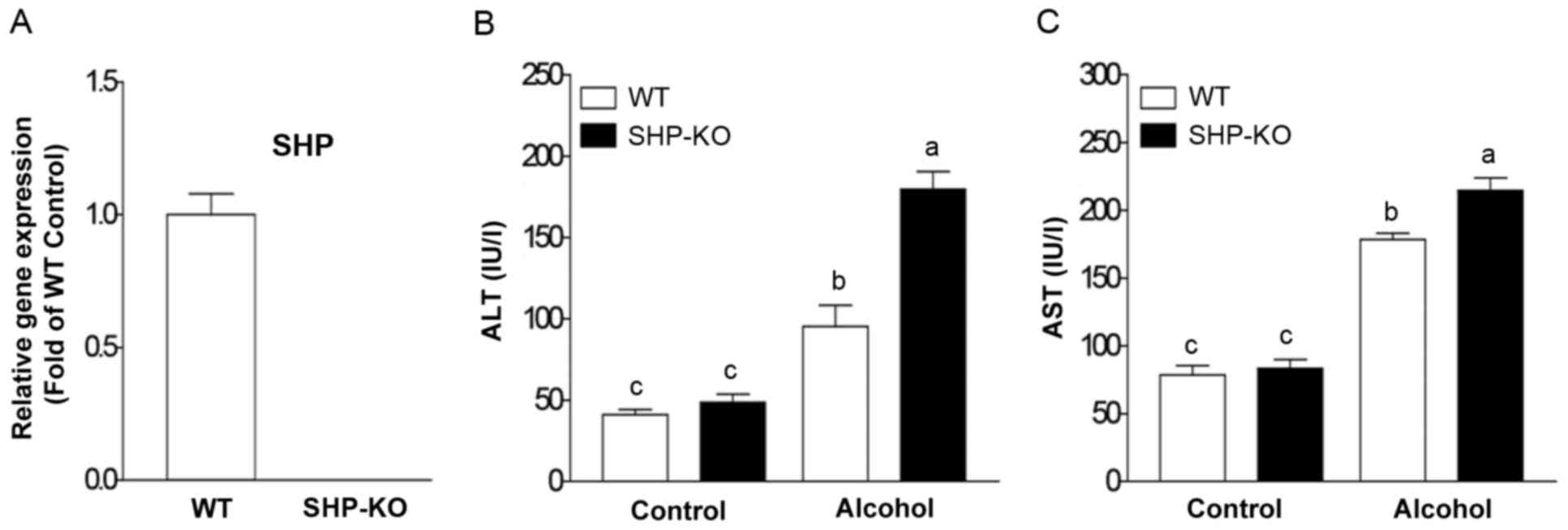
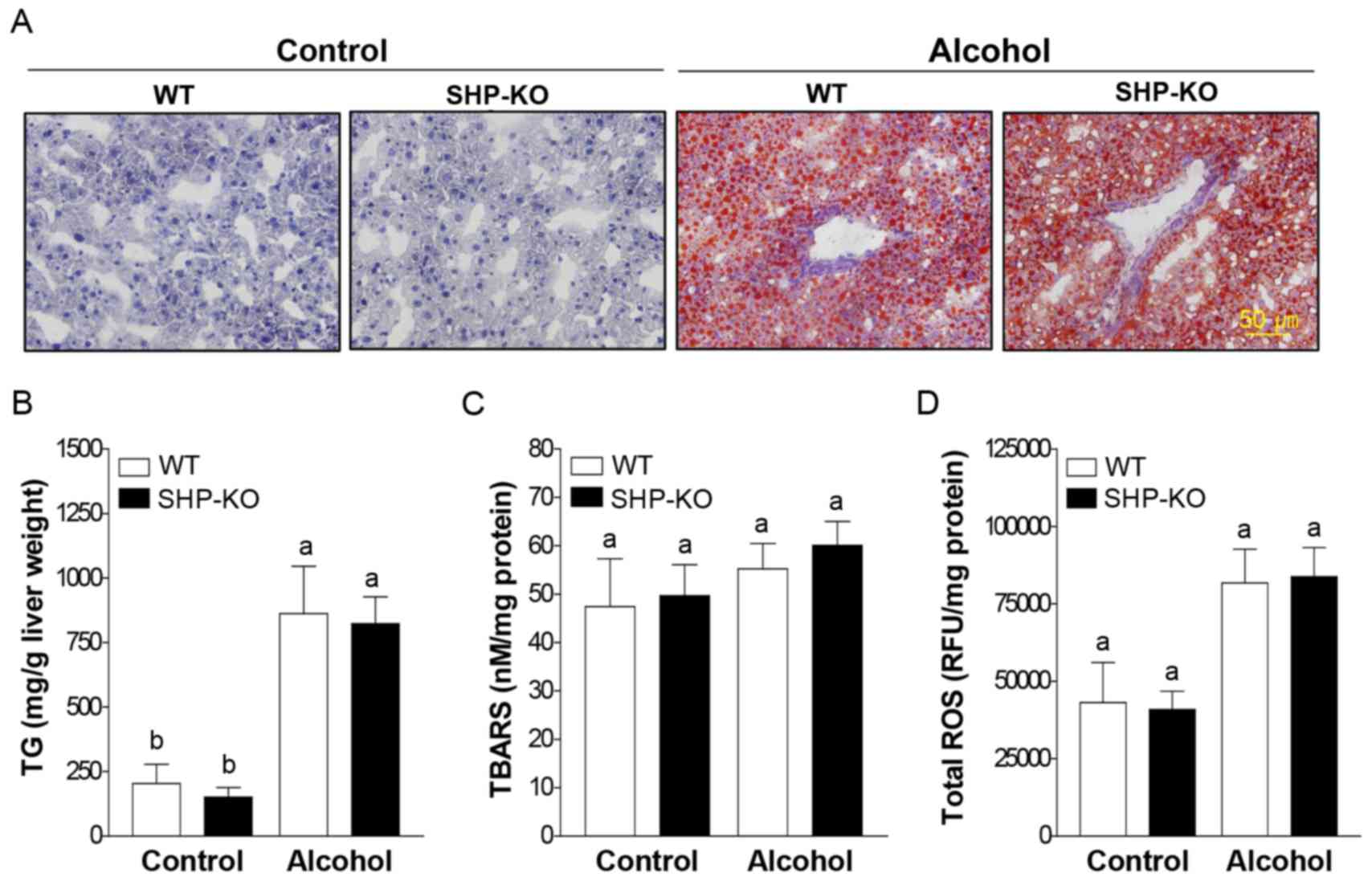
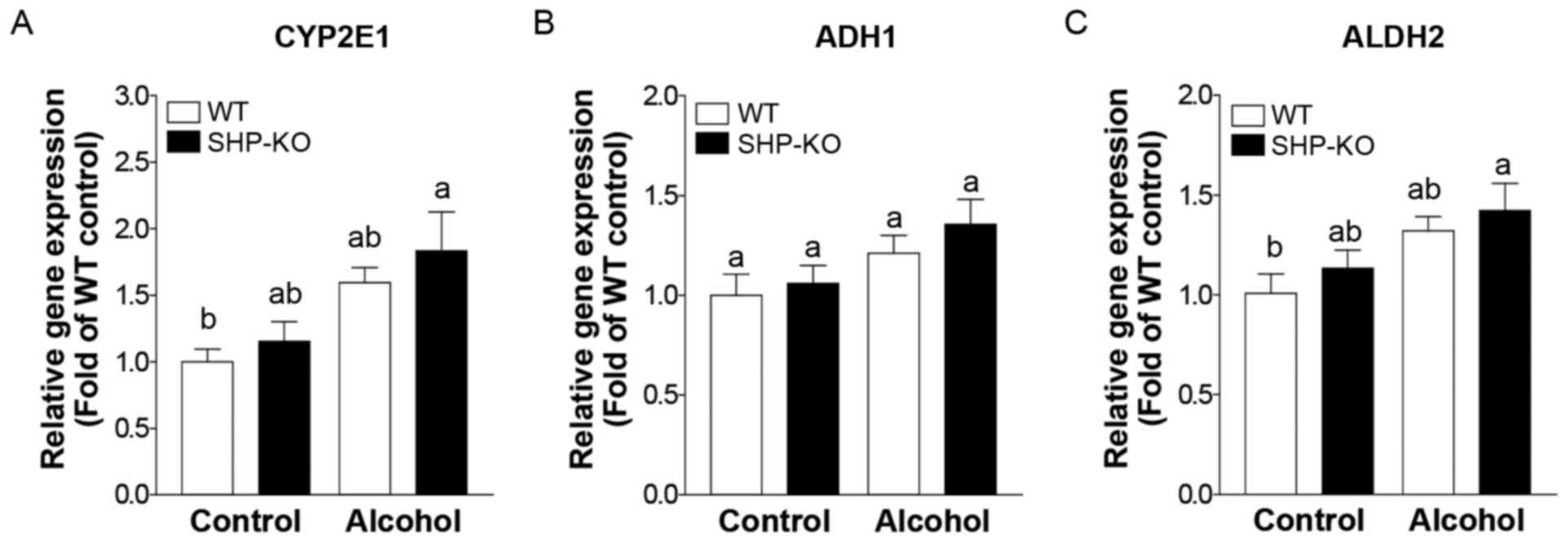
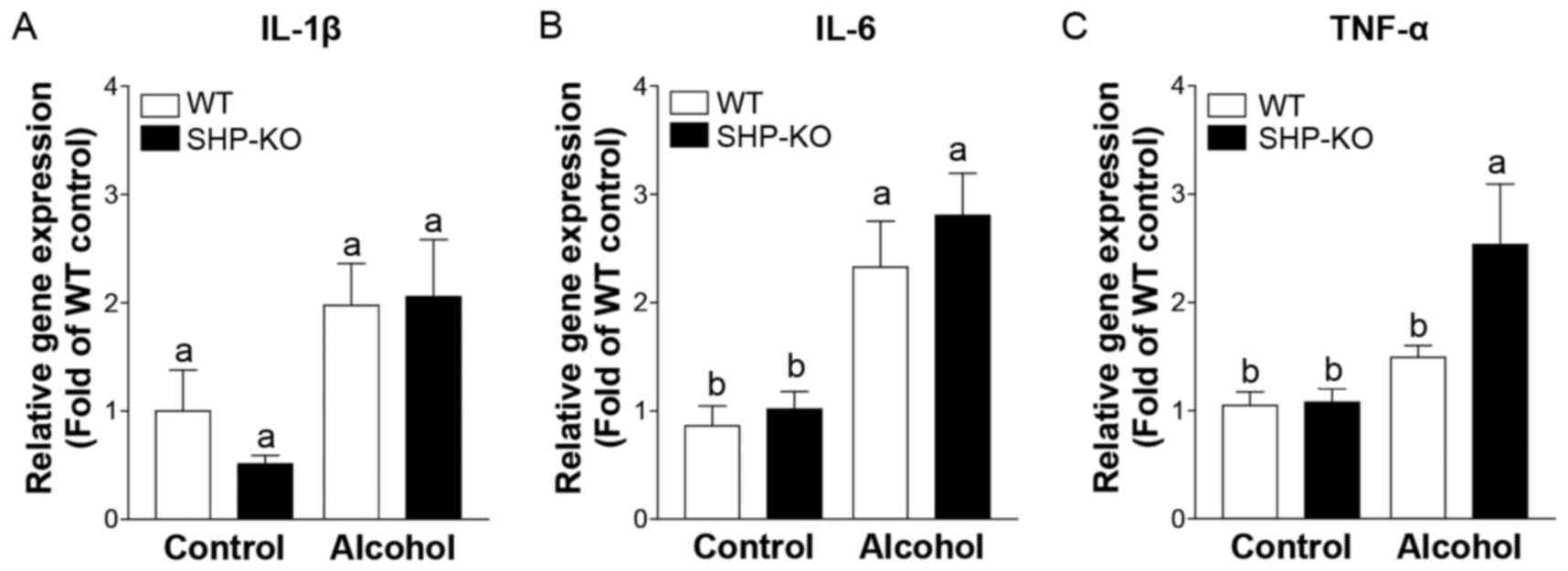
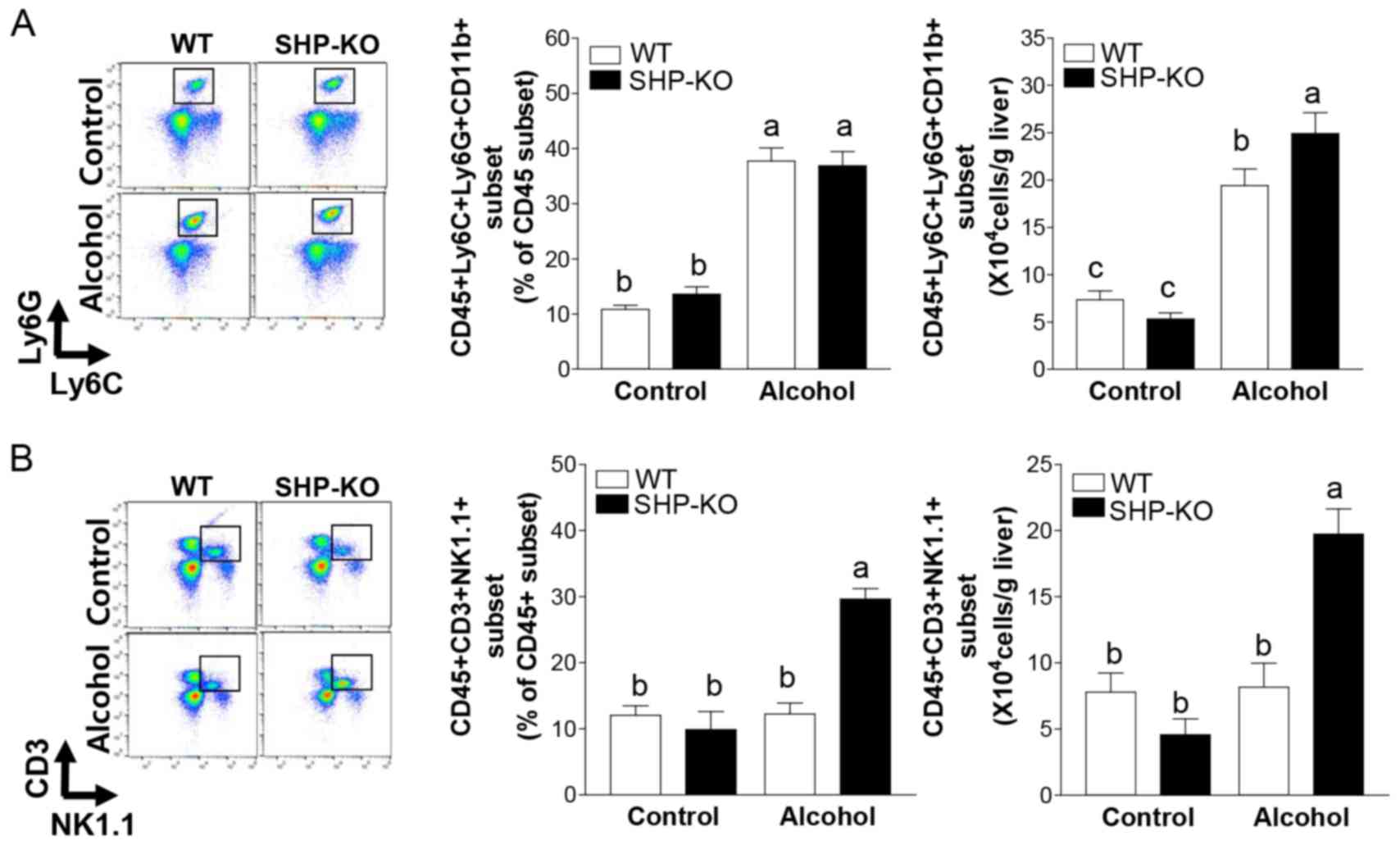
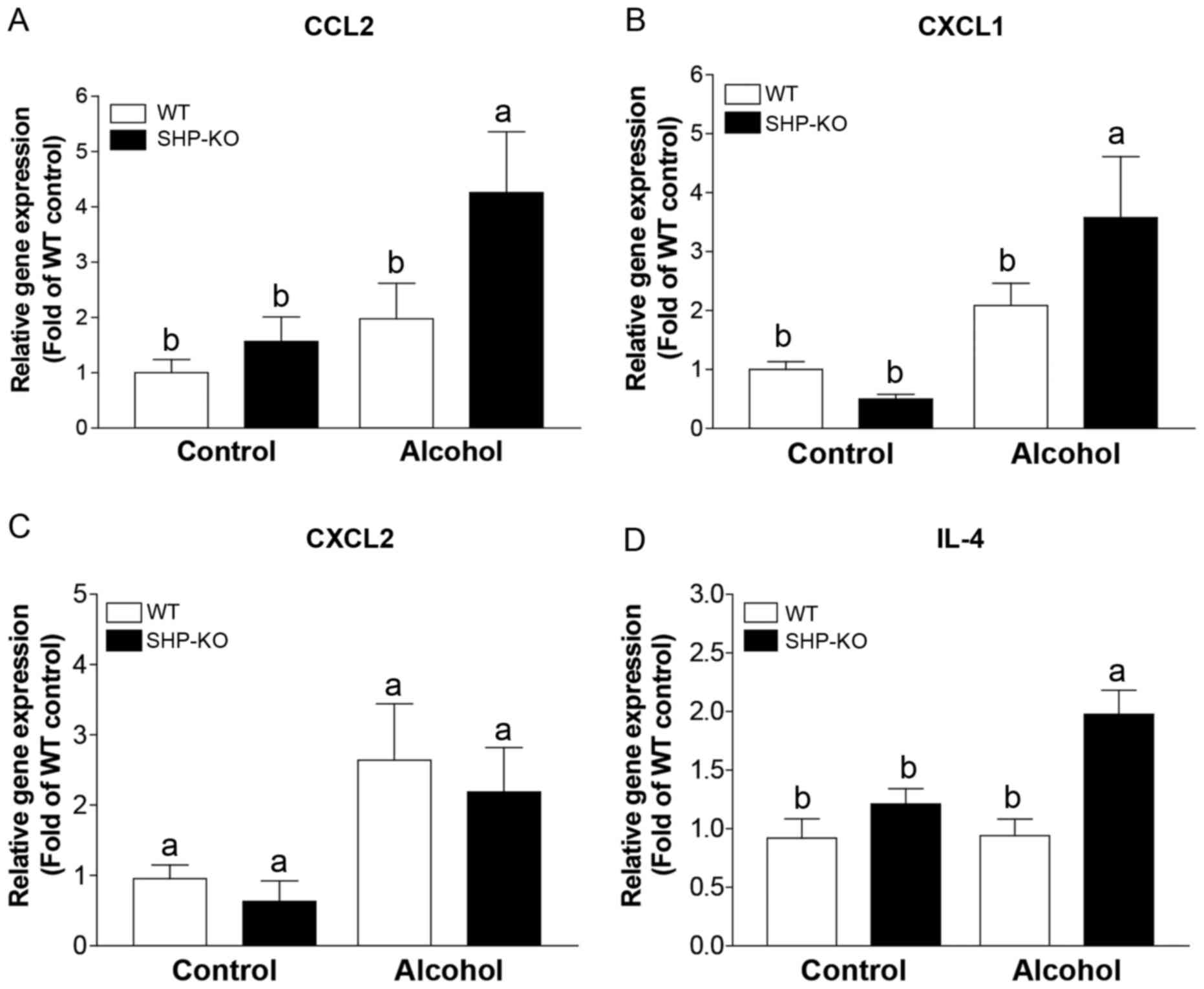
Binge drinking among alcohol consumers is a common occurrence, and may result in the development of numerous diseases, including liver disorders. It has previously been reported that natural killer T (NKT) cells induce alcohol‑associated liver injury by promoting neutrophil infiltration. In the present study, the role of the orphan nuclear receptor small heterodimer partner (SHP), which is encoded by the NR0B2 gene, in acute binge drinking‑induced liver injury was investigated. SHP‑knockout (KO) and wild‑type (WT) control mice were intragastrically administered single doses of alcohol. The plasma concentrations of alanine aminotransferase and aspartate aminotransferase in SHP‑KO mice following alcohol treatment were significantly increased compared with WT mice. However, results of oil red O staining and 2',7'‑dichlorodihydrofluorescein diacetate staining indicated that levels of acute binge drinking‑associated hepatic lipid accumulation and oxidative stress were not significantly different between WT and SHP‑KO alcohol‑treated mice. Notably, tumor necrosis factor‑α mRNA expression in the liver of SHP‑KO mice was significantly increased following alcohol administration, compared with WT mice. Furthermore, the mRNA expression levels of C‑C motif chemokine ligand 2, C‑X‑C motif chemokine ligand 2 and interleukin‑4, which are all potent chemoattractants of NKT cells, as well as neutrophil expression levels, were significantly increased in the livers of SHP‑KO mice compared with WT mice following alcohol administration, as determined by reverse transcription‑quantitative polymerase chain reaction and flow cytometry. Enhanced infiltration of NKT cells, determined by flow cytometry, was also demonstrated in the livers of SHP‑KO mice following alcohol administration, compared with WT mice. The results of the present study indicate that SHP may be involved in liver‑associated protective mechanisms, with regards to the attenuation of damage caused by acute binge drinking, via regulation of NKT cell and neutrophil migration to the liver. The modulation of SHP may be a novel therapeutic strategy for the treatment of acute binge drinking‑induced liver injury.
View Figures

Figure 1

Figure 2

Figure 3

Figure 4

Figure 5

Figure 6

View References

1 

WHO, . Global status report on alcohol and health 2014. http://www.who.int/substance_abuse/publications/global_alcohol_report/en/2014.

2 

National Institute of Alcohol Abuse Alcoholism, . NIAAA council approves definition of binge drinking. NIAAA Newsletter. 3:2004.https://pubs.niaaa.nih.gov/publications/Newsletter/winter2004/Newsletter_Number3.pdf

3 

Goslawski M, Piano MR, Bian JT, Church EC, Szczurek M and Phillips SA: Binge drinking impairs vascular function in young adults. J Am Coll Cardiol. 62:201–207. 2013. View Article : Google Scholar : PubMed/NCBI

4 

Llerena S, Arias-Loste MT, Puente A, Cabezas J, Crespo J and Fábrega E: Binge drinking: Burden of liver disease and beyond. World J Hepatol. 7:2703–2715. 2015. View Article : Google Scholar : PubMed/NCBI

5 

Swain MG: Hepatic NKT cells: Friend or foe? Clin Sci (Lond). 114:457–466. 2008. View Article : Google Scholar : PubMed/NCBI

6 

Gao B, Radaeva S and Park O: Liver natural killer and natural killer T cells: Immunobiology and emerging roles in liver diseases. J Leukoc Biol. 86:513–528. 2009. View Article : Google Scholar : PubMed/NCBI

7 

Jiang W, Sun R, Zhou R, Wei H and Tian Z: TLR-9 activation aggravates concanavalin A-induced hepatitis via promoting accumulation and activation of liver CD4+ NKT cells. J Immunol. 182:3768–3774. 2009. View Article : Google Scholar : PubMed/NCBI

8 

Sköld M and Behar SM: Role of CD1d-restricted NKT cells in microbial immunity. Infect Immun. 71:5447–5455. 2003. View Article : Google Scholar : PubMed/NCBI

9 

Wilson SB and Delovitch TL: Janus-like role of regulatory iNKT cells in autoimmune disease and tumour immunity. Nat Rev Immunol. 3:211–222. 2003. View Article : Google Scholar : PubMed/NCBI

10 

Godfrey DI, Stankovic S and Baxter AG: Raising the NKT cell family. Nat Immunol. 11:197–206. 2010. View Article : Google Scholar : PubMed/NCBI

11 

Mathews S, Feng D, Maricic I, Ju C, Kumar V and Gao B: Invariant natural killer T cells contribute to chronic-plus-binge ethanol-mediated liver injury by promoting hepatic neutrophil infiltration. Cell Mol Immunol. 13:206–216. 2016. View Article : Google Scholar : PubMed/NCBI

12 

Maricic I, Sheng H, Marrero I, Seki E, Kisseleva T, Chaturvedi S, Molle N, Mathews SA, Gao B and Kumar V: Inhibition of type I natural killer T cells by retinoids or following sulfatide-mediated activation of type II natural killer T cells attenuates alcoholic liver disease in mice. Hepatology. 61:1357–1369. 2015. View Article : Google Scholar : PubMed/NCBI

13 

Wang H, Feng D, Park O, Yin S and Gao B: Invariant NKT cell activation induces neutrophil accumulation and hepatitis: Opposite regulation by IL-4 and IFN-γ. Hepatology. 58:1474–1485. 2013. View Article : Google Scholar : PubMed/NCBI

14 

Lee YS, Chanda D, Sim J, Park YY and Choi HS: Structure and function of the atypical orphan nuclear receptor small heterodimer partner. Int Rev Cytol. 261:117–158. 2007. View Article : Google Scholar : PubMed/NCBI

15 

Tsuchiya H, da Costa KA, Lee S, Renga B, Jaeschke H, Yang Z, Orena SJ, Goedken MJ, Zhang Y, Kong B, et al: Interactions between nuclear receptor SHP and FOXA1 maintain oscillatory homocysteine homeostasis in mice. Gastroenterology. 148:1012–1023.e14. 2015. View Article : Google Scholar : PubMed/NCBI

16 

Seol W, Choi HS and Moore DD: An orphan nuclear hormone receptor that lacks a DNA binding domain and heterodimerizes with other receptors. Science. 272:1336–1339. 1996. View Article : Google Scholar : PubMed/NCBI

17 

Lee HK, Lee YK, Park SH, Kim YS, Park SH, Lee JW, Kwon HB, Soh J, Moore DD and Choi HS: Structure and expression of the orphan nuclear receptor SHP gene. J Biol Chem. 273:14398–14402. 1998. View Article : Google Scholar : PubMed/NCBI

18 

Park JE, Lee M, Mifflin R and Lee YK: Enhanced ethanol catabolism in orphan nuclear receptor SHP-null mice. Am J Physiol Gastrointest Liver Physiol. 310:G799–G807. 2016. View Article : Google Scholar : PubMed/NCBI

19 

Zhou Z, Wang L, Song Z, Lambert JC, McClain CJ and Kang YJ: A critical involvement of oxidative stress in acute alcohol-induced hepatic TNF-alpha production. Am J Pathol. 163:1137–1146. 2003. View Article : Google Scholar : PubMed/NCBI

20 

Chen P, Wang Z, Zeng L, Yang X, Wang S, Dong W, Jia A, Cai C and Zhang J: A novel soluble beta-glucan salecan protects against acute alcohol-induced hepatotoxicity in mice. Biosci Biotechnol Biochem. 75:1990–1993. 2011. View Article : Google Scholar : PubMed/NCBI

21 

Council NR: Guide for the care and use of laboratory animals. The National Academies Press; Washington, DC: 2010, PubMed/NCBI

22 

Bligh EG and Dyer WJ: A rapid method of total lipid extraction and purification. Can J Biochem Physiol. 37:911–917. 1959. View Article : Google Scholar : PubMed/NCBI

23 

Ohkawa H, Ohishi N and Yagi K: Assay for lipid peroxides in animal tissues by thiobarbituric acid reaction. Anal Biochem. 95:351–358. 1979. View Article : Google Scholar : PubMed/NCBI

24 

Livak KJ and Schmittgen TD: Analysis of relative gene expression data using real-time quantitative PCR and the 2(-Delta Delta C(T)) method. Methods. 25:402–408. 2001. View Article : Google Scholar : PubMed/NCBI

25 

Kawakami K, Kinjo Y, Uezu K, Yara S, Miyagi K, Koguchi Y, Nakayama T, Taniguchi M and Saito A: Monocyte chemoattractant protein-1-dependent increase of V alpha 14 NKT cells in lungs and their roles in Th1 response and host defense in cryptococcal infection. J Immunol. 167:6525–6532. 2001. View Article : Google Scholar : PubMed/NCBI

26 

Metelitsa LS, Wu HW, Wang H, Yang Y, Warsi Z, Asgharzadeh S, Groshen S, Wilson SB and Seeger RC: Natural killer T cells infiltrate neuroblastomas expressing the chemokine CCL2. J Exp Med. 199:1213–1221. 2004. View Article : Google Scholar : PubMed/NCBI

27 

Biburger M and Tiegs G: Alpha-galactosylceramide-induced liver injury in mice is mediated by TNF-alpha but independent of Kupffer cells. J Immunol. 175:1540–1550. 2005. View Article : Google Scholar : PubMed/NCBI

28 

Brennan PJ, Brigl M and Brenner MB: Invariant natural killer T cells: An innate activation scheme linked to diverse effector functions. Nat Rev Immunol. 13:101–117. 2013. View Article : Google Scholar : PubMed/NCBI

29 

Cui K, Yan G, Xu C, Chen Y, Wang J, Zhou R, Bai L, Lian Z, Wei H, Sun R and Tian Z: Invariant NKT cells promote alcohol-induced steatohepatitis through interleukin-1β in mice. J Hepatol. 62:1311–1318. 2015. View Article : Google Scholar : PubMed/NCBI

30 

Sawant KV, Xu R, Cox R, Hawkins H, Sbrana E, Kolli D, Garofalo RP and Rajarathnam K: Chemokine CXCL1-mediated neutrophil trafficking in the Lung: Role of CXCR2 activation. J Innate Immun. 7:647–658. 2015. View Article : Google Scholar : PubMed/NCBI

31 

Sawant KV, Poluri KM, Dutta AK, Sepuru KM, Troshkina A, Garofalo RP and Rajarathnam K: Chemokine CXCL1 mediated neutrophil recruitment: Role of glycosaminoglycan interactions. Sci Rep. 6:331232016. View Article : Google Scholar : PubMed/NCBI

32 

Wu N, Kim KH, Zhou Y, Lee JM, Kettner NM, Mamrosh JL, Choi S, Fu L and Moore DD: Small Heterodimer Partner (NR0B2) coordinates nutrient signaling and the circadian clock in mice. Mol Endocrinol. 30:988–995. 2016. View Article : Google Scholar : PubMed/NCBI

33 

Ceni E, Mello T and Galli A: Pathogenesis of alcoholic liver disease: Role of oxidative metabolism. World J Gastroenterol. 20:17756–17772. 2014. View Article : Google Scholar : PubMed/NCBI

34 

Rao R: Endotoxemia and gut barrier dysfunction in alcoholic liver disease. Hepatology. 50:638–644. 2009. View Article : Google Scholar : PubMed/NCBI

35 

Szabo G: Gut-liver axis in alcoholic liver disease. Gastroenterology. 148:30–36. 2015. View Article : Google Scholar : PubMed/NCBI

36 

Baraona E and Lieber CS: Effects of ethanol on lipid metabolism. J Lipid Res. 20:289–315. 1979.PubMed/NCBI

37 

Wang HJ, Gao B, Zakhari S and Nagy LE: Inflammation in alcoholic liver disease. Ann Rev Nutr. 32:343–368. 2012. View Article : Google Scholar

38 

Ji C, Chan C and Kaplowitz N: Predominant role of sterol response element binding proteins (SREBP) lipogenic pathways in hepatic steatosis in the murine intragastric ethanol feeding model. J Hepatol. 45:717–724. 2006. View Article : Google Scholar : PubMed/NCBI

39 

Yin HQ, Kim M, Kim JH, Kong G, Kang KS, Kim HL, Yoon BI, Lee MO and Lee BH: Differential gene expression and lipid metabolism in fatty liver induced by acute ethanol treatment in mice. Toxicol Appl Pharmacol. 223:225–233. 2007. View Article : Google Scholar : PubMed/NCBI

40 

Qiu P, Li X, Kong DS, Li HZ, Niu CC and Pan SH: Herbal sgr formula prevents acute ethanol-induced liver steatosis via inhibition of lipogenesis and enhancement fatty acid oxidation in mice. Evid Based Complement Alternat Med. 2015:6135842015. View Article : Google Scholar : PubMed/NCBI

41 

Mandrekar P, Bala S, Catalano D, Kodys K and Szabo G: The opposite effects of acu and chronic alcohol on lipopolysaccharide-induced inflammation are linked to IRAK-M in human monocytes. J Immunol. 183:1320–1327. 2009. View Article : Google Scholar : PubMed/NCBI

42 

Schmidt LE, Dalhoff K and Poulsen HE: Acute versus chronic alcohol consumption in acetaminophen-induced hepatotoxicity. Hepatology. 35:876–882. 2002. View Article : Google Scholar : PubMed/NCBI

43 

Mathurin P and Bataller R: Trends in the management and burden of alcoholic liver disease. J Hepatol. 62 1 Suppl:S38–S46. 2015. View Article : Google Scholar : PubMed/NCBI

44 

Rodríguez-Rodríguez E, González-Reimers E, Santolaria-Fernández F, Milena-Abril A, Rodríguez-Moreno F, Oramas-Rodríguez J and Martínez-Riera A: Cytokine levels in acute alcoholic hepatitis: A sequential study. Drug Alcohol Depend. 39:23–27. 1995. View Article : Google Scholar : PubMed/NCBI

45 

Lívero FA and Acco A: Molecular basis of alcoholic fatty liver disease: From incidence to treatment. Hepatol Res. 46:111–123. 2016. View Article : Google Scholar : PubMed/NCBI

46 

Nan YM, Wang RQ and Fu N: Peroxisome proliferator-activated receptor α, a potential therapeutic target for alcoholic liver disease. World J Gastroenterol. 20:8055–8060. 2014. View Article : Google Scholar : PubMed/NCBI

47 

Lívero FA, Stolf AM, Dreifuss AA, Bastos-Pereira AL, Chicorski R, de Oliveira LG, de Souza CE, Fabossi IA, Rabitto IS, Gremski LH, et al: The FXR agonist 6ECDCA reduces hepatic steatosis and oxidative stress induced by ethanol and low-protein diet in mice. Chem Biol Interact. 217:19–27. 2014. View Article : Google Scholar : PubMed/NCBI

Related Articles

  • Abstract
  • View
  • Download
  • Twitter
Copy and paste a formatted citation
Spandidos Publications style
Go MJ, Noh JR, Hwang J, Kim KS, Choi DH, Lee JS, Kim YH and Lee CH: Small heterodimer partner deficiency exacerbates binge drinking‑induced liver injury via modulation of natural killer T cell and neutrophil infiltration. Mol Med Rep 17: 4989-4998, 2018.
APA
Go, M., Noh, J., Hwang, J., Kim, K., Choi, D., Lee, J. ... Lee, C. (2018). Small heterodimer partner deficiency exacerbates binge drinking‑induced liver injury via modulation of natural killer T cell and neutrophil infiltration. Molecular Medicine Reports, 17, 4989-4998. https://doi.org/10.3892/mmr.2018.8505
MLA
Go, M., Noh, J., Hwang, J., Kim, K., Choi, D., Lee, J., Kim, Y., Lee, C."Small heterodimer partner deficiency exacerbates binge drinking‑induced liver injury via modulation of natural killer T cell and neutrophil infiltration". Molecular Medicine Reports 17.4 (2018): 4989-4998.
Chicago
Go, M., Noh, J., Hwang, J., Kim, K., Choi, D., Lee, J., Kim, Y., Lee, C."Small heterodimer partner deficiency exacerbates binge drinking‑induced liver injury via modulation of natural killer T cell and neutrophil infiltration". Molecular Medicine Reports 17, no. 4 (2018): 4989-4998. https://doi.org/10.3892/mmr.2018.8505
Copy and paste a formatted citation
x
Spandidos Publications style
Go MJ, Noh JR, Hwang J, Kim KS, Choi DH, Lee JS, Kim YH and Lee CH: Small heterodimer partner deficiency exacerbates binge drinking‑induced liver injury via modulation of natural killer T cell and neutrophil infiltration. Mol Med Rep 17: 4989-4998, 2018.
APA
Go, M., Noh, J., Hwang, J., Kim, K., Choi, D., Lee, J. ... Lee, C. (2018). Small heterodimer partner deficiency exacerbates binge drinking‑induced liver injury via modulation of natural killer T cell and neutrophil infiltration. Molecular Medicine Reports, 17, 4989-4998. https://doi.org/10.3892/mmr.2018.8505
MLA
Go, M., Noh, J., Hwang, J., Kim, K., Choi, D., Lee, J., Kim, Y., Lee, C."Small heterodimer partner deficiency exacerbates binge drinking‑induced liver injury via modulation of natural killer T cell and neutrophil infiltration". Molecular Medicine Reports 17.4 (2018): 4989-4998.
Chicago
Go, M., Noh, J., Hwang, J., Kim, K., Choi, D., Lee, J., Kim, Y., Lee, C."Small heterodimer partner deficiency exacerbates binge drinking‑induced liver injury via modulation of natural killer T cell and neutrophil infiltration". Molecular Medicine Reports 17, no. 4 (2018): 4989-4998. https://doi.org/10.3892/mmr.2018.8505
Follow us
  • Twitter
  • LinkedIn
  • Facebook
About
  • Spandidos Publications
  • Careers
  • Cookie Policy
  • Privacy Policy
How can we help?
  • Help
  • Live Chat
  • Contact
  • Email to our Support Team