Spandidos Publications Logo
  • About
    • About Spandidos
    • Aims and Scopes
    • Abstracting and Indexing
    • Editorial Policies
    • Reprints and Permissions
    • Job Opportunities
    • Terms and Conditions
    • Contact
  • Journals
    • All Journals
    • Oncology Letters
      • Oncology Letters
      • Information for Authors
      • Editorial Policies
      • Editorial Board
      • Aims and Scope
      • Abstracting and Indexing
      • Bibliographic Information
      • Archive
    • International Journal of Oncology
      • International Journal of Oncology
      • Information for Authors
      • Editorial Policies
      • Editorial Board
      • Aims and Scope
      • Abstracting and Indexing
      • Bibliographic Information
      • Archive
    • Molecular and Clinical Oncology
      • Molecular and Clinical Oncology
      • Information for Authors
      • Editorial Policies
      • Editorial Board
      • Aims and Scope
      • Abstracting and Indexing
      • Bibliographic Information
      • Archive
    • Experimental and Therapeutic Medicine
      • Experimental and Therapeutic Medicine
      • Information for Authors
      • Editorial Policies
      • Editorial Board
      • Aims and Scope
      • Abstracting and Indexing
      • Bibliographic Information
      • Archive
    • International Journal of Molecular Medicine
      • International Journal of Molecular Medicine
      • Information for Authors
      • Editorial Policies
      • Editorial Board
      • Aims and Scope
      • Abstracting and Indexing
      • Bibliographic Information
      • Archive
    • Biomedical Reports
      • Biomedical Reports
      • Information for Authors
      • Editorial Policies
      • Editorial Board
      • Aims and Scope
      • Abstracting and Indexing
      • Bibliographic Information
      • Archive
    • Oncology Reports
      • Oncology Reports
      • Information for Authors
      • Editorial Policies
      • Editorial Board
      • Aims and Scope
      • Abstracting and Indexing
      • Bibliographic Information
      • Archive
    • Molecular Medicine Reports
      • Molecular Medicine Reports
      • Information for Authors
      • Editorial Policies
      • Editorial Board
      • Aims and Scope
      • Abstracting and Indexing
      • Bibliographic Information
      • Archive
    • World Academy of Sciences Journal
      • World Academy of Sciences Journal
      • Information for Authors
      • Editorial Policies
      • Editorial Board
      • Aims and Scope
      • Abstracting and Indexing
      • Bibliographic Information
      • Archive
    • International Journal of Functional Nutrition
      • International Journal of Functional Nutrition
      • Information for Authors
      • Editorial Policies
      • Editorial Board
      • Aims and Scope
      • Abstracting and Indexing
      • Bibliographic Information
      • Archive
    • International Journal of Epigenetics
      • International Journal of Epigenetics
      • Information for Authors
      • Editorial Policies
      • Editorial Board
      • Aims and Scope
      • Abstracting and Indexing
      • Bibliographic Information
      • Archive
    • Medicine International
      • Medicine International
      • Information for Authors
      • Editorial Policies
      • Editorial Board
      • Aims and Scope
      • Abstracting and Indexing
      • Bibliographic Information
      • Archive
  • Articles
  • Information
    • Information for Authors
    • Information for Reviewers
    • Information for Librarians
    • Information for Advertisers
    • Conferences
  • Language Editing
Spandidos Publications Logo
  • About
    • About Spandidos
    • Aims and Scopes
    • Abstracting and Indexing
    • Editorial Policies
    • Reprints and Permissions
    • Job Opportunities
    • Terms and Conditions
    • Contact
  • Journals
    • All Journals
    • Biomedical Reports
      • Information for Authors
      • Editorial Policies
      • Editorial Board
      • Aims and Scope
      • Abstracting and Indexing
      • Bibliographic Information
      • Archive
    • Experimental and Therapeutic Medicine
      • Information for Authors
      • Editorial Policies
      • Editorial Board
      • Aims and Scope
      • Abstracting and Indexing
      • Bibliographic Information
      • Archive
    • International Journal of Epigenetics
      • Information for Authors
      • Editorial Policies
      • Editorial Board
      • Aims and Scope
      • Abstracting and Indexing
      • Bibliographic Information
      • Archive
    • International Journal of Functional Nutrition
      • Information for Authors
      • Editorial Policies
      • Editorial Board
      • Aims and Scope
      • Abstracting and Indexing
      • Bibliographic Information
      • Archive
    • International Journal of Molecular Medicine
      • Information for Authors
      • Editorial Policies
      • Editorial Board
      • Aims and Scope
      • Abstracting and Indexing
      • Bibliographic Information
      • Archive
    • International Journal of Oncology
      • Information for Authors
      • Editorial Policies
      • Editorial Board
      • Aims and Scope
      • Abstracting and Indexing
      • Bibliographic Information
      • Archive
    • Medicine International
      • Information for Authors
      • Editorial Policies
      • Editorial Board
      • Aims and Scope
      • Abstracting and Indexing
      • Bibliographic Information
      • Archive
    • Molecular and Clinical Oncology
      • Information for Authors
      • Editorial Policies
      • Editorial Board
      • Aims and Scope
      • Abstracting and Indexing
      • Bibliographic Information
      • Archive
    • Molecular Medicine Reports
      • Information for Authors
      • Editorial Policies
      • Editorial Board
      • Aims and Scope
      • Abstracting and Indexing
      • Bibliographic Information
      • Archive
    • Oncology Letters
      • Information for Authors
      • Editorial Policies
      • Editorial Board
      • Aims and Scope
      • Abstracting and Indexing
      • Bibliographic Information
      • Archive
    • Oncology Reports
      • Information for Authors
      • Editorial Policies
      • Editorial Board
      • Aims and Scope
      • Abstracting and Indexing
      • Bibliographic Information
      • Archive
    • World Academy of Sciences Journal
      • Information for Authors
      • Editorial Policies
      • Editorial Board
      • Aims and Scope
      • Abstracting and Indexing
      • Bibliographic Information
      • Archive
  • Articles
  • Information
    • For Authors
    • For Reviewers
    • For Librarians
    • For Advertisers
    • Conferences
  • Language Editing
Login Register Submit
  • This site uses cookies
  • You can change your cookie settings at any time by following the instructions in our Cookie Policy. To find out more, you may read our Privacy Policy.

    I agree
Search articles by DOI, keyword, author or affiliation
Search
Advanced Search
presentation
Molecular Medicine Reports
Join Editorial Board Propose a Special Issue
Print ISSN: 1791-2997 Online ISSN: 1791-3004
Journal Cover
April-2018 Volume 17 Issue 4

Full Size Image

Sign up for eToc alerts
Recommend to Library

Journals

International Journal of Molecular Medicine

International Journal of Molecular Medicine

International Journal of Molecular Medicine is an international journal devoted to molecular mechanisms of human disease.

International Journal of Oncology

International Journal of Oncology

International Journal of Oncology is an international journal devoted to oncology research and cancer treatment.

Molecular Medicine Reports

Molecular Medicine Reports

Covers molecular medicine topics such as pharmacology, pathology, genetics, neuroscience, infectious diseases, molecular cardiology, and molecular surgery.

Oncology Reports

Oncology Reports

Oncology Reports is an international journal devoted to fundamental and applied research in Oncology.

Experimental and Therapeutic Medicine

Experimental and Therapeutic Medicine

Experimental and Therapeutic Medicine is an international journal devoted to laboratory and clinical medicine.

Oncology Letters

Oncology Letters

Oncology Letters is an international journal devoted to Experimental and Clinical Oncology.

Biomedical Reports

Biomedical Reports

Explores a wide range of biological and medical fields, including pharmacology, genetics, microbiology, neuroscience, and molecular cardiology.

Molecular and Clinical Oncology

Molecular and Clinical Oncology

International journal addressing all aspects of oncology research, from tumorigenesis and oncogenes to chemotherapy and metastasis.

World Academy of Sciences Journal

World Academy of Sciences Journal

Multidisciplinary open-access journal spanning biochemistry, genetics, neuroscience, environmental health, and synthetic biology.

International Journal of Functional Nutrition

International Journal of Functional Nutrition

Open-access journal combining biochemistry, pharmacology, immunology, and genetics to advance health through functional nutrition.

International Journal of Epigenetics

International Journal of Epigenetics

Publishes open-access research on using epigenetics to advance understanding and treatment of human disease.

Medicine International

Medicine International

An International Open Access Journal Devoted to General Medicine.

Journal Cover
April-2018 Volume 17 Issue 4

Full Size Image

Sign up for eToc alerts
Recommend to Library

  • Article
  • Citations
    • Cite This Article
    • Download Citation
    • Create Citation Alert
    • Remove Citation Alert
    • Cited By
  • Similar Articles
    • Related Articles (in Spandidos Publications)
    • Similar Articles (Google Scholar)
    • Similar Articles (PubMed)
  • Download PDF
  • Download XML
  • View XML
Article Open Access

Inhibition of mammalian target of rapamycin complex 1 signaling by n-3 polyunsaturated fatty acids promotes locomotor recovery after spinal cord injury

  • Authors:
    • Jiping Nie
    • Jian Chen
    • Jianguo Yang
    • Qinqin Pei
    • Jing Li
    • Jia Liu
    • Lixin Xu
    • Nan Li
    • Youhao Chen
    • Xiaohua Chen
    • Hao Luo
    • Tiansheng Sun
  • View Affiliations / Copyright

    Affiliations: Southern Medical University, Guangzhou, Guangdong 510515, P.R. China, Department of Orthopedics, Three Gorges Central Hospital of Chongqing, Chongqing 404000, P.R. China, Department of Orthopedics, Huhhot First Hospital, Huhhot, Inner Mongolia Autonomous Region 010020, P.R. China, Department of Orthopedics, Affiliated Hospital of Youjiang Medical College for Nationalities, Baise, Guangxi 533000, P.R. China
    Copyright: © Nie et al. This is an open access article distributed under the terms of Creative Commons Attribution License.
  • Pages: 5894-5902
    |
    Published online on: February 8, 2018
       https://doi.org/10.3892/mmr.2018.8583
  • Expand metrics +
Metrics: Total Views: 0 (Spandidos Publications: | PMC Statistics: )
Metrics: Total PDF Downloads: 0 (Spandidos Publications: | PMC Statistics: )
Cited By (CrossRef): 0 citations Loading Articles...

This article is mentioned in:


Abstract

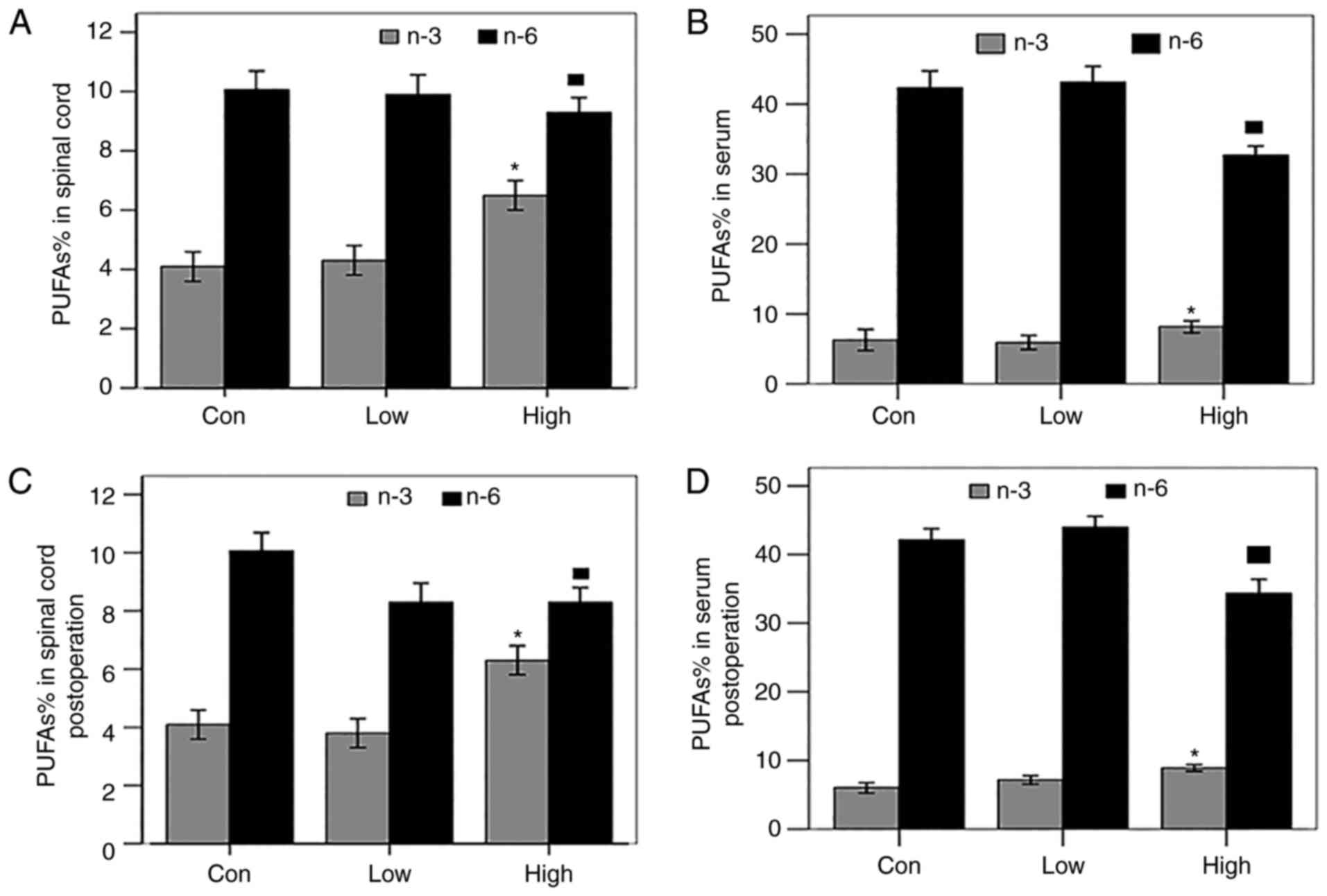
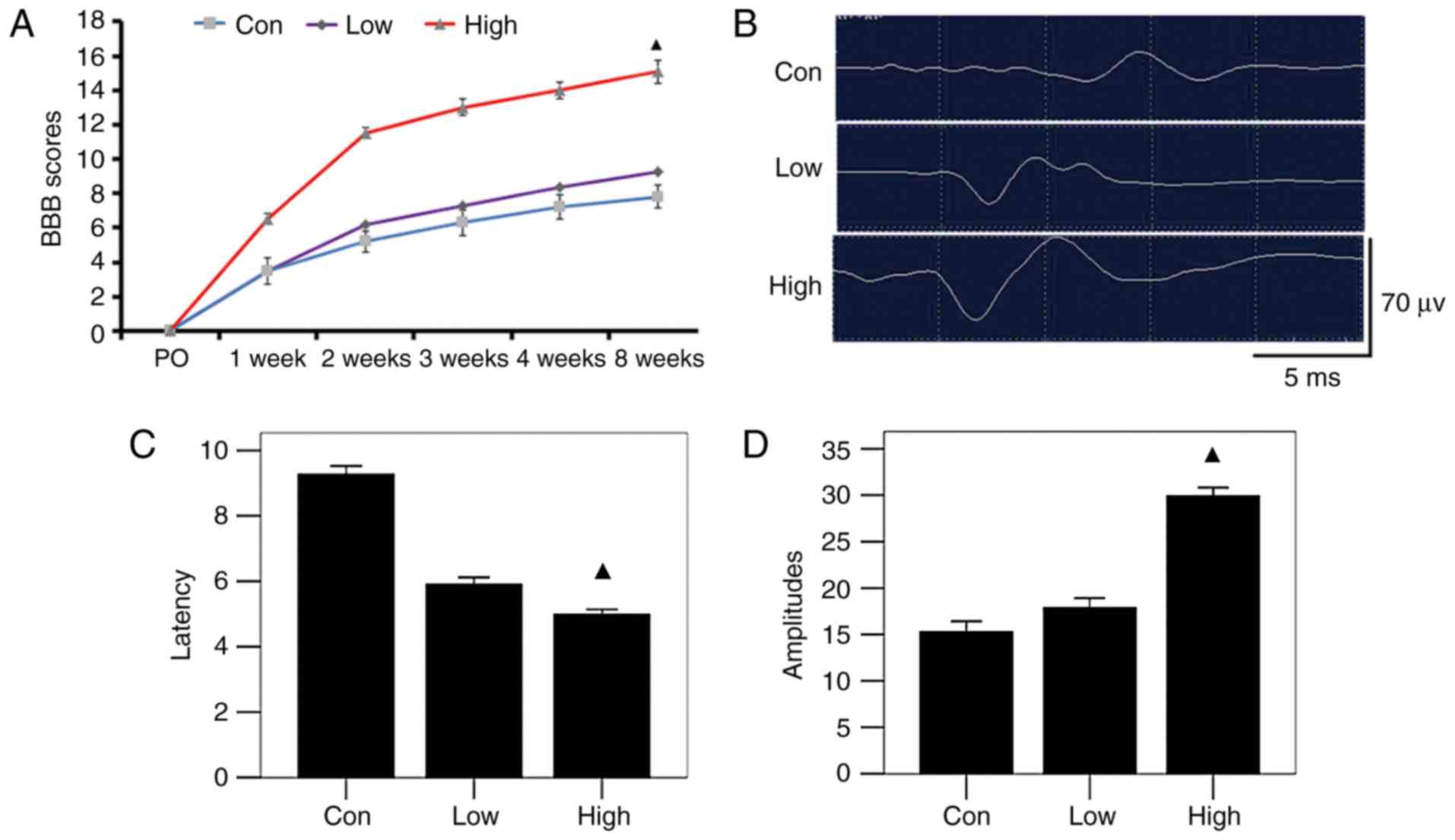
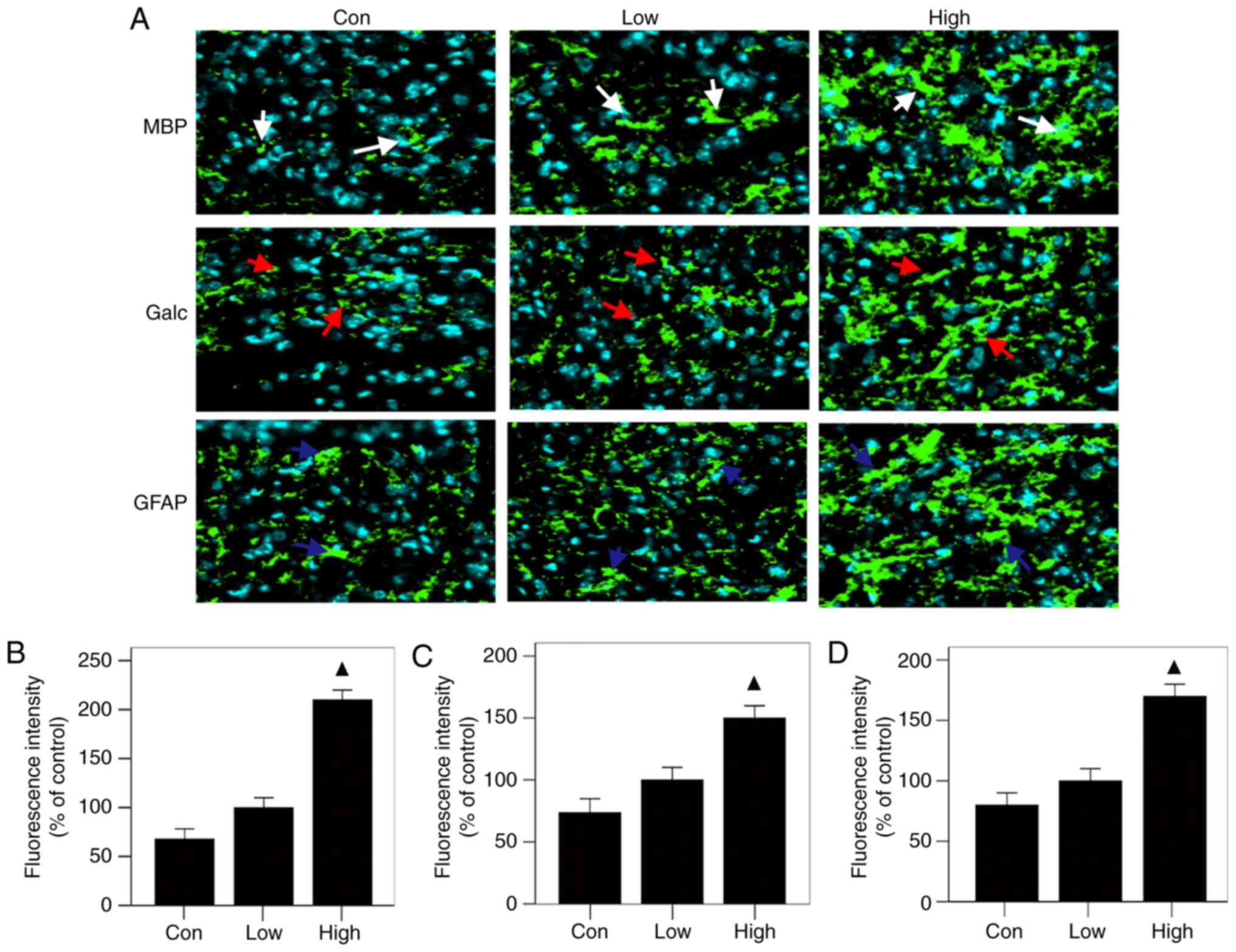
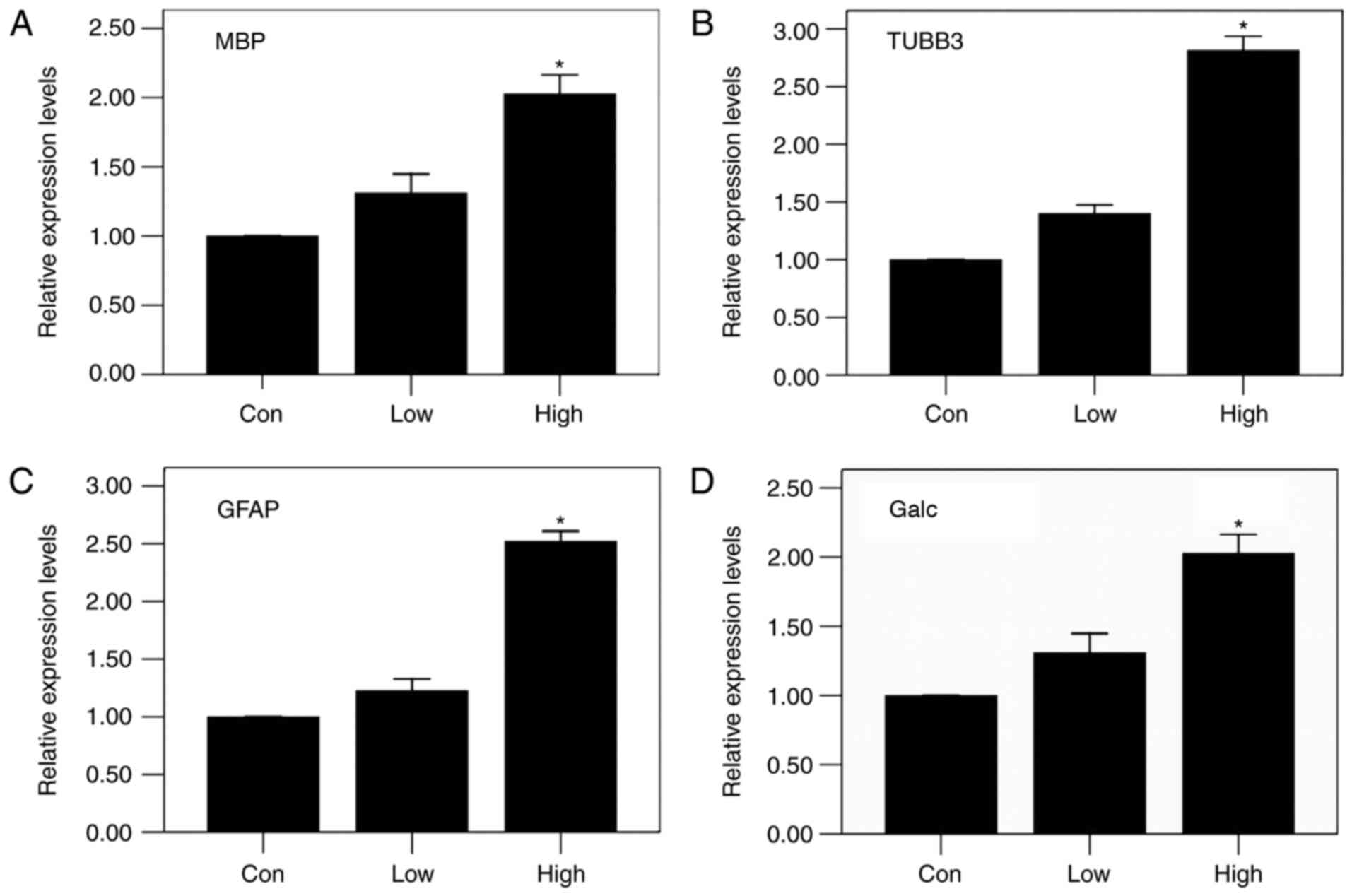
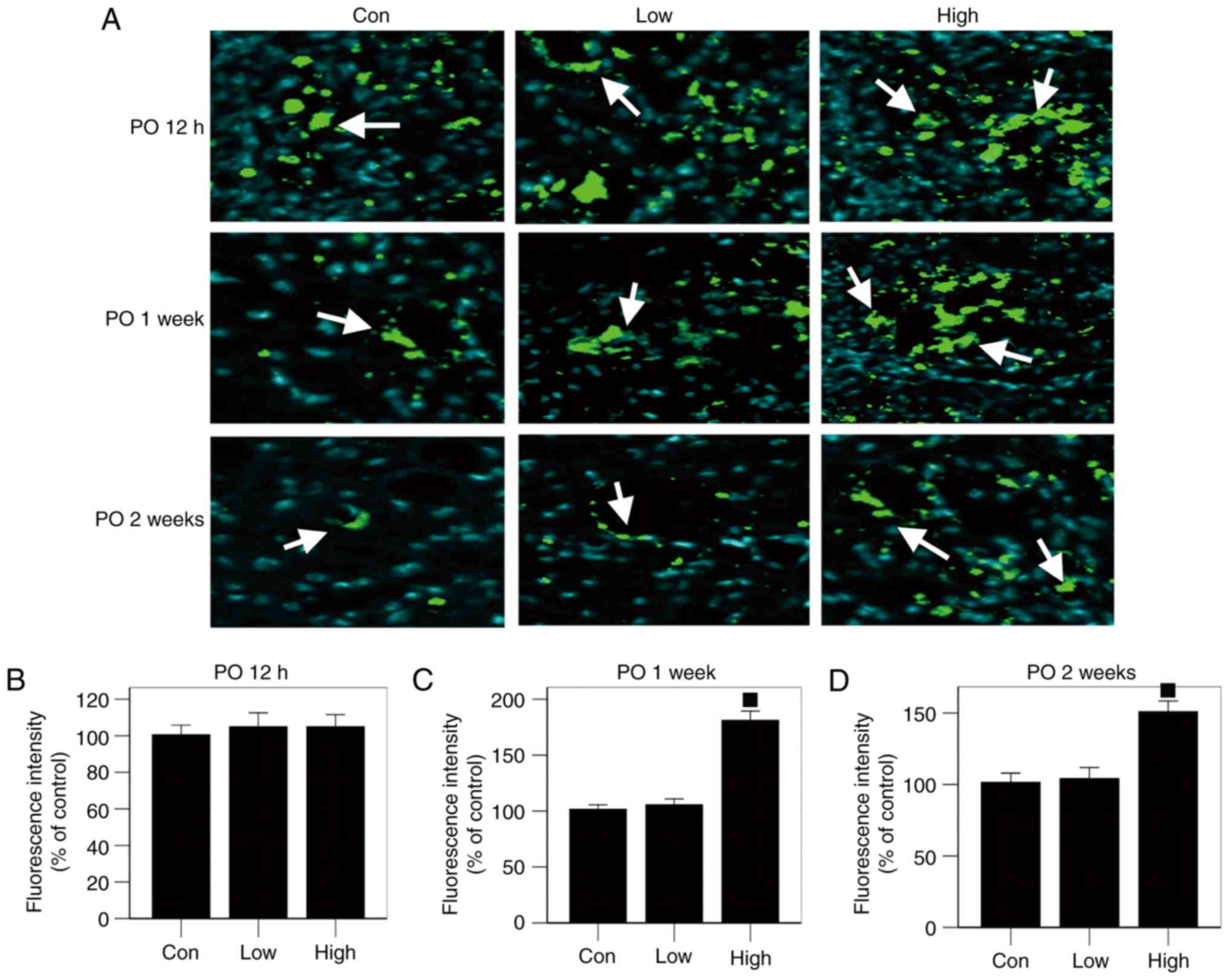
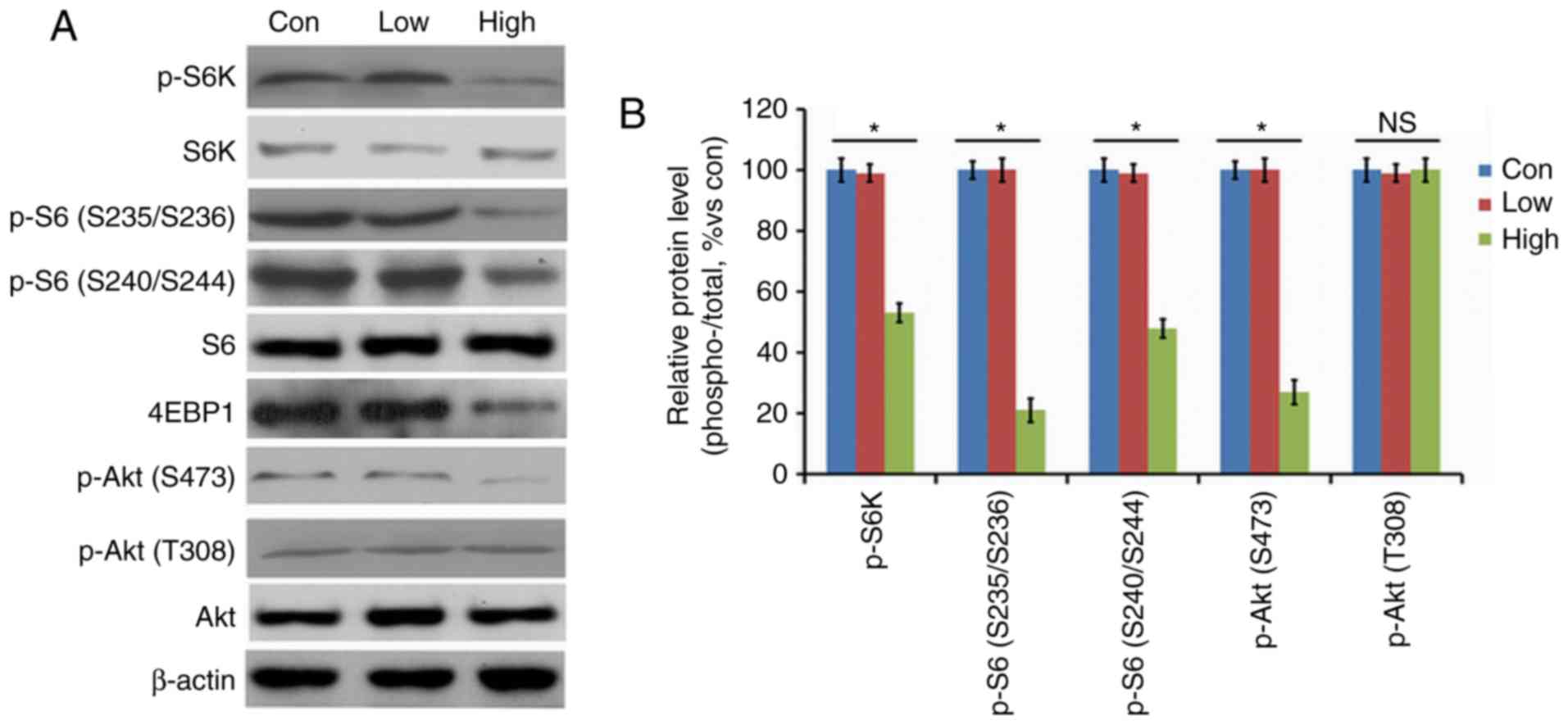
The present study aimed to explore the effects of n‑3 polyunsaturated fatty acids (PUFAs) on autophagy and their potential for promoting locomotor recovery after spinal cord injury (SCI). Primary neurons were isolated and cultured. Sprague‑Dawley rats were randomly divided into three groups and fed diets with different amounts of n‑3 PUFAs. A model of spinal cord contusion was created at the T10 spinal segment and the composition of PUFAs was analyzed using gas chromatography. Spinal repair and motor function were evaluated postoperatively. Assessment of the effects of n‑3 PUFAs on autophagy and mammalian target of rapamycin complex 1 (mTORC1) was performed using immunofluorescence staining and western blotting. In vitro, n‑3 PUFAs inhibited mTORC1 and enhanced autophagy. The n‑3 PUFA levels and the ratio of n‑3 PUFA to n‑6 PUFA in the spinal cord and serum of rats fed a high‑n‑3 PUFA diet were higher before and after operation (P<0.05). Additionally, rats in the high‑n‑3 PUFA group showed improved motor function recovery, spinal cord repair‑related protein expression level (MBP, Galc and GFAP). Expression levels if these protiens in the high‑n‑3 PUFA diet group expressed the highest levels, followed by the low‑n‑3 PUFA diet group and finally the control group (P<0.05). high‑n‑3 PUFA diet promoted autophagy ability and inhibited activity of the mTORC1 signaling pathway compared with the low‑n‑3 PUFA diet group or the control group (P<0.05). These results suggest that exogenous dietary n‑3 PUFAs can inhibit mTORC1 signaling and enhance autophagy, promoting functional recovery of rats with SCI.
View Figures

Figure 1

Figure 2

Figure 3

Figure 4

Figure 5

Figure 6

Figure 7

View References

1 

Schwab ME: Regenerative nerve fiber in the adult central nervous system. News Physiol Sci. 13:294–298. 1998.PubMed/NCBI

2 

Fry EJ: Central nervous system regeneration: Mission impossible? Clin Exp Pharmacol Physiol. 28:253–258. 2001. View Article : Google Scholar : PubMed/NCBI

3 

Ritfeld GJ, Nandoe Tewarie RD, Vajn K, Rahiem ST, Hurtado A, Wendell DF, Roos RA and Oudega M: Bone marrow stromal cell-mediated tissue sparing enhances functional repair after spinal cord contusion in adult rats. Cell Transplant. 21:1561–1575. 2012. View Article : Google Scholar : PubMed/NCBI

4 

Ribatti D, Conconi MT, Nico B, Baiguera S, Corsi P, Parnigotto PP and Nussdorfer GG: Angiogenic response induced by acellular brain scaffolds grafted onto the chick embryo chorioallantoic membrane. Brain Res. 989:9–15. 2003. View Article : Google Scholar : PubMed/NCBI

5 

Johnson PJ, Tatara A, Shiu A and Sakiyama-Elbert SE: Controlled release of neurotrophin-3 and platelet-derived growth factor from fibrin scaffolds containing neural progenitor cells enhances survival and differentiation into neurons in a subacute model of SCI. Cell Transplant. 19:89–101. 2011. View Article : Google Scholar

6 

Zurita M, Vaquero J, Oya S and Miguel M: Schwann cells induce neuronal differentiation of bone marrow stromal cells. Neuroreport. 16:505–508. 2005. View Article : Google Scholar : PubMed/NCBI

7 

Liu GM, Luo YG, Li J and Xu K: Knockdown of Nogo gene by short hairpin RNA interference promotes functional recovery of spinal cord injury in a rat model. Mol Med Rep. 13:4431–4436. 2016. View Article : Google Scholar : PubMed/NCBI

8 

Guo J and Li Y, Chen Z, He Z, Zhang B and Li Y, Hu J, Han M, Xu Y and Li Y: N-acetylcysteine treatment following spinal cord trauma reduces neural tissue damage and improves locomotor function in mice. Mol Med Rep. 12:37–44. 2015. View Article : Google Scholar : PubMed/NCBI

9 

Chen KB, Uchida K, Nakajima H, Yayama T, Hirai T, Watanabe S, Guerrero AR, Kobayashi S, Ma WY, Liu SY and Baba H: Tumor necrosis factor-α antagonist reduces apoptosis of neurons and oligodendroglia in rat spinal cord injury. Spine (Phila Pa 1976). 36:1350–1358. 2011. View Article : Google Scholar : PubMed/NCBI

10 

Figueroa JD and De Leon M: Neurorestorative targets of dietary long-chain omega-3 fatty acids in neurological injury. Mol Neurobiol. 50:197–213. 2014. View Article : Google Scholar : PubMed/NCBI

11 

Zeman M, Jirak R, Vecka M, Raboch J and Zak A: N-3 polyunsaturated fatty acids in psychiatric diseases: Mechanisms and clinical data. Neuro Endocrinol Lett. 33:736–748. 2012.PubMed/NCBI

12 

Hasadsri L, Wang BH, Lee JV, Erdman JW, Llano DA, Barbey AK, Wszalek T, Sharrock MF and Wang HJ: Omega-3 fatty acids as a putative treatment for traumatic brain injury. J Neurotrauma. 30:897–906. 2013. View Article : Google Scholar : PubMed/NCBI

13 

Huang MJ, Wang L, Jin DD, Zhang ZM, Chen TY, Jia CH, Wang Y, Zhen XC, Huang B, Yan B, et al: Enhancement of the synthesis of n-3 PUFAs in fat-1 transgenic mice inhibits mTORC1 signalling and delays surgically induced osteoarthritis in comparison with wild-type mice. Ann Rheum Dis. 73:1719–1727. 2014. View Article : Google Scholar : PubMed/NCBI

14 

Lim SN, Gladman SJ, Dyall SC, Patel U, Virani N, Kang JX, Priestley JV and Michael-Titus AT: Transgenic mice with high endogenous omega-3 fatty acids are protected from spinal cord injury. Neurobiol Dis. 51:104–112. 2013. View Article : Google Scholar : PubMed/NCBI

15 

Wen ZH, Su YC, Lai PL, Zhang Y, Xu YF, Zhao A, Yao GY, Jia CH, Lin J, Xu S, et al: Critical role of arachidonic acid activated mTOR signaling in breast carcinogenesis and angiogenesis. Oncogene. 32:160–170. 2013. View Article : Google Scholar : PubMed/NCBI

16 

Gerber M: Omega-3 fatty acids and cancers: A systematic update review of epidemiological studies. Br J Nutr. 107 Suppl 2:S228–S239. 2012. View Article : Google Scholar : PubMed/NCBI

17 

Fleming JC, Norenberg MD, Ramsay DA, Dekaban GA, Marcillo AE, Saenz AD, Pasquale-Styles M, Dietrich WD and Weaver LC: The cellular inflammatory response in human spinal cords after injury. Brain. 129:3249–3269. 2006. View Article : Google Scholar : PubMed/NCBI

18 

Donnelly DJ and Popovich PG: Inflammation and its role in neuroprotection, axonal regeneration and functional recovery after spinal cord injury. Exp Neurol. 209:378–388. 2008. View Article : Google Scholar : PubMed/NCBI

19 

Daniel J and Klionsky: The molecular machinery of autophagy: unanswered questions. J Cell Sci. 118:7–18. 2005. View Article : Google Scholar : PubMed/NCBI

20 

Kanki T and Klionsky DJ: The molecular mechanism of mitochondria autophagy in yeast. Mol Microbiol. 75:795–800. 2010. View Article : Google Scholar : PubMed/NCBI

21 

Kanno H, Ozawa H, Sekiguchi A, Yamaya S, Tateda S, Yahata K and Itoi E: The role of mTOR signaling pathway in spinal cord injury. Cell Cycle. 11:3175–3179. 2012. View Article : Google Scholar : PubMed/NCBI

22 

Liu K, Lu Y, Lee JK, Samara R, Willenberg R, Sears-Kraxberger I, Tedeschi A, Park KK, Jin D, Cai B, et al: PTEN deletion enhances the regenerative ability of adult corticospinal neurons. Nat Neurosci. 13:1075–10781. 2010. View Article : Google Scholar : PubMed/NCBI

23 

Lamming DW and Sabatini DM: A central role for mTOR in lipid homeostasis. Cell Metab. 18:465–469. 2013. View Article : Google Scholar : PubMed/NCBI

24 

Laplante M and Sabatini DM: An emerging role of mTOR in lipid biosynthesis. Curr Biol. 19:R1046–R1052. 2009. View Article : Google Scholar : PubMed/NCBI

25 

Laplante M and Sabatini DM: mTOR signaling at a glance. J Cell Sci. 122:3589–3594. 2009. View Article : Google Scholar : PubMed/NCBI

26 

Laplante M and Sabatini DM: mTOR signaling. Cold Spring Harb Perspect Biol. 4(pii): a0115932012.PubMed/NCBI

27 

Su M, Guan H, Zhang F, Gao Y, Teng X and Yang W: HDAC6 regulates the chaperone-mediated autophagy to prevent oxidative damage in injured neurons after experimental spinal cord injury. Oxid Med Cell Longev. 2016:72637362016. View Article : Google Scholar : PubMed/NCBI

28 

Zhou KL, Zhou YF, Wu K, Tian NF, Wu YS, Wang YL, Chen DH, Zhou B, Wang XY, Xu HZ and Zhang XL: Stimulation of autophagy promotes functional recovery in diabetic rats with spinal cord injury. Sci Rep. 5:171302015. View Article : Google Scholar : PubMed/NCBI

29 

Zhou Y, Zheng B, Ye L, Zhang H, Zhu S, Zheng X, Xia Q, He Z, Wang Q, Xiao J and Xu H: Retinoic acid prevents disruption of blood-spinal cord barrier by inducing autophagic flux after spinal cord injury. Neurochem Res. 41:813–825. 2016. View Article : Google Scholar : PubMed/NCBI

30 

Gao K, Wang G, Wang Y, Han D, Bi J, Yuan Y, Yao T, Wan Z, Li H and Mei X: Neuroprotective effect of simvastatin via inducing the autophagy on spinal cord injury in the rat model. Biomed Res Int. 2015:2601612015. View Article : Google Scholar : PubMed/NCBI

31 

Guo Y, Liu S, Zhang X, Wang L, Gao J, Han A and Hao A: G-CSF promotes autophagy and reduces neural tissue damage after spinal cord injury in mice. Lab Invest. 95:1439–1449. 2015. View Article : Google Scholar : PubMed/NCBI

32 

Lotz MK and Caramés B: Autophagy and cartilage homeostasis mechanisms in joint health, aging and OA. Nat Rev Rheumatol. 7:579–587. 2011. View Article : Google Scholar : PubMed/NCBI

33 

Kanno H, Ozawa H, Sekiguchi A, Yamaya S and Itoi E: Induction of autophagy and autophagic cell death in damaged neural tissue after acute spinal cord injury in mice. Spine (Phila Pa 1976). 36:E1427–E1434. 2011. View Article : Google Scholar : PubMed/NCBI

34 

Basso DM, Beattie MS and Bresnahan JC: A sensitive and reliable locomotor rating scale for open field testing in rats. J Neurotrauma. 12:1–21. 1995. View Article : Google Scholar : PubMed/NCBI

35 

Zhang XY, Xue H, Liu JM and Chen D: Chemically extracted acellular muscle: A new potential scaffold for spinal cord injury repair. J Biomed Mater Res A. 100:578–587. 2012. View Article : Google Scholar : PubMed/NCBI

36 

Wei D, Li J, Shen M, Jia W, Chen N, Chen T, Su D, Tian H, Zheng S, Dai Y and Zhao A: Cellular production of n-3 PUFAs and reduction of n-6-to-n-3 ratios in the pancreatic beta-cells and islets enhance insulin secretion and confer protection against cytokine-induced cell death. Diabetes. 59:471–478. 2010. View Article : Google Scholar : PubMed/NCBI

37 

Kang JX: A transgenic mouse model for gene-nutrient interactions. J Nutrigenet Nutrigenomics. 1:172–177. 2008. View Article : Google Scholar : PubMed/NCBI

38 

Nakamura M, Houghtling RA, MacArthur L, Bayer BM and Bregman BS: Differences in cytokine gene expression profile between acute and secondary injury in adult rat spinal cord. Exp Neurol. 184:313–325. 2003. View Article : Google Scholar : PubMed/NCBI

39 

Manku MS, Horrobin DF, Huang YS and Morse N: Fatty acids in plasma and red cell membranes in normal humans. Lipids. 18:906–908. 1983. View Article : Google Scholar : PubMed/NCBI

40 

Dyall SC, Michael GJ, Whelpton R, Scott AG and Michael-Titus AT: Dietary enrichment with omega-3 polyunsaturated fatty acids reverses age-related decreases in the GluR2 and NR2B glutamate receptor subunits in rat forebrain. Neurobiol Aging. 28:424–439. 2007. View Article : Google Scholar : PubMed/NCBI

41 

Jiang W, Zhu Z, McGinley JN, El Bayoumy K, Manni A and Thompson HJ: Identification of a molecular signature underlying inhibition of mammary carcinoma growth by dietary n-3 fatty acids. Cancer Res. 72:3795–3806. 2012. View Article : Google Scholar : PubMed/NCBI

42 

Chen Z, Zhang Y, Jia C, Wang Y, Lai P, Zhou X, Wang Y, Song Q, Lin J, Ren Z, et al: mTORC1/2 targeted by n-3 polyunsaturated fatty acids in the prevention of mammary tumorigenesis and tumor progression. Oncogene. 33:4548–4557. 2014. View Article : Google Scholar : PubMed/NCBI

43 

Berquin IM, Edwards IJ and Chen YQ: Multi-targeted therapy of cancer by omega-3 fatty acids. Cancer Lett. 269:363–377. 2008. View Article : Google Scholar : PubMed/NCBI

44 

Larsson SC, Kumlin M, Ingelman-Sundberg M and Wolk A: Dietary long-chain n-3 fatty acids for the prevention of cancer: A review of potential mechanisms. Am J Clin Nutr. 79:935–945. 2004. View Article : Google Scholar : PubMed/NCBI

45 

Streit WJ, Semple-Rowland SL, Hurley SD, Miller RC, Popovich PG and Stokes BT: Cytokine mRNA profiles in contused spinal cord and axotomized facial nucleus suggest a beneficial role for inflammation and gliosis. Exp Neurol. 152:74–87. 1998. View Article : Google Scholar : PubMed/NCBI

46 

Bracken MB, Shepard MJ, Collins WF, Holford TR, Young W, Baskin DS, Eisenberg HM, Flamm E, Leo-Summers L, Maroon J, et al: A randomized, controlled trial of methylprednisolone or naloxone in the treatment of acute spinal-cord injury. Results of the second national acute spinal cord injury study. N Engl J Med. 322:1405–1411. 1990. View Article : Google Scholar : PubMed/NCBI

47 

Wang CX, Olschowka JA and Wrathall JR: Increase of interleukin-1beta mRNA and protein in the spinal cord following experimental traumatic injury in the rat. Brain Res. 13:190–196. 1997. View Article : Google Scholar

48 

Lu Y, Jiang BC, Cao DL, Zhang ZJ, Zhang X, Ji RR and Gao YJ: TRAF6 upregulation in spinal astrocytes maintains neuropathic pain by integrating TNF-α and IL-1β signaling. Pain. 155:2618–2629. 2014. View Article : Google Scholar : PubMed/NCBI

49 

Grau JW, Huie JR, Lee KH, Hoy KC, Huang YJ, Turtle JD, Strain MM, Baumbauer KM, Miranda RM, Hook MA, et al: Metaplasticity and behavior: How training and inflammation affect plastic potential within the spinal cord and recovery after injury. Front Neural Circuits. 8:1002014. View Article : Google Scholar : PubMed/NCBI

50 

Erlich S, Alexandrovich A, Shohami E and Pinkas-Kramarski R: Rapamycin is a neuroprotective treatment for traumatic brain injury. Neurobiol Dis. 26:86–93. 2007. View Article : Google Scholar : PubMed/NCBI

51 

Hou H, Zhang L, Zhang L and Tang P: Acute spinal cord injury in rats should target activated autophagy. J Neurosurg Spine. 20:568–577. 2014. View Article : Google Scholar : PubMed/NCBI

52 

Hao HH, Wang L, Guo ZJ, Bai L, Zhang RP, Shuang WB, Jia YJ, Wang J, Li XY and Liu Q: Valproic acid reduces autophagy and promotes functional recovery after spinal cord injury in rats. Neurosci Bull. 29:484–492. 2013. View Article : Google Scholar : PubMed/NCBI

53 

Wang ZY, Lin JH, Muharram A and Liu WG: Beclin-1-mediated autophagy protects spinal cord neurons against mechanical injury-induced apoptosis. Apoptosis. 19:933–945. 2014. View Article : Google Scholar : PubMed/NCBI

54 

Serhan CN, Dalli J, Colas RA, Winkler JW and Chiang N: Protectins and maresins: New pro-resolving families of mediators in acute inflammation and resolution bioactive metabolome. Biochim Biophys Acta. 1851:397–413. 2015. View Article : Google Scholar : PubMed/NCBI

55 

Chen Z, Fu Q, Shen B, Huang X, Wang K, He P, Li F, Zhang F and Shen H: Enhanced p62 expression triggers concomitant autophagy and apoptosis in a rat chronic spinal cord compression model. Mol Med Rep. 9:2091–2096. 2014. View Article : Google Scholar : PubMed/NCBI

Related Articles

  • Abstract
  • View
  • Download
  • Twitter
Copy and paste a formatted citation
Spandidos Publications style
Nie J, Chen J, Yang J, Pei Q, Li J, Liu J, Xu L, Li N, Chen Y, Chen X, Chen X, et al: Inhibition of mammalian target of rapamycin complex 1 signaling by n-3 polyunsaturated fatty acids promotes locomotor recovery after spinal cord injury. Mol Med Rep 17: 5894-5902, 2018.
APA
Nie, J., Chen, J., Yang, J., Pei, Q., Li, J., Liu, J. ... Sun, T. (2018). Inhibition of mammalian target of rapamycin complex 1 signaling by n-3 polyunsaturated fatty acids promotes locomotor recovery after spinal cord injury. Molecular Medicine Reports, 17, 5894-5902. https://doi.org/10.3892/mmr.2018.8583
MLA
Nie, J., Chen, J., Yang, J., Pei, Q., Li, J., Liu, J., Xu, L., Li, N., Chen, Y., Chen, X., Luo, H., Sun, T."Inhibition of mammalian target of rapamycin complex 1 signaling by n-3 polyunsaturated fatty acids promotes locomotor recovery after spinal cord injury". Molecular Medicine Reports 17.4 (2018): 5894-5902.
Chicago
Nie, J., Chen, J., Yang, J., Pei, Q., Li, J., Liu, J., Xu, L., Li, N., Chen, Y., Chen, X., Luo, H., Sun, T."Inhibition of mammalian target of rapamycin complex 1 signaling by n-3 polyunsaturated fatty acids promotes locomotor recovery after spinal cord injury". Molecular Medicine Reports 17, no. 4 (2018): 5894-5902. https://doi.org/10.3892/mmr.2018.8583
Copy and paste a formatted citation
x
Spandidos Publications style
Nie J, Chen J, Yang J, Pei Q, Li J, Liu J, Xu L, Li N, Chen Y, Chen X, Chen X, et al: Inhibition of mammalian target of rapamycin complex 1 signaling by n-3 polyunsaturated fatty acids promotes locomotor recovery after spinal cord injury. Mol Med Rep 17: 5894-5902, 2018.
APA
Nie, J., Chen, J., Yang, J., Pei, Q., Li, J., Liu, J. ... Sun, T. (2018). Inhibition of mammalian target of rapamycin complex 1 signaling by n-3 polyunsaturated fatty acids promotes locomotor recovery after spinal cord injury. Molecular Medicine Reports, 17, 5894-5902. https://doi.org/10.3892/mmr.2018.8583
MLA
Nie, J., Chen, J., Yang, J., Pei, Q., Li, J., Liu, J., Xu, L., Li, N., Chen, Y., Chen, X., Luo, H., Sun, T."Inhibition of mammalian target of rapamycin complex 1 signaling by n-3 polyunsaturated fatty acids promotes locomotor recovery after spinal cord injury". Molecular Medicine Reports 17.4 (2018): 5894-5902.
Chicago
Nie, J., Chen, J., Yang, J., Pei, Q., Li, J., Liu, J., Xu, L., Li, N., Chen, Y., Chen, X., Luo, H., Sun, T."Inhibition of mammalian target of rapamycin complex 1 signaling by n-3 polyunsaturated fatty acids promotes locomotor recovery after spinal cord injury". Molecular Medicine Reports 17, no. 4 (2018): 5894-5902. https://doi.org/10.3892/mmr.2018.8583
Follow us
  • Twitter
  • LinkedIn
  • Facebook
About
  • Spandidos Publications
  • Careers
  • Cookie Policy
  • Privacy Policy
How can we help?
  • Help
  • Live Chat
  • Contact
  • Email to our Support Team