Spandidos Publications Logo
  • About
    • About Spandidos
    • Aims and Scopes
    • Abstracting and Indexing
    • Editorial Policies
    • Reprints and Permissions
    • Job Opportunities
    • Terms and Conditions
    • Contact
  • Journals
    • All Journals
    • Oncology Letters
      • Oncology Letters
      • Information for Authors
      • Editorial Policies
      • Editorial Board
      • Aims and Scope
      • Abstracting and Indexing
      • Bibliographic Information
      • Archive
    • International Journal of Oncology
      • International Journal of Oncology
      • Information for Authors
      • Editorial Policies
      • Editorial Board
      • Aims and Scope
      • Abstracting and Indexing
      • Bibliographic Information
      • Archive
    • Molecular and Clinical Oncology
      • Molecular and Clinical Oncology
      • Information for Authors
      • Editorial Policies
      • Editorial Board
      • Aims and Scope
      • Abstracting and Indexing
      • Bibliographic Information
      • Archive
    • Experimental and Therapeutic Medicine
      • Experimental and Therapeutic Medicine
      • Information for Authors
      • Editorial Policies
      • Editorial Board
      • Aims and Scope
      • Abstracting and Indexing
      • Bibliographic Information
      • Archive
    • International Journal of Molecular Medicine
      • International Journal of Molecular Medicine
      • Information for Authors
      • Editorial Policies
      • Editorial Board
      • Aims and Scope
      • Abstracting and Indexing
      • Bibliographic Information
      • Archive
    • Biomedical Reports
      • Biomedical Reports
      • Information for Authors
      • Editorial Policies
      • Editorial Board
      • Aims and Scope
      • Abstracting and Indexing
      • Bibliographic Information
      • Archive
    • Oncology Reports
      • Oncology Reports
      • Information for Authors
      • Editorial Policies
      • Editorial Board
      • Aims and Scope
      • Abstracting and Indexing
      • Bibliographic Information
      • Archive
    • Molecular Medicine Reports
      • Molecular Medicine Reports
      • Information for Authors
      • Editorial Policies
      • Editorial Board
      • Aims and Scope
      • Abstracting and Indexing
      • Bibliographic Information
      • Archive
    • World Academy of Sciences Journal
      • World Academy of Sciences Journal
      • Information for Authors
      • Editorial Policies
      • Editorial Board
      • Aims and Scope
      • Abstracting and Indexing
      • Bibliographic Information
      • Archive
    • International Journal of Functional Nutrition
      • International Journal of Functional Nutrition
      • Information for Authors
      • Editorial Policies
      • Editorial Board
      • Aims and Scope
      • Abstracting and Indexing
      • Bibliographic Information
      • Archive
    • International Journal of Epigenetics
      • International Journal of Epigenetics
      • Information for Authors
      • Editorial Policies
      • Editorial Board
      • Aims and Scope
      • Abstracting and Indexing
      • Bibliographic Information
      • Archive
    • Medicine International
      • Medicine International
      • Information for Authors
      • Editorial Policies
      • Editorial Board
      • Aims and Scope
      • Abstracting and Indexing
      • Bibliographic Information
      • Archive
  • Articles
  • Information
    • Information for Authors
    • Information for Reviewers
    • Information for Librarians
    • Information for Advertisers
    • Conferences
  • Language Editing
Spandidos Publications Logo
  • About
    • About Spandidos
    • Aims and Scopes
    • Abstracting and Indexing
    • Editorial Policies
    • Reprints and Permissions
    • Job Opportunities
    • Terms and Conditions
    • Contact
  • Journals
    • All Journals
    • Biomedical Reports
      • Information for Authors
      • Editorial Policies
      • Editorial Board
      • Aims and Scope
      • Abstracting and Indexing
      • Bibliographic Information
      • Archive
    • Experimental and Therapeutic Medicine
      • Information for Authors
      • Editorial Policies
      • Editorial Board
      • Aims and Scope
      • Abstracting and Indexing
      • Bibliographic Information
      • Archive
    • International Journal of Epigenetics
      • Information for Authors
      • Editorial Policies
      • Editorial Board
      • Aims and Scope
      • Abstracting and Indexing
      • Bibliographic Information
      • Archive
    • International Journal of Functional Nutrition
      • Information for Authors
      • Editorial Policies
      • Editorial Board
      • Aims and Scope
      • Abstracting and Indexing
      • Bibliographic Information
      • Archive
    • International Journal of Molecular Medicine
      • Information for Authors
      • Editorial Policies
      • Editorial Board
      • Aims and Scope
      • Abstracting and Indexing
      • Bibliographic Information
      • Archive
    • International Journal of Oncology
      • Information for Authors
      • Editorial Policies
      • Editorial Board
      • Aims and Scope
      • Abstracting and Indexing
      • Bibliographic Information
      • Archive
    • Medicine International
      • Information for Authors
      • Editorial Policies
      • Editorial Board
      • Aims and Scope
      • Abstracting and Indexing
      • Bibliographic Information
      • Archive
    • Molecular and Clinical Oncology
      • Information for Authors
      • Editorial Policies
      • Editorial Board
      • Aims and Scope
      • Abstracting and Indexing
      • Bibliographic Information
      • Archive
    • Molecular Medicine Reports
      • Information for Authors
      • Editorial Policies
      • Editorial Board
      • Aims and Scope
      • Abstracting and Indexing
      • Bibliographic Information
      • Archive
    • Oncology Letters
      • Information for Authors
      • Editorial Policies
      • Editorial Board
      • Aims and Scope
      • Abstracting and Indexing
      • Bibliographic Information
      • Archive
    • Oncology Reports
      • Information for Authors
      • Editorial Policies
      • Editorial Board
      • Aims and Scope
      • Abstracting and Indexing
      • Bibliographic Information
      • Archive
    • World Academy of Sciences Journal
      • Information for Authors
      • Editorial Policies
      • Editorial Board
      • Aims and Scope
      • Abstracting and Indexing
      • Bibliographic Information
      • Archive
  • Articles
  • Information
    • For Authors
    • For Reviewers
    • For Librarians
    • For Advertisers
    • Conferences
  • Language Editing
Login Register Submit
  • This site uses cookies
  • You can change your cookie settings at any time by following the instructions in our Cookie Policy. To find out more, you may read our Privacy Policy.

    I agree
Search articles by DOI, keyword, author or affiliation
Search
Advanced Search
presentation
Molecular Medicine Reports
Join Editorial Board Propose a Special Issue
Print ISSN: 1791-2997 Online ISSN: 1791-3004
Journal Cover
April-2018 Volume 17 Issue 4

Full Size Image

Sign up for eToc alerts
Recommend to Library

Journals

International Journal of Molecular Medicine

International Journal of Molecular Medicine

International Journal of Molecular Medicine is an international journal devoted to molecular mechanisms of human disease.

International Journal of Oncology

International Journal of Oncology

International Journal of Oncology is an international journal devoted to oncology research and cancer treatment.

Molecular Medicine Reports

Molecular Medicine Reports

Covers molecular medicine topics such as pharmacology, pathology, genetics, neuroscience, infectious diseases, molecular cardiology, and molecular surgery.

Oncology Reports

Oncology Reports

Oncology Reports is an international journal devoted to fundamental and applied research in Oncology.

Experimental and Therapeutic Medicine

Experimental and Therapeutic Medicine

Experimental and Therapeutic Medicine is an international journal devoted to laboratory and clinical medicine.

Oncology Letters

Oncology Letters

Oncology Letters is an international journal devoted to Experimental and Clinical Oncology.

Biomedical Reports

Biomedical Reports

Explores a wide range of biological and medical fields, including pharmacology, genetics, microbiology, neuroscience, and molecular cardiology.

Molecular and Clinical Oncology

Molecular and Clinical Oncology

International journal addressing all aspects of oncology research, from tumorigenesis and oncogenes to chemotherapy and metastasis.

World Academy of Sciences Journal

World Academy of Sciences Journal

Multidisciplinary open-access journal spanning biochemistry, genetics, neuroscience, environmental health, and synthetic biology.

International Journal of Functional Nutrition

International Journal of Functional Nutrition

Open-access journal combining biochemistry, pharmacology, immunology, and genetics to advance health through functional nutrition.

International Journal of Epigenetics

International Journal of Epigenetics

Publishes open-access research on using epigenetics to advance understanding and treatment of human disease.

Medicine International

Medicine International

An International Open Access Journal Devoted to General Medicine.

Journal Cover
April-2018 Volume 17 Issue 4

Full Size Image

Sign up for eToc alerts
Recommend to Library

  • Article
  • Citations
    • Cite This Article
    • Download Citation
    • Create Citation Alert
    • Remove Citation Alert
    • Cited By
  • Similar Articles
    • Related Articles (in Spandidos Publications)
    • Similar Articles (Google Scholar)
    • Similar Articles (PubMed)
  • Download PDF
  • Download XML
  • View XML
Article

Daidzein induces choriocarcinoma cell apoptosis in a dose-dependent manner via the mitochondrial apoptotic pathway

  • Authors:
    • Wei Zheng
    • Teng Liu
    • Rong Sun
    • Lei Yang
    • Ruifang An
    • Yan Xue
  • View Affiliations / Copyright

    Affiliations: Department of Gynecology and Obstetrics, The First Affiliated Hospital of Xi'an Jiaotong University, Xi'an, Shaanxi 710061, P.R. China, Department of Gynecology and Obstetrics, The Affiliated Hospital of Medical College of Ningbo University, Ningbo, Zhejiang 315020, P.R. China, Department of Obstetrics and Gynecology, Obstetrics and Gynecology Hospital, Fudan University, Shanghai 200012, P.R. China
  • Pages: 6093-6099
    |
    Published online on: February 13, 2018
       https://doi.org/10.3892/mmr.2018.8604
  • Expand metrics +
Metrics: Total Views: 0 (Spandidos Publications: | PMC Statistics: )
Metrics: Total PDF Downloads: 0 (Spandidos Publications: | PMC Statistics: )
Cited By (CrossRef): 0 citations Loading Articles...

This article is mentioned in:


Abstract

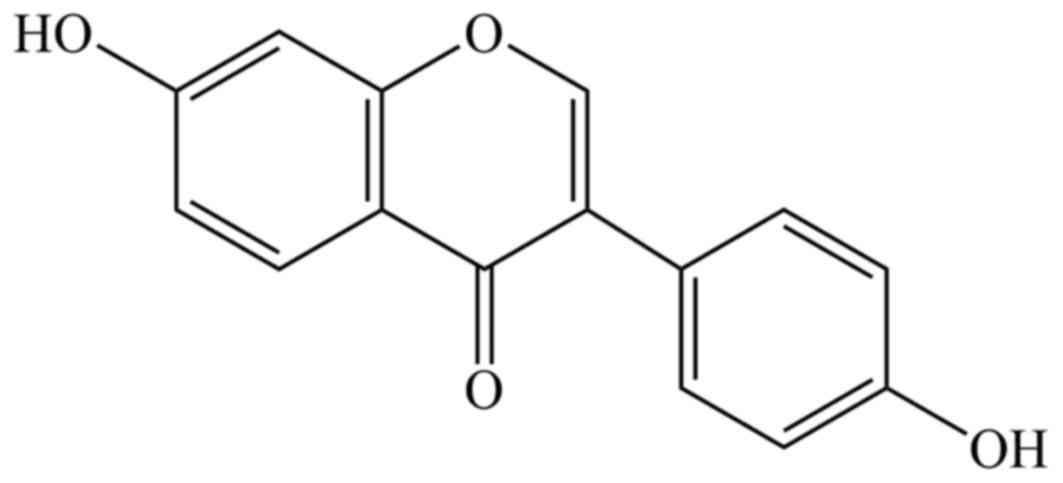
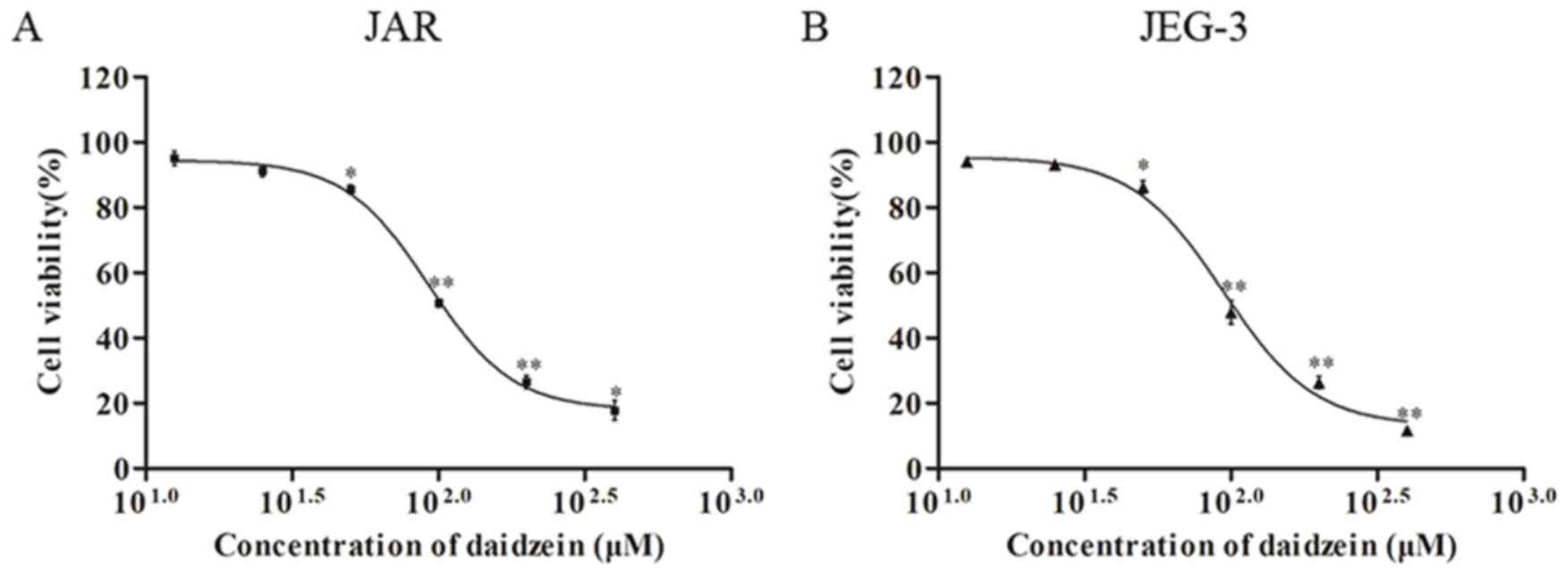
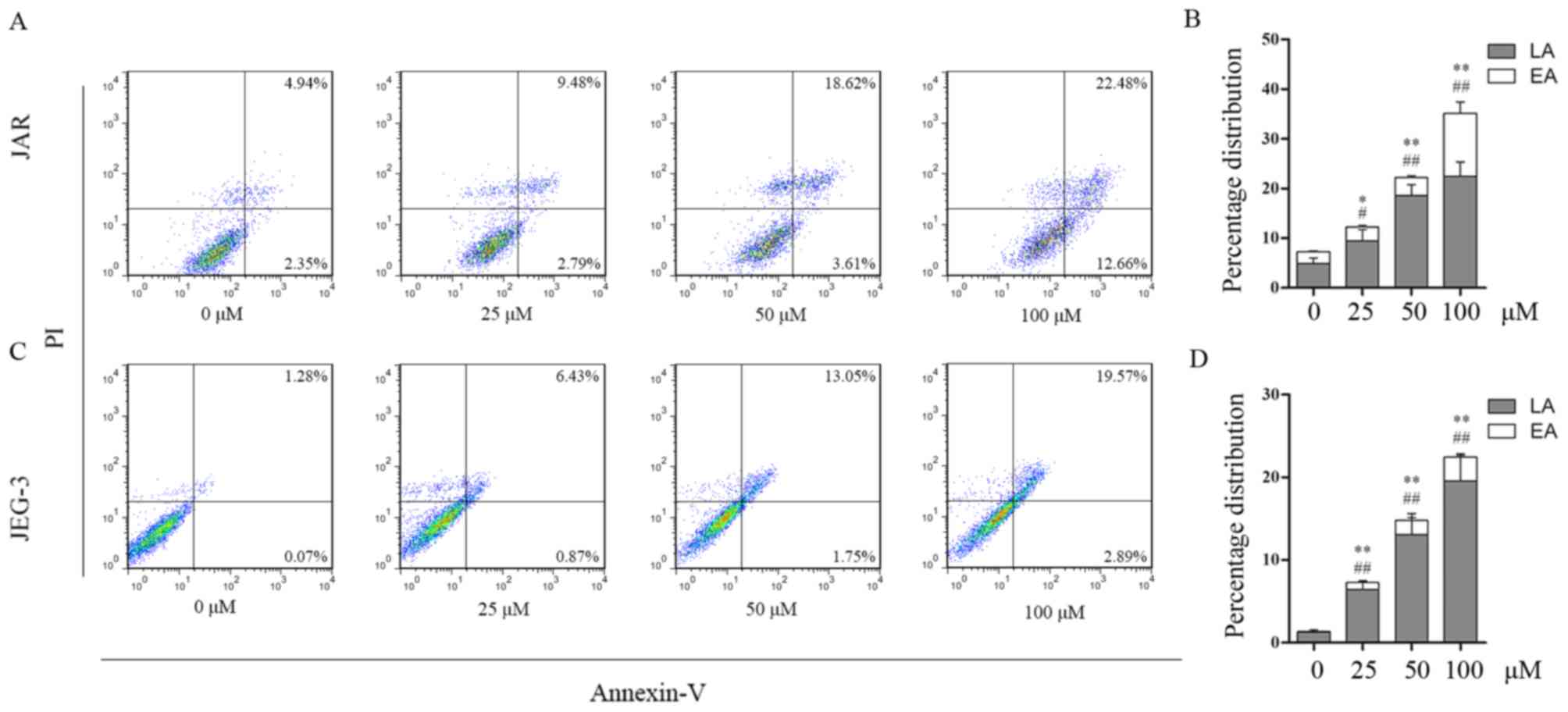
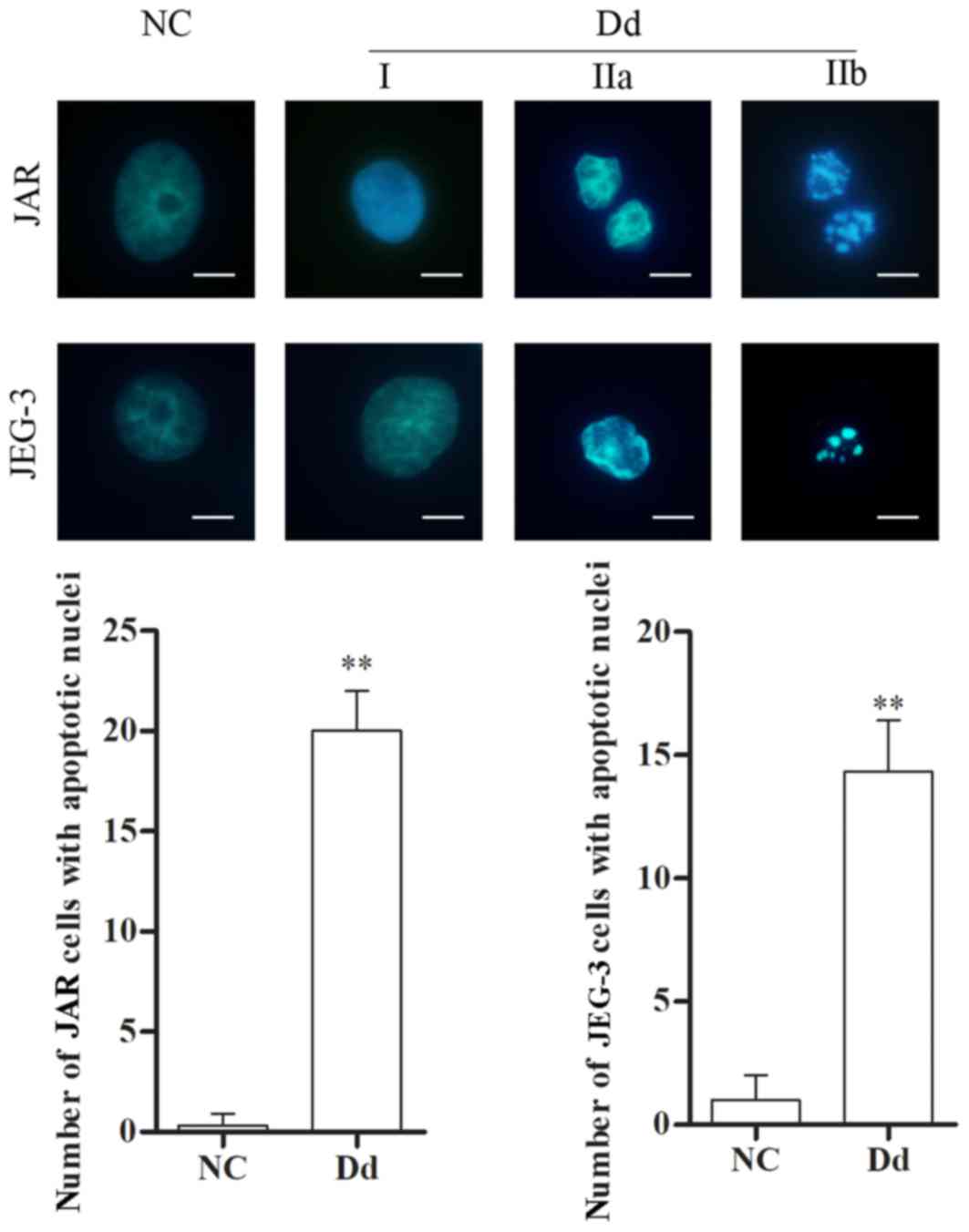
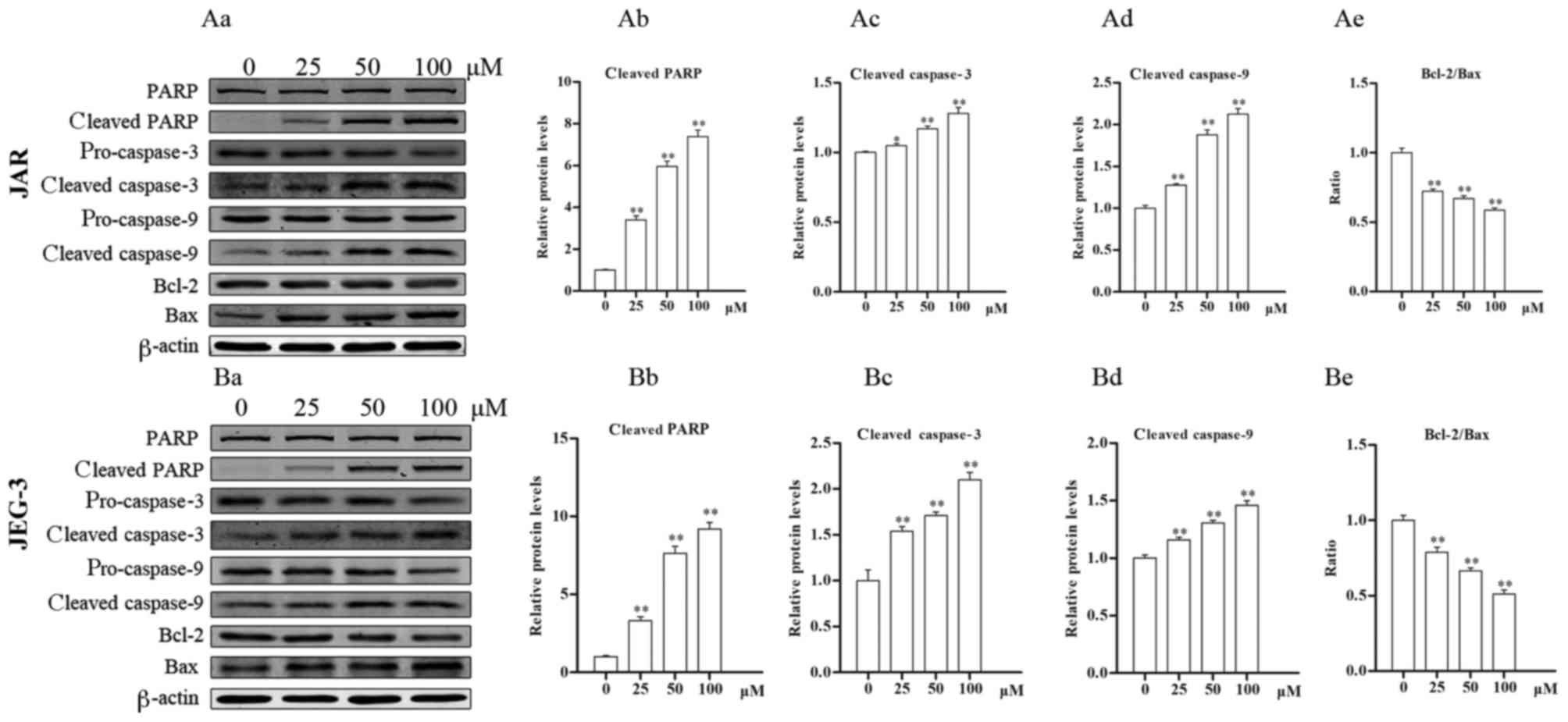
Choriocarcinoma is a malignant gestational trophoblastic disease and relapse or drug resistance occurs in ~25% of gestational trophoblastic tumors. Cell apoptosis serves a role in the progression from hydatidiform mole to persistent gestational trophoblastic disease. It has been demonstrated that daidzein [7‑hydroxy‑3‑(4‑hydroxyphenyl)‑4H‑chromen‑4‑one] may induce apoptosis in a number of cancer types via the mitochondrial apoptotic pathway by altering the B‑cell lymphoma (Bcl)‑2/Bcl‑2 associated X, apoptosis regulator (Bax) ratio, and activating the caspase cascade. Daidzein also serves a role in regulation of production of human chorionic gonadotropin in trophoblast cells and inhibition of cell proliferation. However, few reports have been published regarding the effect of daidzein on apoptosis in choriocarcinoma. Therefore, in the present study, JAR and JEG‑3 human gestational choriocarcinoma cells were used to investigate the effect of daidzein on apoptosis of choriocarcinoma cells. Treatment with daidzein for 48 h reduced cell viability in a dose‑dependent manner. The percentages of early and late apoptotic cells also increased following treatment with daidzein in a dose‑dependent manner, with the number of late apoptotic cells increasing more prominently. Furthermore, treatment with daidzein led to apoptosis‑associated alterations in nuclear morphology of JAR and JEG-3 cells. Expression levels of cleaved poly(ADP‑ribose) polymerase, cleaved caspase‑3 and cleaved caspase‑9 increased following treatment with daidzein, whereas the Bcl‑2/Bax ratio decreased in a dose‑dependent manner. In conclusion, the results of the present study demonstrate that daidzein may induce apoptosis of choriocarcinoma cells in a dose‑dependent manner via the mitochondrial apoptotic pathway.
View Figures

Figure 1

Figure 2

Figure 3

Figure 4

Figure 5

View References

1 

Brown J, Naumann RW, Seckl MJ and Schink J: 15 years of progress in gestational trophoblastic disease: Scoring, standardization, and salvage. Gynecol Oncol. 144:200–207. 2017. View Article : Google Scholar : PubMed/NCBI

2 

Berkowitz RS and Goldstein DP: Current advances in the management of gestational trophoblastic disease. Gynecol Oncol. 128:3–5. 2013. View Article : Google Scholar : PubMed/NCBI

3 

Ryu N, Ogawa M, Matsui H, Usui H and Shozu M: The clinical characteristics and early detection of postpartum choriocarcinoma. Int J Gynecol Cancer. 25:926–930. 2015. View Article : Google Scholar : PubMed/NCBI

4 

Alazzam M, Tidy J, Osborne R, Coleman R, Hancock BW and Lawrie TA: Chemotherapy for resistant or recurrent gestational trophoblastic neoplasia. Cochrane Database Syst Rev. 12:CD0088912012.PubMed/NCBI

5 

Essel KG, Bruegl A, Gershenson DM, Ramondetta LM, Naumann RW and Brown J: Salvage chemotherapy for gestational trophoblastic neoplasia: Utility or futility? Gynecol Oncol. 146:74–80. 2017. View Article : Google Scholar : PubMed/NCBI

6 

Wong SY, Ngan HY, Chan CC and Cheung AN: Apoptosis in gestational trophoblastic disease is correlated with clinical outcome and Bcl-2 expression but not Bax expression. Mod Pathol. 12:1025–1033. 1999.PubMed/NCBI

7 

Chiu PM, Ngan YS, Khoo US and Cheung AN: Apoptotic activity in gestational trophoblastic disease correlates with clinical outcome: Assessment by the caspase-related M30 CytoDeath antibody. Histopathology. 38:243–249. 2001. View Article : Google Scholar : PubMed/NCBI

8 

Fong PY, Xue WC, Ngan HY, Chan KY, Khoo US, Tsao SW, Chiu PM, Man LS and Cheung AN: Mcl-1 expression in gestational trophoblastic disease correlates with clinical outcome: A differential expression study. Cancer. 103:268–276. 2005. View Article : Google Scholar : PubMed/NCBI

9 

Mak VC, Lee L, Siu MK, Wong OG, Lu X, Ngan HY, Wong ES and Cheung AN: Downregulation of ASPP1 in gestational trophoblastic disease: Correlation with hypermethylation, apoptotic activity and clinical outcome. Mod Pathol. 24:522–532. 2011. View Article : Google Scholar : PubMed/NCBI

10 

Braga A, Maesta I, Rocha Soares R, Elias KM, Custódio Domingues MA, Barbisan LF and Berkowitz RS: Apoptotic index for prediction of postmolar gestational trophoblastic neoplasia. Am J Obstet Gynecol. 215:336.e1–336.e12. 2016. View Article : Google Scholar

11 

Wang TH and Wang HS: Gestational trophoblastic diseases: Current trends and perspectives. J Formos Med Assoc. 94:449–457. 1995.PubMed/NCBI

12 

Patwardhan GA, Beverly LJ and Siskind LJ: Sphingolipids and mitochondrial apoptosis. J Bioenerg Biomembr. 48:153–168. 2016. View Article : Google Scholar : PubMed/NCBI

13 

Jin Z and El-Deiry WS: Overview of cell death signaling pathways. Cancer Biol Ther. 4:139–163. 2005. View Article : Google Scholar : PubMed/NCBI

14 

Goldar S, Khaniani MS, Derakhshan SM and Baradaran B: Molecular mechanisms of apoptosis and roles in cancer development and treatment. Asian Pac J Cancer Prev. 16:2129–2144. 2015. View Article : Google Scholar : PubMed/NCBI

15 

Kroemer G, Dallaporta B and Resche-Rigon M: The mitochondrial death/life regulator in apoptosis and necrosis. Annu Rev Physiol. 60:619–642. 1998. View Article : Google Scholar : PubMed/NCBI

16 

Jiang W, Chen Y, Li B and Gao S: DBA-induced caspase-3-dependent apoptosis occurs through mitochondrial translocation of cyt-c in the rat hippocampus. Mol Biosyst. 13:1863–1873. 2017. View Article : Google Scholar : PubMed/NCBI

17 

Zhang F, Yu X, Liu X, Zhou T, Nie T, Cheng M, Liu H, Dai M and Zhang B: ABT-737 potentiates cisplatin-induced apoptosis in human osteosarcoma cells via the mitochondrial apoptotic pathway. Oncol Rep. 38:2301–2308. 2017. View Article : Google Scholar : PubMed/NCBI

18 

Chipuk JE, Moldoveanu T, Llambi F, Parsons MJ and Green DR: The BCL-2 family reunion. Mol Cell. 37:299–310. 2010. View Article : Google Scholar : PubMed/NCBI

19 

Sheikh BY, Sarker MMR, Kamarudin MNA and Ismail A: Prophetic medicine as potential functional food elements in the intervention of cancer: A review. Biomed Pharmacother. 95:614–648. 2017. View Article : Google Scholar : PubMed/NCBI

20 

Liggins J, Mulligan A, Runswick S and Bingham SA: Daidzein and genistein content of cereals. Eur J Clin Nutr. 56:961–966. 2002. View Article : Google Scholar : PubMed/NCBI

21 

Adjakly M, Ngollo M, Boiteux JP, Bignon YJ, Guy L and Bernard-Gallon D: Genistein and daidzein: Different molecular effects on prostate cancer. Anticancer Res. 33:39–44. 2013.PubMed/NCBI

22 

Jin S, Zhang QY, Kang XM, Wang JX and Zhao WH: Daidzein induces MCF-7 breast cancer cell apoptosis via the mitochondrial pathway. Ann Oncol. 21:263–268. 2010. View Article : Google Scholar : PubMed/NCBI

23 

Tang S, Hu J, Meng Q, Dong X, Wang K, Qi Y, Chu C, Zhang X and Hou L: Daidzein induced apoptosis via down-regulation of Bcl-2/Bax and triggering of the mitochondrial pathway in BGC-823 cells. Cell Biochem Biophys. 65:197–202. 2013. View Article : Google Scholar : PubMed/NCBI

24 

Park HJ, Jeon YK, You DH and Nam MJ: Daidzein causes cytochrome c-mediated apoptosis via the Bcl-2 family in human hepatic cancer cells. Food Chem Toxicol. 60:542–549. 2013. View Article : Google Scholar : PubMed/NCBI

25 

Lo YL: A potential daidzein derivative enhances cytotoxicity of epirubicin on human colon adenocarcinoma Caco-2 cells. Int J Mol Sci. 14:158–176. 2012. View Article : Google Scholar : PubMed/NCBI

26 

Liang XL, Li M, Li J and Wang XL: Equol induces apoptosis in human hepatocellular carcinoma SMMC-7721 cells through the intrinsic pathway and the endoplasmic reticulum stress pathway. Anticancer Drugs. 25:633–640. 2014.PubMed/NCBI

27 

Jeschke U, Briese V, Richter DU, Bruer G, Plessow D, Waldschläger J, Mylonas I and Friese K: Effects of phytoestrogens genistein and daidzein on production of human chorionic gonadotropin in term trophoblast cells in vitro. Gynecol Endocrinol. 21:180–184. 2005. View Article : Google Scholar : PubMed/NCBI

28 

Zheng W, Sun R, Yang L, Zeng X, Xue Y and An R: Daidzein inhibits choriocarcinoma proliferation by arresting cell cycle at G1 phase through suppressing ERK pathway in vitro and in vivo. Oncol Rep. 38:2518–2524. 2017. View Article : Google Scholar : PubMed/NCBI

29 

Bruce S and Sorosky J: Gestational trophoblastic disease. StatPearls. StatPearls Publishing StatPearls Publishing LLC.; Treasure Island (FL): 2017

30 

Seckl MJ, Sebire NJ and Berkowitz RS: Gestational trophoblastic disease. Lancet. 376:717–729. 2010. View Article : Google Scholar : PubMed/NCBI

31 

Li HW, Tsao SW and Cheung AN: Current understandings of the molecular genetics of gestational trophoblastic diseases. Placenta. 23:20–31. 2002. View Article : Google Scholar : PubMed/NCBI

32 

Laurenz R, Tumbalam P, Naeve S and Thelen KD: Determination of isoflavone (genistein and daidzein) concentration of soybean seed as affected by environment and management inputs. J Sci Food Agric. 97:3342–3347. 2017. View Article : Google Scholar : PubMed/NCBI

33 

Jin X, Sun J, Yu B, Wang Y, Sun WJ, Yang J, Huang SH and Xie WL: Daidzein stimulates osteogenesis facilitating proliferation, differentiation, and antiapoptosis in human osteoblast-like MG-63 cells via estrogen receptor-dependent MEK/ERK and PI3K/Akt activation. Nutr Res. 42:20–30. 2017. View Article : Google Scholar : PubMed/NCBI

34 

Bhattarai K, Adhikari S, Fujitani M and Kishida T: Dietary daidzein, but not genistein, has a hypocholesterolemic effect in non-ovariectomized and ovariectomized female Sprague-Dawley rats on a cholesterol-free diet. Biosci Biotechnol Biochem. 81:1805–1813. 2017. View Article : Google Scholar : PubMed/NCBI

35 

Koo J, Cabarcas-Petroski S, Petrie JL, Diette N, White RJ and Schramm L: Induction of proto-oncogene BRF2 in breast cancer cells by the dietary soybean isoflavone daidzein. BMC Cancer. 15:9052015. View Article : Google Scholar : PubMed/NCBI

36 

Zhu Y, Xu H, Li M, Gao Z, Huang J, Liu L, Huang X and Li Y: Daidzein impairs Leydig cell testosterone production and Sertoli cell function in neonatal mouse testes: An in vitro study. Mol Med Rep. 14:5325–5333. 2016. View Article : Google Scholar : PubMed/NCBI

37 

Zhang Q, Feng H, Qluwakemi B, Wang J, Yao S, Cheng G, Xu H, Qiu H, Zhu L and Yuan M: Phytoestrogens and risk of prostate cancer: An updated meta-analysis of epidemiologic studies. Int J Food Sci Nutr. 68:28–42. 2017. View Article : Google Scholar : PubMed/NCBI

38 

Liu X, Suzuki N, Santosh Laxmi YR, Okamoto Y and Shibutani S: Anti-breast cancer potential of daidzein in rodents. Life Sci. 91:415–419. 2012. View Article : Google Scholar : PubMed/NCBI

39 

Han BJ, Li W, Jiang GB, Lai SH, Zhang C, Zeng CC and Liu YJ: Effects of daidzein in regards to cytotoxicity in vitro, apoptosis, reactive oxygen species level, cell cycle arrest and the expression of caspase and Bcl-2 family proteins. Oncol Rep. 34:1115–1120. 2015. View Article : Google Scholar : PubMed/NCBI

40 

He Y, Wu X, Cao Y, Hou Y, Chen H, Wu L, Lu L, Zhu W and Gu Y: Daidzein exerts anti-tumor activity against bladder cancer cells via inhibition of FGFR3 pathway. Neoplasma. 63:523–531. 2016. View Article : Google Scholar : PubMed/NCBI

41 

Szliszka E and Krol W: Soy isoflavones augment the effect of TRAIL-mediated apoptotic death in prostate cancer cells. Oncol Rep. 26:533–541. 2011.PubMed/NCBI

42 

Vilela FM, Syed DN, Chamcheu JC, Calvo-Castro LA, Fortes VS, Fonseca MJ and Mukhtar H: Biotransformed soybean extract (BSE) inhibits melanoma cell growth and viability in vitro: Involvement of nuclear factor-kappa B signaling. PLoS One. 9:e1032482014. View Article : Google Scholar : PubMed/NCBI

43 

Li J, Zhao L, Zhao X, Wang P, Liu Y and Ruan J: Foxo1 attenuates NaF-induced apoptosis of LS8 cells through the JNK and mitochondrial pathways. Biol Trace Elem Res. 181:104–111. 2018. View Article : Google Scholar : PubMed/NCBI

44 

Shi XK, Bian XB, Huang T, Wen B, Zhao L, Mu HX, Fatima S, Fan BM, Bian ZX, Huang LF and Lin CY: Azoxystrobin induces apoptosis of human esophageal squamous cell carcinoma KYSE-150 cells through triggering of the mitochondrial pathway. Front Pharmacol. 8:2772017. View Article : Google Scholar : PubMed/NCBI

45 

Wu J, Cai Y, Li M, Zhang Y, Li H and Tan Z: Oxymatrine promotes S-Phase arrest and inhibits cell proliferation of human breast cancer cells in vitro through Mitochondria-mediated apoptosis. Biol Pharm Bull. 40:1232–1239. 2017. View Article : Google Scholar : PubMed/NCBI

Related Articles

  • Abstract
  • View
  • Download
  • Twitter
Copy and paste a formatted citation
Spandidos Publications style
Zheng W, Liu T, Sun R, Yang L, An R and Xue Y: Daidzein induces choriocarcinoma cell apoptosis in a dose-dependent manner via the mitochondrial apoptotic pathway. Mol Med Rep 17: 6093-6099, 2018.
APA
Zheng, W., Liu, T., Sun, R., Yang, L., An, R., & Xue, Y. (2018). Daidzein induces choriocarcinoma cell apoptosis in a dose-dependent manner via the mitochondrial apoptotic pathway. Molecular Medicine Reports, 17, 6093-6099. https://doi.org/10.3892/mmr.2018.8604
MLA
Zheng, W., Liu, T., Sun, R., Yang, L., An, R., Xue, Y."Daidzein induces choriocarcinoma cell apoptosis in a dose-dependent manner via the mitochondrial apoptotic pathway". Molecular Medicine Reports 17.4 (2018): 6093-6099.
Chicago
Zheng, W., Liu, T., Sun, R., Yang, L., An, R., Xue, Y."Daidzein induces choriocarcinoma cell apoptosis in a dose-dependent manner via the mitochondrial apoptotic pathway". Molecular Medicine Reports 17, no. 4 (2018): 6093-6099. https://doi.org/10.3892/mmr.2018.8604
Copy and paste a formatted citation
x
Spandidos Publications style
Zheng W, Liu T, Sun R, Yang L, An R and Xue Y: Daidzein induces choriocarcinoma cell apoptosis in a dose-dependent manner via the mitochondrial apoptotic pathway. Mol Med Rep 17: 6093-6099, 2018.
APA
Zheng, W., Liu, T., Sun, R., Yang, L., An, R., & Xue, Y. (2018). Daidzein induces choriocarcinoma cell apoptosis in a dose-dependent manner via the mitochondrial apoptotic pathway. Molecular Medicine Reports, 17, 6093-6099. https://doi.org/10.3892/mmr.2018.8604
MLA
Zheng, W., Liu, T., Sun, R., Yang, L., An, R., Xue, Y."Daidzein induces choriocarcinoma cell apoptosis in a dose-dependent manner via the mitochondrial apoptotic pathway". Molecular Medicine Reports 17.4 (2018): 6093-6099.
Chicago
Zheng, W., Liu, T., Sun, R., Yang, L., An, R., Xue, Y."Daidzein induces choriocarcinoma cell apoptosis in a dose-dependent manner via the mitochondrial apoptotic pathway". Molecular Medicine Reports 17, no. 4 (2018): 6093-6099. https://doi.org/10.3892/mmr.2018.8604
Follow us
  • Twitter
  • LinkedIn
  • Facebook
About
  • Spandidos Publications
  • Careers
  • Cookie Policy
  • Privacy Policy
How can we help?
  • Help
  • Live Chat
  • Contact
  • Email to our Support Team