Spandidos Publications Logo
  • About
    • About Spandidos
    • Aims and Scopes
    • Abstracting and Indexing
    • Editorial Policies
    • Reprints and Permissions
    • Job Opportunities
    • Terms and Conditions
    • Contact
  • Journals
    • All Journals
    • Oncology Letters
      • Oncology Letters
      • Information for Authors
      • Editorial Policies
      • Editorial Board
      • Aims and Scope
      • Abstracting and Indexing
      • Bibliographic Information
      • Archive
    • International Journal of Oncology
      • International Journal of Oncology
      • Information for Authors
      • Editorial Policies
      • Editorial Board
      • Aims and Scope
      • Abstracting and Indexing
      • Bibliographic Information
      • Archive
    • Molecular and Clinical Oncology
      • Molecular and Clinical Oncology
      • Information for Authors
      • Editorial Policies
      • Editorial Board
      • Aims and Scope
      • Abstracting and Indexing
      • Bibliographic Information
      • Archive
    • Experimental and Therapeutic Medicine
      • Experimental and Therapeutic Medicine
      • Information for Authors
      • Editorial Policies
      • Editorial Board
      • Aims and Scope
      • Abstracting and Indexing
      • Bibliographic Information
      • Archive
    • International Journal of Molecular Medicine
      • International Journal of Molecular Medicine
      • Information for Authors
      • Editorial Policies
      • Editorial Board
      • Aims and Scope
      • Abstracting and Indexing
      • Bibliographic Information
      • Archive
    • Biomedical Reports
      • Biomedical Reports
      • Information for Authors
      • Editorial Policies
      • Editorial Board
      • Aims and Scope
      • Abstracting and Indexing
      • Bibliographic Information
      • Archive
    • Oncology Reports
      • Oncology Reports
      • Information for Authors
      • Editorial Policies
      • Editorial Board
      • Aims and Scope
      • Abstracting and Indexing
      • Bibliographic Information
      • Archive
    • Molecular Medicine Reports
      • Molecular Medicine Reports
      • Information for Authors
      • Editorial Policies
      • Editorial Board
      • Aims and Scope
      • Abstracting and Indexing
      • Bibliographic Information
      • Archive
    • World Academy of Sciences Journal
      • World Academy of Sciences Journal
      • Information for Authors
      • Editorial Policies
      • Editorial Board
      • Aims and Scope
      • Abstracting and Indexing
      • Bibliographic Information
      • Archive
    • International Journal of Functional Nutrition
      • International Journal of Functional Nutrition
      • Information for Authors
      • Editorial Policies
      • Editorial Board
      • Aims and Scope
      • Abstracting and Indexing
      • Bibliographic Information
      • Archive
    • International Journal of Epigenetics
      • International Journal of Epigenetics
      • Information for Authors
      • Editorial Policies
      • Editorial Board
      • Aims and Scope
      • Abstracting and Indexing
      • Bibliographic Information
      • Archive
    • Medicine International
      • Medicine International
      • Information for Authors
      • Editorial Policies
      • Editorial Board
      • Aims and Scope
      • Abstracting and Indexing
      • Bibliographic Information
      • Archive
  • Articles
  • Information
    • Information for Authors
    • Information for Reviewers
    • Information for Librarians
    • Information for Advertisers
    • Conferences
  • Language Editing
Spandidos Publications Logo
  • About
    • About Spandidos
    • Aims and Scopes
    • Abstracting and Indexing
    • Editorial Policies
    • Reprints and Permissions
    • Job Opportunities
    • Terms and Conditions
    • Contact
  • Journals
    • All Journals
    • Biomedical Reports
      • Information for Authors
      • Editorial Policies
      • Editorial Board
      • Aims and Scope
      • Abstracting and Indexing
      • Bibliographic Information
      • Archive
    • Experimental and Therapeutic Medicine
      • Information for Authors
      • Editorial Policies
      • Editorial Board
      • Aims and Scope
      • Abstracting and Indexing
      • Bibliographic Information
      • Archive
    • International Journal of Epigenetics
      • Information for Authors
      • Editorial Policies
      • Editorial Board
      • Aims and Scope
      • Abstracting and Indexing
      • Bibliographic Information
      • Archive
    • International Journal of Functional Nutrition
      • Information for Authors
      • Editorial Policies
      • Editorial Board
      • Aims and Scope
      • Abstracting and Indexing
      • Bibliographic Information
      • Archive
    • International Journal of Molecular Medicine
      • Information for Authors
      • Editorial Policies
      • Editorial Board
      • Aims and Scope
      • Abstracting and Indexing
      • Bibliographic Information
      • Archive
    • International Journal of Oncology
      • Information for Authors
      • Editorial Policies
      • Editorial Board
      • Aims and Scope
      • Abstracting and Indexing
      • Bibliographic Information
      • Archive
    • Medicine International
      • Information for Authors
      • Editorial Policies
      • Editorial Board
      • Aims and Scope
      • Abstracting and Indexing
      • Bibliographic Information
      • Archive
    • Molecular and Clinical Oncology
      • Information for Authors
      • Editorial Policies
      • Editorial Board
      • Aims and Scope
      • Abstracting and Indexing
      • Bibliographic Information
      • Archive
    • Molecular Medicine Reports
      • Information for Authors
      • Editorial Policies
      • Editorial Board
      • Aims and Scope
      • Abstracting and Indexing
      • Bibliographic Information
      • Archive
    • Oncology Letters
      • Information for Authors
      • Editorial Policies
      • Editorial Board
      • Aims and Scope
      • Abstracting and Indexing
      • Bibliographic Information
      • Archive
    • Oncology Reports
      • Information for Authors
      • Editorial Policies
      • Editorial Board
      • Aims and Scope
      • Abstracting and Indexing
      • Bibliographic Information
      • Archive
    • World Academy of Sciences Journal
      • Information for Authors
      • Editorial Policies
      • Editorial Board
      • Aims and Scope
      • Abstracting and Indexing
      • Bibliographic Information
      • Archive
  • Articles
  • Information
    • For Authors
    • For Reviewers
    • For Librarians
    • For Advertisers
    • Conferences
  • Language Editing
Login Register Submit
  • This site uses cookies
  • You can change your cookie settings at any time by following the instructions in our Cookie Policy. To find out more, you may read our Privacy Policy.

    I agree
Search articles by DOI, keyword, author or affiliation
Search
Advanced Search
presentation
Molecular Medicine Reports
Join Editorial Board Propose a Special Issue
Print ISSN: 1791-2997 Online ISSN: 1791-3004
Journal Cover
August-2019 Volume 20 Issue 2

Full Size Image

Sign up for eToc alerts
Recommend to Library

Journals

International Journal of Molecular Medicine

International Journal of Molecular Medicine

International Journal of Molecular Medicine is an international journal devoted to molecular mechanisms of human disease.

International Journal of Oncology

International Journal of Oncology

International Journal of Oncology is an international journal devoted to oncology research and cancer treatment.

Molecular Medicine Reports

Molecular Medicine Reports

Covers molecular medicine topics such as pharmacology, pathology, genetics, neuroscience, infectious diseases, molecular cardiology, and molecular surgery.

Oncology Reports

Oncology Reports

Oncology Reports is an international journal devoted to fundamental and applied research in Oncology.

Experimental and Therapeutic Medicine

Experimental and Therapeutic Medicine

Experimental and Therapeutic Medicine is an international journal devoted to laboratory and clinical medicine.

Oncology Letters

Oncology Letters

Oncology Letters is an international journal devoted to Experimental and Clinical Oncology.

Biomedical Reports

Biomedical Reports

Explores a wide range of biological and medical fields, including pharmacology, genetics, microbiology, neuroscience, and molecular cardiology.

Molecular and Clinical Oncology

Molecular and Clinical Oncology

International journal addressing all aspects of oncology research, from tumorigenesis and oncogenes to chemotherapy and metastasis.

World Academy of Sciences Journal

World Academy of Sciences Journal

Multidisciplinary open-access journal spanning biochemistry, genetics, neuroscience, environmental health, and synthetic biology.

International Journal of Functional Nutrition

International Journal of Functional Nutrition

Open-access journal combining biochemistry, pharmacology, immunology, and genetics to advance health through functional nutrition.

International Journal of Epigenetics

International Journal of Epigenetics

Publishes open-access research on using epigenetics to advance understanding and treatment of human disease.

Medicine International

Medicine International

An International Open Access Journal Devoted to General Medicine.

Journal Cover
August-2019 Volume 20 Issue 2

Full Size Image

Sign up for eToc alerts
Recommend to Library

  • Article
  • Citations
    • Cite This Article
    • Download Citation
    • Create Citation Alert
    • Remove Citation Alert
    • Cited By
  • Similar Articles
    • Related Articles (in Spandidos Publications)
    • Similar Articles (Google Scholar)
    • Similar Articles (PubMed)
  • Download PDF
  • Download XML
  • View XML

  • Supplementary Files
    • Supplementary_Data.pdf
Article

Chidamide suppresses the glycolysis of triple negative breast cancer cells partially by targeting the miR‑33a‑5p‑LDHA axis

  • Authors:
    • Xiangdong Bai
    • Hongchuan Jiang
    • Guohui Han
    • Qiang He
  • View Affiliations / Copyright

    Affiliations: Department of Breast Surgery, Shanxi Provincial Cancer Hospital, Shanxi Medical University, Taiyuan, Shanxi 030013, P.R. China, Department of Breast Surgery, Beijing Chaoyang Hospital, The Affiliated Hospital of Capital Medical University, Beijing 100020, P.R. China, Department of Hepatobiliary Surgery, Beijing Chaoyang Hospital, The Affiliated Hospital of Capital Medical University, Beijing 100020, P.R. China
  • Pages: 1857-1865
    |
    Published online on: June 25, 2019
       https://doi.org/10.3892/mmr.2019.10425
  • Expand metrics +
Metrics: Total Views: 0 (Spandidos Publications: | PMC Statistics: )
Metrics: Total PDF Downloads: 0 (Spandidos Publications: | PMC Statistics: )
Cited By (CrossRef): 0 citations Loading Articles...

This article is mentioned in:


Abstract

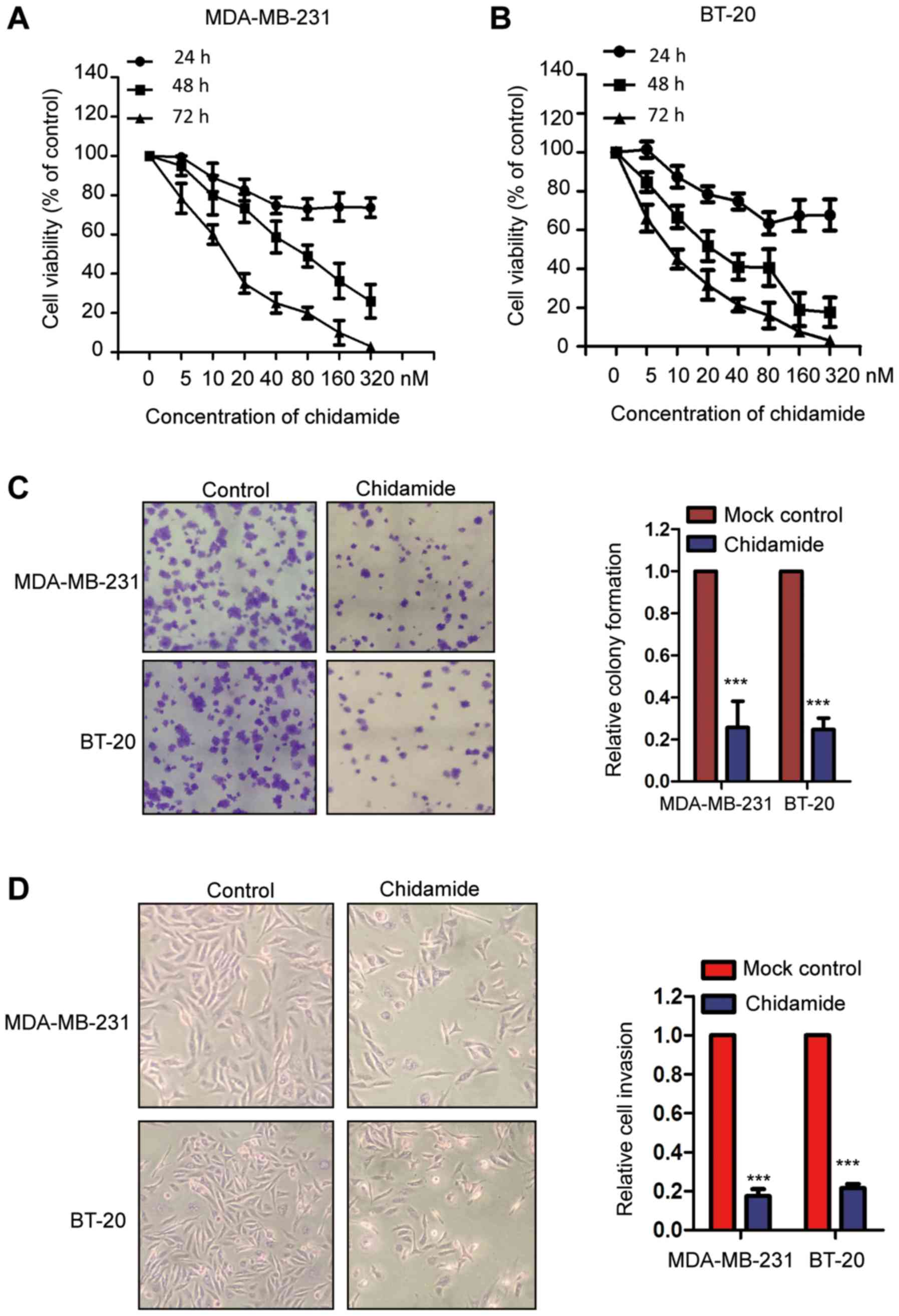
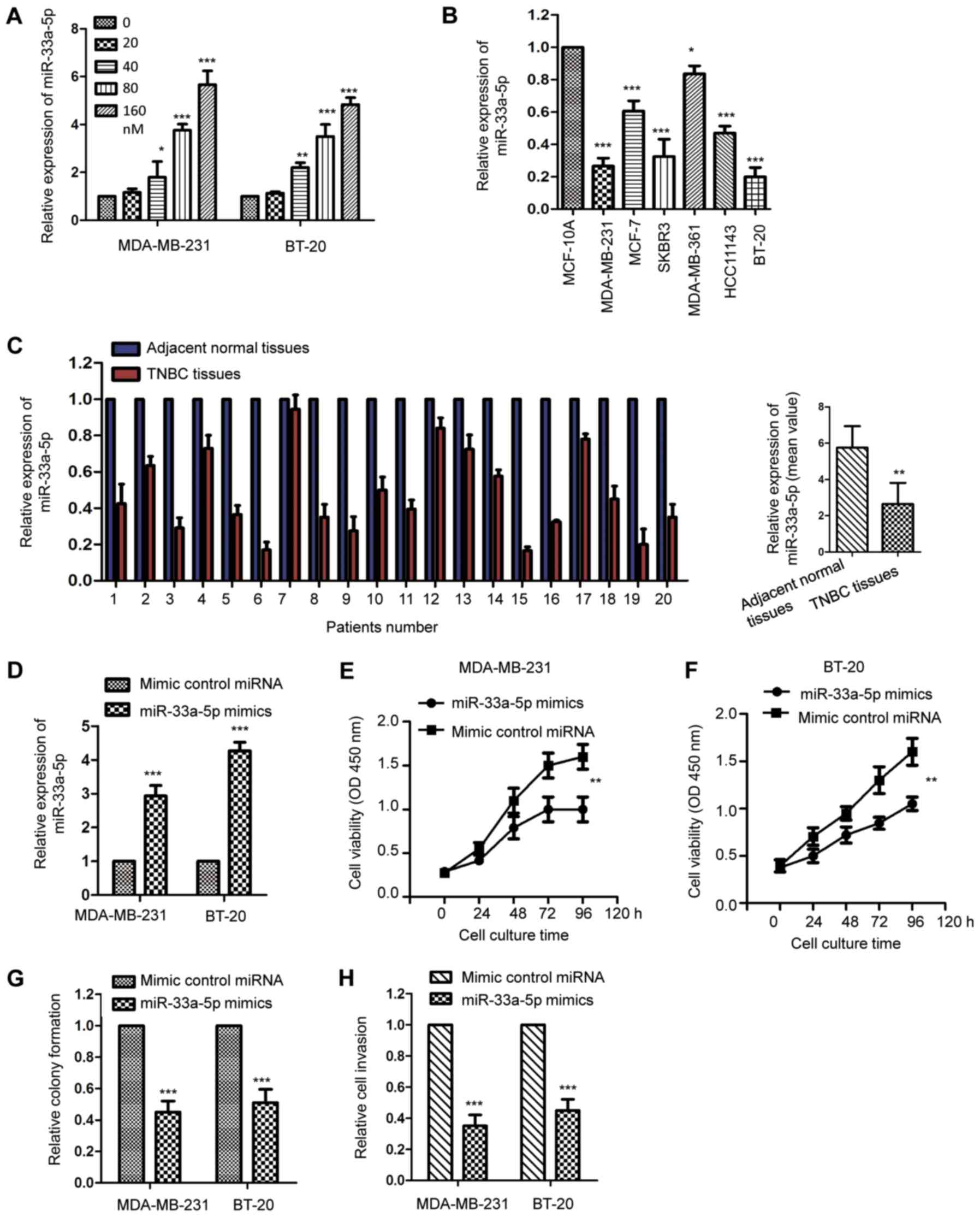
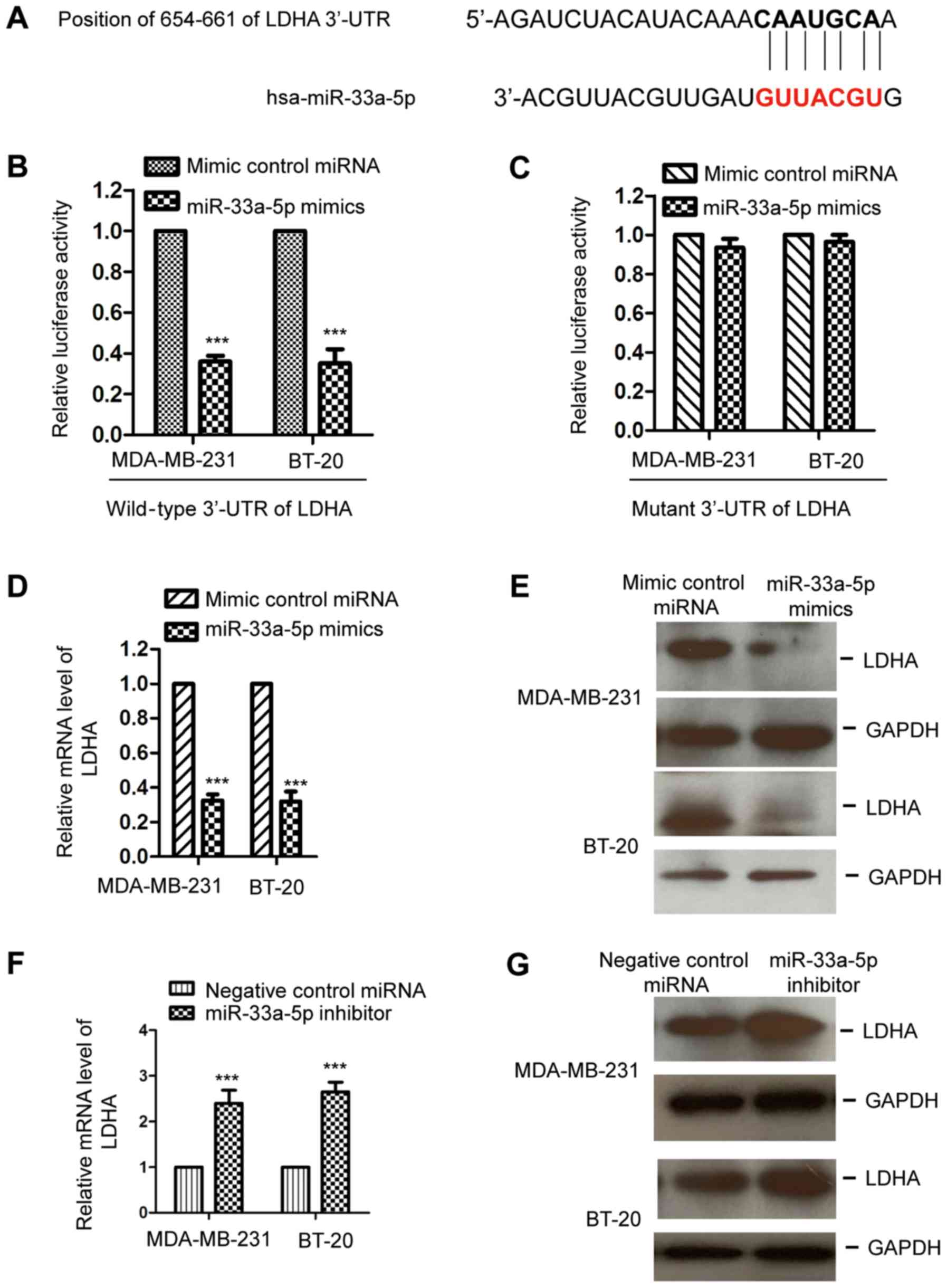
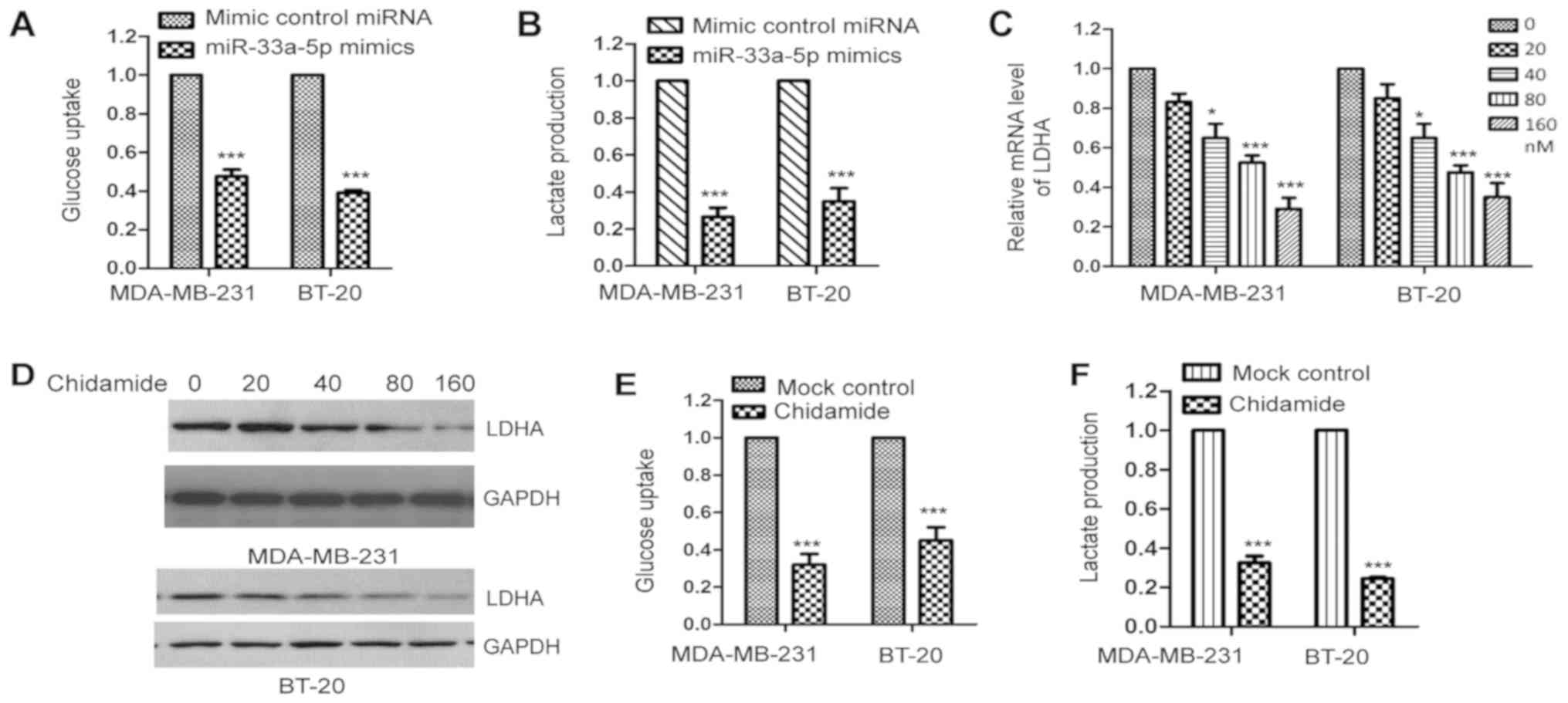
Triple negative breast cancer (TNBC) is one of the most aggressive types of breast cancer and has a poor prognosis. Therefore, the development of novel drugs and understanding the molecular mechanisms that may contribute to the initiation and development of TNBC are urgently required. Chidamide, a histone deacetylase inhibitor, has been reported as possessing anti‑cancer properties in several cancers, however, the function of chidamide in TNBC remains to be elucidated. The present study revealed that chidamide inhibited the proliferation, colony formation and migration of TNBC cells. Experiments investigating the underlying mechanism revealed that chidamide upregulated the expression of microRNA (miR)‑33a‑5p in TNBC cells via RT‑qPCR. Luciferase reporter assay demonstrated that miR‑33a‑5p was bound to the 3'‑untranslated region of lactate dehydrogenase A (LDHA) and decreased the expression of LDHA in TNBC cells. In addition, chidamide suppressed the expression of LDHA and significantly decreased the glycolysis of TNBC cells. Collectively, the results of the present study demonstrated that chidamide reprogramed glucose metabolism, partially by targeting the miR‑33a‑5p/LDHA pathway, in TNBC. These findings indicate that chidamide may be a promising novel drug in the treatment of patients with TNBC.
View Figures

Figure 1

Figure 2

Figure 3

Figure 4

View References

1 

Kandula M, Ch KK and Ys AR: Molecular mechanism and targeted therapy options of triple-negative (ER, PgR, HER-2/neu) breast cancer: Review. World J Oncol. 4:137–141. 2013.PubMed/NCBI

2 

Jamdade VS, Sethi N, Mundhe NA, Kumar P, Lahkar M and Sinha N: Therapeutic targets of triple-negative breast cancer: A review. Br J Pharmacol. 172:4228–4237. 2015. View Article : Google Scholar : PubMed/NCBI

3 

Zeichner SB, Terawaki H and Gogineni K: A Review of systemic treatment in metastatic triple-negative breast cancer. Breast Cancer (Auckl). 10:25–36. 2016.PubMed/NCBI

4 

Grubb W, Young R, Efird J, Jindal C and Biswas T: Local therapy for triple-negative breast cancer: A comprehensive review. Future Oncol. 13:1721–1730. 2017. View Article : Google Scholar : PubMed/NCBI

5 

Liu Z, Gao Y and Li X: Cancer epigenetics and the potential of epigenetic drugs for treating solid tumors. Exp Rev Anticancer Ther. 2018.(Epud ahead of print).

6 

Perri F, Longo F, Giuliano M, Sabbatino F, Favia G, Ionna F, Addeo R, Della Vittoria Scarpati G, Di Lorenzo G and Pisconti S: Epigenetic control of gene expression: Potential implications for cancer treatment. Crit Rev Oncol Hematol. 111:166–172. 2017. View Article : Google Scholar : PubMed/NCBI

7 

Haberland M, Montgomery RL and Olson EN: The many roles of histone deacetylases in development and physiology: Implications for disease and therapy. Nat Rev Genet. 10:32–42. 2009. View Article : Google Scholar : PubMed/NCBI

8 

Mei S, Ho AD and Mahlknecht U: Role of histone deacetylase inhibitors in the treatment of cancer (Review). Int J Oncol. 25:1509–1519. 2004.PubMed/NCBI

9 

Bruserud O, Stapnes C, Ersvaer E, Gjertsen BT and Ryningen A: Histone deacetylase inhibitors in cancer treatment: A review of the clinical toxicity and the modulation of gene expression in cancer cell. Curr Pharm Biotechnol. 8:388–400. 2007. View Article : Google Scholar : PubMed/NCBI

10 

Hrabeta J, Stiborova M, Adam V, Kizek R and Eckschlager T: Histone deacetylase inhibitors in cancer therapy. A review. Biomed Pap Med Fac Univ Palacky Olomouc Czech Repub. 158:161–169. 2014. View Article : Google Scholar : PubMed/NCBI

11 

Valente S and Mai A: Small-molecule inhibitors of histone deacetylase for the treatment of cancer and non-cancer diseases: A patent review (2011–2013). Expert Opin Ther Pat. 24:401–415. 2014. View Article : Google Scholar : PubMed/NCBI

12 

Ali SR, Humphreys KJ, McKinnon RA and Michael MZ: Impact of histone deacetylase inhibitors on microRNA expression and cancer therapy: A review. Drug Dev Res. 76:296–317. 2015. View Article : Google Scholar : PubMed/NCBI

13 

Hiriyan J, Shivarudraiah P, Gavara G, Annamalai P, Natesan S, Sambasivam G and Sukumaran SK: Discovery of PAT-1102, a novel, potent and orally active histone deacetylase inhibitor with antitumor activity in cancer mouse models. Anticancer Res. 35:229–237. 2015.PubMed/NCBI

14 

Min A, Im SA, Kim DK, Song SH, Kim HJ, Lee KH, Kim TY, Han SW, Oh DY, Kim TY, et al: Histone deacetylase inhibitor, suberoylanilide hydroxamic acid (SAHA), enhances anti-tumor effects of the poly (ADP-ribose) polymerase (PARP) inhibitor olaparib in triple-negative breast cancer cells. Breast Cancer Res. 17:332015. View Article : Google Scholar : PubMed/NCBI

15 

Schech A, Kazi A, Yu S, Shah P and Sabnis G: Histone deacetylase inhibitor entinostat inhibits tumor-initiating cells in Triple-negative breast cancer Cells. Mol Cancer Ther. 14:1848–1857. 2015. View Article : Google Scholar : PubMed/NCBI

16 

Yang L, Liang Q, Shen K, Ma L, An N, Deng W, Fei Z and Liu J: A novel class I histone deacetylase inhibitor, I-7ab, induces apoptosis and arrests cell cycle progression in human colorectal cancer cells. Biomed Pharmacother. 71:70–78. 2015. View Article : Google Scholar : PubMed/NCBI

17 

Zhong L, Zhou S, Tong R, Shi J, Bai L, Zhu Y, Duan X, Liu W, Bao J, Su L and Peng Q: Preclinical assessment of histone deacetylase inhibitor quisinostat as a therapeutic agent against esophageal squamous cell carcinoma. Invest New Drugs. Aug 31–2018.(Epub ahead of print). doi: 10.1007/s10637-018-0651-4. View Article : Google Scholar

18 

Connolly RM, Rudek MA and Piekarz R: Entinostat: A promising treatment option for patients with advanced breast cancer. Future Oncol. 13:1137–1148. 2017. View Article : Google Scholar : PubMed/NCBI

19 

Liu L, Chen B, Qin S, Li S, He X, Qiu S, Zhao W and Zhao H: A novel histone deacetylase inhibitor Chidamide induces apoptosis of human colon cancer cells. Biochem Biophys Res Commun. 392:190–195. 2010. View Article : Google Scholar : PubMed/NCBI

20 

Qiao Z, Ren S, Li W, Wang X, He M, Guo Y, Sun L, He Y, Ge Y and Yu Q: Chidamide, a novel histone deacetylase inhibitor, synergistically enhances gemcitabine cytotoxicity in pancreatic cancer cells. Biochem Biophys Res Commun. 434:95–101. 2013. View Article : Google Scholar : PubMed/NCBI

21 

Zhou Y, Pan DS, Shan S, Zhu JZ, Zhang K, Yue XP, Nie LP, Wan J, Lu XP, Zhang W and Ning ZQ: Non-toxic dose chidamide synergistically enhances platinum-induced DNA damage responses and apoptosis in non-small-cell lung cancer cells. Biomed Pharmacother. 68:483–491. 2014. View Article : Google Scholar : PubMed/NCBI

22 

Zhao B and He T: Chidamide, a histone deacetylase inhibitor, functions as a tumor inhibitor by modulating the ratio of Bax/Bcl-2 and P21 in pancreatic cancer. Oncol Rep. 33:304–310. 2015. View Article : Google Scholar : PubMed/NCBI

23 

Zhou J, Zhang C, Sui X, Cao S, Tang F, Sun S, Wang S and Chen B: Histone deacetylase inhibitor chidamide induces growth inhibition and apoptosis in NK/T lymphoma cells through ATM-Chk2-p53-p21 signalling pathway. Invest New Drugs. 36:571–580. 2018. View Article : Google Scholar : PubMed/NCBI

24 

Bartel DP: MicroRNAs: Genomics, biogenesis, mechanism, and function. Cell. 116:281–297. 2004. View Article : Google Scholar : PubMed/NCBI

25 

Fabian MR, Sonenberg N and Filipowicz W: Regulation of mRNA translation and stability by microRNAs. Annu Rev Biochem. 79:351–379. 2010. View Article : Google Scholar : PubMed/NCBI

26 

Mohr AM and Mott JL: Overview of microRNA biology. Semin Liver Dis. 35:3–11. 2015. View Article : Google Scholar : PubMed/NCBI

27 

Liu Y, Usa K, Wang F, Liu P, Geurts AM, Li J, Williams AM, Regner KR, Kong Y, Liu H, et al: MicroRNA-214-3p in the kidney contributes to the development of hypertension. J Am Soc Nephrol. 29:2518–2528. 2018. View Article : Google Scholar : PubMed/NCBI

28 

Baker MA, Wang F, Liu Y, Kriegel AJ, Geurts AM, Usa K, Xue H, Wang D, Kong Y and Liang M: miR-192-5p in the kidney protects against the development of hypertension. Hypertension. 73:399–406. 2019. View Article : Google Scholar : PubMed/NCBI

29 

Kwak PB, Iwasaki S and Tomari Y: The microRNA pathway and cancer. Cancer Sci. 101:2309–2315. 2010. View Article : Google Scholar : PubMed/NCBI

30 

Farazi TA, Spitzer JI, Morozov P and Tuschl T: miRNAs in human cancer. J Pathol. 223:102–115. 2011. View Article : Google Scholar : PubMed/NCBI

31 

Zheng J: Energy metabolism of cancer: Glycolysis versus oxidative phosphorylation (Review). Oncol Lett. 4:1151–1157. 2012. View Article : Google Scholar : PubMed/NCBI

32 

Akram M: Mini-review on glycolysis and cancer. J Cancer Educ. 28:454–457. 2013. View Article : Google Scholar : PubMed/NCBI

33 

Li XB, Gu JD and Zhou QH: Review of aerobic glycolysis and its key enzymes-new targets for lung cancer therapy. Thorac Cancer. 6:17–24. 2015. View Article : Google Scholar : PubMed/NCBI

34 

Hua S, Liu C, Liu L and Wu D: miR-142-3p inhibits aerobic glycolysis and cell proliferation in hepatocellular carcinoma via targeting LDHA. Biochem Biophys Res Commun. 496:947–954. 2018. View Article : Google Scholar : PubMed/NCBI

35 

Li L, Kang L, Zhao W, Feng Y, Liu W, Wang T, Mai H, Huang J, Chen S, Liang Y, et al: miR-30a-5p suppresses breast tumor growth and metastasis through inhibition of LDHA-mediated Warburg effect. Cancer Lett. 400:89–98. 2017. View Article : Google Scholar : PubMed/NCBI

36 

Zhang J, Wang D, Xiong J, Chen L and Huang J: MicroRNA-33a-5p suppresses growth of osteosarcoma cells and is downregulated in human osteosarcoma. Oncol Lett. 10:2135–2141. 2015. View Article : Google Scholar : PubMed/NCBI

37 

Cao K, Li J, Chen J, Qian L, Wang A, Chen X, Xiong W, Tang J, Tang S, Chen Y, et al: microRNA-33a-5p increases radiosensitivity by inhibiting glycolysis in melanoma. Oncotarget. 8:83660–83672. 2017.PubMed/NCBI

38 

Tsilimigras DI, Ntanasis-Stathopoulos I, Moris D, Spartalis E and Pawlik TM: Histone deacetylase inhibitors in hepatocellular carcinoma: A therapeutic perspective. Surg Oncol. 27:611–618. 2018. View Article : Google Scholar : PubMed/NCBI

39 

Lu X, Ning Z, Li Z, Cao H and Wang X: Development of chidamide for peripheral T-cell lymphoma, the first orphan drug approved in China. Intractable Rare Dis Res. 5:185–191. 2016. View Article : Google Scholar : PubMed/NCBI

40 

Shi Y, Jia B, Xu W, Li W, Liu T, Liu P, Zhao W, Zhang H, Sun X, Yang H, et al: Chidamide in relapsed or refractory peripheral T cell lymphoma: A multicenter real-world study in China. J Hematol Oncol. 10:692017. View Article : Google Scholar : PubMed/NCBI

41 

Wang S, Guo W, Wan X, Teng Y, Zhou X and Bai O: Exploring the effect of chidamide on blastic plasmacytoid dendritic cell neoplasm: A case report and literature review. Ther Clin Risk Manag. 14:47–51. 2018. View Article : Google Scholar : PubMed/NCBI

42 

Gentilin E, Degli Uberti E and Zatelli MC: Strategies to use microRNAs as therapeutic targets. Best Prac Res Clin Endocrinol Metab. 30:629–639. 2016. View Article : Google Scholar

43 

Hosseinahli N, Aghapour M, Duijf PHG and Baradaran B: Treating cancer with microRNA replacement therapy: A literature review. J Cell Physiol. 233:5574–5588. 2018. View Article : Google Scholar : PubMed/NCBI

44 

Pan J, Zhou C, Zhao X, He J, Tian H, Shen W, Han Y, Chen J, Fang S, Meng X, et al: A two-miRNA signature (miR-33a-5p and miR-128-3p) in whole blood as potential biomarker for early diagnosis of lung cancer. Sci Rep. 8:166992018. View Article : Google Scholar : PubMed/NCBI

45 

Huang X, Li X and Xie X, Ye F, Chen B, Song C, Tang H and Xie X: High expressions of LDHA and AMPK as prognostic biomarkers for breast cancer. Breast. 30:39–46. 2016. View Article : Google Scholar : PubMed/NCBI

Related Articles

  • Abstract
  • View
  • Download
  • Twitter
Copy and paste a formatted citation
Spandidos Publications style
Bai X, Jiang H, Han G and He Q: Chidamide suppresses the glycolysis of triple negative breast cancer cells partially by targeting the miR‑33a‑5p‑LDHA axis. Mol Med Rep 20: 1857-1865, 2019.
APA
Bai, X., Jiang, H., Han, G., & He, Q. (2019). Chidamide suppresses the glycolysis of triple negative breast cancer cells partially by targeting the miR‑33a‑5p‑LDHA axis. Molecular Medicine Reports, 20, 1857-1865. https://doi.org/10.3892/mmr.2019.10425
MLA
Bai, X., Jiang, H., Han, G., He, Q."Chidamide suppresses the glycolysis of triple negative breast cancer cells partially by targeting the miR‑33a‑5p‑LDHA axis". Molecular Medicine Reports 20.2 (2019): 1857-1865.
Chicago
Bai, X., Jiang, H., Han, G., He, Q."Chidamide suppresses the glycolysis of triple negative breast cancer cells partially by targeting the miR‑33a‑5p‑LDHA axis". Molecular Medicine Reports 20, no. 2 (2019): 1857-1865. https://doi.org/10.3892/mmr.2019.10425
Copy and paste a formatted citation
x
Spandidos Publications style
Bai X, Jiang H, Han G and He Q: Chidamide suppresses the glycolysis of triple negative breast cancer cells partially by targeting the miR‑33a‑5p‑LDHA axis. Mol Med Rep 20: 1857-1865, 2019.
APA
Bai, X., Jiang, H., Han, G., & He, Q. (2019). Chidamide suppresses the glycolysis of triple negative breast cancer cells partially by targeting the miR‑33a‑5p‑LDHA axis. Molecular Medicine Reports, 20, 1857-1865. https://doi.org/10.3892/mmr.2019.10425
MLA
Bai, X., Jiang, H., Han, G., He, Q."Chidamide suppresses the glycolysis of triple negative breast cancer cells partially by targeting the miR‑33a‑5p‑LDHA axis". Molecular Medicine Reports 20.2 (2019): 1857-1865.
Chicago
Bai, X., Jiang, H., Han, G., He, Q."Chidamide suppresses the glycolysis of triple negative breast cancer cells partially by targeting the miR‑33a‑5p‑LDHA axis". Molecular Medicine Reports 20, no. 2 (2019): 1857-1865. https://doi.org/10.3892/mmr.2019.10425
Follow us
  • Twitter
  • LinkedIn
  • Facebook
About
  • Spandidos Publications
  • Careers
  • Cookie Policy
  • Privacy Policy
How can we help?
  • Help
  • Live Chat
  • Contact
  • Email to our Support Team