Spandidos Publications Logo
  • About
    • About Spandidos
    • Aims and Scopes
    • Abstracting and Indexing
    • Editorial Policies
    • Reprints and Permissions
    • Job Opportunities
    • Terms and Conditions
    • Contact
  • Journals
    • All Journals
    • Oncology Letters
      • Oncology Letters
      • Information for Authors
      • Editorial Policies
      • Editorial Board
      • Aims and Scope
      • Abstracting and Indexing
      • Bibliographic Information
      • Archive
    • International Journal of Oncology
      • International Journal of Oncology
      • Information for Authors
      • Editorial Policies
      • Editorial Board
      • Aims and Scope
      • Abstracting and Indexing
      • Bibliographic Information
      • Archive
    • Molecular and Clinical Oncology
      • Molecular and Clinical Oncology
      • Information for Authors
      • Editorial Policies
      • Editorial Board
      • Aims and Scope
      • Abstracting and Indexing
      • Bibliographic Information
      • Archive
    • Experimental and Therapeutic Medicine
      • Experimental and Therapeutic Medicine
      • Information for Authors
      • Editorial Policies
      • Editorial Board
      • Aims and Scope
      • Abstracting and Indexing
      • Bibliographic Information
      • Archive
    • International Journal of Molecular Medicine
      • International Journal of Molecular Medicine
      • Information for Authors
      • Editorial Policies
      • Editorial Board
      • Aims and Scope
      • Abstracting and Indexing
      • Bibliographic Information
      • Archive
    • Biomedical Reports
      • Biomedical Reports
      • Information for Authors
      • Editorial Policies
      • Editorial Board
      • Aims and Scope
      • Abstracting and Indexing
      • Bibliographic Information
      • Archive
    • Oncology Reports
      • Oncology Reports
      • Information for Authors
      • Editorial Policies
      • Editorial Board
      • Aims and Scope
      • Abstracting and Indexing
      • Bibliographic Information
      • Archive
    • Molecular Medicine Reports
      • Molecular Medicine Reports
      • Information for Authors
      • Editorial Policies
      • Editorial Board
      • Aims and Scope
      • Abstracting and Indexing
      • Bibliographic Information
      • Archive
    • World Academy of Sciences Journal
      • World Academy of Sciences Journal
      • Information for Authors
      • Editorial Policies
      • Editorial Board
      • Aims and Scope
      • Abstracting and Indexing
      • Bibliographic Information
      • Archive
    • International Journal of Functional Nutrition
      • International Journal of Functional Nutrition
      • Information for Authors
      • Editorial Policies
      • Editorial Board
      • Aims and Scope
      • Abstracting and Indexing
      • Bibliographic Information
      • Archive
    • International Journal of Epigenetics
      • International Journal of Epigenetics
      • Information for Authors
      • Editorial Policies
      • Editorial Board
      • Aims and Scope
      • Abstracting and Indexing
      • Bibliographic Information
      • Archive
    • Medicine International
      • Medicine International
      • Information for Authors
      • Editorial Policies
      • Editorial Board
      • Aims and Scope
      • Abstracting and Indexing
      • Bibliographic Information
      • Archive
  • Articles
  • Information
    • Information for Authors
    • Information for Reviewers
    • Information for Librarians
    • Information for Advertisers
    • Conferences
  • Language Editing
Spandidos Publications Logo
  • About
    • About Spandidos
    • Aims and Scopes
    • Abstracting and Indexing
    • Editorial Policies
    • Reprints and Permissions
    • Job Opportunities
    • Terms and Conditions
    • Contact
  • Journals
    • All Journals
    • Biomedical Reports
      • Information for Authors
      • Editorial Policies
      • Editorial Board
      • Aims and Scope
      • Abstracting and Indexing
      • Bibliographic Information
      • Archive
    • Experimental and Therapeutic Medicine
      • Information for Authors
      • Editorial Policies
      • Editorial Board
      • Aims and Scope
      • Abstracting and Indexing
      • Bibliographic Information
      • Archive
    • International Journal of Epigenetics
      • Information for Authors
      • Editorial Policies
      • Editorial Board
      • Aims and Scope
      • Abstracting and Indexing
      • Bibliographic Information
      • Archive
    • International Journal of Functional Nutrition
      • Information for Authors
      • Editorial Policies
      • Editorial Board
      • Aims and Scope
      • Abstracting and Indexing
      • Bibliographic Information
      • Archive
    • International Journal of Molecular Medicine
      • Information for Authors
      • Editorial Policies
      • Editorial Board
      • Aims and Scope
      • Abstracting and Indexing
      • Bibliographic Information
      • Archive
    • International Journal of Oncology
      • Information for Authors
      • Editorial Policies
      • Editorial Board
      • Aims and Scope
      • Abstracting and Indexing
      • Bibliographic Information
      • Archive
    • Medicine International
      • Information for Authors
      • Editorial Policies
      • Editorial Board
      • Aims and Scope
      • Abstracting and Indexing
      • Bibliographic Information
      • Archive
    • Molecular and Clinical Oncology
      • Information for Authors
      • Editorial Policies
      • Editorial Board
      • Aims and Scope
      • Abstracting and Indexing
      • Bibliographic Information
      • Archive
    • Molecular Medicine Reports
      • Information for Authors
      • Editorial Policies
      • Editorial Board
      • Aims and Scope
      • Abstracting and Indexing
      • Bibliographic Information
      • Archive
    • Oncology Letters
      • Information for Authors
      • Editorial Policies
      • Editorial Board
      • Aims and Scope
      • Abstracting and Indexing
      • Bibliographic Information
      • Archive
    • Oncology Reports
      • Information for Authors
      • Editorial Policies
      • Editorial Board
      • Aims and Scope
      • Abstracting and Indexing
      • Bibliographic Information
      • Archive
    • World Academy of Sciences Journal
      • Information for Authors
      • Editorial Policies
      • Editorial Board
      • Aims and Scope
      • Abstracting and Indexing
      • Bibliographic Information
      • Archive
  • Articles
  • Information
    • For Authors
    • For Reviewers
    • For Librarians
    • For Advertisers
    • Conferences
  • Language Editing
Login Register Submit
  • This site uses cookies
  • You can change your cookie settings at any time by following the instructions in our Cookie Policy. To find out more, you may read our Privacy Policy.

    I agree
Search articles by DOI, keyword, author or affiliation
Search
Advanced Search
presentation
Molecular Medicine Reports
Join Editorial Board Propose a Special Issue
Print ISSN: 1791-2997 Online ISSN: 1791-3004
Journal Cover
December-2020 Volume 22 Issue 6

Full Size Image

Sign up for eToc alerts
Recommend to Library

Journals

International Journal of Molecular Medicine

International Journal of Molecular Medicine

International Journal of Molecular Medicine is an international journal devoted to molecular mechanisms of human disease.

International Journal of Oncology

International Journal of Oncology

International Journal of Oncology is an international journal devoted to oncology research and cancer treatment.

Molecular Medicine Reports

Molecular Medicine Reports

Covers molecular medicine topics such as pharmacology, pathology, genetics, neuroscience, infectious diseases, molecular cardiology, and molecular surgery.

Oncology Reports

Oncology Reports

Oncology Reports is an international journal devoted to fundamental and applied research in Oncology.

Experimental and Therapeutic Medicine

Experimental and Therapeutic Medicine

Experimental and Therapeutic Medicine is an international journal devoted to laboratory and clinical medicine.

Oncology Letters

Oncology Letters

Oncology Letters is an international journal devoted to Experimental and Clinical Oncology.

Biomedical Reports

Biomedical Reports

Explores a wide range of biological and medical fields, including pharmacology, genetics, microbiology, neuroscience, and molecular cardiology.

Molecular and Clinical Oncology

Molecular and Clinical Oncology

International journal addressing all aspects of oncology research, from tumorigenesis and oncogenes to chemotherapy and metastasis.

World Academy of Sciences Journal

World Academy of Sciences Journal

Multidisciplinary open-access journal spanning biochemistry, genetics, neuroscience, environmental health, and synthetic biology.

International Journal of Functional Nutrition

International Journal of Functional Nutrition

Open-access journal combining biochemistry, pharmacology, immunology, and genetics to advance health through functional nutrition.

International Journal of Epigenetics

International Journal of Epigenetics

Publishes open-access research on using epigenetics to advance understanding and treatment of human disease.

Medicine International

Medicine International

An International Open Access Journal Devoted to General Medicine.

Journal Cover
December-2020 Volume 22 Issue 6

Full Size Image

Sign up for eToc alerts
Recommend to Library

  • Article
  • Citations
    • Cite This Article
    • Download Citation
    • Create Citation Alert
    • Remove Citation Alert
    • Cited By
  • Similar Articles
    • Related Articles (in Spandidos Publications)
    • Similar Articles (Google Scholar)
    • Similar Articles (PubMed)
  • Download PDF
  • Download XML
  • View XML
Article Open Access

S100A8 and S100A9 promote endothelial cell activation through the RAGE‑mediated mammalian target of rapamycin complex 2 pathway

  • Authors:
    • Xiang Zhong
    • Fengwen Xie
    • Li Chen
    • Zhixing Liu
    • Qun Wang
  • View Affiliations / Copyright

    Affiliations: Department of Cardiac Surgery, The First Affiliated Hospital of Nanchang University, Nanchang, Jiangxi 330006, P.R. China, Department of Ultrasound, The First Affiliated Hospital of Nanchang University, Nanchang, Jiangxi 330006, P.R. China
    Copyright: © Zhong et al. This is an open access article distributed under the terms of Creative Commons Attribution License.
  • Pages: 5293-5303
    |
    Published online on: October 14, 2020
       https://doi.org/10.3892/mmr.2020.11595
  • Expand metrics +
Metrics: Total Views: 0 (Spandidos Publications: | PMC Statistics: )
Metrics: Total PDF Downloads: 0 (Spandidos Publications: | PMC Statistics: )
Cited By (CrossRef): 0 citations Loading Articles...

This article is mentioned in:


Abstract

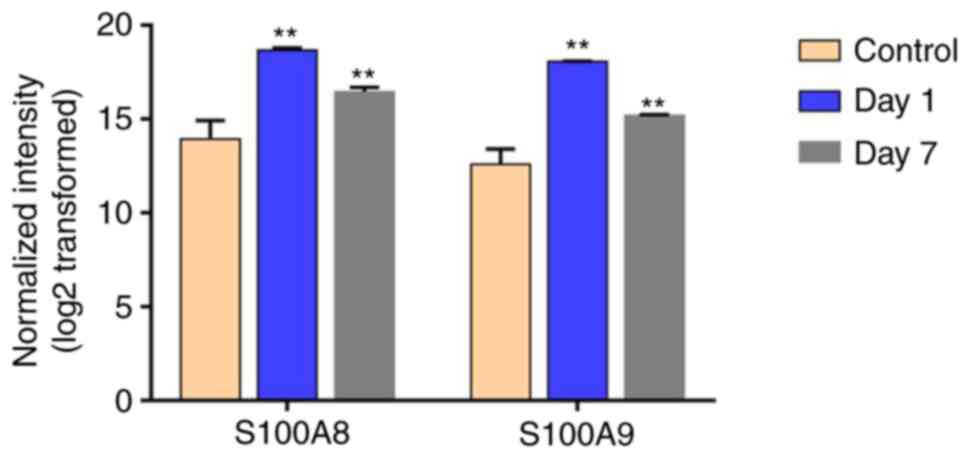
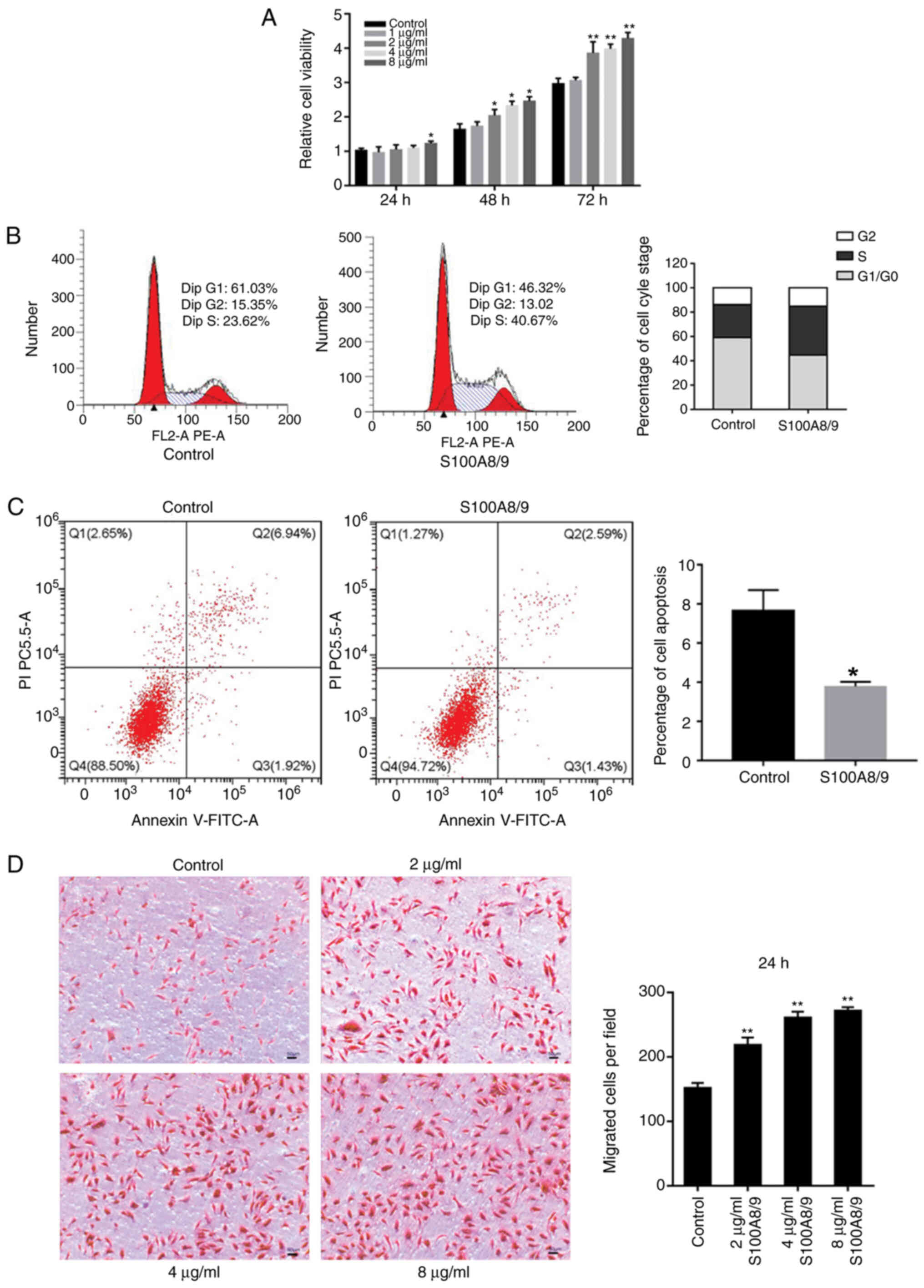
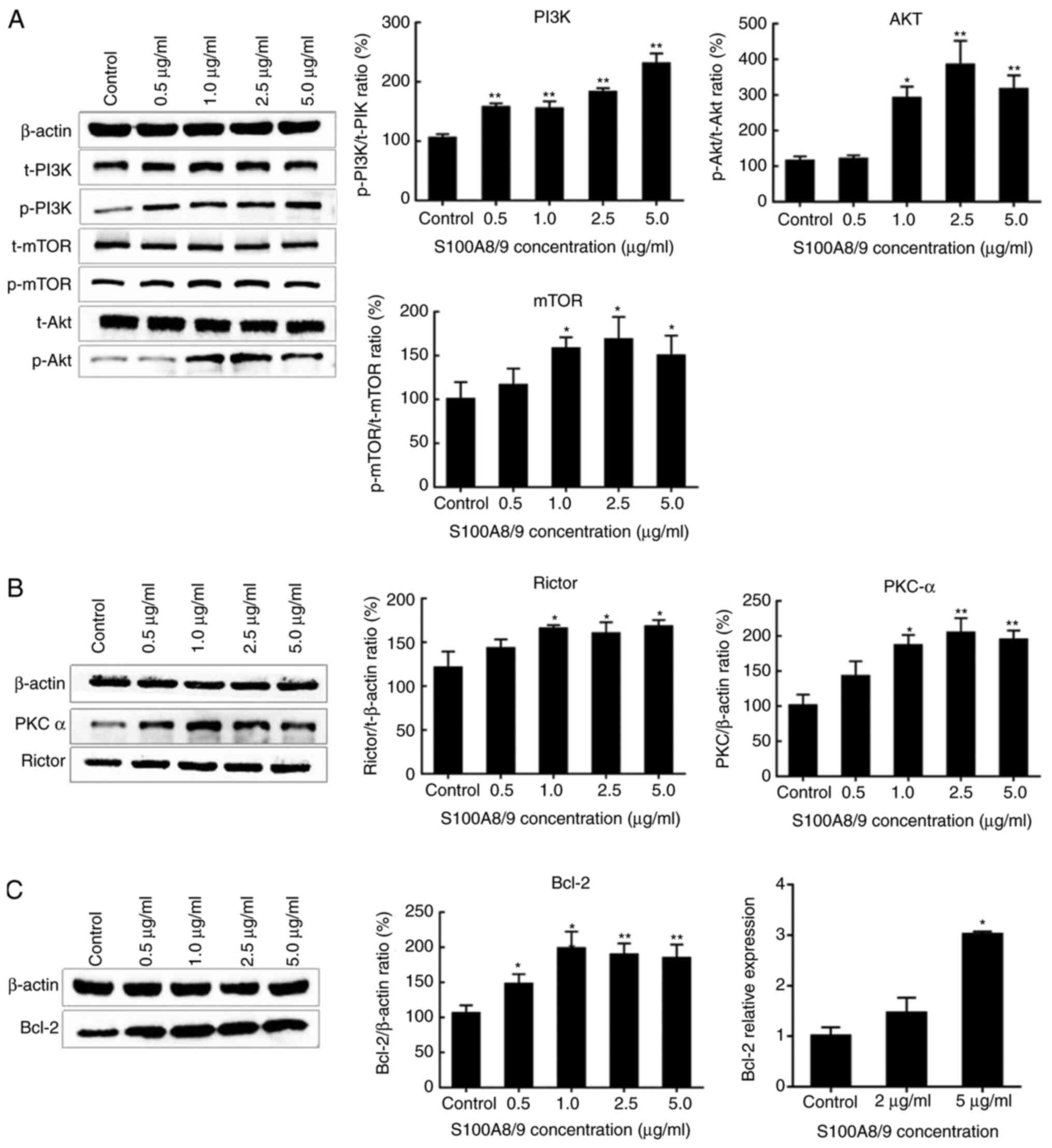
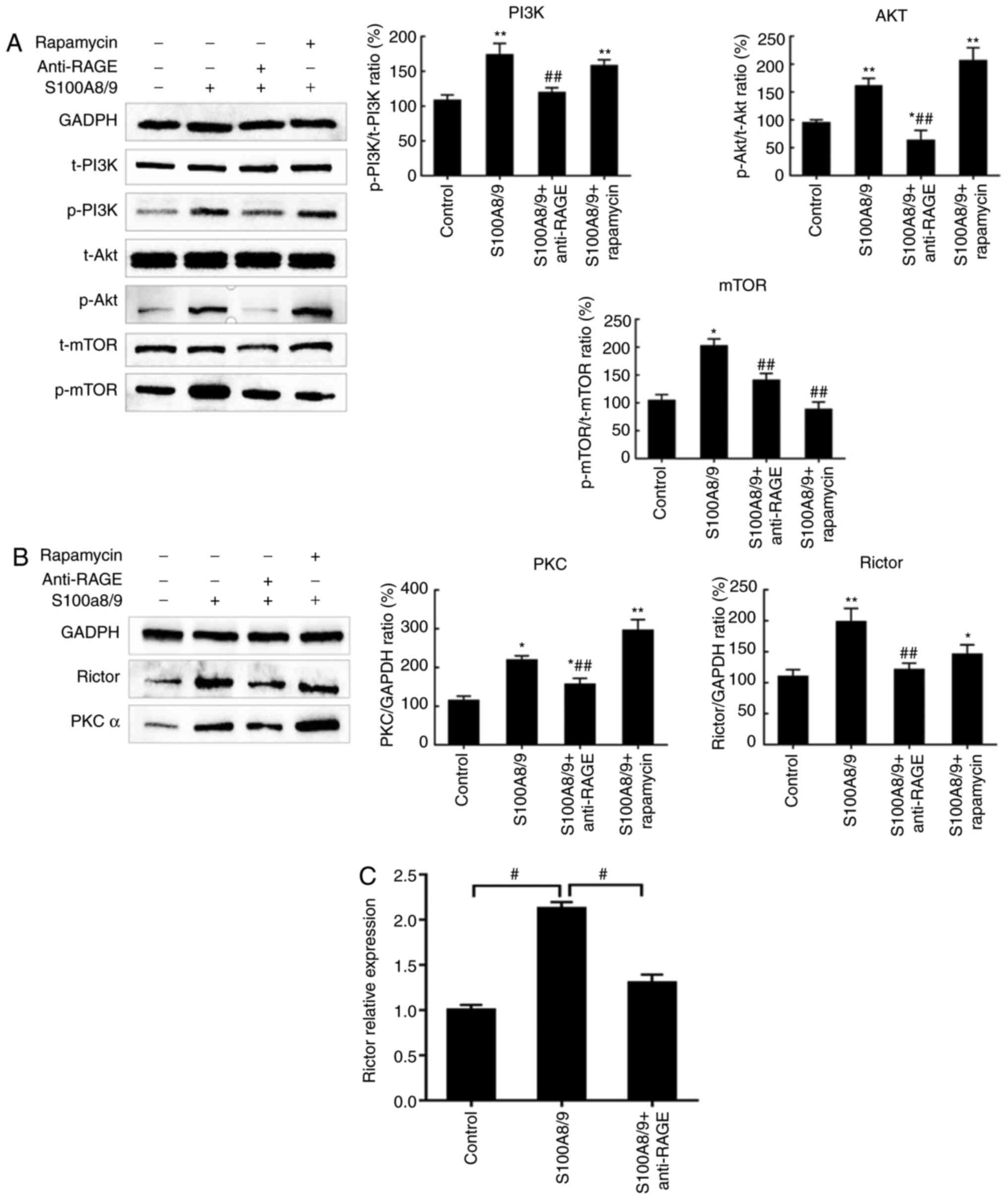
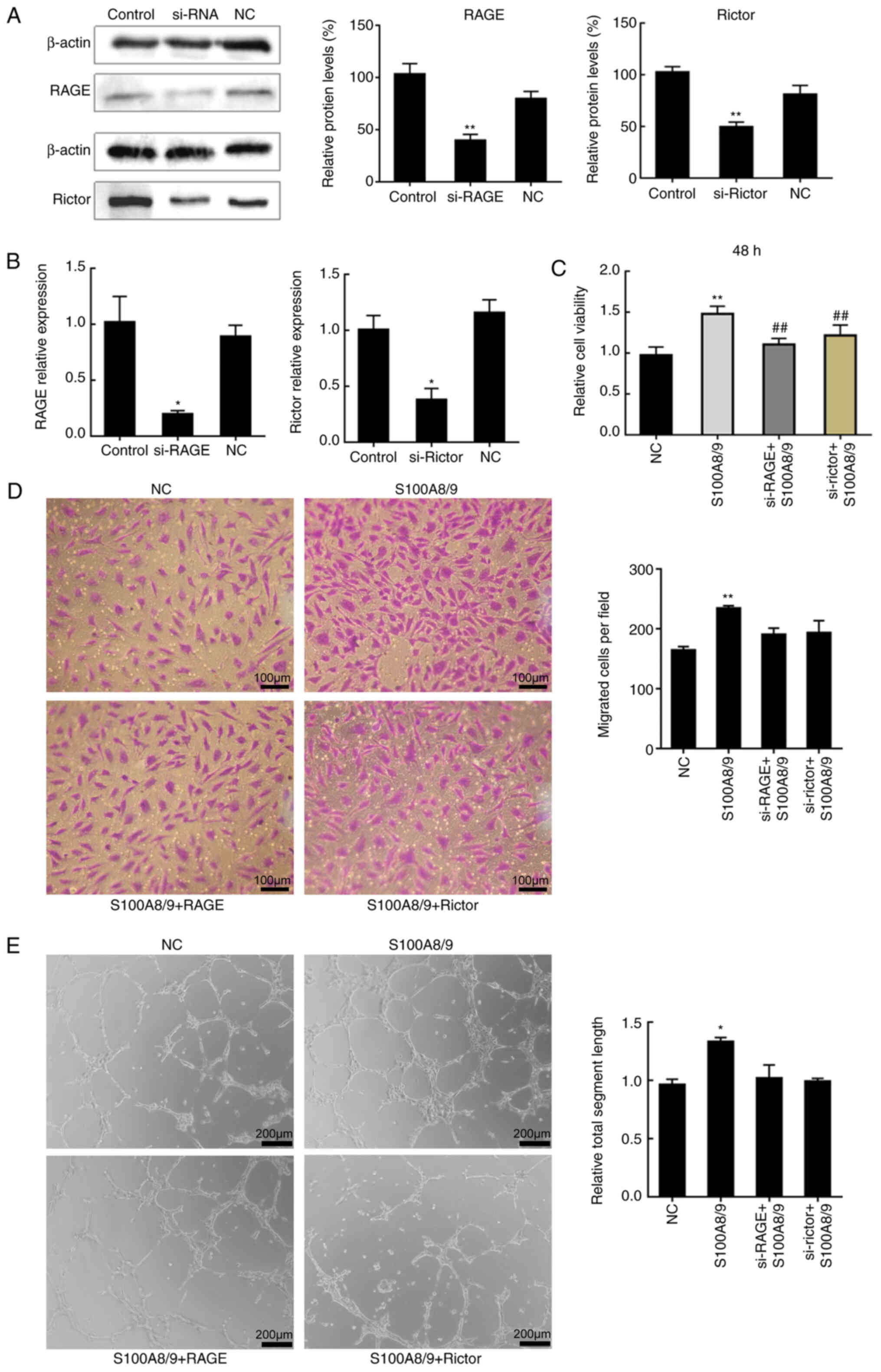
S100 calcium binding protein A8 (S100A8) and A9 (S100A9) belong to the S100 family of calcium‑binding proteins and have important roles in inflammation. They increase endothelial cell proliferation, thereby affecting inflammation, angiogenesis and tumorigenesis. However, the mechanism of action of S100A8/9 in endothelial cells needs further study. Therefore, the present study sought to investigate the effects of S100A8/9 on the proliferation and angiogenesis of human umbilical vein endothelial cells (HUVECs) and their mechanism of action. The viability of HUVECs was determined through a Cell Counting Kit‑8 assay. The effect of S100A8/9 on the proliferation of HUVECs was detected by flow cytometry. Migration was evaluated by a Transwell migration assay. Apoptosis was evaluated by Annexin V‑FITC and PI staining via flow cytometry. Western blot analysis and reverse transcription‑quantitative polymerase chain reaction assays were performed to evaluate the activation of the phosphatidylinositol 3‑phosphate kinase (PI3K)/Akt/mTOR pathway and mTOR complex 2 (mTORC2). We previously confirmed that S100A8/9 were consistently overexpressed at 1 and 7 days post‑surgery in a rabbit vein graft model, which is the period when apoptosis changes to proliferation in neointimal hyperplasia. In the present study, proliferation, viability and migration were increased after treating HUVECs with S100A8/9. S100A8/9 stimulated the PI3K/Akt/mTOR pathway and mTORC2, which was significantly suppressed by a receptor for advanced glycation end products (RAGE)‑blocking antibody. Furthermore, depleting expression of RAGE or mTORC2 protein components (rapamycin‑insensitive companion of mTOR) by small interfering RNA was found to reduce the cell viability, migration and angiogenesis of S100A8/9‑treated HUVECs. The development of neointimal hyperplasia is a complex process initiated by damage to endothelial cells. In conclusion, S100A8/9 has an important role in intimal hyperplasia by promoting cell growth and angiogenesis via RAGE signaling and activation of mTORC2.
View Figures

Figure 1

Figure 2

Figure 3

Figure 4

Figure 5

View References

1 

de Vries MR, Simons KH, Jukema JW, Braun J and Quax PH: Vein graft failure: From pathophysiology to clinical outcomes. Nat Rev Cardiol. 13:451–470. 2016.PubMed/NCBI

2 

Owens CD: Adaptive changes in autogenous vein grafts for arterial reconstruction: Clinical implications. J Vasc Surg. 51:736–746. 2010.PubMed/NCBI

3 

Gasper WJ, Owens CD, Kim JM, Hills N, Belkin M, Creager MA and Conte MS: Thirty-day vein remodeling is predictive of midterm graft patency after lower extremity bypass. J Vasc Surg. 57:9–18. 2013.PubMed/NCBI

4 

Conte MS, Owens CD, Belkin M, Creager MA, Edwards KL, Gasper WJ, Kenagy RD, LeBoeuf RC, Sobel M and Clowes A: A single nucleotide polymorphism in the p27(Kip1) gene is associated with primary patency of lower extremity vein bypass grafts. J Vasc Surg. 57:1179–1185.e1-e2. 2013.PubMed/NCBI

5 

Lu DY, Chen EY, Wong DJ, Yamamoto K, Protack CD, Williams WT, Assi R, Hall MR, Sadaghianloo N and Dardik A: Vein graft adaptation and fistula maturation in the arterial environment. J Surg Res. 188:162–173. 2014.PubMed/NCBI

6 

Hunter MJ and Chazin WJ: High level expression and dimer characterization of the S100 EF-hand proteins, migration inhibitory factor-related proteins 8 and 14. J Biol Chem. 273:12427–12435. 1998.PubMed/NCBI

7 

Boyd JH, Kan B, Roberts H, Wang Y and Walley KR: S100A8 and S100A9 mediate endotoxin-induced cardiomyocyte dysfunction via the receptor for advanced glycation end products. Circ Res. 102:1239–1246. 2008.PubMed/NCBI

8 

Chang CC, Khan I, Tsai KL, Li H, Yang LW, Chou RH and Yu C: Blocking the interaction between S100A9 and RAGE V domain using CHAPS molecule: A novel route to drug development against cell proliferation. Biochim Biophys Acta. 1864:1558–1569. 2016.PubMed/NCBI

9 

Averill MM, Kerkhoff C and Bornfeldt KE: S100A8 and S100A9 in cardiovascular biology and disease. Arterioscler Thromb Vasc Biol. 32:223–229. 2012.PubMed/NCBI

10 

Vogl T, Propper C, Hartmann M, Strey A, Strupat K, van den Bos C, Sorg C and Roth J: S100A12 is expressed exclusively by granulocytes and acts independently from MRP8 and MRP14. J Biol Chem. 274:25291–25296. 1999.PubMed/NCBI

11 

Marenholz I, Heizmann CW and Fritz G: S100 proteins in mouse and man: From evolution to function and pathology (including an update of the nomenclature). Biochem Biophys Res Commun. 322:1111–1122. 2004.PubMed/NCBI

12 

Leclerc E, Fritz G, Vetter SW and Heizmann CW: Binding of S100 proteins to RAGE: An update. Biochim Biophys Acta. 1793:993–1007. 2009.PubMed/NCBI

13 

Donato R, Cannon BR, Sorci G, Riuzzi F, Hsu K, Weber DJ and Geczy CL: Functions of S100 proteins. Curr Mol Med. 13:24–57. 2013.PubMed/NCBI

14 

Gross SR, Sin CG, Barraclough R and Rudland PS: Joining S100 proteins and migration: For better or for worse, in sickness and in health. Cell Mol Life Sci. 71:1551–1579. 2014.PubMed/NCBI

15 

Buyukterzi Z, Can U, Alpaydin S, Guzelant A, Karaarslan S, Kocyigit D and Gurses KM: Enhanced S100A9 and S100A12 expression in acute coronary syndrome. Biomark Med. 11:229–237. 2017.PubMed/NCBI

16 

Wang S, Song R, Wang Z, Jing Z, Wang S and Ma J: S100A8/A9 in Inflammation. Front Immunol. 9:12982018.PubMed/NCBI

17 

Li Y, Chen B, Yang X, Zhang C, Jiao Y, Li P, Liu Y, Li Z, Qiao B, Bond Lau W, et al: S100a8/a9 signaling causes mitochondrial dysfunction and cardiomyocyte death in response to ischemic/reperfusion injury. Circulation. 140:751–764. 2019.PubMed/NCBI

18 

Stocca A, O'Toole D, Hynes N, Hynes SO, Mashayekhi K, McGinley L, O'Connell E, Coleman C, Sultan S, Duffy A, et al: A role for MRP8 in in stent restenosis in diabetes. Atherosclerosis. 221:325–332. 2012.PubMed/NCBI

19 

Li C, Li S, Jia C, Yang L, Song Z and Wang Y: Low concentration of S100A8/9 promotes angiogenesis-related activity of vascular endothelial cells: Bridges among inflammation, angiogenesis, and tumorigenesis? Mediators Inflamm. 2012:2485742012.PubMed/NCBI

20 

Ben Ali W, Bouhout I and Perrault LP: The effect of storage solutions, gene therapy, and antiproliferative agents on endothelial function and saphenous vein graft patency. J Card Surg. 33:235–242. 2018.PubMed/NCBI

21 

Xu X, Chen H, Zhu X, Ma Y, Liu Q, Xue Y, Chu H, Wu W, Wang J and Zou H: S100A9 promotes human lung fibroblast cells activation through receptor for advanced glycation end-product-mediated extracellular-regulated kinase 1/2, mitogen-activated protein-kinase and nuclear factor-κB-dependent pathways. Clin Exp Immunol. 173:523–535. 2013.PubMed/NCBI

22 

Ghavami S, Rashedi I, Dattilo BM, Eshraghi M, Chazin WJ, Hashemi M, Wesselborg S, Kerkhoff C and Los M: S100A8/A9 at low concentration promotes tumor cell growth via RAGE ligation and MAP kinase-dependent pathway. J Leukoc Biol. 83:1484–1492. 2008.PubMed/NCBI

23 

Owens CD, Gasper WJ, Rahman AS and Conte MS: Vein graft failure. J Vasc Surg. 61:203–216. 2015.PubMed/NCBI

24 

Jaffe EA, Nachman RL, Becker CG and Minick CR: Culture of human endothelial cells derived from umbilical veins. Identification by morphologic and immunologic criteria. J Clin Invest. 52:2745–2756. 1973.PubMed/NCBI

25 

Livak KJ and Schmittgen TD: Analysis of relative gene expression data using real-time quantitative PCR and the 2(-Delta Delta C(T)) method. Methods. 25:402–408. 2001.PubMed/NCBI

26 

Wang Q, Wan L, Liu L and Liu J: Role of the mTOR signalling pathway in experimental rabbit vein grafts. Heart Lung Circ. 25:1124–1132. 2016.PubMed/NCBI

27 

Ziegler ME, Hatch MM, Wu N, Muawad SA and Hughes CC: mTORC2 mediates CXCL12-induced angiogenesis. Angiogenesis. 19:359–371. 2016.PubMed/NCBI

28 

Lieberthal W and Levine JS: Mammalian target of rapamycin and the kidney. I. The signaling pathway. Am J Physiol Renal Physiol. 303:F1–F10. 2012.PubMed/NCBI

29 

Wang S, Amato KR, Song W, Youngblood V, Lee K, Boothby M, Brantley-Sieders DM and Chen J: Regulation of endothelial cell proliferation and vascular assembly through distinct mTORC2 signaling pathways. Mol Cell Biol. 35:1299–1313. 2015.PubMed/NCBI

30 

Tandon M, Chen Z and Pratap J: Runx2 activates PI3K/Akt signaling via mTORC2 regulation in invasive breast cancer cells. Breast Cancer Res. 16:R162014.PubMed/NCBI

31 

Li X, Sun Y, Huang S, Chen Y, Chen X, Li M, Si X, He X, Zheng H, Zhong L, et al: Inhibition of AZIN2-sv induces neovascularization and improves prognosis after myocardial infarction by blocking ubiquitin-dependent talin1 degradation and activating the Akt pathway. EBioMedicine. 39:69–82. 2019.PubMed/NCBI

32 

Lipton JO and Sahin M: The neurology of mTOR. Neuron. 84:275–291. 2014.PubMed/NCBI

33 

Yan SF, Ramasamy R and Schmidt AM: The RAGE axis: A fundamental mechanism signaling danger to the vulnerable vasculature. Circ Res. 106:842–853. 2010.PubMed/NCBI

34 

Palanissami G and Paul SFD: RAGE and its ligands: Molecular interplay between glycation, inflammation, and hallmarks of cancer-a review. Horm Cancer. 9:295–325. 2018.PubMed/NCBI

35 

Yamagishi SI and Matsui T: Role of ligands of receptor for advanced glycation end products (RAGE) in peripheral artery disease. Rejuvenation Res. 21:456–463. 2018.PubMed/NCBI

36 

Pruenster M, Vogl T, Roth J and Sperandio M: S100A8/A9: From basic science to clinical application. Pharmacol Ther. 167:120–131. 2016.PubMed/NCBI

37 

Roth J, Vogl T, Sorg C and Sunderkötter C: Phagocyte-specific S100 proteins: A novel group of proinflammatory molecules. Trends Immunol. 24:155–158. 2003.PubMed/NCBI

38 

Kang R, Tang D, Schapiro NE, Livesey KM, Farkas A, Loughran P, Bierhaus A, Lotze MT and Zeh HJ: The receptor for advanced glycation end products (RAGE) sustains autophagy and limits apoptosis, promoting pancreatic tumor cell survival. Cell Death Differ. 17:666–676. 2010.PubMed/NCBI

39 

Hou X, Hu Z, Xu H, Xu J, Zhang S, Zhong Y, He X and Wang N: Advanced glycation endproducts trigger autophagy in cadiomyocyte via RAGE/PI3K/AKT/mTOR pathway. Cardiovasc Diabetol. 13:782014.PubMed/NCBI

40 

Chen J, Zhao D, Zhu M, Zhang M, Hou X, Ding W, Sun S, Bu W, Feng L, Ma S and Jia X: Paeoniflorin ameliorates AGEs-induced mesangial cell injury through inhibiting RAGE/mTOR/autophagy pathway. Biomed Pharmacother. 89:1362–1369. 2017.PubMed/NCBI

41 

Li W, Petrimpol M, Molle KD, Hall MN, Battegay EJ and Humar R: Hypoxia-induced endothelial proliferation requires both mTORC1 and mTORC2. Circ Res. 100:79–87. 2007.PubMed/NCBI

42 

Sarbassov DD, Ali SM, Sengupta S, Sheen JH, Hsu PP, Bagley AF, Markhard AL and Sabatini DM: Prolonged rapamycin treatment inhibits mTORC2 assembly and Akt/PKB. Mol Cell. 22:159–168. 2006.PubMed/NCBI

43 

Yi T, Fogal B, Hao Z, Tobiasova Z, Wang C, Rao DA, Al-Lamki RS, Kirkiles-Smith NC, Kulkarni S, Bradley JR, et al: Reperfusion injury intensifies the adaptive human T cell alloresponse in a human-mouse chimeric artery model. Arterioscler Thromb Vasc Biol. 32:353–360. 2011.PubMed/NCBI

Related Articles

  • Abstract
  • View
  • Download
  • Twitter
Copy and paste a formatted citation
Spandidos Publications style
Zhong X, Xie F, Chen L, Liu Z and Wang Q: S100A8 and S100A9 promote endothelial cell activation through the RAGE‑mediated mammalian target of rapamycin complex 2 pathway. Mol Med Rep 22: 5293-5303, 2020.
APA
Zhong, X., Xie, F., Chen, L., Liu, Z., & Wang, Q. (2020). S100A8 and S100A9 promote endothelial cell activation through the RAGE‑mediated mammalian target of rapamycin complex 2 pathway. Molecular Medicine Reports, 22, 5293-5303. https://doi.org/10.3892/mmr.2020.11595
MLA
Zhong, X., Xie, F., Chen, L., Liu, Z., Wang, Q."S100A8 and S100A9 promote endothelial cell activation through the RAGE‑mediated mammalian target of rapamycin complex 2 pathway". Molecular Medicine Reports 22.6 (2020): 5293-5303.
Chicago
Zhong, X., Xie, F., Chen, L., Liu, Z., Wang, Q."S100A8 and S100A9 promote endothelial cell activation through the RAGE‑mediated mammalian target of rapamycin complex 2 pathway". Molecular Medicine Reports 22, no. 6 (2020): 5293-5303. https://doi.org/10.3892/mmr.2020.11595
Copy and paste a formatted citation
x
Spandidos Publications style
Zhong X, Xie F, Chen L, Liu Z and Wang Q: S100A8 and S100A9 promote endothelial cell activation through the RAGE‑mediated mammalian target of rapamycin complex 2 pathway. Mol Med Rep 22: 5293-5303, 2020.
APA
Zhong, X., Xie, F., Chen, L., Liu, Z., & Wang, Q. (2020). S100A8 and S100A9 promote endothelial cell activation through the RAGE‑mediated mammalian target of rapamycin complex 2 pathway. Molecular Medicine Reports, 22, 5293-5303. https://doi.org/10.3892/mmr.2020.11595
MLA
Zhong, X., Xie, F., Chen, L., Liu, Z., Wang, Q."S100A8 and S100A9 promote endothelial cell activation through the RAGE‑mediated mammalian target of rapamycin complex 2 pathway". Molecular Medicine Reports 22.6 (2020): 5293-5303.
Chicago
Zhong, X., Xie, F., Chen, L., Liu, Z., Wang, Q."S100A8 and S100A9 promote endothelial cell activation through the RAGE‑mediated mammalian target of rapamycin complex 2 pathway". Molecular Medicine Reports 22, no. 6 (2020): 5293-5303. https://doi.org/10.3892/mmr.2020.11595
Follow us
  • Twitter
  • LinkedIn
  • Facebook
About
  • Spandidos Publications
  • Careers
  • Cookie Policy
  • Privacy Policy
How can we help?
  • Help
  • Live Chat
  • Contact
  • Email to our Support Team