Spandidos Publications Logo
  • About
    • About Spandidos
    • Aims and Scopes
    • Abstracting and Indexing
    • Editorial Policies
    • Reprints and Permissions
    • Job Opportunities
    • Terms and Conditions
    • Contact
  • Journals
    • All Journals
    • Oncology Letters
      • Oncology Letters
      • Information for Authors
      • Editorial Policies
      • Editorial Board
      • Aims and Scope
      • Abstracting and Indexing
      • Bibliographic Information
      • Archive
    • International Journal of Oncology
      • International Journal of Oncology
      • Information for Authors
      • Editorial Policies
      • Editorial Board
      • Aims and Scope
      • Abstracting and Indexing
      • Bibliographic Information
      • Archive
    • Molecular and Clinical Oncology
      • Molecular and Clinical Oncology
      • Information for Authors
      • Editorial Policies
      • Editorial Board
      • Aims and Scope
      • Abstracting and Indexing
      • Bibliographic Information
      • Archive
    • Experimental and Therapeutic Medicine
      • Experimental and Therapeutic Medicine
      • Information for Authors
      • Editorial Policies
      • Editorial Board
      • Aims and Scope
      • Abstracting and Indexing
      • Bibliographic Information
      • Archive
    • International Journal of Molecular Medicine
      • International Journal of Molecular Medicine
      • Information for Authors
      • Editorial Policies
      • Editorial Board
      • Aims and Scope
      • Abstracting and Indexing
      • Bibliographic Information
      • Archive
    • Biomedical Reports
      • Biomedical Reports
      • Information for Authors
      • Editorial Policies
      • Editorial Board
      • Aims and Scope
      • Abstracting and Indexing
      • Bibliographic Information
      • Archive
    • Oncology Reports
      • Oncology Reports
      • Information for Authors
      • Editorial Policies
      • Editorial Board
      • Aims and Scope
      • Abstracting and Indexing
      • Bibliographic Information
      • Archive
    • Molecular Medicine Reports
      • Molecular Medicine Reports
      • Information for Authors
      • Editorial Policies
      • Editorial Board
      • Aims and Scope
      • Abstracting and Indexing
      • Bibliographic Information
      • Archive
    • World Academy of Sciences Journal
      • World Academy of Sciences Journal
      • Information for Authors
      • Editorial Policies
      • Editorial Board
      • Aims and Scope
      • Abstracting and Indexing
      • Bibliographic Information
      • Archive
    • International Journal of Functional Nutrition
      • International Journal of Functional Nutrition
      • Information for Authors
      • Editorial Policies
      • Editorial Board
      • Aims and Scope
      • Abstracting and Indexing
      • Bibliographic Information
      • Archive
    • International Journal of Epigenetics
      • International Journal of Epigenetics
      • Information for Authors
      • Editorial Policies
      • Editorial Board
      • Aims and Scope
      • Abstracting and Indexing
      • Bibliographic Information
      • Archive
    • Medicine International
      • Medicine International
      • Information for Authors
      • Editorial Policies
      • Editorial Board
      • Aims and Scope
      • Abstracting and Indexing
      • Bibliographic Information
      • Archive
  • Articles
  • Information
    • Information for Authors
    • Information for Reviewers
    • Information for Librarians
    • Information for Advertisers
    • Conferences
  • Language Editing
Spandidos Publications Logo
  • About
    • About Spandidos
    • Aims and Scopes
    • Abstracting and Indexing
    • Editorial Policies
    • Reprints and Permissions
    • Job Opportunities
    • Terms and Conditions
    • Contact
  • Journals
    • All Journals
    • Biomedical Reports
      • Information for Authors
      • Editorial Policies
      • Editorial Board
      • Aims and Scope
      • Abstracting and Indexing
      • Bibliographic Information
      • Archive
    • Experimental and Therapeutic Medicine
      • Information for Authors
      • Editorial Policies
      • Editorial Board
      • Aims and Scope
      • Abstracting and Indexing
      • Bibliographic Information
      • Archive
    • International Journal of Epigenetics
      • Information for Authors
      • Editorial Policies
      • Editorial Board
      • Aims and Scope
      • Abstracting and Indexing
      • Bibliographic Information
      • Archive
    • International Journal of Functional Nutrition
      • Information for Authors
      • Editorial Policies
      • Editorial Board
      • Aims and Scope
      • Abstracting and Indexing
      • Bibliographic Information
      • Archive
    • International Journal of Molecular Medicine
      • Information for Authors
      • Editorial Policies
      • Editorial Board
      • Aims and Scope
      • Abstracting and Indexing
      • Bibliographic Information
      • Archive
    • International Journal of Oncology
      • Information for Authors
      • Editorial Policies
      • Editorial Board
      • Aims and Scope
      • Abstracting and Indexing
      • Bibliographic Information
      • Archive
    • Medicine International
      • Information for Authors
      • Editorial Policies
      • Editorial Board
      • Aims and Scope
      • Abstracting and Indexing
      • Bibliographic Information
      • Archive
    • Molecular and Clinical Oncology
      • Information for Authors
      • Editorial Policies
      • Editorial Board
      • Aims and Scope
      • Abstracting and Indexing
      • Bibliographic Information
      • Archive
    • Molecular Medicine Reports
      • Information for Authors
      • Editorial Policies
      • Editorial Board
      • Aims and Scope
      • Abstracting and Indexing
      • Bibliographic Information
      • Archive
    • Oncology Letters
      • Information for Authors
      • Editorial Policies
      • Editorial Board
      • Aims and Scope
      • Abstracting and Indexing
      • Bibliographic Information
      • Archive
    • Oncology Reports
      • Information for Authors
      • Editorial Policies
      • Editorial Board
      • Aims and Scope
      • Abstracting and Indexing
      • Bibliographic Information
      • Archive
    • World Academy of Sciences Journal
      • Information for Authors
      • Editorial Policies
      • Editorial Board
      • Aims and Scope
      • Abstracting and Indexing
      • Bibliographic Information
      • Archive
  • Articles
  • Information
    • For Authors
    • For Reviewers
    • For Librarians
    • For Advertisers
    • Conferences
  • Language Editing
Login Register Submit
  • This site uses cookies
  • You can change your cookie settings at any time by following the instructions in our Cookie Policy. To find out more, you may read our Privacy Policy.

    I agree
Search articles by DOI, keyword, author or affiliation
Search
Advanced Search
presentation
Molecular Medicine Reports
Join Editorial Board Propose a Special Issue
Print ISSN: 1791-2997 Online ISSN: 1791-3004
Journal Cover
November-2022 Volume 26 Issue 5

Full Size Image

Sign up for eToc alerts
Recommend to Library

Journals

International Journal of Molecular Medicine

International Journal of Molecular Medicine

International Journal of Molecular Medicine is an international journal devoted to molecular mechanisms of human disease.

International Journal of Oncology

International Journal of Oncology

International Journal of Oncology is an international journal devoted to oncology research and cancer treatment.

Molecular Medicine Reports

Molecular Medicine Reports

Covers molecular medicine topics such as pharmacology, pathology, genetics, neuroscience, infectious diseases, molecular cardiology, and molecular surgery.

Oncology Reports

Oncology Reports

Oncology Reports is an international journal devoted to fundamental and applied research in Oncology.

Experimental and Therapeutic Medicine

Experimental and Therapeutic Medicine

Experimental and Therapeutic Medicine is an international journal devoted to laboratory and clinical medicine.

Oncology Letters

Oncology Letters

Oncology Letters is an international journal devoted to Experimental and Clinical Oncology.

Biomedical Reports

Biomedical Reports

Explores a wide range of biological and medical fields, including pharmacology, genetics, microbiology, neuroscience, and molecular cardiology.

Molecular and Clinical Oncology

Molecular and Clinical Oncology

International journal addressing all aspects of oncology research, from tumorigenesis and oncogenes to chemotherapy and metastasis.

World Academy of Sciences Journal

World Academy of Sciences Journal

Multidisciplinary open-access journal spanning biochemistry, genetics, neuroscience, environmental health, and synthetic biology.

International Journal of Functional Nutrition

International Journal of Functional Nutrition

Open-access journal combining biochemistry, pharmacology, immunology, and genetics to advance health through functional nutrition.

International Journal of Epigenetics

International Journal of Epigenetics

Publishes open-access research on using epigenetics to advance understanding and treatment of human disease.

Medicine International

Medicine International

An International Open Access Journal Devoted to General Medicine.

Journal Cover
November-2022 Volume 26 Issue 5

Full Size Image

Sign up for eToc alerts
Recommend to Library

  • Article
  • Citations
    • Cite This Article
    • Download Citation
    • Create Citation Alert
    • Remove Citation Alert
    • Cited By
  • Similar Articles
    • Related Articles (in Spandidos Publications)
    • Similar Articles (Google Scholar)
    • Similar Articles (PubMed)
  • Download PDF
  • Download XML
  • View XML

  • Supplementary Files
    • Supplementary_Data.pdf
Article Open Access

RTN2, a new member of circadian clock genes identified by database mining and bioinformatics prediction, is highly expressed in ovarian cancer

  • Authors:
    • Xiaojiao Zheng
    • Xiuyi Lv
    • Jinghan Chai
    • Yi Huang
    • Linyan Zhu
    • Xianning Zhang
  • View Affiliations / Copyright

    Affiliations: Department of Genetics, Zhejiang University School of Basic Medical Sciences, Hangzhou, Zhejiang 310058, P.R. China, Department of Central Laboratory, Ningbo First Hospital, Zhejiang University School of Medicine, Ningbo, Zhejiang 315035, P.R. China, Department of Obstetrics and Gynecology, Ningbo First Hospital, Zhejiang University School of Medicine, Ningbo, Zhejiang 315035, P.R. China
    Copyright: © Zheng et al. This is an open access article distributed under the terms of Creative Commons Attribution License.
  • Article Number: 350
    |
    Published online on: September 29, 2022
       https://doi.org/10.3892/mmr.2022.12866
  • Expand metrics +
Metrics: Total Views: 0 (Spandidos Publications: | PMC Statistics: )
Metrics: Total PDF Downloads: 0 (Spandidos Publications: | PMC Statistics: )
Cited By (CrossRef): 0 citations Loading Articles...

This article is mentioned in:


Abstract

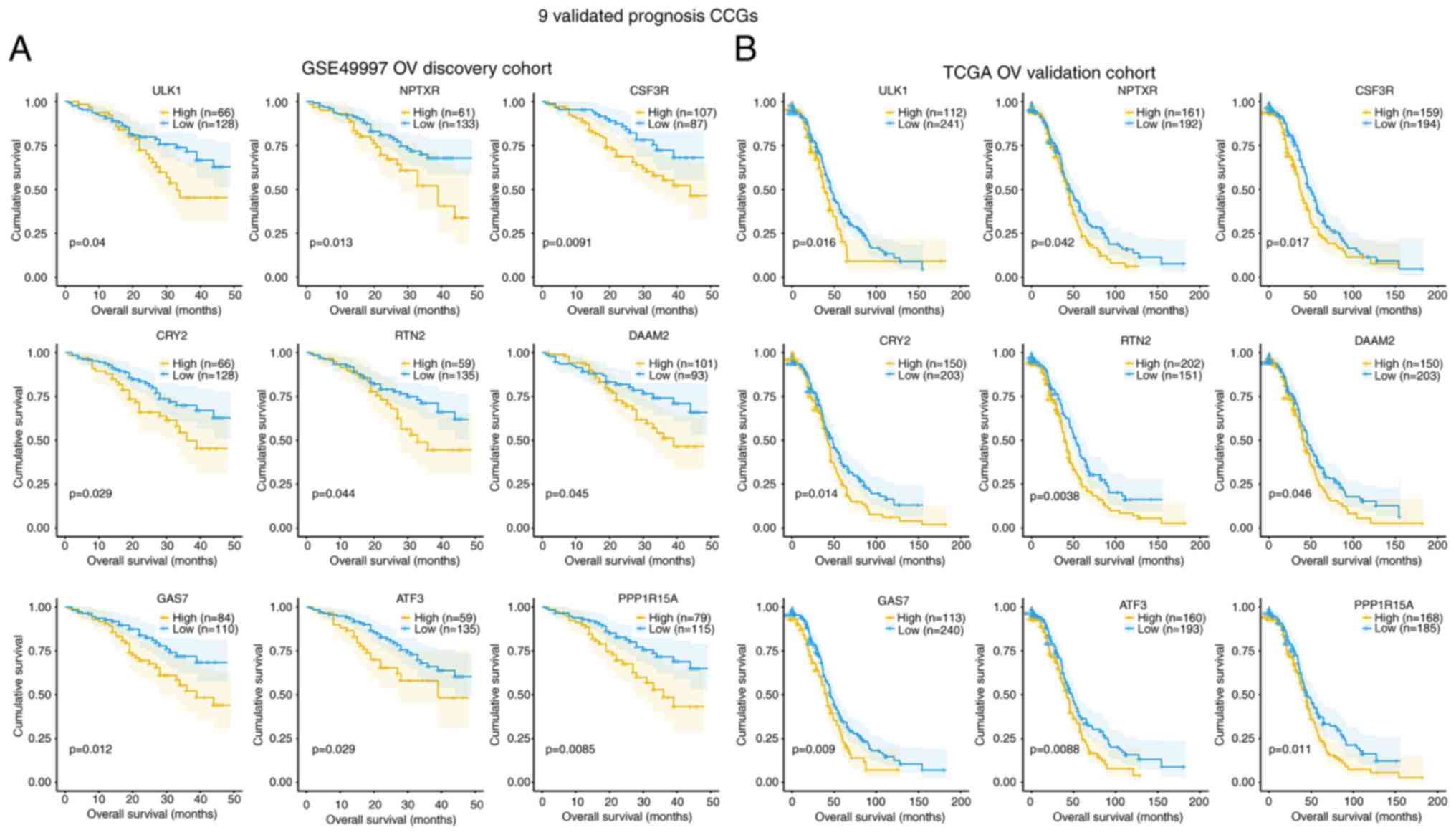
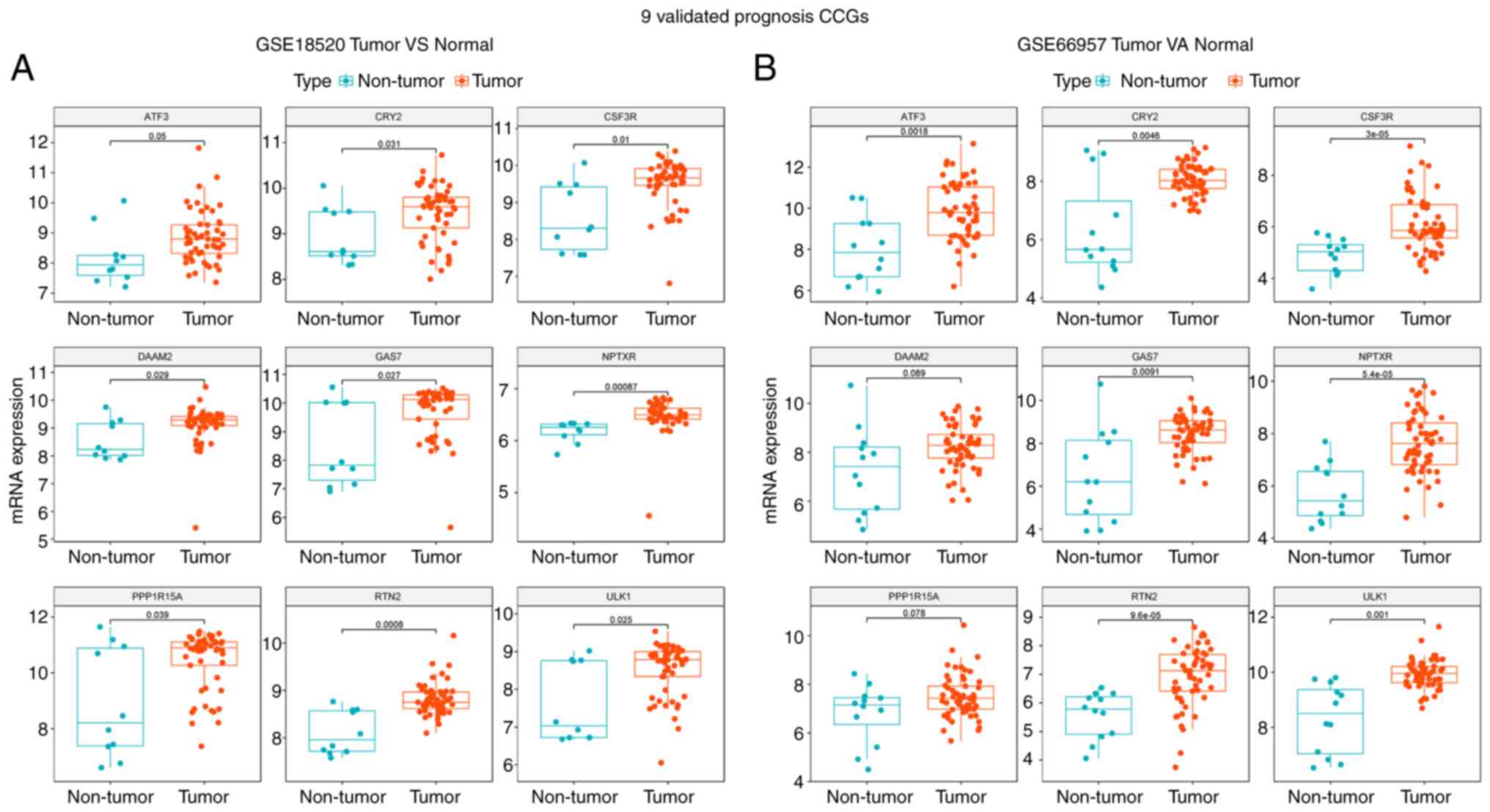
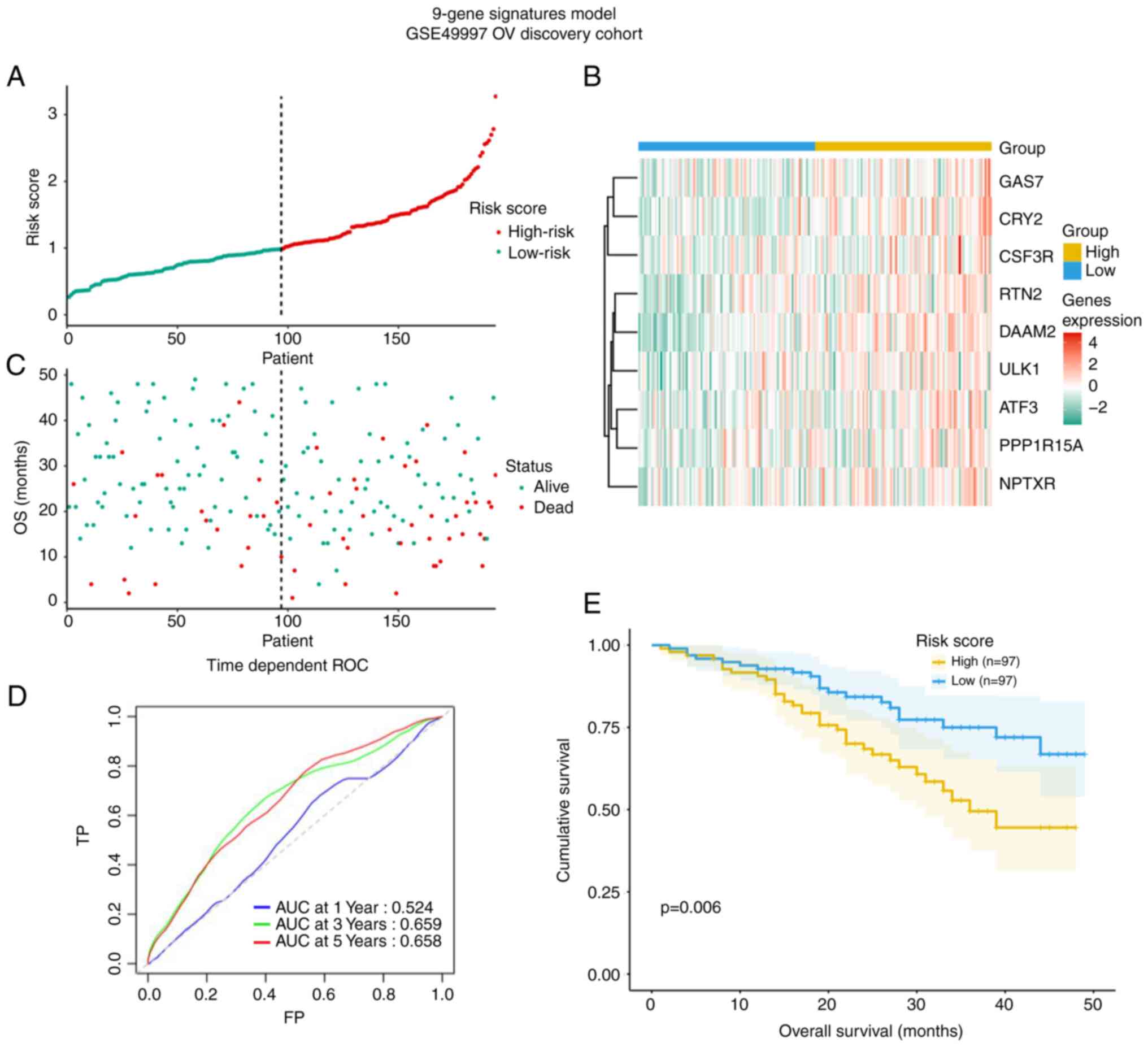
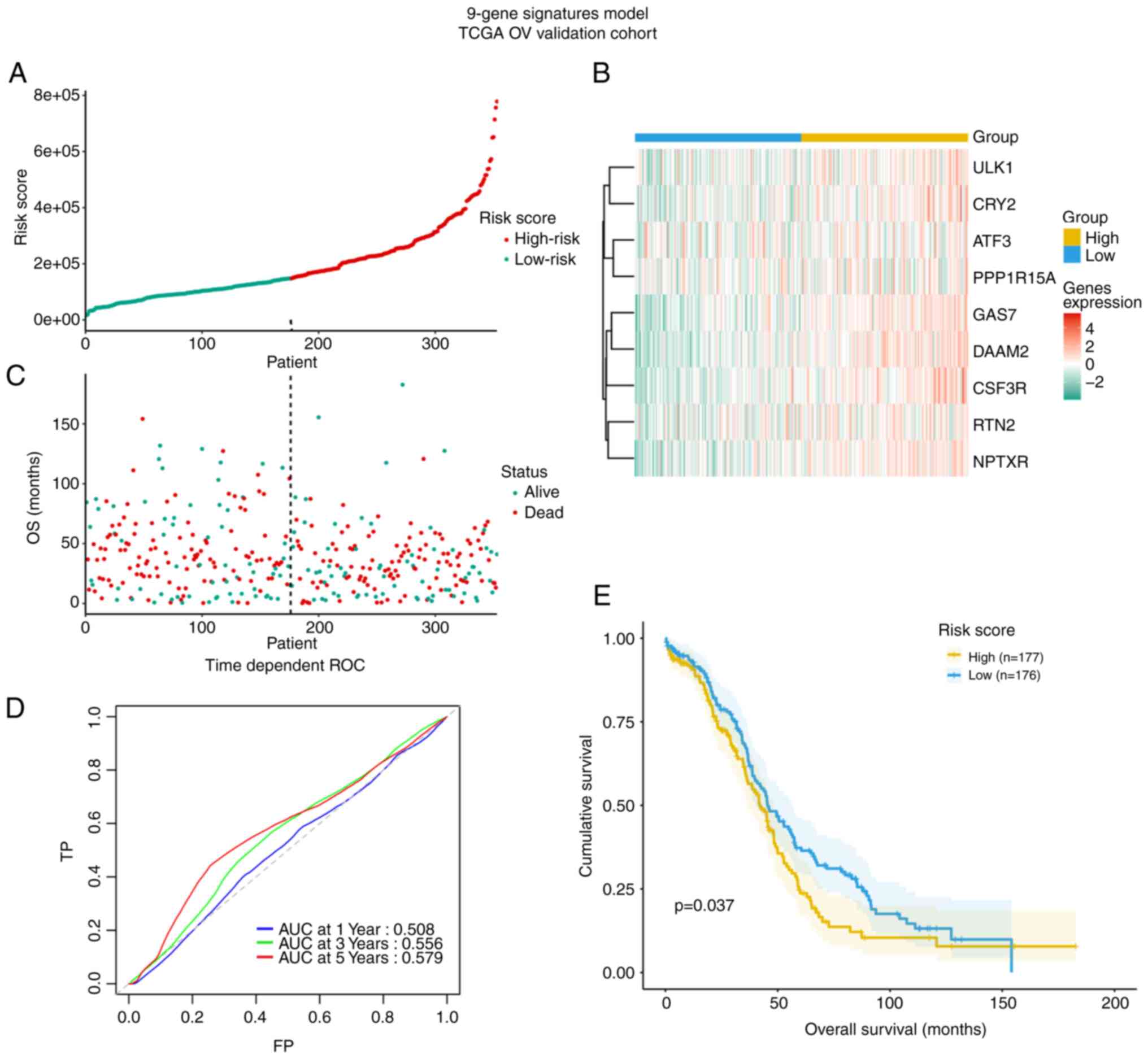
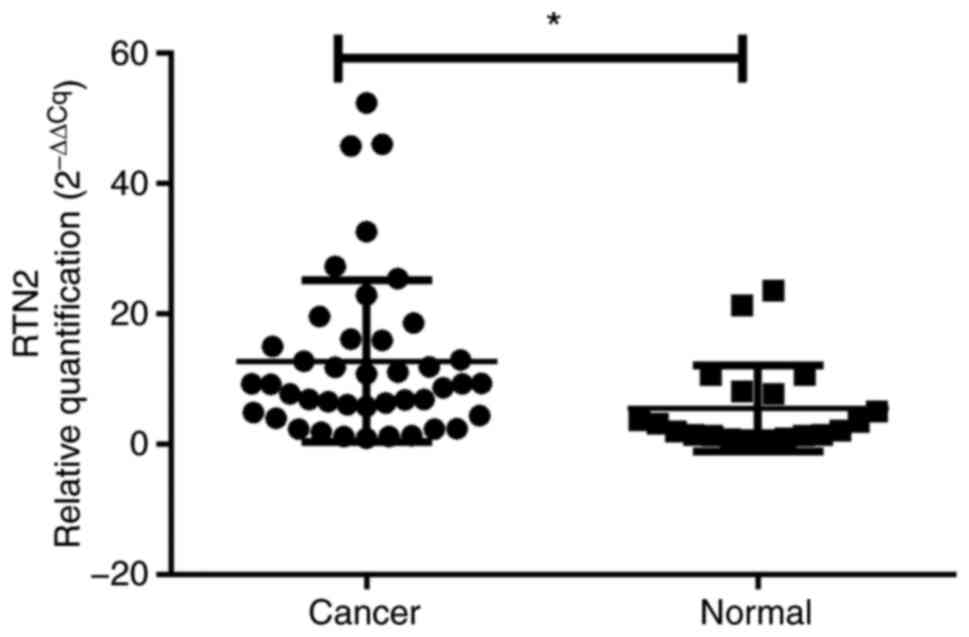
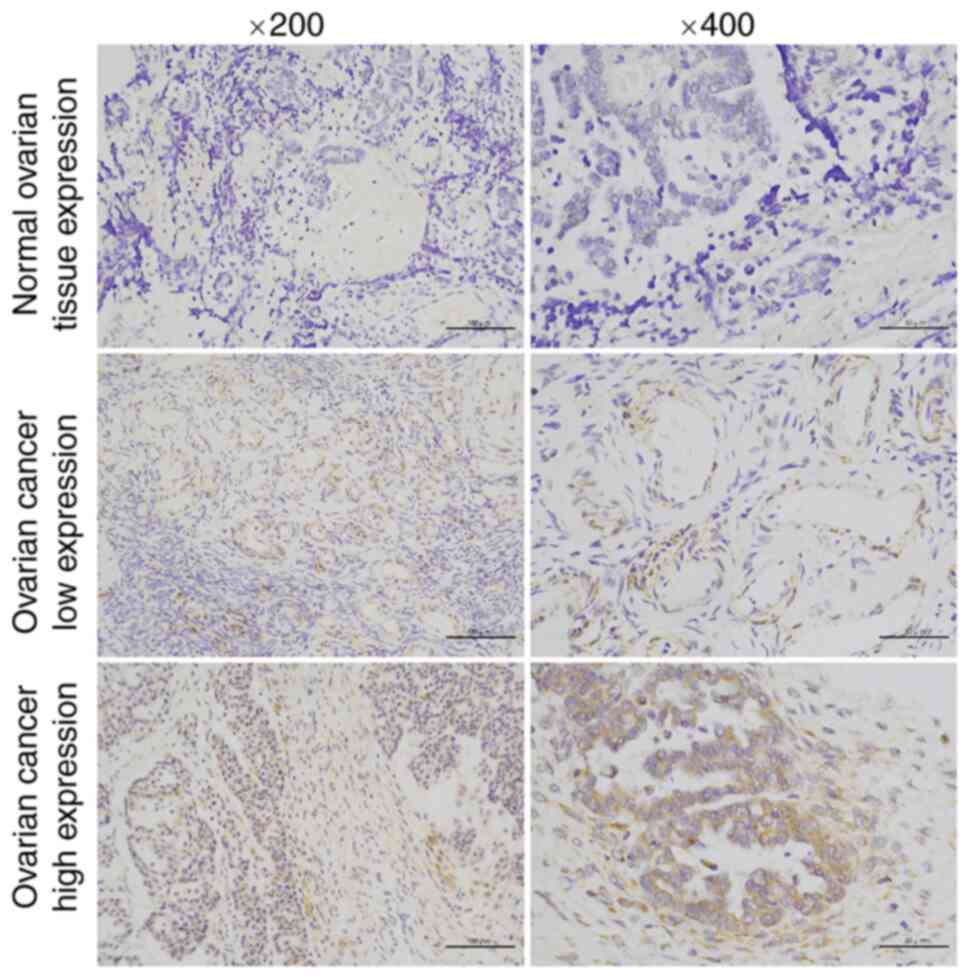
Increasing evidence suggests that core circadian genes have major roles in the carcinogenic mechanisms of multiple human malignancies. Among these genes, the role of reticulon 2 (RTN2) in ovarian cancer (OV) has so far remained elusive. In the present study, circadian clock gene (CCG) aberrations were systematically assessed across malignancies by using Gene Expression Omnibus and The Cancer Genome Atlas data. The results indicated that various core clock genes (ULK1, ATF3, CRY2, CSF3R, DAAM2, GAS7, NPTXR, PPPIR15A and RTN2) had elevated levels in tumors in comparison with normal tissues and their low expression levels were associated with a better prognosis in OV, indicating that they may be potential candidates for novel investigational approaches. The mRNA and protein expression levels of RTN2 in OV were then further analyzed by reverse transcription‑quantitative PCR and immunohistochemistry, respectively. The results indicated that RTN2 mRNA and protein levels were increased in OV specimens in comparison with control samples. Differentially expressed CCGs, such as RTN2, were suggested as indicators of asynchronous circadian rhythms in cancer, which may provide a theoretical basis for chrono‑therapy.
View Figures

Figure 1

Figure 2

Figure 3

Figure 4

Figure 5

Figure 6

Figure 7

Figure 8

Figure 9

View References

1 

Webb PM and Jordan SJ: Epidemiology of epithelial ovarian cancer. Best Pract Res Clin Obstet Gynaecol. 41:3–14. 2017. View Article : Google Scholar : PubMed/NCBI

2 

Roett MA and Evans P: Ovarian cancer: An overview. Am Fam Physician. 80:609–616. 2009.PubMed/NCBI

3 

Penny SM: Ovarian cancer: An overview. Radiol Technol. 91:561–575. 2020.PubMed/NCBI

4 

Dengler V, Westphalen K and Koeppen M: Disruption of circadian rhythms and sleep in critical illness and its impact on innate immunity. Curr Pharm Des. 21:3469–3476. 2015. View Article : Google Scholar : PubMed/NCBI

5 

Huang W, Ramsey KM, Marcheva B and Bass J: Circadian rhythms, sleep, and metabolism. J Clin Invest. 121:2133–2141. 2011. View Article : Google Scholar : PubMed/NCBI

6 

Vitaterna MH, Takahashi JS and Turek FW: Overview of circadian rhythms. Alcohol Res Health. 25:85–93. 2001.PubMed/NCBI

7 

Chaix A, Zarrinpar A and Panda S: The circadian coordination of cell biology. J Cell Biol. 215:15–25. 2016. View Article : Google Scholar : PubMed/NCBI

8 

Duguay D and Cermakian N: The crosstalk between physiology and circadian clock proteins. Chronobiol Int. 26:1479–1513. 2009. View Article : Google Scholar : PubMed/NCBI

9 

Imamura K, Yoshitane H, Hattori K, Yamaguchi M, Yoshida K, Okubo T, Naguro I, Ichijo H and Fukada Y: ASK family kinases mediate cellular stress and redox signaling to circadian clock. Proc Natl Acad Sci USA. 115:3646–3651. 2018. View Article : Google Scholar : PubMed/NCBI

10 

Masri S, Kinouchi K and Sassone-Corsi P: Circadian clocks, epigenetics, and cancer. Curr Opin Oncol. 27:50–56. 2015. View Article : Google Scholar : PubMed/NCBI

11 

Gehlert S and Clanton M; On Behalf Of The Shift W and Breast Cancer Strategic Advisory Group, : Shift work and breast cancer. Int J Environ Res Public Health. 17:95442020. View Article : Google Scholar : PubMed/NCBI

12 

Schwarz C, Pedraza-Flechas AM, Lope V, Pastor-Barriuso R, Pollan M and Perez-Gomez B: Gynaecological cancer and night shift work: A systematic review. Maturitas. 110:21–28. 2018. View Article : Google Scholar : PubMed/NCBI

13 

Li S, Shui K, Zhang Y, Lv Y, Deng W, Ullah S, Zhang L and Xue Y: CGDB: A database of circadian genes in eukaryotes. Nucleic Acids Res. 45:D397–D403. 2017.PubMed/NCBI

14 

Ritchie ME, Phipson B, Wu D, Hu Y, Law CW, Shi W and Smyth GK: limma powers differential expression analyses for RNA-sequencing and microarray studies. Nucleic Acids Res. 43:e472015. View Article : Google Scholar : PubMed/NCBI

15 

Li S, Chen S, Wang B, Zhang L, Su Y and Zhang X: A robust 6-lncRNA prognostic signature for predicting the prognosis of patients with colorectal cancer metastasis. Front Med (Lausanne). 7:562020. View Article : Google Scholar : PubMed/NCBI

16 

Croft D, O'Kelly G, Wu G, Haw R, Gillespie M, Matthews L, Caudy M, Garapati P, Gopinath G, Jassal B, et al: Reactome: A database of reactions, pathways and biological processes. Nucleic Acids Res. 39:D691–D697. 2011. View Article : Google Scholar : PubMed/NCBI

17 

Salwinski L, Miller CS, Smith AJ, Pettit FK, Bowie JU and Eisenberg D: The database of interacting proteins: 2004 update. Nucleic Acids Res. 32:D449–D451. 2004. View Article : Google Scholar : PubMed/NCBI

18 

Prasad TS, Goel R, Kandasamy K, Keerthikumar S, Kumar S, Mathivanan S, Telikicherla D, Raju R, Shafreen B, Venugopal A, et al: Human protein reference database-2009 update. Nucleic Acids Res. 37:D767–D772. 2009. View Article : Google Scholar : PubMed/NCBI

19 

Brown KR and Jurisica I: Unequal evolutionary conservation of human protein interactions in interologous networks. Genome Biol. 8:R952007. View Article : Google Scholar : PubMed/NCBI

20 

Orchard S, Ammari M, Aranda B, Breuza L, Briganti L, Broackes-Carter F, Campbell NH, Chavali G, Chen C, del-Toro N, et al: The MIntAct project-IntAct as a common curation platform for 11 molecular interaction databases. Nucleic Acids Res. 42:D358–D363. 2014. View Article : Google Scholar : PubMed/NCBI

21 

Licata L, Briganti L, Peluso D, Perfetto L, Iannuccelli M, Galeota E, Sacco F, Palma A, Nardozza AP, Santonico E, et al: MINT, the molecular interaction database: 2012 update. Nucleic Acids Res. 40:D857–D861. 2012. View Article : Google Scholar : PubMed/NCBI

22 

Wu G, Feng X and Stein L: A human functional protein interaction network and its application to cancer data analysis. Genome Biol. 11:R532010. View Article : Google Scholar : PubMed/NCBI

23 

Shannon P, Markiel A, Ozier O, Baliga NS, Wang JT, Ramage D, Amin N, Schwikowski B and Ideker T: Cytoscape: A software environment for integrated models of biomolecular interaction networks. Genome Res. 13:2498–2504. 2003. View Article : Google Scholar : PubMed/NCBI

24 

Wu G, Dawson E, Duong A, Haw R and Stein L: ReactomeFIViz: A cytoscape app for pathway and network-based data analysis. F1000Res. 3:1462014. View Article : Google Scholar : PubMed/NCBI

25 

Kanehisa M, Furumichi M, Tanabe M, Sato Y and Morishima K: KEGG: New perspectives on genomes, pathways, diseases and drugs. Nucleic Acids Res. 45:D353–D361. 2017. View Article : Google Scholar : PubMed/NCBI

26 

Mi H, Muruganujan A and Thomas PD: PANTHER in 2013: Modeling the evolution of gene function, and other gene attributes, in the context of phylogenetic trees. Nucleic Acids Res. 41:D377–D386. 2013. View Article : Google Scholar : PubMed/NCBI

27 

Schaefer CF, Anthony K, Krupa S, Buchoff J, Day M, Hannay T and Buetow KH: PID: The pathway interaction database. Nucleic Acids Res. 37:D674–D679. 2009. View Article : Google Scholar : PubMed/NCBI

28 

Heagerty PJ, Lumley T and Pepe MS: Time-dependent ROC curves for censored survival data and a diagnostic marker. Biometrics. 56:337–344. 2000. View Article : Google Scholar : PubMed/NCBI

29 

Zheng X, Hua S, Zhao H, Gao Z and Cen D: Overexpression of hepatocyte growth factor protects chronic myeloid leukemia cells from apoptosis induced by etoposide. Oncol Lett. 23:1222022. View Article : Google Scholar : PubMed/NCBI

30 

Schmittgen TD and Livak KJ: Analyzing real-time PCR data by the comparative C(T) method. Nat Protoc. 3:1101–1108. 2008. View Article : Google Scholar : PubMed/NCBI

31 

Li J, Yi SQ, Terayama H, Naito M, Hirai S, Qu N, Wang HX, Yi N, Ozaki N and Itoh M: Distribution of ghrelin-producing cells in stomach and the effects of ghrelin administration in the house musk shrew (Suncus murinus). Neuro Endocrinol Lett. 31:406–412. 2010.PubMed/NCBI

32 

Black A, Pinsky PF, Grubb RL III, Falk RT, Hsing AW, Chu L, Meyer T, Veenstra TD, Xu X, Yu K, et al: Sex steroid hormone metabolism in relation to risk of aggressive prostate cancer. Cancer Epidemiol Biomarkers Prev. 23:2374–2382. 2014. View Article : Google Scholar : PubMed/NCBI

33 

Harris HR, Rice MS, Shafrir AL, Poole EM, Gupta M, Hecht JL, Terry KL and Tworoger SS: Lifestyle and reproductive factors and ovarian cancer risk by p53 and MAPK expression. Cancer Epidemiol Biomarkers Prev. 27:96–102. 2018. View Article : Google Scholar : PubMed/NCBI

34 

Carter BD, Diver WR, Hildebrand JS, Patel AV and Gapstur SM: Circadian disruption and fatal ovarian cancer. Am J Prev Med. 46 (Suppl 1):S34–S41. 2014. View Article : Google Scholar : PubMed/NCBI

35 

Sigurdardottir LG, Valdimarsdottir UA, Fall K, Rider JR, Lockley SW, Schernhammer E and Mucci LA: Circadian disruption, sleep loss, and prostate cancer risk: A systematic review of epidemiologic studies. Cancer Epidemiol Biomarkers Prev. 21:1002–1011. 2012. View Article : Google Scholar : PubMed/NCBI

36 

Tao Z, Song W, Zhu C, Xu W, Liu H, Zhang S and Huifang L: Comparative transcriptomic analysis of high and low egg-producing duck ovaries. Poult Sci. 96:4378–4388. 2017. View Article : Google Scholar : PubMed/NCBI

37 

Wang F, Xie N, Wu Y, Zhang Q, Zhu Y, Dai M, Zhou J, Pan J, Tang M, Cheng Q, et al: Association between circadian rhythm disruption and polycystic ovary syndrome. Fertil Steril. 115:771–781. 2021. View Article : Google Scholar : PubMed/NCBI

38 

Wei W, Dizon D, Vathipadiekal V and Birrer MJ: Ovarian cancer: Genomic analysis. Ann Oncol. 24 (Suppl 10):x7–x15. 2013. View Article : Google Scholar : PubMed/NCBI

39 

Burki T: Nobel prize awarded for discoveries in circadian rhythm. Lancet. 390:e252017. View Article : Google Scholar : PubMed/NCBI

40 

Callaway E and Ledford H: Medicine nobel awarded for work on circadian clocks. Nature. 550:182017. View Article : Google Scholar : PubMed/NCBI

41 

Wendeu-Foyet MG and Menegaux F: Circadian disruption and prostate cancer risk: An updated review of epidemiological evidences. Cancer Epidemiol Biomarkers Prev. 26:985–991. 2017. View Article : Google Scholar : PubMed/NCBI

42 

Stevens RG, Brainard GC, Blask DE, Lockley SW and Motta ME: Breast cancer and circadian disruption from electric lighting in the modern world. CA Cancer J Clin. 64:207–218. 2014. View Article : Google Scholar : PubMed/NCBI

43 

Viswanathan AN, Hankinson SE and Schernhammer ES: Night shift work and the risk of endometrial cancer. Cancer Res. 67:10618–10622. 2007. View Article : Google Scholar : PubMed/NCBI

44 

Wendeu-Foyet MG, Cénée S, Koudou Y, Trétarre B, Rébillard X, Cancel-Tassin G, Cussenot O, Boland A, Olaso R, Deleuze JF, et al: Circadian genes polymorphisms, night work and prostate cancer risk: Findings from the EPICAP study. Int J Cancer. 147:3119–3129. 2020. View Article : Google Scholar : PubMed/NCBI

45 

Innominato PF, Focan C, Gorlia T, Moreau T, Garufi C, Waterhouse J, Giacchetti S, Coudert B, Iacobelli S, Genet D, et al: Circadian rhythm in rest and activity: A biological correlate of quality of life and a predictor of survival in patients with metastatic colorectal cancer. Cancer Res. 69:4700–4707. 2009. View Article : Google Scholar : PubMed/NCBI

46 

Kettner NM, Voicu H, Finegold MJ, Coarfa C, Sreekumar A, Putluri N, Katchy CA, Lee C, Moore DD and Fu L: Circadian homeostasis of liver metabolism suppresses hepatocarcinogenesis. Cancer Cell. 30:909–924. 2016. View Article : Google Scholar : PubMed/NCBI

47 

Wang N, Mi M, Wei X and Sun C: Circadian clock gene Period2 suppresses human chronic myeloid leukemia cell proliferation. Exp Ther Med. 20:1472020. View Article : Google Scholar : PubMed/NCBI

48 

Puram RV, Kowalczyk MS, de Boer CG, Schneider RK, Miller PG, McConkey M, Tothova Z, Tejero H, Heckl D, Järås M, et al: Core circadian clock genes regulate leukemia stem cells in AML. Cell. 165:303–316. 2016. View Article : Google Scholar : PubMed/NCBI

49 

Li X, Liu P, Sun X, Ma R, Cui T, Wang T, Bai Y, Li Y, Wu X and Feng X: Analyzing the impact of ATF3 in tumorigenesis and immune cell infiltration of ovarian tumor: A bioinformatics study. Med Oncol. 38:912021. View Article : Google Scholar : PubMed/NCBI

50 

Singha B, Laski J, Valdés YR, Liu E, DiMattia GE and Shepherd TG: Inhibiting ULK1 kinase decreases autophagy and cell viability in high-grade serous ovarian cancer spheroids. Am J Cancer Res. 10:1384–1399. 2020.PubMed/NCBI

51 

Quinn MCJ, McCue K, Shi W, Johnatty SE, Beesley J, Civitarese A, O'Mara TA, Glubb DM, Tyrer JP, Armasu SM, et al: Identification of a locus near ULK1 associated with progression-free survival in ovarian cancer. Cancer Epidemiol Biomarkers Prev. 30:1669–1680. 2021. View Article : Google Scholar : PubMed/NCBI

52 

Jiang C, Liu Y, Wen S, Xu C and Gu L: In silico development and clinical validation of novel 8 gene signature based on lipid metabolism related genes in colon adenocarcinoma. Pharmacol Res. 169:1056442021. View Article : Google Scholar : PubMed/NCBI

53 

Song S, Liu B, Zeng X, Wu Y, Chen H, Wu H, Gu J, Gao X, Ruan Y and Wang H: Reticulon 2 promotes gastric cancer metastasis via activating endoplasmic reticulum Ca(2+) efflux-mediated ERK signalling. Cell Death Dis. 13:3492022. View Article : Google Scholar : PubMed/NCBI

54 

Liu Z, Yu K, Zheng J, Lin H, Zhao Q, Zhang X, Feng W, Wang L, Xu J, Xie D, et al: Dysregulation, functional implications, and prognostic ability of the circadian clock across cancers. Cancer Med. 8:1710–1720. 2019. View Article : Google Scholar : PubMed/NCBI

Related Articles

  • Abstract
  • View
  • Download
  • Twitter
Copy and paste a formatted citation
Spandidos Publications style
Zheng X, Lv X, Chai J, Huang Y, Zhu L and Zhang X: RTN2, a new member of circadian clock genes identified by database mining and bioinformatics prediction, is highly expressed in ovarian cancer. Mol Med Rep 26: 350, 2022.
APA
Zheng, X., Lv, X., Chai, J., Huang, Y., Zhu, L., & Zhang, X. (2022). RTN2, a new member of circadian clock genes identified by database mining and bioinformatics prediction, is highly expressed in ovarian cancer. Molecular Medicine Reports, 26, 350. https://doi.org/10.3892/mmr.2022.12866
MLA
Zheng, X., Lv, X., Chai, J., Huang, Y., Zhu, L., Zhang, X."RTN2, a new member of circadian clock genes identified by database mining and bioinformatics prediction, is highly expressed in ovarian cancer". Molecular Medicine Reports 26.5 (2022): 350.
Chicago
Zheng, X., Lv, X., Chai, J., Huang, Y., Zhu, L., Zhang, X."RTN2, a new member of circadian clock genes identified by database mining and bioinformatics prediction, is highly expressed in ovarian cancer". Molecular Medicine Reports 26, no. 5 (2022): 350. https://doi.org/10.3892/mmr.2022.12866
Copy and paste a formatted citation
x
Spandidos Publications style
Zheng X, Lv X, Chai J, Huang Y, Zhu L and Zhang X: RTN2, a new member of circadian clock genes identified by database mining and bioinformatics prediction, is highly expressed in ovarian cancer. Mol Med Rep 26: 350, 2022.
APA
Zheng, X., Lv, X., Chai, J., Huang, Y., Zhu, L., & Zhang, X. (2022). RTN2, a new member of circadian clock genes identified by database mining and bioinformatics prediction, is highly expressed in ovarian cancer. Molecular Medicine Reports, 26, 350. https://doi.org/10.3892/mmr.2022.12866
MLA
Zheng, X., Lv, X., Chai, J., Huang, Y., Zhu, L., Zhang, X."RTN2, a new member of circadian clock genes identified by database mining and bioinformatics prediction, is highly expressed in ovarian cancer". Molecular Medicine Reports 26.5 (2022): 350.
Chicago
Zheng, X., Lv, X., Chai, J., Huang, Y., Zhu, L., Zhang, X."RTN2, a new member of circadian clock genes identified by database mining and bioinformatics prediction, is highly expressed in ovarian cancer". Molecular Medicine Reports 26, no. 5 (2022): 350. https://doi.org/10.3892/mmr.2022.12866
Follow us
  • Twitter
  • LinkedIn
  • Facebook
About
  • Spandidos Publications
  • Careers
  • Cookie Policy
  • Privacy Policy
How can we help?
  • Help
  • Live Chat
  • Contact
  • Email to our Support Team