Spandidos Publications Logo
  • About
    • About Spandidos
    • Aims and Scopes
    • Abstracting and Indexing
    • Editorial Policies
    • Reprints and Permissions
    • Job Opportunities
    • Terms and Conditions
    • Contact
  • Journals
    • All Journals
    • Oncology Letters
      • Oncology Letters
      • Information for Authors
      • Editorial Policies
      • Editorial Board
      • Aims and Scope
      • Abstracting and Indexing
      • Bibliographic Information
      • Archive
    • International Journal of Oncology
      • International Journal of Oncology
      • Information for Authors
      • Editorial Policies
      • Editorial Board
      • Aims and Scope
      • Abstracting and Indexing
      • Bibliographic Information
      • Archive
    • Molecular and Clinical Oncology
      • Molecular and Clinical Oncology
      • Information for Authors
      • Editorial Policies
      • Editorial Board
      • Aims and Scope
      • Abstracting and Indexing
      • Bibliographic Information
      • Archive
    • Experimental and Therapeutic Medicine
      • Experimental and Therapeutic Medicine
      • Information for Authors
      • Editorial Policies
      • Editorial Board
      • Aims and Scope
      • Abstracting and Indexing
      • Bibliographic Information
      • Archive
    • International Journal of Molecular Medicine
      • International Journal of Molecular Medicine
      • Information for Authors
      • Editorial Policies
      • Editorial Board
      • Aims and Scope
      • Abstracting and Indexing
      • Bibliographic Information
      • Archive
    • Biomedical Reports
      • Biomedical Reports
      • Information for Authors
      • Editorial Policies
      • Editorial Board
      • Aims and Scope
      • Abstracting and Indexing
      • Bibliographic Information
      • Archive
    • Oncology Reports
      • Oncology Reports
      • Information for Authors
      • Editorial Policies
      • Editorial Board
      • Aims and Scope
      • Abstracting and Indexing
      • Bibliographic Information
      • Archive
    • Molecular Medicine Reports
      • Molecular Medicine Reports
      • Information for Authors
      • Editorial Policies
      • Editorial Board
      • Aims and Scope
      • Abstracting and Indexing
      • Bibliographic Information
      • Archive
    • World Academy of Sciences Journal
      • World Academy of Sciences Journal
      • Information for Authors
      • Editorial Policies
      • Editorial Board
      • Aims and Scope
      • Abstracting and Indexing
      • Bibliographic Information
      • Archive
    • International Journal of Functional Nutrition
      • International Journal of Functional Nutrition
      • Information for Authors
      • Editorial Policies
      • Editorial Board
      • Aims and Scope
      • Abstracting and Indexing
      • Bibliographic Information
      • Archive
    • International Journal of Epigenetics
      • International Journal of Epigenetics
      • Information for Authors
      • Editorial Policies
      • Editorial Board
      • Aims and Scope
      • Abstracting and Indexing
      • Bibliographic Information
      • Archive
    • Medicine International
      • Medicine International
      • Information for Authors
      • Editorial Policies
      • Editorial Board
      • Aims and Scope
      • Abstracting and Indexing
      • Bibliographic Information
      • Archive
  • Articles
  • Information
    • Information for Authors
    • Information for Reviewers
    • Information for Librarians
    • Information for Advertisers
    • Conferences
  • Language Editing
Spandidos Publications Logo
  • About
    • About Spandidos
    • Aims and Scopes
    • Abstracting and Indexing
    • Editorial Policies
    • Reprints and Permissions
    • Job Opportunities
    • Terms and Conditions
    • Contact
  • Journals
    • All Journals
    • Biomedical Reports
      • Information for Authors
      • Editorial Policies
      • Editorial Board
      • Aims and Scope
      • Abstracting and Indexing
      • Bibliographic Information
      • Archive
    • Experimental and Therapeutic Medicine
      • Information for Authors
      • Editorial Policies
      • Editorial Board
      • Aims and Scope
      • Abstracting and Indexing
      • Bibliographic Information
      • Archive
    • International Journal of Epigenetics
      • Information for Authors
      • Editorial Policies
      • Editorial Board
      • Aims and Scope
      • Abstracting and Indexing
      • Bibliographic Information
      • Archive
    • International Journal of Functional Nutrition
      • Information for Authors
      • Editorial Policies
      • Editorial Board
      • Aims and Scope
      • Abstracting and Indexing
      • Bibliographic Information
      • Archive
    • International Journal of Molecular Medicine
      • Information for Authors
      • Editorial Policies
      • Editorial Board
      • Aims and Scope
      • Abstracting and Indexing
      • Bibliographic Information
      • Archive
    • International Journal of Oncology
      • Information for Authors
      • Editorial Policies
      • Editorial Board
      • Aims and Scope
      • Abstracting and Indexing
      • Bibliographic Information
      • Archive
    • Medicine International
      • Information for Authors
      • Editorial Policies
      • Editorial Board
      • Aims and Scope
      • Abstracting and Indexing
      • Bibliographic Information
      • Archive
    • Molecular and Clinical Oncology
      • Information for Authors
      • Editorial Policies
      • Editorial Board
      • Aims and Scope
      • Abstracting and Indexing
      • Bibliographic Information
      • Archive
    • Molecular Medicine Reports
      • Information for Authors
      • Editorial Policies
      • Editorial Board
      • Aims and Scope
      • Abstracting and Indexing
      • Bibliographic Information
      • Archive
    • Oncology Letters
      • Information for Authors
      • Editorial Policies
      • Editorial Board
      • Aims and Scope
      • Abstracting and Indexing
      • Bibliographic Information
      • Archive
    • Oncology Reports
      • Information for Authors
      • Editorial Policies
      • Editorial Board
      • Aims and Scope
      • Abstracting and Indexing
      • Bibliographic Information
      • Archive
    • World Academy of Sciences Journal
      • Information for Authors
      • Editorial Policies
      • Editorial Board
      • Aims and Scope
      • Abstracting and Indexing
      • Bibliographic Information
      • Archive
  • Articles
  • Information
    • For Authors
    • For Reviewers
    • For Librarians
    • For Advertisers
    • Conferences
  • Language Editing
Login Register Submit
  • This site uses cookies
  • You can change your cookie settings at any time by following the instructions in our Cookie Policy. To find out more, you may read our Privacy Policy.

    I agree
Search articles by DOI, keyword, author or affiliation
Search
Advanced Search
presentation
Molecular Medicine Reports
Join Editorial Board Propose a Special Issue
Print ISSN: 1791-2997 Online ISSN: 1791-3004
Journal Cover
August-2023 Volume 28 Issue 2

Full Size Image

Sign up for eToc alerts
Recommend to Library

Journals

International Journal of Molecular Medicine

International Journal of Molecular Medicine

International Journal of Molecular Medicine is an international journal devoted to molecular mechanisms of human disease.

International Journal of Oncology

International Journal of Oncology

International Journal of Oncology is an international journal devoted to oncology research and cancer treatment.

Molecular Medicine Reports

Molecular Medicine Reports

Covers molecular medicine topics such as pharmacology, pathology, genetics, neuroscience, infectious diseases, molecular cardiology, and molecular surgery.

Oncology Reports

Oncology Reports

Oncology Reports is an international journal devoted to fundamental and applied research in Oncology.

Experimental and Therapeutic Medicine

Experimental and Therapeutic Medicine

Experimental and Therapeutic Medicine is an international journal devoted to laboratory and clinical medicine.

Oncology Letters

Oncology Letters

Oncology Letters is an international journal devoted to Experimental and Clinical Oncology.

Biomedical Reports

Biomedical Reports

Explores a wide range of biological and medical fields, including pharmacology, genetics, microbiology, neuroscience, and molecular cardiology.

Molecular and Clinical Oncology

Molecular and Clinical Oncology

International journal addressing all aspects of oncology research, from tumorigenesis and oncogenes to chemotherapy and metastasis.

World Academy of Sciences Journal

World Academy of Sciences Journal

Multidisciplinary open-access journal spanning biochemistry, genetics, neuroscience, environmental health, and synthetic biology.

International Journal of Functional Nutrition

International Journal of Functional Nutrition

Open-access journal combining biochemistry, pharmacology, immunology, and genetics to advance health through functional nutrition.

International Journal of Epigenetics

International Journal of Epigenetics

Publishes open-access research on using epigenetics to advance understanding and treatment of human disease.

Medicine International

Medicine International

An International Open Access Journal Devoted to General Medicine.

Journal Cover
August-2023 Volume 28 Issue 2

Full Size Image

Sign up for eToc alerts
Recommend to Library

  • Article
  • Citations
    • Cite This Article
    • Download Citation
    • Create Citation Alert
    • Remove Citation Alert
    • Cited By
  • Similar Articles
    • Related Articles (in Spandidos Publications)
    • Similar Articles (Google Scholar)
    • Similar Articles (PubMed)
  • Download PDF
  • Download XML
  • View XML
Article Open Access

A pH‑responsive hyaluronic acid nano‑vehicle co‑encapsulating doxorubicin and all‑trans retinoic acid for the inhibition of hepatic stellate cell‑induced tumor growth and metastasis

  • Authors:
    • Qiao Lu
    • Xueyang Gong
    • Guangtao Jia
    • Jingliang Wu
    • Siwei Liu
    • Ke Song
    • Guixiang Tian
  • View Affiliations / Copyright

    Affiliations: Department of Life Science and Technology, Weifang Medical University, Weifang, Shandong 261053, P.R. China, Department of Nursing, Weifang University of Science and Technology, Weifang, Shandong 262700, P.R. China
    Copyright: © Lu et al. This is an open access article distributed under the terms of Creative Commons Attribution License.
  • Article Number: 142
    |
    Published online on: June 9, 2023
       https://doi.org/10.3892/mmr.2023.13029
  • Expand metrics +
Metrics: Total Views: 0 (Spandidos Publications: | PMC Statistics: )
Metrics: Total PDF Downloads: 0 (Spandidos Publications: | PMC Statistics: )
Cited By (CrossRef): 0 citations Loading Articles...

This article is mentioned in:


Abstract

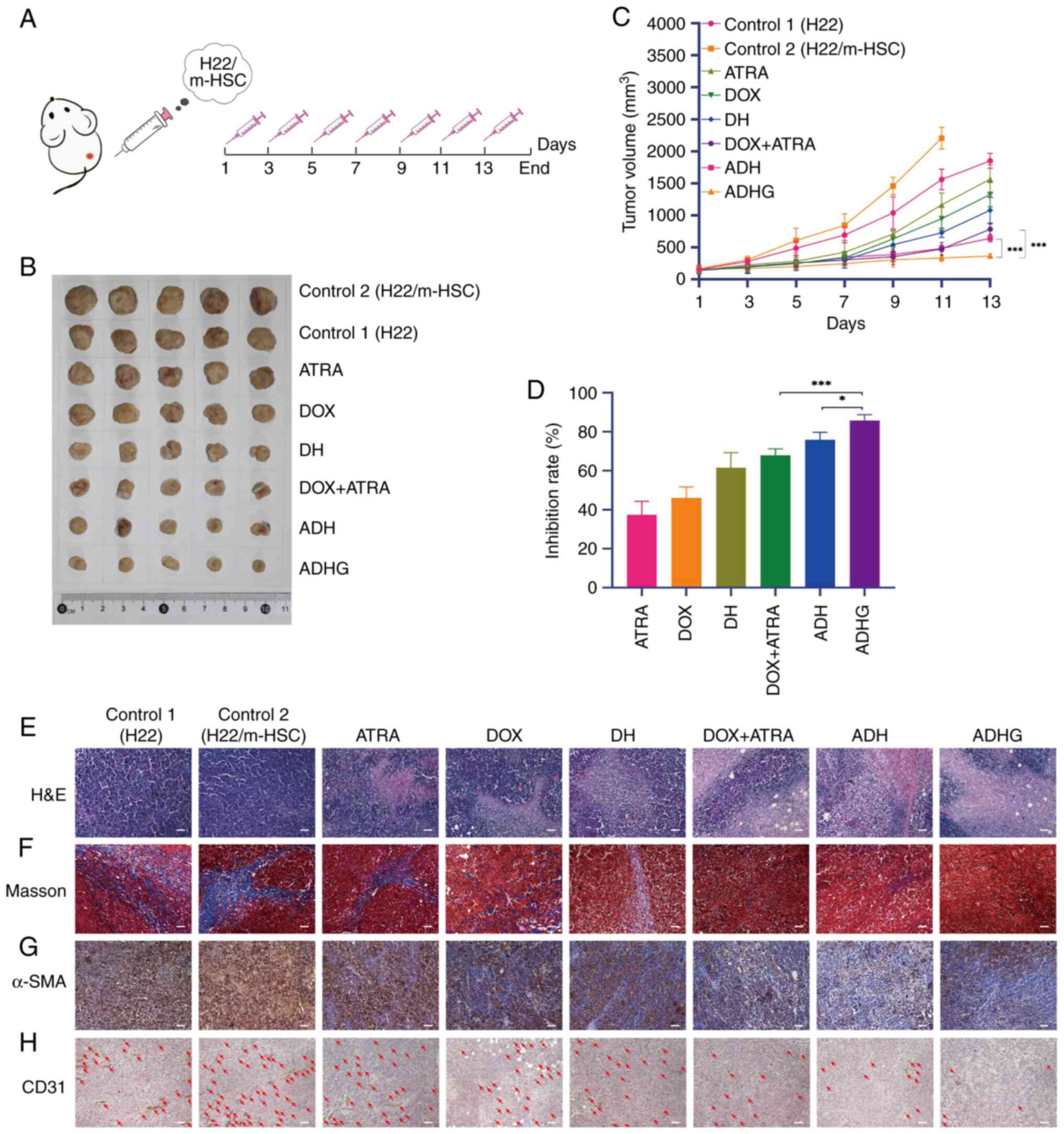
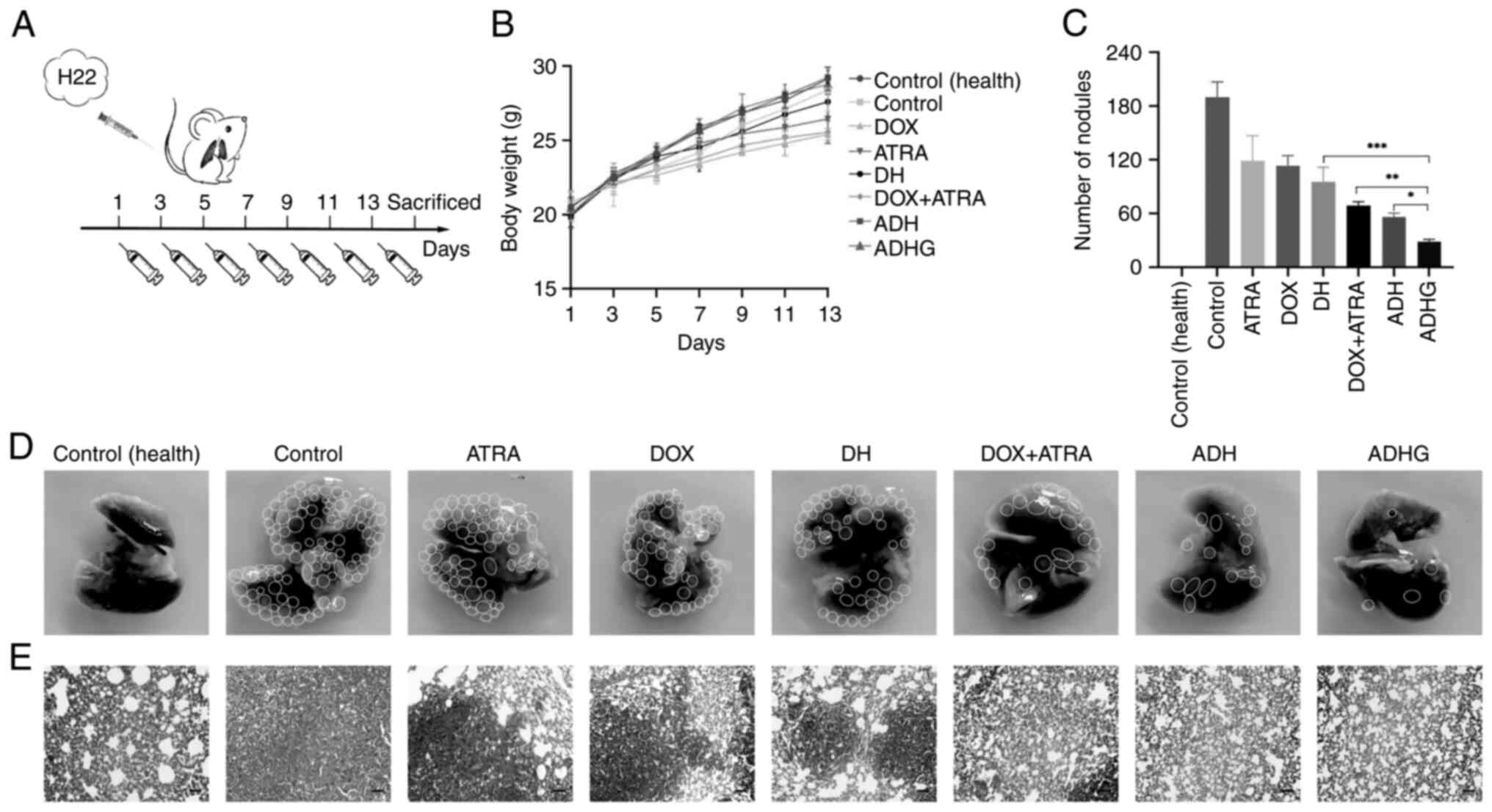
All‑trans retinoic acid (ATRA) has been implicated in the differentiation of hepatic stellate cells (HSCs). In the present study, the liver‑targeting hyaluronic acid micelles (ADHG) were prepared for co‑delivery of ATRA and doxorubicin (DOX) to block the HSC‑hepatoma interrelation. To simulate the tumor microenvironment, an in vitro dual‑cell model and an in vivo co‑implantation mouse model were established for anticancer studies. The experimental methods involved the MTT assay, wound‑healing assay, cellular uptake, flow cytometry and and in vivo antitumor study. The results revealed that the HSCs in the research models notably promoted tumor proliferation and migration. Furthermore, ADHG were readily internalized by cancer cells and HSCs simultaneously, and widely distributed in cancer regions. The in vivo antitumor studies demonstrated that ADHG could notably decrease HSC activation and extracellular matrix deposition, as well as constrain tumor growth and metastasis. Therefore, ATRA could facilitate DOX‑induced anti‑proliferation and anti‑metastasis effects, and ADHG are a promising nano‑sized formulation for the combination therapy of hepatocellular carcinoma.
View Figures

Figure 1

Figure 2

Figure 3

Figure 4

Figure 5

Figure 6

View References

1 

Lee YS and Jeong WI: Retinoic acids and hepatic stellate cells in liver disease. J Gastroenterol Hepatol. 27 (Suppl 2):S75–S79. 2012. View Article : Google Scholar

2 

Hisamori S, Tabata C, Kadokawa Y, Okoshi K, Tabata R, Mori A, Nagayama S, Watanabe G, Kubo H and Sakai Y: All-trans-retinoic acid ameliorates carbon tetrachloride-induced liver fibrosis in mice through modulating cytokine production. Liver Int. 28:1217–1225. 2008. View Article : Google Scholar : PubMed/NCBI

3 

Mizobuchi Y, Shimizu I, Yasuda M, Hori H, Shono M and Ito S: Retinyl palmitate reduces hepatic fibrosis in rats induced by dimethylnitrosamine or pig serum. J Hepatol. 29:933–943. 1998. View Article : Google Scholar : PubMed/NCBI

4 

Davis BH, Kramer RT and Davidson NO: Retinoic acid modulates rat Ito cell proliferation, collagen, and transforming growth factor beta production. J Clin Invest. 86:2062–2070. 1990. View Article : Google Scholar : PubMed/NCBI

5 

Tsuchida T and Friedman SL: Mechanisms of hepatic stellate cell activation. Nat Rev Gastroenterol Hepatol. 14:397–411. 2017. View Article : Google Scholar : PubMed/NCBI

6 

Panebianco C, Oben JA, Vinciguerra M and Pazienza V: Senescence in hepatic stellate cells as a mechanism of liver fibrosis reversal: A putative synergy between retinoic acid and PPAR-gamma signalings. Clin Exp Med. 17:269–280. 2017. View Article : Google Scholar : PubMed/NCBI

7 

Wang L, Tankersley LR, Tang M, Potter JJ and Mezey E: Regulation of the murine alpha(2)(I) collagen promoter by retinoic acid and retinoid X receptors. Arch Biochem Biophys. 401:262–270. 2002. View Article : Google Scholar : PubMed/NCBI

8 

Kim SJ, Park JH, Lee SA, Lee JG, Shin JM and Lee HM: All-trans retinoic acid regulates TGF-β1-induced extracellular matrix production via p38, JNK, and NF-κB-signaling pathways in nasal polyp-derived fibroblasts. Int Forum Allergy Rhinol. 10:636–645. 2020. View Article : Google Scholar : PubMed/NCBI

9 

Zhang Y, Guan DX, Shi J, Gao H, Li JJ, Zhao JS, Qiu L, Liu J, Li N, Guo WX, et al: All-trans retinoic acid potentiates the chemotherapeutic effect of cisplatin by inducing differentiation of tumor initiating cells in liver cancer. J Hepatol. 59:1255–1263. 2013. View Article : Google Scholar : PubMed/NCBI

10 

Abu Lila AS and Ishida T: Liposomal delivery systems: Design optimization and current applications. Biol Pharm Bull. 40:1–10. 2017. View Article : Google Scholar : PubMed/NCBI

11 

Li L and Wang H: Heterogeneity of liver cancer and personalized therapy. Cancer Lett. 379:191–197. 2016. View Article : Google Scholar : PubMed/NCBI

12 

Wu T and Dai Y: Tumor microenvironment and therapeutic response. Cancer Lett. 387:61–68. 2017. View Article : Google Scholar : PubMed/NCBI

13 

Han S, Wang W, Wang S, Yang T, Zhang G, Wang D, Ju R, Lu Y, Wang H and Wang L: Tumor microenvironment remodeling and tumor therapy based on M2-like tumor associated macrophage-targeting nano-complexes. Theranostics. 11:2892–2916. 2021. View Article : Google Scholar : PubMed/NCBI

14 

Hui L and Chen Y: Tumor microenvironment: Sanctuary of the devil. Cancer Lett. 368:7–13. 2015. View Article : Google Scholar : PubMed/NCBI

15 

Mohr R, Özdirik B, Lambrecht J, Demir M, Eschrich J, Geisler L, Hellberg T, Loosen SH, Luedde T, Tacke F, et al: From liver cirrhosis to cancer: The role of Micro-RNAs in hepatocarcinogenesis. Int J Mol Sci. 22:14922021. View Article : Google Scholar : PubMed/NCBI

16 

Brodt P: Role of the microenvironment in liver metastasis: From pre- to prometastatic niches. Clin Cancer Res. 22:5971–5982. 2016. View Article : Google Scholar : PubMed/NCBI

17 

Muppala S: Significance of the tumor microenvironment in liver cancer progression. Crit Rev Oncog. 25:1–9. 2020. View Article : Google Scholar : PubMed/NCBI

18 

Kahn AM, Blenman KRM, Sonis ST and Lustberg MB: Strategies to mitigate the toxicity of cancer therapeutics. Adv Cancer Res. 155:215–244. 2022. View Article : Google Scholar : PubMed/NCBI

19 

Zhou F, Teng F, Deng P, Meng N, Song Z and Feng R: Recent progress of nano-drug delivery system for liver cancer treatment. Anticancer Agents Med Chem. 17:1884–1897. 2018. View Article : Google Scholar : PubMed/NCBI

20 

Sun D, Zhang J, Wang L, Yu Z, O'Driscoll CM and Guo J: Nanodelivery of immunogenic cell death-inducers for cancer immunotherapy. Drug Discov Today. 26:651–662. 2021. View Article : Google Scholar : PubMed/NCBI

21 

Sudha PN and Rose MH: Beneficial effects of hyaluronic acid. Adv Food Nutr Res. 72:137–176. 2014. View Article : Google Scholar : PubMed/NCBI

22 

Vasvani S, Kulkarni P and Rawtani D: Hyaluronic acid: A review on its biology, aspects of drug delivery, route of administrations and a special emphasis on its approved marketed products and recent clinical studies. Int J Biol Macromol. 151:1012–1029. 2020. View Article : Google Scholar : PubMed/NCBI

23 

Lokeshwar VB, Mirza S and Jordan A: Targeting hyaluronic acid family for cancer chemoprevention and therapy. Adv Cancer Res. 123:35–65. 2014. View Article : Google Scholar : PubMed/NCBI

24 

Benitez A, Yates TJ, Lopez LE, Cerwinka WH, Bakkar A and Lokeshwar VB: Targeting hyaluronidase for cancer therapy: Antitumor activity of sulfated hyaluronic acid in prostate cancer cells. Cancer Res. 71:4085–4095. 2011. View Article : Google Scholar : PubMed/NCBI

25 

Jordan AR, Lokeshwar SD, Lopez LE, Hennig M, Chipollini J, Yates T, Hupe MC, Merseburger AS, Shiedlin A, Cerwinka WH, et al: Antitumor activity of sulfated hyaluronic acid fragments in pre-clinical models of bladder cancer. Oncotarget. 8:24262–24274. 2017. View Article : Google Scholar : PubMed/NCBI

26 

Zhou X, He C, Liu M, Chen Q, Zhang L, Xu X, Xu H, Qian Y, Yu F, Wu Y, et al: Self-assembly of hyaluronic acid-mediated tumor-targeting theranostic nanoparticles. Biomater Sci. 9:2221–2229. 2021. View Article : Google Scholar : PubMed/NCBI

27 

Bai Y, Liu CP, Chen D, Liu CF, Zhuo LH, Li H, Wang C, Bu HT and Tian W: β-Cyclodextrin-modified hyaluronic acid-based supramolecular self-assemblies for pH- and esterase-dual-responsive drug delivery. Carbohydr Polym. 246:1166542020. View Article : Google Scholar : PubMed/NCBI

28 

Cai J, Fu J, Li R, Zhang F, Ling G and Zhang P: A potential carrier for anti-tumor targeted delivery-hyaluronic acid nanoparticles. Carbohydr Polym. 208:356–364. 2019. View Article : Google Scholar : PubMed/NCBI

29 

Lei C, Liu XR, Chen QB, Li Y, Zhou JL, Zhou LY and Zou T: Hyaluronic acid and albumin based nanoparticles for drug delivery. J Control Release. 331:416–433. 2021. View Article : Google Scholar : PubMed/NCBI

30 

Du W, Yang X, He S, Wang J, Guo Y, Kou B, Jiang Y, Bian P, Li B and Yin L: Novel hyaluronic acid oligosaccharide-loaded and CD44v6-targeting oxaliplatin nanoparticles for the treatment of colorectal cancer. Drug Deliv. 28:920–929. 2021. View Article : Google Scholar : PubMed/NCBI

31 

Lai H, Ding X, Ye J, Deng J and Cui S: pH-responsive hyaluronic acid-based nanoparticles for targeted curcumin delivery and enhanced cancer therapy. Colloids Surf B Biointerfaces. 198:1114552021. View Article : Google Scholar : PubMed/NCBI

32 

Nieto C, Vega MA and Martín Del Valle E: Nature-inspired nanoparticles as paclitaxel targeted carrier for the treatment of HER2-positive breast cancer. Cancers (Basel). 13:25262021. View Article : Google Scholar : PubMed/NCBI

33 

Silva EL, Carneiro G, Caetano PA, Goulart G, Ferreira Costa D, de Souza-Fagundes EM, Gomes DA and Ferreira LA: Nanostructured lipid carriers loaded with tributyrin as an alternative to improve anticancer activity of all-trans retinoic acid. Expert Rev Anticancer Ther. 15:247–256. 2015. View Article : Google Scholar : PubMed/NCBI

34 

Xu ZC, Shen HX, Chen C, Ma L, Li WZ, Wang L and Geng ZM: Neuropilin-1 promotes primary liver cancer progression by potentiating the activity of hepatic stellate cells. Oncol Lett. 15:2245–2251. 2018.PubMed/NCBI

35 

Justus CR, Leffler N, Ruiz-Echevarria M and Yang LV: In vitro cell migration and invasion assays. J Vis Exp. 88:510462014.

36 

Bourebaba N and Marycz K: Hepatic stellate cells role in the course of metabolic disorders development-A molecular overview. Pharmacol Res. 170:1057392021. View Article : Google Scholar : PubMed/NCBI

37 

Gu L, Zhang F, Wu J and Zhuge Y: Nanotechnology in drug delivery for liver fibrosis. Front Mol Biosci. 8:8043962022. View Article : Google Scholar : PubMed/NCBI

38 

Hellerbrand C: Hepatic stellate cells-the pericytes in the liver. Pflugers Arch. 465:775–778. 2013. View Article : Google Scholar : PubMed/NCBI

39 

Iwahasi S, Rui F, Morine Y, Yamada S, Saito YU, Ikemoto T, Imura S and Shimada M: Hepatic stellate cells contribute to the tumor malignancy of hepatocellular carcinoma through the IL-6 pathway. Anticancer Res. 40:743–749. 2020. View Article : Google Scholar : PubMed/NCBI

40 

Maeda H, Wu J, Sawa T, Matsumura Y and Hori K: Tumor vascular permeability and the EPR effect in macromolecular therapeutics: A review. J Control Release. 65:271–284. 2000. View Article : Google Scholar : PubMed/NCBI

41 

Shi Y, van der Meel R, Chen X and Lammers T: The EPR effect and beyond: Strategies to improve tumor targeting and cancer nanomedicine treatment efficacy. Theranostics. 10:7921–7924. 2020. View Article : Google Scholar : PubMed/NCBI

42 

Li Z, Wang F, Li Y, Wang X, Lu Q, Wang D, Qi C, Li C, Li Z, Lian B, et al: Combined anti-hepatocellular carcinoma therapy inhibit drug-resistance and metastasis via targeting ‘substance P-hepatic stellate cells-hepatocellular carcinoma’ axis. Biomaterials. 276:1210032021. View Article : Google Scholar : PubMed/NCBI

43 

Meng Q, Luo X, Chen J, Wang D, Chen E, Zhang W, Zhang G, Zhou W, Xu J and Song Z: Unmasking carcinoma-associated fibroblasts: Key transformation player within the tumor microenvironment. Biochim Biophys Acta Rev Cancer. 1874:1884432020. View Article : Google Scholar : PubMed/NCBI

44 

Fiori ME, Di Franco S, Villanova L, Bianca P, Stassi G and De Maria R: Cancer-associated fibroblasts as abettors of tumor progression at the crossroads of EMT and therapy resistance. Mol Cancer. 18:702019. View Article : Google Scholar : PubMed/NCBI

45 

Li T, Kang G, Wang T and Huang H: Tumor angiogenesis and anti-angiogenic gene therapy for cancer. Oncol Lett. 16:687–702. 2018.PubMed/NCBI

46 

Bhat SM, Badiger VA, Vasishta S, Chakraborty J, Prasad S, Ghosh S and Joshi MB: 3D tumor angiogenesis models: Recent advances and challenges. J Cancer Res Clin Oncol. 147:3477–3494. 2021. View Article : Google Scholar : PubMed/NCBI

47 

Wang Y, Xu Z, Guo S, Zhang L, Sharma A, Robertson GP and Huang L: Intravenous delivery of siRNA targeting CD47 effectively inhibits melanoma tumor growth and lung metastasis. Mol Ther. 21:1919–1929. 2013. View Article : Google Scholar : PubMed/NCBI

48 

Chen Q, Bai H, Wu W, Huang G, Li Y, Wu M, Tang G and Ping Y: Bioengineering bacterial vesicle-coated polymeric nanomedicine for enhanced cancer immunotherapy and metastasis prevention. Nano Lett. 20:11–21. 2020. View Article : Google Scholar : PubMed/NCBI

Related Articles

  • Abstract
  • View
  • Download
  • Twitter
Copy and paste a formatted citation
Spandidos Publications style
Lu Q, Gong X, Jia G, Wu J, Liu S, Song K and Tian G: A pH‑responsive hyaluronic acid nano‑vehicle co‑encapsulating doxorubicin and all‑trans retinoic acid for the inhibition of hepatic stellate cell‑induced tumor growth and metastasis. Mol Med Rep 28: 142, 2023.
APA
Lu, Q., Gong, X., Jia, G., Wu, J., Liu, S., Song, K., & Tian, G. (2023). A pH‑responsive hyaluronic acid nano‑vehicle co‑encapsulating doxorubicin and all‑trans retinoic acid for the inhibition of hepatic stellate cell‑induced tumor growth and metastasis. Molecular Medicine Reports, 28, 142. https://doi.org/10.3892/mmr.2023.13029
MLA
Lu, Q., Gong, X., Jia, G., Wu, J., Liu, S., Song, K., Tian, G."A pH‑responsive hyaluronic acid nano‑vehicle co‑encapsulating doxorubicin and all‑trans retinoic acid for the inhibition of hepatic stellate cell‑induced tumor growth and metastasis". Molecular Medicine Reports 28.2 (2023): 142.
Chicago
Lu, Q., Gong, X., Jia, G., Wu, J., Liu, S., Song, K., Tian, G."A pH‑responsive hyaluronic acid nano‑vehicle co‑encapsulating doxorubicin and all‑trans retinoic acid for the inhibition of hepatic stellate cell‑induced tumor growth and metastasis". Molecular Medicine Reports 28, no. 2 (2023): 142. https://doi.org/10.3892/mmr.2023.13029
Copy and paste a formatted citation
x
Spandidos Publications style
Lu Q, Gong X, Jia G, Wu J, Liu S, Song K and Tian G: A pH‑responsive hyaluronic acid nano‑vehicle co‑encapsulating doxorubicin and all‑trans retinoic acid for the inhibition of hepatic stellate cell‑induced tumor growth and metastasis. Mol Med Rep 28: 142, 2023.
APA
Lu, Q., Gong, X., Jia, G., Wu, J., Liu, S., Song, K., & Tian, G. (2023). A pH‑responsive hyaluronic acid nano‑vehicle co‑encapsulating doxorubicin and all‑trans retinoic acid for the inhibition of hepatic stellate cell‑induced tumor growth and metastasis. Molecular Medicine Reports, 28, 142. https://doi.org/10.3892/mmr.2023.13029
MLA
Lu, Q., Gong, X., Jia, G., Wu, J., Liu, S., Song, K., Tian, G."A pH‑responsive hyaluronic acid nano‑vehicle co‑encapsulating doxorubicin and all‑trans retinoic acid for the inhibition of hepatic stellate cell‑induced tumor growth and metastasis". Molecular Medicine Reports 28.2 (2023): 142.
Chicago
Lu, Q., Gong, X., Jia, G., Wu, J., Liu, S., Song, K., Tian, G."A pH‑responsive hyaluronic acid nano‑vehicle co‑encapsulating doxorubicin and all‑trans retinoic acid for the inhibition of hepatic stellate cell‑induced tumor growth and metastasis". Molecular Medicine Reports 28, no. 2 (2023): 142. https://doi.org/10.3892/mmr.2023.13029
Follow us
  • Twitter
  • LinkedIn
  • Facebook
About
  • Spandidos Publications
  • Careers
  • Cookie Policy
  • Privacy Policy
How can we help?
  • Help
  • Live Chat
  • Contact
  • Email to our Support Team