Spandidos Publications Logo
  • About
    • About Spandidos
    • Aims and Scopes
    • Abstracting and Indexing
    • Editorial Policies
    • Reprints and Permissions
    • Job Opportunities
    • Terms and Conditions
    • Contact
  • Journals
    • All Journals
    • Oncology Letters
      • Oncology Letters
      • Information for Authors
      • Editorial Policies
      • Editorial Board
      • Aims and Scope
      • Abstracting and Indexing
      • Bibliographic Information
      • Archive
    • International Journal of Oncology
      • International Journal of Oncology
      • Information for Authors
      • Editorial Policies
      • Editorial Board
      • Aims and Scope
      • Abstracting and Indexing
      • Bibliographic Information
      • Archive
    • Molecular and Clinical Oncology
      • Molecular and Clinical Oncology
      • Information for Authors
      • Editorial Policies
      • Editorial Board
      • Aims and Scope
      • Abstracting and Indexing
      • Bibliographic Information
      • Archive
    • Experimental and Therapeutic Medicine
      • Experimental and Therapeutic Medicine
      • Information for Authors
      • Editorial Policies
      • Editorial Board
      • Aims and Scope
      • Abstracting and Indexing
      • Bibliographic Information
      • Archive
    • International Journal of Molecular Medicine
      • International Journal of Molecular Medicine
      • Information for Authors
      • Editorial Policies
      • Editorial Board
      • Aims and Scope
      • Abstracting and Indexing
      • Bibliographic Information
      • Archive
    • Biomedical Reports
      • Biomedical Reports
      • Information for Authors
      • Editorial Policies
      • Editorial Board
      • Aims and Scope
      • Abstracting and Indexing
      • Bibliographic Information
      • Archive
    • Oncology Reports
      • Oncology Reports
      • Information for Authors
      • Editorial Policies
      • Editorial Board
      • Aims and Scope
      • Abstracting and Indexing
      • Bibliographic Information
      • Archive
    • Molecular Medicine Reports
      • Molecular Medicine Reports
      • Information for Authors
      • Editorial Policies
      • Editorial Board
      • Aims and Scope
      • Abstracting and Indexing
      • Bibliographic Information
      • Archive
    • World Academy of Sciences Journal
      • World Academy of Sciences Journal
      • Information for Authors
      • Editorial Policies
      • Editorial Board
      • Aims and Scope
      • Abstracting and Indexing
      • Bibliographic Information
      • Archive
    • International Journal of Functional Nutrition
      • International Journal of Functional Nutrition
      • Information for Authors
      • Editorial Policies
      • Editorial Board
      • Aims and Scope
      • Abstracting and Indexing
      • Bibliographic Information
      • Archive
    • International Journal of Epigenetics
      • International Journal of Epigenetics
      • Information for Authors
      • Editorial Policies
      • Editorial Board
      • Aims and Scope
      • Abstracting and Indexing
      • Bibliographic Information
      • Archive
    • Medicine International
      • Medicine International
      • Information for Authors
      • Editorial Policies
      • Editorial Board
      • Aims and Scope
      • Abstracting and Indexing
      • Bibliographic Information
      • Archive
  • Articles
  • Information
    • Information for Authors
    • Information for Reviewers
    • Information for Librarians
    • Information for Advertisers
    • Conferences
  • Language Editing
Spandidos Publications Logo
  • About
    • About Spandidos
    • Aims and Scopes
    • Abstracting and Indexing
    • Editorial Policies
    • Reprints and Permissions
    • Job Opportunities
    • Terms and Conditions
    • Contact
  • Journals
    • All Journals
    • Biomedical Reports
      • Information for Authors
      • Editorial Policies
      • Editorial Board
      • Aims and Scope
      • Abstracting and Indexing
      • Bibliographic Information
      • Archive
    • Experimental and Therapeutic Medicine
      • Information for Authors
      • Editorial Policies
      • Editorial Board
      • Aims and Scope
      • Abstracting and Indexing
      • Bibliographic Information
      • Archive
    • International Journal of Epigenetics
      • Information for Authors
      • Editorial Policies
      • Editorial Board
      • Aims and Scope
      • Abstracting and Indexing
      • Bibliographic Information
      • Archive
    • International Journal of Functional Nutrition
      • Information for Authors
      • Editorial Policies
      • Editorial Board
      • Aims and Scope
      • Abstracting and Indexing
      • Bibliographic Information
      • Archive
    • International Journal of Molecular Medicine
      • Information for Authors
      • Editorial Policies
      • Editorial Board
      • Aims and Scope
      • Abstracting and Indexing
      • Bibliographic Information
      • Archive
    • International Journal of Oncology
      • Information for Authors
      • Editorial Policies
      • Editorial Board
      • Aims and Scope
      • Abstracting and Indexing
      • Bibliographic Information
      • Archive
    • Medicine International
      • Information for Authors
      • Editorial Policies
      • Editorial Board
      • Aims and Scope
      • Abstracting and Indexing
      • Bibliographic Information
      • Archive
    • Molecular and Clinical Oncology
      • Information for Authors
      • Editorial Policies
      • Editorial Board
      • Aims and Scope
      • Abstracting and Indexing
      • Bibliographic Information
      • Archive
    • Molecular Medicine Reports
      • Information for Authors
      • Editorial Policies
      • Editorial Board
      • Aims and Scope
      • Abstracting and Indexing
      • Bibliographic Information
      • Archive
    • Oncology Letters
      • Information for Authors
      • Editorial Policies
      • Editorial Board
      • Aims and Scope
      • Abstracting and Indexing
      • Bibliographic Information
      • Archive
    • Oncology Reports
      • Information for Authors
      • Editorial Policies
      • Editorial Board
      • Aims and Scope
      • Abstracting and Indexing
      • Bibliographic Information
      • Archive
    • World Academy of Sciences Journal
      • Information for Authors
      • Editorial Policies
      • Editorial Board
      • Aims and Scope
      • Abstracting and Indexing
      • Bibliographic Information
      • Archive
  • Articles
  • Information
    • For Authors
    • For Reviewers
    • For Librarians
    • For Advertisers
    • Conferences
  • Language Editing
Login Register Submit
  • This site uses cookies
  • You can change your cookie settings at any time by following the instructions in our Cookie Policy. To find out more, you may read our Privacy Policy.

    I agree
Search articles by DOI, keyword, author or affiliation
Search
Advanced Search
presentation
Molecular Medicine Reports
Join Editorial Board Propose a Special Issue
Print ISSN: 1791-2997 Online ISSN: 1791-3004
Journal Cover
May-2025 Volume 31 Issue 5

Full Size Image

Sign up for eToc alerts
Recommend to Library

Journals

International Journal of Molecular Medicine

International Journal of Molecular Medicine

International Journal of Molecular Medicine is an international journal devoted to molecular mechanisms of human disease.

International Journal of Oncology

International Journal of Oncology

International Journal of Oncology is an international journal devoted to oncology research and cancer treatment.

Molecular Medicine Reports

Molecular Medicine Reports

Covers molecular medicine topics such as pharmacology, pathology, genetics, neuroscience, infectious diseases, molecular cardiology, and molecular surgery.

Oncology Reports

Oncology Reports

Oncology Reports is an international journal devoted to fundamental and applied research in Oncology.

Experimental and Therapeutic Medicine

Experimental and Therapeutic Medicine

Experimental and Therapeutic Medicine is an international journal devoted to laboratory and clinical medicine.

Oncology Letters

Oncology Letters

Oncology Letters is an international journal devoted to Experimental and Clinical Oncology.

Biomedical Reports

Biomedical Reports

Explores a wide range of biological and medical fields, including pharmacology, genetics, microbiology, neuroscience, and molecular cardiology.

Molecular and Clinical Oncology

Molecular and Clinical Oncology

International journal addressing all aspects of oncology research, from tumorigenesis and oncogenes to chemotherapy and metastasis.

World Academy of Sciences Journal

World Academy of Sciences Journal

Multidisciplinary open-access journal spanning biochemistry, genetics, neuroscience, environmental health, and synthetic biology.

International Journal of Functional Nutrition

International Journal of Functional Nutrition

Open-access journal combining biochemistry, pharmacology, immunology, and genetics to advance health through functional nutrition.

International Journal of Epigenetics

International Journal of Epigenetics

Publishes open-access research on using epigenetics to advance understanding and treatment of human disease.

Medicine International

Medicine International

An International Open Access Journal Devoted to General Medicine.

Journal Cover
May-2025 Volume 31 Issue 5

Full Size Image

Sign up for eToc alerts
Recommend to Library

  • Article
  • Citations
    • Cite This Article
    • Download Citation
    • Create Citation Alert
    • Remove Citation Alert
    • Cited By
  • Similar Articles
    • Related Articles (in Spandidos Publications)
    • Similar Articles (Google Scholar)
    • Similar Articles (PubMed)
  • Download PDF
  • Download XML
  • View XML
Article Open Access

Semaglutide enhances PINK1/Parkin‑dependent mitophagy in hypoxia/reoxygenation‑induced cardiomyocyte injury

  • Authors:
    • Liqin Li
    • Lili Jin
    • Yaping Tian
    • Jun Wang
  • View Affiliations / Copyright

    Affiliations: Department of Endocrinology, The First Central Hospital of Baoding, Baoding, Hebei 071000, P.R. China, Department of Cardiology, The First Central Hospital of Baoding, Baoding, Hebei 071000, P.R. China, Department of Endocrinology, Graduate School of Chengde Medical College, Chengde, Hebei 067000, P.R. China
    Copyright: © Li et al. This is an open access article distributed under the terms of Creative Commons Attribution License.
  • Article Number: 111
    |
    Published online on: February 25, 2025
       https://doi.org/10.3892/mmr.2025.13476
  • Expand metrics +
Metrics: Total Views: 0 (Spandidos Publications: | PMC Statistics: )
Metrics: Total PDF Downloads: 0 (Spandidos Publications: | PMC Statistics: )
Cited By (CrossRef): 0 citations Loading Articles...

This article is mentioned in:


Abstract

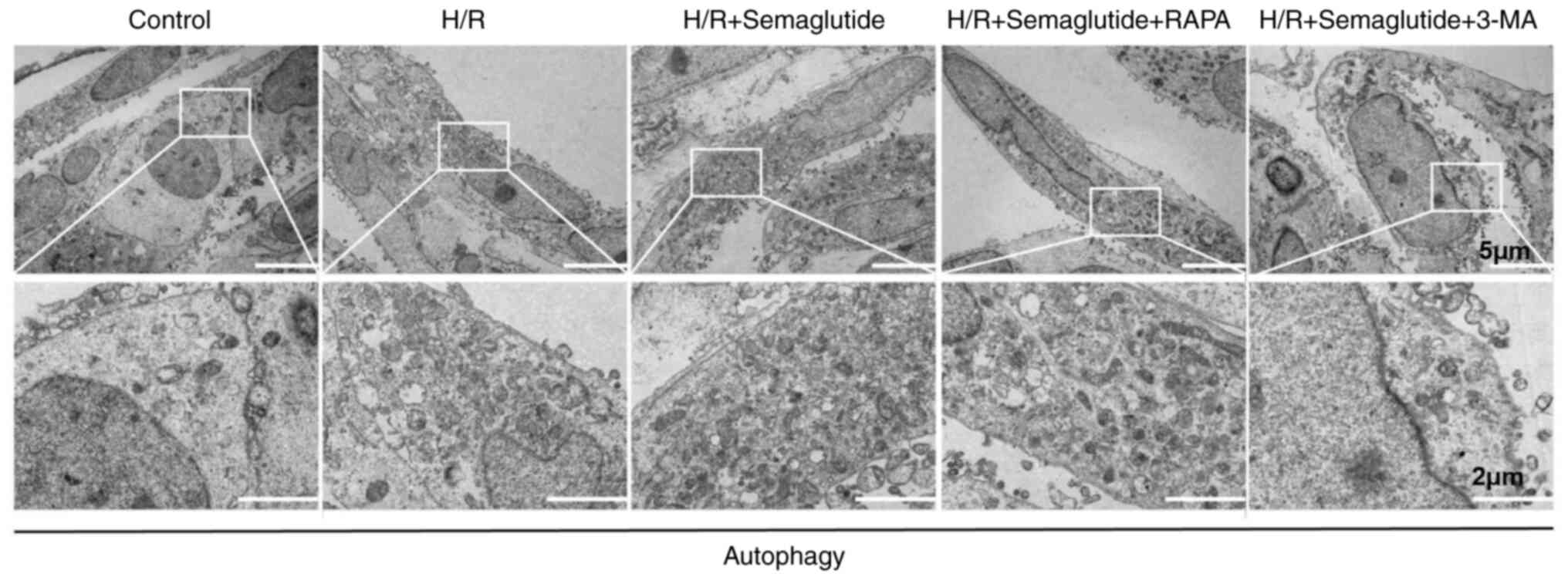
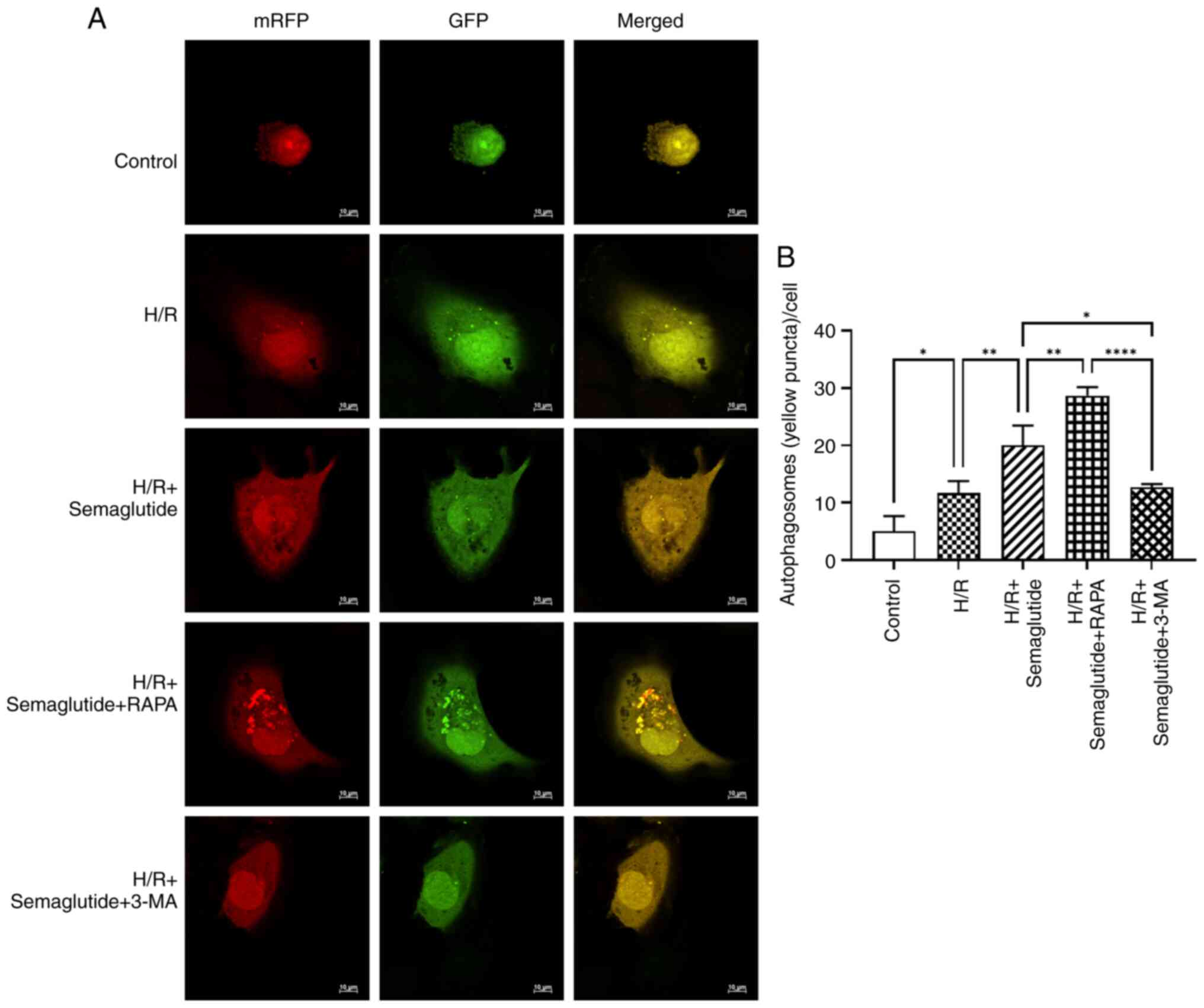
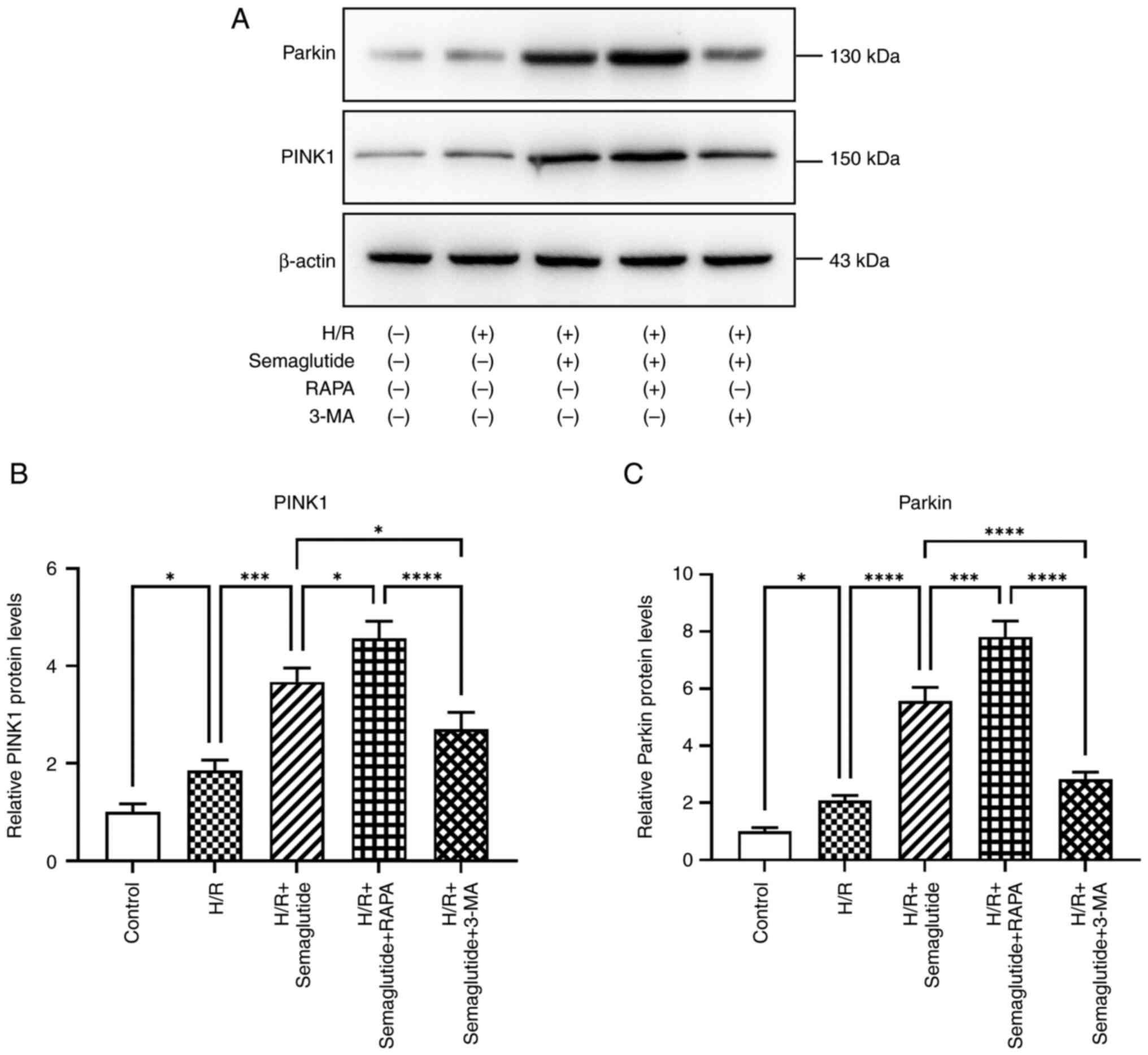
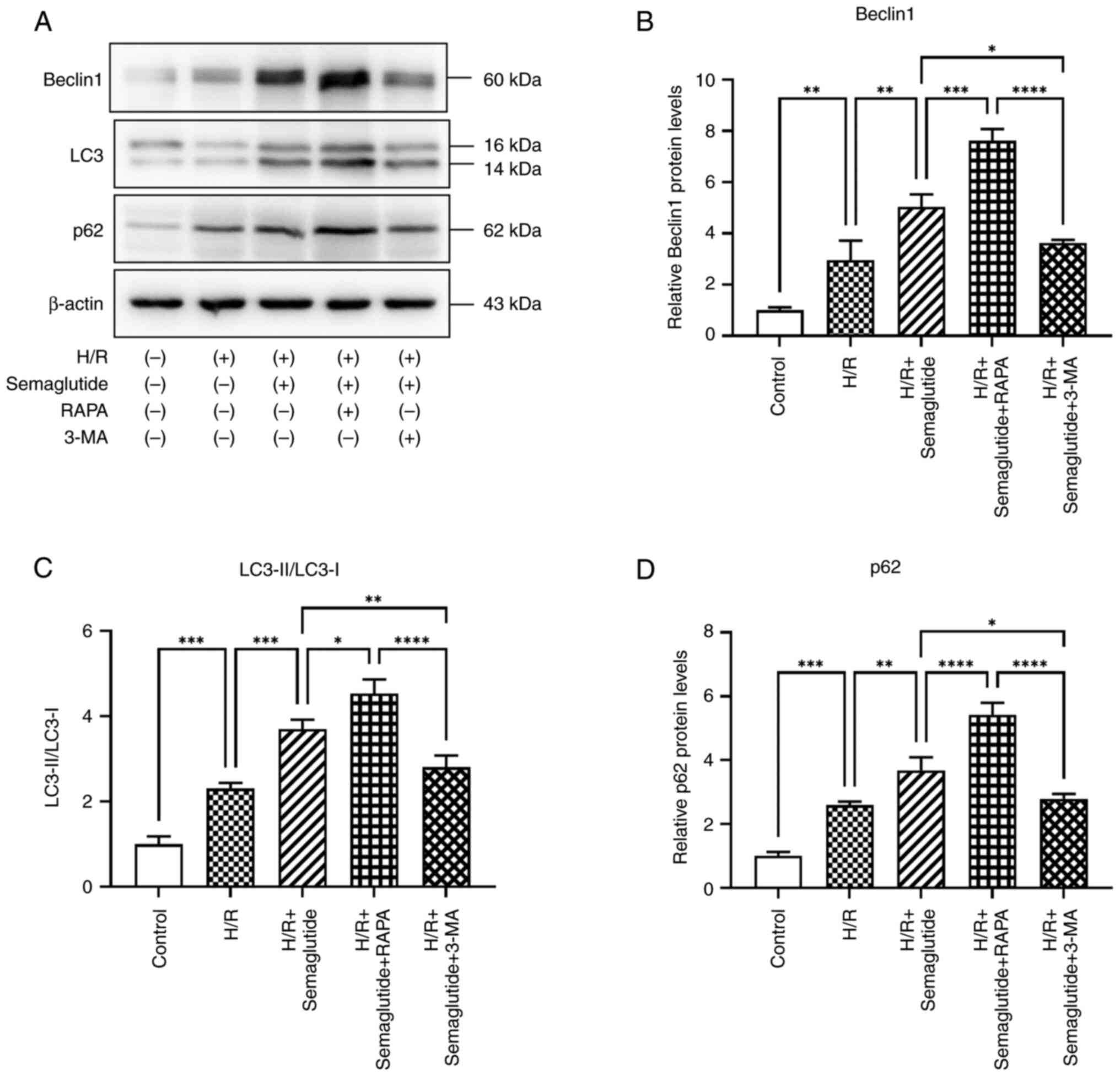
The present study aimed to explore how semaglutide can help protect the heart from injury caused by hypoxia/reoxygenation (H/R) and to reveal the underlying mechanism. Briefly, AC16 cardiomyocytes were subjected to 8 h of hypoxia followed by 12 h of reoxygenation to simulate H/R. The cells were divided into the following five groups: Normoxia, H/R, H/R + semaglutide, H/R + semaglutide + rapamycin (autophagy inducer), and H/R + semaglutide + 3‑methyladenine (3‑MA; autophagy inhibitor) groups. Cell viability was examined using a Cell Counting Kit‑8 assay, ATP levels were examined using a bioluminescent detection kit, reactive oxygen species (ROS) production was detected using a ROS Assay Kit, and monomeric red fluorescent protein (mRFP)‑green fluorescent protein (GFP)‑LC3 was assessed using tandem mRFP‑GFP fluorescence microscopy, while autophagosomes were observed using transmission electron microscopy. Furthermore, the protein expression levels of autophagy markers (LC3, p62 and Beclin1) and regulators of mitochondrial autophagy [PTEN‑induced putative kinase protein‑1 (PINK1) and Parkin] were examined using western blot analysis. In AC16 cells, exposure to hypoxia followed by reoxygenation led to an increase in oxidative stress. This condition also induced an increase in autophagy activity, as evidenced by an increase in the number of autophagosomes, elevated LC3‑II/LC3‑I ratio, and upregulation of p62, Beclin1, PINK1 and Parkin expression compared with those in cells cultured under normoxia. Notably, treatment with semaglutide or rapamycin effectively reversed the H/R‑induced oxidative stress, enhanced the changes in autophagy activity, autophagosome levels and elevated LC3BII/LC3BI ratio, and increased the expression levels of Beclin1, PINK1, Parkin and p62 expression. Notably, the use of 3‑MA exhibited distinct effects under the same conditions; it exacerbated oxidative stress, decreased autophagy activity and reduced the LC3BII/LC3BI ratio. In conclusion, semaglutide was found to reduce oxidative stress caused by H/R and to increase autophagy via the ROS/PINK1/Parkin/p62 pathway. The present study offers a novel understanding of how semaglutide may protect the heart, and suggests its potential use in the treatment of myocardial ischemia/reperfusion injury.
View Figures

Figure 1

Figure 2

Figure 3

Figure 4

Figure 5

Figure 6

Figure 7

Figure 8

View References

1 

Yetgin T, Manintveld OC, Boersma E, Kappetein AP, van Geuns RJ, Zijlstra F, Duncker DJ and van der Giessen WJ: Remote ischemic conditioning in percutaneous coronary intervention and coronary artery bypass grafting. Circ J. 76:2392–2404. 2012. View Article : Google Scholar : PubMed/NCBI

2 

Xu Y, Tang C, Tan S, Duan J, Tian H and Yang Y: Cardioprotective effect of isorhamnetin against myocardial ischemia reperfusion (I/R) injury in isolated rat heart through attenuation of apoptosis. J Cell Mol Med. 24:6253–6262. 2020. View Article : Google Scholar : PubMed/NCBI

3 

Wang A, Zhang H, Liang Z, Xu K, Qiu W, Tian Y, Guo H, Jia J, Xing E, Chen R, et al: U0126 attenuates ischemia/reperfusion-induced apoptosis and autophagy in myocardium through MEK/ERK/EGR-1 pathway. Eur J Pharmacol. 788:280–285. 2016. View Article : Google Scholar : PubMed/NCBI

4 

Dong Y, Undyala VV, Gottlieb RA, Mentzer RM Jr and Przyklenk K: Autophagy: Definition, molecular machinery, and potential role in myocardial ischemia-reperfusion injury. J Cardiovasc Pharmacol Ther. 15:220–230. 2010. View Article : Google Scholar : PubMed/NCBI

5 

Mokhtari B and Badalzadeh R: Protective and deleterious effects of autophagy in the setting of myocardial ischemia/reperfusion injury: An overview. Mol Biol Rep. 49:11081–11099. 2022. View Article : Google Scholar : PubMed/NCBI

6 

Onishi M, Yamano K, Sato M, Matsuda N and Okamoto K: Molecular mechanisms and physiological functions of mitophagy. EMBO J. 40:e1047052021. View Article : Google Scholar : PubMed/NCBI

7 

Turkieh A, El Masri Y, Pinet F and Dubois-Deruy E: Mitophagy regulation following myocardial infarction. Cells. 11:1992022. View Article : Google Scholar : PubMed/NCBI

8 

Gu J, Zhang T, Guo J, Chen K, Li H and Wang J: PINK1 Activation and translocation to mitochondria-associated membranes mediates mitophagy and protects against hepatic ischemia/reperfusion injury. Shock. 54:783–793. 2020. View Article : Google Scholar : PubMed/NCBI

9 

Leiter LA, Bain SC, Bhatt DL, Buse JB, Mazer CD, Pratley RE, Rasmussen S, Ripa MS, Vrazic H and Verma S: The effect of glucagon-like peptide-1 receptor agonists liraglutide and semaglutide on cardiovascular and renal outcomes across baseline blood pressure categories: Analysis of the LEADER and SUSTAIN 6 trials. Diabetes Obes Metab. 22:1690–1695. 2020. View Article : Google Scholar : PubMed/NCBI

10 

Nauck MA and Quast DR: Cardiovascular safety and benefits of semaglutide in patients with type 2 Diabetes: Findings from SUSTAIN 6 and PIONEER 6. Front Endocrinol (Lausanne). 12:6455662021. View Article : Google Scholar : PubMed/NCBI

11 

Ryan DH, Lingvay I, Colhoun HM, Deanfield J, Emerson SS, Kahn SE, Kushner RF, Marso S, Plutzky J, Brown-Frandsen K, et al: Semaglutide effects on cardiovascular outcomes in people with overweight or obesity (SELECT) rationale and design. Am Heart J. 229:61–69. 2020. View Article : Google Scholar : PubMed/NCBI

12 

Lin K, Wang A, Zhai C, Zhao Y, Hu H, Huang D, Zhai Q, Yan Y and Ge J: Semaglutide protects against diabetes-associated cardiac inflammation via Sirt3-dependent RKIP pathway. Br J Pharmacol. Dec 22–2024.doi: 10.1111/bph.17327 (Epub ahead of print). View Article : Google Scholar

13 

Blundell J, Finlayson G, Axelsen M, Flint A, Gibbons C, Kvist T and Hjerpsted JB: Effects of once-weekly semaglutide on appetite, energy intake, control of eating, food preference and body weight in subjects with obesity. Diabetes Obes Metab. 19:1242–1251. 2017. View Article : Google Scholar : PubMed/NCBI

14 

Zhu Q, Luo Y, Wen Y, Wang D, Li J and Fan Z: Semaglutide inhibits ischemia/reperfusion-induced cardiomyocyte apoptosis through activating PKG/PKCε/ERK1/2 pathway. Biochem Biophys Res Commun. 647:1–8. 2023. View Article : Google Scholar : PubMed/NCBI

15 

Ouyang M, Lu J, Ding Q, Qin T, Peng C and Guo Q: Knockdown of long non-coding RNA PVT1 protects human AC16 cardiomyocytes from hypoxia/reoxygenation-induced apoptosis and autophagy by regulating miR-186/Beclin-1 axis. Gene. 754:1447752020. View Article : Google Scholar : PubMed/NCBI

16 

Yan X and Hou J: miR-22 host gene enhances nuclear factor-kappa B activation to aggravate hypoxia-induced injury in AC16 Cardiomyocytes. Cell Transplant. 30:9636897219903232021. View Article : Google Scholar : PubMed/NCBI

17 

Yu CJ, Xia F, Ruan L, Hu SP, Zhu WJ and Yang K: Circ_0004771 promotes Hypoxia/Reoxygenation induced Cardiomyocyte injury via activation of mitogen-activated protein kinase signaling pathway. Int Heart J. 64:1125–1132. 2023. View Article : Google Scholar : PubMed/NCBI

18 

Davidson MM, Nesti C, Palenzuela L, Walker WF, Hernandez E, Protas L, Hirano M and Isaac ND: Novel cell lines derived from adult human ventricular cardiomyocytes. J Mol Cell Cardiol. 39:133–147. 2005. View Article : Google Scholar : PubMed/NCBI

19 

Sun K, Chen M, Kong X, Hou W, Xu Z and Liu L: Cardiac-specific Suv39h1 knockout ameliorates high-fat diet induced diabetic cardiomyopathy via regulating Hmox1 transcription. Life Sci. 360:1232582025. View Article : Google Scholar : PubMed/NCBI

20 

Li Z, Zhao J, Li H, Li Y and Lin C: Catalpol protects AC16 cells from hypoxia/reoxygenation injury by regulating the miR-22-3p/DPP4 axis. J Biochem Mol Toxicol. 36:e230342022. View Article : Google Scholar : PubMed/NCBI

21 

Peng CL, Jiang N, Zhao JF, Liu K, Jiang W and Cao PG: Metformin relieves H/R-induced cardiomyocyte injury through miR-19a/ACSL axis-possible therapeutic target for myocardial I/R injury. Toxicol Appl Pharmacol. 414:1154082021. View Article : Google Scholar : PubMed/NCBI

22 

Chang YF, Zhang D, Hu WM, Liu DX and Li L: Semaglutide-mediated protection against Aβ correlated with enhancement of autophagy and inhibition of apotosis. J Clin Neurosci. 81:234–239. 2020. View Article : Google Scholar : PubMed/NCBI

23 

Wu L, Zhan Y and Wang Y: Semaglutide may ameliorate fibrosis and inhibit epithelial-mesenchymal transition in intrauterine adhesion models. Int J Mol Sci. 25:61962024. View Article : Google Scholar : PubMed/NCBI

24 

Li Y, Zhou Y, Pei H and Li D: Disruption of BACH1 protects AC16 Cardiomyocytes against hypoxia/reoxygenation-evoked injury by diminishing CDKN3 transcription. Cardiovasc Toxicol. 24:1105–1115. 2024. View Article : Google Scholar : PubMed/NCBI

25 

Bajaj HS, Al-Jabri B and Verma S: Glucagon-like peptide-1 receptor agonists and cardiovascular protection in type 2 diabetes: A pathophysiology-based review of clinical implications. Curr Opin Cardiol. 33:665–675. 2018. View Article : Google Scholar : PubMed/NCBI

26 

Yao H, Zhang A, Li D, Wu Y, Wang CZ, Wan JY and Yuan CS: Comparative effectiveness of GLP-1 receptor agonists on glycaemic control, body weight, and lipid profile for type 2 diabetes: Systematic review and network meta-analysis. BMJ. 384:e0764102024. View Article : Google Scholar : PubMed/NCBI

27 

Marx N, Husain M, Lehrke M, Verma S and Sattar N: GLP-1 receptor agonists for the reduction of atherosclerotic cardiovascular risk in patients with type 2 diabetes. Circulation. 146:1882–1894. 2022. View Article : Google Scholar : PubMed/NCBI

28 

Kristensen SL, Rørth R, Jhund PS, Docherty KF, Sattar N, Preiss D, Køber L, Petrie MC and McMurray JJV: Cardiovascular, mortality, and kidney outcomes with GLP-1 receptor agonists in patients with type 2 diabetes: A systematic review and meta-analysis of cardiovascular outcome trials. Lancet Diabetes Endocrinol. 7:776–785. 2019. View Article : Google Scholar : PubMed/NCBI

29 

Marso SP, Daniels GH, Brown-Frandsen K, Kristensen P, Mann JF, Nauck MA, Nissen SE, Pocock S, Poulter NR, Ravn LS, et al: Liraglutide and cardiovascular outcomes in type 2 diabetes. N Engl J Med. 375:311–322. 2016. View Article : Google Scholar : PubMed/NCBI

30 

Gerstein HC, Colhoun HM, Dagenais GR, Diaz R, Lakshmanan M, Pais P, Probstfield J, Riesmeyer JS, Riddle MC, Rydén L, et al: Dulaglutide and cardiovascular outcomes in type 2 diabetes (REWIND): A double-blind, randomized placebo-controlled trial. Lancet. 394:121–130. 2019. View Article : Google Scholar : PubMed/NCBI

31 

Williams TC and Stewart E: Semaglutide and cardiovascular outcomes in patients with type 2 diabetes. N Engl J Med. 376:8912017.PubMed/NCBI

32 

Aroda VR, Ahmann A, Cariou B, Chow F, Davies MJ, Jódar E, Mehta R, Woo V and Lingvay I: Comparative efficacy, safety, and cardiovascular outcomes with once-weekly subcutaneous semaglutide in the treatment of type 2 diabetes: Insights from the SUS TAIN 1–7 trials. Diabetes Metab. 45:409–418. 2019. View Article : Google Scholar : PubMed/NCBI

33 

Davies M, Færch L, Jeppesen OK, Pakseresht A, Pedersen SD, Perreault L, Rosenstock J, Shimomura I, Viljoen A, Wadden TA, et al: Semaglutide 2·4 mg once a week in adults with overweight or obesity, and type 2 diabetes (STEP 2): A randomised, double-blind, double-dummy, placebo-controlled, phase 3 trial. Lancet. 397:971–984. 2021. View Article : Google Scholar : PubMed/NCBI

34 

Li A, Su X, Hu S and Wang Y: Efficacy and safety of oral semaglutide in type 2 diabetes mellitus: A systematic review and meta-analysis. Diabetes Res Clin Pract. 198:1106052023. View Article : Google Scholar : PubMed/NCBI

35 

Pan X, Yue L, Ban J, Ren L and Chen S: Effects of semaglutide on cardiac protein expression and cardiac function of obese mice. J Inflamm Res. 15:6409–6425. 2022. View Article : Google Scholar : PubMed/NCBI

36 

Li Q, Tuo X, Li B, Deng Z, Qiu Y and Xie H: Semaglutide attenuates excessive exercise-induced myocardial injury by inhibiting oxidative stress and inflammation in rats. Life Sci. 250:1175312020. View Article : Google Scholar : PubMed/NCBI

37 

Fan P, Xie XH, Chen CH, Peng X, Zhang P, Yang C and Wang YT: Molecular regulation mechanisms and interactions between reactive oxygen species and mitophagy. DNA Cell Biol. 38:10–22. 2019. View Article : Google Scholar : PubMed/NCBI

38 

Hamacher-Brady A, Brady NR and Gottlieb RA: Enhancing macroautophagy protects against ischemia/reperfusion injury in cardiac myocytes. J Biol Chem. 281:29776–29787. 2006. View Article : Google Scholar : PubMed/NCBI

39 

Chen Y, Azad MB and Gibson SB: Superoxide is the major reactive oxygen species regulating autophagy. Cell Death Differ. 16:1040–1052. 2009. View Article : Google Scholar : PubMed/NCBI

40 

Lei S, Feng Y, Huang P, Chen B, Bao K, Wu Q, Zhang H and Huang X: Ophiopogonin D'-induced mitophagy and mitochondrial damage are associated with dysregulation of the PINK1/Parkin signaling pathway in AC16 cells. Toxicology. 477:1532752022. View Article : Google Scholar : PubMed/NCBI

41 

Sciarretta S, Maejima Y, Zablocki D and Sadoshima J: The role of autophagy in the heart. Annu Rev Physiol. 80:1–26. 2018. View Article : Google Scholar : PubMed/NCBI

42 

Ashrafizadeh M, Ahmadi Z, Farkhondeh T and Samarghandian S: Autophagy as a molecular target of quercetin underlying its protective effects in human diseases. Arch Physiol Biochem. 128:200–208. 2022. View Article : Google Scholar : PubMed/NCBI

43 

Przyklenk K, Dong Y, Undyala VV and Whittaker P: Autophagy as a therapeutic target for ischaemia/reperfusion injury? Concepts, controversies, and challenges. Cardiovasc Res. 94:197–205. 2012. View Article : Google Scholar : PubMed/NCBI

44 

Sciarretta S, Yee D, Shenoy V, Nagarajan N and Sadoshima J: The importance of autophagy in cardioprotection. High Blood Press Cardiovasc Prev. 21:21–28. 2014. View Article : Google Scholar : PubMed/NCBI

45 

Nishida K, Taneike M and Otsu K: The role of autophagic degradation in the heart. J Mol Cell Cardiol. 78:73–79. 2015. View Article : Google Scholar : PubMed/NCBI

46 

Carmichael PL and Peng S: Doxorubicin-induced mitophagy and mitochondrial damage is associated with dysregulation of the PINK1/parkin pathway. Toxicol In Vitro. 51:1–10. 2018. View Article : Google Scholar : PubMed/NCBI

47 

Quinn PMJ, Moreira PI, Ambrósio AF and Alves CH: PINK1/PARKIN signalling in neurodegeneration and neuroinflammation. Acta Neuropathol Commun. 8:1892020. View Article : Google Scholar : PubMed/NCBI

48 

Zhou P, Xie W, Meng X, Zhai Y, Dong X, Zhang X, Sun G and Sun X: Notoginsenoside R1 ameliorates diabetic retinopathy through PINK1-dependent activation of mitophagy. Cells. 8:2132019. View Article : Google Scholar : PubMed/NCBI

49 

Jin C, Cao Y and Li Y: Bone mesenchymal stem cells origin exosomes are effective against sepsis-induced acute kidney injury in rat model. Int J Nanomedicine. 18:7745–7758. 2023. View Article : Google Scholar : PubMed/NCBI

50 

Bjørkøy G, Lamark T, Brech A, Outzen H, Perander M, Overvatn A, Stenmark H and Johansen T: p62/SQSTM1 forms protein aggregates degraded by autophagy and has a protective effect on huntingtin-induced cell death. J Cell Biol. 171:603–614. 2005. View Article : Google Scholar : PubMed/NCBI

51 

Komatsu M, Kurokawa H, Waguri S, Taguchi K, Kobayashi A, Ichimura Y, Sou YS, Ueno I, Sakamoto A, Tong KI, et al: The selective autophagy substrate p62 activates the stress responsive transcription factor Nrf2 through inactivation of Keap1. Nat Cell Biol. 12:213–223. 2010. View Article : Google Scholar : PubMed/NCBI

52 

Zhang Y, Mun SR, Linares JF, Ahn J, Towers CG, Ji CH, Fitzwalter BE, Holden MR, Mi W, Shi X, et al: ZZ-dependent regulation of p62/SQSTM1 in autophagy. Nat Commun. 9:43732018. View Article : Google Scholar : PubMed/NCBI

53 

Yang X, Zhang R, Nakahira K and Gu Z: Mitochondrial DNA mutation, diseases, and nutrient-regulated mitophagy. Annu Rev Nutr. 39:201–226. 2019. View Article : Google Scholar : PubMed/NCBI

54 

McLean BA, Wong CK, Kabir MG and Drucker DJ: Glucagon-like Peptide-1 receptor Tie2+ cells are essential for the cardioprotective actions of liraglutide in mice with experimental myocardial infarction. Mol Metab. 66:1016412022. View Article : Google Scholar : PubMed/NCBI

Related Articles

  • Abstract
  • View
  • Download
  • Twitter
Copy and paste a formatted citation
Spandidos Publications style
Li L, Jin L, Tian Y and Wang J: Semaglutide enhances PINK1/Parkin‑dependent mitophagy in hypoxia/reoxygenation‑induced cardiomyocyte injury. Mol Med Rep 31: 111, 2025.
APA
Li, L., Jin, L., Tian, Y., & Wang, J. (2025). Semaglutide enhances PINK1/Parkin‑dependent mitophagy in hypoxia/reoxygenation‑induced cardiomyocyte injury. Molecular Medicine Reports, 31, 111. https://doi.org/10.3892/mmr.2025.13476
MLA
Li, L., Jin, L., Tian, Y., Wang, J."Semaglutide enhances PINK1/Parkin‑dependent mitophagy in hypoxia/reoxygenation‑induced cardiomyocyte injury". Molecular Medicine Reports 31.5 (2025): 111.
Chicago
Li, L., Jin, L., Tian, Y., Wang, J."Semaglutide enhances PINK1/Parkin‑dependent mitophagy in hypoxia/reoxygenation‑induced cardiomyocyte injury". Molecular Medicine Reports 31, no. 5 (2025): 111. https://doi.org/10.3892/mmr.2025.13476
Copy and paste a formatted citation
x
Spandidos Publications style
Li L, Jin L, Tian Y and Wang J: Semaglutide enhances PINK1/Parkin‑dependent mitophagy in hypoxia/reoxygenation‑induced cardiomyocyte injury. Mol Med Rep 31: 111, 2025.
APA
Li, L., Jin, L., Tian, Y., & Wang, J. (2025). Semaglutide enhances PINK1/Parkin‑dependent mitophagy in hypoxia/reoxygenation‑induced cardiomyocyte injury. Molecular Medicine Reports, 31, 111. https://doi.org/10.3892/mmr.2025.13476
MLA
Li, L., Jin, L., Tian, Y., Wang, J."Semaglutide enhances PINK1/Parkin‑dependent mitophagy in hypoxia/reoxygenation‑induced cardiomyocyte injury". Molecular Medicine Reports 31.5 (2025): 111.
Chicago
Li, L., Jin, L., Tian, Y., Wang, J."Semaglutide enhances PINK1/Parkin‑dependent mitophagy in hypoxia/reoxygenation‑induced cardiomyocyte injury". Molecular Medicine Reports 31, no. 5 (2025): 111. https://doi.org/10.3892/mmr.2025.13476
Follow us
  • Twitter
  • LinkedIn
  • Facebook
About
  • Spandidos Publications
  • Careers
  • Cookie Policy
  • Privacy Policy
How can we help?
  • Help
  • Live Chat
  • Contact
  • Email to our Support Team