Spandidos Publications Logo
  • About
    • About Spandidos
    • Aims and Scopes
    • Abstracting and Indexing
    • Editorial Policies
    • Reprints and Permissions
    • Job Opportunities
    • Terms and Conditions
    • Contact
  • Journals
    • All Journals
    • Oncology Letters
      • Oncology Letters
      • Information for Authors
      • Editorial Policies
      • Editorial Board
      • Aims and Scope
      • Abstracting and Indexing
      • Bibliographic Information
      • Archive
    • International Journal of Oncology
      • International Journal of Oncology
      • Information for Authors
      • Editorial Policies
      • Editorial Board
      • Aims and Scope
      • Abstracting and Indexing
      • Bibliographic Information
      • Archive
    • Molecular and Clinical Oncology
      • Molecular and Clinical Oncology
      • Information for Authors
      • Editorial Policies
      • Editorial Board
      • Aims and Scope
      • Abstracting and Indexing
      • Bibliographic Information
      • Archive
    • Experimental and Therapeutic Medicine
      • Experimental and Therapeutic Medicine
      • Information for Authors
      • Editorial Policies
      • Editorial Board
      • Aims and Scope
      • Abstracting and Indexing
      • Bibliographic Information
      • Archive
    • International Journal of Molecular Medicine
      • International Journal of Molecular Medicine
      • Information for Authors
      • Editorial Policies
      • Editorial Board
      • Aims and Scope
      • Abstracting and Indexing
      • Bibliographic Information
      • Archive
    • Biomedical Reports
      • Biomedical Reports
      • Information for Authors
      • Editorial Policies
      • Editorial Board
      • Aims and Scope
      • Abstracting and Indexing
      • Bibliographic Information
      • Archive
    • Oncology Reports
      • Oncology Reports
      • Information for Authors
      • Editorial Policies
      • Editorial Board
      • Aims and Scope
      • Abstracting and Indexing
      • Bibliographic Information
      • Archive
    • Molecular Medicine Reports
      • Molecular Medicine Reports
      • Information for Authors
      • Editorial Policies
      • Editorial Board
      • Aims and Scope
      • Abstracting and Indexing
      • Bibliographic Information
      • Archive
    • World Academy of Sciences Journal
      • World Academy of Sciences Journal
      • Information for Authors
      • Editorial Policies
      • Editorial Board
      • Aims and Scope
      • Abstracting and Indexing
      • Bibliographic Information
      • Archive
    • International Journal of Functional Nutrition
      • International Journal of Functional Nutrition
      • Information for Authors
      • Editorial Policies
      • Editorial Board
      • Aims and Scope
      • Abstracting and Indexing
      • Bibliographic Information
      • Archive
    • International Journal of Epigenetics
      • International Journal of Epigenetics
      • Information for Authors
      • Editorial Policies
      • Editorial Board
      • Aims and Scope
      • Abstracting and Indexing
      • Bibliographic Information
      • Archive
    • Medicine International
      • Medicine International
      • Information for Authors
      • Editorial Policies
      • Editorial Board
      • Aims and Scope
      • Abstracting and Indexing
      • Bibliographic Information
      • Archive
  • Articles
  • Information
    • Information for Authors
    • Information for Reviewers
    • Information for Librarians
    • Information for Advertisers
    • Conferences
  • Language Editing
Spandidos Publications Logo
  • About
    • About Spandidos
    • Aims and Scopes
    • Abstracting and Indexing
    • Editorial Policies
    • Reprints and Permissions
    • Job Opportunities
    • Terms and Conditions
    • Contact
  • Journals
    • All Journals
    • Biomedical Reports
      • Information for Authors
      • Editorial Policies
      • Editorial Board
      • Aims and Scope
      • Abstracting and Indexing
      • Bibliographic Information
      • Archive
    • Experimental and Therapeutic Medicine
      • Information for Authors
      • Editorial Policies
      • Editorial Board
      • Aims and Scope
      • Abstracting and Indexing
      • Bibliographic Information
      • Archive
    • International Journal of Epigenetics
      • Information for Authors
      • Editorial Policies
      • Editorial Board
      • Aims and Scope
      • Abstracting and Indexing
      • Bibliographic Information
      • Archive
    • International Journal of Functional Nutrition
      • Information for Authors
      • Editorial Policies
      • Editorial Board
      • Aims and Scope
      • Abstracting and Indexing
      • Bibliographic Information
      • Archive
    • International Journal of Molecular Medicine
      • Information for Authors
      • Editorial Policies
      • Editorial Board
      • Aims and Scope
      • Abstracting and Indexing
      • Bibliographic Information
      • Archive
    • International Journal of Oncology
      • Information for Authors
      • Editorial Policies
      • Editorial Board
      • Aims and Scope
      • Abstracting and Indexing
      • Bibliographic Information
      • Archive
    • Medicine International
      • Information for Authors
      • Editorial Policies
      • Editorial Board
      • Aims and Scope
      • Abstracting and Indexing
      • Bibliographic Information
      • Archive
    • Molecular and Clinical Oncology
      • Information for Authors
      • Editorial Policies
      • Editorial Board
      • Aims and Scope
      • Abstracting and Indexing
      • Bibliographic Information
      • Archive
    • Molecular Medicine Reports
      • Information for Authors
      • Editorial Policies
      • Editorial Board
      • Aims and Scope
      • Abstracting and Indexing
      • Bibliographic Information
      • Archive
    • Oncology Letters
      • Information for Authors
      • Editorial Policies
      • Editorial Board
      • Aims and Scope
      • Abstracting and Indexing
      • Bibliographic Information
      • Archive
    • Oncology Reports
      • Information for Authors
      • Editorial Policies
      • Editorial Board
      • Aims and Scope
      • Abstracting and Indexing
      • Bibliographic Information
      • Archive
    • World Academy of Sciences Journal
      • Information for Authors
      • Editorial Policies
      • Editorial Board
      • Aims and Scope
      • Abstracting and Indexing
      • Bibliographic Information
      • Archive
  • Articles
  • Information
    • For Authors
    • For Reviewers
    • For Librarians
    • For Advertisers
    • Conferences
  • Language Editing
Login Register Submit
  • This site uses cookies
  • You can change your cookie settings at any time by following the instructions in our Cookie Policy. To find out more, you may read our Privacy Policy.

    I agree
Search articles by DOI, keyword, author or affiliation
Search
Advanced Search
presentation
Molecular Medicine Reports
Join Editorial Board Propose a Special Issue
Print ISSN: 1791-2997 Online ISSN: 1791-3004
Journal Cover
May-2025 Volume 31 Issue 5

Full Size Image

Sign up for eToc alerts
Recommend to Library

Journals

International Journal of Molecular Medicine

International Journal of Molecular Medicine

International Journal of Molecular Medicine is an international journal devoted to molecular mechanisms of human disease.

International Journal of Oncology

International Journal of Oncology

International Journal of Oncology is an international journal devoted to oncology research and cancer treatment.

Molecular Medicine Reports

Molecular Medicine Reports

Covers molecular medicine topics such as pharmacology, pathology, genetics, neuroscience, infectious diseases, molecular cardiology, and molecular surgery.

Oncology Reports

Oncology Reports

Oncology Reports is an international journal devoted to fundamental and applied research in Oncology.

Experimental and Therapeutic Medicine

Experimental and Therapeutic Medicine

Experimental and Therapeutic Medicine is an international journal devoted to laboratory and clinical medicine.

Oncology Letters

Oncology Letters

Oncology Letters is an international journal devoted to Experimental and Clinical Oncology.

Biomedical Reports

Biomedical Reports

Explores a wide range of biological and medical fields, including pharmacology, genetics, microbiology, neuroscience, and molecular cardiology.

Molecular and Clinical Oncology

Molecular and Clinical Oncology

International journal addressing all aspects of oncology research, from tumorigenesis and oncogenes to chemotherapy and metastasis.

World Academy of Sciences Journal

World Academy of Sciences Journal

Multidisciplinary open-access journal spanning biochemistry, genetics, neuroscience, environmental health, and synthetic biology.

International Journal of Functional Nutrition

International Journal of Functional Nutrition

Open-access journal combining biochemistry, pharmacology, immunology, and genetics to advance health through functional nutrition.

International Journal of Epigenetics

International Journal of Epigenetics

Publishes open-access research on using epigenetics to advance understanding and treatment of human disease.

Medicine International

Medicine International

An International Open Access Journal Devoted to General Medicine.

Journal Cover
May-2025 Volume 31 Issue 5

Full Size Image

Sign up for eToc alerts
Recommend to Library

  • Article
  • Citations
    • Cite This Article
    • Download Citation
    • Create Citation Alert
    • Remove Citation Alert
    • Cited By
  • Similar Articles
    • Related Articles (in Spandidos Publications)
    • Similar Articles (Google Scholar)
    • Similar Articles (PubMed)
  • Download PDF
  • Download XML
  • View XML

  • Supplementary Files
    • Supplementary_Data1.pdf
    • Supplementary_Data2.pdf
Article Open Access

Dysregulation of the SREBP pathway is associated with poor prognosis and serves as a potential biomarker for the diagnosis of hepatocellular carcinoma

  • Authors:
    • Xiaodan Li
    • Yuhan Wang
    • Junchi Liu
    • Tianmiao Gao
    • Lizhi Cao
    • Meng Yan
    • Na Li
  • View Affiliations / Copyright

    Affiliations: Graduate School, Shanghai University of Traditional Chinese Medicine, Shanghai 201203, P.R. China, Scientific Research Department, Shanghai University of Medicine amd Health Sciences Affiliated Zhoupu Hospital, Shanghai 201318, P.R. China, School of Medical Technology, Shanghai University of Medicine and Health Sciences, Shanghai 201318, P.R. China, Center for Excellence in Molecular Cell Science, Chinese Academy of Sciences, Shanghai 200031, P.R. China, Scientific Research Department, Shanghai University of Medicine amd Health Sciences Affiliated Zhoupu Hospital, Shanghai 201318, P.R. China
    Copyright: © Li et al. This is an open access article distributed under the terms of Creative Commons Attribution License.
  • Article Number: 112
    |
    Published online on: February 26, 2025
       https://doi.org/10.3892/mmr.2025.13477
  • Expand metrics +
Metrics: Total Views: 0 (Spandidos Publications: | PMC Statistics: )
Metrics: Total PDF Downloads: 0 (Spandidos Publications: | PMC Statistics: )
Cited By (CrossRef): 0 citations Loading Articles...

This article is mentioned in:


Abstract

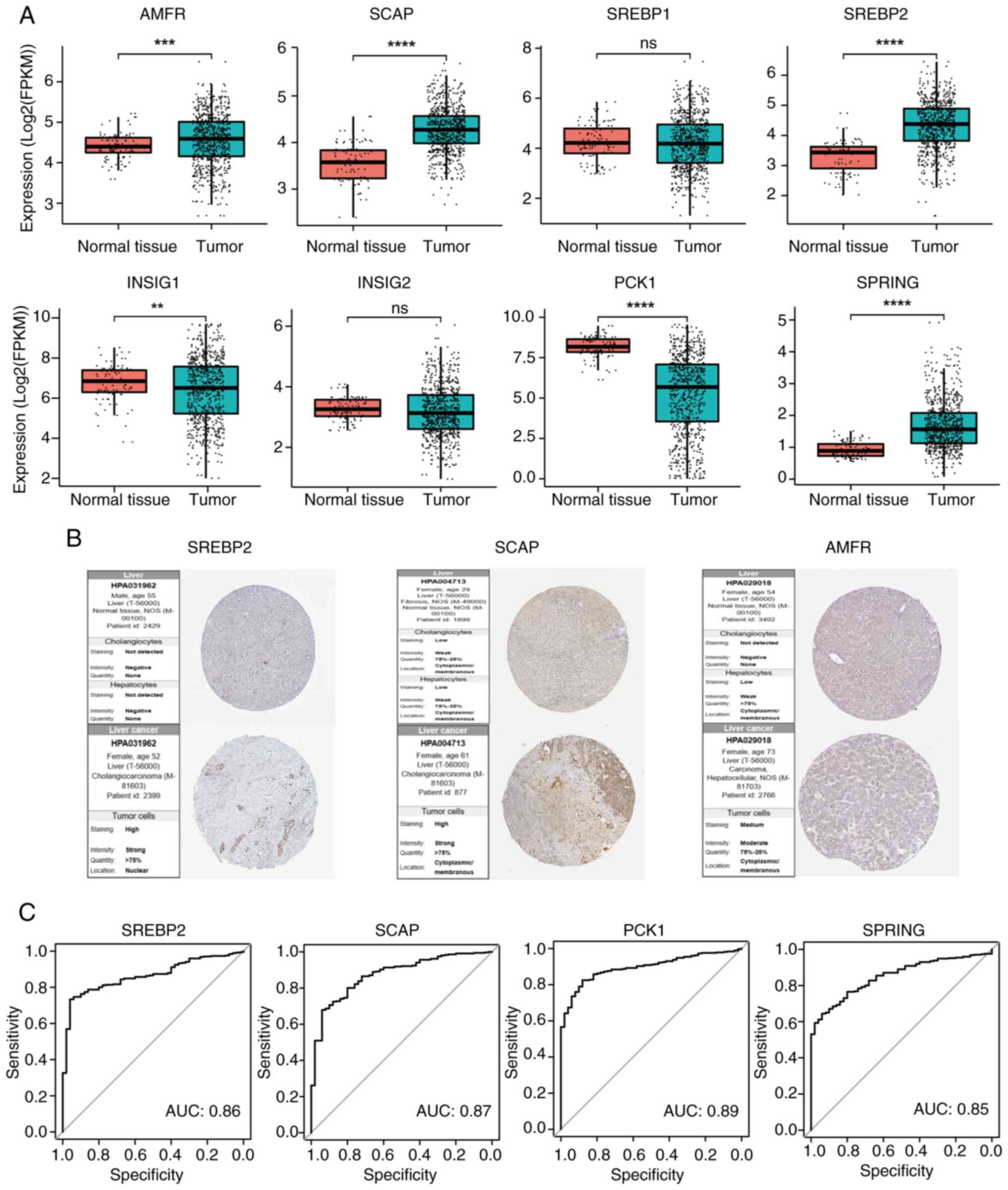
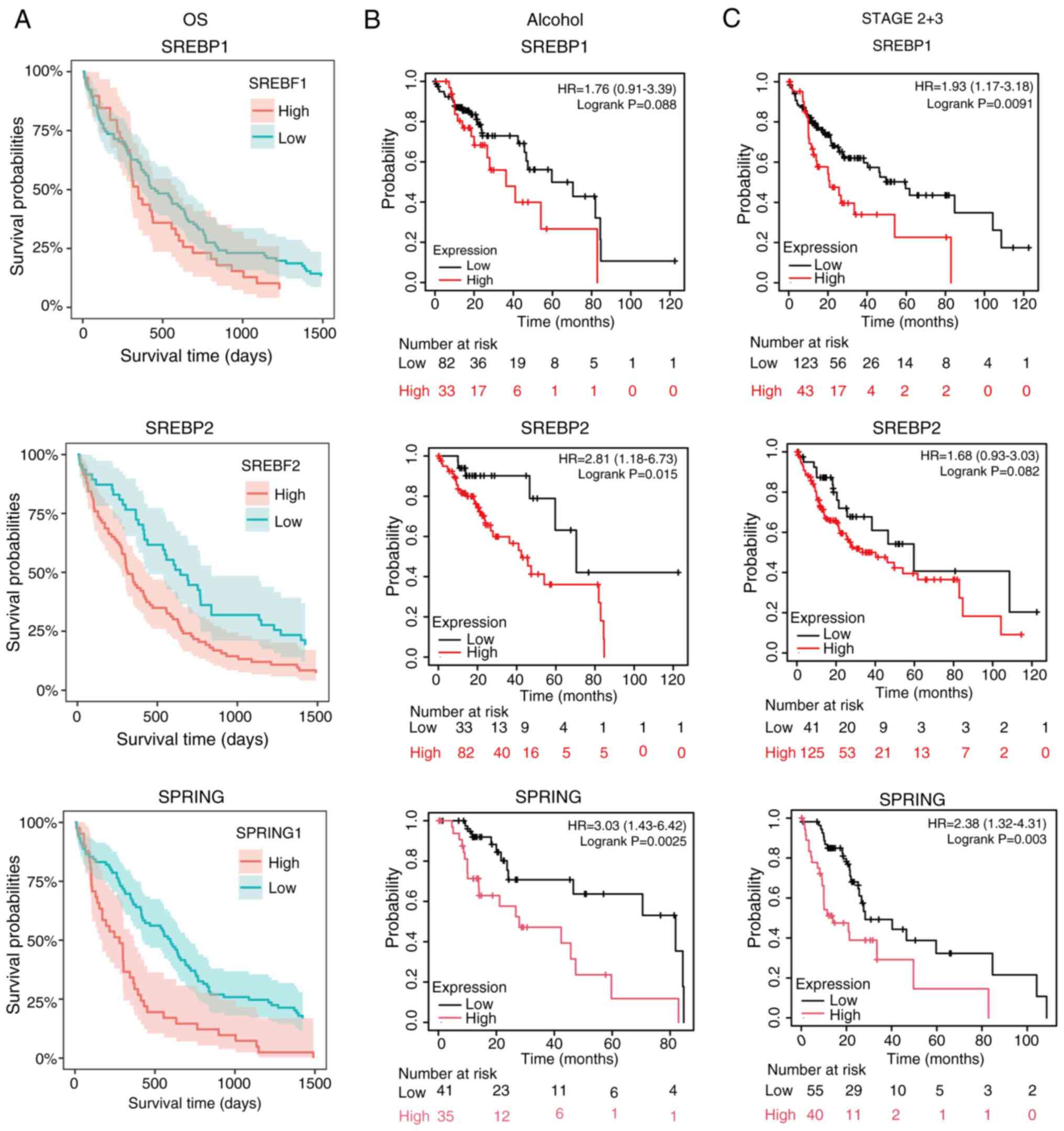
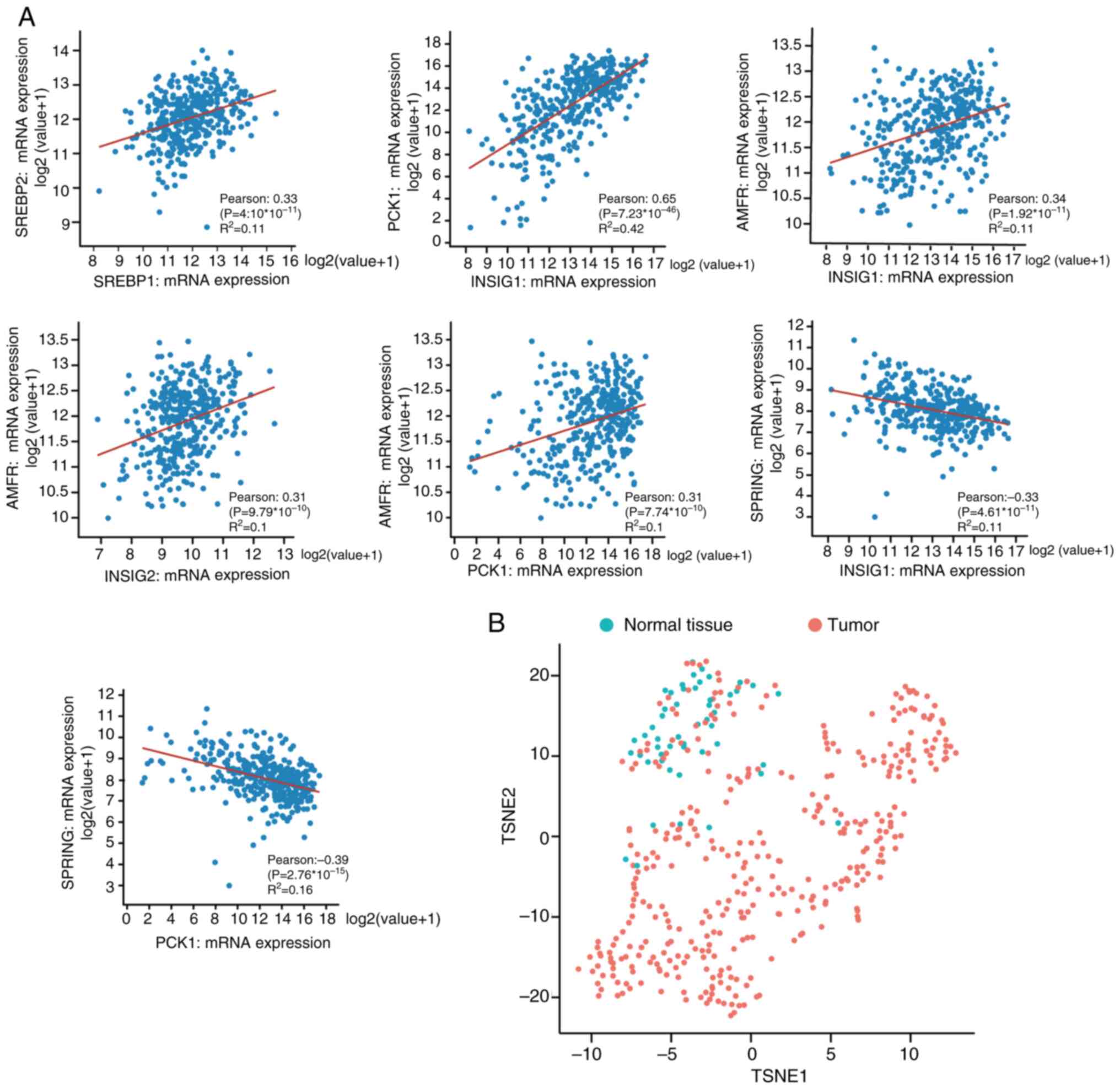
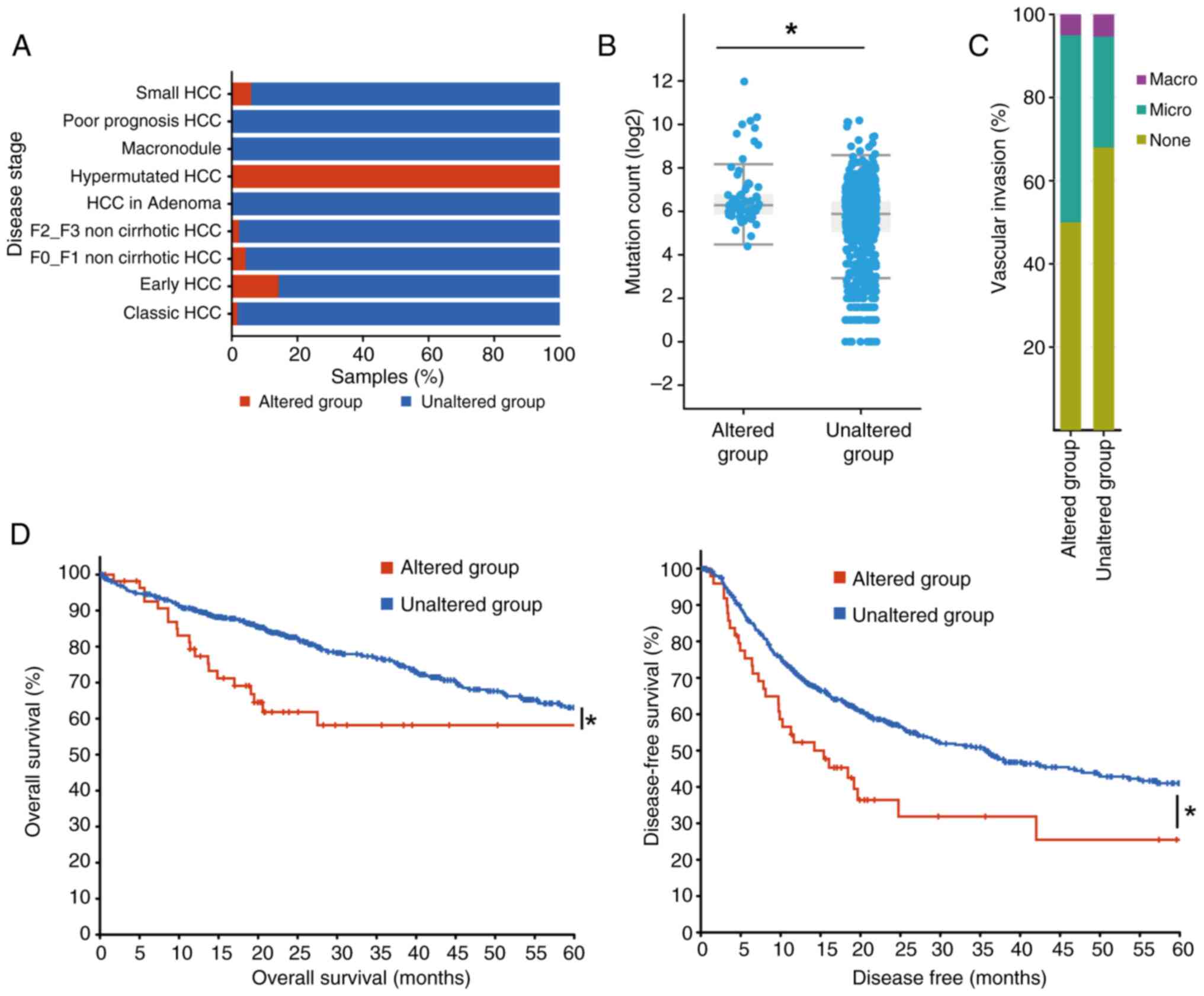
Hepatocellular carcinoma (HCC) is a severe disease associated with a poor prognosis. The role of aberrant lipid metabolism in the development and progression of HCC necessitates detailed characterization. Sterol regulatory element‑binding proteins (SREBPs), pivotal transcription factors governing lipogenesis, are central to this process. The present study aimed to assess the regulation of HCC by the SREBP signaling pathway, examining the expression levels of genes in this pathway, the clinical implications and its prognostic value using the Kaplan‑Meier method. Pearson's correlation coefficient was used to identify the co‑expression of SREBP pathway genes in HCC. Genomic analysis examined the frequency of TP53 mutations in groups with and without SREBP pathway alterations. In addition, small interfering RNAs targeting genes of the SREBP pathway were transfected into Huh‑7 and HCC‑LM3 cell lines. Subsequently, Cell Counting Kit‑8 and Transwell assays were carried out to evaluate the viability and invasion of these cells. Reverse transcription‑quantitative PCR and western blotting were performed to investigate the expression of TP53 in response to silencing of SREBP pathway genes. Dysregulation of SREBP pathway genes was detected in HCC tissues compared with in normal liver tissues, and predicted a poor prognosis. Silencing these genes reduced the viability and invasion of HCC cells. Furthermore, abnormal SREBP pathway gene expression was associated with poor survival rates, vascular invasion, advanced tumor stage and an increased incidence of TP53 mutations. By contrast, knockdown of SREBP pathway genes decreased mutant TP53 expression at both the mRNA and protein levels in HCC cells. The findings of the present study suggested that SREBP pathway genes could serve as promising prognostic biomarkers for HCC. The combined analysis of individual gene expression levels offers offer novel insights into the pathogenesis and progression of HCC.
View Figures

Figure 1

Figure 2

Figure 3

Figure 4

Figure 5

Figure 6

Figure 7

View References

1 

Llovet JM, Zucman-Rossi J, Pikarsky E, Sangro B, Schwartz M, Sherman M and Gores G: Hepatocellular carcinoma. Nat Rev Dis Primers. 2:160182016. View Article : Google Scholar : PubMed/NCBI

2 

Villanueva A: Hepatocellular carcinoma. N Engl J Med. 380:1450–1462. 2019. View Article : Google Scholar : PubMed/NCBI

3 

Llovet JM, Kelley RK, Villanueva A, Singal AG, Pikarsky E, Roayaie S, Lencioni R, Koike K, Zucman-Rossi J and Finn RS: Hepatocellular carcinoma. Nat Rev Dis Primers. 7:62021. View Article : Google Scholar : PubMed/NCBI

4 

Berndt N, Eckstein J, Heucke N, Gajowski R, Stockmann M, Meierhofer D and Holzhutter HG: Characterization of lipid and lipid droplet metabolism in human HCC. Cells. 8:5122019. View Article : Google Scholar : PubMed/NCBI

5 

Nakagawa H, Hayata Y, Kawamura S, Yamada T, Fujiwara N and Koike K: Lipid metabolic reprogramming in hepatocellular carcinoma. Cancers (Basel). 10:4472018. View Article : Google Scholar : PubMed/NCBI

6 

Hao Y, Li D, Xu Y, Ouyang J, Wang Y, Zhang Y, Li B, Xie L and Qin G: Investigation of lipid metabolism dysregulation and the effects on immune microenvironments in pan-cancer using multiple omics data. BMC Bioinformatics. 20 (Suppl 7):S1952019. View Article : Google Scholar : PubMed/NCBI

7 

Hu B, Lin JZ, Yang XB and Sang XT: Aberrant lipid metabolism in hepatocellular carcinoma cells as well as immune microenvironment: A review. Cell Prolif. 53:e127722020. View Article : Google Scholar : PubMed/NCBI

8 

Biswas SK: Metabolic reprogramming of immune cells in cancer progression. Immunity. 43:435–449. 2015. View Article : Google Scholar : PubMed/NCBI

9 

Smulan LJ, Ding W, Freinkman E, Gujja S, Edwards YJK and Walker AK: Cholesterol-Independent SREBP-1 maturation is linked to ARF1 inactivation. Cell Rep. 16:9–18. 2016. View Article : Google Scholar : PubMed/NCBI

10 

Daemen S, Kutmon M and Evelo CT: A pathway approach to investigate the function and regulation of SREBPs. Genes Nutr. 8:289–300. 2013. View Article : Google Scholar : PubMed/NCBI

11 

Yokoyama C, Wang X, Briggs MR, Admon A, Wu J, Hua X, Goldstein JL and Brown MS: SREBP-1, a basic-helix-loop-helix-leucine zipper protein that controls transcription of the low density lipoprotein receptor gene. Cell. 75:187–197. 1993. View Article : Google Scholar : PubMed/NCBI

12 

Yang T, Espenshade PJ, Wright ME, Yabe D, Gong Y, Aebersold R, Goldstein JL and Brown MS: Crucial step in cholesterol homeostasis: Sterols promote binding of SCAP to INSIG-1, a membrane protein that facilitates retention of SREBPs in ER. Cell. 110:489–500. 2002. View Article : Google Scholar : PubMed/NCBI

13 

Yabe D, Brown MS and Goldstein JL: Insig-2, a second endoplasmic reticulum protein that binds SCAP and blocks export of sterol regulatory element-binding proteins. Proc Natl Acad Sci USA. 99:12753–12758. 2002. View Article : Google Scholar : PubMed/NCBI

14 

Lee JN, Song B, DeBose-Boyd RA and Ye J: Sterol-regulated degradation of Insig-1 mediated by the membrane-bound ubiquitin ligase gp78. J Biol Chem. 281:39308–39315. 2006. View Article : Google Scholar : PubMed/NCBI

15 

Krycer JR, Sharpe LJ, Luu W and Brown AJ: The Akt-SREBP nexus: Cell signaling meets lipid metabolism. Trends Endocrinol Metab. 21:268–276. 2010. View Article : Google Scholar : PubMed/NCBI

16 

Duvel K, Yecies JL, Menon S, Raman P, Lipovsky AI, Souza AL, Triantafellow E, Ma Q, Gorski R, Cleaver S, et al: Activation of a metabolic gene regulatory network downstream of mTOR complex 1. Mol Cell. 39:171–183. 2010. View Article : Google Scholar : PubMed/NCBI

17 

Li N, Li X, Ding Y, Liu X, Diggle K, Kisseleva T and Brenner DA: SREBP regulation of lipid metabolism in liver disease, and therapeutic strategies. Biomedicines. 11:32802023. View Article : Google Scholar : PubMed/NCBI

18 

Li N, Zhou ZS, Shen Y, Xu J, Miao HH, Xiong Y, Xu F, Li BL, Luo J and Song BL: Inhibition of the sterol regulatory element-binding protein pathway suppresses hepatocellular carcinoma by repressing inflammation in mice. Hepatology. 65:1936–1947. 2017. View Article : Google Scholar : PubMed/NCBI

19 

Tang JJ, Li JG, Qi W, Qiu WW, Li PS, Li BL and Song BL: Inhibition of SREBP by a small molecule, betulin, improves hyperlipidemia and insulin resistance and reduces atherosclerotic plaques. Cell Metab. 13:44–56. 2011. View Article : Google Scholar : PubMed/NCBI

20 

Xu D, Wang Z, Xia Y, Shao F, Xia W, Wei Y, Li X, Qian X, Lee JH, Du L, et al: The gluconeogenic enzyme PCK1 phosphorylates INSIG1/2 for lipogenesis. Nature. 580:530–535. 2020. View Article : Google Scholar : PubMed/NCBI

21 

Loregger A, Raaben M, Nieuwenhuis J, Tan JME, Jae LT, van den Hengel LG, Hendrix S, van den Berg M, Scheij S, Song JY, et al: Haploid genetic screens identify SPRING/C12ORF49 as a determinant of SREBP signaling and cholesterol metabolism. Nat Commun. 11:11282020. View Article : Google Scholar : PubMed/NCBI

22 

Robin X, Turck N, Hainard A, Tiberti N, Lisacek F, Sanchez JC and Müller M: pROC: An open-source package for R and S+ to analyze and compare ROC curves. BMC Bioinformatics. 12:772011. View Article : Google Scholar : PubMed/NCBI

23 

Camp RL, Dolled-Filhart M and Rimm DL: X-tile: A new bio-informatics tool for biomarker assessment and outcome-based cut-point optimization. Clin Cancer Res. 10:7252–7259. 2004. View Article : Google Scholar : PubMed/NCBI

24 

Kawamura S, Matsushita Y, Kurosaki S, Tange M, Fujiwara N, Hayata Y, Hayakawa Y, Suzuki N, Hata M, Tsuboi M, et al: Inhibiting SCAP/SREBP exacerbates liver injury and carcinogenesis in murine nonalcoholic steatohepatitis. J Clin Invest. 132:e1518952022. View Article : Google Scholar : PubMed/NCBI

25 

Chen S, Zhou Y, Chen Y and Gu J: fastp: an ultra-fast all-in-one FASTQ preprocessor. Bioinformatics. 34:884–890. 2018. View Article : Google Scholar

26 

Dobin A, Davis CA, Schlesinger F, Drenkow J, Zaleski C, Jha S, Batut P, Chaisson M and Gingeras TR: STAR: Ultrafast universal RNA-seq aligner. Bioinformatics. 29:15–21. 2013. View Article : Google Scholar : PubMed/NCBI

27 

Pertea M, Pertea GM, Antonescu CM, Chang TC, Mendell JT and Salzberg SL: StringTie enables improved reconstruction of a transcriptome from RNA-seq reads. Nat Biotechnol. 33:290–295. 2015. View Article : Google Scholar : PubMed/NCBI

28 

Pertea M, Kim D, Pertea GM, Leek JT and Salzberg SL: Transcript-level expression analysis of RNA-seq experiments with HISAT, StringTie and Ballgown. Nat Protoc. 11:1650–1667. 2016. View Article : Google Scholar : PubMed/NCBI

29 

Kovaka S, Zimin AV, Pertea GM, Razaghi R, Salzberg SL and Pertea M: Transcriptome assembly from long-read RNA-seq alignments with StringTie2. Genome Biol. 20:2782019. View Article : Google Scholar : PubMed/NCBI

30 

Menyhart O, Nagy A and Gyorffy B: Determining consistent prognostic biomarkers of overall survival and vascular invasion in hepatocellular carcinoma. R Soc Open Sci. 5:1810062018. View Article : Google Scholar : PubMed/NCBI

31 

Gyorffy B: Integrated analysis of public datasets for the discovery and validation of survival-associated genes in solid tumors. Innovation (Camb). 5:1006252024.PubMed/NCBI

32 

Gyorffy B: Transcriptome-level discovery of survival-associated biomarkers and therapy targets in non-small-cell lung cancer. Br J Pharmacol. 181:362–374. 2024. View Article : Google Scholar : PubMed/NCBI

33 

Harding JJ, Nandakumar S, Armenia J, Khalil DN, Albano M, Ly M, Shia J, Hechtman JF, Kundra R, El Dika I, et al: Prospective genotyping of hepatocellular carcinoma: Clinical implications of next-generation sequencing for matching patients to targeted and immune therapies. Clin Cancer Res. 25:2116–2126. 2019. View Article : Google Scholar : PubMed/NCBI

34 

Schulze K, Imbeaud S, Letouze E, Alexandrov LB, Calderaro J, Rebouissou S, Couchy G, Meiller C, Shinde J, Soysouvanh F, et al: Exome sequencing of hepatocellular carcinomas identifies new mutational signatures and potential therapeutic targets. Nat Genet. 47:505–511. 2015. View Article : Google Scholar : PubMed/NCBI

35 

Ahn SM, Jang SJ, Shim JH, Kim D, Hong SM, Sung CO, Baek D, Haq F, Ansari AA, Lee SY, et al: Genomic portrait of resectable hepatocellular carcinomas: Implications of RB1 and FGF19 aberrations for patient stratification. Hepatology. 60:1972–1982. 2014. View Article : Google Scholar : PubMed/NCBI

36 

Livak KJ and Schmittgen TD: Analysis of relative gene expression data using real-time quantitative PCR and the 2(−Delta Delta C(T)) Method. Methods. 25:402–408. 2001. View Article : Google Scholar : PubMed/NCBI

37 

You M and Crabb DW: Molecular mechanisms of alcoholic fatty liver: Role of sterol regulatory element-binding proteins. Alcohol. 34:39–43. 2004. View Article : Google Scholar : PubMed/NCBI

38 

Chen M, Zhang J, Sampieri K, Clohessy JG, Mendez L, Gonzalez-Billalabeitia E, Liu XS, Lee YR, Fung J, Katon JM, et al: An aberrant SREBP-dependent lipogenic program promotes metastatic prostate cancer. Nat Genet. 50:206–218. 2018. View Article : Google Scholar : PubMed/NCBI

39 

Wen YA, Xiong X, Zaytseva YY, Napier DL, Vallee E, Li AT, Wang C, Weiss HL, Evers BM and Gao T: Downregulation of SREBP inhibits tumor growth and initiation by altering cellular metabolism in colon cancer. Cell Death Dis. 9:2652018. View Article : Google Scholar : PubMed/NCBI

40 

Shimano H and Sato R: SREBP-regulated lipid metabolism: Convergent physiology-divergent pathophysiology. Nat Rev Endocrinol. 13:710–730. 2017. View Article : Google Scholar : PubMed/NCBI

41 

Zhang Y, Hao J, Zheng Y and Jing D: SREBP: A potential therapeutic target for cancer. Front Oncol. 11:6415782021.

42 

Ahmad I, Muneer S and Sharif A: Role of SREBP pathway and its therapeutic potential in autoimmune diseases. Immunol Let. 233:1–9. 2021.

43 

Kim Y and Park C: SREBPs as potential therapeutic targets for rheumatoid arthritis. BMB Reports. 51:1–7. 2018. View Article : Google Scholar : PubMed/NCBI

44 

Li X, Chen YT, Hu P and Huang WC: Fatostatin displays high antitumor activity in prostate cancer by blocking SREBP-regulated metabolic pathways and androgen receptor signaling. Mol Cancer Ther. 13:855–866. 2014. View Article : Google Scholar : PubMed/NCBI

45 

Lo AK, Lung RW, Dawson CW, Young LS, Ko CW, Yeung WW, Kang W, To KF and Lo KW: Activation of sterol regulatory element-binding protein 1 (SREBP1)-mediated lipogenesis by the Epstein-Barr virus-encoded latent membrane protein 1 (LMP1) promotes cell proliferation and progression of nasopharyngeal carcinoma. J Pathol. 246:180–190. 2018. View Article : Google Scholar : PubMed/NCBI

46 

Shi Z, Zhou Q, Gao S, Li W, Li X, Liu Z, Jin P and Jiang J: Silibinin inhibits endometrial carcinoma via blocking pathways of STAT3 activation and SREBP1-mediated lipid accumulation. Life Sci. 217:70–80. 2019. View Article : Google Scholar : PubMed/NCBI

47 

Zhang N, Zhang H, Liu Y, Su P, Zhang J, Wang X, Sun M, Chen B, Zhao W, Wang L, et al: SREBP1, targeted by miR-18a-5p, modulates epithelial-mesenchymal transition in breast cancer via forming a co-repressor complex with Snail and HDAC1/2. Cell Death Differ. 26:843–859. 2019. View Article : Google Scholar : PubMed/NCBI

48 

Yin F, Feng F, Wang L, Wang X, Li Z and Cao Y: SREBP-1 inhibitor betulin enhances the antitumor effect of sorafenib on hepatocellular carcinoma via restricting cellular glycolytic activity. Cell Death Dis. 10:6722019. View Article : Google Scholar : PubMed/NCBI

49 

Li C, Yang W, Zhang J, Zheng X, Yao Y, Tu K and Liu Q: SREBP-1 has a prognostic role and contributes to invasion and metastasis in human hepatocellular carcinoma. Int J Mol Sci. 15:7124–7138. 2014. View Article : Google Scholar : PubMed/NCBI

50 

Moon SH, Huang CH, Houlihan SL, Regunath K, Freed-Pastor WA, Morris JP IV, Tschaharganeh DF, Kastenhuber ER, Barsotti AM, Culp-Hill R, et al: p53 Represses the mevalonate pathway to mediate tumor suppression. Cell. 176:564–580. e192019. View Article : Google Scholar : PubMed/NCBI

51 

Restle A, Färber M, Baumann C, Böhringer M, Scheidtmann KH, Müller-Tidow C and Wiesmüller L: Dissecting the role of p53 phosphorylation in homologous recombination provides new clues for gain-of-function mutants. Nucleic Acids Res. 36:5362–5375. 2008. View Article : Google Scholar : PubMed/NCBI

52 

Guo P, Qiu Y, Ma X, Li T, Ma X, Zhu L, Lin Y and Han L: Tripartite motif 31 promotes resistance to anoikis of hepatocarcinoma cells through regulation of p53-AMPK axis. Exp Cell Res. 368:59–66. 2018. View Article : Google Scholar : PubMed/NCBI

53 

Cui X, Lin Z, Chen Y, Mao X, Ni W, Liu J, Zhou H, Shan X, Chen L, Lv J, et al: Upregulated TRIM32 correlates with enhanced cell proliferation and poor prognosis in hepatocellular carcinoma. Mol Cell Biochem. 421:127–137. 2016. View Article : Google Scholar : PubMed/NCBI

54 

Vu T, Fowler A and McCarty N: Comprehensive analysis of the prognostic significance of the TRIM family in the context of TP53 mutations in cancers. Cancers (Basel). 15:37922023. View Article : Google Scholar : PubMed/NCBI

55 

Abulihaiti Z, Li W, Yang L, Zhang H, Du A, Tang N, Lu Y and Zeng J: Hypoxia-driven lncRNA CTD-2510F5.4: A potential player in hepatocellular carcinoma's prognostic stratification, cellular behavior, tumor microenvironment, and therapeutic response. Mol Biol Rep. 51:9052024. View Article : Google Scholar : PubMed/NCBI

56 

Huang S, Dong C, Zhang J, Fu S, Lv Y and Wu J: A comprehensive prognostic and immunological analysis of ephrin family genes in hepatocellular carcinoma. Front Mol Biosci. 9:9433842022. View Article : Google Scholar : PubMed/NCBI

Related Articles

  • Abstract
  • View
  • Download
  • Twitter
Copy and paste a formatted citation
Spandidos Publications style
Li X, Wang Y, Liu J, Gao T, Cao L, Yan M and Li N: Dysregulation of the SREBP pathway is associated with poor prognosis and serves as a potential biomarker for the diagnosis of hepatocellular carcinoma. Mol Med Rep 31: 112, 2025.
APA
Li, X., Wang, Y., Liu, J., Gao, T., Cao, L., Yan, M., & Li, N. (2025). Dysregulation of the SREBP pathway is associated with poor prognosis and serves as a potential biomarker for the diagnosis of hepatocellular carcinoma. Molecular Medicine Reports, 31, 112. https://doi.org/10.3892/mmr.2025.13477
MLA
Li, X., Wang, Y., Liu, J., Gao, T., Cao, L., Yan, M., Li, N."Dysregulation of the SREBP pathway is associated with poor prognosis and serves as a potential biomarker for the diagnosis of hepatocellular carcinoma". Molecular Medicine Reports 31.5 (2025): 112.
Chicago
Li, X., Wang, Y., Liu, J., Gao, T., Cao, L., Yan, M., Li, N."Dysregulation of the SREBP pathway is associated with poor prognosis and serves as a potential biomarker for the diagnosis of hepatocellular carcinoma". Molecular Medicine Reports 31, no. 5 (2025): 112. https://doi.org/10.3892/mmr.2025.13477
Copy and paste a formatted citation
x
Spandidos Publications style
Li X, Wang Y, Liu J, Gao T, Cao L, Yan M and Li N: Dysregulation of the SREBP pathway is associated with poor prognosis and serves as a potential biomarker for the diagnosis of hepatocellular carcinoma. Mol Med Rep 31: 112, 2025.
APA
Li, X., Wang, Y., Liu, J., Gao, T., Cao, L., Yan, M., & Li, N. (2025). Dysregulation of the SREBP pathway is associated with poor prognosis and serves as a potential biomarker for the diagnosis of hepatocellular carcinoma. Molecular Medicine Reports, 31, 112. https://doi.org/10.3892/mmr.2025.13477
MLA
Li, X., Wang, Y., Liu, J., Gao, T., Cao, L., Yan, M., Li, N."Dysregulation of the SREBP pathway is associated with poor prognosis and serves as a potential biomarker for the diagnosis of hepatocellular carcinoma". Molecular Medicine Reports 31.5 (2025): 112.
Chicago
Li, X., Wang, Y., Liu, J., Gao, T., Cao, L., Yan, M., Li, N."Dysregulation of the SREBP pathway is associated with poor prognosis and serves as a potential biomarker for the diagnosis of hepatocellular carcinoma". Molecular Medicine Reports 31, no. 5 (2025): 112. https://doi.org/10.3892/mmr.2025.13477
Follow us
  • Twitter
  • LinkedIn
  • Facebook
About
  • Spandidos Publications
  • Careers
  • Cookie Policy
  • Privacy Policy
How can we help?
  • Help
  • Live Chat
  • Contact
  • Email to our Support Team