Spandidos Publications Logo
  • About
    • About Spandidos
    • Aims and Scopes
    • Abstracting and Indexing
    • Editorial Policies
    • Reprints and Permissions
    • Job Opportunities
    • Terms and Conditions
    • Contact
  • Journals
    • All Journals
    • Oncology Letters
      • Oncology Letters
      • Information for Authors
      • Editorial Policies
      • Editorial Board
      • Aims and Scope
      • Abstracting and Indexing
      • Bibliographic Information
      • Archive
    • International Journal of Oncology
      • International Journal of Oncology
      • Information for Authors
      • Editorial Policies
      • Editorial Board
      • Aims and Scope
      • Abstracting and Indexing
      • Bibliographic Information
      • Archive
    • Molecular and Clinical Oncology
      • Molecular and Clinical Oncology
      • Information for Authors
      • Editorial Policies
      • Editorial Board
      • Aims and Scope
      • Abstracting and Indexing
      • Bibliographic Information
      • Archive
    • Experimental and Therapeutic Medicine
      • Experimental and Therapeutic Medicine
      • Information for Authors
      • Editorial Policies
      • Editorial Board
      • Aims and Scope
      • Abstracting and Indexing
      • Bibliographic Information
      • Archive
    • International Journal of Molecular Medicine
      • International Journal of Molecular Medicine
      • Information for Authors
      • Editorial Policies
      • Editorial Board
      • Aims and Scope
      • Abstracting and Indexing
      • Bibliographic Information
      • Archive
    • Biomedical Reports
      • Biomedical Reports
      • Information for Authors
      • Editorial Policies
      • Editorial Board
      • Aims and Scope
      • Abstracting and Indexing
      • Bibliographic Information
      • Archive
    • Oncology Reports
      • Oncology Reports
      • Information for Authors
      • Editorial Policies
      • Editorial Board
      • Aims and Scope
      • Abstracting and Indexing
      • Bibliographic Information
      • Archive
    • Molecular Medicine Reports
      • Molecular Medicine Reports
      • Information for Authors
      • Editorial Policies
      • Editorial Board
      • Aims and Scope
      • Abstracting and Indexing
      • Bibliographic Information
      • Archive
    • World Academy of Sciences Journal
      • World Academy of Sciences Journal
      • Information for Authors
      • Editorial Policies
      • Editorial Board
      • Aims and Scope
      • Abstracting and Indexing
      • Bibliographic Information
      • Archive
    • International Journal of Functional Nutrition
      • International Journal of Functional Nutrition
      • Information for Authors
      • Editorial Policies
      • Editorial Board
      • Aims and Scope
      • Abstracting and Indexing
      • Bibliographic Information
      • Archive
    • International Journal of Epigenetics
      • International Journal of Epigenetics
      • Information for Authors
      • Editorial Policies
      • Editorial Board
      • Aims and Scope
      • Abstracting and Indexing
      • Bibliographic Information
      • Archive
    • Medicine International
      • Medicine International
      • Information for Authors
      • Editorial Policies
      • Editorial Board
      • Aims and Scope
      • Abstracting and Indexing
      • Bibliographic Information
      • Archive
  • Articles
  • Information
    • Information for Authors
    • Information for Reviewers
    • Information for Librarians
    • Information for Advertisers
    • Conferences
  • Language Editing
Spandidos Publications Logo
  • About
    • About Spandidos
    • Aims and Scopes
    • Abstracting and Indexing
    • Editorial Policies
    • Reprints and Permissions
    • Job Opportunities
    • Terms and Conditions
    • Contact
  • Journals
    • All Journals
    • Biomedical Reports
      • Information for Authors
      • Editorial Policies
      • Editorial Board
      • Aims and Scope
      • Abstracting and Indexing
      • Bibliographic Information
      • Archive
    • Experimental and Therapeutic Medicine
      • Information for Authors
      • Editorial Policies
      • Editorial Board
      • Aims and Scope
      • Abstracting and Indexing
      • Bibliographic Information
      • Archive
    • International Journal of Epigenetics
      • Information for Authors
      • Editorial Policies
      • Editorial Board
      • Aims and Scope
      • Abstracting and Indexing
      • Bibliographic Information
      • Archive
    • International Journal of Functional Nutrition
      • Information for Authors
      • Editorial Policies
      • Editorial Board
      • Aims and Scope
      • Abstracting and Indexing
      • Bibliographic Information
      • Archive
    • International Journal of Molecular Medicine
      • Information for Authors
      • Editorial Policies
      • Editorial Board
      • Aims and Scope
      • Abstracting and Indexing
      • Bibliographic Information
      • Archive
    • International Journal of Oncology
      • Information for Authors
      • Editorial Policies
      • Editorial Board
      • Aims and Scope
      • Abstracting and Indexing
      • Bibliographic Information
      • Archive
    • Medicine International
      • Information for Authors
      • Editorial Policies
      • Editorial Board
      • Aims and Scope
      • Abstracting and Indexing
      • Bibliographic Information
      • Archive
    • Molecular and Clinical Oncology
      • Information for Authors
      • Editorial Policies
      • Editorial Board
      • Aims and Scope
      • Abstracting and Indexing
      • Bibliographic Information
      • Archive
    • Molecular Medicine Reports
      • Information for Authors
      • Editorial Policies
      • Editorial Board
      • Aims and Scope
      • Abstracting and Indexing
      • Bibliographic Information
      • Archive
    • Oncology Letters
      • Information for Authors
      • Editorial Policies
      • Editorial Board
      • Aims and Scope
      • Abstracting and Indexing
      • Bibliographic Information
      • Archive
    • Oncology Reports
      • Information for Authors
      • Editorial Policies
      • Editorial Board
      • Aims and Scope
      • Abstracting and Indexing
      • Bibliographic Information
      • Archive
    • World Academy of Sciences Journal
      • Information for Authors
      • Editorial Policies
      • Editorial Board
      • Aims and Scope
      • Abstracting and Indexing
      • Bibliographic Information
      • Archive
  • Articles
  • Information
    • For Authors
    • For Reviewers
    • For Librarians
    • For Advertisers
    • Conferences
  • Language Editing
Login Register Submit
  • This site uses cookies
  • You can change your cookie settings at any time by following the instructions in our Cookie Policy. To find out more, you may read our Privacy Policy.

    I agree
Search articles by DOI, keyword, author or affiliation
Search
Advanced Search
presentation
Molecular Medicine Reports
Join Editorial Board Propose a Special Issue
Print ISSN: 1791-2997 Online ISSN: 1791-3004
Journal Cover
November-2025 Volume 32 Issue 5

Full Size Image

Sign up for eToc alerts
Recommend to Library

Journals

International Journal of Molecular Medicine

International Journal of Molecular Medicine

International Journal of Molecular Medicine is an international journal devoted to molecular mechanisms of human disease.

International Journal of Oncology

International Journal of Oncology

International Journal of Oncology is an international journal devoted to oncology research and cancer treatment.

Molecular Medicine Reports

Molecular Medicine Reports

Covers molecular medicine topics such as pharmacology, pathology, genetics, neuroscience, infectious diseases, molecular cardiology, and molecular surgery.

Oncology Reports

Oncology Reports

Oncology Reports is an international journal devoted to fundamental and applied research in Oncology.

Experimental and Therapeutic Medicine

Experimental and Therapeutic Medicine

Experimental and Therapeutic Medicine is an international journal devoted to laboratory and clinical medicine.

Oncology Letters

Oncology Letters

Oncology Letters is an international journal devoted to Experimental and Clinical Oncology.

Biomedical Reports

Biomedical Reports

Explores a wide range of biological and medical fields, including pharmacology, genetics, microbiology, neuroscience, and molecular cardiology.

Molecular and Clinical Oncology

Molecular and Clinical Oncology

International journal addressing all aspects of oncology research, from tumorigenesis and oncogenes to chemotherapy and metastasis.

World Academy of Sciences Journal

World Academy of Sciences Journal

Multidisciplinary open-access journal spanning biochemistry, genetics, neuroscience, environmental health, and synthetic biology.

International Journal of Functional Nutrition

International Journal of Functional Nutrition

Open-access journal combining biochemistry, pharmacology, immunology, and genetics to advance health through functional nutrition.

International Journal of Epigenetics

International Journal of Epigenetics

Publishes open-access research on using epigenetics to advance understanding and treatment of human disease.

Medicine International

Medicine International

An International Open Access Journal Devoted to General Medicine.

Journal Cover
November-2025 Volume 32 Issue 5

Full Size Image

Sign up for eToc alerts
Recommend to Library

  • Article
  • Citations
    • Cite This Article
    • Download Citation
    • Create Citation Alert
    • Remove Citation Alert
    • Cited By
  • Similar Articles
    • Related Articles (in Spandidos Publications)
    • Similar Articles (Google Scholar)
    • Similar Articles (PubMed)
  • Download PDF
  • Download XML
  • View XML

  • Supplementary Files
    • Supplementary_Data.pdf
Article Open Access

MitoQ alleviates malathion‑induced hepatorenal toxicity via oxidative stress and inflammation modulation

  • Authors:
    • Saed A. Althobaiti
  • View Affiliations / Copyright

    Affiliations: Department of Biology, Turabah University College, Taif University, Turabah, Taif, Mecca 21995, Saudi Arabia
    Copyright: © Althobaiti et al. This is an open access article distributed under the terms of Creative Commons Attribution License.
  • Article Number: 296
    |
    Published online on: August 22, 2025
       https://doi.org/10.3892/mmr.2025.13661
  • Expand metrics +
Metrics: Total Views: 0 (Spandidos Publications: | PMC Statistics: )
Metrics: Total PDF Downloads: 0 (Spandidos Publications: | PMC Statistics: )
Cited By (CrossRef): 0 citations Loading Articles...

This article is mentioned in:


Abstract

Malathion, a commonly used organophosphate pesticide, induces severe hepatorenal toxicity, mitochondrial dysfunction and inflammatory responses primarily through oxidative stress and apoptosis. The present study investigated the protective effects of mitoquinol (MitoQ), a mitochondria‑targeted antioxidant, against malathion‑induced toxicity in male Wistar albino rats. A total of 50 rats were divided into the following five groups: i) Control; ii) malathion‑only; iii) malathion + MitoQ; iv) MitoQ‑only; and v) vehicle. Malathion exposure significantly elevated the levels of aspartate aminotransferase, alkaline phosphatase, creatinine, urea and uric acid and decreased total protein, albumin and globulin levels. At the mitochondrial level, malathion reduced antioxidant enzyme activity (superoxide dismutase, glutathione peroxidase and glutathione) and ATP production while increasing reactive oxygen species, leading to oxidative damage. Furthermore, malathion induced upregulation of pro‑apoptotic markers such as Bax, and downregulation of the anti‑apoptotic marker, Bcl‑2. In addition, malathion increased TNF‑α, NF‑κB, Toll‑like receptor (TLR) 2 and TLR4 expression, and malathion toxicity induced severe hepatorenal damage, including vascular congestion, inflammatory infiltration and tubular degeneration. MitoQ co‑administration revealed a trend towards mitigating altered hepatorenal markers, inflammatory markers and regulated apoptotic/antiapoptotic gene markers, with partial restoration in mitochondrial function and histopathological changes. In parallel, MitoQ normalized cellular changes induced by malathion in the liver and kidneys. In conclusion, malathion toxicity in the liver and kidneys is mediated by mitochondrial oxidative stress, apoptosis and inflammation. MitoQ exerts protective effects by restoring mitochondrial homeostasis, reducing inflammatory signaling and mitigating tissue damage. Future research should explore longer treatment durations and potential synergistic effects with other antioxidants to optimize protection against pesticide‑induced toxicity.
View Figures

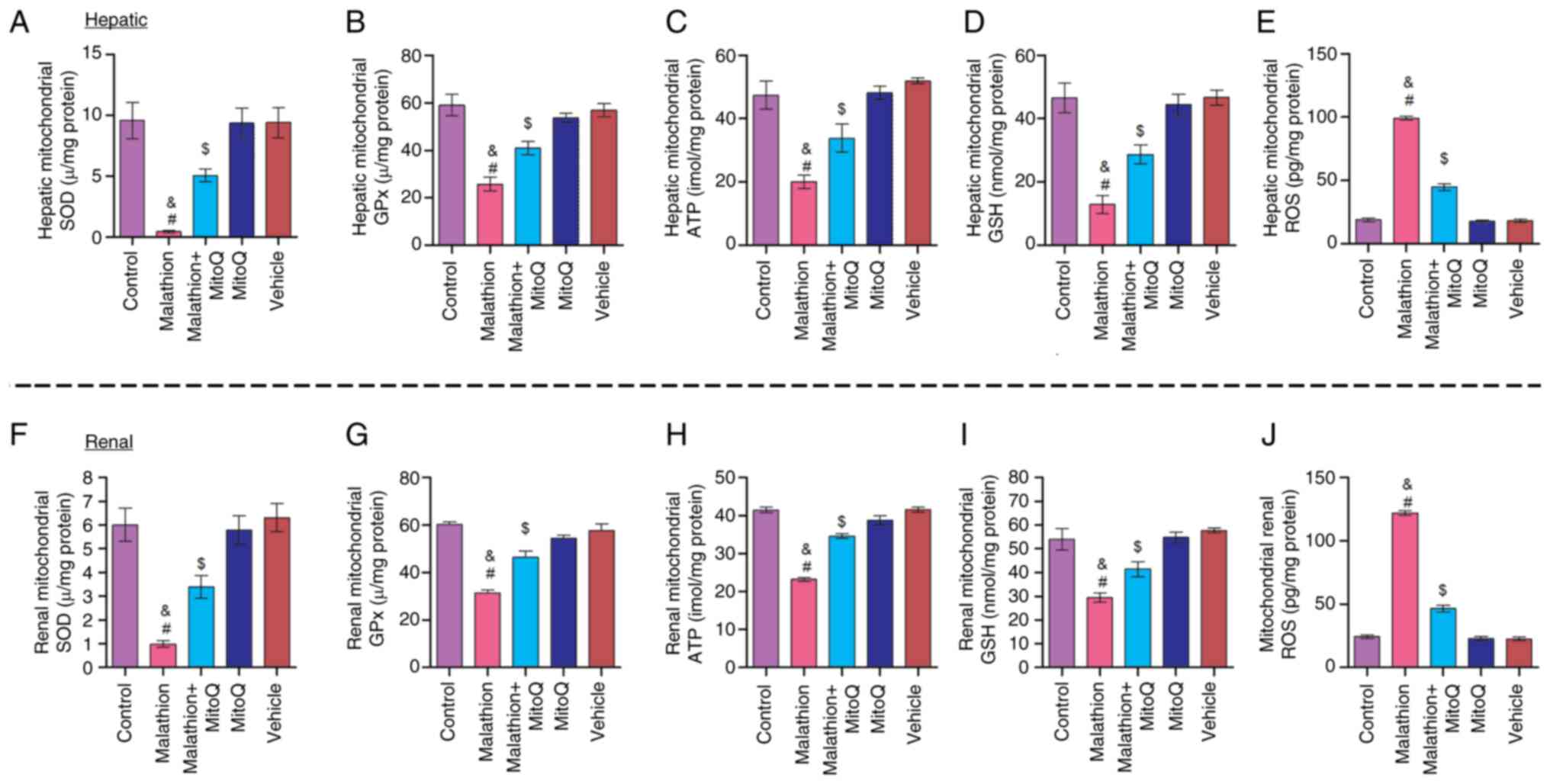
Figure 1

Effect of MitoQ on hepatic and renal
mitochondrial function in malathion-treated rats. (A) Mitochondrial
SOD activity, (B) GPx activity, (C) ATP levels, (D) GSH levels and
(E) ROS levels in hepatic tissue. renal tissues (F) Mitochondrial
SOD activity, (G) GPx activity, (H) ATP levels, (I) GSH levels and
(J) ROS levels (bottom panel). Data are expressed as the mean ±
standard error (n=10). #P<0.05 vs. malathion + MitoQ,
&P<0.05 vs. Control, MitoQ, and vehicle.
$P<0.05 vs. Control, MitoQ, and vehicle. MitoQ,
mitoquinol; SOD, superoxide dismutase; GPx, glutathione peroxidase;
GSH, glutathione; ROS, reactive oxygen species.

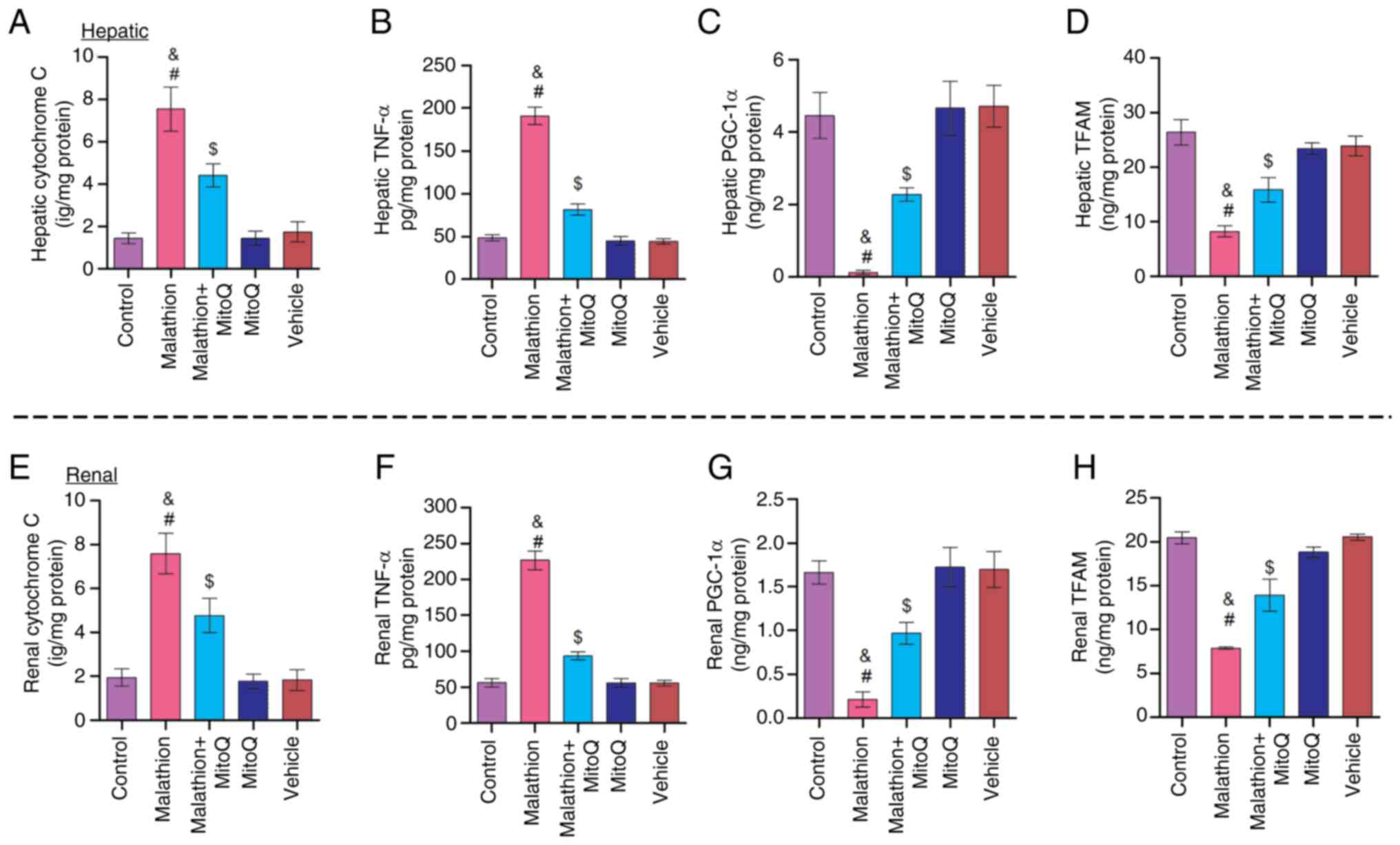
Figure 2

Effect of MitoQ protection on hepatic
and renal mitochondrial biomarkers in malathion-treated rats.
Hepatic (top panel) and renal (bottom panel) levels of (A and E)
cytochrome c, (B and F) TNF-α, (C and G) PGC-1α and (D and
H) TFAM. Data are expressed as the mean ± standard error (n=10).
Statistical analysis was performed using one-way ANOVA followed by
Duncan's multiple-range post hoc test #P<0.05 vs.
malathion + MitoQ, &P<0.05 vs. Control, MitoQ,
and vehicle. $P<0.05 vs. Control, MitoQ, and vehicle.
MitoQ, Mitoquinol; PGC-1α, peroxisome proliferator-activated
receptor γ coactivator 1α; TFAM, mitochondrial transcription factor
A.

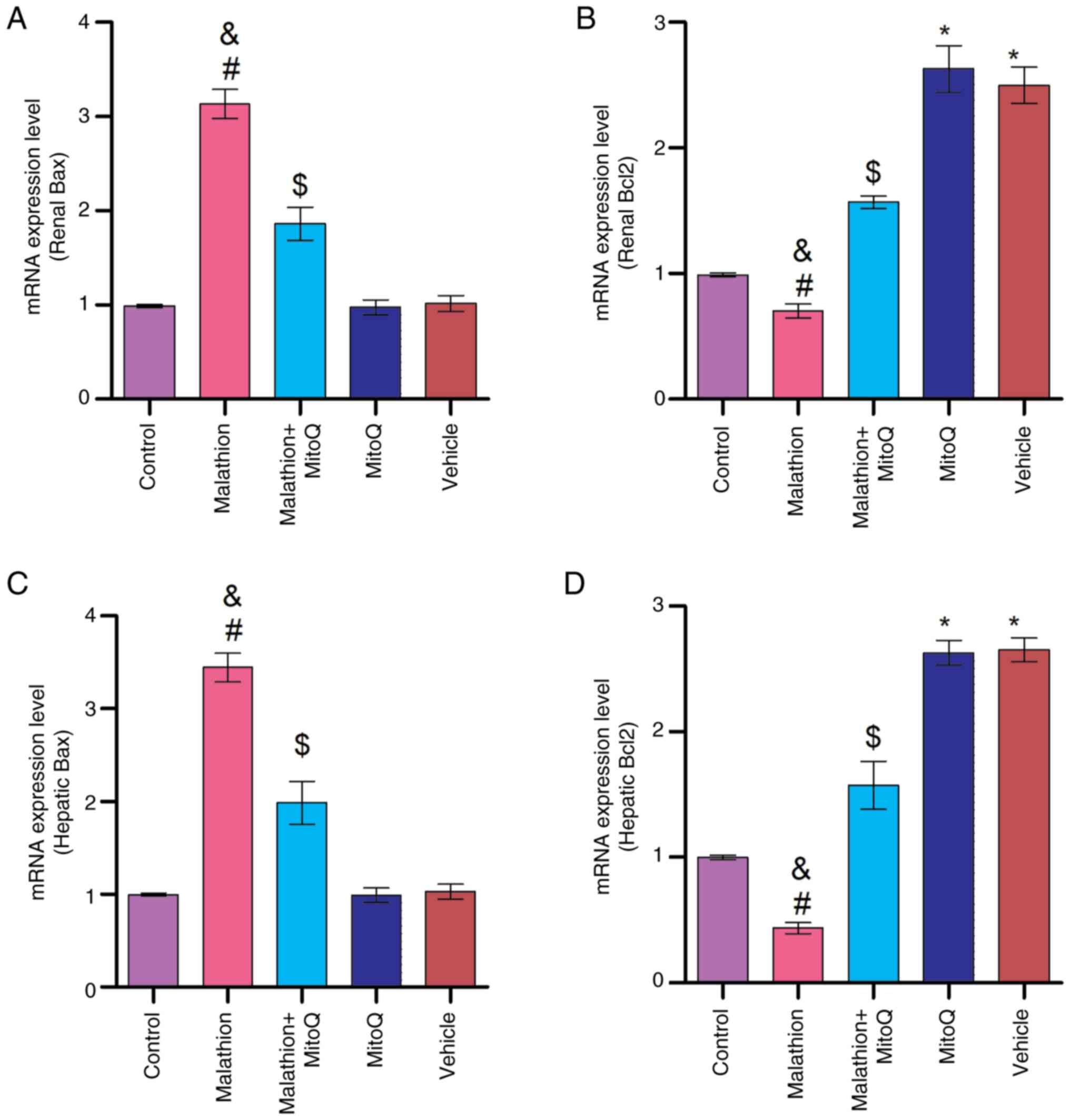
Figure 3

Effect of MitoQ protection on hepatic
and renal mRNA expression levels in malathion-treated rats. mRNA
expression levels of Bax in (A) renal and (C) hepatic tissues. mRNA
expression levels of Bcl-2 in (B) renal and (D) hepatic tissues.
Data are expressed as the mean ± standard error (n=10).
#P<0.05 vs. malathion + MitoQ.
&P<0.05 vs. Control, MitoQ, and vehicle.
$P<0.05 vs. Control, MitoQ, and vehicle. *P<0.05
vs. Control.

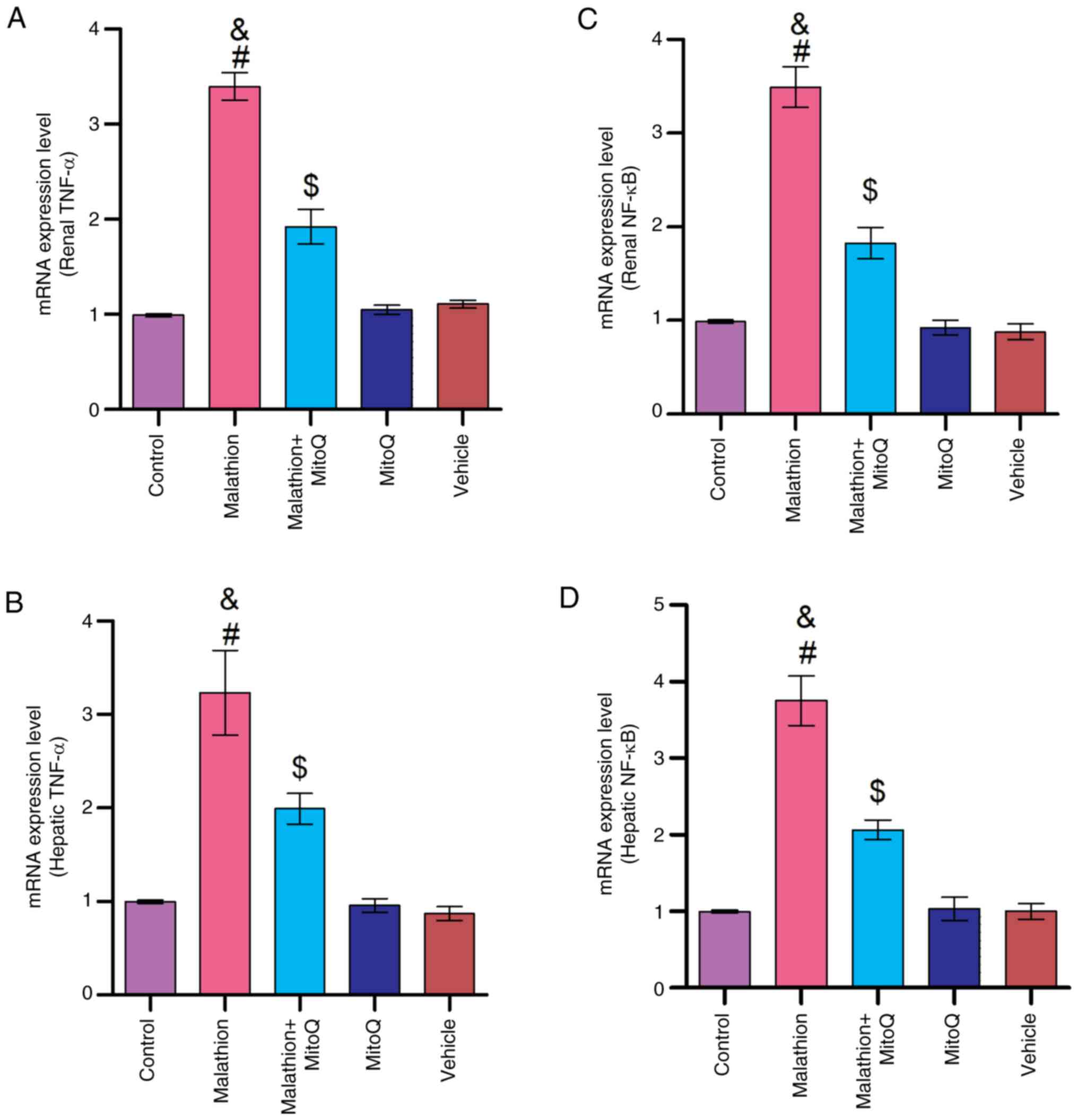
Figure 4

Effect of MitoQ protection on hepatic
and renal mRNA expression levels of inflammatory markers in
malathion-treated rats. mRNA expression levels of TNF-α in (A)
renal and (C) hepatic tissues. mRNA expression levels of NF-κB in
(B) renal and (D) hepatic tissues. Data are expressed as the mean ±
standard error (n=10). #P<0.05 vs. malathion + MitoQ,
&P<0.05 vs. Control, MitoQ, and vehicle.
$P<0.05 vs. Control, MitoQ, and vehicle.

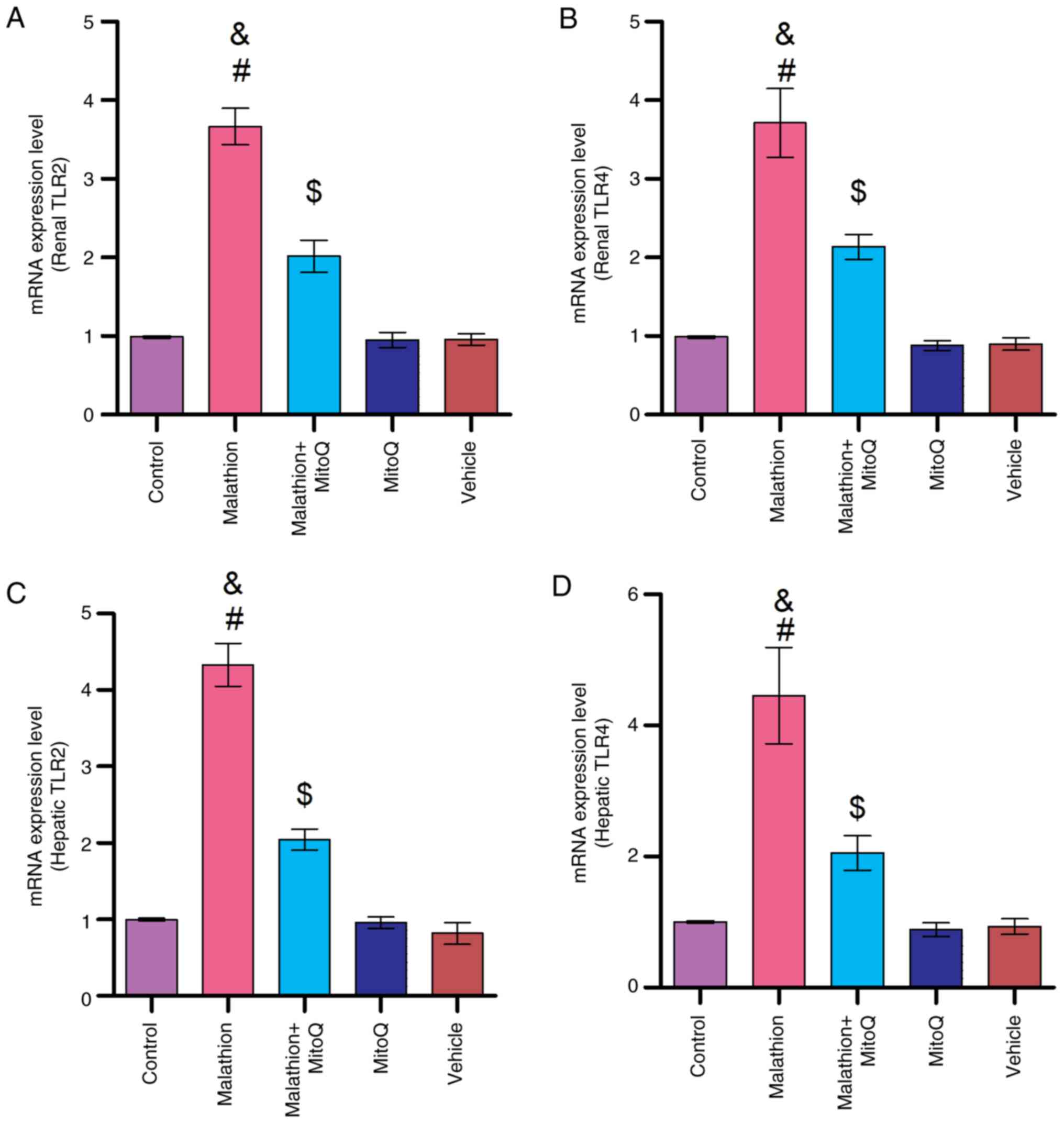
Figure 5

Effect of MitoQ protection on hepatic
and renal mRNA expression levels of TLR2 and TLR4 in
malathion-treated rats. mRNA expression levels of TLR2 in (A) renal
and (C) hepatic tissues. mRNA expression levels of TLR4 in (B)
renal and (D) hepatic tissues. Data are expressed as the mean ±
standard error (n=10). #P<0.05 vs. malathion + MitoQ,
&P<0.05 vs. Control, MitoQ, and vehicle.
$P<0.05 vs. Control, MitoQ, and vehicle. MitoQ,
Mitoquinol; TLR, toll-like receptor.

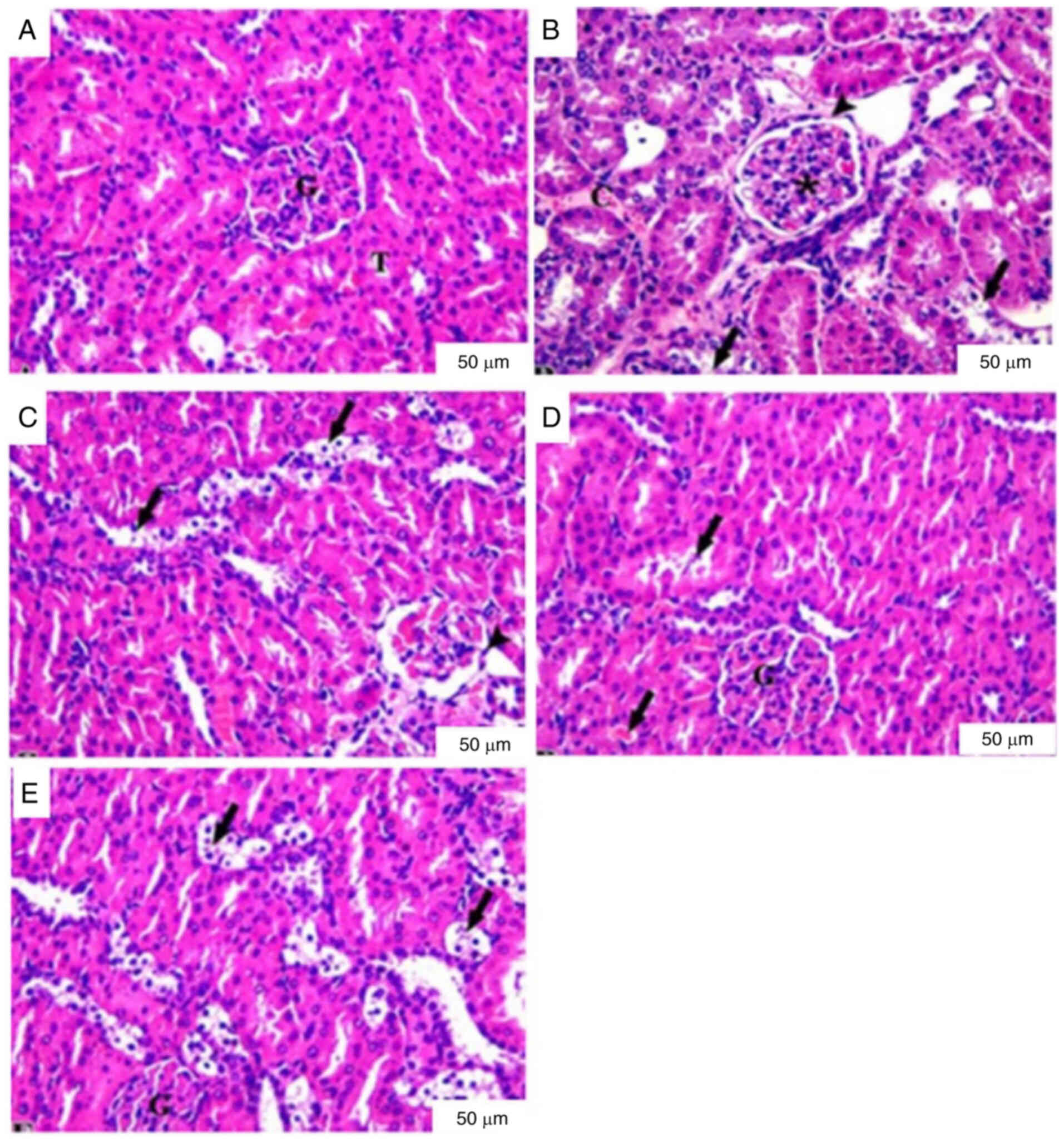
Figure 6

Hematoxylin and eosin-stained renal
cortex of different treatment groups. (A) Control group revealed
normal intact glomeruli (indicated with the letter G) and
convoluted tubules (indicated with the letter T). (B) Malathion
group revealed thickening of the glomerular basement membrane
(arrowhead), mesangial expansion (*), vacuolar degeneration of
renal tubules (arrows) and congestion of renal blood vessels
(indicated with the letter C). (C) Malathion + MitoQ group revealed
mild thickening of glomerular basement membrane (arrowhead) and
vacuolar degeneration of renal tubules (arrows). (D) MitoQ group
revealed intact renal glomeruli (indicated with the letter G) and
an accumulation of a proteinaceous substance inside the lumen of
some renal tubules (arrows). (E) Vehicle group revealed intact
renal glomeruli (indicated with the letter G) and vacuolar
degeneration of renal tubules (arrows). MitoQ, mitoquinol.

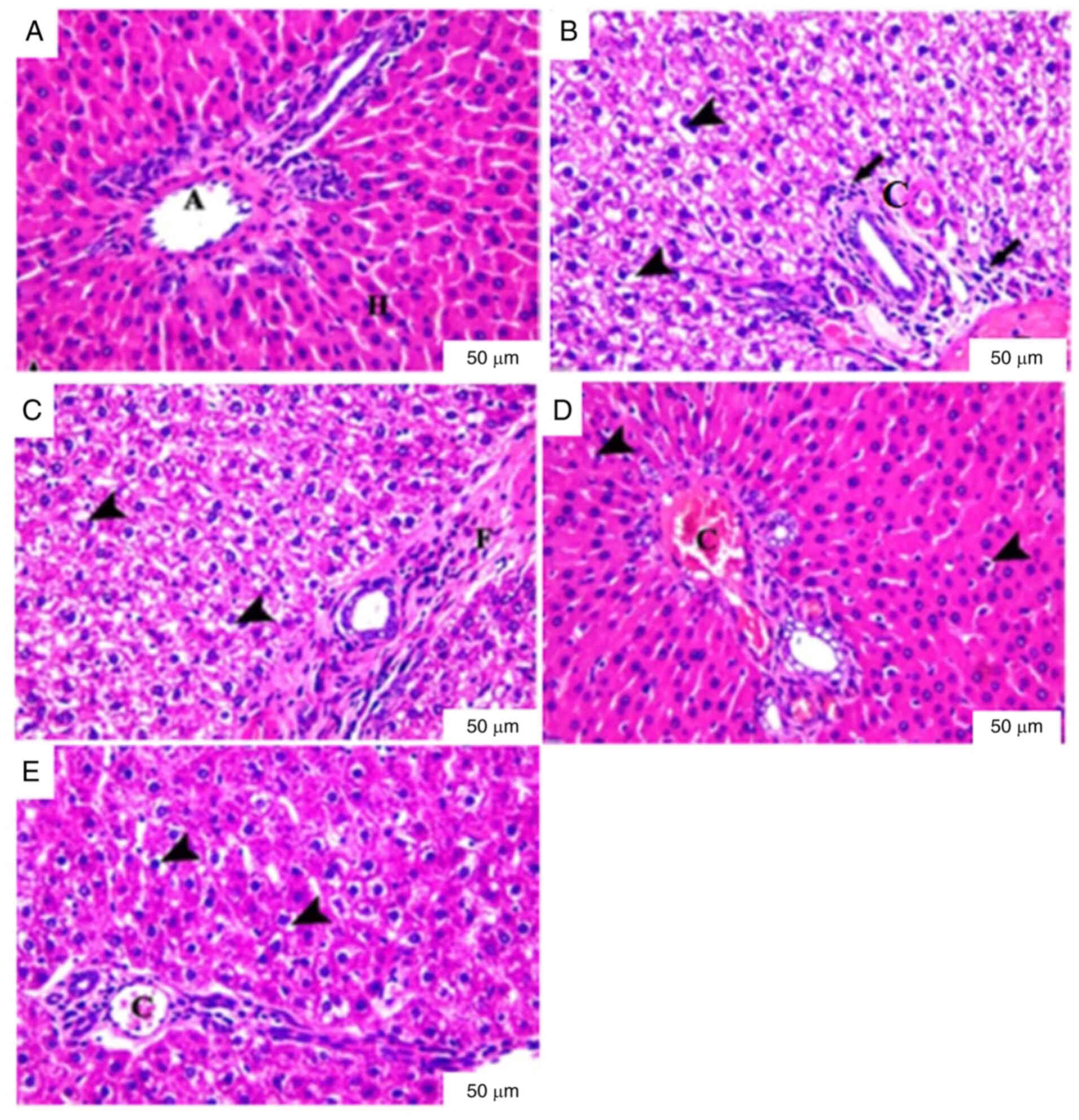
Figure 7

Hematoxylin and eosin-stained portal
areas of livers of different treatment groups. (A) Control group
demonstrated normal hepatic architecture with polyhedral-shaped
hepatocyte and centrally located nuclei (indicated with the letter
H) and hepatic arteries (indicated with the letter A). (B)Malathion
group revealed severe congestion of hepatic blood vessels
(indicated with the letter C), swelling and macro steatosis of
hepatocytes with nuclear pyknosis (arrowheads) and peri-portal
infiltration of inflammatory cells (arrows). (C) Malathion + MitoQ
group revealed swelling and macro steatosis of hepatocytes with
nuclear pyknosis (arrowheads), and mild increase of fibrous tissue
(indicated with the letter F) in the portal area. (D) MitoQ group
revealed congestion of hepatic blood vessels (indicated with the
letter C) and mild steatosis of some hepatocytes (arrowheads). (E)
Vehicle group revealed congestion of hepatic blood vessels
(indicated with the letter C) and steatosis of hepatocytes
(arrowheads). MitoQ, mitoquinol.

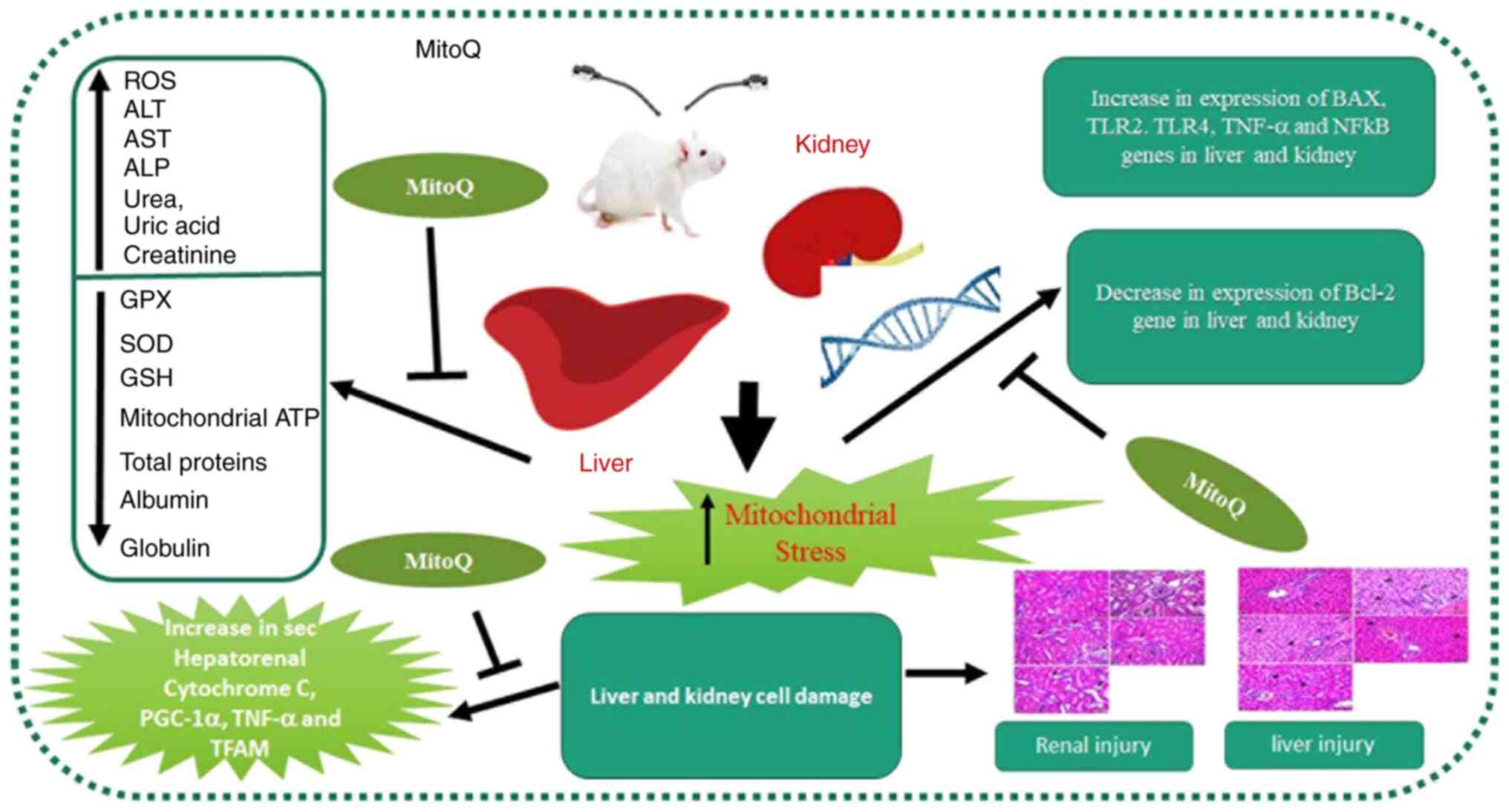
Figure 8

Collective protective impacts of
MitoQ against malathion-induced hepatorenal toxicity. MitoQ,
mitoquinol; SOD, superoxide dismutase; GPx, glutathione peroxidase;
GSH, glutathione; ROS, reactive oxygen species; ALT, alanine
aminotransferase; AST, aspartate aminotransferase; ALP, alkaline
phosphatase; PGC-1α, peroxisome proliferator-activated receptor γ
coactivator 1α; TFAM, mitochondrial transcription factor A.
View References

1 

Singh B, Kaur J and Singh K: Microbial degradation of an organophosphate pesticide, malathion. Crit Rev Microbiol. 40:146–154. 2014. View Article : Google Scholar : PubMed/NCBI

2 

Zidan Nel-H: Hepato-and nephrotoxicity in male albino rats exposed to malathion and spinosad in stored wheat grains. Acta Biol Hung. 66:133–148. 2015. View Article : Google Scholar : PubMed/NCBI

3 

Badr AM: Organophosphate toxicity: Updates of malathion potential toxic effects in mammals and potential treatments. Environ Sci Pollut Res Int. 27:26036–26057. 2020. View Article : Google Scholar : PubMed/NCBI

4 

Fortunato JJ, Feier G, Vitali AM, Petronilho FC, Dal-Pizzol F and Quevedo J: Malathion-induced oxidative stress in rat brain regions. Neurochem Res. 31:671–678. 2006. View Article : Google Scholar : PubMed/NCBI

5 

Varol S, Başarslan S, Fırat U, Alp H, Uzar E, Arıkanoğlu A, Evliyaoğlu O, Acar A, Yücel Y, Kıbrıslı E and Gökalp O: Detection of borderline dosage of malathion intoxication in a rat's brain. Eur Rev Med Pharmacol Sci. 19:2318–2323. 2015.PubMed/NCBI

6 

del-Rahman A, Dechkovskaia AM, Goldstein LB, Bullman SH, Khan W, El-Masry EM and Abou-Donia MB: Neurological deficits induced by malathion, DEET, and permethrin, alone or in combination in adult rats. J Toxicol Environ Health A. 67:331–356. 2004. View Article : Google Scholar : PubMed/NCBI

7 

Dos Santos AA, Naime AA, de Oliveira J, Colle D, dos Santos DB, Hort MA, Moreira EL, Suñol C, de Bem AF and Farina M: Long-term and Low-dose malathion exposure causes cognitive impairment in adult mice: Evidence of hippocampal mitochondrial dysfunction, astrogliosis and apoptotic events. Arch Toxicol. 90:647–660. 2016. View Article : Google Scholar : PubMed/NCBI

8 

Navarrete-Meneses M, Salas-Labadía C, Sanabrais-Jiménez M, Santana-Hernández J, Serrano-Cuevas A, Juárez-Velázquez R, Olaya-Vargas A and Pérez-Vera P: Exposure to the insecticides permethrin and malathion induces leukemia and lymphoma-associated gene aberrations in vitro. Toxicol In Vitro. 44:17–26. 2017. View Article : Google Scholar : PubMed/NCBI

9 

Waheed S, Halsall C, Sweetman AJ, Jones KC and Malik RN: Pesticides contaminated dust exposure, risk diagnosis and exposure markers in occupational and residential settings of Lahore, Pakistan. Environ Toxicol Pharmacol. 56:375–382. 2017. View Article : Google Scholar : PubMed/NCBI

10 

Selmi S, El-Fazaa S and Gharbi N: Oxidative stress and cholinesterase inhibition in plasma, erythrocyte and brain of rats' pups following lactational exposure to malathion. Environ Toxicol Pharmacol. 34:753–760. 2012. View Article : Google Scholar : PubMed/NCBI

11 

Yan J, Xiang B, Wang D, Tang S, Teng M, Yan S, Zhou Z and Zhu W: Different toxic effects of racemate, enantiomers, and metabolite of malathion on HepG2 cells using high-performance liquid chromatography-quadrupole-time-of-flight-based metabolomics. J Agric Food Chem. 67:1784–1794. 2019. View Article : Google Scholar : PubMed/NCBI

12 

Shieh P, Jan CR and Liang WZ: The protective effects of the antioxidant N-acetylcysteine (NAC) against oxidative stress-associated apoptosis evoked by the organophosphorus insecticide malathion in normal human astrocytes. Toxicology. 417:1–14. 2019. View Article : Google Scholar : PubMed/NCBI

13 

Abdel-Salam OM, Youness ER, Mohammed NA, Yassen NN, Khadrawy YA, El-Toukhy SE and Sleem AA: Nitric oxide synthase inhibitors protect against brain and liver damage caused by acute malathion intoxication. Asian Pac J Trop Med. 10:773–786. 2017. View Article : Google Scholar : PubMed/NCBI

14 

Akbel E, Arslan-Acaroz D, Demirel HH, Kucukkurt I and Ince S: The subchronic exposure to malathion, an organophosphate pesticide, causes lipid peroxidation, oxidative stress, and tissue damage in rats: The protective role of resveratrol. Toxicol Res (Camb). 7:503–512. 2018. View Article : Google Scholar : PubMed/NCBI

15 

World Health Organization, . International Classification of Functioning, Disability, and Health: Children & Youth Version. ICF-CY. World Health Organization; 2007

16 

Kiely T, Donaldson D and Grube A: Pesticides industry sales and usage: 2000 and 2001 market estimates. US Environmental Protection Agency; Washington, DC: pp. 1142004, PubMed/NCBI

17 

Kiely T, Donaldson D and Grube A: Pesticides Industry Sales and Usage: 2000 and 2001 Market Estimates, US Environmental Protection Agency, Washington DC 20460/USA. There is no corresponding record for this reference. 2004.

18 

Sulaimon LA, Afolabi LO, Adisa RA, Ayankojo G, Afolabi MO, Adewolu AM and Wan X: Pharmacological significance of MitoQ in ameliorating mitochondria-related diseases. Advances Redox Res. 5:1000372022. View Article : Google Scholar

19 

Zielonka J, Joseph J, Sikora A, Hardy M, Ouari O, Vasquez-Vivar J, Cheng G, Lopez M and Kalyanaraman B: Mitochondria-targeted triphenylphosphonium-based compounds: Syntheses, mechanisms of action, and therapeutic and diagnostic applications. Chem Rev. 117:10043–10120. 2017. View Article : Google Scholar : PubMed/NCBI

20 

Rondeau JD, Lipari S, Mathieu B, Beckers C, Van de Velde JA, Mignion L, Da Silva Morais M, Kreuzer M, Colauzzi I, Capeloa T, et al: Mitochondria-targeted antioxidant MitoQ radiosensitizes tumors by decreasing mitochondrial oxygen consumption. Cell Death Discov. 10:5142024. View Article : Google Scholar : PubMed/NCBI

21 

Uzun FG, Kalender S, Durak D, Demir F and Kalender Y: Malathion-induced testicular toxicity in male rats and the protective effect of vitamins C and E. Food Chem Toxicol. 47:1903–1908. 2009. View Article : Google Scholar : PubMed/NCBI

22 

Ibrahim AA, Karam HM, Shaaban EA, Safar MM and El-Yamany MF: MitoQ ameliorates testicular damage induced by gamma irradiation in rats: Modulation of mitochondrial apoptosis and steroidogenesis. Life Sci. 232:1166552019. View Article : Google Scholar : PubMed/NCBI

23 

Reitman S and Frankel S: A colorimetric method for the determination of serum glutamic oxalacetic and glutamic pyruvic transaminases. Am J Clin Pathol. 28:56–63. 1957. View Article : Google Scholar : PubMed/NCBI

24 

Tietz N, Burtis C, Duncan P, Ervin K, Petitclerc CJ, Rinker AD, Shuey D and Zygowicz ER: A reference method for measurement of alkaline phosphatase activity in human serum. Clin Chem. 29:751–761. 1983. View Article : Google Scholar : PubMed/NCBI

25 

Doumas BT, Bayse DD, Carter RJ, Peters T Jr and Schaffer R: A candidate reference method for determination of total protein in serum. I. Development and validation. Clin Chem. 27:1642–1650. 1981. View Article : Google Scholar : PubMed/NCBI

26 

Coulombe JJ and Favreau L: A new simple semimicro method for colorimetric determination of urea. Clin Chem. 9:102–108. 1963. View Article : Google Scholar : PubMed/NCBI

27 

Bartels H: Serum creatinine without interference. Clin Chem Acta. 37:193–197. 1972. View Article : Google Scholar

28 

Caraway WT and Hald PM: Uric acid. Standard methods of clinical chemistry Elsevier. 239–247. 1963. View Article : Google Scholar

29 

Gornall AG, Bardawill CJ and David MM: Determination of serum proteins by means of the biuret reaction. J Biol Chem. 177:751–66. 1949. View Article : Google Scholar : PubMed/NCBI

30 

Doumas BT, Biggs HG, Arends RL and Pinto PV: Determination of serum albumin. Standard methods of clinical chemistry Elsevier. 175–188. 1972. View Article : Google Scholar

31 

Rashid K and Sil PC: Curcumin ameliorates testicular damage in diabetic rats by suppressing cellular stress-mediated mitochondria and endoplasmic reticulum-dependent apoptotic death. Biochim Biophys Acta. 1852:70–82. 2015. View Article : Google Scholar : PubMed/NCBI

32 

Nishikimi M, Rao NA and Yagi K: The occurrence of superoxide anion in the reaction of reduced phenazine methosulfate and molecular oxygen. Biochem Biophys Res Commun. 46:849–854. 1972. View Article : Google Scholar : PubMed/NCBI

33 

Beutler E, Duron O and Kelly BM: Improved method for determination of blood glutathione. J Lab Clin Med. 61:882–888. 1963.PubMed/NCBI

34 

Paglia DE and Valentine WN: Studies on the quantitative and qualitative characterization of erythrocyte glutathione peroxidase. J Lab Clin Med. 70:158–169. 1967.PubMed/NCBI

35 

Livak KJ and Schmittgen TD: Analysis of relative gene expression data using real-time quantitative PCR and the 2(−Delta Delta C(T)) method. Methods. 25:402–408. 2001. View Article : Google Scholar : PubMed/NCBI

36 

Bancroft JD and Gamble M: Theory and practice of histological techniques. Elsevier health sciences; 2008

37 

Bancroft JD and Layton C: The hematoxylins and eosin. Bancroft's theory and practice of histological techniques. 173–186. 2012.

38 

El Okle OS, Tohamy HG, Althobaiti SA, Soliman MM, Ghamry HI, Farrag F and Shukry M: Ornipural® mitigates malathion-induced hepato-renal damage in rats via amelioration of oxidative stress biomarkers, restoration of antioxidant activity, and attenuation of inflammatory response. Antioxidants (Basel). 11:7572022. View Article : Google Scholar : PubMed/NCBI

39 

Ibrahim A: Biochemical and histopathological response of oreochromis niloticus to malathion hepatotoxicity. J Royal Sci. 1:10–15. 2019.

40 

Gur C and Kandemir FM: Molecular and biochemical investigation of the protective effects of rutin against liver and kidney toxicity caused by malathion administration in a rat model. Environ Toxicol. 38:555–565. 2023. View Article : Google Scholar : PubMed/NCBI

41 

Ye W, Wen C, Zeng A and Hu X: Increased levels of circulating oxidized mitochondrial DNA contribute to chronic inflammation in metabolic syndrome, and MitoQ-based antioxidant therapy alleviates this DNA-induced inflammation. Mol Cell Endocrinol. 560:1118122023. View Article : Google Scholar : PubMed/NCBI

42 

Cengiz M, Ali JH, Kutlu HM, Vejselova D and Ayhanci A: Potential recruiting and hepatoprotective effects of ellagic acid in D-galactosamine-induced liver damage in rats. Pakistan J Zool. 49:1251–1259. 2017. View Article : Google Scholar

43 

Wani WY, Gudup S, Sunkaria A, Bal A, Singh PP, Kandimalla RJ, Sharma DR and Gill KD: Protective efficacy of mitochondrial targeted antioxidant MitoQ against dichlorvos induced oxidative stress and cell death in rat brain. Neuropharmacology. 61:1193–1201. 2011. View Article : Google Scholar : PubMed/NCBI

44 

Karami-Mohajeri S, Hadian M, Fouladdel S, Azizi E, Ghahramani MH, Hosseini R and Abdollahi M: Mechanisms of muscular electrophysiological and mitochondrial dysfunction following exposure to malathion, an organophosphorus pesticide. Hum Exp Toxicol. 33:251–263. 2014. View Article : Google Scholar : PubMed/NCBI

45 

Ibrahim AA, Mageed SSA, Safar MM, El-Yamany MF and Oraby MA: MitoQ alleviates hippocampal damage after cerebral ischemia: The potential role of SIRT6 in regulating mitochondrial dysfunction and neuroinflammation. Life Sci. 328:1218952023. View Article : Google Scholar : PubMed/NCBI

46 

Tait SW and Green DR: Mitochondrial regulation of cell death. Cold Spring Harb. Perspect Biol. 5:a0087062013.

47 

Teksoy O, Sahinturk V, Cengiz M, İnal B and Ayhancı A: The possible effects of silymarin on cerebrum with experimental hepatic encephalopathy in rats. Int J Res. 8:140–146. 2020.

48 

Omar NN, Mosbah RA, Sarawi WS, Rashed MM and Badr AM: Rifaximin protects against malathion-induced rat testicular toxicity: A possible clue on modulating gut microbiome and inhibition of oxidative stress by Mitophagy. Molecules. 27:40692022. View Article : Google Scholar : PubMed/NCBI

49 

Handschin C: The biology of PGC-1α and its therapeutic potential. Trends Pharmacol Sci. 30:322–329. 2009. View Article : Google Scholar : PubMed/NCBI

50 

Sule RO, Condon L and Gomes AV: A common feature of pesticides: Oxidative stress-the role of oxidative stress in pesticide-induced toxicity. Oxid Med Cell Longev. 2022:55637592022. View Article : Google Scholar : PubMed/NCBI

51 

Ghamry HI, Aboushouk AA, Soliman MM, Albogami SM, Tohamy HG, Okle OSE, Althobaiti SA, Rezk S, Farrag F, Helal AI, et al: Ginseng® alleviates malathion-induced hepatorenal injury through modulation of the biochemical, antioxidant, anti-apoptotic, and anti-inflammatory markers in male rats. Life. 12:7712022. View Article : Google Scholar : PubMed/NCBI

52 

Weng AB, Deng MM, Liu XD, Wang HB and Lin Q: MitoQ Alleviated PM2.5 induced pulmonary epithelial cells injury by inhibiting Mitochondrial-mediated apoptosis. Iran J Public Health. 53:614–624. 2024.PubMed/NCBI

53 

Qian S, Wei Z, Yang W, Huang J, Yang Y and Wang J: The role of BCL-2 family proteins in regulating apoptosis and cancer therapy. Front Oncol. 12:9853632022. View Article : Google Scholar : PubMed/NCBI

54 

Adisa RA, Sulaimon LA, Okeke EG, Ariyo OC and Abdulkareem FB: Mitoquinol mesylate (MITOQ) attenuates diethyl nitrosamine-induced hepatocellular carcinoma through modulation of mitochondrial antioxidant defense systems. Toxicol Res. 38:275–291. 2021. View Article : Google Scholar : PubMed/NCBI

55 

Mankan AK, Lawless MW, Gray SG, Kelleher D and McManus R: NF-kappaB regulation: The nuclear response. J Cell Mol Med. 13:631–643. 2009. View Article : Google Scholar : PubMed/NCBI

56 

Oraby MA, Elazazy O, Karam HM, Fadaly DS and Ibrahim AA: MitoQ combats tumor cell progression in Ehrlich ascites carcinoma mice: A crosstalk between mitochondrial oxidative status, mitophagy, and NF-κB signaling. Life Sci. 331:1220632023. View Article : Google Scholar : PubMed/NCBI

57 

Abd-Elhakim YM, Behairy A, Hashem MM, Abo-El-Sooud K, El-Metwally AE, Hassan BA and Ali HA: Toll-like receptors and nuclear factor kappa B signaling pathway involvement in hepatorenal oxidative damage induced by some food preservatives in rats. Sci Rep. 13:59382023. View Article : Google Scholar : PubMed/NCBI

58 

Li D and Wu M: Pattern recognition receptors in health and diseases. Signal Transduct Target Ther. 6:2912021. View Article : Google Scholar : PubMed/NCBI

59 

Lopes-Ferreira M, Farinha LRL, Costa YSO, Pinto FJ, Disner GR, da Rosa JGDS and Lima C: Pesticide-induced inflammation at a glance. Toxics. 11:8962023. View Article : Google Scholar : PubMed/NCBI

60 

Dawoud M, Attallah KM, Ibrahim IT, Karam HM and Ibrahim AA: MitoQ and its hyaluronic acid-based nanopreparation mitigating gamma radiation-induced intestinal injury in mice: Alleviation of oxidative stress and apoptosis. Naunyn Schmiedebergs Arch Pharmacol. 397:5193–5205. 2024. View Article : Google Scholar : PubMed/NCBI

61 

Cengiz M, Gür B, Sezer CV, Cengiz BP, Gür F, Bayrakdar A and Ayhancı A: Alternations in interleukin-1β and nuclear factor kappa beta activity (NF-kB) in rat liver due to the co-exposure of Cadmium and Arsenic: Protective role of curcumin. Environ Toxicol Pharmacol. 102:1042182023. View Article : Google Scholar : PubMed/NCBI

62 

Lingappan K: NF-κB in oxidative stress. Curr Opin Toxicol. 7:81–86. 2018. View Article : Google Scholar : PubMed/NCBI

63 

Haddad JJ: Antioxidant and prooxidant mechanisms in the regulation of redox(y)-sensitive transcription factors. Cell Signal. 14:879–897. 2002. View Article : Google Scholar : PubMed/NCBI

64 

Elmorsy EM, Al Doghaither HA, Al-Ghafari AB, Fawzy MS, Toraih EA and Abd El-Fadeal NM: Hyperoside flavonoids protect against malathion-induced mitochondrial toxicity in the differentiated SH-SY5Y cells. Naunyn Schmiedebergs Arch Pharmacol. Jun 25–2025.doi: 10.1007/s00210-025-04379-2 (Epub ahead of print). View Article : Google Scholar

65 

Morgan MJ and Liu ZG: Crosstalk of reactive oxygen species and NF-κB signaling. Cell Res. 21:103–115. 2011. View Article : Google Scholar : PubMed/NCBI

66 

Fields M, Marcuzzi A, Gonelli A, Celeghini C, Maximova N and Rimondi E: Mitochondria-targeted antioxidants, an innovative class of antioxidant compounds for neurodegenerative diseases: Perspectives and limitations. Int J Mol Sci. 24:37392023. View Article : Google Scholar : PubMed/NCBI

67 

Akira S and Takeda K: Toll-like receptor signalling. Nat Rev Immunol. 4:499–511. 2004. View Article : Google Scholar : PubMed/NCBI

68 

Gao P, Li L, Han L, Zhang Y, Quan Z, Ding B, Sun Y, Han B and Ding J: Effects of temperature stress on genome-wide DNA methylation levels in the sea cucumber, Apostichopus japonicus. Iranian J Fisheries Sci. 23:437–456. 2024.

69 

Apostolova N and Victor VM: Molecular strategies for targeting antioxidants to mitochondria: Therapeutic implications. Antioxid Redox Signal. 22:686–729. 2015. View Article : Google Scholar : PubMed/NCBI

Related Articles

  • Abstract
  • View
  • Download
  • Twitter
Copy and paste a formatted citation
Spandidos Publications style
Althobaiti SA: MitoQ alleviates malathion‑induced hepatorenal toxicity via oxidative stress and inflammation modulation. Mol Med Rep 32: 296, 2025.
APA
Althobaiti, S.A. (2025). MitoQ alleviates malathion‑induced hepatorenal toxicity via oxidative stress and inflammation modulation. Molecular Medicine Reports, 32, 296. https://doi.org/10.3892/mmr.2025.13661
MLA
Althobaiti, S. A."MitoQ alleviates malathion‑induced hepatorenal toxicity via oxidative stress and inflammation modulation". Molecular Medicine Reports 32.5 (2025): 296.
Chicago
Althobaiti, S. A."MitoQ alleviates malathion‑induced hepatorenal toxicity via oxidative stress and inflammation modulation". Molecular Medicine Reports 32, no. 5 (2025): 296. https://doi.org/10.3892/mmr.2025.13661
Copy and paste a formatted citation
x
Spandidos Publications style
Althobaiti SA: MitoQ alleviates malathion‑induced hepatorenal toxicity via oxidative stress and inflammation modulation. Mol Med Rep 32: 296, 2025.
APA
Althobaiti, S.A. (2025). MitoQ alleviates malathion‑induced hepatorenal toxicity via oxidative stress and inflammation modulation. Molecular Medicine Reports, 32, 296. https://doi.org/10.3892/mmr.2025.13661
MLA
Althobaiti, S. A."MitoQ alleviates malathion‑induced hepatorenal toxicity via oxidative stress and inflammation modulation". Molecular Medicine Reports 32.5 (2025): 296.
Chicago
Althobaiti, S. A."MitoQ alleviates malathion‑induced hepatorenal toxicity via oxidative stress and inflammation modulation". Molecular Medicine Reports 32, no. 5 (2025): 296. https://doi.org/10.3892/mmr.2025.13661
Follow us
  • Twitter
  • LinkedIn
  • Facebook
About
  • Spandidos Publications
  • Careers
  • Cookie Policy
  • Privacy Policy
How can we help?
  • Help
  • Live Chat
  • Contact
  • Email to our Support Team