Spandidos Publications Logo
  • About
    • About Spandidos
    • Aims and Scopes
    • Abstracting and Indexing
    • Editorial Policies
    • Reprints and Permissions
    • Job Opportunities
    • Terms and Conditions
    • Contact
  • Journals
    • All Journals
    • Oncology Letters
      • Oncology Letters
      • Information for Authors
      • Editorial Policies
      • Editorial Board
      • Aims and Scope
      • Abstracting and Indexing
      • Bibliographic Information
      • Archive
    • International Journal of Oncology
      • International Journal of Oncology
      • Information for Authors
      • Editorial Policies
      • Editorial Board
      • Aims and Scope
      • Abstracting and Indexing
      • Bibliographic Information
      • Archive
    • Molecular and Clinical Oncology
      • Molecular and Clinical Oncology
      • Information for Authors
      • Editorial Policies
      • Editorial Board
      • Aims and Scope
      • Abstracting and Indexing
      • Bibliographic Information
      • Archive
    • Experimental and Therapeutic Medicine
      • Experimental and Therapeutic Medicine
      • Information for Authors
      • Editorial Policies
      • Editorial Board
      • Aims and Scope
      • Abstracting and Indexing
      • Bibliographic Information
      • Archive
    • International Journal of Molecular Medicine
      • International Journal of Molecular Medicine
      • Information for Authors
      • Editorial Policies
      • Editorial Board
      • Aims and Scope
      • Abstracting and Indexing
      • Bibliographic Information
      • Archive
    • Biomedical Reports
      • Biomedical Reports
      • Information for Authors
      • Editorial Policies
      • Editorial Board
      • Aims and Scope
      • Abstracting and Indexing
      • Bibliographic Information
      • Archive
    • Oncology Reports
      • Oncology Reports
      • Information for Authors
      • Editorial Policies
      • Editorial Board
      • Aims and Scope
      • Abstracting and Indexing
      • Bibliographic Information
      • Archive
    • Molecular Medicine Reports
      • Molecular Medicine Reports
      • Information for Authors
      • Editorial Policies
      • Editorial Board
      • Aims and Scope
      • Abstracting and Indexing
      • Bibliographic Information
      • Archive
    • World Academy of Sciences Journal
      • World Academy of Sciences Journal
      • Information for Authors
      • Editorial Policies
      • Editorial Board
      • Aims and Scope
      • Abstracting and Indexing
      • Bibliographic Information
      • Archive
    • International Journal of Functional Nutrition
      • International Journal of Functional Nutrition
      • Information for Authors
      • Editorial Policies
      • Editorial Board
      • Aims and Scope
      • Abstracting and Indexing
      • Bibliographic Information
      • Archive
    • International Journal of Epigenetics
      • International Journal of Epigenetics
      • Information for Authors
      • Editorial Policies
      • Editorial Board
      • Aims and Scope
      • Abstracting and Indexing
      • Bibliographic Information
      • Archive
    • Medicine International
      • Medicine International
      • Information for Authors
      • Editorial Policies
      • Editorial Board
      • Aims and Scope
      • Abstracting and Indexing
      • Bibliographic Information
      • Archive
  • Articles
  • Information
    • Information for Authors
    • Information for Reviewers
    • Information for Librarians
    • Information for Advertisers
    • Conferences
  • Language Editing
Spandidos Publications Logo
  • About
    • About Spandidos
    • Aims and Scopes
    • Abstracting and Indexing
    • Editorial Policies
    • Reprints and Permissions
    • Job Opportunities
    • Terms and Conditions
    • Contact
  • Journals
    • All Journals
    • Biomedical Reports
      • Information for Authors
      • Editorial Policies
      • Editorial Board
      • Aims and Scope
      • Abstracting and Indexing
      • Bibliographic Information
      • Archive
    • Experimental and Therapeutic Medicine
      • Information for Authors
      • Editorial Policies
      • Editorial Board
      • Aims and Scope
      • Abstracting and Indexing
      • Bibliographic Information
      • Archive
    • International Journal of Epigenetics
      • Information for Authors
      • Editorial Policies
      • Editorial Board
      • Aims and Scope
      • Abstracting and Indexing
      • Bibliographic Information
      • Archive
    • International Journal of Functional Nutrition
      • Information for Authors
      • Editorial Policies
      • Editorial Board
      • Aims and Scope
      • Abstracting and Indexing
      • Bibliographic Information
      • Archive
    • International Journal of Molecular Medicine
      • Information for Authors
      • Editorial Policies
      • Editorial Board
      • Aims and Scope
      • Abstracting and Indexing
      • Bibliographic Information
      • Archive
    • International Journal of Oncology
      • Information for Authors
      • Editorial Policies
      • Editorial Board
      • Aims and Scope
      • Abstracting and Indexing
      • Bibliographic Information
      • Archive
    • Medicine International
      • Information for Authors
      • Editorial Policies
      • Editorial Board
      • Aims and Scope
      • Abstracting and Indexing
      • Bibliographic Information
      • Archive
    • Molecular and Clinical Oncology
      • Information for Authors
      • Editorial Policies
      • Editorial Board
      • Aims and Scope
      • Abstracting and Indexing
      • Bibliographic Information
      • Archive
    • Molecular Medicine Reports
      • Information for Authors
      • Editorial Policies
      • Editorial Board
      • Aims and Scope
      • Abstracting and Indexing
      • Bibliographic Information
      • Archive
    • Oncology Letters
      • Information for Authors
      • Editorial Policies
      • Editorial Board
      • Aims and Scope
      • Abstracting and Indexing
      • Bibliographic Information
      • Archive
    • Oncology Reports
      • Information for Authors
      • Editorial Policies
      • Editorial Board
      • Aims and Scope
      • Abstracting and Indexing
      • Bibliographic Information
      • Archive
    • World Academy of Sciences Journal
      • Information for Authors
      • Editorial Policies
      • Editorial Board
      • Aims and Scope
      • Abstracting and Indexing
      • Bibliographic Information
      • Archive
  • Articles
  • Information
    • For Authors
    • For Reviewers
    • For Librarians
    • For Advertisers
    • Conferences
  • Language Editing
Login Register Submit
  • This site uses cookies
  • You can change your cookie settings at any time by following the instructions in our Cookie Policy. To find out more, you may read our Privacy Policy.

    I agree
Search articles by DOI, keyword, author or affiliation
Search
Advanced Search
presentation
Molecular Medicine Reports
Join Editorial Board Propose a Special Issue
Print ISSN: 1791-2997 Online ISSN: 1791-3004
Journal Cover
November-2025 Volume 32 Issue 5

Full Size Image

Sign up for eToc alerts
Recommend to Library

Journals

International Journal of Molecular Medicine

International Journal of Molecular Medicine

International Journal of Molecular Medicine is an international journal devoted to molecular mechanisms of human disease.

International Journal of Oncology

International Journal of Oncology

International Journal of Oncology is an international journal devoted to oncology research and cancer treatment.

Molecular Medicine Reports

Molecular Medicine Reports

Covers molecular medicine topics such as pharmacology, pathology, genetics, neuroscience, infectious diseases, molecular cardiology, and molecular surgery.

Oncology Reports

Oncology Reports

Oncology Reports is an international journal devoted to fundamental and applied research in Oncology.

Experimental and Therapeutic Medicine

Experimental and Therapeutic Medicine

Experimental and Therapeutic Medicine is an international journal devoted to laboratory and clinical medicine.

Oncology Letters

Oncology Letters

Oncology Letters is an international journal devoted to Experimental and Clinical Oncology.

Biomedical Reports

Biomedical Reports

Explores a wide range of biological and medical fields, including pharmacology, genetics, microbiology, neuroscience, and molecular cardiology.

Molecular and Clinical Oncology

Molecular and Clinical Oncology

International journal addressing all aspects of oncology research, from tumorigenesis and oncogenes to chemotherapy and metastasis.

World Academy of Sciences Journal

World Academy of Sciences Journal

Multidisciplinary open-access journal spanning biochemistry, genetics, neuroscience, environmental health, and synthetic biology.

International Journal of Functional Nutrition

International Journal of Functional Nutrition

Open-access journal combining biochemistry, pharmacology, immunology, and genetics to advance health through functional nutrition.

International Journal of Epigenetics

International Journal of Epigenetics

Publishes open-access research on using epigenetics to advance understanding and treatment of human disease.

Medicine International

Medicine International

An International Open Access Journal Devoted to General Medicine.

Journal Cover
November-2025 Volume 32 Issue 5

Full Size Image

Sign up for eToc alerts
Recommend to Library

  • Article
  • Citations
    • Cite This Article
    • Download Citation
    • Create Citation Alert
    • Remove Citation Alert
    • Cited By
  • Similar Articles
    • Related Articles (in Spandidos Publications)
    • Similar Articles (Google Scholar)
    • Similar Articles (PubMed)
  • Download PDF
  • Download XML
  • View XML
Article Open Access

Aberrant activation of the PI3K/AKT/HIF‑1α pathway promotes glycolysis and lenvatinib resistance in liver cancer

  • Authors:
    • Jinfeng Wang
    • Jianfei Shi
    • Lili Mi
    • Man Zhao
    • Guangjie Han
    • Fei Yin
  • View Affiliations / Copyright

    Affiliations: Department of Gastroenterology, The Fourth Hospital of Hebei Medical University, Shijiazhuang, Hebei 050035, P.R. China
    Copyright: © Wang et al. This is an open access article distributed under the terms of Creative Commons Attribution License.
  • Article Number: 301
    |
    Published online on: August 28, 2025
       https://doi.org/10.3892/mmr.2025.13666
  • Expand metrics +
Metrics: Total Views: 0 (Spandidos Publications: | PMC Statistics: )
Metrics: Total PDF Downloads: 0 (Spandidos Publications: | PMC Statistics: )
Cited By (CrossRef): 0 citations Loading Articles...

This article is mentioned in:


Abstract

Lenvatinib, a multi‑target tyrosine kinase inhibitor, has been approved as the first‑line treatment for advanced liver cancer (LC). However, its efficacy is markedly hindered by the rapid emergence of drug resistance. The phosphatidylinositol 3 kinase/protein kinase B/hypoxia‑inducible factor‑1 α (PI3K/AKT/HIF‑1α) signaling axis represents a key oncogenic pathway that regulates diverse biological processes, including aerobic glycolysis, and is closely associated with tumor progression and therapeutic resistance. However, the specific contribution of the PI3K/AKT/HIF‑1α pathway and aerobic glycolysis to lenvatinib resistance in LC, as well as the potential mechanistic interplay between these processes, remains inadequately elucidated. In the present study, colony formation, flow cytometry and Transwell assays were performed to evaluate the proliferative, apoptotic and invasive capabilities of LC cells. Cell aerobic glycolysis was assessed by detecting glucose uptake, lactate production, intracellular ATP levels and the expression of key glucose metabolism‑related genes. Compared with their parental counterparts, lenvatinib‑resistant (LR) Huh7 and HepG2 cells exhibited an enhanced glycolytic phenotype, characterized by increased glucose uptake, elevated lactate production, higher intracellular ATP levels and upregulated expression of key glycolysis‑related genes. Notably, aberrant activation of the PI3K/AKT/HIF‑1α signaling pathway was observed in LR LC cells. LY294002, a specific PI3K inhibitor, effectively inhibited the PI3K/AKT/HIF‑1α pathway and glycolytic activity in LR cells. Co‑administration of LY294002 with lenvatinib markedly suppressed the PI3K/AKT/HIF‑1α pathway and attenuated the glycolytic activity of Huh7‑LR/HepG2‑LR cells. Moreover, this combination treatment inhibited proliferation and invasion while inducing apoptosis and G0/G1 phase cell cycle arrest in LR cells. This evidence indicated that inhibition of the PI3K/AKT/HIF‑1α signaling pathway effectively restored the sensitivity of LR cells to lenvatinib. The findings in the present study demonstrate that aberrant activation of the PI3K/AKT/HIF‑1α pathway is required to enhance glycolysis and confers resistance to lenvatinib in LC. The combination of LY294002 with lenvatinib offers a promising strategic approach for overcoming resistance and enhancing the clinical efficacy of lenvatinib in patients with LC.
View Figures

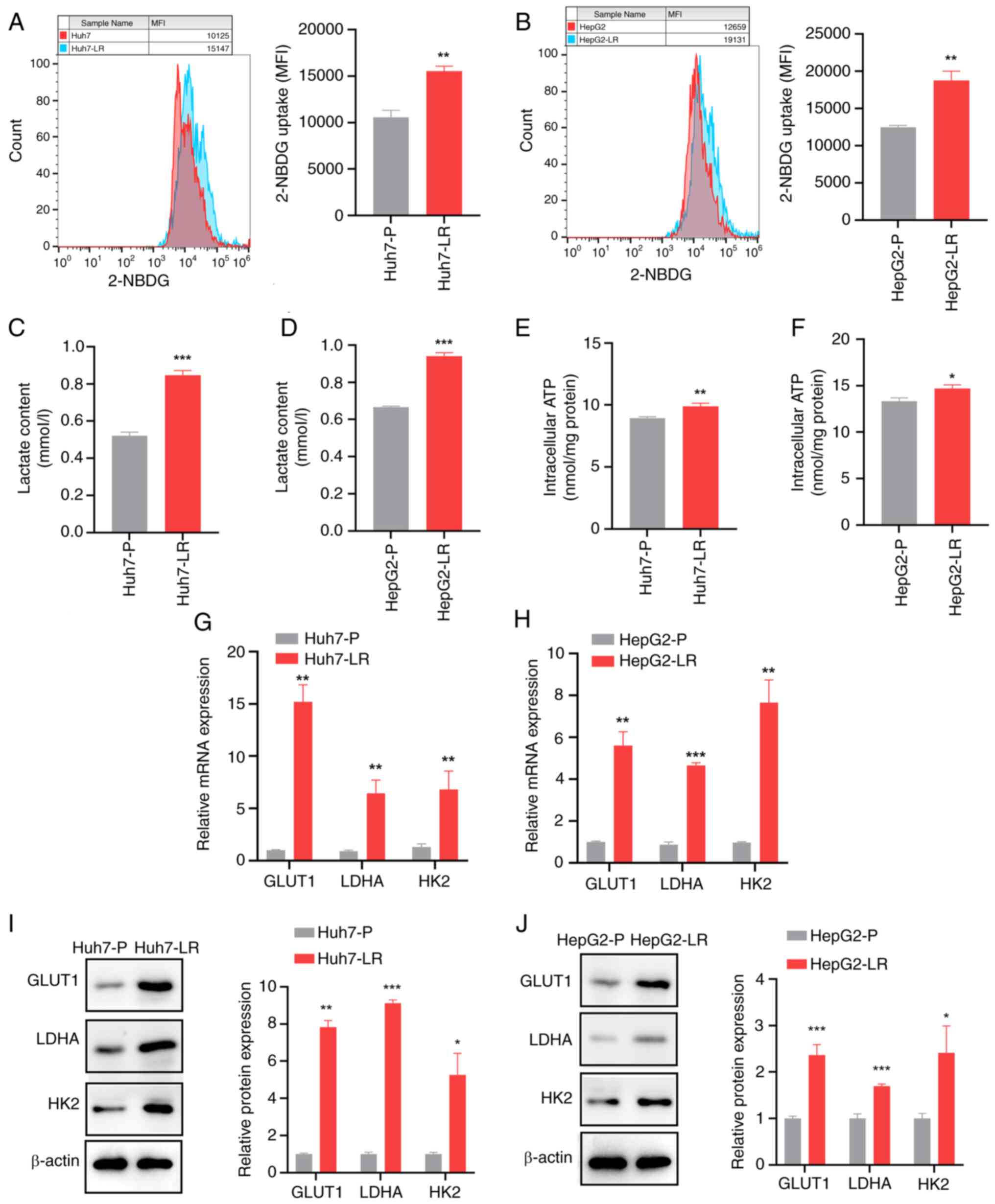
Figure 1

LR LC cells exhibit an enhanced
glycolytic phenotype. Flow cytometry analysis of 2-NBDG uptake by
(A) Huh7 and (B) HepG2 LR cells and their P cells. Lactate
production in (C) Huh7 and (D) HepG2 LR cells and their P cells.
Intracellular ATP levels assay in the P and LR (E) Huh7 and (F)
HepG2 cells. Reverse transcription-quantitative PCR analysis of
GLUT1, LDHA and HK2 in the P and LR (G) Huh7 and (H) HepG2 cells.
Western blotting of GLUT1, LDHA and HK2 in the P and LR (I) Huh7
and (J) HepG2 cells. *P<0.05, **P<0.01 and ***P<0.001
compared with P cells. LC, liver cancer; GLUT1, glucose transporter
1; HK2, hexokinase 2; LDHA, lactate dehydrogenase; LR,
lenvatinib-resistant; P, parental; MFI, mean fluorescence
intensity.

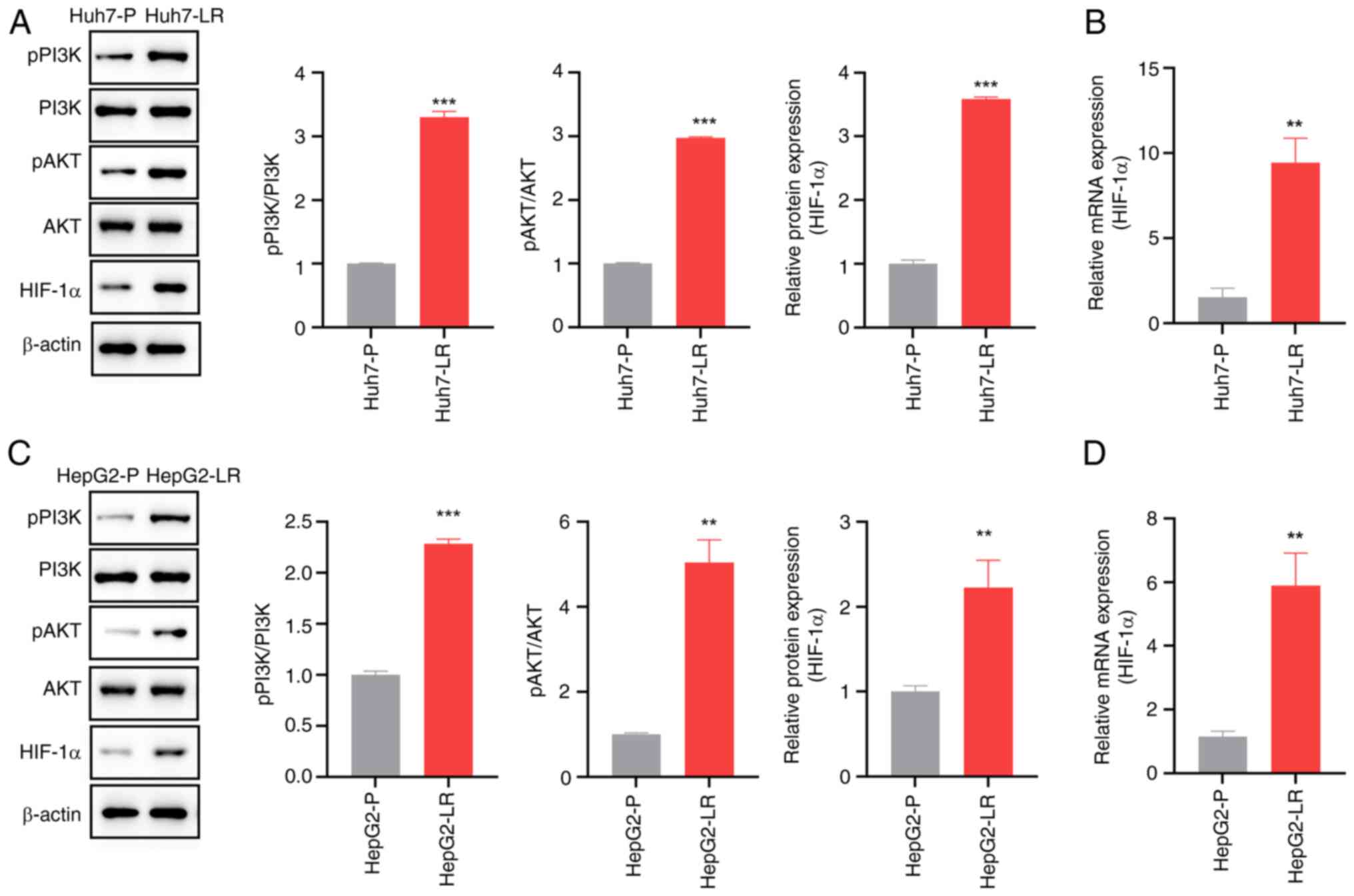
Figure 2

Aberrant activation of the
PI3K/AKT/HIF-1α signaling pathway in LR LC cells. Western blotting
analysis of pPI3K, PI3K, pAKT, AKT and HIF-1α in (A) Huh7 and (C)
HepG2 LR LC cells and their P cells. Reverse
transcription-quantitative PCR analysis of HIF-1α expression in (B)
Huh7 and (D) HepG2 LR LC cells and their P cells. **P<0.01 and
***P<0.001 compared with their respective P cells. LC, liver
cancer; LR, lenvatinib-resistant; P, parental; PI3K,
phosphatidylinositol 3 kinase; pPI3K, phosphorylated
phosphatidylinositol 3 kinase; AKT, protein kinase B; pAKT,
phosphorylated protein kinase B; HIF-1α, hypoxia-inducible factor-1
α.

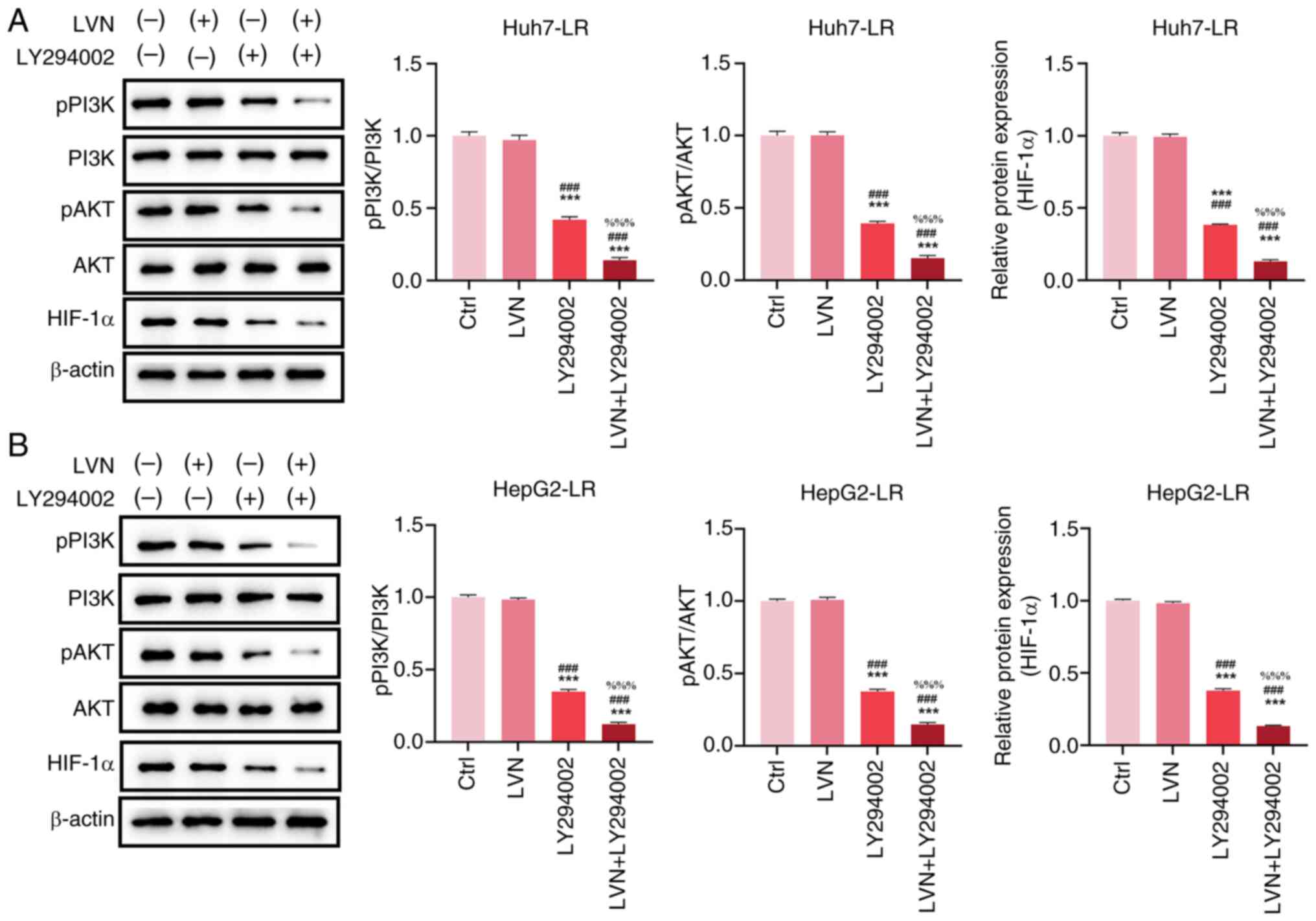
Figure 3

LY294002 suppresses the
PI3K/AKT/HIF-1α pathway in LR cells. Western blotting of pPI3K,
PI3K, pAKT, AKT and HIF-1α expression in (A) Huh7-LR and (B)
HepG2-LR cells under various treatment conditions. ***P<0.001
vs. Ctrl; ###P<0.001 vs. lenvatinib;
%%%P<0.001 vs. LY294002. LR, lenvatinib-resistant;
Ctrl, control treatment; LVN, lenvatinib treatment; PI3K,
phosphatidylinositol 3 kinase; pPI3K, phosphorylated
phosphatidylinositol 3 kinase; AKT, protein kinase B; pAKT,
phosphorylated protein kinase B; HIF-1α, hypoxia-inducible factor-1
α.

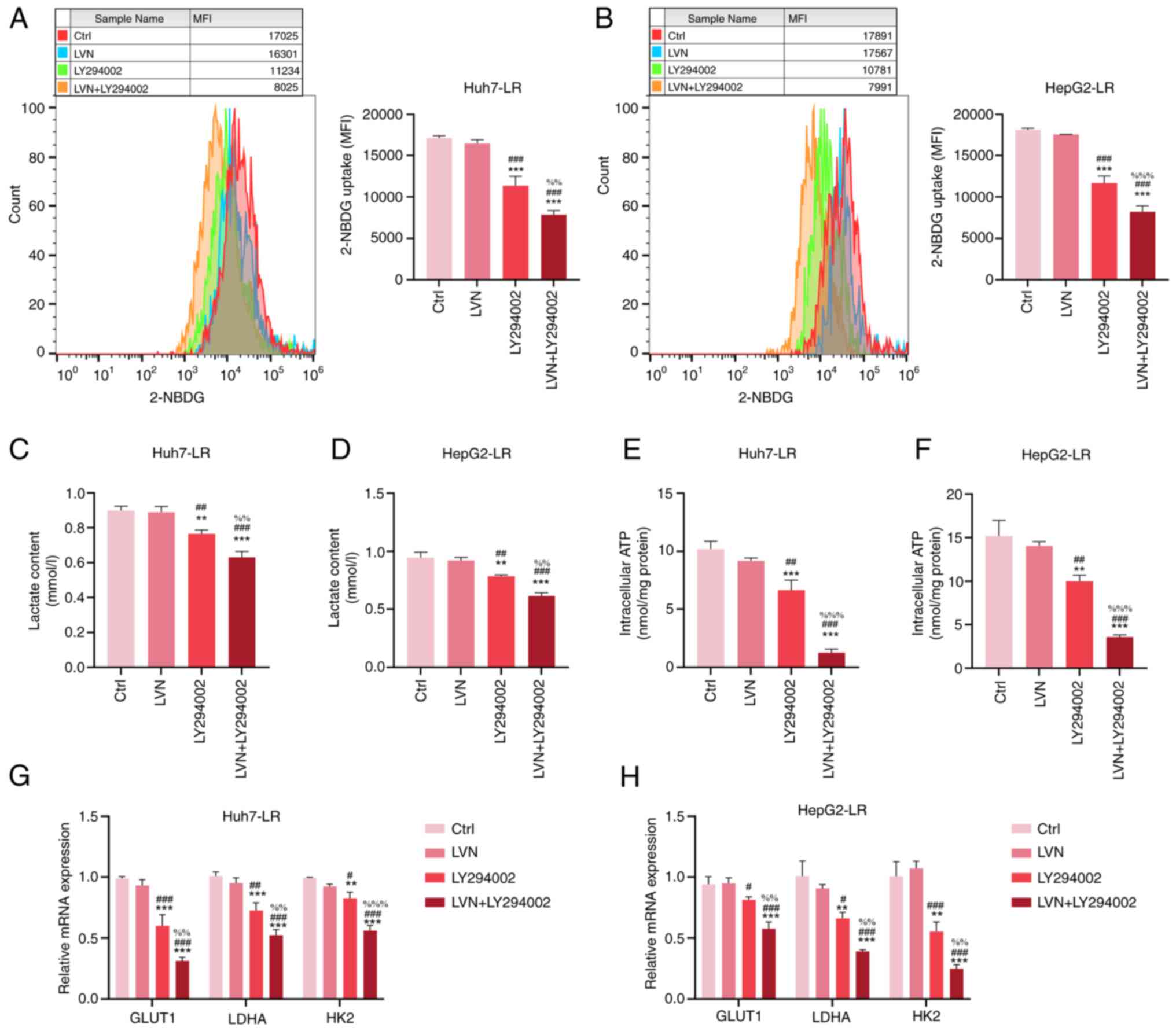
Figure 4

Dysregulated activation of the
PI3K/AKT/HIF-1α pathway contributes to increased glycolysis in LR
cells. Flow cytometry analysis of 2-NBDG uptake by (A) Huh7 and (B)
HepG2 LR cells following different treatments. Lactate analysis in
the supernatant of (C) Huh7-LR and (D) HepG2-LR LC cells following
different treatments. Intracellular ATP in (E) Huh7 and (F) HepG2
LR cells following different treatments. Reverse
transcription-quantitative PCR analysis of GLUT1, LDHA and HK2 in
(G) Huh7-LR and (H) HepG2-LR LC cells following different
treatments. **P<0.01 and ***P<0.001 vs. Ctrl;
#P<0.05, ##P<0.01 and
###P<0.001 vs. lenvatinib; %%P<0.01 and
%%%P<0.001 vs. LY294002. LR, lenvatinib-resistant;
LC, liver cancer; Ctrl, control treatment; LVN, lenvatinib
treatment; PI3K, phosphatidylinositol 3 kinase; pPI3K,
phosphorylated phosphatidylinositol 3 kinase; AKT, protein kinase
B; pAKT, phosphorylated protein kinase B; HIF-1α, hypoxia-inducible
factor-1 α; GLUT1, glucose transporter 1; HK2, hexokinase 2; LDHA,
lactate dehydrogenase; MFI, mean fluorescence intensity.

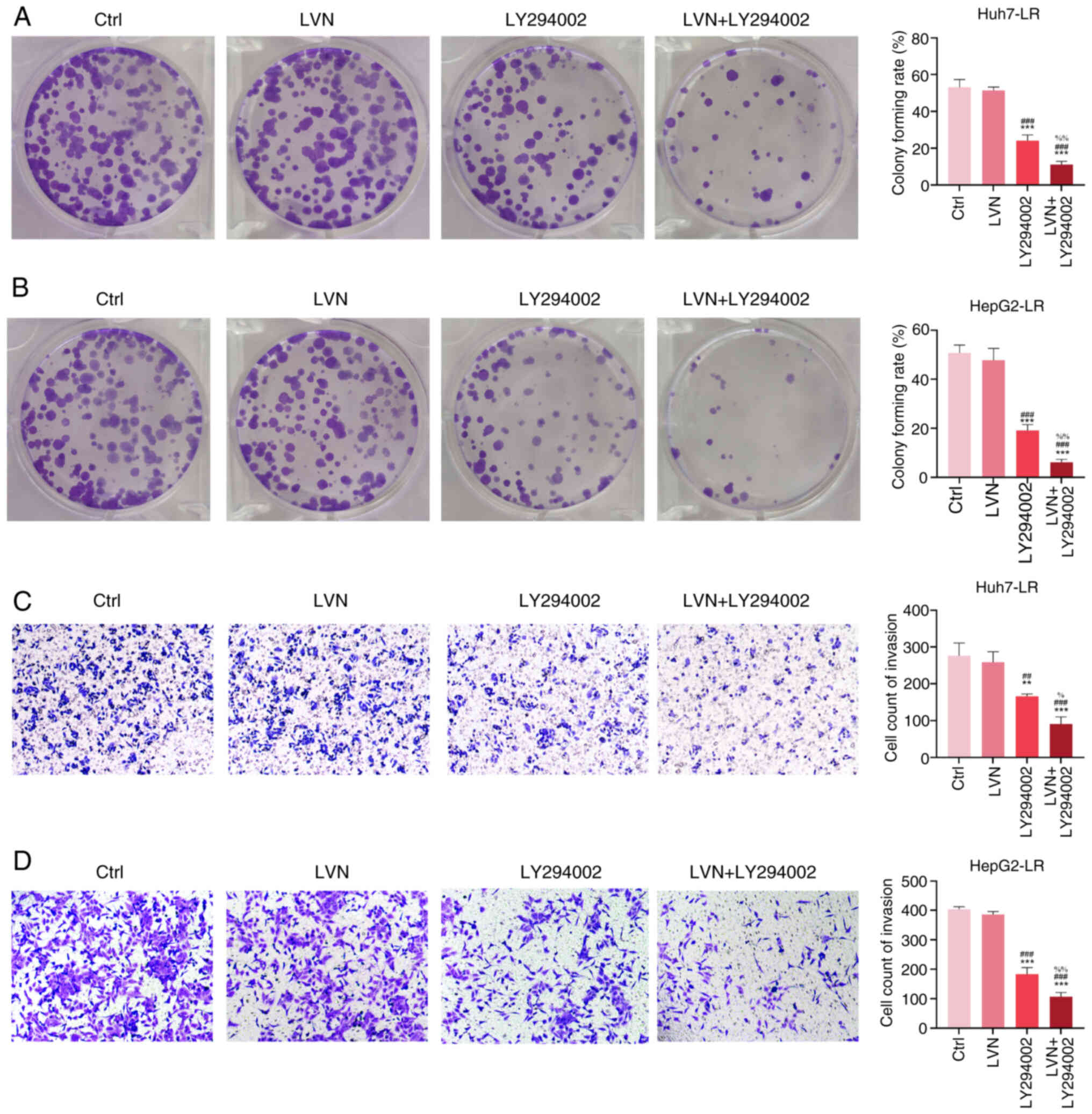
Figure 5

LY294002 alleviates LR by inhibiting
colony formation and invasion in LR LC cell lines. Colony formation
assays for (A) Huh7-LR and (B) HepG2-LR cells following different
treatments. Invasion assays following different treatments in (C)
Huh7-LR and (D) HepG2-LR LC cells. **P<0.01 and ***P<0.001
vs. Ctrl; ##P<0.01 and ###P<0.001 vs.
lenvatinib; %P<0.05 and %%P<0.01 vs.
LY294002. LR, lenvatinib-resistant; LC, liver cancer; Ctrl, control
treatment; LVN, lenvatinib treatment.

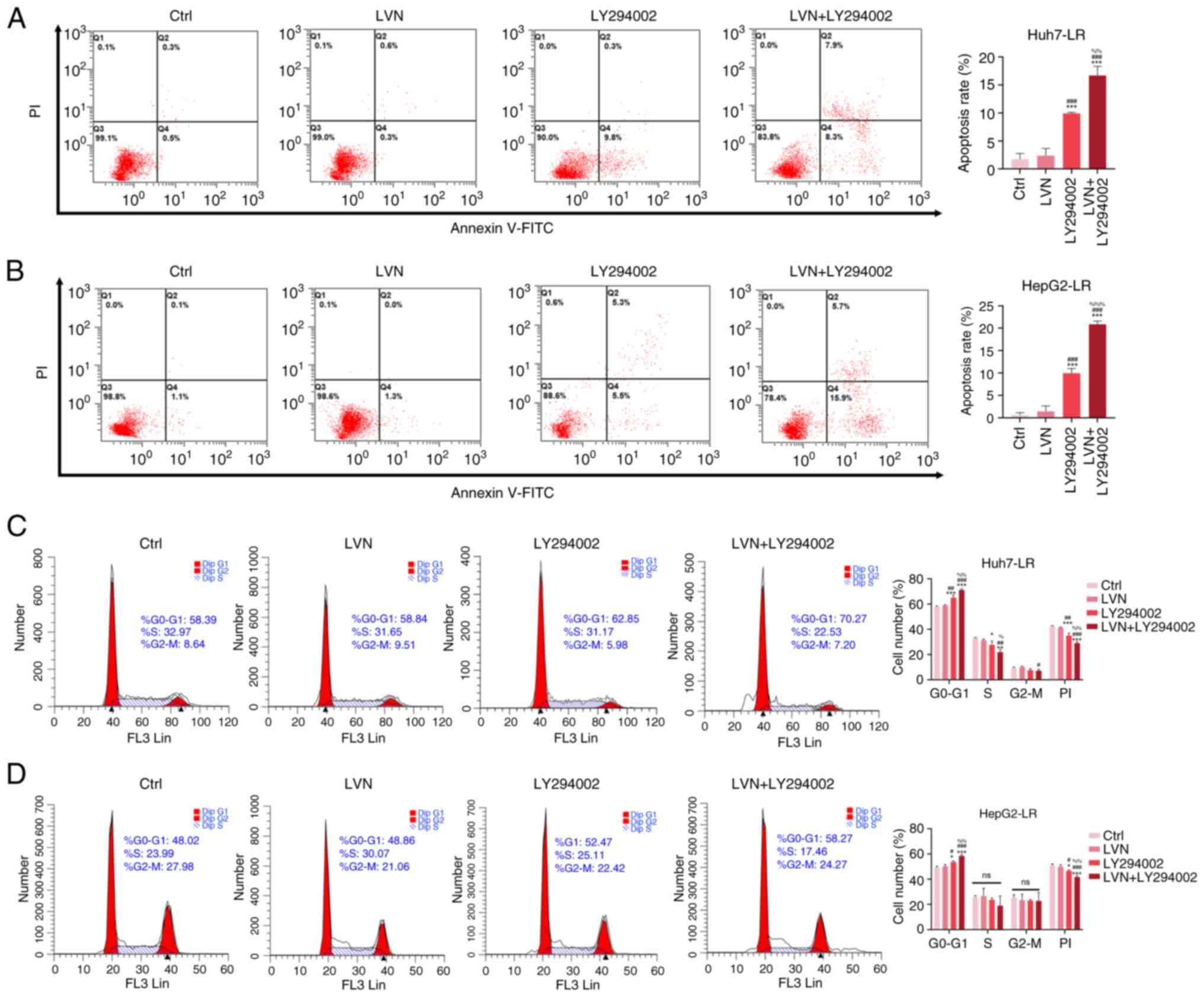
Figure 6

LY294002 alleviates LR by inducing
apoptosis and G0/G1 phase arrest in LR LC
cells. Apoptosis analysis in (A) Huh7-LR and (B) HepG2-LR cells
following different treatments. Cell cycle distribution in (C)
Huh7-LR and (D) HepG2-LR LC cells following different treatments.
*P<0.05, **P<0.01 and ***P<0.001 vs. Ctrl;
#P<0.05, ##P<0.01 and
###P<0.001 vs. Lenvatinib; %P<0.05,
%%P<0.01 and %%%P<0.001 vs. LY294002.
LR, lenvatinib-resistant; LC, liver cancer; Ctrl, control
treatment; LVN, lenvatinib treatment; PI, propidium iodide; ns, not
significant.
View References

1 

Rumgay H, Arnold M, Ferlay J, Lesi O, Cabasag CJ, Vignat J, Laversanne M, McGlynn KA and Soerjomataram I: Global burden of primary liver cancer in 2020 and predictions to 2040. J Hepatol. 77:1598–1606. 2022. View Article : Google Scholar : PubMed/NCBI

2 

Singal AG, Kanwal F and Llovet JM: Global trends in hepatocellular carcinoma epidemiology: Implications for screening, prevention and therapy. Nat Rev Clin Oncol. 20:864–884. 2023. View Article : Google Scholar : PubMed/NCBI

3 

Gordan JD, Kennedy EB, Abou-Alfa GK, Beal E, Finn RS, Gade TP, Goff L, Gupta S, Guy J, Hoang HT, et al: Systemic Therapy for advanced hepatocellular carcinoma: ASCO guideline update. J Clin Oncol. 42:1830–1850. 2024. View Article : Google Scholar : PubMed/NCBI

4 

Zhao Y, Zhang YN, Wang KT and Chen L: Lenvatinib for hepatocellular carcinoma: From preclinical mechanisms to anti-cancer therapy. Biochim Biophys Acta Rev Cancer. 1874:1883912020. View Article : Google Scholar : PubMed/NCBI

5 

Kudo M, Finn RS, Qin S, Han KH, Ikeda K, Piscaglia F, Baron A, Park JW, Han G, Jassem J, et al: Lenvatinib versus sorafenib in first-line treatment of patients with unresectable hepatocellular carcinoma: A randomised phase 3 non-inferiority trial. Lancet. 391:1163–1173. 2018. View Article : Google Scholar : PubMed/NCBI

6 

Hiraoka A, Kumada T, Kariyama K, Takaguchi K, Itobayashi E, Shimada N, Tajiri K, Tsuji K, Ishikawa T, Ochi H, et al: Therapeutic potential of lenvatinib for unresectable hepatocellular carcinoma in clinical practice: Multicenter analysis. Hepatol Res. 49:111–117. 2019. View Article : Google Scholar : PubMed/NCBI

7 

Hu B, Zou T, Qin W, Shen X, Su Y, Li J, Chen Y, Zhang Z, Sun H, Zheng Y, et al: Inhibition of EGFR overcomes acquired lenvatinib resistance driven by STAT3-ABCB1 signaling in hepatocellular carcinoma. Cancer Res. 82:3845–3857. 2022. View Article : Google Scholar : PubMed/NCBI

8 

Wang J, Yu H, Dong W, Zhang C, Hu M, Ma W, Jiang X, Li H, Yang P and Xiang D: N6-methyladenosine-mediated up-regulation of FZD10 regulates liver cancer stem cells' properties and lenvatinib resistance through WNT/β-catenin and Hippo signaling pathways. Gastroenterology. 164:990–1005. 2023. View Article : Google Scholar : PubMed/NCBI

9 

Fu R, Jiang S, Li J, Chen H and Zhang X: Activation of the HGF/c-MET axis promotes lenvatinib resistance in hepatocellular carcinoma cells with high c-MET expression. Med Oncol. 37:242020. View Article : Google Scholar : PubMed/NCBI

10 

Qin Y, Han S, Yu Y, Qi D, Ran M, Yang M, Liu Y and Li Y, Lu L, Liu Y and Li Y: Lenvatinib in hepatocellular carcinoma: Resistance mechanisms and strategies for improved efficacy. Liver Int. 44:1808–1831. 2024. View Article : Google Scholar : PubMed/NCBI

11 

Liao ZH, Zhu HQ, Chen YY, Chen RL, Fu LX, Li L, Zhou H, Zhou JL and Liang G: The epigallocatechin gallate derivative Y6 inhibits human hepatocellular carcinoma by inhibiting angiogenesis in MAPK/ERK1/2 and PI3K/AKT/HIF-1α/VEGF dependent pathways. J Ethnopharmacol. 259:1128522020. View Article : Google Scholar : PubMed/NCBI

12 

Liang H, Yin G, Shi G, Liu Z, Liu X and Li J: Echinacoside regulates PI3K/AKT/HIF-1α/VEGF cross signaling axis in proliferation and apoptosis of breast cancer. Anal Biochem. 684:1153602024. View Article : Google Scholar : PubMed/NCBI

13 

Dong S, Liang S, Cheng Z, Zhang X, Luo L, Li L, Zhang W, Li S, Xu Q, Zhong M, et al: ROS/PI3K/Akt and Wnt/β-catenin signalings activate HIF-1α-induced metabolic reprogramming to impart 5-fluorouracil resistance in colorectal cancer. J Exp Clin Cancer Res. 41:152022. View Article : Google Scholar : PubMed/NCBI

14 

Tian Y, Zhao L, Gui Z, Liu S, Liu C, Yu T and Zhang L: PI3K/AKT signaling activates HIF1α to modulate the biological effects of invasive breast cancer with microcalcification. NPJ Breast Cancer. 9:932023. View Article : Google Scholar : PubMed/NCBI

15 

Koppenol WH, Bounds PL and Dang CV: Otto Warburg's contributions to current concepts of cancer metabolism. Nat Rev Cancer. 11:325–337. 2011. View Article : Google Scholar : PubMed/NCBI

16 

Li S, Dai W, Mo W, Li J, Feng J, Wu L, Liu T, Yu Q, Xu S, Wang W, et al: By inhibiting PFKFB3, aspirin overcomes sorafenib resistance in hepatocellular carcinoma. Int J Cancer. 141:2571–2584. 2017. View Article : Google Scholar : PubMed/NCBI

17 

Feng J, Dai W, Mao Y, Wu L, Li J, Chen K, Yu Q, Kong R, Li S, Zhang J, et al: Simvastatin re-sensitizes hepatocellular carcinoma cells to sorafenib by inhibiting HIF-1α/PPAR-γ/PKM2-mediated glycolysis. J Exp Clin Cancer Res. 39:242020. View Article : Google Scholar : PubMed/NCBI

18 

Wang S, Zhou L, Ji N, Sun C, Sun L, Sun J, Du Y, Zhang N, Li Y, Liu W and Lu W: Targeting ACYP1-mediated glycolysis reverses lenvatinib resistance and restricts hepatocellular carcinoma progression. Drug Resist Updat. 69:1009762023. View Article : Google Scholar : PubMed/NCBI

19 

Yeh YH, Hsiao HF, Yeh YC, Chen TW and Li TK: Inflammatory interferon activates HIF-1α-mediated epithelial-to-mesenchymal transition via PI3K/AKT/mTOR pathway. J Exp Clin Cancer Res. 37:702018. View Article : Google Scholar : PubMed/NCBI

20 

Liao Y, Luo Z, Lin Y, Chen H, Chen T, Xu L, Orgurek S, Berry K, Dzieciatkowska M, Reisz JA, et al: PRMT3 drives glioblastoma progression by enhancing HIF1A and glycolytic metabolism. Cell Death Dis. 13:9432022. View Article : Google Scholar : PubMed/NCBI

21 

Feng J, Li J, Wu L, Yu Q, Ji J, Wu J, Dai W and Guo C: Emerging roles and the regulation of aerobic glycolysis in hepatocellular carcinoma. J Exp Clin Cancer Res. 39:1262020. View Article : Google Scholar : PubMed/NCBI

22 

Gao T, Zhang X, Zhao J, Zhou F, Wang Y, Zhao Z, Xing J, Chen B, Li J and Liu S: SIK2 promotes reprogramming of glucose metabolism through PI3K/AKT/HIF-1α pathway and Drp1-mediated mitochondrial fission in ovarian cancer. Cancer Lett. 469:89–101. 2020. View Article : Google Scholar : PubMed/NCBI

23 

Woo YM, Shin Y, Lee EJ, Lee S, Jeong SH, Kong HK, Park EY, Kim HK, Han J, Chang M and Park JH: Inhibition of aerobic glycolysis represses Akt/mTOR/HIF-1α axis and restores tamoxifen sensitivity in antiestrogen-resistant breast cancer cells. PLoS One. 10:e01322852015. View Article : Google Scholar : PubMed/NCBI

24 

Wei J and Wu J, Xu W, Nie H, Zhou R, Wang R, Liu Y, Tang G and Wu J: Salvianolic acid B inhibits glycolysis in oral squamous cell carcinoma via targeting PI3K/AKT/HIF-1α signaling pathway. Cell Death Dis. 9:5992018. View Article : Google Scholar : PubMed/NCBI

25 

Wang J, Shi J, Mi L, Li N, Han X, Zhao M, Duan X, Han G, Hou J and Yin F: Identification and validation of a lenvatinib resistance-related prognostic signature in HCC, in which PFKFB4 contributes to tumor progression and lenvatinib resistance. BMC Gastroenterol. 25:2872025. View Article : Google Scholar : PubMed/NCBI

26 

Livak KJ and Schmittgen TD: Analysis of relative gene expression data using real-time quantitative PCR and the 2(−Delta Delta C(T)) method. Methods. 25:402–408. 2001. View Article : Google Scholar : PubMed/NCBI

27 

Gonçalves AC, Richiardone E, Jorge J, Polónia B, Xavier CPR, Salaroglio IC, Riganti C, Vasconcelos MH, Corbet C and Sarmento-Ribeiro AB: Impact of cancer metabolism on therapy resistance-clinical implications. Drug Resist Updat. 59:1007972021. View Article : Google Scholar : PubMed/NCBI

28 

Wang S, Cheng H, Li M, Gao D, Wu H, Zhang S, Huang Y and Guo K: BNIP3-mediated mitophagy boosts the competitive growth of Lenvatinib-resistant cells via energy metabolism reprogramming in HCC. Cell Death Dis. 15:4842024. View Article : Google Scholar : PubMed/NCBI

29 

Shan Q, Yin L, Zhan Q, Yu J, Pan S, Zhuo J, Zhou W, Bao J, Zhang L, Hong J, et al: The p-MYH9/USP22/HIF-1α axis promotes lenvatinib resistance and cancer stemness in hepatocellular carcinoma. Signal Transduct Target Ther. 9:2492024. View Article : Google Scholar : PubMed/NCBI

30 

Mazurakova A, Koklesova L, Csizmár SH, Samec M, Brockmueller A, Šudomová M, Biringer K, Kudela E, Pec M, Samuel SM, et al: Significance of flavonoids targeting PI3K/Akt/HIF-1α signaling pathway in therapy-resistant cancer cells-a potential contribution to the predictive, preventive, and personalized medicine. J Adv Res. 55:103–118. 2024. View Article : Google Scholar : PubMed/NCBI

31 

Lee S, Choi EJ, Cho EJ, Lee YB, Lee JH, Yu SJ, Yoon JH and Kim YJ: Inhibition of PI3K/Akt signaling suppresses epithelial-to-mesenchymal transition in hepatocellular carcinoma through the Snail/GSK-3/beta-catenin pathway. Clin Mol Hepatol. 26:529–539. 2020. View Article : Google Scholar : PubMed/NCBI

32 

Vogel A, Qin S, Kudo M, Su Y, Hudgens S, Yamashita T, Yoon JH, Fartoux L, Simon K, López C, et al: Lenvatinib versus sorafenib for first-line treatment of unresectable hepatocellular carcinoma: Patient-reported outcomes from a randomised, open-label, non-inferiority, phase 3 trial. Lancet Gastroenterol Hepatol. 6:649–658. 2021. View Article : Google Scholar : PubMed/NCBI

33 

Rimini M, Rimassa L, Ueshima K, Burgio V, Shigeo S, Tada T, Suda G, Yoo C, Cheon J, Pinato DJ, et al: Atezolizumab plus bevacizumab versus lenvatinib or sorafenib in non-viral unresectable hepatocellular carcinoma: An international propensity score matching analysis. ESMO Open. 7:1005912022. View Article : Google Scholar : PubMed/NCBI

34 

He Y, Sun MM, Zhang GG, Yang J, Chen KS, Xu WW and Li B: Targeting PI3K/Akt signal transduction for cancer therapy. Signal Transduct Target Ther. 6:4252021. View Article : Google Scholar : PubMed/NCBI

35 

Ren F, Wu K, Yang Y, Yang Y, Wang Y and Li J: Dandelion polysaccharide exerts anti-angiogenesis effect on hepatocellular carcinoma by regulating VEGF/HIF-1α expression. Front Pharmacol. 11:4602020. View Article : Google Scholar : PubMed/NCBI

36 

Liu S, Ai Z, Hu Y, Ren G, Zhang J, Tang P, Zou H, Li X and Wang Y, Nan B and Wang Y: Ginseng glucosyl oleanolate inhibit cervical cancer cell proliferation and angiogenesis via PI3K/AKT/HIF-1α pathway. NPJ Sci Food. 8:1052024. View Article : Google Scholar : PubMed/NCBI

37 

Zhou P, Zheng ZH, Wan T, Wu J, Liao CW and Sun XJ: Vitexin inhibits gastric cancer growth and metastasis through HMGB1-mediated Inactivation of the PI3K/AKT/mTOR/HIF-1α signaling pathway. J Gastric Cancer. 21:439–456. 2021. View Article : Google Scholar : PubMed/NCBI

38 

Liu X, Liu L, Chen K, Sun L, Li W and Zhang S: Huaier shows anti-cancer activities by inhibition of cell growth, migration and energy metabolism in lung cancer through PI3K/AKT/HIF-1α pathway. J Cell Mol Med. 25:2228–2237. 2021. View Article : Google Scholar : PubMed/NCBI

39 

Zhao J, Lin E, Cai C, Zhang M, Li D, Cai S, Zeng G, Yin Z, Wang B, Li P, et al: Combined treatment of tanshinone i and epirubicin revealed enhanced inhibition of hepatocellular carcinoma by targeting PI3K/AKT/HIF-1α. Drug Des Devel Ther. 16:3197–3213. 2022. View Article : Google Scholar : PubMed/NCBI

40 

Zeng Q, Nie X, Li L, Liu HF, Peng YY, Zhou WT, Hu XJ, Xu XY and Chen XL: Salidroside promotes sensitization to doxorubicin in human cancer cells by affecting the PI3K/Akt/HIF signal pathway and inhibiting the expression of tumor-resistance-related proteins. J Nat Prod. 85:196–204. 2022. View Article : Google Scholar : PubMed/NCBI

41 

Yan S, Chen L, Zhuang H, Yang H, Yang Y, Zhang N and Liu R: HDAC inhibition sensitize hepatocellular carcinoma to lenvatinib via suppressing AKT activation. Int J Biol Sci. 20:3046–3060. 2024. View Article : Google Scholar : PubMed/NCBI

42 

Hou W, Bridgeman B, Malnassy G, Ding X, Cotler SJ, Dhanarajan A and Qiu W: Integrin subunit beta 8 contributes to lenvatinib resistance in HCC. Hepatol Commun. 6:1786–1802. 2022. View Article : Google Scholar : PubMed/NCBI

43 

Sun S, Guo C, Gao T, Ma D, Su X, Pang Q and Zhang R: Hypoxia Enhances Glioma Resistance to Sulfasalazine-Induced Ferroptosis by Upregulating SLC7A11 via PI3K/AKT/HIF-1 α axis. Oxid Med Cell Longev. 2022:78624302022. View Article : Google Scholar : PubMed/NCBI

44 

He X, Hikiba Y, Suzuki Y, Nakamori Y, Kanemaru Y, Sugimori M, Sato T, Nozaki A, Chuma M and Maeda S: EGFR inhibition reverses resistance to lenvatinib in hepatocellular carcinoma cells. Sci Rep. 12:80072022. View Article : Google Scholar : PubMed/NCBI

45 

Vander Heiden MG, Cantley LC and Thompson CB: Understanding the Warburg effect: The metabolic requirements of cell proliferation. Science. 324:1029–1033. 2009. View Article : Google Scholar : PubMed/NCBI

46 

Xu F, Huang M, Chen Q, Niu Y, Hu Y, Hu P, Chen D, He C, Huang K, Zeng Z, et al: LncRNA HIF1A-AS1 promotes gemcitabine resistance of pancreatic cancer by enhancing glycolysis through modulating the AKT/YB1/HIF1α pathway. Cancer Res. 81:5678–5691. 2021. View Article : Google Scholar : PubMed/NCBI

47 

Wang Z, Wu L, Zhou Y, Chen Z, Zhang T, Wei H and Wang Z: Protein and metabolic profiles of tyrosine kinase inhibitors co-resistant liver cancer cells. Front Pharmacol. 15:13942412024. View Article : Google Scholar : PubMed/NCBI

48 

Hoxhaj G and Manning BD: The PI3K-AKT network at the interface of oncogenic signalling and cancer metabolism. Nat Rev Cancer. 20:74–88. 2020. View Article : Google Scholar : PubMed/NCBI

49 

Sun Y, Liu W, Zhao Q, Zhang R, Wang J, Pan P, Shang H, Liu C and Wang C: Down-regulating the expression of miRNA-21 inhibits the glucose metabolism of A549/DDP cells and promotes cell death through the PI3K/AKT/mTOR/HIF-1α pathway. Front Oncol. 11:6535962021. View Article : Google Scholar : PubMed/NCBI

50 

Sun LT, Zhang LY, Shan FY, Shen MH and Ruan SM: Jiedu Sangen decoction inhibits chemoresistance to 5-fluorouracil of colorectal cancer cells by suppressing glycolysis via PI3K/AKT/HIF-1α signaling pathway. Chin J Nat Med. 19:143–152. 2021.PubMed/NCBI

51 

Shi T, Ma Y, Cao L, Zhan S, Xu Y, Fu F, Liu C, Zhang G, Wang Z, Wang R, et al: B7-H3 promotes aerobic glycolysis and chemoresistance in colorectal cancer cells by regulating HK2. Cell Death Dis. 10:3082019. View Article : Google Scholar : PubMed/NCBI

52 

Åbacka H, Hansen JS, Huang P, Venskutonytė R, Hyrenius-Wittsten A, Poli G, Tuccinardi T, Granchi C, Minutolo F, Hagström-Andersson AK and Lindkvist-Petersson K: Targeting GLUT1 in acute myeloid leukemia to overcome cytarabine resistance. Haematologica. 106:1163–1166. 2021. View Article : Google Scholar : PubMed/NCBI

53 

Martin SP, Fako V, Dang H, Dominguez DA, Khatib S, Ma L, Wang H, Zheng W and Wang XW: PKM2 inhibition may reverse therapeutic resistance to transarterial chemoembolization in hepatocellular carcinoma. J Exp Clin Cancer Res. 39:992020. View Article : Google Scholar : PubMed/NCBI

54 

Li F, Zhang H, Huang Y, Li D, Zheng Z, Xie K, Cao C, Wang Q, Zhao X, Huang Z, et al: Single-cell transcriptome analysis reveals the association between histone lactylation and cisplatin resistance in bladder cancer. Drug Resist Updat. 73:1010592024. View Article : Google Scholar : PubMed/NCBI

55 

Chen H, Li Y, Li H, Chen X, Fu H, Mao D, Chen W, Lan L, Wang C, Hu K, et al: NBS1 lactylation is required for efficient DNA repair and chemotherapy resistance. Nature. 631:663–669. 2024. View Article : Google Scholar : PubMed/NCBI

56 

Lu Y, Zhu J, Zhang Y, Li W, Xiong Y, Fan Y, Wu Y, Zhao J, Shang C, Liang H and Zhang W: Lactylation-driven IGF2BP3-mediated serine metabolism reprogramming and RNA m6A-modification promotes lenvatinib resistance in HCC. Adv Sci (Weinh). 11:e24013992024. View Article : Google Scholar : PubMed/NCBI

57 

Dong R, Fei Y, He Y, Gao P, Zhang B, Zhu M, Wang Z, Wu L, Wu S, Wang X, et al: Lactylation-driven HECTD2 limits the response of hepatocellular carcinoma to lenvatinib. Adv Sci (Weinh). 12:e24125592025. View Article : Google Scholar : PubMed/NCBI

58 

Li F, Si W, Xia L, Yin D, Wei T, Tao M, Cui X, Yang J, Hong T and Wei R: Positive feedback regulation between glycolysis and histone lactylation drives oncogenesis in pancreatic ductal adenocarcinoma. Mol Cancer. 23:902024. View Article : Google Scholar : PubMed/NCBI

59 

Wei S, Zhang J, Zhao R, Shi R, An L, Yu Z, Zhang Q, Zhang J, Yao Y, Li H and Wang H: Histone lactylation promotes malignant progression by facilitating USP39 expression to target PI3K/AKT/HIF-1α signal pathway in endometrial carcinoma. Cell Death Discov. 10:1212024. View Article : Google Scholar : PubMed/NCBI

Related Articles

  • Abstract
  • View
  • Download
  • Twitter
Copy and paste a formatted citation
Spandidos Publications style
Wang J, Shi J, Mi L, Zhao M, Han G and Yin F: Aberrant activation of the PI3K/AKT/HIF‑1&alpha; pathway promotes glycolysis and lenvatinib resistance in liver cancer. Mol Med Rep 32: 301, 2025.
APA
Wang, J., Shi, J., Mi, L., Zhao, M., Han, G., & Yin, F. (2025). Aberrant activation of the PI3K/AKT/HIF‑1&alpha; pathway promotes glycolysis and lenvatinib resistance in liver cancer. Molecular Medicine Reports, 32, 301. https://doi.org/10.3892/mmr.2025.13666
MLA
Wang, J., Shi, J., Mi, L., Zhao, M., Han, G., Yin, F."Aberrant activation of the PI3K/AKT/HIF‑1&alpha; pathway promotes glycolysis and lenvatinib resistance in liver cancer". Molecular Medicine Reports 32.5 (2025): 301.
Chicago
Wang, J., Shi, J., Mi, L., Zhao, M., Han, G., Yin, F."Aberrant activation of the PI3K/AKT/HIF‑1&alpha; pathway promotes glycolysis and lenvatinib resistance in liver cancer". Molecular Medicine Reports 32, no. 5 (2025): 301. https://doi.org/10.3892/mmr.2025.13666
Copy and paste a formatted citation
x
Spandidos Publications style
Wang J, Shi J, Mi L, Zhao M, Han G and Yin F: Aberrant activation of the PI3K/AKT/HIF‑1&alpha; pathway promotes glycolysis and lenvatinib resistance in liver cancer. Mol Med Rep 32: 301, 2025.
APA
Wang, J., Shi, J., Mi, L., Zhao, M., Han, G., & Yin, F. (2025). Aberrant activation of the PI3K/AKT/HIF‑1&alpha; pathway promotes glycolysis and lenvatinib resistance in liver cancer. Molecular Medicine Reports, 32, 301. https://doi.org/10.3892/mmr.2025.13666
MLA
Wang, J., Shi, J., Mi, L., Zhao, M., Han, G., Yin, F."Aberrant activation of the PI3K/AKT/HIF‑1&alpha; pathway promotes glycolysis and lenvatinib resistance in liver cancer". Molecular Medicine Reports 32.5 (2025): 301.
Chicago
Wang, J., Shi, J., Mi, L., Zhao, M., Han, G., Yin, F."Aberrant activation of the PI3K/AKT/HIF‑1&alpha; pathway promotes glycolysis and lenvatinib resistance in liver cancer". Molecular Medicine Reports 32, no. 5 (2025): 301. https://doi.org/10.3892/mmr.2025.13666
Follow us
  • Twitter
  • LinkedIn
  • Facebook
About
  • Spandidos Publications
  • Careers
  • Cookie Policy
  • Privacy Policy
How can we help?
  • Help
  • Live Chat
  • Contact
  • Email to our Support Team