Spandidos Publications Logo
  • About
    • About Spandidos
    • Aims and Scopes
    • Abstracting and Indexing
    • Editorial Policies
    • Reprints and Permissions
    • Job Opportunities
    • Terms and Conditions
    • Contact
  • Journals
    • All Journals
    • Oncology Letters
      • Oncology Letters
      • Information for Authors
      • Editorial Policies
      • Editorial Board
      • Aims and Scope
      • Abstracting and Indexing
      • Bibliographic Information
      • Archive
    • International Journal of Oncology
      • International Journal of Oncology
      • Information for Authors
      • Editorial Policies
      • Editorial Board
      • Aims and Scope
      • Abstracting and Indexing
      • Bibliographic Information
      • Archive
    • Molecular and Clinical Oncology
      • Molecular and Clinical Oncology
      • Information for Authors
      • Editorial Policies
      • Editorial Board
      • Aims and Scope
      • Abstracting and Indexing
      • Bibliographic Information
      • Archive
    • Experimental and Therapeutic Medicine
      • Experimental and Therapeutic Medicine
      • Information for Authors
      • Editorial Policies
      • Editorial Board
      • Aims and Scope
      • Abstracting and Indexing
      • Bibliographic Information
      • Archive
    • International Journal of Molecular Medicine
      • International Journal of Molecular Medicine
      • Information for Authors
      • Editorial Policies
      • Editorial Board
      • Aims and Scope
      • Abstracting and Indexing
      • Bibliographic Information
      • Archive
    • Biomedical Reports
      • Biomedical Reports
      • Information for Authors
      • Editorial Policies
      • Editorial Board
      • Aims and Scope
      • Abstracting and Indexing
      • Bibliographic Information
      • Archive
    • Oncology Reports
      • Oncology Reports
      • Information for Authors
      • Editorial Policies
      • Editorial Board
      • Aims and Scope
      • Abstracting and Indexing
      • Bibliographic Information
      • Archive
    • Molecular Medicine Reports
      • Molecular Medicine Reports
      • Information for Authors
      • Editorial Policies
      • Editorial Board
      • Aims and Scope
      • Abstracting and Indexing
      • Bibliographic Information
      • Archive
    • World Academy of Sciences Journal
      • World Academy of Sciences Journal
      • Information for Authors
      • Editorial Policies
      • Editorial Board
      • Aims and Scope
      • Abstracting and Indexing
      • Bibliographic Information
      • Archive
    • International Journal of Functional Nutrition
      • International Journal of Functional Nutrition
      • Information for Authors
      • Editorial Policies
      • Editorial Board
      • Aims and Scope
      • Abstracting and Indexing
      • Bibliographic Information
      • Archive
    • International Journal of Epigenetics
      • International Journal of Epigenetics
      • Information for Authors
      • Editorial Policies
      • Editorial Board
      • Aims and Scope
      • Abstracting and Indexing
      • Bibliographic Information
      • Archive
    • Medicine International
      • Medicine International
      • Information for Authors
      • Editorial Policies
      • Editorial Board
      • Aims and Scope
      • Abstracting and Indexing
      • Bibliographic Information
      • Archive
  • Articles
  • Information
    • Information for Authors
    • Information for Reviewers
    • Information for Librarians
    • Information for Advertisers
    • Conferences
  • Language Editing
Spandidos Publications Logo
  • About
    • About Spandidos
    • Aims and Scopes
    • Abstracting and Indexing
    • Editorial Policies
    • Reprints and Permissions
    • Job Opportunities
    • Terms and Conditions
    • Contact
  • Journals
    • All Journals
    • Biomedical Reports
      • Information for Authors
      • Editorial Policies
      • Editorial Board
      • Aims and Scope
      • Abstracting and Indexing
      • Bibliographic Information
      • Archive
    • Experimental and Therapeutic Medicine
      • Information for Authors
      • Editorial Policies
      • Editorial Board
      • Aims and Scope
      • Abstracting and Indexing
      • Bibliographic Information
      • Archive
    • International Journal of Epigenetics
      • Information for Authors
      • Editorial Policies
      • Editorial Board
      • Aims and Scope
      • Abstracting and Indexing
      • Bibliographic Information
      • Archive
    • International Journal of Functional Nutrition
      • Information for Authors
      • Editorial Policies
      • Editorial Board
      • Aims and Scope
      • Abstracting and Indexing
      • Bibliographic Information
      • Archive
    • International Journal of Molecular Medicine
      • Information for Authors
      • Editorial Policies
      • Editorial Board
      • Aims and Scope
      • Abstracting and Indexing
      • Bibliographic Information
      • Archive
    • International Journal of Oncology
      • Information for Authors
      • Editorial Policies
      • Editorial Board
      • Aims and Scope
      • Abstracting and Indexing
      • Bibliographic Information
      • Archive
    • Medicine International
      • Information for Authors
      • Editorial Policies
      • Editorial Board
      • Aims and Scope
      • Abstracting and Indexing
      • Bibliographic Information
      • Archive
    • Molecular and Clinical Oncology
      • Information for Authors
      • Editorial Policies
      • Editorial Board
      • Aims and Scope
      • Abstracting and Indexing
      • Bibliographic Information
      • Archive
    • Molecular Medicine Reports
      • Information for Authors
      • Editorial Policies
      • Editorial Board
      • Aims and Scope
      • Abstracting and Indexing
      • Bibliographic Information
      • Archive
    • Oncology Letters
      • Information for Authors
      • Editorial Policies
      • Editorial Board
      • Aims and Scope
      • Abstracting and Indexing
      • Bibliographic Information
      • Archive
    • Oncology Reports
      • Information for Authors
      • Editorial Policies
      • Editorial Board
      • Aims and Scope
      • Abstracting and Indexing
      • Bibliographic Information
      • Archive
    • World Academy of Sciences Journal
      • Information for Authors
      • Editorial Policies
      • Editorial Board
      • Aims and Scope
      • Abstracting and Indexing
      • Bibliographic Information
      • Archive
  • Articles
  • Information
    • For Authors
    • For Reviewers
    • For Librarians
    • For Advertisers
    • Conferences
  • Language Editing
Login Register Submit
  • This site uses cookies
  • You can change your cookie settings at any time by following the instructions in our Cookie Policy. To find out more, you may read our Privacy Policy.

    I agree
Search articles by DOI, keyword, author or affiliation
Search
Advanced Search
presentation
Molecular Medicine Reports
Join Editorial Board Propose a Special Issue
Print ISSN: 1791-2997 Online ISSN: 1791-3004
Journal Cover
January-2026 Volume 33 Issue 1

Full Size Image

Sign up for eToc alerts
Recommend to Library

Journals

International Journal of Molecular Medicine

International Journal of Molecular Medicine

International Journal of Molecular Medicine is an international journal devoted to molecular mechanisms of human disease.

International Journal of Oncology

International Journal of Oncology

International Journal of Oncology is an international journal devoted to oncology research and cancer treatment.

Molecular Medicine Reports

Molecular Medicine Reports

Covers molecular medicine topics such as pharmacology, pathology, genetics, neuroscience, infectious diseases, molecular cardiology, and molecular surgery.

Oncology Reports

Oncology Reports

Oncology Reports is an international journal devoted to fundamental and applied research in Oncology.

Experimental and Therapeutic Medicine

Experimental and Therapeutic Medicine

Experimental and Therapeutic Medicine is an international journal devoted to laboratory and clinical medicine.

Oncology Letters

Oncology Letters

Oncology Letters is an international journal devoted to Experimental and Clinical Oncology.

Biomedical Reports

Biomedical Reports

Explores a wide range of biological and medical fields, including pharmacology, genetics, microbiology, neuroscience, and molecular cardiology.

Molecular and Clinical Oncology

Molecular and Clinical Oncology

International journal addressing all aspects of oncology research, from tumorigenesis and oncogenes to chemotherapy and metastasis.

World Academy of Sciences Journal

World Academy of Sciences Journal

Multidisciplinary open-access journal spanning biochemistry, genetics, neuroscience, environmental health, and synthetic biology.

International Journal of Functional Nutrition

International Journal of Functional Nutrition

Open-access journal combining biochemistry, pharmacology, immunology, and genetics to advance health through functional nutrition.

International Journal of Epigenetics

International Journal of Epigenetics

Publishes open-access research on using epigenetics to advance understanding and treatment of human disease.

Medicine International

Medicine International

An International Open Access Journal Devoted to General Medicine.

Journal Cover
January-2026 Volume 33 Issue 1

Full Size Image

Sign up for eToc alerts
Recommend to Library

  • Article
  • Citations
    • Cite This Article
    • Download Citation
    • Create Citation Alert
    • Remove Citation Alert
    • Cited By
  • Similar Articles
    • Related Articles (in Spandidos Publications)
    • Similar Articles (Google Scholar)
    • Similar Articles (PubMed)
  • Download PDF
  • Download XML
  • View XML

  • Supplementary Files
    • Supplementary_Data.pdf
Article Open Access

CTSB mediates oxidative stress and intestinal epithelial barrier disruption in intestinal ischemia‑reperfusion injury

  • Authors:
    • Shuang He
    • Lei Wang
    • Zhe Wang
    • Shiyong Yu
    • Qi Zhu
    • Yijun Xu
    • Yuhang Jiang
    • Yingxia Wu
    • Honggang Xiang
  • View Affiliations / Copyright

    Affiliations: Department of General Surgery, Shanghai Pudong New Area People's Hospital, Shanghai 201299, P.R. China, Department of General Surgery, Jinshazhou Hospital of Guangzhou University of Chinese Medicine, Guangzhou, Guangdong 510168, P.R. China
    Copyright: © He et al. This is an open access article distributed under the terms of Creative Commons Attribution License.
  • Article Number: 39
    |
    Published online on: November 12, 2025
       https://doi.org/10.3892/mmr.2025.13749
  • Expand metrics +
Metrics: Total Views: 0 (Spandidos Publications: | PMC Statistics: )
Metrics: Total PDF Downloads: 0 (Spandidos Publications: | PMC Statistics: )
Cited By (CrossRef): 0 citations Loading Articles...

This article is mentioned in:


Abstract

Intestinal ischemia‑reperfusion (I/R) injury is a clinical condition that leads to severe intestinal damage, inflammation and oxidative stress. While cathepsin B (CTSB) has been implicated in these pathophysiological processes, its precise role in mediating I/R‑induced injury remains poorly understood. The present study aimed to elucidate how CTSB knockdown influences oxidative stress, inflammatory responses and the integrity of the intestinal epithelial barrier in intestinal epithelial Caco‑2 cells subjected to I/R injury. To identify key genes implicated in I/R injury, a comprehensive analysis was conducted using differential expression profiling and protein‑protein interaction network analysis of the GSE37013 dataset. To simulate I/R damage in vitro, an oxygen‑glucose deprivation/reoxygenation (OGD/R) model was employed in Caco‑2 cells. Subsequently, inflammation was induced by stimulating the cells with lipopolysaccharide (LPS) and adenosine triphosphate (ATP). To investigate the role of CTSB in this context, small interfering RNA was utilized to knock down CTSB expression. In vitro assays were then performed to evaluate NLR family pyrin domain‑containing 3 (NLRP3) inflammasome activation, oxidative stress levels, inflammatory cytokine production and cell survival. The results revealed that intestinal tissues from the I/R group in the GSE37013 dataset showed markedly higher CTSB expression, and the Caco‑2 cells subjected to OGD/R model resulted in a considerable increase in CTSB expression. However, the expression levels of tight junction proteins were enhanced, cell survival was improved and lactate dehydrogenase release was reduced by CTSB knockdown. This reduction in CTSB levels also reduced malondialdehyde levels, and alleviated oxidative stress by increasing the activities of glutathione peroxidase and superoxide dismutase. Furthermore, pro‑inflammatory cytokine production was reduced, and NLRP3 inflammasome activation was inhibited by CTSB knockdown, although a modest increase was still observed after LPS + ATP stimulation. Notably, although CTSB knockdown significantly reduced the inflammatory response, LPS + ATP stimulation still elicited a modest reversal in cytokine levels, suggesting that a CTSB‑independent pathway of inflammatory activation may exist. In conclusion, CTSB knockdown effectively mitigates I/R injury by reducing inflammation, preserving barrier integrity and alleviating oxidative stress, positioning CTSB as a promising therapeutic target. Future work should validate these findings in in vivo models and explore CTSB‑targeted therapies to improve clinical outcomes in I/R‑related diseases.
View Figures

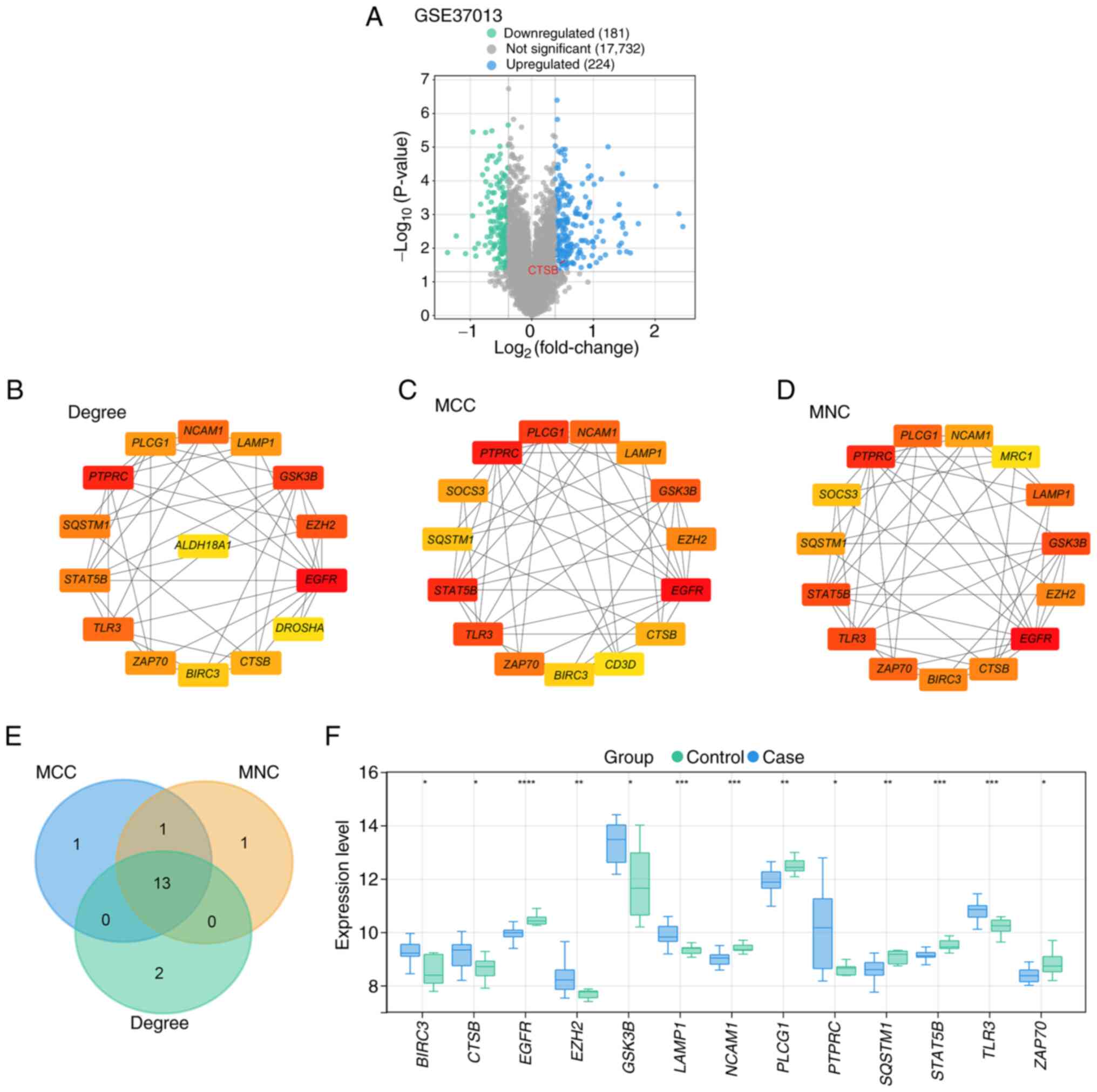
Figure 1

Screening of DEGs, PPI network
construction and intersection analysis based on the GSE37013
dataset to identify hub genes. (A) Volcano plot of DEGs in the
GSE37013 dataset. Green represents 181 downregulated DEGs and blue
represents 224 upregulated DEGs. PPI network analysis of
upregulated DEGs using (B) degree, (C) MCC and (D) MNC algorithms,
and visualization of the top 15 genes in each network. (E) Venn
diagram of the intersection analysis of the top 15 genes of the
degree, MCC and MNC algorithms, where the overlapping genes
represent the intersection genes. (F) Box plot of the expression
levels of 13 intersection genes in control and case samples from
the GSE37013 dataset. *P<0.05, **P<0.01, ***P<0.001,
****P<0.0001. CTSB, cathepsin B; DEG, differentially
expressed gene; MCC, maximal clique centrality; MNC, maximum
neighborhood component; PPI, protein-protein interaction.

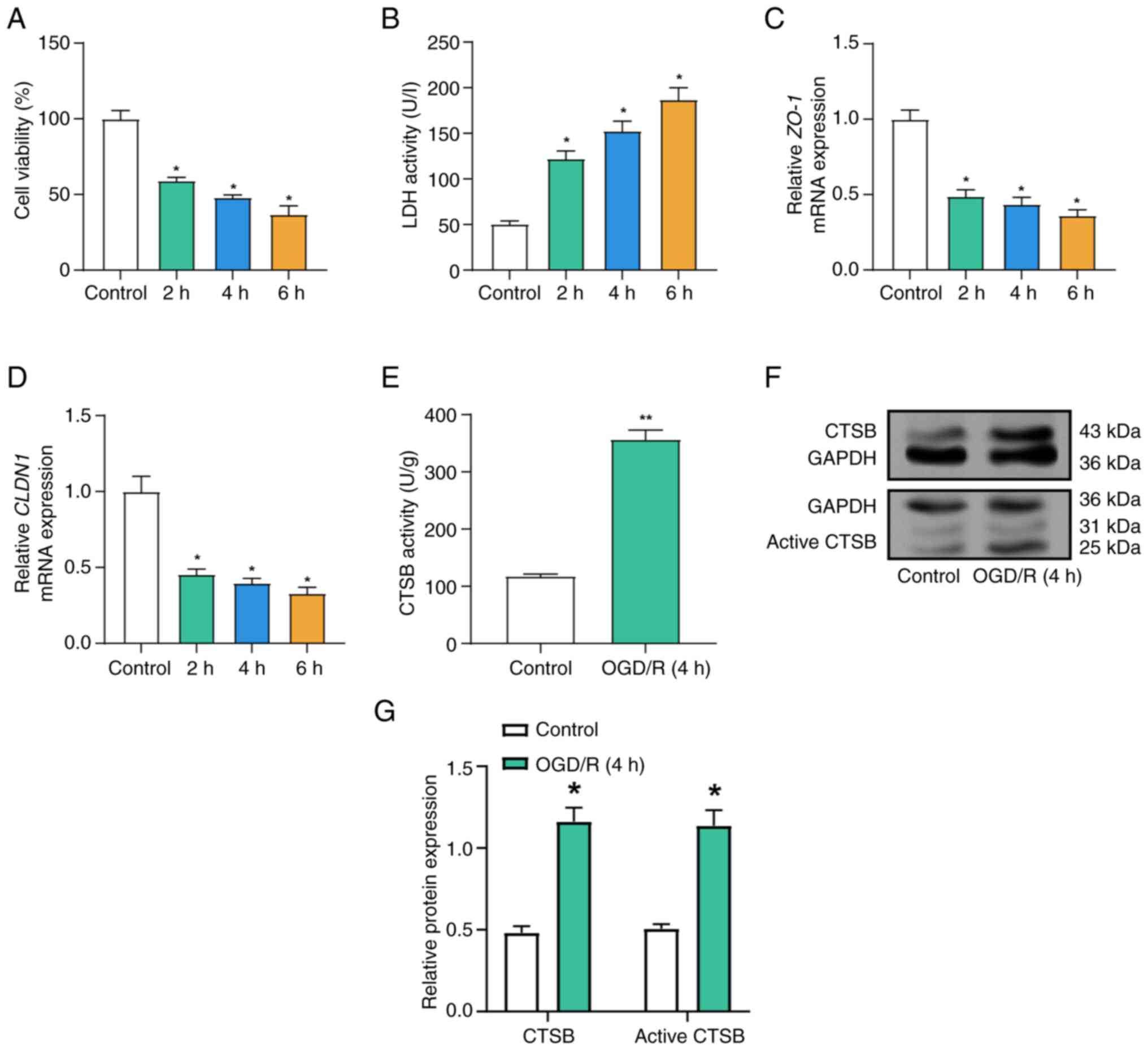
Figure 2

CTSB expression is elevated in
intestinal barrier damage induced by ischemia-reperfusion. (A) Cell
Counting Kit-8 detected the viability of Caco-2 cells in the
control and OGD/R-treated (2, 4 and 6 h) groups. (B) LDH activity
detection in Caco-2 cells from the control and OGD/R-treated (2, 4
and 6 h) groups. Reverse transcription-quantitative PCR was used to
detect the relative mRNA expression levels of (C) ZO-1 and
(D) CLDN1 in Caco-2 cells in the control and OGD/R-treated
(2, 4 and 6 h) groups. (E) Enzyme-linked immunosorbent assay
detected CTSB activity in Caco-2 cells in the control and
OGD/R-treated (4 h) groups. (F) Western blot analysis was used to
detect the protein expression levels of CTSB and active CTSB in
Caco-2 cells in the control and OGD/R-treated (4 h) groups, and (G)
semi-quantitative analysis was performed. All data were obtained
from at least three independent biological experiments (n=3).
*P<0.05, **P<0.01 vs. control. CLDN1, claudin-1; CTSB,
cathepsin B; LDH, lactate dehydrogenase; OGD/R, oxygen-glucose
deprivation/reoxygenation.

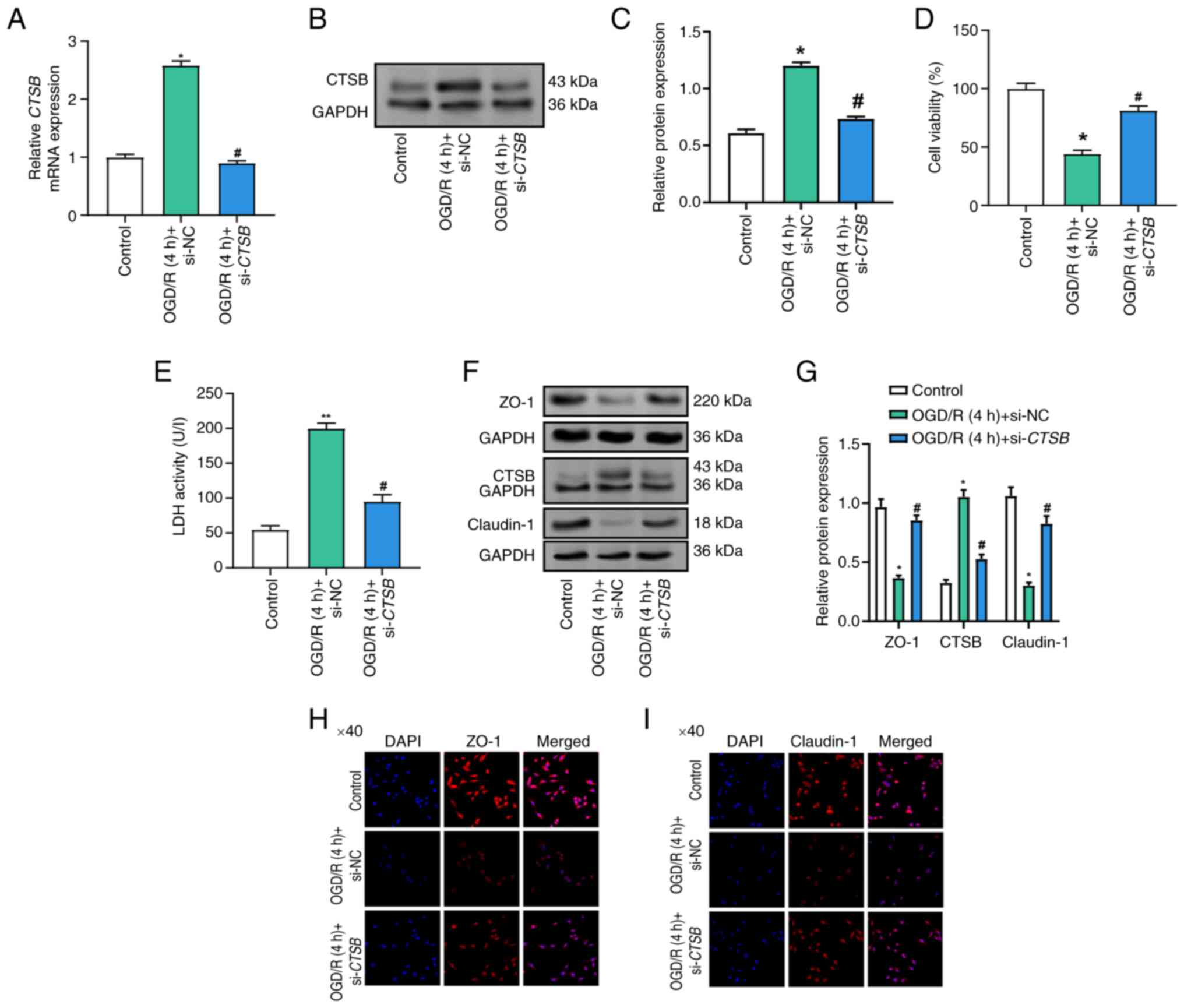
Figure 3

Effects of CTSB knockdown on
cell viability, LDH activity and tight junction protein expression
in OGD/R-treated Caco-2 cells. (A) Reverse
transcription-quantitative PCR analysis of the relative expression
levels of CTSB mRNA in the control group, the OGD/R + si-NC
group and the OGD/R + si-CTSB group. (B) Representative
western blot of CTSB protein in the Control, OGD/R + si-NC and
OGD/R + si-CTSB groups. GAPDH was used as the loading
control. (C) Densitometric semi-quantification of CTSB protein
expression (normalized to GAPDH). (D) Cell Counting Kit-8 detected
the viability of Caco-2 cells in the control, OGD/R (4 h) + si-NC
and OGD/R (4 h) + si-CTSB groups. (E) LDH activity of Caco-2
cells was detected in the control, OGD/R (4 h) + si-NC and OGD/R (4
h) + si-CTSB groups. (F) WB analysis of the protein
expression of CTSB, ZO-1 and claudin-1 in control, OGD/R (4 h) +
si-NC and OGD/R (4 h) + si-CTSB Caco-2 cell groups, and (G)
semi-quantitative analysis. Immunofluorescence analysis of (H) ZO-1
and (I) claudin-1 in Caco-2 cells in the control, OGD/R (4 h) +
si-NC, and OGD/R (4 h) + si-CTSB groups. Magnification, ×40.
All data were obtained from at least three independent biological
experiments (n=3). *P<0.05, **P<0.01 vs. control;
#P<0.05 vs. OGD/R (4 h) + si-NC. CTSB, cathepsin B;
LDH, lactate dehydrogenase; NC, negative control; OGD/R,
oxygen-glucose deprivation/reoxygenation; si, small interfering;
WB, western blot.

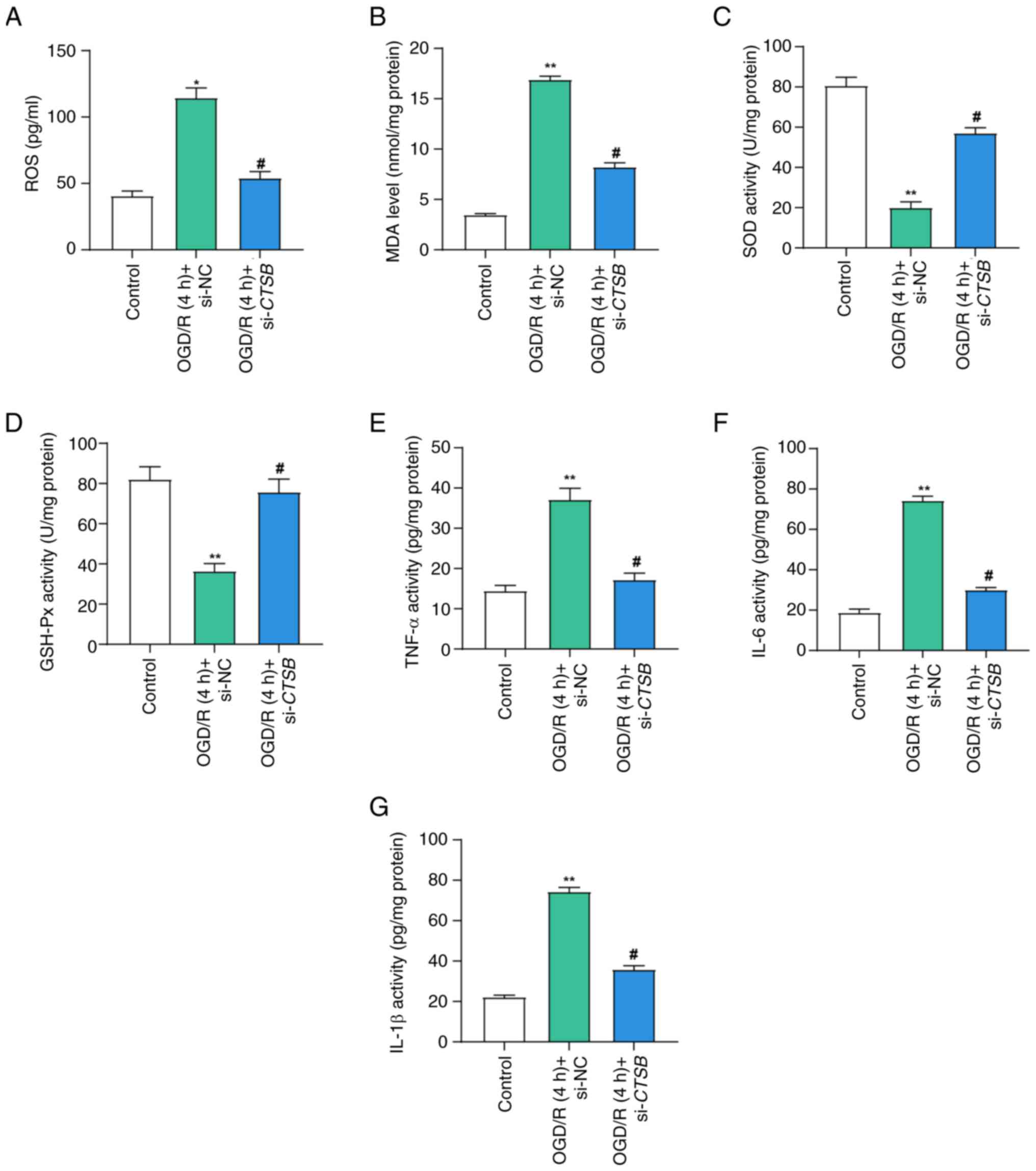
Figure 4

CTSB knockdown mitigates
ischemia-reperfusion-induced oxidative stress and inflammation.
Detection of (A) ROS levels, (B) MDA levels, (C) SOD activity and
(D) GSH-Px activity in Caco-2 cells in the control, OGD/R (4 h) +
si-NC and OGD/R (4 h) + si-CTSB groups. Enzyme-linked
immunosorbent assay detected the activities of the cytokines (E)
TNF-α, (F) IL-6 and (G) IL-1β in Caco-2 cells in the control, OGD/R
(4 h) + si-NC and OGD/R (4 h) + si-CTSB groups. All data
were obtained from at least three independent biological
experiments (n=3). **P<0.01 vs. control; #P<0.05
vs. OGD/R (4 h) + si-NC. CTSB, cathepsin B; GSH-Px,
glutathione peroxidase; MDA, malondialdehyde; NC, negative control;
OGD/R, oxygen-glucose deprivation/reoxygenation; ROS, reactive
oxygen species; si, small interfering; SOD, superoxide
dismutase.

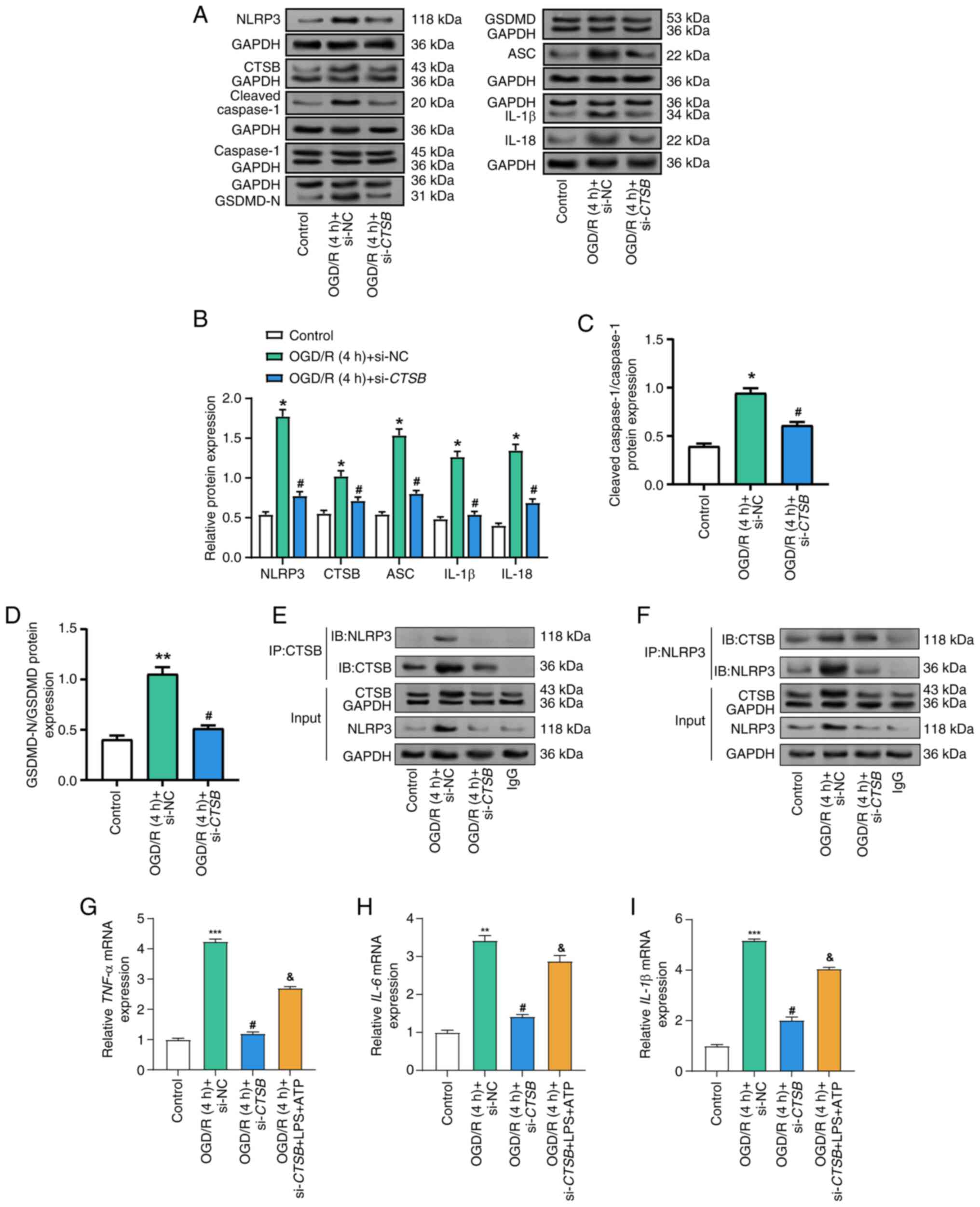
Figure 5

Knockdown of CTSB inhibits
activation of the NLRP3 inflammasome in Caco-2 cells injured by
OGD/R. (A) Representative WB analysis of inflammasome-related
proteins in Caco-2 cells under control conditions, OGD/R (4 h) +
si-NC and OGD/R (4 h) + si-CTSB. Each GAPDH blot shown
corresponds to the target protein immediately above it.
Semi-quantitative analysis of protein expression levels: (B) NLRP3,
CTSB, ASC, IL-1β and IL-18; (C) cleaved caspase-1/caspase-1 ratio;
and (D) GSDMD-N/GSDMD ratio. (E) Co-IP of CTSB and NLRP3 (IP: CTSB;
IB: NLRP3 and CTSB). Inputs and IgG controls are shown. (F)
Reciprocal co-IP (IP: NLRP3; IB: CTSB and NLRP3) confirming the
interaction between CTSB and NLRP3 under OGD/R conditions. Reverse
transcription-quantitative PCR detection of the relative mRNA
expression levels of the cytokines (G) TNF-α, (H)
IL-6 and (I) IL-1β in Caco-2 cells in the control,
OGD/R (4 h) + si-NC, OGD/R (4 h) + si-CTSB and OGD/R (4 h) +
si-CTSB + LPS + ATP groups. All data were obtained from at
least three independent biological experiments (n=3). *P<0.05,
**P<0.01, ***P<0.001 vs. control; #P<0.05 vs.
OGD/R (4 h) + si-NC; &P<0.05 vs. OGD/R (4 h) +
si-CTSB. ATP, adenosine triphosphate; CTSB, cathepsin B;
GSDMD, gasdermin D; GSDMD-N, cleaved N-terminal GSDMD; IB,
immunoblot; IP, immunoprecipitation; LPS, lipopolysaccharide; NC,
negative control; NLRP3, NLR family pyrin domain-containing 3;
OGD/R, oxygen-glucose deprivation/reoxygenation; si, small
interfering; WB, western blot.

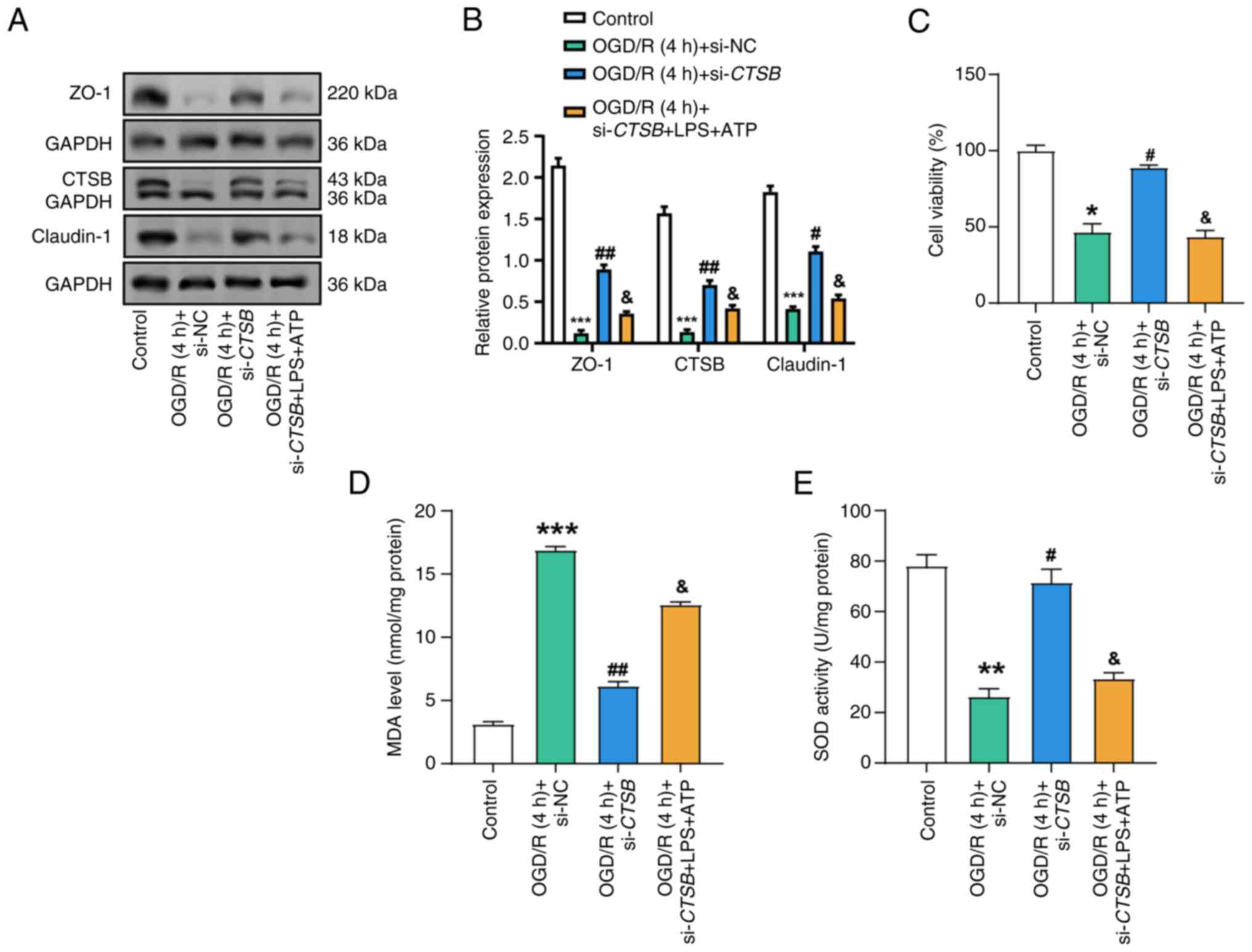
Figure 6

Effects of CTSB knockdown and
LPS + ATP treatment on cell viability, oxidative stress and tight
junction protein expression in OGD/R-treated Caco-2 cells. (A)
Western blot analysis of the protein expression of CTSB, ZO-1 and
claudin-1 in Caco-2 cells in the control, OGD/R (4 h) + si-NC,
OGD/R (4 h) + si-CTSB and OGD/R (4 h) + si-CTSB + LPS
+ ATP groups, and (B) semi-quantitative analysis. (C) Cell Counting
Kit-8 detected the viability of Caco-2 cells in the control, OGD/R
(4 h) + si-NC, OGD/R (4 h) + si-CTSB and OGD/R (4 h) +
si-CTSB + LPS + ATP groups. Detection of (D) MDA levels and
(E) SOD activity in Caco-2 cells in the control, OGD/R (4 h) +
si-NC, OGD/R (4 h) + si-CTSB and OGD/R (4 h) +
si-CTSB + LPS + ATP groups. All data were obtained from at
least three independent biological experiments (n=3). *P<0.05,
**P<0.01, ***P<0.001 vs. Control. #P<0.05,
##P<0.01 vs. OGD/R (4 h) + si-NC.
&P<0.05 vs. OGD/R (4 h) + si-CTSB + LPS +
ATP. ATP, adenosine triphosphate; CTSB, cathepsin B; LPS,
lipopolysaccharide; MDA, malondialdehyde; NC, negative control;
OGD/R, oxygen-glucose deprivation/reoxygenation; si, small
interfering; SOD, superoxide dismutase.
View References

1 

Wang J, Zhang W and Wu G: Intestinal ischemic reperfusion injury: Recommended rats model and comprehensive review for protective strategies. Biomed Pharmacother. 138:1114822021. View Article : Google Scholar : PubMed/NCBI

2 

Li G, Wang S and Fan Z: Oxidative stress in intestinal ischemia-reperfusion. Front Med (Lausanne). 8:7507312022. View Article : Google Scholar : PubMed/NCBI

3 

Zhang J, Liu Z, Liu Y, Shi Y, Chen F and Leng Y: Role of non-coding RNA in the pathogenesis of intestinal ischemia-reperfusion injury. Curr Med Chem. 30:4130–4148. 2023. View Article : Google Scholar : PubMed/NCBI

4 

Li Y, Feng D, Wang Z, Zhao Y, Sun R, Tian D, Liu D, Zhang F, Ning S, Yao J and Tian X: Ischemia-induced ACSL4 activation contributes to ferroptosis-mediated tissue injury in intestinal ischemia/reperfusion. Cell Death Differ. 26:2284–2299. 2019. View Article : Google Scholar : PubMed/NCBI

5 

Meng Q, Ye C and Lu Y: miR-181c regulates ischemia/reperfusion injury-induced neuronal cell death by regulating c-Fos signaling. Pharmazie. 75:90–93. 2020.PubMed/NCBI

6 

Zu G, Zhou T, Che N and Zhang X: Salvianolic acid A protects against oxidative stress and apoptosis induced by intestinal ischemia-reperfusion injury through activation of Nrf2/HO-1 pathways. Cell Physiol Biochem. 49:2320–2332. 2018. View Article : Google Scholar : PubMed/NCBI

7 

Wu L, Xiong X, Wu X, Ye Y, Jian Z, Zhi Z and Gu L: Targeting oxidative stress and inflammation to prevent ischemia-reperfusion injury. Front Mol Neurosci. 13:282020. View Article : Google Scholar : PubMed/NCBI

8 

Hook G, Reinheckel T, Ni J, Wu Z, Kindy M, Peters C and Hook V: Cathepsin B gene knockout improves behavioral deficits and reduces pathology in models of neurologic disorders. Pharmacol Rev. 74:600–629. 2022. View Article : Google Scholar : PubMed/NCBI

9 

De Pasquale V, Moles A and Pavone LM: Cathepsins in the pathophysiology of mucopolysaccharidoses: New perspectives for therapy. Cells. 9:9792020. View Article : Google Scholar : PubMed/NCBI

10 

Hu ML, Liao QZ, Liu BT, Sun K, Pan CS, Wang XY, Yan L, Huo XM, Zheng XQ, Wang Y, et al: Xihuang pill ameliorates colitis in mice by improving mucosal barrier injury and inhibiting inflammatory cell filtration through network regulation. J Ethnopharmacol. 319:1170982024. View Article : Google Scholar : PubMed/NCBI

11 

Dong L, Xie J, Wang Y, Jiang H, Chen K, Li D, Wang J, Liu Y, He J, Zhou J, et al: Mannose ameliorates experimental colitis by protecting intestinal barrier integrity. Nat Commun. 13:48042022. View Article : Google Scholar : PubMed/NCBI

12 

Liu C, Yao Q, Hu T, Cai Z, Xie Q, Zhao J, Yuan Y, Ni J and Wu QQ: Cathepsin B deteriorates diabetic cardiomyopathy induced by streptozotocin via promoting NLRP3-mediated pyroptosis. Mol Ther Nucleic Acids. 30:198–207. 2022. View Article : Google Scholar : PubMed/NCBI

13 

Zhao S, Gong Z, Zhou J, Tian C, Gao Y, Xu C, Chen Y, Cai W and Wu J: Deoxycholic acid triggers NLRP3 inflammasome activation and aggravates DSS-induced colitis in mice. Front Immunol. 7:5362016. View Article : Google Scholar : PubMed/NCBI

14 

Liu M, Wen H, Zuo L, Song X, Geng Z, Ge S, Ge Y, Wu R, Chen S, Yu C and Gao Y: Bryostatin-1 attenuates intestinal ischemia/reperfusion-induced intestinal barrier dysfunction, inflammation, and oxidative stress via activation of Nrf2/HO-1 signaling. FASEB J. 37:e229482023. View Article : Google Scholar : PubMed/NCBI

15 

Zhao Y, Zhuang Y, Shi J, Fan H, Lv Q and Guo X: Cathepsin B induces kidney diseases through different types of programmed cell death. Front Immunol. 16:15353132025. View Article : Google Scholar : PubMed/NCBI

16 

Kip AM, Grootjans J, Manca M, Hadfoune MH, Boonen B, Derikx JPM, Biessen EAL, Olde Damink SWM, Dejong CHC, Buurman WA and Lenaerts K: Temporal transcript profiling identifies a role for unfolded protein stress in human gut ischemia-reperfusion injury. Cell Mol Gastroenterol Hepatol. 13:681–694. 2022. View Article : Google Scholar : PubMed/NCBI

17 

Livak KJ and Schmittgen TD: Analysis of relative gene expression data using real-time quantitative PCR and the 2(−Delta Delta C(T)) method. Methods. 25:402–408. 2001. View Article : Google Scholar : PubMed/NCBI

18 

Wang Z, Li Z, Feng D, Zu G, Li Y, Zhao Y, Wang G, Ning S, Zhu J, Zhang F, et al: Autophagy induction ameliorates inflammatory responses in intestinal Ischemia-reperfusion through inhibiting NLRP3 inflammasome activation. Shock. 52:387–395. 2019. View Article : Google Scholar : PubMed/NCBI

19 

Nadatani Y, Watanabe T, Shimada S, Otani K, Tanigawa T and Fujiwara Y: Microbiome and intestinal ischemia/reperfusion injury. J Clin Biochem Nutr. 63:26–32. 2018. View Article : Google Scholar : PubMed/NCBI

20 

Zhenzhen L, Wenting L, Jianmin Z, Guangru Z, Disheng L, Zhiyu Z, Feng C, Yajing S, Yingxiang H, Jipeng L, et al: miR-146a-5p/TXNIP axis attenuates intestinal ischemia-reperfusion injury by inhibiting autophagy via the PRKAA/mTOR signaling pathway. Biochem Pharmacol. 197:1148392022. View Article : Google Scholar : PubMed/NCBI

21 

Cong R, Yang J, Zhou J, Shi J, Zhu Y, Zhu J, Xiao J, Wang P, He Y and He B: The potential role of protein tyrosine phosphatase, receptor type C (CD45) in the intestinal ischemia-reperfusion injury. J Comput Biol. 27:1303–1312. 2020. View Article : Google Scholar : PubMed/NCBI

22 

Zhang XY, Liang HS, Hu JJ, Wan YT, Zhao J, Liang GT, Luo YH, Liang HX, Guo XQ, Li C, et al: Ribonuclease attenuates acute intestinal injury induced by intestinal ischemia reperfusion in mice. Int Immunopharmacol. 83:1064302020. View Article : Google Scholar : PubMed/NCBI

23 

Yang J, Wu Y, Xu Y, Jia J, Xi W, Deng H and Tu W: Dexmedetomidine resists intestinal ischemia-reperfusion injury by inhibiting TLR4/MyD88/NF-κB signaling. J Surg Res. 260:350–358. 2021. View Article : Google Scholar : PubMed/NCBI

24 

Liu C, Cai Z, Hu T, Yao Q and Zhang L: Cathepsin B aggravated doxorubicin-induced myocardial injury via NF-κB signalling. Mol Med Rep. 22:4848–4856. 2020. View Article : Google Scholar : PubMed/NCBI

25 

Wu J, Chen S, Wu P, Wang Y, Qi X, Zhang R, Liu Z, Wang D and Cheng Y: Cathepsin B/HSP70 complex induced by Ilexsaponin I suppresses NLRP3 inflammasome activation in myocardial ischemia/reperfusion injury. Phytomedicine. 105:1543582022. View Article : Google Scholar : PubMed/NCBI

26 

Sun C, Cao N, Wang Q, Liu N, Yang T, Li S, Pan L, Yao J, Zhang L, Liu M, et al: Icaritin induces resolution of inflammation by targeting cathepsin B to prevents mice from ischemia-reperfusion injury. Int Immunopharmacol. 116:1098502023. View Article : Google Scholar

27 

Morinaga Y, Yanagihara K, Nakamura S, Hasegawa H, Seki M, Izumikawa K, Kakeya H, Yamamoto Y, Yamada Y, Kohno S and Kamihira S: Legionella pneumophila induces cathepsin B-dependent necrotic cell death with releasing high mobility group box1 in macrophages. Respir Res. 11:1582010. View Article : Google Scholar : PubMed/NCBI

28 

Menzel K, Hausmann M, Obermeier F, Schreiter K, Dunger N, Bataille F, Falk W, Scholmerich J, Herfarth H and Rogler G: Cathepsins B, L, and D in inflammatory bowel disease macrophages and potential therapeutic effects of cathepsin inhibition in vivo. Clin Exp Immunol. 146:169–180. 2006. View Article : Google Scholar : PubMed/NCBI

29 

Liu Y, Ji T, Jiang H, Chen M, Liu W, Zhang Z and He X: Emodin alleviates intestinal ischemia-reperfusion injury through antioxidant stress, anti-inflammatory responses, and anti-apoptosis effects via Akt-mediated HO-1 upregulation. J Inflamm (Lond). 21:252024. View Article : Google Scholar : PubMed/NCBI

30 

Li L, Zhou C, Li T, Xiao W, Yu M and Yang H: Interleukin-28A maintains the intestinal epithelial barrier function through regulation of claudin-1. Ann Transl Med. 9:3652021. View Article : Google Scholar : PubMed/NCBI

31 

Brooks TA, Hawkins BT, Huber JD, Egleton RD and Davis TP: Chronic inflammatory pain leads to increased blood-brain barrier permeability and tight junction protein alterations. Am J Physiol Heart Circ Physiol. 289:H738–H743. 2005. View Article : Google Scholar : PubMed/NCBI

32 

Adwas AA, Elsayed A, Azab AE and Quwaydir FA: Oxidative stress and antioxidant mechanisms in human body. J Appl Biotechnol Bioeng. 6:43–47. 2019.

33 

Wang G, Yao J, Li Z, Zu G, Feng D, Shan W, Li Y, Hu Y, Zhao Y and Tian X: miR-34a-5p inhibition alleviates intestinal ischemia/reperfusion-induced reactive oxygen species accumulation and apoptosis via activation of SIRT1 signaling. Antioxid Redox Signal. 24:961–973. 2016. View Article : Google Scholar : PubMed/NCBI

34 

Li F, Wang X, Deng Z, Zhang X, Gao P and Liu H: Dexmedetomidine reduces oxidative stress and provides neuroprotection in a model of traumatic brain injury via the PGC-1α signaling pathway. Neuropeptides. 72:58–64. 2018. View Article : Google Scholar : PubMed/NCBI

35 

Hou M, Chen F, He Y, Tan Z, Han X, Shi Y, Xu Y and Leng Y: Dexmedetomidine against intestinal ischemia/reperfusion injury: A systematic review and meta-analysis of preclinical studies. Eur J Pharmacol. 959:1760902023. View Article : Google Scholar : PubMed/NCBI

36 

Ustundag B, Kazez A, Demirbag M, Canatan H, Halifeoglu I and Ozercan IH: Protective effect of melatonin on antioxidative system in experimental ischemia-reperfusion of rat small intestine. Cell Physiol Biochem. 10:229–236. 2000. View Article : Google Scholar : PubMed/NCBI

37 

Sambuy Y, De Angelis I, Ranaldi G, Scarino M, Stammati A and Zucco F: The Caco-2 cell line as a model of the intestinal barrier: Influence of cell and culture-related factors on Caco-2 cell functional characteristics. Cell Biol Toxicol. 21:1–26. 2005. View Article : Google Scholar : PubMed/NCBI

38 

Meunier V, Bourrie M, Berger Y and Fabre G: The human intestinal epithelial cell line Caco-2; pharmacological and pharmacokinetic applications. Cell Biol Toxicol. 11:187–194. 1995. View Article : Google Scholar : PubMed/NCBI

39 

Deng F, Lin ZB, Sun QS, Min Y, Zhang Y, Chen Y, Chen WT, Hu JJ and Liu KX: The role of intestinal microbiota and its metabolites in intestinal and extraintestinal organ injury induced by intestinal ischemia reperfusion injury. Int J Biol Sci. 18:39812022. View Article : Google Scholar : PubMed/NCBI

40 

Moretti J and Blander JM: Increasing complexity of NLRP3 inflammasome regulation. J Leukoc Biol. 109:561–571. 2021. View Article : Google Scholar : PubMed/NCBI

41 

Ito H, Kimura H, Karasawa T, Hisata S, Sadatomo A, Inoue Y, Yamada N, Aizawa E, Hishida E, Kamata R, et al: NLRP3 inflammasome activation in lung vascular endothelial cells contributes to intestinal ischemia/reperfusion-induced acute lung injury. J Immunol. 205:1393–1405. 2020. View Article : Google Scholar : PubMed/NCBI

42 

Lyu H, Ni H, Huang J, Yu G, Zhang Z and Zhang Q: VX-765 prevents intestinal ischemia-reperfusion injury by inhibiting NLRP3 inflammasome. Tissue Cell. 75:1017182022. View Article : Google Scholar : PubMed/NCBI

43 

Cai Z, Xu S and Liu C: Cathepsin B in cardiovascular disease: Underlying mechanisms and therapeutic strategies. J Cell Mol Med. 28:e700642024. View Article : Google Scholar : PubMed/NCBI

44 

Li Y, Xia X, Niu Z, Wang K, Liu J and Li X: hCeO2@ Cu5.4O nanoparticle alleviates inflammatory responses by regulating the CTSB-NLRP3 signaling pathway. Front Immunol. 15:13440982024. View Article : Google Scholar : PubMed/NCBI

45 

Xu W, Huang Y and Zhou R: NLRP3 inflammasome in neuroinflammation and central nervous system diseases. Cell Mol Immunol. 22:341–355. 2025. View Article : Google Scholar : PubMed/NCBI

Related Articles

  • Abstract
  • View
  • Download
  • Twitter
Copy and paste a formatted citation
Spandidos Publications style
He S, Wang L, Wang Z, Yu S, Zhu Q, Xu Y, Jiang Y, Wu Y and Xiang H: <em>CTSB</em> mediates oxidative stress and intestinal epithelial barrier disruption in intestinal ischemia‑reperfusion injury. Mol Med Rep 33: 39, 2026.
APA
He, S., Wang, L., Wang, Z., Yu, S., Zhu, Q., Xu, Y. ... Xiang, H. (2026). <em>CTSB</em> mediates oxidative stress and intestinal epithelial barrier disruption in intestinal ischemia‑reperfusion injury. Molecular Medicine Reports, 33, 39. https://doi.org/10.3892/mmr.2025.13749
MLA
He, S., Wang, L., Wang, Z., Yu, S., Zhu, Q., Xu, Y., Jiang, Y., Wu, Y., Xiang, H."<em>CTSB</em> mediates oxidative stress and intestinal epithelial barrier disruption in intestinal ischemia‑reperfusion injury". Molecular Medicine Reports 33.1 (2026): 39.
Chicago
He, S., Wang, L., Wang, Z., Yu, S., Zhu, Q., Xu, Y., Jiang, Y., Wu, Y., Xiang, H."<em>CTSB</em> mediates oxidative stress and intestinal epithelial barrier disruption in intestinal ischemia‑reperfusion injury". Molecular Medicine Reports 33, no. 1 (2026): 39. https://doi.org/10.3892/mmr.2025.13749
Copy and paste a formatted citation
x
Spandidos Publications style
He S, Wang L, Wang Z, Yu S, Zhu Q, Xu Y, Jiang Y, Wu Y and Xiang H: <em>CTSB</em> mediates oxidative stress and intestinal epithelial barrier disruption in intestinal ischemia‑reperfusion injury. Mol Med Rep 33: 39, 2026.
APA
He, S., Wang, L., Wang, Z., Yu, S., Zhu, Q., Xu, Y. ... Xiang, H. (2026). <em>CTSB</em> mediates oxidative stress and intestinal epithelial barrier disruption in intestinal ischemia‑reperfusion injury. Molecular Medicine Reports, 33, 39. https://doi.org/10.3892/mmr.2025.13749
MLA
He, S., Wang, L., Wang, Z., Yu, S., Zhu, Q., Xu, Y., Jiang, Y., Wu, Y., Xiang, H."<em>CTSB</em> mediates oxidative stress and intestinal epithelial barrier disruption in intestinal ischemia‑reperfusion injury". Molecular Medicine Reports 33.1 (2026): 39.
Chicago
He, S., Wang, L., Wang, Z., Yu, S., Zhu, Q., Xu, Y., Jiang, Y., Wu, Y., Xiang, H."<em>CTSB</em> mediates oxidative stress and intestinal epithelial barrier disruption in intestinal ischemia‑reperfusion injury". Molecular Medicine Reports 33, no. 1 (2026): 39. https://doi.org/10.3892/mmr.2025.13749
Follow us
  • Twitter
  • LinkedIn
  • Facebook
About
  • Spandidos Publications
  • Careers
  • Cookie Policy
  • Privacy Policy
How can we help?
  • Help
  • Live Chat
  • Contact
  • Email to our Support Team