Spandidos Publications Logo
  • About
    • About Spandidos
    • Aims and Scopes
    • Abstracting and Indexing
    • Editorial Policies
    • Reprints and Permissions
    • Job Opportunities
    • Terms and Conditions
    • Contact
  • Journals
    • All Journals
    • Oncology Letters
      • Oncology Letters
      • Information for Authors
      • Editorial Policies
      • Editorial Board
      • Aims and Scope
      • Abstracting and Indexing
      • Bibliographic Information
      • Archive
    • International Journal of Oncology
      • International Journal of Oncology
      • Information for Authors
      • Editorial Policies
      • Editorial Board
      • Aims and Scope
      • Abstracting and Indexing
      • Bibliographic Information
      • Archive
    • Molecular and Clinical Oncology
      • Molecular and Clinical Oncology
      • Information for Authors
      • Editorial Policies
      • Editorial Board
      • Aims and Scope
      • Abstracting and Indexing
      • Bibliographic Information
      • Archive
    • Experimental and Therapeutic Medicine
      • Experimental and Therapeutic Medicine
      • Information for Authors
      • Editorial Policies
      • Editorial Board
      • Aims and Scope
      • Abstracting and Indexing
      • Bibliographic Information
      • Archive
    • International Journal of Molecular Medicine
      • International Journal of Molecular Medicine
      • Information for Authors
      • Editorial Policies
      • Editorial Board
      • Aims and Scope
      • Abstracting and Indexing
      • Bibliographic Information
      • Archive
    • Biomedical Reports
      • Biomedical Reports
      • Information for Authors
      • Editorial Policies
      • Editorial Board
      • Aims and Scope
      • Abstracting and Indexing
      • Bibliographic Information
      • Archive
    • Oncology Reports
      • Oncology Reports
      • Information for Authors
      • Editorial Policies
      • Editorial Board
      • Aims and Scope
      • Abstracting and Indexing
      • Bibliographic Information
      • Archive
    • Molecular Medicine Reports
      • Molecular Medicine Reports
      • Information for Authors
      • Editorial Policies
      • Editorial Board
      • Aims and Scope
      • Abstracting and Indexing
      • Bibliographic Information
      • Archive
    • World Academy of Sciences Journal
      • World Academy of Sciences Journal
      • Information for Authors
      • Editorial Policies
      • Editorial Board
      • Aims and Scope
      • Abstracting and Indexing
      • Bibliographic Information
      • Archive
    • International Journal of Functional Nutrition
      • International Journal of Functional Nutrition
      • Information for Authors
      • Editorial Policies
      • Editorial Board
      • Aims and Scope
      • Abstracting and Indexing
      • Bibliographic Information
      • Archive
    • International Journal of Epigenetics
      • International Journal of Epigenetics
      • Information for Authors
      • Editorial Policies
      • Editorial Board
      • Aims and Scope
      • Abstracting and Indexing
      • Bibliographic Information
      • Archive
    • Medicine International
      • Medicine International
      • Information for Authors
      • Editorial Policies
      • Editorial Board
      • Aims and Scope
      • Abstracting and Indexing
      • Bibliographic Information
      • Archive
  • Articles
  • Information
    • Information for Authors
    • Information for Reviewers
    • Information for Librarians
    • Information for Advertisers
    • Conferences
  • Language Editing
Spandidos Publications Logo
  • About
    • About Spandidos
    • Aims and Scopes
    • Abstracting and Indexing
    • Editorial Policies
    • Reprints and Permissions
    • Job Opportunities
    • Terms and Conditions
    • Contact
  • Journals
    • All Journals
    • Biomedical Reports
      • Information for Authors
      • Editorial Policies
      • Editorial Board
      • Aims and Scope
      • Abstracting and Indexing
      • Bibliographic Information
      • Archive
    • Experimental and Therapeutic Medicine
      • Information for Authors
      • Editorial Policies
      • Editorial Board
      • Aims and Scope
      • Abstracting and Indexing
      • Bibliographic Information
      • Archive
    • International Journal of Epigenetics
      • Information for Authors
      • Editorial Policies
      • Editorial Board
      • Aims and Scope
      • Abstracting and Indexing
      • Bibliographic Information
      • Archive
    • International Journal of Functional Nutrition
      • Information for Authors
      • Editorial Policies
      • Editorial Board
      • Aims and Scope
      • Abstracting and Indexing
      • Bibliographic Information
      • Archive
    • International Journal of Molecular Medicine
      • Information for Authors
      • Editorial Policies
      • Editorial Board
      • Aims and Scope
      • Abstracting and Indexing
      • Bibliographic Information
      • Archive
    • International Journal of Oncology
      • Information for Authors
      • Editorial Policies
      • Editorial Board
      • Aims and Scope
      • Abstracting and Indexing
      • Bibliographic Information
      • Archive
    • Medicine International
      • Information for Authors
      • Editorial Policies
      • Editorial Board
      • Aims and Scope
      • Abstracting and Indexing
      • Bibliographic Information
      • Archive
    • Molecular and Clinical Oncology
      • Information for Authors
      • Editorial Policies
      • Editorial Board
      • Aims and Scope
      • Abstracting and Indexing
      • Bibliographic Information
      • Archive
    • Molecular Medicine Reports
      • Information for Authors
      • Editorial Policies
      • Editorial Board
      • Aims and Scope
      • Abstracting and Indexing
      • Bibliographic Information
      • Archive
    • Oncology Letters
      • Information for Authors
      • Editorial Policies
      • Editorial Board
      • Aims and Scope
      • Abstracting and Indexing
      • Bibliographic Information
      • Archive
    • Oncology Reports
      • Information for Authors
      • Editorial Policies
      • Editorial Board
      • Aims and Scope
      • Abstracting and Indexing
      • Bibliographic Information
      • Archive
    • World Academy of Sciences Journal
      • Information for Authors
      • Editorial Policies
      • Editorial Board
      • Aims and Scope
      • Abstracting and Indexing
      • Bibliographic Information
      • Archive
  • Articles
  • Information
    • For Authors
    • For Reviewers
    • For Librarians
    • For Advertisers
    • Conferences
  • Language Editing
Login Register Submit
  • This site uses cookies
  • You can change your cookie settings at any time by following the instructions in our Cookie Policy. To find out more, you may read our Privacy Policy.

    I agree
Search articles by DOI, keyword, author or affiliation
Search
Advanced Search
presentation
Molecular Medicine Reports
Join Editorial Board Propose a Special Issue
Print ISSN: 1791-2997 Online ISSN: 1791-3004
Journal Cover
February-2026 Volume 33 Issue 2

Full Size Image

Sign up for eToc alerts
Recommend to Library

Journals

International Journal of Molecular Medicine

International Journal of Molecular Medicine

International Journal of Molecular Medicine is an international journal devoted to molecular mechanisms of human disease.

International Journal of Oncology

International Journal of Oncology

International Journal of Oncology is an international journal devoted to oncology research and cancer treatment.

Molecular Medicine Reports

Molecular Medicine Reports

Covers molecular medicine topics such as pharmacology, pathology, genetics, neuroscience, infectious diseases, molecular cardiology, and molecular surgery.

Oncology Reports

Oncology Reports

Oncology Reports is an international journal devoted to fundamental and applied research in Oncology.

Experimental and Therapeutic Medicine

Experimental and Therapeutic Medicine

Experimental and Therapeutic Medicine is an international journal devoted to laboratory and clinical medicine.

Oncology Letters

Oncology Letters

Oncology Letters is an international journal devoted to Experimental and Clinical Oncology.

Biomedical Reports

Biomedical Reports

Explores a wide range of biological and medical fields, including pharmacology, genetics, microbiology, neuroscience, and molecular cardiology.

Molecular and Clinical Oncology

Molecular and Clinical Oncology

International journal addressing all aspects of oncology research, from tumorigenesis and oncogenes to chemotherapy and metastasis.

World Academy of Sciences Journal

World Academy of Sciences Journal

Multidisciplinary open-access journal spanning biochemistry, genetics, neuroscience, environmental health, and synthetic biology.

International Journal of Functional Nutrition

International Journal of Functional Nutrition

Open-access journal combining biochemistry, pharmacology, immunology, and genetics to advance health through functional nutrition.

International Journal of Epigenetics

International Journal of Epigenetics

Publishes open-access research on using epigenetics to advance understanding and treatment of human disease.

Medicine International

Medicine International

An International Open Access Journal Devoted to General Medicine.

Journal Cover
February-2026 Volume 33 Issue 2

Full Size Image

Sign up for eToc alerts
Recommend to Library

  • Article
  • Citations
    • Cite This Article
    • Download Citation
    • Create Citation Alert
    • Remove Citation Alert
    • Cited By
  • Similar Articles
    • Related Articles (in Spandidos Publications)
    • Similar Articles (Google Scholar)
    • Similar Articles (PubMed)
  • Purchase PDF
Article

MeCP2 suppresses ferroptosis to drive EMT in retinal pigment epithelial cells: Implications for PVR pathogenesis

  • Authors:
    • Sibei Guo
    • Yongya Zhang
    • Xue Li
    • Xueru Zhao
    • Yingjuan Liang
    • Xiaohua Li
  • View Affiliations / Copyright

    Affiliations: Department of Ophthalmology, Xinxiang Medical University, Xinxiang, Henan 453003, P.R. China, Henan Provincial People's Hospital, Henan Eye Hospital, Henan Eye Institute, Henan Key Laboratory of Ophthalmology and Visual Science, Zhengzhou, Henan 450003, P.R. China
  • Article Number: 59
    |
    Published online on: December 4, 2025
       https://doi.org/10.3892/mmr.2025.13769
  • Expand metrics +
Metrics: Total Views: 0 (Spandidos Publications: | PMC Statistics: )
Metrics: Total PDF Downloads: 0 (Spandidos Publications: | PMC Statistics: )
Cited By (CrossRef): 0 citations Loading Articles...

This article is mentioned in:


Abstract

Proliferative vitreoretinopathy (PVR), a leading complication of retinal detachment with high recurrence rates and no effective pharmacological treatments, is driven by retinal pigment epithelium (RPE) cells through epithelial‑mesenchymal transition (EMT), a process promoted by methyl‑CpG binding protein 2 (MeCP2). There is bidirectional crosstalk between ferroptosis, an iron‑dependent cell death pathway characterized by lipid peroxidation and EMT, suggesting their interaction may influence PVR pathogenesis. However, the mechanistic involvement of ferroptosis in PVR and its interaction with the MeCP2/EMT axis remain poorly understood. In the present study, a scratch assay demonstrated that MeCP2 enhanced ARPE‑19 cell migration, which was markedly suppressed by erastin. Cell Counting Kit‑8 assays and western blot analysis confirmed that Erastin inhibited cell proliferation without triggering apoptosis. Western blotting and corresponding assay kits both revealed that MeCP2 upregulated glutathione peroxidase 4 (GPX4), glutamate‑cysteine ligase modifier subunit and solute carrier family 7 member 11, increased glutathione levels and decreased malondialdehyde and Fe2+ concentrations, indicating ferroptosis suppression. Erastin reversed EMT by reducing fibronectin (FN) and α‑smooth muscle actin (α‑SMA) expression and restoring E‑cadherin, as shown by western blotting. Further investigation revealed that GPX4 activation exacerbated EMT marker expression (FN, α‑SMA and N‑cadherin), while GPX4 inhibition mitigated these effects, confirming that MeCP2 regulates EMT through GPX4‑dependent ferroptosis. Erastin inhibited MeCP2‑driven ARPE‑19 proliferation, migration and EMT via ferroptosis induction, independent of apoptosis. MeCP2 suppressed ferroptosis through GPX4 upregulation, using this pathway to orchestrate EMT, thus revealing a critical GPX4‑dependent mechanism that links ferroptosis to RPE plasticity in PVR. These findings highlighted ferroptosis modulation as a promising therapeutic strategy for PVR.
View Figures

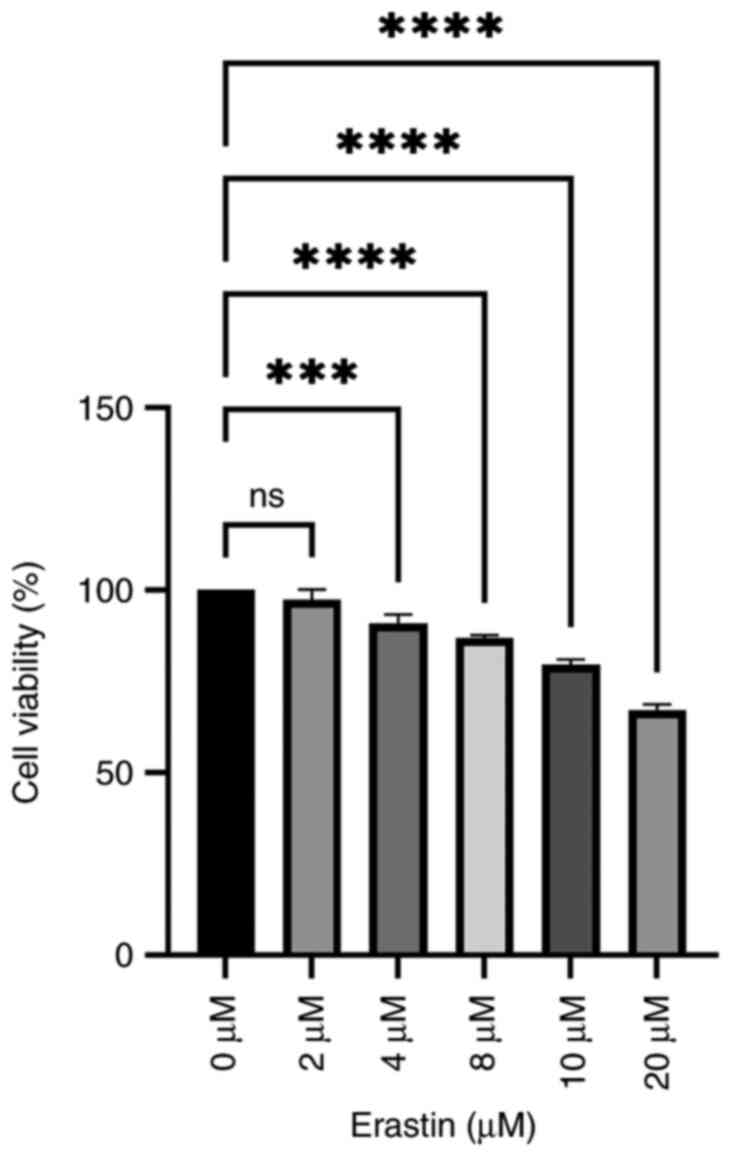
Figure 1

Erastin inhibits ARPE-19 cell
proliferation. The CCK-8 assay demonstrated the effect of Erastin
on cell proliferation. ARPE-19 cells were treated with varying
concentrations of Erastin (2, 4, 8, 10 and 20 µM) for 24 h.
***P<0.001 (P=0.002, 4 µM vs. control), ****P<0.0001 (4, 8,
10, 20 µM vs. control). Data represent four independent experiments
(n=4).

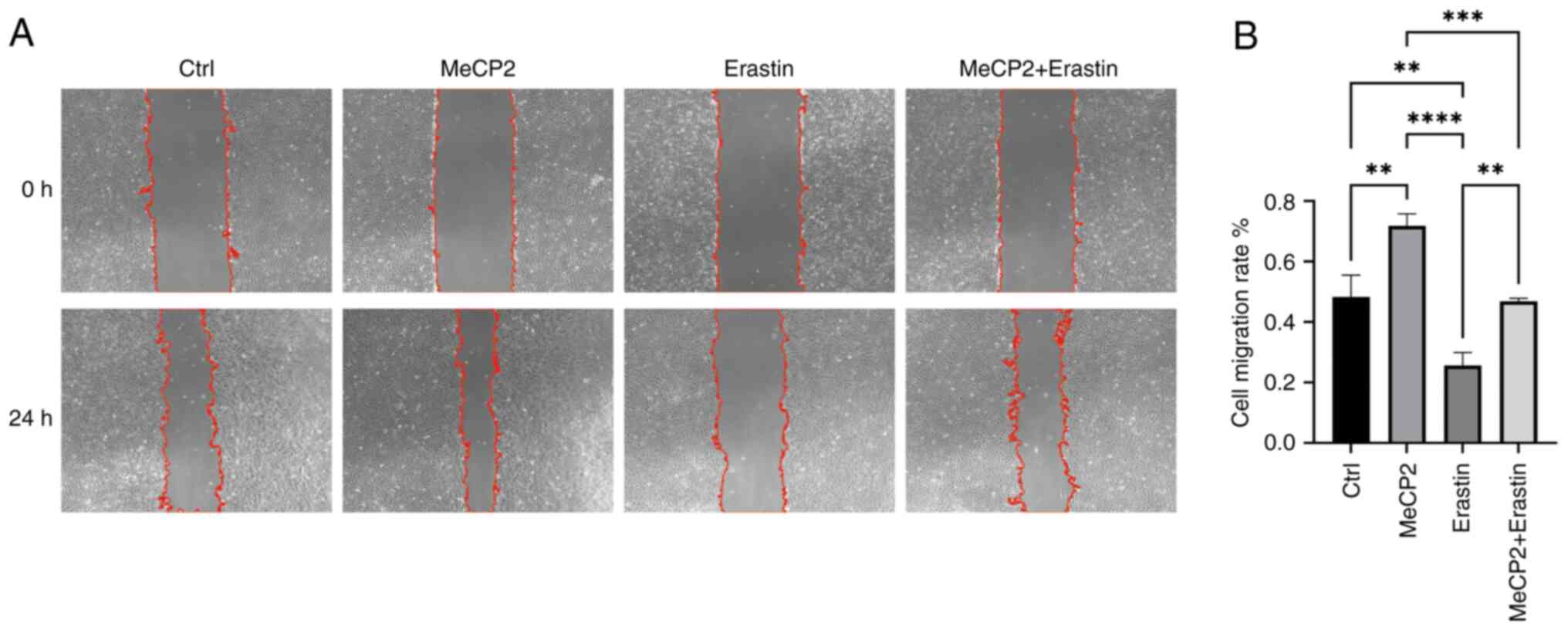
Figure 2

Erastin modulates ARPE-19 cell
migration. Cell migration was quantified using the wound healing
assay. (A) Representative wound healing assays showing (B)
migration of ARPE-19 cells treated with MeCP2 (100 ng/ml, 24 h),
Erastin (10 µM, 24 h), or a combination of MeCP2 (100 ng/ml, 24 h)
and Erastin (10 µM, 24 h). Magnification, ×40. **P<0.01
(P=0.0012, MeCP2 vs. control; P=0.0015, Erastin vs. control;
P=0.0023, Erastin vs. MeCP2 + Erastin), ***P<0.001 (P=0.0008,
MeCP2 vs. MeCP2 + Erastin), ****P<0.0001 (MeCP2 vs. Erastin).
Data represent three independent experiments (n=3). MeCP2,
methyl-CpG binding protein 2.

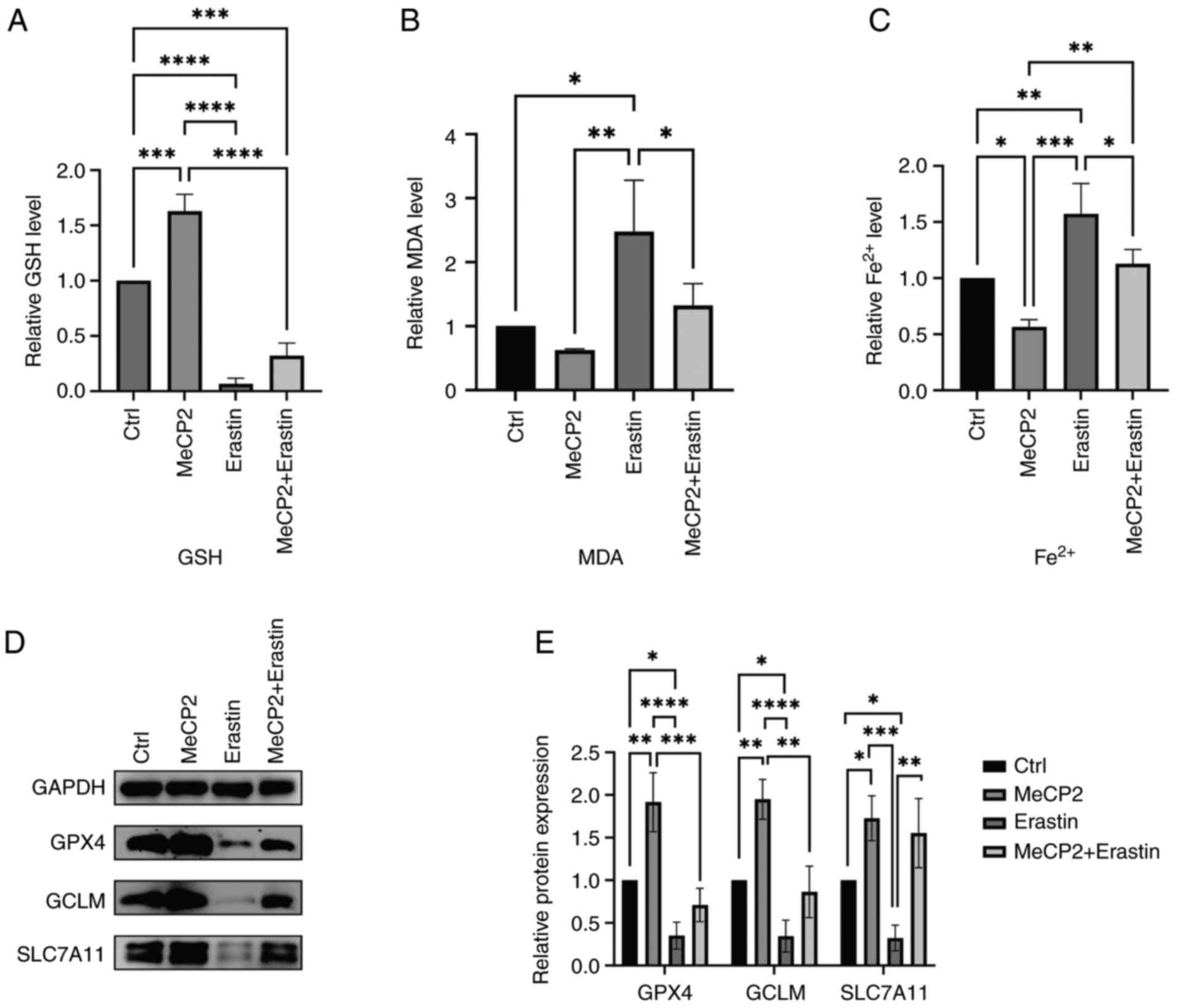
Figure 3

The effect of MeCP2 on ferroptosis in
ARPE-19 cells. Cells were treated with MeCP2 (100 ng/ml, 24 h),
Erastin (10 µM, 24 h) and a combination of MeCP2 (100 ng/ml, 24 h)
and Erastin (10 µM, 24 h). (A) GSH levels in ARPE-19 cells were
quantified using a GSH assay kit, ***P<0.001 (P=0.0002, MeCP2
vs. control; P=0.0001, MeCP2 + Erastin vs. control),
****P<0.0001 (Erastin vs. control, MeCP2 vs. Erastin, MeCP2 vs.
MeCP2 + Erastin). (B) MDA content was measured using an MDA assay
kit, *P<0.05 (P=0.0138, Erastin vs. control; P=0.0474, Erastin
vs. MeCP2 + Erastin), **P<0.01 (P=0.0037, MeCP2 vs. Erastin).
(C) Intracellular Fe2+ concentrations were determined
using an iron assay kit, *P<0.05(P=0.035, MeCP2 vs. control;
P=0.031, Erastin vs. MeCP2 + Erastin), **P<0.01 (P=0.008,
Erastin vs. control; P=0.009, MeCP2 vs. MeCP2 + Erastin),
***P<0.001 (P=0.0002, MeCP2 vs. Erastin). (D and E) Expression
patterns of ferroptosis-associated proteins GPX4, GCLM and SLC7A11
were analyzed by western blotting. Blots were probed with anti-GCLM
(1:4,000), anti-GPX4 (1:2000), anti-SLC7A11 (1:1,000) and
anti-GAPDH (1:10,000), with GAPDH as the loading control.
Statistical significance compared with the control group:
*P<0.05, **P<0.01, ***P<0.001, ****P<0.0001(GPX4:
P=0.0034, MeCP2 vs. control; P=0.0243, Erastin vs. control;
P<0.0001, MeCP2 vs. Erastin; P=0.0006, MeCP2 vs. MeCP2 +
Erastin. GCLM: P=0.0027, MeCP2 vs. control; P=0.225, Erastin vs.
control; P<0.0001, MeCP2 vs. Erastin; P=0.0011, MeCP2 vs. MeCP2
+ Erastin. SLC7A11: P=0.0323, MeCP2 vs. control; P=0.045, Erastin
vs. control; P=0.0006, MeCP2 vs. Erastin; P=0.0015, MeCP2 vs. MeCP2
+ Erastin). Data represent three independent experiments (n=3).
MeCP2, methyl-CpG binding protein 2; GSH, glutathione; MDA,
malondialdehyde; GPX4, glutathione peroxidase 4; GCLM,
glutamate-cysteine ligase modifier subunit; SLC7A11, solute carrier
family 7 member 11.

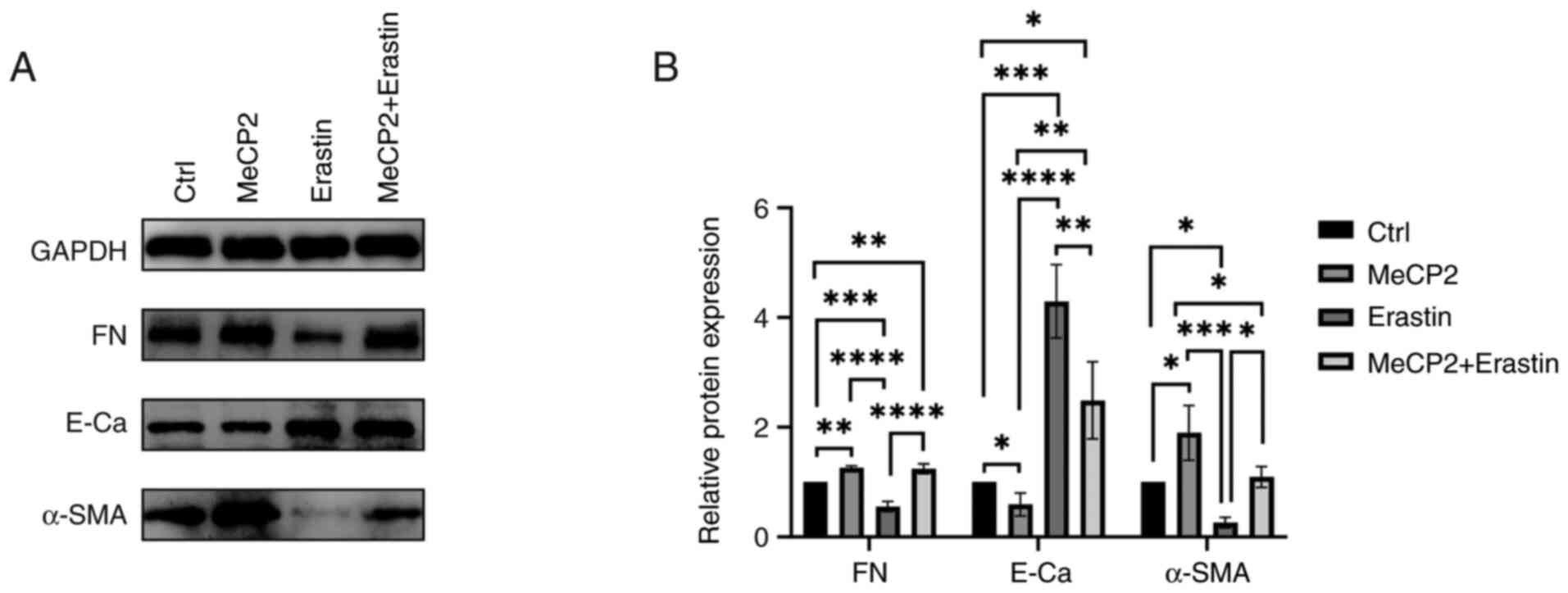
Figure 4

Effect of ferroptosis on
MeCP2-Regulated EMT in ARPE-19 Cells. Cells were treated separately
with MeCP2 (100 ng/ml, 24 h), Erastin (10 µM, 24 h) and a
combination of MeCP2 (100 ng/ml, 24 h) and Erastin (10 µM, 24 h).
(A and B) Western blot analysis was performed to examine the
expression patterns of EMT-associated proteins, including FN, α-SMA
and E-cadherin. Blots were probed with anti-FN (1:3,000),
anti-α-SMA (1:1,000), anti-E-cadherin (1:3,000) and anti-GAPDH
(1:10,000), with GAPDH as the loading control. Statistical
significance compared with the control group: *P<0.05,
**P<0.01, ***P<0.001, ****P<0.0001 (FN: P=0.0056, MeCP2
vs. control; P=0.0002, Erastin vs. control; P=0.0087, MeCP2 +
Erastin vs. control; P<0.0001, MeCP2 vs. Erastin, Erastin vs.
MeCP2 + Erastin. E-Ca: P=0.0287, MeCP2 vs. control; P=0.0002,
Erastin vs. control; P=0.0259, MeCP2 + Erastin vs. control;
P<0.0001, MeCP2 vs. Erastin; P=0.0069, MeCP2 vs. MeCP2 +
Erastin; P=0.0092, Erastin vs. MeCP2 + Erastin. α-SMA: P=0.0154,
MeCP2 vs. control; P=0.0414, Erastin vs. control; P=0.0004, MeCP2
vs. Erastin; P=0.0271, MeCP2 vs. MeCP2 + Erastin; P=0.0233, Erastin
vs. MeCP2 + Erastin). n=3. MeCP2, methyl-CpG binding protein 2;
EMT, epithelial-mesenchymal transition; FN, fibronectin; α-SMA,
α-smooth muscle actin; E-Ca, E-cadherin.

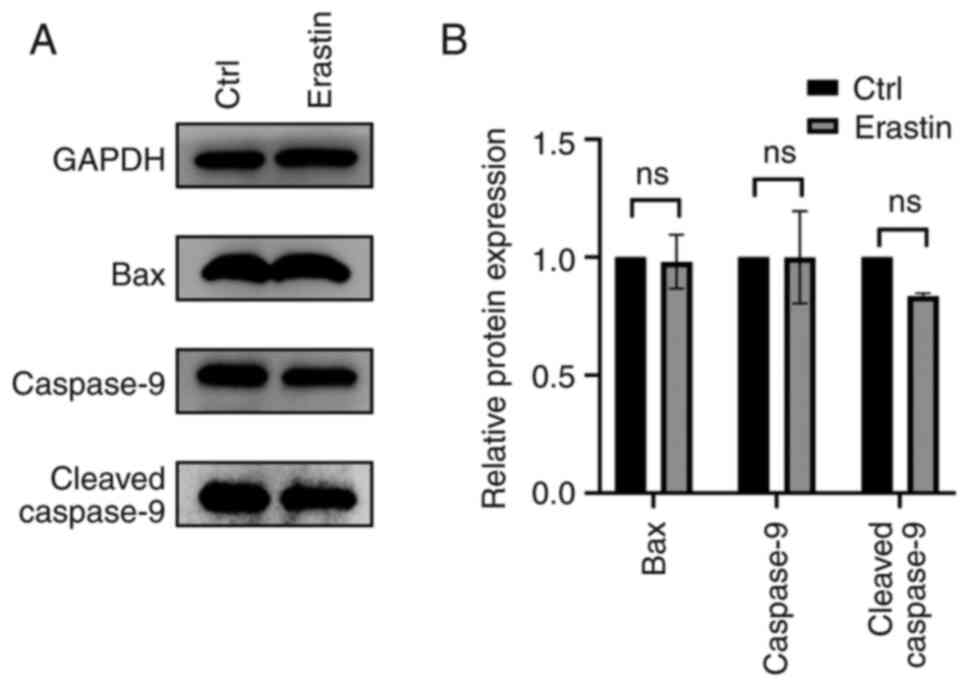
Figure 5

The effect of Erastin on apoptosis in
ARPE-19 Cells. Cells were treated with Erastin (10 µM, 24 h). (A
and B) Western blot analysis was performed to examine the
expression patterns of apoptosis-related proteins, including Bax,
Caspase-9 and Cleaved Caspase-9 in ARPE-19 cells. Blots were probed
with anti-Bax (1:1,000), anti-Caspase-9 (1:1,000), anti-Cleaved
Caspase-9 (1:500) and anti-GAPDH (1:10,000), with GAPDH as the
loading control. No statistical significance was observed compared
with the control group. Data are representative of three
independent experiments (n=3). ns, no significance; E-Ca,
E-cadherin.

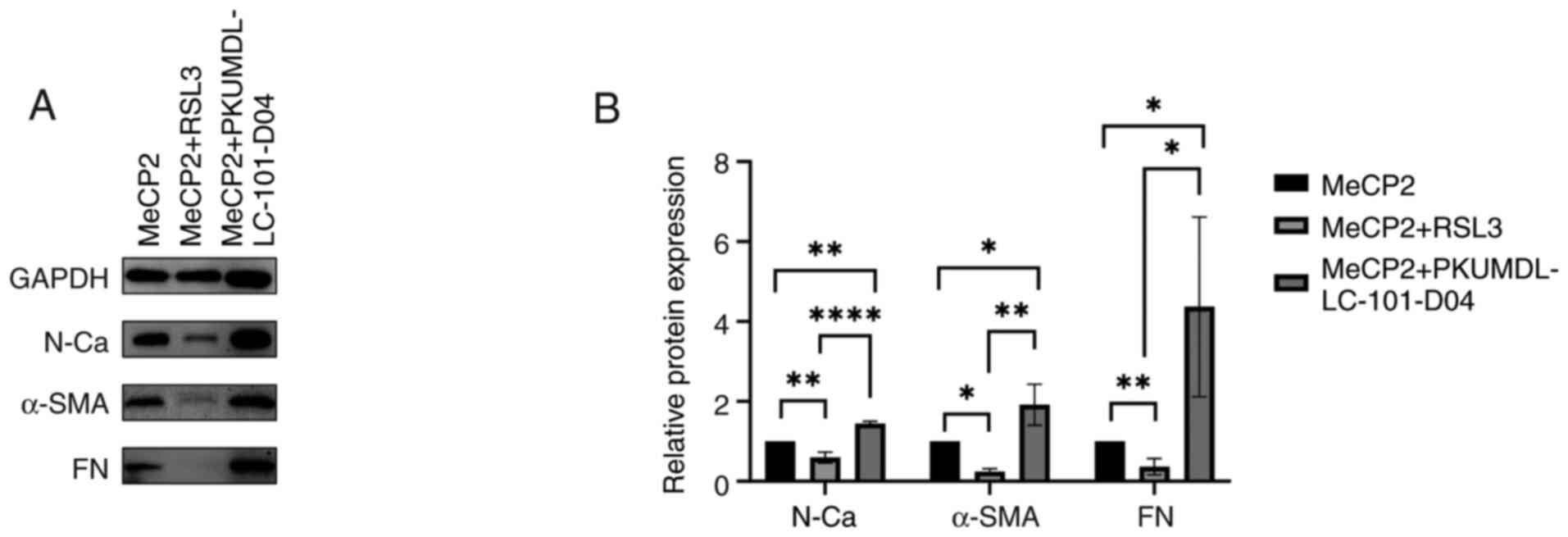
Figure 6

MeCP2 modulates ferroptosis-mediated
EMT in ARPE-19 cells through GPX4 Regulation. Cells were treated
separately with MeCP2 (100 ng/ml, 24 h), a combination of MeCP2
(100 ng/ml, 24 h) and RSL3 (0.5 µM, 24 h) and a combination of
MeCP2 (100 ng/ml, 24 h) and PKUMDL-LC-101-D04 (65 µM, 24 h). (A)
Representative western blot of (B) EMT-associated proteins (FN,
α-SMA, and N-cadherin) in ARPE-19 cells following GPX4 activation
and inhibition. *P<0.05, **P<0.01, ****P<0.0001 vs.
control. (N-Ca: P=0.0029, MeCP2 vs. MeCP2 + RSL3; P=0.0018, MeCP2
vs. MeCP2 + PKUMDL-LC-101-D04; P<0.0001, MeCP2 + RSL3 vs. MeCP2
+ PKUMDL-LC-101-D04. α-SMA: P=0.0482, MeCP2 vs. MeCP2 + RSL3;
P=0.0219, MeCP2 vs. MeCP2 + PKUMDL-LC-101-D04; P=0.0012, MeCP2 +
RSL3 vs. MeCP2 + PKUMDL-LC-101-D04. FN: P=0.0056, MeCP2 vs. MeCP2 +
RSL3; P=0.0448, MeCP2 vs. MeCP2 + PKUMDL-LC-101-D04; P=0.0221,
MeCP2 + RSL3 vs. MeCP2 + PKUMDL-LC-101-D04). n=3. MeCP2, methyl-CpG
binding protein 2; EMT, epithelial-mesenchymal transition; GPX4,
glutathione peroxidase 4; FN, fibronectin; α-SMA, α-smooth muscle
actin; N-Ca, N-cadherin.
View References

1 

Han H, Yu JG and Yan H: Research progress on signaling pathways related to drug research in proliferative vitreoretinopathy. Zhonghua Yan Ke Za Zhi. 59:225–230. 2023.(In Chinese). PubMed/NCBI

2 

Li X, Zhao M and He S: RPE epithelial-mesenchymal transition plays a critical role in the pathogenesis of proliferative vitreoretinopathy. Ann Transl Med. 8:2632020. View Article : Google Scholar : PubMed/NCBI

3 

Yang S, Li H, Yao H, Zhang Y, Bao H, Wu L, Zhang C, Li M, Feng L, Zhang J, et al: Long noncoding RNA ERLR mediates epithelial-mesenchymal transition of retinal pigment epithelial cells and promotes experimental proliferative vitreoretinopathy. Cell Death Differ. 28:2351–2366. 2021. View Article : Google Scholar : PubMed/NCBI

4 

Pastor JC, Rojas J, Pastor-Idoate S, Di Lauro S, Gonzalez-Buendia L and Delgado-Tirado S: Proliferative vitreoretinopathy: A new concept of disease pathogenesis and practical consequences. Prog Retin Eye Res. 51:125–155. 2016. View Article : Google Scholar : PubMed/NCBI

5 

Yang SF, Chen YS, Chien HW, Wang K, Lin CL, Chiou HL, Lee CY, Chen PN and Hsieh YH: Melatonin attenuates epidermal growth factor-induced cathepsin S expression in ARPE-19 cells: Implications for proliferative vitreoretinopathy. J Pineal Res. 68:e126152020. View Article : Google Scholar : PubMed/NCBI

6 

Duan Y, Wu W, Cui J, Matsubara JA, Kazlauskas A, Ma G, Li X and Lei H: Ligand-independent activation of platelet-derived growth factor receptor β promotes vitreous-induced contraction of retinal pigment epithelial cells. BMC Ophthalmol. 23:3442023. View Article : Google Scholar : PubMed/NCBI

7 

Xu Y and Li X: Association between MeCP2 and proliferative vitreoretinopathy under the regulation of tumor necrosis factor. Chin J Exp Ophthalmol. 548–552. 2020.

8 

Battistelli C, Sabarese G, Santangelo L, Montaldo C, Gonzalez FJ, Tripodi M and Cicchini C: The lncRNA HOTAIR transcription is controlled by HNF4α-induced chromatin topology modulation. Cell Death Differ. 26:890–901. 2019. View Article : Google Scholar : PubMed/NCBI

9 

Mudhar HS: A brief review of the histopathology of proliferative vitreoretinopathy (PVR). Eye (Lond). 34:246–250. 2020. View Article : Google Scholar : PubMed/NCBI

10 

Yang S, Li H, Li M and Wang F: Mechanisms of epithelial-mesenchymal transition in proliferative vitreoretinopathy. Discov Med. 20:207–217. 2015.PubMed/NCBI

11 

Gonzalez DM and Medici D: Signaling mechanisms of the epithelial-mesenchymal transition. Sci Signal. 7:re82014. View Article : Google Scholar : PubMed/NCBI

12 

Lamouille S, Xu J and Derynck R: Molecular mechanisms of epithelial-mesenchymal transition. Nat Rev Mol Cell Biol. 15:178–196. 2014. View Article : Google Scholar : PubMed/NCBI

13 

Jiang W, Liang Yl, Liu Y, Chen YY, Yang ST, Li BR, Yu YX, Lyu Y and Wang R: MeCP2 inhibits proliferation and migration of breast cancer via suppression of epithelial-mesenchymal transition. J Cell Mol Med. 24:7959–7967. 2020. View Article : Google Scholar : PubMed/NCBI

14 

Wang H, Li J, He J, Liu Y, Feng W, Zhou H, Zhou M, Wei H, Lu Y, Peng W, et al: Methyl-CpG-binding protein 2 drives the Furin/TGF-β1/Smad axis to promote epithelial-mesenchymal transition in pancreatic cancer cells. Oncogenesis. 9:762020. View Article : Google Scholar : PubMed/NCBI

15 

Moran-Salvador E, Garcia-Macia M, Sivaharan A, Sabater L, Zaki MYW, Oakley F, Knox A, Page A, Luli S, Mann J and Mann DA: Fibrogenic activity of MECP2 is regulated by phosphorylation in hepatic stellate cells. Gastroenterology. 157:1398–1412.e9. 2019. View Article : Google Scholar : PubMed/NCBI

16 

Bian E, Chen X, Xu Y, Ji X, Cheng M, Wang H, Fang Z and Zhao B: A central role for MeCP2 in the epigenetic repression of miR-200c during epithelial-to-mesenchymal transition of glioma. J Exp Clin Cancer Res. 38:3662019. View Article : Google Scholar : PubMed/NCBI

17 

Zhao X, Zhang Y, Wu F and Li X, Guo S and Li X: MeCP2-Induced alternations of transcript levels and m6A methylation in human retinal pigment epithelium cells. ACS Omega. 8:47964–47973. 2023. View Article : Google Scholar : PubMed/NCBI

18 

He S, Barron E, Ishikawa K, Nazari Khanamiri H, Spee C, Zhou P, Kase S, Wang Z, Dustin LD and Hinton DR: Inhibition of DNA methylation and Methyl-CpG-Binding protein 2 suppresses RPE transdifferentiation: Relevance to proliferative vitreoretinopathy. Invest Ophthalmol Vis Sci. 56:5579–5589. 2015. View Article : Google Scholar : PubMed/NCBI

19 

Li X, Li X, He S and Zhao M: MeCP2-421-mediated RPE epithelial-mesenchymal transition and its relevance to the pathogenesis of proliferative vitreoretinopathy. J Cell Mol Med. 24:9420–9427. 2020. View Article : Google Scholar : PubMed/NCBI

20 

Zhang Y, Wu F, Guo S, Yin R, Yuan M and Li X, Zhao X and Li X: Critical role of apoptosis in MeCP2-mediated epithelial-mesenchymal transition of ARPE-19 cells. J Cell Physiol. 239:e314292024. View Article : Google Scholar : PubMed/NCBI

21 

Liu K, Li H, Wang F and Su Y: Ferroptosis: Mechanisms and advances in ocular diseases. Mol Cell Biochem. 478:2081–2095. 2023. View Article : Google Scholar : PubMed/NCBI

22 

Wolters PJ, Blackwell TS, Eickelberg O, Loyd JE, Kaminski N, Jenkins G, Maher TM, Molina-Molina M, Noble PW, Raghu G, et al: Time for a change: Is idiopathic pulmonary fibrosis still idiopathic and only fibrotic? Lancet Respir Med. 6:154–160. 2018. View Article : Google Scholar : PubMed/NCBI

23 

Chen L, Hambright WS, Na R and Ran Q: Ablation of the ferroptosis inhibitor glutathione peroxidase 4 in neurons results in rapid motor neuron degeneration and paralysis. J Biol Chem. 290:28097–28106. 2015. View Article : Google Scholar : PubMed/NCBI

24 

Yang WS, SriRamaratnam R, Welsch ME, Shimada K, Skouta R, Viswanathan VS, Cheah JH, Clemons PA, Shamji AF, Clish CB, et al: Regulation of ferroptotic cancer cell death by GPX4. Cell. 156:317–331. 2014. View Article : Google Scholar : PubMed/NCBI

25 

Qiu Y, Cao Y, Cao W, Jia Y and Lu N: The application of ferroptosis in diseases. Pharmacol Res. 159:1049192020. View Article : Google Scholar : PubMed/NCBI

26 

Tong Y, Wu Y, Ma J, Ikeda M, Ide T, Griffin CT, Ding XQ and Wang S: Comparative mechanistic study of RPE cell death induced by different oxidative stresses. Redox Biol. 65:1028402023. View Article : Google Scholar : PubMed/NCBI

27 

Wei X, Ge Y, Zheng Y, Zhao S, Zhou Y, Chang Y, Wang N, Wang X, Zhang J, Zhang X, et al: Hybrid EMT phenotype and cell membrane tension promote colorectal cancer resistance to ferroptosis. Adv Sci (Weinh). 12:e24138822025. View Article : Google Scholar : PubMed/NCBI

28 

Rhyu DY, Yang Y, Ha H, Lee GT, Song JS, Uh ST and Lee HB: Role of reactive oxygen species in TGF-beta1-induced mitogen-activated protein kinase activation and epithelial-mesenchymal transition in renal tubular epithelial cells. J Am Soc Nephrol. 16:667–675. 2005. View Article : Google Scholar : PubMed/NCBI

29 

Lu Q, Wang WW, Zhang MZ, Ma ZX, Qiu XR, Shen M and Yin XX: ROS induces epithelial-mesenchymal transition via the TGF-β1/PI3K/Akt/mTOR pathway in diabetic nephropathy. Exp Ther Med. 17:835–846. 2019.PubMed/NCBI

30 

Cai H, Su S, Li Y, Zeng H, Zhu Z, Guo J, Zhu Y, Guo S, Yu L, Qian D, et al: Protective effects of Salvia miltiorrhiza on adenine-induced chronic renal failure by regulating the metabolic profiling and modulating the NADPH oxidase/ROS/ERK and TGF-β/Smad signaling pathways. J Ethnopharmacol. 212:153–165. 2018. View Article : Google Scholar : PubMed/NCBI

31 

Chang YW and Singh KP: Nicotine-induced oxidative stress contributes to EMT and stemness during neoplastic transformation through epigenetic modifications in human kidney epithelial cells. Toxicol Appl Pharmacol. 374:65–76. 2019. View Article : Google Scholar : PubMed/NCBI

32 

Su LJ, Zhang JH, Gomez H, Murugan R, Hong X, Xu D, Jiang F and Peng ZY: Reactive oxygen Species-induced lipid peroxidation in apoptosis, autophagy, and ferroptosis. Oxid Med Cell Longev. 2019:50808432019. View Article : Google Scholar : PubMed/NCBI

33 

Liu Z, Nan P, Gong Y, Tian L, Zheng Y and Wu Z: Endoplasmic reticulum stress-triggered ferroptosis via the XBP1-Hrd1-Nrf2 pathway induces EMT progression in diabetic nephropathy. Biomed Pharmacother. 164:1148972023. View Article : Google Scholar : PubMed/NCBI

34 

Sun L, Dong H, Zhang W, Wang N, Ni N, Bai X and Liu N: Lipid peroxidation, GSH depletion, and SLC7A11 inhibition are common causes of EMT and ferroptosis in A549 cells, but different in specific mechanisms. DNA Cell Biol. 40:172–183. 2021. View Article : Google Scholar : PubMed/NCBI

35 

Zhang XY, Xu YY and Chen WY: MicroRNA-1324 inhibits cell proliferative ability and invasiveness by targeting MECP2 in gastric cancer. Eur Rev Med Pharmacol Sci. 24:4766–4774. 2020.PubMed/NCBI

36 

Hendricks JM, Doubravsky CE, Wehri E, Li Z, Roberts MA, Deol KK, Lange M, Lasheras-Otero I, Momper JD, Dixon SJ, et al: Identification of structurally diverse FSP1 inhibitors that sensitize cancer cells to ferroptosis. Cell Chem Biol. 30:1090–1103.e7. 2023. View Article : Google Scholar : PubMed/NCBI

37 

Yi J, Minikes AM and Jiang X: Aiming at cancer in vivo: Ferroptosis-inducer delivered by nanoparticles. Cell Chem Biol. 26:621–622. 2019. View Article : Google Scholar : PubMed/NCBI

38 

Sato M, Kusumi R, Hamashima S, Kobayashi S, Sasaki S, Komiyama Y, Izumikawa T, Conrad M, Bannai S and Sato H: The ferroptosis inducer erastin irreversibly inhibits system xc- and synergizes with cisplatin to increase cisplatin's cytotoxicity in cancer cells. Sci Rep. 8:9682018. View Article : Google Scholar : PubMed/NCBI

39 

Wei TT, Zhang MY, Zheng XH, Xie TH, Wang W, Zou J, Li Y, Li HY, Cai J, Wang X, et al: Interferon-γ induces retinal pigment epithelial cell Ferroptosis by a JAK1-2/STAT1/SLC7A11 signaling pathway in Age-related Macular Degeneration. FEBS J. 289:1968–1983. 2022. View Article : Google Scholar : PubMed/NCBI

40 

Guo M, Zhu Y, Shi Y, Meng X, Dong X, Zhang H, Wang X, Du M and Yan H: Inhibition of ferroptosis promotes retina ganglion cell survival in experimental optic neuropathies. Redox Biol. 58:1025412022. View Article : Google Scholar : PubMed/NCBI

41 

Kuo PJ, Rau CS, Wu YC, Tsai CW, Wu CJ, Lin CW and Hsieh CH: Translational potential of baicalein in mitigating RSL3-Induced ferroptosis in fibroblasts: Implications for therapeutic Interventions. Int J Med Sci. 21:1257–1264. 2024. View Article : Google Scholar : PubMed/NCBI

42 

Huang X and Chau Y: Intravitreal nanoparticles for retinal delivery. Drug Discov Today. 24:1510–1523. 2019. View Article : Google Scholar : PubMed/NCBI

43 

Schär P and Fritsch O: DNA repair and the control of DNA methylation. Prog Drug Res. 67:51–68. 2011.PubMed/NCBI

44 

Guerriero E, Capone F, Accardo M, Sorice A, Costantini M, Colonna G, Castello G and Costantini S: GPX4 and GPX7 over-expression in human hepatocellular carcinoma tissues. Eur J Histochem. 59:25402015. View Article : Google Scholar : PubMed/NCBI

45 

Yagublu V, Arthur JR, Babayeva SN, Nicol F, Post S and Keese M: Expression of selenium-containing proteins in human colon carcinoma tissue. Anticancer Res. 31:2693–2698. 2011.PubMed/NCBI

46 

Cejas P, García-Cabezas MA, Casado E, Belda-Iniesta C, De Castro J, Fresno JA, Sereno M, Barriuso J, Espinosa E, Zamora P, et al: Phospholipid hydroperoxide glutathione peroxidase (PHGPx) expression is downregulated in poorly differentiated breast invasive ductal carcinoma. Free Radic Res. 41:681–687. 2007. View Article : Google Scholar : PubMed/NCBI

47 

Rudenko E, Kondratov O, Gerashchenko G, Lapska Y, Kravchenko S, Koliada O, Vozianov S, Zgonnyk Y and Kashuba V: Aberrant expression of selenium-containing glutathione peroxidases in clear cell renal cell carcinomas. Exp Oncol. 37:105–110. 2015. View Article : Google Scholar : PubMed/NCBI

48 

Guo Y, Yu S, Zhang C and Kong AN: Epigenetic regulation of Keap1-Nrf2 signaling. Free Radic Biol Med. 88:337–349. 2015. View Article : Google Scholar : PubMed/NCBI

49 

Dodson M, Castro-Portuguez R and Zhang DD: NRF2 plays a critical role in mitigating lipid peroxidation and ferroptosis. Redox Biol. 23:1011072019. View Article : Google Scholar : PubMed/NCBI

50 

Song X and Long D: Nrf2 and Ferroptosis: A new research direction for neurodegenerative diseases. Front Neurosci. 14:2672020. View Article : Google Scholar : PubMed/NCBI

51 

Yin Y, Liu S, Liu H and Wu W: Nintedanib inhibits normal human vitreous-induced epithelial-mesenchymal transition in human retinal pigment epithelial cells. Biomed Pharmacother. 166:1154032023. View Article : Google Scholar : PubMed/NCBI

52 

Zhang Y, Li M and Han X: Icariin affects cell cycle progression and proliferation of human retinal pigment epithelial cells via enhancing expression of H19. PeerJ. 8:e88302020. View Article : Google Scholar : PubMed/NCBI

Related Articles

  • Abstract
  • Purchase
  • Download
  • Twitter
Copy and paste a formatted citation
Spandidos Publications style
Guo S, Zhang Y, Li X, Zhao X, Liang Y and Li X: MeCP2 suppresses ferroptosis to drive EMT in retinal pigment epithelial cells: Implications for PVR pathogenesis. Mol Med Rep 33: 59, 2026.
APA
Guo, S., Zhang, Y., Li, X., Zhao, X., Liang, Y., & Li, X. (2026). MeCP2 suppresses ferroptosis to drive EMT in retinal pigment epithelial cells: Implications for PVR pathogenesis. Molecular Medicine Reports, 33, 59. https://doi.org/10.3892/mmr.2025.13769
MLA
Guo, S., Zhang, Y., Li, X., Zhao, X., Liang, Y., Li, X."MeCP2 suppresses ferroptosis to drive EMT in retinal pigment epithelial cells: Implications for PVR pathogenesis". Molecular Medicine Reports 33.2 (2026): 59.
Chicago
Guo, S., Zhang, Y., Li, X., Zhao, X., Liang, Y., Li, X."MeCP2 suppresses ferroptosis to drive EMT in retinal pigment epithelial cells: Implications for PVR pathogenesis". Molecular Medicine Reports 33, no. 2 (2026): 59. https://doi.org/10.3892/mmr.2025.13769
Copy and paste a formatted citation
x
Spandidos Publications style
Guo S, Zhang Y, Li X, Zhao X, Liang Y and Li X: MeCP2 suppresses ferroptosis to drive EMT in retinal pigment epithelial cells: Implications for PVR pathogenesis. Mol Med Rep 33: 59, 2026.
APA
Guo, S., Zhang, Y., Li, X., Zhao, X., Liang, Y., & Li, X. (2026). MeCP2 suppresses ferroptosis to drive EMT in retinal pigment epithelial cells: Implications for PVR pathogenesis. Molecular Medicine Reports, 33, 59. https://doi.org/10.3892/mmr.2025.13769
MLA
Guo, S., Zhang, Y., Li, X., Zhao, X., Liang, Y., Li, X."MeCP2 suppresses ferroptosis to drive EMT in retinal pigment epithelial cells: Implications for PVR pathogenesis". Molecular Medicine Reports 33.2 (2026): 59.
Chicago
Guo, S., Zhang, Y., Li, X., Zhao, X., Liang, Y., Li, X."MeCP2 suppresses ferroptosis to drive EMT in retinal pigment epithelial cells: Implications for PVR pathogenesis". Molecular Medicine Reports 33, no. 2 (2026): 59. https://doi.org/10.3892/mmr.2025.13769
Follow us
  • Twitter
  • LinkedIn
  • Facebook
About
  • Spandidos Publications
  • Careers
  • Cookie Policy
  • Privacy Policy
How can we help?
  • Help
  • Live Chat
  • Contact
  • Email to our Support Team