Introduction
Heart failure (HF) poses a significant global health
burden, marked by progressive deterioration of cardiac function
that results in considerable morbidity, mortality, and impaired
quality of life for millions of individuals worldwide (1,2). As
a complex clinical syndrome, HF represents the common end-stage
manifestation of various cardiovascular diseases, underpinned by a
range of etiological factors such as ischemic heart disease,
hypertension, and diabetes mellitus (3). Beyond these established risk factors,
accumulating evidence highlights the role of chronic inflammatory
conditions as important, although often overlooked, contributors to
the pathogenesis and progression of HF (4–6).
Among these conditions, periodontitis, a highly
prevalent chronic inflammatory disease of the supporting structures
of the teeth, driven by dysbiotic microbial communities and a
dysregulated host inflammatory response, has emerged as a
potentially modifiable risk factor for systemic diseases, including
cardiovascular disorders (7). Once
considered a localized oral infection, periodontitis is now
increasingly recognized for its systemic implications. The
persistent, low-grade inflammation and transient bacteremia
associated with periodontal disease are considered to initiate or
amplify pathological processes in distant organs (8,9).
Recent epidemiological evidence has suggested an
association between periodontitis and HF. Notably, this evidence
comes from several types of human studies, including
population-based cross-sectional analyses, prospective cohort
studies and serological or biomarker-based investigations.
Collectively, these studies indicate that more severe periodontitis
is associated with a higher prevalence of HF, an increased risk of
incident HF and less favorable clinical profiles among patients
with established HF (10–12). However, these observational
findings primarily support an association rather than a confirmed
causal relationship, and the possibility of residual confounding by
shared risk factors, such as age, smoking, diabetes and
socioeconomic status, should be acknowledged.
These observations suggest the existence of an
‘oral-cardiac axis’, mediated by multifactorial and interconnected
biological pathways. Among them, systemic inflammatory spillover
from periodontal lesions is supported by both human and
experimental evidence. By contrast, other mechanisms, including
direct bacterial translocation to cardiac tissues, autoimmune
responses triggered by molecular mimicry and maladaptive trained
immunity and oral-gut axis disruption, are supported mainly by
animal studies, in vitro experiments, or indirect human
observations; therefore, these findings should be interpreted as
putative rather than definitively established mechanisms (13–15).
Despite the growing body of evidence, a definitive
causal link between periodontitis and HF remains to be established.
The present review, aimed to underscore the importance of
incorporating oral health into comprehensive cardiovascular risk
assessment and management, which may ultimately inform novel
preventive and therapeutic approaches for patients at risk of or
living with HF. Specifically, first the epidemiological studies
evaluating the association between periodontitis and HF were
reviewed, then the multifactorial pathophysiology underlying the
periodontal-cardiac axis was discussed, and finally the potential
clinical implications and limitations of periodontal intervention
in the context of HF management were considered.
Epidemiological association between
periodontitis and heart failure
Epidemiological evidence consistently establishes
periodontitis, a chronic inflammatory disease of the supporting
tissues of the teeth, as a significant factor associated with an
elevated risk of HF, potentially mediated by systemic inflammation
and shared risk factors such as hypertension and diabetes.
Substantial evidence from large-scale cross-sectional and
prospective cohort studies supports this association. For instance,
data from the US Third National Health and Nutrition Examination
Survey (NHANES III) demonstrated that the incidence of HF was 5.72
times higher in individuals with moderate or severe periodontitis
compared with those with no or mild periodontitis. This association
remained significant after adjusting for traditional cardiovascular
risk factors, with a persistently elevated risk of 3.03-fold, and a
dose-response relationship was observed whereby greater
periodontitis severity was associated with increased HF risk
(16). Long-term follow-up studies
further corroborate that periodontitis independently predicts
future HF events. An analysis of 2,876 individuals with a history
of periodontitis revealed a 30–50% increased risk of HF
hospitalization (11,17), with a particularly prominent
association noted with HF with preserved ejection fraction (HFpEF).
Furthermore, elevated serum IgG antibody titers against key
periodontal pathogens, such as Porphyromonas gingivalis,
were shown to be linked to higher HF prevalence, suggesting a
dose-response relationship driven by the level of bacterial
exposure (18). Among patients
with established chronic HF, the burden of periodontitis is
substantial, with moderate to severe forms affecting over
two-thirds of cases and associated with heightened levels of
N-terminal pro-B-type natriuretic peptide (NT-proBNP), a prognostic
biomarker of cardiac stress, particularly in younger subgroups
(11). In summary, a substantial
body of epidemiological evidence supports a consistent association
between periodontitis and HF, with several studies suggesting a
dose-response relationship between periodontitis severity and HF
risk. However, these findings should be interpreted cautiously
because residual confounding and reverse causation cannot be fully
excluded. To visually consolidate these key findings, the evidence
from the aforementioned major studies is summarized in Table I.
 | Table I.Summary of Key epidemiological
evidence on the association between periodontitis and heart
failure. |
Table I.
Summary of Key epidemiological
evidence on the association between periodontitis and heart
failure.
| Study/Data
source | Study type | Key findings | (Refs.) |
|---|
| National Health and
Nutrition Examination Survey (NHANES III) | Cross-sectional
study | -The prevalence of
heart failure was significantly higher in individuals with
periodontitis compared to those without (4.88% vs. 2.90%). | (16) |
|
|
| -Moderate-to-severe
periodontitis was strongly associated with heart failure risk
(Adjusted OR=3.03). |
|
| Swedish cohort
study | Prospective cohort
study | -A history of
periodontitis was an independent risk factor for hospitalization
due to heart failure, with a 30–50% increased risk. | (11,17) |
|
|
| -The association
was particularly prominent for heart failure with preserved
ejection fraction. |
|
| Atherosclerosis
Risk in Communities (ARIC) study | Prospective cohort
study | -A dose-response
relationship was observed between the severity of periodontitis and
the risk of incident heart failure. | (11,18) |
|
|
| -Edentulism
(complete tooth loss) was also significantly associated with heart
failure risk. |
|
| Cross-sectional and
case-control studies |
Cross-sectional/case-control | -In patients with
chronic heart failure, the severity of periodontitis was positively
associated with levels of N-terminal pro-B-type natriuretic
peptide, a biomarker of cardiac stress. | (19,20) |
|
|
| -The presence of
periodontitis in heart failure patients was linked to higher levels
of systemic inflammation (for example, C-reactive protein). |
|
| Serological
studies | Cross-sectional
study | -Serum antibody
titers against key periodontal pathogens, such as Porphyromonas
gingivalis were positively associated with the prevalence of
heart failure. | (23) |
Core mechanistic pathways of the
‘periodontal-cardiac axis’
The robust epidemiological evidence independently
linking periodontitis with HF strongly suggests a complex
pathophysiological relationship that extends beyond mere
coincidence or shared risk factors. To elucidate the biological
underpinnings of this ‘oral-cardiac axis’, recent research
(19) has increasingly focused on
how periodontitis, as a localized inflammatory condition, can exert
remote effects to systemically impact cardiac structure and
function. The current scientific consensus points toward three
primary, interconnected pathways as the core of this mechanism: i)
Systemic spillover of inflammation; ii) direct dissemination of
periodontal microbes and their virulence factors; and iii) immune
cross-reactivity mediated by molecular mimicry (Fig. 1). This section will systematically
elaborate on these three core mechanistic pathways, providing an
in-depth analysis of how periodontitis evolves from a local
infection into a significant risk factor for heart failure.
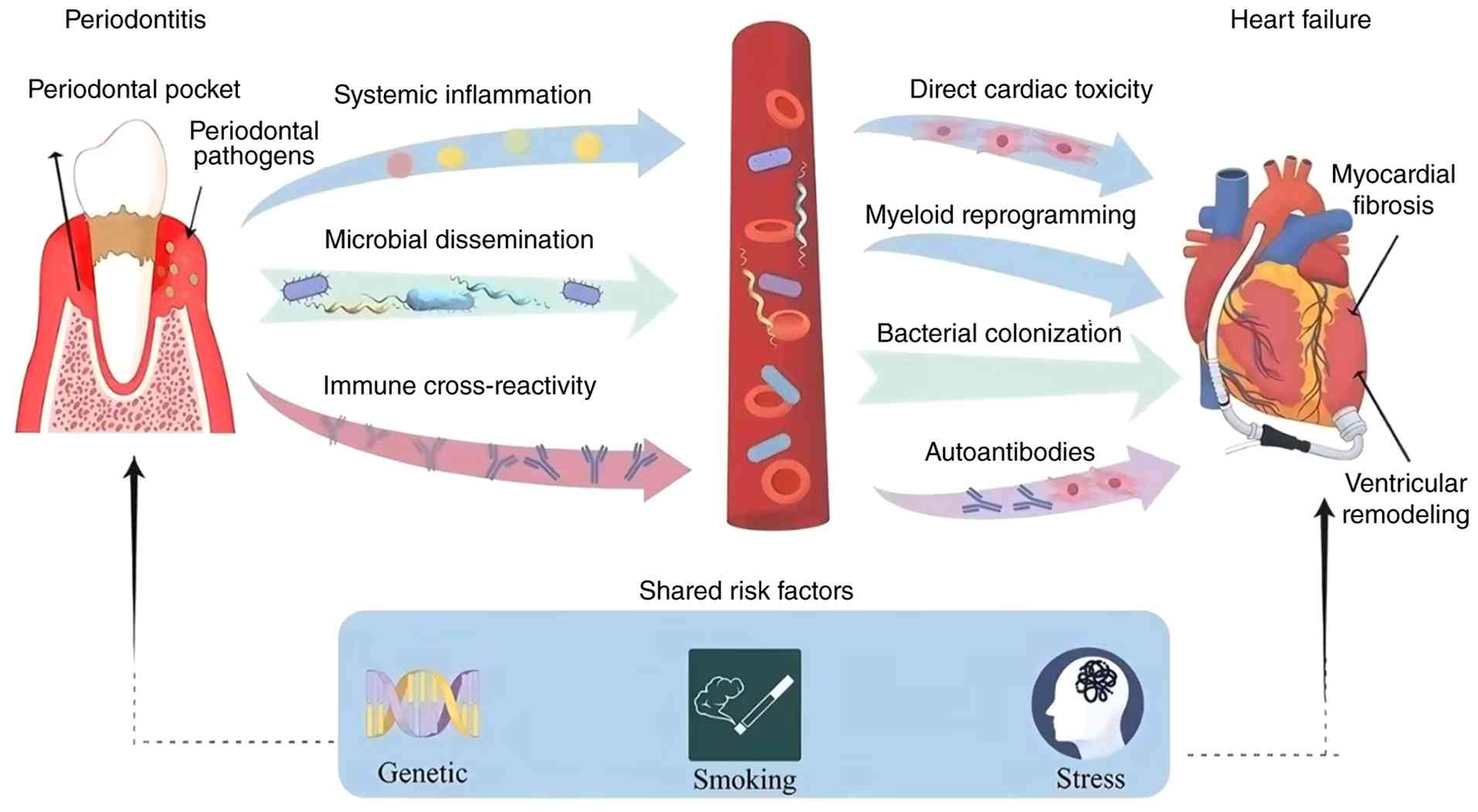 | Figure 1.Schematic overview of the core
mechanisms linking periodontitis to the pathogenesis of heart
failure (‘the periodontal-cardiac axis’). Periodontitis, a chronic
localized infection, can systemically impact cardiac function and
contribute to the development or exacerbation of heart failure
through three primary pathways: i) Systemic inflammation:
Pathogen-associated molecular patterns, such as lipopolysaccharide
released from periodontal pathogens (for example, Porphyromonas
gingivalis), enter the systemic circulation. This triggers a
widespread inflammatory response characterized by elevated levels
of pro-inflammatory cytokines (such as IL-6, TNF-α, and IL-1β).
These mediators can directly target cardiomyocytes and cardiac
fibroblasts, inducing apoptosis and myocardial fibrosis, which
leads to adverse ventricular remodeling and cardiac dysfunction.
Concurrently, they can act on hematopoietic stem and progenitor
cells in the bone marrow, inducing epigenetic reprogramming and a
state of ‘trained immunity,’ which generates hyper-responsive
myeloid cells that perpetuate systemic inflammation. ii) Microbial
dissemination: Periodontal pathogens can directly invade the
bloodstream via transient bacteremia. These bacteria and their
virulence factors (such as gingipains) may colonize cardiac tissues
or the vasculature, or exert direct cardiotoxic effects, impairing
cardiomyocyte function and endothelial integrity. iii) Immune
cross-reactivity: Due to molecular mimicry between certain antigens
from periodontal pathogens and host cardiac proteins (such as
cardiac myosin), antibodies generated against the pathogens may
cross-react with self-antigens in the heart, leading to
autoimmune-mediated cardiac injury. Furthermore, shared risk
factors, such as genetic susceptibility and metabolic syndrome, can
predispose individuals to both periodontitis and heart failure,
contributing to the complex pathogenic network of the
‘periodontal-cardiac axis.’ |
Systemic inflammation as a key driver
of cardiac injury
As a chronic infection, the primary remote
pathogenic mechanism of periodontitis is the induction and
maintenance of a low-grade systemic inflammatory state. When
inflammatory mediators and bacterial products from the periodontal
lesion ‘spill over’ into the circulation, they initiate a complex
cascade of events that directly and indirectly inflict damage upon
the heart. This process is centered on the amplification of
inflammatory signals and the dual targeting of both the heart and
the immune system, with the detailed cellular and molecular
pathways illustrated in Fig.
2.
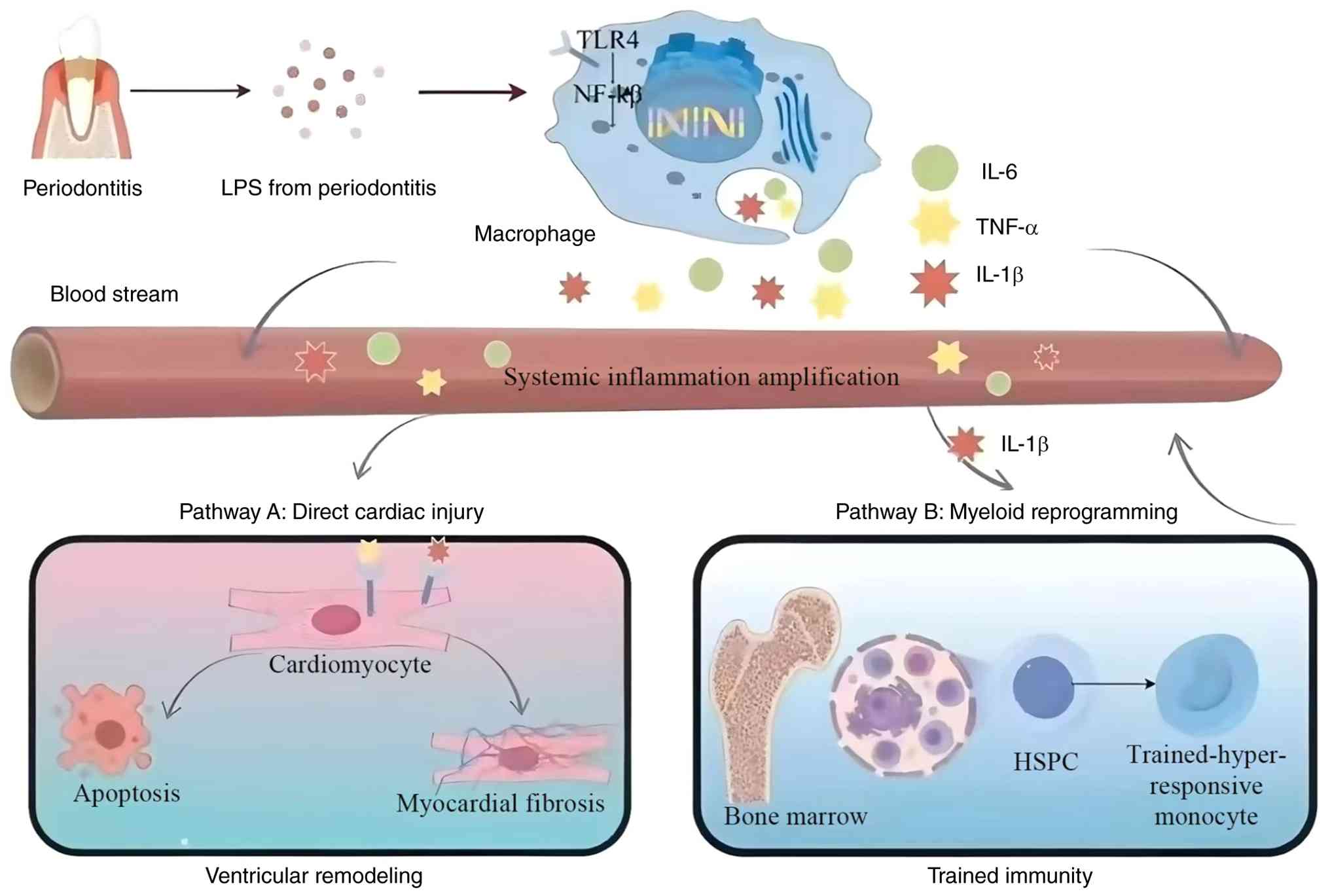 | Figure 2.Cellular and molecular pathways of
systemic inflammation-driven cardiac injury. Systemic inflammation
induced by periodontitis mediates cardiac damage through two
synergistic pathways: i) Upstream trigger and signal amplification:
LPS released from periodontal lesions enters the circulation and is
recognized by TLR4 on the surface of immune cells, such as
macrophages. This binding activates key intracellular inflammatory
signaling cascades, primarily NF-κB and mitogen-activated protein
kinase pathways. Activated immune cells then produce and release
large quantities of pro-inflammatory cytokines (such as IL-6,
TNF-α, and IL-1β) into the bloodstream, amplifying a local
infection into a systemic inflammatory state. ii) Downstream
effects: The elevated levels of circulating inflammatory mediators
inflict cardiac damage through two principal pathways. Pathway A:
Direct cardiac injury: Pro-inflammatory cytokines directly target
cardiomyocytes, activating apoptotic programs (for example, via
caspase cascades) and leading to cell death. Concurrently, they
stimulate cardiac fibroblasts to proliferate and differentiate,
promoting excessive extracellular matrix deposition and culminating
in myocardial fibrosis. Together, apoptosis and fibrosis drive
adverse ventricular remodeling and impair cardiac function. Pathway
B: Myeloid reprogramming and trained immunity: Circulating
cytokines, particularly IL-1β, can act on HSPCs within the bone
marrow. By inducing epigenetic reprogramming (for example, histone
modifications), these cytokines skew hematopoiesis toward the
myeloid lineage, generating functionally ‘trained’ and
hyper-responsive monocytes/macrophages. These ‘trained immunity’
cells mount an exaggerated inflammatory response upon secondary
stimulation, creating a vicious cycle that perpetuates and
amplifies inflammatory damage to the cardiovascular system. LPS,
lipopolysaccharide; HSPCs, hematopoietic stem and progenitor
cells. |
Systemic spillover of pro-inflammatory
mediators
Periodontitis constitutes a significant source of
systemic inflammation that contributes to the pathogenesis of HF
through well-defined mechanistic pathways. The primary initiating
mechanism involves the systemic dissemination of Porphyromonas
gingivalis-derived lipopolysaccharide (LPS), which engages
Toll-like receptor 4 (TLR4) on innate immune cells, thereby
activating nuclear factor-κB (NF-κB) signaling and driving the
production of key pro-inflammatory cytokines, including
interleukin-6 (IL-6), tumor necrosis factor-α (TNF-α) and
interleukin-1β (IL-1β) (14).
These mediators establish a persistent low-grade inflammatory
milieu that directly impacts cardiac structure and function through
multiple pathways: IL-6 and TNF-α activate downstream signaling
cascades such as NF-κB and mitogen-activated protein kinase
pathways, promoting cardiomyocyte apoptosis, extracellular matrix
remodeling, and ventricular dysfunction (20). Clinical evidence substantiates this
relationship, with elevated IL-6 levels demonstrating a strong,
independent association with incident HF; each increasing tertile
of IL-6 concentration corresponds to a 68% higher 5-year risk
(20–23). The systemic inflammatory burden in
patients with periodontitis is further evidenced by significantly
elevated circulating levels of C-reactive protein and IL-1β, which
are associated with early degenerative cardiac changes and
increased inflammatory mediator turnover in patients with HF
(24,25). Additionally,
periodontitis-associated cardiac oxidative stress results primarily
from enhanced reactive oxygen species generation rather than
impaired antioxidant capacity (26). This pro-inflammatory state also
promotes endothelial dysfunction through upregulation of adhesion
molecules and induces hematopoietic reprogramming toward trained
immunity, sustaining leukocyte hyperreactivity and exacerbating
microvascular complications that aggravate ventricular dysfunction
(8,27,28).
Collectively, these mechanisms establish periodontitis as a
clinically significant contributor to inflammatory-driven HF
progression, highlighting the potential therapeutic value of
periodontal interventions in comprehensive cardiovascular risk
management.
Myeloid cell activation and trained
immunity: Systemic reprogramming of innate immunity
Periodontitis contributes to the pathogenesis of HF
through two interconnected immunological mechanisms: Molecular
mimicry and sustained innate immune reprogramming. The molecular
mimicry hypothesis suggests that structural homology between
components of periodontal pathogens, particularly, Porphyromonas
gingivalis, and host myocardial proteins may induce
cross-reactive autoimmunity, leading to mistaken immune targeting
of cardiac tissues and subsequent myocardial injury (18,29).
Concurrently, periodontitis establishes a state of systemic
inflammation and trained innate immunity, a persistent functional
reprogramming of myeloid cells that amplifies inflammatory
responses and sustains cardiac vulnerability. This process is
initiated when bacterial products such as LPSs enter the systemic
circulation and prime hematopoietic stem and progenitor cells in
the bone marrow via IL-1-mediated signaling. The resulting
epigenetic reconfiguration promotes myeloid-biased differentiation,
yielding monocytes and neutrophils with heightened responsiveness
to subsequent inflammatory stimuli (30). This maladaptive trained immunity is
characterized by lasting chromatin modifications at proinflammatory
gene loci, which facilitate exaggerated releases of cytokines such
as IL-6 and TNF-α upon rechallenge. These responses perpetuate a
feed-forward cycle of vascular inflammation that drives cardiac
fibrosis, ventricular hypertrophy and contractile dysfunction
(15). The durability of this
immune reprogramming is evidenced by its transmissibility through
bone marrow transplantation, where recipient myeloid cells maintain
a hyperreactive phenotype associated with accelerated
atherosclerosis and ischemic injury, exacerbating HF progression
independent of ongoing oral pathogen exposure (28). While some research indicates that
periodontitis-induced systemic inflammation may contribute to
cardiac injury independently of autoimmunity (31), the collective evidence underscores
the synergistic roles of cross-reactive autoimmunity and innate
immune reprogramming in periodontitis-related HF pathogenesis.
Targeted cardiac effects of
inflammation: Promoting myocardial fibrosis, apoptosis, and
ventricular remodeling
Periodontitis significantly exacerbates HF
pathophysiology by instigating a systemic inflammatory response
that selectively targets cardiac tissues, thereby promoting
myocardial fibrosis, cardiomyocyte apoptosis and left ventricular
remodeling through the dissemination of pro-inflammatory cytokines
and subsequent activation of fibrogenic pathways. In chronic
periodontal infection, bacterial toxins translocate into the
systemic circulation, inducing a cytokine surge, predominantly
IL-1β, IL-6 and TNF-α, that infiltrates the myocardium. This
inflammatory milieu upregulates transforming growth factor-β
signaling in cardiac fibroblasts, driving excessive extracellular
matrix deposition that culminates in interstitial fibrosis and
impaired ventricular compliance, thereby predisposing to diastolic
dysfunction in HFpEF (14).
Furthermore, this pro-inflammatory environment activates intrinsic
apoptotic cascades in cardiomyocytes via caspase-3 activation and
Bcl-2/Bax dysregulation, mechanisms driven primarily by oxidative
stress and mitochondrial dysfunction. Preclinical models
demonstrate that periodontitis accelerates myocyte loss and
contractile impairment independent of ischemic injury (8). Concomitantly, sustained cytokine
exposure orchestrates maladaptive left ventricular remodeling,
characterized by eccentric hypertrophy and chamber dilation through
matrix metalloproteinase-mediated degradation of structural
proteins and enhanced perivascular inflammation. These structural
alterations were shown to be associated with HF with reduced
ejection fraction (HFrEF) and increased hospitalization risk in
clinical cohorts with comorbid periodontitis and HF (32). Collectively, these targeted
inflammatory effects establish periodontitis as a modifiable
amplifier of cardiac structural pathology, underscoring the need
for clinical trials to evaluate whether periodontal interventions
can attenuate fibrosis-mediated HF progression.
Remote pathogenesis driven by the
periodontal microbiome
Beyond exerting indirect effects through systemic
inflammation, the periodontal microbiome itself plays a more active
role as a direct invader. Periodontal pathogens and their virulence
factors can escape the local oral environment and inflict damage on
remote cardiac tissues through several direct and indirect routes.
These mechanisms include the direct dissemination of bacteria, the
remote action of virulence factors and the disruption of the
oral-gut microbial axis, as clearly illustrated in Fig. 3.
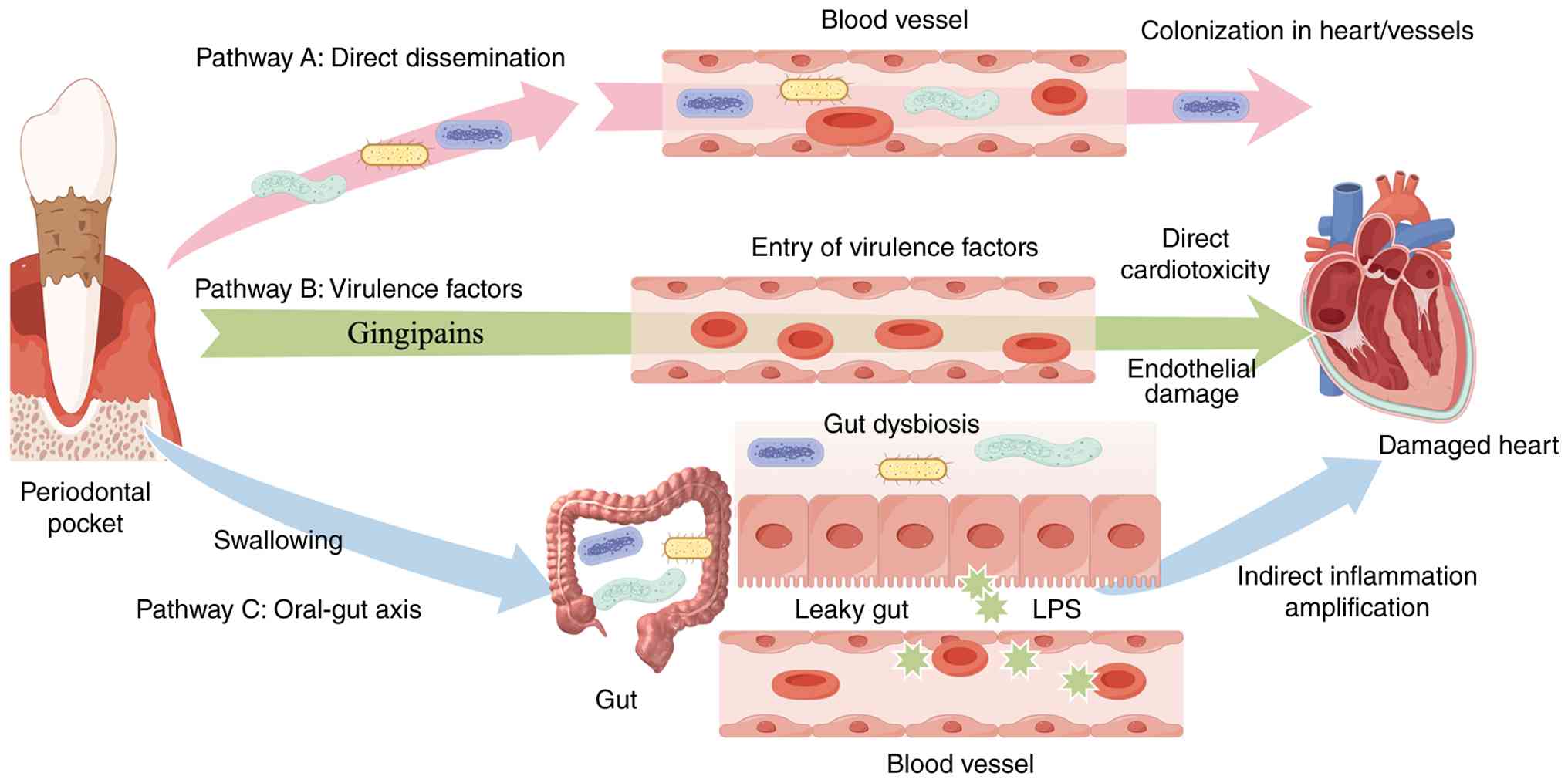 | Figure 3.Primary three mechanisms of remote
cardiac injury driven by the periodontal microbiota. In addition to
indirectly affecting the heart via inflammatory mediators, the
periodontal microbiota and its products can actively participate in
cardiac pathology through three distinct pathways. i) Direct
dissemination: During daily activities (for example, chewing or
toothbrushing) or dental procedures, pathogens within the
periodontal pocket (notably Porphyromonas gingivalis) can
breach the compromised periodontal tissue barrier, leading to
transient bacteremia. These circulating bacteria can survive in the
bloodstream and subsequently colonize distant sites such as heart
valves, myocardial tissue, or coronary atherosclerotic plaques,
where they can directly induce local inflammation and tissue
damage. ii) Remote effects of virulence factors: Even if the
bacteria themselves do not survive in circulation, their potent
secreted virulence factors can enter the bloodstream and exert
remote biological effects. For example, gingipains, a class of
proteases produced by Porphyromonas gingivalis, can degrade
intercellular junction proteins (for example, VE-cadherin) in the
vascular endothelium, compromising vascular barrier integrity.
Furthermore, they can directly target cardiomyocytes, interfering
with critical cellular functions such as autophagy and exerting
direct cardiotoxicity. iii) Disruption of the oral-gut axis:
Patients with periodontitis continuously swallow saliva containing
a high load of periodontal pathogens. These microbes can survive
the gastric acid barrier and reach the intestines, altering the
composition and function of the intestinal microbiota and causing
gut dysbiosis. This dysbiosis can impair the integrity of the
intestinal mucosal barrier, leading to increased intestinal
permeability (‘leaky gut’). This allows a greater translocation of
bacterial products (for example, LPS) from the gut lumen into the
circulation, thereby indirectly amplifying the systemic
inflammatory burden and contributing to cardiac damage. |
Bacteremia and bacterial
translocation: Direct detection of periodontal pathogens in cardiac
tissues
Periodontitis contributes to the pathogenesis and
progression of HF through bacteremia-mediated systemic
dissemination of oral pathogens and their bioactive metabolites. In
patients with active periodontal disease, transient bacteremia
induced by mastication or dental procedures has been shown to
facilitate the hematogenous spread of keystone pathogens such as
Porphyromonas gingivalis. These microorganisms subsequently
colonize arterial walls, promoting monocyte and macrophage
accumulation, impairing vasodilation, increasing arterial
stiffness, and accelerating atherosclerotic progression (33). Beyond their local oral effects,
these pathogens disseminate systemically to distant organs
including cardiac and hepatic tissues, exerting profound extra-oral
impacts (34–36). This dissemination is substantiated
by the consistent detection of oral bacterial DNA in cardiac
tissues, which demonstrates a significant association with
increased cardiovascular disease incidence (37).
Complementing direct bacterial translocation,
microbial metabolites, including short-chain fatty acids and
endotoxins, induce direct cytotoxic effects on cardiomyocytes
through the activation of inflammatory signaling pathways and
apoptosis, thereby exacerbating HF progression (38). Molecular evidence further confirms
the vascular and cardiac colonization of periodontal pathogens:
Porphyromonas gingivalis and Aggregatibacter
actinomycetemcomitans are frequently identified in coronary
atheromas, with a meta-analysis indicating a higher prevalence of
Porphyromonas gingivalis (39). Additionally, oral bacterial
strains, including Streptococcus mutans and Fusobacterium
nucleatum, have been detected in atrial and ventricular
biopsies, where their presence was shown to be associated with
elevated inflammatory markers and enhanced LPS-binding protein
expression, particularly in patients with moderate-to-severe
periodontitis (37).
The integration of viable periodontal pathogens into
carotid and coronary plaques promotes foam cell formation and
extracellular matrix degradation, thereby increasing plaque
vulnerability and ischemic risk (40). Furthermore, comparative analyses
reveal significantly reduced bacterial detection in cardiac valves
and myocardial tissues of edentulous individuals vs. those with
active periodontitis, underscoring the crucial role of chronic oral
infection in sustaining bacterial dissemination that exacerbates
myocardial fibrosis and ventricular remodeling (41). Collectively, these findings
established periodontitis as a persistent source of bacterial
translocation and metabolite-mediated cardiac injury, highlighting
the importance of integrated oral-systemic approaches in HF
prevention and management strategies.
Direct cardiotoxicity of bacterial
virulence factors
The severity of periodontitis is significantly
associated with increased all-cause and cardiovascular mortality in
patients with HF, with research reporting substantially elevated
all-cause mortality rates among patients with periodontitis
compared with those without periodontal disease (42). Mechanistically, this relationship
is driven by bacterial virulence factors, particularly gingipains,
cysteine proteinases including arginine-specific and
lysine-specific variants produced by Porphyromonas
gingivalis. Following hematogenous dissemination, these
proteases disrupt vascular integrity through cleavage of critical
adherens junction proteins such as vascular endothelial-cadherin,
resulting in increased endothelial permeability, enhanced monocyte
infiltration, and accelerated atherosclerotic progression,
collectively elevating myocardial workload and ischemic
susceptibility in HF-prone individuals (43). Beyond these vascular effects,
gingipains exert direct cardiotoxic actions by impairing autophagic
flux in cardiomyocytes via proteolytic degradation of essential
autophagosomal proteins, vesicle-associated membrane protein 8 and
syntaxin-17, leading to accumulated mitochondrial damage and
potentiated apoptotic signaling. Experimental models of myocardial
infarction demonstrate that Porphyromonas gingivalis
infection significantly exacerbates infarct size and ventricular
dysfunction through these mechanisms (44–47).
Furthermore, gingipain-mediated pathogenesis involves dysregulation
of NF-κB signaling in endothelial cells (48), amplifying oxidative stress and
pro-apoptotic cascades (49), that
drive microvascular rarefaction (48) and fibrotic remodeling (50), thereby perpetuating systolic
impairment and HF progression (50,51),
through pathways independent of classical inflammatory mediators
(51–53). These findings collectively
elucidated the dual clinical significance of periodontitis in HF,
affecting both mortality outcomes and underlying disease
mechanisms, while highlighting the potential therapeutic value of
targeting specific virulence factors to mitigate
periodontitis-associated cardiac injury.
Oral-gut axis disruption: Indirect
amplification of systemic inflammation
Periodontitis significantly exacerbates the
progression of HF in patients with comorbidities such as diabetes
and chronic kidney disease, leading to elevated rates of
hospitalization and mortality (54). In patients with chronic kidney
disease, oral health status was revealed to be closely associated
with HF outcomes, where effective oral hygiene management was shown
to substantially improve prognostic trajectories (55). Mechanistically, periodontitis
disrupts systemic immune homeostasis through oral microbiome
dysbiosis, which extends to distant sites, including the gut,
thereby amplifying systemic inflammation and accelerating HF
progression via metabolic and immunomodulatory pathways. Dysbiotic
shifts in the oral ecosystem, characterized by the overgrowth of
pathobionts such as Porphyromonas gingivalis and
Fusobacterium nucleatum, facilitate the translocation of
microbes or their metabolites to the gastrointestinal tract through
salivary ingestion. This disruption of the oral-gut axis induces
gut microbiota alterations marked by reduced α diversity and
enrichment of pro-inflammatory taxa, which compromises intestinal
barrier integrity and promotes systemic translocation of bacterial
LPS (56). The subsequent
endotoxin-driven activation of hepatic Kupffer cells and TLR
signaling pathways enhances the production of systemic cytokines,
including IL-6 and TNF-α, sustaining a chronic inflammatory state
that induces endothelial dysfunction and myocardial stress. This
cascade potentiates fibrotic processes and ventricular remodeling
in HF phenotypes (57–59). Furthermore, ectopic colonization of
oral-derived bacteria in the gut modulates short-chain fatty acid
profiles, reducing anti-inflammatory metabolites such as butyrate
while promoting the synthesis of pro-atherogenic trimethylamine
N-oxide (60,61). These changes collectively impair
cardiac energetics and exacerbate insulin resistance, a common
comorbidity in HF, through disrupted enterohepatic signaling
(56,62). Notably, in comorbid conditions,
this microbiome-mediated immune reprogramming fosters trained
immunity in peripheral leukocytes, sustaining a hyperresponsive
phenotype and worsened clinical outcomes, independent of direct
oral pathogen dissemination (62).
These integrated mechanisms establish periodontitis as a modifiable
determinant of HF trajectory, underscoring the potential of
microbiome-targeted interventions to restore oral-gut equilibrium
and mitigate inflammation-driven cardiac deterioration.
Immune-mediated cross-reactivity and
autoimmunity
Molecular mimicry between periodontal pathogens
and myocardial proteins
Periodontitis modulates the progression of HF
through molecular mimicry mechanisms, in which heat shock proteins
(HSPs) derived from periodontal pathogens display structural
homology with human myocardial proteins. This similarity triggers
cross-reactive immune responses that promote autoimmune-mediated
cardiac injury and remodeling. For instance, antigenic mimicry
between bacterial HSPs such as GroEL from Porphyromonas
gingivalis and human HSP60 expressed in cardiac myocytes can
activate autoreactive T cells. This elicits a Th1-polarized
response that facilitates myocardial infiltration and interstitial
inflammation, contributing to cardiomyocyte dysfunction and
fibrosis, a process often observed in HFrEF (34). Such cross-reactivity also involves
B-cell epitopes, leading to the production of autoantibodies
targeting endothelial and myocardial HSP60. These autoantibodies
exacerbate vascular hyperpermeability and oxidative stress,
ultimately promoting maladaptive ventricular hypertrophy and
contractile impairment. Preclinical research demonstrated that
immunization with Porphyromonas gingivalis accelerates
autoimmune myocarditis-like pathology, supporting this pathogenic
link (63). Furthermore, conserved
peptide motifs shared between microbial HSPs and cardiac proteins
such as actin or myosin enhance complement activation and
antibody-dependent cellular cytotoxicity. These immune mechanisms
are associated with elevated serum troponin levels and poorer
prognostic indicators in patients with coexisting periodontitis and
HF, independent of conventional hemodynamic risk factors (64). Collectively, these findings
illustrate how molecular mimicry underpins a state of persistent
myocardial autoimmunity initiated by periodontitis. They also
highlight the potential of epitope-specific immunomodulatory
strategies to disrupt this pathogenic cycle and mitigate the burden
of HF in susceptible populations (65).
Induction of autoantibodies against
cardiac antigens
Periodontitis promotes the generation of
autoantibodies targeting cardiac antigens, such as
anti-β1-adrenergic receptor antibodies, which arise through
molecular mimicry or sustained immune activation. These
autoantibodies contribute to myocardial contractile dysfunction and
exacerbate HF phenotypes via dysregulated adrenergic signaling and
apoptotic pathways (29). Detected
at elevated levels in sera from patients with chronic
periodontitis, these autoantibodies bind specifically to the second
extracellular loop of β1-adrenergic receptors on cardiomyocytes.
This binding induces agonist-like effects that disrupt cyclic AMP
production and calcium handling, ultimately impairing inotropic
responses and promoting maladaptive ventricular remodeling in
predisposed individuals (66).
Notably, the formation of these autoantibodies occurs independently
of classical infectious triggers such as Trypanosoma cruzi,
as demonstrated by their association with systemic inflammatory
markers in non-Chagasic populations (31). Moreover, these antibodies enhance
cardiomyocyte apoptosis through caspase activation and upregulation
of nitric oxide synthase, recapitulating the cardiotoxic profile of
β1-agonists such as xamoterol. This mechanism accelerates the
transition from compensated hypertrophy to overt HF, particularly
in patients with comorbid inflammatory conditions (29). In summary, this
autoantibody-mediated pathway identifies periodontitis as a
potential instigator of immune-mediated cardiac injury,
underscoring the therapeutic potential of immunomodulatory
strategies aimed at neutralizing receptor-specific autoantibodies
to mitigate disease progression.
Shared risk factors and confounding
pathways
Shared genetic susceptibility
Periodontitis influences susceptibility to HF
through shared genetic predispositions, particularly involving
polymorphisms in inflammation-related genes. These genetic variants
may amplify chronic inflammatory responses and endothelial
dysfunction, thereby promoting myocardial remodeling and
accelerating the progression toward cardiac decompensation in
genetically susceptible individuals. Genome-wide association
studies revealed overlapping risk loci, such as the 9p21.3 region,
which contains the antisense noncoding RNA gene ANRIL (CDKN2B-AS1).
Variants in this locus, including rs1333048, show recessive
associations with both aggressive periodontitis (odds ratio=1.99)
and coronary heart disease, a common precursor to HF. This
association may reflect dysregulation of cell cycle inhibitors and
enhanced inflammatory signaling in vascular and periodontal tissues
(67). Similarly, polymorphisms in
the plasminogen gene, which plays a role in fibrinolysis and
extracellular matrix remodeling, confer joint risk for
periodontitis and atherosclerotic cardiovascular disease. The
shared variant rs4252120, for example, was linked to plaque
instability and fibrotic processes that indirectly impair cardiac
function (68). Further evidence
implicates cytokine-encoding genes such as IL6. The polymorphism
rs1800795 is associated with elevated systemic inflammation and is
enriched in individuals with both periodontitis and HF. This
genotype fosters a prothrombotic state and exacerbates ventricular
hypertrophy and systolic dysfunction, likely through NF-κB-mediated
pathways (69). Additionally,
variants in inflammasome-related genes such as PYD and CARD
domain-containing protein, for example rs8056505 C/T, with the T
allele occurring more frequently in affected populations, appear to
increase susceptibility by enhancing caspase-1-dependent pyroptosis
and cytokine release. This mechanism sustains a low-grade
inflammatory state that contributes to HF pathogenesis
independently of environmental factors (70). Collectively, these findings
highlight a polygenic architecture underlying the comorbidity
between periodontitis and HF. They support the integration of
genotype-guided risk assessment into clinical practice, which may
facilitate personalized anti-inflammatory interventions and help
mitigate disease progression.
Metabolic syndrome as a mechanistic
bridge
Periodontitis modulates HF risk through its
interplay with metabolic syndrome, in which insulin resistance acts
as a central amplifier that aggravates systemic metabolic
dysregulation and inflammatory burden, thereby predisposing
individuals to adverse cardiac structural changes and eventual
decompensation. Chronic periodontal infection promotes insulin
resistance via sustained release of pro-inflammatory cytokines such
as TNF-α and IL-6 from dysbiotic biofilms. These mediators impair
insulin receptor signaling in adipocytes and hepatocytes, leading
to hyperglycemia and dyslipidemia, core components of metabolic
syndrome (71). Within the
metabolic syndrome cluster, which includes central obesity and
hypertension, the exacerbation of insulin resistance intensifies
endothelial dysfunction and oxidative stress, accelerating
atherosclerotic changes that promote myocardial ischemia and
fibrotic remodeling, key antecedents of HFrEF (72). A cross-sectional study indicated
that patients with moderate to severe periodontitis exhibit
elevated homeostasis model assessment of insulin resistance values,
corresponding to an odds ratio of 1.38–1.99 for metabolic syndrome
components. These components, in turn, independently predict
adverse cardiac outcomes such as ventricular hypertrophy and
elevated peptide levels (73).
Bidirectionally, insulin resistance driven by metabolic syndrome
alters the oral microbiome by reducing bacterial diversity and
facilitating the colonization of periodontal pathobionts. This
shift perpetuates periodontal tissue breakdown while indirectly
impairing cardiac energetics through disrupted glucose metabolism
and enhanced lipid peroxidation (74). Together, these mechanisms establish
periodontitis as a modifiable risk factor in the HF continuum via
its role in metabolic syndrome amplification. This perspective
supports integrated treatment strategies aimed at improving insulin
sensitivity to reduce the burden of cardiometabolic comorbidity
(75).
Clinical and therapeutic implications
The robust epidemiological and mechanistic links
between periodontitis and HF have paved the way for critical
translational inquiry into whether treating periodontitis can
mitigate HF risk. This issue requires explicit and critical
evaluation of the available interventional evidence. At present,
intervention studies conducted specifically in patients with
established HF are extremely limited, and no completed randomized
controlled trial has yet demonstrated that periodontal therapy
reduces HF hospitalization, cardiovascular mortality, or other hard
clinical outcomes in HF populations. The most directly relevant
HF-specific study is the ongoing randomized PERIO-HF trial
(ClinicalTrials.gov identifier: NCT07036289), which is evaluating
the effects of periodontal treatment on NT-proBNP levels at 3 and 6
months in patients with HF. However, even this study is primarily
focused on surrogate endpoints rather than definitive clinical HF
outcomes such as hospitalization, mortality, or symptom burden.
Therefore, although PERIO-HF is expected to provide more direct
evidence in an HF population, it will not by itself establish
whether periodontal therapy improves hard outcomes in HF.
By contrast, most currently available interventional
studies in this field have been conducted in non-HF populations.
For example, the randomized controlled trial (RCT) by Wang et
al (76) in patients with type
2 diabetes and periodontitis demonstrated that intensive
non-surgical periodontal therapy, compared with oral hygiene
instruction alone, significantly improved diastolic function
together with inflammatory and cardiac biomarkers. Similarly, an
RCT by Isola et al (77) in
patients with stage III periodontitis and pre-post studies by Fazal
et al (78) and Ari et
al (79) reported improvements
in HF-relevant surrogate biomarkers following periodontal treatment
in non-HF populations. Collectively, these studies indicated that
periodontal therapy may influence cardiovascular-related biological
pathways and HF-relevant surrogate markers (80). Nevertheless, surrogate biomarker
improvement should not be conflated with proven reduction in
incident HF, slower HF progression or improved prognosis in
patients with established HF. Likewise, although observational and
cohort studies support an association between periodontitis and
prevalent or incident HF, there remains a lack of interventional
evidence directly demonstrating that treatment of periodontitis
alters the clinical course of HF.
Although these findings should not yet be
interpreted as definitive evidence that periodontal treatment
reduces incident HF or improves hard HF outcomes (81), they nevertheless support greater
clinical attention to oral and periodontal health in patients with
HF, particularly within a multidisciplinary care framework
(82). Population-based (16) and cohort studies (12,32)
showed that periodontitis is associated with prevalent HF, incident
HF, and adverse cardiac structural or functional alterations,
suggesting that periodontal status may help identify patients with
a higher systemic inflammatory and cardiovascular burden rather
than serving as an isolated therapeutic target at the current stage
of evidence. In elderly (83) or
hospitalized patients with acute HF, poor oral health was also
linked to reduced physical function, decline in activities of daily
living, dysphagia, and impaired recovery of nutritional status, all
of which may complicate rehabilitation, discharge readiness, and
overall care complexity (84,85).
Accordingly, oral and periodontal assessment may reasonably be
incorporated into multidisciplinary HF care, particularly in
elderly, frail or repeatedly hospitalized patients, primarily as a
component of holistic risk assessment, supportive management, and
timely referral for dental or periodontal care, rather than as a
stand-alone intervention with proven efficacy for reducing HF
hospitalization or mortality.
However, the current body of evidence is constrained
by limited sample sizes and short follow-up durations,
heterogeneous study populations, and a predominant reliance on
surrogate endpoints. There is a clear need for large-scale,
multicenter RCTs powered for hard clinical endpoints, such as
HF-related hospitalization and cardiovascular mortality. To
facilitate critical appraisal of the currently available
interventional evidence, the designs, populations, endpoints, and
principal findings of the relevant studies are summarized in
Table II.
| Table II.Summary of available interventional
studies evaluating periodontal therapy in relation to HF-relevant
surrogate markers and cardiovascular parameters. |
Table II.
Summary of available interventional
studies evaluating periodontal therapy in relation to HF-relevant
surrogate markers and cardiovascular parameters.
| First author/s,
year | Study design and
population | HF-specific
population | Main endpoints | Main findings | Key limitation and
relevance to HF | (Refs.) or NCT
identifier |
|---|
| Wang et al,
2020 | RCT: Patients with
type 2 diabetes and moderate-to-severe periodontitis | No | E/e' ratio, LV mass
index, NT-proBNP, CRP, IL-6 | Intensive
non-surgical periodontal therapy improved E/e' ratio and was
associated with favorable trends in LV mass index, NT-proBNP, and
inflammatory biomarkers at 6 months. | Conducted in a
non-HF population; evaluated surrogate cardiovascular markers
rather than HF hospitalization, mortality, or symptom burden. | (76) |
| Isola et al,
2023 | RCT: Patients with
stage III periodontitis | No | NT-proBNP, hs-CRP,
ECM-1, NGAL | Intensive
full-mouth scaling and root planing was associated with greater
reductions in NT-proBNP and related inflammatory biomarkers than
basic oral hygiene measures. | Not conducted in
patients with established HF; biomarker improvements do not
constitute direct evidence of benefit for clinical HF
outcomes. | (77) |
| Fazal et al,
2022 | Pre-post study:
Systemically healthy patients with chronic periodontitis | No | Gingival crevicular
fluid NT-proBNP, serum NT-proBNP | Non-surgical
periodontal therapy reduced gingival crevicular fluid NT-proBNP and
showed a trend toward lower serum NT-proBNP. | Uncontrolled
exploratory study in a non-HF population; no hard cardiovascular or
HF-specific endpoints were assessed. | (78) |
| Ari et al,
2023 | Pre-post study:
Patients with severe chronic periodontitis | No | Salivary NT-proBNP,
gingival crevicular fluid NT-proBNP | Periodontal flap
surgery was associated with reduced salivary NT-proBNP levels after
6 months. | Non-HF population
and surrogate biomarker endpoints only; clinical relevance to HF
outcomes remains uncertain. | (79) |
| PERIO-HF Trial,
2024-ongoing | Ongoing RCT:
Patients with established HF | Yes | NT-proBNP and
cardiac function metrics | Ongoing trial; no
published outcome data are currently available. | Most directly
relevant HF-specific randomized study identified to date, but it
primarily evaluates surrogate endpoints rather than hard HF
outcomes such as hospitalization, mortality, or symptom
improvement. | NCT07036289 |
Most currently available studies are observational
and therefore mainly support an association rather than a confirmed
causal relationship between periodontitis and HF. Residual
confounding by shared risk factors, such as age, smoking, diabetes,
obesity, chronic kidney disease, socioeconomic status, and access
to dental care, cannot be fully excluded, and reverse causation is
also possible in patients with advanced HF (12,86,87).
In addition, heterogeneity in study design and the reliance of
intervention studies on surrogate rather than hard clinical
endpoints limit interpretation. Future studies should focus on
standardized definitions, clearly phenotyped HF populations and
RCTs with clinically meaningful outcomes.
Conclusion and future perspectives
In conclusion, the present review summarized the
current evidence linking periodontitis and HF, analyzed the
potential mechanisms underlying their association and shared
pathophysiological basis and discussed the possible role of
periodontal treatment in improving outcomes for patients with HF.
The ‘periodontal-cardiac axis’ is now understood as a multifaceted
pathogenic framework for understanding these complex and interwoven
interactions. From a clinical perspective, periodontal assessment
may be considered in patients with HF as part of multidisciplinary
care; however, current evidence remains insufficient to support
definitive recommendations that such evaluation or treatment
improves HF outcomes.
Looking ahead, several critical avenues of research
are essential to translate these mechanistic insights into tangible
clinical benefits. First, large-scale, prospective, RCTs are
urgently needed. These trials should move beyond surrogate
endpoints and evaluate ‘hard’ clinical outcomes, such as HF
hospitalization rates, cardiovascular mortality and improvements in
cardiac function, (such as ejection fraction and NT-proBNP levels),
following standardized periodontal treatment in diverse HF
populations (including both HFpEF and HFrEF). Such studies are
paramount to definitively establish causality and quantify the
therapeutic impact. Second, future research should focus on
elucidating the specific molecular pathways with greater precision.
Advanced multi-omics approaches (genomics, proteomics, and
metabolomics) can help identify specific bacterial strains,
virulence factors, or host genetic polymorphisms (such as in the
ANRIL or IL6 loci) that confer the highest risk. This will pave the
way for personalized risk stratification and the development of
targeted therapies, such as specific virulence factor inhibitors
(such as gingipain inhibitors) or immunomodulatory agents that can
disrupt maladaptive trained immunity. Third, the diagnostic and
prognostic utility of periodontal status in HF management warrants
investigation. Studies should explore whether integrating
periodontal screening into routine cardiovascular risk assessment
can improve the prediction of adverse outcomes. Developing
composite biomarkers that combine periodontal and cardiac
inflammatory markers could offer a more holistic view of a the risk
profile of a patient. Finally, interdisciplinary collaboration
between cardiologists and dental professionals is crucial.
Developing integrated care models that incorporate routine oral
health screening and treatment into standard HF management
protocols could represent a novel, cost-effective strategy to
reduce the systemic inflammatory burden and potentially improve
long-term patient outcomes.
Acknowledgements
Not applicable.
Funding
Funding: No funding was received.
Availability of data and materials
Not applicable.
Authors' contributions
XZ performed structured literature searches,
critically synthesized and interpreted findings, and wrote major
sections of the manuscript. XA designed the scope and structure of
the review, provided oversight and approved the final version. Both
authors read and approved the final manuscript. Data authentication
is not applicable.
Ethics approval and consent to
participate
Not applicable.
Patient consent for publication
Not applicable.
Competing interests
The authors declare that they have no competing
interests.
References
|
1
|
Savarese G, Becher PM, Lund LH, Seferovic
P, Rosano GMC and Coats AJS: Global burden of heart failure: A
comprehensive and updated review of epidemiology. Cardiovasc Res.
118:3272–3287. 2023. View Article : Google Scholar : PubMed/NCBI
|
|
2
|
Shahim B, Kapelios CJ, Savarese G and Lund
LH: Global public health burden of heart failure: An updated
review. Card Fail Rev. 9:e112023. View Article : Google Scholar : PubMed/NCBI
|
|
3
|
Heidenreich PA, Bozkurt B, Aguilar D,
Allen LA, Byun JJ, Colvin MM, Deswal A, Drazner MH, Dunlay SM,
Evers LR, et al: 2022 AHA/ACC/HFSA guideline for the management of
heart failure: A report of the American college of
Cardiology/American heart association joint committee on clinical
practice guidelines. Circulation. 145:e895–e1032. 2022. View Article : Google Scholar : PubMed/NCBI
|
|
4
|
Dick SA and Epelman S: Chronic heart
failure and inflammation: What do we really know? Circ Res.
119:159–176. 2016. View Article : Google Scholar : PubMed/NCBI
|
|
5
|
Roman-Pepine D, Serban AM, Capras RD,
Cismaru CM and Filip AG: A comprehensive review: Unraveling the
role of inflammation in the etiology of heart failure. Heart Fail
Rev. 30:931–954. 2025. View Article : Google Scholar : PubMed/NCBI
|
|
6
|
Shirazi LF, Bissett J, Romeo F and Mehta
JL: Role of inflammation in heart failure. Curr Atheroscler Rep.
19:272017. View Article : Google Scholar : PubMed/NCBI
|
|
7
|
Hajishengallis G: Periodontitis: From
microbial immune subversion to systemic inflammation. Nat Rev
Immunol. 15:30–44. 2015. View
Article : Google Scholar : PubMed/NCBI
|
|
8
|
Martínez-García M and Hernández-Lemus E:
Periodontal inflammation and systemic diseases: An overview. Front
Physiol. 12:7094382021. View Article : Google Scholar : PubMed/NCBI
|
|
9
|
Hajishengallis G and Chavakis T: Local and
systemic mechanisms linking periodontal disease and inflammatory
comorbidities. Nat Rev Immunol. 21:426–440. 2021. View Article : Google Scholar : PubMed/NCBI
|
|
10
|
Chen Y, Rao R, Wu X, Qin Z, Chen Y, Li Q
and Li W: Periodontitis and the risk of heart failure: A
Meta-analysis and mendelian randomisation study. Oral Health Prev
Dent. 23:149–164. 2025.PubMed/NCBI
|
|
11
|
Sharma S, Mathur D, Goswami S, Gupta MK,
Bhardwaj P, Kumar P and Deora S: Prevalence of periodontitis in
chronic heart failure patients and its relationship with NT-ProBNP:
A cross-sectional study. Indian Heart J. 77:110–113. 2025.
View Article : Google Scholar : PubMed/NCBI
|
|
12
|
Walther C, Wenzel JP, Schnabel RB,
Heydecke G, Seedorf U, Beikler T, Borof K, Nikorowitsch J, Schrage
B, Blankenberg S, et al: Association between periodontitis and
heart failure in the general population. ESC Heart Fail.
9:4189–4197. 2022. View Article : Google Scholar : PubMed/NCBI
|
|
13
|
Miyauchi S, Kawada-Matsuo M, Furusho H,
Nishi H, Nakajima A, Phat PT, Shiba F, Kitagawa M, Ouhara K, Oda N,
et al: Atrial translocation of Porphyromonas gingivalis
exacerbates atrial fibrosis and atrial fibrillation. Circulation.
151:1527–1540. 2025. View Article : Google Scholar : PubMed/NCBI
|
|
14
|
Ferrara E, D'Albenzio A, Bassignani J, Di
Tanna I, Murmura G and Balice G: The Periodontal-cardiovascular
disease association: Molecular mechanisms and clinical
implications. Int J Mol Sci. 26:77102025. View Article : Google Scholar : PubMed/NCBI
|
|
15
|
Mitroulis I, Hajishengallis G and Chavakis
T: Bone marrow inflammatory memory in cardiometabolic disease and
inflammatory comorbidities. Cardiovasc Res. 119:2801–2812. 2024.
View Article : Google Scholar : PubMed/NCBI
|
|
16
|
Yan Y, Mao M, Li YQ, Chen YJ, Yu HD, Xie
WZ, Huang Q, Leng WD and Xiong J: Periodontitis is associated with
heart failure: A Population-based study (NHANES III). Front
Physiol. 13:8546062022. View Article : Google Scholar : PubMed/NCBI
|
|
17
|
Schmalz G, Hennecke A, Haak R, Kottmann T,
Garbade J, Binner C and Ziebolz D: Secondary analysis of potential
associations between oral health and infection-related parameters
in patients with severe heart failure-results of a German cohort.
BMC Cardiovasc Disord. 23:5732023. View Article : Google Scholar : PubMed/NCBI
|
|
18
|
Aoyama N, Kure K, Minabe M and Izumi Y:
Increased heart failure prevalence in patients with a high antibody
level against periodontal pathogen. Int Heart J. 60:1142–1146.
2019. View Article : Google Scholar : PubMed/NCBI
|
|
19
|
Foroughi M, Torabinejad M, Angelov N,
Ojcius DM, Parang K, Ravnan M and Lam J: Bridging oral and systemic
health: Exploring pathogenesis, biomarkers, and diagnostic
innovations in periodontal disease. Infection. 53:2277–2302. 2025.
View Article : Google Scholar : PubMed/NCBI
|
|
20
|
Cainzos-Achirica M, Enjuanes C, Greenland
P, McEvoy JW, Cushman M, Dardari Z, Nasir K, Budoff MJ, Al-Mallah
MH, Yeboah J, et al: The prognostic value of interleukin 6 in
multiple chronic diseases and all-cause death: The Multi-Ethnic
Study of Atherosclerosis (MESA). Atherosclerosis. 278:217–225.
2018. View Article : Google Scholar : PubMed/NCBI
|
|
21
|
Jug B, Salobir BG, Vene N, Sebestjen M,
Sabovic M and Keber I: Interleukin-6 is a stronger prognostic
predictor than high-sensitive C-reactive protein in patients with
chronic stable heart failure. Heart Vessels. 24:271–276. 2009.
View Article : Google Scholar : PubMed/NCBI
|
|
22
|
Duprez DA, Gross MD, Kizer JR, Ix JH,
Hundley WG and Jacobs DR Jr: Predictive value of collagen
biomarkers for heart failure with and without preserved ejection
fraction: MESA (Multi-Ethnic Study of Atherosclerosis). J Am Heart
Assoc. 7:e0078852018. View Article : Google Scholar : PubMed/NCBI
|
|
23
|
Vasan RS, Sullivan LM, Roubenoff R,
Dinarello CA, Harris T, Benjamin EJ, Sawyer DB, Levy D, Wilson PW
and D'Agostino RB; Framingham Heart Study, : Inflammatory markers
and risk of heart failure in elderly subjects without prior
myocardial infarction: The Framingham Heart Study. Circulation.
107:1486–1491. 2003. View Article : Google Scholar : PubMed/NCBI
|
|
24
|
Schulze-Späte U, Mizani I, Salaverry KR,
Chang J, Wu C, Jones M, Kennel PJ, Brunjes DL, Choo TH, Kato TS, et
al: Periodontitis and bone metabolism in patients with advanced
heart failure and after heart transplantation. ESC Heart Fail.
4:169–177. 2017. View Article : Google Scholar : PubMed/NCBI
|
|
25
|
Köse O, Arabacı T, Gedikli S, Eminoglu DÖ,
Kermen E, Kızıldağ A, Kara A, Ozkanlar S and Yemenoglu H:
Biochemical and histopathologic analysis of the effects of
periodontitis on left ventricular heart tissues of rats. J
Periodontal Res. 52:176–185. 2017. View Article : Google Scholar : PubMed/NCBI
|
|
26
|
Köse O, Arabacı T, Yemenoglu H, Ozkanlar
S, Kurt N, Gumussoy I, Gedikli S and Kara A: Influence of
experimental periodontitis on cardiac oxidative stress in rats: A
biochemical and histomorphometric study. J Periodontal Res.
52:603–608. 2017. View Article : Google Scholar : PubMed/NCBI
|
|
27
|
Suh JS, Kim S, Boström KI, Wang CY, Kim RH
and Park NH: Periodontitis-induced systemic inflammation
exacerbates atherosclerosis partly via endothelial-mesenchymal
transition in mice. Int J Oral Sci. 11:212019. View Article : Google Scholar : PubMed/NCBI
|
|
28
|
Schulze-Späte U, Wurschi L, van der Vorst
EPC, Hölzle F, Craveiro RB, Wolf M and Noels H: Crosstalk between
periodontitis and cardiovascular risk. Front Immunol.
15:14690772024. View Article : Google Scholar : PubMed/NCBI
|
|
29
|
Reina S, Ganzinelli S, Sterin-Borda L and
Borda E: Pro-apoptotic effect of anti-β1-adrenergic receptor
antibodies in periodontitis patients. Int Immunopharmacol.
14:710–721. 2012. View Article : Google Scholar : PubMed/NCBI
|
|
30
|
Li X, Wang H, Yu X, Saha G, Kalafati L,
Ioannidis C, Mitroulis I, Netea MG, Chavakis T and Hajishengallis
G: Maladaptive innate immune training of myelopoiesis links
inflammatory comorbidities. Cell. 185:1709–1727.e18. 2022.
View Article : Google Scholar : PubMed/NCBI
|
|
31
|
Scherbaum I, Heidecke H, Bunte K, Peters
U, Beikler T and Boege F: Autoantibodies against M5-muscarinic and
beta1-adrenergic receptors in periodontitis patients. Aging (Albany
NY). 12:16609–16620. 2020. View Article : Google Scholar : PubMed/NCBI
|
|
32
|
Molinsky RL, Yuzefpolskaya M, Norby FL, Yu
B, Shah AM, Pankow JS, Ndumele CE, Lutsey PL, Papapanou PN, Beck
JD, et al: Periodontal status, C-reactive protein, NT-proBNP, and
incident heart failure: The ARIC study. JACC Heart Fail.
10:731–741. 2022. View Article : Google Scholar : PubMed/NCBI
|
|
33
|
Bourgeois D, Inquimbert C, Ottolenghi L
and Carrouel F: Periodontal pathogens as risk factors of
cardiovascular diseases, diabetes, rheumatoid arthritis, cancer,
and chronic obstructive pulmonary Disease-Is there cause for
consideration? Microorganisms. 7:4242019. View Article : Google Scholar : PubMed/NCBI
|
|
34
|
Lockhart PB, Bolger AF, Papapanou PN,
Osinbowale O, Trevisan M, Levison ME, Taubert KA, Newburger JW,
Gornik HL, Gewitz MH, et al: Periodontal disease and
atherosclerotic vascular disease: Does the evidence support an
independent association?: A scientific statement from the American
Heart Association. Circulation. 125:2520–2544. 2012. View Article : Google Scholar : PubMed/NCBI
|
|
35
|
Tonetti MS and Van Dyke TE: Periodontitis
and atherosclerotic cardiovascular disease: Consensus report of the
Joint EFP/AAPWorkshop on periodontitis and systemic diseases. J
Periodontol. 84 (Suppl 4S):S24–S29. 2013.
|
|
36
|
Byun SH, Lee S, Kang SH, Choi HG and Hong
SJ: Cross-Sectional analysis of the association between
periodontitis and cardiovascular disease using the Korean genome
and epidemiology study data. Int J Environ Res Public Health.
17:52372020. View Article : Google Scholar : PubMed/NCBI
|
|
37
|
Ziebolz D, Jahn C, Pegel J,
Semper-Pinnecke E, Mausberg RF, Waldmann-Beushausen R, Schöndube FA
and Danner BC: Periodontal bacteria DNA findings in human cardiac
tissue-Is there a link of periodontitis to heart valve disease? Int
J Cardiol. 251:74–79. 2018. View Article : Google Scholar : PubMed/NCBI
|
|
38
|
Kurek-Górecka A, Kłósek M, Pietsz G,
Balwierz R, Olczyk P and Czuba ZP: Ethanolic Extract of Propolis
and CAPE as Cardioprotective Agents against LPS and IFN-α stressed
cardiovascular injury. Nutrients. 16:6272024. View Article : Google Scholar : PubMed/NCBI
|
|
39
|
Joshi C, Bapat R, Anderson W, Dawson D,
Hijazi K and Cherukara G: Detection of periodontal microorganisms
in coronary atheromatous plaque specimens of myocardial infarction
patients: A systematic review and meta-analysis. Trends Cardiovasc
Med. 31:69–82. 2021. View Article : Google Scholar : PubMed/NCBI
|
|
40
|
Czerniuk MR, Surma S, Romańczyk M, Nowak
JM, Wojtowicz A and Filipiak KJ: Unexpected relationships:
Periodontal diseases: Atherosclerosis-plaque destabilization? From
the teeth to a coronary event. Biology (Basel).
11:2722022.PubMed/NCBI
|
|
41
|
Pardo A, Signoriello A, Signoretto C,
Messina E, Carelli M, Tessari M, De Manna ND, Rossetti C, Albanese
M, Lombardo G and Luciani GB: Detection of periodontal pathogens in
oral samples and cardiac specimens in patients undergoing aortic
valve replacement: A pilot study. J Clin Med. 10:38742021.
View Article : Google Scholar : PubMed/NCBI
|
|
42
|
Sebring D, Buhlin K, Lund H, Norhammar A,
Rydén L and Kvist T: Endodontic inflammatory disease and future
cardiovascular events and mortality: A report from the PAROKRANK
study. J Endod. 50:1073–1081.e73. 2024. View Article : Google Scholar : PubMed/NCBI
|
|
43
|
Ajoolabady A, Pratico D, Lin L, Mantzoros
CS, Bahijri S, Tuomilehto J and Ren J: Inflammation in
atherosclerosis: Pathophysiology and mechanisms. Cell Death Dis.
15:8172024. View Article : Google Scholar : PubMed/NCBI
|
|
44
|
Shahab M, Aiman S, Alshammari A, Alasmari
AF, Alharbi M, Khan A, Wei DQ and Zheng G: Immunoinformatics-based
potential multi-peptide vaccine designing against Jamestown Canyon
Virus (JCV) capable of eliciting cellular and humoral immune
responses. Int J Biol Macromol. 253:1266782023. View Article : Google Scholar : PubMed/NCBI
|
|
45
|
Ivaldo C, Passalacqua M, Furfaro AL,
d'Abramo C, Ruiz S, Chatterjee PK, Metz CN, Nitti M and Marambaud
P: Oxidative stress-induced MMP- and γ-secretase-dependent
VE-cadherin processing is modulated by the proteasome and BMP9/10.
Sci Rep. 13:5972023. View Article : Google Scholar : PubMed/NCBI
|
|
46
|
Harki O, Bouyon S, Sallé M, Arco-Hierves
A, Lemarié E, Demory A, Chirica C, Vilgrain I, Pépin JL, Faury G
and Briançon-Marjollet A: Inhibition of vascular endothelial
cadherin cleavage prevents elastic fiber alterations and
atherosclerosis induced by intermittent hypoxia in the mouse aorta.
Int J Mol Sci. 23:70122022. View Article : Google Scholar : PubMed/NCBI
|
|
47
|
Slack MA and Gordon SM: Protease activity
in vascular disease. Arterioscler Thromb Vasc Biol. 39:e210–e218.
2019. View Article : Google Scholar : PubMed/NCBI
|
|
48
|
Xie M, Tang Q, Yu S, Sun J, Mei F, Zhao J
and Chen L: Porphyromonas gingivalis disrupts vascular
endothelial homeostasis in a TLR-NF-κB axis dependent manner. Int J
Oral Sci. 12:282020. View Article : Google Scholar : PubMed/NCBI
|
|
49
|
Charoensaensuk V, Chen YC, Lin YH, Ou KL,
Yang LY and Lu DY: Porphyromonas gingivalis induces
proinflammatory cytokine expression leading to apoptotic death
through the oxidative Stress/NF-κB pathway in brain endothelial
cells. Cells. 10:30332021. View Article : Google Scholar : PubMed/NCBI
|
|
50
|
Sato H, Suzuki JI, Aoyama N, Watanabe R,
Kaneko M, Shiheido Y, Yoshida A, Wakayama K, Kumagai H, Ikeda Y, et
al: A Periodontal pathogen Porphyromonas gingivalis
deteriorates Isoproterenol-Induced myocardial remodeling in mice.
Hypertens Res. 40:35–40. 2017. View Article : Google Scholar : PubMed/NCBI
|
|
51
|
Shiheido-Watanabe Y, Maejima Y, Nakagama
S, Fan Q, Tamura N and Sasano T: Porphyromonas gingivalis, a
periodontal pathogen, impairs post-infarcted myocardium by
inhibiting autophagosome-lysosome fusion. Int J Oral Sci.
15:422023. View Article : Google Scholar : PubMed/NCBI
|
|
52
|
Sheets SM, Potempa J, Travis J, Fletcher
HM and Casiano CA: Gingipains from Porphyromonas gingivalis
W83 synergistically disrupt endothelial cell adhesion and can
induce caspase-independent apoptosis. Infect Immun. 74:5667–5678.
2006. View Article : Google Scholar : PubMed/NCBI
|
|
53
|
Tada H, Matsuyama T, Nishioka T, Hagiwara
M, Kiyoura Y, Shimauchi H and Matsushita K: Porphyromonas
gingivalis Gingipain-dependently enhances IL-33 production in
human gingival epithelial cells. PLoS One. 11:e01527942016.
View Article : Google Scholar : PubMed/NCBI
|
|
54
|
Huh Y, Yoo JE, Park SH, Han K, Kim SM,
Park HS, Cho KH, Ahn JS, Jun SH and Nam GE: Association of dental
diseases and oral hygiene care with the risk of heart failure in
patients with type 2 diabetes: A nationwide cohort study. J Am
Heart Assoc. 12:e0292072023. View Article : Google Scholar : PubMed/NCBI
|
|
55
|
Thorstensson H, Kuylenstierna J and
Hugoson A: Medical status and complications in relation to
periodontal disease experience in insulin-dependent diabetics. J
Clin Periodontol. 23:194–202. 1996. View Article : Google Scholar : PubMed/NCBI
|
|
56
|
Kunath BJ, De Rudder C, Laczny CC,
Letellier E and Wilmes P: The oral-gut microbiome axis in health
and disease. Nat Rev Microbiol. 22:791–805. 2024. View Article : Google Scholar : PubMed/NCBI
|
|
57
|
Zeng T, Zhang CL, Xiao M, Yang R and Xie
KQ: Critical roles of Kupffer cells in the pathogenesis of
alcoholic liver disease: From basic science to clinical trials.
Front Immunol. 7:5382016. View Article : Google Scholar : PubMed/NCBI
|
|
58
|
Slevin E, Baiocchi L, Wu N, Ekser B, Sato
K, Lin E, Ceci L, Chen L, Lorenzo SR, Xu W, et al: Kupffer cells:
Inflammation pathways and Cell-cell interactions in
Alcohol-associated liver disease. Am J Pathol. 190:2185–2193. 2020.
View Article : Google Scholar : PubMed/NCBI
|
|
59
|
Rivera CA, Adegboyega P, van Rooijen N,
Tagalicud A, Allman M and Wallace M: Toll-like receptor-4 signaling
and Kupffer cells play pivotal roles in the pathogenesis of
non-alcoholic steatohepatitis. J Hepatol. 47:571–579. 2007.
View Article : Google Scholar : PubMed/NCBI
|
|
60
|
Hernández-Cabanyero C and Vonaesch P:
Ectopic colonization by oral bacteria as an emerging theme in
health and disease. FEMS Microbiol Rev. 48:fuae0122024. View Article : Google Scholar : PubMed/NCBI
|
|
61
|
Su S, Ni X and Lin Y: The oral-gut
microbiota axis in cardiovascular diseases: Mechanisms, therapeutic
targets, and translational challenges. Front Cell Infect Microbiol.
15:16585022025. View Article : Google Scholar : PubMed/NCBI
|
|
62
|
Li Y, Zhu M and Liu Y, Luo B, Cui J, Huang
L, Chen K and Liu Y: The oral microbiota and cardiometabolic
health: A comprehensive review and emerging insights. Front
Immunol. 13:10103682022. View Article : Google Scholar : PubMed/NCBI
|
|
63
|
Ford PJ, Yamazaki K and Seymour GJ:
Cardiovascular and oral disease interactions: What is the evidence?
Prim Dent Care. 14:59–66. 2007. View Article : Google Scholar : PubMed/NCBI
|
|
64
|
Sánchez-Caraballo A, García-Solano V,
González-Rangel SK, Grattz-Lamadrid V and Munera-Gomez M: Molecular
mimic between cardiovascular diseases and microorganism antigens.
Rev Alerg Mex. 71:612024.(In Spanish). PubMed/NCBI
|
|
65
|
Seymour GJ, Ford PJ, Cullinan MP, Leishman
S, West MJ and Yamazaki K: Infection or inflammation: The link
between periodontal and cardiovascular diseases. Future Cardiol.
5:5–9. 2009. View Article : Google Scholar : PubMed/NCBI
|
|
66
|
Segovia M, Ganzinelli S, Reina S, Borda E
and Sterin-Borda L: Role of anti-β1 adrenergic antibodies from
patients with periodontitis in cardiac dysfunction. J Oral Pathol
Med. 41:242–248. 2012. View Article : Google Scholar : PubMed/NCBI
|
|
67
|
Schaefer AS, Richter GM,
Groessner-Schreiber B, Noack B, Nothnagel M, El Mokhtari NE, Loos
BG, Jepsen S and Schreiber S: Identification of a shared genetic
susceptibility locus for coronary heart disease and periodontitis.
PLoS Genet. 5:e10003782009. View Article : Google Scholar : PubMed/NCBI
|
|
68
|
Aarabi G, Zeller T, Seedorf H, Reissmann
DR, Heydecke G, Schaefer AS and Seedorf U: Genetic susceptibility
contributing to periodontal and cardiovascular disease. J Dent Res.
96:610–617. 2017. View Article : Google Scholar : PubMed/NCBI
|
|
69
|
Duenas S, McGee Z, Mhatre I, Mayilvahanan
K, Patel KK, Abdelhalim H, Jayprakash A, Wasif U, Nwankwo O,
Degroat W, et al: Computational approaches to investigate the
relationship between periodontitis and cardiovascular diseases for
precision medicine. Hum Genomics. 18:1162024. View Article : Google Scholar : PubMed/NCBI
|
|
70
|
Daily ZA, Al-Ghurabi BH and Al-Qarakhli
AM: PYCARD gene polymorphisms and susceptibility to periodontal and
coronary heart diseases. J Med Life. 17:195–200. 2024. View Article : Google Scholar : PubMed/NCBI
|
|
71
|
Gurav AN: Periodontitis and insulin
resistance: Casual or causal relationship? Diabetes Metab J.
36:404–411. 2012. View Article : Google Scholar : PubMed/NCBI
|
|
72
|
Marchetti E, Monaco A, Procaccini L,
Mummolo S, Gatto R, Tetè S, Baldini A, Tecco S and Marzo G:
Periodontal disease: The influence of metabolic syndrome. Nutr
Metab (Lond). 9:882012. View Article : Google Scholar : PubMed/NCBI
|
|
73
|
Benguigui C, Bongard V, Ruidavets JB,
Chamontin B, Sixou M, Ferrières J and Amar J: Metabolic syndrome,
insulin resistance, and periodontitis: A cross-sectional study in a
middle-aged French population. J Clin Periodontol. 37:601–608.
2010. View Article : Google Scholar : PubMed/NCBI
|
|
74
|
Pirih FQ, Monajemzadeh S, Singh N,
Sinacola RS, Shin JM, Chen T, Fenno JC, Kamarajan P, Rickard AH,
Travan S, et al: Association between metabolic syndrome and
periodontitis: The role of lipids, inflammatory cytokines, altered
host response, and the microbiome. Periodontol. 87:50–75. 2021.
View Article : Google Scholar
|
|
75
|
Aizenbud I, Wilensky A and Almoznino G:
Periodontal disease and its association with metabolic Syndrome-A
comprehensive review. Int J Mol Sci. 24:130112023. View Article : Google Scholar : PubMed/NCBI
|
|
76
|
Wang Y, Liu HN, Zhen Z, Pelekos G, Wu MZ,
Chen Y, Tonetti M, Tse HF, Yiu KH and Jin L: A randomized
controlled trial of the effects of non-surgical periodontal therapy
on cardiac function assessed by echocardiography in type 2 diabetic
patients. J Clin Periodontol. 47:726–736. 2020. View Article : Google Scholar : PubMed/NCBI
|
|
77
|
Isola G, Tartaglia GM, Santonocito S,
Polizzi A, Williams RC and Iorio-Siciliano V: Impact of N-terminal
pro-B-type natriuretic peptide and related inflammatory biomarkers
on periodontal treatment outcomes in patients with periodontitis:
An explorative human randomized-controlled clinical trial. J
Periodontol. 94:1414–1424. 2023. View Article : Google Scholar : PubMed/NCBI
|
|
78
|
Fazal I, Shetty B, Yadalam U, Khan SF and
Nambiar M: Effectiveness of periodontal intervention on the levels
of N-terminal pro-brain natriuretic peptide in chronic
periodontitis patients. J Circ Biomark. 11:48–56. 2022. View Article : Google Scholar : PubMed/NCBI
|
|
79
|
Ari G, Rajendran S, Mahendra J,
Ambalavanan N, Vijayaraj S, Mahendra L, Madapusi Balaji T, Ali
Baeshen H, Patil S, Reda R and Testarelli L: Estimation of GCF and
salivary levels of NT-proBNP in systemically healthy subjects with
severe chronic periodontitis before and after periodontal flap
surgery. Int J Gen Med. 16:1809–1816. 2023. View Article : Google Scholar : PubMed/NCBI
|
|
80
|
Ezekowitz JA, O'Connor CM, Troughton RW,
Alemayehu WG, Westerhout CM, Voors AA, Butler J, Lam CSP,
Ponikowski P, Emdin M, et al: N-Terminal Pro-B-Type natriuretic
peptide and clinical outcomes: Vericiguat heart failure with
reduced ejection fraction study. JACC Heart Fail. 8:931–939. 2020.
View Article : Google Scholar : PubMed/NCBI
|
|
81
|
Tran AH, Zaidi AH, Bolger AF, Del Brutto
OH, Hegde R, Patton LL, Rausch J, Zachariah JP; American Heart
Association Cardiovascular Disease Prevention Committee of the
Council on Lifelong Congenital Heart Disease, Heart Health in the
Young, Council on Clinical Cardiology, ; et al: Periodontal disease
and atherosclerotic cardiovascular disease: A scientific statement
from the American heart association. Circulation. 153:e73–e88.
2026. View Article : Google Scholar : PubMed/NCBI
|
|
82
|
Leelaviwat N, Kewcharoen J, Trongtorsak A,
Thangjui S, Del Rio-Pertuz G, Abdelnabi M and Navaravong L:
Association between periodontal disease and heart failure: A
systematic review and meta-analysis. Acta Cardiol. 79:405–409.
2024. View Article : Google Scholar : PubMed/NCBI
|
|
83
|
Uemura Y, Shibata R, Ishikawa S, Takemoto
K, Murohara T and Watarai M: The association between oral health
status and physical function in elderly patients with acute heart
failure. Clin Exp Dent Res. 10:e8242024. View Article : Google Scholar : PubMed/NCBI
|
|
84
|
Matsuo H, Yoshimura Y, Fujita S, Maeno Y
and Tanaka S: Association of poor oral health with increased
incidence of dysphagia and impaired improvement in nutritional
status among patients with acute heart failure: A prospective
cohort study. Eur Geriatr Med. 14:879–888. 2023. View Article : Google Scholar : PubMed/NCBI
|
|
85
|
Nakamura M, Yamamoto K, Nozaki S, Saeki T,
Omi W, Kato C, Inoue M, Harada T and Sakagami S: Decline in oral
function contributes to decreased activities of daily living at
discharge in elderly patients with heart failure. PLoS One.
20:e03238062025. View Article : Google Scholar : PubMed/NCBI
|
|
86
|
Fröhlich H, Herrmann K, Franke J, Karimi
A, Täger T, Cebola R, Katus HA, Zugck C and Frankenstein L:
Periodontitis in chronic heart failure. Texas Heart Inst J.
43:297–304. 2016. View Article : Google Scholar : PubMed/NCBI
|
|
87
|
Hopkins S, Gajagowni S, Qadeer Y, Wang Z,
Virani SS, Meurman JH, Leischik R, Lavie CJ, Strauss M and
Krittanawong C: More than just teeth: How oral health can affect
the heart. Am Heart J Plus. 43:1004072024.PubMed/NCBI
|

















