Introduction
Critical illness represents a marked physiological
challenge that is characterized by a systemic inflammatory response
and the frequent progression to multiple organ dysfunction
syndrome. Historically, the gastrointestinal tract has been viewed
as a passive victim of circulatory failure; however, modern
evidence has redefined it as the primary engine of systemic sepsis.
Wozniak et al (1)
highlighted the central and biodynamic role of the gut microbiota
in orchestrating host responses during critical illness, thus
suggesting that intestinal health is closely associated with
clinical outcomes. The breakdown of the intestinal barrier allows
for the translocation of pathogen-associated molecular patterns,
which exacerbates systemic immune activation and promotes distant
organ injury (2). This phenomenon
is particularly evident in cases of septic shock and major trauma,
wherein gut-derived signals propagate damage to the lungs, liver
and brain (3,4). Therefore, an understanding of the gut
as a dynamic immune and metabolic hub is key in improving the
recovery trajectories of the most vulnerable patient
populations.
The bidirectional communication between the enteric
environment and the central nervous system, known as the gut-brain
axis (GBA), is a key determinant of the host adaptive response to
acute stress. During critical illness, this axis is severely
disrupted by neuroendocrine shifts and local inflammatory
mediators. Wang et al (5)
recently described how the GBA influences the pathogenesis of
sepsis-associated encephalopathy, underscoring the importance of
neural and humoral pathways in neuroprotection. These interactions
are mediated by a variety of signals, including neurotransmitters,
cytokines and microbial metabolites that reach the brain through
the vagus nerve or systemic circulation (6). Furthermore, the enteric nervous
system (ENS) itself is highly susceptible to oxidative stress and
inflammation, which can impair intestinal motility and further
compromise barrier function (7,8).
Consequently, the GBA serves as an important conduit that
associates intestinal integrity with neurological and systemic
homeostasis during the acute phase of severe illness.
A hallmark of the critically ill state is the rapid
and profound loss of microbial diversity, often referred to as
dysbiosis, which notably impacts host defense mechanisms. This
microbial collapse is driven by factors such as broad-spectrum
antibiotic use, altered nutrient delivery and extreme physiological
stress (9,10). Klingensmith and Coopersmith
(11) emphasized that the
disappearance of commensal organisms and the emergence of
pathobionts are key contributors to the persistence of the systemic
inflammatory response in the intensive care unit (ICU). The
depletion of beneficial species reduces the production of
short-chain fatty acids (SCFAs), which are necessary for
maintaining the intestinal epithelial lining and regulating immune
cell activity (12). In addition,
this dysbiosis is not confined to the gut, as the crosstalk between
the gut and other organs often leads to secondary complications
such as myocardial dysfunction or acute lung injury (13,14).
In summary, the maintenance of a healthy and diverse microbiome is
a prerequisite for preventing the secondary inflammatory cascades
that lead to poor clinical prognoses.
Traditional nutritional therapy in the ICU has
primarily focused on meeting caloric and protein targets, but the
2022 American Society for Parenteral and Enteral Nutrition
guidelines advocate for a more nuanced approach centered on
metabolic and microbial support (15). Despite the established benefits of
early enteral nutrition (EN), including reduced infectious
complications, preservation of gut barrier function and attenuation
of systemic inflammation, many patients still fail to meet their
physiological requirements due to feeding intolerance or clinical
interruptions, such as diagnostic procedures, surgical
interventions, feeding tube-related issues and gastrointestinal
intolerance (for example, high gastric residual volumes) (16,17).
Furthermore, standard polymeric formulas (for example, Osmolite and
Jevity), which provide macronutrients as whole proteins,
carbohydrates and fats, typically lack fermentable fiber,
probiotics and immunomodulatory nutrients, such as omega-3 fatty
acids, arginine and glutamine. The inclusion of dietary fiber and
probiotics has been shown to modulate the GBA through multiple
mechanisms: Fermentable fibers are metabolized to short-chain fatty
acids such as butyrate, which suppress TLR4/NF-κB signaling, reduce
pro-inflammatory mediators, and reinforce intestinal epithelial and
blood-brain barrier integrity, while probiotics restore microbial
diversity, competitively exclude pathogens and enhance tight
junction protein expression, thereby attenuating systemic
inflammation and endotoxemia. These effects have been demonstrated
in various clinical and experimental models (18,19).
Abenavoli et al (20)
suggested that immunonutrition and targeted probiotic therapy could
bridge the gap between simple caloric delivery and active immune
modulation. Thus, evolving from passive feeding to a strategy that
actively protects the gut-brain interface is a necessary
progression in modern critical care medicine.
Given the complexity of the gut-brain interaction, a
fragmented approach to nutritional therapy is often insufficient,
necessitating the development of an integrated ‘GBA-informed
nutrition care bundle’. This bundled approach combines
evidence-based interventions such as early EN, microbial modulation
and specialized substrate delivery into a standardized
implementation framework (21). By
integrating these interventions, clinicians can address gut failure
as both a cause and a consequence of critical illness (4). Current research efforts have been
increasingly focused on translating these mechanistic insights from
the bench to the bedside (namely, the translation of fundamental
mechanistic discoveries into routine clinical practice) through
structured protocols and multidisciplinary care teams (22,23).
Furthermore, the metabolic perspective of critical care nutrition
highlights the need for precision interventions that adapt to the
individual physiological needs of the patients (24). In summary, the present review aimed
to summarize the current understanding of GBA mechanisms and
provide a practical, bundled framework for optimizing nutrition
care in the critically ill.
Mechanisms of GBA disruption in critical
illness: From dysbiosis to neuroinflammation
Bidirectional communication between the
gastrointestinal tract and the central nervous system, collectively
termed the GBA, undergoes marked pathological shifts during
critical illness. The present section delineates the multi-layered
mechanisms through which initial systemic insults, such as sepsis
or trauma, trigger a self-perpetuating cycle of intestinal failure
and neurological impairment (Fig.
1). Understanding these mechanisms is key in appreciating how
the GBA serves as both a target and a driver of critical illness
progression (25,26).
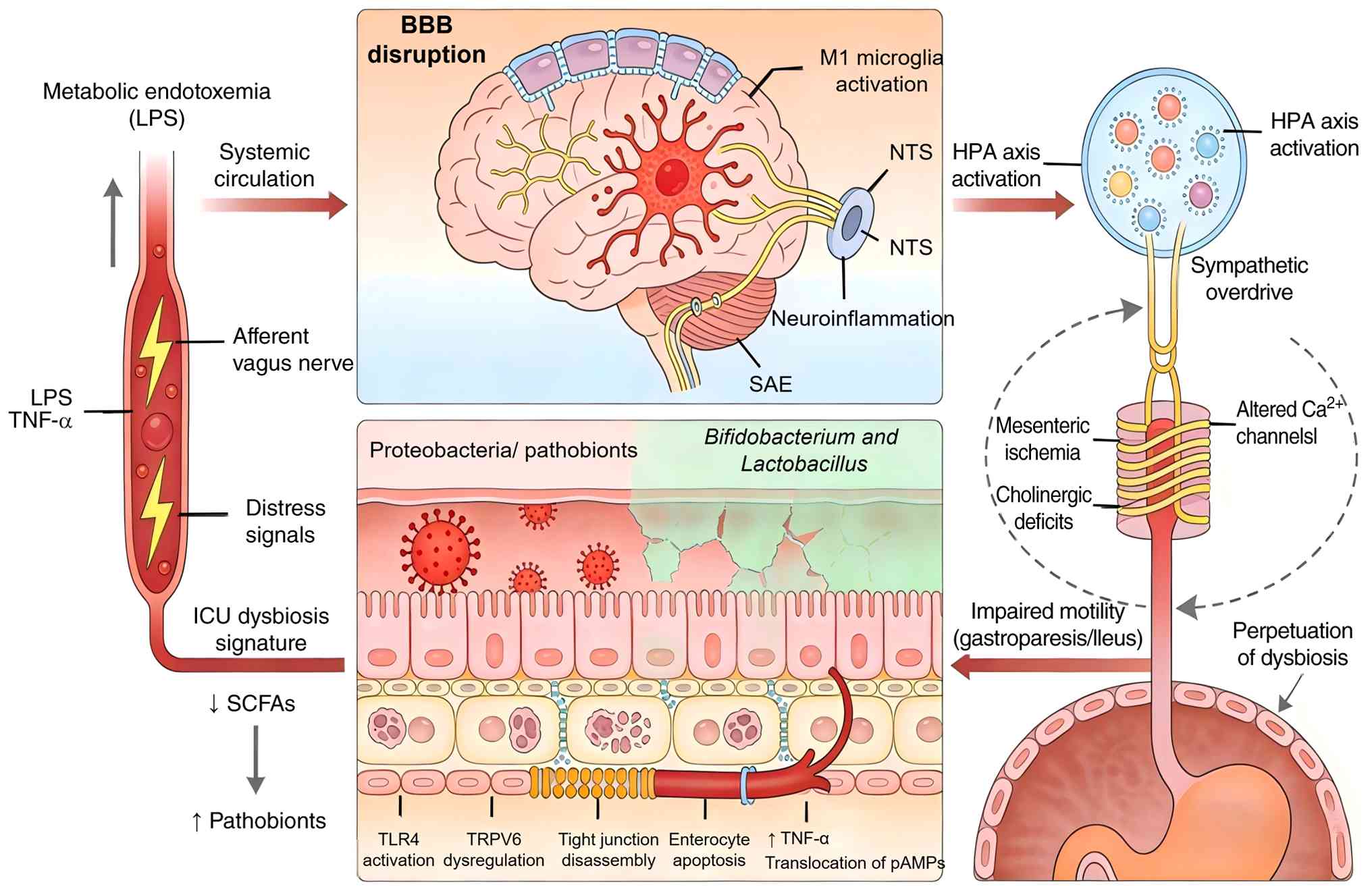 | Figure 1.Mechanisms of GBA disruption from
dysbiosis to neuroinflammation. Schematic depicting the
bidirectional self-perpetuating cycle of GBA dysfunction. Critical
illness induces an ICU dysbiosis signature (depletion of beneficial
taxa and overgrowth of pathobionts) and reduced SCFAs production,
which activates TLR4/TRPV6 pathways to cause intestinal barrier
breakdown. Translocated pAMPs and LPS disrupt the BBB and trigger
M1 microglial activation, leading to neuroinflammation and SAE.
Concurrently, central stress activates the HPA axis and sympathetic
overdrive, which signals through the NTS to impair gastrointestinal
motility and further exacerbate dysbiosis. BBB, blood-brain
barrier; ENS, enteric nervous system; GBA, gut-brain axis; HPA,
hypothalamic-pituitary-adrenal; ICU, intensive care unit; LPS,
lipopolysaccharides; NTS, nucleus tractus solitarius; pAMPs,
pathogen-associated molecular patterns; SAE, sepsis-associated
encephalopathy; SCFAs, short-chain fatty acids; TLR4, toll-like
receptor 4; TRPV6, transient receptor potential vanilloid 6. |
Critical illness-induced ‘dysbiosis
signature’
In the ICU environment, the stable commensal
microbiota is rapidly replaced by a ‘dysbiosis signature’
characterized by a loss of diversity and the dominance of
opportunistic pathogens. This shift is frequently driven by
necessary but disruptive clinical interventions. For instance, Shao
et al (27) recently
emphasized that antibiotic-induced dysbiosis notably aggravates
cerebral injury, particularly in patients undergoing extracorporeal
membrane oxygenation. Such disruptions lead to a marked depletion
of protective taxa, such as Bifidobacterium and
Lactobacillus, which are key in maintaining immune
homeostasis (28).
The resulting microbial landscape is often dominated
by Proteobacteria, a shift that is associated with increased
systemic inflammation. In patients with neuro-critical illness,
this gastrointestinal dysbiosis is also a prognostic indicator of
clinical severity (29).
Furthermore, the loss of beneficial metabolites, such as SCFAs,
impairs the ability of the host to regulate inflammatory responses
within the gut lumen (30). From a
mechanistic perspective, this loss of SCFAs represents not just the
deficiency of metabolic fuel. SCFAs, particularly butyrate and
valerate, act as endogenous histone deacetylase inhibitors (HDACs)
that selectively target class I HDACs (such as HDAC3), thereby
modulating the transcription of pro-inflammatory genes (including
IL-1β, IL-6, TNF-α and IFN-γ) and reinforcing the intestinal
epithelial barrier through epigenetic mechanisms, such as increased
histone H3 acetylation at promoters of antiinflammatory genes (for
example, Foxp3 and occludin) and reduced histone acetylation at
promoters of proinflammatory genes (8,12).
Consequently, the ‘ICU microbiome’ becomes a reservoir for
virulence, where the overgrowth of pathobionts forms the basis of
systemic translocation. In summary, the dysbiosis signature in
critical illness represents a key transition from a symbiotic
ecosystem to a pathogenic state that fuels systemic and
organ-specific complications (29,31).
Breakdown of intestinal barrier
integrity
Serving as the primary defense against the
translocation of luminal contents, the physical barrier of the gut
is composed of a single layer of enterocytes joined by tight
junctions. In critical illness, this barrier is compromised through
a number of pathways. Alhasson et al (32) demonstrated that altered gut
microbiomes in stress models cause intestinal injury through the
activation of toll-like receptor 4 (TLR4), leading to increased
permeability, often referred to as ‘leaky gut’. This process is
further exacerbated by splanchnic hypoperfusion and the surge of
inflammatory cytokines such as TNF-α, which promote enterocyte
apoptosis and the disassembly of tight junction proteins (33).
In addition, specific molecular channels serve a
role in this disintegration. Previous research by Meena et
al (34) identified that the
transient receptor potential vanilloid 6 channel mediates gut
barrier dysfunction and systemic responses during metabolic stress,
highlighting a potential target for barrier preservation. When
these barriers fail, the influx of pathogen-associated molecular
patterns into the portal and systemic circulation becomes
uncontrolled (35). Emerging
evidence has elucidated the precise molecular hierarchy associating
barrier breakdown with neuroinflammation: Translocated
lipopolysaccharides (LPS) activates circulating monocytes,
triggering TNF-α and IL-1β release, which in turn compromise
blood-brain barrier (BBB) integrity by downregulating claudin-5 and
occluding (5,7,8,11).
This is supported by multi-omics profiling demonstrating that fecal
microRNA-gut microbiota interactions (such as miR-30e-3p) are
associated with both gut barrier dysfunction and hippocampal
neuroinflammation (5). This ‘leaky
gut’ phenomenon is an important juncture in GBA disruption, as it
converts a localized intestinal issue into a systemic inflammatory
driver. In summary, the breakdown of intestinal integrity in the
critically ill is a multifactorial process involving microbial
signals, cytokine-mediated injury and ion channel dysregulation,
all of which facilitate the dissemination of toxic substances
(32,34).
Afferent arm: Gut-derived signals to
the brain
Once the intestinal barrier is breached, gut-derived
danger signals utilize both humoral and neural pathways to reach
the brain. Metabolic endotoxemia, characterized by elevated levels
of LPS in the blood, is a major driver of post-ischemic
neuroinflammation and cognitive decline (36,37).
Singer et al (38) provided
key evidence that bacterial DNA and even viable bacteria can
disseminate to the brain during sepsis, directly challenging the
integrity of the BBB. These signals activate resident microglia,
the primary immune cells of the brain, shifting them toward a
pro-inflammatory M1 phenotype (39,40).
The neural pathway, primarily involving the vagus
nerve, also serves as a rapid conduit for gut-derived signals.
While the vagus nerve typically mediates anti-inflammatory effects,
its afferent fibers can transmit distress signals to the nucleus
tractus solitarius, which can either exacerbate neuroinflammation
via downstream sympathetic and HPA axis activation or dampen it
through the cholinergic anti-inflammatory pathway, depending on the
context and the balance of efferent vagal activity (41,42).
This neuro-immune crosstalk is particularly evident in
sepsis-associated encephalopathy (SAE), whereby gut dysbiosis
exacerbates hippocampal amyloid burden and microglial activation
(43,44). Consequently, the brain is no longer
an ‘immune-privileged’ site during critical illness (i.e., the
blood-brain barrier disruption allows gut-derived inflammatory
mediators and pathogens to access the central nervous system) but
rather a direct recipient of intestinal distress. Overall, the
afferent arm of GBA disruption involves a combination of
circulating endotoxins and neural signaling that collectively
trigger marked neuroinflammation and cognitive dysfunction
(5,45).
Efferent arm: Brain-driven gut
dysfunction
GBA disruption is bidirectional, as central nervous
system stress markedly impairs gastrointestinal function through
efferent pathways. The activation of the
hypothalamic-pituitary-adrenal (HPA) axis and the sympathetic
nervous system leads to a state of ‘sympathetic overdrive’. Schmidt
and Müller-Werdan (46) identified
that autonomic dysfunction is a hallmark of patients with critical
illness, manifesting as reduced heart rate variability and impaired
gastrointestinal motility. This sympathetic hyperactivity, often
seen following traumatic brain injury, redirects blood flow away
from the mesenteric circulation, causing further mucosal ischemia
(47,48).
In addition, the ENS is modulated by these central
signals. Sepsis has been shown to induce cholinergic deficits and
alter the behavior of calcium channels in mesenteric ganglion
neurons, leading to gastroparesis and ileus (49,50).
This impairment in motility not only prevents effective enteral
feeding but also promotes further stasis and overgrowth of
pathogenic bacteria, thus closing the pathogenic loop (41,51).
The efferent arm therefore represents the ‘top-down’ contribution
of the brain to gut failure, where stress-induced autonomic shifts
exacerbate the dysbiosis and barrier breakdown that initiated the
cycle. Recent research shows that efferent sympathetic signals
directly suppress HDAC3 expression in intestinal epithelial cells,
reducing antimicrobial peptide production and creating a
feed-forward loop that impairs barrier function through the same
HDAC pathway that SCFAs normally activate to maintain homeostasis
(8). Ultimately, the efferent arm
reinforces GBA disruption by compromising gut motility, mucosal
blood flow and local immune defenses through sustained sympathetic
and hormonal stress (52).
Self-perpetuating harmful cycle:
Reciprocal amplification between afferent and efferent
pathways
Afferent and efferent arms of GBA disruption do not
operate in isolation; rather, they engage in a reciprocal
amplification loop that transforms an acute insult into a
self-sustaining pathological cascade. Gut-derived signals
traversing the afferent arm (translocated LPS, pro-inflammatory
cytokines and microbial metabolites) trigger neuroinflammation and
HPA axis activation, which in turn potentiates the efferent arm
through sympathetic overdrive and vagal dysfunction (5,45).
This sympathetic hyperactivity exacerbates intestinal
hypoperfusion, impairs mucosal barrier integrity and promotes
dysmotility, thereby creating a permissive environment for further
bacterial overgrowth and translocation (8). The clinical consequence of this
bidirectional amplification is a ‘brain-gut-brain’ cycle, whereby
the initial brain-directed inflammatory insult worsens gut
function, which subsequently generates additional neurotoxic
signals that perpetuate central nervous system injury (1). This self-reinforcing dynamic explains
why GBA disruption, once established, often persists despite
resolution of the original septic or traumatic trigger. Breaking
this cycle therapeutically requires simultaneous targeting of both
afferent signals (such as reducing endotoxemia and
neuroinflammation) and efferent dysfunction (for example, restoring
gut motility and barrier integrity), a principle that underpins the
bundled nutritional approach.
Clinical sequelae: Associating GBA
dysfunction with ICU-acquired syndromes
Transitioning from molecular GBA disruption to
clinically observable phenomena represents a key phase in the
progression of critical illness. While physiological stress and
microbial shifts initiate the cycle, the resulting clinical
sequelae manifest as distinct ICU acquired syndromes that notably
increase morbidity and mortality. The present section bridges the
gap between basic mechanisms and patient outcomes by examining how
gut-brain communication failure contributes to musculoskeletal
wasting, cognitive impairment, chronic immune dysfunction and
respiratory failure. The present section discusses specific
microbial and inflammatory biomarkers in association with tangible
clinical trajectories, providing a framework for the subsequent
therapeutic interventions. The complex interdependencies of these
syndromes are summarized in Table
I and Figs. 1 and 2, which illustrate the multi-organ impact
of GBA failure (6,45). The key clinical studies associating
GBA dysfunction with specific ICU-acquired syndromes are summarized
in Table I, which outlines the
pathological findings and molecular targets across different
clinical axes.
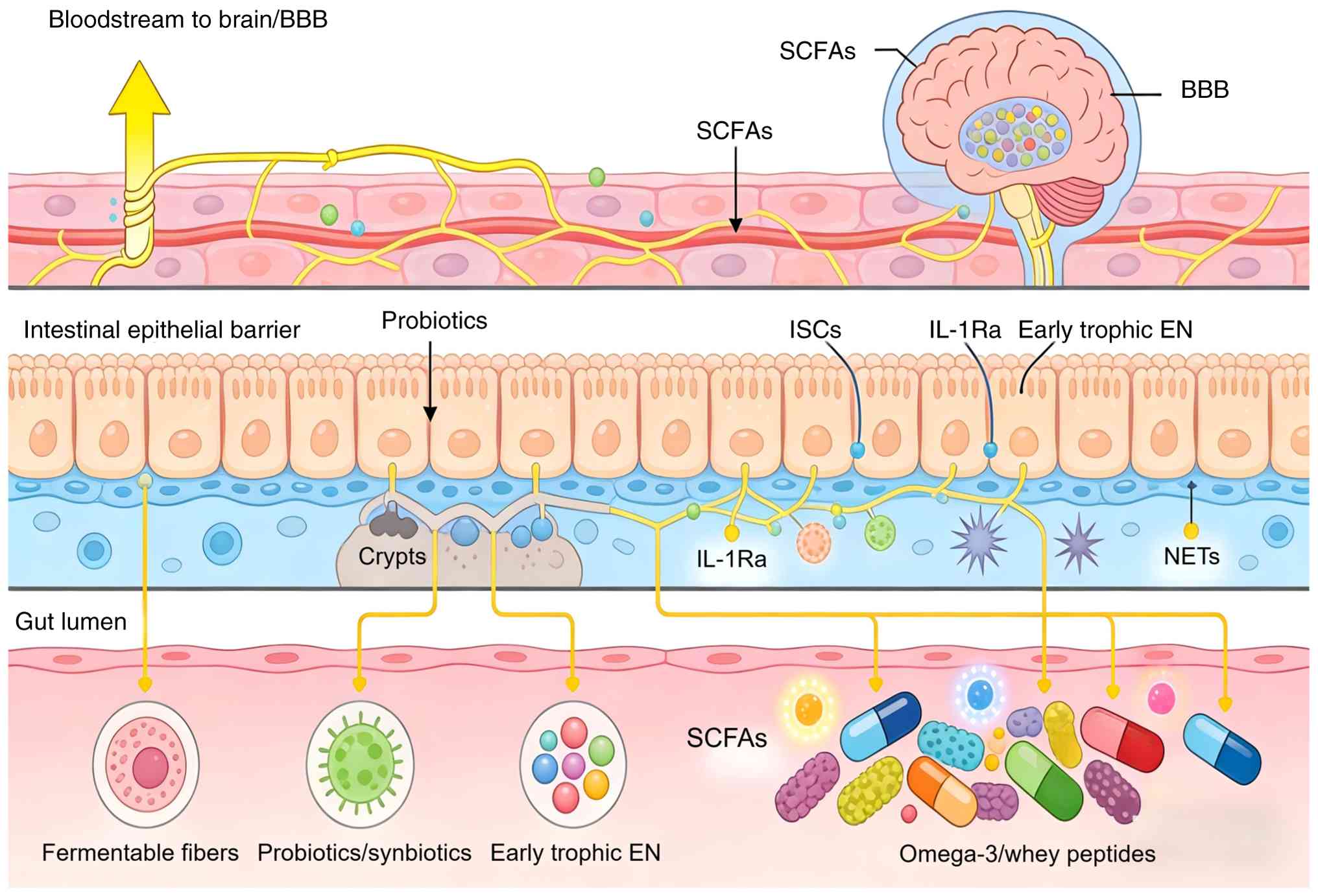 | Figure 2.Conceptual framework of GBA-targeted
nutrition mechanisms in critical illness. Diagram mapping key
nutritional strategies to their mechanistic targets in the GBA
disruption cascade. Fermentable fibers enhance SCFAs production to
reinforce barrier integrity and attenuate neuroinflammation.
Probiotics/synbiotics accelerate ISCs regeneration and deliver
anti-inflammatory mediators (such as IL-1Ra). Early trophic EN
prevents bacterial mucus foraging and inhibits NET formation.
Omega-3 fatty acids generate SPMs to resolve systemic inflammation.
Collectively, these interventions interrupt the pathogenic cycle of
dysbiosis, barrier failure and neuroinflammation. GBA, gut-brain
axis; SCFAs, short-chain fatty acids; BBB, blood-brain barrier;
ISCs, intestinal stem cells; IL-1Ra, IL-1 receptor antagonist; EN,
enteral nutrition; NETs, neutrophil extracellular traps; SPMs,
specialized pro-resolving mediators. |
 | Table I.Summary of key studies associating
GBA dysfunction with clinical sequelae and multi-organ impairment
in patients with critical illness. |
Table I.
Summary of key studies associating
GBA dysfunction with clinical sequelae and multi-organ impairment
in patients with critical illness.
| First author,
year | Study model | Clinical
syndrome | Focus axis | Key pathological
findings | Molecular
targets/biomarkers | (Refs.) |
|---|
| Huang et al,
2025 | Animal (mice, cecal
ligation and puncture) | SAE | Gut-brain | Microbial
metabolites provide neuro-protection against encephalopathy. | 3-indoleacetic
acid; AhR | (39) |
| Zhao et al,
2026 | Animal (mice,
LPS-induced endotoxemia) | SAE | Gut-brain | SCFAs attenuate
hippocampal inflammation via specific inflammasomes. | SCFAs; NLRP6 | (40) |
| Giridharan et
al, 2022 | Systematic
review | SAE | Gut-brain | Intestinal signals
modulate hippocampal function and neuroinflammation. | BBB | (45) |
| Liu et al,
2023 | Clinical cohort +
animal model | ICUAW | Gut-muscle | Dysbiosis
exacerbates skeletal muscle proteolysis during sepsis. |
Ubiquitin-proteasome pathway | (53) |
| Wang et al,
2025 | Animal (mice, PICS
model) | PICS | Gut-immune | Bacterial
translocation drives persistent inflammation and catabolism. | Commensal
microbiota | (54) |
| Cuenca et
al, 2022 | Clinical cohort
(COVID-19 ICU patients) | Septic
instability | Gut-immune | Specific dysbiosis
patterns are associated with uncontrolled inflammation. | Microbial diversity
index | (57) |
| Li et al,
2023 | Animal (mice, PICS
model) | PICS | Gut-immune | Molecular weight of
hyaluronan affects post-intensive care progression. | Hyaluronan;
inflammatory milieu | (59) |
| Zakharkina et
al, 2017 | Clinical cohort
(mechanically ventilated patients) | VAP | Gut-lung | Pulmonary
microbiome dynamics are associated with pneumonia occurrence. | Oropharyngeal
bacteria | (61) |
| Kitsios et
al, 2020 | Clinical cohort
(mechanically ventilated patients) | Weaning
failure | Gut-lung | Respiratory tract
dysbiosis is associated with poor clinical outcomes. | Airway
microbiota | (62) |
| Zhou et al,
2023 | Clinical cohort
(mechanically ventilated patients) | Weaning
failure | Gut-lung | Gut microbiome
composition serves as a predictor of 28-day mortality. | Fecal microbiota
profile | (64) |
ICU-acquired weakness and
catabolism
ICU-acquired weakness (ICUAW) and profound muscle
wasting are no longer viewed solely as consequences of disuse or
malnutrition but are now recognized as products of the ‘gut-muscle
axis’ (53,54). During sepsis and major trauma,
systemic inflammation driven by intestinal barrier breakdown
triggers skeletal muscle proteolysis through the activation of the
ubiquitin-proteasome pathway. A study by Liu et al (53) specifically highlighted the
potential role of the gut microbiota in sepsis-induced myopathy,
suggesting that dysbiosis exacerbates muscle loss by modulating
systemic inflammatory mediators, including TNF-α, IL-1β and IL-6 .
This catabolic state is further worsened by the loss of beneficial
microbial metabolites that normally support anabolic signaling in
host tissues (18).
Beyond acute muscle loss, the persistence of a
catabolic state contributes to the development of chronic critical
illness. Recent experimental evidence has led to new animal models
being established to evaluate persistent inflammation,
immunosuppression and catabolism syndrome (PICS). Wang et al
(54) developed a model
demonstrating that gut microbiota dysbiosis and subsequent
bacterial translocation are foundational to the development of
PICS, associating intestinal failure directly with long-term
catabolic outcomes. Consequently, the gut serves as a persistent
‘motor’ for systemic catabolism, hindering physical recovery even
after the initial insult has resolved. In summary, ICUAW and
catabolic failure in the ICU are rooted in the systemic
inflammatory burden generated by a dysfunctional gut-brain-muscle
network (53,54).
Delirium and cognitive
dysfunction
Clinical manifestation of neuroinflammation in the
ICU often appears as delirium or SAE, which are associated with
prolonged hospitalization and long-term cognitive decline. This
neurological deterioration is closely associated with the influx of
gut-derived neurotoxins and the disruption of the BBB. Giridharan
et al (45) showed that the
crosstalk between the gut and brain is a primary driver of
sepsis-induced cognitive decline, where intestinal signals directly
modulate hippocampal function. Furthermore, metabolic endotoxemia
resulting from dietary or stress-induced gut permeability has been
identified as a key mechanism associating high-fat intake or
critical stress with human cognitive impairments (55,56).
The role of microbial metabolites in mitigating or
exacerbating this cognitive decline has become a notable research
focus. For instance, SCFAs have been shown to attenuate hippocampal
neuroinflammation through the activation of NLRP6 inflammasome
pathways, offering a protective effect against SAE (30,40).
Conversely, the loss of these metabolites during critical illness
leaves the brain vulnerable to microglial overactivation. Huang
et al (39) recently
suggested that gut microbiota-derived 3-indoleacetic acid provides
protection against SAE by acting on microglial aryl hydrocarbon
receptor (AhR), further proving that specific microbial signatures
dictate neurological outcomes. Overall, cognitive dysfunction in
patients with critical illness is a direct clinical reflection of
GBA-mediated neuroinflammation and the loss of protective microbial
signaling (39,45).
Persistent inflammation and
immunosuppression
A notable proportion of ICU survivors suffer from a
maladaptive immune state characterized by simultaneous
hyper-inflammation and immunoparalysis. Approximately 30% of septic
patients present with immunoparalysis, defined as failure of
circulating mononuclear cells to produce cytokines upon ex
vivo stimulation, often leading to T-cell exhaustion (2,7).
Furthermore, among the ~7.6% of critically ill patients who develop
chronic critical illness, 30–50% show evidence of PICS (5,6). The
gut microbiota acts as a central regulator of this immunometabolic
balance and its disruption often leads to clinical severity in
conditions such as coronavirus disease-19. Cuenca et al
(57) identified that specific
dysbiosis patterns serve as clear indicators of severity in
patients with critical illness, where the loss of microbial
diversity is associated with uncontrolled inflammatory responses.
This state of ‘septic instability’ is particularly pronounced in
older populations, whereby the gut microbiota fails to maintain
overall stability after a septic event compared with their younger
counterparts (58).
Furthermore, the structural components of the
intestinal environment, such as hyaluronan, have been shown to
affect the progression of PICS by modulating the inflammatory
milieu (59). When the gut remains
in a dysbiotic state, it continuously primes the immune system
toward a state of exhaustion or ‘paralysis’, rendering the patient
susceptible to secondary healthcare-associated infections, such as
ventilator-associated pneumonia, bloodstream infections, and
urinary tract infections. This clinical trajectory is often driven
by the overgrowth of Gram-negative pathogens, which can be
predicted through structural equation modeling of gut overgrowth
(60). In summary, the persistence
of inflammation and the onset of immunosuppression in the ICU are
largely dictated by the inability of the hosts to restore a
homeostatic gut-microbiome environment (54,57).
Prolonged mechanical ventilation and
weaning failure
‘Gut-lung axis’ represents a key clinical pathway
where intestinal dysfunction complicates respiratory management.
Patients who are mechanically ventilated experience rapid shifts in
their pulmonary microbiome, which are often influenced by the
translocation of bacteria from the oropharynx and gastrointestinal
tract. Zakharkina et al (61) observed that the dynamics of the
pulmonary microbiome during mechanical ventilation are associated
with the occurrence of pneumonia, highlighting the lungs as a
downstream victim of systemic dysbiosis. Respiratory tract
dysbiosis itself has been associated with worse clinical outcomes
and higher mortality rates in these populations (62,63).
In addition, the clinical success of weaning from
mechanical ventilation is frequently hampered by systemic
inflammation that weakens diaphragmatic function. The composition
of the gut microbiome has been proposed as a notable predictor of
28-day mortality in patients who are mechanically ventilated,
suggesting that the ‘health’ of the gut-lung axis determines the
ability of the patients to liberate from life support (64,65).
Interventions such as oral care or probiotic administration have
been explored to mitigate these risks, although results vary across
clinical trials: One trial found that probiotic oral care with
Lactobacillus plantarum 299 was not superior to
chlorhexidine in reducing oropharyngeal colonization or improving
clinical outcomes in mechanically ventilated patients (66), while another evaluated the impact
of a tooth-brushing-based oral hygiene protocol on oral bacteriota
and healthcare-associated infections in ventilated COVID-19
patients, reporting changes in microbial composition and safety
outcomes (67). Ultimately,
prolonged mechanical ventilation and weaning failure are often the
result of a feedback loop where gut-derived inflammation impairs
respiratory drive and facilitates lung injury. In summary, the
gut-lung axis is a decisive factor in the respiratory recovery of
patients with critical illness (64).
Principles of GBA-targeted nutrition: Moving
beyond caloric and protein targets
Current critical care nutrition guidelines,
including the 2022 American Society for Parenteral and Enteral
Nutrition guidelines, predominately focus on calculating caloric
expenditure and protein requirements to mitigate catabolism;
however, this macronutrient-centric view often overlooks the
metabolic and immunological role of the gastrointestinal tract as a
signaling organ (15). A
GBA-targeted approach reconceptualizes nutrition therapy not as
fuel delivery but as a strategy to modulate the host-microbiome
interface, preserve barrier integrity and attenuate
neuroinflammation. The principles outlined below shift the clinical
paradigm from ‘feeding the patient’ to ‘feeding the GBA’, utilizing
specific substrates and delivery routes to interrupt the pathogenic
cycle of dysbiosis and systemic inflammation. The conceptual
framework for these interventions, highlighting the shift from
standard care to GBA-focused care, is summarized in Fig. 2, which maps specific nutritional
inputs to their neuro-immunological outputs (24,68).
Supporting evidence for these foundational principles, drawn from
experimental and clinical studies, is summarized in Table II.
| Table II.Summary of evidence-based nutritional
strategies targeting the GBA in critical illness. |
Table II.
Summary of evidence-based nutritional
strategies targeting the GBA in critical illness.
| First author,
year | Study
model/setting | Nutritional
intervention | Target GBA
mechanism | Key systemic or
neurological outcomes |
Clinical/mechanistic importance | (Refs.) |
|---|
| Fan et al,
2021 | Endotoxemic murine
model (LPS-induced) | Prebiotic
fibers | Enhancement of SCFA
production | Reduction in
bacterial translocation and systemic inflammation | Highlights fiber as
a metabolic signal to suppress encephalopathy drivers | (69) |
| Morowitz et
al, 2017 | Murine sepsis model
(cecal ligation and puncture) | Nonfermentable
fiber | Modulation of
microbiota composition | Notable protection
against sepsis induced mortality | Demonstrates the
role of fiber structure in enhancing physical barrier
integrity | (70) |
| Chen et al,
2023 | Septic murine
model | L. rhamnosus
GG | Regeneration of
intestinal stem cells | Acceleration of
colonic barrier recovery | Identifies a
specific cellular pathway for mucosal repair during severe
stress | (77) |
| Safabakhsh et
al, 2025 | Pediatric clinical
trial (septic ICU patients) | Probiotic
supplementation | Reduction in
intestinal permeability | Improved clinical
stability in children with sepsis | Validates GBA
integrity preservation across different age demographics | (78) |
| Yao et al,
2025 | Septic lung injury
murine model | SpyTag-PEGylated
probiotics | Delivery of
IL-1Ra | Modulation of
gut-lung crosstalk and lung injury mitigation | Represents the
frontier of precision pharmaconutrition using engineered
microbes | (79) |
| Ralls et al,
2016 | Murine enteral
nutrient deprivation model | Enteral nutrient
deprivation | Prevention of
bacterial mucus foraging | Reduced risk of
gut-derived sepsis | Proves that trophic
feeding is essential to prevent microbiome-driven barrier
damage | (84) |
| Hu et al,
2020 | Clinical cohort
(surgical ICU patients) | Early enteral
nutrition | Inhibition of
neutrophil extracellular traps | Preservation of
intestinal barrier function | Links early feeding
to the modulation of innate immune signaling pathways | (87) |
| Tsutsumi et
al, 2015 | Experimental sepsis
model (LPS-induced) | Whey peptides with
Omega-3 | Vagal
anti-inflammatory reflex | Attenuation of
LPS-mediated inflammatory cascades | Suggests lipid-rich
formulas trigger protective neuro-immune pathways | (91) |
Role of fermentable fiber and
SCFAs
Dietary fiber is frequently underutilized in the ICU
due to concerns regarding bowel distension or incompatibility with
enteral feeding tubes; however, the exclusion of fermentable
substrates deprives the microbiota of key nutrients required for
homeostasis. The primary mechanism by which fiber exerts
neuroprotective effects is through the production of SCFAs,
particularly butyrate and acetate. These metabolites serve as
potent histone deacetylase inhibitors that downregulate
inflammatory cytokines and reinforce the BBB. Fan et al
(69) demonstrated that prebiotic
fibers notably enhance SCFA production in endotoxemic models,
leading to a reduction in gut commensal translocation and systemic
inflammation. Consequently, the reintroduction of fermentable
fibers acts as a key signal to suppress the systemic inflammatory
response syndrome that drives encephalopathy.
Furthermore, non-fermentable fibers, such as
cellulose, may possess distinct immunomodulatory properties beyond
fermentation (70–72). Morowitz et al (70) showed that dietary supplementation
with nonfermentable fiber alters the gut microbiota composition and
confers notable protection in murine models of sepsis. This
suggests that the physical structure of fiber may provide a
scaffold for beneficial bacteria or mechanically stimulate mucus
production, thereby enhancing the physical barrier against pathogen
invasion. In addition, the administration of specific cellulose
supplements has been observed to modulate immune responses in
endotoxemia by reducing the production of pro-inflammatory
cytokines (including TNF-α, IL-1β and IL-6), attenuating NF-κB
pathway activation, and decreasing neutrophil infiltration, thereby
preventing the apoptosis of intestinal epithelial cells (71,72).
Therefore, fiber supplementation should be viewed as a ‘prebiotic
pharmaceutical’ that maintains the functional integrity of the GBA
rather than an optional additive for bowel regularity.
In addition to direct barrier support, the metabolic
byproducts of fiber fermentation serve an important role in
systemic immune regulation. Chancharoenthana et al (73) recently demonstrated that modulation
of sepsis by Lacticaseibacillus rhamnosus is associated with
the levels of SCFAs in feces and blood. At the molecular level,
SCFAs exert effects through two complementary mechanisms:
Activation of G-protein-coupled receptors (GPR41/43) on immune
cells and inhibition of class I HDACs. Butyrate and valerate
increase histone acetylation at promoters of anti-inflammatory
genes (Foxp3 and occludin) and recent evidence from an SAE murine
model has demonstrated that SCFA supplementation activates NOD-like
receptor family pyrin domain containing 6 (NLRP6) inflammasomes,
restores intestinal barrier [Zonula Occludens-1 (ZO-1): 1.8-fold
increase] and ameliorates cognitive deficits [escape latency: cecal
ligations and puncture (CLP) 48 sec vs. SCFA + CLP 32 sec;
P<0.01] (11). Thus, providing
adequate fermentable substrates represents the basic principle of
GBA-targeted nutrition, ensuring that the microbiome retains the
capacity to synthesize neuroprotective metabolites (74,75).
Probiotics, synbiotics and
postbiotics: Direct microbial modulation
Restoring microbial diversity through the direct
administration of live biotherapeutics represents a proactive
strategy to reverse the ‘ICU dysbiosis signature’. While the use of
probiotics in patients with critical illness has previously been
controversial due to safety concerns, emerging evidence supports
their efficacy in specific phenotypes to reduce infection and
modulate immunity. Shimizu et al (76) reviewed the application of
synbiotics in critical care, highlighting their role in normalizing
gut immunity and preventing the overgrowth of pathogenic bacteria
that trigger systemic inflammation. By competitively excluding
pathogens and enhancing the expression of tight junction proteins,
probiotics act as a ‘living shield’ for the intestinal mucosa.
The mechanistic basis for these benefits involves
complex signaling pathways between the microbe and the host immune
system. Chen et al (77)
highlighted that Lactobacillus rhamnosus GG promotes the
recovery of the colon barrier in septic mice specifically by
accelerating the regeneration of intestinal stem cells. This
regenerative capacity is important for patients suffering from
ischemia-reperfusion injury or antibiotic-associated mucosal
damage. Beyond established barrierrepair mechanisms, including
upregulation of tight junction proteins (for example, occludin,
claudins and ZO-1), suppression of pro-inflammatory cytokines,
inhibition of NF-κB and MLCK signaling, activation of TLR-2, and
modulation of autophagy, specific gut microbial metabolites have
been shown to directly modulate neuroinflammation through the GBA
(77). Indole derivatives,
particularly 3-indoleacetic acid (IAA), produced by
tryptophan-metabolizing bacteria, act as ligands for the AhR
expressed on microglia. Huang et al (39) demonstrated that patients with
sepsis and SAE exhibit markedly reduced fecal IAA levels. In a
murine CLP model, exogenous IAA supplementation was shown to
activate microglial AhR, suppress the secretion of proinflammatory
cytokines (including TNF-α, IL-1β and IL-6), and improve cognitive
performance. This protective effect was shown to be abolished by
co-administration of the AhR antagonist CH223191, demonstrates that
IAA confers neuroprotection in an AhR-dependent manner. In
addition, recent trials have explored the use of synbiotics, which
combine probiotics with prebiotic substrates, to enhance the
survival and colonization of beneficial strains. Safabakhsh et
al (78) reported preliminary
results from a double-blind trial indicating that probiotic
supplementation effectively reduces intestinal permeability in
critically ill children with sepsis, suggesting that early
intervention can preserve GBA integrity across different age
groups.
Beyond established probiotics, the field is
advancing toward precision engineering and postbiotics. Yao et
al (79) developed an
innovative approach using SpyTag-PEGylated probiotics to deliver
IL-1 receptor antagonists, which successfully modulated gut-lung
crosstalk and mitigated septic lung injury. This illustrates the
potential of ‘pharmaconutrition’ where genetically or chemically
modified microbes serve as vehicles for targeted anti-inflammatory
therapy. Furthermore, the administration of specific microbial
metabolites, or postbiotics, allows for the benefits of bacterial
signaling without the risk of administering live organisms to
patients who are immunocompromised (80). In summary, direct microbial
modulation through probiotics and synbiotics offers a potent
mechanism to stabilize the enteric environment and dampen the vagal
and humoral signals that drive neuroinflammation (81,82).
Enteral vs. parenteral route
Nutrient delivery route is a decisive factor in
maintaining the functional architecture of the GBA. Total
parenteral nutrition (TPN), while life-saving in cases of
intestinal failure, is associated with mucosal atrophy and the loss
of gut-associated lymphoid tissue function. Ikeda et al
(83) demonstrated that the lack
of enteral feeding leads to a pathological upregulation of
intestinal TLRs and pro-inflammatory cytokines, sensitizing the gut
to endotoxin. This ‘disuse atrophy’ creates a permissive
environment for bacterial translocation, fueling the systemic
inflammation that ultimately affects the brain. Conversely, the
physical presence of nutrients in the lumen stimulates the release
of incretins (for example, glucose-dependent insulinotropic
polypeptide and glucagon-like peptide-1) and trophic factors (for
example, glucagon-like peptide-2, insulin-like growth factor-1 and
epidermal growth factor) that maintain enterocyte health.
A key concept in understanding TPN-induced
dysfunction is the phenomenon of bacterial adaptation to
starvation. Ralls et al (84) provided insight into the gut origin
of sepsis by showing that during enteral nutrient deprivation,
commensal bacteria switch their transcriptional profile to ‘forage’
on the host mucus layer. This degradation of the protective mucus
barrier allows bacteria to come into direct contact with the
epithelium, triggering inflammation and barrier failure. Therefore,
even minimal amounts of EN, often termed ‘trophic feeding’, are key
in satisfying the metabolic demands of the microbiota and prevent
them from consuming the defensive layers of the host (85,86).
In addition, early EN has been associated with
specific cellular protective mechanisms. Hu et al (87) found that early EN preserves
intestinal barrier function by reducing the formation of neutrophil
extracellular traps in critically ill surgical patients. By
minimizing local neutrophil activation, enteral feeding breaks the
cycle of local inflammation that leads to systemic organ
dysfunction. This evidence supports the principle that the enteral
route should be prioritized not just for caloric delivery, but as a
therapeutic maneuver to maintain the physiological barrier between
the gut lumen and the systemic circulation (87,88).
Trophic versus. full feeding:
Balancing GBA integrity and metabolic stress
While enteral stimulation is important, the volume
and composition of nutrition must be carefully titrated to avoid
metabolic overload during the acute phase of critical illness.
Aggressive full feeding can induce hyperglycemia and suppress
autophagy, a cellular cleaning process important for clearing
intracellular pathogens and damaged organelles. Hadley and Hinds
(89) discussed anabolic
strategies, noting that pushing calories in the early phase of
critical illness often fails to halt catabolism and may exacerbate
metabolic stress. A GBA-targeted approach advocates for trophic
feeding, delivering small volumes to sustain mucosal integrity and
microbial diversity, without overwhelming the compromised
mitochondrial function of the host.
Specific nutrient compositions also serve a role in
modulating the inflammatory response during feeding. Luyer et
al (90) observed that
pretreatment with high-fat EN reduces endotoxin and TNF-α levels,
preserving gut barrier function after hemorrhagic shock. This
suggests that lipid-rich formulas may stimulate the
cholecystokinin-vagal pathway, triggering an anti-inflammatory
reflex that protects the gut. However, the type of lipid is key;
omega-3 fatty acids and whey peptides have been shown to offer
improved protection against LPS-mediated sepsis compared with
standard lipids (91).
The goal of titrating feeding strategies is to
maintain a ‘metabolic peace’ between the host and the microbiome.
Oami et al (24) reviewed
critical care nutrition from a metabolic point of view, suggesting
that nutritional interventions must align with the dynamic phases
of critical illness. By initiating trophic feeding early,
clinicians can prevent the ‘starving gut’ phenomenon and support
the GBA, while gradually advancing to full caloric targets as the
patient stabilizes. Consequently, the principle of GBA-targeted
nutrition prioritizes the biological impact of the feed over the
immediate achievement of caloric goals, ensuring that nutrition
supports rather than hinders the resolution of inflammation
(24,92).
Proposed GBA-informed nutrition care bundle:
Components and evidence
Clinical application of GBA insights necessitates a
structured, multimodal approach known as the ‘GBA-informed
nutrition care bundle’. Unlike a combination of separate
interventions, this framework is designed as an integrated system
where each component targets a distinct mechanistic node in the GBA
disruption cascade. Fermentable fibers restore SCFA-mediated HDAC
inhibition and barrier integrity; probiotics supply AhR-activating
indole derivatives for microglial immunomodulation; and specialized
pro-resolving mediators engage resolution pathways. Their
concurrent application produces synergistic repair of gut-brain
communication beyond any single intervention alone. By summarizing
evidence from randomized controlled trials and meta-analyses, the
present section defines the key components of the bundle. Table III summarizes the clinical and
mechanistic evidence supporting each component of the proposed care
bundle, highlighting key outcomes across diverse patient
populations.
| Table III.Clinical and mechanistic evidence
supporting the components of the GBA-informed nutrition care
bundle. |
Table III.
Clinical and mechanistic evidence
supporting the components of the GBA-informed nutrition care
bundle.
| First author,
year | Study
population | Bundle
component | GBA
target/mechanism | Primary
outcomes | Main findings | (Refs.) |
|---|
| Banupriya et
al, 2015 | Critically ill
children (n=120) | Probiotics (L.
acidophilus) | Pathogen exclusion;
gut barrier | VAP incidence | Notable reduction
in the occurrence of VAP | (93) |
| Shimizu et
al, 2018 | Adult septic ICU
patients (n=100) | Synbiotics
(Bifidobacterium + GOS) | Microbiota
stability; SCFA production | VAP and
enteritis | Reduced incidence
of infectious complications | (94) |
| Johnstone et
al, 2021 | Mixed adult ICU
patients (n=2650) | Probiotics (L.
rhamnosus GG) | Microbial diversity
modulation | VAP incidence | No notable
difference versus placebo | (95) |
| Panigrahi et
al, 2017 | Rural neonates
(n=4556) | Synbiotics (L.
plantarum + FOS) | Innate immunity;
barrier restoration | Sepsis and
mortality | 40% reduction in
sepsis and death rates | (98) |
| Serbanescu et
al, 2025 | Critically ill
trauma patients (n=40) | Fiber-containing
EN | SCFA enrichment;
taxa diversity | Microbial
dynamics | Enhanced abundance
of beneficial commensals | (103) |
| Karimi et
al, 2022 | Adult septic ICU
patients (n=60) | Nano-curcumin | Oxidative stress;
neuro-inflammation | Inflammatory
markers | Improved
endothelial function and lower CRP | (112) |
| Seifi et al,
2022 | Critically ill
adults (n=60) | Synbiotics | Protein
homeostasis; GBA signaling | Feeding
tolerance | Improved nitrogen
balance and muscle mass | (117) |
| Zhang et al,
2025 | Neurological ICU
patients (n=128) | Protocolized
EN | Delivery timing;
motility support | Neurological
recovery | Improved clinical
prognosis and GBA stability | (118) |
| Yao et al,
2025 | Critically ill
adults (n=80) | Sequential vs.
continuous EN | Circadian rhythm;
diversity | Microbiome
composition | Sequential feeding
preserved microbial diversity | (119) |
Microbial modulation through
probiotics and synbiotics
Probiotics and synbiotics constitute a hallmark of
the GBA-informed bundle by restoring microbial diversity and
inhibiting the translocation of pathogens. Extensive research has
focused on their role in preventing healthcare-associated
infections, particularly ventilator-associated pneumonia (VAP)
(93,94). For example, an early clinical trial
has demonstrated that probiotic prophylaxis could markedly reduce
the incidence of VAP in pediatric populations (93). Similarly, a meta-analysis of adult
patients in the ICU have indicated that synbiotic therapy
effectively modulates gut microbiota and reduces both enteritis and
pneumonia rates (94).
However, evidence remains nuanced regarding
mortality and universal application. Johnstone et al
(95) conducted a large-scale
randomized trial which demonstrated that Lactobacillus
rhamnosus GG did not notably decrease VAP incidence compared
with placebo in a broad critically ill population. This finding has
been further determined in recent systematic reviews and trial
sequential analyses, which suggest that while probiotics may reduce
infection rates, their impact on overall mortality remains
unremarkable (96,97). A systematic analysis of
heterogeneity across these trials has revealed a number of key
factors that may explain the conflicting results. Strain
specificity is important: The negative trial used a single strain
without prebiotics, whereas positive trials often used multi-strain
synbiotics (94). Dosage and
timing also vary markedly, with earlier initiation (within 48 h)
exhibiting greater benefits. Patient population differences are
also important, as benefits appear more notable in surgical
patients compared with medical ICU populations (96). These sources of heterogeneity
suggest that a standardized probiotic protocol is unlikely to
succeed across all patients in the ICU. Despite these challenges,
certain strains have shown specific promise. Panigrahi et al
(98) demonstrated in a landmark
study that a synbiotic preparation markedly reduced neonatal sepsis
in a rural setting, highlighting the potential for targeted GBA
modulation.
In addition to infectious outcomes, probiotics
appear to influence the systemic inflammatory response and organ
function. Probiotic administration has been associated with the
modulation of serum cytokine levels, including proinflammatory
cytokines (TNFα, IL6 and IL8) and antiinflammatory cytokines
(IL10), and endotoxin concentrations in various critical and
chronic illness models, such as clinical trials in pediatric
sepsis, animal models of sepsis, and studies in acute pancreatitis
and liver cirrhosis (99).
Furthermore, multispecies probiotics have been shown to attenuate
dysbiosis and improve clinical markers, including disease severity
scores (SOFA and APACHE II), inflammatory markers (CRP and PCT),
and endotoxin levels, in the early stages of sepsis (81). Collectively, these findings have
suggested that while probiotics are a beneficial tool for GBA
modulation, their efficacy is likely strain-specific and
timing-dependent and systematic assessment of trial heterogeneity
is key before generalizing results.
Prebiotics and fiber for barrier
integrity
Prebiotics and dietary fibers serve as important
substrates for the production of SCFAs, which are key in
maintaining the intestinal epithelial barrier. Systematic reviews
have highlighted that fiber and prebiotic supplementation in EN can
improve gastrointestinal tolerance and reduce the duration of
diarrhea in patients with critical illness (100,101). By fostering the growth of
beneficial bacteria such as Bifidobacterium, prebiotics
mitigate the metabolic endotoxemia often observed in systemic
inflammation (102).
However, clinical evidence on fiber interventions
shows marked heterogeneity. The type and fermentability of fiber
differ: Soluble fiber blends reduce diarrhea more effectively
compared with nonfermentable fibers. Doses range from 10–30 g/day,
with higher doses increasing intolerance. Patient populations have
been shown to respond differently; trauma patients show favorable
microbial shifts (103), while
medical patients in the ICU with ileus may not tolerate fiber.
Timing is also important; early fiber may help stable patients but
could exacerbate shock states. These factors may explain
contradictory trial outcomes. Recent evidence has suggested that
the inclusion of fiber in enteral formulas can dynamically shift
the microbial community in patients with trauma (103). This shift is key in GBA health,
as it promotes the production of butyrate, which has known
neuroprotective and anti-inflammatory properties. A clinical trial
has also indicated that prebiotic supplementation may improve sleep
quality and metabolic markers through the GBA in patients with
chronic metabolic disturbances, which may have implications for ICU
delirium and recovery (102). In
summary, prebiotics are not passive nutrients but active modulators
of the gut environment. Despite this, heterogeneity in fiber type,
dose, patient selection and timing must be addressed in future
trials to establish standardized recommendations.
Specialized pro-resolving mediators
and lipid modulation
Resolution of inflammation is an active process
mediated by specialized pro-resolving mediators (SPMs) derived from
omega-3 polyunsaturated fatty acids. Dalli et al (104) identified novel pro-resolving
pathways that are key in tissue regeneration and the termination of
acute inflammatory responses. In the context of sepsis, the
temporal profile of these lipid mediators is closely associated
with clinical survival and the resolution of organ dysfunction
(105).
Experimental and clinical studies have shown that
omega-3 fatty acids such as docosahexaenoic acid and
eicosapentaenoic acid can attenuate septic shock-induced arterial
dysfunction and neuroinflammation (106,107). Furthermore, specific SPMs such as
maresin-1 have been found to ameliorate microglial activation and
cognitive decline in septic models by modulating inflammatory
signaling pathways, including inhibition of p38 MAPK
phosphorylation and activation of the PPARγ/STAT6 signaling pathway
(108,109). These findings suggest that
incorporating omega-3 fatty acids into the care bundle may
facilitate the transition from systemic inflammation to homeostatic
resolution through the GBA. Therefore, lipid-based GBA modulation
represents an emerging frontier for protecting the central nervous
system during critical illness.
Polyphenols and antioxidant
micronutrients
Polyphenols such as curcumin and resveratrol offer
potent antioxidant and anti-inflammatory benefits that reinforce
the GBA. Research has shown that curcumin can alleviate LPS-induced
lung and liver failure by suppressing oxidative stress and NF-κB
signaling (110,111). In addition, nano-curcumin
supplementation in patients with sepsis has been associated with
improvements in endothelial function and the reduction of
inflammatory biomarkers (112).
Resveratrol has similarly demonstrated protective
effects against sepsis-induced cardiac and renal dysfunction in a
number of experimental models, including cecal ligation and
puncture-induced sepsis in rats and mice (113). These compounds appear to work by
activating sirtuin-1 and nuclear factor erythroid 2-related factor
2 (Nrf2) pathways, which are key in maintaining mitochondrial
dynamics and cellular homeostasis during severe stress (114,115). Recent advances have also explored
the use of resveratrol-loaded nanoparticles to enhance efficacy in
addressing acute lung injury (116). Ultimately, the integration of
polyphenol-rich compounds into nutrition care provides an
additional layer of neuro-metabolic protection for the critically
ill.
Implementation of feeding strategies
and protocols
Effectiveness of the GBA-informed bundle depends on
the delivery method and the timing of EN. Research into feeding
tolerance has indicated that the early initiation of EN,
potentially supplemented with synbiotics, can improve protein
homeostasis and reduce muscle wasting (117,118). Notably, the choice between
sequential and continuous feeding may also influence the
composition of the gut microbiota and the overall metabolic
response (119).
Structured EN protocols have been shown to improve
nutritional indicators and clinical prognosis in neurological
patients in the ICU (118).
Furthermore, the duration of oral care using maternal milk or other
biological substrates can modulate the oral microbiota composition
and reduce the incidence of healthcareassociated infections,
thereby positively affecting the oralgut microbial axis and
improving clinical outcomes in vulnerable populations (120). These strategies underscore the
importance of not only what is delivered but how it is administered
to optimize GBA communication. In summary, a standardized approach
to feeding delivery is important in the successful implementation
of the GBA-informed nutrition care bundle.
Subpopulation-specific
considerations
While the proposed GBA-informed bundle provides a
standardized framework, minor evidence-based adjustments may
enhance its applicability to specific critically ill
subpopulations. For patients with sepsis, probiotic initiation
should be deferred until hemodynamic stabilization (norepinephrine
≤0.5 µg/kg/min) due to translocation risks (96,121). For patients with major trauma,
early synbiotic administration (within 24–48 h) combined with
higher protein targets (1.5–2.0 g/kg/day) may better address
hypercatabolism and reduce infectious complications. For patients
with neurocritical illness, protocolized EN with
prebiotic-fortified formulas has been associated with improved
nutritional indicators, including serum albumin, prealbumin and
nitrogen balance, as well as lower diarrhea rates (118). These adaptations do not alter the
core components of the bundle but refine their timing and
implementation across distinct pathophysiological contexts.
From bench to bedside: Implementation
science and a practical framework
Translation of theoretical GBA mechanisms into
routine clinical practice requires a robust implementation science
framework. The present section delineates the practical strategies
for integrating GBA-informed nutrition bundles into the ICU
workflow. By addressing organizational barriers and utilizing
protocolized delivery systems, clinicians can optimize nutrient
provision and microbial health in the critically ill. The following
discussion provides a structured approach to personalized
nutritional therapy, which is further summarized in the
accompanying Fig. 2 and Table IV detailing the practical
implementation workflow.
| Table IV.Simplified bedside protocol for the
GBA-informed nutrition care bundle. |
Table IV.
Simplified bedside protocol for the
GBA-informed nutrition care bundle.
| Component | Patient
stratification |
Contraindications | Dynamic
adjustment | Safety
monitoring |
|---|
| Probiotics | mNUTRIC ≥5;
sepsis/trauma; no vasopressor at start | CVC, neutropenia
(<500/µl), short bowel, high-dose vasopressors (norepi
>0.5) | Start day 3–5 after
vasopressor wean; stop if new fever, fungemia | Daily blood culture
if fever; stop at first sign of Saccharomyces infection |
| Prebiotic
fiber | All critically ill
receiving EN; no ileus | Bowel obstruction,
severe ileus, abdominal compartment syndrome | Start day 3 (10
g/d); advance to 20 g/d if GRV <250 ml and no distension | Abdominal exam q8h;
hold if GRV >500 ml or distension |
| SPMs (omega-3) | Stable phase (day
5–7); sepsis survivors | Bleeding diathesis,
triglycerides >500 mg/dl | Start after enteral
tolerance achieved (≥60% target) | Check triglycerides
q3d; monitor for bleeding |
| Polyphenols | Persistent
inflammation (CRP >100 mg/dl day 5) | None specific;
caution in liver dysfunction | Consider after day
5 if no improvement | Monitor LFTs
weekly |
Protocolized delivery and
implementation science
Adoption of standardized protocols is a key
component of effective nutritional management in the ICU. Heyland
et al (122) demonstrated
that implementation of the Enhanced Protein-Energy Provision via
the enteral Route (PEP uP) protocol, which emphasizes volume-based
feeding (VBF) and nurse-driven adjustments, notably improves the
delivery of EN compared with traditional hourly rate-based feeding
methods. This approach has been further validated in surgical and
neuroscience populations, where VBF protocols have been shown to
effectively enhance protein and energy provision (123,124). A systematic review has further
determined that such protocolized systems demonstrate an improved
performance with regard to reaching nutritional goals and
minimizing caloric deficits in patients who are mechanically
ventilated (125).
Furthermore, the application of early EN protocols
based on enhanced recovery after surgery concepts has shown promise
in improving clinical outcomes and shortening ICU stays (23). Recent studies have highlighted that
the success of these protocols depends on adherence and the use of
clinical decision support tools (126,127). Ventura and Waitzberg (128) suggested that while protocols are
necessary, their effectiveness is associated with the education of
the multidisciplinary team. Collectively, these findings suggest
that structured, protocol-driven strategies are key in the
consistent delivery of GBA-targeted interventions across diverse
clinical settings.
Addressing barriers to nutritional
success
Despite the availability of protocols, achieving
nutritional targets remains challenging due to frequent
interruptions for medical procedures and perceived gastrointestinal
intolerance. Kuslapuu et al (17) identified that a notable proportion
of EN interruptions in the ICU lack a clear evidence-based
justification, leading to suboptimal feeding. To mitigate this,
specific protocols designed to avoid tube feed interruptions during
procedures such as tracheostomies have been implemented with high
success rates (129). In
addition, managing common complications such as diarrhea is
important in maintaining bundle adherence.
Research has indicated that the development of
predictive models for diarrhea can help clinicians identify
patients at high-risk and preemptively adjust nutritional
strategies (130). Studies have
also explored the impact of feeding patterns, noting that while
intermittent feeding may more closely mimic physiological states,
continuous feeding remains a standard in numerous protocols to
ensure volume delivery (131,132). Furthermore, addressing
constipation through prophylactic laxative regimens is an often
overlooked but key aspect of GBA health (133). In summary, identifying and
systematically removing practical barriers is a prerequisite for
achieving the physiological benefits of GBA modulation at the
bedside.
Safety monitoring and risk
stratification
Safety is an important consideration when
implementing specialized GBA-targeted nutrients, particularly in
patients who are hemodynamically unstable. The results of
large-scale trials such as REducing Deaths due to OXidative Stress
(REDOXS) and METAPLUS have suggested that high-dose glutamine and
antioxidant supplementation might increase mortality in patients
with multi-organ failure (134,135). However, Wischmeyer (136) argued that these findings should
not lead to the total abandonment of glutamine, especially in
populations such as burn patients where recent evidence continues
to show benefit (137). This
underscores the necessity of a risk-stratified approach rather than
a universal application of all bundle components.
To enhance clinical operability for high-risk
populations, a refined risk stratification has been proposed. For
probiotics, absolute contraindications include: Central venous
catheter (CVC) in situ due to fungemia risk, particularly
with Saccharomyces boulardii, with an associated mortality
of 36.1% (138,139). Additional contraindications
comprise neutropenia (<500/µl), short bowel syndrome and
high-dose vasopressor support (norepinephrine >0.5 µg/kg/min)
indicating hemodynamic instability (96,121). Patients who are immunocompromised
(active chemotherapy, solid organ transplant on intensive
immunosuppression) should generally not receive live probiotics
(96). For glutamine and high-dose
antioxidants, evidence from the REDOXS trial has demonstrated harm
in patients with multiorgan failure (especially renal dysfunction)
and those in shock (140). Thus,
in patients with multiorgan failure or ongoing shock, high-dose
glutamine should be withheld. For stable patients without these
risk factors, the full GBA-informed bundle may be safely
initiated.
The use of probiotics also requires careful safety
monitoring, as rare cases of Saccharomyces fungemia have
been reported in patients with critical illness receiving these
supplements (138,139). Clinicians must weigh the proven
benefits of probiotics in reducing VAP against the potential for
infectious complications in severely immunocompromised individuals
(96,121). Therefore, a nuanced understanding
of patient-specific contraindications is important for the safe
implementation of microbial modulation strategies. Ultimately,
safety protocols must be integrated into the GBA-informed bundle to
protect vulnerable ICU populations from potential adverse
effects.
Technological integration and
multidisciplinary care
Modern implementation strategies have increasingly
incorporated advanced technology to guide and monitor nutritional
therapy. Ultrasound-guided protocols for assessing gastric residual
volume and intestinal motility offer a non-invasive and reliable
method to evaluate feeding tolerance at the bedside (141,142). These technological advances allow
for real-time adjustments to the nutrition bundle, ensuring that
delivery is optimized according to the changing physiological
status of the patient. In addition, the involvement of a dedicated
nutrition support team has been shown to notably improve the
administration and monitoring of EN (143).
In the future, the integration of biomarkers and
metabolomics may allow for even more precise GBA-informed care
(144). For example, monitoring
fecal calprotectin or microbial metabolites could provide early
warnings of intestinal barrier failure or dysbiosis (145). The coordination between
dietitians, nurses and physicians remains important in successful
bundle implementation, ensuring that each component of the
GBA-informed care is delivered accurately (22). Overall, the synergy between
technological innovation and multidisciplinary collaboration is key
in the global adoption and long-term success of the GBA-centric
nutrition framework.
A simplified bedside protocol for the
GBA-informed nutrition care bundle
To address the lack of standardization and
stratification, the present section provides a concise,
ready-to-use protocol (Table IV).
Population stratification is based on the modified Nutrition Risk
in the Critically Ill (NUTRIC) score (≥5 indicates high risk)
combined with disease category (sepsis/septic shock, trauma or
neuro-critical illness) (21,118). Explicit contraindications for
probiotics include CVC, neutropenia (<500/µl), short bowel
syndrome and concurrent high-dose vasopressors (norepinephrine
>0.5 µg/kg/min) (96,138). Dynamic adjustment follows three
phases: i) Acute phase (days 1–3), trophic EN (10–20 ml/h) and no
probiotics; ii) stabilization phase (days 3–7), gradual volume
increase and initiate prebiotic fiber (10–15 g/day) and probiotics
after vasopressor weaning; and iii) recovery phase (>day 7),
full bundle including omega-3 (5–10 g/day) if tolerated (24,68).
Hold parameters include new-onset diarrhea (>3 episodes/24 h),
gastric residual volume >500 ml or signs of bowel ischemia.
Standard operating procedures are summarized in Table IV.
Knowledge gaps and future directions
Despite the integration of GBA insights into
bundled nutrition care offering a promising therapeutic frontier, a
number of notable knowledge gaps persist that hinder universal
clinical adoption. The transition from current supportive care to
proactive GBA-modulation requires a clear roadmap for future
research priorities to progress beyond empirical treatments. To
enhance the guidance for future research, the following priorities
are structured around three critical care scenarios: i) The early
warning of GBA disruption; ii) microbiome-guided personalization;
and iii) dynamic risk prediction.
First, a marked gap is the lack of specific,
non-invasive biomarkers for the early warning of GBA disruption at
the bedside. Instead of general omics profiling, future research
should focus on validating a panel of circulating markers that
reflect distinct pathophysiological nodes: Intestinal barrier
injury [such as intestinal fatty acid-binding protein (iFABP)],
microbial translocation (such LPS) and protective metabolite
depletion (such as SCFAs) (12,34,45).
For example, elevated iFABP and LPS levels could serve as an early
trigger to initiate the ‘GBA-informed bundle’ before clinical signs
of sepsis or delirium manifest. Studies on acute ischemic stroke
have demonstrated that integrating such gut-derived biomarkers with
clinical scores markedly enhances prediction accuracy for
post-stroke infection and cognitive outcomes, a framework directly
applicable to the ICU setting (36,37).
Similarly, the temporal profiles of SCFAs in feces and blood could
be monitored to assess the efficacy of prebiotic interventions in
real-time (73).
Second, the current ‘one-size-fits-all’ bundle
requires refinement into personalized nutrition formulas based on
microbiome typing or metabolomic signatures. Future research should
therefore aim to stratify patients with critical illness into
distinct metabotypes or enterotypes to guide specific
interventions. For instance, patients with a severe depletion of
SCFA-producing taxa (such as Lachnospiraceae or
Ruminococcaceae) may derive greater benefit from high-dose,
fermentable fiber blends, while those with an overgrowth of
Proteobacteria might require targeted synbiotics or even specific
phage therapies (11,29,103). This concept is supported by data
showing that the efficacy of nutritional interventions is strongly
dependent on baseline microbiota composition. For patients with
trauma, fiber-containing enteral formulas dynamically shift
microbial communities; future trials should use this principle to
assign specific fiber types (such as psyllium for butyrate
enhancement versus inulin for bifidogenesis) based on a rapid stool
metagenomic screen (103).
Third, the application of artificial intelligence
(AI) should move beyond general concepts to focus on dynamic risk
prediction and adaptive bundle adjustment. The foundational role of
AI in clinical nutrition has been established through early work on
machine learning applications for risk prediction and decision
support in nutritional assessment (146,147). Limketkai et al (148) systematically outlined how digital
technologies, including machine learning algorithms, can be
integrated into clinical nutrition practice for real-time data
collection, risk prediction and diet optimization. Belkhouribchia
and Pen (149) further provided
an accessible framework for understanding core AI concepts,
including machine learning, deep learning and large language models
and their practical applications in clinical nutrition,
demonstrating the importance of clinician preparedness for
responsible AI integration. Building on these frameworks, the goal
should be to develop explainable machine learning models that
integrate real-time data, including daily microbiome profiles
(through rapid 16S ribosomal RNA (rRNA) sequencing), serum
metabolomics and clinical variables (such as feeding tolerance and
vasopressor dose), to predict the individual patient response to
the bundle (146,147). For example, an AI algorithm could
analyze the trajectory of a patient over the first 72 h and
recommend advancing from trophic to full feeding, or adding a
specific probiotic strain, thereby functioning as a ‘clinical
decision support tool’ for GBA management (126,127). This aligns with the ‘AI-guided
precision nutrition’ paradigm, where computational models simulate
microbiome dynamics and predict the optimal timing and composition
of nutritional interventions (150).
Finally, the validation of GBA-informed bundles
requires large-scale, well-designed randomized controlled trials
that progress beyond the testing of single components in isolation.
These trials must incorporate the aforementioned stratified
approaches by using biomarker enrichment strategies to enroll
patients who are most likely to receive benefits (for example those
with elevated iFABP/LPS). Research must also focus on
individualized precision therapy for patients with complex organ
failure by utilizing indirect calorimetry and bioenergetic balance
to define energetic needs (151).
Addressing the long-term impact of GBA-targeted nutrition on post
intensive care syndrome remains a priority, as the current data
primarily focus on short-term ICU outcomes. Overall, bridging the
current knowledge gaps through technological innovation and
clinical validation will transform the GBA-informed nutrition care
bundle into a standard of care. This will improve the
multidimensional recovery trajectories of the most vulnerable
critically ill populations.
Conclusions
In conclusion, GBA serves as a key determinant of
systemic homeostasis and recovery trajectories in the ICU. Shifting
from conventional caloric targets toward GBA-informed nutrition
bundles allows for targeted modulation of the host-microbiome
interface and neuroinflammatory cascades. Standardizing the
integration of biotherapeutics and specialized substrates within
clinical protocols is important for mitigating multi-organ
dysfunction. Future precision-based strategies will hopefully
refine these frameworks to optimize survival and long-term
functional outcomes.
Acknowledgements
Not applicable.
Funding
The present study was sponsored and supported by the 2023
Science and Technology Plan Project of Baiyin City (grant no.
2023-2-20Y; project name: ‘Application Research on the Combined Use
of Ultrasound Technology and Clusterized Nutritional Care in Early
Enteral Nutrition Therapy for Critically Ill Patients’).
Availability of data and materials
Not applicable.
Authors' contributions
LZ and SY conceptualized the review and made marked
contributions to the conception and design. HW performed the
literature search, analysis and interpretation of the retrieved
studies. HZ contributed to the interpretation of the literature and
was a major contributor in drafting the manuscript. All authors
were involved in revising the manuscript critically for important
intellectual content. All authors read and approved the final
version of the manuscript. Data authentication is not
applicable.
Ethics approval and consent to
participate
Not applicable.
Patient consent for publication
Not applicable.
Competing interests
The authors declare that they have no competing
interests.
Glossary
Abbreviations
Abbreviations:
|
AHR
|
aryl hydrocarbon receptor
|
|
AI
|
artificial intelligence
|
|
BBB
|
blood-brain barrier
|
|
EN
|
enteral nutrition
|
|
ENS
|
enteric nervous system
|
|
GBA
|
gut-brain axis
|
|
HPA
|
hypothalamic-pituitary-adrenal
|
|
ICUAW
|
intensive care unit-acquired
weakness
|
|
ICU
|
intensive care unit
|
|
LPS
|
lipopolysaccharide
|
|
PICS
|
persistent inflammation,
immunosuppression and catabolism syndrome
|
|
SAE
|
sepsis-associated encephalopathy
|
|
SCFA
|
short-chain fatty acid
|
|
SPM
|
specialized pro-resolving
mediator
|
|
TLR4
|
toll-like receptor 4
|
|
TPN
|
total parenteral nutrition
|
|
VAP
|
ventilator-associated pneumonia
|
|
VBF
|
volume-based feeding
|
References
|
1
|
Wozniak H, Beckmann TS, Fröhlich L,
Soccorsi T, Le Terrier C, de Watteville A, Schrenzel J and
Heidegger CP: The central and biodynamic role of gut microbiota in
critically ill patients. Crit Care. 26:2502022. View Article : Google Scholar : PubMed/NCBI
|
|
2
|
Wiersinga WJ and van der Poll T:
Immunopathophysiology of human sepsis. EBioMedicine. 86:1043632022.
View Article : Google Scholar : PubMed/NCBI
|
|
3
|
Shahid A, Chambers S, Scott-Thomas A and
Bhatia M: Gut microbiota and liver dysfunction in sepsis: The role
of inflammatory mediators and therapeutic approaches. Int J Mol
Sci. 25:134152024. View Article : Google Scholar : PubMed/NCBI
|
|
4
|
Soranno DE, Coopersmith CM, Brinkworth JF,
Factora FNF, Muntean JH, Mythen MG, Raphael J, Shaw AD,
Vachharajani V and Messer JS: A review of gut failure as a cause
and consequence of critical illness. Crit Care. 29:912025.
View Article : Google Scholar : PubMed/NCBI
|
|
5
|
Wang X, Wen X, Yuan S and Zhang J:
Gut-brain axis in the pathogenesis of sepsis-associated
encephalopathy. Neurobiol Dis,. 195:1064992024. View Article : Google Scholar : PubMed/NCBI
|
|
6
|
He C, Shi H, Yu Z, Ma C, Jiao Z, Li J and
Yang F: The progress of the microbe-gut-brain axis in
sepsis-associated encephalopathy. Front Cell Infect Microbiol.
15:15874632025. View Article : Google Scholar : PubMed/NCBI
|
|
7
|
Almeida PP, Tavares-Gomes AL and
Stockler-Pinto MB: Relaxing the ‘second brain’: nutrients and
bioactive compounds as a therapeutic and preventive strategy to
alleviate oxidative stress in the enteric nervous system. Nutr Rev.
80:2206–2224. 2022. View Article : Google Scholar : PubMed/NCBI
|
|
8
|
Stavely R, Ott LC, Rashidi N, Sakkal S and
Nurgali K: The oxidative stress and nervous distress connection in
gastrointestinal disorders. Biomolecules. 13:15862023. View Article : Google Scholar : PubMed/NCBI
|
|
9
|
Kullberg RFJ, Haak BW, Chanderraj R,
Prescott HC, Dickson RP and Wiersinga WJ: Empirical antibiotic
therapy for sepsis: Save the anaerobic microbiota. Lancet Respir
Med. 13:92–100. 2025. View Article : Google Scholar : PubMed/NCBI
|
|
10
|
Lee S, Wischmeyer PE, Mintz CD and
Serbanescu MA: Recent insights into the evolving role of the gut
microbiome in critical care. Crit Care Clin. 41:379–396. 2025.
View Article : Google Scholar : PubMed/NCBI
|
|
11
|
Klingensmith NJ and Coopersmith CM: Gut
microbiome in sepsis. Surg Infect (Larchmt). 24:250–257. 2023.
View Article : Google Scholar : PubMed/NCBI
|
|
12
|
Adame MD, Stringer KA and Dickson RP: The
gut microbiome and short-chain fatty acid metabolites in sepsis.
Clin Chest Med. 47:119–128. 2026. View Article : Google Scholar : PubMed/NCBI
|
|
13
|
Nath S, Kitsios GD and Bos LDJ: Gut-lung
crosstalk during critical illness. Curr Opin Crit Care. 29:130–137.
2023.PubMed/NCBI
|
|
14
|
Xiao K, Sun Y, Song J, Li L, Mao W and
Jiang C: Gut microbiota involved in myocardial dysfunction induced
by sepsis. Microb Pathog. 175:1059842023. View Article : Google Scholar : PubMed/NCBI
|
|
15
|
Cogle SV, Hallum M and Mulherin DM:
Applying the 2022 ASPEN adult nutrition support guidelines in a
2024 ICU. Nutr Clin Pract. 39:1055–1068. 2024. View Article : Google Scholar : PubMed/NCBI
|
|
16
|
Blaauw L, Schoonees A, Robertson N and
Visser J: The impact of guideline recommended protein intake on
mortality and length of intensive care unit and hospital stay in
critically ill adults: A systematic review. Clin Nutr ESPEN.
61:356–368. 2024. View Article : Google Scholar : PubMed/NCBI
|
|
17
|
Kuslapuu M, Jõgela K, Starkopf J and
Reintam Blaser A: The reasons for insufficient enteral feeding in
an intensive care unit: A prospective observational study.
Intensive Crit Care Nurs. 31:309–314. 2015. View Article : Google Scholar : PubMed/NCBI
|
|
18
|
Liu T, Wang C, Wang YY, Wang LL, Ojo O,
Feng QQ, Jiang XS and Wang XH: Effect of dietary fiber on gut
barrier function, gut microbiota, short-chain fatty acids,
inflammation, and clinical outcomes in critically ill patients: A
systematic review and meta-analysis. JPEN J Parenter Enteral Nutr.
46:997–1010. 2022. View Article : Google Scholar : PubMed/NCBI
|
|
19
|
Almeida GM and Egea MB: Probiotics: A
little help for enteral nutritional therapy in critically Ill
adults. Int J Mol Sci. 26:84582025. View Article : Google Scholar : PubMed/NCBI
|
|
20
|
Abenavoli L, Scarpellini E, Paravati MR,
Scarlata GGM, Boccuto L, Tilocca B, Roncada P and Luzza F: Gut
microbiota and critically Ill patients: Immunity and its modulation
via probiotics and immunonutrition. Nutrients. 15:35692023.
View Article : Google Scholar : PubMed/NCBI
|
|
21
|
Patel JJ and Barash M: The gut in critical
Illness. Curr Gastroenterol Rep. 27:112025. View Article : Google Scholar : PubMed/NCBI
|
|
22
|
Kano KI, Yamamoto R, Yoshida M, Sato T,
Nishita Y, Ito J, Nagatomo K, Ohbe H, Takahashi K, Kaku M, et al:
Strategies to maximize the benefits of evidence-based enteral
nutrition: A narrative review. Nutrients. 17:8452025. View Article : Google Scholar : PubMed/NCBI
|
|
23
|
Xu W and Ding X: The application
effectiveness of an early enteral nutrition protocol constructed
based on the enhanced recovery after surgery concept in ICU
patients. Medicine (Baltimore). 104:e422922025. View Article : Google Scholar : PubMed/NCBI
|
|
24
|
Oami T, Yamamoto A, Ishida S, Kondo K,
Hata N and Oshima T: Critical care nutrition from a metabolic point
of view: A narrative review. Nutrients. 17:13522025. View Article : Google Scholar : PubMed/NCBI
|
|
25
|
Jakob MO, Murugan S and Klose CSN:
Neuro-Immune circuits regulate immune responses in tissues and
organ homeostasis. Front Immunol. 11:3082020. View Article : Google Scholar : PubMed/NCBI
|
|
26
|
Battaglini D, De Rosa S and Godoy DA:
Crosstalk between the nervous system and systemic organs in acute
brain injury. Neurocrit Care. 40:337–348. 2024. View Article : Google Scholar : PubMed/NCBI
|
|
27
|
Shao K, Li J, Shen X, Li M, Wei S, Wu X,
Li Y and Ge Z: Antibiotic-induced gut microbiome dysbiosis
aggravates cerebral injury during extracorporeal membrane
oxygenation. Catheter Cardiovasc Interv. 106:590–599.
2025.PubMed/NCBI
|
|
28
|
Sherman MP, Zaghouani H and Niklas V: Gut
microbiota, the immune system, and diet influence the neonatal
gut-brain axis. Pediatr Res. 77:127–135. 2015. View Article : Google Scholar : PubMed/NCBI
|
|
29
|
Mehmood Qadri H, Dar SA, Bashir RA, Khan
M, Ali S, Zahid AS, Ali A, Marriam Waheed S and Saeed M:
Gastrointestinal dysbiosis in neuro-critically Ill patients: A
systematic review of case-control studies. Cureus.
15:e509232023.PubMed/NCBI
|
|
30
|
Zhang Q, Lu C, Fan W, Zhang J and Yin Y:
Application background and mechanism of short-chain fatty acids in
sepsis-associated encephalopathy. Front Cell Infect Microbiol.
13:11371612023. View Article : Google Scholar : PubMed/NCBI
|
|
31
|
Fang H, Wang Y, Deng J, Zhang H, Wu Q, He
L, Xu J, Shao X, Ouyang X, He Z, et al: Sepsis-induced gut
dysbiosis mediates the susceptibility to sepsis-associated
encephalopathy in mice. mSystems. 7:e01399212022. View Article : Google Scholar : PubMed/NCBI
|
|
32
|
Alhasson F, Das S, Seth R, Dattaroy D,
Chandrashekaran V, Ryan CN, Chan LS, Testerman T, Burch J, Hofseth
LJ, et al: Altered gut microbiome in a mouse model of Gulf War
Illness causes neuroinflammation and intestinal injury via leaky
gut and TLR4 activation. PLoS One. 12:e01729142017. View Article : Google Scholar : PubMed/NCBI
|
|
33
|
Niemarkt HJ, De Meij PG, van Ganzewinkel
CJ, de Boer NKH, Andriessen P, Hütten MC and Kramer BW: Necrotizing
enterocolitis, gut microbiota, and brain development: Role of the
brain-gut axis. Neonatology. 115:423–431. 2019. View Article : Google Scholar : PubMed/NCBI
|
|
34
|
Meena AS, Shukla PK, Bell B, Giorgianni F,
Caires R, Fernández-Peña C, Beranova S, Aihara E, Montrose MH,
Chaib M, et al: TRPV6 channel mediates alcohol-induced gut barrier
dysfunction and systemic response. Cell Rep. 39:1109372022.
View Article : Google Scholar : PubMed/NCBI
|
|
35
|
Myers SA, Gobejishvili L, Saraswat Ohri S,
Garrett Wilson C, Andres KR, Riegler AS, Donde H, Joshi-Barve S,
Barve S and Whittemore SR: Following spinal cord injury, PDE4B
drives an acute, local inflammatory response and a chronic,
systemic response exacerbated by gut dysbiosis and endotoxemia.
Neurobiol Dis. 124:353–363. 2019. View Article : Google Scholar : PubMed/NCBI
|
|
36
|
Kurita N, Yamashiro K, Kuroki T, Tanaka R,
Urabe T, Ueno Y, Miyamoto N, Takanashi M, Shimura H, Inaba T, et
al: Metabolic endotoxemia promotes neuroinflammation after focal
cerebral ischemia. J Cereb Blood Flow Metab. 40:2505–2520. 2020.
View Article : Google Scholar : PubMed/NCBI
|
|
37
|
Chmielarz M, Sobieszczańska B and
Środa-Pomianek K: Metabolic endotoxemia: From the gut to
neurodegeneration. Int J Mol Sci. 25:70062024. View Article : Google Scholar : PubMed/NCBI
|
|
38
|
Singer BH, Dickson RP, Denstaedt SJ,
Newstead MW, Kim K, Falkowski NR, Erb-Downward JR, Schmidt TM,
Huffnagle GB and Standiford TJ: Bacterial dissemination to the
brain in sepsis. Am J Respir Crit Care Med. 197:747–756. 2018.
View Article : Google Scholar : PubMed/NCBI
|
|
39
|
Huang ZB, Zhang GP, Lu CX, Gong C, Gao X,
Lin Y, Su P, Xu W, Lin Y, Lin N, et al: Gut microbiota-derived
3-indoleacetic acid confers a protection against sepsis-associated
encephalopathy through microglial aryl hydrocarbon receptors. Exp
Neurol. 384:1150552025. View Article : Google Scholar : PubMed/NCBI
|
|
40
|
Zhao L, Huang Y, Ye Z, Chen W, Zhang N,
Wen Z and Ge C: Short-chain fatty acids attenuate sepsis-induced
gut dysbiosis and hippocampal neuroinflammation via NLRP6
inflammasome activation in mice. Int J Surg. 112:570–582. 2026.
View Article : Google Scholar : PubMed/NCBI
|
|
41
|
Zhang Y, Xie B, Chen X, Zhang J and Yuan
S: A key role of gut microbiota-vagus nerve/spleen axis in sleep
deprivation-mediated aggravation of systemic inflammation after LPS
administration. Life Sci. 265:1187362021. View Article : Google Scholar : PubMed/NCBI
|
|
42
|
Zhou Z, Yang Y, Wei Y and Xie Y:
Remimazolam attenuates LPS-Derived cognitive dysfunction via
subdiaphragmatic vagus nerve target α7nAChR-Mediated Nrf2/HO-1
signal pathway. Neurochem Res. 49:1306–1321. 2024. View Article : Google Scholar : PubMed/NCBI
|
|
43
|
Basak JM, Ferreiro A, Cohen LS, Sheehan
PW, Nadarajah CJ, Kanan MF, Sukhum KV, Dantas G and Musiek ES:
Bacterial sepsis increases hippocampal fibrillar amyloid plaque
load and neuroinflammation in a mouse model of Alzheimer's disease.
Neurobiol Dis. 152:1052922021. View Article : Google Scholar : PubMed/NCBI
|
|
44
|
Giridharan VV, Catumbela CSG, Catalão CHR,
Lee J, Ganesh BP, Petronilho F, Dal-Pizzol F, Morales R and
Barichello T: Sepsis exacerbates Alzheimer's disease
pathophysiology, modulates the gut microbiome, increases
neuroinflammation and amyloid burden. Mol Psychiatry. 28:4463–4473.
2023. View Article : Google Scholar : PubMed/NCBI
|
|
45
|
Giridharan VV, Generoso JS, Lence L,
Candiotto G, Streck E, Petronilho F, Pillai A, Sharshar T,
Dal-Pizzol F and Barichello T: A crosstalk between gut and brain in
sepsis-induced cognitive decline. J Neuroinflammation. 19:1142022.
View Article : Google Scholar : PubMed/NCBI
|
|
46
|
Schmidt H and Müller-Werdan U: Autonomic
dysfunction in critically ill patients. Internist (Berl).
43:1099–1104. 2002.(In German). View Article : Google Scholar : PubMed/NCBI
|
|
47
|
Chowdhury SH, Chen LK, Hu P, Badjatia N
and Podell JE: Group-Based trajectory modeling identifies distinct
patterns of sympathetic hyperactivity following traumatic brain
injury. Neurocrit Care. 42:985–995. 2025. View Article : Google Scholar : PubMed/NCBI
|
|
48
|
Favero AM, Rosales TO, Scheschowitsch K,
Gonçalves MC, Benedet PO, Sordi R, Nardi GM and Assreuy J: Blockade
of sympathetic ganglia improves vascular dysfunction in septic
shock. Naunyn Schmiedebergs Arch Pharmacol. 397:6551–6562. 2024.
View Article : Google Scholar : PubMed/NCBI
|
|
49
|
Contreras P, Migliaro ER and Suhr B: Right
atrium cholinergic deficit in septic rats. Auton Neurosci.
180:17–23. 2014. View Article : Google Scholar : PubMed/NCBI
|
|
50
|
Farrag M, Laufenberg LJ, Steiner JL,
Weller GE, Lang CH and Ruiz-Velasco V: Modulation of voltage-gated
Ca2+ channels by G protein-coupled receptors in celiac-mesenteric
ganglion neurons of septic rats. PLoS One. 10:e01255662015.
View Article : Google Scholar : PubMed/NCBI
|
|
51
|
Moughnyeh MM, Brawner KM, Kennedy BA,
Yeramilli VA, Udayakumar N, Graham JA and Martin CA: Stress and the
gut-brain axis: Implications for cancer, inflammation and sepsis. J
Surg Res. 266:336–344. 2021. View Article : Google Scholar : PubMed/NCBI
|
|
52
|
Wallace DJ, Sayre NL, Patterson TT,
Nicholson SE, Hilton D and Grandhi R: Spinal cord injury and the
human microbiome: Beyond the brain-gut axis. Neurosurg Focus.
46:E112019. View Article : Google Scholar : PubMed/NCBI
|
|
53
|
Liu Y, Xu L, Yang Z, Wang D, Li T, Yang F,
Li Z, Bai X and Wang Y: Gut-muscle axis and sepsis-induced
myopathy: The potential role of gut microbiota. Biomed
Pharmacother. 163:1148372023. View Article : Google Scholar : PubMed/NCBI
|
|
54
|
Wang K, Zhang X, Xie T, Cao K, Zhou S,
Cheng W, Wang Z, Wang T, Guan W and Ding C: Establishment and
evaluation of a new type of animal model of persistent
inflammation, immunosuppression, and catabolism syndrome based on
gut microbiota dysbiosis and bacterial translocation. Shock.
64:514–527. 2025. View Article : Google Scholar : PubMed/NCBI
|
|
55
|
André P, Laugerette F and Féart C:
Metabolic endotoxemia: A potential underlying mechanism of the
relationship between dietary fat intake and risk for cognitive
impairments in humans? Nutrients. 11:18872019. View Article : Google Scholar : PubMed/NCBI
|
|
56
|
Kozlova EV, Carabelli B, Bishay AE, Liu R,
Denys ME, Macbeth JC, Piamthai V, Crawford MS, McCole DF, Zur
Nieden NI, et al: Induction of distinct neuroinflammatory markers
and gut dysbiosis by differential pyridostigmine bromide dosing in
a chronic mouse model of GWI showing persistent exercise fatigue
and cognitive impairment. Life Sci. 288:1201532022. View Article : Google Scholar : PubMed/NCBI
|
|
57
|
Cuenca S, Soler Z, Serrano-Gómez G, Xie Z,
Barquinero J, Roca J, Sirvent JM and Manichanh C: Dysbiosis: An
indicator of COVID-19 severity in critically Ill patients. Int J
Mol Sci. 23:158082022. View Article : Google Scholar : PubMed/NCBI
|
|
58
|
Mankowski RT, Thomas RM, Darden DB,
Gharaibeh RZ, Hawkins RB, Cox MC, Apple C, Nacionales DC, Ungaro
RF, Dirain ML, et al: Septic stability? Gut microbiota in young
adult mice maintains overall stability after sepsis compared to old
adult mice. Shock. 55:519–525. 2021. View Article : Google Scholar : PubMed/NCBI
|
|
59
|
Li L, Jiang Y, Zhu Q, Liu D, Chang M, Wang
Y, Xi R and Wang W: Hyaluronan with different molecular weights can
affect the gut microbiota and pathogenetic progression of
post-intensive care syndrome mice in different ways. Int J Mol Sci.
24:97572023. View Article : Google Scholar : PubMed/NCBI
|
|
60
|
Hurley JC: Structural equation modeling
the ‘control of gut overgrowth’ in the prevention of ICU-acquired
Gram-negative infection. Crit Care. 24:1892020. View Article : Google Scholar : PubMed/NCBI
|
|
61
|
Zakharkina T, Martin-Loeches I, Matamoros
S, Povoa P, Torres A, Kastelijn JB, Hofstra JJ, de Wever B, de Jong
M, Schultz MJ, et al: The dynamics of the pulmonary microbiome
during mechanical ventilation in the intensive care unit and the
association with occurrence of pneumonia. Thorax. 72:803–810. 2017.
View Article : Google Scholar : PubMed/NCBI
|
|
62
|
Kitsios GD, Yang H, Yang L, Qin S, Fitch
A, Wang XH, Fair K, Evankovich J, Bain W, Shah F, et al:
Respiratory tract dysbiosis is associated with worse outcomes in
mechanically ventilated patients. Am J Respir Crit Care Med.
202:1666–1677. 2020. View Article : Google Scholar : PubMed/NCBI
|
|
63
|
Martin-Loeches I, Dickson R, Torres A,
Hanberger H, Lipman J, Antonelli M, de Pascale G, Bozza F, Vincent
JL, Murthy S, et al: The importance of airway and lung microbiome
in the critically ill. Crit Care. 24:5372020. View Article : Google Scholar : PubMed/NCBI
|
|
64
|
Zhou P, Zou Z, Wu W, Zhang H, Wang S, Tu
X, Huang W, Chen C, Zhu S, Weng Q and Zheng S: The gut-lung axis in
critical illness: microbiome composition as a predictor of
mortality at day 28 in mechanically ventilated patients. BMC
Microbiol. 23:3992023. View Article : Google Scholar : PubMed/NCBI
|
|
65
|
Kritikos A, Bernasconi E, Choi Y, Scherz
V, Pagani JL, Greub G, Bertelli C and Guery B: Lung and gut
microbiota profiling in intensive care unit patients: A prospective
pilot study. BMC Infect Dis. 25:4682025. View Article : Google Scholar : PubMed/NCBI
|
|
66
|
Klarin B, Adolfsson A, Torstensson A and
Larsson A: Can probiotics be an alternative to chlorhexidine for
oral care in the mechanically ventilated patient? A multicentre,
prospective, randomised controlled open trial. Crit Care.
22:2722018. View Article : Google Scholar : PubMed/NCBI
|
|
67
|
Gregorczyk-Maga I, Pałka A, Fiema M, Kania
M, Kujawska A, Maga P, Jachowicz-Matczak E, Romaniszyn D,
Chmielarczyk A, Żółtowska B and Wójkowska-Mach J: Impact of tooth
brushing on oral bacteriota and health care-associated infections
among ventilated COVID-19 patients: An intervention study.
Antimicrob Resist Infect Control. 12:172023. View Article : Google Scholar : PubMed/NCBI
|
|
68
|
Werner M and Vigani A: The microbiome in
critical Illness. Vet Clin North Am Small Anim Pract. 55:443–458.
2025. View Article : Google Scholar : PubMed/NCBI
|
|
69
|
Fan S, Zhang Z, Zhong Y, Li C, Huang X,
Geng F and Nie S: Microbiota-related effects of prebiotic fibres in
lipopolysaccharide-induced endotoxemic mice: Short chain fatty acid
production and gut commensal translocation. Food Funct.
12:7343–7357. 2021. View Article : Google Scholar : PubMed/NCBI
|
|
70
|
Morowitz MJ, Di Caro V, Pang D, Cummings
J, Firek B, Rogers MB, Ranganathan S, Clark RSB and Aneja RK:
Dietary supplementation with nonfermentable fiber alters the gut
microbiota and confers protection in murine models of sepsis. Crit
Care Med. 45:e516–e523. 2017. View Article : Google Scholar : PubMed/NCBI
|
|
71
|
Di Caro V, Alcamo AM, Cummings JL, Clark
RSB, Novak EA, Mollen KP, Morowitz MJ and Aneja RK: Effect of
dietary cellulose supplementation on gut barrier function and
apoptosis in a murine model of endotoxemia. PLoS One.
14:e02248382019. View Article : Google Scholar : PubMed/NCBI
|
|
72
|
Di Caro V, Cummings JL, Alcamo AM,
Piganelli JD, Clark RSB, Morowitz MJ and Aneja RK: Dietary
cellulose supplementation modulates the immune response in a murine
endotoxemia model. Shock. 51:526–534. 2019. View Article : Google Scholar : PubMed/NCBI
|
|
73
|
Chancharoenthana W, Kamolratanakul S,
Pinitchun C, Vorapreechapanich A, Wannigama DL, Somboonna N,
Cheibchalard T, Settachaimongkon S, Schultz MJ and Leelahavanichkul
A: Modulation of sepsis by Lacticaseibacillus rhamnosus and the
potential role of short-chain fatty acid levels in feces and blood.
Sci Rep. 16:31022025. View Article : Google Scholar : PubMed/NCBI
|
|
74
|
Wu RY, Määttänen P, Napper S, Scruten E,
Li B, Koike Y, Johnson-Henry KC, Pierro A, Rossi L, Botts SR, et
al: Non-digestible oligosaccharides directly regulate host kinome
to modulate host inflammatory responses without alterations in the
gut microbiota. Microbiome. 5:1352017. View Article : Google Scholar : PubMed/NCBI
|
|
75
|
Gil-Cardoso K, Ginés I, Pinent M, Ardévol
A, Blay M and Terra X: The co-administration of proanthocyanidins
and an obesogenic diet prevents the increase in intestinal
permeability and metabolic endotoxemia derived to the diet. J Nutr
Biochem. 62:35–42. 2018. View Article : Google Scholar : PubMed/NCBI
|
|
76
|
Shimizu K, Ojima M and Ogura H: Gut
microbiota and probiotics/synbiotics for modulation of immunity in
critically Ill patients. Nutrients. 13:24392021. View Article : Google Scholar : PubMed/NCBI
|
|
77
|
Chen L, Li S, Peng C, Gui Q, Li J, Xu Z
and Yang Y: Lactobacillus rhamnosus GG promotes recovery of the
colon barrier in septic mice through accelerating ISCs
regeneration. Nutrients. 15:6722023. View Article : Google Scholar : PubMed/NCBI
|
|
78
|
Safabakhsh M, Shab-Bidar S, Rohani P,
Beirami F, Mohammadpour M and Imani H: Effect of probiotics on
intestinal permeability in critically ill children with sepsis:
Preliminary results from a double-blind, placebo-controlled trial.
Eur J Nutr. 64:2842025. View Article : Google Scholar : PubMed/NCBI
|
|
79
|
Yao Q, Liu T, Wen J, Yang Q, Li Y, Yan H,
Zhang L, Zhu B, Tian Y, Wang Y, et al: SpyTag-PEGylated probiotics
delivering IL-1Ra modulate gut-lung crosstalk to mitigate septic
lung injury. J Control Release. 386:1141632025. View Article : Google Scholar : PubMed/NCBI
|
|
80
|
Babu G and Mohanty B: Probiotics
modulation of the endotoxemic effect on the gut and liver of the
lipopolysac-charide challenged mice. Drug Chem Toxicol. 48:627–643.
2025. View Article : Google Scholar : PubMed/NCBI
|
|
81
|
Stadlbauer V, Horvath A, Komarova I,
Schmerboeck B, Feldbacher N, Klymiuk I, Durdevic M, Rainer F, Blesl
A, Stiegler P and Leber B: Dysbiosis in early sepsis can be
modulated by a multispecies probiotic: A randomised controlled
pilot trial. Benef Microbes. 10:265–278. 2019. View Article : Google Scholar : PubMed/NCBI
|
|
82
|
Wang J, Ke H, Liu KX and Qu JM: Effects of
exogenous probiotics on the gut microbiota and clinical outcomes in
critically ill patients: A randomized controlled trial. Ann Palliat
Med. 10:1180–1190. 2021. View Article : Google Scholar : PubMed/NCBI
|
|
83
|
Ikeda T, Hiromatsu K, Hotokezaka M and
Chijiiwa K: Up-regulation of intestinal Toll-Like receptors and
cytokines expressions change after TPN administration and a lack of
enteral feeding. J Surg Res. 160:244–252. 2010. View Article : Google Scholar : PubMed/NCBI
|
|
84
|
Ralls MW, Demehri FR, Feng Y, Raskind S,
Ruan C, Schintlmeister A, Loy A, Hanson B, Berry D, Burant CF and
Teitelbaum DH: Bacterial nutrient foraging in a mouse model of
enteral nutrient deprivation: insight into the gut origin of
sepsis. Am J Physiol Gastrointest Liver Physiol. 311:G734–G743.
2016. View Article : Google Scholar : PubMed/NCBI
|
|
85
|
Reddy BR: Enteral nutrition: Whom, why,
when, what and where to feed? Nestle Nutr Inst Workshop Ser.
82:53–59. 2015. View Article : Google Scholar : PubMed/NCBI
|
|
86
|
Schörghuber M and Fruhwald S: Effects of
enteral nutrition on gastrointestinal function in patients who are
critically ill. Lancet Gastroenterol Hepatol. 3:281–287. 2018.
View Article : Google Scholar : PubMed/NCBI
|
|
87
|
Hu Q, Ren H, Hong Z, Wang C, Zheng T, Ren
Y, Chen K, Liu S, Wang G, Gu G, et al: Early enteral nutrition
preserves intestinal barrier function through reducing the
formation of neutrophil extracellular traps (NETs) in critically
Ill surgical patients. Oxid Med Cell Longev. 2020:88156552020.
View Article : Google Scholar : PubMed/NCBI
|
|
88
|
Xiao-Bo Y, Qiang L, Xiong Q, Zheng R, Jian
Z, Jian-Hua Z and Qian-Jun Z: Efficacy of early postoperative
enteral nutrition in supporting patients after esophagectomy.
Minerva Chir. 69:37–46. 2014.PubMed/NCBI
|
|
89
|
Hadley JS and Hinds CJ: Anabolic
strategies in critical illness. Curr Opin Pharmacol. 2:700–707.
2002. View Article : Google Scholar : PubMed/NCBI
|
|
90
|
Luyer MD, Buurman WA, Hadfoune M, Jacobs
JA, Konstantinov SR, Dejong CH and Greve JW: Pretreatment with
high-fat enteral nutrition reduces endotoxin and tumor necrosis
factor-alpha and preserves gut barrier function early after
hemorrhagic shock. Shock. 21:65–71. 2004. View Article : Google Scholar : PubMed/NCBI
|
|
91
|
Tsutsumi R, Horikawa YT, Kume K, Tanaka K,
Kasai A, Kadota T and Tsutsumi YM: Whey peptide-based formulas with
ω-3 fatty acids are protective in lipopolysaccharide-mediated
sepsis. JPEN J Parenter Enteral Nutr. 39:552–561. 2015. View Article : Google Scholar : PubMed/NCBI
|
|
92
|
Hamilton LA and Behal ML: Altering routine
intensive care unit practices to support commensalism. Nutr Clin
Pract. 35:433–441. 2020. View Article : Google Scholar : PubMed/NCBI
|
|
93
|
Banupriya B, Biswal N, Srinivasaraghavan
R, Narayanan P and Mandal J: Probiotic prophylaxis to prevent
ventilator associated pneumonia (VAP) in children on mechanical
ventilation: an open-label randomized controlled trial. Intensive
Care Med. 41:677–685. 2015. View Article : Google Scholar : PubMed/NCBI
|
|
94
|
Shimizu K, Yamada T, Ogura H, Mohri T,
Kiguchi T, Fujimi S, Asahara T, Yamada T, Ojima M, Ikeda M and
Shimazu T: Synbiotics modulate gut microbiota and reduce enteritis
and ventilator-associated pneumonia in patients with sepsis: A
randomized controlled trial. Crit Care. 22:2392018. View Article : Google Scholar : PubMed/NCBI
|
|
95
|
Johnstone J, Meade M, Lauzier F, Marshall
J, Duan E, Dionne J, Arabi YM, Heels-Ansdell D, Thabane L, Lamarche
D, et al: Effect of probiotics on incident ventilator-associated
pneumonia in critically Ill patients: A randomized clinical trial.
JAMA. 326:1024–1033. 2021. View Article : Google Scholar : PubMed/NCBI
|
|
96
|
Lee ZY, Lew CCH, Ortiz-Reyes A, Patel JJ,
Wong YJ, Loh CTI, Martindale RG and Heyland DK: Benefits and harm
of probiotics and synbiotics in adult critically ill patients. A
systematic review and meta-analysis of randomized controlled trials
with trial sequential analysis. Clin Nutr. 42:519–531. 2023.
View Article : Google Scholar : PubMed/NCBI
|
|
97
|
Wang B, Xie J and Teng Y: A meta-analysis
of the effects of probiotics on various parameters in critically
ill ventilated individuals. Adv Clin Exp Med. 32:633–642. 2023.
View Article : Google Scholar : PubMed/NCBI
|
|
98
|
Panigrahi P, Parida S, Nanda NC, Satpathy
R, Pradhan L, Chandel DS, Baccaglini L, Mohapatra A, Mohapatra SS,
Misra PR, et al: A randomized synbiotic trial to prevent sepsis
among infants in rural India. Nature. 548:407–412. 2017. View Article : Google Scholar : PubMed/NCBI
|
|
99
|
Angurana SK, Bansal A, Singhi S, Aggarwal
R, Jayashree M, Salaria M and Mangat NK: Evaluation of effect of
probiotics on cytokine levels in critically Ill children with
severe sepsis: A double-blind, placebo-controlled trial. Crit Care
Med. 46:1656–1664. 2018. View Article : Google Scholar : PubMed/NCBI
|
|
100
|
Kamarul Zaman M, Chin KF, Rai V and Majid
HA: Fiber and prebiotic supplementation in enteral nutrition: A
systematic review and meta-analysis. World J Gastroenterol.
21:5372–5381. 2015. View Article : Google Scholar : PubMed/NCBI
|
|
101
|
Bagdadi B, Alqazlane A, Alotaibi M,
Alamoudi A, Baghdadi L, MohammadMahmood A, Al-Neami I, Fageehi I,
Salamah M and Majrabi S: The effectiveness of probiotics or
synbiotics in the prevention and treatment of diarrhea among
critically ill adults: A systematic review and meta-analysis. Clin
Nutr ESPEN. 65:218–226. 2025. View Article : Google Scholar : PubMed/NCBI
|
|
102
|
Saleh-Ghadimi S, Dehghan P, Sarmadi B and
Maleki P: Improvement of sleep by resistant dextrin prebiotic in
type 2 diabetic women coincides with attenuation of metabolic
endotoxemia: involvement of gut-brain axis. J Sci Food Agric.
102:5229–5237. 2022. View Article : Google Scholar : PubMed/NCBI
|
|
103
|
Serbanescu MA, Wright MC, Elebasy M, Shi
P, Arnold JW, Haines KL, White JR, Surana NK and Wischmeyer PE:
Impact of fiber-containing enteral nutrition on microbial community
dynamics in critically ill trauma patients: A pilot-randomized
trial. BMC Med. 23:7062025. View Article : Google Scholar : PubMed/NCBI
|
|
104
|
Dalli J, Ramon S, Norris PC, Colas RA and
Serhan CN: Novel proresolving and tissue-regenerative resolvin and
protectin sulfido-conjugated pathways. FASEB J. 29:2120–2136. 2015.
View Article : Google Scholar : PubMed/NCBI
|
|
105
|
Dalli J, Colas RA, Quintana C,
Barragan-Bradford D, Hurwitz S, Levy BD, Choi AM, Serhan CN and
Baron RM: Human sepsis eicosanoid and proresolving lipid mediator
temporal profiles: Correlations with survival and clinical
outcomes. Crit Care Med. 45:58–68. 2017. View Article : Google Scholar : PubMed/NCBI
|
|
106
|
Boivin A, Burban M, Clere-Jehl R, Le
Borgne P, Merdji H, Auger C, Schini-Kerth V, Meziani F and Helms J:
Docosahexaenoic acid, but not eicosapentaenoic acid, improves
septic shock-induced arterial dysfunction in rats. PLoS One.
12:e01896582017. View Article : Google Scholar : PubMed/NCBI
|
|
107
|
Wu H, Li N, Peng S, Fu H, Hu Z and Su L:
Maresin1 improves hippocampal neuroinflammation and cognitive
function in septic rats by activating the SLC7A11/GPX4 ferroptosis
signaling pathway. Int Immunopharmacol. 131:1117922024. View Article : Google Scholar : PubMed/NCBI
|
|
108
|
Dai M, Sun S, Dai Y, Dou X, Yang J, Chen
X, Yang D and Lin Y: Maresin-1 ameliorates sepsis-induced
microglial activation through modulation of the P38 MAPK pathway.
Neurochem Res. 50:262024. View Article : Google Scholar : PubMed/NCBI
|
|
109
|
Li L, Xing M, Wang L and Zhao Y: Maresin 1
alleviates neuroinflammation and cognitive decline in a mouse model
of cecal ligation and puncture. Zhong Nan Da Xue Xue Bao Yi Xue
Ban. 49:890–902. 2024.(In English, Chinese). PubMed/NCBI
|
|
110
|
Zhong W, Qian K, Xiong J, Ma K, Wang A and
Zou Y: Curcumin alleviates lipopolysaccharide induced sepsis and
liver failure by suppression of oxidative stress-related
inflammation via PI3K/AKT and NF-κB related signaling. Biomed
Pharmacother. 83:302–313. 2016. View Article : Google Scholar : PubMed/NCBI
|
|
111
|
Emel A and Hilal Y: Antioxidant and
ntiinflammatory efficacy of curcumin on lung tissue in rats with
sepsis. J Tradit Chin Med. 40:820–826. 2020.PubMed/NCBI
|
|
112
|
Karimi A, Naeini F, Niazkar HR, Tutunchi
H, Musazadeh V, Mahmoodpoor A, Asghariazar V, Mobasseri M and
Tarighat-Esfanjani A: Nano-curcumin supplementation in critically
ill patients with sepsis: A randomized clinical trial investigating
the inflammatory biomarkers, oxidative stress indices, endothelial
function, clinical outcomes and nutritional status. Food Funct.
13:6596–6612. 2022. View Article : Google Scholar : PubMed/NCBI
|
|
113
|
Xu S, Gao Y, Zhang Q, Wei S, Chen Z, Dai
X, Zeng Z and Zhao KS: SIRT1/3 activation by resveratrol attenuates
acute kidney injury in a septic rat model. Oxid Med Cell Longev.
2016:72960922016. View Article : Google Scholar : PubMed/NCBI
|
|
114
|
Wang Y, Wang X, Zhang L and Zhang R:
Alleviation of acute lung injury in rats with sepsis by resveratrol
via the phosphatidylinositol 3-kinase/nuclear factor-erythroid 2
related factor 2/heme oxygenase-1 (PI3K/Nrf2/HO-1) pathway. Med Sci
Monit. 24:3604–3611. 2018. View Article : Google Scholar : PubMed/NCBI
|
|
115
|
Zhu X, Sun M, Guo H, Lu G, Gu J, Zhang L,
Shi L, Gao J, Zhang D, Wang W, et al: Verbascoside protects from
LPS-induced septic cardiomyopathy via alleviating cardiac
inflammation, oxidative stress and regulating mitochondrial
dynamics. Ecotoxicol Environ Saf. 233:1133272022. View Article : Google Scholar : PubMed/NCBI
|
|
116
|
Üstündağ H, Kara A, Doğanay S, Kurt N,
Erbaş E, Kalindemirtaş FD and Kariper İA: Molecular mechanisms of
resveratrol and its silver nanoparticle conjugate in addressing
sepsis-induced lung injury. Naunyn Schmiedebergs Arch Pharmacol.
397:6249–6261. 2024. View Article : Google Scholar : PubMed/NCBI
|
|
117
|
Seifi N, Rezvani R, Sedaghat A, Nematy M,
Khadem-Rezaiyan M and Safarian M: The effects of synbiotic
supplementation on enteral feeding tolerance, protein homeostasis,
and muscle wasting of critically ill adult patients: A randomized
controlled trial. Trials. 23:8462022. View Article : Google Scholar : PubMed/NCBI
|
|
118
|
Zhang X, Zhang J, You ZB, Zhang GF, Chen
Y, Zhou XJ, Si YH, Luo Z, Xu ZC, Yao BH and Cao P: Effects of
enteral nutrition protocols on nutritional indicators and prognosis
in neurological ICU patients: A randomized controlled trial. Sci
Rep. 15:309162025. View Article : Google Scholar : PubMed/NCBI
|
|
119
|
Yao B, Liu JY, Liu Y, Song XX, Wang SB,
Liu N, Dong ZH, Yuan ZY, Han XN and Xing JY: Sequential versus
continuous feeding and its effect on the gut microbiota in
critically ill patients: A randomized controlled trial. Clin Nutr
ESPEN. 66:245–254. 2025. View Article : Google Scholar : PubMed/NCBI
|
|
120
|
Thatrimontrichai A, Surachat K,
Singkhamanan K and Thongsuksai P: Long duration of oral care using
mother's own milk influences oral microbiota and clinical outcomes
in very-low-birthweight infants: Randomized controlled trial.
Pediatr Infect Dis J. 42:804–810. 2023. View Article : Google Scholar : PubMed/NCBI
|
|
121
|
Zeng J, Wang CT, Zhang FS, Qi F, Wang SF,
Ma S, Wu TJ, Tian H, Tian ZT, Zhang SL, et al: Effect of probiotics
on the incidence of ventilator-associated pneumonia in critically
ill patients: A randomized controlled multicenter trial. Intensive
Care Med. 42:1018–1028. 2016. View Article : Google Scholar : PubMed/NCBI
|
|
122
|
Heyland DK, Dhaliwal R, Lemieux M, Wang M
and Day AG: Implementing the PEP uP protocol in critical care units
in canada: Results of a multicenter, quality improvement study.
JPEN J Parenter Enteral Nutr. 39:698–706. 2015. View Article : Google Scholar : PubMed/NCBI
|
|
123
|
Declercq B, Deane AM, Wang M, Chapman MJ
and Heyland DK: Enhanced protein-energy provision via the enteral
route feeding (PEPuP) protocol in critically ill surgical patients:
A multicentre prospective evaluation. Anaesth Intensive Care.
44:93–98. 2016. View Article : Google Scholar : PubMed/NCBI
|
|
124
|
Smith LD Jr, Hoy H and Whitmore S:
Increasing the volume of delivered enteral feeds using a
volume-based feeding protocol in a neuroscience intensive care
unit. Crit Care Nurse. 44:54–64. 2024. View Article : Google Scholar : PubMed/NCBI
|
|
125
|
Wang L, Wang K, Zhou P, Zeng J, Wang Y,
Chen W and Jiang H: Efficacy of volume-based feeding (VBF) protocol
on critically ill patients: A meta-analysis and systematic review.
Asia Pac J Clin Nutr. 30:392–400. 2021.PubMed/NCBI
|
|
126
|
Cunningham CA, Gervais LB, Mazurak VC,
Anand V, Garros D, Crick K and Larsen BMK: Adherence to a
nurse-driven feeding protocol in a pediatric intensive care unit.
JPEN J Parenter Enteral Nutr. 42:327–334. 2018. View Article : Google Scholar : PubMed/NCBI
|
|
127
|
Ziemba KJ, Kumar R, Nuss K, Estrada M, Lin
A and Ayad O: Clinical decision support tools and a standardized
order set enhances early enteral nutrition in critically Ill
children. Nutr Clin Pract. 34:916–921. 2019. View Article : Google Scholar : PubMed/NCBI
|
|
128
|
Ventura AM and Waitzberg DL: Enteral
nutrition protocols for critically ill patients: Are they
necessary? Nutr Clin Pract. 30:351–362. 2015. View Article : Google Scholar : PubMed/NCBI
|
|
129
|
Angotti LM, Casey C, Ata A, Sueda S,
Ettekal Y, Lee C, Bonville D, Stain SC and Tafen M: New protocol
avoiding tube feed interruptions in critically Ill patients
requiring tracheostomy. Am Surg. 84:983–986. 2018. View Article : Google Scholar : PubMed/NCBI
|
|
130
|
Chen Q, Chen Y, Wang H, Huang J, Ou X, Hu
J, Yao X and Guan L: Development and validation of a predictive
model for diarrhea in ICU patients with enteral nutrition. JPEN J
Parenter Enteral Nutr. 47:563–571. 2023. View Article : Google Scholar : PubMed/NCBI
|
|
131
|
Pickler RH, Wetzel PA, Meinzen-Derr J,
Tubbs-Cooley HL and Moore M: Patterned feeding experience for
preterm infants: study protocol for a randomized controlled trial.
Trials. 16:2552015. View Article : Google Scholar : PubMed/NCBI
|
|
132
|
Kumar V, Sankar J, Jana M, Jat KR, Kabra
SK and Lodha R: Comparison of protocol-based continuous and
intermittent tube feeding in mechanically ventilated critically Ill
children-an open label randomized controlled trial. Indian J
Pediatr. 91:1001–1007. 2024. View Article : Google Scholar : PubMed/NCBI
|
|
133
|
Hay T, Bellomo R, Rechnitzer T, See E, Ali
Abdelhamid Y and Deane AM: Constipation, diarrhea, and prophylactic
laxative bowel regimens in the critically ill: A systematic review
and meta-analysis. J Crit Care. 52:242–250. 2019. View Article : Google Scholar : PubMed/NCBI
|
|
134
|
Heyland D, Muscedere J, Wischmeyer PE,
Cook D, Jones G, Albert M, Elke G, Berger MM and Day AG; Canadian
Critical Care Trials Group, : A randomized trial of glutamine and
antioxidants in critically ill patients. N Engl J Med.
368:1489–1497. 2013. View Article : Google Scholar : PubMed/NCBI
|
|
135
|
van Zanten AR, Sztark F, Kaisers UX,
Zielmann S, Felbinger TW, Sablotzki AR, De Waele JJ, Timsit JF,
Honing ML, Keh D, et al: High-protein enteral nutrition enriched
with immune-modulating nutrients vs standard high-protein enteral
nutrition and nosocomial infections in the ICU: A randomized
clinical trial. JAMA. 312:514–524. 2014. View Article : Google Scholar : PubMed/NCBI
|
|
136
|
Wischmeyer P: Glutamine supplementation in
parenteral nutrition and intensive care unit patients: Are we
throwing the baby out with the bathwater? JPEN J Parenter Enteral
Nutr. 39:893–897. 2015. View Article : Google Scholar : PubMed/NCBI
|
|
137
|
Heyland DK, Wibbenmeyer L, Pollack J,
Friedman B, Turgeon AF, Eshraghi N, Jeschke MG, Bélisle S, Grau D,
Mandell S, et al: A randomized trial of enteral glutamine for
treatment of burn injuries. N Engl J Med. 387:1001–1010. 2022.
View Article : Google Scholar : PubMed/NCBI
|
|
138
|
Roy U, Jessani LG, Rudramurthy SM,
Gopalakrishnan R, Dutta S, Chakravarty C, Jillwin J and Chakrabarti
A: Seven cases of Saccharomyces fungaemia related to use of
probiotics. Mycoses. 60:375–380. 2017. View Article : Google Scholar : PubMed/NCBI
|
|
139
|
Kara I, Yıldırım F, Özgen O, Erganiş S,
Aydoğdu M, Dizbay M, Gürsel G and Kalkanci A: Saccharomyces
cerevisiae fungemia after probiotic treatment in an intensive care
unit patient. J Mycol Med. 28:218–221. 2018. View Article : Google Scholar : PubMed/NCBI
|
|
140
|
van Zanten AR, Hofman Z and Heyland DK:
Consequences of the REDOXS and METAPLUS trials: The end of an era
of glutamine and antioxidant supplementation for critically Ill
patients? JPEN J Parenter Enteral Nutr. 39:890–892. 2015.
View Article : Google Scholar : PubMed/NCBI
|
|
141
|
Mihnovits V, Reintam Blaser A, Gualdi T,
Forbes A and Piton G: Gastrointestinal ultrasound in the critically
ill: A narrative review and a proposal for a protocol. JPEN J
Parenter Enteral Nutr. 48:895–905. 2024. View Article : Google Scholar : PubMed/NCBI
|
|
142
|
Li Z, He W, Tian D, Sun Y, Yang Q and Cao
L: Developing an ultrasound-guided enteral nutrition protocol for
critically ill patients based on the Delphi method. Nurs Crit Care.
30:e700232025. View Article : Google Scholar : PubMed/NCBI
|
|
143
|
Lopes MCBR, Ceniccola GD, Araújo WMC and
Akutsu R: Nutrition support team activities can improve enteral
nutrition administration in intensive care units. Nutrition.
57:275–281. 2019. View Article : Google Scholar : PubMed/NCBI
|
|
144
|
Lee J and Banerjee D: Metabolomics and the
microbiome as biomarkers in sepsis. Crit Care Clin. 36:105–113.
2020. View Article : Google Scholar : PubMed/NCBI
|
|
145
|
Agudelo-Ochoa GM, Valdés-Duque BE,
Giraldo-Giraldo NA, Jaillier-Ramírez AM, Giraldo-Villa A,
Acevedo-Castaño I, Yepes-Molina MA, Barbosa-Barbosa J and
Benítez-Paéz A: Gut microbiota profiles in critically ill patients,
potential biomarkers and risk variables for sepsis. Gut Microbes.
12:17076102020. View Article : Google Scholar : PubMed/NCBI
|
|
146
|
Kittrell HD, Shaikh A, Adintori PA,
McCarthy P, Kohli-Seth R, Nadkarni GN and Sakhuja A: Role of
artificial intelligence in critical care nutrition support and
research. Nutr Clin Pract. 39:1069–1080. 2024. View Article : Google Scholar : PubMed/NCBI
|
|
147
|
Chen CH, Pai KC, Hsieh HM, Chan YJ, Hsu HL
and Wang CY: Artificial intelligence assisted nutritional risk
evaluation model for critically ill patients: Integration of
explainable machine learning in intensive care nutrition. Asia Pac
J Clin Nutr. 34:343–352. 2025.PubMed/NCBI
|
|
148
|
Limketkai BN, Mauldin K, Manitius N,
Jalilian L and Salonen BR: The age of artificial intelligence: Use
of digital technology in clinical nutrition. Curr Surg Rep.
9:202021. View Article : Google Scholar : PubMed/NCBI
|
|
149
|
Belkhouribchia J and Pen JJ: Artificial
intelligence in clinical nutrition. A narrative review. Clin Nutr
ESPEN. 72:1028222026. View Article : Google Scholar : PubMed/NCBI
|
|
150
|
Briassoulis G and Briassouli E: AI-Enabled
precision nutrition in the ICU: A narrative review and
implementation roadmap. Nutrients. 18:1102025. View Article : Google Scholar : PubMed/NCBI
|
|
151
|
Goethals DG, Pieteraerens W, de Hart L,
Buyle L, Verhelst C, Mekeirele M, Fischer A, Wasyluk W and
Jonckheer J: The Balance trial: Individualized precision nutrition
therapy in critical ill patients treated with continuous venovenous
hemofiltration: The impact of indirect calorimetry and bioenergetic
balance on energetic need. Clin Nutr. 50:219–228. 2025. View Article : Google Scholar : PubMed/NCBI
|

















