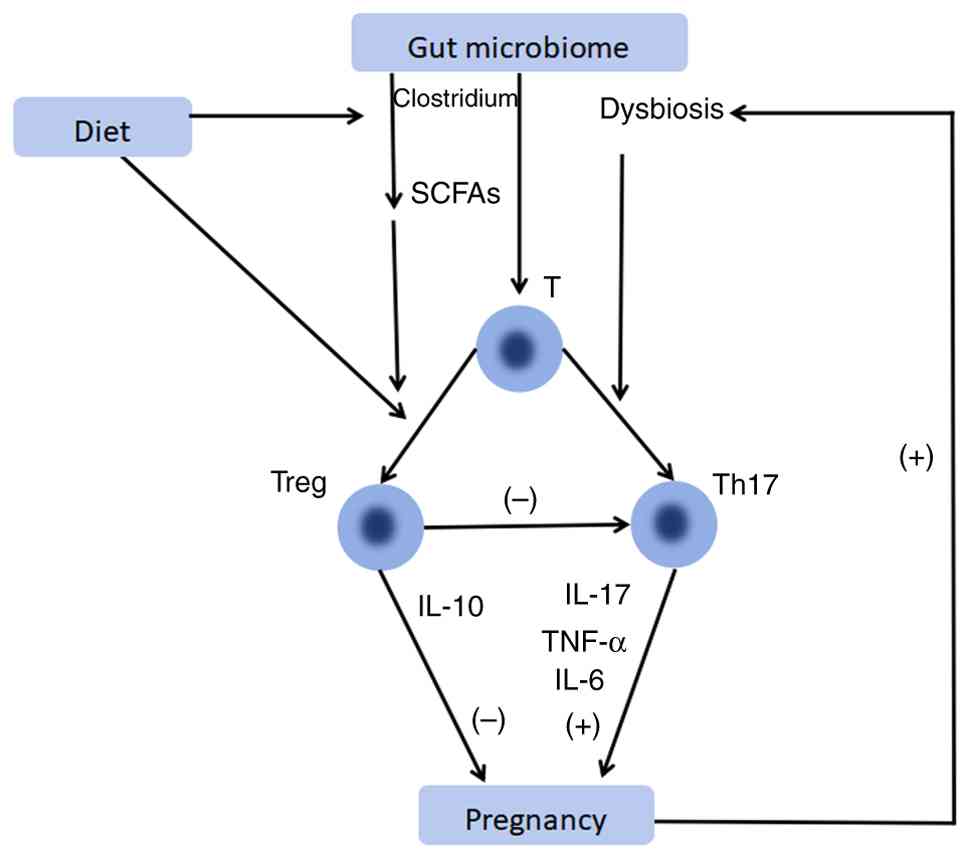
Introduction
Spontaneous abortion is a frequent pregnancy
problem, accounting for around 30% of miscarriages. When a
miscarriage occurs frequently, it is referred to as recurrent
miscarriage (RPL), and it affects roughly 3–5% of pregnant couples.
RPL often implies the existence of probable pathogenic issues,
necessitating a full medical evaluation to determine the reason and
implement specific treatment options. It is one of the most
challenging medical issues due to its unknown etiology and limited
treatment options (1). Even after
excluding the chromosomal, endocrine, infectious, anatomical and
autoimmune factors, a significant proportion of miscarriages
(>50%) remains unexplained despite thorough investigation
(2). Numerous study have reported
the role of immune cells in the pathogenesis of RPL, attributed to
the complex immunological environment present in early pregnancy
(3,4). A normal pregnancy must be accompanied
by a healthy immune microenvironment at the maternal-fetal
interface. This interface can be affected by imbalances in
cytokines, growth factors and regulatory T cells (Tregs), which can
lead to implantation and pregnancy failure. Furthermore, numerous
studies have demonstrated that the interactions between gut
microbiota and immune cells can markedly affect the cytokine
network imbalances associated with poor female reproductive
performance (5,6). Indeed, the human gut microbiota can
affect every stage and level of female reproduction, including
follicle maturation and oocyte migration, fertilization and embryo
migration, implantation and the entire duration of pregnancy, up to
and including delivery (7). The
dysbiosis of gut microbiota, caused by the disruption of commensal
microbiota, has been identified as a risk factor in the development
of inflammation and autoimmune diseases (8). Numerous studies have demonstrated
that gut microbiota and immune cells communicate pivotally, a
process that is indispensable for the induction, development,
training and function of the host's immune system (9–11).
However, further research is required to explore the effect of gut
microbial metabolites on host immunity. Emerging evidence suggests
that the dysbiosis of gut microbiota and subsequent immune
dysregulation play a pivotal role in RPL pathogenesis. The gut
microbiota produces key metabolites, including short-chain fatty
acids (SCFAs), bile acids (BAs) and indoles, which modulate immune
responses and influence pregnancy outcomes. The present review
explored the intricate crosstalk between gut microbiota-derived
metabolites and maternal immune adaptations, with particular focus
on their regulatory effects on CD4+T cells, inflammasome-NF-κB
inhibitor α (NF-κB)-Th17 balance and aryl hydrocarbon receptor
(AHR)-mediated pathways (12,13).
A deeper understanding of these mechanisms may pave the way for
novel therapeutic strategies targeting gut microbiota to improve
pregnancy maintenance. The present study reviewed the key
mechanisms through which the gut microbiota might affect cellular
immunity in RPL.
Gut microbial metabolites and their effects
on pregnancy
The gastrointestinal tract is home to a diverse
community of microorganisms, with an estimated >500 distinct
species (9). Gut microbiota' is a
collective term, denoting various bacterial, archaeal, viral and
fungal organisms. These organisms are further classified into four
distinct phyla, namely Firmicutes, Bacteroidetes, Proteobacteria
and Actinobacteria (14). Table I summarizes the class and function
of the gut microbiota (15–23).
The gut microbiota can generate numerous small-molecule
metabolites, including fatty acids, BA, indoles and derivatives of
indoles. Throughout a woman's lifetime, gut microbiota interacts
with estrogens androgens, insulin and other hormones, playing a
major role in the reproductive endocrine system. Studies have
indicated that numerous diseases and conditions can be attributed
to an imbalance in the composition of gut microbiota (24). These include pregnancy
complications, adverse pregnancy outcomes, polycystic ovary
syndrome, endometriosis and cancer (25). Therefore, it is imperative to
explore the origins and destinations of the gut microbiota-derived
metabolites.
 | Table I.Description of the classes and
functions of gut microbiota. |
Table I.
Description of the classes and
functions of gut microbiota.
| Type of
microbiome | Change | Effect |
|---|
| Escherichia
and Shigella (15) | Reduce the
production of short-chain fatty acids | 1) Increased
intestinal permeability and induce chronic mild inflammation by
activating the immune system, resulting in pro-inflammatory |
| Bacteroides
vulgatus (16) | Decrease
glymodeoxycholic acid and taurosodeoxycholic acid | cytokines infecting
insulin receptors and leading to insulin resistance or
hyperinsulinemia. |
|
|
| 2) Probiotics
enhance immune regulation by |
| Prevotellaceae
(17) | Reduce production
of anti-inflammatory metabolites | promoting Treg
maturation and IL-10 production. This action helps suppress the Th2
immune |
| Lactobacilli
and Bifidobacteria (17) | Reduce immunity and
nutrient absorption | response, which is
characterized by the expression of cytokines such as IL-4. |
|
|
| 3) A disruption in
the gut microbes balance can |
|
Acinetobacter (18) | Reduced strong Th1
and anti-inflammatory responses by immune cells | result in
miscarriage, preterm birth, preeclampsia and other complications
associated with pregnancy. |
| Cellulomonas
(19) | A rare but emerging
human pathogen, causing infection in only 4 reported cases in the
literature |
|
|
Fusobacterium (20) | Influences
intestinal immunity by shaping Th17 responses in an FFAR2-dependent
manner |
|
|
Clostridiales and | Positively
associated with the regulatory |
|
|
Verrucomicrobia (21) | T-cell
transcription factor Foxp3 |
|
| Enterococci
(22) | Production of the
factors including cytolysin for eliminating competitive bacteria or
the generation of aggregation substances |
|
| Shigella
dysenteriae (23) | Invasion of the
human colonic epithelium and regulation of proinflammatory
cytokines, resulting in severe intestinal inflammatory response and
epithelial destruction |
|
Immune dysregulation and pregnancy
complications
Immune dysregulation at the maternal-fetal interface
has been implicated in the development of pregnancy complications,
such as RPL, preeclampsia and preterm birth. RPL is often
accompanied by an imbalance in the Th1/Th2 cytokine profile,
characterized by an increase in Th1-type cytokines and a decrease
in Th2-type cytokines. This imbalance can lead to an enhanced
immune response against the fetus and consequently an increased
risk of miscarriage (26,27). Preeclampsia is associated with an
abnormal activation of the immune system, including increased
production of pro-inflammatory cytokines and activation of immune
cells, which contributes to the development of hypertension and
other symptoms. In preterm birth, inflammation at the
maternal-fetal interface, often triggered by infection or other
factors, can lead to premature activation of the immune system and
consequently to preterm labor (28). Pregnancy represents a significant
challenge to the maternal immune system, as it must tolerate
significant alterations in metabolism and hormone levels. The
maternal-fetal interface is a complex microenvironment where immune
cells of the mother and fetus interact. Trophoblast cells, which
form the outer layer of the placenta, express unique molecules that
help evade immune recognition and rejection. At the maternal-fetal
interface, the immune cells, such as decidual natural killer (dNK)
cells, macrophages and T cells, play important roles in regulating
trophoblast invasion, angiogenesis and immune tolerance (29,30).
dNK cells are the most abundant immune cells in the decidua and
secrete cytokines and chemokines that promote trophoblast invasion
and spiral artery remodeling (31,32).
Macrophages in the decidua also contribute to immune regulation and
tissue remodeling. T cells at the maternal-fetal interface are
mainly composed of Treg cells, which help suppress immune responses
against the fetus. In fact, the maternal-fetal interface is not an
absolute barrier and fetal cells can migrate into the maternal
circulation (33). For successful
embryo implantation and to ensure the survival of the allogeneic
fetus, the fetus and placenta must mount an effective defense
against attacks by maternal immune system cells. The maternal
immune system needs to tolerate the semi-allogeneic fetus while
also protecting against infections. This balance is achieved by
regulating various immune cell subsets, including T helper (Th)
cells, Tregs and macrophages. Th17 cells, which secrete interleukin
(IL)17A, IL-17F, IL-22 and IL-26, play an important role in
inflammatory immune responses and autoimmune diseases. It has been
demonstrated that during pregnancy, Th17 cell differentiation might
be induced due to the presence of local allogeneic fetal antigens,
systemic inflammation and increased pro-inflammatory cytokines
(34). Th17 cells secrete
inflammatory factors that are involved in autoimmune diseases,
rejection of allografts and inflammation. Tregs can transition
between a Th17-like phenotype when stimulated by antigen-presenting
cells, particularly monocytes, in the presence of specific
cytokines, such as IL-2 and IL-15. Moreover, exogenous IL-1β, IL-23
and IL-21 further enhance this process, underscoring the remarkable
plasticity of immune responses and immune cell phenotypes (35). Studies have demonstrated a
correlation between elevated levels of inflammatory cytokines,
including IL-6 and IL-1β and an increase in Th17 cells in RPL
(36,37). Furthermore, an alteration in the
immune system towards Th2-type cytokine responses is observed,
which inhibits the deleterious effects of the cell-mediated
(Th1-type) immune system. The aberrant shift in Th1/Th2 cytokines
during the early stages of pregnancy initiates and amplifies the
sequence of proinflammatory cytokines that are implicated in RPL.
It has been demonstrated that CD4+ and CD8+ T cells may contribute
to the pathophysiology of RPL (38). CD4 is a glycoprotein that is found
on the surface of immune cells, particularly on the surface of Th
cells, monocytes, macrophages and dendritic cells (DCs) (39,40).
CD8 is a co-receptor transmembrane glycoprotein found on cytotoxic
T cells (CD8+ T cells). Differences in lymphocyte phenotypes
between women experiencing unexplained pregnancy losses and healthy
women. The authors' findings indicated that the women who
experienced RPL exhibited a markedly higher proportion of CD4+ and
CD8+ T cells compared with healthy women (41). Human CD4+/CD25+ Treg cells could
inhibit IL-17 secretion via cell-to-cell interactions in healthy
controls and this regulation was disturbed in cases of unexplained
RPL (42). Murine models
demonstrated that AHR activation by indoles could suppress Th17
cells; however, human trials showed inconsistent results, which
might be due to fundamental differences in placental architecture
(hemochorial vs. endotheliochorial) and immune cell composition
(43).
In summary, compared with those of non-pregnant
women, the Tregs of pregnant women have markedly increased
suppressive activity in the first and second trimesters. However,
this suppressive activity is markedly decreased in the third
trimester. The balance between Th17 cells and Tregs is crucial for
successful embryo implantation and pregnancy establishment.
Dysregulation of the immune system during pregnancy can lead to RPL
occurrence (44,45).
Potential mechanism of gut
microbiota-derived metabolites in regulating the immune system and
pregnancy outcomes
SCFAs regulate CD4+ T cells
and affect pregnancy
The major intestinal SCFAs, including acetate,
propionate and butyrate, are primarily produced by gut microbiota
via fermentation of indigestible carbohydrates. Acetate is
generated by Bacteroidetes, Bifidobacterium and
Clostridium through the acetyl-CoA or Wood-Ljungdahl
pathways. Propionate is synthesized by Bacteroidetes and
Clostridium spp. via succinate, acrylate, or propylene
glycol pathways. Butyrate is mainly derived from Firmicutes through
acetyl-CoA condensation or acetate coenzyme A-transferase pathways
(facilitated by gut fungi, such as Morchella) (18,46–51).
SCFAs serve as energy sources for intestinal cells
and signaling molecules in systemic circulation and modulate
tissues, such as the liver and adipose tissues (52). They exert anti-inflammatory effects
by regulating cytokines and immune cell activity. The maternal gut
and blood have elevated levels of SCFAs during pregnancy, which
cross the placenta to influence fetal immunity (53). Notably, acetic acid administration
induces abortion in 24 h (54) and
a higher propionate/acetate ratio in early pregnancy is associated
with increased inflammation and relapse in women with multiple
sclerosis (55). This highlights
the critical role of SCFAs in maintaining healthy pregnancies.
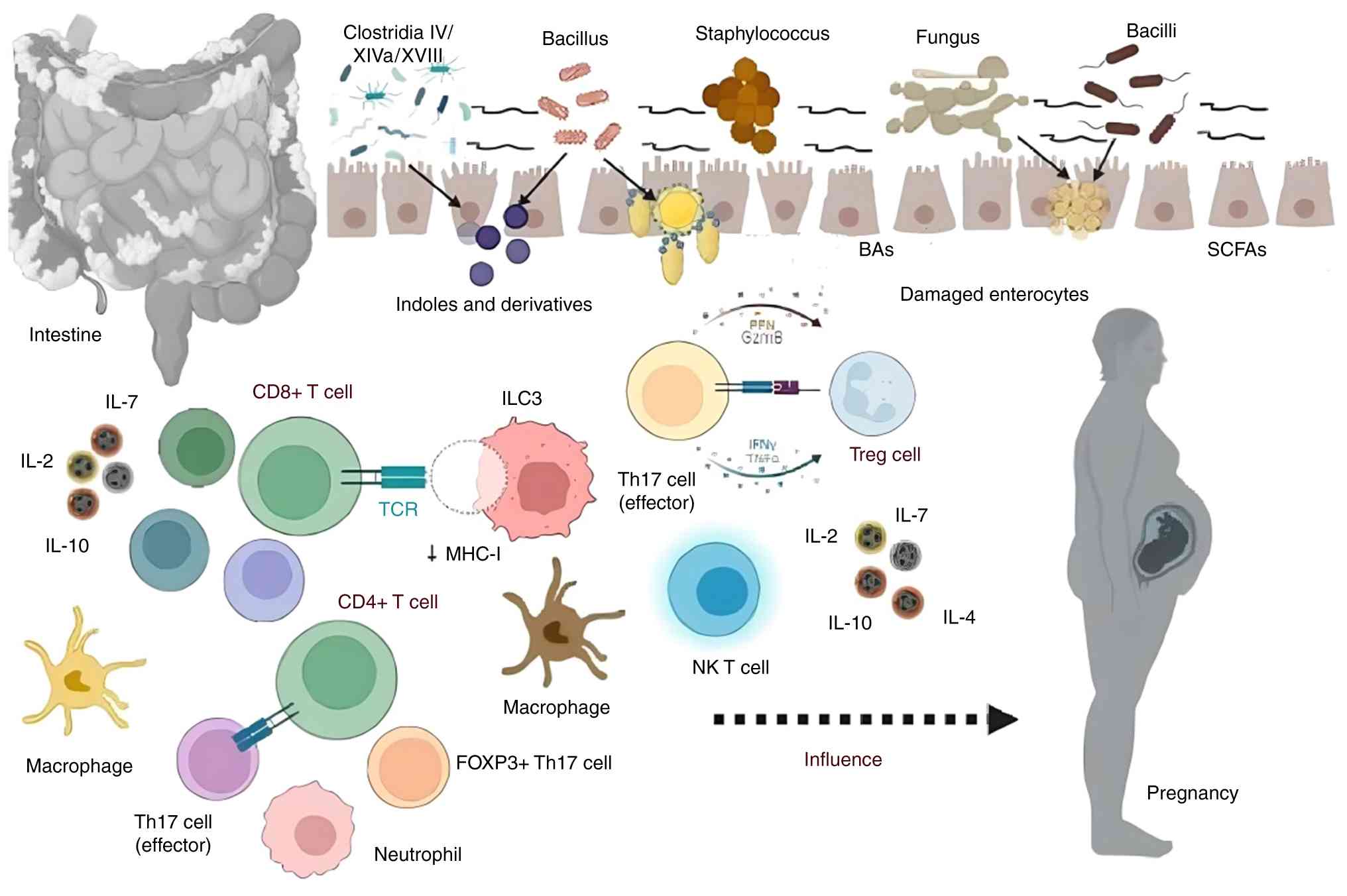
As shown in Fig. 1,
SCFAs promote CD8+ memory T cell formation and regulate
Th1, Th17 and Treg differentiation to maintain intestinal
homeostasis. They enhance tolerogenic DCs in the gut, inducing Treg
differentiation (56) and
modulating immune cells via humoral/glycolipid pathways.
Pathogen-induced Th17 cells rely on anaerobic glycolysis and
oxidative phosphorylation (OXPHOS), while commensal
microbiota-induced Th17 cells depend only on OXPHOS (52). SCFAs act through G protein-coupled
receptors (GPR43/FFAR2, GPR41/FFAR3, GPR109A/HCAR2) to
trigger signaling cascades such as ERK and STAT3.
This leads to upregulation of IL-10 and Foxp3 gene
expression, promoting Treg differentiation (57–59).
They also inhibit HDACs (such as class I), increasing histone
acetylation at Foxp3 loci to stabilize Tregs and suppress
pro-inflammatory genes in other T-cell subsets (60,61).
The reduction in SCFAs caused by the dysbiosis of gut microbiota
can weaken these mechanisms, leading to Th17/Treg imbalance and
inflammation at the maternal-fetal interface that contribute to RPL
(62). SCFAs may prevent pregnancy
complications by enhancing anti-inflammatory cytokines (such as
IL-10) and Treg differentiation (63).
Bas inhibit the NF-κB pathway and
modulate the inflammasome-Th17 balance during pregnancy
BAs are synthesized from cholesterol in the liver
mostly via the classical pathway, producing cholic and
chenodeoxycholic acids. They are secreted into the intestine, where
they play a role in lipid digestion and regulate metabolism,
signaling pathways and composition of gut microbiota (64,65).
Gut microbiota metabolize primary BAs into secondary BAs via
deconjugation, hydroxylation, dehydration, or epimerization,
involving species, such as Bacteroides and
Bifidobacterium (66,67).
BAs activate thyroid hormone-activating enzyme D2, influencing
energy expenditure. Their serum levels fluctuate with thyroid
function, which is critical for fetal brain development (68).
Elevated maternal serum BA levels during pregnancy
increase risks of adverse outcomes such as stillbirth (69). BAs regulate immune function by
modulating the expression of immune genes and cell activity. They
bind to rarnesoid X receptor (FXR) and G protein-coupled
receptor for bile acids 1 (GPBAR1) to inhibit NF-κB
activation, thereby suppressing pro-inflammatory cytokine
transcription; they also modulate NOD-like receptor thermal protein
domain associated protein 3 inflammasome activity and Th17/Treg
balance (70). Conversely,
BA-induced GPBAR1 activation triggers NF-κB in trophoblasts,
promoting placental inflammation and abnormal leukocyte
infiltration (Fig. 2), which could
return to affect pregnancy (24).
Murine models showed placental inflammation at serum BAs >40
µmol/l, while human intrahepatic cholestasis of pregnancy (ICP)
exhibited variable thresholds (10–100 µmol/l), indicating
species-specific vulnerability (71,72).
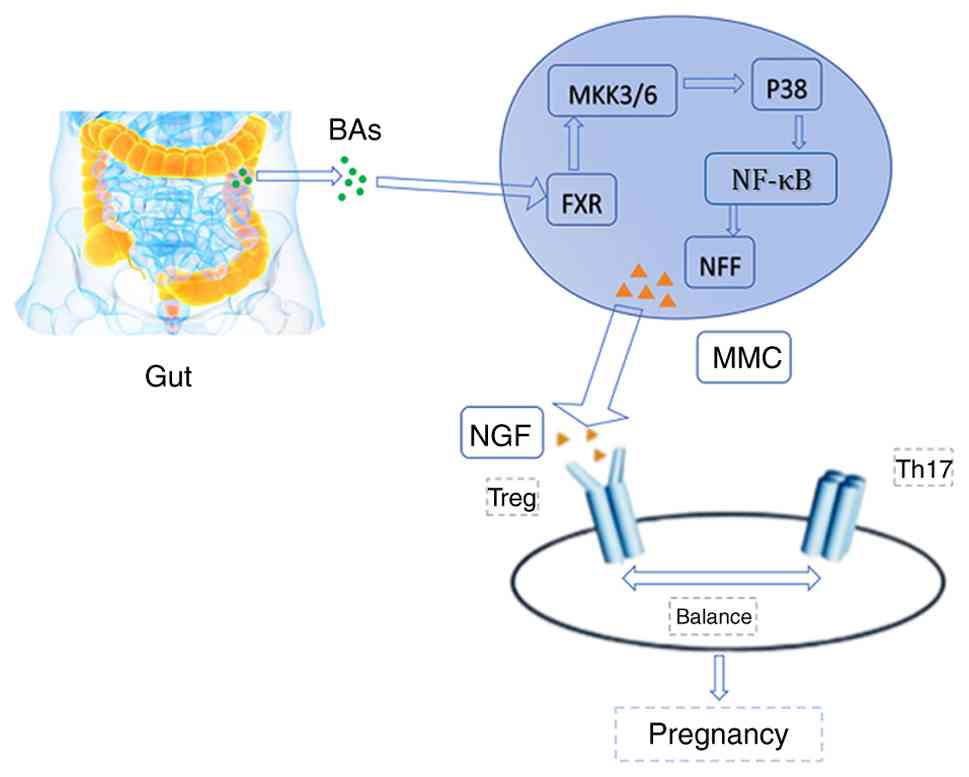 | Figure 2.BAs inhibit the NF-κB pathway,
affecting the balance between inflammasome and Th17 during RPL.
BAs, bile acids; FXR, farnesoid X receptor; MKK3/6,
mitogen-activated protein kinase kinase 3 and 6; P38, p38
mitogen-activated protein kinase; NF-κB, nuclear factor κB; NFF,
non-filterable factor; MMC, mucosal mast cell; Treg, T-regulatory
cell; NGF, nerve growth factor. |
BAs also regulate bile acid homeostasis via
enterocyte L-cell receptors, activating FXR-Retinoid X Receptor
(RXR) dimerization to induce ileal bile acid-binding
protein, Oxysterols and hormones, which inhibit apical
sodium-dependent bile acid transporter (73,74).
This modulates entero-hepatic innate immunity, maintaining
tolerogenic phenotypes (52). BAs
were traditionally thought to promote inflammation due to their
accumulation in the livers of patients with liver diseases and
disrupt cellular membranes. However, they have anti-inflammatory
properties, particularly in the innate immune system. Two life
cycle assessment metabolites, 3-oxoLCA and isoalloLCA, can directly
affect CD4+ T cells, suppressing Th17 differentiation and enhancing
Treg differentiation (75,76).
Indoles drive AHR to regulate Th17
differentiation and pregnancy
Indoles, microbial metabolites of tryptophan (Trp),
are produced by >85 bacterial species (such as Fusobacterium,
Escherichia coli and Bacteroides) via tryptophanase-mediated
conversion) (77). Clostridium
further metabolizes Trp into derivatives such as tryptamine,
indole-3-lactate and indole-3-acetate (I3A); deficiencies in
tryptamine and I3A accelerate inflammation. Indole-3-propionate and
other derivatives, such as indole-3-aldehyde, act via AHR to
modulate immune responses (78).
As shown in Fig. 3,
plasma Trp levels decrease during pregnancy, which might be linked
to immune activation (79).
Indoles activate AHR, critical for gut epithelial barrier
maintenance, and regulate T-cell subsets (Th17,
FOXP3+ Tregs and Tr1) (43). AHR activation by indoles
balances immunity by promoting Tr1 conversion and influencing early
Th17 differentiation; Th17 cells are associated with adverse
pregnancy outcomes. Additionally, microbial Trp metabolites
regulate placental vascular development via AHR (78). However, indole-based compounds
(such as I3C) may induce fetal mortality. Moreover, I3A exposure
during rat gestation days 12–14 could cause microencephaly,
highlighting context-dependent effects.
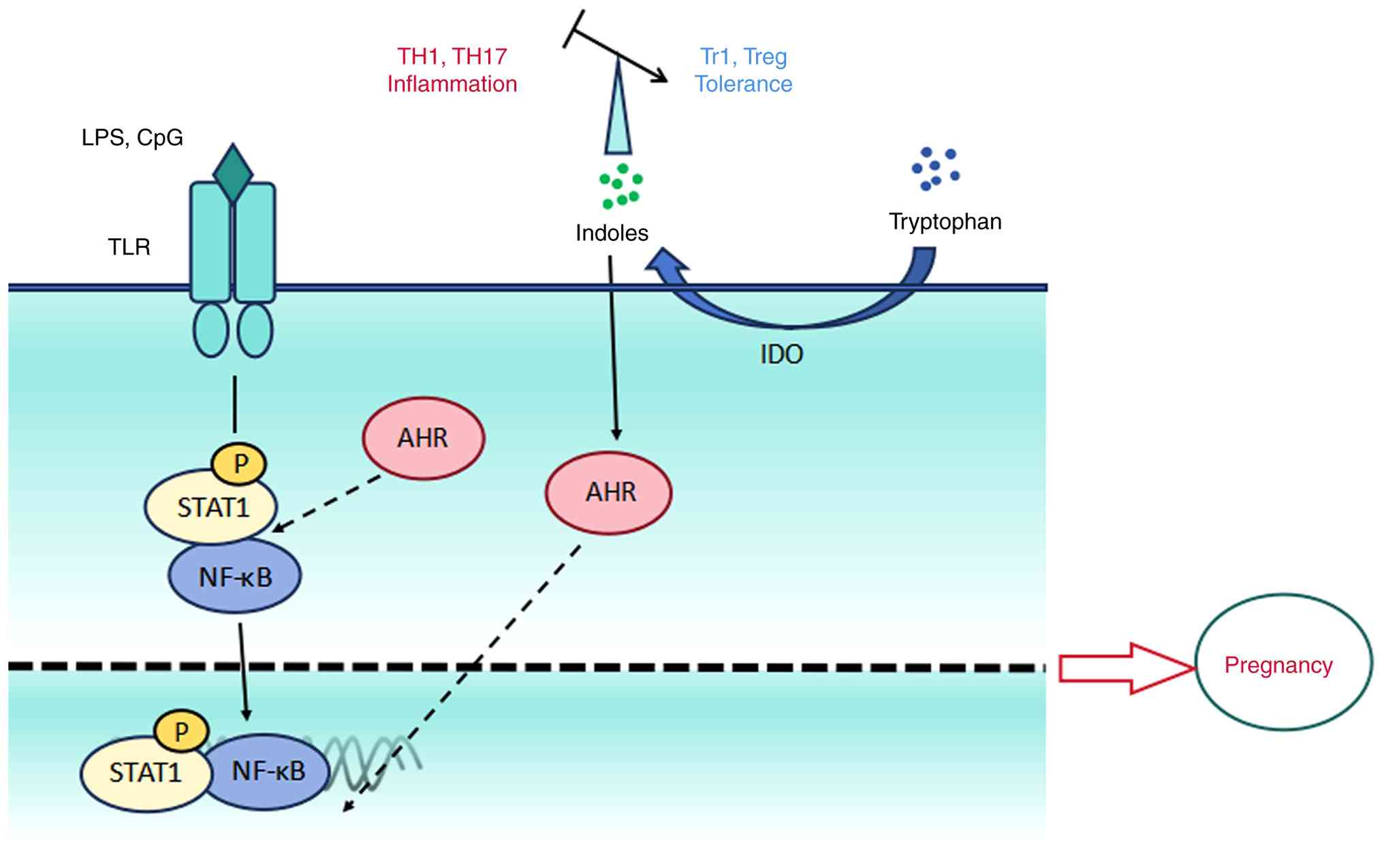 | Figure 3.Indoles drive AHR, affecting the
early differentiation of Th17 cells to regulate RPL. TH1, T helper
cell 1; Treg, T-regulatory cell; Tr1, T regulatory type 1; IDO,
indoleamine 2;3-dioxygenase; ARH, aryl hydrocarbon receptor; LPS,
lipopolysaccharides; CpG, cytosine-phosphate-guanine; TLR,
Toll-like receptors; P, properdin; STAT1, signal transducer and
activator of transduction 1; NF-κB, nuclear factor κB. |
Indoleamine 2,3-dioxygenase (IDO), expressed in
placental syncytiotrophoblasts and blastocyst membranes, catalyzes
Trp degradation and may contribute to pregnancy immunosuppression.
High-fat diets upregulate IDO, shifting Trp metabolism from indole
to kynurenine production, thereby reducing insulin sensitivity.
Lactobacillus reuteri produces an indole derivative of Trp,
which activates AHR in CD4+ T cells and downregulates
T-helper-inducing POZ/Krüppel-like factor (ThpoK), enabling the
differentiation of CD4+ T cells into double positive
intraepithelial lymphocytes with immunomodulatory function.
Mammalian fetuses can survive an immune attack of the maternal T
cells by preventing the release of L-Trp via IDO (80,81).
IDO may induce potent anti-inflammatory and antioxidant effects in
pregnant women. This highlights the crosstalk between gut
microbiota and immune cells in reproductive organs.
Mechanism of crosstalk between gut
microbiota and immune cells in RPL
In summary, pregnant women exhibit increased
inflammatory processes in the placenta, characterized by hypoxia,
elevated vascular density and reduced placental maturity.
Meanwhile, alterations in dietary habits, sleep patterns and
hormonal profiles during pregnancy might affect the composition of
gut microbiota (75). SCFAs
production is associated with genes, such as free fatty acid
receptors 1–4, and plays a role in regulating immune cells (such as
Tregs, Th17 cells and effector T cells) (82,83).
They affect pregnancy outcomes by altering the composition of gut
microbiota and fetal metabolic programming. BAs, encoded by genes,
including IBABP and FXR, aid in fat digestion in the
intestine. They also regulate immune cells, such as T cells, B
cells and DCs (84). In pregnancy,
elevated levels of BAs can induce inflammation, cause respiratory
distress in newborns and lead to meconium-stained amniotic fluid.
Indoles, as tryptophan metabolites, encompass various derivatives.
Encoded by genes such as NRF2 and AHR, they regulate
immune cells expressing cytokines, such as IL-6 and TNF-α and are
critical for key pregnancy processes, including placentation.
Specifically, indoles can activate the pregnane X receptor
(PXR) to exert anti-inflammatory effects. Furthermore,
excessive production of certain microbial by-products, such as
fatty acids, BAs, indoles and their derivatives, is a hallmark of
leaky gut syndrome. Gut-derived lipopolysaccharides drive
macrophages toward the pro-inflammatory M1 phenotype, impairing
trophoblast invasion. This is followed by the activation of
inflammatory response-related cytokines, such as Th17 cells, Tregs,
NK T cells, CD4+/CD8+ T cells and various ILs. Consequently, these
cascading events may exert detrimental effects on fetal development
and nutrient supply. The underlying mechanism of crosstalk between
gut microbiota and immune cells in RPL (48,67,85)
is summarized in Table II and
Fig. 4.
| Table II.Characteristics and functions of gut
microbiota-derived metabolites. |
Table II.
Characteristics and functions of gut
microbiota-derived metabolites.
| Production
name | Type | Encoded genes | Immune cells | Pregnancy-related
effects |
|---|
| Short chain fatty
acids (48,67) | Acetic acid (C2:
0), Propionic acid (C3: 0), Butyric acid (C4: 0), Valeric acid (C5:
0), Caproic acid (C6: 0) | FFAR1 (GPR40),
FFAR3 (GPR41), FFAR2 (GPR43), GPR84, FFAR4 (GPR120) | Th17/Treg cells,
IL6, Il1β and TNF-α, CD4+ effector T cells, CD8+ effector T
cells | 1) During
pregnancy, the gut microbiota undergoes profound changes in both
quantity and composition. In the first and third trimesters, the
number of Bifidobacteria, Proteobacteria and lactic acid-producing
bacteria increases, while the number of butyrate-producing bacteria
decreases. 2) By synthesising lipids and glucose, pionic acid can
be used as a source of energy. SCFAs may influence fetal metabolic
programming via their interactions with the uteroplacental GPR41
and GPR43 receptors and their role in inflammatory processes during
pregnancy. |
| BAs (67) | Primary BAs,
Secondary BAs | IBABP/FABP6, ASBT,
FXR/NR1H4, BSEP, RXRα, LRH1, LXR | T cells, B cells,
DCs, NK cells, Th1/17 cells, Treg cells | 1) Increased levels
of BAs induce the production of proinflammatory mediators in
hepatocytes, which attract immune cells and trigger inflammation
during pregnancy. |
|
|
|
|
| 2) Increased levels
of BAs result in an enhanced efficiency of ATP-independent
transport mechanisms, which disrupts pulmonary surfactants,
resulting in respiratory distress in newborns and can cause
amniotic fluid to become meconium-stained. |
| Indoles and
derivatives (85) | Idole-3-pyruvic
acid, Indole-3-lactate, Indole-3-acrylate, Indole-3- | NRF2, AhR,
PXR, | IL-6, TNF-α, Th1/17
cell, CD103, CD11b+, CD4+ effector T cells | 1) During
pregnancy, tryptophan catabolism is necessary for early
placentation, fetal vasodilation and rejection prevention. |
|
| acetate,
Indole-3- |
|
| 2) Indoles could
activate PXR and |
|
| propionate,
Indole-3-aldehyde, Indoxyl-3-sulfate |
|
| induce
anti-inflammatory responses. |
Clinical translation and therapeutic
perspectives
The crosstalk between reproductive immunology and
the gut is still in its infancy, with numerous exciting and
promising research outcomes. Critically, probiotics (particularly
Lactobacillus and butyrate-producing bacteria), dietary
modifications (high-fiber or Mediterranean diets) and metabolite
supplementation (butyrate and AHR ligands) represent promising
strategies to correct dysbiosis and reestablish fetal tolerance.
Personalized approaches leveraging multi-omics profiling will be
key to advancing RPL therapeutics, offering hope for patients with
previously unexplained pregnancy losses. Immune imbalances in RPL
patients are modifiable. Future studies must prioritize
translational validation, such as large randomized controlled
trials of microbiota-targeting therapies to assess the function of
Lactobacillus crispatus in RPL with standardized outcomes,
including live birth rate and immune biomarkers. The treatment
methods and examples are discussed below.
Probiotics and live
biotherapeutics
Emerging clinical evidence supports the use of
specific probiotic strains to correct dysbiosis of gut microbiota
and immune imbalances in RPL (86). Lactobacillus-dominated
interventions, such as the vaginal or oral administration of L.
crispatus and L. rhamnosus, have been shown to increase
the endometrial abundance of Lactobacillus (>90%), which
was associated with improved implantation rates (OR=3.7; P<0.01)
and reduced miscarriage risk in randomized controlled trials
patients. This is attributed to enhanced IL-10 production, Treg
induction and the suppression of pathogenic biofilm formation by
Gardnerella and Streptococcus. The bacterial strains,
such as Clostridium butyricum and Faecalibacterium
prausnitzi (administered orally), markedly elevate fecal
butyrate levels (>40–60%) and increase peripheral blood Treg
frequencies (>2.1-fold) in RPL patients, concomitant with
reduced Th17-mediated inflammation. A recent randomized controlled
trial (n=850) reported a non-significant increase in clinical
pregnancy rates and a slight reduction in miscarriage risk with
probiotics treatment (87). Taken
together, these findings underscore that the probiotic
interventions, whether Lactobacillus-dominated or
SCFA-producing, act through complementary pathways to correct the
microbial and immune dysregulation underlying RPL. By restoring
Lactobacillus dominance in the endometrium or enhancing
SCFA-mediated immune modulation, these strains offer targeted,
microbiota-based strategies to improve reproductive outcomes in
women with RPL.
Fecal microbiota transplantation
(FMT)
Some studies suggest that FMT may offer a potential
therapeutic approach for RPL by restoring a healthy gut microbiota,
which plays a crucial role in immune regulation and pregnancy
maintenance. FMT from healthy donors has demonstrated efficacy in
reducing pregnancy loss. FMT from normal pregnant women to
abortion-prone dams restored gut microbial diversity, the Chao1
index was negatively associated with the changes in IL-17A and
IFN-γ and the Shannon index was negatively associated with changes
in IL-17A levels (88). Pilot
human studies are underway (NCT04817969), evaluating FMT for
unexplained RPL (11,89), with preliminary data showing
normalization of BA and SCFA profiles in 70% of recipients.
Together, these findings bridge preclinical promise with early
clinical progress, suggesting that FMT might one day address a
significant unmet need in RPL treatment, particularly for cases
where traditional approaches have failed (90,91).
With the advances in research, further exploration of the precise
mechanisms linking gut microbial balance to pregnancy success,
along with large-scale clinical trials, will be crucial to
validating the efficacy and safety of FMT in reproductive care.
Dietary and metabolite
supplementation
Increased dietary fiber intake (≥30 g/day) during
pregnancy, a key modulator of reproductive health, has been linked
to improved pregnancy outcomes. The consumption of such fiber can
elevate fecal SCFA levels, specifically butyrate, by 3–4-fold.
Cohort studies have further associated high fiber intake with a
lower risk of miscarriage (92).
This beneficial effect is rooted in fiber's role as a critical
substrate for beneficial gut bacteria, including
Bifidobacterium and Roseburia, which metabolize it to
produce immune-modulating metabolites that help maintain a
pregnancy-supporting environment. In addition to general dietary
fiber intake, targeted dietary patterns rich in complementary
nutrients have also shown promise. For instance, Mediterranean diet
interventions, characterized by high levels of polyphenols and
fiber, have been found to markedly reduce inflammatory cytokines,
with >40% reductions in IL-6 and >30% reductions in TNF-α in
women with RPL who are attempting new pregnancies. Concurrently,
these interventions improve the function of Tregs, which play a
pivotal role in suppressing harmful immune responses against the
fetus (93,94). Notably, the metabolic byproducts of
fiber fermentation, such as butyrate, have been directly
investigated for their therapeutic potential. Butyrate
supplementation effectively reverses dysbiosis in female mice,
markedly increases Treg cell populations and decreases preterm
birth rates, highlighting the metabolite's direct role in
supporting implantation and fetal retention (95). Similarly, interventions targeting
other inflammatory pathways in high-risk pregnancies have yielded
positive results. For women with ICP, cholestyramine therapy has
proven effective. A review demonstrated that in women with
unexplained recurrent spontaneous abortion (URSA), the butyrate
supplementation could reduced uterine NK cell cytotoxicity and
impact Treg cell level (95). It
also normalized TNF-α/IL-10 ratio, which has been linked to
endometriosis and pregnancy failure (37,96).
Notably, butyrate-producing bacteria play an important role in
pregnancy maintenance. It reduces the risk of preterm birth
(OR=0.3) and stillbirth (OR=0.2) by lowering serum BA levels and
inhibiting placental inflammation, thereby addressing a condition
where BA accumulation triggers harmful inflammatory cascades.
Additionally, bioactive compounds derived from dietary sources have
shown promise in preclinical models. I3C, a compound found in
cruciferous vegetables, activates AHR signaling in murine RPL
models. This activation suppresses aberrant Th17 cell responses,
which drive inflammation and fetal loss and ultimately prevents
pregnancy failure (43).
Collectively, these findings highlight a consistent theme: Dietary
components, their microbial metabolites and targeted supplements
can exert profound effects on pregnancy outcomes by modulating
immune function, reducing inflammation and restoring balance to the
pathways critical for fetal survival. From fiber's role in
nurturing beneficial gut bacteria to specific metabolites and
compounds that directly regulate immune cell activity, these
interventions offer promising avenues for improving reproductive
health in at-risk populations.
Acknowledgements
Not applicable.
Funding
The present study was supported by Guizhou Provincial Basic
Research Program (Natural Science) General Programs [grant no. Qian
Ke He Basic Research-zk (2025) 385] and General Project of Basic
Research Program of Guizhou Province [grant no. Qian Ke He
basic-ZK(2023)-547].
Availability of data and materials
Not applicable.
Authors' contributions
YH conceived the project and prepared the
manuscript. HH and XZT made substantial contributions to conception
and design. QD contributed to the acquisition and interpretation of
data. YHZ and ENT drafted the manuscript and revised it critically
for important intellectual content. NL revised the manuscript for
important intellectual content. Data authentication is not
applicable. All authors read and approved the final manuscript.
Ethics approval and consent to
participate
Not applicable.
Patient consent for publication
Not applicable.
Competing interests
The authors declare that they have no competing
interests.
Authors' information
Dr Yu Hu ORCID:0000-0002-5041-9104.
References
|
1
|
Mumusoglu S, Telek SB and Ata B:
Preimplantation genetic testing for aneuploidy in unexplained
recurrent pregnancy loss: A systematic review and meta-analysis.
Fertil Steril. 123:121–136. 2025. View Article : Google Scholar : PubMed/NCBI
|
|
2
|
Tersigni C, D'Ippolito S, Di Nicuolo F,
Marana R, Valenza V, Masciullo V, Scaldaferri F, Malatacca F, de
Waure C, Gasbarrini A, et al: Recurrent pregnancy loss is
associated to leaky gut: A novel pathogenic model of endometrium
inflammation? J Transl Med. 16:1022018. View Article : Google Scholar : PubMed/NCBI
|
|
3
|
Laisk T, Soares ALG, Ferreira T, Painter
JN, Censin JC, Laber S, Bacelis J, Chen CY, Lepamets M, Lin K, et
al: The genetic architecture of sporadic and multiple consecutive
miscarriage. Nat Commun. 11:59802020. View Article : Google Scholar : PubMed/NCBI
|
|
4
|
Laijawala RA: Recurrent pregnancy loss:
Immunological aetiologies and associations with mental health.
Brain Behav Immun Health. 41:1008682024. View Article : Google Scholar : PubMed/NCBI
|
|
5
|
PrabhuDas M, Bonney E, Caron K, Dey S,
Erlebacher A, Fazleabas A, Fisher S, Golos T, Matzuk M, McCune JM,
et al: Immune mechanisms at the maternal-fetal interface:
Perspectives and challenges. Nat Immunol. 16:328–334. 2015.
View Article : Google Scholar : PubMed/NCBI
|
|
6
|
Zhang Y, Liu Z and Sun H: Fetal-maternal
interactions during pregnancy: A ‘three-in-one’ perspective. Front
Immunol. 14:11984302023. View Article : Google Scholar : PubMed/NCBI
|
|
7
|
Mendes DCG, Fonseca A and Cameirao MS: The
psychological impact of Early Pregnancy Loss in Portugal: Incidence
and the effect on psychological morbidity. Front Public Health.
11:11880602023. View Article : Google Scholar : PubMed/NCBI
|
|
8
|
Mousa WK, Chehadeh F and Husband S:
Microbial dysbiosis in the gut drives systemic autoimmune diseases.
Front Immunol. 13:9062582022. View Article : Google Scholar : PubMed/NCBI
|
|
9
|
Dhaded SM, Somannavar MS, Jacob JP,
McClure EM, Vernekar SS, Yogesh Kumar S, Kavi A, Ramadurg UY, Moore
JL, Wallace DP, et al: Early pregnancy loss in Belagavi, Karnataka,
India 2014–2017: A prospective population-based observational study
in a low-resource setting. Reprod Health. 15 (Suppl 1):S952018.
View Article : Google Scholar
|
|
10
|
Yoo JY, Groer M, Dutra SVO, Sarkar A and
McSkimming DI: Gut Microbiota and immune system interactions.
Microorganisms. 8:15872020. View Article : Google Scholar : PubMed/NCBI
|
|
11
|
Yang W and Cong Y: Gut microbiota-derived
metabolites in the regulation of host immune responses and
immune-related inflammatory diseases. Cell Mol Immunol. 18:866–877.
2021. View Article : Google Scholar : PubMed/NCBI
|
|
12
|
Wang H, Cai Y, Wu W, Zhang M, Dai Y and
Wang Q: Exploring the role of gut microbiome in autoimmune
diseases: A comprehensive review. Autoimmun Rev. 23:1036542024.
View Article : Google Scholar : PubMed/NCBI
|
|
13
|
Tan J, Taitz J, Nanan R, Grau G and Macia
L: Dysbiotic gut microbiota-derived metabolites and their role in
non-communicable diseases. Int J Mol Sci. 24:152562023. View Article : Google Scholar : PubMed/NCBI
|
|
14
|
Fujisaka S, Watanabe Y and Tobe K: The gut
microbiome: A core regulator of metabolism. J Endocrinol.
256:e2201112023. View Article : Google Scholar : PubMed/NCBI
|
|
15
|
Ye Z, Tan Q, Woltemate S, Tan X, Romermann
D, Grassl GA, Vital M, Seidler U and Kini A: Escherichia coli
nissle improves short-chain fatty acid absorption and barrier
function in a mouse model for chronic inflammatory diarrhea.
Inflamm Bowel Dis. 31:1109–1120. 2025. View Article : Google Scholar : PubMed/NCBI
|
|
16
|
Funabashi M, Grove TL, Wang M, Varma Y,
McFadden ME, Brown LC, Guo C, Higginbottom S, Almo SC and Fischbach
MA: A metabolic pathway for bile acid dehydroxylation by the gut
microbiome. Nature. 582:566–570. 2020. View Article : Google Scholar : PubMed/NCBI
|
|
17
|
Iljazovic A, Roy U, Galvez EJC, Lesker TR,
Zhao B, Gronow A, Amend L, Will SE, Hofmann JD, Pils MC, et al:
Perturbation of the gut microbiome by Prevotella spp. enhances host
susceptibility to mucosal inflammation. Mucosal Immunol.
14:113–124. 2021. View Article : Google Scholar : PubMed/NCBI
|
|
18
|
Fyhrquist N, Ruokolainen L, Suomalainen A,
Lehtimaki S, Veckman V, Vendelin J, Karisola P, Lehto M, Savinko T,
Jarva H, et al: Acinetobacter species in the skin microbiota
protect against allergic sensitization and inflammation. J Allergy
Clin Immunol. 134:1301–1309. e112014. View Article : Google Scholar : PubMed/NCBI
|
|
19
|
Salas NM, Prevost M, Hofinger D and
Fleming H: Cellulomonas, an emerging pathogen: A case report and
review of the literature. Scand J Infect Dis. 46:73–75. 2014.
View Article : Google Scholar : PubMed/NCBI
|
|
20
|
Brennan CA, Clay SL, Lavoie SL, Bae S,
Lang JK, Fonseca-Pereira D, Rosinski KG, Ou N, Glickman JN and
Garrett WS: Fusobacterium nucleatum drives a pro-inflammatory
intestinal microenvironment through metabolite receptor-dependent
modulation of IL-17 expression. Gut Microbes. 13:19877802021.
View Article : Google Scholar : PubMed/NCBI
|
|
21
|
Sargsian S, Mondragon-Palomino O, Lejeune
A, Ercelen D, Jin WB, Varghese A, Lim YAL, Guo CJ, Loke P and
Cadwell K: Functional characterization of helminth-associated
Clostridiales reveals covariates of Treg differentiation.
Microbiome. 12:862024. View Article : Google Scholar : PubMed/NCBI
|
|
22
|
Cox CR, Coburn PS and Gilmore MS:
Enterococcal cytolysin: A novel two component peptide system that
serves as a bacterial defense against eukaryotic and prokaryotic
cells. Curr Protein Pept Sci. 6:77–84. 2005. View Article : Google Scholar : PubMed/NCBI
|
|
23
|
Phalipon A and Sansonetti PJ: Shigella's
ways of manipulating the host intestinal innate and adaptive immune
system: A tool box for survival? Immunol Cell Biol. 85:119–129.
2007. View Article : Google Scholar : PubMed/NCBI
|
|
24
|
Qi X, Yun C, Pang Y and Qiao J: The impact
of the gut microbiota on the reproductive and metabolic endocrine
system. Gut Microbes. 13:1–21. 2021. View Article : Google Scholar
|
|
25
|
Farland LV, Stern JE, Liu CL, Cabral HJ,
Coddington CC, Diop H, Dukhovny D, Hwang S and Missmer SA:
Polycystic ovary syndrome and risk of adverse pregnancy outcomes: A
registry linkage study from massachusetts. Hum Reprod.
37:2690–2699. 2022. View Article : Google Scholar : PubMed/NCBI
|
|
26
|
Fu B, Tian Z and Wei H: TH17 cells in
human recurrent pregnancy loss and pre-eclampsia. Cell Mol Immunol.
11:564–570. 2014. View Article : Google Scholar : PubMed/NCBI
|
|
27
|
Ancuta E, Zamfir R, Martinescu G, Crauciuc
DV and Ancuta C: The complement system, T cell response, and
cytokine shift in normotensive versus pre-eclamptic and lupus
pregnancy. J Clin Med. 10:57222021. View Article : Google Scholar : PubMed/NCBI
|
|
28
|
Ning L, Zhou YL, Sun H, Zhang Y, Shen C,
Wang Z, Xuan B, Zhao Y, Ma Y, Yan Y, et al: Microbiome and
metabolome features in inflammatory bowel disease via multi-omics
integration analyses across cohorts. Nat Commun. 14:71352023.
View Article : Google Scholar : PubMed/NCBI
|
|
29
|
Staud F and Karahoda R: Trophoblast: The
central unit of fetal growth, protection and programming. Int J
Biochem Cell Biol. 105:35–40. 2018. View Article : Google Scholar : PubMed/NCBI
|
|
30
|
Wang F, Qualls AE, Marques-Fernandez L and
Colucci F: Biology and pathology of the uterine microenvironment
and its natural killer cells. Cell Mol Immunol. 18:2101–2113.
2101–2113. 2021. View Article : Google Scholar : PubMed/NCBI
|
|
31
|
Liu Y, Gao S, Zhao Y, Wang H, Pan Q and
Shao Q: Decidual natural killer cells: A good nanny at the
maternal-fetal interface during early pregnancy. Front Immunol.
12:6636602021. View Article : Google Scholar : PubMed/NCBI
|
|
32
|
Ander SE, Diamond MS and Coyne CB: Immune
responses at the maternal-fetal interface. Sci Immunol.
4:eaat61142019. View Article : Google Scholar : PubMed/NCBI
|
|
33
|
Antonson AM, Rajasekera TA, Chen HJ and
Gur TL: Immune responses at the maternal-fetal interface following
restraint stress in late gestation. Brain Behav Immun. 81:45–46.
2019. View Article : Google Scholar : PubMed/NCBI
|
|
34
|
Wang W, Sung N, Gilman-Sachs A and
Kwak-Kim J: T Helper (Th) cell profiles in pregnancy and recurrent
pregnancy losses: Th1/Th2/Th9/Th17/Th22/Tfh cells. Front Immunol.
11:20252020. View Article : Google Scholar : PubMed/NCBI
|
|
35
|
Revu S, Wu J, Henkel M, Rittenhouse N,
Menk A, Delgoffe GM, Poholek AC and McGeachy MJ: IL-23 and IL-1β
Drive Human Th17 cell differentiation and metabolic reprogramming
in absence of CD28 Costimulation. Cell Rep. 22:2642–2653. 2018.
View Article : Google Scholar : PubMed/NCBI
|
|
36
|
Garlanda C, Di Ceglie I and Jaillon S:
IL-1 family cytokines in inflammation and immunity. Cell Mol
Immunol. Oct 14–2025.(Epub ahead of print). View Article : Google Scholar : PubMed/NCBI
|
|
37
|
Tang C and Hu W: The role of Th17 and Treg
cells in normal pregnancy and unexplained recurrent spontaneous
abortion (URSA): New insights into immune mechanisms. Placenta.
142:18–26. 2023. View Article : Google Scholar : PubMed/NCBI
|
|
38
|
Meitei HT and Lal G: T cell receptor
signaling in the differentiation and plasticity of CD4+T cells.
Cytokine Growth Factor Rev. 69:14–27. 2023. View Article : Google Scholar : PubMed/NCBI
|
|
39
|
Smith CT, Wang Z and Lewis JS: Engineering
antigen-presenting cells for immunotherapy of autoimmunity. Adv
Drug Deliver Rev. 210:1153292024. View Article : Google Scholar : PubMed/NCBI
|
|
40
|
Ashfaq H, Soliman H, Saleh M and
El-Matbouli M: CD4: A vital player in the teleost fish immune
system. Vet Res. 50:12019. View Article : Google Scholar : PubMed/NCBI
|
|
41
|
Kavvadas D, Karachrysafi S, Anastasiadou
P, Kavvada A, Fotiadou S, Papachristodoulou A, Papamitsou T and
Sioga A: Immunohistochemical Evaluation of CD3, CD4, CD8, and CD20
in decidual and trophoblastic tissue specimens of patients with
recurrent pregnancy loss. Clin Pract. 12:177–193. 2022. View Article : Google Scholar : PubMed/NCBI
|
|
42
|
Camacho V, Matkins V, Patel S, Kuznetsova
V, Anderson AE, Harrington LE and Weiner RS: Leukemic Cytokines
co-opt Regulatory T cell and Th17 immunity to promote chronic
myeloid leukemia. J Immunol. 206:22.02. 2021. View Article : Google Scholar
|
|
43
|
Kahalehili HM, Newman NK, Pennington JM,
Kolluri SK, Kerkvliet NI, Shulzhenko N, Morgun A and Ehrlich AK:
Dietary Indole-3-Carbinol Activates AhR in the Gut, Alters
Th17-Microbe interactions, and exacerbates insulitis in NOD mice.
Front Immunol. 11:6064412021. View Article : Google Scholar : PubMed/NCBI
|
|
44
|
Lee GR: The balance of Th17 versus Treg
cells in autoimmunity. Int J Mol Sci. 19:7302018. View Article : Google Scholar : PubMed/NCBI
|
|
45
|
Zhang W, Liu X, Zhu Y, Liu X, Gu Y, Dai X
and Li B: Transcriptional and posttranslational regulation of
Th17/Treg balance in health and disease. Eur J Immunol.
51:2137–2150. 2021. View Article : Google Scholar : PubMed/NCBI
|
|
46
|
Messer JS, Liechty ER, Vogel OA and Chang
EB: Evolutionary and ecological forces that shape the bacterial
communities of the human gut. Mucosal Immunol. 10:567–579. 2017.
View Article : Google Scholar : PubMed/NCBI
|
|
47
|
Palanisamy S, Kadam N, Pragnell M and
Jayaprakasan K: Recurrent miscarriage: Assessment of aetiology and
prediction of subsequent livebirth. Int J Obstet Gynaecol. 131:186.
2024.
|
|
48
|
Nogal A, Valdes AM and Menni C: The role
of short-chain fatty acids in the interplay between gut microbiota
and diet in cardio-metabolic health. Gut Microbes. 13:1–24. 2021.
View Article : Google Scholar : PubMed/NCBI
|
|
49
|
Lindenberg F, Krych L, Fielden J, Kot W,
Frokiær H, van Galen G, Nielsen DS and Hansen AK: Expression of
immune regulatory genes correlate with the abundance of specific
Clostridiales and Verrucomicrobia species in the equine ileum and
cecum. Sci Rep. 9:126742019. View Article : Google Scholar : PubMed/NCBI
|
|
50
|
Ruzicková M, Vítezová M and Kushkevych I:
The characterization of genus: Resistance mechanisms and
inflammatory bowel disease. Open Med (Wars). 15:211–224. 2020.
View Article : Google Scholar : PubMed/NCBI
|
|
51
|
Shi Y, Kong W, Gong F, Cai C, Zhang Y,
Cheng G, Yang P, Yi J and Xu Z: Yeast β-glucan enhances the
intestinal immune function in coho salmon the modulation of gut
microbiota-mediated lipid metabolism. Aquaculture. 599:7421232025.
View Article : Google Scholar
|
|
52
|
Liu Y, Chen H, Feng L and Zhang J:
Interactions between gut microbiota and metabolites modulate
cytokine network imbalances in women with unexplained miscarriage.
NPJ Biofilms Microbiomes. 7:242021. View Article : Google Scholar : PubMed/NCBI
|
|
53
|
Jin J, Gao L, Zou X, Zhang Y, Zheng Z,
Zhang X, Li J, Tian Z, Wang X, Gu J, et al: Gut dysbiosis promotes
preeclampsia by regulating macrophages and trophoblasts. Circ Res.
131:492–506. 2022. View Article : Google Scholar : PubMed/NCBI
|
|
54
|
Abd-El-Maeboud KH, Ghazy A, Ibrahim A,
Hassan N, El-Bohoty A and Gamal-El-Din I: Vaginal acidity
enhancement with a 3% acetic acid gel prior to misoprostol
treatment for pregnancy termination in the midtrimester. Int J
Gynaecol Obstet. 119:248–252. 2012. View Article : Google Scholar : PubMed/NCBI
|
|
55
|
Chen Y, Li Z, Tye KD, Luo H, Tang X, Liao
Y, Wang D, Zhou J, Yang P, Li Y, et al: Probiotic supplementation
during human pregnancy affects the gut microbiota and immune
status. Front Cell Infect Microbiol. 9:2542019. View Article : Google Scholar : PubMed/NCBI
|
|
56
|
Mann ER, Lam YK and Uhlig HH: Short-chain
fatty acids: Linking diet, the microbiome and immunity. Nat Rev
Immunol. 24:577–595. 2024. View Article : Google Scholar : PubMed/NCBI
|
|
57
|
Trompette A, Gollwitzer ES, Yadava K,
Sichelstiel AK, Sprenger N, Ngom-Bru C, Blanchard C, Junt T, Nicod
LP, Harris NL and Marsland BJ: Gut microbiota metabolism of dietary
fiber influences allergic airway disease and hematopoiesis. Nat
Med. 20:159–166. 2014. View Article : Google Scholar : PubMed/NCBI
|
|
58
|
Smith PM, Howitt MR, Panikov N, Michaud M,
Gallini CA, Bohlooly-Y M, Glickman JN and Garrett WS: The microbial
metabolites, short-chain fatty acids, regulate colonic Treg cell
homeostasis. Science. 341:569–573. 2013. View Article : Google Scholar : PubMed/NCBI
|
|
59
|
Singh N, Thangaraju M, Prasad PD, Martin
PM, Lambert NA, Boettger T, Offermanns S and Ganapathy V: Blockade
of dendritic cell development by bacterial fermentation products
butyrate and propionate through a transporter (Slc5a8)-dependent
inhibition of histone deacetylases. J Biol Chem. 285:27601–27608.
2010. View Article : Google Scholar : PubMed/NCBI
|
|
60
|
Arpaia N, Campbell C, Fan X, Dikiy S, van
der Veeken J, deRoos P, Liu H, Cross JR, Pfeffer K, Coffer PJ and
Rudensky AY: Metabolites produced by commensal bacteria promote
peripheral regulatory T-cell generation. Nature. 504:451–455. 2013.
View Article : Google Scholar : PubMed/NCBI
|
|
61
|
Singh N, Gurav A, Sivaprakasam S, Brady E,
Padia R, Shi H, Thangaraju M, Prasad PD, Manicassamy S, Munn DH, et
al: Activation of Gpr109a, receptor for niacin and the commensal
metabolite butyrate, suppresses colonic inflammation and
carcinogenesis. Immunity. 40:128–139. 2014. View Article : Google Scholar : PubMed/NCBI
|
|
62
|
Melbye P, Olsson A, Hansen TH, Sondergaard
HB and Bang Oturai A: Short-chain fatty acids and gut microbiota in
multiple sclerosis. Acta Neurol Scand. 139:208–219. 2019.
View Article : Google Scholar : PubMed/NCBI
|
|
63
|
Zong Y, Deng K and Chong WP: Regulation of
Treg cells by cytokine signaling and co-stimulatory molecules.
Front Immunol. 15:13879752024. View Article : Google Scholar : PubMed/NCBI
|
|
64
|
Kodama M, Tazuma S and Kanno K: Mo1522 An
essential role of hepatic cholesterol and bile acid metabolism
mediated by nuclear receptors FXR and LXR-a in the development of
hepertension-associated non-alcoholic steatohepatitis.
Gastroenterology. 150:S7142016. View Article : Google Scholar
|
|
65
|
Tian Z, Zhuang X, Luo M, Yin W and Xiong
L: The propionic acid and butyric acid in serum but not in faeces
are increased in patients with diarrhea-predominant irritable bowel
syndrome. BMC Gastroenterol. 20:732020. View Article : Google Scholar : PubMed/NCBI
|
|
66
|
Reichardt N, Duncan SH, Young P, Belenguer
A, McWilliam Leitch C, Scott KP, Flint HJ and Louis P: Phylogenetic
distribution of three pathways for propionate production within the
human gut microbiota. ISME J. 8:1323–1335. 2014. View Article : Google Scholar : PubMed/NCBI
|
|
67
|
Collins SL, Stine JG, Bisanz JE, Okafor CD
and Patterson AD: Bile acids and the gut microbiota: Metabolic
interactions and impacts on disease. Nat Rev Microbiol. 21:236–247.
2023. View Article : Google Scholar : PubMed/NCBI
|
|
68
|
Watanabe M, Houten SM, Mataki C,
Christoffolete MA, Kim BW, Sato H, Messaddeq N, Harney JW, Ezaki O,
Kodama T, et al: Bile acids induce energy expenditure by promoting
intracellular thyroid hormone activation. Nature. 439:484–489.
2006. View Article : Google Scholar : PubMed/NCBI
|
|
69
|
Sinha T, Brushett S, Prins J and
Zhernakova A: The maternal gut microbiome during pregnancy and its
role in maternal and infant health. Curr Opin Microbiol.
74:1023092023. View Article : Google Scholar : PubMed/NCBI
|
|
70
|
Accogli T, Hibos C, Milian L, Geindreau M,
Richard C, Humblin E, Mary R, Chevrier S, Jacquin E, Bernard A, et
al: The intrinsic expression of NLRP3 in Th17 cells promotes their
protumor activity and conversion into Tregs. Cell Mol Immunol.
22:541–556. 2025. View Article : Google Scholar : PubMed/NCBI
|
|
71
|
Jia W, Li Y, Cheung KCP and Zheng X: Bile
acid signaling in the regulation of whole body metabolic and
immunological homeostasis. Sci China Life Sci. 67:865–878. 2024.
View Article : Google Scholar : PubMed/NCBI
|
|
72
|
Majsterek M, Wierzchowska-Opoka M, Makosz
I, Kreczynska L, Kimber-Trojnar Z and Leszczynska-Gorzelak B: Bile
acids in intrahepatic cholestasis of pregnancy. Diagnostics
(Basel). 12:27462022. View Article : Google Scholar : PubMed/NCBI
|
|
73
|
Xie Y, Su N, Yang J, Tan Q, Huang S, Jin
M, Ni Z, Zhang B, Zhang D, Luo F, et al: FGF/FGFR signaling in
health and disease. Signal Transduct Target Ther. 5:1812020.
View Article : Google Scholar : PubMed/NCBI
|
|
74
|
Kim YC, Byun S, Seok S, Guo G, Xu HE,
Kemper B and Kemper JK: Small heterodimer partner and fibroblast
growth factor 19 inhibit expression of NPC1L1 in mouse intestine
and cholesterol absorption. Gastroenterology. 156:1052–1065. 2019.
View Article : Google Scholar : PubMed/NCBI
|
|
75
|
Hang S, Paik D, Yao L, Kim E, Trinath J,
Lu J, Ha S, Nelson BN, Kelly SP, Wu L, et al: Bile acid metabolites
control Th17 and Treg cell differentiation. Nature. 576:143–148.
2019. View Article : Google Scholar : PubMed/NCBI
|
|
76
|
Paik D, Yao L, Zhang Y, Bae S, D'Agostino
GD, Zhang M, Kim E, Franzosa EA, Avila-Pacheco J, Bisanz JE, et al:
Human gut bacteria produce T17-modulating bile acid metabolites.
Nature. 603:907–912. 2022. View Article : Google Scholar : PubMed/NCBI
|
|
77
|
Ye X, Li H, Anjum K, Zhong X, Miao S,
Zheng G, Liu W and Li L: Dual role of indoles derived from
intestinal microbiota on human health. Front Immunol.
13:9035262022. View Article : Google Scholar : PubMed/NCBI
|
|
78
|
Zhao P, Chen Y, Zhou S and Li F: Microbial
modulation of tryptophan metabolism links gut microbiota to disease
and its treatment. Pharmacol Res. 219:1078962025. View Article : Google Scholar : PubMed/NCBI
|
|
79
|
Melhem NJ and Taleb S: Tryptophan: From
diet to cardiovascular diseases. Int J Mol Sci. 22:99042021.
View Article : Google Scholar : PubMed/NCBI
|
|
80
|
Miller D, Gershater M, Slutsky R, Romero R
and Gomez-Lopez N: Maternal and fetal T cells in term pregnancy and
preterm labor. Cell Mol Immunol. 17:693–704. 2020. View Article : Google Scholar : PubMed/NCBI
|
|
81
|
Cervantes-Barragan L, Chai JN, Tianero MD,
Di Luccia B, Ahern PP, Merriman J, Cortez VS, Caparon MG, Donia MS,
Gilfillan S, et al: Lactobacillus reuteriinduces gut
intraepithelial CD4 CD8αα T cells. Science. 357:806–810. 2017.
View Article : Google Scholar : PubMed/NCBI
|
|
82
|
Zhang D, Jian YP, Zhang YN, Li Y, Gu LT,
Sun HH, Liu MD, Zhou HL, Wang YS and Xu ZX: Short-chain fatty acids
in diseases. Cell Commun Signal. 21:2122023. View Article : Google Scholar : PubMed/NCBI
|
|
83
|
Parada Venegas D, De la Fuente MK,
Landskron G, Gonzalez MJ, Quera R, Dijkstra G, Harmsen HJM, Faber
KN and Hermoso MA: Short chain fatty acids (SCFAs)-Mediated gut
epithelial and immune regulation and its relevance for inflammatory
bowel diseases. Front Immunol. 10:2772019. View Article : Google Scholar : PubMed/NCBI
|
|
84
|
Wang M, Huang Y, Xin M, Li T, Wang X, Fang
Y, Liang S, Cai T, Xu X, Dong L, et al: The impact of microbially
modified metabolites associated with obesity and bariatric surgery
on antitumor immunity. Front Immunol. 14:11564712023. View Article : Google Scholar : PubMed/NCBI
|
|
85
|
He Y, Ding C, Zhang B, Bao B, Liu Y, Yun
D, Chen X, Guo R, She Y and Liu Z: Prenatal supplementation with
the gut-derived tryptophan metabolite indole-3-propionic acid
alleviates colitis susceptibility in maternal immune-activated
offspring mice. J Adv Res. S2090-1232(25)00372-8. 2025.(Epub ahead
of print).
|
|
86
|
Cho M-Y, Eom J-H, Choi E-M, Yang S-J, Lee
D, Kim YY, Kim H-S and Hwang I: Recent advances in therapeutic
probiotics: Insights from human trials. Clin Microbiol Rev.
38:e00240242025. View Article : Google Scholar : PubMed/NCBI
|
|
87
|
Maleki-Hajiagha A, Karimi R, Abbasi S,
Emami N and Amidi F: Vaginal probiotics as therapeutic adjuncts for
improving embryo transfer success rates: A systematic review and
meta-analysis. BMC Pregnancy Childbirth. 25:2622025. View Article : Google Scholar : PubMed/NCBI
|
|
88
|
Lv Y, Bian H, Jing Y and Zhou J: IL-17A
inhibitors modulate skin microbiome in psoriasis: Implications for
microbial homeostasis. J Transl Med. 23:8172025. View Article : Google Scholar : PubMed/NCBI
|
|
89
|
Li Z, Zheng Y, Zhang M, Wu K, Zhang L, Yao
Y and Zheng C: Gut microbiota-derived metabolites associate with
circulating immune cell subsets in unexplained recurrent
spontaneous abortion. Heliyon. 10:e245712024. View Article : Google Scholar : PubMed/NCBI
|
|
90
|
Motlagh Asghari K, Novinbahador T,
Mehdizadeh A, Zolfaghari M and Yousefi M: Revolutionized attitude
toward recurrent pregnancy loss and recurrent implantation failure
based on precision regenerative medicine. Heliyon. 10:e395842024.
View Article : Google Scholar : PubMed/NCBI
|
|
91
|
Wei S, Jespersen ML, Baunwall SMD, Myers
PN, Smith EM, Dahlerup JF, Rasmussen S, Nielsen HB, Licht TR, Bahl
MI and Hvas CL: Cross-generational bacterial strain transfer to an
infant after fecal microbiota transplantation to a pregnant
patient: A case report. Microbiome. 10:1932022. View Article : Google Scholar : PubMed/NCBI
|
|
92
|
Schwartz LT, Ladouceur JG, Russell MM, Xie
SYL, Bu S, Kerver JM and Comstock SS: The relationship between
fiber intake and gut bacterial diversity and composition during the
third trimester of pregnancy. Nutrients. 17:7732025. View Article : Google Scholar : PubMed/NCBI
|
|
93
|
Mishra S, Ashish A, Rai S, Sahni C, Tiwari
S, Kumar B and Singh R: The impact of inflammatory cytokines on
recurrent pregnancy loss: A preliminary investigation. Reprod Sci.
32:804–814. 2025. View Article : Google Scholar : PubMed/NCBI
|
|
94
|
Tylutka A, Walas L and Zembron-Lacny A:
Level of IL-6, TNF, and IL-1β and age-related diseases: A
systematic review and meta-analysis. Front Immunol. 15:13303862024.
View Article : Google Scholar : PubMed/NCBI
|
|
95
|
Uchida A, Imai K, Miki R, Hamaguchi T,
Nishiwaki H, Ito M, Ueyama J, Hattori S, Tano S, Fuma K, et al:
Butyrate-producing bacteria in pregnancy maintenance: Mitigating
dysbiosis-induced preterm birth. J Transl Med. 23:5332025.
View Article : Google Scholar : PubMed/NCBI
|
|
96
|
Kim N and Yang C: Butyrate as a potential
modulator in gynecological disease progression. Nutrients.
16:41962024. View Article : Google Scholar : PubMed/NCBI
|