Introduction
Liver diseases represent a notable global health
challenge, affecting hundreds of millions of individuals globally
(1,2). Recent data indicate that cirrhosis
and other chronic liver conditions have become the 10th leading
cause of death globally, resulting in ~2 million deaths annually.
These conditions account for 4% of total global mortality and rank
as the 15th leading contributor to disability-adjusted life years
(3,4). In addition to the human toll, liver
diseases place a notable strain on the global economy, with medical
costs for patients with chronic liver disease exceeding $32 billion
in 2016 alone (5). The core
pathological process underlying these diseases is liver injury, a
condition characterized by the structural and functional impairment
of the liver resulting from various internal and external factors.
Oxidative stress has been recognized as a key pathogenic factor in
liver injury and the excessive generation of reactive oxygen
species (ROS) is closely linked to the progression of liver
diseases, as reviewed by Rezzani and Franco (6). Currently, the clinical management of
liver injury focuses on removing causative factors, alleviating
symptoms, modulating immune responses and providing supportive
care. However, existing therapies for liver injury fall short in
precisely targeting and regulating the oxidative-inflammatory
cascade (7–9). Thus, the development of novel
strategies aimed at modulating key oxidative signaling pathways
remains an important challenge for liver injury prevention and
treatment.
Natural flavonoids have previously garnered
attention as promising candidates for therapeutics in liver injury
prevention and treatment, owing to their multi-target regulatory
properties (10). Rutin, a
naturally occurring flavonol, consists of quercetin linked to a
rutinose molecule via a glycosidic bond at the C-3 position
(11,12). Rutin is found in various plants,
such as buckwheat, citrus fruits, quinoa and sophora root (13), and demonstrates a wide array of
biological effects, including the prevention of platelet
aggregation, hormonal regulation, inhibition of adipogenesis, and
anti-inflammatory and antioxidant activities (14–17).
These effects have been shown to contribute to alleviating liver
injury caused by various etiologies (18–20).
In non-alcoholic fatty liver disease (NAFLD), rutin has been shown
to markedly inhibit lipid synthesis, enhance fatty acid metabolism,
reduce lipid accumulation in hepatocytes and decrease oxidative
damage, ultimately improving liver pathology and function (21).
Rutin is primarily utilized in clinical settings for
the treatment of conditions associated with increased capillary
fragility, such as chronic venous insufficiency and hemorrhoids,
with evidence showing that flavonoid mixtures containing rutin can
safely and effectively manage hemorrhoidal bleeding (22). Rutin also serves as an adjuvant
therapy for hypertension and diabetic microangiopathy. In patients
with type 2 diabetes, rutin supplementation has been shown to
markedly reduce glycosylated hemoglobin, lipid and fasting blood
glucose levels, while improving the total antioxidant capacity of
patients (23). The mechanism of
action of rutin involves the enhancement of vascular endothelial
function and the alleviation of oxidative damage (24). A 5-year prospective registry study
further corroborated that hydroxyethyl rutin (HR) demonstrated a
notable therapeutic effect on edema and capillary filtration rate
in patients with venous hypertension and diabetic microangiopathy.
Treatment with higher HR doses (2 g/day in diabetic patients)
produced greater reductions in swelling than lower doses and
resulted in notable improvements in clinical symptom scores; HR
also played a protective role against the formation of venous
ulcers. Additionally, HR treatment was associated with a notable
decrease in total cholesterol levels in patients, and no adverse
effects or intolerances were observed. Notably, the high levels
compliance (>85%) were observed over the 5-year period (25). Currently, there remains a lack of
high-quality clinical trials specifically evaluating the
hepatoprotective effects of rutin in patients with liver injury.
The majority of available evidence supporting these effects has
been derived from preclinical animal models and in vitro
studies, therefore high-quality randomized controlled trials are
required to support the efficacy and safety of rutin administration
in humans (26,27). As such, rutin has previously
demonstrated notable promise as a broad-spectrum hepatoprotective
agent, but its clinical translation requires further
investigation.
Research on the preventive and therapeutic effects
of rutin in various liver-injury models, as well as its mechanisms
of action in oxidative stress modulation, has been increasing. The
hepatoprotective effects of rutin involve multiple mechanisms,
including antioxidant, anti-inflammatory and anti-apoptotic
activities, with oxidative stress serving as the central link
(28). The present review aims to
systematically summarize research on the effects of rutin in
chemical, drug-induced, alcohol-induced and other liver-injury
models, with a focus on the role of rutin in oxidative stress.
Additionally, the present review explores emerging strategies for
nano-targeted drug delivery based on the antioxidant effects of
rutin. By synthesizing these studies, the present review provides
theoretical support for the clinical application of rutin as a
novel approach to treating or preventing liver injury.
The data sources for the present study were searched
in PubMed (https://pubmed.ncbi.nlm.nih.gov/), using a combination
of medical subject heading terms and free-text terms. The key words
included ‘rutin’, ‘liver injury’, ‘oxidative stress’, ‘Nrf2’,
‘NF-κB’ and ‘nanodelivery’. All included literature consisted of
original research or reviews published in peer-reviewed
journals.
Role of oxidative stress in the development
and progression of liver injury
The onset and progression of liver disease are
pathologically linked to oxidative stress-induced injury. Oxidative
stress originates from an imbalance between intracellular
antioxidant defenses and ROS, which disrupts cellular redox states
and causes oxidative damage. As byproducts of oxidative metabolism,
ROS are generated through both endogenous pathways, such as
electron leakage from the mitochondrial electron transport chain,
cytochrome P450 enzyme metabolism in the endoplasmic reticulum and
respiratory bursts in immune cells, particularly Kupffer cells in
the liver, as well as exogenous factors, for example alcohol, drugs
and environmental toxins (28,29).
Chronic overproduction of ROS directly activates the oxidative
stress system, causing irreversible modifications to various
biomacromolecules via lipid peroxidation, protein carbonylation,
DNA oxidative damage and protein misfolding; as such, activation of
the oxidative-stress system also results in altered cellular
metabolism, tissue remodeling mediated by misfolded proteins and
genomic instability (30,31). Concurrently, oxidative stress
disrupts complex intracellular signaling pathways, triggering a
cascade of reactions that escalate from molecular damage to
signaling dysregulation. This cascade has been shown to amplify
oxidative injury, activate inflammatory responses and apoptotic
pathways and drive the pathological progression of liver disease
(32), as summarized in Fig. 1, with additional mechanistic
details presented in the figure. Hence, oxidative stress serves as
a central axis linking initial hepatic injury to subsequent disease
progression.
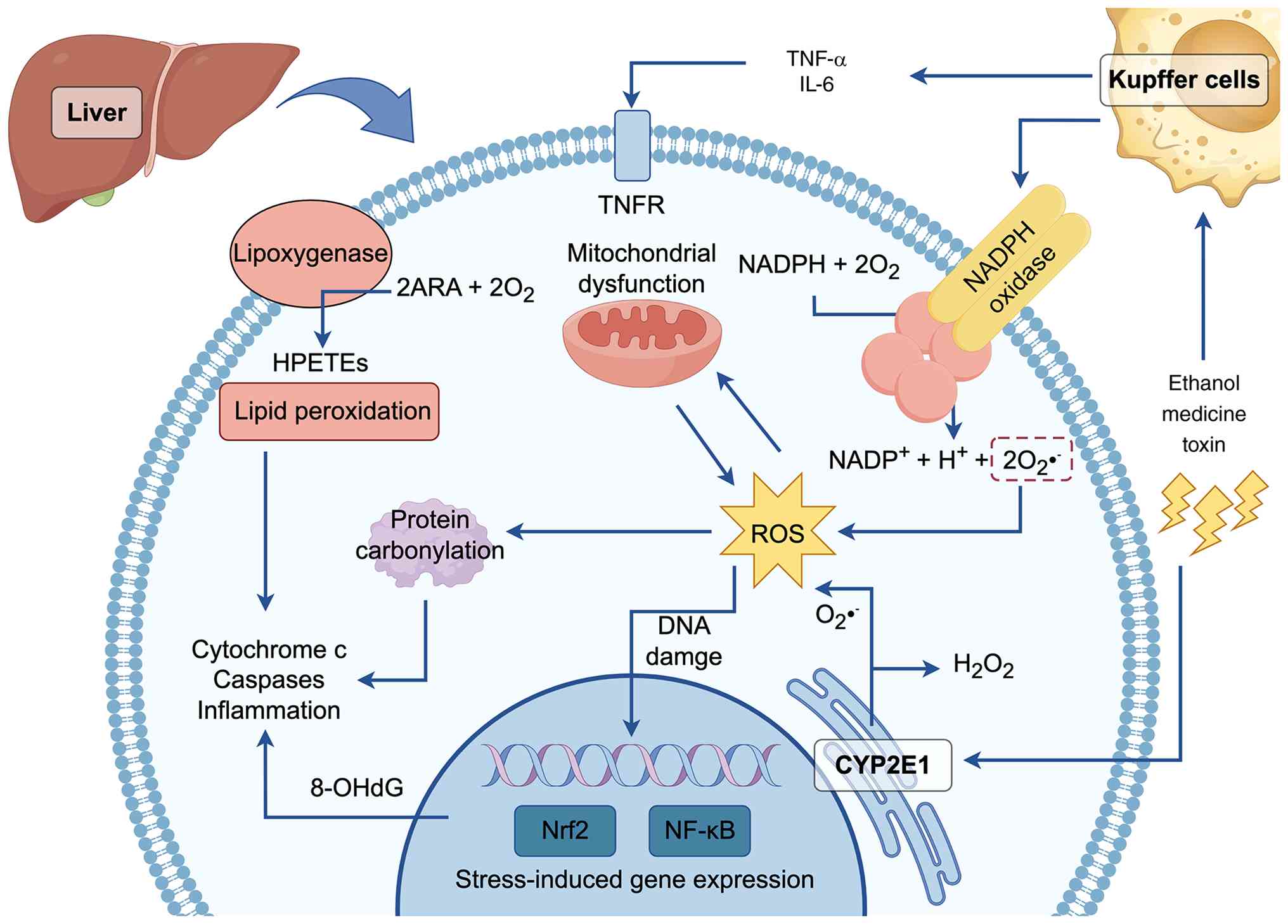 | Figure 1.Pathological mechanism of oxidative
stress-mediated liver injury. Oxidative stress triggers excessive
ROS production from both endogenous and exogenous sources, leading
to biomacromolecular damage and a dysregulated signaling cascade,
which collectively perpetuates the pathogenesis of liver disease.
8-OHdG, 8-hydroxy-2′-deoxyguanosine; ARA, arachidonic acid; CYP2E1,
cytochrome P450 2E1; HPETEs, hydroperoxyeicosatetraenoic acids;
IL-6, interleukin-6; NF-κB, nuclear factor-κB; Nrf2, nuclear factor
erythroid 2-related factor 2; ROS, reactive oxygen species; TNF-α,
tumor necrosis factor-α; TNFR, tumor necrosis factor receptor. |
Recent research has highlighted the notable roles of
biological processes, such as oxidative stress, inflammation and
apoptosis, in the defense against liver injury (33). Consequently, understanding the
specific mechanisms underlying the oxidative-stress, inflammatory
and apoptotic signaling pathways in liver injury progression is
important for developing novel strategies to prevent and treat
liver diseases.
Nuclear factor erythroid 2-related
factor 2 (Nrf2)/antioxidant response element (ARE) pathway-mediated
oxidative stress response and liver protection mechanisms
Nrf2 is the central regulator of the cellular
antioxidant defense system, and its activation has demonstrated
protective effects in various liver diseases and hepatotoxicity
models (34,35). In physiological conditions, Nrf2 is
sequestered by kelch-like ECH-associated protein 1 (Keap1) and
subsequently targeted for ubiquitin-dependent degradation, which
maintains a low basal activity. Oxidative stress or electrophiles
trigger the dissociation of Nrf2 from Keap1, resulting in the
nuclear translocation of Nrf2 and its binding to ARE elements,
which in turn drives the transcription of antioxidant target genes
(35–38). These genes work synergistically to
maintain intracellular redox balance (39). Under certain conditions, the
upregulation of HMG-CoA reductase degradation protein 1 promotes
the degradation of Nrf2, forming a negative feedback loop that
prevents excessive activation of this pathway (40) (Fig.
2).
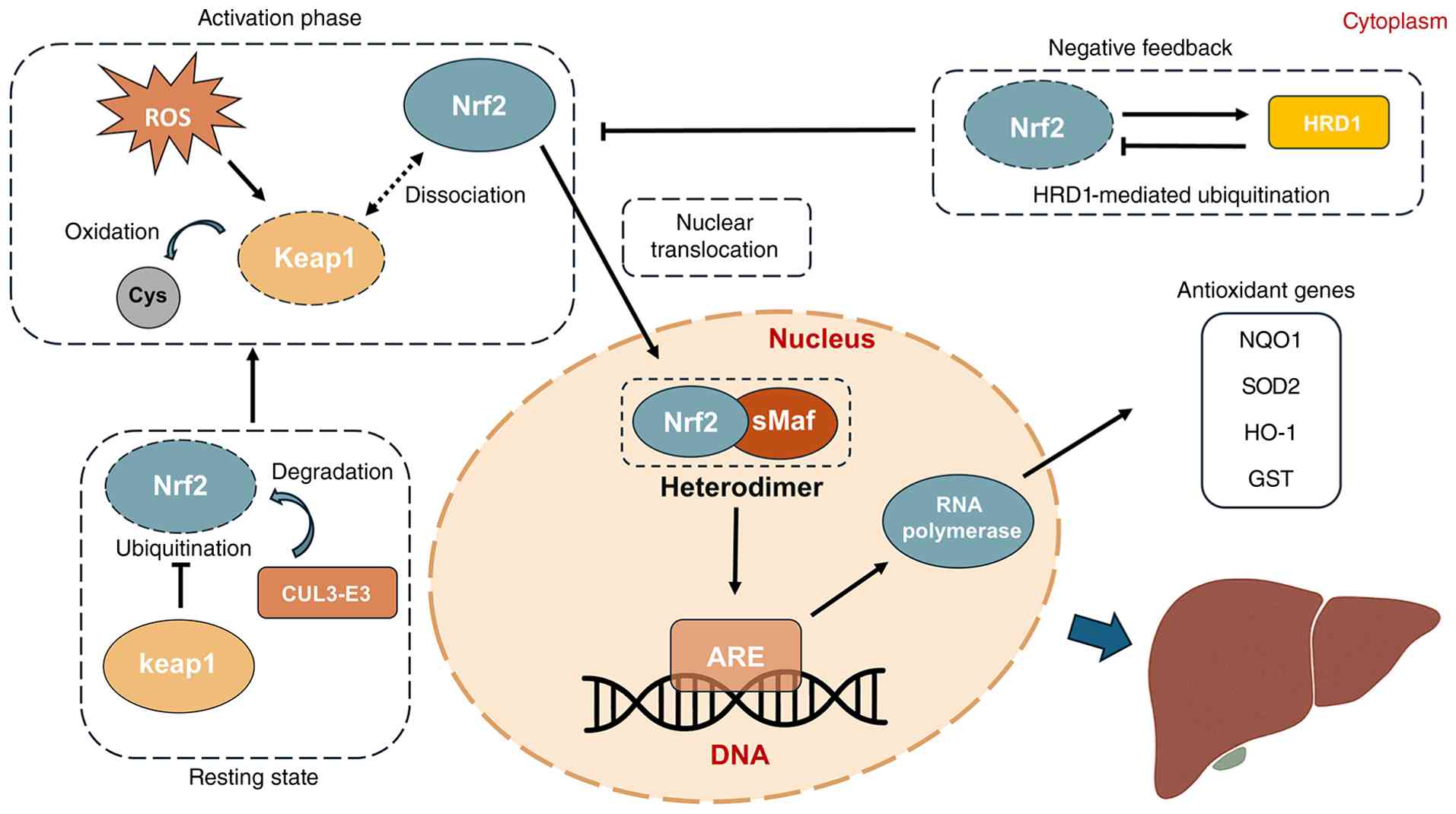 | Figure 2.Antioxidant regulatory mechanism of
the liver Nrf2 signaling pathway. Under basal conditions, Nrf2 is
bound by Keap1 and targeted for degradation. In conditions of
oxidative stress, Nrf2 dissociates, translocates to the nucleus and
binds to the ARE to transactivate genes, such as SOD2 and HO-1,
thereby restoring redox homeostasis. The Nrf2 pathway is tightly
regulated by a negative feedback loop involving HRD1-mediated
degradation of Nrf2. ARE, antioxidant response element; CUL3,
cullin 3; Cys, cysteine; GST, glutathione S-transferase; HO-1, heme
oxygenase 1; HRD1, HMG-CoA reductase degradation protein 1; Keap1,
kelch-like ECH-associated protein 1; NQO1, NAD(P)H quinone
oxidoreductase 1; Nrf2, nuclear factor erythroid 2-related factor
2; ROS, reactive oxygen species; SOD2, superoxide dismutase 2;
sMaf, small Maf proteins. |
Notably, sustained or excessive activation of Nrf2
may confer potential pathological risks under specific pathological
liver conditions. In hepatocellular carcinoma (HCC), aberrant
activation of Nrf2 has been shown to drive tumor progression and
potentiate invasion and metastasis (35,36).
Additionally, Nrf2 activation has been shown to mediate immune
escape and compromise the tumoricidal capacity of immune cells
(41,42). Furthermore, Nrf2 signaling
upregulates a spectrum of genes responsible for drug efflux and
cellular detoxification, which reduces the intracellular
accumulation of chemotherapeutic agents and neutralizes their
cytotoxic effects, ultimately inducing tumor chemoresistance
(43). Summarily, transient Nrf2
activation protects against hepatic oxidative damage, but sustained
dysregulation of this signaling pathway disrupts hepatic
homeostasis and accelerates malignant transformation in chronic
liver disease and premalignant lesions (44,45).
Thus, the Nrf2/ARE pathway represents a core antioxidant system and
an important target for liver disease intervention.
Several animal models of liver diseases have
supported the notable antioxidative role of the Nrf2/ARE pathway.
Jujuboside A has been shown to mitigate oxidative damage,
mitochondrial dysfunction and apoptosis caused by hepatic
ischemia-reperfusion (I/R) by activating the Akt/Nrf2/ARE pathway
and subsequently upregulating heme oxygenase 1 (HO-1) expression
via ARE-driven transcription, promoting Nrf2 nuclear translocation
and increasing HO-1 expression (46). Similarly, bilirubin has been shown
to trigger antioxidant mechanisms through activation of the
Nrf2/ARE pathway and induction of HO-1 expression, demonstrating
potential for clinical applications (35). In conclusion, the Nrf2/ARE pathway
plays an important role in mediating oxidative stress and
cytoprotection by maintaining redox homeostasis, thus alleviating
liver injury. Experimental evidence has supported the therapeutic
potential of treatments modulating the Nrf2 signaling pathway in
various types of liver injury, highlighting its promise as a
molecular target for liver disease prevention and treatment
(47).
Regulatory role of the nuclear
factor-κB (NF-κB) pathway in oxidative stress-induced hepatic
inflammation
During the oxidative stress-driven hepatic
inflammatory process, the NF-κB signaling pathway serves as the
central mediator that links redox imbalance to inflammatory
responses. In chronic liver diseases, such as alcoholic liver
disease, NAFLD, viral hepatitis and cholestatic liver disease,
NF-κB remains persistently activated, with its activity level
influencing disease progression (48,49).
Under basal conditions, NF-κB is sequestered in the cytoplasm by
IκB protein. Upon cellular stimulation, such as via ROS, IκB is
phosphorylated and degraded, freeing NF-κB to translocate into the
nucleus and subsequently initiate the transcription of target
genes. Activated NF-κB upregulates pro-inflammatory factors, such
as tumor necrosis factor-α (TNF-α), interleukin (IL)-6 and
toll-like receptors (TLRs), thereby triggering and amplifying
inflammatory responses (50–52).
This subsequently results in a cycle of oxidative stress and
inflammatory responses, and this cycle plays a notable role in the
pathological progression of liver injury (53) (Fig.
3).
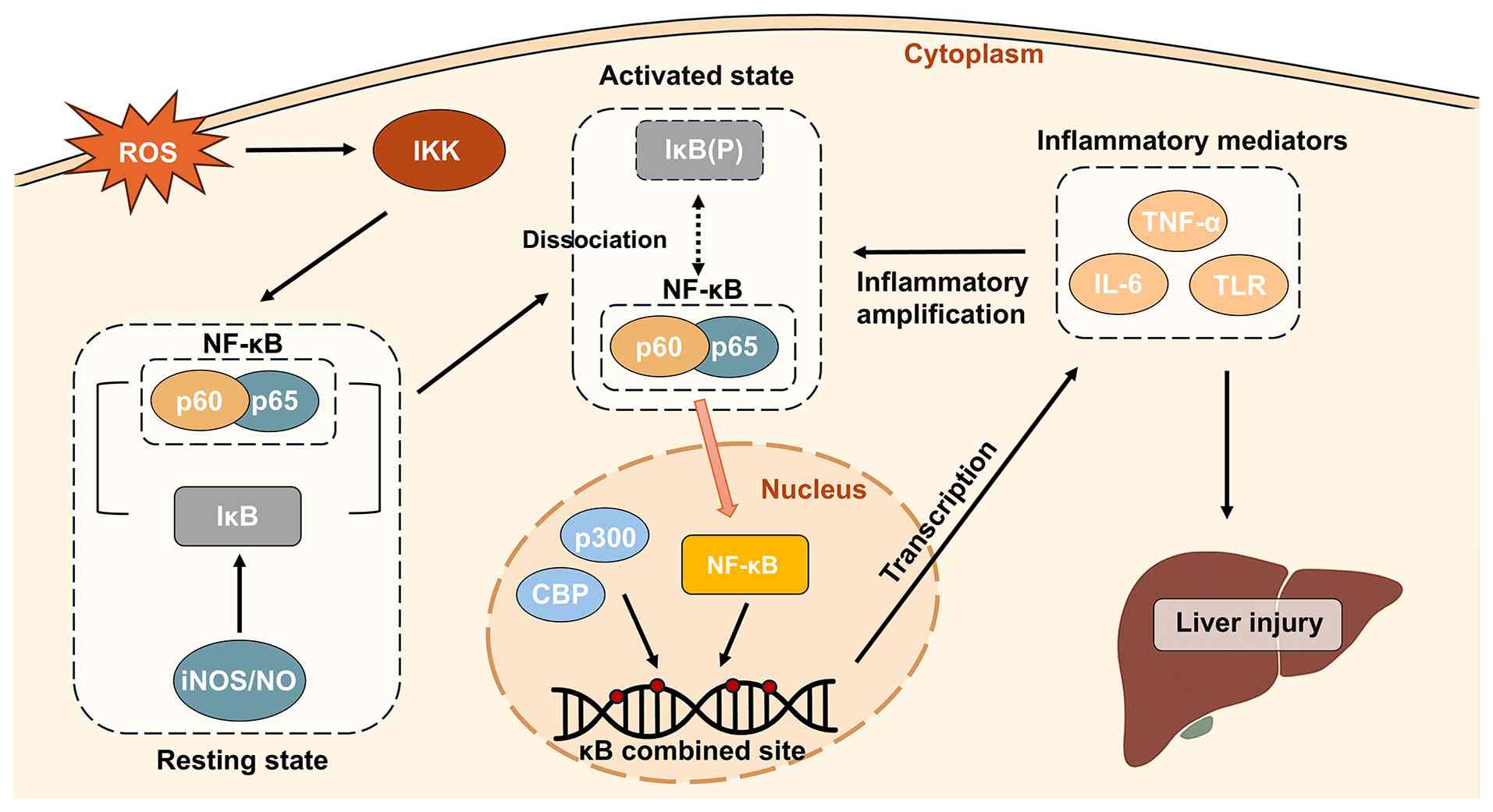 | Figure 3.Core pathological mechanism of the
NF-κB signaling pathway in oxidative stress-induced liver
inflammation. Under resting conditions, NF-κB is sequestered in the
cytoplasm by binding to its endogenous inhibitor, IκB. Oxidative
stress activates the IKK complex, leading to IκB phosphorylation
and degradation. Released NF-κB translocates to the nucleus, where
it initiates the transcription of key pro-inflammatory mediators,
such as TNF-α and IL-6. CBP, CREB-binding protein; IKK, IκB kinase;
IL-6, interleukin-6; iNOS, inducible nitric oxide synthase; NF-κB,
nuclear factor-κB; NO, nitric oxide; p50, NF-κB subunit p50; p65,
NF-κB subunit p65; ROS, reactive oxygen species; TLR, toll-like
receptor; TNF-α, tumor necrosis factor-α; IκB(P), IκB
phosphorylation. |
Given the notable role of NF-κB in hepatic
inflammation, targeting this pathway has become an important
strategy in the treatment of liver diseases. Multiple studies have
demonstrated that inhibiting NF-κB activity can effectively
alleviate liver damage. For instance, in an acetaminophen
(APAP)-induced acute liver-injury model, aloperine has been shown
to mitigate liver damage by suppressing the TLR4/NF-κB signaling
pathway, thereby blocking NF-κB-mediated activation of the NLR
family pyrin domain containing 3 inflammasome (54). Further research has shown that
taraxasterol modulates both the Nrf2/HO-1 and NF-κB pathways in
ethanol-induced liver injury models, concurrently enhancing
antioxidant capacity and suppressing inflammatory responses,
thereby regulating oxidative stress and inflammatory cascades to
break the cycle between oxidative stress and inflammation (51).
Notably, the sustained activation of NF-κB can
induce chronic inflammatory responses, whereas excessive or
untimely inhibition of NF-κB has been shown to impair hepatocyte
survival, liver regeneration and immune defense (48,55).
During liver regeneration, transient and moderate NF-κB activation
is important for the orderly progression of the hepatocyte cell
cycle and hepatic tissue repair (56). Conversely, the inhibition of NF-κB
signaling markedly increases the susceptibility of hepatocytes to
TNF-α-mediated apoptosis, and this apoptotic injury consequently
delays hepatic functional recovery (57). In addition, basal NF-κB activity is
important for the capacity of the liver to defend against
pathogenic invasion and maintain immune homeostasis. Animal
experiments have demonstrated that mice with defective NF-κB
activation in hepatocytes display a high susceptibility to
bacterial infections (58).
Accordingly, elucidating the functional balance of NF-κB under
distinct pathophysiological contexts is important for developing
therapeutic strategies for liver diseases targeting this signaling
pathway.
Oxidative stress-induced hepatocyte
apoptosis pathways and molecular regulatory mechanisms
Hepatocyte apoptosis has been recognized as a
central pathological event contributing to tissue dysfunction and
structural damage in a number of liver diseases, including viral
hepatitis, alcoholic liver disease, NAFLD, cholestasis and I/R
injury (59). Hepatocyte apoptosis
proceeds via two pathways. The extrinsic death receptor pathway is
triggered by death ligands, such as TNF-α, binding to membrane
receptors, which activates caspase-8. The intrinsic mitochondrial
pathway, which is initiated by intracellular stresses, such as
oxidative stress, modulates the balance of the B-cell lymphoma
(Bcl)-2 protein family, induces permeabilization of the
mitochondrial outer membrane and cytochrome c release, and
activates caspase-9. Both pathways ultimately converge on the
activation of caspase-3, which irreversibly executes the apoptotic
program (Fig. 4) (60,61).
Notably, during liver injury progression, apoptosis acts as an
important downstream effector in the combined action of oxidative
stress and inflammation by further exacerbating local inflammation
and oxidative stress levels, thereby forming a recurring cycle
(62).
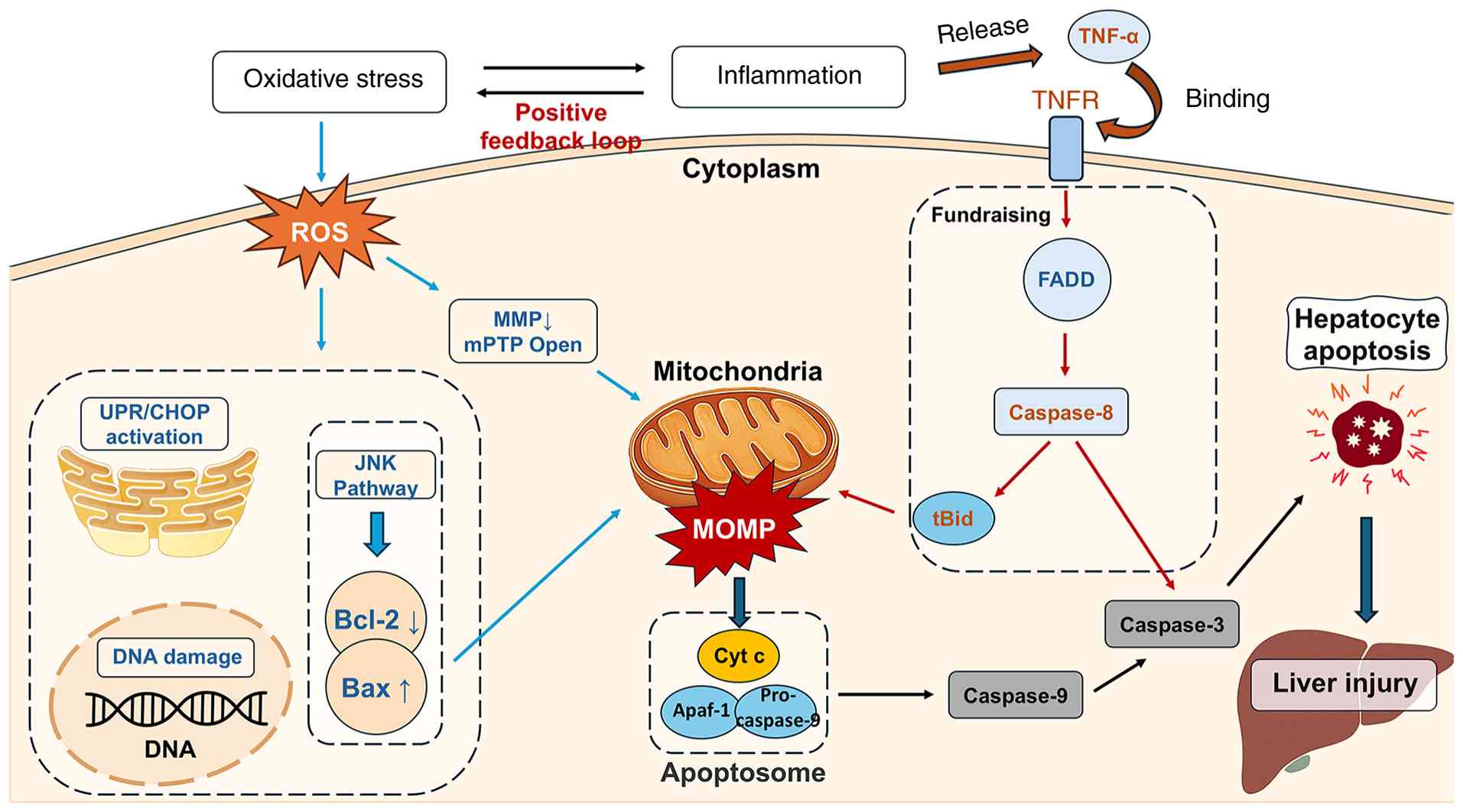 | Figure 4.Apoptosis constitutes a central
pathological process that executes tissue destruction in oxidative
stress-induced liver injury. Oxidative stress predominantly
activates the intrinsic mitochondrial pathway by modulating the
balance of Bcl-2 protein family, leading to mitochondrial Cyt c
release and caspase-9 activation. Oxidative stress can also engage
the extrinsic death receptor pathway, for example via TNF-α, which
activates caspase-8. Both pathways converge to activate the
executioner caspase-3, irreversibly committing the hepatocyte to
apoptosis. Apaf-1, apoptotic protease activating factor-1; CHOP,
C/EBP homologous protein; Cyt c, cytochrome c; FADD, Fas-associated
death domain; JNK, c-Jun N-terminal kinase; MMP, mitochondrial
membrane potential; MOMP, mitochondrial outer membrane
permeabilization; mPTP, mitochondrial permeability transition pore;
tBid, truncated Bid; TNF-α, tumor necrosis factor-α; TNFR, tumor
necrosis factor receptor; UPR, unfolded protein response; ROS,
reactive oxygen species; Bcl-2, B-cell lymphoma-2. |
Various bioactive substances exert hepatoprotective
effects by targeting key nodes in apoptotic pathways. Paeonia
lactiflora Pall. has been shown to exert anti-apoptotic
hepatoprotective effects in APAP-induced liver injury by inhibiting
ERK phosphorylation, which stabilizes mitochondrial membrane
permeability and blocks the release of mitochondrial apoptotic
signals (63). In addition to
directly targeting apoptotic signaling molecules, interventions
targeting the upstream regulatory links of oxidative stress and
apoptosis have also exhibited promising hepatoprotective potential.
In acute alcoholic liver injury, procyanidin B2 has been shown to
inhibit aberrant PI3K/Akt/NF-κB activation to attenuate oxidative
stress, inflammation and hepatocyte apoptosis (64). Furthermore, Tridax
procumbens leaf extract has been shown to activate the Nrf2
pathway to reverse cellular redox imbalance, consequently
inhibiting hepatocyte apoptosis triggered by chemotherapeutic
drug-induced oxidative damage (65). Therefore, apoptosis represents a
critical effector mechanism through which oxidative stress
contributes to hepatocyte injury. Collectively, these findings
demonstrate that pharmacological interventions targeting apoptotic
pathways can effectively inhibit hepatocyte apoptosis and thereby
delay the progression of liver injury, whether through direct
inhibition of apoptotic signaling or through upstream regulation of
oxidative stress. This has provided potential novel strategies for
the targeted therapy of liver diseases.
Summary
In summary, oxidative stress is a core pathological
factor that underlies the initiation, progression and malignant
transformation of liver injury. It not only directly modifies
biological macromolecules, including lipids, proteins and DNA, but
also modulates three core signaling axes, the Nrf2, NF-κB and
apoptosis signaling pathways. This establishes a cycle of mutual
reinforcement between oxidative imbalance, the inflammatory cascade
and apoptosis, which forms the pathological foundation of acute and
chronic liver diseases.
Notably, the Nrf2, NF-κB and apoptosis pathways
exert dual regulatory roles in liver injury, and their functional
effects have been closely associated with disease progression, the
intensity of their activation and other relevant factors.
Nrf2-driven antioxidant defense mitigates acute hepatic oxidative
damage, but chronic aberrant activation promotes liver cancer
progression, immune escape and chemoresistance (41). Meanwhile, sustained NF-κB
activation, a core mediator of oxidative stress and inflammation,
aggravates chronic liver inflammation and fibrosis, whereas its
transient physiological activation supports liver regeneration and
immune homeostasis. Physiologically, apoptosis clears damaged cells
to maintain tissue homeostasis, but its overactivation inflicts
irreversible parenchymal injury and amplifies oxidative and
inflammatory cascades. Furthermore, these three pathways do not
mediate the pathological process independently. They cross-regulate
one another to form an integrated signaling network, which
underlies the limited efficacy of single-target clinical
interventions (60). The natural
flavonoid rutin, a dietary flavonoid with well-established
antioxidant and anti-inflammatory properties, is considered a
promising candidate for multi-target modulation of the
aforementioned signaling pathways (66). The present review discusses the
hepatoprotective mechanisms of rutin across diverse liver-injury
models, starting with its structural and pharmacological
fundamentals.
The chemical structure and antioxidant
properties of rutin
Basic chemical structure of rutin
Rutin, a naturally occurring flavonoid, is widely
distributed across various plants. Its chemical structure consists
of the flavonoid aglycone quercetin linked via a glycosidic bond to
a disaccharide group composed of glucose and rhamnose. The
quercetin moiety of rutin contains two benzene rings and multiple
hydroxyl groups, which are characteristic of the
3′,4′-dihydroxyphenyl and 5,7-dihydroxyflavone skeletons. Rutin
exhibits the molecular formula
C27H30O16 and a molecular weight
of 610.51 g/mol (12,67,68).
These hydroxyl groups confer notable antioxidant activity, enabling
rutin to effectively scavenge superoxide, peroxyl and hydroxyl
radicals and form complexes with transition metals, for example
iron and copper, thereby enhancing its antioxidant and
anti-inflammatory effects (69–71).
The glycosyl groups, particularly glucose linked to rhamnose via
α-1,6 bonds, markedly impact the solubility and bioavailability of
rutin, making these groups important for pharmaceutical
formulations and bioavailability studies using rutin (67,68).
In vivo, rutin is metabolized into glucuronic acid, sulfate
and methylated derivatives. The plasma elimination half-life of
rutin is 12–19 h (72). Thus, the
bioactivity of rutin results not only from the free-radical
scavenging ability of the hydroxyl groups on the quercetin aglycone
but also from the modulation of the metabolic stability and
bioaccessibility of rutin via its glycosylation. This unique
structural feature enables rutin to exhibit broad biological
activities, including antioxidation, anti-inflammation and metal
chelation, demonstrating notable potential for various applications
(69,70).
Antioxidant pharmacological effects of
rutin
The mechanism of action of rutin encompasses
multiple aspects, including antioxidative and anti-inflammatory
effects, as well as signaling pathway regulation. Its antioxidant
effects form the foundation for its broad pharmacological
activities, particularly in liver protection.
In the liver, rutin mitigates oxidative damage and
lipid peroxidation in hepatocytes primarily through the direct
scavenging of free radicals, the chelation of transition metal ions
and the upregulation of endogenous antioxidant defense systems, for
example superoxide dismutase (SOD) and glutathione (GSH) (73). This mechanism of action has shown
promise in treating metabolic liver diseases such as NAFLD,
improving insulin resistance, delaying the progression of liver
fibrosis and providing adjunctive strategies for drug-induced liver
injury (27). Regarding
neurodegenerative diseases, rutin has been shown to enhance
cognitive function in patients with Alzheimer's disease and
Parkinson's disease via mechanisms involving the reduction of
amyloid protein deposition, inhibition of oxidative stress and
suppression of inflammatory factors (74,75).
In cardiovascular diseases, rutin has been shown to inhibit
macrophage-mediated inflammatory responses and foam-cell formation,
promote autophagy and modulate the PI3K/Akt pathway, thus slowing
the progression of atherosclerotic plaques (76). Additionally, rutin has been shown
to scavenge free radicals, reduce lipid peroxidation and enhance
endogenous antioxidant enzyme activity, thereby lowering oxidative
stress and preserving vascular function. These effects contribute
to protection against myocardial ischemia and exhibiting
therapeutic effects in patients with hypertension (73,77).
Rutin has been shown to suppress the high-mobility group protein
B1/TLR4/MYD88/NF-κB innate immune axis and reduce inflammatory and
oxidative stress markers in ulcerative colitis, thereby alleviating
colonic mucosal damage and exerting anti-inflammatory and
immunomodulatory effects (78).
The pharmacological actions of rutin involve the
specific modulation of several key signaling pathways. Rutin
activates the Nrf2/ARE pathway to enhance cellular antioxidant
defenses and concurrently suppresses NF-κB pathway activation and
downstream pro-inflammatory gene expression, mediating
anti-inflammatory responses. Additionally, rutin influences
apoptotic processes by modulating the caspase cascade and the
balance of Bcl-2 family proteins (Fig.
5) (66). Given the central
role of oxidative stress and inflammation in liver diseases, these
notable antioxidant, anti-inflammatory and cytoprotective
properties form the basis of the therapeutic potential exhibited by
rutin in a range of liver diseases. The following section further
explores the specific protective effects and mechanisms of rutin in
various liver-injury models.
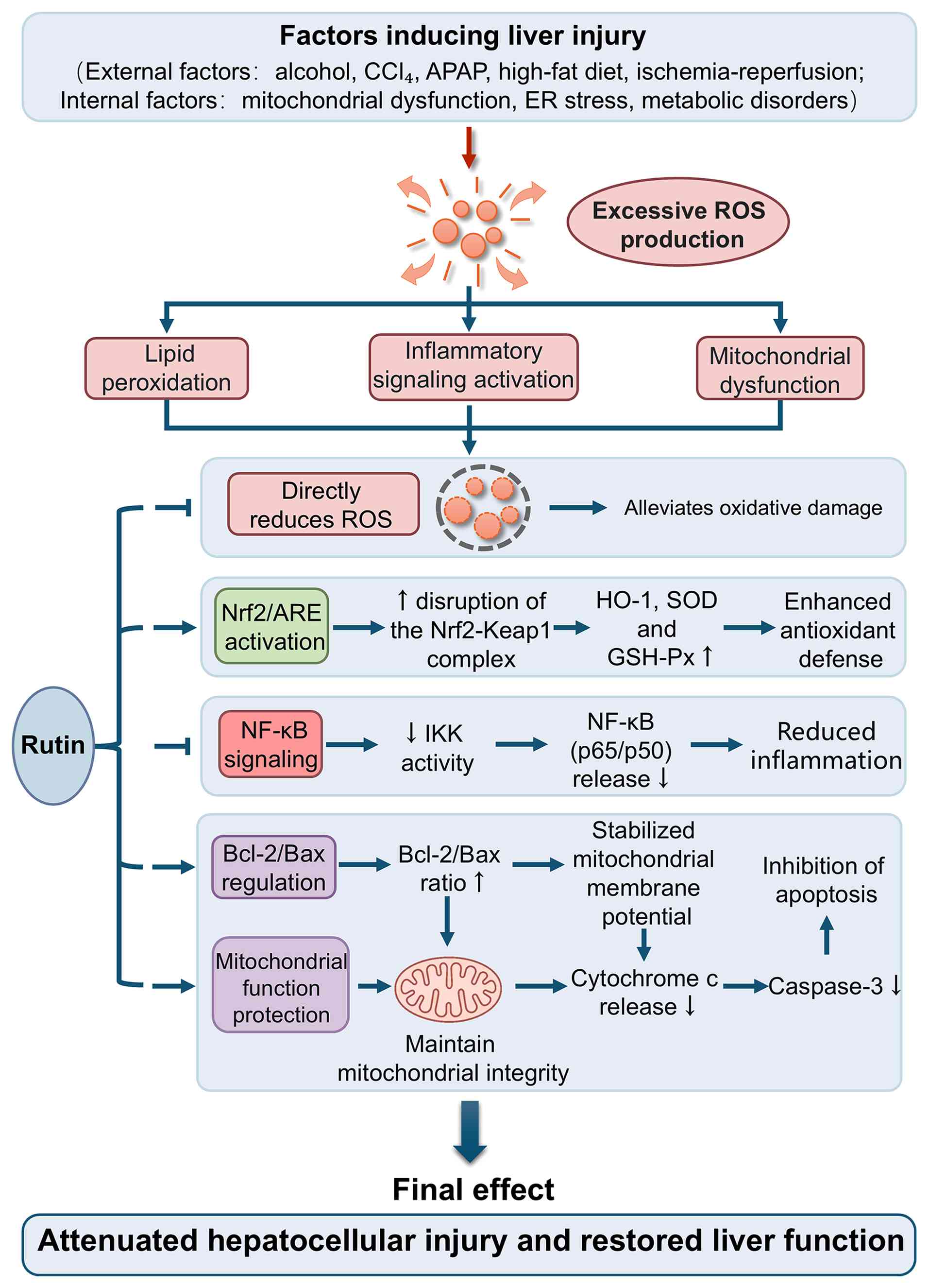 | Figure 5.Schematic of the hepatoprotective
mechanisms of rutin. Exogenous and endogenous stimuli induce
excessive ROS generation, leading to lipid peroxidation,
inflammatory signaling and mitochondrial dysfunction. Rutin: i)
Directly scavenges ROS; ii) activates the Nrf2/ARE pathway, which
disrupts Nrf2/Keap1 signaling and upregulates HO-1, SOD and GSH-Px;
iii) inhibits NF-κB signaling, reducing IKK activity and p65/p50
release; and iv) protects mitochondria, increasing the Bcl-2/Bax
ratio, stabilizing membrane potential and suppressing caspase-3.
These actions enhance antioxidant defense, reduce inflammation,
inhibit apoptosis and ultimately attenuate liver injury and restore
liver function. ROS, reactive oxygen species; ARE, antioxidant
response element; Bcl-2, B-cell lymphoma-2; GSH-Px, glutathione
peroxidase; HO-1, heme oxygenase-1; IKK, IκB kinase; Keap1,
kelch-like ECH-associated protein 1; NF-κB, nuclear factor-κB;
Nrf2, nuclear factor erythroid 2-related factor 2; SOD, superoxide
dismutase; ER, endoplasmic reticulum; APAP, acetaminophen. |
Study on the hepatoprotective mechanism of
rutin based on oxidative stress regulation
Rutin and chemical liver injury
In chemical-induced liver injury, the protective
effects of rutin have been demonstrated by notable improvements in
a range of physiological and biochemical indicators after
treatment, providing direct evidence of its therapeutic efficacy.
For example, a previous study has shown that rutin effectively
inhibits the increase in serum transaminase activities,
particularly those of aspartate aminotransferase (AST) and alanine
aminotransferase (ALT), induced by CCl4 in rats,
highlighting its hepatoprotective properties (79). In a rat model of
CCl4-induced liver injury, rutin has been shown to exert
hepatoprotective effects via its antioxidant activity, reversing
elevated serum liver-injury markers, restoring hepatic endogenous
antioxidant defenses and ameliorating lipid peroxidation, DNA
damage and hepatic histopathological lesions (80). Molecular and histological evidence
has further indicated that rutin reduces the mRNA expression levels
of poly(ADP-ribose) polymerase-1 and vascular endothelial growth
factor, alleviates tissue damage and promotes tissue repair
(81). In CCl4- and
thioacetamide-induced rat hepatotoxicity models, rutin has been
shown to mitigate DNA fragmentation and 8-oxo-2′-deoxyguanosine
damage and to markedly ameliorate histopathological liver changes
(82,83). Beyond its protection against
chemical liver injury, long-term rutin administration enhances
antioxidant defense capacity in healthy animals. For example, a
study has shown that rutin administration inhibits ROS accumulation
in HepG2 cells and improves redox imbalance-related indicators in
mouse models of oxidative stress (84).
These notable phenotypic improvements have been
primarily attributed to the capacity of rutin to modulate key
hepatic oxidative stress pathways. Rutin exerts hepatoprotective
effects through the regulation of important signaling pathways,
including the mitogen-activated protein kinase (MAPK), NF-κB and
Nrf2 pathways. In response to chemical toxin-induced injury, rutin
first enhances antioxidant defense by activating the Nrf2/ARE
pathway, thereby promoting Nrf2 nuclear translocation and the
activation of the ARE, which in turn boosts the activity of
downstream antioxidant enzymes and mitigates oxidative stress
damage (12,85). However, oxidative stress induced by
chemical toxins can rapidly trigger downstream inflammatory and
apoptotic cascades (86,87). Consequently, the hepatoprotective
effects of rutin are also reflected in its regulation of the core
inflammatory pathway: The NF-κB signaling pathway. Rutin inhibits
pathological NF-κB overactivation by modulating upstream signal
transduction. For example, rutin has been shown to alleviate
zearalenone-induced hepatic inflammation and intestinal barrier
dysfunction in mice by modulating the gut microbiota, improving
intestinal barrier function and reducing the production and leakage
of lipopolysaccharides, thereby inhibiting the aberrant activation
of the NF-κB pathway (88). In
cadmium-induced liver injury, rutin has been shown to indirectly
suppress NF-κB activation by regulating the upstream MAPK signaling
pathway. Specifically, rutin reduces the phosphorylation of key
MAPK proteins, such as ERK, c-Jun N-terminal kinase (JNK) and p38,
thereby decreasing NF-κB activity and suppressing the release of
pro-inflammatory cytokines (89).
The rutin-mediated inhibition of p38α MAPK has been shown to
interfere with the nuclear translocation of NF-κB and its
coactivator Bcl-3, suppressing the transcriptional expression of
inflammatory mediators, such as TNF-α and IL-1β (90).
Furthermore, rutin has been shown to suppress
NF-κB-driven inflammatory responses in multiple chemical-induced
liver-injury models, as well as to block apoptotic cascades. Rutin
has been shown to suppress the NF-κB-mediated inflammatory cascade
in deltamethrin-induced liver-injury models, reducing the levels of
pro-inflammatory factors and inflammatory mediators. In these
models, rutin has also been shown to block the apoptotic cascade by
regulating the Bcl-2/Bax and caspase-3 pathways (12,81).
Similarly, rutin has been shown to reduce the expression of genes
induced by perfluorooctanoic acid, such as TNF-α, IL-6, NF-κB and
JNK, alleviating inflammatory responses (19). In terms of anti-apoptotic effects,
rutin influences the NF-κB signaling pathway to inhibit the
expression of caspase-3 (91).
Notably, the dual ability of rutin to activate the Nrf2 pathway and
inhibit the NF-κB pathway effectively counteracts the cycle of
oxidative damage, inflammation and apoptosis caused by
chemical-induced liver injury, reversing λ-cyhalothrin-induced
oxidative stress and apoptosis in liver-injury models (85).
In summary, chemical-induced liver injury is
directly triggered by exogenous toxins causing severe oxidative
stress, and rutin initiates its therapeutic activity by modulating
the Nrf2-mediated endogenous antioxidant system. Rutin then
coordinately regulates and blocks subsequent inflammatory and
apoptotic cascade reactions through multiple pathways, ultimately
reversing the molecular and tissue-level liver damage induced by
chemical toxins.
Rutin and drug-induced liver
injury
The core mechanism of drug-induced liver injury is
excessive oxidative stress triggered by drug metabolism. Rutin
effectively ameliorates drug-induced liver injury, with therapeutic
effects manifested through improvements at the biochemical,
physiological and histopathological levels. A study has shown that
after rutin intervention, abnormal serum transaminase levels, such
as ALT and AST, are markedly reduced, and oxidative stress,
inflammatory factors, DNA damage and tissue injuries are mitigated
(92). For example, rutin has been
shown to alleviate histopathological liver damage induced by
methotrexate, including hepatic inflammatory infiltration,
hepatocyte vacuolation, and sinusoidal dilation and congestion
(93).
Rutin exerts hepatoprotective effects by regulating
oxidative stress-related signaling pathways. In two representative
drug-induced liver-injury models, including the doxorubicin- and
vortioxetine-induced rat models, rutin has markedly alleviated
hepatic oxidative damage via activation of the Nrf2 signaling
pathway. Specifically, rutin has been shown to activate Nrf2 to
regulate the AREs, thereby upregulating the activity of antioxidant
enzymes, such as SOD, GSH and GSH S-transferase. This has been
shown to enhance antioxidant defenses and clear excessive ROS,
alleviating doxorubicin- and vortioxetine-induced hepatotoxicity in
rats (92,94).
Accumulating evidence has suggested that, in
addition to alleviating oxidative stress by promoting the
endogenous antioxidant defense system, rutin may reduce lipid
peroxidation and suppress the release of pro-inflammatory factors,
such as TNF-α, via inhibiting the NF-κB signaling pathway, thus
mitigating drug-triggered inflammatory responses (95,96).
Furthermore, rutin synergistically reduces hepatic oxidative damage
and inflammation through coordinated regulation of NF-κB and MAPK
pathways. In a cyclophosphamide (CP)-induced hepatitis model, rutin
has been shown to alleviate the oxidative-inflammatory cascade
triggered by ROS and TNF-α by downregulating the expression of p38
MAPK and NF-κB, suppressing their downstream effector molecules,
such as cyclooxygenase-2 and inducible nitric oxide (NO) synthase
(iNOS) (97).
The protective mechanisms exhibited by rutin also
extend to oxidative stress-related apoptotic pathways. A study has
shown that rutin reduces ROS production by inhibiting
thioredoxin-interacting protein activity and promoting its
degradation, thus suppressing apoptosis signal-regulating kinase 1
activation and its downstream apoptotic signaling pathways. This
mitigates mitochondrial damage and cellular apoptosis (98).
In summary, the hepatoprotective effects of rutin
against drug-induced liver injury are achieved through multi-target
and multi-pathway synergistic regulation of oxidative cascade
reactions, with the Nrf2 pathway serving as the core antioxidant
axis complemented by other pathways to counteract oxidative stress
and inflammation caused by drug metabolism, thereby maintaining and
restoring hepatocyte homeostasis. This not only provides a
theoretical foundation for further research into the
hepatoprotective mechanisms of rutin but also offers valuable
insights for developing clinical adjuvant therapeutic strategies
for mitigating chemotherapy-induced liver injury.
Rutin and metabolic
dysfunction-associated steatotic liver disease (MAFLD)
Unlike chemical- and drug-induced liver injuries
caused by exogenous substances, metabolic factor-associated liver
injury arises from chronic imbalances in energy metabolism
(99). Although its triggers are
varied, the subsequent pathological processes are closely linked to
hepatocyte damage, inflammatory responses and oxidative stress
(100). The therapeutic effects
of rutin on this type of liver injury are manifested through its
pleiotropic actions, which include regulating lipid metabolism,
improving insulin resistance and exerting potent antioxidant and
anti-inflammatory properties, thus halting liver damage
progression. Rutin also directly modulates lipid and glucose
metabolic signaling pathways, thereby addressing the root cause of
metabolic disorders (27).
In a high-fat diet-induced mouse model of MAFLD,
rutin has been shown to notably reduce body weight and hepatic
steatosis. Rutin has also been shown to lower blood levels of total
cholesterol, low-density lipoprotein, triglycerides, free fatty
acids and lipid droplet accumulation, as well as to increase
high-density lipoprotein cholesterol levels and alleviate hepatic
lipid accumulation (27,101). These metabolic improvements have
been attributed to the capacity of rutin to regulate
metabolism-related signaling pathways. Specifically, rutin
activates the 5′-AMP-activated protein kinase (AMPK) pathway to
inhibit sterol regulatory element-binding protein 1-driven
lipogenesis and mitigate oxidative stress through the downstream
Nrf2 axis (102); this regulatory
effect has been corroborated by studies of rutin-rich herbal
extracts against hepatic steatosis (103). Simultaneously, rutin restores the
activity of peroxisome proliferator-activated receptor-α and its
downstream target carnitine palmitoyltransferase 1/2 to facilitate
fatty acid metabolism and suppress lipogenesis (104). A related study has also indicated
that rutin-rich herbal materials exert similar hepatoprotective
effects via antioxidant pathways (104). Notably, rutin has also been shown
to effectively improve insulin resistance in a type 2
diabetes-related liver injury model By promoting the activation of
insulin receptor substrate 2 and subsequently activating the
PI3K/Akt/GSK-3β signaling pathway, rutin reduces blood glucose
levels and decreases the production of advanced glycation
end-products, providing hepatic protection under type 2 diabetic
conditions (105).
In MAFLD, the pathological progression from lipid
accumulation to hepatic injury is largely driven by oxidative
stress and inflammation. In addition to its regulatory effects on
lipid metabolism, rutin has been shown to alleviate MAFLD-related
hepatic damage through its antioxidant and anti-inflammatory
properties. Specifically, rutin treatment has been shown to restore
serum transaminase levels, including AST and ALT; enhance
endogenous antioxidant enzyme activities, such as SOD and GSH
peroxidase; and reduce lipid peroxidation markers, such as
malondialdehyde (MDA) in experimental models of MAFLD (18,106). Specifically, in a rat model of
metabolic syndrome, rutin has been shown to reverse or prevent
pathological metabolic changes, such as increased abdominal fat and
impaired glucose tolerance, alleviate abnormalities in liver
structure and function, and reduce oxidative stress and
inflammation in the liver (107).
At the molecular level, rutin inhibits the NF-κB pathway,
suppressing the expression and release of inflammatory factors,
such as TNF-α and IL-1β. Rutin also activates the Nrf2 pathway,
leading to the upregulation of its downstream antioxidant targets,
including HO-1 and NAD(P)H quinone oxidoreductase 1, to enhance the
antioxidant defense capacity of the body, synergistically
mitigating oxidative and inflammatory damage in MAFLD (84). Additionally, rutin inhibits the
cytochrome P450 2E1 and JNK1 pathways, reducing ROS generation at
the source and downregulating the expression of inflammatory
mediators, such as iNOS, thereby breaking the cycle of oxidative
stress and inflammation (106).
Rutin derivatives have also shown promise in
treating MAFLD. Troxerutin has been shown to alleviate metabolic
syndrome-related pathologies in high-fat diet-fed mice by reducing
hepatic steatosis, enhancing fatty acid oxidation and inhibiting
oxidative stress-mediated NAD depletion and endoplasmic reticulum
stress (108). Furthermore,
sodium rutin has been shown to modulate gene expression to promote
fatty acid β-oxidation and reduce hepatic steatosis (104,108).
Notably, rutin also exhibits iron-chelating
properties, offering a unique mechanism for treating liver diseases
linked to iron metabolism disorders. A study has indicated that
hepatic iron overload is an independent risk factor for MAFLD
progression and insulin resistance. In a metabolic-disorder model,
rutin treatment has been shown to markedly reduce hepatic ferritin
expression and serum transferrin saturation, as well as to increase
serum unsaturated iron-binding capacity. This suggests that rutin
can chelate excess free iron, regulate hepatic iron metabolism and
effectively inhibit the iron-catalyzed Fenton reaction, thereby
suppressing ROS production at the source. Consequently, rutin has
emerged as a potential iron chelator, showing promise not only for
treating iron overload-related liver diseases, such as transferrin
receptor protein 2-deficient type 3 hereditary hemochromatosis
(109), but also offering an
additional novel approach to alleviating oxidative stress in
MAFLD.
In summary, in more complex cases of
metabolism-related liver injury, rutin demonstrates multi-faceted
regulatory capabilities. Rutin achieves synergistic modulation of
liver-injury progression through multiple mechanisms, including
metabolic-disorder correction, insulin-resistance amelioration and
oxidative-stress suppression, rather than solely regulating the
oxidative-stress cascade. Consequently, rutin serves as a natural
hepatoprotective agent against liver injuries induced by various
pathological factors.
Rutin and alcoholic liver disease
The core mechanism of alcoholic liver disease
involves oxidative stress, lipid metabolism disorders and gut
microbiota dysbiosis, all triggered by ethanol and its metabolites
(110). The hepatoprotective
mechanism of rutin is achieved through multi-pathway interventions
within this complex pathological network.
Studies have shown that rutin can effectively
reverse ethanol-induced hepatic steatosis, reducing lipid
accumulation in the liver. For example, rutin has markedly lowered
serum transaminase levels, such as AST and ALT, and hepatic
triglyceride content in alcohol-fed mice and concurrently
suppressed the expression of fatty acid synthase and acetyl-coA
carboxylase, resulting in reduced hepatic lipid accumulation
(111). This effect has been
further validated at the cellular level, as rutin has been shown to
alleviate ethanol-induced toxicity in HepG2 cells, improving cell
membrane integrity, notably reducing intracellular lipid droplet
accumulation under ethanol exposure and markedly enhancing cell
viability (112,113). In terms of antioxidant effects,
rutin has been shown to markedly increase the activity of
antioxidant enzymes, for example SOD and catalase (CAT), and
downregulate thiobarbituric acid reactive substances expression,
effectively inhibiting ethanol-induced oxidative stress and lipid
peroxidation (111).
Furthermore, rutin ameliorates alcoholic liver
disease by modulating key pathways related to hepatic lipid
metabolism. A study has shown that tartary buckwheat extract
containing abundant rutin modulates glycerophospholipid metabolism
and the phosphatidylcholine/ phosphatidylethanolamine balance to
restore hepatic lipid transport and exerts protective effects
against alcohol-triggered oxidative stress (114). In terms of antioxidant effects,
rutin has been shown to alleviate alcohol-induced oxidative stress
and inflammation in HepG2 cells by activating the Nrf2/ARE pathway
and enhancing the expression of antioxidant enzymes, such as SOD
and CAT (115). Additionally,
rutin has been shown to restore the dynamic balance of
mitochondrial homeostasis by inhibiting the expression of the key
mitochondrial fission protein dynamin-related protein 1, mitigating
ethanol-induced oxidative damage at the organelle level (112). Furthermore, rutin is also an
important active constituent of multiple herbal tea extracts. A
previous study has shown that rutin-rich plant extracts can
upregulate hepatic alcohol-metabolizing enzymes, and that these
extracts alleviate alcoholic liver damage by regulating gut
microbiota and maintaining intestinal homeostasis via the gut-liver
axis (116).
Notably, bioavailability is important for the
efficacy of rutin treatment. Tartary buckwheat flour extracts
enriched with rutin have exhibited notable therapeutic effects in
ethanol-induced liver injury in rats due to superior oral
absorption and prolonged blood retention time compared with rutin
alone (117). Similarly,
Dendropanax morbiferus leaf extracts rich in rutin has been
shown to prevent alcoholic liver injury by efficiently scavenging
alcohol-generated ROS (118). In
summary, rutin protects against alcohol-induced liver injury
through multi-target and multi-pathway synergism, with its core
mechanism of action centered on counteracting alcohol-induced
oxidative stress and correcting oxidative stress-induced
inflammatory responses and lipid metabolism disorders.
Rutin and other types of liver
injury
In addition to common liver injuries, rutin has
shown potential in treating less common pathological models, such
as hepatic I/R injury and cholestatic liver injury models. Unlike
toxins, drugs or metabolic disorders that directly damage the
liver, hepatic I/R injury is surgery-related and is characterized
by acute oxidative bursts and microcirculatory disturbances
(119). Cholestatic liver injury,
on the other hand, is marked by chronic inflammation, bile duct
reactions and fibrosis (120).
Studies have provided supportive evidence that rutin exerts notable
protective effects against both of these distinct types of liver
injury, highlighting its unique advantage in multi-target
pharmacological action.
Rutin and hepatic I/R injury
Hepatic I/R injury is a leading cause of liver
failure after transplantation and hepatectomy, with oxidative
stress and microcirculatory disturbances being the primary
pathological mechanisms behind this injury type (119). Rutin protects the liver against
I/R-induced local injury through direct free-radical scavenging,
inhibition of lipid peroxidation and restoration of endogenous GSH
reserves (121). Its protection
against remote organ damage is primarily attributed to the
preservation of microcirculatory function and the reduction of
neutrophil infiltration into distant tissues (122). Specifically, rutin
preconditioning has been shown to markedly reduce blood MDA levels,
inhibit lipid peroxidation and restore total GSH levels, thereby
enhancing endogenous antioxidant reserves (121). In terms of anti-inflammatory
effects, rutin has been shown to suppress myeloperoxidase activity,
alleviate neutrophil cytotoxicity, reduce tissue inflammatory
infiltration and ultimately mitigate neutrophil-mediated tissue
injury (121). In a rat model of
hepatic I/R, rutin modulates the dimethylarginine
dimethylaminohydrolase (DDAH)/asymmetric dimethylarginine/NOS axis
by counteracting DDAH1 upregulation, inhibiting iNOS and enhancing
endothelial NOS to correct NO imbalance and improve
microcirculation. Rutin also restores depleted thiol groups,
reinforcing antioxidant defenses, thereby alleviating hepatic I/R
injury (20).
Rutin and cholestatic liver
injury
Rutin has demonstrated notable protective effects
against cholestatic liver injury, which is characterized by
inflammation, fibrosis and bile duct reactions. Rutin has been
shown to exert multi-faceted protective actions, ranging from
hepatocyte protection to the amelioration of biliary fibrosis. A
study has indicated that rutin not only reduces serum levels of AST
and ALT, alleviating hepatocyte degeneration and necrosis, but also
inhibits bile duct hyperplasia, decreases collagen expression and
reduces collagen deposition in liver tissue, improving the
structural disorganization induced by cholestasis (123). From the perspective of signaling
pathway regulation, rutin has been shown to exert hepatoprotective
effects through multi-pathway synergistic actions. Rutin has been
shown to inhibit the phosphorylation of ERK, blocking the
downstream NF-κB inflammatory signaling pathway and the TGF-β/Smad
fibrotic signaling pathway, thus reducing the synthesis of
pro-inflammatory factors and collagen (124). Furthermore, rutin has been shown
to activate the Nrf2/HO-1 antioxidant signaling axis, enhance
antioxidant enzyme activity and promote AMPK phosphorylation,
collectively mitigating oxidative damage. The synergistic activity
of these pathways ultimately targets α-smooth muscle
actin+ myofibroblasts, inhibiting their activation while
alleviating oxidative stress and reducing the activation triggers
of these cells, thereby suppressing liver fibrosis at the cellular
level (123,125).
In summary, the hepatoprotective effects of rutin do
not rely on the regulation of a single pathway but stem from its
multi-directional, synergistic modulation of the hepatic cell
signaling network. Whether in response to exogenous toxins or
drugs, metabolic disorders, cholestasis or ischemia-induced stress
reactions, rutin precisely targets the core mechanism of oxidative
stress and subsequent inflammation and synergizes with other
pathways to effectively alleviate or reverse liver injury. Notably,
all evidence summarized in the present review is solely derived
from preclinical studies, including animal model experiments and
in vitro assays, with no involvement of human clinical
trials. This is systematically reflected in Table I (12,18–20,79–85,88–94,97,98,102,105–109,111–113,115,117,121,123), which provides an overview of the
antioxidant effects of rutin in various liver injury models in
preclinical studies. The capacity of rutin to integrate multiple
pathways with multiple effects not only explains the applicability
of rutin in various liver injury models but also suggests the
potential of rutin as a broad-spectrum hepatoprotective agent,
particularly in clinical treatments, such as chemotherapy adjuvant
therapy.
 | Table I.Overview of the antioxidant effects
of rutin in various liver injury models in preclinical studies. |
Table I.
Overview of the antioxidant effects
of rutin in various liver injury models in preclinical studies.
| A, Chemical liver
injury |
|---|
|
|---|
| First author,
year | Liver disease
type | Experimental
models | Rutin dose
(administration, frequency) | Therapeutic
mechanism | (Refs.) |
|---|
| Janbaz et
al, 2002 | Paracetamol- and
CCl4-induced hepatotoxicity | Swiss male mice and
Wistar male rats | 20 mg/kg (p.o.,
every 12 h for a total of 4 doses) | CYP inhibition and
radical scavenging | (79) |
| Khan et al,
2013 | Subchronic
CCl4-induced hepatic oxidative stress | Sprague-Dawley male
rats | 50 mg/kg (p.o.,
twice weekly) | Antioxidant enzyme
restoration and lipid peroxidation reduction | (80) |
| Küçükler et
al, 2021 |
Deltamethrin-induced hepatotoxicity | Male Sprague Dawley
rats | 25/50 mg/kg (p.o.,
daily for 30 days) | NF-κB/p38 MAPK
inhibition, anti-apoptotic and antioxidative activities | (81) |
| Khan et al,
2012 |
CCl4-induced
hepatotoxicity | Male Sprague-Dawley
rats | 50/70 mg/kg (p.o.,
twice weekly for 4 weeks) | Antioxidation, DNA
protection and CYP2E1/p53 restoration | (82) |
| Zargar et
al, 2017 | TAA-induced
hepatotoxicity | Male Wistar
rats | 10 mg/kg (p.o.,
daily for 2 weeks) | Antioxidation and
DNA protection | (83) |
| Freitas et
al, 2022 | ABAP-induced
hepatic redox imbalance | In vivo:
Male Swiss mice; in vitro: HepG2 cells | In vivo: 10
mg/kg (oral, daily for 4 weeks) for chronic study; 10 mg/kg (oral,
single dose) for acute study; in vitro: 20/40 µg/ml (3
h) | Antioxidation and
redox restoration | (84) |
| Domitrović et
al, 2012 |
CCl4-induced acute
hepatotoxicity | Male BALB/cN
mice | 10/50/150 mg/kg
(i.p., daily for 5 days) | NF-κB suppression,
Nrf2/HO-1 induction and antioxidation | (12) |
| Ali et al,
2022 |
λ-cyhalothrin-induced hepatotoxicity | Male Wistar
rats | 200 mg/kg (p.o., 5
days/week for 60 days) | Nrf-2 activation
and TNF-α suppression | (85) |
| Wang et al,
2024 | Zearalenone-induced
liver inflammation and injury | Female Kunming mice
(6 weeks) | 500 mg/kg (diet, 28
days) | NF-κB inhibition
and gut barrier protection | (88) |
| Liu et al,
2022 | Cadmium-induced
liver necroptosis | Isa hens (100
days) | 500 mg/kg (diet, 60
days) | Oxidative stress
inhibition and MAPK/NF-κB suppression | (89) |
| Caglayan et
al, 2019 |
HgCl2-induced
hepatotoxicity | Male Sprague Dawley
rats (250–270 g) | 50/100 mg/kg (p.o.,
daily for 7 days) | NF-κB/p38 MAPK
signaling inhibition, anti-apoptotic and antioxidative
activities | (90) |
| Naderi et
al, 2023 | PFOA-induced liver
injury | Male Wistar rats
(200–250 g) | 25/50/100 mg/kg
(p.o., daily for 4 weeks) | NF-κB/JNK signaling
inhibition, antioxidation and anti-apoptotic activity | (19) |
| Rafiee et
al, 2023 | Paraquat-induced
hepatotoxicity | Male Wistar
rats | 25/50/100 mg/kg
(p.o., daily for 14 days) | NF-κB/IL-1β
signaling inhibition, antioxidation and anti-apoptotic
activity | (91) |
|
| B, Drug-induced
liver injury |
|
| First author,
year | Liver disease
type | Experimental
models | Rutin dose
(administration, frequency) | Therapeutic
mechanism | (Refs.) |
|
| Anwar and Laila,
2024 |
Vortioxetine-induced hepatotoxicity | Male Albino
rats | 25 mg/kg (p.o.,
daily for 3 weeks) |
Caspase-3/cytochrome-C suppression,
antioxidation and anti-inflammatory activity | (92) |
| Erdogan et
al, 2015 |
Methotrexate-induced hepatotoxicity | Female Wistar
albino rats | 100 mg/kg (i.p.,
daily for 10 days) | Antioxidation and
restoration of antioxidant enzymes | (93) |
| Ahmed et al,
2022 | Doxorubicin-induced
hepatotoxicity | Male Wistar rats
(120–145 g) | 50 mg/kg (p.o.,
every other day for 5 weeks) | Nrf2 activation,
anti-inflammatory and anti-apoptotic activities | (94) |
| Nafees et
al, 2015 |
Cyclophos-phamide-induced
hepatotoxicity | Male Wistar rats
(150–200 g) | 50/100 mg/kg (p.o.,
daily for 20 days) | NF-κB/p38 MAPK
signaling inhibition, antioxidation and anti-inflammatory
activity | (97) |
| Wu et al,
2024 | Ensartinib-induced
hepatotoxicity | Male C57BL/6J mice
(6 weeks) | 10 mg/kg (p.o.,
daily for 4 weeks) | TXNIP inhibition
and anti-apoptotic activity | (98) |
|
| C, Metabolic
dysfunction-associated steatotic liver disease |
|
| First author,
year | Liver disease
type | Experimental
models | Rutin dose
(administration, frequency) | Therapeutic
mechanism | (Refs.) |
|
| Liu et al,
2024 | Diabetic NAFLD | Male db/db mice
(type 2 diabetic model) | 100/200 mg/kg
(p.o., daily for 8 weeks) | AMPK/SREBP1
signaling activation and inhibition of lipid synthesis,
anti-oxidation and anti-inflammatory activity | (102) |
| Liu et al,
2017 | NAFLD induced by
high-fat diet | Male C57BL/6 mice
(8 weeks) fed a high-fat diet (60% fat) for 8 weeks | 200 mg/kg (i.p.,
daily for 4 weeks) | PPARα activation,
SREBP1c inhibition, antioxidation and anti-inflammatory
activity | (18) |
| Liang et al,
2018 | Type 2 diabetes
mellitus-associated liver injury | In vivo:
Male db/db mice (spontaneous T2DM model; 7–8 weeks); in
vitro: HepG2 liver cells | 60/120 mg/kg (p.o.,
daily for 8 weeks) |
IRS-2/PI3K/Akt/GSK-3β pathway activation,
AGE inhibition and hepatoprotection | (105) |
| El-Shial et
al, 2023 | NAFLD induced by
high-fructose diet | Male Albino mice
(5-weeks) fed 30% fructose in drinking water | 50/75/100 mg/kg
(p.o., twice weekly for 8 weeks) | CYP2E1/iNOS/JNK1
pathway inhibition and anti-inflammatory activity (validated with
isolated rutin) | (106) |
| Panchal et
al, 2011 | Non-alcoholic
steatohepatitis | Male Wistar rats
(8–9 weeks) fed a high-carbohydrate, high-fat diet for 16
weeks | 1.6 g/kg diet (8
weeks) | Antioxidation,
anti-inflammatory activity and cardioprotection | (107) |
| Zhang et al,
2016 | NAFLD | Male ICR mice fed a
high-fat diet for 20 weeks | Troxerutin 150
mg/kg (p.o., daily for 20 weeks) | ER stress-mediated
NOD/NF-κB axis inhibition and anti-inflammatory activity | (108) |
| Hawula et
al, 2021 | Genetic iron
overload (mirroring type 3 hereditar haemo-chromatosis) | Male TFR2
knockout mice on a C57BL/6 background | 60 mg/kg (p.o.,
daily for 21 days) | Iron chelation,
ferritin reduction and transferrin saturation reduction | (109) |
|
| D, Alcoholic
liver disease |
|
| First author,
year | Liver disease
type | Experimental
models | Rutin dose
(administration, frequency) | Therapeutic
mechanism | (Refs.) |
|
| Lin et al,
2021 | AFLD | Male C57BL/6J mice
fed a Lieber-DeCarli liquid ethanol diet for 6 weeks | 16.4 mg/kg (p.o.,
daily for 6 weeks) | Antioxidation,
reduction of serum lipid levels and suppression of ACC-mediated
fatty acid synthesis | (111) |
| Choi et al,
2021 | Ethanol-induced
hepatotoxicity and hepatic steatosis | Zebrafish larvae (4
dpf) and HepG2 cells | 1 µM (in
vitro: 24 h; in vivo: immersion, 24 h) | Inhibition of
DRP1-mediated mitochondrial fission and suppression of
steatosis | (112) |
| Wang et al,
2022 | Ethanol-induced
hepatocyte damage | Human hepatic L02
cell line (in vitro) | 100 µM (in
vitro, 12 h) | Antioxidation,
anti-inflammatory, anti-apoptotic and membrane-protective
effects | (113) |
| Lee et al,
2019 | Alcoholic liver
disease | Human hepatoma cell
line HepG2 (in vitro) | 10/20 µM
(pre-treatment for 1 h, then co-treatment with 5% ethanol for 24
h) | Activation of the
Nrf2/ARE pathway, antioxidation and anti-inflammatory activity | (115) |
| Jin et al,
2020 | Alcoholic liver
disease | Female
Sprague-Dawley rats with ethanol-induced ALD (40% ethanol; 10 ml/kg
for 28 days) | 15.65 mg/kg (p.o.,
daily for 28 days) | Antioxidant enzyme
restoration and lipid peroxidation reduction | (117) |
|
| E, Other types
of liver injury |
|
| First author,
year | Liver disease
type | Experimental
models | Rutin dose
(administration, frequency) | Therapeutic
mechanism | (Refs.) |
|
| Olmez et al,
2023 | Liver
ischemia/reperfusion-induced distant organ injury | Male Wistar albino
rats (255–275 g) | 50 mg/kg (p.o.,
administered 1 h before ischemia induction | Antioxidation,
anti-inflammatory activity and inhibition of PMNL infiltration | (121) |
| Lanteri et
al, 2007 | Hepatic
ischemia/reperfusion injury | Male Wistar rats
(200–220 g) | 30 mg/kg (i.p.,
daily for 3 days) | Antioxidation, DNA
protection and DDAH/NOS signaling modulation | (20) |
| Pan et al,
2014 | BDL-induced
cholestatic liver injury | Male Sprague-Dawley
rats | 25 mg/kg (p.o.,
daily for 4 weeks) | TGF-β/Smad
signaling inhibition, anti-inflammatory effects and
antioxidation | (123) |
Nano-application prospects of rutin in liver
injury
Pharmacokinetic studies are important for
determining drug bioavailability. Traditional drug delivery
technologies often exhibit poor responsiveness to changes in
metabolic and pathological states, failing to achieve targeted drug
delivery and enhance bioavailability (126–128). For example, although short-chain
fatty acids (SCFAs) have shown therapeutic potential in the
treatment of non-alcoholic steatohepatitis (NASH), their low
molecular weight and high water solubility lead to unfavorable
pharmacokinetic properties, resulting in rapid systemic clearance
that limits therapeutic efficacy and may also cause adverse effects
(129).
Notably, advances in nanomaterial synthesis and
application have provided novel solutions for disease treatment.
The liver, a key organ of the reticuloendothelial system,
efficiently captures nanoparticles from the bloodstream after
intravenous administration, promoting their accumulation in the
liver. Consequently, antioxidant nanocatalysts with passive
liver-targeting capabilities and catalytic antioxidant properties
are ideal candidates for treating liver injury (130). A study has shown that
constructing SCFAs into self-assembled pro-drug nanomicelles
(NanoBAs) successfully extends the effective retention time of
SCFAs in the liver from <24 to 72 h. Furthermore, NanoBAs have
demonstrated superior anti-fibrotic effects and reduced lipid
deposition compared with traditional SCFA-based formulations in a
NASH mouse model (129). Rutin, a
natural flavonoid compound, has shown notable potential in treating
various types of liver injury. However, its poor water solubility
and notable first-pass effect result in markedly low oral
bioavailability (~3.6%), which severely limits its clinical
efficacy (126).
To overcome this limitation, several previous
studies have explored nanotechnology-based delivery systems for
rutin. For example, rutin nanoemulsions have been successfully
developed to enhance intestinal absorption, bypass the first-pass
effect and markedly increase relative bioavailability compared with
rutin suspension, with a reduction in peak concentration time from
4 to 2 h, thereby markedly improving the therapeutic efficacy of
rutin (126). Another study has
utilized the hydroxyl groups and glycosidic bonds in rutin to form
coordination bonds with cerium ions, thereby combining quercetin
and mannitol to construct coordination polymer
D-mannitol-cerium-quercetin/rutin coordination polymer
nanoparticles. This strategy has effectively enhanced the water
solubility and stability of rutin, as well as improved its
absorption and utilization efficiency in vivo (131). Additionally, encapsulating rutin
in chitosan nanoparticles has markedly increased its oral
bioavailability and achieved controlled drug release, thereby
protecting mitochondrial structures from oxidative stress damage
induced by CP (132). In a
preclinical study, the rutin-loaded poly(lactic-co-glycolic acid)
(PLGA) nanocarrier has demonstrated promising antioxidant and
anti-inflammatory activities, demonstrating a notable capacity to
modulate antioxidant enzymes and inflammatory response factors.
Histopathological analysis has further demonstrated that these
nanoparticles inhibit inflammatory cell infiltration, hepatic
nodule formation, vascular inflammation and necrosis (73). Furthermore, a previous study has
provided evidence that rutin formulations based on the
self-nanoemulsifying drug delivery system can enhance its oral
bioavailability by ~2.3-fold and that this formulation exhibits
potent antioxidant capacity, indicating promising application
prospects for improving neurodegenerative diseases (133).
In summary, rutin shows notable potential for
treating liver injury, but its clinical application is hindered by
markedly low oral bioavailability. However, the advent of
nanotechnology has opened new opportunities for the clinical
utilization of rutin. Whether through nanoemulsions, coordination
polymer nanoparticles, or chitosan and PLGA nanocarriers,
nanotechnology can effectively enhance the solubility, stability
and absorption efficiency of rutin. This offers more effective and
targeted solutions for liver injury treatment, with broad
application prospects. It is also important to note that the
clinical potential of nanotechnology extends beyond improving the
pharmacokinetics of traditional drugs. For example, spherical DNA
frameworks, a novel type of nanomaterial, have been shown to
specifically accumulate in the liver after intravenous injection
without carrying any drugs and efficiently scavenge ROS through
their intrinsic structure (134).
This structure has demonstrated potent antioxidant and therapeutic
effects in a hepatic I/R injury model, highlighting that rationally
designed nanomaterials can serve as highly effective targeted
therapeutic agents (134). These
findings suggest that nanotechnology, whether through modifying
existing drugs or creating new nanomedicines, offers broad
prospects for achieving more precise and efficient therapeutic
effects when employed alongside rutin in liver injury
treatment.
Nanodelivery technology provides a novel avenue for
the clinical application of rutin. Nevertheless, the clinical
translation of treatments using this technology and further
exploitation of its application potential are largely constrained
by safety and toxicity concerns. With regard to the biosafety of
nanocarriers, the liver acts as a primary organ responsible for the
enrichment, metabolism and clearance of nanoparticles. Retention
and accumulation of nanomaterials within the hepatic tissue tend to
provoke oxidative stress and inflammatory damage (135). A relevant study has demonstrated
that silver nanoparticles can exert hepatotoxic effects by inducing
mitochondrial fission and excessive generation of ROS, ultimately
leading to hepatocyte apoptosis (135). Nanomaterial toxicity is capable
of inducing adverse impacts on multiple vital organs and systems
covering the liver, lungs, heart, kidneys, brain and immune system.
It has also been shown to trigger gastrointestinal disorders
exemplified by constipation. Such toxicological concerns markedly
hinder the research progress, formulation development and clinical
trial promotion of nanoplatforms (136,137). In this context, nanomedicines
generally undergo prolonged approval procedures and face stringent
market access requirements (138). The systematic assessment of
nanomedicine safety and efficacy is necessary throughout the whole
preparation manufacturing process (139).
In parallel, rutin nanoformulations possess inherent
drawbacks that limit their practical applicability. The preparation
of rutin nanoformulations is heavily dependent on sophisticated
technological workflows and professional supporting facilities,
which result in high production costs and complicated operational
procedures (140). Additionally,
the physicochemical properties of such formulations are vulnerable
to external environmental interference from light exposure, ambient
temperature and humidity fluctuations, thereby reducing product
shelf life. Rational storage strategies and protective packaging
design are therefore required for preserving the bioactivity and
therapeutic performance of rutin nanoformulations (140). Current research on rutin
nanoformulations still confronts multiple obstacles, including poor
aqueous solubility, low bioavailability, rapid metabolism and
limited in vivo validation, as well as regulatory hurdles
and safety concerns (141).
Ongoing advances in nanotechnology research are expected to break
through these technical and clinical bottlenecks and further
facilitate the full realization of the therapeutic value of
rutin.
Summary and outlook
As a natural flavonoid, rutin holds notable
potential in treating various types of liver injury mediated by
oxidative stress due to its notable antioxidant pharmacological
activity. Studies have provided evidence that rutin has beneficial
effects in multiple liver injury models, including chemical-induced
liver injury, drug-induced liver injury, metabolism-related liver
injury, alcoholic liver disease, hepatic I/R injury and cholestatic
liver injury. The core mechanisms of rutin activity involve the
regulation of key signaling pathways, such as the Nrf2/ARE, NF-κB
and apoptosis pathways, exerting protective effects at multiple
levels, including antioxidative and anti-inflammatory effects and
the inhibition of hepatocyte apoptosis. However, comparative
studies between rutin and clinically used hepatoprotective agents,
such as silymarin, bicyclol and N-acetylcysteine, remain
insufficient. Therefore, the current evidence does not yet allow a
definitive conclusion as to whether rutin is superior to other
hepatoprotective drugs (142,143). Nonetheless, owing to its
multi-target regulatory properties, natural origin and low
toxicity, rutin still exhibits notable potential for drug
development. Furthermore, the poor water solubility and low oral
bioavailability of rutin markedly limit its clinical translation.
Notably, the emergence of nanotechnology has provided new
approaches to overcome these challenges. Novel nanoformulations and
delivery technologies, such as rutin nanoemulsions and
nanoparticles, not only enhance the water solubility and stability
of rutin but also notably improve its delivery efficiency and
hepatic accumulation, thereby markedly increasing its
bioavailability and therapeutic efficacy.
Future research should explore the multiple
mechanisms of action of rutin in complex hepatic pathological
environments, as well as its synergistic effects with other drugs.
Additionally, the innovation and application of rutin
nanoformulation technologies are important for improving the
targeting capabilities and therapeutic outcomes of rutin
treatments. In-depth studies on the safety and biocompatibility of
nanomaterials are required, with the evaluation of nanodelivery
system safety remaining an important factor in supporting clinical
translation. It is expected that. through continued exploration and
innovation, rutin and its nanoformulations will provide new
breakthroughs in treating oxidative stress-mediated liver
injury.
By systematically synthesizing evidence across
diverse liver injury models and mechanistic studies, the present
review established a unified framework for understanding the
hepatoprotective actions of rutin. The present review not only
consolidated scattered knowledge but also directly advanced the
field of hepatoprotective drug development by pinpointing the
Nrf2/NF-κB axis as a central therapeutic target and highlighting
nanodelivery as an important translational bottleneck to
overcome.
Acknowledgements
Not applicable.
Funding
The present work was supported by the Yantai Science and
Technology Bureau (grant no. 2024JCY1048).
Availability of data and materials
Not applicable.
Authors' contributions
TS was responsible for literature search, study
conception and design, analysis and synthesis of the included
literature, as well as drafting the initial manuscript. LY provided
overarching supervision throughout the project, secured the
funding, and was responsible for critically reviewing, revising and
editing the manuscript. All authors read and approved the final
version of the manuscript. Data authentication is not
applicable.
Ethics approval and consent to
participate
Not applicable.
Patient consent for publication
Not applicable.
Competing interests
The authors declare that they have no competing
interests.
References
|
1
|
Li X, Lao R, Lei J, Chen Y, Zhou Q, Wang T
and Tong Y: Natural products for acetaminophen-induced acute liver
injury: A review. Molecules. 28:79012023. View Article : Google Scholar : PubMed/NCBI
|
|
2
|
Le Couteur DG, Ngu MC, Hunt NJ, Brandon
AE, Simpson SJ and Cogger VC: Liver, ageing and disease. Nat Rev
Gastroenterol Hepatol. 22:680–695. 2025. View Article : Google Scholar : PubMed/NCBI
|
|
3
|
GBD 2021 Diseases and Injuries
Collaborators, . Global incidence, prevalence, years lived with
disability (YLDs), disability-adjusted life-years (DALYs), and
healthy life expectancy (HALE) for 371 diseases and injuries in 204
countries and territories and 811 subnational locations, 1990–2021:
A systematic analysis for the Global Burden of Disease Study 2021.
Lancet. 403:2133–2161. 2024.PubMed/NCBI
|
|
4
|
Devarbhavi H, Asrani SK, Arab JP, Nartey
YA, Pose E and Kamath PS: Global burden of liver disease: 2023
update. J Hepatol. 79:516–537. 2023. View Article : Google Scholar : PubMed/NCBI
|
|
5
|
Xiao J, Wang F, Yuan Y, Gao J, Xiao L, Yan
C, Guo F, Zhong J, Che Z, Li W, et al: Epidemiology of liver
diseases: Global disease burden and forecasted research trends. Sci
China Life Sci. 68:541–557. 2025. View Article : Google Scholar : PubMed/NCBI
|
|
6
|
Rezzani R and Franco C: Liver, oxidative
stress and metabolic syndromes. Nutrients. 13:3012021. View Article : Google Scholar : PubMed/NCBI
|
|
7
|
Rinella ME, Lazarus JV, Ratziu V, Francque
SM, Sanyal AJ, Kanwal F, Romero D, Abdelmalek MF, Anstee QM, Arab
JP, et al: A multisociety Delphi consensus statement on new fatty
liver disease nomenclature. J Hepatol. 79:1542–1556. 2023.
View Article : Google Scholar : PubMed/NCBI
|
|
8
|
Engelmann C, Clària J, Szabo G, Bosch J
and Bernardi M: Pathophysiology of decompensated cirrhosis: Portal
hypertension, circulatory dysfunction, inflammation, metabolism and
mitochondrial dysfunction. J Hepatol. 75 (Suppl 1):S49–S66. 2021.
View Article : Google Scholar : PubMed/NCBI
|
|
9
|
Kumar V, Xin X, Ma J, Tan C, Osna N and
Mahato RI: Therapeutic targets, novel drugs, and delivery systems
for diabetes associated NAFLD and liver fibrosis. Adv Drug Deliv
Rev. 176:1138882021. View Article : Google Scholar : PubMed/NCBI
|
|
10
|
Liao Y, Lv F, Quan T, Wang C and Li J:
Flavonoids in natural products for the therapy of liver diseases:
Progress and future opportunities. Front Pharmacol. 15:14850652024.
View Article : Google Scholar : PubMed/NCBI
|
|
11
|
Wahed TB, Mondal M, Rahman MA, Hossen MS,
Bhoumik NC, Saha S, Tanvir EM, Khalil MI, Kundu SK, Islam MT and
Mubarak MS: Protective role of syzygium cymosum leaf extract
against carbofuran-induced hematological and hepatic toxicities.
Chem Res Toxicol. 32:1619–1629. 2019. View Article : Google Scholar : PubMed/NCBI
|
|
12
|
Domitrović R, Jakovac H, Vasiljev Marchesi
V, Vladimir-Knežević S, Cvijanović O, Tadić Z, Romić Z and Rahelić
D: Differential hepatoprotective mechanisms of rutin and quercetin
in CCl(4)-intoxicated BALB/cN mice. Acta Pharmacol Sin.
33:1260–1270. 2012. View Article : Google Scholar : PubMed/NCBI
|
|
13
|
Chua LS: A review on plant-based rutin
extraction methods and its pharmacological activities. J
Ethnopharmacol. 150:805–817. 2013. View Article : Google Scholar : PubMed/NCBI
|
|
14
|
Shanmugasundaram D and Roza JM: Assessment
of Anti-inflammatory and antioxidant activities of a proprietary
preparation of Quercetin-Rutin Blend (SophorOx™) in Exercised Rats.
ScientificWorldJournal. 2024:90639362024. View Article : Google Scholar : PubMed/NCBI
|
|
15
|
Ali S, Khan MR and Sajid M: Protective
potential of Parrotiopsis jacquemontiana (Decne) Rehder on carbon
tetrachloride induced hepatotoxicity in experimental rats. Biomed
Pharmacother. 95:1853–1867. 2017. View Article : Google Scholar : PubMed/NCBI
|
|
16
|
Yang J, Guo J and Yuan J: In vitro
antioxidant properties of rutin. LWT-Food Sci Technol.
41:1060–1066. 2008. View Article : Google Scholar
|
|
17
|
Koval'skii IV, Krasnyuk II, Krasnyuk II,
Nikulina OI, Belyatskaya AV, Kharitonov YY, Feldman NB and Lutsenko
SV: Mechanisms of rutin pharmacological action (Review). Pharm Chem
J. 48:73–76. 2014. View Article : Google Scholar
|
|
18
|
Liu Q, Pan R, Ding L, Zhang F, Hu L, Ding
B, Zhu L, Xia Y and Dou X: Rutin exhibits hepatoprotective effects
in a mouse model of non-alcoholic fatty liver disease by reducing
hepatic lipid levels and mitigating lipid-induced oxidative
injuries. Int Immunopharmacol. 49:132–141. 2017. View Article : Google Scholar : PubMed/NCBI
|
|
19
|
Naderi M, Seyedabadi M, Talebpour Amiri F,
Akbari S and Shaki F: Rutin mitigates perfluorooctanoic
acid-induced liver injury via modulation of oxidative stress,
apoptosis, and inflammation. Iran J Basic Med Sci. 26:1291–1297.
2023.PubMed/NCBI
|
|
20
|
Lanteri R, Acquaviva R, Di Giacomo C,
Sorrenti V, Li Destri G, Santangelo M, Vanella L and Di Cataldo A:
Rutin in rat liver ischemia/reperfusion injury: Effect on DDAH/NOS
pathway. Microsurgery. 27:245–251. 2007. View Article : Google Scholar : PubMed/NCBI
|
|
21
|
Tung YT, Zeng JL, Ho ST, Xu JW, Li S and
Wu JH: Anti-NAFLD effect of djulis hull and its major compound,
rutin, in mice with high-fat diet (HFD)-induced obesity.
Antioxidants (Basel). 10:16942021. View Article : Google Scholar : PubMed/NCBI
|
|
22
|
Corsale I, Carrieri P, Martellucci J,
Piccolomini A, Verre L, Rigutini M and Panicucci S: Flavonoid
mixture (diosmin, troxerutin, rutin, hesperidin, quercetin) in the
treatment of I–III degree hemorroidal disease: A double-blind
multicenter prospective comparative study. Int J Colorectal Dis.
33:1595–1600. 2018. View Article : Google Scholar : PubMed/NCBI
|
|
23
|
Bazyar H, Moradi L, Zaman F and Zare Javid
A: The effects of rutin flavonoid supplement on glycemic status,
lipid profile, atherogenic index of plasma, brain-derived
neurotrophic factor (BDNF), some serum inflammatory, and oxidative
stress factors in patients with type 2 diabetes mellitus: A
double-blind, placebo-controlled trial. Phytother Res. 37:271–284.
2023. View Article : Google Scholar : PubMed/NCBI
|
|
24
|
Iriti M, Varoni EM and Vitalini S:
Bioactive compounds in health and Disease-Focus on Rutin. Bioact
Compd Health Dis. 62023.doi: 10.31989/bchd.v6i10.1145.
|
|
25
|
Belcaro G, Cesarone MR, Ledda A, Cacchio
M, Ruffini I, Ricci A, Ippolito E, Di Renzo A, Dugall M, Corsi M,
et al: 5-Year control and treatment of edema and increased
capillary filtration in venous hypertension and diabetic
microangiopathy using O-(beta-hydroxyethyl)-rutosides: A
prospective comparative clinical registry. Angiology. 59 (Suppl
1):14S–20S. 2008. View Article : Google Scholar : PubMed/NCBI
|
|
26
|
Sahu R, Goswami S, Narahari Sastry G and
Rawal RK: The preventive and therapeutic potential of the
flavonoids in liver cirrhosis: Current and future perspectives.
Chem Biodivers. 20:e2022010292023. View Article : Google Scholar : PubMed/NCBI
|
|
27
|
Wang Q, Zhang Y, Lu R, Zhao Q and Gao Y:
The multiple mechanisms and therapeutic significance of rutin in
metabolic dysfunction-associated fatty liver disease (MAFLD).
Fitoterapia. 178:1061782024. View Article : Google Scholar : PubMed/NCBI
|
|
28
|
Farzaei MH, Zobeiri M, Parvizi F,
El-Senduny FF, Marmouzi I, Coy-Barrera E, Naseri R, Nabavi SM,
Rahimi R and Abdollahi M: Curcumin in liver diseases: A systematic
review of the cellular mechanisms of oxidative stress and clinical
perspective. Nutrients. 10:8552018. View Article : Google Scholar : PubMed/NCBI
|
|
29
|
Caro AA and Cederbaum AI: Ca2+-dependent
and independent mitochondrial damage in HepG2 cells that
overexpress CYP2E1. Arch Biochem Biophys. 408:162–170. 2002.
View Article : Google Scholar : PubMed/NCBI
|
|
30
|
Sies H and Jones DP: Reactive oxygen
species (ROS) as pleiotropic physiological signalling agents. Nat
Rev Mol Cell Biol. 21:363–383. 2020. View Article : Google Scholar : PubMed/NCBI
|
|
31
|
Che Z, Zhou Z, Li SQ, Gao L, Xiao J and
Wong NK: ROS/RNS as molecular signatures of chronic liver diseases.
Trends Mol Med. 29:951–967. 2023. View Article : Google Scholar : PubMed/NCBI
|
|
32
|
Jadon K and Padhi S: Comprehension of the
function of antioxidants in targeting different signaling pathways
to cure oxidative Stress-induced hepatotoxicity. Curr Top Med Chem.
Aug 21–2025.doi: 10.2174/0115680266398364250811231140. View Article : Google Scholar : PubMed/NCBI
|
|
33
|
Xie K, Wang F, Yang Y, Pan S, Wang J, Xiao
N, Wang X, Ma Z, Xu X and Dong Z: Monotropein alleviates septic
acute liver injury by restricting oxidative stress, inflammation,
and apoptosis via the AKT (Ser473)/GSK3β (Ser9)/Fyn/NRF2 pathway.
Int Immunopharmacol. 142:1131782024. View Article : Google Scholar : PubMed/NCBI
|
|
34
|
Alaei-Mahabadi B, Bhadury J, Karlsson JW,
Nilsson JA and Larsson E: Global analysis of somatic structural
genomic alterations and their impact on gene expression in diverse
human cancers. Proc Natl Acad Sci USA. 113:13768–13773. 2016.
View Article : Google Scholar : PubMed/NCBI
|
|
35
|
Wang Y, Fu X, Zeng L, Hu Y, Gao R, Xian S,
Liao S, Huang J, Yang Y, Liu J, et al: Activation of Nrf2/HO-1
signaling pathway exacerbates cholestatic liver injury. Commun
Biol. 7:6212024. View Article : Google Scholar : PubMed/NCBI
|
|
36
|
Wang G, Fu Y, Li J, Zhao Q, Hu A, Xu C,
Shao D and Chen W: Aqueous extract of Polygonatum sibiricum
ameliorates ethanol-induced mice liver injury via regulation of the
Nrf2/ARE pathway. J Food Biochem. 45:e135372021.PubMed/NCBI
|
|
37
|
Ghanim BY and Qinna NA: Nrf2/ARE axis
signalling in hepatocyte cellular death. Mol Biol Rep.
49:4039–4053. 2022. View Article : Google Scholar : PubMed/NCBI
|
|
38
|
Huang X, Chu X, Tian Y, Xue Y, Zhang L, Li
J, Hou H, Dong P and Wang J: Preventive effect of salmon sperm DNA
on acute carbon tetrachloride-induced liver injury in mice through
Nrf2/ARE and mitochondrial apoptosis pathway. Food Sci Nutr.
11:733–742. 2023. View Article : Google Scholar : PubMed/NCBI
|
|
39
|
Holmström KM, Kostov RV and
Dinkova-Kostova AT: The multifaceted role of Nrf2 in mitochondrial
function. Curr Opin Toxicol. 1:80–91. 2016. View Article : Google Scholar : PubMed/NCBI
|
|
40
|
Wu T, Zhao F, Gao B, Tan C, Yagishita N,
Nakajima T, Wong PK, Chapman E, Fang D and Zhang DD: Hrd1
suppresses Nrf2-mediated cellular protection during liver
cirrhosis. Genes Dev. 28:708–722. 2014. View Article : Google Scholar : PubMed/NCBI
|
|
41
|
Gan L, Wang W, Jiang J, Tian K, Liu W and
Cao Z: Dual role of Nrf2 signaling in hepatocellular carcinoma:
Promoting development, immune evasion, and therapeutic challenges.
Front Immunol. 15:14298362024. View Article : Google Scholar : PubMed/NCBI
|
|
42
|
Poornashree M, Kumar H, Ajmeer R, Jain R
and Jain V: Dual role of Nrf2 in cancer: Molecular mechanisms,
cellular functions and therapeutic interventions. Mol Biol Rep.
50:1871–1883. 2023. View Article : Google Scholar : PubMed/NCBI
|
|
43
|
Tian B, Lu ZN and Guo XL: Regulation and
role of nuclear factor-E2-related factor 2 (Nrf2) in multidrug
resistance of hepatocellular carcinoma. Chem Biol Interact.
280:70–76. 2018. View Article : Google Scholar : PubMed/NCBI
|
|
44
|
Pouremamali F, Pouremamali A, Dadashpour
M, Soozangar N and Jeddi F: An update of Nrf2 activators and
inhibitors in cancer prevention/promotion. Cell Commun Signal.
20:1002022. View Article : Google Scholar : PubMed/NCBI
|
|
45
|
Fragoulis A, Schenkel J, Schröder N,
Brandt EF, Weiand M, Neu T, Ramadori P, Caspers T, Kant S and Pufe
T: Nrf2 induces malignant transformation of hepatic progenitor
cells by inducing β-catenin expression. Redox Biol. 57:1024532022.
View Article : Google Scholar : PubMed/NCBI
|
|
46
|
Fang H, Xu M, Zhang J, Qin H, Tang H, He Y
and Guo W: JuA alleviates liver ischemia-reperfusion injury by
activating AKT/NRF2/HO-1 pathways. Biochim Biophys Acta Mol Basis
Dis. 1870:1674962024. View Article : Google Scholar : PubMed/NCBI
|
|
47
|
Zhou J, Zheng Q and Chen Z: The Nrf2
pathway in liver diseases. Front Cell Dev Biol. 10:8262042022.
View Article : Google Scholar : PubMed/NCBI
|
|
48
|
Luedde T and Schwabe RF: NF-κB in the
liver-linking injury, fibrosis and hepatocellular carcinoma. Nat
Rev Gastroenterol Hepatol. 8:108–118. 2011. View Article : Google Scholar : PubMed/NCBI
|
|
49
|
Yang Y, Han C, Sheng Y, Wang J, Li W, Zhou
X and Ruan S: Antrodia camphorata polysaccharide improves
inflammatory response in liver injury via the ROS/TLR4/NF-κB
signal. J Cell Mol Med. 26:2706–2716. 2022. View Article : Google Scholar : PubMed/NCBI
|
|
50
|
Zhou M, Cao Y, Xie S, Xiang Y, Li M, Yang
H and Dong Z: Gypenoside XLIX alleviates acute liver injury:
Emphasis on NF-κB/PPAR-α/NLRP3 pathways. Int Immunopharmacol.
131:1118722024. View Article : Google Scholar : PubMed/NCBI
|
|
51
|
Xu L, Yu Y, Sang R, Li J, Ge B and Zhang
X: Protective effects of taraxasterol against Ethanol-induced liver
injury by regulating CYP2E1/Nrf2/HO-1 and NF-κB signaling pathways
in mice. Oxid Med Cell Longev. 2018:82841072018. View Article : Google Scholar : PubMed/NCBI
|
|
52
|
de Martin R, Schmid JA and Hofer-Warbinek
R: The NF-kappaB/Rel family of transcription factors in oncogenic
transformation and apoptosis. Mutat Res. 437:231–243. 1999.
View Article : Google Scholar : PubMed/NCBI
|
|
53
|
Li S, Hong M, Tan HY, Wang N and Feng Y:
Insights into the role and interdependence of oxidative stress and
inflammation in liver diseases. Oxid Med Cell Longev.
2016:42340612016. View Article : Google Scholar : PubMed/NCBI
|
|
54
|
Chen H, Wang S, Chen Q, Yu W, Nie H, Liu
L, Zheng B and Gong Q: Aloperine ameliorates Acetaminophen-induced
acute liver injury through HMGB1/TLR4/NF-κB and NLRP3/Inflammasome
pathway. Mediators Inflamm. 2024:39381362024. View Article : Google Scholar : PubMed/NCBI
|
|
55
|
Sun B and Karin M: NF-kappaB signaling,
liver disease and hepatoprotective agents. Oncogene. 27:6228–6244.
2008. View Article : Google Scholar : PubMed/NCBI
|
|
56
|
Yang L, Magness ST, Bataller R, Rippe RA
and Brenner DA: NF-kappaB activation in Kupffer cells after partial
hepatectomy. Am J Physiol Gastrointest Liver Physiol.
289:G530–G538. 2005. View Article : Google Scholar : PubMed/NCBI
|
|
57
|
Chaisson ML, Brooling JT, Ladiges W, Tsai
S and Fausto N: Hepatocyte-specific inhibition of NF-kappaB leads
to apoptosis after TNF treatment, but not after partial
hepatectomy. J Clin Invest. 110:193–202. 2002. View Article : Google Scholar : PubMed/NCBI
|
|
58
|
Lavon I, Goldberg I, Amit S, Landsman L,
Jung S, Tsuberi BZ, Barshack I, Kopolovic J, Galun E, Bujard H and
Ben-Neriah Y: High susceptibility to bacterial infection, but no
liver dysfunction, in mice compromised for hepatocyte NF-kappaB
activation. Nat Med. 6:573–577. 2000. View
Article : Google Scholar : PubMed/NCBI
|
|
59
|
Stoess C, Choi YK, Onyuru J, Friess H,
Hoffman HM, Hartmann D and Feldstein AE: Cell death in liver
disease and liver surgery. Biomedicines. 12:5592024. View Article : Google Scholar : PubMed/NCBI
|
|
60
|
LeFort KR, Rungratanawanich W and Song BJ:
Contributing roles of mitochondrial dysfunction and hepatocyte
apoptosis in liver diseases through oxidative stress,
post-translational modifications, inflammation, and intestinal
barrier dysfunction. Cell Mol Life Sci. 81:342024. View Article : Google Scholar : PubMed/NCBI
|
|
61
|
Zhang N, Han Z, Zhang R, Liu L, Gao Y, Li
J and Yan M: Ganoderma lucidum polysaccharides ameliorate
Acetaminophen-induced acute liver injury by inhibiting oxidative
stress and apoptosis along the Nrf2 pathway. Nutrients.
16:18592024. View Article : Google Scholar : PubMed/NCBI
|
|
62
|
Wu MY, Yiang GT, Cheng PW, Chu PY and Li
CJ: Molecular targets in hepatocarcinogenesis and implications for
therapy. J Clin Med. 7:2132018. View Article : Google Scholar : PubMed/NCBI
|
|
63
|
Li Y, Deng X, Hu Q, Chen Y, Zhang W, Qin
X, Wei F, Lu X, Ma X, Zeng J and Efferth T: Paeonia
lactiflora Pall. ameliorates acetaminophen-induced oxidative
stress and apoptosis via inhibiting the PKC-ERK pathway. J
Ethnopharmacol. 329:1181072024. View Article : Google Scholar : PubMed/NCBI
|
|
64
|
Guo J, Li Z, Gao J, Guo Y, Hou Y, Lin S,
Chen X and Zhu L: Procyanidin B2 ameliorates acute alcoholic liver
injury by suppressing the PI3K-Akt/NF-κB signaling pathway to
regulate oxidative stress and inflammatory response. J Agric Food
Chem. 74:3732–3751. 2026.PubMed/NCBI
|
|
65
|
Samuel E, Ajisope E, Olabintan O, Jarikre
T, Adewale O, Oyagbemi A, Ajala O, Ola-Davies O and Odunola O:
Tridax procumbens leaf extract mitigated vincristine-induced
organ pathology and oxidative imbalances in wistar rats. Istanus J
Appl Biol Sci. 2:e22026.
|
|
66
|
Rahmani S, Naraki K, Roohbakhsh A, Hayes
AW and Karimi G: The protective effects of rutin on the liver,
kidneys, and heart by counteracting organ toxicity caused by
synthetic and natural compounds. Food Sci Nutr. 11:39–56. 2023.
View Article : Google Scholar : PubMed/NCBI
|
|
67
|
Hamad RS: Rutin, a flavonoid compound
derived from garlic, as a potential immunomodulatory and
Anti-inflammatory agent against murine schistosomiasis mansoni.
Nutrients. 15:12062023. View Article : Google Scholar : PubMed/NCBI
|
|
68
|
Muvhulawa N, Dludla PV, Ziqubu K, Mthembu
SXH, Mthiyane F, Nkambule BB and Mazibuko-Mbeje SE: Rutin
ameliorates inflammation and improves metabolic function: A
comprehensive analysis of scientific literature. Pharmacol Res.
178:1061632022. View Article : Google Scholar : PubMed/NCBI
|
|
69
|
Afanas'eva IB, Ostrakhovitch EA,
Mikhal'chik EV, Ibragimova GA and Korkina LG: Enhancement of
antioxidant and anti-inflammatory activities of bioflavonoid rutin
by complexation with transition metals. Biochem Pharmacol.
61:677–684. 2001. View Article : Google Scholar : PubMed/NCBI
|
|
70
|
Su AL, Zhao S, Zhu HN, Qiao Y and Zhang T:
Rutin promotes M2 phenotype microglia polarization by suppressing
the JAK/STAT3 signaling to protect against retinal
ischemia-reperfusion injury. Biomed Res. 45:13–23. 2024. View Article : Google Scholar : PubMed/NCBI
|
|
71
|
Alshahrani SM: Development and
optimization of oral nanoemulsion of rutin for enhancing its
dissolution rate, permeability, and oral bioavailability. Pharm Dev
Technol. 27:588–597. 2022. View Article : Google Scholar : PubMed/NCBI
|
|
72
|
Schwedhelm E, Maas R, Troost R and Böger
RH: Clinical pharmacokinetics of antioxidants and their impact on
systemic oxidative stress. Clin Pharmacokinet. 42:437–459. 2003.
View Article : Google Scholar : PubMed/NCBI
|
|
73
|
Negahdari R, Bohlouli S, Sharifi S, Maleki
Dizaj S, Rahbar Saadat Y, Khezri K, Jafari S, Ahmadian E, Gorbani
Jahandizi N and Raeesi S: Therapeutic benefits of rutin and its
nanoformulations. Phytother Res. 35:1719–1738. 2021. View Article : Google Scholar : PubMed/NCBI
|
|
74
|
Enogieru AB, Haylett W, Hiss DC, Bardien S
and Ekpo OE: Rutin as a potent antioxidant: Implications for
neurodegenerative disorders. Oxid Med Cell Longev.
2018:62410172018. View Article : Google Scholar : PubMed/NCBI
|
|
75
|
Budzynska B, Faggio C, Kruk-Slomka M,
Samec D, Nabavi SF, Sureda A, Devi KP and Nabavi SM: Rutin as
neuroprotective agent: From bench to bedside. Curr Med Chem.
26:5152–5164. 2019. View Article : Google Scholar : PubMed/NCBI
|
|
76
|
Li B, Ji Y, Yi C and Wang X, Liu C, Wang
C, Lu X, Xu X and Wang X: Rutin inhibits Ox-LDL-mediated macrophage
inflammation and foam cell formation by inducing autophagy and
modulating PI3K/ATK signaling. Molecules. 27:42012022. View Article : Google Scholar : PubMed/NCBI
|
|
77
|
Ganeshpurkar A and Saluja AK: The
pharmacological potential of rutin. Saudi Pharm J. 25:149–164.
2017. View Article : Google Scholar : PubMed/NCBI
|
|
78
|
Sherif IO, Al-Shaalan NH and Awadin WF:
Rutin mitigates acetic acid-induced ulcerative colitis: Novel
coloprotective mechanism. Toxicol Res (Camb). 13:tfae1082024.
View Article : Google Scholar : PubMed/NCBI
|
|
79
|
Janbaz KH, Saeed SA and Gilani AH:
Protective effect of rutin on paracetamol- and CCl4-induced
hepatotoxicity in rodents. Fitoterapia. 73:557–563. 2002.
View Article : Google Scholar : PubMed/NCBI
|
|
80
|
Khan RA, Khan MR and Sahreen S:
Attenuation of CCl(4)-induced hepatic oxidative stress in rat by
Launaea procumbens. Exp Toxicol Pathol. 65:319–326. 2013.
View Article : Google Scholar : PubMed/NCBI
|
|
81
|
Küçükler S, Kandemir FM, Özdemir S,
Çomaklı S and Caglayan C: Protective effects of rutin against
deltamethrin-induced hepatotoxicity and nephrotoxicity in rats via
regulation of oxidative stress, inflammation, and apoptosis.
Environ Sci Pollut Res Int. 28:62975–62990. 2021. View Article : Google Scholar : PubMed/NCBI
|
|
82
|
Khan RA, Khan MR and Sahreen S:
CCl4-induced hepatotoxicity: Protective effect of rutin on p53,
CYP2E1 and the antioxidative status in rat. BMC Complement Altern
Med. 12:1782012. View Article : Google Scholar : PubMed/NCBI
|
|
83
|
Zargar S, Wani TA, Alamro AA and Ganaie
MA: Amelioration of thioacetamide-induced liver toxicity in Wistar
rats by rutin. Int J Immunopathol Pharmacol. 30:207–214. 2017.
View Article : Google Scholar : PubMed/NCBI
|
|
84
|
Freitas PA, Oliveira KA, Magalhães LA,
Neves RJD, Maia CSC, Silveira LR, de Lima TT, Vasconcelos RP, Brito
LC, Torres-Leal FL and de Oliveira AC: Improvement of
2,2′-Azobis(2-Methylpropionamidine) dihydrochloride-induced hepatic
redox imbalance in swiss mice and HepG2 cells by rutin. J Med Food.
25:630–635. 2022. View Article : Google Scholar : PubMed/NCBI
|
|
85
|
Ali WA, Moselhy WA, Ibrahim MA, Amin MM,
Kamel S and Eldomany EB: Protective effect of rutin and
β-cyclodextrin against hepatotoxicity and nephrotoxicity induced by
lambda-cyhalothrin in Wistar rats: Biochemical, pathological
indices and molecular analysis. Biomarkers. 27:625–636. 2022.
View Article : Google Scholar : PubMed/NCBI
|
|
86
|
Oh SH and Lim SC: A rapid and transient
ROS generation by cadmium triggers apoptosis via caspase-dependent
pathway in HepG2 cells and this is inhibited through
N-acetylcysteine-mediated catalase upregulation. Toxicol Appl
Pharmacol. 212:212–223. 2006. View Article : Google Scholar : PubMed/NCBI
|
|
87
|
Kwon SB, Park JS, Yi JY, Hwang JW, Kim M,
Lee MO, Lee BH, Kim HL, Kim JH, Chung H, et al: Time- and
dose-based gene expression profiles produced by a
bile-duct-damaging chemical, 4,4′-methylene dianiline, in mouse
liver in an acute phase. Toxicol Pathol. 36:660–673. 2008.
View Article : Google Scholar : PubMed/NCBI
|
|
88
|
Wang Y, Wang Q, Wang G, Zhang Q, Guo Y, Su
X, Tang Y, Koci M, Zhang J, Ma Q and Zhao L: Rutin, a natural
flavonoid glycoside, ameliorates zearalenone induced liver
inflammation via inhibiting lipopolysaccharide gut leakage and
NF-κB signaling pathway in mice. Food Chem Toxicol. 191:1148872024.
View Article : Google Scholar : PubMed/NCBI
|
|
89
|
Liu L, Zhao L, Liu Y, Yu X and Qiao X:
Rutin ameliorates Cadmium-induced necroptosis in the chicken liver
via inhibiting oxidative stress and MAPK/NF-κB pathway. Biol Trace
Elem Res. 200:1799–1810. 2022. View Article : Google Scholar : PubMed/NCBI
|
|
90
|
Caglayan C, Kandemir FM, Darendelioğlu E,
Yıldırım S, Kucukler S and Dortbudak MB: Rutin ameliorates mercuric
chloride-induced hepatotoxicity in rats via interfering with
oxidative stress, inflammation and apoptosis. J Trace Elem Med
Biol. 56:60–68. 2019. View Article : Google Scholar : PubMed/NCBI
|
|
91
|
Rafiee S, Nouri A and Heidarian E: Role of
NF-κB/IL-1β pathway and caspase 3 in mediating the hepatoprotective
effect of rutin against paraquat-induced liver toxicity in male
rats. Chem Biodivers. 20:e2022002482023. View Article : Google Scholar : PubMed/NCBI
|
|
92
|
Anwar MM and Laila IMI: The ameliorating
effect of Rutin on hepatotoxicity and inflammation induced by the
daily administration of vortioxetine in rats. BMC Complement Med
Ther. 24:1532024. View Article : Google Scholar : PubMed/NCBI
|
|
93
|
Erdogan E, Ilgaz Y, Gurgor PN, Oztas Y,
Topal T and Oztas E: Rutin ameliorates methotrexate induced hepatic
injury in rats. Acta Cir Bras. 30:778–784. 2015. View Article : Google Scholar : PubMed/NCBI
|
|
94
|
Ahmed OM, Elkomy MH, Fahim HI, Ashour MB,
Naguib IA, Alghamdi BS, Mahmoud HUR and Ahmed NA: Rutin and
quercetin counter Doxorubicin-induced liver toxicity in wistar rats
via their modulatory effects on inflammation, oxidative stress,
apoptosis, and Nrf2. Oxid Med Cell Longev. 2022:27106072022.
View Article : Google Scholar : PubMed/NCBI
|
|
95
|
Singh H, Singh T, Singh AP, Kaur S, Arora
S and Singh B: Hepatoprotective effect of Physalis divaricata in
paracetamol induced hepatotoxicity: In vitro, in silico and in vivo
analysis. J Ethnopharmacol. 290:1150242022. View Article : Google Scholar : PubMed/NCBI
|
|
96
|
Singh H, Singh T, Singh V and Singh B,
Kaur S, Ahmad SF, Al-Mazroua HA and Singh B: Ehretia laevis
mitigates paracetamol-induced hepatotoxicity by attenuating
oxidative stress and inflammation in rats. Int Immunopharmacol.
143:1135652024. View Article : Google Scholar : PubMed/NCBI
|
|
97
|
Nafees S, Rashid S, Ali N, Hasan SK and
Sultana S: Rutin ameliorates cyclophosphamide induced oxidative
stress and inflammation in Wistar rats: Role of NFκB/MAPK pathway.
Chem Biol Interact. 231:98–107. 2015. View Article : Google Scholar : PubMed/NCBI
|
|
98
|
Wu W, Li J, Yin Y, Zhou Y, Huang X, Cao Y,
Chen X, Zhou Y, Du J, Xu Z, et al: Rutin attenuates
ensartinib-induced hepatotoxicity by non-transcriptional regulation
of TXNIP. Cell Biol Toxicol. 40:382024. View Article : Google Scholar : PubMed/NCBI
|
|
99
|
Dash D and Koiri RK: Metabolic dysfunction
associated steatotic liver disease as a disorder of hepatic
bioenergetic timing. Med Hypotheses. 211:1119702026. View Article : Google Scholar
|
|
100
|
Weiskirchen R and Lonardo A: Obesity,
Metabolic dysfunction-associated steatotic liver disease and
hepatocellular carcinoma: How molecular changes impact cellular
functions. Biocell. 50:12026. View Article : Google Scholar
|
|
101
|
Cheng N, Chen S, Liu X, Zhao H and Cao W:
Impact of SchisandraChinensis bee pollen on nonalcoholic fatty
liver disease and gut microbiota in HighFat diet induced obese
mice. Nutrients. 11:3462019. View Article : Google Scholar : PubMed/NCBI
|
|
102
|
Liu Y, Sun Z, Dong R, Liu P, Zhang X, Li
Y, Lai X, Cheong HF, Wu Y, Wang Y, et al: Rutin ameliorated lipid
metabolism dysfunction of diabetic NAFLD via AMPK/SREBP1 pathway.
Phytomedicine. 126:1554372024. View Article : Google Scholar : PubMed/NCBI
|
|
103
|
Gu MJ, Ahn Y, Lee YR, Yoo G, Kim Y, Choi
I, Ha SK and Kim D: Coriandrum sativum L. Leaf extract
ameliorates metabolic dysfunction-associated steatotic liver
disease by modulating the AMPK pathway in high fat-fed C57BL/6
mice. Nutrients. 16:41652024. View Article : Google Scholar : PubMed/NCBI
|
|
104
|
Gong P, Long H, Guo Y, Wang Z, Yao W, Wang
J, Yang W, Li N, Xie J and Chen F: Chinese herbal medicines: The
modulator of nonalcoholic fatty liver disease targeting oxidative
stress. J Ethnopharmacol. 318:1169272024. View Article : Google Scholar : PubMed/NCBI
|
|
105
|
Liang W, Zhang D, Kang J, Meng X, Yang J,
Yang L, Xue N, Gao Q, Han S and Gou X: Protective effects of rutin
on liver injury in type 2 diabetic db/db mice. Biomed Pharmacother.
107:721–728. 2018. View Article : Google Scholar : PubMed/NCBI
|
|
106
|
El-Shial EM, Kabbash A, El-Aasr M, El-Feky
OA and El-Sherbeni SA: Elucidation of natural components of
gardenia thunbergia thunb. Leaves: Effect of methanol extract and
rutin on non-alcoholic fatty liver disease. Molecules. 28:8792023.
View Article : Google Scholar : PubMed/NCBI
|
|
107
|
Panchal SK, Poudyal H, Arumugam TV and
Brown L: Rutin attenuates metabolic changes, nonalcoholic
steatohepatitis, and cardiovascular remodeling in
high-carbohydrate, high-fat diet-fed rats. J Nutr. 141:1062–1069.
2011. View Article : Google Scholar : PubMed/NCBI
|
|
108
|
Zhang Z, Wang X, Zheng G, Shan Q, Lu J,
Fan S, Sun C, Wu D, Zhang C, Su W, et al: Troxerutin attenuates
enhancement of hepatic gluconeogenesis by inhibiting NOD
Activation-Mediated inflammation in High-fat diet-treated mice. Int
J Mol Sci. 18:312016. View Article : Google Scholar : PubMed/NCBI
|
|
109
|
Hawula ZJ, Secondes ES, Wallace DF, Rishi
G and Subramaniam VN: The effect of the flavonol rutin on serum and
liver iron content in a genetic mouse model of iron overload.
Biosci Rep. 41:BSR202107202021. View Article : Google Scholar : PubMed/NCBI
|
|
110
|
Hong X, Huang S, Jiang H, Ma Q, Qiu J, Luo
Q, Cao C, Xu Y, Chen F, Chen Y, et al: Alcohol-related liver
disease (ALD): Current perspectives on pathogenesis, therapeutic
strategies, and animal models. Front Pharmacol. 15:14324802024.
View Article : Google Scholar : PubMed/NCBI
|
|
111
|
Lin TA, Ke BJ, Cheng SC and Lee CL: Red
quinoa bran extract prevented alcoholic fatty liver disease via
increasing antioxidative system and repressing fatty acid synthesis
factors in mice fed alcohol liquid diet. Molecules. 26:69732021.
View Article : Google Scholar : PubMed/NCBI
|
|
112
|
Choi Y, Seo H, Cho M, Kim J, Chung HS, Lee
I and Kim MJ: Rutin inhibits DRP1-mediated mitochondrial fission
and prevents ethanol-induced hepatotoxicity in HepG2 cells and
zebrafish. Anim Cells Syst (Seoul). 25:74–81. 2021. View Article : Google Scholar : PubMed/NCBI
|
|
113
|
Wang Y, Zhang N, Zhou J, Sun P, Zhao L and
Zhou F: Protective effects of several common amino acids, vitamins,
organic acids, flavonoids and phenolic acids against hepatocyte
damage caused by alcohol. Foods. 11:30142022. View Article : Google Scholar : PubMed/NCBI
|
|
114
|
Cao P, Wu Y, Li Y, Xiang L, Cheng B, Hu Y,
Jiang X, Wang Z, Wu S, Si L, et al: The important role of
glycerophospholipid metabolism in the protective effects of
polyphenol-enriched Tartary buckwheat extract against alcoholic
liver disease. Food Funct. 13:10415–10425. 2022. View Article : Google Scholar : PubMed/NCBI
|
|
115
|
Lee S, Lee J, Lee H and Sung J: Relative
protective activities of quercetin, quercetin-3-glucoside, and
rutin in alcohol-induced liver injury. J Food Biochem.
43:e130022019. View Article : Google Scholar : PubMed/NCBI
|
|
116
|
Cheng J, Luo M, Zhou DD, Huang S, Xiong R,
Wu S, Saimaiti A, Li B, Shang A, Tang GY and Li H: Effects of
several Tea-like plants on liver injury induced by alcohol via
their antioxidation, Anti-Inflammation, and regulation of gut
microbiota. Foods. 13:25212024. View Article : Google Scholar : PubMed/NCBI
|
|
117
|
Jin HR, Lee S and Choi SJ:
Pharmacokinetics and protective effects of tartary buckwheat flour
extracts against Ethanol-induced liver injury in rats. Antioxidants
(Basel). 9:9132020. View Article : Google Scholar : PubMed/NCBI
|
|
118
|
Eom T, Kim KC and Kim JS: Dendropanax
morbifera leaf polyphenolic compounds: Optimal extraction using the
response surface method and their protective effects against
alcohol-induced liver damage. Antioxidants (Basel). 9:1202020.
View Article : Google Scholar : PubMed/NCBI
|
|
119
|
Pan J, Feng J, Ding Z, Fang M, Yu W, Yang
L, Zhang X and Wang X: Metabolic reprogramming in hepatic
ischemia-reperfusion injury: Crosstalk between mitochondria, lipid
metabolism, and ferroptosis. Biochem Biophys Res Commun.
827:1540442026. View Article : Google Scholar : PubMed/NCBI
|
|
120
|
Jalan-Sakrikar N, Guicciardi ME, O'Hara
SP, Azad A, LaRusso NF, Gores GJ and Huebert RC: Central role for
cholangiocyte pathobiology in cholestatic liver diseases.
Hepatology. 82:834–854. 2025. View Article : Google Scholar : PubMed/NCBI
|
|
121
|
Olmez H, Tosun M, Unver E, Cimen FK,
Arslan YK, Gulaboglu M and Suleyman B: The role of
polymorphonuclear leukocytes in distant organ (lung) oxidative
damage of liver ischemia/reperfusion and the protective effect of
rutin. Adv Clin Exp Med. 32:81–89. 2023. View Article : Google Scholar : PubMed/NCBI
|
|
122
|
Peng Q, Zhong Y, Yang X, Yang M, Cheng X
and Wang G: Rutin as a potential therapeutic agent for Multi-Organ
Ischemia-Reperfusion injury: From multidimensional mechanisms to
clinical translation. Molecules. 31:10702026. View Article : Google Scholar : PubMed/NCBI
|
|
123
|
Pan PH, Lin SY, Wang YY, Chen WY, Chuang
YH, Wu CC and Chen CJ: Protective effects of rutin on liver injury
induced by biliary obstruction in rats. Free Radic Biol Med.
73:106–116. 2014. View Article : Google Scholar : PubMed/NCBI
|
|
124
|
Belka M, Gostyńska-Stawna A, Stawny M and
Krajka-Kuźniak V: Activation of Nrf2 and FXR via natural compounds
in liver inflammatory disease. Int J Mol Sci. 25:112132024.
View Article : Google Scholar : PubMed/NCBI
|
|
125
|
He L, Guo C, Peng C and Li Y: Advances of
natural activators for Nrf2 signaling pathway on cholestatic liver
injury protection: A review. Eur J Pharmacol. 910:1744472021.
View Article : Google Scholar : PubMed/NCBI
|
|
126
|
Sharma S, Rabbani SA, Narang JK, Hyder
Pottoo F, Ali J, Kumar S and Baboota S: Role of rutin nanoemulsion
in ameliorating oxidative stress: Pharmacokinetic and
pharmacodynamics studies. Chem Phys Lipids. 228:1048902020.
View Article : Google Scholar : PubMed/NCBI
|
|
127
|
Nowak-Jary J and Machnicka B:
Pharmacokinetics of magnetic iron oxide nanoparticles for medical
applications. J Nanobiotechnology. 20:3052022. View Article : Google Scholar : PubMed/NCBI
|
|
128
|
Qiao L, Yang H, Gao S, Li L, Fu X and Wei
Q: Research progress on self-assembled nanodrug delivery systems. J
Mater Chem B. 10:1908–1922. 2022. View Article : Google Scholar : PubMed/NCBI
|
|
129
|
Shashni B, Tajika Y, Ikeda Y, Nishikawa Y
and Nagasaki Y: Self-assembling polymer-based short chain fatty
acid prodrugs ameliorate non-alcoholic steatohepatitis and liver
fibrosis. Biomaterials. 295:1220472023. View Article : Google Scholar : PubMed/NCBI
|
|
130
|
Jiang D, Yang B and Shi J: Antioxidative
therapy of alcoholic liver injury by amorphous Two-Dimensional
cobalt hydroxide nanocatalyst. Angew Chem Int Ed Engl.
64:e2024120312025. View Article : Google Scholar : PubMed/NCBI
|
|
131
|
Zhang Y, Wang H, Yang R, Zhang Y, Chen Y,
Jiang C and Li X: Synergistic therapeutic effects of
D-Mannitol-Cerium-Quercetin (Rutin) coordination polymer
nanoparticles on acute lung injury. Molecules. 29:28192024.
View Article : Google Scholar : PubMed/NCBI
|
|
132
|
AbdElrazek DA, Hassan NH, Ibrahim MA,
Hassanen EI, Farroh KY and Abass HI: Ameliorative effects of rutin
and rutin-loaded chitosan nanoparticles on testicular oxidative
stress and histological damage induced by cyclophosphamide in male
rats. Food Chem Toxicol. 184:1144362024. View Article : Google Scholar : PubMed/NCBI
|
|
133
|
Sharma S, Narang JK, Ali J and Baboota S:
Synergistic antioxidant action of vitamin E and rutin SNEDDS in
ameliorating oxidative stress in a Parkinson's disease model.
Nanotechnology. 27:3751012016. View Article : Google Scholar : PubMed/NCBI
|
|
134
|
Wang H, Wen L, Wei H, Song Y, Song W, Li
M, Lan X, Cai W and Jiang D: Liver-specific delivery of spherical
DNA frameworks for alleviation of hepatic ischemic reperfusion
injury. J Nanobiotechnology. 22:3942024. View Article : Google Scholar : PubMed/NCBI
|
|
135
|
Li J, Chang X, Shang M, Niu S, Zhang W, Li
Y, Sun Z, Wu T, Kong L, Zhang T, et al: The crosstalk between
DRP1-dependent mitochondrial fission and oxidative stress triggers
hepatocyte apoptosis induced by silver nanoparticles. Nanoscale.
13:12356–12369. 2021. View Article : Google Scholar : PubMed/NCBI
|
|
136
|
Abdi Syahputra R, Dalimunthe A, Utari ZD,
Halim P, Sukarno MA, Zainalabidin S, Salim E, Gunawan M, Nurkolis
F, Park MN, et al: Nanotechnology and flavonoids: Current research
and future perspectives on cardiovascular health. J Funct Foods.
120:1063552024. View Article : Google Scholar
|
|
137
|
Babadi D, Dadashzadeh S, Osouli M,
Daryabari MS and Haeri A: Nanoformulation strategies for improving
intestinal permeability of drugs: A more precise look at
permeability assessment methods and pharmacokinetic properties
changes. J Control Release. 321:669–709. 2020. View Article : Google Scholar : PubMed/NCBI
|
|
138
|
Joyce P, Allen CJ, Alonso MJ, Ashford M,
Bradbury MS, Germain M, Kavallaris M, Langer R, Lammers T,
Peracchia MT, et al: A translational framework to DELIVER
nanomedicines to the clinic. Nat Nanotechnol. 19:1597–1611. 2024.
View Article : Google Scholar : PubMed/NCBI
|
|
139
|
Stucchi F, Li M, Castellano G and Cellesi
F: Regulatory framework for polymer-based nanotherapeutics in
clinical translation. Front Bioeng Biotechnol. 14:17358852026.
View Article : Google Scholar : PubMed/NCBI
|
|
140
|
Maleki Dizaj S, Tohidi S, Salatin S,
Ahmadian E, Asadi Z, Memar MY, Bagheri Y and Sharifi S:
Antibacterial potential of rutin nanoformulations: Current insights
and future directions. Biomed Pharmacother. 195:1189802026.
View Article : Google Scholar : PubMed/NCBI
|
|
141
|
Rashidinejad A, Dima C, Can Karaca A and
Jafari SM: A review on rutin-loaded nanocarriers: Fundamentals,
bioavailability, application in functional foods, and challenges.
European Polymer J. 219:1133852024. View Article : Google Scholar
|
|
142
|
Reddy MK, Reddy AG, Kumar BK, Madhuri D,
Boobalan G and Reddy MA: Protective effect of rutin in comparison
to silymarin against induced hepatotoxicity in rats. Vet World.
10:74–80. 2017. View Article : Google Scholar : PubMed/NCBI
|
|
143
|
Jasim MM, Neamah NF and Ghanim WK:
Comparative efficacy of N-Acetylcysteine (NAC) and rutin in
ameliorating paclitaxel-induced hepatotoxicity in male rats. Trop J
Pharm Res. 25:3472026. View Article : Google Scholar
|

















