Gastric cancer (GC) is one of the most common
malignant neoplasms affecting the digestive tract worldwide. In
2020, the Global Cancer Statistics (GLOBOCAN) reported ~1.089
million new cases and 768,000 deaths globally, with its incidence
and mortality rates ranking the fifth and fourth, respectively,
among all malignancy, thus representing a notable public health
threat (1). The widely accepted
Correa cascade hypothesis suggests that GC develops through a
multi-stage process driven by chronic inflammation, advancing
sequentially from gastric mucosal atrophy to intestinal metaplasia
(IM), dysplasia and culminating in invasive adenocarcinoma
(2). In this progression, IM is a
crucial phase in the inflammation-cancer transformation, with the
complete subtype regarded as an irreversible threshold for
malignant transformation (3).
Therefore, preventing the onset and progression of IM is
strategically key for the early prevention of GC. The pathological
hallmark of IM is the substitution of acid-secreting cells or
antral mucosa with intestinal mucosal epithelium, which comprises
Paneth, goblet and absorptive cells (4). Although the exact molecular
mechanisms for this process are unclear, autophagy may serve a dual
role in IM development by mediating risk factors and pathogenic
mechanisms (5,6).
Autophagy is a highly conserved degradation and
recycling system in eukaryotic cells. This key process involves the
sequestration of impaired organelles, misfolded proteins and
pathogens within double-membrane vesicles called autophagosomes,
which are transported to lysosomes for degradation, thereby
maintaining cell homeostasis (7).
Under conditions such as nutrient deprivation, infection or
oxidative stress, autophagy inhibits the accumulation of
deleterious substances and maintains energy supply by clearing
damaged components and degrading macromolecules to release
metabolic substrates, including amino acids (8,9).
Prolonged stress or dysregulation of autophagic function cause
autophagy to transition from a protective mechanism to a
pathological contributor, leading to the excessive degradation of
key organelles and functional proteins. This disruption compromises
cell structural and functional integrity and may provide energy to
compromised or malignant cells, thereby facilitating their survival
and proliferation (10,11).
Autophagy is classified into three types based on
the mechanism of substrate delivery to lysosomes: Macroautophagy,
microautophagy and chaperone-mediated autophagy. Macroautophagy
(hereafter referred to as autophagy) is the most extensively
studied form (12,13). The molecular process of autophagy
comprises five stages: Initiation, nucleation, elongation, fusion
and degradation (14). This
process involves core regulators, including autophagy-related
protein (ATG) protein family, Unc-51-like autophagy-activating
kinase 1 kinase and PI3K-III/Beclin-1 complexes and
ATG5-ATG12-ATG16L1 ubiquitination system, and is regulated by key
signaling pathways, including PI3K and mTOR (15,16).
Dysregulated autophagy is extensively implicated in
pathological processes, including neurodegenerative disease,
infections, immune disorder and malignant tumors (17,18).
Although research has partially clarified the roles of autophagy in
GC pathogenesis and progression (19), its mechanisms of action in gastric
precancerous lesions, especially during the stage of IM, remain
insufficiently summarized and analyzed. The present review aims to
address the initiation mechanisms of autophagy driven by risk
factors associated with IM, the potential roles of autophagy during
IM progression and autophagy-mediated therapeutic strategies for
IM. By systematically analyzing research advancements, this article
aims to provide a novel theoretical foundation and strategic
insights for clarifying the molecular mechanisms of IM and
investigating preventive interventions for precancerous gastric
lesions.
The regulation of autophagic activity is associated
with the onset and progression of diseases, including cancer and
neurodegenerative disorders (32).
Research has demonstrated notable dysregulation of autophagy in the
IM stage, which involves inflammatory responses (33), immune reactions (34) and changes in cell types (35). A comprehensive investigation of the
regulatory roles of autophagy is key for the early intervention of
IM.
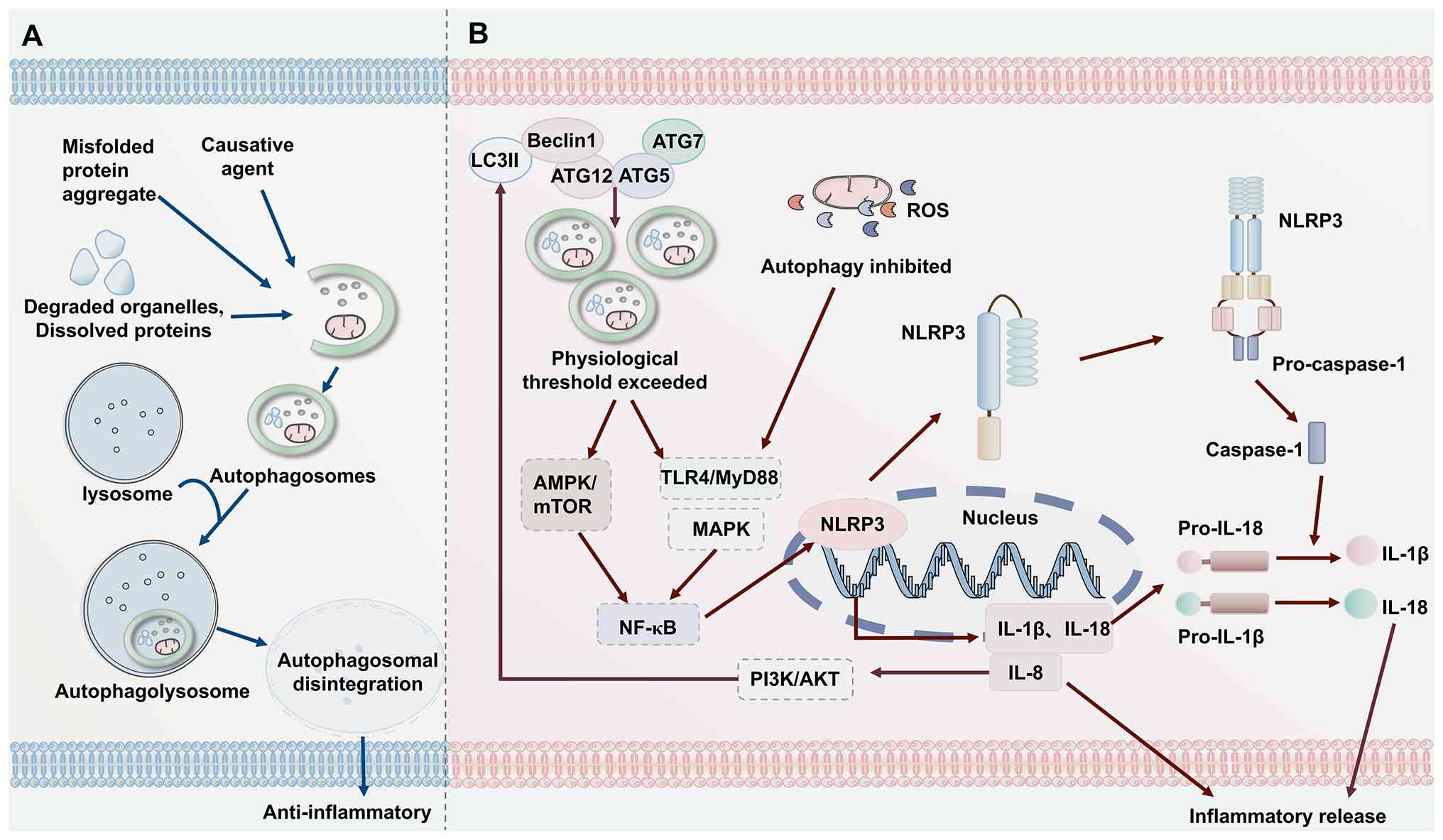
Inflammation is a fundamental driver in the
progression of gastric precancerous lesions, with its pathological
influence extending throughout IM and the Correa cascade (2). During the initial stages of the
disease, autophagy exerts cell-autonomous (an intrinsic and
proactive self-protective response mounted by the epithelial cell
itself upon initial exposure to inflammatory stimuli)
anti-inflammatory effects by eliminating intracellular pathogens,
damage-associated molecular patterns released from damaged
organelles and misfolded protein aggregates, sources of
inflammatory signals, thereby effectively inhibiting the activation
of pro-inflammatory signaling pathways, including the NLRP3
inflammasome (Fig. 1A) (36,37).
Conversely, when autophagy is impaired or structurally defective,
this protective mechanism is disrupted, leading to abnormal
activation and persistence of inflammatory responses. Dysfunction
of the autophagy-lysosome pathway may constitute a common
pathological basis for inflammatory diseases (38). The transcription factors TFEB and
TFE3, as primary regulators of macroautophagy/autophagy and
lysosomal function, may act as key molecular hubs linking these
pathological processes (39).
Prolonged inflammatory stimulation leads to impaired
autophagic flux, resulting in excessive activation of the NLRP3
inflammasome and facilitating the formation and oligomerization of
inflammasome complexes (40,41).
These complexes include nucleotide-binding oligomerization
domain-like receptors, adaptor proteins and pro-caspase-1 (42). The activation of these inflammasome
complexes causes the proteolytic cleavage of the zymogen
pro-caspase-1 into its enzymatically active form and catalyzes the
maturation and release of pro-inflammatory cytokines IL-1β and
IL-18 (43,44). However, when autophagic activity
exceeds physiological thresholds, its compensatory enhancement may
lead to a pathological state of excessive autophagy. Excessive
degradation of organelles may precipitate an energy metabolic
crisis, activating the NF-κB signaling pathway through the
AMPK/mTOR pathway and initiating a cascade of inflammatory
responses (45,46). Moreover, the impaired autophagic
flux enhances the activation of the TLR4/MyD88, MAPK and downstream
NF-κB signaling pathways and exacerbates the release of
pro-inflammatory factors (IL-6, IL-1β, tumor necrosis factor-α and
IL-8) and other factors, including chemokines CCL7 and CXCL16
(47–49). Notably, IL-8 can enhance autophagy
and cell invasiveness by regulating the phosphorylation of the
PI3K/AKT pathway. Elevated levels of IL-8 are associated with a
marked increase in the expression of autophagic markers LC3II,
ATG5, ATG7, the apoptotic factor Beclin1 and the ATG12-ATG5 complex
(50). Furthermore, NF-κB
initiates the activation of the NLRP3 inflammasome by upregulating
pro-IL-1β and NLRP3 expression, thereby establishing a
pro-carcinogenic feedback loop (Fig.
1B) (51).
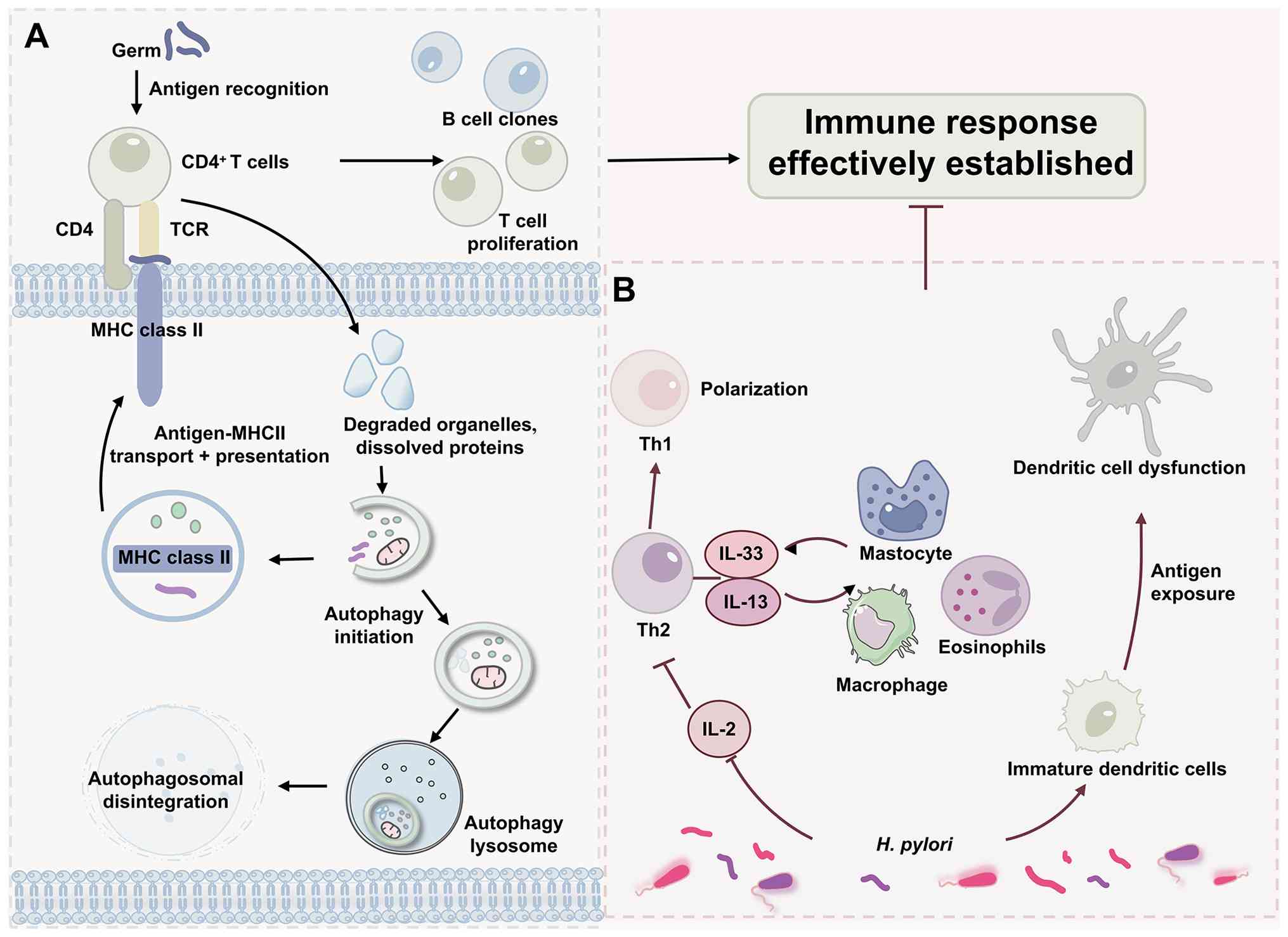
Autophagy is a key mechanism by which cells manage
endogenous and exogenous stress, thereby enhancing innate and
adaptive immunity. Autophagy enhances innate pathogen detection,
antigen presentation, pathogen clearance and lymphocyte expansion
(52,53). In the context of innate immunity,
autophagy serves as the primary defense mechanism against microbial
invaders. Upon detecting invading bacterial pathogens and their
associated infection signals, autophagic proteins serve as
cytosolic sensors, promptly activating the autophagy pathway and
initiating protective mechanisms for the host (54). When the gastric mucosa is invaded
by pathogens such as H. pylori, the autophagy system can
promptly detect the specific infection signals of bacteria, rapidly
activate autophagy-associated proteins as intracellular recognition
receptors and initiate the autophagy pathway to encapsulate and
degrade bacteria, thereby limiting the proliferation of pathogens
and mitigating damage to the gastric mucosa (55). During innate immune responses,
autophagy facilitates the presentation of degradation products
through the lysosomal pathway to major histocompatibility complex
(MHC) class II molecules (56).
This stimulates and refines the self-tolerance of the
CD4+ T cell repertoire, enhances CD4+ T cell
responses to pathogens and tumors and facilitates the clonal
expansion of B and T cells, thereby strengthening overall immune
function (Fig. 2A) (57). Conversely, autophagy is key in
distinguishing self from non-self by regulating exogenous factors
in antigen-presenting cells, such as MHC-antigen complexes, and
endogenous factors in T cells, including cell signaling, survival,
cytokine production and metabolism. This renders it a target for
regulating T cell immunity (58).
Furthermore, the autophagy-associated protein phosphatidylinositol
3-kinase catalytic subunit type 3/vacuolar protein sorting 34
directly affects T cell function by maintaining metabolic
homeostasis (59). However, a
deficiency in autophagy leads to abnormal activation of mTORC1 and
c-Myc signaling pathways, which enhances glycolytic metabolism and
impairs the function of regulatory T cells (Tregs) (60). Deficient Treg function may result
in uncontrolled inflammatory responses. This increases the risk of
peptic ulcers in H. pylori infection and drives the
pathological remodeling of the gastric mucosa from chronic
inflammation to atrophy and IM (61). The gastric mucosal microenvironment
relies on autophagy-mediated antigen presentation, T cell
repertoire shaping and the maintenance of Treg function (62).
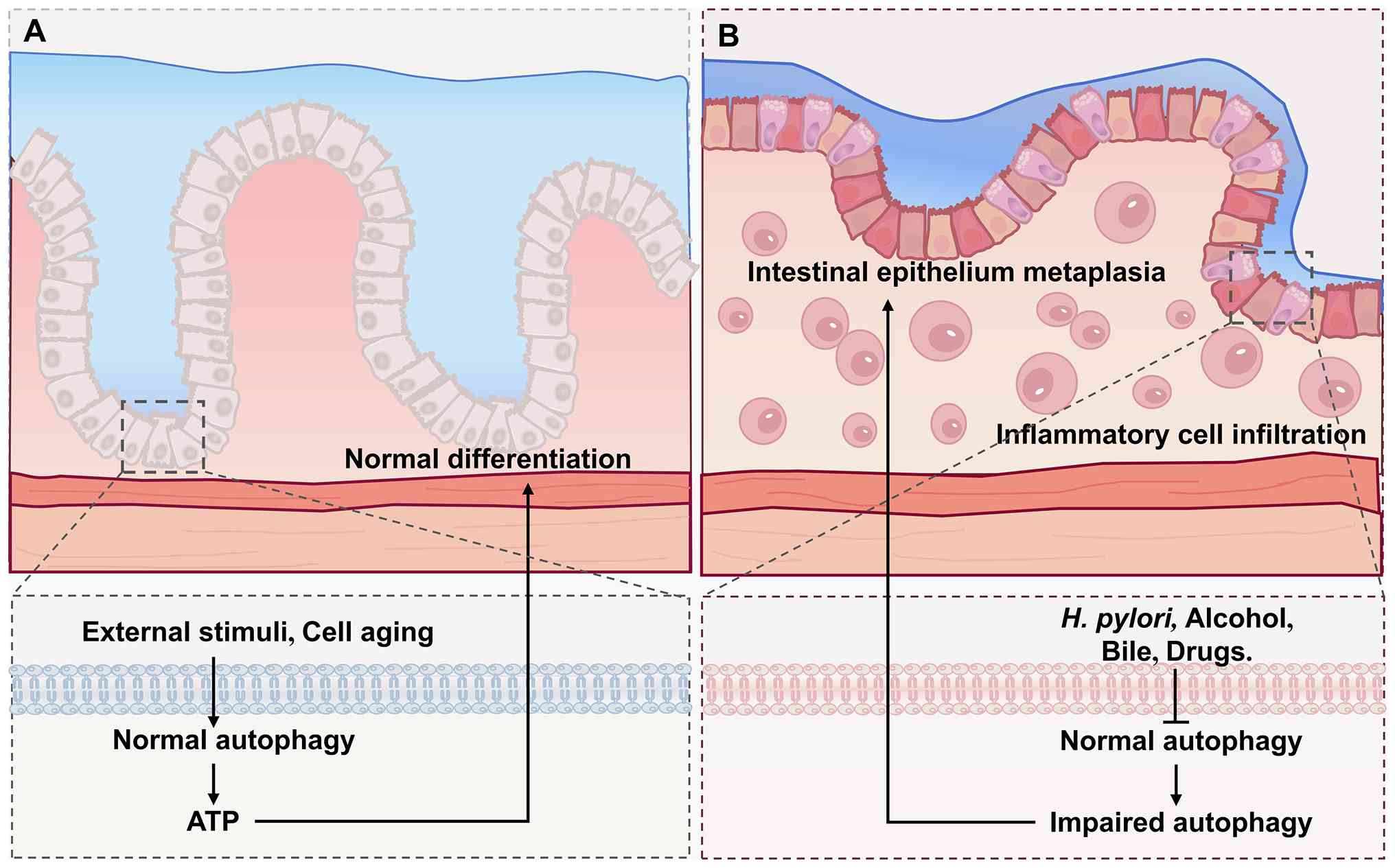
Autophagy, a highly conserved intracellular
degradation mechanism, is key in various biological processes,
including cell survival, death, differentiation and metabolism
(71). Under normal physiological
conditions, the gastric mucosa is primarily composed of
gastric-type epithelial cells. Similar to most normal cells,
autophagy facilitates self-renewal and differentiation by degrading
excessive cell proteins and organelles, thus providing metabolic
precursors and energy (Fig. 3A)
(72). Autophagy serves a
protective function by attenuating damage from external stimuli.
For example, it protects gastric mucosal epithelial cells against
ethanol-induced apoptosis and mucosal damage by inhibiting the
generation of ethanol-induced reactive oxygen species, preserving
antioxidant enzyme integrity and reducing lipid peroxidation
(73). Additionally, signaling
proteins such as IFN-γ decrease epithelial cell apoptosis by
inducing autophagy and simultaneously suppressing the aberrant
proliferation of gastric progenitor cells. This dual action helps
maintain a balance between infection defense and carcinogenesis
suppression within the gastric mucosa (74).
Chronic pathological stimulation causes secretory
columnar epithelial cells (which produce gastric acid and mucus) to
lose their inherent functional characteristics and differentiate
into goblet cells, intestinal-type absorptive cells with microvilli
and Paneth cells (75–77). This cellular remodeling
necessitates enhanced degradative capacity to facilitate structural
transformation (72). However,
autophagy dysregulation leads to dual pathological effects.
Specifically, impaired or excessively enhanced autophagic flux
loses its protective effect on gastric epithelial cells and
accelerates their death (78); it
also disrupts the degradation-remodeling balance and weakens the
normal support for cell transdifferentiation. This functional
imbalance provides a pathological basis for aberrant cell
transformation in IM (Fig. 3B).
Inflammatory factors can trigger the deconstruction of the chief
cell secretory apparatus and transcriptomic reprogramming, a
process dependent on autophagy and coordinated changes in gene
transcription (79,80). In the gastric mucosa, autophagy
dysregulation may affect stem cell differentiation pathways,
resulting in aberrant cell phenotypes and functions (81,82).
In the absence of autophagy, gastric mucosal stem cells demonstrate
a bias toward intestinal differentiation (83). At the molecular level, crosstalk
between autophagy and signaling pathways is key for stem cell
differentiation, such as influencing differentiation direction via
regulation of the Wnt pathway (84) and modulating cell metabolic status
and differentiation capacity through interaction with the mTOR
signaling pathway (85,86). Dysregulation of these pathways in
the gastric mucosa may lead to abnormal stem cell differentiation,
promoting IM development (87).
The protective and pathogenic effects of autophagy
on gastric mucosa, based on the evidence from inflammation, immune
regulation and cell differentiation, are not absolute but depend on
a molecular switch influenced by multiple threshold factors
(62). At basal levels of
autophagic activity, autophagy inhibits the overactivation of the
NLRP3 inflammasome and NF-κB pathway by clearing pathogens, damaged
organelles and misfolded proteins, thereby exerting
anti-inflammatory and homeostatic functions (88,89).
However, prolonged suppression or compensatory overactivation of
autophagy may shift its role from protective to pathogenic
(62). Specifically, the key
threshold factors include the bidirectional threshold effect of
oxidative stress. Low-level oxidative stress is eliminated through
autophagy, thereby exerting protective effects, whereas high-level
stress that exceeds autophagic capacity may result in autophagy
blockage or hyper-activation, leading to organelle degradation,
energy metabolism crisis, NF-κB activation and promotion of
epithelial cell apoptosis and transdifferentiation (90–92).
Elevated IL-8 enhances autophagic activity and cellular
invasiveness through PI3K/AKT pathway activation, thereby
establishing a positive-feedback loop (50). Appropriate levels of cytokines,
particularly IFN-γ, in the immune microenvironment induce
protective autophagy, whereas continuous abnormal elevation may
disrupt immune tolerance by promoting Th1 polarization and
impairing Treg function (75).
Collectively, these factors determine the transition of autophagy
from a protective barrier to a driver of IM.
In a precancerous gastric lesion model,
histopathological examinations and western blotting confirmed
increased expression of Beclin-1 and LC3II in gastric mucosa
tissue, indicating altered autophagic activity during IM
development (96). Another GC
study demonstrated that abnormal expression of these proteins and
p62 is associated with pathological progression and may possess
predictive value for early-stage GC (106). These findings support the
potential use of combined assessment of autophagy markers,
including LC3II and Beclin-1, in gastric biopsy specimens for
diagnostic and prognostic evaluation, although validation through
large-scale cohort studies remains necessary. Although autophagy
regulators demonstrate potential in treating IM, clinical
translation faces limitations. Animal models for H.
pylori-related gastric lesions have drawbacks in mimicking
human IM and associated autophagic responses. Despite H.
pylori being a major cause of chronic gastritis and GC,
existing models cannot fully reproduce the complexity of human
infection and pathological progression (107). For example, the H.
pylori-N-nitroso-N-methylurea-induced mouse model reproduces
phenotypes such as IM, neutrophil infiltration and autophagy
disorder, but its 24-44-week observation window is in the early
stage, failing to reflect long-term pathological changes and
carcinogenic mechanisms (108).
Clinical specimens are predominantly obtained from the gastric
antrum, whereas animal experiments focus on the gastric corpus,
decreasing the comparability between model results and human
pathology (109). These
limitations highlight the need to establish more clinically
relevant models.
Autophagy-associated proteins participate in
canonical autophagic processes and autophagy-independent signaling
pathways. This multi-biological property means autophagy-targeted
interventions may induce dysregulation of other pathways and
potential side effects (110). IM
comprises different subtypes with heterogeneous autophagic
activity, which affects treatment specificity and efficacy
(111,112). Notably, compounds such as
metformin and notoginsenoside systemically regulate autophagy
rather than specifically acting on the gastric mucosa. For example,
metformin-induced systemic autophagy activation may confer
metabolic benefits, but may lead to metabolic imbalance in
conditions such as renal insufficiency (113,114). Similarly, notoginsenoside can
protect through multi-organ autophagy regulation, but long-term
administration requires caution due to potential risks of autophagy
homeostasis disruption (115,116). Consequently, in long-term
clinical use of these drugs, individualized risk assessment and
monitoring should be performed based on pharmacokinetic
characteristics, renal function and concurrent medications to avoid
systemic toxicity in non-target organs.
The present study highlighted the dual and dynamic
role of autophagy in IM initiation and progression. Autophagy
provides protective effects by modulating inflammatory responses,
maintaining immune homeostasis and remodeling cellular
differentiation. However, autophagy dysfunction may also serve as a
key driver of sustained IM progression. Consequently, autophagy
represents a key entry point for understanding the mechanisms
underlying IM and a potential target for intervention.
It is essential to identify key regulatory nodes of
autophagy during IM progression and develop selective autophagy
modulators. The specific application of induction or inhibition
strategies should be examined based on the dynamic alterations in
autophagic activity at various stages of the disease. Clinical
studies are key to validate the efficacy and safety of
autophagy-targeted interventions and determine the optimal timing
and therapeutic window for these interventions. Comprehensive
investigations are essential to clarify the molecular profiles and
subtype-specific roles of autophagy across IM subtypes. This
includes clarifying its effects independent of autophagy and
understanding the sensitivities of these subtypes to autophagy
modulators. Employing advanced technologies such as single-cell
multi-omics and spatial transcriptomics may reveal the
heterogeneity in autophagy regulation throughout pathological
stages of IM, aiding in the development of subtype-specific
interventional strategies.
Furthermore, IM should be considered a distinct
research focus, rather than a component of gastric precancerous
lesions, to enhance the understanding of its unique molecular
mechanisms. It is essential to confirm autophagy modulation
strategies in clinically relevant models and examine their
potential to reverse IM, overcome H. pylori drug resistance
and facilitate personalized prevention and treatment. These efforts
are key for overcoming the challenges in translating basic research
into clinical applications and advancing clinical
implementation.
Not applicable.
The present study was supported by National Administration of
Traditional Chinese Medicine High-level Key Discipline Construction
Project-Minority Medicine (Zhuang Medicine; grant no.
zyyzdxk-2023164), The Guipai Xinglin Young Talents of Guangxi
University of Chinese Medicine (grant no. 2022C035), Guangxi
University of Chinese Medicine University-level Research Project
(grant no. 2025QN014) and Guangxi Higher Education Institutions Key
Research Base for Humanities and Social Sciences (grant no.
2025ZC06).
Not applicable.
LW contributed to literature search, table/figure
revision and drafting the initial manuscript. LL participated in
conceiving and refining the review framework, synthesizing and
critically interpreting the literature, designing all figures,
organizing references, writing legends and drafting/revising the
manuscript. ZX developed the search strategy, critically appraised
the academic content and participated in revisions. QZ
systematically synthesized the literature, extracted key concepts
and drafted sections of the manuscript. ZC and AH designed the
overall study, supervised the review and editing, provided feedback
and suggestions, finalized the manuscript, and provided financial
support. Data authentication is not applicable. All authors read
and approved the final manuscript.
Not applicable.
Not applicable.
The authors declare that they have no competing
interests.
|
1
|
Sung H, Ferlay J, Siegel RL, Laversanne M,
Soerjomataram I, Jemal A and Bray F: Global cancer statistics 2020:
GLOBOCAN estimates of incidence and mortality worldwide for 36
cancers in 185 countries. CA Cancer J Clin. 71:209–249.
2021.PubMed/NCBI
|
|
2
|
Lauren P: The two histological main types
of gastric carcinoma: Diffuse and so-called intestinal-type
carcinoma. An attempt at a histo-clinical classification. Acta
Pathol Microbiol Scand. 64:31–49. 1965. View Article : Google Scholar : PubMed/NCBI
|
|
3
|
Wada Y, Kodama M, Mizukami K, Okimoto T,
Fuchino T, Tsutsumi K, Fukuda M, Hirashita Y, Fukuda K, Okamoto K,
et al: Differences in regression patterns of complete and
incomplete intestinal metaplasia at ten years after Helicobacter
pylori eradication. Acta Histochem Cytochem. 54:185–194. 2021.
View Article : Google Scholar : PubMed/NCBI
|
|
4
|
Genta RM and Sonnenberg A: Characteristics
of the gastric mucosa in patients with intestinal metaplasia. Am J
Surg Pathol. 39:700–704. 2015. View Article : Google Scholar : PubMed/NCBI
|
|
5
|
Chen HN, Wang Z, Li X and Zhou ZG:
Helicobacter pylori eradication cannot reduce the risk of
gastric cancer in patients with intestinal metaplasia and
dysplasia: Evidence from a meta-analysis. Gastric Cancer.
19:166–175. 2016. View Article : Google Scholar : PubMed/NCBI
|
|
6
|
Vitto VAM, Bianchin S, Zolondick AA,
Pellielo G, Rimessi A, Chianese D, Yang H, Carbone M, Pinton P,
Giorgi C and Patergnani S: Molecular mechanisms of autophagy in
cancer development, progression, and therapy. Biomedicines.
10:15962022. View Article : Google Scholar : PubMed/NCBI
|
|
7
|
Lin PH: Advances in autophagy, tissue
injury, and homeostasis: Cells special issue. Cell. 8:7432019.
View Article : Google Scholar
|
|
8
|
Li W, He P, Huang Y, Li YF, Lu J, Li M,
Kurihara H, Luo Z, Meng T, Onishi M, et al: Selective autophagy of
intracellular organelles: Recent research advances. Theranostics.
11:222–256. 2021. View Article : Google Scholar : PubMed/NCBI
|
|
9
|
He C: Balancing nutrient and energy demand
and supply via autophagy. Curr Biol. 32:R684–R696. 2022. View Article : Google Scholar : PubMed/NCBI
|
|
10
|
Kroemer G: Autophagy: A druggable process
that is deregulated in aging and human disease. J Clin Invest.
125:1–4. 2015. View
Article : Google Scholar : PubMed/NCBI
|
|
11
|
Sridhar S, Botbol Y, Macian F and Cuervo
AM: Autophagy and disease: Always two sides to a problem. J Pathol.
226:255–273. 2012. View Article : Google Scholar : PubMed/NCBI
|
|
12
|
Yamamoto H and Matsui T: Molecular
mechanisms of macroautophagy, microautophagy, and
chaperone-mediated autophagy. J Nippon Med Sch. 91:2–9. 2024.
View Article : Google Scholar : PubMed/NCBI
|
|
13
|
Mizushima N and Levine B: Autophagy in
mammalian development and differentiation. Nat Cell Biol.
12:823–830. 2010. View Article : Google Scholar : PubMed/NCBI
|
|
14
|
Feng Y, He D, Yao Z and Klionsky DJ: The
machinery of macroautophagy. Cell Res. 24:24–41. 2014. View Article : Google Scholar : PubMed/NCBI
|
|
15
|
Yang Z and Klionsky DJ: An overview of the
molecular mechanism of autophagy. Curr Top Microbiol Immunol.
335:1–32. 2009.PubMed/NCBI
|
|
16
|
Parzych KR and Klionsky DJ: An overview of
autophagy: Morphology, mechanism, and regulation. Antioxid Redox
Signal. 20:460–473. 2014. View Article : Google Scholar : PubMed/NCBI
|
|
17
|
Kocak M, Ezazi Erdi S, Jorba G, Maestro I,
Farrés J, Kirkin V, Martinez A and Pless O: Targeting autophagy in
disease: Established and new strategies. Autophagy. 18:473–495.
2022. View Article : Google Scholar : PubMed/NCBI
|
|
18
|
Klionsky DJ, Petroni G, Amaravadi RK,
Baehrecke EH, Ballabio A, Boya P, Bravo-San Pedro JM, Cadwell K,
Cecconi F, Choi AMK, et al: Autophagy in major human diseases. EMBO
J. 40:e1088632021. View Article : Google Scholar : PubMed/NCBI
|
|
19
|
Zhou H, Yuan M, Yu Q, Zhou X, Min W and
Gao D: Autophagy regulation and its role in gastric cancer and
colorectal cancer. Cancer Biomark. 17:1–10. 2016. View Article : Google Scholar : PubMed/NCBI
|
|
20
|
Leung WK, Lin SR, Ching JYL, To KFW, Ng
EKW, Chan FKL, Lau JYW and Sung JJY: Factors predicting progression
of gastric intestinal metaplasia: Results of a randomised trial on
Helicobacter pylori eradication. Gut. 53:1244–1249. 2004.
View Article : Google Scholar : PubMed/NCBI
|
|
21
|
Kneller RW, You WC, Chang YS, Liu WD,
Zhang L, Zhao L, Xu GW, Fraumeni JF Jr and Blot WJ: Cigarette
smoking and other risk factors for progression of precancerous
stomach lesions. J Natl Cancer Inst. 84:1261–1266. 1992. View Article : Google Scholar : PubMed/NCBI
|
|
22
|
Tan MC, Jamali T, Nguyen TH, Galvan A,
Sealock RJ, Khan A, Zarrin-Khameh N, Holloman A, Kampagianni O,
Ticas DH, et al: Race/ethnicity and birthplace as risk factors for
gastric intestinal metaplasia in a multiethnic United States
population. Am J Gastroenterol. 117:280–287. 2022. View Article : Google Scholar : PubMed/NCBI
|
|
23
|
Paik JY, Lee HG, Piao JY, Kim SJ, Kim DH,
Na HK and Surh YJ: Helicobacter pylori infection promotes
autophagy through Nrf2-mediated heme oxygenase upregulation in
human gastric cancer cells. Biochem Pharmacol. 162:89–97. 2019.
View Article : Google Scholar : PubMed/NCBI
|
|
24
|
Aman Y, Schmauck-Medina T, Hansen M,
Morimoto RI, Simon AK, Bjedov I, Palikaras K, Simonsen A, Johansen
T, Tavernarakis N, et al: Autophagy in healthy aging and disease.
Nat Aging. 1:634–650. 2021. View Article : Google Scholar : PubMed/NCBI
|
|
25
|
Lei X, Cui ZY and Huang XJ: Exploration of
gastric carcinogenesis from the relationship between bile acids and
intestinal metaplasia and intragastric microorganisms (H.
pylori and non-H. pylori). J Cancer Res Clin Oncol.
149:16947–16956. 2023. View Article : Google Scholar : PubMed/NCBI
|
|
26
|
Raju D, Hussey S, Ang M, Terebiznik MR,
Sibony M, Galindo-Mata E, Gupta V, Blanke SR, Delgado A,
Romero-Gallo J, et al: Vacuolating cytotoxin and variants in
Atg16L1 that disrupt autophagy promote Helicobacter pylori
infection in humans. Gastroenterology. 142:1160–1171. 2012.
View Article : Google Scholar : PubMed/NCBI
|
|
27
|
Xie C, Li N, Wang H, He C, Hu Y, Peng C,
Ouyang Y, Wang D, Xie Y, Chen J, et al: Inhibition of autophagy
aggravates DNA damage response and gastric tumorigenesis via Rad51
ubiquitination in response to H. pylori infection. Gut
Microbes. 11:1567–1589. 2020. View Article : Google Scholar : PubMed/NCBI
|
|
28
|
Yang XJ, Si RH, Liang YH, Ma BQ, Jiang ZB,
Wang B and Gao P: Mir-30d increases intracellular survival of
Helicobacter pylori through inhibition of autophagy pathway.
World J Gastroenterol. 22:3978–3991. 2016. View Article : Google Scholar : PubMed/NCBI
|
|
29
|
Liang Z, Song J, Xu Y, Zhang X, Zhang Y
and Qian H: Hesperidin reversed long-term
N-methyl-N-nitro-N-nitroguanidine exposure induced EMT and cell
proliferation by activating autophagy in gastric tissues of rats.
Nutrients. 14:52812022. View Article : Google Scholar : PubMed/NCBI
|
|
30
|
Arita S, Kinoshita Y, Ushida K, Enomoto A
and Inagaki-Ohara K: High-fat diet feeding promotes stemness and
precancerous changes in murine gastric mucosa mediated by leptin
receptor signaling pathway. Arch Biochem Biophys. 610:16–24. 2016.
View Article : Google Scholar : PubMed/NCBI
|
|
31
|
Sun Z, Liu Y, Deng H, Wang S, Zhang J,
Xing C and Xu C: Modified Chaishao Liujunzi Decoction inhibits bile
acid-induced gastric intestinal metaplasia: From network prediction
to experimental verification. Aging (Albany NY). 15:13998–14018.
2023. View Article : Google Scholar : PubMed/NCBI
|
|
32
|
Yang Y and Klionsky DJ: Autophagy and
disease: Unanswered questions. Cell Death Differ. 27:858–871. 2020.
View Article : Google Scholar : PubMed/NCBI
|
|
33
|
Xie D, Wu C, Wang D, Nisma Lena BA, Liu N,
Ye G and Sun M: Wei-fu-chun tablet halted gastric intestinal
metaplasia and dysplasia associated with inflammation by regulating
the NF-κB pathway. J Ethnopharmacol. 318:1170202024. View Article : Google Scholar : PubMed/NCBI
|
|
34
|
Gobert AP and Wilson KT: Induction and
regulation of the innate immune response in Helicobacter
pylori infection. Cell Mol Gastroenterol Hepatol. 13:1347–1363.
2022. View Article : Google Scholar : PubMed/NCBI
|
|
35
|
Sakamoto H, Mutoh H, Hayakawa H, Sashikawa
M and Sugano K: Cell lineage dynamics in the process leading to
intestinal metaplasia. J Gastroenterol. 46:620–628. 2011.
View Article : Google Scholar : PubMed/NCBI
|
|
36
|
Deretic V and Levine B: Autophagy balances
inflammation in innate immunity. Autophagy. 14:243–251. 2018.
View Article : Google Scholar : PubMed/NCBI
|
|
37
|
Guo H, Callaway JB and Ting JP:
Inflammasomes: mechanism of action, role in disease, and
therapeutics. Nat Med. 21:677–687. 2015. View Article : Google Scholar : PubMed/NCBI
|
|
38
|
Du M, Yu Y, Wang J and Ji C:
Autophagy-lysosome pathway dysfunction in neurodegeneration and
cancer: Mechanisms and therapeutic opportunities. Int J Mol Sci.
27:3662025. View Article : Google Scholar : PubMed/NCBI
|
|
39
|
Brady OA, Martina JA and Puertollano R:
Emerging roles for TFEB in the immune response and inflammation.
Autophagy. 14:181–189. 2018. View Article : Google Scholar : PubMed/NCBI
|
|
40
|
Man H, Yi S and Chen C: Mechanisms of
autophagy and inflammatory response crosstalk in sepsis-associated
intestinal dysfunction. Ann N Y Acad Sci. 1557:e702432026.
View Article : Google Scholar : PubMed/NCBI
|
|
41
|
Bonam SR, Mastrippolito D, Georgel P and
Muller S: Pharmacological targets at the lysosomal autophagy-NLRP3
inflammasome crossroads. Trends Pharmacol Sci. 45:81–101. 2024.
View Article : Google Scholar : PubMed/NCBI
|
|
42
|
Xiao SY, Lv YH, Ji YM, Dong Y, Liu MC, Li
T, Cui XR and Hu Y: The NLRP3 inflammasome: A pivotal orchestrator
of multisystem diseases-from molecular mechanisms to therapeutic
innovation. Mol Biol Rep. 52:10262025. View Article : Google Scholar : PubMed/NCBI
|
|
43
|
Biasizzo M and Kopitar-Jerala N: Interplay
between NLRP3 inflammasome and autophagy. Front Immunol.
11:5918032020. View Article : Google Scholar : PubMed/NCBI
|
|
44
|
Latz E, Xiao TS and Stutz A: Activation
and regulation of the inflammasomes. Nat Rev Immunol. 13:397–411.
2013. View Article : Google Scholar : PubMed/NCBI
|
|
45
|
Ahmad A, Biersack B, Li Y, Kong D, Bao B,
Schobert R, Padhye SB and Sarkar FH: Targeted regulation of
PI3K/Akt/mTOR/NF-κB signaling by indole compounds and their
derivatives: Mechanistic details and biological implications for
cancer therapy. Anticancer Agents Med Chem. 13:1002–1013. 2013.
View Article : Google Scholar : PubMed/NCBI
|
|
46
|
Dan HC, Cooper MJ, Cogswell PC, Duncan JA,
Ting JP and Baldwin AS: Akt-dependent regulation of NF-{kappa}B is
controlled by mTOR and Raptor in association with IKK. Genes Dev.
22:1490–1500. 2008. View Article : Google Scholar : PubMed/NCBI
|
|
47
|
Verzella D, Pescatore A, Capece D,
Vecchiotti D, Ursini MV, Franzoso G, Alesse E and Zazzeroni F:
Life, death, and autophagy in cancer: NF-κB turns up everywhere.
Cell Death Dis. 11:2102020. View Article : Google Scholar : PubMed/NCBI
|
|
48
|
Zhou M, Xu W, Wang J, Yan J, Shi Y, Zhang
C, Ge W, Wu J, Du P and Chen Y: Boosting mTOR-dependent autophagy
via upstream TLR4-MyD88-MAPK signalling and downstream NF-κB
pathway quenches intestinal inflammation and oxidative stress
injury. EBioMedicine. 35:345–360. 2018. View Article : Google Scholar : PubMed/NCBI
|
|
49
|
Feng GJ, Chen Y and Li K: Helicobacter
pylori promote inflammation and host defense through the
cagA-dependent activation of mTORC1. J Cell Physiol.
235:10094–10108. 2020. View Article : Google Scholar : PubMed/NCBI
|
|
50
|
Yu L, Zhou G, Shi Z, Guo J, Yu S, Yu C and
Shen C: Interleukin-8 regulates the autophagy and apoptosis in
gastric cancer cells via regulating PI3K/Akt signaling pathway. Dis
Markers. 2022:73009872022. View Article : Google Scholar : PubMed/NCBI
|
|
51
|
Zhong Z, Umemura A, Sanchez-Lopez E, Liang
S, Shalapour S, Wong J, He F, Boassa D, Perkins G, Ali SR, et al:
NF-κB restricts inflammasome activation via elimination of damaged
mitochondria. Cell. 164:896–910. 2016. View Article : Google Scholar : PubMed/NCBI
|
|
52
|
Bhattacharya A and Eissa NT: Autophagy as
a stress response pathway in the immune system. Int Rev Immunol.
34:382–402. 2015. View Article : Google Scholar : PubMed/NCBI
|
|
53
|
Romao S and Münz C: Autophagy of pathogens
alarms the immune system and participates in its effector
functions. Swiss Med Wkly. 141:w131982011. View Article : Google Scholar : PubMed/NCBI
|
|
54
|
Ogawa M, Mimuro H, Yoshikawa Y, Ashida H
and Sasakawa C: Manipulation of autophagy by bacteria for their own
benefit. Microbiol Immunol. 55:459–471. 2011. View Article : Google Scholar : PubMed/NCBI
|
|
55
|
Deen NS, Huang SJ, Gong L, Kwok T and
Devenish RJ: The impact of autophagic processes on the
intracellular fate of Helicobacter pylori: more tricks from
an enigmatic pathogen? Autophagy. 9:639–652. 2013. View Article : Google Scholar : PubMed/NCBI
|
|
56
|
Münz C: Autophagy proteins in antigen
processing for presentation on MHC molecules. Immunol Rev.
272:17–27. 2016. View Article : Google Scholar : PubMed/NCBI
|
|
57
|
Münz C: Enhancing immunity through
autophagy. Annu Rev Immunol. 27:423–449. 2009. View Article : Google Scholar : PubMed/NCBI
|
|
58
|
Merkley SD, Chock CJ, Yang XO, Harris J
and Castillo EF: Modulating T cell responses via autophagy: the
intrinsic influence controlling the function of both
antigen-presenting cells and T cells. Front Immunol. 9:29142018.
View Article : Google Scholar : PubMed/NCBI
|
|
59
|
Yang G, Song W, Postoak JL, Chen J,
Martinez J, Zhang J, Wu L and Van Kaer L: Autophagy-related protein
PIK3C3/VPS34 controls T cell metabolism and function. Autophagy.
17:1193–1204. 2021. View Article : Google Scholar : PubMed/NCBI
|
|
60
|
Wei J, Long L, Yang K, Guy C, Shrestha S,
Chen Z, Wu C, Vogel P, Neale G, Green DR and Chi H: Autophagy
enforces functional integrity of regulatory T cells by coupling
environmental cues and metabolic homeostasis. Nat Immunol.
17:277–285. 2016. View Article : Google Scholar : PubMed/NCBI
|
|
61
|
Bagheri N, Shirzad H, Elahi S,
Azadegan-Dehkordi F, Rahimian G, Shafigh M, Rashidii R, Sarafnejad
A, Rafieian-Kopaei M, Faridani R, et al: Downregulated regulatory T
cell function is associated with increased peptic ulcer in
Helicobacter pylori-infection. Microb Pathog. 110:165–175.
2017. View Article : Google Scholar : PubMed/NCBI
|
|
62
|
Lu SY, Guo S, Chai SB, Yang JQ, Yue Y, Li
H, Sun PM, Zhang T, Sun HW, Zhou JL, et al: Autophagy in gastric
mucosa: The dual role and potential therapeutic target. Biomed Res
Int. 2021:26480652021. View Article : Google Scholar : PubMed/NCBI
|
|
63
|
Zhang F, Chen C, Hu J, Su R, Zhang J, Han
Z, Chen H and Li Y: Molecular mechanism of Helicobacter
pylori-induced autophagy in gastric cancer. Oncol Lett.
18:6221–6227. 2019.PubMed/NCBI
|
|
64
|
Fan J, Zhu J and Xu H: Strategies of
Helicobacter pylori in evading host innate and adaptive
immunity: Insights and prospects for therapeutic targeting. Front
Cell Infect Microbiol. 14:13429132024. View Article : Google Scholar : PubMed/NCBI
|
|
65
|
Zhang L, Hu W, Cho CH, Chan FK, Yu J,
Fitzgerald JR, Cheung CK, Xiao ZG, Shen J, Li LF, et al: Reduced
lysosomal clearance of autophagosomes promotes survival and
colonization of Helicobacter pylori. J Pathol. 244:432–444.
2018. View Article : Google Scholar : PubMed/NCBI
|
|
66
|
Meyer F, Wilson KT and James SP:
Modulation of innate cytokine responses by products of
Helicobacter pylori. Infect Immun. 68:6265–6272. 2000.
View Article : Google Scholar : PubMed/NCBI
|
|
67
|
Asonuma S, Imatani A, Asano N, Oikawa T,
Konishi H, Iijima K, Koike T, Ohara S and Shimosegawa T:
Helicobacter pylori induces gastric mucosal intestinal
metaplasia through the inhibition of interleukin-4-mediated HMG box
protein Sox2 expression. Am J Physiol Gastrointest Liver Physiol.
297:G312–G322. 2009. View Article : Google Scholar : PubMed/NCBI
|
|
68
|
Privitera G, Williams JJ and De Salvo C:
The importance of Th2 immune responses in mediating the progression
of gastritis-associated metaplasia to gastric cancer. Cancers
(Basel). 16:5222024. View Article : Google Scholar : PubMed/NCBI
|
|
69
|
Kranzer K, Eckhardt A, Aigner M, Knoll G,
Deml L, Speth C, Lehn N, Rehli M and Schneider-Brachert W:
Induction of maturation and cytokine release of human dendritic
cells by Helicobacter pylori. Infect Immun. 72:4416–4423.
2004. View Article : Google Scholar : PubMed/NCBI
|
|
70
|
Mitchell P, Germain C, Fiori PL, Khamri W,
Foster GR, Ghosh S, Lechler RI, Bamford KB and Lombardi G: Chronic
exposure to Helicobacter pylori impairs dendritic cell
function and inhibits Th1 development. Infect Immun. 75:810–819.
2007. View Article : Google Scholar : PubMed/NCBI
|
|
71
|
Bernard A and Klionsky DJ: Autophagosome
formation: Tracing the source. Dev Cell. 25:116–117. 2013.
View Article : Google Scholar : PubMed/NCBI
|
|
72
|
Meng S, Xiong M, Jagernath JS, Wang C, Qiu
J, Shi H and Kou Y: UvAtg8-mediated autophagy regulates fungal
growth, stress responses, conidiation, and pathogenesis in
ustilaginoidea virens. Rice (N Y). 13:562020. View Article : Google Scholar : PubMed/NCBI
|
|
73
|
Mizushima N and Komatsu M: Autophagy:
Renovation of cells and tissues. Cell. 147:728–741. 2011.
View Article : Google Scholar : PubMed/NCBI
|
|
74
|
Chang W, Bai J, Tian S, Ma M, Li W, Yin Y,
Deng R, Cui J, Li J, Wang G, et al: Autophagy protects gastric
mucosal epithelial cells from ethanol-induced oxidative damage via
mTOR signaling pathway. Exp Biol Med (Maywood). 242:1025–1033.
2017. View Article : Google Scholar : PubMed/NCBI
|
|
75
|
Tu SP, Quante M, Bhagat G, Takaishi S, Cui
G, Yang XD, Muthuplani S, Shibata W, Fox JG, Pritchard DM and Wang
TC: IFN-γ inhibits gastric carcinogenesis by inducing epithelial
cell autophagy and T-cell apoptosis. Cancer Res. 71:4247–4259.
2011. View Article : Google Scholar : PubMed/NCBI
|
|
76
|
Trieu JA, Bilal M, Saraireh H and Wang AY:
Update on the diagnosis and management of gastric intestinal
metaplasia in the USA. Dig Dis Sci. 64:1079–1088. 2019. View Article : Google Scholar : PubMed/NCBI
|
|
77
|
Inada K, Tanaka H, Nakanishi H, Tsukamoto
T, Ikehara Y, Tatematsu K, Nakamura S, Porter EM and Tatematsu M:
Identification of Paneth cells in pyloric glands associated with
gastric and intestinal mixed-type intestinal metaplasia of the
human stomach. Virchows Arch. 439:14–20. 2001. View Article : Google Scholar : PubMed/NCBI
|
|
78
|
Liu S, Yao S, Yang H, Liu S and Wang Y:
Autophagy: Regulator of cell death. Cell Death Dis. 14:6482023.
View Article : Google Scholar : PubMed/NCBI
|
|
79
|
Mills JC and Goldenring JR: Metaplasia in
the stomach arises from gastric chief cells. Cell Mol Gastroenterol
Hepatol. 4:85–88. 2017. View Article : Google Scholar : PubMed/NCBI
|
|
80
|
Caldwell B, Meyer AR, Weis JA, Engevik AC
and Choi E: Chief cell plasticity is the origin of metaplasia
following acute injury in the stomach mucosa. Gut. 71:1068–1077.
2022. View Article : Google Scholar : PubMed/NCBI
|
|
81
|
Noto JM and Peek RM Jr:
Gastric-to-intestinal transdifferentiation and cancer. Proc Natl
Acad Sci USA. 109:20173–20174. 2012. View Article : Google Scholar : PubMed/NCBI
|
|
82
|
Nagy P, Sándor GO and Juhász G: Autophagy
maintains stem cells and intestinal homeostasis in Drosophila. Sci
Rep. 8:46442018. View Article : Google Scholar : PubMed/NCBI
|
|
83
|
Zhang P, Holowatyj AN, Ulrich CM and Edgar
BA: Tumor suppressive autophagy in intestinal stem cells controls
gut homeostasis. Autophagy. 15:1668–1670. 2019. View Article : Google Scholar : PubMed/NCBI
|
|
84
|
Vidyawan V, Puspita L, Juwono VB, Deline
M, Pieknell K, Chang MY, Lee SH and Shim JW: Autophagy controls
neuronal differentiation by regulating the WNT-DVL signaling
pathway. Autophagy. 21:719–736. 2025. View Article : Google Scholar : PubMed/NCBI
|
|
85
|
Pantovic A, Krstic A, Janjetovic K, Kocic
J, Harhaji-Trajkovic L, Bugarski D and Trajkovic V: Coordinated
time-dependent modulation of AMPK/Akt/mTOR signaling and autophagy
controls osteogenic differentiation of human mesenchymal stem
cells. Bone. 52:524–531. 2013. View Article : Google Scholar : PubMed/NCBI
|
|
86
|
Li Y, Wang C, Zhang G, Wang X, Duan R, Gao
H, Peng T, Teng J and Jia Y: Role of autophagy and mTOR signaling
in neural differentiation of bone marrow mesenchymal stem cells.
Cell Biol Int. 38:1337–1343. 2014. View Article : Google Scholar : PubMed/NCBI
|
|
87
|
Yoon JH, Choi SS, Kim O, Choi WS, Park YK,
Nam SW, Lee JY and Park WS: Inactivation of NKX6.3 in the stomach
leads to abnormal expression of CDX2 and SOX2 required for
gastric-to-intestinal transdifferentiation. Mod Pathol. 29:194–208.
2016. View Article : Google Scholar : PubMed/NCBI
|
|
88
|
Yu Q, Shi H, Ding Z, Wang Z, Yao H and Lin
R: The E3 ubiquitin ligase TRIM31 attenuates NLRP3 inflammasome
activation in Helicobacter pylori-associated gastritis by
regulating ROS and autophagy. Cell Commun Signal. 21:12023.
View Article : Google Scholar : PubMed/NCBI
|
|
89
|
Song H, Liu B, Huai W, Yu Z, Wang W, Zhao
J, Han L, Jiang G, Zhang L, Gao C and Zhao W: The E3 ubiquitin
ligase TRIM31 attenuates NLRP3 inflammasome activation by promoting
proteasomal degradation of NLRP3. Nat Commun. 7:137272016.
View Article : Google Scholar : PubMed/NCBI
|
|
90
|
Duan JL, Yin J, Ren WK, Wu MM, Chen S, Cui
ZJ, Wu X, Huang RL, Li TJ and Yin YL: Pyrrolidine dithiocarbamate
restores gastric damages and suppressive autophagy induced by
hydrogen peroxide. Free Radic Res. 49:210–218. 2015. View Article : Google Scholar : PubMed/NCBI
|
|
91
|
Liu J, Zhang B, Zhang Y, Zhao H, Chen X,
Zhong L and Shang D: Oxidative stress and autophagy-mediated immune
patterns and tumor microenvironment infiltration characterization
in gastric cancer. Aging (Albany NY). 15:12513–12536. 2023.
View Article : Google Scholar : PubMed/NCBI
|
|
92
|
Bahar ME, Hwang JS, Lai TH, Akter KM,
Maulidi RF and Kim DR: The autophagy-senescence axis as a threshold
model of aging and therapeutic targeting. Redox Biol.
91:1040792026. View Article : Google Scholar : PubMed/NCBI
|
|
93
|
Dinis-Ribeiro M, Shah S, El-Serag H, Banks
M, Uedo N, Tajiri H, Coelho LG, Libanio D, Lahner E, Rollan A, et
al: The road to a world-unified approach to the management of
patients with gastric intestinal metaplasia: A review of current
guidelines. Gut. 73:1607–1617. 2024. View Article : Google Scholar : PubMed/NCBI
|
|
94
|
Huang RJ, Ende AR, Singla A, Higa JT, Choi
AY, Lee AB, Whang SG, Gravelle K, D'Andrea S, Bang SJ, et al:
Prevalence, risk factors, and surveillance patterns for gastric
intestinal metaplasia among patients undergoing upper endoscopy
with biopsy. Gastrointest Endosc. 91:70–77.e1. 2020. View Article : Google Scholar : PubMed/NCBI
|
|
95
|
Hu R, Xue X, Sun X, Mi Y, Wen H, Xi H, Li
F, Zheng P and Liu S: Revealing the role of metformin in gastric
intestinal metaplasia treatment. Front Pharmacol. 15:13403092024.
View Article : Google Scholar : PubMed/NCBI
|
|
96
|
Zhang JX, Bao SC, Chen J, Chen T, Wei HL,
Zhou XY, Li JT and Yan SG: Xiaojianzhong decoction prevents gastric
precancerous lesions in rats by inhibiting autophagy and glycolysis
in gastric mucosal cells. World J Gastrointest Oncol. 15:464–489.
2023. View Article : Google Scholar : PubMed/NCBI
|
|
97
|
Wang X, Zhang R, Zeng N, Li H and Hua B:
Panax notoginseng saponins dually modulates autophagy in gastric
precancerous lesions complicated with myocardial
ischemia-reperfusion injury model through the PI3K/AKT/mTOR
pathway. Biomed Pharmacother. 178:1172682024. View Article : Google Scholar : PubMed/NCBI
|
|
98
|
Zhu F, Zhang X, Wen J, Liu Y and Zhu Y:
Celastrus orbiculatus extract reverses precancerous lesions
of gastric cancer by inhibiting autophagy via regulating the
PDCD4-ATG5 signaling pathway. J Pharm Pharmacol. 76:257–268. 2024.
View Article : Google Scholar : PubMed/NCBI
|
|
99
|
Cai T, Zhang C, Zhao Z, Li S, Cai H, Chen
X, Cai D, Liu W, Yan Y, Xie K, et al: The gastric mucosal
protective effects of astragaloside IV in mnng-induced GPL rats.
Biomed Pharmacother. 104:291–299. 2018. View Article : Google Scholar : PubMed/NCBI
|
|
100
|
Yan S, Bao S, Chen T, Chen J, Zhang J, Hu
X, Liang Y, Zhou X and Li J: Cinnamaldehyde alleviates
aspirin-induced gastric mucosal injury by regulating pi3k/akt
pathway-mediated apoptosis, autophagy and ferroptosis.
Phytomedicine. 132:1557912024. View Article : Google Scholar : PubMed/NCBI
|
|
101
|
Yang JS, Wang CM, Su CH, Ho HC, Chang CH,
Chou CH and Hsu YM: Eudesmin attenuates Helicobacter
pylori-induced epithelial autophagy and apoptosis and leads to
eradication of H. pylori infection. Exp Ther Med.
15:2388–2396. 2018.PubMed/NCBI
|
|
102
|
Lee H, Lim JW and Kim H: Effect of
astaxanthin on activation of autophagy and inhibition of apoptosis
in Helicobacter pylori-infected gastric epithelial cell line
AGS. Nutrients. 12:17502020. View Article : Google Scholar : PubMed/NCBI
|
|
103
|
Khan U, Karmakar BC, Basak P, Paul S, Gope
A, Sarkar D, Mukhopadhyay AK, Dutta S and Bhattacharya S:
Glycyrrhizin, an inhibitor of HMGB1 induces autolysosomal
degradation function and inhibits Helicobacter pylori
infection. Mol Med. 29:512023. View Article : Google Scholar : PubMed/NCBI
|
|
104
|
Hu W, Zhang L, Li MX, Shen J, Liu XD, Xiao
ZG, Wu DL, Ho IHT, Wu JCY, Cheung CKY, et al: Vitamin D3 activates
the autolysosomal degradation function against Helicobacter
pylori through the PDIA3 receptor in gastric epithelial cells.
Autophagy. 15:707–725. 2019. View Article : Google Scholar : PubMed/NCBI
|
|
105
|
Li S, Li X, Zhu X, Zhao X, Qu X, Lin K,
Yao N, Wang N, Chen M, Zhang L and Shi Y: Therapeutic effect of
metformin on reversing gastric intestinal metaplasia. Chin Med J
(Engl). Jun 16–2025.(Epub ahead of print).
|
|
106
|
Cao QH, Liu F, Yang ZL, Fu XH, Yang ZH,
Liu Q, Wang L, Wan XB and Fan XJ: Prognostic value of autophagy
related proteins ULK1, beclin 1, ATG3, ATG5, ATG7, ATG9, ATG10,
ATG12, LC3B and p62/SQSTM1 in gastric cancer. Am J Transl Res.
8:3831–3847. 2016.PubMed/NCBI
|
|
107
|
Zhang K, Cui M, Zhu Y, Li S, Su G and Du
L: Research advances of the establishment and characterization of
Helicobacter pylori infection animal models. Front
Microbiol. 16:16833662025. View Article : Google Scholar : PubMed/NCBI
|
|
108
|
Li J, Liu S, Li Z, Ma C, Li B, Cui Y, Wang
W, Zhao H, Ji X and Zhang Y: Autophagy-driven modulation of stem
cell dynamics in Helicobacter pylori-induced gastric
diseases in mice. Virulence. 16:25511762025. View Article : Google Scholar : PubMed/NCBI
|
|
109
|
Wang H, Xu X, Ouyang Y, Fei X, He C, Yang
X, Ren Y, Zhou Y, Chen S, Hu Y, et al: The protective role of DDIT4
in Helicobacter pylori-induced gastric metaplasia through
metabolic regulation of ferroptosis. Cell Mol Gastroenterol
Hepatol. 19:1014482025. View Article : Google Scholar : PubMed/NCBI
|
|
110
|
Lei Y and Klionsky DJ: The emerging roles
of autophagy in human diseases. Biomedicines. 9:16512021.
View Article : Google Scholar : PubMed/NCBI
|
|
111
|
Duan X, Lian H, Li J, Wu B, Wang W, Wu T,
Wang C, Dou Y, Zhou Z, Wang B, et al: Expression of GCRG213p,
LINE-1 endonuclease variant, significantly different in gastric
complete and incomplete intestinal metaplasia. Diagn Pathol.
14:612019. View Article : Google Scholar : PubMed/NCBI
|
|
112
|
Johnson NM, Parham LR, Na J, Monaghan KE,
Kolev HM, Klochkova A, Kim MS, Danan CH, Cramer Z, Simon LA, et al:
Autophagic state prospectively identifies facultative stem cells in
the intestinal epithelium. EMBO Rep. 23:e552092022. View Article : Google Scholar : PubMed/NCBI
|
|
113
|
Kuai Z, Chao X, He Y and Ren W: Metformin
attenuates inflammation and boosts autophagy in the liver and
intestine of chronologically aged rats. Exp Gerontol.
184:1123312023. View Article : Google Scholar : PubMed/NCBI
|
|
114
|
Glossmann HH and Lutz OMD: Pharmacology of
metformini-an update. Eur J Pharmacol. 865:1727822019. View Article : Google Scholar : PubMed/NCBI
|
|
115
|
Wang D, Lv L, Xu Y, Jiang K, Chen F, Qian
J, Chen M, Liu G and Xiang Y: Cardioprotection of panax notoginseng
saponins against acute myocardial infarction and heart failure
through inducing autophagy. Biomed Pharmacother. 136:1112872021.
View Article : Google Scholar : PubMed/NCBI
|
|
116
|
Jiang Y, Li H, Huang P, Li S, Li B, Huo L,
Zhong J, Pan Z, Li Y and Xia X: Panax notoginseng saponins protect
PC12 cells against Aβ induced injury via promoting parkin-mediated
mitophagy. J Ethnopharmacol. 285:1148592022. View Article : Google Scholar : PubMed/NCBI
|