Introduction
Cervical cancer (CCa) is an important global health
issue (1). In 2022, there were
~662,301 new diagnoses of CCa and 348,874 CCa-associated deaths
(2); most of these diagnoses and
deaths (90%) occurred in low- and middle-income countries (LMICs)
(3), with sub-Saharan Africa
bearing >80% of the global burden (4). The disparity in mortality rates
between high-income countries and LMICs reflects notable
differences in access to screening, early diagnosis and timely
treatment, with women in LMICs facing disproportionately higher
mortality rates despite comparable disease incidence (5).
CCa primarily affects the epithelial lining of the
uterine cervix, particularly the squamocolumnar junctions of the
ectocervix and endocervix, which are prone to malignant changes.
The two most common histological subtypes are adenocarcinoma and
squamous cell carcinoma (6,7),
comprising ~5 and ~95% of cases, respectively (7,8).
Although early diagnosis can lead to effective treatment, CCa
remains widespread (9),
particularly in LMICs, where it often affects younger women and
carries a poor prognosis (10).
Notably, CCa is preventable and treatable when detected at an early
stage (8,11,12).
A substantial proportion of CCa cases are linked to
human papillomavirus (HPV) infection, one of the most common
sexually transmitted infections worldwide (8,13).
Current therapeutic options include surgery, radiation therapy,
chemoradiation, external beam radiation therapy, chemotherapy and
brachytherapy; however, these methods often fall short of desired
outcomes and can result in adverse effects (14–16).
Consequently, novel diagnostic biomarkers and promising therapeutic
targets are needed to detect and treat tumors in cervical
tissues.
Noncoding RNAs (ncRNAs), which do not encode
proteins, serve key roles in cancer progression and are promising
therapeutic targets (17–19). In mammalian cells, non-coding
transcripts constitute ~99% of total RNA (20,21).
As a subtype of ncRNAs, circular RNAs (circRNAs) are structurally
distinct due to their closed-loop configuration, which confers
resistance to exonucleases (22,23).
circRNAs are typically found in the cytoplasm of eukaryotic cells
(24). Unlike linear RNAs that are
generated by canonical splicing, circRNAs are produced through
back-splicing, where a downstream 3′ splice donor site is
covalently linked to an upstream 5′ splice acceptor site, forming a
closed loop (25,26). This process is facilitated by
splicing factors (SFs), which regulate reverse splicing (27). For example, the SF Quaking binds to
intronic recognition elements near circRNA-forming sites, promoting
the generation of circRNAs such as circSHPRH, circSMAD2 and
circSMARCA5; these molecules are implicated in
epithelial-mesenchymal transition (EMT) and cancer progression
(28,29).
Despite growing evidence of circRNA involvement in
oncogenesis, the relationship between circRNAs and CCa remains
underexplored. Most studies address circRNAs and alternative
splicing separately, lacking integration of their combined roles
(30,31). The present review focuses on the
interplay between SFs and circRNAs in the context of CCa
pathogenesis; to support this, a literature review was conducted
using PubMed (https://pubmed.ncbi.nlm.nih.gov/), Scopus (https://www.elsevier.com/products/scopus/search) and
Google Scholar: (https://scholar.google.com/). Search terms included
‘circular RNA’, ‘splicing factors’, ‘alternative splicing’,
‘cervical cancer’, ‘HPV oncogenesis’, ‘ceRNA network’ and
combinations thereof. Studies published between 2006 and 2024 that
provided mechanistic, diagnostic or regulatory insights relevant to
circRNAs or SFs were included. Articles unrelated to cancer,
lacking original data or not peer-reviewed were excluded. Relevant
findings were qualitatively synthesized, focusing on emerging
patterns, molecular interactions and translational potential.
Epidemiology
In sub-Saharan Africa, CCa is a major health
concern, ranking as the second most prevalent cancer and the
leading cause of cancer-related mortality among women (32). Over the past three decades, CCa
incidence among young women has notably increased, with current
rates ranging from 10 to 40% (33). According to GLOBOCAN 2022, ~348,189
women died from CCa globally (2),
reflecting a rise in mortality compared with 2020. In Africa alone,
an estimated 80,000 women are diagnosed annually, with >50,000
(~70%) succumbing to the disease (34). Despite its high incidence and poor
prognosis, CCa remains preventable and treatable when detected
early. Among women co-infected with HIV, the average age at
diagnosis is 10–15 years younger than the general population
(35).
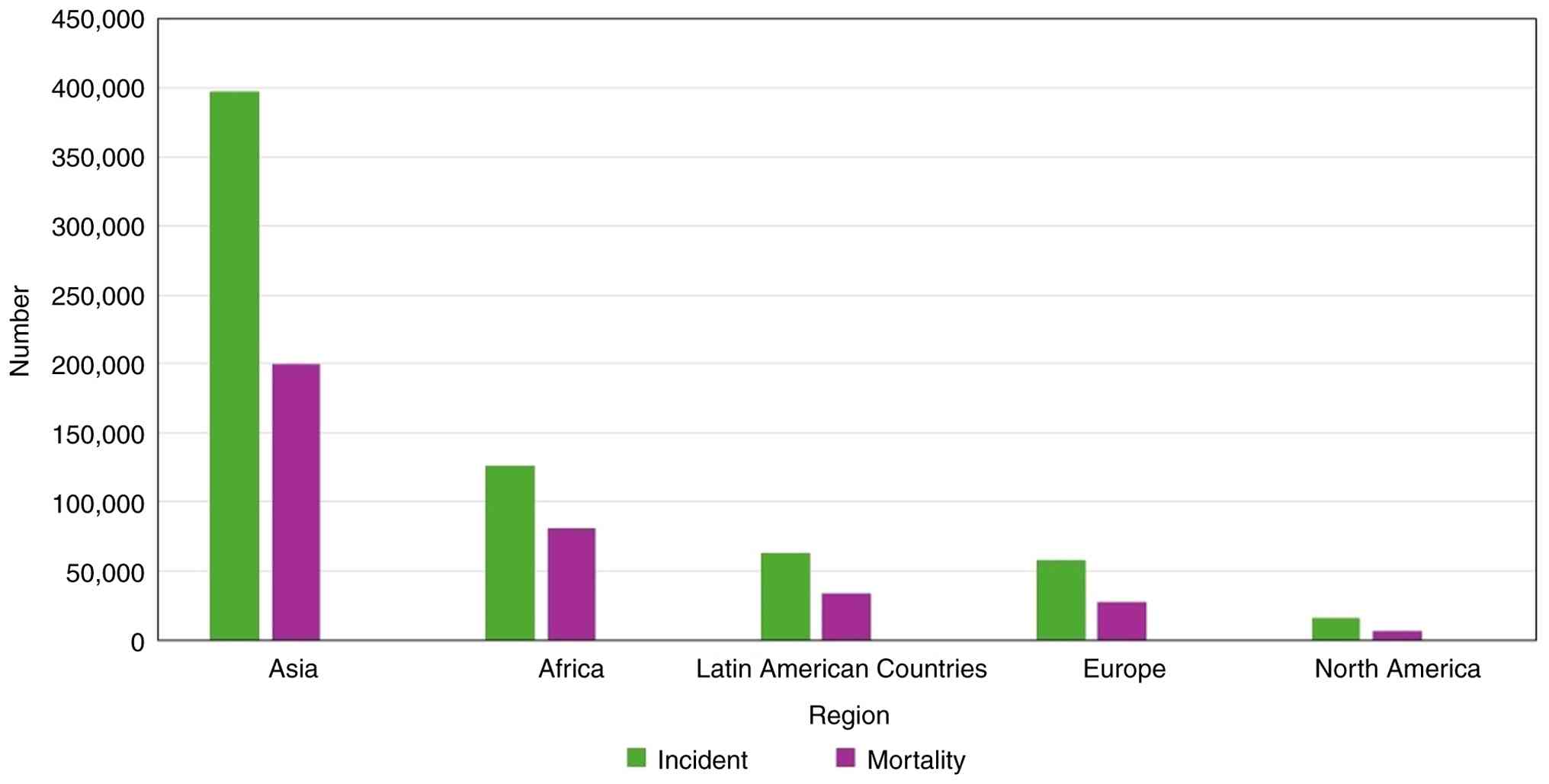
The impact of CCa is underscored by the wide
disparities in mortality between high-income and LMICs (Fig. 1). In 2018, there were an estimated
570,000 cases of CCa and 311,000 CCa-associated deaths globally,
with LMICs accounting for ~90% of deaths (5,36).
The World Health Organization later reported 660,000 new cases and
350,000 deaths in 2022, again with 90% occurring in LMICs (37). Incidence and mortality rates vary
considerably across regions, with the Caribbean, Latin America and
sub-Saharan Africa reporting the highest burdens (4). These elevated rates are largely
attributable to limited access to screening and treatment, a high
prevalence of HPV infection and other region-specific risk factors
(38). By contrast, high-income
countries have reduced CCa incidence and mortality through
widespread screening and HPV vaccination (39).
Addressing the burden of CCa in LMICs requires
acknowledging the challenges to implementing effective management
measures (40). In sub-Saharan
Africa, critical healthcare infrastructure for early detection and
advanced disease management is often lacking. Even when services
are available, cultural barriers, including stigma, traditional
beliefs and religious practices, may limit women's access to
essential care (4,40,41).
Fig. 1 shows the worldwide burden
of CCa, highlighting potential regional disparities.
Pathophysiology of CCa
Although various genetic and epigenetic changes
contribute to the initiation of CCa, persistent HPV infection is
the primary driver of disease progression (42). Prolonged HPV infection leads to the
upregulation of viral oncogenes, resulting in molecular disruptions
in cervical epithelial cells (43). HPV-encoded oncoproteins,
particularly E5, E6 and E7, drive oncogenic transformation
(8) by suppressing tumor
suppressor proteins such as p53 and retinoblastoma protein, while
interfering with key signaling pathways that regulate genomic
stability and the cell cycle (44,45).
E5 further promotes oncogenesis by upregulating factors such as
epidermal growth factor receptor and cellular
mesenchymal-epithelial transition, both of which enhance
HPV-related gene expression. As these molecular changes accumulate,
the risk of malignant transformation increases (46,47).
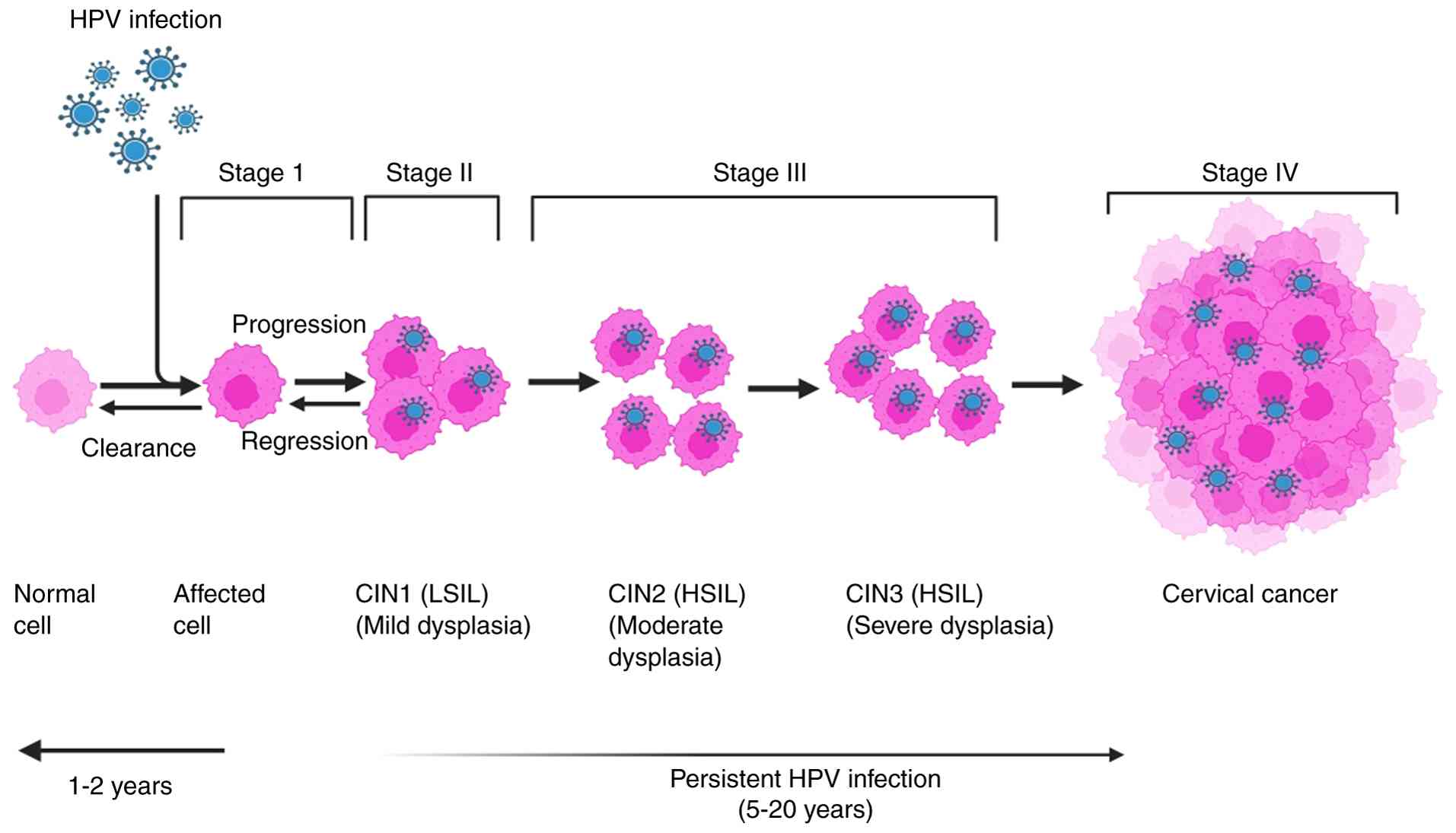
HPV-driven cervical carcinogenesis typically unfolds
in four stages, as illustrated in Fig.
2. The initial stage involves infection of basal epithelial
cells, often through microabrasions, followed by immune clearance
in most cases. However, in ~10% of individuals, the infection
persists and leads to the development of low-grade squamous
intraepithelial lesions, classified as cervical intraepithelial
neoplasia grade 1 (CIN1). CIN1 lesions may progress to high-grade
lesions (CIN2 and CIN3), which, if left untreated, can evolve into
invasive carcinomas (40,48). Notably, CIN1 often regresses
spontaneously, with ~60% of lesions resolving without intervention.
CIN2 also shows high spontaneous regression rates, particularly
among younger women, with ~63% of lesions resolving independently
(49,50).
Invasive CCa is staged according to the
International Federation of Gynecology and Obstetrics (FIGO) system
(51), which ranges from stage I
(cancer confined to the cervix) to stage IV (distant metastasis
involving organs such as the liver and lungs) (7,52,53).
Treatment strategies are determined by the clinical stage (54). Early-stage CCa is typically managed
with surgery and radiation therapy (55), whereas advanced stages require
chemoradiation (56,57), often using platinum-based regimens
(56,58). For late-stage or metastatic
disease, systemic therapies and radiotherapy are commonly employed,
including in LMICs (40,58). However, treatment efficacy in these
regions is frequently compromised by inadequate infrastructure,
limited numbers of trained professionals and the high costs
associated with surgical care (40,58).
Regulation of circRNA cyclization and
biogenesis by SFs
circRNAs are primarily generated through the
back-splicing of pre-mRNA at canonical splice sites, a process
regulated by SFs (59). Canonical
pre-mRNA splicing and exon cyclization are mutually exclusive, with
this competition serving as a conserved, tissue-specific mechanism
in animals (60).
One well-characterized example is circMbl, derived
from the mannan-binding lectin (MBL) gene; the biosynthesis of
circMbl is tightly regulated by the MBL protein, which binds to
conserved motifs in the flanking introns, promoting circRNA
formation (60). Similarly,
Src-associated mitosis of 68 kDa (SAM68) has been shown to promote
circRNA production in vivo and in vitro by
interacting with Alu elements in SMN pre-mRNA (61). This interaction represents a unique
regulatory mechanism linking SAM68 and Alu elements in circRNA
biogenesis. Another SF, SF proline/glutamine-rich (SFPQ), is
enriched in introns flanking Distal-Alu-Long-Intron (DALI)
circRNAs, which are characterized by long introns and distal
inverted Alu elements. Depletion of SFPQ markedly reduces DALI
circRNA expression (62),
underscoring the essential role of SFs in tissue-specific circRNA
regulation.
The regulatory function of SFs in circRNA biogenesis
has been observed in various types of cancer. In hepatocellular
carcinoma, circRNA levels are reduced; suppression of nudix
hydrolase 21 increases circRNA production and promotes the
formation of UGUA motifs (63). In
oral squamous cell carcinoma, circUHRF1 inhibits microRNA
(miRNA/miR)-526b-5p, leading to increased expression of c-Myc,
which in turn activates transforming growth factor β1 and
epithelial splicing regulatory protein 1 (ESRP1) transcription.
ESRP1 then accelerates circUHRF1 cyclization, forming a regulatory
feedback loop (64).
In glioma, SRSF10 regulates circATXN1 production by
binding to flanking Alu elements; knockdown of SRSF10 markedly
decreases circATXN1 levels (65).
In addition, it has been shown that ~40% of expressed genes in
human B-lymphoid cells produce circRNAs, implicating alternative
back-splicing and the involvement of RNA-binding proteins,
particularly SFs such as SRSF3, in exon circularization and circRNA
formation (66). Despite these
insights across various malignancies, the role of SFs in circRNA
regulation in CCa remains largely unexplored.
circRNAs in cancer pathogenesis
circRNAs are a class of ncRNAs generated through
head-to-tail splicing of exons, resulting in covalently closed
loops lacking 5′ caps or 3′ polyadenylated tails (67). These molecules contribute to cancer
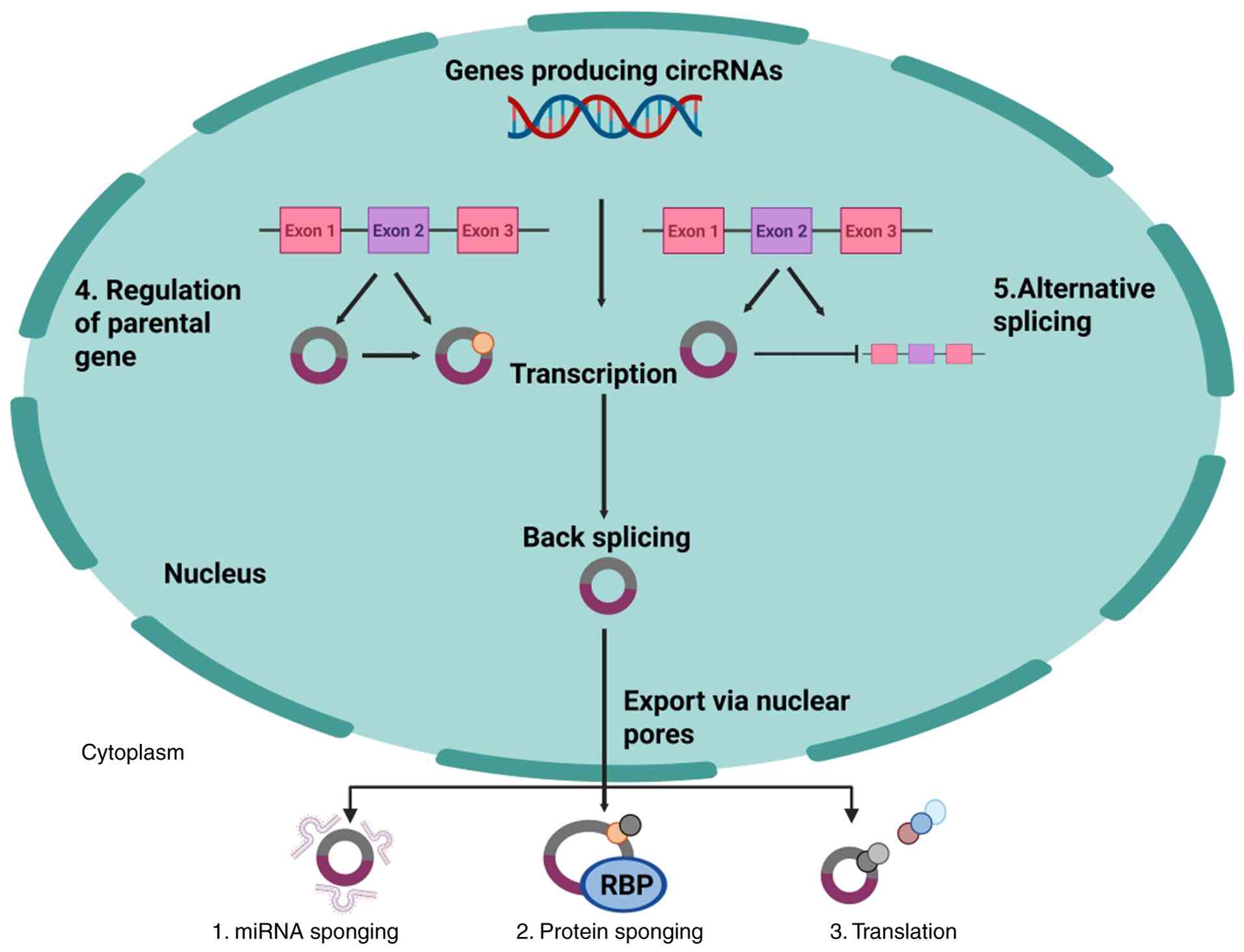
progression via several key mechanisms (68) as shown in Fig. 3. Firstly, circRNAs act as sponges
for miRNAs, limiting their ability to bind mRNA targets and
regulate gene expression (69).
Second, circRNAs can function as decoys for proteins, such as
RNA-binding proteins, to regulate their functions (70). Third, circRNAs modulate gene
transcription and alternative splicing through RNA-RNA interactions
(71). These properties render
circRNAs potential markers for cancer diagnosis and treatment.
circRNA mechanisms in CCa
pathogenesis
circRNAs are differentially expressed in CCa tissues
compared with healthy tissues, suggesting their role in
tumorigenesis (8,72). Abnormally expressed circRNAs are
considered to promote tumor formation by acting as miRNA sponges
(73). The roles of miRNAs in
cancer, including CCa, have been widely studied, revealing that
their expression depends on cellular context and the availability
of mRNA targets. In some cases, miRNAs are downregulated and act as
tumor suppressors, while in others, they are upregulated and
function as oncogenes, promoting aggressive cancer phenotypes. This
duality underscores the pleiotropic nature of miRNAs in cancer
biology. For example, the miR-584 family has been implicated in
multiple types of cancer and can influence distinct signaling
pathways depending on the tissue type and subcellular localization
(74).
Tumor-promoting circRNAs are typically upregulated
in CCa and are associated with poor prognosis. For example,
hsa_circ_0141539 is more abundant in CCa tissues than in adjacent
healthy tissues, and is associated with tumor size, FIGO stage and
myometrial invasion. hsa-circ-0141539 functions as a sponge for
miR-518d-5p/519-5p, upregulating the chromobox 8 gene, which
contributes to tumorigenesis in cervical cells (75). Hsa_circ_0141539 also sponges
miR-506, leading to increased expression of the snail family
transcriptional repressor 2, a direct target of miR-506; silencing
hsa_circ_0141539 has shown therapeutic promise for CCa (76).
Other oncogenic circRNAs include hsa_circRNA_101996,
which sponges miR-8075 to promote the expression of the targeting
protein for xklp2. circ-EIF4G2 also affects CCa cell malignancy via
the miR-218/HOXA1 pathway (77,78).
Another circRNA, hsa_circ_0001038, is upregulated in CCa cell lines
compared with in healthy cells, where it promotes proliferation,
migration and invasion, and is derived from the DNA-directed RNA
polymerase I subunit RPA1 gene and is 193 base pairs long. In
addition, circRNA_400029 and circEPSTI1 inhibit apoptosis via the
miR-1285-3p/TLN1 and miR-375/409-3P/515-5p-SLC7A11 pathways,
respectively (40).
circSLC26A4 serves a role in the progression of CCa
by regulating the miR-1287-5p/HOXA7 axis (40). Furthermore, hsa_circ_0023404, which
is markedly upregulated in CCa tissues, advances CCa progression by
sponging miR-136 and activating the TFCP2/YAP signaling axis.
circ_0003221 is also upregulated in CCa, and its knockdown hinders
cell migration, proliferation, invasion and EMT while inducing cell
cycle arrest. This circRNA sponges miR-758-3p, leading to the
increased expression of cytoplasmic polyadenylation element-binding
protein 4 (CPEB4), which is directly targeted by miR-758-3p;
silencing circ_0003221 has been revealed to suppress CCa
progression through the miR-758-3p/CPEB4 axis (79). Additionally, circEPSTI1, which is
notably upregulated in CCa, regulates ferroptosis through the
circEPSTI1-miR-375/409-3P/515-5p-SLC7A11 axis, influencing CCa cell
proliferation through competing endogenous RNA mechanisms,
presenting as a potential biomarker and treatment target.
circ_0005576, which is upregulated in CCa samples and cells,
enhances CCa cell proliferation and mobility by sponging
miR-153-3p; the circ_0005576/miR-153-3p/KIF20A pathway offers a
promising therapeutic target for CCa (80). Several other circRNAs involved in
CCa pathogenesis are summarized in Table I.
 | Table I.circRNAs in CCa pathogenesis. |
Table I.
circRNAs in CCa pathogenesis.
| First author/s,
year | circRNA | Expression
level | Regulatory
axis | Oncogenic role in
CCa | Effect on CCa | (Refs.) |
|---|
| Zhang et al,
2018 |
hsa_circ_0023404 | Upregulated | miR-136/TFCP2 | Oncogenic | Facilitates CCa
development and progression | (81) |
| Gu et al,
2020 | circ_0003221 | Upregulated |
miR-758-3p/CPEB4 | Oncogenic | Contributes to CCa
progression | (82) |
| Xie et al,
2021 | circ-EIF4G2 | Upregulated | miR-218/HOXA1 | Oncogenic | Enhances cell
proliferation, migration, invasion and colony formation | (79) |
| Zhang and Xin,
2018 | circ-ITCH | Down regulated | miR-93-
5p/FOXK2 | Tumor
suppressor | Inhibits cell
proliferation, migration and invasion | (85) |
| Ma et al,
2019 |
hsa_circ_0001038 | Upregulated |
miR-337-3p/CNNM3 | Oncogenic | Promotes cell
proliferation, migration and invasion | (80) |
| Wei et al,
2021 | circRNA_400029 | Upregulated |
miR-1285-3p/TLN1 | Oncogenic | Promotes cancer
proliferation and invasion, and inhibits apoptosis | (86) |
| Tang et al,
2020 | circEPSTI1 | Upregulated |
miR-375/409-3P/515-5p-SLC7A11 | Oncogenic | Stimulates cancer
growth and invasion, inhibits cell death | (87) |
| Li et al,
2019 | circ0001955 | Upregulated |
miR-188-3p/NCAPG2 | Oncogenic | Promotes
tumorigenesis and metastasis in CCa | (83) |
| Tang et al,
2019 |
hsa_circ_0000263 | Upregulated |
miR-150-5p/MDM4/p53 | Oncogenic | Promotes cell
proliferation, migration and cell cycle regulation | (88) |
| Yi et al,
2019 |
hsa_circ_0000301 | Upregulated |
miR-1228-3p/IRF4 | Oncogenic | Promotes cancer
progression | (89) |
| Zhang et al,
2018 |
hsa_circRNA_101996 | Upregulated | miR-8075/TPX2 | Oncogenic | Promotes cell
proliferation and invasion | (78) |
| Marima et
al, 2021 | circCLK3 | Upregulated | miR-320a/Fox
M1 | Oncogenic | Promotes CCa
progression | (41) |
| Chen et al,
2023 | circ_0084927 | Upregulated |
miR-142-3p/ARL2 | Oncogenic | Promotes CCa
development | (90) |
| Zheng et al,
2018 | circRNA_000284 | Upregulated |
miR-506/Snail-2 | Oncogenic | Promotes cell
proliferation and invasion in CCa | (91) |
| Zhao et al,
2019 |
hsa_circ_0000515 | Upregulated | miR-326/ELK1 | Oncogenic | Promotes CCa
progression | (92) |
circRNAs as potential markers in CCa:
Screening diagnosis
Due to their high tissue specificity and resistance
to exonuclease degradation, circRNAs exhibit notable structural
stability (70), making them ideal
candidates for non-invasive diagnostic biomarkers (81). They can be detected in blood,
saliva and urine, enabling liquid biopsy applications. circRNAs are
also linked to key clinical parameters in CCa, such as metastasis,
age, sex and Tumor-Node-Metastasis stage (70,82).
A previous RNA sequencing study identified ~80,000 circRNAs in
cervical tissues, with ~25,000 showing differential expression.
Furthermore, ~18,000 circRNAs were detected in cell-free plasma
samples, and ~2,700 showed altered expression following surgical
tumor removal (83). These
findings reinforce the diagnostic potential of circRNA expression
in CCa, with expression profiles clearly distinguishing tumor from
normal tissues (84). Some notable
examples include circRNA8924 (85), circ-ATP8A2 (86) and circ-0000745 (87), which have been shown to be
upregulated in cervical cancer and promote cancer progression.
Additionally, hsa_circ_0018289 (88), circRNA-000284, hsa_circ_0023404
(89) and circ_0067934 have also
been identified as being upregulated in cervical cancer and
involved in its progression (90).
circRNAs as prognostic biomarkers in
CCa
circRNAs are increasingly associated with clinical
prognostic indicators such as tumor size, disease stage and
metastasis. Given the limitations of existing therapies and high
recurrence rates, reliable biomarkers for disease progression and
relapse are urgently needed. Previous studies have supported the
utility of circRNAs as prognostic markers (91), including for tumor recurrence
(92). For example, reverse
transcription-quantitative polymerase chain reaction has revealed
that low serum levels of circFoxO3a are associated with poor
prognosis in patients with squamous CCa (93). Similarly, elevated circEIF4G2
expression is associated with larger tumor size, lymph node
involvement and reduced patient survival (78). These findings underscore the
potential of circRNAs to guide prognosis, although the mechanisms
underlying their dysregulation remain incompletely understood.
circRNAs as therapeutic targets for
CCa
Dysregulated circRNAs also represent potential
therapeutic targets. For example, hsa_circ_0000515 is upregulated
in CCa tissues, and promotes tumor growth, migration and invasion.
By contrast, downregulation of hsa_circ_0000515 suppresses cell
proliferation, and induces apoptosis and autophagy (94). Several other circRNAs, including
hsa_circRNA_000596, hsa_circRNA_104315, hsa_circRNA_400068,
hsa_circRNA_101958 and hsa_circRNA_103519, form part of a
circRNA-miRNA-mRNA network targeting ribonucleotide reductase M2,
influencing responses to chemotherapy via mRNA variants such as
rs5030743 and rs1130609 (95).
Additionally, circ_0104541 is upregulated in CCa compared with in
precancerous tissues, and its silencing reduces cell migration and
invasion. These findings reinforce the therapeutic relevance of
targeting circRNAs in CCa (80,96).
circRNAs as modulators of HPV infection in
CCa
CCa is closely linked to persistent HPV infection,
particularly HPV16 and HPV18. The viral oncoproteins E6 and E7
drive the transformation of cervical epithelial cells and
considerably contribute to the pathogenesis of CCa (97). Research has shown that oncogenic
HPV strains can generate their own circRNAs. One such molecule,
circE7, contains the E7 oncogene and has been identified in
HPV16-infected cells. circE7 is found in the cytoplasm, is
associated with polysomes, and exhibits N6-methyladenosine (m6A)
modification. Notably, circE7 serves as a template for the E7
oncoprotein, and disrupting circE7 reduces E7 protein levels,
limiting malignant transformation in HPV16-positive CCa cells such
as CaSki (98). In vivo,
circE7 suppression can inhibit tumor formation in xenograft models.
Moreover, data from The Cancer Genome Atlas confirmed that circE7
is expressed in HPV-positive tumors, supporting the functional
relevance of virus-derived circRNAs in cancer development (98).
Further research on circRNA expression profiles in
CaSki cells has identified 526 dysregulated circRNAs following E7
expression, including 352 upregulated and 174 downregulated
circRNAs (97,99–101). A number of these circRNAs are
involved in cancer-related pathways, such as the mammalian target
of rapamycin signaling pathway (102,103). Notably, higher circE7 expression
in HPV16-positive tumors has been associated with improved overall
survival, suggesting its potential as a prognostic biomarker.
Although the understanding of virus-host circRNA interactions
remains limited, evidence suggests that viruses may exploit circRNA
biogenesis to facilitate oncogenesis and progression (71,104–106).
Exosomal circRNAs in the CCa tumor
microenvironment
Exosomes are extracellular vesicles that mediate
intercellular communication by transferring biomolecules such as
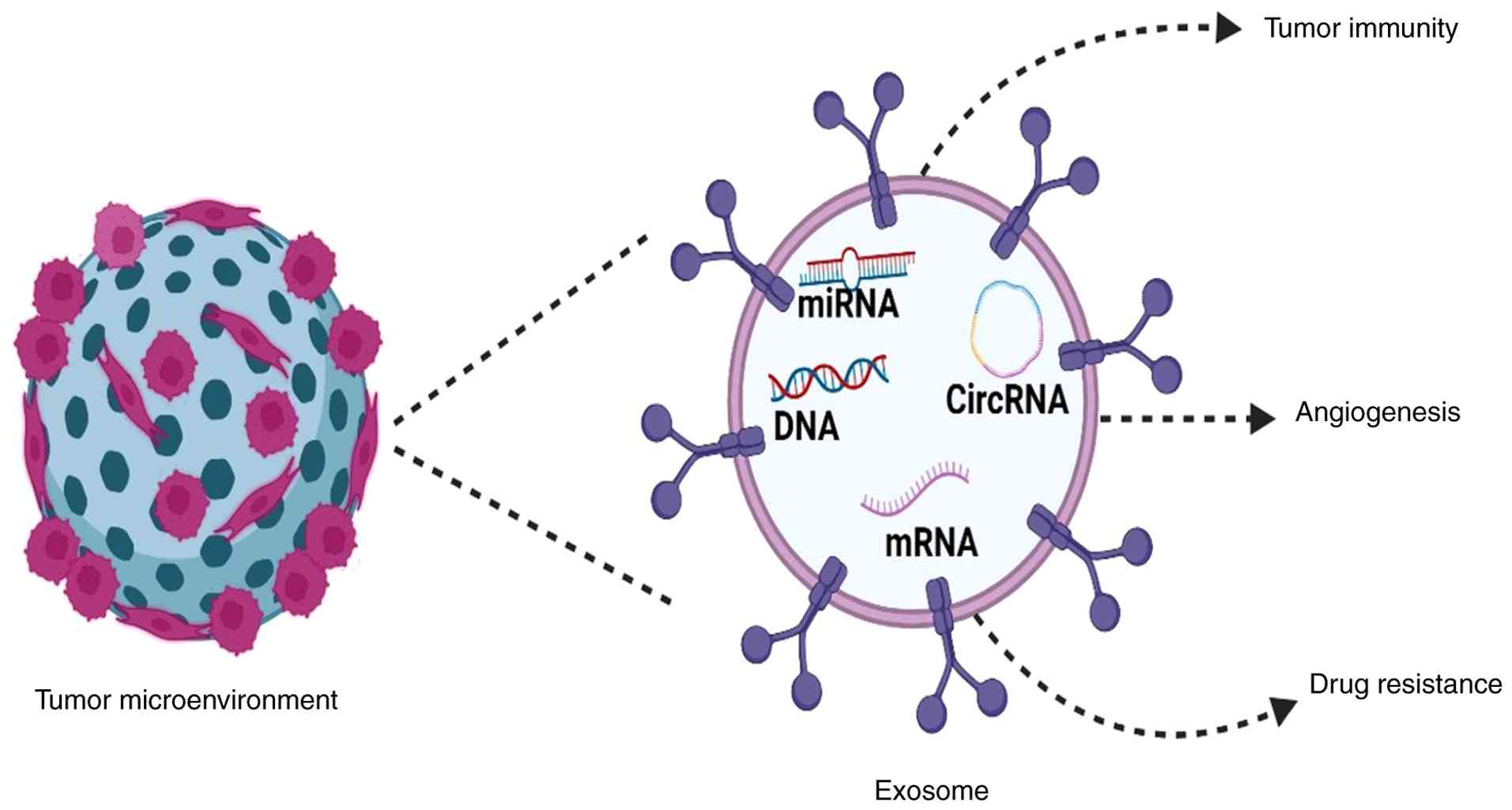
proteins, lipids and RNAs, including circRNAs. In cancer, exosomal
circRNAs are increasingly recognized for their roles in modulating
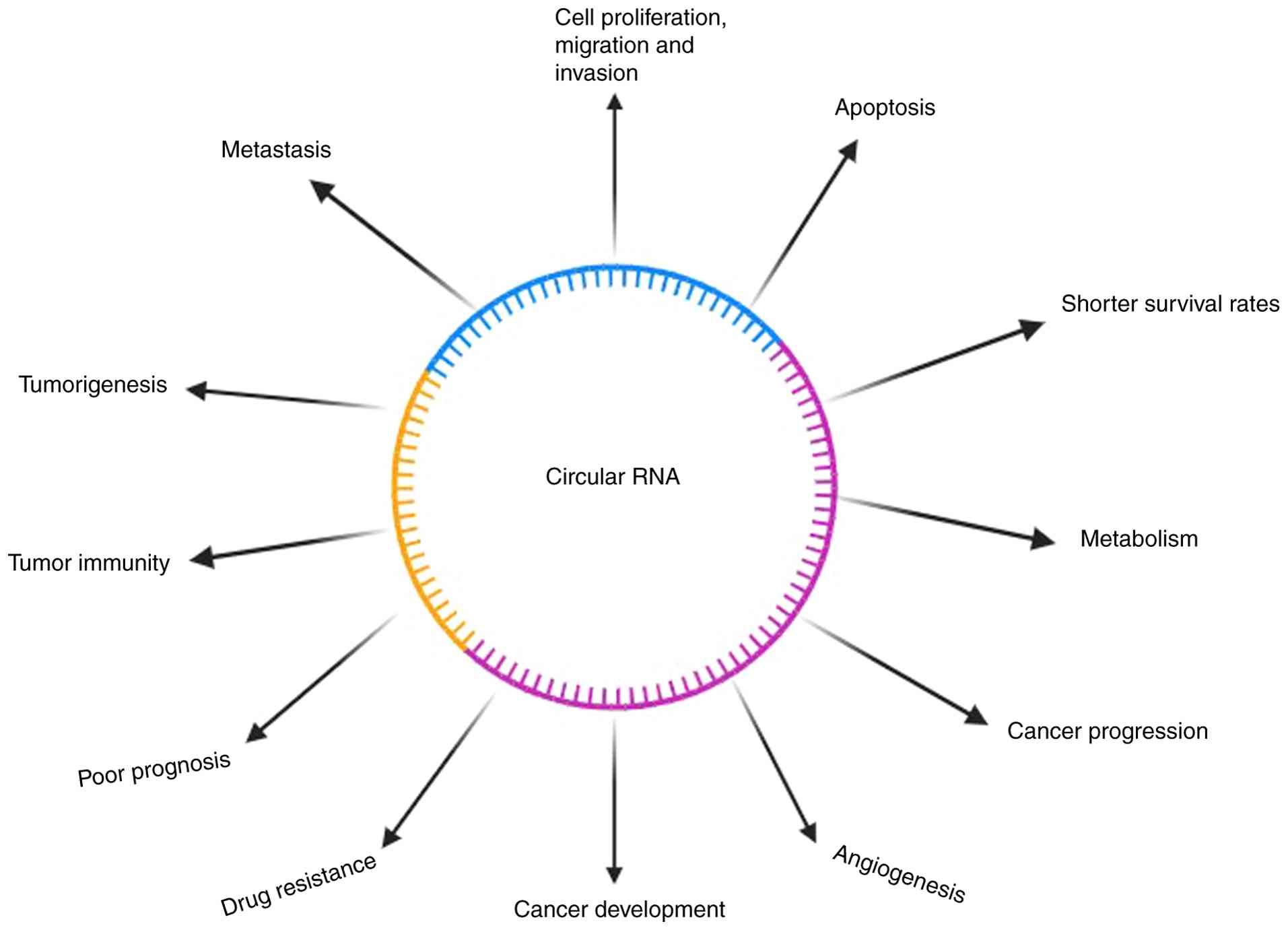
key processes in the tumor microenvironment (TME) (107), including drug resistance,
angiogenesis, tumor immunity, EMT, metabolism, invasion and
metastasis (Fig. 4) (108). Notably, circ_PVT1 has been
identified as an oncogenic exosomal circRNA upregulated in CCa
(109). Silencing circ_PVT1
suppresses CCa cell migration and invasion, and may prevent lung
metastasis (109). Conversely,
elevated circ_PVT1 expression enhances metastatic potential by
promoting EMT through the miR-1286 axis, establishing circ_PVT1 as
a potential therapeutic target (110).
Similarly, circ-HIPK3 is highly expressed in CCa
tissues and exosomes, whereas silencing circ-HIPK3 impairs cell
proliferation and induces apoptosis. circ-HIPK3 functions by
sponging miR-338-3p, leading to upregulation of hypoxia-inducible
factor-1α, which supports tumor progression (111). Furthermore, circSYT15 contributes
to cisplatin (DDP) resistance; circSYT15 is upregulated in
DDP-resistant CCa cells and exosomes, where it promotes resistance
via the miR-503-5p/RSF1 axis (96). These findings highlight the
critical role of exosomal circRNAs in regulating cell communication
in the TME, and reveal their potential as biomarkers and
therapeutic targets in combating metastasis and treatment
resistance.
circRNAs and epigenetic mechanisms in
CCa
Epigenetics involves heritable changes in gene
regulation that do not alter the underlying DNA sequence (112,113). These modifications include
histone modification, DNA methylation, chromatin remodeling and
regulation by ncRNA (114).
Together, these mechanisms ensure precise control of gene
expression and are critical for normal development and cell
differentiation. Dysregulation of epigenetic mechanisms is
implicated in various diseases, particularly cancer.
circRNAs, like other ncRNAs, can influence
epigenetic regulation at the transcriptional level (112,115). Aberrant circRNA expression has
been observed in CCa, suggesting a functional role in tumor
progression (116). For example,
circE7, derived from HPV16, encodes the E7 oncoprotein
independently of its linear RNA counterpart. The translation of E7
is influenced by m6A modification, a key epigenetic marker.
Knockdown of RNA methyltransferases METTL3 and METTL14 notably
reduces circE7 expression and E7 protein levels, while mutations in
m6A consensus sites within the 5′ untranslated region of circE7
also impair its expression, Notably, specific disruption of circE7
in CaSki CCa cells reduces E7 protein levels and inhibits CCa cell
growth both in vitro and in tumor xenografts. This
demonstrates that circE7 is essential for the transformed growth of
these cells, and consequently, impaired circE7 expression inhibits
CCa progression (98). Notably,
these effects do not influence the levels of linear RNA, indicating
that m6A modification specifically enhances circE7 stability and
translation. Additionally, circ0000069 promotes CCa cell
proliferation and migration by sponging miR-4426; the expression of
circ0000069 is also regulated by m6A modification, as METTL3
knockdown reduces both m6A levels and circ0000069 expression,
suggesting that m6A enhances the stability of circ0000069 (117).
Challenges to the potential diagnostic and
prognostic roles of circRNAs in CCa
Unlike linear RNAs, circRNAs possess a closed-loop
structure lacking 3′ and 5′ ends. This unique configuration
enhances their stability and persistence in circulation,
particularly within serum-derived exosomes (118). circRNAs also exhibit tissue- and
cancer-type-specific differential expression, including in CCa,
making them promising candidates for non-invasive diagnostic and
prognostic biomarkers (113,114).
Despite this potential, several challenges hinder
the clinical application of circRNAs. Notably, circRNAs need to be
validated in clinical settings; most circRNA studies have been
conducted on small sample sizes, often without replication or
validation in larger, diverse patient cohorts (115). Furthermore, the lack of
standardized nomenclature conventions for circRNAs can lead to
confusion, inconsistencies across studies and difficulty in data
interpretation (116). There are
also technical limitations. circRNA identification and
quantification are complicated by sequence overlap with host
gene-derived miRNAs and the technical challenges of detecting
back-splice junctions (117).
These factors increase the risk of experimental artefacts and data
variability. While numerous circRNAs have been implicated in cancer
biology, the precise molecular mechanisms through which they exert
oncogenic or tumor-suppressive effects in CCa remain poorly
characterized.
To overcome these limitations, large-scale,
multi-center studies are essential for validating circRNA
expression patterns and establishing their clinical relevance.
Standard protocols for naming, validating and quantifying circRNAs
must be established to facilitate the comparability of results
across studies. Further investigation into the functional roles and
regulatory mechanisms of circRNAs in CCa will be critical to
realizing their full potential as diagnostic tools and therapeutic
targets (113).
Conclusions
The regulation of circRNA cyclization and biogenesis
by SFs represents a complex and dynamic process that influences
multiple cellular functions, including tumor progression. SFs such
as MBL, SAM68 and SFPQ serve pivotal roles in circRNA formation by
modulating the balance between canonical pre-mRNA splicing and
back-splicing. These regulatory interactions underscore the
intricate molecular framework governing circRNA formation.
Dysregulation of circRNAs has been implicated in a variety of
malignancies, including CCa, highlighting their importance as
biomarkers and therapeutic targets. Fig. 5 provides a conceptual summary of
the mechanisms discussed throughout the present review. However,
while considerable progress has been made in understanding circRNA
biology, the specific interactions between SFs and circRNAs in CCa
remain largely unexplored. This knowledge gap presents a compelling
opportunity for future research to determine how SF-mediated
circRNA regulation contributes to CCa pathogenesis and progression.
Elucidating these mechanisms will enhance the understanding of CCa,
which may lead to the development of novel diagnostic and
therapeutic targets based on circRNA modulation in CCa.
Acknowledgements
The authors would like to thank Dr Cheryl Tosh
(University of Pretoria, Pretoria, South Africa) for editing the
manuscript to improve language and style.
Funding
The present study was funded by the South African Medical
Research Council (grant no. 23108 and A1H347) and the National
Research Foundation (grant no. 138139 and N1G655).
Availability of data and materials
Not applicable.
Authors' contributions
AN and RM prepared the original draft. RM, AB, NX,
OF and ZD reviewed and edited the manuscript. RM and ZD
conceptualized the study. RM and ZD acquired funding. Data
authentication is not applicable. All authors read and approved the
final manuscript.
Ethics approval and consent to
participate
Not applicable.
Patient consent for publication
Not applicable.
Competing interests
The authors declare that they have no competing
interests.
References
|
1
|
Chen YH, Yang SF, Yang CK, Tsai HD, Chen
TH, Chou MC and Hsiao YH: Metformin induces apoptosis and inhibits
migration by activating the AMPK/p53 axis and suppressing PI3K/AKT
signaling in human cervical cancer cells. Mol Med Rep. 23:882021.
View Article : Google Scholar : PubMed/NCBI
|
|
2
|
Bray F, Laversanne M, Sung H, Ferlay J,
Siegel RL, Soerjomataram I and Jemal A: Global cancer statistics
2022: GLOBOCAN estimates of incidence and mortality worldwide for
36 cancers in 185 countries. CA Cancer J Clin. 74:229–263.
2024.PubMed/NCBI
|
|
3
|
Atun R, Jaffray DA, Barton MB, Bray F,
Baumann M, Vikram B, Hanna TP, Knaul FM, Lievens Y, Lui TY, et al:
Expanding global access to radiotherapy. Lancet Oncol.
16:1153–1186. 2015. View Article : Google Scholar : PubMed/NCBI
|
|
4
|
Sung H, Ferlay J, Siegel RL, Laversanne M,
Soerjomataram I, Jemal A and Bray F: Global cancer statistics 2020:
GLOBOCAN estimates of incidence and mortality worldwide for 36
cancers in 185 countries. CA Cancer J Clin. 71:209–249.
2021.PubMed/NCBI
|
|
5
|
Bray F, Ferlay J, Soerjomataram I, Siegel
RL, Torre LA and Jemal A: Global cancer statistics 2018: GLOBOCAN
estimates of incidence and mortality worldwide for 36 cancers in
185 countries. CA Cancer J Clin. 68:394–424. 2018.PubMed/NCBI
|
|
6
|
Bermudez A, Bhatla N and Leung E: Cancer
of the cervix uteri. Int J Gynaecol Obstet. 131 (Suppl 2):S88–S95.
2015. View Article : Google Scholar : PubMed/NCBI
|
|
7
|
Burmeister CA, Khan SF, Schäfer G, Mbatani
N, Adams T, Moodley J and Prince S: Cervical cancer therapies:
Current challenges and future perspectives. Tumour Virus Res.
13:2002382022. View Article : Google Scholar : PubMed/NCBI
|
|
8
|
Heydarnia E, Dorostgou Z, Hedayati N,
Mousavi V, Yahyazadeh S, Alimohammadi M, Gheibi M, Heidari P, Igder
S, Mafi A and Vakili O: Circular RNAs and cervical cancer: Friends
or foes? A landscape on circRNA-mediated regulation of key
signaling pathways involved in the onset and progression of
HPV-related cervical neoplasms. Cell Commun Signal. 22:1072024.
View Article : Google Scholar : PubMed/NCBI
|
|
9
|
Mishra GA, Pimple SA and Shastri SS: An
overview of prevention and early detection of cervical cancers.
Indian J Med Paediatr Oncol. 32:125–132. 2011. View Article : Google Scholar : PubMed/NCBI
|
|
10
|
Omoyeni O and Tsoka-Gwegweni J: Knowledge,
attitudes and practices of cervical cancer screening among rural
women in KwaZulu-Natal, South Africa. Pan Afr Med J.
42:1882022.PubMed/NCBI
|
|
11
|
D'Oria O, Corrado G, Laganà AS, Chiantera
V, Vizza E and Giannini A: New advances in cervical cancer: From
bench to bedside. Int J Environ Res Public Health. 19:70942022.
View Article : Google Scholar : PubMed/NCBI
|
|
12
|
Kessler TA: Cervical cancer: Prevention
and early detection. Semin Oncol Nurs. 33:172–183. 2017. View Article : Google Scholar : PubMed/NCBI
|
|
13
|
Okunade KS: Human papillomavirus and
cervical cancer. J Obstet Gynaecol. 40:602–608. 2020. View Article : Google Scholar : PubMed/NCBI
|
|
14
|
Kumar L, Harish P, Malik PS and Khurana S:
Chemotherapy and targeted therapy in the management of cervical
cancer. Curr Probl Cancer. 42:120–128. 2018. View Article : Google Scholar : PubMed/NCBI
|
|
15
|
Chargari C, Peignaux K, Escande A, Renard
S, Lafond C, Petit A, Lam Cham Kee D, Durdux C and Haie-Méder C:
Radiotherapy of cervical cancer. Cancer Radiother. 26:298–308.
2022. View Article : Google Scholar : PubMed/NCBI
|
|
16
|
Guo L and Hua K: Cervical cancer: Emerging
immune landscape and treatment. Onco Targets Ther. 13:8037–8047.
2020. View Article : Google Scholar : PubMed/NCBI
|
|
17
|
Movahedpour A, Khatami SH, Khorsand M,
Salehi M, Savardashtaki A, Mirmajidi SH, Negahdari B, Khanjani N,
Naeli P, Vakili O and Taheri-Anganeh M: Exosomal noncoding RNAs:
Key players in glioblastoma drug resistance. Mol Cell Biochem.
476:4081–4092. 2021. View Article : Google Scholar : PubMed/NCBI
|
|
18
|
Ali SA, Peffers MJ, Ormseth MJ, Jurisica I
and Kapoor M: The non-coding RNA interactome in joint health and
disease. Nat Rev Rheumatol. 17:692–705. 2021. View Article : Google Scholar : PubMed/NCBI
|
|
19
|
Movahedpour A, Khatami SH, Karami N,
Vakili O, Naeli P, Jamali Z, Shabaninejad Z, Tazik K, Behrouj H and
Ghasemi H: Exosomal noncoding RNAs in prostate cancer. Clin Chim
Acta. 537:127–132. 2022. View Article : Google Scholar : PubMed/NCBI
|
|
20
|
Dragomir MP, Manyam GC, Ott LF, Berland L,
Knutsen E, Ivan C, Lipovich L, Broom BM and Calin GA: FuncPEP: A
database of functional peptides encoded by non-coding RNAs.
Noncoding RNA. 6:412020.PubMed/NCBI
|
|
21
|
Dhanoa JK, Sethi RS, Verma R, Arora JS and
Mukhopadhyay CS: Long non-coding RNA: its evolutionary relics and
biological implications in mammals: A review. J Anim Sci Technol.
60:252018. View Article : Google Scholar : PubMed/NCBI
|
|
22
|
Tang X, Ren H, Guo M, Qian J, Yang Y and
Gu C: Review on circular RNAs and new insights into their roles in
cancer. Comput Struct Biotechnol J. 19:910–928. 2021. View Article : Google Scholar : PubMed/NCBI
|
|
23
|
Xu S, Zhou L, Ponnusamy M, Zhang L, Dong
Y, Zhang Y, Wang Q, Liu J and Wang K: A comprehensive review of
circRNA: From purification and identification to disease marker
potential. PeerJ. 6:e55032018. View Article : Google Scholar : PubMed/NCBI
|
|
24
|
Yu CY and Kuo HC: The emerging roles and
functions of circular RNAs and their generation. J Biomed Sci.
26:292019. View Article : Google Scholar : PubMed/NCBI
|
|
25
|
Huang Y and Zhu Q: Mechanisms regulating
abnormal circular RNA biogenesis in cancer. Cancers (Basel).
13:41852021. View Article : Google Scholar : PubMed/NCBI
|
|
26
|
Bolha L, Ravnik-Glavač M and Glavač D:
Circular RNAs: biogenesis, function, and a role as possible cancer
biomarkers. Int J Genomics. 2017:62183532017. View Article : Google Scholar : PubMed/NCBI
|
|
27
|
Wang Y, Yan Q, Mo Y, Liu Y, Wang Y, Zhang
S, Guo C, Wang F, Li G, Zeng Z and Xiong W: Splicing factor derived
circular RNA circCAMSAP1 accelerates nasopharyngeal carcinoma
tumorigenesis via a SERPINH1/c-Myc positive feedback loop. Mol
Cancer. 21:622022. View Article : Google Scholar : PubMed/NCBI
|
|
28
|
Sharma M, Sharma S and Alawada A:
Understanding the binding specificities of mRNA targets by the
mammalian Quaking protein. Nucleic Acids Res. 47:10564–10579. 2019.
View Article : Google Scholar : PubMed/NCBI
|
|
29
|
Li R, Jiang J, Shi H, Qian H, Zhang X and
Xu W: CircRNA: A rising star in gastric cancer. Cell Mol Life Sci.
77:1661–1680. 2020. View Article : Google Scholar : PubMed/NCBI
|
|
30
|
Jedy-Agba E, Joko WY, Liu B, Buziba NG,
Borok M, Korir A, Masamba L, Manraj SS, Finesse A, Wabinga H, et
al: Trends in cervical cancer incidence in sub-Saharan Africa. Br J
Cancer. 123:148–154. 2020. View Article : Google Scholar : PubMed/NCBI
|
|
31
|
Song B, Ding C and Chen W, Sun H, Zhang M
and Chen W: Incidence and mortality of cervical cancer in China,
2013. Chin J Cancer Res. 29:471–476. 2017. View Article : Google Scholar : PubMed/NCBI
|
|
32
|
Makhafola TJ and McGaw LJ: Burden and
health policy of cancers in Africa. Medicinal Spices and Vegetables
from Africa. Academic Press; New York, NY: pp. 93–107. 2017,
View Article : Google Scholar
|
|
33
|
Sørbye SW, Falang BM, Botha MH, Snyman LC,
van der Merwe H, Visser C, Richter K and Dreyer G: Enhancing
cervical cancer prevention in south african women: Primary HPV mRNA
screening with different genotype combinations. Cancers (Basel).
15:54532023. View Article : Google Scholar : PubMed/NCBI
|
|
34
|
Casper C, Crane H, Menon M and Money D:
HIV/AIDS comorbidities: Impact on cancer, noncommunicable diseases,
and reproductive health. 3rd edition. Holmes KK, Bertozzi S, Bloom
BR and Jha P: Major Infectious Diseases; Washington, DC: 2017,
View Article : Google Scholar
|
|
35
|
Gottschlich A: Investigating methods to
reduce the burden of cervical cancer in highly impacted countries.
Epidemiological Sciences. University of Michigan; 2020
|
|
36
|
Boily MC, Barnabas RV, Rönn MM, Bayer CJ,
van Schalkwyk C, Soni N, Rao DW, Staadegaard L, Liu G, Silhol R, et
al: Estimating the effect of HIV on cervical cancer elimination in
South Africa: Comparative modelling of the impact of vaccination
and screening. EClinicalMedicine. 54:1017542022. View Article : Google Scholar : PubMed/NCBI
|
|
37
|
Riano I, Contreras-Chavez P, Pabon CM,
Meza K, Kiel L, Bejarano S and Florez N: An overview of cervical
cancer prevention and control in Latin America and the Caribbean
countries. Hematol Oncol Clin North Am. 38:13–33. 2024. View Article : Google Scholar : PubMed/NCBI
|
|
38
|
Vaccarella S, Laversanne M, Ferlay J and
Bray F: Cervical cancer in Africa, Latin America and the caribbean
and Asia: Regional inequalities and changing trends. int J Cancer.
141:1997–2001. 2017. View Article : Google Scholar : PubMed/NCBI
|
|
39
|
Zhou JZ, Jou J and Cohen E: Vaccine
strategies for human papillomavirus-associated head and neck
cancers. Cancers (Basel). 14:332021. View Article : Google Scholar : PubMed/NCBI
|
|
40
|
Basera A, Hull R, Demetriou D, Bates DO,
Kaufmann AM, Dlamini Z and Marima R: Competing endogenous RNA
(ceRNA) networks and splicing switches in cervical cancer: HPV
oncogenesis, clinical significance and therapeutic opportunities.
Microorganisms. 10:18522022. View Article : Google Scholar : PubMed/NCBI
|
|
41
|
Marima R, Hull R, Lolas G, Syrigos KN,
Kgoebane-Maseko M, Kaufmann AM and Dlamini Z: The catastrophic
HPV/HIV dual viral oncogenomics in concert with dysregulated
alternative splicing in cervical cancer. Int J Mol Sci.
22:101152021. View Article : Google Scholar : PubMed/NCBI
|
|
42
|
Buskwofie A, David-West G and Clare CA: A
review of cervical cancer: Incidence and disparities. J Natl Med
Assoc. 112:229–232. 2020.PubMed/NCBI
|
|
43
|
Balasubramaniam SD, Balakrishnan V, Oon CE
and Kaur G: Key molecular events in cervical cancer development.
Medicina (Kaunas). 55:3842019. View Article : Google Scholar : PubMed/NCBI
|
|
44
|
Tornesello ML, Annunziata C, Tornesello
AL, Buonaguro L and Buonaguro FM: Human oncoviruses and p53 tumor
suppressor pathway deregulation at the origin of human cancers.
Cancers (Basel). 10:2132018. View Article : Google Scholar : PubMed/NCBI
|
|
45
|
Yeo-The NSL, Ito Y and Jha S: High-risk
human papillomaviral oncogenes E6 and E7 target key cellular
pathways to achieve oncogenesis. Int J Mol Sci. 19:17062018.
View Article : Google Scholar
|
|
46
|
Venuti A, Paolini F, Nasir L, Corteggio A,
Roperto S, Campo MS and Borzacchiello G: Papillomavirus E5: The
smallest oncoprotein with many functions. Mol Cancer. 10:1402011.
View Article : Google Scholar : PubMed/NCBI
|
|
47
|
Scott ML, Coleman DT, Kelly KC, Carroll
JL, Woodby B, Songock WK, Cardelli JA and Bodily JM: Human
papillomavirus type 16 E5-mediated upregulation of Met in human
keratinocytes. Virology. 519:1–11. 2018. View Article : Google Scholar : PubMed/NCBI
|
|
48
|
Zhou C, Tuong ZK and Frazer IH:
Papillomavirus immune evasion strategies target the infected cell
and the local immune system. Front Oncol. 9:6822019. View Article : Google Scholar : PubMed/NCBI
|
|
49
|
Tainio K, Athanasiou A, Tikkinen KAO,
Aaltonen R, Cárdenas J, Hernándes Glazer-Livson S, Jakobsson M,
Joronen K, Kiviharju M, et al: Clinical course of untreated
cervical intraepithelial neoplasia grade 2 under active
surveillance: Systematic review and meta-analysis. BMJ.
360:k4992018. View Article : Google Scholar : PubMed/NCBI
|
|
50
|
Zhang J and Lu CX: Spontaneous regression
of cervical intraepithelial neoplasia 2: A meta-analysis. Gynecol
Obstet Invest. 84:562–567. 2019. View Article : Google Scholar : PubMed/NCBI
|
|
51
|
Tsikouras P, Zervoudis S, Manav B, Tomara
E, Iatrakis G, Romanidis C, Bothou A and Galazios G: Cervical
cancer: Screening, diagnosis and staging. J BUON. 21:320–325.
2016.PubMed/NCBI
|
|
52
|
Bhatla N, Aoki D, Sharma DN and
Sankaranarayanan R: Cancer of the cervix uteri. Int J Gynaecol
Obstet. 143 (Suppl 2):S22–S36. 2018. View Article : Google Scholar
|
|
53
|
Chuang LT, Temin S, Camacho R,
Dueñas-Gonzalez A, Feldman S, Gultekin M, Gupta V, Horton S, Jacob
G, Kidd EA, et al: Management and care of women with invasive
cervical cancer: American society of clinical oncology
resource-stratified clinical practice guideline. J Glob Oncol.
2:311–340. 2016. View Article : Google Scholar : PubMed/NCBI
|
|
54
|
Undurraga M, Loubeyre P, Dubuisson JB,
Schneider D and Petignat P: Early-stage cervical cancer: Is surgery
better than radiotherapy? Expert Rev Anticancer Ther. 10:451–460.
2010. View Article : Google Scholar : PubMed/NCBI
|
|
55
|
Monk BJ, Tewari KS and Koh WJ:
Multimodality therapy for locally advanced cervical carcinoma:
State of the art and future directions. J Clin Oncol. 25:2952–2965.
2007. View Article : Google Scholar : PubMed/NCBI
|
|
56
|
Gaffney DK, Erickson-Wittmann BA, Jhingran
A, Mayr NA, Puthawala AA, Moore D, Rao GG, Small W Jr, Varia MA,
Wolfson AH, et al: ACR appropriateness criteria® on
advanced cervical cancer expert panel on radiation
oncology-Gynecology. Int J Radiat Oncol Biol Phys. 81:609–614.
2011. View Article : Google Scholar : PubMed/NCBI
|
|
57
|
Grover S, Luckett R, Bhatia RK, Ralefala
T, Seiphetlheng A, Ramogola-Masire D, Monare B, Bazzett-Matabele L,
Schmeler K and Gaolebale PA: Neoadjuvant chemotherapy and less
invasive surgery for the management of early stage cervical cancer:
A brief report from Botswana. Gynecol Oncol Rep. 42:1010322022.
View Article : Google Scholar : PubMed/NCBI
|
|
58
|
Abe N, Matsumoto K, Nishihara M, Nakano Y,
Shibata A, Maruyama H, Shuto S, Matsuda A, Yoshida M, Ito Y and Abe
H: Rolling circle translation of circular RNA in living human
cells. Sci Rep. 5:164352015. View Article : Google Scholar : PubMed/NCBI
|
|
59
|
Ashwal-Fluss R, Meyer M, Pamudurti NR,
Ivanov A, Bartok O, Hanan M, Evantal N, Memczak S, Rajewsky N and
Kadener S: circRNA biogenesis competes with pre-mRNA splicing. Mol
Cell. 56:55–66. 2014. View Article : Google Scholar : PubMed/NCBI
|
|
60
|
Pagliarini V, Jolly A, Bielli P, Di Rosa
V, De la Grange P and Sette C: Sam68 binds Alu-rich introns in SMN
and promotes pre-mRNA circularization. Nucleic Acids Res.
48:633–645. 2020. View Article : Google Scholar : PubMed/NCBI
|
|
61
|
Stagsted LVW, O'Leary ET, Ebbesen KK and
Hansen TB: The RNA-binding protein SFPQ preserves long-intron
splicing and regulates circRNA biogenesis in mammals. Elife.
10:e630882021. View Article : Google Scholar : PubMed/NCBI
|
|
62
|
Li X, Ding J, Wang X, Cheng Z and Zhu Q:
NUDT21 regulates circRNA cyclization and ceRNA crosstalk in
hepatocellular carcinoma. Oncogene. 39:891–904. 2020. View Article : Google Scholar : PubMed/NCBI
|
|
63
|
Zhao W, Cui Y, Liu L, Qi X, Liu J, Ma S,
Hu X, Zhang Z, Wang Y, Li H, et al: Splicing factor derived
circular RNA circUHRF1 accelerates oral squamous cell carcinoma
tumorigenesis via feedback loop. Cell Death Differ. 27:919–933.
2020. View Article : Google Scholar : PubMed/NCBI
|
|
64
|
Liu X, Shen S, Zhu L, Su R, Zheng J, Ruan
X, Shao L, Wang D, Yang C and Liu Y: SRSF10 inhibits biogenesis of
circ-ATXN1 to regulate glioma angiogenesis via miR-526b-3p/MMP2
pathway. J Exp Clin Cancer Res. 39:1212020. View Article : Google Scholar : PubMed/NCBI
|
|
65
|
Naqvi AS, Asnani M, Black KL, Hayer KE,
Taylor D and Thomas-Tikhonenko A: The role of SRSF3 splicing factor
in generating circular RNAs. bioRxiv. Oct 10–2019.(Epub ahead of
print).
|
|
66
|
Li M, Cui L, Zhang J, Wang S and Du M: The
critical roles of circular RNAs in basic research and clinical
application of female reproductive-related diseases. Reprod Sci.
30:1421–1434. 2023. View Article : Google Scholar : PubMed/NCBI
|
|
67
|
Han B, Chao J and Yao H: Circular RNA and
its mechanisms in disease: From the bench to the clinic. Pharmacol
Ther. 187:31–44. 2018. View Article : Google Scholar : PubMed/NCBI
|
|
68
|
Ma B, Wang S, Wu W, Shan P, Chen Y, Meng
J, Xing L, Yun J, Hao L, Wang X, et al: Mechanisms of
circRNA/lncRNA-miRNA interactions and applications in disease and
drug research. Biomed Pharmacother. 162:1146722023. View Article : Google Scholar : PubMed/NCBI
|
|
69
|
Chen S, Yang X, Yu C, Zhou W, Xia Q, Liu
Y, Chen Q, Chen X, Lv Y and Lin Y: The potential of circRNA as a
novel diagnostic biomarker in cervical cancer. J Oncol.
2021:55294862021.PubMed/NCBI
|
|
70
|
Zhao X, Cai Y and Xu J: Circular RNAs:
Biogenesis, mechanism, and function in human cancers. Int J Mol
Sci. 20:39262019. View Article : Google Scholar : PubMed/NCBI
|
|
71
|
Tornesello ML, Faraonio R, Buonaguro L,
Annunziata C, Starita N, Cerasuolo A, Pezzuto F, Tornesello AL and
Buonaguro FM: The role of microRNAs, long non-coding RNAs, and
circular RNAs in cervical cancer. Front Oncol. 10:1502020.
View Article : Google Scholar : PubMed/NCBI
|
|
72
|
Braile M, Luciano N, Carlomagno D,
Salvatore G and Orlandella FM: Insight into the Role of the miR-584
family in human cancers. Int J Mol Sci. 25:74482024. View Article : Google Scholar : PubMed/NCBI
|
|
73
|
Liu F, Wu X, Zhu H and Wang F:
Dysregulated expression of circular RNAs serve as diagnostic and
prognostic markers in ovarian and cervical cancer: A
PRISMA-compliant systematic review and meta-analysis. Medicine
(Baltimore). 100:e273522021. View Article : Google Scholar : PubMed/NCBI
|
|
74
|
Ma HB, Yao YN, Yu JJ, Chen XX and Li HF:
Extensive profiling of circular RNAs and the potential regulatory
role of circRNA-000284 in cell proliferation and invasion of
cervical cancer via sponging miR-506. Am J Transl Res. 10:592–604.
2018.PubMed/NCBI
|
|
75
|
Song TF, Xu AL, Chen XH, Gao JY, Gao F and
Kong XC: Circular RNA circRNA_101996 promoted cervical cancer
development by regulating miR-1236-3p/TRIM37 axis. Kaohsiung J Med
Sci. 37:547–561. 2021. View Article : Google Scholar : PubMed/NCBI
|
|
76
|
Mao Y, Zhang L and Li Y: circEIF4G2
modulates the malignant features of cervical cancer via the
miR-218/HOXA1 pathway. Mol Med Rep. 19:3714–3722. 2019.PubMed/NCBI
|
|
77
|
Wang Y, Wang L, Wang W and Guo X:
Overexpression of circular RNA hsa_circ_0001038 promotes cervical
cancer cell progression by acting as a ceRNA for miR-337-3p to
regulate cyclin-M3 and metastasis-associated in colon cancer 1
expression. Gene. 733:1442732020. View Article : Google Scholar : PubMed/NCBI
|
|
78
|
Zhang J, Zhao X, Zhang J, Zheng X and Li
F: Circular RNA hsa_circ_0023404 exerts an oncogenic role in
cervical cancer through regulating miR-136/TFCP2/YAP pathway.
Biochem Biophys Res Commun. 501:428–433. 2018. View Article : Google Scholar : PubMed/NCBI
|
|
79
|
Xie H, Wang J and Wang B: Circular RNA
Circ_0003221 promotes cervical cancer progression by regulating
miR-758-3p/CPEB4 axis. Cancer Manag Res. 13:5337–5350. 2021.
View Article : Google Scholar : PubMed/NCBI
|
|
80
|
Ma H, Tian T, Liu X, Xia M, Chen C, Mai L,
Xie S and Yu L: Upregulated circ_0005576 facilitates cervical
cancer progression via the miR-153/KIF20A axis. Biomed
Pharmacother. 118:1093112019. View Article : Google Scholar : PubMed/NCBI
|
|
81
|
Zhang Z, Yang T and Xiao J: Circular RNAs:
Promising biomarkers for human diseases. EBioMedicine. 34:267–274.
2018. View Article : Google Scholar : PubMed/NCBI
|
|
82
|
Gu Y, Wan C, Qiu J, Cui Y, Jiang T and
Zhuang Z: Circulating HPV cDNA in the blood as a reliable biomarker
for cervical cancer: A meta-analysis. PLoS One. 15:e02240012020.
View Article : Google Scholar : PubMed/NCBI
|
|
83
|
Li S, Teng S, Xu J, Su G, Zhang Y, Zhao J,
Zhang S, Wang H, Qin W, Lu ZJ, et al: Microarray is an efficient
tool for circRNA profiling. Brief Bioinform. 20:1420–1433. 2019.
View Article : Google Scholar : PubMed/NCBI
|
|
84
|
Huang H, Chen YF, Du X and Zhang C:
Identification and characterization of tumorigenic circular RNAs in
cervical cancer. Cell Signal. 73:1096692020. View Article : Google Scholar : PubMed/NCBI
|
|
85
|
Zhang M and Xin Y: Circular RNAs: A new
frontier for cancer diagnosis and therapy. J Hematol Oncol.
11:212018. View Article : Google Scholar : PubMed/NCBI
|
|
86
|
Wei G, Zhu J, Hu HB and Liu JQ: Circular
RNAs: Promising biomarkers for cancer diagnosis and prognosis.
Gene. 771:1453652021. View Article : Google Scholar : PubMed/NCBI
|
|
87
|
Tang X, Liu S, Ding Y, Guo C, Guo J, Hua K
and Qiu J: Serum circular FoxO3a serves as a novel prognostic
biomarker in squamous cervical cancer. Cancer Manag Res.
12:2531–2540. 2020. View Article : Google Scholar : PubMed/NCBI
|
|
88
|
Tang Q, Chen Z, Zhao L and Xu H: Circular
RNA hsa_circ_0000515 acts as a miR-326 sponge to promote cervical
cancer progression through up-regulation of ELK1. Aging (Albany
NY). 11:9982–9999. 2019. View Article : Google Scholar : PubMed/NCBI
|
|
89
|
Yi Y, Liu Y, Wu W, Wu K and Zhang W:
Reconstruction and analysis of circRNA-miRNA-mRNA network in the
pathology of cervical cancer. Oncol Rep. 41:2209–2225.
2019.PubMed/NCBI
|
|
90
|
Chen Z, Xu Z, Wang Q, Wang L, Zhang H,
Wang W, Zhao H, Guo Y and Cui J: Exosome-delivered circRNA
circSYT15 contributes to cisplatin resistance in cervical cancer
cells through the miR-503-5p/RSF1 axis. Cell Cycle. 22:2211–2228.
2023. View Article : Google Scholar : PubMed/NCBI
|
|
91
|
Zheng SR, Zhang HR, Zhang ZF, Lai SY,
Huang LJ, Liu J, Bai X, Ding K and Zhou JY: Human papillomavirus 16
E7 oncoprotein alters the expression profiles of circular RNAs in
Caski cells. J Cancer. 9:3755–3764. 2018. View Article : Google Scholar : PubMed/NCBI
|
|
92
|
Zhao J, Lee EE, Kim J, Yang R, Chamseddin
B, Ni C, Gusho E, Xie Y, Chiang CM, Buszczak M, et al: Transforming
activity of an oncoprotein-encoding circular RNA from human
papillomavirus. Nat Commun. 10:23002019. View Article : Google Scholar : PubMed/NCBI
|
|
93
|
Harden ME, Prasad N, Griffiths A and
Munger K: Modulation of microRNA-mRNA target pairs by human
papillomavirus 16 oncoproteins. mBio. 8:e02170–16. 2017. View Article : Google Scholar : PubMed/NCBI
|
|
94
|
Wang X, Wang HK, Li Y, Hafner M, Banerjee
NS, Tang S, Briskin D, Meyers C, Chow LT, Xie X, et al: microRNAs
are biomarkers of oncogenic human papillomavirus infections. Proc
Natl Acad Sci USA. 111:4262–4267. 2014. View Article : Google Scholar : PubMed/NCBI
|
|
95
|
Pereira PM, Marques JP, Soares AR, Carreto
L and Santos MA: MicroRNA expression variability in human cervical
tissues. PLoS One. 5:e117802010. View Article : Google Scholar : PubMed/NCBI
|
|
96
|
Oh KJ, Kalinina A, Park NH and Bagchi S:
Deregulation of eIF4E: 4E-BP1 in differentiated human
papillomavirus-containing cells leads to high levels of expression
of the E7 oncoprotein. J Virol. 80:7079–7088. 2006. View Article : Google Scholar : PubMed/NCBI
|
|
97
|
Ueno S, Sudo T, Oka N, Wakahashi S,
Yamaguchi S, Fujiwara K, Mikami Y and Nishimura R: Absence of human
papillomavirus infection and activation of PI3K-AKT pathway in
cervical clear cell carcinoma. Int J Gynecol Cancer. 23:1084–1091.
2013. View Article : Google Scholar : PubMed/NCBI
|
|
98
|
Cui S, Qian Z, Chen Y, Li L, Li P and Ding
H: Screening of up-and downregulation of circRNAs in HBV-related
hepatocellular carcinoma by microarray. Oncol Lett. 15:423–432.
2018.PubMed/NCBI
|
|
99
|
Shi J, Hu N, Mo L, Zeng Z, Sun J and Hu Y:
Deep RNA sequencing reveals a repertoire of human fibroblast
circular RNAs associated with cellular responses to herpes simplex
virus 1 infection. Cell Physiol Biochem. 47:2031–2045. 2018.
View Article : Google Scholar : PubMed/NCBI
|
|
100
|
Nahand JS, Jamshidi S, Hamblin MR,
Mahjoubin-Tehran M, Vosough M, Jamali M, Khatami A, Moghoofei M,
Baghi HB and Mirzaei H: Circular RNAs: New epigenetic signatures in
viral infections. Front Microbiol. 11:18532020. View Article : Google Scholar : PubMed/NCBI
|
|
101
|
Li J, Zhang G, Liu C, Xiang X, Le MTN,
Sethi G, Wang L, Goh BC and Ma Z: The potential role of exosomal
circRNAs in the tumor microenvironment: Insights into cancer
diagnosis and therapy. Theranostics. 12:87–104. 2022. View Article : Google Scholar : PubMed/NCBI
|
|
102
|
Mastronikolis NS, Kyrodimos E, Spyropoulou
D, Delides A, Giotakis E, Piperigkou Z and Karamanos NK: The role
of exosomes in epithelial-to-mesenchymal transition and cell
functional properties in head and neck cancer. Cancers (Basel).
15:21562023. View Article : Google Scholar : PubMed/NCBI
|
|
103
|
Wang H, Wei M, Kang Y, Xing J and Zhao Y:
Circular RNA circ_PVT1 induces epithelial-mesenchymal transition to
promote metastasis of cervical cancer. Aging (Albany NY).
12:201392020. View Article : Google Scholar : PubMed/NCBI
|
|
104
|
Zhang F, Jiang J, Qian H, Yan Y and Xu W:
Exosomal circRNA: Emerging insights into cancer progression and
clinical application potential. J Hematol Oncol. 16:672023.
View Article : Google Scholar : PubMed/NCBI
|
|
105
|
Liu J, Zhu H, Fu L and Xu T: Investigating
the underlying mechanisms of circular RNAs and their application in
clinical research of cervical cancer. Front Genet. 12:6530512021.
View Article : Google Scholar : PubMed/NCBI
|
|
106
|
Liu S, Chang W, Jin Y, Feng C, Wu S, He J
and Xu T: The function of histone acetylation in cervical cancer
development. Biosci Rep. 39:BSR201905272019. View Article : Google Scholar : PubMed/NCBI
|
|
107
|
Liu H, Ma H, Li Y and Zhao H: Advances in
epigenetic modifications and cervical cancer research. Biochim
Biophys Acta Rev Cancer. 1878:1888942023. View Article : Google Scholar : PubMed/NCBI
|
|
108
|
Wei JW, Huang K, Yang C and Kang CS:
Non-coding RNAs as regulators in epigenetics (Review). Oncol Rep.
37:3–9. 2017. View Article : Google Scholar : PubMed/NCBI
|
|
109
|
Zhao W, Qi X, Liu L, Ma S, Liu J and Wu J:
Epigenetic regulation of m6A modifications in human cancer. Mol
Ther Nucleic Acids. 19:405–412. 2020. View Article : Google Scholar : PubMed/NCBI
|
|
110
|
Begliarzade S, Sufianov A, Ilyasova T,
Shumadalova A, Sufianov R, Beylerli O and Yan Z: Circular RNA in
cervical cancer: Fundamental mechanism and clinical potential.
Noncoding RNA Res. 9:116–124. 2023. View Article : Google Scholar : PubMed/NCBI
|
|
111
|
Chen Z, Ling K, Zhu Y, Deng L, Li Y and
Liang Z: circ0000069 promotes cervical cancer cell proliferation
and migration by inhibiting miR-4426. Biochem Biophys Res Commun.
551:114–120. 2021. View Article : Google Scholar : PubMed/NCBI
|
|
112
|
Li Y, Zheng Q, Bao C, Li S, Guo W, Zhao J,
Chen D, Gu J, He X and Huang S: Circular RNA is enriched and stable
in exosomes: A promising biomarker for cancer diagnosis. Cell Res.
25:981–984. 2015. View Article : Google Scholar : PubMed/NCBI
|
|
113
|
Wang M, Xie F, Lin J, Zhao Y, Zhang Q,
Liao Z and Wei P: Diagnostic and prognostic value of circulating
CircRNAs in cancer. Front Med (Lausanne). 8:6493832021. View Article : Google Scholar : PubMed/NCBI
|
|
114
|
Ding HX, Lv Z, Yuan Y and Xu Q: The
expression of circRNAs as a promising biomarker in the diagnosis
and prognosis of human cancers: A systematic review and
meta-analysis. Oncotarget. 9:11824–11836. 2017. View Article : Google Scholar : PubMed/NCBI
|
|
115
|
Niu C, Zhao L, Guo X, Shen Y, Shao Y and
Liu F: Diagnostic accuracy of circRNAs in esophageal cancer: A
meta-analysis. Dis Markers. 2019:96731292019. View Article : Google Scholar : PubMed/NCBI
|
|
116
|
Guo SS, Li BX, Zou DB, Yang SJ, Sheng LX,
Ouyang GF, Mu QT and Huang H: Tip of the iceberg: Roles of circRNAs
in hematological malignancies. Am J Cancer Res. 10:367–382.
2020.PubMed/NCBI
|
|
117
|
Mariotto AB, Yabroff KR, Shao Y, Feuer EJ
and Brown ML: Projections of the cost of cancer care in the United
States: 2010–2020. J Natl Cancer Inst. 103:117–128. 2011.
View Article : Google Scholar : PubMed/NCBI
|
|
118
|
Ferlay J EM, Lam F, Laversanne M, Colombet
M, Mery L, Piñeros M, Znaor A, Soerjomataram I and Bray F: Global
Cancer Observatory: Cancer Today (version 1.1). Journal.
2024:2024.
|