Exercise provides a broad spectrum of health
benefits. Research indicates that engaging in regular physical
activity improves cardiovascular health, strengthens immune
function, regulates metabolic processes and lowers the risk of
chronic conditions such as diabetes and heart disease (1–5).
Asdditionally, exercise enhances cognitive function, reduces stress
and anxiety and promotes psychological well-being (6–9). It
plays an essential role in maintaining bone and muscle health by
increasing bone density and improving muscle strength (10–13).
In summary, exercise serves as a crucial strategy for the
prevention and management of numerous diseases, contributing to
overall health and helping to slow the aging process (14–16).
Despite these known benefits, the specific mechanisms through which
exercise contributes to disease prevention and treatment remain
incompletely understood.
During physical activity, muscles undergo intense
exertion, producing energy that supports the ongoing exercise. In
high-intensity activities, muscle cells may not receive enough
oxygen, leading to an increase in anaerobic metabolism and lactate
production (17–19). Lactate accumulation is a typical
physiological response to exercise, commonly associated with muscle
fatigue and diminished performance (18,19).
Recent studies, however, suggest that lactate is not merely a
metabolic byproduct but also plays a key physiological role,
particularly in lactylation modifications (20–22).
Lactylation refers to the process in which lactate molecules bind
to specific protein sites through esterification, subsequently
altering the function of the proteins (23–25).
These lactylation modifications are crucial in cellular signaling,
gene expression and metabolic regulation, influencing cellular
adaptability, antioxidant defenses, and stress response mechanisms
(26–28).
Studies indicate that exercise can regulate
lactylation modifications, which subsequently affect cellular
signaling and metabolic processes, thereby promoting overall health
and aiding in disease relief. The aim of the present review is to
summarize the current evidence on how exercise regulates
lactylation modifications and to discuss the potential clinical
relevance of these changes to disease prevention and treatment.
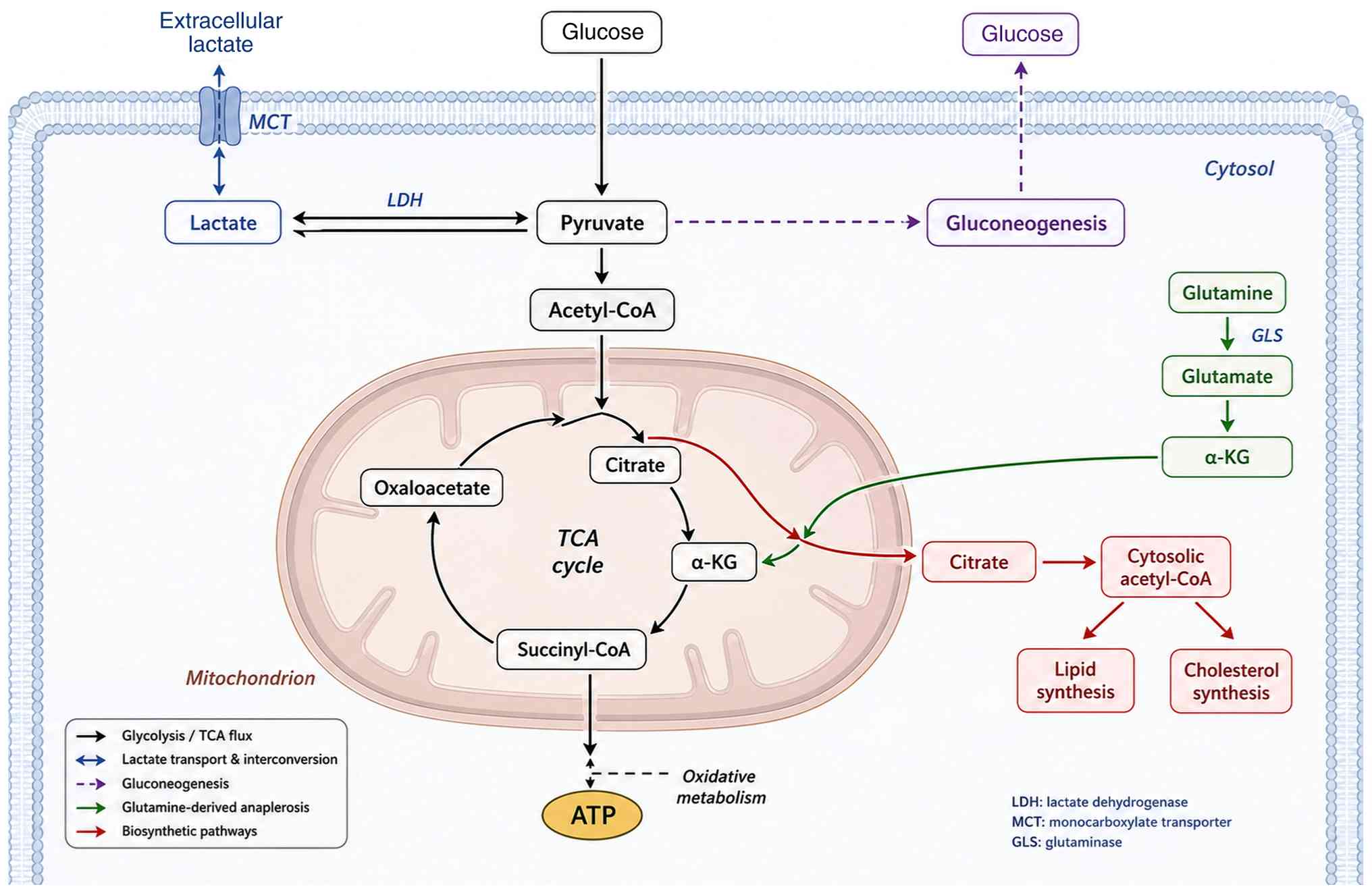
Lactate is an essential byproduct of metabolism,
primarily generated in the cytoplasm, where it plays a fundamental
role in glycolysis (29–31). When oxygen availability is limited
or metabolic demands are heightened, cells convert glucose to
pyruvate via glycolysis. In oxygen-deprived conditions, such as
ischemia, pyruvate is unable to enter the mitochondria for
oxidative phosphorylation, leading to its conversion into lactate.
This metabolic process is catalyzed by lactate dehydrogenase (LDH),
which transforms pyruvate into lactate and simultaneously
facilitates the oxidation of NADH to NAD+, ensuring the
uninterrupted progression of glycolysis (32–34).
The increase in lactate production is associated not
only with the energy requirements of cells but also with the
regulation by several critical proteins. Among these, LDH is a key
enzyme in the synthesis of lactate (35,36),
while other enzymes involved in glycolysis, such as glucose
transporters (GLUT), pyruvate kinase M, hexokinase 2, aldolase A
and phosphofructokinase, contribute to the regulation of this
process (37–40). For instance, tumor cells commonly
exhibit higher levels of LDH and increased enzymatic activity,
leading to accelerated lactate production (41–43).
Moreover, members of the GLUT family, including GLUT1 and GLUT3,
facilitate glucose uptake, supplying the essential substrates for
glycolysis (44,45). At the same time, lactate
accumulation causes a decrease in local pH, which triggers the
export of lactate through specific transporters, such as
monocarboxylate transporters, thereby preventing excessive
accumulation and maintaining the acid-base balance within the cell
(46–49). The coordinated action of these
proteins ensures proper regulation of lactate synthesis while
maintaining cellular integrity and supporting the capacity of the
cell to adapt to changes in the environment (Fig. 1).
Lactylation, similar to other post-translational
modifications, influences both the activity and structure of
polypeptides by adding lactyl groups to the side chains of amino
acids. Lysine lactylation (Kla), a modification originating from
lactate, was first discovered in 2019. This modification is highly
conserved across various species and occurs in different cellular
lineages (50–52). When lactate accumulates to a
certain level, either intracellularly or extracellularly, it
activates the lactylation process within the cell (53–55).
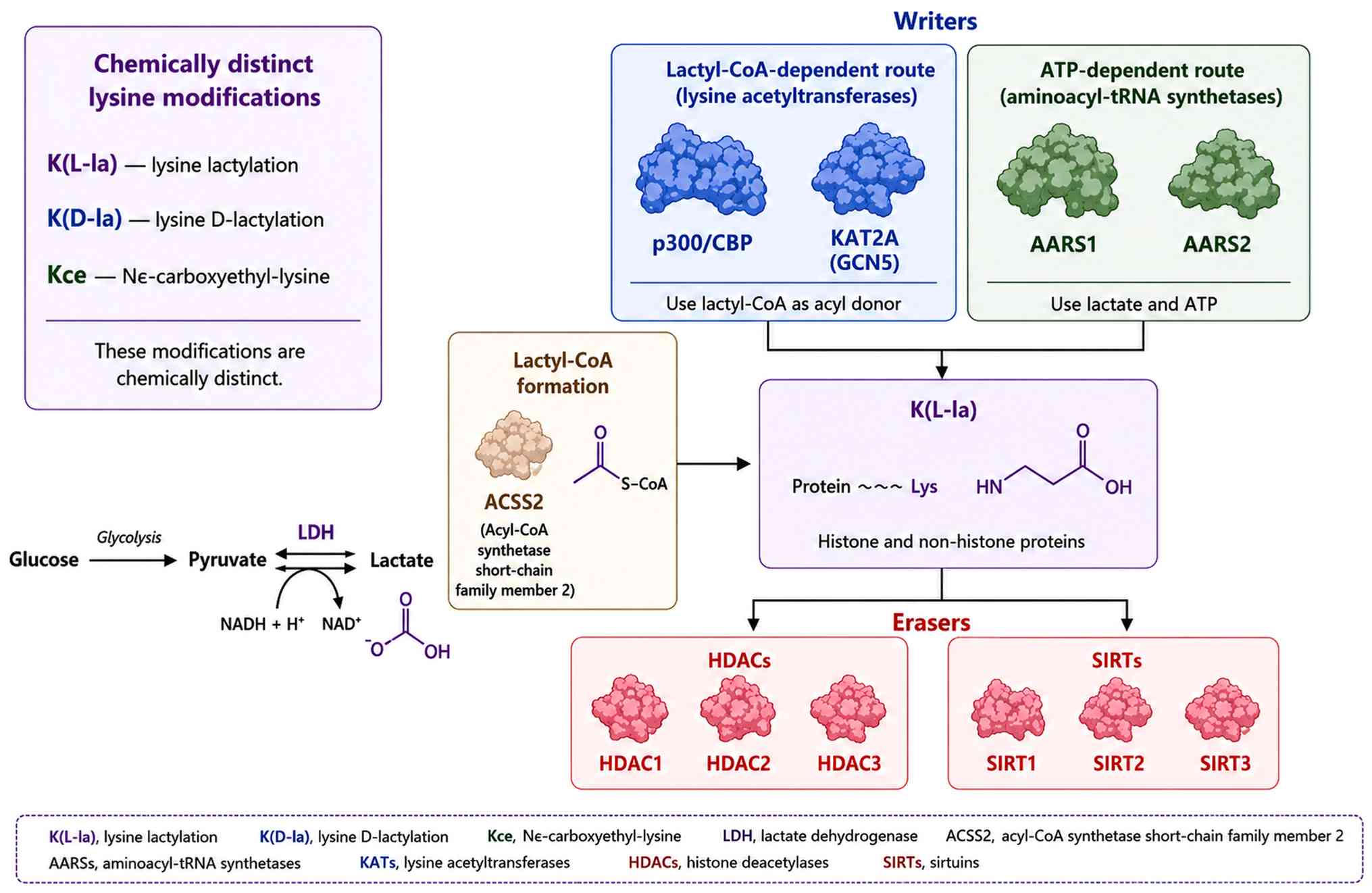
Lactylation is triggered when lactate acts as the
primary substrate. Following the conversion of lactate into
lactyl-CoA, the lactylation process commences (56,57).
Specific acetyltransferases utilize lactyl-CoA as a substrate,
transferring the lactyl group to lysine residues in both histone
and non-histone proteins. This modification leads to alterations in
their molecular structure and regulates their biological
activities. The reactions are mediated by ‘writers’ such as
P300/CREB-binding protein (58–60),
methyltransferase-like 3 (61–63),
lysine Acetyltransferase 2A and others (64–67).
By contrast, ‘erasers’ such as histone deacetylases (HDACs)
(68–71), histone demethylases (72) and sirtuins (73–75)
remove the lactyl group from lysine residues, preventing the
persistent effects of Kla. The coordinated activity of these
‘writers’ and ‘erasers’ maintains the equilibrium of protein
lactylation, ensuring the stability of this modification within the
organism (Fig. 2).
Proteins prone to lactylation modifications include
both histones and non-histone proteins (21,76–80).
Initially, lactylation was observed in histones, which prompted
extensive research into its regulation. For instance, Yue et
al (81) revealed that
lactylation at histone H3K9 (H3K9la) contributes to temozolomide
resistance in glioblastoma via MLH1 intron retention, a mechanism
facilitated by LUC7 like 2, pre-mRNA splicing factor. Specifically,
H3K9la levels rise in glioblastoma cells after temozolomide
treatment. Inhibition of glycolysis pharmacologically reduces
H3K9la, thus increasing the sensitivity of the cell to
temozolomide. The accumulation of H3K9la within an intronic region
of the MLH1 gene locus causes intron retention, disrupting
normal splicing and MLH1 function, which ultimately enhances
resistance to temozolomide.
While considerable research has focused on histone
proteins, substantial attention has also been directed toward
non-histone proteins (82). For
example, Tong et al (83)
found that a diet lacking serine and glycine plays a dual role,
both enhancing anti-tumor immunity and facilitating immune evasion
through the lactylation of programmed death-ligand 1 (PD-L1). This
dietary modification alters the metabolic conditions of the tumor
microenvironment, stimulating anti-tumor immune responses and
enhancing T cell-mediated tumor suppression. At the same time, it
causes tumor cells to increase PD-L1 expression through
lactylation, which in turn suppresses T cell-mediated immune
responses and contributes to immune evasion. The lactylation of
PD-L1 accumulates within tumor cells, leading to changes in its
structure and function, thereby amplifying its immunosuppressive
effects.
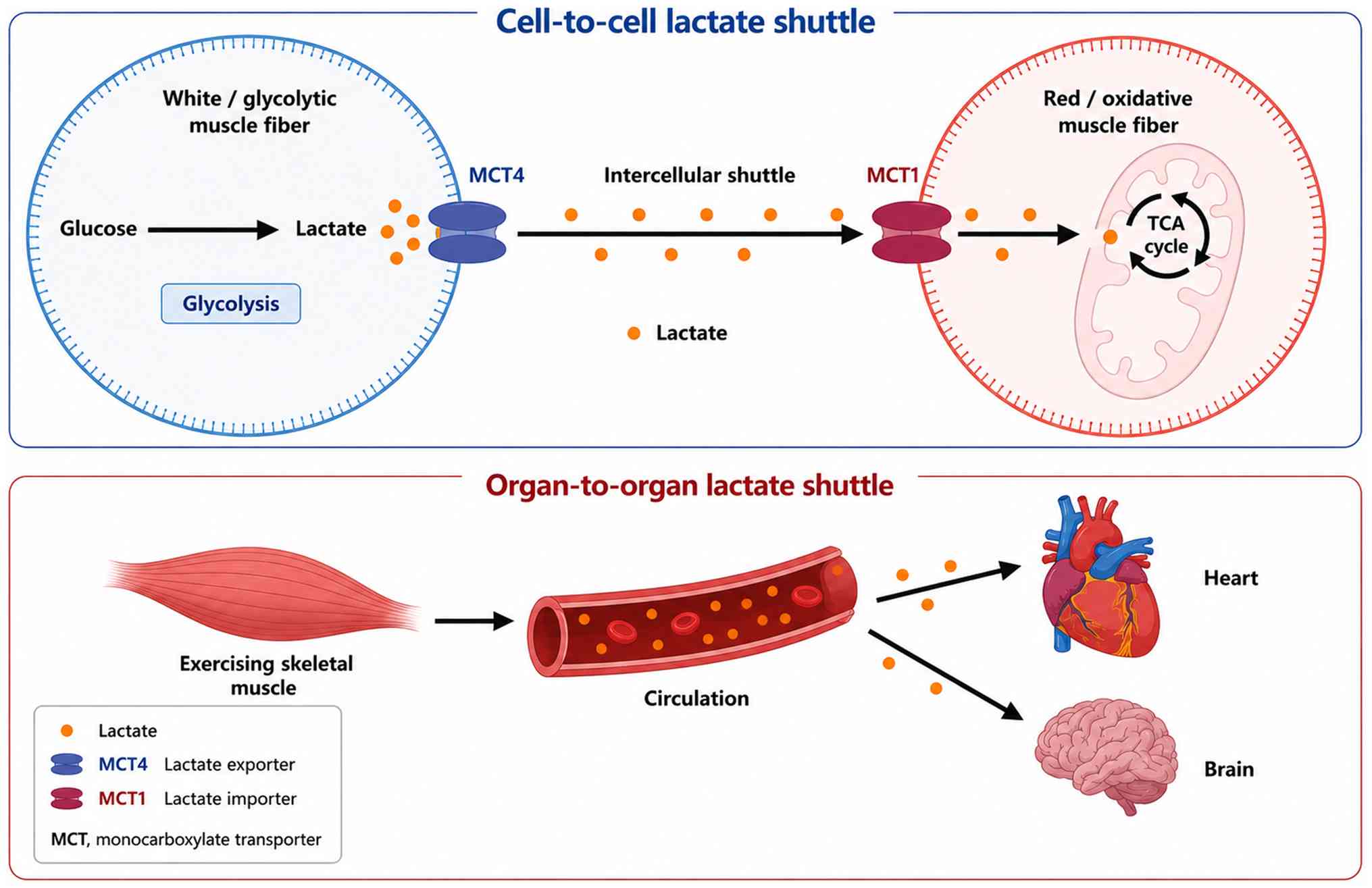
Lactate metabolism during physical exercise plays a
role in various physiological processes. High-intensity or
anaerobic exercise stimulates rapid energy production in muscles
through glycolysis, resulting in a substantial accumulation of
lactate (29). When lactate
production exceeds the clearance capacity of the body, it
accumulates in the muscles and bloodstream; however, lactate is not
merely a ‘waste product’. Instead, it acts as an energy substrate,
which can be reused by other tissues in the body, such as the
heart, liver and resting or non-working muscles. It participates in
oxidative metabolism or is converted into glucose (via the Cori
cycle) for subsequent use (84)
(Fig. 3). Studies have
consistently shown that lactate accumulation promotes lactylation
modifications, which play a role in regulating disease progression
during exercise.
Lactate has been identified as a key metabolite
crucial for the body's adaptation to exercise training, playing a
role in alleviating anxiety-like disorders. It has been observed
that exercise-induced lactate enhances the lactylation of multiple
synaptic proteins, among which synaptic vesicle-associated protein
91 (SNAP91) is essential for synaptic function. The lactylation of
SNAP91 contributes to synaptic structural formation and neuronal
activity within the medial prefrontal cortex, thereby promoting
resilience to chronic restraint stress (78). Furthermore, research indicates that
exercise can stimulate lactylation modifications in the brain,
leading to improvements in both cognitive dysfunction and
neuroinflammation in mice. This process involves an increase in
lactate accumulation in the brain, which in turn facilitates
histone lactylation in microglial cells, influencing their
polarization and enhancing the reduction of cognitive dysfunction
and neuroinflammation (85).
Exercise plays a notable role in regulating lactate
accumulation within the brain, which in turn affects lactylation
modifications. Additionally, one study reported that acute exercise
induced dynamic alterations in histone acetyltransferases and HDACs
in the hippocampus of mice (71).
This observation suggests that exercise might influence lactylation
modifications by adjusting the dynamic balance between ‘writers’
and ‘erasers’ involved in lactylation regulation. However, other
research has indicated that high-intensity interval training (5
days per week for 6 weeks) in mice leads to an increase in lactate
levels and promotes neuroplasticity in the brain due to lactate
accumulation, yet no significant changes in the extent of
lactylation modifications were observed (86). These findings imply that the impact
of lactate on disease progression may not be solely dependent on
lactylation modification regulation. Despite these insights, the
research by these authors has several limitations. For example, the
authors primarily relied on exogenous lactate supplementation to
demonstrate the role of lactate, without incorporating an in
vivo validation step to confirm glycolysis inhibition.
Furthermore, the detection of lactylation modifications was based
solely on results from a relatively rare antibody brand,
potentially leading to false-negative outcomes.
Skeletal muscles and the skeletal system function as
an integrated musculoskeletal unit during exercise. Skeletal
muscles generate force through contraction, whereas the skeleton
provides support and stability for movement. Regular physical
activity can improve skeletal-muscle strength and physical function
(12,13) and, through mechanical loading,
improve or preserve bone mineral density (10,11).
Together, these adaptations support physical performance and
overall health.
Recent research indicates that exercise can enhance
both skeletal muscle strength and bone density by regulating
lactylation modifications in muscles and bones. For instance, the
study by Chang et al (87),
first identified differences in lactylation modifications of
skeletal muscle proteins post-exercise, although the authors did
not explore the significance of these changes. By contrast, Meng
et al (88) conducted
further research, confirming the mechanism. Their study
demonstrated that exercise induces histone lactylation
modifications (H3K9la) in skeletal muscles, which regulates the
expression of aging-related genes, ultimately preventing skeletal
muscle aging.
In addition to histone lactylation, post-exercise
lactate accumulation has been shown to stimulate non-histone
lactylation modifications. For example, Jia et al (89) demonstrated that lactate
accumulation after exercise promotes lactylation modifications of
class III phosphatidylinositol 3-kinase (Vps34), enhancing its
binding with Beclin1, autophagy-related protein 14-like protein and
UV radiation resistance associated protein, thus increasing Vps34
lipid kinase activity. This, in turn, promotes autophagy and
maintains skeletal muscle homeostasis. Notably, a study suggested
that lactate accumulation following exercise can induce mTOR
lactylation modifications, inhibiting mTOR pathway activation and
promoting autophagy to maintain skeletal muscle homeostasis
(90). These findings emphasize
not only the role of lactylation modifications in regulating
skeletal muscle homeostasis but also highlight the diversity of
targets involved in this process.
Furthermore, preclinical evidence suggests that
exercise-associated lactate may promote osteogenesis through
lactylation. In an ovariectomized mouse model, Wu et al
(91) demonstrated that
endothelial cell-derived lactate increased H3K18la in bone
mesenchymal stem cells and upregulated COL1A2, COMP, ENPP1 and
TCF7L2, which promoted osteoblast differentiation; exercise
partially rescued the osteoporotic phenotype. Similarly, in
treadmill- and tail-suspension mouse models and mechanically
stretched bone mesenchymal stem cells, Dai et al (92) found that mechanical stress
increased IER3 activity, lactate content and lactylation levels.
IER3 knockdown inhibited force-induced osteogenic differentiation
and prevented the increases in lactate and lactylation, while LDHB
was identified as a downstream target of IER3.
Additionally, a recent study reported that
lactylation of the non-histone protein UDP-glucose 6-dehydrogenase
suppressed glycosaminoglycan synthesis and activated MAPK
signaling, thereby aggravating osteoarthritis (93). A second study showed that
LDHA-mediated H3K18 lactylation enhanced TPI1 transcription in
chondrocytes, and LDHA deficiency alleviated cartilage injury in
osteoarthritis mice (94).
Together, these findings suggest that lactylation may contribute to
osteoarthritis progression. However, neither study examined
exercise-induced lactate directly; therefore, they do not establish
that post-exercise lactate regulates cartilage cells (93,94).
Overall, current evidence indicates that lactylation has
context-dependent effects in musculoskeletal tissues, with
potentially protective roles in exercise models but detrimental
roles in osteoarthritis models.
Exercise plays a notable role in reducing body fat
and preventing chronic conditions such as cardiovascular diseases.
Both aerobic exercise and strength training are particularly
effective in promoting fat metabolism, improving cardiovascular
health, decreasing the risk of coronary heart disease and enhancing
overall well-being (95–97). Lactylation modifications have been
identified in these processes. In the context of cardiovascular
diseases, research indicates that exercise-induced lactylation of
endothelial methyl-CpG binding protein 2 (Mecp2) inhibits
atherosclerosis via the Ereg/MAPK signaling pathway (98). Additionally, studies have shown
that exercise-induced lactylation of Mecp2 in macrophages reduces
atherosclerosis by promoting M2 macrophage polarization (99). These findings suggest that exercise
may help prevent atherosclerosis by enhancing lactylation
modifications. Atherosclerosis serves as an early stage in
myocardial ischemia-reperfusion injury. Notably, a study has
suggested that exercise can mitigate myocardial
ischemia-reperfusion injury by regulating lactylation
modifications. From a mechanistic perspective, exercise-induced
lactylation of YTHDF2 in cardiomyocytes prevents apoptosis, thus
reducing myocardial ischemia-reperfusion injury (100).
Exercise is commonly used for fat loss, primarily by
increasing energy expenditure and improving adipose-tissue
metabolism (95,96). In a preclinical high-intensity
interval-training study, training increased pan-lactylation of
proteins in inguinal white adipose tissue. In 3T3-L1 adipocytes,
lactate treatment increased fatty acid synthase lactylation,
inhibited fatty acid synthase activity, and reduced palmitate and
triglyceride synthesis, suggesting that fatty acid synthase
lactylation may contribute to high-intensity interval
training-associated fat loss (101).
Exercise is widely acknowledged for its
effectiveness in preventing disease progression, yet excessive
exercise can still have detrimental effects on health, with
mechanisms linked to lactylation modifications. For instance,
research has shown that excessive exercise leads to an accumulation
of lactate in skeletal muscles, which is then transferred to the
liver. This causes the lactylation of SH3 domain-containing protein
3 (SORBS3) and triggers liquid-liquid phase separation (LLPS). The
LLPS of SORBS3 enhances its interaction with flotillin 1,
selectively promoting the sorting of F-box protein 2 into small
extracellular vesicles, referred to as ‘lactosomes’. These
lactosomes induce apoptosis in hepatocytes and activate hepatic
stellate cells via the MCL1-BAX/BAK signaling pathway, ultimately
contributing to the development of liver fibrosis (102).
To summarize, moderate and appropriate exercise
plays a notable role in regulating mood and mental well-being,
promoting muscle homeostasis and preventing osteoporosis through
the modification of lactylation. Additionally, evidence suggests
that such exercise can effectively prevent as well as treat the
initiation and progression of myocardial ischemia-reperfusion
injury (Table I).
Clinical trials and meta-analyses support the
benefits of exercise for cardiovascular health, depressive symptoms
and bone health (1–3,6,7,10).
However, direct human evidence linking exercise to defined protein
lactylation events remains limited. In two human skeletal-muscle
biopsy studies, neither acute nor chronic resistance training, nor
a single bout of endurance exercise, produced a significant
increase in global skeletal-muscle protein lactylation (103,104). Therefore, lactylation cannot yet
be used to guide exercise prescription or serve as a therapeutic
target in clinical practice.
The most immediate translational opportunity is to
determine whether site-specific lactylation events can serve as
biomarkers of exercise response. Future human studies should use
repeated sampling around well-characterized exercise interventions,
targeted lactyl-proteomic assays and clinically meaningful outcomes
to establish whether a lactylation signature predicts or mediates
the benefits of exercise.
Several challenges must be addressed before clinical
implementation. Lactylation is dynamic and cell-type specific, and
measurements from blood or bulk tissue may not reflect the relevant
target cells. Assay specificity, sampling time, exercise dose,
diet, medication use and disease stage may also influence the
results. In addition, associations between lactate, lactylation and
clinical outcomes do not establish causality or justify broad
pharmacological manipulation of lactylation.
Overall, current evidence supports lactylation as a
promising mechanistic and biomarker framework rather than an
established clinical target. Translation will require reproducible,
target-specific evidence in humans showing that modulation of a
defined lactylation event improves outcomes beyond those achieved
by exercise alone.
Lactylation modifications have attracted growing
interest as a notable post-translational modification mechanism,
particularly due to their involvement in exercise-induced disease
prevention and treatment. Exercise influences lactate metabolism
and lactylation modifications, which play a role in enhancing
physical fitness, improving cardiovascular and pulmonary health and
promoting mental well-being. Moreover, exercise offers new insights
into the molecular mechanisms regulating intracellular metabolism,
gene expression, and antioxidant defense. By modulating the
activity of various proteins, lactylation modifications affect
cellular adaptive responses, contributing to the relief of diseases
such as cardiovascular conditions, skeletal muscle aging,
osteoporosis and neurological diseases. Additionally, an expanding
body of research indicates that lactate, once considered just a
metabolic byproduct, actively participates in complex physiological
regulatory processes, providing new perspectives for applying
exercise therapy in the treatment of diseases.
Current findings also indicate that the effects of
lactylation are context dependent. In exercise models, lactylation
has been associated with potentially beneficial adaptations in
skeletal muscle, bone and cardiovascular tissues, whereas studies
of osteoarthritis suggest that specific lactylation events may
contribute to disease progression. These observations highlight the
importance of defining the relevant tissue, target protein and
exercise context before drawing therapeutic conclusions.
Future studies should identify site-specific and
cell-specific lactylation events that change reproducibly in
response to well-characterized exercise interventions. Standardized
sampling windows, targeted lactyl-proteomic assays and clinically
meaningful outcomes will be needed to determine whether these
events mediate exercise benefits or can serve as biomarkers of
response. Rigorous human studies are also required to establish
causality, safety and clinical value before lactylation can be
considered a therapeutic target.
In conclusion, lactylation provides a useful
molecular framework for investigating how exercise-related lactate
signaling may influence disease-relevant pathways. Its clinical
application will require robust human evidence demonstrating target
specificity, causality and added value beyond established exercise
interventions.
Not applicable.
Funding: No funding was received.
Not applicable.
LW conceptualized the review, provided project
management and supervision, and wrote, reviewed and edited the
manuscript. JW drafted, reviewed and edited the manuscript and
prepared the figures. All authors read and approved the final
version of the manuscript. Data authentication not applicable.
Not applicable.
Not applicable.
The authors declare that they have no competing
interests.
|
1
|
Molloy CD, Long L, Mordi IR, Bridges C,
Sagar VA, Davies EJ, Coats AJS, Dalal H, Rees K, Singh SJ and
Taylor RS: Exercise-based cardiac rehabilitation for adults with
heart failure-2023 Cochrane systematic review and meta-analysis.
Eur J Heart Fail. 25:2263–2273. 2023. View Article : Google Scholar : PubMed/NCBI
|
|
2
|
Dibben GO, Faulkner J, Oldridge N, Rees K,
Thompson DR, Zwisler AD and Taylor RS: Exercise-based cardiac
rehabilitation for coronary heart disease: A meta-analysis. Eur
Heart J. 44:452–469. 2023. View Article : Google Scholar : PubMed/NCBI
|
|
3
|
Isath A, Koziol KJ, Martinez MW, Garber
CE, Martinez MN, Emery MS, Baggish AL, Naidu SS, Lavie CJ, Arena R
and Krittanawong C: Exercise and cardiovascular health: A
state-of-the-art review. Prog Cardiovasc Dis. 79:44–52. 2023.
View Article : Google Scholar : PubMed/NCBI
|
|
4
|
Hashimoto Y, Takahashi F, Okamura T,
Hamaguchi M and Fukui M: Diet, exercise, and pharmacotherapy for
sarcopenia in people with diabetes. Metabolism. 144:1555852023.
View Article : Google Scholar : PubMed/NCBI
|
|
5
|
Martínez-Vizcaíno V, Sanabria-Martínez G,
Fernández-Rodríguez R, Cavero-Redondo I, Pascual-Morena C,
Álvarez-Bueno C and Martínez-Hortelano JA: Exercise during
pregnancy for preventing gestational diabetes mellitus and
hypertensive disorders: An umbrella review of randomised controlled
trials and an updated meta-analysis. BJOG. 130:264–275. 2023.
View Article : Google Scholar : PubMed/NCBI
|
|
6
|
Heissel A, Heinen D, Brokmeier LL,
Skarabis N, Kangas M, Vancampfort D, Stubbs B, Firth J, Ward PB,
Rosenbaum S, et al: Exercise as medicine for depressive symptoms? A
systematic review and meta-analysis with meta-regression. Br J
Sports Med. 57:1049–1057. 2023. View Article : Google Scholar : PubMed/NCBI
|
|
7
|
Noetel M, Sanders T, Gallardo-Gómez D,
Taylor P, Del Pozo Cruz B, van den Hoek D, Smith JJ, Mahoney J,
Spathis J, Moresi M, et al: Effect of exercise for depression:
Systematic review and network meta-analysis of randomised
controlled trials. BMJ. 384:e0758472024. View Article : Google Scholar : PubMed/NCBI
|
|
8
|
Zhu F, Zhu X, Bi X, Kuang D, Liu B, Zhou
J, Yang Y and Ren Y: Comparative effectiveness of various physical
exercise interventions on executive functions and related symptoms
in children and adolescents with attention deficit hyperactivity
disorder: A systematic review and network meta-analysis. Front
Public Health. 11:11337272023. View Article : Google Scholar : PubMed/NCBI
|
|
9
|
Padilha C, Souza R, Grossl FS, Gauer APM,
de Sá CA and Rodrigues-Junior SA: Physical exercise and its effects
on people with Parkinson's disease: Umbrella review. PLoS One.
18:e02938262023. View Article : Google Scholar : PubMed/NCBI
|
|
10
|
Mohebbi R, Shojaa M, Kohl M, von Stengel
S, Jakob F, Kerschan-Schindl K, Lange U, Peters S, Thomasius F,
Uder M and Kemmler W: Exercise training and bone mineral density in
postmenopausal women: An updated systematic review and
meta-analysis of intervention studies with emphasis on potential
moderators. Osteoporos Int. 34:1145–1178. 2023. View Article : Google Scholar : PubMed/NCBI
|
|
11
|
Zhao Z, Du Y, Yan K, Zhang L and Guo Q:
Exercise and osteoimmunology in bone remodeling. FASEB J.
38:e235542024. View Article : Google Scholar : PubMed/NCBI
|
|
12
|
McLeod JC, Currier BS, Lowisz CV and
Phillips SM: The influence of resistance exercise training
prescription variables on skeletal muscle mass, strength, and
physical function in healthy adults: An umbrella review. J Sport
Health Sci. 13:47–60. 2024. View Article : Google Scholar : PubMed/NCBI
|
|
13
|
Mølmen KS, Almquist NW and Skattebo Ø:
Effects of exercise training on mitochondrial and capillary growth
in human skeletal muscle: A systematic review and meta-regression.
Sports Med. 55:115–144. 2025. View Article : Google Scholar : PubMed/NCBI
|
|
14
|
Boa Sorte Silva NC, Barha CK, Erickson KI,
Kramer AF and Liu-Ambrose T: Physical exercise, cognition, and
brain health in aging. Trends Neurosci. 47:402–417. 2024.PubMed/NCBI
|
|
15
|
Lu X, Chen Y, Shi Y, Shi Y, Su X, Chen P,
Wu D and Shi H: Exercise and exerkines: Mechanisms and roles in
anti-aging and disease prevention. Exp Gerontol. 200:1126852025.
View Article : Google Scholar : PubMed/NCBI
|
|
16
|
Subramanian V, Tucker WJ, Peters AE,
Upadhya B, Kitzman DW and Pandey A: Cardiovascular aging and
exercise: Implications for heart failure prevention and management.
Circ Res. 137:205–230. 2025. View Article : Google Scholar : PubMed/NCBI
|
|
17
|
Lee S, Choi Y, Jeong E, Park J, Kim J,
Tanaka M and Choi J: Physiological significance of elevated levels
of lactate by exercise training in the brain and body. J Biosci
Bioeng. 135:167–175. 2023. View Article : Google Scholar : PubMed/NCBI
|
|
18
|
Brooks GA, Osmond AD, Arevalo JA, Duong
JJ, Curl CC, Moreno-Santillan DD and Leija RG: Lactate as a myokine
and exerkine: Drivers and signals of physiology and metabolism. J
Appl Physiol (1985). 134:529–548. 2023. View Article : Google Scholar : PubMed/NCBI
|
|
19
|
Ahmadi Hekmatikar AH, Zolfaghari G,
Basereh A, Awang Daud DM and Khoramipour K: Context matters:
Divergent roles of exercise-induced and tumor-derived lactate in
cancer. Biomolecules. 15:10102025. View Article : Google Scholar : PubMed/NCBI
|
|
20
|
Chen J, Huang Z, Chen Y, Tian H, Chai P,
Shen Y, Yao Y, Xu S, Ge S and Jia R: Lactate and lactylation in
cancer. Signal Transduct Target Ther. 10:382025. View Article : Google Scholar : PubMed/NCBI
|
|
21
|
Hu Y, He Z, Li Z, Wang Y, Wu N, Sun H,
Zhou Z, Hu Q and Cong X: Lactylation: The novel histone
modification influence on gene expression, protein function, and
disease. Clin Epigenetics. 16:722024. View Article : Google Scholar : PubMed/NCBI
|
|
22
|
Yu X, Yang J, Xu J, Pan H, Wang W, Yu X
and Shi S: Histone lactylation: From tumor lactate metabolism to
epigenetic regulation. Int J Biol Sci. 20:1833–1854. 2024.
View Article : Google Scholar : PubMed/NCBI
|
|
23
|
Wang J, Wang Z, Wang Q, Li X and Guo Y:
Ubiquitous protein lactylation in health and diseases. Cell Mol
Biol Lett. 29:232024. View Article : Google Scholar : PubMed/NCBI
|
|
24
|
Lu Z, Zheng X, Shi M, Yin Y, Liang Y, Zou
Z, Ding C, He Y, Zhou Y and Li X: Lactylation: The emerging
frontier in post-translational modification. Front Genet.
15:14232132024. View Article : Google Scholar : PubMed/NCBI
|
|
25
|
Liao Z, Chen B, Yang T, Zhang W and Mei Z:
Lactylation modification in cardio-cerebral diseases: A
state-of-the-art review. Ageing Res Rev. 104:1026312025. View Article : Google Scholar : PubMed/NCBI
|
|
26
|
Zhu W, Guo S, Sun J, Zhao Y and Liu C:
Lactate and lactylation in cardiovascular diseases: Current
progress and future perspectives. Metabolism. 158:1559572024.
View Article : Google Scholar : PubMed/NCBI
|
|
27
|
Zhu Y, Liu W, Luo Z, Xiao F and Sun B: New
insights into the roles of lactylation in cancer. Front Pharmacol.
15:14126722024. View Article : Google Scholar : PubMed/NCBI
|
|
28
|
Xu B, Liu Y, Li N and Geng Q: Lactate and
lactylation in macrophage metabolic reprogramming: Current progress
and outstanding issues. Front Immunol. 15:13957862024. View Article : Google Scholar : PubMed/NCBI
|
|
29
|
Li X, Yang Y, Zhang B, Lin X, Fu X, An Y,
Zou Y, Wang JX, Wang Z and Yu T: Lactate metabolism in human health
and disease. Signal Transduct Target Ther. 7:3052022. View Article : Google Scholar : PubMed/NCBI
|
|
30
|
Chen L, Huang L, Gu Y, Cang W, Sun P and
Xiang Y: Lactate-lactylation hands between metabolic reprogramming
and immunosuppression. Int J Mol Sci. 23:119432022. View Article : Google Scholar : PubMed/NCBI
|
|
31
|
Ouyang J, Wang H and Huang J: The role of
lactate in cardiovascular diseases. Cell Commun Signal. 21:3172023.
View Article : Google Scholar : PubMed/NCBI
|
|
32
|
Certo M, Llibre A, Lee W and Mauro C:
Understanding lactate sensing and signalling. Trends Endocrinol
Metab. 33:722–735. 2022. View Article : Google Scholar : PubMed/NCBI
|
|
33
|
Zhang Y, Zhai Z, Duan J, Wang X, Zhong J,
Wu L, Li A, Cao M, Wu Y, Shi H, et al: Lactate: The mediator of
metabolism and immunosuppression. Front Endocrinol (Lausanne).
13:9014952022. View Article : Google Scholar : PubMed/NCBI
|
|
34
|
Li R, Yang Y, Wang H, Zhang T, Duan F, Wu
K, Yang S, Xu K, Jiang X and Sun X: Lactate and lactylation in the
brain: Current progress and perspectives. Cell Mol Neurobiol.
43:2541–2555. 2023. View Article : Google Scholar : PubMed/NCBI
|
|
35
|
Sharma D, Singh M and Rani R: Role of LDH
in tumor glycolysis: Regulation of LDHA by small molecules for
cancer therapeutics. Semin Cancer Biol. 87:184–195. 2022.
View Article : Google Scholar : PubMed/NCBI
|
|
36
|
Tan C, Li L, Han J, Xu K and Liu X: A new
strategy for osteoarthritis therapy: Inhibition of glycolysis.
Front Pharmacol. 13:10572292022. View Article : Google Scholar : PubMed/NCBI
|
|
37
|
Yang L, Li S, Yu L, Leng J and Li N:
Targeting glycolysis: Exploring a new frontier in glioblastoma
therapy. Front Immunol. 15:15223922025. View Article : Google Scholar : PubMed/NCBI
|
|
38
|
Lee YB, Min JK, Kim JG, Cap KC, Islam R,
Hossain AJ, Dogsom O, Hamza A, Mahmud S, Choi DR, et al: Multiple
functions of pyruvate kinase M2 in various cell types. J Cell
Physiol. 237:128–148. 2022. View Article : Google Scholar : PubMed/NCBI
|
|
39
|
İlhan M: Non-metabolic functions of
pyruvate kinase M2: PKM2 in tumorigenesis and therapy resistance.
Neoplasma. 69:747–754. 2022. View Article : Google Scholar : PubMed/NCBI
|
|
40
|
Kooshki L, Mahdavi P, Fakhri S, Akkol EK
and Khan H: Targeting lactate metabolism and glycolytic pathways in
the tumor microenvironment by natural products: A promising
strategy in combating cancer. Biofactors. 48:359–383. 2022.
View Article : Google Scholar : PubMed/NCBI
|
|
41
|
Claps G, Faouzi S, Quidville V, Chehade F,
Shen S, Vagner S and Robert C: The multiple roles of LDH in cancer.
Nat Rev Clin Oncol. 19:749–762. 2022. View Article : Google Scholar : PubMed/NCBI
|
|
42
|
Tufail M, Jiang CH and Li N: Altered
metabolism in cancer: Insights into energy pathways and therapeutic
targets. Mol Cancer. 23:2032024. View Article : Google Scholar : PubMed/NCBI
|
|
43
|
Miholjcic TBS, Halse H, Bonvalet M,
Bigorgne A, Rouanne M, Dercle L, Shankar V and Marabelle A:
Rationale for LDH-targeted cancer immunotherapy. Eur J Cancer.
181:166–178. 2023. View Article : Google Scholar : PubMed/NCBI
|
|
44
|
Franczak MA, Krol O, Harasim G,
Jedrzejewska A, Zaffaroni N, Granchi C, Minutolo F, Avan A,
Giovannetti E, Smolenski RT and Peters GJ: Metabolic effects of new
glucose transporter (GLUT-1) and lactate dehydrogenase-A (LDH-A)
inhibitors against chemoresistant malignant mesothelioma. Int J Mol
Sci. 24:77712023. View Article : Google Scholar : PubMed/NCBI
|
|
45
|
Chen Z, Vaeth M, Eckstein M, Delgobo M,
Ramos G, Frantz S, Hofmann U and Gladow N: Characterization of the
effect of the GLUT-1 inhibitor BAY-876 on T cells and macrophages.
Eur J Pharmacol. 945:1755522023. View Article : Google Scholar : PubMed/NCBI
|
|
46
|
Wang N, Jiang X, Zhang S, Zhu A, Yuan Y,
Xu H, Lei J and Yan C: Structural basis of human monocarboxylate
transporter 1 inhibition by anti-cancer drug candidates. Cell.
184:370–383.e13. 2021. View Article : Google Scholar : PubMed/NCBI
|
|
47
|
Singh M, Afonso J, Sharma D, Gupta R and
Kumar V, Rani R, Baltazar F and Kumar V: Targeting monocarboxylate
transporters (MCTs) in cancer: How close are we to the clinics?
Semin Cancer Biol. 90:1–14. 2023. View Article : Google Scholar : PubMed/NCBI
|
|
48
|
Kobayashi M, Narumi K, Furugen A and Iseki
K: Transport function, regulation, and biology of human
monocarboxylate transporter 1 (hMCT1) and 4 (hMCT4). Pharmacol
Ther. 226:1078622021. View Article : Google Scholar : PubMed/NCBI
|
|
49
|
Babl N, Decking SM, Voll F, Althammer M,
Sala-Hojman A, Ferretti R, Korf C, Schmidl C, Schmidleithner L,
Nerb B, et al: MCT4 blockade increases the efficacy of immune
checkpoint blockade. J Immunother Cancer. 11:e0073492023.
View Article : Google Scholar : PubMed/NCBI
|
|
50
|
Zhang D, Tang Z, Huang H, Zhou G, Cui C,
Weng Y, Liu W, Kim S, Lee S, Perez-Neut M, et al: Metabolic
regulation of gene expression by histone lactylation. Nature.
574:575–580. 2019. View Article : Google Scholar : PubMed/NCBI
|
|
51
|
Izzo LT and Wellen KE: Histone lactylation
links metabolism and gene regulation. Nature. 574:492–493. 2019.
View Article : Google Scholar : PubMed/NCBI
|
|
52
|
Notarangelo G and Haigis MC: Sweet
temptation: From sugar metabolism to gene regulation. Immunity.
51:980–981. 2019. View Article : Google Scholar : PubMed/NCBI
|
|
53
|
Xiong J, He J, Zhu J, Pan J, Liao W, Ye H,
Wang H, Song Y, Du Y, Cui B, et al: Lactylation-driven
METTL3-mediated RNA m6A modification promotes
immunosuppression of tumor-infiltrating myeloid cells. Mol Cell.
82:1660–1677.e10. 2022. View Article : Google Scholar : PubMed/NCBI
|
|
54
|
Wang J, Yang P, Yu T, Gao M, Liu D, Zhang
J, Lu C, Chen X, Zhang X and Liu Y: Lactylation of PKM2 suppresses
inflammatory metabolic adaptation in pro-inflammatory macrophages.
Int J Biol Sci. 18:6210–6225. 2022. View Article : Google Scholar : PubMed/NCBI
|
|
55
|
Mao Y, Zhang J, Zhou Q, He X, Zheng Z, Wei
Y, Zhou K, Lin Y, Yu H, Zhang H, et al: Hypoxia induces
mitochondrial protein lactylation to limit oxidative
phosphorylation. Cell Res. 34:13–30. 2024. View Article : Google Scholar : PubMed/NCBI
|
|
56
|
Li F, Si W, Xia L, Yin D, Wei T, Tao M,
Cui X, Yang J, Hong T and Wei R: Positive feedback regulation
between glycolysis and histone lactylation drives oncogenesis in
pancreatic ductal adenocarcinoma. Mol Cancer. 23:902024. View Article : Google Scholar : PubMed/NCBI
|
|
57
|
Yang Z, Yan C, Ma J, Peng P, Ren X, Cai S,
Shen X, Wu Y, Zhang S, Wang X, et al: Lactylome analysis suggests
lactylation-dependent mechanisms of metabolic adaptation in
hepatocellular carcinoma. Nat Metab. 5:61–79. 2023. View Article : Google Scholar : PubMed/NCBI
|
|
58
|
Xu Y, Ma X, Ni W, Zheng L, Lin Z, Lai Y,
Yang N, Dai Z, Yao T, Chen Z, et al: PKM2-driven lactate
overproduction triggers endothelial-to-mesenchymal transition in
ischemic flap via mediating TWIST1 lactylation. Adv Sci (Weinh).
11:e24061842024. View Article : Google Scholar : PubMed/NCBI
|
|
59
|
Yang K, Fan M, Wang X, Xu J, Wang Y, Tu F,
Gill PS, Ha T, Liu L, Williams DL and Li C: Lactate promotes
macrophage HMGB1 lactylation, acetylation, and exosomal release in
polymicrobial sepsis. Cell Death Differ. 29:133–146. 2022.
View Article : Google Scholar : PubMed/NCBI
|
|
60
|
Gao J, Liu R, Huang K, Li Z, Sheng X,
Chakraborty K, Han C, Zhang D, Becker L and Zhao Y: Dynamic
investigation of hypoxia-induced L-lactylation. Proc Natl Acad Sci
USA. 122:e24048991222025. View Article : Google Scholar : PubMed/NCBI
|
|
61
|
Wu D, Spencer CB, Ortoga L, Zhang H and
Miao C: Histone lactylation-regulated METTL3 promotes ferroptosis
via m6A-modification on ACSL4 in sepsis-associated lung injury.
Redox Biol. 74:1031942024. View Article : Google Scholar : PubMed/NCBI
|
|
62
|
Li D, Liu Z, Zhu M, Yu W, Mao W, Mao D,
Wang F and Wan Y: Histone lactylation regulates early embryonic
development through m6A methyltransferase METTL3 in goats. Int J
Biol Macromol. 309:1428582025. View Article : Google Scholar : PubMed/NCBI
|
|
63
|
Cheng S, Chen L, Ying J, Wang Y, Jiang W,
Zhang Q, Zhang H, Wang J, Wang C, Wu H, et al: 20(S)-ginsenoside
Rh2 ameliorates ATRA resistance in APL by modulating
lactylation-driven METTL3. J Ginseng Res. 48:298–309. 2024.
View Article : Google Scholar : PubMed/NCBI
|
|
64
|
Zhu R, Ye X, Lu X, Xiao L, Yuan M, Zhao H,
Guo D, Meng Y, Han H, Luo S, et al: ACSS2 acts as a lactyl-CoA
synthetase and couples KAT2A to function as a lactyltransferase for
histone lactylation and tumor immune evasion. Cell Metab.
37:361–376.e7. 2025. View Article : Google Scholar : PubMed/NCBI
|
|
65
|
Zheng B, Pan Y, Qian F, Liu D, Ye D, Yu B,
Zhong S, Zheng W, Wang X, Zhou B, et al: High sugar induced RCC2
lactylation drives breast cancer tumorigenicity through
upregulating MAD2L1. Adv Sci (Weinh). 12:e24155302025. View Article : Google Scholar : PubMed/NCBI
|
|
66
|
Huang J, Wang X, Li N, Fan W, Li X, Zhou
Q, Liu J, Li W, Zhang Z, Liu X, et al: YY1 lactylation aggravates
autoimmune uveitis by enhancing microglial functions via
inflammatory genes. Adv Sci (Weinh). 11:e23080312024. View Article : Google Scholar : PubMed/NCBI
|
|
67
|
Wu H, Huang H and Zhao Y: Interplay
between metabolic reprogramming and post-translational
modifications: From glycolysis to lactylation. Front Immunol.
14:12112212023. View Article : Google Scholar : PubMed/NCBI
|
|
68
|
Moreno-Yruela C, Bæk M, Monda F and Olsen
CA: Chiral posttranslational modification to lysine ε-amino groups.
Acc Chem Res. 55:1456–1466. 2022. View Article : Google Scholar : PubMed/NCBI
|
|
69
|
Moreno-Yruela C, Zhang D, Wei W, Bæk M,
Liu W, Gao J, Danková D, Nielsen AL, Bolding JE, Yang L, et al:
Class I histone deacetylases (HDAC1-3) are histone lysine
delactylases. Sci Adv. 8:eabi66962022. View Article : Google Scholar : PubMed/NCBI
|
|
70
|
Fan Z, Liu Z, Zhang N, Wei W, Cheng K, Sun
H and Hao Q: Identification of SIRT3 as an eraser of H4K16la.
iScience. 26:1077572023. View Article : Google Scholar : PubMed/NCBI
|
|
71
|
Qian P, Wang S, Zhang T and Wu J:
Transcriptional expression of histone acetyltransferases and
deacetylases during the recovery of acute exercise in mouse
hippocampus. J Mol Neurosci. 74:342024. View Article : Google Scholar : PubMed/NCBI
|
|
72
|
Duan X, Xing Z, Qiao L, Qin S, Zhao X,
Gong Y and Li X: The role of histone post-translational
modifications in cancer and cancer immunity: Functions, mechanisms
and therapeutic implications. Front Immunol. 15:14952212024.
View Article : Google Scholar : PubMed/NCBI
|
|
73
|
Wang M and Lin H: Understanding the
function of mammalian sirtuins and protein lysine acylation. Annu
Rev Biochem. 90:245–285. 2021. View Article : Google Scholar : PubMed/NCBI
|
|
74
|
Hong W, Zeng X, Wang H, Tan X, Tian Y, Hu
H, Ashrafizadeh M, Sethi G, Huang H and Duan C: PGC-1α loss
promotes mitochondrial protein lactylation in acetaminophen-induced
liver injury via the LDHB-lactate axis. Pharmacol Res.
205:1072282024. View Article : Google Scholar : PubMed/NCBI
|
|
75
|
Jin J, Bai L, Wang D, Ding W, Cao Z, Yan
P, Li Y, Xi L, Wang Y, Zheng X, et al: SIRT3-dependent
delactylation of cyclin E2 prevents hepatocellular carcinoma
growth. EMBO Rep. 24:e560522023. View Article : Google Scholar : PubMed/NCBI
|
|
76
|
Gao R, Li Y, Xu Z, Zhang F, Xu J, Hu Y,
Yin J, Yang K, Sun L, Wang Q, et al: Mitochondrial pyruvate carrier
1 regulates fatty acid synthase lactylation and mediates treatment
of nonalcoholic fatty liver disease. Hepatology. 78:1800–1815.
2023. View Article : Google Scholar : PubMed/NCBI
|
|
77
|
Wang X, Fan W, Li N, Ma Y, Yao M, Wang G,
He S, Li W, Tan J, Lu Q and Hou S: YY1 lactylation in microglia
promotes angiogenesis through transcription activation-mediated
upregulation of FGF2. Genome Biol. 24:872023. View Article : Google Scholar : PubMed/NCBI
|
|
78
|
Yan L, Wang Y, Hu H, Yang D, Wang W, Luo
Z, Wang Y, Yang F, So KF and Zhang L: Physical exercise mediates
cortical synaptic protein lactylation to improve stress resilience.
Cell Metab. 36:2104–2117.e4. 2024. View Article : Google Scholar : PubMed/NCBI
|
|
79
|
Qiao J, Tan Y, Liu H, Yang B, Zhang Q, Liu
Q, Sun W, Li Z, Wang Q, Feng W, et al: Histone H3K18 and ezrin
lactylation promote renal dysfunction in sepsis-associated acute
kidney injury. Adv Sci (Weinh). 11:e23072162024. View Article : Google Scholar : PubMed/NCBI
|
|
80
|
Jing F, Zhang J, Zhang H and Li T:
Unlocking the multifaceted molecular functions and diverse disease
implications of lactylation. Biol Rev Camb Philos Soc. 100:172–189.
2025. View Article : Google Scholar : PubMed/NCBI
|
|
81
|
Yue Q, Wang Z, Shen Y, Lan Y, Zhong X, Luo
X, Yang T, Zhang M, Zuo B, Zeng T, et al: Histone H3K9 lactylation
confers temozolomide resistance in glioblastoma via LUC7L2-mediated
MLH1 intron retention. Adv Sci (Weinh). 11:e23092902024. View Article : Google Scholar : PubMed/NCBI
|
|
82
|
Fan M, Yang K, Wang X, Chen L, Gill PS, Ha
T, Liu L, Lewis NH, Williams DL and Li C: Lactate promotes
endothelial-to-mesenchymal transition via Snail1 lactylation after
myocardial infarction. Sci Adv. 9:eadc94652023. View Article : Google Scholar : PubMed/NCBI
|
|
83
|
Tong H, Jiang Z, Song L, Tan K, Yin X, He
C, Huang J, Li X, Jing X, Yun H, et al: Dual impacts of
serine/glycine-free diet in enhancing antitumor immunity and
promoting evasion via PD-L1 lactylation. Cell Metab.
36:2493–2510.e9. 2024. View Article : Google Scholar : PubMed/NCBI
|
|
84
|
Bartoloni B, Mannelli M, Gamberi T and
Fiaschi T: The multiple roles of lactate in the skeletal muscle.
Cells. 13:11772024. View Article : Google Scholar : PubMed/NCBI
|
|
85
|
Han H, Zhao Y, Du J, Wang S, Yang X, Li W,
Song J, Zhang S, Zhang Z, Tan Y, et al: Exercise improves cognitive
dysfunction and neuroinflammation in mice through Histone H3
lactylation in microglia. Immun Ageing. 20:632023. View Article : Google Scholar : PubMed/NCBI
|
|
86
|
Lei Z, Mozaffaritabar S, Kawamura T, Koike
A, Kolonics A, Kéringer J, Pinho RA, Sun J, Shangguan R and Radák
Z: The effects of long-term lactate and high-intensity interval
training (HIIT) on brain neuroplasticity of aged mice. Heliyon.
10:e244212024. View Article : Google Scholar : PubMed/NCBI
|
|
87
|
Chang J, Wu W, Qian P, Lu Z, He X, Wang F
and Zhang T: Multi-omics study on the effect of moderate-intensity
exercise on protein lactylation in mouse muscle tissue. Front Cell
Dev Biol. 12:14723382025. View Article : Google Scholar : PubMed/NCBI
|
|
88
|
Meng F, He J, Zhang X, Lyu W, Wei R, Wang
S, Du Z, Wang H, Bi J, Hua X, et al: Histone lactylation
antagonizes senescence and skeletal muscle aging by modulating
aging-related pathways. Adv Sci (Weinh). 12:e24127472025.
View Article : Google Scholar : PubMed/NCBI
|
|
89
|
Jia M, Yue X, Sun W, Zhou Q, Chang C, Gong
W, Feng J, Li X, Zhan R, Mo K, et al: ULK1-mediated metabolic
reprogramming regulates Vps34 lipid kinase activity by its
lactylation. Sci Adv. 9:eadg49932023. View Article : Google Scholar : PubMed/NCBI
|
|
90
|
Li Y, Xue L, Wang F, Wang Y, Sun Y, Niu Z,
Liu S, Yan Y, Shen S, Zhang K, et al: Lactylation of mTOR enhances
autophagy in skeletal muscle during exercise. Cell Chem Biol.
32:1367–1380.e5. 2025. View Article : Google Scholar : PubMed/NCBI
|
|
91
|
Wu J, Hu M, Jiang H, Ma J, Xie C, Zhang Z,
Zhou X, Zhao J, Tao Z, Meng Y, et al: Endothelial cell-derived
lactate triggers bone mesenchymal stem cell histone lactylation to
attenuate osteoporosis. Adv Sci (Weinh). 10:e23013002023.
View Article : Google Scholar : PubMed/NCBI
|
|
92
|
Dai S, Chen Z, Liu X, Dong J, Zhang Z,
Yang Z, Huang M, Cai L, Xiao X and Zhu X: Exercise-mediated
mechanical stress promotes osteogenic differentiation of BMSCs
through upregulation of lactylation via the IER3/LDHB axis. FASEB
J. 39:e705372025. View Article : Google Scholar : PubMed/NCBI
|
|
93
|
Lan W, Chen X, Yu H, Ruan J, Kang J, Nie
X, Cao Y, Tang S and Ding C: UGDH lactylation aggravates
osteoarthritis by suppressing glycosaminoglycan synthesis and
orchestrating nucleocytoplasmic transport to activate MAPK
signaling. Adv Sci (Weinh). 12:e24137092025. View Article : Google Scholar : PubMed/NCBI
|
|
94
|
Xia J, Qiao Z, Hao X and Zhang Y:
LDHA-induced histone lactylation mediates the development of
osteoarthritis through regulating the transcription activity of
TPI1 gene. Autoimmunity. 57:23848892024. View Article : Google Scholar : PubMed/NCBI
|
|
95
|
Waters DL, Aguirre L, Gurney B, Sinacore
DR, Fowler K, Gregori G, Armamento-Villareal R, Qualls C and
Villareal DT: Effect of aerobic or resistance exercise, or both, on
intermuscular and visceral fat and physical and metabolic function
in older adults with obesity while dieting. J Gerontol A Biol Sci
Med Sci. 77:131–139. 2022. View Article : Google Scholar : PubMed/NCBI
|
|
96
|
Eglseer D, Traxler M, Embacher S, Reiter
L, Schoufour JD, Weijs PJM, Voortman T, Boirie Y, Cruz-Jentoft A
and Bauer S; SO-NUTS consortium, : Nutrition and exercise
interventions to improve body composition for persons with
overweight or obesity near retirement age: A systematic review and
network meta-analysis of randomized controlled trials. Adv Nutr.
14:516–358. 2023. View Article : Google Scholar : PubMed/NCBI
|
|
97
|
Paluch AE, Boyer WR, Franklin BA, Laddu D,
Lobelo F, Lee DC, McDermott MM, Swift DL, Webel AR, Lane A, et al:
Resistance exercise training in individuals with and without
cardiovascular disease: 2023 update: A scientific statement from
the American heart association. Circulation. 149:e217–e231. 2024.
View Article : Google Scholar : PubMed/NCBI
|
|
98
|
Wang Y, Chen L, Zhang M, Li X, Yang X,
Huang T, Ban Y, Li Y, Li Q, Zheng Y, et al: Exercise-induced
endothelial Mecp2 lactylation suppresses atherosclerosis via the
Ereg/MAPK signalling pathway. Atherosclerosis. 375:45–58. 2023.
View Article : Google Scholar : PubMed/NCBI
|
|
99
|
Chen L, Zhang M, Yang X, Wang Y, Huang T,
Li X, Ban Y, Li Q, Yang Q, Zhang Y, et al: Methyl-CpG-binding 2
K271 lactylation-mediated M2 macrophage polarization inhibits
atherosclerosis. Theranostics. 14:4256–4277. 2024. View Article : Google Scholar : PubMed/NCBI
|
|
100
|
Xu GE, Yu P, Hu Y, Wan W, Shen K, Cui X,
Wang J, Wang T, Cui C, Chatterjee E, et al: Exercise training
decreases lactylation and prevents myocardial ischemia-reperfusion
injury by inhibiting YTHDF2. Basic Res Cardiol. 119:651–671. 2024.
View Article : Google Scholar : PubMed/NCBI
|
|
101
|
Chen X, Huang W and Zhang J, Li Y, Xing Z,
Guo L, Jiang H and Zhang J: High-intensity interval training
induces lactylation of fatty acid synthase to inhibit lipid
synthesis. BMC Biol. 21:1962023. View Article : Google Scholar : PubMed/NCBI
|
|
102
|
Liu Y, Zhou R, Guo Y, Hu B, Xie L, An Y,
Wen J, Liu Z, Zhou M, Kuang W, et al: Muscle-derived small
extracellular vesicles induce liver fibrosis during overtraining.
Cell Metab. 37:824–841.e8. 2025. View Article : Google Scholar : PubMed/NCBI
|
|
103
|
Mattingly ML, Ruple BA, Sexton CL, Godwin
JS, McIntosh MC, Smith MA, Plotkin DL, Michel JM, Anglin DA, Kontos
NJ, et al: Resistance training in humans and mechanical overload in
rodents do not elevate muscle protein lactylation. Front Physiol.
14:12817022023. View Article : Google Scholar : PubMed/NCBI
|
|
104
|
Mattingly ML, Anglin DA, Ruple BA,
Scarpelli MC, Bergamasco JG, Godwin JS, Mobley CB, Frugé AD,
Libardi CA and Roberts MD: Acute and chronic resistance training,
acute endurance exercise, nor physiologically plausible lactate in
vitro affect skeletal muscle lactylation. Int J Mol Sci.
25:122162024. View Article : Google Scholar : PubMed/NCBI
|