Glucagon-like peptide-1 (GLP-1) receptor is a kind
of G-protein-coupled receptor that is widely distributed in
multiple tissues, including the pancreas, gastrointestinal tract,
brain and cardiovascular system (1–3).
GLP-1, a natural agonist of GLP-1 receptor, is an endogenous
insulinotropic hormone synthesized and secreted by L cells of the
small intestine, which can regulate the homeostasis of insulin and
blood glucose, as well as appetite (4). GLP-1 receptor agonist (GLP-1RA) has
been recognized as an effective hypoglycemic drug. Various
GLP-1RAs, such as semaglutide, liraglutide and exendin-4, have been
applied in the clinical treatment of diabetes mellitus (DM).
Moreover, studies have revealed that GLP-1RAs can not only lower
glucose, but also exhibit various additional effects, including
anti-inflammatory activity (5),
neuroprotective effect (6), pain
relief (7) and improvement of
retinopathy (8). Therefore, the
questioned has been posed: Can GLP-1RAs affect the progression of
cancer?
DM is one of the most common metabolic diseases and
numerous signaling pathways may dysregulate following the
disruption of metabolic processes (9), thereby promoting the development of
malignant tumors, such as breast and pancreatic cancer, and
malignancy of the digestive system (10–12).
Therefore, controlling blood glucose might be effective for the
treatment of cancer. Whether GLP-1RAs play a role in inhibiting the
development of tumors is worthy of investigation. Numerous clinical
studies suggest the association between GLP-1RAs and cancer risk;
however, the conclusions are not entirely consistent. Several
results revealed that GLP-1 RAs use may be associated with an
increased risk of thyroid (13),
colorectal (14) and triple
negative breast cancer (15);
however, other findings suggested that GLP-1RAs is unlikely to be
associated with an increased risk of cancers (pancreatic, thyroid
and colorectal cancer) (16–18).
More findings supported that GLP-1RAs can reduce the risk of
cancers (19–21), and the mechanisms may relate to
directly reducing tumor size and weight, suppressing the
proliferation and migration of tumor cells, inhibiting inflammation
and oxidative stress, regulating tumor immune microenvironment and
enhancing chemosensitivity (22–25).
Although there are some limitations, notable advances have been
made in understanding the mechanisms of GLP-1RAs and their
application in cancer.
The present review systematically presents the
distribution of GLP-1 receptors, the pharmacological effects of
GLP-1RAs, the association between GLP-1 receptors and cancer risk,
as well as the mechanisms of GLP-1RAs in inhibiting cancer, with
the aim to provide valuable insights for the treatment of cancer
using GLP-1RAs.
GLP-1 receptors are widely distributed in human
tissues. For example, they are expressed in nerve fibers from the
gastric corpus to the distal large intestine in the
gastrointestinal tract of mice (3). GLP-1 receptors are notably expressed
in the proximal duodenum and the distal end of the colonic segment
(26), with the highest levels in
the Brunner's gland of the duodenum (2,3).
GLP-1 receptors may also express in the intraepithelial lymphocytes
and the enteroendocrine cells of intestinal mucosa (3,27)
and in the colonic smooth muscle cells (28). In the stomach, GLP-1 receptors are
presented in the gastric corpus mucous neck cells, which
morphologically identified as parietal cells, and in the
enteroendocrine-like cells of the pyloric glands (3,29).
The GLP-1 receptor protein expression was qualitatively and
quantitatively investigated in gastric adenocarcinoma (n=20) and
colorectal cancer (n=21) tissues with receptor autoradiography
using 125I-GLP-1 (7–36)
amide. The result showed that no expression of GLP-1 receptor was
detected (1); however, the absence
of detectable receptor expression does not exclude the possibility
that the GLP-1 receptor plays a role in the transformation of
gastrointestinal tumors. Moreover, the study did not specify the
tumor stage of the gastric/colorectal tumor tissues. It is
hypothesized that GLP-1 receptor expression is downregulated or
lost during malignant transformation, suggesting a negative
association between GLP-1 receptor and the development of
gastrointestinal tumors.
Furthermore, GLP-1 receptors are also express in
other organs. In the thyroid, GLP-1 receptors are colocalized with
C-cells and are more notable in neoplastic- and hyperplastic
lesions of thyroid C-cells and in papillary thyroid cancer than in
normal thyroid cells (30,31), suggesting the relationship between
the GLP-1 receptor and neoplastic transformation in thyroid,
especially papillary and medullary thyroid carcinoma. In the
pancreas, GLP-1 receptors are predominantly observed in almost all
β-cells and rarely in α- and δ-cells (23). RNA in situ hybridization was
used to quantify GLP-1R RNA in surgically resected human pancreatic
specimens (n=32), including pancreatic ductal adenocarcinoma
(PDAC), pancreatic intraepithelial neoplasia (PanIN) and
non-neoplastic ductal, acinar and endocrine cells. The expression
of GLP-1 receptor in PanIN and PDAC was not significantly different
from that in non-neoplastic cells (32). Another study using autoradiography
did not detect the GLP-1 receptor protein expression in 21 cases of
PDAC tissues (1). These results
suggest that progression from normal pancreatic cells to PanINs and
eventually PDAC may be unrelated to changes in GLP-1R expression;
however, this conclusion is not sufficiently supported by the
available evidence. Since GLP-1 receptors are mainly expressed on
endocrine cells in the pancreas, they may mediate the development
of PDAC through indirect regulation of metabolism or immunity.
A study using double-labeling fluorescence detected
that GLP-1 receptors are localized in myocytes of the sinoatrial
node of the heart in human and monkey tissues (2). Other studies using
immunohistochemistry (IHC) and immunoelectron microscopy to analyze
liver biopsies obtained from rats (n=6) and patients with
non-alcoholic hepatitis (n=3), the results showed that GLP-1
receptors are present in hepatocytes, some endothelial and Kupffer
cells, monocytes (33,34), as well as nerve terminals of the
hepatic portal system (35). The
GLP-1 receptor protein expression was investigated in
hepatocellular carcinomas (HCC; n=16) and intrahepatic
cholangiocarcinoma (ICC) (n=17) tissues with receptor
autoradiograph, and the results showed that no expression of GLP-1
receptor was detected (1). The
observation that normal hepatocytes express the GLP-1 receptor
while HCC does not, may suggest that changes in receptor expression
are associated with the process of hepatocyte malignant
transformation. However, ICC tissues and tissues around tumor from
patients with ICC (n=176) were investigated for GLP-1 receptor
expression by IHC and western blots in another study, and high
GLP-1R expression levels were detected in tumor tissues (36). The results suggest that progression
of ICC may associate with an increase in GLP-1R expression.
However, this finding contradicts the previous result. The
discrepancy could be due to differences in tumor stage and
differentiation, or to variations in the site of tissue sampling;
however, the study did not provide a detailed discussion of this
issue. The inclusion criteria for future studies should be more
strictly regarding the tumor stage, differentiation and specific
location of the tumor tissues.
In the lung and kidney, GLP-1 receptors are only
found to be expressed in arteriolar vascular smooth muscle cells
(2,37). Using autoradiography did not detect
the GLP-1 receptor protein expression in non-small cell lung
carcinomas (n=20), small cell lung carcinomas (n=20) and renal cell
carcinomas (n=20) (1). The result
suggests that changes in GLP-1 receptor expression may be
negatively associated with the process of lung/kidney malignant
transformation. Furthermore, GLP-1 receptors have been detected in
human breast cancer tissue and cell lines (38), as well as prostate cancer cell
lines (39,40). In addition, GLP-1 receptors are
also detected in the nervous system, including telencephalon,
hypothalamus, brain stem and hippocampus (41–44),
dorsal horn and dorsal root ganglia (45,46).
A study revealed that GLP-1 receptors are notably expressed in
brain tumors, including astrocytoma, meningioma and glioblastoma
(1), suggesting the expression of
GLP-1 receptors may be related to the development of tumors in
nervous system. The distribution and expression of GLP-1 receptors
in cancer cells is summarized in Table
I.
Overall, GLP-1 receptor expression in tumors is
either notable or lost, suggesting that changes in receptor
expression may be associated with the process of tumor
transformation. However, these results are mostly derived from a
single study, which did not provide a detailed description of the
specific tumor stage, degree of differentiation, or site of tissue
sampling. Furthermore, the difference may be due to the
insufficient research on the expression of the GLP-1 receptor in
various tumors. In the future, further analysis of the expression
of the GLP-1 receptor in various tumors and stricter inclusion
criteria should be included.
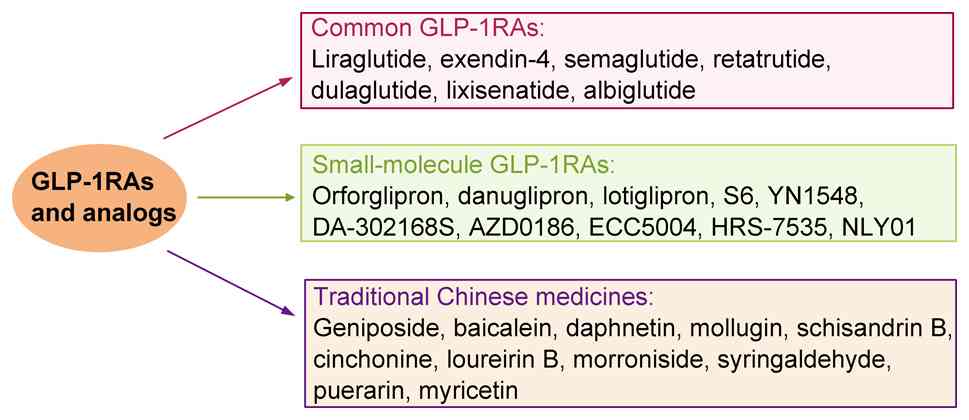
There are three major categories concerning the
compounds with GLP-1 receptor agonistic activity, including common
GLP-1RAs, several novel small-molecule agonists and some natural
products. Liraglutide, exendin-4 and semaglutide are the most
extensively studied drugs among GLP-1RAs and have emerged as novel
effective hypoglycemic agents. Other GLP-1RAs, such as retatrutide,
dulaglutide, lixisenatide and albiglutide, can also reduce the
blood glucose and lipid levels (47–50).
Several novel small-molecule GLP-1RAs, such as S6, orforglipron,
danuglipron and lotiglipron, may be applied in oral treatment for
diabetes and obesity (51–54). In addition, several traditional
Chinese medicines (baicalein, cinchonine, daphnetin and geniposide)
may also exhibit GLP-1 receptor agonistic activity (55–58).
These reagents are summarized in Fig.
1.
It is noteworthy that these natural medicines
possess anti-tumor effects. For example, baicalein can inhibit the
proliferation, migration and invasion of cancer cells in various
tumors (59–61). These mechanisms are related to
inducing apoptosis, autophagy and ferroptosis (62,63),
enhancing the sensitivity to cisplatin (64) and suppressing some pathways (such
as the PI3K/Akt, TGF-β/FTO/ZEB1, Wnt/β-catenin and STAT3 pathways)
(65–68). Myricetin can also inhibit the
progression of gastric cancer (69) and HCC (70,71),
by suppressing the PI3K/Akt pathway, thereby stimulating autophagy
and apoptosis (72). Furthermore,
other studies revealed that other natural products, such as
daphnetin, geniposide, puerarin and schisandrin B, may also exert
anti-cancer effects by regulating GLP-1 receptor activation.
Daphnetin can suppress the survival of lung adenocarcinoma, hepatic
and ovarian cells by reducing antioxidant and inflammatory
reactions and regulating the JNK/STAT3/NF-KB, Wnt/β-catenin and
AMPK/Akt/mTOR pathways (73–77).
Geniposide may inhibit colorectal cancer and HCC by inducing
ferroptosis, reducing inflammation and downregulating the PI3K/Akt
pathway (78–81). Puerarin can reduce the
proliferation and migration of colorectal and lung cancer cells by
suppressing the PI3K/Akt pathway and enhancing the sensitivity to
cisplatin, 5-FU and oxaliplatin (82–85).
In addition, schisandrin B can ameliorate the viability of HCC,
colorectal and breast cancer cells, possibly related to decreasing
the expression of IL-1β, STAT3, SIRT1 and exosomal fibronectin 1
(86–90). However, only a single study has
identified that cinchonine, loureirin B, mollugin, morroniside and
syringaldehyde may have anti-cancer effects, and their mechanisms
remain unclear.
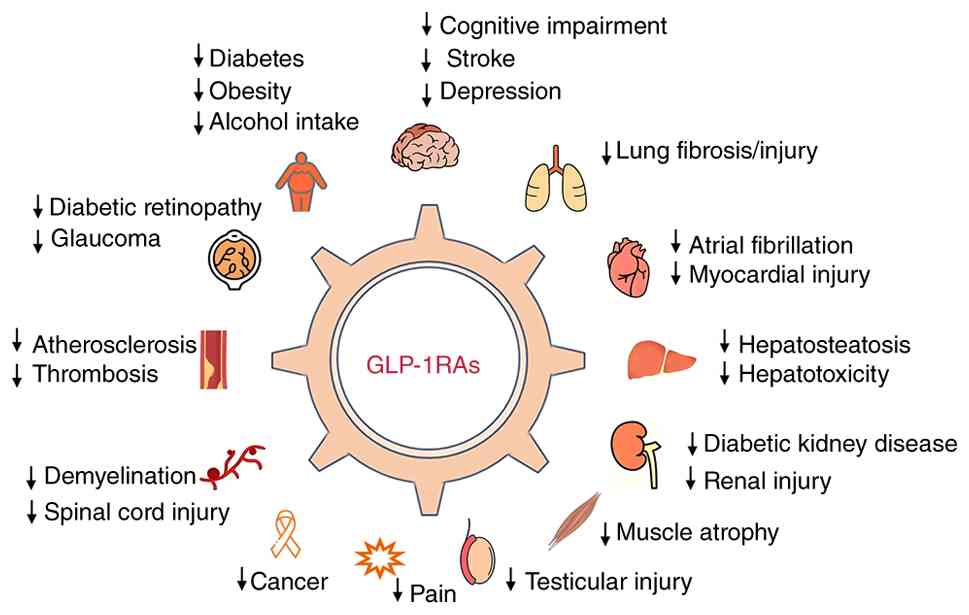
GLP-1RAs exhibit a variety of effects beyond
lowering blood glucose and lipids, including cardiopulmonary
protection, hepatoprotection, eye protection, anti-cancer and
others. Here, the protective effects of GLP-1RAs in multiple
tissues are summarized to provide assistance in exploring the
anti-tumor mechanisms of GLP-1RAs.
In the heart, geniposide and exendin-4 have been
found to suppress myocardial inflammation and myocyte apoptosis in
obese mice (91), reduce cardiac
interstitial fibrosis in mice with myocardial infarction (92) and decrease the recurrence of
arrhythmia following atrial fibrillation ablation in patients who
are obese (93) possibly related
to activating the MKK3 and Akt-1 pathways (92). Exendin-4 are also effective in
treating vascular diseases, such as vascular calcification and
thrombus formation (94,95). The mechanisms are related to
suppressing the proliferation and migration of vascular smooth
muscle cells, decreasing reactive oxygen species (ROS) levels
(95) and inhibiting M1 macrophage
polarization (96). In the lung,
liraglutide can ameliorate fibrosis by increasing the surfactant
proteins and decreasing the collagen levels in bleomycin-induced
rats (97) and can also alleviate
acute lung injury by maintaining endothelial barrier function and
modulating pyroptosis in lipopolysaccharide-induced mice and
ischemia-reperfusion rats (98,99).
In the liver, liraglutide plays a role in improving
hepatic steatosis in diabetic fatty rats and reducing
hepatotoxicity in valproic acid- and atorvastatin-treated rats, the
mechanisms are related to decreasing oxidative stress (100), reducing the expression of liver
enzymes, attenuating histopathological alterations and suppressing
inflammation and necroptosis (101,102). In the kidney, semaglutide and
liraglutide can inhibit glomerular hypertrophy and renal fibrosis
in diabetic mice by suppressing inflammatory responses, normalizing
mitochondrial morphology and function and downregulating the
TLR4/MyD88/NF-κB pathway (103,104). In the muscle and bone,
semaglutide has been found to improve skeletal muscle atrophy in
mice (105). In addition,
exendin-4 has been shown to enhance bone volume and collagen
quality to improve bone strength and structure in mice (106).
As a therapeutic agent for diabetes, geniposide and
dulaglutide also exhibit beneficial effects on diabetic retinopathy
and dry eye, the mechanisms may relate to improving retinal
thickness, morphology and vascular ultrastructure in diabetic mice
(48), reducing ROS accumulation
and inflammatory cytokines and activating the Nrf2 pathway
(58). In a mouse model of
hypertensive glaucoma, NLY01 can rescue retinal ganglion cells and
inhibit the activation of microglia/macrophage and A1 astrocyte
(107,108). In the nervous system, GLP-1
levels are decrease in mice with Alzheimer's disease (109), and lixisenatide can protect
against memory impairment through the activation of the PKA/CREB
pathway and the inhibition of the p38 MAPK pathway (110). Furthermore, semaglutide and
exendin-4 have been found to mitigate brain injury in middle
cerebral artery occlusion-induced rats (111), improve depression in repeated
restraint stress-induced mice (42), alleviate pain (112) and suppress nerve fiber injury and
demyelination in mice (113). The
mechanisms are related to inhibiting inflammation, autophagy,
neuronal apoptosis and ferroptosis, improving mitochondrial
function (42,111,114), reversing glial activation
(113) and activating the pAMPK
pathway and inhibiting the NLRP3 pathway (115). Moreover, semaglutide and
liraglutide may have other uncommon effects, such as improving
testicular injury (116),
facilitating wound healing (117)
and reducing alcohol intake (118). A brief description is listed in
Fig. 2.
In summary, these findings demonstrate that GLP-1RAs
exert protective effects on multiple tissues, with mechanisms
involving the inhibition of inflammatory responses, glial
activation and oxidative stress, as well as the regulation of
multiple signaling pathways (Akt-1, PKA/CREB, p38, NF-κB,). Since
cancer occurs in multiple tissues, these mechanisms may also
contribute to the alleviation of cancer by GLP-1Ras; however, most
of these results are from in vivo studies. Although the
majority of animal studies did not find side effects of GLP-1RA, a
handful of preclinical studies showed that GLP-1RAs increase heart
rate, induce gastrointestinal disturbances (nausea, vomiting and
diarrhea) and pancreatitis (119). GLP-1RAs may also lead to an
increased risk of biliary disease (119), thyroid (13) and colorectal cancer (14). Since patients receiving GLP-1RA
therapy often have concomitant risk factors for diseases (notably
obesity, longer diabetes duration and co-medication), future
clinical studies should more strictly control the inclusion
criteria to clarify the side effects of GLP-1RAs. Furthermore,
liraglutide has been on the market for >10 years, but some
real-world data on the association between liraglutide and cancer
have been available for only 6 years (13,20);
therefore, the longer-term studies are also a welcome
direction.
Activation of the GLP-1 receptor plays a role in
regulating glucose homeostasis, and GLP-1RAs have been applied in
the treatments for DM. Therefore, questions have been raised such
as are there correlations between high glucose (HG) and cancer, and
can the inhibition of GLP-1RAs on HG affect the development of
cancer?
HG is a risk factor for cancer, a study obtained
female breast cancer burden attributable to HG from 1990 to 2021
showed that 4.62% of female breast cancer deaths (30,000) globally
is attributed to HG (10), a
prospective cohort study among 53,747 participants suggested that
HG is an independent factor in malignancy of the digestive system
(12), another case-control study
revealed that the risk of pancreatic cancer increases with rising
blood glucose levels (11).
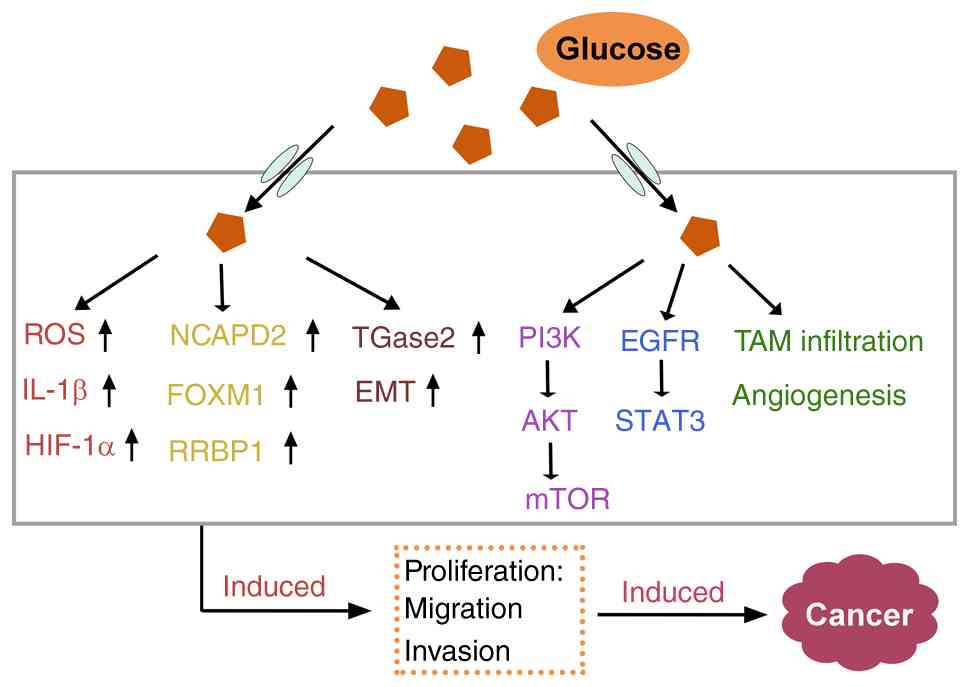
Studies in various types of cancer have further confirmed that HG
can promote tumor progression. For example, HG can promote the
invasion/migration of PDAC cells, possibly through the upregulation
of hypoxia inducible factor 1α (120) and activation of ROS/MMP-3
(121), as well as by
contributing to gemcitabine resistance (121). Studies in HCC and
cholangiocarcinoma (CCA) suggest that HG can promote cell
proliferation by increasing IL-1β (122) and ROS expression (123). Furthermore, the high expression
of NCAPD2 (124), forkhead box
protein M1 (FOXM1) (125) and
ribosome binding protein 1 (RRBP1) (126) may also associate with the
progression of HCC. In breast cancer specimens and cells, HG can
enhance tumor proliferation by stimulating angiogenesis, increasing
inflammatory factors and tumor associated macrophage infiltration
and decreasing thrombospondin-1 levels (127,128). In addition, HG can enhance
colorectal cancer cell proliferation and migration by activating
the PI3K/AKT/mTOR pathway (129).
HG may also play a role in the development of lung adenocarcinoma
by activating the epidermal growth factor receptor/signal
transducer and activator of transcription 3 (EGFR/STAT3) pathway
(130). Furthermore, HG can
increase the activation of ROS and transglutaminase 2 and promote
epithelial-mesenchymal transition (EMT) to facilitate tumor
development in ovarian and prostate cancer (131,132). These possible mechanisms by which
HG induces tumorigenesis are summarized in Fig. 3. Therefore, controlling blood
glucose may be a useful way to inhibit tumor development.
Numerous studies in patients with diabetes and/or
obesity have demonstrated that activation of GLP-1 receptor may
reduce cancer risk. Subsequently, experiments have discovered the
potential mechanisms of GLP-1RAs in suppressing cancer. The present
section summarizes these findings to elucidate the relationship
between GLP-1 receptors and cancer, with the aim to be helpful for
the treatment of cancer.
A retrospective cohort study included 167,091
patients with diabetes who were prescribed GLP-1RAs found that
GLP-1RAs may reduce the risk of pancreatic cancer (20). Another multicenter, retrospective
cohort study included 492,760 patients with diabetes and/or who
were overweight or obese who were newly treated with GLP-1As
(exenatide, liraglutide and dulaglutide) or metformin for the first
time between 2006 and 2021. The result showed that taking GLP-1As
was associated with a lower risk of pancreatic cancer compared with
taking metformin (133). In mice
with pancreatic cancer and fibroblasts isolated from patients with
PDAC, the GLP-1RA semaglutide can inhibit stromal deposition in
PDAC and allow T lymphocyte infiltration, thereby reducing tumor
development (134). Exendin-4 can
also inhibit tumor proliferation, migration and invasion, lead to
the inactivation of pancreatic stellate cells and suppress the
deposition of extracellular matrix in PANC-1 cells and xenografted
mice (135). Data from MIA PaCa-2
and PANC-1 cells revealed that activation of the GLP-1 receptor by
liraglutide can increase the sensitivity to gemcitabine (25) and suppress cell metastasis by
inhibiting the PI3K/Akt pathway (136). These animal/cellular results
suggest that GLP-1RAs may indirectly inhibit tumor progression by
regulating immunity, improving stromal effects or modulating
signaling pathways. Alternatively, another study showed that GLP-1R
expression (semi-quantitatively evaluated by IHC) in 48 PDAC
samples, demonstrated positive expression in 23 tumors and negative
expression in 25 tumors; no correlations were found between GLP-1R
expression and clinicopathological characteristics of PDAC
(137). This contrary conclusion
may be due to the insufficient sample size (n=48). Moreover, the
study suggested that GLP-1 receptor knockdown may reduce the
proliferation, migration and invasion of CFPAC-1 cells (137). The discrepancy may be due to
variations in research models and experimental methods, and in
vivo experiments may be necessary for further validation. More
large-sample, long-term clinical studies should be conducted to
further clarify the correlation between GLP-1RAs and pancreatic
cancer, and animal/cell experiments should be carried out to
determine whether GLP-1RAs act directly on tumor cells.
A retrospective cohort study among 98,142 patients
with thyroid nodules treated with GLP-1 analogues (ATC A10BJ) from
1995 to 2024 revealed that there is a low incidence of thyroid
cancer compared with those on metformin (19). However, another retrospective
cohort study involving 7,746 patients with diabetes treated with
GLP-1RAs for 6 years showed an increased risks of thyroid cancer
compared with 124,371 metformin-only users and 36,146 insulin-only
users (13). Similarly, a nested
case-control analysis also suggested that GLP-1RAs increase the
risk of thyroid cancer (144);
however, these two studies did not analyze whether the patients had
thyroid nodule, which can affect the incidence of thyroid cancer.
In addition, the studies did not distinguish which type of GLP-1RAs
were involved, such as liraglutide, semaglutide or exendin-4, nor
did they describe the dosage used. These factors may lead to the
differences in the results.
GLP-1 receptors are widely expressed in the liver
(hepatocytes, endothelial cells and Kupffer cells) (33,34),
but are not detected in HCC (1),
suggesting that GLP-1 receptor activity may be negatively
associated with liver cancer. Activation of the GLP-1 receptor may
exert a protective effect on the liver. A large population-based
matched cohort study of patients with diabetes treated with
GLP-1RAs (exenatide, liraglutide, dulaglutide, lixisenatide,
albiglutide and semaglutide) showed a reduced risk of CCA
development (147). Similarly,
another retrospective cohort included 47,578 patients with diabetes
treated with semaglutide also showed a reduced risk of HCC
(148). Some animal studies have
explored the inhibitory effects and mechanisms of GLP-1RAs,
liraglutide and exendin-4, in HCC and CCA. For example, a study in
CCA mice suggested that liraglutide can reduce tumor volume and
weights and suppress the migration of cancer cells by inhibiting
the EMT and Akt/STAT3 signaling pathway (149). Moreover, liraglutide can suppress
HCC by downregulating neutrophil extracellular traps (NETs) and ROS
of neutrophils in Hepa1-6 tumor-bearing mice (23), enhancing NK-mediated cytotoxicity,
and inhibiting the IL-6/STAT3 pathway in HCC cells (150). A study in diabetic mice revealed
that liraglutide can ameliorate steatosis, inflammation and
hepatocyte swelling to suppress the development of HCC (151). In addition, GLP-1 can reduce HCC
cell migration through inhibition of the SAPK/JNK pathway (18). Studies in HCC and CCA mice showed
that exendin-4 can inhibit tumor cell proliferation and promote
apoptosis (152,153) by activating the cAMP/PKA pathway
and downregulating the expression of EGFR and STAT3 (152). These in vivo results
suggest that GLP-1RAs indirectly inhibits HCC through immune
modulation, inflammatory and stromal regulation. Whether GLP-1RAs
have direct effect on HCC cells still lacks in-depth cellular
evidence. An in vitro experiment provides evidence that
GLP-1RAs have no direct effect on hepatocytes, hepatic stellate
cells or Kupffer cells (154),
which also supports that the protective effect of GLP-1RAs may be
secondary to the improvement in glucose metabolism. These findings
providing a foundation for further investigation into GLP-1RAs as
therapeutic targets for cancers.
However, current findings are inconsistent, and
evidence suggest that the risk of colorectal cancer is elevated
among patients treated with GLP-1RAs compared with other drugs such
as DPP-4 or metformin (164).
Patients receiving GLP-1RA therapy often accompanied by obesity,
which is a direct risk factor for colorectal cancer. This factor
may be contributed to the bias in the result. In the future,
inclusion criteria should be more strictly controlled, and
long-term studies are also a welcome direction to further clarify
the effect of GLP-1RAs on colorectal cancer.
Several studies have demonstrated the mechanisms of
GLP-1RAs in inhibiting endometrial cancer. For example, a study in
mice with endometrial cancer and endometrial cancer derived cells
(Ishikawa and RL95-2) suggested that the expression of the GLP-1
receptor is decreased and that activation of the GLP-1 receptor
following vector-mediated transfection can hinder cancer cell
proliferation, invasion, migration and promote apoptosis by
activating the cAMP/PKA signaling pathway (165). Studies in endometrial cancer cell
lines also showed that semaglutide and exendin-4 can enhance the
anti-cancer activity of levonorgestrel (166) and attenuate the sensitivity to
cisplatin (167). In addition,
exendin-4 can attenuate the growth of cancer cells and promote cell
apoptosis in mice with endometrial cancer, and the mechanism may be
related to an increase in p-AMPK expression and a decrease in
p-mTOR expression (168). In
addition, the cell viability of Ishikawa cells treated with 1, 10
and 100 nM of exendin-4 was markedly lower at 24, 48, 72 and 96 h
compared with 0 nM (168).
Liraglutide can suppress the proliferation of endometrial cancer
cells by promoting autophagy, elevating the p-AMPK levels (169,170) and decreasing the p-P70S6K levels
(169). However, another in
vitro study suggested that exendin-4 (100 nM) may enhance the
survival, migration and invasion of endometrial cancer cell lines
(AN3CA cells) at 24 h (171). The
discrepancy may be due to the differences in cancer cell lines and
the short observation period. The inhibitory effect of exendin-4 on
the viability of endometrial cancer cells is more pronounced at 96
h compared with 24, 48 and 72 h (168). Long-term observation and in
vivo experiments may further clarify the effect of GLP-1RAs on
endometrial cancer. Furthermore, there is limited clinical research
on the association between GLP-1 receptor and endometrial cancer.
Future clinical studies should be conducted to evaluate the
efficacy of GLP-1RAs in patients with endometrial lesions
(including endometrial hyperplasia and endometrial cancer.
A total of two cohort studies have revealed that
treatment with GLP-1RAs is inversely associated with prostate
cancer risk (172,173). Subsequently, study in prostate
cancer cell lines showed that activation of the GLP-1 receptor by
using a lentiviral vector can attenuate cell proliferation by
inhibiting the progression of cell cycle (174). Administration of exendin-4 in
prostate cancer cells can also attenuate cancer cell growth
(40,175,176), which is possibly associated with
downregulation of the Akt and mTOR expression (175), inhibition of the ERK/MAPK pathway
(176) and activation of the p38
pathway (40). Moreover, exendin-4
can radiosensitize prostate cancer cells through activation of the
p-AMPK pathway and inhibition of the p-mTOR, cyclin B and CDK1
expression (177). In addition,
liraglutide can decrease the viability of LNCaP cells and induce
apoptosis (178) by activating
the p38 pathway (40). Although
these findings have clarified the inhibitory effect of GLP-1RAs on
prostate cancer, they are mostly limited to in vitro
experiments. A greater variety of GLP-1RAs, more clinical and in
vivo studies should be conducted in the future.
Studies have also analyzed the role of GLP-1RAs in
other cancers, including lung cancer, ovarian cancer and glioma. In
mice with lung cancer and Lewis cells, liraglutide can suppress the
proliferation and migration of cancer cells by downregulating NETs
and ROS of neutrophils (23) and
suppressing the process of EMT (179). Administration of exendin-4 in
ovarian cancer cells can inhibit cell growth, migration and
invasion and enhance apoptosis through activation of the
caspase-3/7 signaling (180) and
inhibition of the PI3K/Akt pathway (181). Moreover, exendin-4 can also
suppress the survival and proliferation of glioma cells by
inhibiting EMT and elevating sirt3 expression (182). A study in oral squamous cell
carcinoma demonstrated that semaglutide can inhibit cancer cell
proliferation, migration and invasion and promote apoptosis by
activating the p38 MAPK pathway (183).
The aforementioned studies suggest that activation
of the GLP-1 receptor may inhibit cancer progression, and the
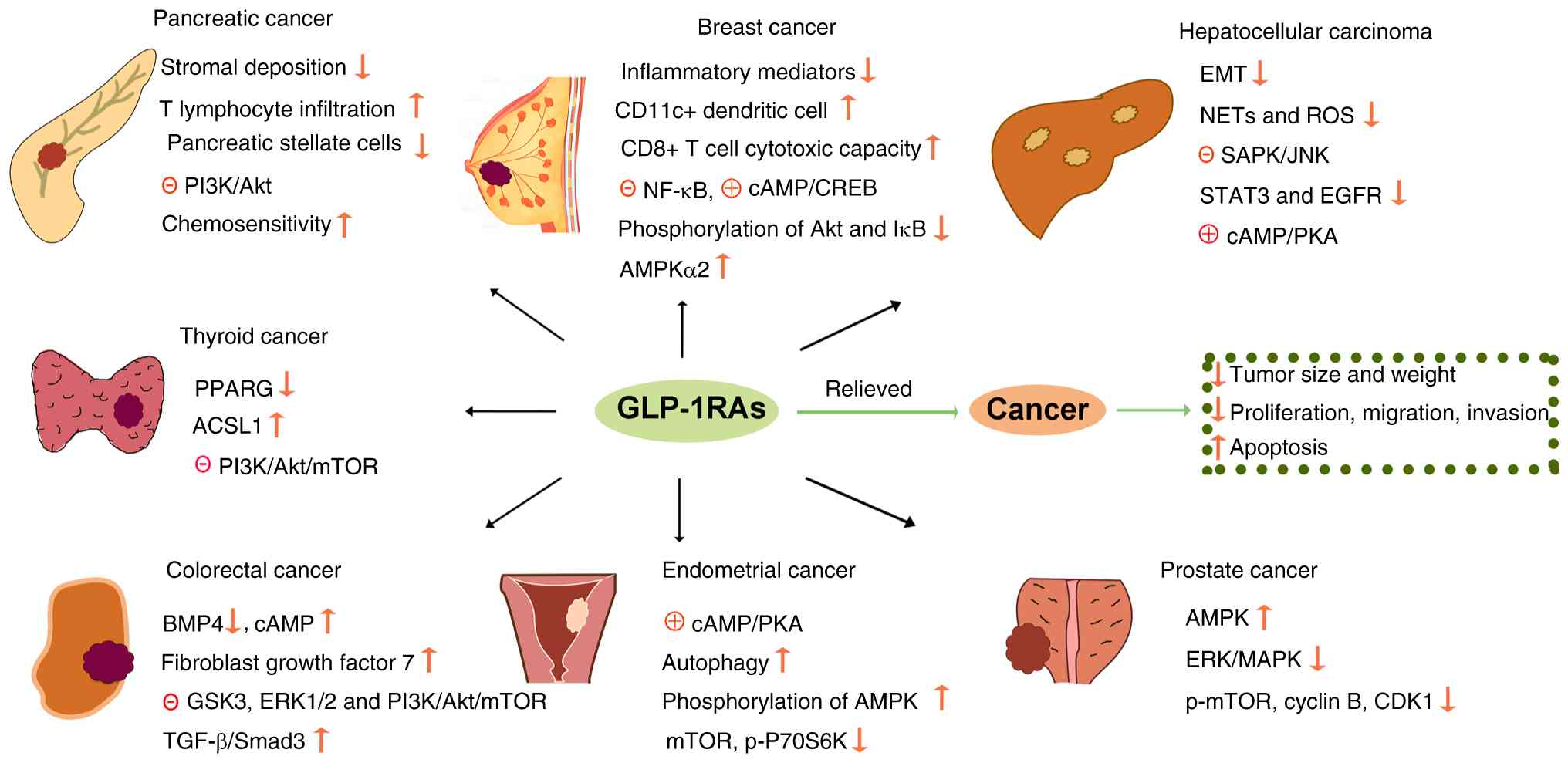
detailed mechanisms are summarized in Fig. 4. Through systematic analysis, it is
hypothesized that these mechanisms can be classified into the
following categories. i) Direct regulation of cell proliferation,
migration, invasion and apoptosis. In various types of tumors,
GLP-1RAs and several natural compounds directly inhibit tumor cell
proliferation, migration and invasion, reduce tumor size and
weight, and induce tumor apoptosis. ii) Increased chemosensitivity,
various natural compounds including baicalein, myricetin and
puerarin, have been shown the ability to enhance sensitivity of
ovarian (64,184), colorectal (83) and lung cancer cells (85) to cisplatin, 5-FU and oxaliplatin.
The effects of classic GLP-1RAs on chemotherapy efficacy have
rarely been studied. Currently, liraglutide is the only GLP-1RA
that has been reported to enhance the sensitivity of pancreatic
cancer cells to gemcitabine (25).
iii) Regulation of inflammation and immune responses. Numerous
studies have shown that GLP-1RAs can exhibit anti-inflammatory
effects in various diseases. Levels of inflammatory factors,
including IL-1, IL-6 and TNF-α, are elevated in colorectal, breast
cancer and HCC. Treatment with liraglutide, geniposide and
schisandrin B reduces inflammation and then alleviates tumor
progression (24,79,89).
Furthermore, GLP-1RAs enhance the antitumor immune response by
increasing the infiltration of T cells, neutrophils and dendritic
cells to reduce tumor development in pancreatic, breast and hepatic
cancer (22,59,134). Liraglutide is capable of
downregulating NETs and ROS of neutrophils (23). Overall, inflammation and immune
function are key factors in tumorigenesis and are also important
directions for studying the antitumor effects of GLP-1RAs. iv)
Regulation of the PI3K/Akt signaling pathway. Liraglutide and
semaglutide suppress cell growth and metastasis by inhibiting the
PI3K/Akt pathway in pancreatic, thyroid and colorectal cancer cells
(136,146,175). Similarly, several natural
GLP-1RA-like compounds (geniposide, baicalein and daphnetin) also
effectively suppress the growth of various cancer cells via
inhibition of the same pathway (67,82,185). Thus, regulating the function of
the PI3K/Akt pathway plays a crucial role in the antitumor activity
of GLP-1RAs. v) Regulation of the cAMP-dependent pathway.
Activation of the GLP-1 receptor can inhibit cancer cell
proliferation, invasion, migration and promote apoptosis by
increasing the intracellular cAMP expression (150,162,165). Elevated cAMP levels activate PKA
and subsequently induce the activation of AMPK. GLP-1RAs inhibit
tumor growth through the suppression of cAMP/PKA and AMPK pathway
activity in various cancers (138,152,165). Furthermore, elevated cAMP can
also exert its effect by inhibiting the ERK pathway. Exendin-4 can
induce apoptosis and inhibits proliferation of colon/prostate
cancer cells by downregulating the ERK1/2 signaling pathway
(162,176). Therefore, elevated cAMP may
regulate tumorigenesis via the following molecular pathways:
activation of the PKA-AMPK-mTOR pathway and inhibition of the ERK
pathway. The cAMP-dependent pathway is critical for the anticancer
effect of GLP-1RAs. vi) Regulation of other molecules. Liraglutide
and exendin-4 can reduce the levels of ROS, EGFR and STAT3 in HCC
and lung cancer cells (23,152).
Exendin-4 can also suppress the survival and proliferation of
glioma cells by elevating the expression of sirt3 (182). The inhibitory effect of
liraglutide on BMP4 has been shown to suppress the growth of
colorectal cancer cells (158).
Treatment with exendin-4 increases Fgf7 levels in colonic polyps to
regulate gut growth and intestinal tumorigenesis (161).
Furthermore, high blood glucose can increase cancer
risk. As a new hypoglycemic drug, GLP-1RA may potentially lower
cancer risk by controlling glycemic levels and enhancing insulin
sensitivity. The effects of GLP-1 signaling on autophagy,
angiogenesis and ferroptosis during tumorigenesis revealed in some
studies are also future directions for the anti-cancer effects of
GLP-1RAs.
Cancer is one of the main threats to human health,
and it is essential to find effective methods for treating cancer.
Notable progress has been made in understanding the association
between GLP-1RAs and cancer (such as pancreatic, thyroid, breast
and colorectal cancer). Activation of GLP-1 receptor by GLP-1RAs
and some compounds with GLP-1 receptor agonistic activity can
inhibit tumorigenesis by reducing neuroinflammation and oxidative
stress, modulating tumor immune microenvironment, enhancing
chemosensitivity and regulating related signaling pathways (such as
the AMPK, PI3K/Akt and cAMP/PKA pathways). Although these findings
suggest the potential effects of GLP-1RAs on cancer, there are
still numerous limitations. For instance, only three types of
GLP-1RAs, including exendin-4, semaglutide and liraglutide, have
been studied in cancer. There are insufficient in vivo
studies and limited in vitro research. Additionally,
clinical investigations are almost focused on patients with
diabetes and/or obesity complicated by cancer. Therefore, continued
in vivo research and rigorous clinical trials are needed to
confirm the effects of the GLP-1 receptor in cancer. In addition,
GLP-1RAs may be a novel effective approach for patients with the
medical triad of diabetes, obesity and cancer in the future.
Not applicable.
This research was funded by the Social and Livelihood Project of
Jiulongpo District, Chongqing, funding number 2025-03-011-Y.
Not applicable.
FJ was involved in the conception and design of the
study. FJ wrote the first draft of the review, while QLY and CJF
were involved in the acquisition and analysis of data. YZ revised
the manuscript. Data authentication is not applicable. All authors
read and approved the final version of the manuscript.
Not applicable.
Not applicable.
The authors declare that they have no competing
interests.
|
1
|
Körner M, Stöckli M, Waser B and Reubi JC:
GLP-1 receptor expression in human tumors and human normal tissues:
Potential for in vivo targeting. J Nucl Med. 48:736–743. 2007.
View Article : Google Scholar : PubMed/NCBI
|
|
2
|
Pyke C, Heller RS, Kirk RK, Ørskov C,
Reedtz-Runge S, Kaastrup P, Hvelplund A, Bardram L, Calatayud D and
Knudsen LB: GLP-1 receptor localization in monkey and human tissue:
novel distribution revealed with extensively validated monoclonal
antibody. Endocrinology. 155:1280–1290. 2014. View Article : Google Scholar : PubMed/NCBI
|
|
3
|
Grunddal KV, Jensen EP, Ørskov C, Andersen
DB, Windeløv JA, Poulsen SS, Rosenkilde MM, Knudsen LB, Pyke C and
Holst JJ: Expression profile of the GLP-1 receptor in the
gastrointestinal tract and pancreas in adult female mice.
Endocrinology. 163:bqab2162022.PubMed/NCBI
|
|
4
|
D'Alessio D: Is GLP-1 a hormone: Whether
and when? J Diabetes Investi. 7 (Suppl 1):S50–S55. 2016. View Article : Google Scholar
|
|
5
|
Liu C, Sun S, Xie J, Li H, Li T, Wu Q,
Zhang Y, Bai X, Wang J, Wang X, et al: GLP-1R agonist exendin-4
protects against hemorrhagic transformation induced by rtPA after
ischemic stroke via the Wnt/β-Catenin signaling pathway. Mol
Neurobiol. 59:3649–3664. 2022. View Article : Google Scholar : PubMed/NCBI
|
|
6
|
Wang ZJ, Li XR, Chai SF, Li WR, Li S, Hou
M, Li JL, Ye YC, Cai HY, Hölscher C and Wu MN: Semaglutide
ameliorates cognition and glucose metabolism dysfunction in the
3×Tg mouse model of Alzheimer's disease via the GLP-1R/SIRT1/GLUT4
pathway. Neuropharmacology. 240:1097162023. View Article : Google Scholar : PubMed/NCBI
|
|
7
|
Gong N, Xiao Q, Zhu B, Zhang CY, Wang YC,
Fan H, Ma AN and Wang YX: Activation of spinal glucagon-like
peptide-1 receptors specifically suppresses pain hypersensitivity.
J Neurosci. 34:5322–5334. 2014. View Article : Google Scholar : PubMed/NCBI
|
|
8
|
Shu X, Zhang Y, Li M, Huang X, Yang Y,
Zeng J, Zhao Y, Wang X, Zhang W and Ying Y: Topical ocular
administration of the GLP-1 receptor agonist liraglutide arrests
hyperphosphorylated tau-triggered diabetic retinal
neurodegeneration via activation of GLP-1R/Akt/GSK3β signaling.
Neuropharmacology. 153:1–12. 2019. View Article : Google Scholar : PubMed/NCBI
|
|
9
|
Rahman I, Athar MT and Islam M: Type 2
diabetes, obesity, and cancer share some common and critical
pathways. Front Oncol. 10:6008242020. View Article : Google Scholar : PubMed/NCBI
|
|
10
|
Jiang D, Ma S, Wu Y, Zhu J, Yang Q, Liu L,
Li T, Lu Y, Liu Y, Wang P, et al: Global burden of female breast
cancer attributable to high fasting plasma glucose from 1990 to
2021 and projections to 2046: An analysis for the global burden of
disease study 2021. Diabetes Metab Res Rev. 41:e700632025.
View Article : Google Scholar : PubMed/NCBI
|
|
11
|
Jacobson S, Dahlqvist P, Johansson M,
Svensson J, Billing O, Sund M and Franklin O: Hyperglycemia as a
risk factor in pancreatic cancer: A nested case-control study using
prediagnostic blood glucose levels. Pancreatology. 21:1112–1118.
2021. View Article : Google Scholar : PubMed/NCBI
|
|
12
|
Liu K, Wang W, Liu Y, Li J, Ma C, Tian Y,
Dong Z, Zhu L, Wei W, Ren M, et al: Correlation of cumulative
fasting blood glucose exposure with gastrointestinal cancers: A
prospective cohort study. Medicine (Baltimore). 104:e415292025.
View Article : Google Scholar : PubMed/NCBI
|
|
13
|
Cheng Z, Wang S, Li FR, Jin C, Mo C, Zheng
J, Li X, Liang F, Yang J and Gu D: The potential adverse effects of
hypodermic glucagon-like peptide −1 receptor agonist on patients
with type 2 diabetes: A population-based study. J Diabetes.
16:e700132024. View Article : Google Scholar : PubMed/NCBI
|
|
14
|
Sun Y, Liu Y, Dian Y, Zeng F, Deng G and
Lei S: Association of glucagon-like peptide-1 receptor agonists
with risk of cancers-evidence from a drug target Mendelian
randomization and clinical trials. Int J Surg. 110:4688–4694. 2024.
View Article : Google Scholar : PubMed/NCBI
|
|
15
|
Shadboorestan A, Tarighi P, Koosha M,
Faghihi H, Ghahremani MH and Montazeri H: Growth promotion and
increased ATP-binding cassette transporters expression by
liraglutide in triple negative breast cancer cell line MDA-MB-231.
Drug Res (Stuttg). 71:307–311. 2021. View Article : Google Scholar : PubMed/NCBI
|
|
16
|
Ayoub M, Faris C, Juranovic T, Chela H and
Daglilar E: The use of glucagon-like peptide-1 receptor agonists in
patients with type 2 diabetes mellitus does not increase the risk
of pancreatic cancer: A U.S.-based cohort study. Cancers (Basel).
16:16252024. View Article : Google Scholar : PubMed/NCBI
|
|
17
|
Pasternak B, Wintzell V, Hviid A, Eliasson
B, Gudbjörnsdottir S, Jonasson C, Hveem K, Svanström H, Melbye M
and Ueda P: Glucagon-like peptide 1 receptor agonist use and risk
of thyroid cancer: Scandinavian cohort study. BMJ. 385:e0782252024.
View Article : Google Scholar : PubMed/NCBI
|
|
18
|
Yamada N, Matsushima-Nishiwaki R,
Kobayashi K, Tachi J and Kozawa O: GLP-1 reduces the migration of
hepatocellular carcinoma cells via suppression of the
stress-activated protein kinase/c-Jun N-terminal kinase pathway.
Arch Biochem Biophys. 703:1088512021. View Article : Google Scholar : PubMed/NCBI
|
|
19
|
Balachandra S, Syed R, Song Z, Kasmirski
J, Gillis A, Fazendin J, Lindeman B and Chen H: Evaluating thyroid
cancer risk in glucagon-like peptide-1 analog users with thyroid
nodules. J Surg Res. 312:104–110. 2025. View Article : Google Scholar : PubMed/NCBI
|
|
20
|
Wang L, Wang Q, Li L, Kaelber DC and Xu R:
Glucagon-like peptide-1 receptor agonists and pancreatic cancer
risk: Target trial emulation using real-world data. J Natl Cancer
Inst. 117:476–485. 2025. View Article : Google Scholar : PubMed/NCBI
|
|
21
|
Wang L, Wang W, Kaelber DC, Xu R and
Berger NA: GLP-1 receptor agonists and colorectal cancer risk in
drug-naive patients with type 2 diabetes, with and without
overweight/obesity. JAMA Oncol. 10:256–258. 2024. View Article : Google Scholar : PubMed/NCBI
|
|
22
|
Stanisavljevic I, Pavlovic S, Simovic
Markovic B, Jurisevic M, Krajnovic T, Mijatovic S, Spasojevic M,
Mitrovic S, Corovic I and Jovanovic I: Semaglutide decelerates the
growth and progression of breast cancer by enhancing the acquired
antitumor immunity. Biomed Pharmacother. 181:1176682024. View Article : Google Scholar : PubMed/NCBI
|
|
23
|
Chen D, Liang H, Huang L, Zhou H and Wang
Z: Liraglutide enhances the effect of checkpoint blockade in lung
and liver cancers through the inhibition of neutrophil
extracellular traps. FEBS Open Bio. 14:1365–1377. 2024. View Article : Google Scholar : PubMed/NCBI
|
|
24
|
Alanteet AA, Attia HA, Shaheen S, Alfayez
M and Alshanawani B: Anti-proliferative activity of glucagon-like
peptide-1 receptor agonist on obesity-associated breast cancer: The
impact on modulating adipokines' expression in adipocytes and
cancer cells. Dose Response. 19:15593258219956512021. View Article : Google Scholar : PubMed/NCBI
|
|
25
|
Zhao HJ, Jiang X, Hu LJ, Yang L, Deng LD,
Wang YP and Ren ZP: Activation of GLP-1 receptor enhances the
chemosensitivity of pancreatic cancer cells. J Mol Endocrinol.
64:103–113. 2020. View Article : Google Scholar : PubMed/NCBI
|
|
26
|
Li X, Liu Y, Zhang Z, Hai W, Pan Y and
Zhang Y: Exendin-4 imaging based on gastrointestinal GLP-1R targets
for IBD diagnosis and efficacy assessment. Eur J Nucl Med Mol
Imaging. 52:3891–3902. 2025. View Article : Google Scholar : PubMed/NCBI
|
|
27
|
Wong CK, Yusta B, Koehler JA, Baggio LL,
McLean BA, Matthews D, Seeley RJ and Drucker DJ: Divergent roles
for the gut intraepithelial lymphocyte GLP-1R in control of
metabolism, microbiota, and T cell-induced inflammation. Cell
Metab. 34:1514–1531.e7. 2022. View Article : Google Scholar : PubMed/NCBI
|
|
28
|
May AT, Crowe MS, Blakeney BA, Mahavadi S,
Wang H, Grider JR and Murthy KS: Identification of expression and
function of the glucagon-like peptide-1 receptor in colonic smooth
muscle. Peptides. 112:48–55. 2019. View Article : Google Scholar : PubMed/NCBI
|
|
29
|
Broide E, Bloch O, Ben-Yehudah G, Cantrell
D, Shirin H and Rapoport MJ: GLP-1 receptor is expressed in human
stomach mucosa: Analysis of its cellular association and
distribution within gastric glands. J Histochem Cytochem.
61:649–658. 2013. View Article : Google Scholar : PubMed/NCBI
|
|
30
|
He L, Zhang S, Zhang X, Liu R, Guan H and
Zhang H: Effects of insulin analogs and glucagon-like peptide-1
receptor agonists on proliferation and cellular energy metabolism
in papillary thyroid cancer. Onco Targets Ther. 10:5621–5631. 2017.
View Article : Google Scholar : PubMed/NCBI
|
|
31
|
Song Y, Zhou M, Cao Y, Qi J, Geng J and
Liu X: Expression of GLP-1 receptor and CD26 in human thyroid
C-cells: The association of thyroid C-cell tumorigenesis with
incretin-based medicine. Oncol Lett. 13:2684–2690. 2017. View Article : Google Scholar : PubMed/NCBI
|
|
32
|
Dal Molin M, Kim H, Blackford A, Sharma R
and Goggins M: Glucagon-like peptide-1 receptor expression in
normal and neoplastic human pancreatic tissues. Pancreas.
45:613–619. 2016. View Article : Google Scholar : PubMed/NCBI
|
|
33
|
Uğran R and Koral TS: Investigation of the
effects of curcumin on GLP1-R in liver tissue of diabetic rats.
Arch Razi Inst. 79:815–826. 2024.PubMed/NCBI
|
|
34
|
Yokomori H and Ando W: Spatial expression
of glucagon-like peptide 1 receptor and caveolin-1 in hepatocytes
with macrovesicular steatosis in non-alcoholic steatohepatitis. BMJ
Open Gastroenterol. 7:e0003702020. View Article : Google Scholar : PubMed/NCBI
|
|
35
|
Vahl TP, Tauchi M, Durler TS, Elfers EE,
Fernandes TM, Bitner RD, Ellis KS, Woods SC, Seeley RJ, Herman JP
and D'Alessio DA: Glucagon-like peptide-1 (GLP-1) receptors
expressed on nerve terminals in the portal vein mediate the effects
of endogenous GLP-1 on glucose tolerance in rats. Endocrinology.
148:4965–4973. 2007. View Article : Google Scholar : PubMed/NCBI
|
|
36
|
Chen BD, Zhao WC, Dong JD and Sima H:
Expression of GLP-1R protein and its clinical role in intrahepatic
cholangiocarcinoma tissues. Mol Biol Rep. 41:4313–4320. 2014.
View Article : Google Scholar : PubMed/NCBI
|
|
37
|
Tran DT, Yeung ESH, Hong LYQ, Kaur H,
Advani SL, Liu Y, Syeda MZ, Batchu SN and Advani A: Finerenone
attenuates downregulation of the kidney GLP-1 receptor and glucagon
receptor and cardiac GIP receptor in mice with comorbid diabetes.
Diabetol Metab Syndr. 16:2832024. View Article : Google Scholar : PubMed/NCBI
|
|
38
|
Iwaya C, Nomiyama T, Komatsu S, Kawanami
T, Tsutsumi Y, Hamaguchi Y, Horikawa T, Yoshinaga Y, Yamashita S,
Tanaka T, et al: Exendin-4, a glucagonlike peptide-1 receptor
agonist, attenuates breast cancer growth by inhibiting NF-κB
activation. Endocrinology. 158:4218–4232. 2017. View Article : Google Scholar : PubMed/NCBI
|
|
39
|
Yue Y, Xu Y, Huang L, Pan D, Bai Z, Wang
L, Yang R, Yan J, Song H, Li X and Yang M: Evaluation of a novel
GLP-1R ligand for PET imaging of prostate cancer. Anticancer Agents
Med Chem. 19:509–514. 2019. View Article : Google Scholar : PubMed/NCBI
|
|
40
|
Li XN, Bu HM, Ma XH, Lu S, Zhao S, Cui YL
and Sun J: Glucagon-like peptide-1 analogues inhibit proliferation
and increase apoptosis of human prostate cancer cells in vitro. Exp
Clin Endocrinol Diabetes. 125:91–97. 2017.PubMed/NCBI
|
|
41
|
Kim KS, Park JS, Hwang E, Park MJ, Shin
HY, Lee YH, Kim KM, Gautron L, Godschall E, Portillo B, et al:
GLP-1 increases preingestive satiation via hypothalamic circuits in
mice and humans. Science. 385:438–446. 2024. View Article : Google Scholar : PubMed/NCBI
|
|
42
|
Yang F, Wang X, Qi J, Zhang K, Jiang Y,
Feng B, Lv T, Yang L, Yang Q, Zhao M, et al: Glucagon-like peptide
1 receptor activation inhibits microglial pyroptosis via promoting
mitophagy to alleviate depression-like behaviors in diabetic mice.
Nutrients. 15:382022. View Article : Google Scholar : PubMed/NCBI
|
|
43
|
Ludwig MQ, Cheng W, Gordian D, Lee J,
Paulsen SJ, Hansen SN, Egerod KL, Barkholt P, Rhodes CJ, Secher A,
et al: A genetic map of the mouse dorsal vagal complex and its role
in obesity. Nat Metab. 3:530–545. 2021. View Article : Google Scholar : PubMed/NCBI
|
|
44
|
Farokhnia M, Browning BD, Crozier ME, Sun
H, Akhlaghi F and Leggio L: The glucagon-like peptide-1 system is
modulated by acute and chronic alcohol exposure: Findings from
human laboratory experiments and a post-mortem brain study. Addict
Biol. 27:e132112022. View Article : Google Scholar : PubMed/NCBI
|
|
45
|
Ruska Y, Csibi A, Dorogházi B,
Szilvásy-Szabó A, Mohácsik P, Környei Z, Dénes Á, Kádár A, Puskár
Z, Hrabovszky E, et al: Topography of the GLP-1/GLP-1 receptor
system in the spinal cord of male mice. Sci Rep. 14:144032024.
View Article : Google Scholar : PubMed/NCBI
|
|
46
|
Takaku S, Tsukamoto M, Niimi N, Yako H and
Sango K: Exendin-4 promotes schwann cell survival/migration and
myelination in vitro. Int J Mol Sci. 22:29712021. View Article : Google Scholar : PubMed/NCBI
|
|
47
|
Tetelbaun L, Mullally JA and Frishman WH:
The first triple agonist for antiobesity: Retatrutide. Cardiol Rev.
34:575–579. 2026. View Article : Google Scholar : PubMed/NCBI
|
|
48
|
Wei L, Mo W, Lan S, Yang H, Huang Z, Liang
X, Li L, Xian J, Xie X, Qin Y, et al: GLP-1RA improves diabetic
retinopathy by protecting the blood-retinal barrier through
GLP-1R-ROCK-p-MLC signaling pathway. J Diabetes Res.
2022:18619402022. View Article : Google Scholar : PubMed/NCBI
|
|
49
|
Malik RA, Anderson J, Russo G, Amani MEA,
Adas M, Alvarez A, Lauand F, Li X and Khunti K: Long-term
effectiveness of iGlarLixi treatment in people with type 2 diabetes
in the United States: The soli-durability 24-month observational
study. Diabetes Obes Metab. 27:5487–5497. 2025. View Article : Google Scholar : PubMed/NCBI
|
|
50
|
Kamrul-Hasan ABM, Dutta D, Nagendra L,
Bhattacharya S, Singla R and Kalra S: Efficacy and safety of
albiglutide, a once-weekly glucagon-like peptide-1 receptor
agonist, in patients with type 2 diabetes: A systematic review and
meta-analysis. Medicine (Baltimore). 103:e385682024. View Article : Google Scholar : PubMed/NCBI
|
|
51
|
Yang X, Zhang M, Lu Z, Zhi L, Xue H, Liu
T, Liu M, Cui L, Liu Z, He P, et al: Novel small molecule
glucagon-like peptide-1 receptor agonist S6 stimulates insulin
secretion from rat islets. Front Pharmacol. 12:6648022021.
View Article : Google Scholar : PubMed/NCBI
|
|
52
|
Horn DB, Ryan DH, Kis SG, Alves B, Mu Y,
Kim SG, Aberle J, Bain SC, Allen S, Sarker E, et al: Orforglipron,
an oral small-molecule GLP-1 receptor agonist, for the treatment of
obesity in people with type 2 diabetes (ATTAIN-2): A phase 3,
double-blind, randomised, multicentre, placebo-controlled trial.
Lancet. 406:2927–2944. 2026. View Article : Google Scholar : PubMed/NCBI
|
|
53
|
Buckeridge C, Cobain S, Bays HE, Matsuoka
O, Fukushima Y, Halstead P, Tsamandouras N, Sherry N, Gorman DN and
Saxena AR: Efficacy and safety of danuglipron (PF-06882961) in
adults with obesity: A randomized, placebo-controlled, dose-ranging
phase 2b study. Diabetes Obes Metab. 27:4915–4926. 2025. View Article : Google Scholar : PubMed/NCBI
|
|
54
|
Amin NB, Frederich R, Tsamandouras N,
Haggag AZ, Schuster T, Zmuda W, Palmer A, Vasas S, Buckley G, Smith
TR, et al: Evaluation of an oral small-molecule glucagon-like
peptide-1 receptor agonist, lotiglipron, for type 2 diabetes and
obesity: A dose-ranging, phase 2, randomized, placebo-controlled
study. Diabetes Obes Metab. 27:215–227. 2025. View Article : Google Scholar : PubMed/NCBI
|
|
55
|
Liu N, Cui X, Yan W, Guo T, Wang Z, Wei X,
Sun Y, Liu J, Xian C, Ma W and Chen L: Baicalein: A potential
GLP-1R agonist improves cognitive disorder of diabetes through
mitophagy enhancement. J Pharm Anal. 14:1009682024. View Article : Google Scholar : PubMed/NCBI
|
|
56
|
Xue H, Xing HJ, Wang B, Fu C, Zhang YS,
Qiao X, Guo C, Zhang XL, Hu B, Zhao X, et al: Cinchonine, a
potential oral small-molecule glucagon-like peptide-1 receptor
agonist, lowers blood glucose and ameliorates non-alcoholic
steatohepatitis. Drug Des Devel Ther. 17:1417–1432. 2023.
View Article : Google Scholar : PubMed/NCBI
|
|
57
|
Liang F, Tian X and Ding L: Daphnetin
modulates GLP-1R to alleviate cognitive dysfunction in diabetes:
Implications for inflammation and oxidative stress. Front
Pharmacol. 15:14389262024. View Article : Google Scholar : PubMed/NCBI
|
|
58
|
Tu Y, Li L, Zhu L, Guo Y, Du S, Zhang Y,
Wang Z, Zhang Y and Zhu M: Geniposide attenuates
hyperglycemia-induced oxidative stress and inflammation by
activating the Nrf2 signaling pathway in experimental diabetic
retinopathy. Oxid Med Cell Longev. 2021:92479472021. View Article : Google Scholar : PubMed/NCBI
|
|
59
|
Jia H, Zhao Z, Su C, Du J, Yang S, Song J,
Han X, Yu F, Sun Z and Chu P: Discovery of baicalein as a novel
ubiquitin-specific protease 21 inhibitor for the treatment of
hepatocellular carcinoma. Phytother Res. 39:3935–3951. 2025.
View Article : Google Scholar : PubMed/NCBI
|
|
60
|
Shen J, Yang Z, Wu X, Yao G and Hou M:
Baicalein facilitates gastric cancer cell apoptosis by triggering
endoplasmic reticulum stress via repression of the PI3K/AKT
pathway. Appl Biol Chem. 66:102023. View Article : Google Scholar : PubMed/NCBI
|
|
61
|
Lai JQ, Zhao LL, Hong C, Zou QM, Su JX, Li
SJ, Zhou XF, Li ZS, Deng B, Cao J and Qi Q: Baicalein triggers
ferroptosis in colorectal cancer cells via blocking the
JAK2/STAT3/GPX4 axis. Acta Pharmacol Sin. 45:1715–1726. 2024.
View Article : Google Scholar : PubMed/NCBI
|
|
62
|
Yu Q, Tang R, Mo W, Zhao L and Li L:
Baicalein enhances radiosensitivity in colorectal cancer via
JAK2/STAT3 pathway inhibition. Chem Biol Drug Des. 104:e146112024.
View Article : Google Scholar : PubMed/NCBI
|
|
63
|
Liu J, Qi X, Gu P, Wang L, Song S and Shu
P: Baicalin induces gastric cancer cell pyroptosis through the
NF-κB-NLRP3 signaling axis. J Cancer. 15:494–507. 2024. View Article : Google Scholar : PubMed/NCBI
|
|
64
|
Li S, Yi Z, Li M and Zhu Z: Baicalein
improves the chemoresistance of ovarian cancer through regulation
of CirSLC7A6. J Ovarian Res. 16:2122023. View Article : Google Scholar : PubMed/NCBI
|
|
65
|
Zhao L, Chen G, Li D, Wang K, Schaefer M,
Herr I and Yan B: Baicalein disrupts TGF-β-induced EMT in
pancreatic cancer by FTO-dependent m6A demethylation of ZEB1.
Biochim Biophys Acta Mol Cell Res. 1872:1199692025. View Article : Google Scholar : PubMed/NCBI
|
|
66
|
Jin Y, Wu Q, Pan S, Zhou Q, Liu H, Zhang
Q, Zhang J and Zhu X: Baicalein enhances cisplatin sensitivity in
cervical cancer cells by promoting cuproptosis through the Akt
pathway. Biomed Pharmacother. 179:1174152024. View Article : Google Scholar : PubMed/NCBI
|
|
67
|
Chuang TC, Fang GS, Hsu SC, Lee YJ, Shao
WS, Wang V, Lee SL, Kao MC and Ou CC: Baicalein suppresses
HER2-mediated malignant transformation of HER2-overexpressing
ovarian cancer cells by downregulating HER2 gene expression.
Environ Toxicol. 38:1609–1617. 2023. View Article : Google Scholar : PubMed/NCBI
|
|
68
|
Susmitha GD, Miyazato K, Ogura K, Yokoyama
S and Hayakawa Y: Anti-metastatic effects of baicalein by targeting
STAT3 activity in breast cancer cells. Biol Pharm Bull.
43:1899–1905. 2020. View Article : Google Scholar : PubMed/NCBI
|
|
69
|
Lu Y, Sun J, Yang M, Xing Y, Zhu W, Zhu J,
Ma X, Wang Y, Wang L and Jia Y: Myricetin induces ferroptosis and
inhibits gastric cancer progression by targeting NOX4. J Agric Food
Chem. 72:6178–6188. 2024. View Article : Google Scholar : PubMed/NCBI
|
|
70
|
Wang M, Ren S, Bi Z, Zhang L, Cui M, Sun
R, Bao J, Gao D, Yang B, Li X, et al: Myricetin reverses
epithelial-endothelial transition and inhibits vasculogenic mimicry
and angiogenesis of hepatocellular carcinoma by directly targeting
PAR1. Phytother Res. 36:1807–1821. 2022. View Article : Google Scholar : PubMed/NCBI
|
|
71
|
Yang W, Su J, Li M, Li T, Wang X, Zhao M
and Hu X: Myricetin induces autophagy and cell cycle arrest of HCC
by inhibiting MARCH1-regulated Stat3 and p38 MAPK signaling
pathways. Front Pharmacol. 12:7095262021. View Article : Google Scholar : PubMed/NCBI
|
|
72
|
Kwon M and Jung HJ: Anticancer potential
of myricetin against Huh7- and Hep3B-derived liver cancer stem
cells through the regulation of apoptosis, autophagy, and stemness.
Biomol Ther (Seoul). 33:636–651. 2025. View Article : Google Scholar : PubMed/NCBI
|
|
73
|
Lv Z, Du Y, Zhang H, Fang H, Guo Y, Zeng
L, Chen Y, Li D and Li R: Inhibition of JNK/STAT3/NF-KB
pathway-mediated migration and clonal formation of lung
adenocarcinoma A549 cells by daphnetin. Cell Adh Migr. 18:27–37.
2024. View Article : Google Scholar : PubMed/NCBI
|
|
74
|
Li T, Yang G, Hao Q and Zhang X and Zhang
X: Daphnetin ameliorates the expansion of chemically induced
hepatocellular carcinoma via reduction of inflammation and
oxidative stress. J Oleo Sci. 71:575–585. 2022. View Article : Google Scholar : PubMed/NCBI
|
|
75
|
Liu C, Pan J, Liu H, Lin R, Chen Y and
Zhang C: Daphnetin inhibits the survival of hepatocellular
carcinoma cells through regulating Wnt/β-catenin signaling pathway.
Drug Dev Res. 83:952–960. 2022. View Article : Google Scholar : PubMed/NCBI
|
|
76
|
Ma N, Zhang M, Hu J, Wei Z and Zhang S:
Daphnetin induces ferroptosis in ovarian cancer by inhibiting
NAD(P)H:Quinone oxidoreductase 1 (NQO1). Phytomedicine.
132:1558762024. View Article : Google Scholar : PubMed/NCBI
|
|
77
|
Fan X, Xie M, Zhao F, Li J, Fan C, Zheng
H, Wei Z, Ci X and Zhang S: Daphnetin triggers ROS-induced cell
death and induces cytoprotective autophagy by modulating the
AMPK/Akt/mTOR pathway in ovarian cancer. Phytomedicine.
82:1534652021. View Article : Google Scholar : PubMed/NCBI
|
|
78
|
Chen S and Chen A: Geniposide reverses
oxaliplatin resistance in colorectal cancer via suppression of
PI3K/AKT pathway. Rev Invest Clin. 77:1000222025.PubMed/NCBI
|
|
79
|
Kimura Y, Sumiyoshi M and Taniguchi M:
Geniposide prevents tumor growth by inhibiting colonic
interleukin-1β and monocyte chemoattractant protein-1 via
down-regulated expression of cyclooxygenase-2 and thymocyte
selection-associated high mobility box proteins TOX/TOX2 in
azoxymethane/dextran sulfate sodium-treated mice. Int
Immunopharmacol. 118:1100772023. View Article : Google Scholar : PubMed/NCBI
|
|
80
|
Luo M, Wang Y, Liu X, Liu L, Zhu L, Chen
G, Ye Q, He C, Xiao X and Li J: Geniposide suppresses tumor
progression through DUOX1-mediated ferroptosis in hepatocellular
carcinoma. Am J Chin Med. 53:1573–1589. 2025. View Article : Google Scholar : PubMed/NCBI
|
|
81
|
Zhang C, Wang N, Tan HY, Guo W, Chen F,
Zhong Z, Man K, Tsao SW, Lao L and Feng Y: Direct inhibition of the
TLR4/MyD88 pathway by geniposide suppresses HIF-1α-independent VEGF
expression and angiogenesis in hepatocellular carcinoma. Br J
Pharmacol. 177:3240–3257. 2020. View Article : Google Scholar : PubMed/NCBI
|
|
82
|
Chen L, Li X, Zhao S, Hao M, Wang H, Zhou
Z, Xiong X, Yuan D, Luo P, Wang L, et al: Puerarin inhibits
proliferation, migration and invasion of colon cancer cells and
induces apoptosis via suppression of the PI3K/AKT signaling
pathway. Pharmaceuticals (Basel). 18:13782025. View Article : Google Scholar : PubMed/NCBI
|
|
83
|
Wang X, Yang X, Wang J and Zhang Y and
Zhang Y: Puerarin enhances the sensitivity of colorectal cancer to
5-fluorouracil and oxaliplatin by inhibiting the PTEN/PI3K/AKT
signaling pathway. J Biochem Mol Toxicol. 39:e705172025. View Article : Google Scholar : PubMed/NCBI
|
|
84
|
Lang J, Guo Z, Xing S, Sun J, Qiu B, Shu
Y, Wang Z and Liu G: Inhibitory role of puerarin on the A549 lung
cancer cell line. Transl Cancer Res. 11:4117–4125. 2022. View Article : Google Scholar : PubMed/NCBI
|
|
85
|
Huang P and Du SX: Puerarin enhances the
anti-tumor effect of cisplatin on drug-resistant A549 cancer in
vivo and in vitro through activation of the Wnt signaling pathway.
Cancer Manag Res. 12:6279–6289. 2020. View Article : Google Scholar : PubMed/NCBI
|
|
86
|
Jiang B, Yang J, Huang Q, Li W, Peng Q,
Gan H, Peng T, Yao L and Qi L: Schisandrin B downregulates exosomal
fibronectin 1 expression to inhibit hepatocellular carcinoma
growth. Front Pharmacol. 16:15476852025. View Article : Google Scholar : PubMed/NCBI
|
|
87
|
Sun J, Wang Z, Yun Y, Feng Y, Liu Z, Cui
L, Tang M, Ye L, Liang Z, Chen W and Gao S: Schisandrin B exerts
anti-colorectal cancer effect through CXCL2/ERK/DUSP11 signaling
pathway. Cancer Cell Int. 25:972025. View Article : Google Scholar : PubMed/NCBI
|
|
88
|
Pu Z, Zhang W, Wang M, Xu M, Xie H and
Zhao J: Schisandrin B attenuates colitis-associated colorectal
cancer through SIRT1 linked SMURF2 signaling. Am J Chin Med.
49:1773–1789. 2021. View Article : Google Scholar : PubMed/NCBI
|
|
89
|
Chang CM, Liang TR and Lam HYP: The use of
schisandrin B to combat triple-negative breast cancers by
inhibiting NLRP3-induced interleukin-1β production. Biomolecules.
14:742024. View Article : Google Scholar : PubMed/NCBI
|
|
90
|
Dai X, Yin C, Guo G, Zhang Y, Zhao C, Qian
J, Wang O, Zhang X and Liang G: Schisandrin B exhibits potent
anticancer activity in triple negative breast cancer by inhibiting
STAT3. Toxicol Appl Pharmacol. 358:110–119. 2018. View Article : Google Scholar : PubMed/NCBI
|
|
91
|
Ma ZG, Kong CY, Song P, Zhang X, Yuan YP
and Tang QZ: Geniposide protects against obesity-related cardiac
injury through AMPKα- and Sirt1-dependent mechanisms. Oxid Med Cell
Longev. 2018:60537272018. View Article : Google Scholar : PubMed/NCBI
|
|
92
|
Du J, Zhang L, Wang Z, Yano N, Zhao YT,
Wei L, Dubielecka-Szczerba P, Liu PY, Zhuang S, Qin G and Zhao TC:
Exendin-4 induces myocardial protection through MKK3 and Akt-1 in
infarcted hearts. Am J Physiol Cell Physiol. 310:C270–C283. 2016.
View Article : Google Scholar : PubMed/NCBI
|
|
93
|
Patel H, Sheth A, Nair A, Patel B, Thakkar
S, Narasimhan B, Mehta N, Azad Z, Kowlgi GN, Desimone CV, et al:
Long-term impact of GLP-1 receptor agonists on AF recurrence after
ablation in obese patients. J Cardiovasc Electrophysiol.
36:1808–1816. 2025. View Article : Google Scholar : PubMed/NCBI
|
|
94
|
Yan C, Ma X, Lam SM, Zhang Y, Cao Y, Dong
Y, Su L, Shui G and Feng Y: Exendin-4 attenuates atherosclerosis
progression via controlling hematopoietic stem/progenitor cell
proliferation. J Mol Cell Biol. 15:mjad0142023. View Article : Google Scholar : PubMed/NCBI
|
|
95
|
Liu YC, Tseng YH, Wu YH, Tong L, Tsai SP,
Huang SE, Wu BN, Lo SH, Chen IC, Dai ZK, et al: Exendin-4, a
glucagon-like peptide-1 receptor agonist, regulates ductus
arteriosus by vasodilation and anti-remodeling through the PKA
pathway. Eur J Pharmacol. 985:1771062024. View Article : Google Scholar : PubMed/NCBI
|
|
96
|
Zhang K, Li R, Matniyaz Y, Yu R, Pan J,
Liu W and Wang D: Liraglutide attenuates angiotensin II-induced
aortic dissection and aortic aneurysm via inhibiting M1 macrophage
polarization in APOE (−/-) mice. Biochem Pharmacol. 223:1161702024.
View Article : Google Scholar : PubMed/NCBI
|
|
97
|
Fandiño J, Toba L, González-Matías LC,
Diz-Chaves Y and Mallo F: GLP-1 receptor agonist ameliorates
experimental lung fibrosis. Sci Rep. 10:180912020. View Article : Google Scholar : PubMed/NCBI
|
|
98
|
Xu J, Wei G, Wang J, Zhu J, Yu M, Zeng X,
Wang H, Xie W and Kong H: Glucagon-like peptide-1 receptor
activation alleviates lipopolysaccharide-induced acute lung injury
in mice via maintenance of endothelial barrier function. Lab
Invest. 99:577–587. 2019. View Article : Google Scholar : PubMed/NCBI
|
|
99
|
Zhang Y, Liu T, Guo H, Shi J, Yang J, Fu
S, Pan X, Li F, Zhang H, Zhang D, et al: Ex vivo lung perfusion
with GLP-1R agonist mitigates ischemia/reperfusion injury through
pyroptosis modulation in lung transplantation- an experimental
study. Int J Surg. 111:3781–3797. 2025.PubMed/NCBI
|
|
100
|
Zhou R, Lin C, Cheng Y, Zhuo X, Li Q, Xu
W, Zhao L and Yang L: Liraglutide alleviates hepatic steatosis and
liver injury in T2MD rats via a GLP-1R dependent AMPK pathway.
Front Pharmacol. 11:6001752020. View Article : Google Scholar : PubMed/NCBI
|
|
101
|
Elsiad EA, Abd El Aal HA, Salem HA,
El-Yamany MF and Rabie MA: Liraglutide attenuates
atorvastatin-induced hepatotoxicity by restoring GLP-1R expression
and activating Nrf2 and autophagy pathways in Wistar rats. Toxics.
13:5942025. View Article : Google Scholar : PubMed/NCBI
|
|
102
|
Atef MM, Abou Hashish NA, Hafez YM, Selim
AF, Ibrahim HA, Eltabaa EF, Rizk FH, Shalaby AM, Ezzat N, Alabiad
MA and Elshamy AM: The potential protective effect of liraglutide
on valproic acid induced liver injury in rats: Targeting HMGB1/RAGE
axis and RIPK3/MLKL mediated necroptosis. Cell Biochem Funct.
41:1209–1219. 2023. View Article : Google Scholar : PubMed/NCBI
|
|
103
|
Wu J, Cheng AS, Weimbs T, Harris PC, Zhou
JX and Li X: GLP-1RA semaglutide delays the progression of ADPKD
through regulation of glycolysis, mitochondria function and
ketosis. FASEB J. 39:e709442025. View Article : Google Scholar : PubMed/NCBI
|
|
104
|
Sourris KC, Ding Y, Maxwell SS, Al-Sharea
A, Kantharidis P, Mohan M, Rosado CJ, Penfold SA, Haase C, Xu Y, et
al: Glucagon-like peptide-1 receptor signaling modifies the extent
of diabetic kidney disease through dampening the receptor for
advanced glycation end products-induced inflammation. Kidney Int.
105:132–149. 2024. View Article : Google Scholar : PubMed/NCBI
|
|
105
|
Iwai S, Kaji K, Nishimura N, Kubo T,
Tomooka F, Shibamoto A, Suzuki J, Tsuji Y, Fujinaga Y, Kitagawa K,
et al: Glucagon-like peptide-1 receptor agonist, semaglutide
attenuates chronic liver disease-induced skeletal muscle atrophy in
diabetic mice. Biochim Biophys Acta Mol Basis Dis. 1869:1667702023.
View Article : Google Scholar : PubMed/NCBI
|
|
106
|
Mermet M, Denom J, Mieczkowska A, Wery M,
Biggs E, Gribble FM, Reimann F, Magnan C, Cruciani-Guglielmacci C
and Mabilleau G: The GLP-1 analog, exendin-4, improves bone
material properties and strength through a central relay in
ovariectomized mice. Am J Physiol Endocrinol Metab. 329:E522–E536.
2025. View Article : Google Scholar : PubMed/NCBI
|
|
107
|
Lawrence ECN, Guo M, Schwartz TD, Wu J, Lu
J, Nikonov S, Sterling JK and Cui QN: Topical and systemic GLP-1R
agonist administration both rescue retinal ganglion cells in
hypertensive glaucoma. Front Cell Neurosci. 17:11568292023.
View Article : Google Scholar : PubMed/NCBI
|
|
108
|
Sterling JK, Adetunji MO, Guttha S,
Bargoud AR, Uyhazi KE, Ross AG, Dunaief JL and Cui QN: GLP-1
receptor agonist NLY01 reduces retinal inflammation and neuron
death secondary to ocular hypertension. Cell Rep. 33:1082712020.
View Article : Google Scholar : PubMed/NCBI
|
|
109
|
Zhang Y, Chen H, Feng Y, Liu M, Lu Z, Hu
B, Chen L, Zhang Y, Liu J, Cai F, et al: Activation of AMPK by
GLP-1R agonists mitigates Alzheimer-related phenotypes in
transgenic mice. Nat Aging. 5:1097–1113. 2025. View Article : Google Scholar : PubMed/NCBI
|
|
110
|
Cai HY, Yang JT, Wang ZJ, Zhang J, Yang W,
Wu MN and Qi JS: Lixisenatide reduces amyloid plaques,
neurofibrillary tangles and neuroinflammation in an APP/PS1/tau
mouse model of Alzheimer's disease. Biochem Biophys Res Commun.
495:1034–1040. 2018. View Article : Google Scholar : PubMed/NCBI
|
|
111
|
Wang W, Pang M, Zhang Y, Hou S, Xia Y, Shi
Y, Zhang X and Wang Y: Semaglutide mitigates ischemic brain injury
by inhibiting ferroptosis via modulation of FoXO1 and DRP1
pathways. Mol Neurobiol. 62:16168–16188. 2025. View Article : Google Scholar : PubMed/NCBI
|
|
112
|
Lee SO, Kuthati Y, Huang WH and Wong CS:
Semaglutide ameliorates diabetic neuropathic pain by inhibiting
neuroinflammation in the spinal cord. Cells. 13:18572024.
View Article : Google Scholar : PubMed/NCBI
|
|
113
|
Qian Z, Chen H, Xia M, Chang J, Li X, Ye
S, Wu S, Jiang S, Bao J, Wang B, et al: Activation of glucagon-like
peptide-1 receptor in microglia attenuates
neuroinflammation-induced glial scarring via rescuing Arf and Rho
GAP adapter protein 3 expressions after nerve injury. Int J Biol
Sci. 18:1328–1346. 2022. View Article : Google Scholar : PubMed/NCBI
|
|
114
|
Zhao Y, Li H, Fang F, Qin T, Xiao W, Wang
Z and Ma S: Geniposide improves repeated restraint stress-induced
depression-like behavior in mice by ameliorating neuronal apoptosis
via regulating GLP-1R/AKT signaling pathway. Neurosci Lett.
676:19–26. 2018. View Article : Google Scholar : PubMed/NCBI
|
|
115
|
Song S, Guo R, Mehmood A, Zhang L, Yin B,
Yuan C, Zhang H, Guo L and Li B: Liraglutide attenuate central
nervous inflammation and demyelination through AMPK and
pyroptosis-related NLRP3 pathway. CNS Neurosci Ther. 28:422–434.
2022. View Article : Google Scholar : PubMed/NCBI
|
|
116
|
Abdullah DM, Alsemeh AE and Khamis T:
Semaglutide early intervention attenuated testicular dysfunction by
targeting the GLP-1-PPAR-α-Kisspeptin-Steroidogenesis signaling
pathway in a testicular ischemia-reperfusion rat model. Peptides.
149:1707112022. View Article : Google Scholar : PubMed/NCBI
|
|
117
|
Nagae K, Uchi H, Morino-Koga S, Tanaka Y,
Oda M and Furue M: Glucagon-like peptide-1 analogue liraglutide
facilitates wound healing by activating PI3K/Akt pathway in
keratinocytes. Diabetes Res Clin Pract. 146:155–161. 2018.
View Article : Google Scholar : PubMed/NCBI
|
|
118
|
Aranäs C, Edvardsson CE, Shevchouk OT,
Zhang Q, Witley S, Blid Sköldheden S, Zentveld L, Vallöf D,
Tufvesson-Alm M and Jerlhag E: Semaglutide reduces alcohol intake
and relapse-like drinking in male and female rats. EBioMedicine.
93:1046422023. View Article : Google Scholar : PubMed/NCBI
|
|
119
|
Smits MM and Van Raalte DH: Safety of
semaglutide. Front Endocrinol (Lausanne). 12:6455632021. View Article : Google Scholar : PubMed/NCBI
|
|
120
|
Zhang L, Zhang W, Zhang X, Min Y, Zhao Y,
Wang B, Li W, Mao S and Min W: High-glucose microenvironment
promotes perineural invasion of pancreatic cancer via activation of
hypoxia inducible factor 1α. Oncol Rep. 47:642022. View Article : Google Scholar : PubMed/NCBI
|
|
121
|
Deng J, Guo Y, Hu X, Du J, Gu J, Kong L,
Tao B, Fu D, Ying T and Li J: High glucose promotes pancreatic
ductal adenocarcinoma gemcitabine resistance and invasion through
modulating ROS/MMP-3 signaling pathway. Oxid Med Cell Longev.
2022:32436472022. View Article : Google Scholar : PubMed/NCBI
|
|
122
|
Khawkhiaw K, Chomphoo S, Kunprom W,
Thithuan K, Sorin S, Yueangchantuek P, Chiu CF, Umezawa K,
Panaampon J, Okada S, et al: Involvement of interleukin-1β in high
glucose-activated proliferation of cholangiocarcinoma. Transl
Gastroenterol Hepatol. 9:362024. View Article : Google Scholar : PubMed/NCBI
|
|
123
|
Thonsri U, Wongkham S, Wongkham C, Hino S,
Nakao M, Roytrakul S, Koga T and Seubwai W: High glucose-ROS
conditions enhance the progression in cholangiocarcinoma via
upregulation of MAN2A2 and CHD8. Cancer Sci. 112:254–264. 2021.
View Article : Google Scholar : PubMed/NCBI
|
|
124
|
Mai Y, Liao C, Wang S, Zhou X, Meng L,
Chen C, Qin Y and Deng G: High glucose-induced NCAPD2 upregulation
promotes malignant phenotypes and regulates EMT via the
Wnt/β-catenin signaling pathway in HCC. Am J Cancer Res.
14:1685–1711. 2024. View Article : Google Scholar : PubMed/NCBI
|
|
125
|
Detarya M, Thaenkaew S, Seubwai W,
Indramanee S, Phoomak C, Saengboonmee C, Wongkham S and Wongkham C:
High glucose upregulates FOXM1 expression via EGFR/STAT3 dependent
activation to promote progression of cholangiocarcinoma. Life Sci.
271:1191142021. View Article : Google Scholar : PubMed/NCBI
|
|
126
|
He Y, Huang S, Cheng T, Wang Y, Zhou SJ,
Zhang YM and Yu P: High glucose may promote the proliferation and
metastasis of hepatocellular carcinoma via E2F1/RRBP1 pathway. Life
Sci. 252:1176562020. View Article : Google Scholar : PubMed/NCBI
|
|
127
|
Zhang G, Liu Z, Zheng H, Xu Y, Zhang D,
Chen Q and Luo D: High glucose enhances malignant progression of
MDA-MB-231 cells through cumulative effect. Toxicol Lett.
403:17–31. 2025. View Article : Google Scholar : PubMed/NCBI
|
|
128
|
Gajeton J, Krukovets I, Muppala S,
Verbovetskiy D, Zhang J and Stenina-Adognravi O:
Hyperglycemia-induced miR-467 drives tumor inflammation and growth
in breast cancer. Cancers (Basel). 13:13462021. View Article : Google Scholar : PubMed/NCBI
|
|
129
|
Li F, Wan X, Li Z and Zhou L: High glucose
inhibits autophagy and promotes the proliferation and metastasis of
colorectal cancer through the PI3K/AKT/mTOR pathway. Cancer Med.
13:e73822024. View Article : Google Scholar : PubMed/NCBI
|
|
130
|
Sorin S, Zhou Y, Thithuan K, Khawkhiaw K,
Zeng F, Ruangpratyakul T, Chomphoo S, Seubwai W, Wongkham S and
Saengboonmee C: High glucose enhances the aggressiveness of lung
adenocarcinoma via activating epidermal growth factor
receptor/signal transducer and activator of transcription 3
pathways. J Nutr Biochem. 119:1093992023. View Article : Google Scholar : PubMed/NCBI
|
|
131
|
Kim EB, Jeon HY, Ouh YT, Lee AJ, Moon CH,
Na SH and Ha KS: Proinsulin C-peptide inhibits high glucose-induced
migration and invasion of ovarian cancer cells. Biomed
Pharmacother. 172:1162322024. View Article : Google Scholar : PubMed/NCBI
|
|
132
|
Yang T, Zhou Y, Wang H, Chen S, Shen M, Hu
Y, Wang T, Liu J, Jiang Z, Wang Z, et al: Insulin exacerbated high
glucose-induced epithelial-mesenchymal transition in prostatic
epithelial cells BPH-1 and prostate cancer cells PC-3 via MEK/ERK
signaling pathway. Exp Cell Res. 394:1121452020. View Article : Google Scholar : PubMed/NCBI
|
|
133
|
Krishnan A, Hadi Y, Hutson WR, Thakkar S
and Singh S: Glucagon-like peptide 1-based therapies and risk of
pancreatic cancer in patients with diabetes and obesity. Pancreas.
51:1398–1403. 2022. View Article : Google Scholar : PubMed/NCBI
|
|
134
|
Cencioni C, Malatesta S, Vigiano Benedetti
V, Licursi V, Perfetto L, Conte F, Ranieri D, Bartolazzi A, Kunkl
M, Tuosto L, et al: The GLP-1R agonist semaglutide reshapes
pancreatic cancer associated fibroblasts reducing collagen proline
hydroxylation and favoring T lymphocyte infiltration. J Exp Clin
Cancer Res. 44:182025. View Article : Google Scholar : PubMed/NCBI
|
|
135
|
Yan M, Shen M, Xu L, Huang J, He G, An M,
Li X, Gao Z and Meng X: Inactivation of pancreatic stellate cells
by exendin-4 inhibits the migration and invasion of pancreatic
cancer cells. Onco Targets Ther. 13:9455–9463. 2020. View Article : Google Scholar : PubMed/NCBI
|
|
136
|
Zhao H, Wang L, Wei R, Xiu D, Tao M, Ke J,
Liu Y, Yang J and Hong T: Activation of glucagon-like peptide-1
receptor inhibits tumourigenicity and metastasis of human
pancreatic cancer cells via PI3K/Akt pathway. Diabetes Obes Metab.
16:850–860. 2014. View Article : Google Scholar : PubMed/NCBI
|
|
137
|
Cases AI, Ohtsuka T, Kimura H, Zheng B,
Shindo K, Oda Y, Mizumoto K, Nakamura M and Tanaka M: Significance
of expression of glucagon-like peptide 1 receptor in pancreatic
cancer. Oncol Rep. 34:1717–1725. 2015. View Article : Google Scholar : PubMed/NCBI
|
|
138
|
Ligumsky H, Amir S, Arbel Rubinstein T,
Guion K, Scherf T, Karasik A, Wolf I and Rubinek T: Glucagon-like
peptide-1 analogs activate AMP kinase leading to reversal of the
Warburg metabolic switch in breast cancer cells. Med Oncol.
41:1382024. View Article : Google Scholar : PubMed/NCBI
|
|
139
|
Tanaka Y, Iwaya C, Kawanami T, Hamaguchi
Y, Horikawa T, Shigeoka T, Yanase T, Kawanami D and Nomiyama T:
Combined treatment with glucagon-like peptide-1 receptor agonist
exendin-4 and metformin attenuates breast cancer growth. Diabetol
Int. 13:480–492. 2021. View Article : Google Scholar : PubMed/NCBI
|
|
140
|
Ligumsky H, Wolf I, Israeli S, Haimsohn M,
Ferber S, Karasik A, Kaufman B and Rubinek T: The peptide-hormone
glucagon-like peptide-1 activates cAMP and inhibits growth of
breast cancer cells. Breast Cancer Res Treat. 132:449–461. 2012.
View Article : Google Scholar : PubMed/NCBI
|
|
141
|
Chequin A, Costa LE, de Campos FF, Moncada
ADB, de Lima LTF, Sledz LR, Picheth GF, Adami ER, Acco A, Gonçalves
MB, et al: Antitumoral activity of liraglutide, a new DNMT
inhibitor in breast cancer cells in vitro and in vivo. Chem Biol
Interact. 349:1096412021. View Article : Google Scholar : PubMed/NCBI
|
|
142
|
Zhao W, Zhang X, Zhou Z, Sun B, Gu W, Liu
J and Zhang H: Liraglutide inhibits the proliferation and promotes
the apoptosis of MCF-7 human breast cancer cells through
downregulation of microRNA-27a expression. Mol Med Rep.
17:5202–5212. 2018.PubMed/NCBI
|
|
143
|
Liu ZZ, Duan XX, Yuan MC, Yu J, Hu X, Han
X, Lan L, Liu BW, Wang Y and Qin JF: Glucagon-like peptide-1
receptor activation by liraglutide promotes breast cancer through
NOX4/ROS/VEGF pathway. Life Sci. 294:1203702022. View Article : Google Scholar : PubMed/NCBI
|
|
144
|
Bezin J, Gouverneur A, Pénichon M, Mathieu
C, Garrel R, Hillaire-Buys D, Pariente A and Faillie JL: GLP-1
receptor agonists and the risk of thyroid cancer. Diabetes Care.
46:384–390. 2023. View Article : Google Scholar : PubMed/NCBI
|
|
145
|
Wang L, Zhang L, Ma R, Zhang Y, Chang Q
and Yin D: Semaglutide reprograms macrophages via the
GLP-1R/PPARG/ACSL1 pathway to suppress papillary thyroid carcinoma
growth. J Clin Endocrinol Metab. 110:2777–2789. 2025. View Article : Google Scholar : PubMed/NCBI
|
|
146
|
Zhang X, Zhang L, Wang B, Zhang X, Gu L,
Guo K, Zhang X and Zhou Z: GLP-1 receptor agonist liraglutide
inhibits the proliferation and migration of thyroid cancer cells.
Cell Mol Biol (Noisy-le-grand). 69:221–225. 2023. View Article : Google Scholar : PubMed/NCBI
|
|
147
|
Krishnan A, Schneider CV, Arkenau HT,
Mauro EM, Forner A, Scott Butsch W, Walsh D and Alqahtani SA:
Association between incretin-based drugs and risk of
cholangiocarcinoma among patients with type 2 diabetes: A large
population-based matched cohort study. J Clin Transl Endocrinol.
38:1003702024.PubMed/NCBI
|
|
148
|
Wang L, Berger NA, Kaelber DC and Xu R:
Association of GLP-1 receptor agonists and hepatocellular carcinoma
incidence and hepatic decompensation in patients with type 2
diabetes. Gastroenterology. 167:689–703. 2024. View Article : Google Scholar : PubMed/NCBI
|
|
149
|
Trakoonsenathong R, Kunprom W,
Aphivatanasiri C, Yueangchantuek P, Pimkeeree P, Sorin S, Khawkhiaw
K, Chiu CF, Okada S, Wongkham S and Saengboonmee C: Liraglutide
exhibits potential anti-tumor effects on the progression of
intrahepatic cholangiocarcinoma, in vitro and in vivo. Sci Rep.
14:137262024. View Article : Google Scholar : PubMed/NCBI
|
|
150
|
Lu X, Xu C, Dong J, Zuo S, Zhang H, Jiang
C, Wu J and Wei J: Liraglutide activates nature killer
cell-mediated antitumor responses by inhibiting IL-6/STAT3
signaling in hepatocellular carcinoma. Transl Oncol. 14:1008722021.
View Article : Google Scholar : PubMed/NCBI
|
|
151
|
Kojima M, Takahashi H, Kuwashiro T, Tanaka
K, Mori H, Ozaki I, Kitajima Y, Matsuda Y, Ashida K, Eguchi Y and
Anzai K: Glucagon-like peptide-1 receptor agonist prevented the
progression of hepatocellular carcinoma in a mouse model of
nonalcoholic steatohepatitis. Int J Mol Sci. 21:57222020.
View Article : Google Scholar : PubMed/NCBI
|
|
152
|
Zhou M, Mok MT, Sun H, Chan AW, Huang Y,
Cheng AS and Xu G: The anti-diabetic drug exenatide, a
glucagon-like peptide-1 receptor agonist, counteracts
hepatocarcinogenesis through cAMP-PKA-EGFR-STAT3 axis. Oncogene.
36:4135–4149. 2017. View Article : Google Scholar : PubMed/NCBI
|
|
153
|
Chen BD, Zhao WC, Jia QA, Zhou WY, Bu Y,
Wang ZZ, Wang F, Wu WJ and Wang Q: Effect of the GLP-1 analog
exendin-4 and oxaliplatin on intrahepatic cholangiocarcinoma cell
line and mouse model. Int J Mol Sci. 14:24293–24304. 2013.
View Article : Google Scholar : PubMed/NCBI
|
|
154
|
da Silva Lima N, Cabaleiro A, Novoa E,
Riobello C, Knerr PJ, He Y, Esquinas-Román EM, González-García I,
Prevot V, Schwaninger M, et al: GLP-1 and GIP agonism has no direct
actions in human hepatocytes or hepatic stellate cells. Cell Mol
Life Sci. 81:4682024. View Article : Google Scholar : PubMed/NCBI
|
|
155
|
Sasaki Y, Abe Y, Takeda H, Nishise S,
Yaoita T, Yagi M, Sakuta K, Mizumoto N, Shoji M, Onozato Y, et al:
Impaired secretion of glucagon-like peptide 1 in patients with
colorectal adenoma after an oral glucose load. Digestion.
97:324–332. 2018. View Article : Google Scholar : PubMed/NCBI
|
|
156
|
Wenjing H, Shuang Y, Weisong L and Haipeng
X: Exendin-4 does not modify growth or apoptosis of human colon
cancer cells. Endocr Res. 42:209–218. 2017.PubMed/NCBI
|
|
157
|
Zhu C, Lai Y, Liu C, Teng L, Zhu Y, Lin X,
Fu X, Lai Q, Liu S, Zhou X and Fang Y: Comprehensively prognostic
and immunological analyses of GLP-1 signaling-related genes in
pan-cancer and validation in colorectal cancer. Front Pharmacol.
15:13872432024. View Article : Google Scholar : PubMed/NCBI
|
|
158
|
Ma B, Wang X, Ren H, Li Y, Zhang H, Yang M
and Li J: High glucose promotes the progression of colorectal
cancer by activating the BMP4 signaling and inhibited by
glucagon-like peptide-1 receptor agonist. BMC Cancer. 23:5942023.
View Article : Google Scholar : PubMed/NCBI
|
|
159
|
Li X, Fan M, Huang R, Wang K and Huang H:
Liraglutide inhibits the development of colorectal cancer by
regulating TGF-β/Smad3 signaling pathway and affecting
epithelial-mesenchymal transition. Discov Oncol. 16:13712025.
View Article : Google Scholar : PubMed/NCBI
|
|
160
|
Tong G, Peng T, Chen Y, Sha L, Dai H,
Xiang Y, Zou Z, He H and Wang S: Effects of GLP-1 receptor agonists
on biological behavior of colorectal cancer cells by regulating
PI3K/AKT/mTOR signaling pathway. Front Pharmacol. 13:9015592022.
View Article : Google Scholar : PubMed/NCBI
|
|
161
|
Koehler JA, Baggio LL, Yusta B, Longuet C,
Rowland KJ, Cao X, Holland D, Brubaker PL and Drucker DJ: GLP-1R
agonists promote normal and neoplastic intestinal growth through
mechanisms requiring Fgf7. Cell Metab. 21:379–391. 2015. View Article : Google Scholar : PubMed/NCBI
|
|
162
|
Koehler JA, Kain T and Drucker DJ:
Glucagon-like peptide-1 receptor activation inhibits growth and
augments apoptosis in murine CT26 colon cancer cells.
Endocrinology. 152:3362–3372. 2011. View Article : Google Scholar : PubMed/NCBI
|
|
163
|
Greiner TU, Koh A, Peris E, Bergentall M,
Johansson MEV, Hansson GC, Drucker DJ and Bäckhed F: GLP-1R
signaling modulates colonic energy metabolism, goblet cell number
and survival in the absence of gut microbiota. Mol Metab.
83:1019242024. View Article : Google Scholar : PubMed/NCBI
|
|
164
|
Zhong Y, Wu TT and Khan NU: Association
between GLP-1 receptor agonists as a class and colorectal cancer
risk: A meta-analysis of retrospective cohort studies. BMC
Gastroenterol. 25:6142025. View Article : Google Scholar : PubMed/NCBI
|
|
165
|
Li W, Gu Y, Liu S, Ruan F and Lv W: GLP1R
inhibits the progression of endometrial carcinoma through
activation of cAMP/PKA pathway. J Clin Lab Anal. 36:e246042022.
View Article : Google Scholar : PubMed/NCBI
|
|
166
|
Hagemann AR, Hagemann IS, Mutch DG, Devor
EJ, Malmrose PK, Zhang Y, Morrison AM, Thiel KW and Leslie KK:
Enhancing progestin therapy with a glucagon-like peptide 1 agonist
for the conservative management of endometrial cancer. Cancers
(Basel). 17:5982025. View Article : Google Scholar : PubMed/NCBI
|
|
167
|
Zhang Y, Cheng J, Li J, He J, Li X and Xu
F: The GLP-1R agonist exendin-4 attenuates hyperglycemia-induced
chemoresistance in human endometrial cancer cells through
ROS-mediated mitochondrial pathway. Front Oncol. 11:7935302021.
View Article : Google Scholar : PubMed/NCBI
|
|
168
|
Zhang Y, Xu F, Liang H, Cai M, Wen X, Li X
and Weng J: Exenatide inhibits the growth of endometrial cancer
Ishikawa xenografts in nude mice. Oncol Rep. 35:1340–1348. 2016.
View Article : Google Scholar : PubMed/NCBI
|
|
169
|
Zhu XX, Feng ZH, Liu LZ and Zhang Y:
Liraglutide suppresses the proliferation of endometrial cancer
cells through the adenosine 5′-monophosphate (AMP)-activated
protein kinase signaling pathway. Chin Med J (Engl). 134:576–578.
2021. View Article : Google Scholar : PubMed/NCBI
|
|
170
|
Kanda R, Hiraike H, Wada-Hiraike O,
Ichinose T, Nagasaka K, Sasajima Y, Ryo E, Fujii T, Osuga Y and
Ayabe T: Expression of the glucagon-like peptide-1 receptor and its
role in regulating autophagy in endometrial cancer. BMC Cancer.
18:6572018. View Article : Google Scholar : PubMed/NCBI
|
|
171
|
Li W, Lyu W, Liu S, Ruan F and Zhang X:
GLP1R boosts survival, migration and invasion of endometrial cancer
cells and protects against ferroptotic cell death. J Obstet
Gynaecol. 44:23013242024. View Article : Google Scholar : PubMed/NCBI
|
|
172
|
Skriver C, Friis S, Knudsen LB, Catarig
AM, Clark AJ, Dehlendorff C and Mørch LS: Potential preventive
properties of GLP-1 receptor agonists against prostate cancer: A
nationwide cohort study. Diabetologia. 66:2007–2016. 2023.
View Article : Google Scholar : PubMed/NCBI
|
|
173
|
Lu S, Yin H, Yu OHY and Azoulay L:
Incretin-based drugs and the incidence of prostate cancer among
patients with type 2 diabetes. Epidemiology. 33:563–571. 2022.
View Article : Google Scholar : PubMed/NCBI
|
|
174
|
Shigeoka T, Nomiyama T, Kawanami T,
Hamaguchi Y, Horikawa T, Tanaka T, Irie S, Motonaga R, Hamanoue N,
Tanabe M, et al: Activation of overexpressed glucagon-like
peptide-1 receptor attenuates prostate cancer growth by inhibiting
cell cycle progression. J Diabetes Investig. 11:1137–1149. 2020.
View Article : Google Scholar : PubMed/NCBI
|
|
175
|
Wenjing H, Shao Y, Yu Y, Huang W, Feng G
and Li J: Exendin-4 enhances the sensitivity of prostate cancer to
enzalutamide by targeting Akt activation. Prostate. 80:367–375.
2020. View Article : Google Scholar : PubMed/NCBI
|
|
176
|
Nomiyama T, Kawanami T, Irie S, Hamaguchi
Y, Terawaki Y, Murase K, Tsutsumi Y, Nagaishi R, Tanabe M, Morinaga
H, et al: Exendin-4, a GLP-1 receptor agonist, attenuates prostate
cancer growth. Diabetes. 63:3891–3905. 2014. View Article : Google Scholar : PubMed/NCBI
|
|
177
|
He W and Li J: Exendin-4 enhances
radiation response of prostate cancer. Prostate. 78:1125–1133.
2018. View Article : Google Scholar : PubMed/NCBI
|
|
178
|
Eftekhari S, Montazeri H and Tarighi P:
Synergistic anti-tumor effects of Liraglutide, a glucagon-like
peptide-1 receptor agonist, along with Docetaxel on LNCaP prostate
cancer cell line. Eur J Pharmacol. 878:1731022020. View Article : Google Scholar : PubMed/NCBI
|
|
179
|
Pu Z, Yang Y, Qin S, Li X, Cui C and Chen
W: The effect of liraglutide on lung cancer and its potential
protective effect on high glucose-induced lung senescence and
oxidative damage. Front Biosci (Landmark Ed). 28:2592023.
View Article : Google Scholar : PubMed/NCBI
|
|
180
|
Kosowska A, Gallego-Colon E, Garczorz W,
Kłych-Ratuszny A, Aghdam MRF, Woz Niak M, Witek A, Wróblewska-Czech
A, Cygal A, Wojnar J and Francuz T: Exenatide modulates
tumor-endothelial cell interactions in human ovarian cancer cells.
Endocr Connect. 6:856–865. 2017. View Article : Google Scholar : PubMed/NCBI
|
|
181
|
He W, Yu S, Wang L, He M, Cao X, Li Y and
Xiao H: Exendin-4 inhibits growth and augments apoptosis of ovarian
cancer cells. Mol Cell Endocrinol. 436:240–249. 2016. View Article : Google Scholar : PubMed/NCBI
|
|
182
|
Nie ZJ, Zhang YG, Chang YH, Li QY and
Zhang YL: Exendin-4 inhibits glioma cell migration, invasion and
epithelial-to-mesenchymal transition through GLP-1R/sirt3 pathway.
Biomed Pharmacother. 106:1364–1369. 2018. View Article : Google Scholar : PubMed/NCBI
|
|
183
|
Wang C, Wu Z, Zhou J, Cheng B and Huang Y:
Semaglutide, a glucagon-like peptide-1 receptor agonist, inhibits
oral squamous cell carcinoma growth through P38 MAPK signaling
pathway. J Cancer Res Clin Oncol. 151:1032025. View Article : Google Scholar : PubMed/NCBI
|
|
184
|
Chen L, Fan T, Wang M, Zhu CY, Feng WY, Li
Y and Yang H: Myricetin, a natural inhibitor of CD147, increases
sensitivity of cisplatin in ovarian cancer. Expert Opin Ther
Targets. 28:83–95. 2024. View Article : Google Scholar : PubMed/NCBI
|
|
185
|
Han SH, Lee JH, Woo JS, Jung GH, Jung SH,
Han EJ, Kim B, Cho SD, Nam JS, Che JH and Jung JY: Myricetin
induces apoptosis and autophagy in human gastric cancer cells
through inhibition of the PI3K/Akt/mTOR pathway. Heliyon.
8:e093092022. View Article : Google Scholar : PubMed/NCBI
|