Idiopathic pulmonary fibrosis (IPF) is a chronic,
progressive and fatal interstitial lung disease (1). The defining pathological hallmarks of
IPF include persistent interstitial fibrosis and irreversible
destruction of the alveolar architecture (1,2).
Available clinical therapies for IPF, including pirfenidone and
nintedanib, attenuate disease progression but fail to reverse
established fibrotic lesions. Although these agents slow the
decline in forced vital capacity, they do not reverse honeycomb
remodeling or restore normal alveolar architecture (3,4).
Elucidation of the core molecular mechanisms driving IPF
pathogenesis is critical for the development of more effective,
disease-modifying therapies for IPF (5).
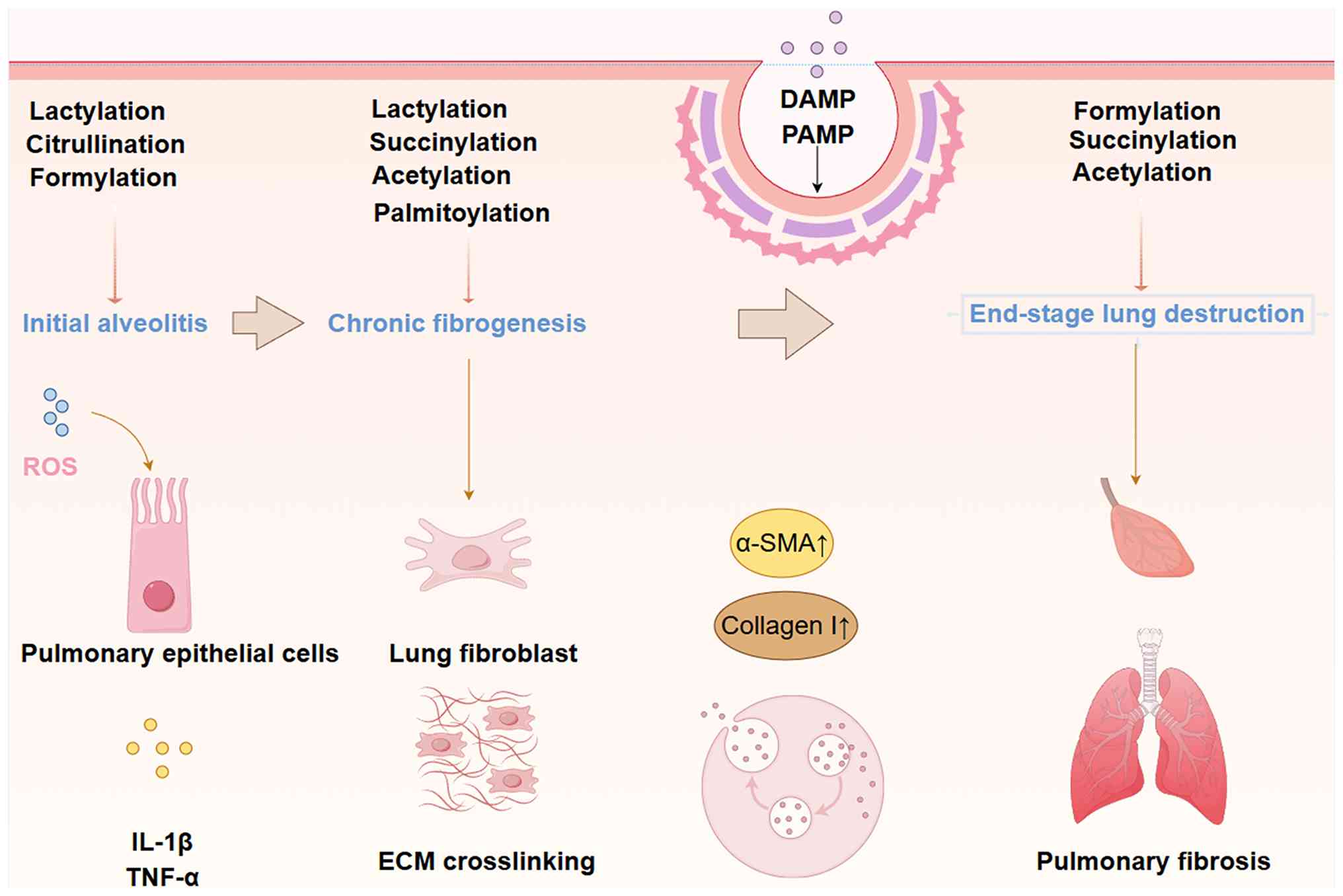
IPF progression proceeds through three
well-characterized sequential phases: Initial alveolitis, chronic
fibrogenesis and end-stage lung destruction (6). The initial alveolitis phase is
defined by alveolar epithelial injury, immune cell infiltration and
sustained activation of pro-inflammatory signaling pathways. The
chronic fibrogenesis phase is marked by aberrant fibroblast
proliferation, fibroblast-to-myofibroblast differentiation and
excessive deposition of extracellular matrix components. The
end-stage phase culminates in diffuse destruction of the lung
parenchyma alongside honeycomb lung remodeling (7). Across the full pathological continuum
of IPF, metabolic reprogramming emerges as a consistent, core
pathological feature. Dysregulated glycolysis, lactate
accumulation, mitochondrial dysfunction and altered acyl-donor
metabolism converge to establish a unique metabolic
microenvironment that dynamically regulates acylation-related
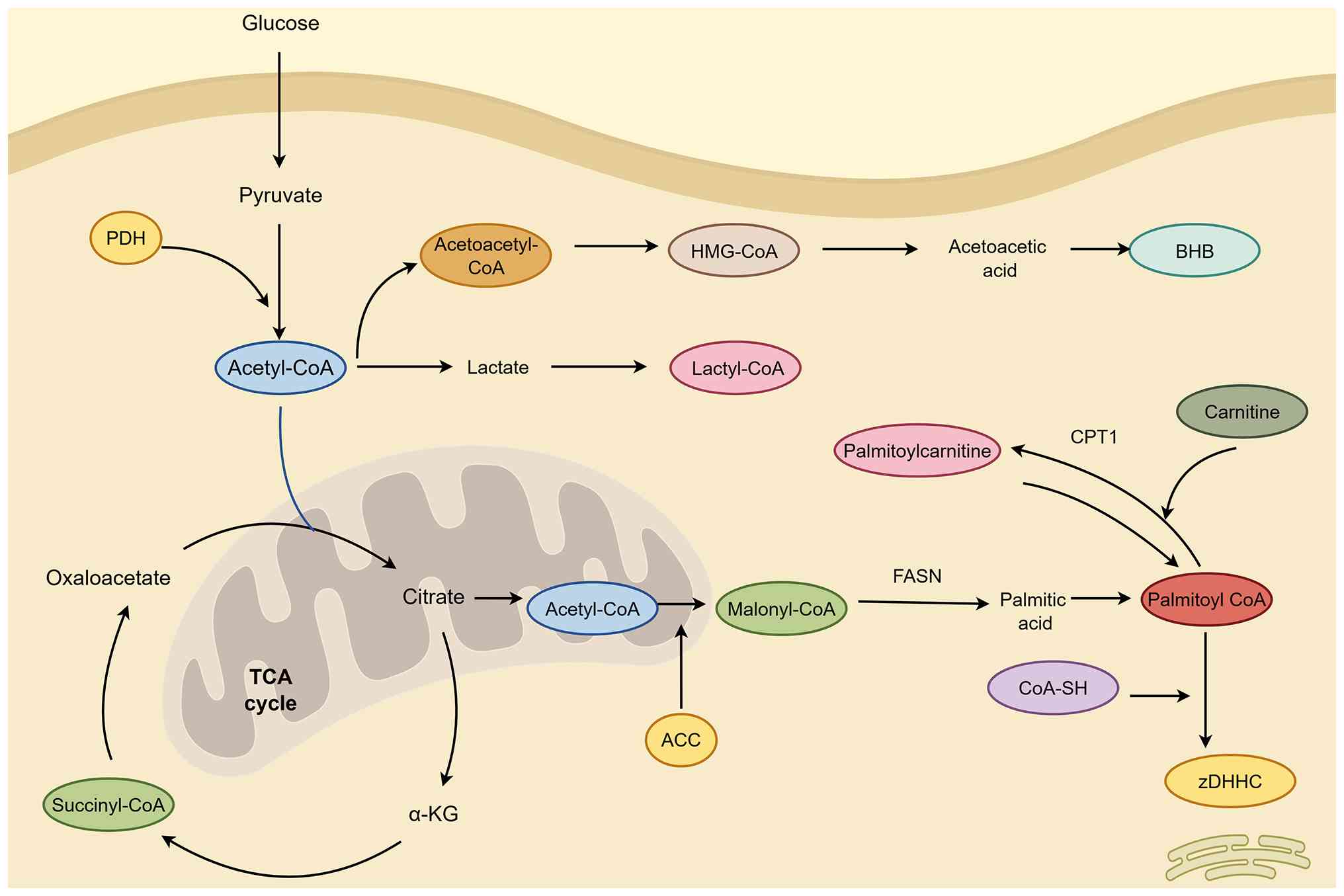
signaling networks across all stages of IPF progression (8). Table
I further delineates the stage-specific predominance of
different acylation modifications. Lactylation, citrullination and
formylation predominate during initial alveolitis, consistent with
innate immune activation and pro-inflammatory signaling. Chronic
fibrogenesis is characterized by the predominance of lactylation,
succinylation, acetylation and palmitoylation, which coordinate
fibroblast activation, myofibroblast differentiation and ECM
deposition. End-stage lung destruction is characterized by
formylation, succinylation and acetylation, which are associated
with irreversible parenchymal remodeling and functional loss. Thus,
the acylation landscape is dynamically reconfigured throughout IPF
progression (Fig. 1) (9).
Post-translational modifications (PTMs) act as core
regulators of protein function and form a direct molecular link
between metabolic dysregulation in IPF and the establishment of the
fibrotic phenotype (9). Among the
IPF-associated PTMs, reversible lysine acylations, such as
acetylation, succinylation, lactylation and β-hydroxybutyrylation,
are directly governed by intracellular metabolite availability and
have attracted increasing attention in fibrosis research. These
modifications use acyl-CoA species as acyl donors. Other PTMs
discussed herein, including S-palmitoylation, citrullination and
formylation, are not classical lysine acylations but likewise
contribute to fibrotic signaling (9–11).
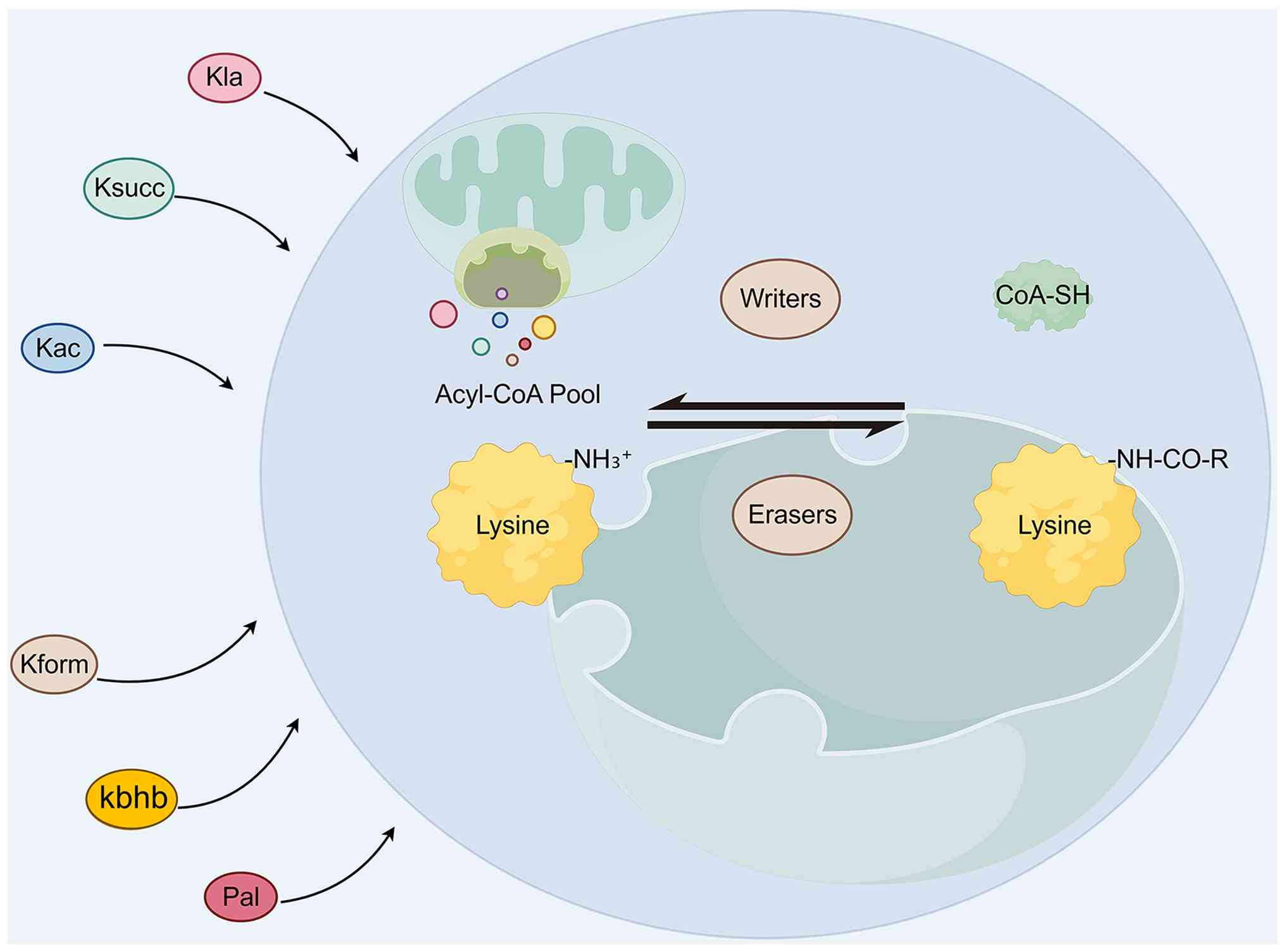
Acyl groups are conjugated to lysine residues of target proteins by
acyltransferases (writers) and removed by deacylases (erasers),
including HDACs and SIRTs. This applies to reversible lysine
acylations such as acetylation, succinylation, lactylation and
β-hydroxybutyrylation, but not to S-palmitoylation, citrullination
or formylation (Fig. 2) (12). Within the IPF pathological
microenvironment, metabolic reprogramming drives shifts in the
abundance of discrete acyl-CoA species, which drive widespread
alterations in acylation profiles across both histone and
non-histone proteins (9). These
acylation-modified proteins directly regulate core IPF pathological
processes, including aberrant fibroblast activation and alveolar
epithelial cell dysfunction, via regulation of pro-fibrotic gene
transcription, dysregulation of TGF-β signaling cascades, and
disruption of mitochondrial homeostatic control (9).
Most published studies to date have centered on
individual acylation marks in discrete pathological contexts, with
the majority of associated analyses relying on static observations
captured at single time points (9,13,14).
This body of work has not yielded a clear understanding of how
acylation modification profiles shift dynamically across the
inflammatory, fibrogenic and end-stage phases of IPF (9). It remains undefined how distinct
acylation events, derived from a shared pool of metabolic
intermediates, mediate coordinated crosstalk to form stage-specific
regulatory networks that ultimately govern IPF progression
(9).
The present review provides a systematic summary of
acylation modifications in the setting of IPF, including
lactylation, succinylation, acetylation, β-hydroxybutyrylation,
palmitoylation, citrullination and formylation. The metabolic
origins, writer and eraser enzymes, and core modification sites of
these modifications are summarized in Table II. The present review details the
functional roles of these acylation modifications in core IPF
pathological processes, and examines the interconnections between
individual modification events, with a focus on shared metabolic
precursors, enzymatic crosstalk and synergistic regulatory effects.
The present review evaluates the therapeutic potential of targeting
key modifying enzymes or specific acylation states, with the dual
aims of establishing an integrated framework for understanding IPF
pathobiology and informing the development of targeted therapeutics
for pulmonary fibrosis.
Metabolic reprogramming is a hallmark of IPF
pathogenesis. Specific acylation modifications, including
lactylation, succinylation, acetylation and β-hydroxybutyrylation,
act as direct sensors of shifts in the metabolic environment
(15). These modifications tune
downstream protein function and modulate fibrogenesis, exemplified
by H3K18la-driven M1 macrophage polarization and mitophagy
impairment and ITGB1 K238 hyper-succinylation-induced alveolar
epithelial senescence via ITGB1/STAT3 (16–18).
These four modifications are classified as energy
metabolism-sensing and effector acylations, based on their direct
link to the cellular metabolic state (19). Collectively, they form an
integrated regulatory network that links diverse metabolic inputs
(glycolysis, the tricarboxylic acid cycle and ketogenesis) to
coordinated functional outputs, including epigenetic reprogramming,
mitochondrial quality control and antioxidant defense. The dynamic
balance of this network is orchestrated by shared acyl-CoA pools
and SIRT-mediated deacylase activities, and its perturbation
directly fuels the profibrotic cascade in IPF (Fig. 3) (8,20,21).
Lactylation contributes to endothelial-mesenchymal
transition and vascular remodeling in endothelial cells through
upregulation of genes such as insulin-like growth factor binding
protein 7 and chaperonin containing TCP1 subunit 2 (28). This modification competes with
other lysine acylations. Specific lysine residues, such as H3K18,
serve as substrates for alternative acetylation or succinylation,
and the competitive occupancy of these sites modulates chromatin
activity and transcriptional output (26). SIRT3, a deacetylase that also
exhibits delactylase and desuccinylase activities, functions as a
central integrator responsive to cellular metabolic status and
balances these modifications (26). Pyruvate generated from glycolysis
not only supplies the precursor for lactate production but also
enters mitochondria to support acetyl-CoA synthesis or influences
succinyl-CoA pools through anaplerotic pathways. Such metabolic
coupling effectively integrates distinct acylation systems into a
coordinated regulatory network (29).
Beyond histones, lactylation directly modulates
non-histone proteins to regulate proteostasis, enzymatic activity
and signal transduction in IPF. Lactylation of the transcription
factor Snail1 at lysine residues impedes its ubiquitin-proteasome
degradation, stabilizes the protein and potentiates its
transcriptional repression of E-cadherin, thereby promoting EMT in
alveolar epithelial cells (30).
Lactylation of metabolic enzymes such as pyruvate kinase M2 has
been shown to govern tetramer assembly and catalytic efficiency,
although its precise role in IPF remains to be elucidated (31). Furthermore, lactylation of
signaling adaptors or kinases can modulate phosphorylation cascades
and downstream effector activation, thereby amplifying or
attenuating pro-fibrotic outputs. These non-histone events often
converge with acetylation or succinylation on shared substrates,
constituting a multilayered post-translational code that fine-tunes
cellular responses to metabolic stress (32). Thus, non-histone lactylation
operates as a direct effector arm of metabolic reprogramming,
controlling protein function at multiple levels, including
stability, activity and signaling, and represents a critically
underappreciated regulatory layer in IPF pathogenesis.
Current therapeutic strategies against lactylation
aim to either disrupt lactate biosynthesis or directly modulate the
modification machinery (29,30).
At the upstream metabolic level, glucagon-like peptide-1 receptor
agonists suppress glycolytic flux, thereby reducing lactate
production and limiting the availability of lactate as a substrate
for lactylation (33). At the
direct regulatory level, small-molecule inhibitors of writers (such
as p300/CBP) or activators of erasers (such as SIRT3) are being
developed to reduce pathological lactylation (34). The natural compound wogonoside
illustrates this strategy, exerting antifibrotic effects through a
dual mechanism that simultaneously inhibits Snail1 lactylation and
activates PGC-1α/PTEN induced kinase 1-mediated mitophagy (30). Despite these promising preclinical
findings, clinical translation faces major hurdles: Most enzyme
inhibitors lack sufficient target specificity, there are no
validated biomarkers to monitor modification dynamics in
vivo and targeted delivery to fibrotic lung lesions remains
technically challenging (29).
Table III summarizes the
currently explored therapeutic strategies targeting acylation
modifications in IPF.
Succinylation is a lysine acylation modification
derived from succinyl-CoA, an intermediate of the tricarboxylic
acid cycle (35). Dysregulation of
this modification is closely associated with mitochondrial
dysfunction and metabolic reprogramming observed in IPF (36). Within the fibrotic pulmonary
microenvironment, metabolic disturbances induce alterations in
succinyl-CoA availability, which in turn drive widespread
remodeling of the protein succinylome (37).
A quantitative succinylome analysis of IPF lung
tissue identified 1,964 lysine succinylation sites across 628
proteins, with marked enrichment in mitochondrial metabolic
proteins (675 sites on 124 polypeptides); notable targets included
kynurenine aminotransferase 3, hydroxysteroid 17-β dehydrogenase 8,
glyoxylate and hydroxypyruvate reductase and isocitrate
dehydrogenase [NADP(+)] (37).
This modification landscape exhibits particular enrichment in
mitochondrial metabolic proteins, encompassing 675 sites on 124
polypeptides. Notable targets include key enzymes such as
kynurenine aminotransferase 3, hydroxysteroid 17-β dehydrogenase 8,
glyoxylate and hydroxypyruvate reductase and isocitrate
dehydrogenase [NADP(+)] 2 (37).
Aberrant succinylation of specific substrate
proteins is sufficient to drive key profibrotic processes in the
lung (18). In alveolar epithelial
cells, hyper-succinylation of integrin β1 (ITGB1) at lysine 238
promotes cellular senescence through activation of the ITGB1/STAT3
signaling axis. This aberrant modification results from
downregulation of the desuccinylase SIRT5; restoration of SIRT5
function attenuates ITGB1 succinylation and alleviates the fibrotic
phenotype (18). Beyond ITGB1,
this regulatory mechanism extends to other signaling mediators
(38). For example, STAT1 activity
is tightly regulated by crosstalk between its acetylation and
succinylation, and preclinical work has found that pharmacological
targeting of these STAT1 modifications with geranylgeranylacetone
reduces the fibrotic burden in vivo (38).
At the enzymatic level, overlapping substrate
specificity among deacylases such as SIRT3 enables competitive
interactions between distinct acylation marks. For example, SIRT3
and SIRT5 exhibit overlapping substrate specificity, SIRT3
deacetylates, delactylates and desuccinylates lysine residues,
whereas SIRT5 preferentially removes succinyl, malonyl and glutaryl
groups, enabling direct competition at shared residues such as
VLCAD K507 and MAVS K7 (39). At
the metabolic level, succinyl-CoA and acetyl-CoA pools show tight
metabolic interdependence. Shifts in the abundance of one
metabolite can directly influence the other and shape the global
cellular acylation landscape (38). Accumulation of mitochondrial
acetyl-CoA, for example, may indirectly suppress succinyl-CoA
generation through feedback inhibition of enzymes, including
pyruvate dehydrogenase (36). This
interaction creates dynamic crosstalk between acetylation and
succinylation (40).
Therapeutic strategies designed to target
succinylation focus on restoring modification homeostasis, either
through activation of desuccinylases such as SIRT5 or modulation of
upstream succinyl-CoA metabolism. However, a major limitation of
this approach is the shared substrate specificity of deacylases:
SIRT3, for example, regulates acetylation, succinylation and
lactylation simultaneously, meaning non-selective targeting of this
enzyme could cause widespread, off-target effects across multiple
acylation pathways (18) (Table II).
Dysregulated protein acetylation is a
well-documented epigenetic driver of IPF progression (41). This modification governs gene
transcription and signal transduction through coordinated
modulation of histone and non-histone protein acetylation.
Inhibition of acetylation exerts antifibrotic effects through
crosstalk with other epigenetic marks and facilitation of an open
chromatin configuration (42).
Combined inhibition of hypoxia-inducible factor-1α and GSK-3β has
been shown to reverse TGF-β1-induced endothelial-to-mesenchymal
transition in vitro and attenuate pathological injury in
murine models of pulmonary fibrosis (43). At the non-histone level,
acetylation of STAT1 precisely modulates its transcriptional
activity (44). Activation of the
mitochondrial deacetylase SIRT3 reduces acetylation of p53,
promoting nuclear export of this transcription factor and enhancing
glutathione synthesis. This cascade ultimately suppresses
ferroptosis in alveolar epithelial cells, contributing to an
antifibrotic effect (45).
Within the integrated acylation regulatory network,
acetylation acts as a central signaling hub, and its crosstalk with
other acyl modifications is essential for coordinating the overall
functional output of the network. On one level, acetylation
directly competes with lactylation and succinylation for the same
lysine residues on histones; this competition is a core mechanism
for cellular integration of metabolic signals to fine-tune gene
transcription (9). On another
level, the ‘writers’ and ‘erasers’ of acetylation often possess
broad substrate specificity, enabling them to regulate other
acylation events and establish functionally antagonistic or
synergistic relationships (41,46,47).
Targeting the acetylation machinery has emerged as a
promising therapeutic strategy for pulmonary fibrosis, with most
preclinical work focusing on HDAC inhibitors (48,49).
The broad-spectrum HDAC inhibitor vorinostat shows combined
antifibrotic and anti-inflammatory properties, suppressing
TGF-β1-induced myofibroblast differentiation, promoting apoptosis
of fibrotic cells and downregulating genes involved in collagen
biosynthesis (50). Notably,
however, the efficacy of HDAC inhibitors is highly model- and
context-dependent, and their broad-spectrum activity can cause
unintended off-target effects, including paradoxical upregulation
of pro-inflammatory genes that limit their clinical utility
(51). In summary, acetylation
acts as the core signaling hub of the acylation regulatory network
in IPF, with its dual roles in epigenetic and non-histone protein
regulation making it a double-edged sword for therapeutic
intervention.
β-hydroxybutyrylation is a recently identified
lysine acylation modification derived from β-hydroxybutyrate (BHB),
a ketone body produced predominantly during fasting or ketogenic
states (52). BHB is metabolized
to β-hydroxybutyryl-CoA, which serves as the acyl donor for this
modification. Although the specific writers and erasers of
β-hydroxybutyrylation have not yet been definitively identified,
emerging evidence suggests that this modification is dynamically
regulated and responds to shifts in systemic ketone body metabolism
(53).
In the context of pulmonary fibrosis,
β-hydroxybutyrylation exerts protective effects primarily through
suppression of ferroptosis in alveolar epithelial cells (54,55).
BHB treatment has been shown to reduce lipid peroxidation and
mitochondrial oxidative stress, thereby preserving alveolar
epithelial integrity and attenuating bleomycin-induced fibrotic
remodeling (54). Mechanistically,
this anti-ferroptotic function converges with acetylation-mediated
suppression of ferroptosis through the SIRT3/p53 axis, as both
pathways operate by enhancing cellular antioxidant capacity. This
convergence suggests that distinct upstream regulatory events,
ketone body metabolism vs. acetyl-CoA flux, may coordinate through
shared downstream effector mechanisms to reinforce protective
responses against fibrotic injury (54).
Therapeutic interventions aimed at augmenting
β-hydroxybutyrylation include exogenous BHB administration,
implementation of a ketogenic diet and modulation of gut microbiota
composition to enrich for 3-hydroxybutyrate-producing bacterial
strains (56). Direct targeting of
downstream effector proteins, such as pharmacological activation of
glutathione peroxidase 4 or inhibition of indoleamine
2,3-dioxygenase 1, also represents a viable therapeutic approach
(57,58). Together, these strategies offer
promising avenues for treating pulmonary fibrosis by harnessing
this protective modification pathway (Table III). Overall,
β-hydroxybutyrylation exerts mitochondria-protective and
antifibrotic effects in IPF, offering a metabolically targeted
strategy to alleviate alveolar epithelial injury.
Collectively, metabolite-driven acylation
modifications, including lactylation, succinylation, acetylation
and β-hydroxybutyrylation, form an integrated regulatory network in
IPF. These modifications engage in extensive crosstalk through
competition for shared lysine residues and common eraser enzymes,
such as SIRT3, thereby coordinately regulating histone and
non-histone proteins, and modulating inflammation, mitochondrial
homeostasis and fibrotic progression. Such competitive occupancy
poses a major therapeutic challenge, as targeting a single
acylation type or enzyme may trigger compensatory network-wide
remodeling and compromise antifibrotic efficacy. Although
strategies targeting individual modifications or enzymes, such as
HDAC inhibition and SIRT5 activation, have shown preliminary
therapeutic promise, limited enzyme specificity, a lack of dynamic
biomarkers and challenges in lesion-targeted delivery remain major
barriers to clinical translation (59–61).
In addition to their well-defined roles in sensing
and mediating the metabolic state, several acylation modifications
drive IPF pathogenesis via regulation of core cellular processes
(53). These processes include
protein membrane trafficking, regulation of protein stability and
intracellular signal transduction (19).
Protein S-palmitoylation is a reversible, dynamic
PTM catalyzed by zinc finger DHHC domain-containing
palmitoyltransferases (zDHHCs) (62). This modification enables precise
control over protein membrane trafficking, stability and signal
transduction through covalent attachment of palmitoyl groups to
specific cysteine residues (63).
In the context of pulmonary fibrosis, specific members of the zDHHC
family exhibit upregulation, leading to aberrant palmitoylation of
key profibrotic proteins and subsequent amplification of fibrotic
signaling cascades (64). For
example, aberrant palmitoylation of metal transporters is a
critical upstream event that initiates profibrotic signaling in the
lung. Zinc transporter 14 (ZIP14) and zinc transporter 1 (ZNT1),
which serve as key substrates for zDHHC family members, show
enhanced membrane localization and transport capacity after
palmitoylation. This modification facilitates cellular uptake of
environmental toxins such as cadmium, establishing a
microenvironment conducive to fibrotic signaling (64). Within the TGF-β pathway,
palmitoylation is extensively integrated into the fibrotic cascade.
Upstream components, including fibrillin-1 and integrin α-5,
undergo palmitoylation, which promotes maturation and release of
the TGF-β precursor. Downstream signal transduction is enhanced
through modification of cytoskeletal proteins, including
desmoplakin and vimentin, ultimately driving myofibroblast
differentiation (64). Aberrant
palmitoylation further amplifies fibrotic responses by suppressing
degradation of the autophagy substrate p62, leading to enhanced
release of pro-inflammatory cytokines (65).
Although palmitoylation targets cysteine residues
rather than the lysine sites modified by other acylations, these
two classes of modification display substantial functional
interplay (66). Through
regulation of the TGF-β signaling pathway, palmitoylation governs
the activity and membrane localization of key receptors and
signaling mediators, including TGFβR1and Smad7 (67). This provides critical upstream
input that influences subsequent lysine acylation events on
transcription factors and metabolic enzymes. Additionally,
palmitoylation of zinc transporters modulates intracellular zinc
homeostasis, which indirectly affects the function of numerous
zinc-dependent proteins and establishes potential points of
coupling with the lysine acylation network (68).
In preclinical cellular models, the broad-spectrum
zDHHC inhibitor 2-bromopalmitate markedly reduces palmitoylation of
ZIP14, ZNT1 and TGF-β pathway proteins, inhibiting cadmium uptake
and downregulating pro-fibrotic gene expression (64). The development of
substrate-specific targeting strategies is another promising
direction. Selective inhibition of key zDHHC isoforms, such as
zDHHC5 and zDHHC11, may enable precise blockade of pro-fibrotic
signaling while minimizing off-target effects (69). Additionally, selenium
supplementation has been shown to indirectly suppress fibrotic
signaling through downregulation of zDHHC11 expression, suggesting
potential utility in combination therapeutic approaches (Table III) (70). In summary, aberrant palmitoylation
contributes to IPF progression by regulating membrane protein
localization, metal homeostasis and TGF-β signaling, while
interacting with other acylation modifications to form a complex
regulatory network. Based on this, modulation of aberrant
palmitoylation may provide a potential new therapeutic direction
for IPF.
In the IPF alveolar microenvironment, persistent
innate immune activation driven by damage-associated molecular
patterns is a key driver of fibrogenesis (71,72).
The aberrant activation of specific enzymes frequently underlies
associated protein modifications, including citrullination. By
modulating the function of both histone and non-histone proteins,
these modifications reshape innate and adaptive immune responses in
the lung, creating a self-amplifying feedforward loop that
exacerbates tissue injury (73).
Citrullination is a PTM in which peptidylarginine
deiminase (PAD) enzymes convert arginine residues to citrulline
(74). This modification is a
critical regulatory mechanism in the pathogenesis of both
rheumatoid arthritis-associated interstitial lung disease (RA-ILD)
and IPF (75). PAD4 expression is
upregulated in bronchoalveolar lavage fluid cells isolated from
>80% of patients with RA-ILD and IPF. PAD2 expression exhibits a
close association with smoking history and remains persistently
elevated in lung tissue from smokers (76). These findings define the enzymatic
basis for increased citrullination in IPF. They also directly link
environmental risk factors, including smoking, to dysregulation of
this modification pathway.
Citrullination drives pulmonary fibrosis primarily
by promoting the formation of neutrophil extracellular traps
(NETs), which in turn amplify inflammatory responses and drive
immune dysregulation in the fibrotic lung (77). Histone citrullination catalyzed by
PAD4 is an essential step in NET release (78). The extruded NETs directly injure
alveolar epithelial cells while simultaneously presenting
inflammatory mediators that recruit additional immune populations
and facilitate fibroblast activation (79). Citrullinated substrates and their
corresponding autoantibodies can activate the NF-κB pathway,
further potentiating pro-fibrotic signaling. PAD2-mediated
citrullination of marginal zone B and B1 cell-specific protein
disrupts mucosal immune homeostasis by affecting IgM and IgA
secretion, and local deposition of immune complexes may trigger
complement activation, exacerbating tissue damage (80,81).
Smoking is a major risk factor for IPF and can upregulate PAD2 and
PAD4 expression, thereby enhancing protein citrullination in the
lung parenchyma and promoting NET formation and immune
dysregulation. This aberrant citrullination may contribute to a
vicious cycle of tobacco exposure, PAD activation, and pulmonary
fibrosis, linking environmental exposure to IPF progression
(76,82).
Therapeutic strategies directed at citrullination
primarily involve inhibition of PAD enzyme activity (83). These approaches encompass both
pan-PAD inhibitors, such as Cl-amidine, and isoform-selective
compounds, including the PAD4-specific inhibitor GSK484 and the
PAD2-selective inhibitor AFM-30a, all designed to reduce
citrullination levels and suppress NET formation (84–86).
Agents capable of degrading existing NETs, such as DNase I,
function through enzymatic cleavage of the DNA scaffolding that
maintains NET structure (87).
Developing neutralizing antibodies against pathogenic citrullinated
epitopes is another promising therapeutic avenue, while repurposing
clinically approved antifibrotics such as nintedanib to target this
pathway represents an important complementary research direction
(88,89).
Formylation is a PTM that can mediated by methionine
formyltransferase and lysine formyltransferase, both of which are
upregulated in lung tissue and primary fibroblasts from patients
with IPF and RA-ILD (90–92). This modification regulates
substrate function through covalent attachment of a formyl group to
either the N-terminal methionine residue or internal lysine
residues of target proteins (93).
Dysregulated formylation promotes fibrotic
progression through several distinct, non-redundant mechanisms.
Specifically, lysine residues in collagen Iα1 can undergo
formylation, enhances intermolecular cross-linking and reduces
susceptibility to proteolytic degradation, thereby promoting
pathological extracellular matrix accumulation. The extent of this
modification is inversely associated with pulmonary function
parameters such as forced vital capacity in affected patients
(92). At the signaling level,
formylation of TNF-α at K65 increases its binding affinity for TNF
receptor 1, leading to NF-κB pathway activation and subsequent
induction of myofibroblast differentiation (94,95).
N-terminal formylation of annexin A1 generates the isoform
N-terminal formylated annexin A1 (fMet-AnxA1), which stimulates
fibroblast proliferation and migration through engagement of formyl
peptide receptor 2 and activation of its downstream PI3K/Akt
signaling cascade (96,97). Meanwhile, K194 of E-cadherin is a
potential site of post-translational modification, and the putative
modification at this site may disrupt intercellular adhesion and
promote EMT (98,99).
Formylation operates in functional conjunction with
other acylation modifications. This modification primarily
influences fibrotic processes within the extracellular milieu
through direct modification of extracellular matrix components and
inflammatory cytokines, whereas most lysine acylations exert their
effects on intracellular proteins (9,100).
The NF-κB and TGF-β signaling cascades activated by formylation
serve as critical upstream regulators of genes encoding enzymes
responsible for intracellular modifications, including acetylation
and lactylation (19,101). Therefore, this functional
coupling links extracellular inflammatory signals to intracellular
acylation network reprogramming, creating a feedforward loop that
amplifies fibrogenesis (102).
Therapeutically, strategies targeting formylation
include inhibiting methionine formyltransferase or lysine
formyltransferase, to reduce fMet-AnxA1 generation or block
collagen type I α1 chain formylation, respectively (102,103). Administration of formyl peptide
receptor 2 (FPR2) antagonists, such as the synthetic hexapeptide
WRW4 (Trp-Arg-Trp-Trp-Trp-Trp-NH2), can attenuate fibrotic
responses through competitive blockade of downstream signal
transduction (104). Development
of neutralizing antibodies targeting specific formylation sites is
also a promising approach, with the potential for highly selective
intervention (92,105).
Beyond formylation, environmental insults,
particularly cigarette smoking and cadmium exposure, exert profound
influences on the pulmonary metabolic microenvironment, thereby
eliciting broad-spectrum alterations in the lysine acylation
landscape. Cigarette smoking upregulates PAD2 and PAD4 expression
while suppressing the NAD+-dependent deacetylase SIRT1
through oxidant-mediated inactivation and proteasomal degradation,
leading to hyperacetylation of substrates, including RelA/p65 and
FOXO3 (106,107). Cadmium, a toxic heavy metal found
in cigarette smoke, downregulates histone H3 lysine 9
acetylation/serine 10 phosphorylation (H3K9acS10ph) and histone H4
lysine 5, 8 and 12 acetylation (H4K5ac, H4K8ac and H4K12ac),
suppresses histone H3 acetylation at the lysyl oxidase gene
promoter and potentiates protein S-palmitoylation via
zDHHC11-mediated mTOR complex 1 activation (64,108–111). Furthermore, cadmium induces
secretion of citrullinated vimentin through an Akt1- and
PAD2-dependent mechanism, which activates Toll-like receptor
4/NF-κB signaling and promotes TGF-β1 production, establishing a
feedforward loop that amplifies both inflammatory and fibrotic
responses (73). Collectively,
these observations establish a coherent pathogenic framework:
Environmental exposures perturb cellular metabolism, altering
glycolytic flux, mitochondrial redox homeostasis,
NAD+/NADH balance and acyl-CoA precursor availability,
which in turn remodels the activities of acylation-modifying
enzymes and reshapes the substrate pools for lysine acylation
reactions, ultimately driving a coordinated reprogramming of the
acylation network that sustains fibrogenesis (15,112). Thus, environmental factors and
metabolic dysregulation constitute an integrated pathogenic axis
that links external insults to the core post-translational
machinery of IPF.
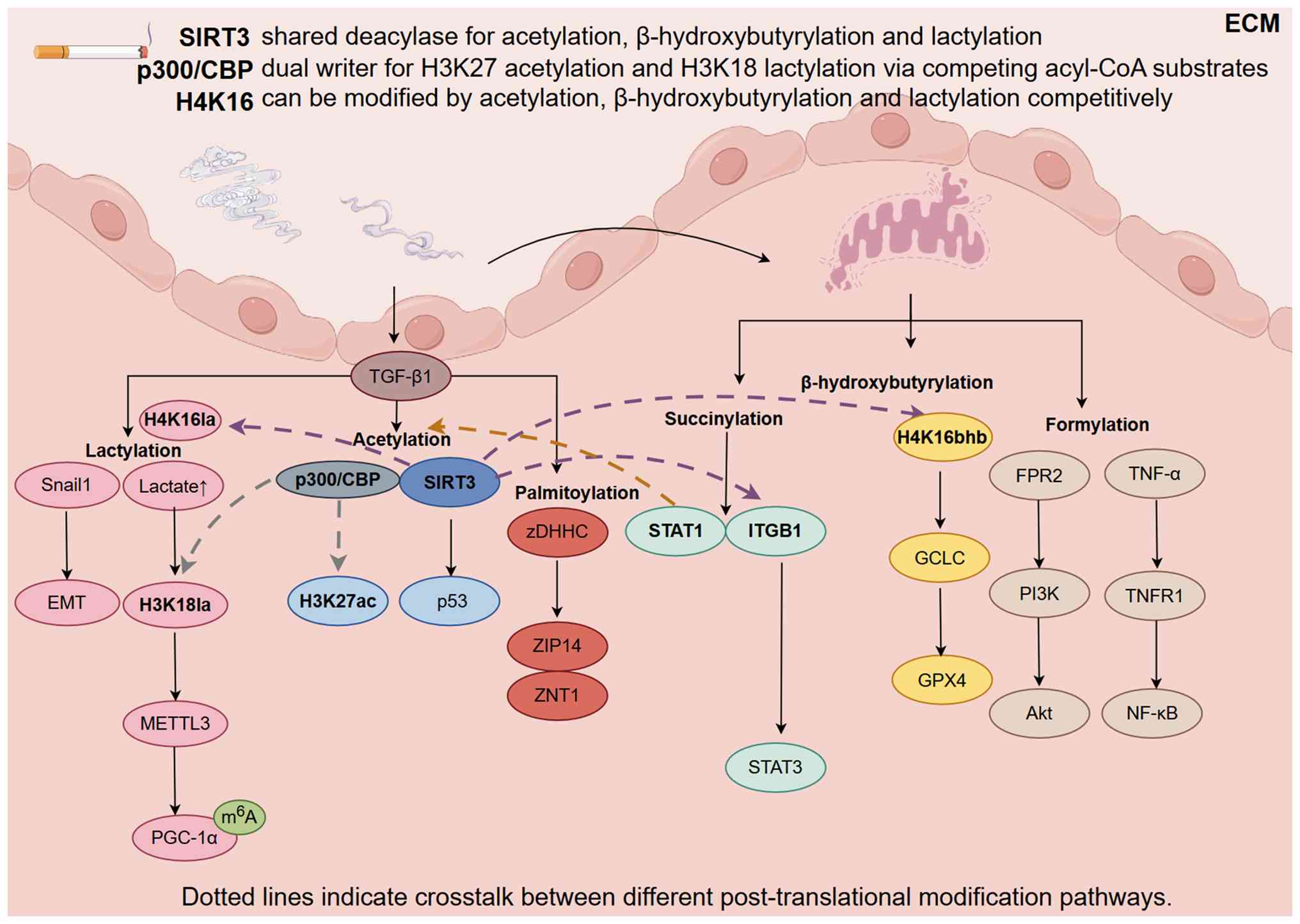
It is now clear that the various acylation
modifications do not act in isolation, but instead form a dynamic,
interconnected regulatory network with extensive crosstalk and
functional overlap (Fig. 4). SIRT3
acts as an eraser of both H4K16 lactylation and
β-hydroxybutyrylation. Since these two acyl modifications compete
for the same lysine residue, fluctuations in cellular acyl-CoA
pools can alter their relative abundance, thereby establishing
crosstalk between the two acylation marks and modulating
pro-fibrotic gene transcription (113,114). p300/CBP possesses both
acetyltransferase and lactyltransferase activities. Increased
glycolytic flux promotes lactyl-CoA accumulation, which may compete
with acetyl-CoA for the catalytic pocket of p300, thereby shifting
histone modification from acetylation toward lactylation and
contributing to the reprogramming of pro-inflammatory transcription
in macrophages (115). Metabolic
reprogramming governs this network through coordinated modulation
of shared precursor pools and the activities of modifying enzymes
(60). This coordinated regulation
of multiple acylation pathways gives rise to higher-order
regulatory modules that function in concert to shape the fibrotic
phenotype (116). The
desuccinylase SIRT3, for example, has been identified as a key
eraser for histone H3K18la, demonstrating that perturbation of a
single node can propagate widespread effects throughout the network
(26). Deciphering the mechanisms
that govern cross-modification crosstalk thus remains essential for
the development of therapeutic strategies aimed at restoring
homeostatic equilibrium within the acylation network.
The competitive occupancy of shared lysine residues
by distinct acyl modifications, acetylation, succinylation and
lactylation, poses a fundamental challenge for therapeutic
intervention. This competitive dynamic precludes a simple ‘one
modification, one function’ paradigm, as the functional outcome
depends on the dynamic equilibrium among competing modifications
rather than on any single mark. Selective inhibition of one
acyltransferase or activation of one deacylase may inadvertently
shift the equilibrium toward alternative, potentially pathogenic,
acylation states on the same substrate (19,117). The functional pleiotropy of
central regulators, such as SIRT3, which exerts deacetylase,
desuccinylase and delactylase activities, further compounds this
complexity: Pharmacological modulation of such a multifunctional
node can propagate unintended consequences across multiple
acylation circuits simultaneously (113,117). Addressing this challenge
necessitates a paradigm shift from single modification-focused
approaches toward combinatorial regimens that co-target converging
nodes within the network, with restoration of global acylation
homeostasis as the therapeutic endpoint.
Work on acylation-targeted therapies has moved well
beyond the classical p300/CBP and SIRT/HDAC enzyme families and has
identified a wide range of novel, highly specific regulatory nodes
for therapeutic intervention (118). This progress includes
identification of lysine lactyltransferases and their corresponding
deacylases, which offer novel opportunities for the development of
selective inhibitors (119). In
the succinylation field, therapeutic strategies now extend beyond
modulation of the desuccinylase SIRT5 (120). Small-molecule regulators
targeting upstream metabolic enzymes, including succinyl-CoA
synthetase, offer alternative approaches to achieve precise control
of local precursor pools (121).
For S-palmitoylation, allosteric inhibitors of membrane-localized
depalmitoylases enable spatiotemporally specific modulation of
substrate depalmitoylation (122). β-hydroxybutyrylation is
considered to be catalyzed by a novel class of short-chain
acyltransferases, whose unique enzymatic properties may enable the
design of precision tools for metabolic intervention in IPF
(119).
The coordinated regulation of metabolic enzymes and
modification enzymes is a distinct emerging frontier in therapeutic
development (123). Inhibition of
phosphoglycerate dehydrogenase, for instance, disrupts flux through
the serine metabolic pathway and subsequently reduces
NAD+ availability (124). This decline in NAD+
levels selectively attenuates the catalytic activity of
NAD+-dependent SIRTs SIRT1 and SIRT2 while leaving other
family members such as SIRT3 and SIRT5 largely unaffected (125). These findings highlight a key
shift in next-generation antifibrotic drug discovery: Moving away
from non-selective broad-spectrum inhibition toward the rational
design of precision small molecules that target tissue- or
pathway-specific regulatory nodes (126).
To circumvent the key limitations of broad-spectrum
enzyme inhibition, an emerging strategy for precision antifibrotic
therapy is to directly target substrate proteins in a manner that
depends on their acylation state (19,127). This approach integrates chemical
proteomics with structure-guided drug design to enable selective
targeting of pathologically relevant modified protein states
(128). Small-molecule allosteric
modulators (forsythoside E) engineered to recognize the
β-hydroxybutyrylated form of lysine 311 on pyruvate kinase M2, for
instance, can precisely modulate its tetramerization dynamics and
metabolic flux. This type of intervention can selectively reverse
aberrant metabolic reprogramming in macrophages, without disrupting
the basal activity of the enzyme in homeostatic conditions
(129). Similarly, competitive
inhibitory peptides that mimic S-palmitoylation could potentially
be designed in the future to interfere with the membrane
localization and endocytosis of TGF-β receptors, thereby
effectively blocking downstream profibrotic signaling (64).
The advancement of such strategies depends
critically on elucidation of the intrinsic relationships linking
modification state, protein conformation and functional outcome at
atomic resolution (130).
Building on this principle, contemporary research efforts
increasingly concentrate on development of antibody-based
therapeutics directed against conformational epitopes that are
uniquely presented by modified substrates. Monoclonal antibodies
targeting a neo-antigenic epitope generated upon annexin A1
formylation, for example, have demonstrated the capacity to block
receptor engagement and attenuate inflammatory infiltration in
preclinical models (131). These
highly targeted approaches offer a promising alternative to
conventional enzyme inhibition, enabling selective modulation of
protein function without disrupting global acylation homeostasis
(132).
The present review systematically summarizes the
roles of diverse protein acylation modifications in IPF, outlining
their core molecular mechanisms, pathological functions and
therapeutic potential. The current review also presents a
comprehensive analysis of the integrated regulatory networks formed
by these modifications, clarifying their distinct and overlapping
roles in driving IPF pathogenesis.
Going forward, key studies will need to employ
spatiotemporal multi-omics approaches, including single-cell
acylation profiling, spatial proteomics and time-series
metabolomics, to map these dynamic changes. The goal is to achieve
precise mapping of the dynamic acylation landscape across defined
cellular populations and sequential phases of IPF progression.
These efforts should prioritize resolution of several fundamental
scientific questions. These include: i) The principles governing
allocation of shared metabolite pools among competing modification
pathways and the determinants of modification specificity; ii) the
molecular mechanisms by which the pathological microenvironment
modulates substrate selectivity and catalytic activity of
multifunctional enzymes such as SIRT3; and iii) the integrated
functional consequences arising from competitive, cooperative or
sequential modifications on individual protein substrates.
The main challenges in the field currently include
enhancing inhibitor selectivity and improving tissue-specific
targeting, while mitigating the network-level compensatory
responses that may arise from single-node intervention. A central
opportunity lies in exploiting a more comprehensive understanding
of network logic to design combination regimens that coordinately
regulate metabolic flux and critical enzyme activities. Development
of intelligent nanoscale delivery systems capable of responding to
pathological metabolic cues is another promising direction,
potentially enabling precise spatiotemporal intervention at sites
of active fibrosis. Ultimately, shifting the therapeutic paradigm
from single-target modulation to restoring the homeostatic balance
of the entire acylation regulatory network may support the
development of disease-modifying therapies for IPF and other
progressive fibrotic diseases.
Not applicable.
The present study was supported by the International Clinical
Research Center of Chengdu Medical College (grant no.
25LHGJ2-11).
Not applicable.
ML, ZY and BP contributed to conceptualization,
data curation and writing the original draft. FY, YZ, MY, MW and RZ
contributed to data curation and editing of the manuscript. SL and
YH contributed to conceptualization, and reviewed and edited the
manuscript. All authors have read and approved the final version of
the manuscript. Data authentication is not applicable.
Not applicable.
Not applicable.
The authors declare that they have no competing
interests.
|
1
|
Wells AU, Brown KK, Flaherty KR, Kolb M
and Thannickal VJ; IPF Consensus Working Group, : What's in a name?
That which we call IPF, by any other name would act the same. Eur
Respir J. 51:18006922018. View Article : Google Scholar : PubMed/NCBI
|
|
2
|
Tsukui T, Wolters PJ and Sheppard D:
Alveolar fibroblast lineage orchestrates lung inflammation and
fibrosis. Nature. 631:627–634. 2024. View Article : Google Scholar : PubMed/NCBI
|
|
3
|
Macisaac S, Somboonviboon D, Scallan C and
Kolb M: Treatment of idiopathic pulmonary fibrosis: An update on
emerging drugs in phase II & III clinical trials. Expert Opin
Emerg Drugs. 29:177–186. 2024. View Article : Google Scholar : PubMed/NCBI
|
|
4
|
Raghu G, Remy-Jardin M, Richeldi L,
Thomson CC, Inoue Y, Johkoh T, Kreuter M, Lynch DA, Maher TM,
Martinez FJ, et al: Idiopathic pulmonary fibrosis (an Update) and
progressive pulmonary fibrosis in adults: An official
ATS/ERS/JRS/ALAT clinical practice guideline. Am J Respir Crit Care
Med. 205:e18–e47. 2022. View Article : Google Scholar : PubMed/NCBI
|
|
5
|
Zhou J, An X, Xia X, Xiao W, Dou D, Li W
and Huang Q: Aging-associated interleukin-11 drives the molecular
mechanism and targeted therapy of idiopathic pulmonary fibrosis.
Eur J Med Re. 30:5422025. View Article : Google Scholar : PubMed/NCBI
|
|
6
|
Wang Q, Xie Z, Wan N, Yang L, Jin Z, Jin
F, Huang Z, Chen M, Wang H and Feng J: Potential biomarkers for
diagnosis and disease evaluation of idiopathic pulmonary fibrosis.
Chin Med J (Engl). 136:1278–1290. 2023. View Article : Google Scholar : PubMed/NCBI
|
|
7
|
Moss BJ, Ryter SW and Rosas IO: Pathogenic
mechanisms underlying idiopathic pulmonary fibrosis. Annu Rev
Pathol. 17:515–546. 2022. View Article : Google Scholar : PubMed/NCBI
|
|
8
|
Zhou Y, Zhang Y, Huang S, Pan X, Zhao M,
Guo Y, Wang Y, Cong X, Li B, Liu H, et al: Energetic metabolic
reprogramming in idiopathic pulmonary fibrosis: Mechanisms and
therapeutics. J Mol Cell Biol. mjag0062026.doi:
10.1093/jmcb/mjag006 (Epub ahead of print). View Article : Google Scholar : PubMed/NCBI
|
|
9
|
Li Y, Kong W, Zhang H, Wei X, Yi J, Wang
M, Jin S and Yu D: Reprogramming Fibrosis: How protein PTMs reshape
the IPF proteome. Genes (Basel). 16:13922025. View Article : Google Scholar : PubMed/NCBI
|
|
10
|
Kalafatis D, Joshua V, Hansson M,
Mathsson-Alm L, Hensvold A and Sköld M: Presence of anti-modified
protein antibodies in idiopathic pulmonary fibrosis. Respirology.
28:925–933. 2023. View Article : Google Scholar : PubMed/NCBI
|
|
11
|
Raju C and Sankaranarayanan K: Insights on
post-translational modifications in fatty liver and fibrosis
progression. Biochim Biophys Acta Mol Basis Dis. 1871:1676592025.
View Article : Google Scholar : PubMed/NCBI
|
|
12
|
Wang ZA and Cole PA: The chemical biology
of reversible lysine Post-translational modifications. Cell Chem
Biol. 27:953–969. 2020. View Article : Google Scholar : PubMed/NCBI
|
|
13
|
Liu B, Kang D, Zhang J, Wang Y, Li R, Lv
C, Zhai N, Song X, Zhang S and Li H: HDAC8-mediated CAPZB
desuccinylation enhances cytoskeleton remodeling to promote
idiopathic pulmonary fibrosis. Commun Biol. 9:9042026. View Article : Google Scholar : PubMed/NCBI
|
|
14
|
Jiang N, Li W, Jiang S, Xie M and Liu R:
Acetylation in pathogenesis: Revealing emerging mechanisms and
therapeutic prospects. Biomed Pharmacother. 167:1155192023.
View Article : Google Scholar : PubMed/NCBI
|
|
15
|
Bueno M, Calyeca J, Rojas M and Mora AL:
Mitochondria dysfunction and metabolic reprogramming as drivers of
idiopathic pulmonary fibrosis. Redox Biol. 33:1015092020.
View Article : Google Scholar : PubMed/NCBI
|
|
16
|
Zhang D, Tang Z, Huang H, Zhou G, Cui C,
Weng Y, Liu W, Kim S, Lee S, Perez-Neut M, et al: Metabolic
regulation of gene expression by histone lactylation. Nature.
574:575–580. 2019. View Article : Google Scholar : PubMed/NCBI
|
|
17
|
Tang R, Qin S, Xu Q, Lin W, Zhang S, Peng
Y, Feng J, Xing S, Gao Y, Mei S and He Z:
Lipopolysaccharide-induced histone lactylation mediates m6A RNA
modification causing mitochondrial dysfunction and pulmonary
fibroblasts activation to exacerbate sepsis-associated pulmonary
fibrosis. Respir Res. 26:3472025. View Article : Google Scholar : PubMed/NCBI
|
|
18
|
Hou W, Zhao Y, Yang L, Duan C, Li F, Liu
X, Sun W and Gao L: SIRT5-mediated desuccinylation prevents
mitochondrial dysfunction in alveolar epithelial cells senescence
and pulmonary fibrosis. Cell Signal. 132:1118302025. View Article : Google Scholar : PubMed/NCBI
|
|
19
|
Shang S, Liu J and Hua F: Protein
acylation: Mechanisms, biological functions and therapeutic
targets. Signal Transduct Target Ther. 7:3962022. View Article : Google Scholar : PubMed/NCBI
|
|
20
|
Wang Y, Wang X, Du C, Wang Z, Wang J, Zhou
N, Wang B, Tan K, Fan Y and Cao P: Glycolysis and beyond in glucose
metabolism: Exploring pulmonary fibrosis at the metabolic
crossroads. Front Endocrinol (Lausanne). 15:13795212024. View Article : Google Scholar : PubMed/NCBI
|
|
21
|
Ma Y, Chen J, Song R and Yu X: Beyond
deacetylation: Crosstalk mechanisms and context-dependent
regulation of sirtuin non-classical enzymatic functions in disease.
Mol Med. 32:1102026. View Article : Google Scholar : PubMed/NCBI
|
|
22
|
Chen C, Wang J, Zhu X, Zhang S, Yuan X, Hu
J, Liu C, Liu L, Zhang Z and Li J: Lactylation as a metabolic
epigenetic modification: Mechanistic insights and regulatory
pathways from cells to organs and diseases. Metabolism.
169:1562892025. View Article : Google Scholar : PubMed/NCBI
|
|
23
|
Chen S, Wang Y, Zhang J, Liu B, Liu W, Cao
G, Li R, Li H, Zhai N, Song X, et al: YTHDC1 phase separation
drives the nuclear export of m6A-modified lncNONMMUT062668.2
through the transport complex SRSF3-ALYREF-XPO5 to aggravate
pulmonary fibrosis. Cell Death Dis. 16:2792025. View Article : Google Scholar : PubMed/NCBI
|
|
24
|
Finucane OM, Sugrue J, Rubio-Araiz A,
Guillot-Sestier MV and Lynch MA: The NLRP3 inflammasome modulates
glycolysis by increasing PFKFB3 in an IL-1β-dependent manner in
macrophages. Sci Rep. 9:40342019. View Article : Google Scholar : PubMed/NCBI
|
|
25
|
Yang K, Fan M, Wang X, Xu J, Wang Y, Tu F,
Gill PS, Ha T, Liu L, Williams DL and Li C: Lactate promotes
macrophage HMGB1 lactylation, acetylation, and exosomal release in
polymicrobial sepsis. Cell Death Differ. 29:133–146. 2022.
View Article : Google Scholar : PubMed/NCBI
|
|
26
|
Shi L, Zhang L, Ma Z, Hu Z, Geng Z, Liu H,
Wang J, Feng K, Geng Y, Liu Y, et al: H3K18 lactylation drives the
progression of silica nanoparticles-induced pulmonary fibrosis via
promoting macrophage M1 polarization. J Hazard Mater.
496:1392862025. View Article : Google Scholar : PubMed/NCBI
|
|
27
|
Zhao R, Yi Y, Liu H, Xu J, Chen S, Wu D,
Wang L and Li F: RHOF promotes Snail1 lactylation by enhancing
PKM2-mediated glycolysis to induce pancreatic cancer cell
endothelial-mesenchymal transition. Cancer Metab. 12:322024.
View Article : Google Scholar : PubMed/NCBI
|
|
28
|
Wenhao L, Ling H, Wanqing F, Wanrong W,
Chao C and Ran W: IGFBP7 and CCT2 are novel lactylation-driven
mediators of endothelial-to-mesenchymal transition in idiopathic
pulmonary fibrosis. Funct Integr Genomics. 25:2502025. View Article : Google Scholar : PubMed/NCBI
|
|
29
|
Jia Q, Yuan Q, Chen X and Hu Z: Lactate
and lactylation in respiratory diseases: From molecular mechanisms
to targeted strategies. Lung. 203:942025. View Article : Google Scholar : PubMed/NCBI
|
|
30
|
Wu J, Li Y, Yang Y, Chen R, Wang H, Xie K,
Lan J, Guo M, Zhang Y and Li X: Wogonoside inhibits fibroblast
activation and pulmonary fibrosis by dual regulation of Snail1
lactylation and PGC1α/PINK1-mediated mitophagy. Phytomedicine.
147:1572402025. View Article : Google Scholar : PubMed/NCBI
|
|
31
|
Wang J, Yang P, Yu T, Gao M, Liu D, Zhang
J, Lu C, Chen X, Zhang X and Liu Y: Lactylation of PKM2 suppresses
inflammatory metabolic adaptation in Pro-inflammatory macrophages.
Int J Biol Sci. 18:6210–6225. 2022. View Article : Google Scholar : PubMed/NCBI
|
|
32
|
Malik A, Dilawar M, Liao J, Zheng J, Qian
Q, Xu M, Lin S, Zhu X, Ge Q, Jin L and Chen G: Lysine
l-Lactylation: Bridging metabolism, chromatin and disease. Cell
Prolif. 59:e702622026. View Article : Google Scholar : PubMed/NCBI
|
|
33
|
Liu C, Zhang Q, Zhou H, Jin L, Liu C, Yang
M, Zhao X, Ding W, Xie W and Kong H: GLP-1R activation attenuates
the progression of pulmonary fibrosis via disrupting NLRP3
inflammasome/PFKFB3-driven glycolysis interaction and histone
lactylation. J Transl Med. 22:9542024. View Article : Google Scholar : PubMed/NCBI
|
|
34
|
Chen X, Yuan Y, Zhou F, Li L, Pu J, Zeng Y
and Jiang X: Lactylation: From homeostasis to pathological
implications and therapeutic strategies. MedComm. 6:e702262025.
View Article : Google Scholar : PubMed/NCBI
|
|
35
|
Xiong Y, Luo F, Li B and Yang Q:
Succinylation modification in diabetes and diabetic complications:
Mechanisms and functions (review). Mol Med Rep. 33:1492026.
View Article : Google Scholar : PubMed/NCBI
|
|
36
|
Wang L, Yuan H, Li W, Yan P, Zhao M, Li Z,
Zhao H, Wang S, Wan R, Li Y, et al: ACSS3 regulates the metabolic
homeostasis of epithelial cells and alleviates pulmonary fibrosis.
Biochim Biophys Acta Mol Basis Dis. 1870:1669602024. View Article : Google Scholar : PubMed/NCBI
|
|
37
|
Zhao Y, Hou W, Yang L, Chen K, Lang Q, Sun
W and Gao L: Higher mitochondrial protein-Succinylation detected in
lung tissues of idiopathic pulmonary fibrosis patients. J
Proteomics. 314:1054002025. View Article : Google Scholar : PubMed/NCBI
|
|
38
|
Zhang T, Wang Y, Sun Y, Song M, Pang J,
Wang M, Zhang Z, Yang P, Chen Y, Qi X, et al: Proteome, lysine
acetylome, and succinylome identify posttranslational modification
of STAT1 as a novel drug target in silicosis. Mol Cell Proteomics.
23:1007702024. View Article : Google Scholar : PubMed/NCBI
|
|
39
|
Zhang Y, Bharathi SS, Rardin MJ, Uppala R,
Verdin E, Gibson BW and Goetzman ES: SIRT3 and SIRT5 regulate the
enzyme activity and cardiolipin binding of very long-chain acyl-CoA
dehydrogenase. PLoS One. 10:e01222972015. View Article : Google Scholar : PubMed/NCBI
|
|
40
|
Wang Y, Guo YR, Liu K, Yin Z, Liu R, Xia
Y, Tan L, Yang P, Lee JH, Li XJ, et al: KAT2A coupled with the
α-KGDH complex acts as a histone H3 succinyltransferase. Nature.
552:273–277. 2017. View Article : Google Scholar : PubMed/NCBI
|
|
41
|
Li M, Zheng Y, Yuan H, Liu Y and Wen X:
Effects of dynamic changes in histone acetylation and deacetylase
activity on pulmonary fibrosis. Int Immunopharmacol. 52:272–280.
2017. View Article : Google Scholar : PubMed/NCBI
|
|
42
|
Wang X, Zhang D, Zhu Y, Li D, Shen L, Wang
Q, Gao Y, Li X and Yu M: Protein lysine acetylation played an
important role in NH3-induced AEC2 damage and pulmonary fibrosis in
piglets. Sci Total Environ. 908:1683032024. View Article : Google Scholar : PubMed/NCBI
|
|
43
|
Nam JK, Choi SH, Kim JH, Choi KJ, Lee HJ,
Lee J, Seo HR and Lee YJ: Combined HIF-1α blockade and CHIR99021
treatment reverses pulmonary fibrosis via modulation
endothelial-to-mesenchymal transition. iScience. 28:1140282025.
View Article : Google Scholar : PubMed/NCBI
|
|
44
|
Chen X, Cheng Q, Gong F and Zheng H:
Protein post-translational modification-mediated control of type I
interferon cascade signaling. Med Bull. 1:37–59. 2025. View Article : Google Scholar
|
|
45
|
Cheng Y, Jiao Y, Wei W, Kou M, Cai Y, Li
Y, Li H and Liu T: FBR2 modulates ferroptosis via the SIRT3/p53
pathway to ameliorate pulmonary fibrosis. Front Pharmacol.
16:15096652025. View Article : Google Scholar : PubMed/NCBI
|
|
46
|
Li Y, Shi X, Zhang F, Zhou X, Zhu X, Chen
J, Fu K, Chen J, Yang J, Chen Z, et al: HDAC11-Mediated
deacetylation of triosephosphate isomerase 1 promotes idiopathic
pulmonary fibrosis. Research (Wash D C). 8:09532025.PubMed/NCBI
|
|
47
|
Konikov-Rozenman J, Breuer R, Kaminski N
and Wallach-Dayan SB: CMH-small molecule docks into SIRT1, elicits
human IPF-Lung fibroblast cell death, inhibits Ku70-deacetylation,
FLIP and experimental pulmonary fibrosis. Biomolecules. 10:9972020.
View Article : Google Scholar : PubMed/NCBI
|
|
48
|
Tao J, Zhang M, Wen Z, Wang B, Zhang L, Ou
Y, Tang X, Yu X and Jiang Q: Inhibition of EP300 and DDR1
synergistically alleviates pulmonary fibrosis in vitro and in vivo.
Biomed Pharmacother. 106:1727–1733. 2018. View Article : Google Scholar : PubMed/NCBI
|
|
49
|
Tian Y, Shi H, Zhang D, Wang C, Zhao F, Li
L, Xu Z, Jiang J and Li J: Nebulized inhalation of LPAE-HDAC10
inhibits acetylation-mediated ROS/NF-κB pathway for silicosis
treatment. J Control Release. 364:618–631. 2023. View Article : Google Scholar : PubMed/NCBI
|
|
50
|
Wang Z, Chen C, Finger SN, Kwajah S, Jung
M, Schwarz H, Swanson N, Lareu FF and Raghunath M: Suberoylanilide
hydroxamic acid: A potential epigenetic therapeutic agent for lung
fibrosis? Eur Respir J. 34:145–155. 2009. View Article : Google Scholar : PubMed/NCBI
|
|
51
|
Sanders YY, Hagood JS, Liu H, Zhang W,
Ambalavanan N and Thannickal VJ: Histone deacetylase inhibition
promotes fibroblast apoptosis and ameliorates pulmonary fibrosis in
mice. Eur Respir J. 43:1448–1458. 2014. View Article : Google Scholar : PubMed/NCBI
|
|
52
|
Hu K, Xu J, Li X, Yan L, Tang S, Wang G,
Guo Y and Liu P: Lysine β-hydroxybutyrylation in metabolic
plasticity and disease pathogenesis. J Nutr Biochem.
146:1100742025. View Article : Google Scholar : PubMed/NCBI
|
|
53
|
Cheng S, Cheng C, Zhou J, Ji Y, Liu Y,
Jiang W, Liu C and Wang H: Metabolism meets epigenetics:
β-hydroxybutyrate-driven lysine β-hydroxybutyrylation bridging
energy metabolism with transcription and protein functional
remodeling. Nutr Rev. 84:2329–2345. 2025. View Article : Google Scholar : PubMed/NCBI
|
|
54
|
Zhou J, He M, Pu D, Yang T, Cheng Y, Wang
R and Li X: The Ketone Body β-Hydroxybutyrate mitigates the
ferroptosis of alveolar epithelial cells type II in
Bleomycin-induced pulmonary fibrosis. FASEB J. 39:e709202025.
View Article : Google Scholar : PubMed/NCBI
|
|
55
|
Fan J, Krautkramer KA, Feldman JL and Denu
JM: Metabolic regulation of histone post-translational
modifications. ACS Chem Biol. 10:95–108. 2015. View Article : Google Scholar : PubMed/NCBI
|
|
56
|
Chen C, Wang J, Cheng M, Xie H, Li W and
Zhang C: Muribaculum intestinale-derived 3-hydroxybutyric acid from
Heterophyllin B attenuated pulmonary fibrosis through IDO1-mediated
ferroptosis. Pharmacol Res. 212:1075872025. View Article : Google Scholar : PubMed/NCBI
|
|
57
|
Xie X, Chen C, Wang C, Guo Y, Sun B, Tian
J, Yan J, Li D and Chen G: Targeting GPX4-mediated ferroptosis
protection sensitizes BRCA1-deficient cancer cells to PARP
inhibitors. Redox Biol. 76:1033502024. View Article : Google Scholar : PubMed/NCBI
|
|
58
|
Wang L, Ge S, Zhang Y, Feng D, Zhu T,
Zhang L and Zhang C: The crucial function of IDO1 in pulmonary
fibrosis: From the perspective of mitochondrial fusion in lung
fibroblasts and targeted molecular inhibition. Acta Pharm Sin B.
15:3125–3148. 2025. View Article : Google Scholar : PubMed/NCBI
|
|
59
|
Ali HR, Assiri MA, Harris PS, Michel CR,
Yun Y, Marentette JO, Huynh FK, Orlicky DJ, Shearn CT and Saba LM:
Quantifying competition among mitochondrial protein acylation
events induced by ethanol metabolism. J Proteome Res. 18:1513–1531.
2019. View Article : Google Scholar : PubMed/NCBI
|
|
60
|
Wang Y, Du G, Zhang J, Zhai N, Liu W, Cao
G, Li H, Liu B, Yang H, Lv C, et al: Mitochondrial PDHA1
acetylation orchestrates lactate-dependent epigenetic reprogramming
to promote fibrosis via NUAK2. Cell Mol Life Sci. 83:1982026.
View Article : Google Scholar : PubMed/NCBI
|
|
61
|
Cozzolino C, Floris E, Icolaro F,
Pontecorvi V, Bordin A, Frati G, Pagano F, De Falco E, Picchio V
and Chimenti I: Sirtuin-mediated modulation of cardiac fibrosis:
Emerging molecular insights and therapeutic perspectives. Pharmacol
Res. 221:1079702025. View Article : Google Scholar : PubMed/NCBI
|
|
62
|
Yuan Y, Li P, Li J, Zhao Q, Chang Y and He
X: Protein lipidation in health and disease: Molecular basis,
physiological function and pathological implication. Signal
Transduct Target Ther. 9:602024. View Article : Google Scholar : PubMed/NCBI
|
|
63
|
S Mesquita F, Abrami L, Linder ME, Bamji
SX, Dickinson BC and van der Goot FG: Mechanisms and functions of
protein S-acylation. Nat Rev Mol Cell Biol. 25:488–509. 2024.
View Article : Google Scholar : PubMed/NCBI
|
|
64
|
Lee CM, Jarrell ZR, Lee HY, Singer G, Tran
VT, Orr M, Jones DP and Go YM: Protein S-palmitoylation enhances
profibrotic signaling in response to cadmium. Toxicol Appl
Pharmacol. 483:1168062024. View Article : Google Scholar : PubMed/NCBI
|
|
65
|
Zhou L, He X, Wang L, Wei P, Cai Z, Zhang
S, Jin S, Zeng H and Cui J: Palmitoylation restricts
SQSTM1/p62-mediated autophagic degradation of NOD2 to modulate
inflammation. Cell Death Differ. 29:1541–1551. 2022. View Article : Google Scholar : PubMed/NCBI
|
|
66
|
Noritsugu K, Suzuki T, Dodo K, Ohgane K,
Ichikawa Y, Koike K, Morita S, Umehara T, Ogawa K and Sodeoka M:
Lysine long-chain fatty acylation regulates the TEAD transcription
factor. Cell Rep. 42:1123882023. View Article : Google Scholar : PubMed/NCBI
|
|
67
|
Voytyuk O, Ohata Y, Moustakas A, Ten Dijke
P and Heldin CH: Smad7 palmitoylation by the S-acyltransferase
zDHHC17 enhances its inhibitory effect on TGF-β/Smad signaling. J
Biol Chem. 300:1074622024. View Article : Google Scholar : PubMed/NCBI
|
|
68
|
Xu S, Hu Y, Tang C and Xu W: Disruption of
zinc homeostasis reduces histone acetylation levels in normal and
tumor cells. Sci Rep. 16:49832026. View Article : Google Scholar : PubMed/NCBI
|
|
69
|
Wang YW, Liu YJ, Cao KF, Wang R, Yu J, Li
X, Jiang YF, Yang GJ and Chen J: ZDHHC5: A pivotal
palmitoyltransferase orchestrating signaling networks-unraveling
mechanisms and therapeutic horizons. Biomarker Res. 14:642026.
View Article : Google Scholar
|
|
70
|
Hu X, Chandler JD, Fernandes J, Orr ML,
Hao L, Uppal K, Neujahr DC, Jones DP and Go YM: Selenium
supplementation prevents metabolic and transcriptomic responses to
cadmium in mouse lung. Biochim Biophys Acta Gen Subj.
1862:2417–2426. 2018. View Article : Google Scholar : PubMed/NCBI
|
|
71
|
Planté-Bordeneuve T, Pilette C and
Froidure A: The Epithelial-immune crosstalk in pulmonary fibrosis.
Front Immunol. 12:6312352021. View Article : Google Scholar : PubMed/NCBI
|
|
72
|
Lin H, Xiong W, Fu L, Yi J and Yang J:
Damage-associated molecular patterns (DAMPs) in diseases:
implications for therapy. Mol Biomed. 6:602025. View Article : Google Scholar : PubMed/NCBI
|
|
73
|
Li FJ, Surolia R, Li H, Wang Z, Liu G,
Kulkarni T, Massicano AVF, Mobley JA, Mondal S, de Andrade JA, et
al: Citrullinated vimentin mediates development and progression of
lung fibrosis. Sci Transl Med. 13:eaba29272021. View Article : Google Scholar : PubMed/NCBI
|
|
74
|
György B, Tóth E, Tarcsa E, Falus A and
Buzás EI: Citrullination: A posttranslational modification in
health and disease. Int J Biochem Cell Biol. 38:1662–1677. 2006.
View Article : Google Scholar : PubMed/NCBI
|
|
75
|
Paulin F, Doyle TJ, Fletcher EA, Ascherman
DP and Rosas IO: Rheumatoid Arthritis-associated interstitial lung
disease and idiopathic pulmonary fibrosis: Shared mechanistic and
phenotypic traits suggest overlapping disease mechanisms. Rev
Invest Clin. 67:280–286. 2015.PubMed/NCBI
|
|
76
|
Samara KD, Trachalaki A, Tsitoura E,
Koutsopoulos AV, Lagoudaki ED, Lasithiotaki I, Margaritopoulos G,
Pantelidis P, Bibaki E, Siafakas NM, et al: Upregulation of
citrullination pathway: From Autoimmune to Idiopathic Lung
Fibrosis. Respir Res. 18:2182017. View Article : Google Scholar : PubMed/NCBI
|
|
77
|
Suzuki M, Ikari J, Anazawa R, Tanaka N,
Katsumata Y, Shimada A, Suzuki E and Tatsumi K: PAD4 Deficiency
improves Bleomycin-induced neutrophil extracellular traps and
fibrosis in mouse lung. Am J Respir Cell Mol Biol. 63:806–818.
2020. View Article : Google Scholar : PubMed/NCBI
|
|
78
|
Wang Y, Li M, Stadler S, Correll S, Li P,
Wang D, Hayama R, Leonelli L, Han H, Grigoryev SA, et al: Histone
hypercitrullination mediates chromatin decondensation and
neutrophil extracellular trap formation. J Cell Biol. 184:205–213.
2009. View Article : Google Scholar : PubMed/NCBI
|
|
79
|
Chen Z, Tang J, Wang Z, Gu Z, Liu J, Zhu
L, Cheng X, Liu Y, Zhao X and Cheng D: Neutrophil extracellular
traps (NETs) and pulmonary fibrosis: Mechanisms and implications.
Int Immunopharmacol. 189:1173912026. View Article : Google Scholar : PubMed/NCBI
|
|
80
|
Johansson L, Pratesi F, Errante F, Pacini
L, Migliorini P and Rantapää-Dahlqvist S: Cytokines, chemokines and
antibodies against histone-3/4 citrullinated peptides in rheumatoid
arthritis patients with pulmonary fibrosis. Arthritis Res Ther.
27:1602025. View Article : Google Scholar : PubMed/NCBI
|
|
81
|
Geary B, Sun B, Tilvawala RR, Barasa L,
Tsoyi K, Rosas IO, Thompson PR and Ho IC: Peptidylarginine
deiminase 2 citrullinates MZB1 and promotes the secretion of IgM
and IgA. Front Immunol. 14:12905852023. View Article : Google Scholar : PubMed/NCBI
|
|
82
|
Makrygiannakis D, Hermansson M, Ulfgren
AK, Nicholas AP, Zendman AJ, Eklund A, Grunewald J, Skold CM,
Klareskog L and Catrina AI: Smoking increases peptidylarginine
deiminase 2 enzyme expression in human lungs and increases
citrullination in BAL cells. Ann Rheum Dis. 67:1488–1492. 2008.
View Article : Google Scholar : PubMed/NCBI
|
|
83
|
Panda B, Momin A, Devabattula G, Shrilekha
C, Sharma A and Godugu C: Peptidyl arginine deiminase-4 inhibitor
ameliorates pulmonary fibrosis through positive regulation of
developmental endothelial locus-1. Int Immunopharmacol.
140:1128612024. View Article : Google Scholar : PubMed/NCBI
|
|
84
|
Panda B, Chilvery S, Devi P, Kalmegh R and
Godugu C: Inhibition of peptidyl arginine deiminase-4 ameliorated
pulmonary fibrosis via modulating M1/M2 polarisation of
macrophages. Life Sci. 362:1233542025. View Article : Google Scholar : PubMed/NCBI
|
|
85
|
Martín Monreal MT, Rebak AS, Massarenti L,
Mondal S, Šenolt L, Ødum N, Nielsen ML, Thompson PR, Nielsen CH and
Damgaard D: Applicability of Small-molecule inhibitors in the study
of peptidyl arginine deiminase 2 (PAD2) and PAD4. Front Immunol.
12:7162502021. View Article : Google Scholar : PubMed/NCBI
|
|
86
|
Du M, Yang L, Gu J, Wu J, Ma Y and Wang T:
Inhibition of peptidyl arginine Deiminase-4 prevents renal
Ischemia-Reperfusion-Induced remote lung injury. Mediators Inflamm.
2020:17242062020. View Article : Google Scholar : PubMed/NCBI
|
|
87
|
Chen XQ, Tu L, Tang Q, Zou JS, Yun X and
Qin YH: DNase I targeted degradation of neutrophil extracellular
traps to reduce the damage on IgAV rat. PLoS One. 18:e02915922023.
View Article : Google Scholar : PubMed/NCBI
|
|
88
|
Miura Y, Ohkubo H, Niimi A and Kanazawa S:
Suppression of epithelial abnormalities by nintedanib in
induced-rheumatoid arthritis-associated interstitial lung disease
mouse model. ERJ Open Rese. 7:00345–2021. 2021.
|
|
89
|
van der Linden M, Kumari S, Montizaan D,
van Dalen S, Kip A, Foster M, Reinieren-Beeren I, Neubert E,
Erpenbeck L, Waaijenberg K, et al: Anti-citrullinated histone
monoclonal antibody CIT-013, a dual action therapeutic for
neutrophil extracellular trap-associated autoimmune diseases. MAbs.
15:22817632023. View Article : Google Scholar : PubMed/NCBI
|
|
90
|
Lee CS, Kim D and Hwang CS: N-terminal
formylmethionine as a degron and a specific signal in proteostasis
and stress adaptation. Exp Mol Med. 58:1370–1382. 2026. View Article : Google Scholar : PubMed/NCBI
|
|
91
|
Shi J, Yu C, Ke D, Yuan X, Pang Y, Wu Y,
Wang T, Stultz R, Liu X, Tian X, et al: Systemic neutrophil
activation and N-formyl methionine-formyl peptide receptor-1
signaling define inflammatory endotypes in rheumatoid
arthritis-associated lung involvement. J Intern Med. 298:656–669.
2025. View Article : Google Scholar : PubMed/NCBI
|
|
92
|
Xu W, Huang M, Dong R, Yan S, An Y, Liu B,
Ma Z, Mu K and Yang Q: Anti-carbamylated protein antibodies drive
AEC II toward a profibrotic phenotype by interacting with
carbamylated TLR5. Rheumatology (Oxford). 63:2874–2886. 2024.
View Article : Google Scholar : PubMed/NCBI
|
|
93
|
Zhong Q, Xiao X, Qiu Y, Xu Z, Chen C,
Chong B, Zhao X, Hai S, Li S, An Z and Dai L: Protein
posttranslational modifications in health and diseases: Functions,
regulatory mechanisms, and therapeutic implications. MedComm
(2020). 4:e2612023. View Article : Google Scholar : PubMed/NCBI
|
|
94
|
Hou J, Ma T, Cao H, Chen Y, Wang C, Chen
X, Xiang Z and Han X: TNF-α-induced NF-κB activation promotes
myofibroblast differentiation of LR-MSCs and exacerbates
bleomycin-induced pulmonary fibrosis. J Cell Physiol.
233:2409–2419. 2018. View Article : Google Scholar : PubMed/NCBI
|
|
95
|
Ahsan T and Sajib AA: Missense variants in
the TNFA epitopes and their effects on interaction with therapeutic
antibodies-in silico analysis. J Genet Eng Biotechnol. 20:72022.
View Article : Google Scholar : PubMed/NCBI
|
|
96
|
Neymeyer H, Labes R, Reverte V, Saez F,
Stroh T, Dathe C, Hohberger S, Zeisberg M, Müller GA, Salazar J, et
al: Activation of annexin A1 signalling in renal fibroblasts exerts
antifibrotic effects. Acta Physiol (Oxf). 215:144–158. 2015.
View Article : Google Scholar : PubMed/NCBI
|
|
97
|
Cattaneo F, Parisi M and Ammendola R:
Distinct signaling cascades elicited by different formyl peptide
receptor 2 (FPR2) agonists. Int J Mol Sci. 14:7193–7230. 2013.
View Article : Google Scholar : PubMed/NCBI
|
|
98
|
Shao K, Chen ZY, Gautam S, Deng NH, Zhou Y
and Wu XZ: Posttranslational modification of E-cadherin by core
fucosylation regulates Src activation and induces
epithelial-mesenchymal transition-like process in lung cancer
cells. Glycobiology. 26:142–154. 2016. View Article : Google Scholar : PubMed/NCBI
|
|
99
|
Seo T, Lowery AM, Xu H, Giang W,
Troyanovsky SM, Vincent PA and Kowalczyk AP: MARCH family E3
ubiquitin ligases selectively target and degrade cadherin family
proteins. PLoS One. 19:e02904852024. View Article : Google Scholar : PubMed/NCBI
|
|
100
|
Xie J, Yu Z and Zhu Y, Zheng M and Zhu Y:
Functions of coenzyme A and Acyl-CoA in Post-translational
modification and human disease. Front Biosci (Landmark Ed).
29:3312024. View Article : Google Scholar : PubMed/NCBI
|
|
101
|
D'Amico R, Fusco R, Cordaro M, Siracusa R,
Peritore AF, Gugliandolo E, Crupi R, Scuto M, Cuzzocrea S, Di Paola
R and Impellizzeri D: Modulation of NLRP3 inflammasome through
formyl peptide receptor 1 (Fpr-1) pathway as a new therapeutic
target in bronchiolitis obliterans syndrome. Int J Mol Sci.
21:21442020. View Article : Google Scholar : PubMed/NCBI
|
|
102
|
Leslie J, Millar BJ, Del Carpio Pons A,
Burgoyne RA, Frost JD, Barksby BS, Luli S, Scott J, Simpson AJ,
Gauldie J, et al: FPR-1 is an important regulator of neutrophil
recruitment and a tissue-specific driver of pulmonary fibrosis. JCI
insight. 5:e1259372020. View Article : Google Scholar : PubMed/NCBI
|
|
103
|
Park GT, Kwon YW, Lee TW, Kwon SG, Ko HC,
Kim MB and Kim JH: Formyl peptide receptor 2 activation ameliorates
dermal fibrosis and inflammation in Bleomycin-Induced scleroderma.
Front Immunol. 10:20952019. View Article : Google Scholar : PubMed/NCBI
|
|
104
|
Kim H, Park SH, Han SY, Lee YS, Cho J and
Kim JM: LXA4-FPR2 signaling regulates radiation-induced pulmonary
fibrosis via crosstalk with TGF-β/Smad signaling. Cell Death Dis.
11:6532020. View Article : Google Scholar : PubMed/NCBI
|
|
105
|
Kim D, Seok OH, Ju S, Kim SY, Kim JM, Lee
C and Hwang CS: Detection of Nα-terminally formylated native
proteins by a pan-N-formyl methionine-specific antibody. J Biol
Chem. 299:1046522023. View Article : Google Scholar : PubMed/NCBI
|
|
106
|
Hwang JW, Yao H, Caito S, Sundar IK and
Rahman I: Redox regulation of SIRT1 in inflammation and cellular
senescence. Free Radic Biol Med. 61:95–110. 2013. View Article : Google Scholar : PubMed/NCBI
|
|
107
|
Lugli EB, Montgomery A, Lundberg K, Bracke
K, Brusselle G and Venables PJ: A1. 3 citrullination in healthy and
inflamed lung tissue as a priming site for autoimmunity in RA. Ann
Rheum Dis. 72 (Suppl 1):A1–A2. 2013. View Article : Google Scholar : PubMed/NCBI
|
|
108
|
Liang ZL, Wu DD, Yao Y, Yu FY, Yang L, Tan
HW, Hylkema MN, Rots MG, Xu YM and Lau ATY: Epiproteome profiling
of cadmium-transformed human bronchial epithelial cells by
quantitative histone post-translational modification-enzyme-linked
immunosorbent assay. J Appl Toxicol. 38:888–895. 2018. View Article : Google Scholar : PubMed/NCBI
|
|
109
|
Lee CM, Lee HY, Jarrell ZR, Smith MR,
Jones DP and Go YM: Mechanistic role for mTORC1 signaling in
profibrotic toxicity of low-dose cadmium. Toxicol Appl Pharmacol.
494:1171592025. View Article : Google Scholar : PubMed/NCBI
|
|
110
|
Li J, Cheng G, Zheng M, Zhao Y, Zhou J and
Li W: The core promoter and Redox-sensitive Cis-elements as key
targets for inactivation of the lysyl oxidase gene by cadmium. J
Nat Sci. 1:e382015.PubMed/NCBI
|
|
111
|
Yang Q, Li P, Wen Y, Li S, Chen J, Liu X,
Wang L and Li X: Cadmium inhibits lysine acetylation and
succinylation inducing testicular injury of mouse during
development. Toxicol Lett. 291:112–120. 2018. View Article : Google Scholar : PubMed/NCBI
|
|
112
|
Zhang L, Li Q, Deng Y, Zou Y, Wang L and
Li J: Glycolysis to lactylation: Unraveling the metabolic and
epigenetic landscape in tissue fibrosis (review). Mol Med Rep.
32:2902025. View Article : Google Scholar : PubMed/NCBI
|
|
113
|
Fan Z, Liu Z, Zhang N, Wei W, Cheng K, Sun
H and Hao Q: Identification of SIRT3 as an eraser of H4K16la.
IScience. 26:1077572023. View Article : Google Scholar : PubMed/NCBI
|
|
114
|
Zhang X, Cao R, Niu J, Yang S, Ma H, Zhao
S and Li H: Molecular basis for hierarchical histone
de-β-hydroxybutyrylation by SIRT3. Cell Discov. 5:352019.
View Article : Google Scholar : PubMed/NCBI
|
|
115
|
Fan Y, Chen Z, Li J and Ding L: Effects of
lactylation on the hallmarks of cancer (Review). Oncol Lett.
30:4922025. View Article : Google Scholar : PubMed/NCBI
|
|
116
|
Qiu Z, Zhang Y, Li X and Xie Z:
Lactylation in tissue fibrosis: Epigenetic mechanisms, metabolic
crosstalk, and therapeutic opportunities. J Transl Med. 24:6332026.
View Article : Google Scholar : PubMed/NCBI
|
|
117
|
Liu S, Ma Q, Zeng C, Li H, Su J, Song Z,
Yan R, Zhao Z, Tian S and Huang W: Crosstalk between lactylation
and RNA modifications in tumorigenesis: Mechanisms and therapeutic
implications. Biomark Res. 13:1102025. View Article : Google Scholar : PubMed/NCBI
|
|
118
|
Kong DA, Wang H, Wang M, Chen S, Cao D,
Liu X, Cui L and Si W: The histone acylation network: Emerging
therapeutic targets for remodeling the epigenetic landscape in
pancreatic ductal adenocarcinoma. Cell Oncol (Dordr). 49:632026.
View Article : Google Scholar : PubMed/NCBI
|
|
119
|
Li J, Shang Y, Wu H, Yang S, Zuo M and
Zhao H: Lysine lactylation-mediated post-translational
modification: Molecular mechanisms and therapeutic target
exploration in tumour drug resistance. Clin Transl Med.
16:e707142026. View Article : Google Scholar : PubMed/NCBI
|
|
120
|
Liu Z, Wang R, Wang Y, Duan Y and Zhan H:
Targeting succinylation-mediated metabolic reprogramming as a
potential approach for cancer therapy. Biomed Pharmacother.
168:1157132023. View Article : Google Scholar : PubMed/NCBI
|
|
121
|
Hou X, Chen Y, Li X, Gu X, Dong W, Shi J
and Ji S: Protein succinylation: Regulating metabolism and beyond.
Front Nutr. 11:13360572024. View Article : Google Scholar : PubMed/NCBI
|
|
122
|
Wang R, Zhuang A, Wu Y, Shen J, Zhang Y,
Liu P, Rabata A, Pavithra N, Yu S, Peng J, et al: S-palmitoylation:
A novel player in cancer and its emerging therapeutic implications.
Cell Investigation. 1:1000322025. View Article : Google Scholar
|
|
123
|
Ouyang J, Wu D, Gan Y, Tang Y, Wang H and
Huang J: Unraveling the metabolic-epigenetic nexus: A new frontier
in cardiovascular disease treatment. Cell Death Dis. 16:1832025.
View Article : Google Scholar : PubMed/NCBI
|
|
124
|
Mullarky E, Xu J, Robin AD, Huggins DJ,
Jennings A, Noguchi N, Olland A, Lakshminarasimhan D, Miller M,
Tomita D, et al: Inhibition of 3-phosphoglycerate dehydrogenase
(PHGDH) by indole amides abrogates de novo serine synthesis in
cancer cells. Bioorg Med Chem Lett. 29:2503–2510. 2019. View Article : Google Scholar : PubMed/NCBI
|
|
125
|
Cantó C, Menzies KJ and Auwerx J: NAD(+)
Metabolism and the control of energy homeostasis: A balancing act
between mitochondria and the nucleus. Cell Metab. 22:31–53. 2015.
View Article : Google Scholar : PubMed/NCBI
|
|
126
|
An L, Lin P, Chen K, Chen Y, Feng Y, Liu Z
and Wang C: Fibrosis: Bridging fundamental mechanisms to precision
medicine via advanced therapeutics. Adv Drug Deliv Rev.
239:1159732026. View Article : Google Scholar : PubMed/NCBI
|
|
127
|
Salaun C, Takizawa H, Galindo A, Munro KR,
McLellan J, Sugimoto I, Okino T, Tomkinson NCO and Chamberlain LH:
Development of a novel high-throughput screen for the
identification of new inhibitors of protein S-acylation. J Biol
Chem. 298:1024692022. View Article : Google Scholar : PubMed/NCBI
|
|
128
|
Zhai LH, Chen KF, Hao BB and Tan MJ:
Proteomic characterization of post-translational modifications in
drug discovery. Acta Pharmacol Sin. 43:3112–3129. 2022. View Article : Google Scholar : PubMed/NCBI
|
|
129
|
Wu B, Yu X, Li Y, An L, Zhang R, Zhang R,
Zhang F, Liu Z and Wang C: Forsythoside E alleviates liver injury
by targeting PKM2 tetramerization to promote macrophage M2
Polarization. Adv Sci (Weinh). 13:e145142026. View Article : Google Scholar : PubMed/NCBI
|
|
130
|
Zaballa ME and van der Goot FG: The
molecular era of protein S-acylation: Spotlight on structure,
mechanisms, and dynamics. Crit Rev Biochem Mol Biol. 53:420–451.
2018. View Article : Google Scholar : PubMed/NCBI
|
|
131
|
Al-Ali HN, Crichton SJ, Fabian C, Pepper
C, Butcher DR, Dempsey FC and Parris CN: A therapeutic antibody
targeting annexin-A1 inhibits cancer cell growth in vitro and in
vivo. Oncogene. 43:608–614. 2024. View Article : Google Scholar : PubMed/NCBI
|
|
132
|
Kuo CW, Gök C, Fulton H, Dickson-Murray E,
Adu S, Gallen EK, Mary S, Robertson AD, Jordan F, Dunning E, et al:
Nanobody-thioesterase chimeras to specifically target protein
palmitoylation. Nat Commun. 16:14452025. View Article : Google Scholar : PubMed/NCBI
|
|
133
|
Fan M, Yang K, Wang X, Chen L, Gill PS, Ha
T, Liu L, Lewis NH, Williams DL and Li C: Lactate promotes
endothelial-to-mesenchymal transition via Snail1 lactylation after
myocardial infarction. Sci Adv. 9:eadc94652023. View Article : Google Scholar : PubMed/NCBI
|
|
134
|
Du R, Gao Y, Yan C, Ren X, Qi S, Liu G,
Guo X, Song X, Wang H, Rao J, et al: Sirtuin 1/sirtuin 3 are robust
lysine delactylases and sirtuin 1-mediated delactylation regulates
glycolysis. iScience. 27:1109112024. View Article : Google Scholar : PubMed/NCBI
|
|
135
|
Rardin MJ, He W, Nishida Y, Newman JC,
Carrico C, Danielson SR, Guo A, Gut P, Sahu AK and Li B: SIRT5
regulates the mitochondrial lysine succinylome and metabolic
networks. Cell Metab. 18:920–933. 2013. View Article : Google Scholar : PubMed/NCBI
|
|
136
|
Yang W, Tang R, Zhou Y, Zhang J, Mei S,
Peng Y, Huang X, Xing S, Gao Y, Xu Q and He Z: Succinic
Acid-Induced macrophage endocytosis promotes extracellular
Vesicle-based integrin beta1 transfer accelerating fibroblast
activation and Sepsis-Associated pulmonary fibrosis. Adv Sci
(Weinh). 12:e074112025. View Article : Google Scholar : PubMed/NCBI
|
|
137
|
Li X, Long Y, Zhu Y, Gu J, Zhou P and Miao
C: Endothelial-derived CCL7 promotes macrophage polarization and
aggravates septic acute lung injury via CCR1-Mediated STAT1
succinylation. Adv Sci (Weinh). 12:e062092025. View Article : Google Scholar : PubMed/NCBI
|
|
138
|
Yuan T, Keijer J, Guo AH, Lombard DB and
de Boer VCJ: An optimized desuccinylase activity assay reveals a
difference in desuccinylation activity between proliferative and
differentiated cells. Sci Rep. 10:170302020. View Article : Google Scholar : PubMed/NCBI
|
|
139
|
Yang XJ and Seto E: Lysine acetylation:
Codified crosstalk with other posttranslational modifications. Mol
Cell. 31:449–461. 2008. View Article : Google Scholar : PubMed/NCBI
|
|
140
|
Krämer OH, Knauer SK, Greiner G, Jandt E,
Reichardt S, Gührs KH, Stauber RH, Böhmer FD and Heinzel T: A
phosphorylation-acetylation switch regulates STAT1 signaling. Genes
Dev. 23:223–235. 2009. View Article : Google Scholar : PubMed/NCBI
|
|
141
|
Xie Z, Zhang D, Chung D, Tang Z, Huang H,
Dai L, Qi S, Li J, Colak G and Chen Y: Metabolic regulation of gene
expression by histone Lysine β-Hydroxybutyrylation. Mol Cell.
62:194–206. 2016. View Article : Google Scholar : PubMed/NCBI
|
|
142
|
Anwar MU and van der Goot FG: Refining
S-acylation: Structure, regulation, dynamics, and therapeutic
implications. J Cell Biol. 222:e2023071032023. View Article : Google Scholar : PubMed/NCBI
|
|
143
|
Ciesielski O, Biesiekierska M, Panthu B,
Soszyński M, Pirola L and Balcerczyk A: Citrullination in the
pathology of inflammatory and autoimmune disorders: Recent advances
and future perspectives. Cell Mol Life Sci. 79:942022. View Article : Google Scholar : PubMed/NCBI
|
|
144
|
Øye H, Lundekvam M, Caiella A, Hellesvik M
and Arnesen T: Protein N-terminal modifications: Molecular
machineries and biological implications. Trends Biochem Sci.
50:290–310. 2025. View Article : Google Scholar : PubMed/NCBI
|
|
145
|
Du J, Zhou Y, Su X, Yu JJ, Khan S, Jiang
H, Kim J, Woo J, Kim JH, Choi BH, et al: Sirt5 is a NAD-dependent
protein lysine demalonylase and desuccinylase. Science.
334:806–809. 2011. View Article : Google Scholar : PubMed/NCBI
|
|
146
|
Bubna AK: Vorinostat-An overview. Indian J
Dermatol. 60:4192015. View Article : Google Scholar : PubMed/NCBI
|
|
147
|
Pillai VB, Samant S, Sundaresan NR,
Raghuraman H, Kim G, Bonner MY, Arbiser JL, Walker DI, Jones DP,
Gius D and Gupta MP: Honokiol blocks and reverses cardiac
hypertrophy in mice by activating mitochondrial Sirt3. Nat Commun.
6:66562015. View Article : Google Scholar : PubMed/NCBI
|
|
148
|
Alexander M, Upadhyay V, Rock R, Ramirez
L, Trepka K, Puchalska P, Orellana D, Ang QY, Whitty C, Turnbaugh
JA, et al: A diet-dependent host metabolite shapes the gut
microbiota to protect from autoimmunity. Cell Rep. 43:1148912024.
View Article : Google Scholar : PubMed/NCBI
|
|
149
|
Lan T, Delalande C and Dickinson BC:
Inhibitors of DHHC family proteins. Curr Opin Chem Biol.
65:118–125. 2021. View Article : Google Scholar : PubMed/NCBI
|
|
150
|
Demkow U: Molecular mechanisms of
neutrophil extracellular Trap (NETs) degradation. Int J Mol Sci.
24:48962023. View Article : Google Scholar : PubMed/NCBI
|
|
151
|
He HQ and Ye RD: The formyl peptide
receptors: Diversity of ligands and mechanism for recognition.
Molecules. 22:4552017. View Article : Google Scholar : PubMed/NCBI
|