Spandidos Publications Logo
  • About
    • About Spandidos
    • Aims and Scopes
    • Abstracting and Indexing
    • Editorial Policies
    • Reprints and Permissions
    • Job Opportunities
    • Terms and Conditions
    • Contact
  • Journals
    • All Journals
    • Oncology Letters
      • Oncology Letters
      • Information for Authors
      • Editorial Policies
      • Editorial Board
      • Aims and Scope
      • Abstracting and Indexing
      • Bibliographic Information
      • Archive
    • International Journal of Oncology
      • International Journal of Oncology
      • Information for Authors
      • Editorial Policies
      • Editorial Board
      • Aims and Scope
      • Abstracting and Indexing
      • Bibliographic Information
      • Archive
    • Molecular and Clinical Oncology
      • Molecular and Clinical Oncology
      • Information for Authors
      • Editorial Policies
      • Editorial Board
      • Aims and Scope
      • Abstracting and Indexing
      • Bibliographic Information
      • Archive
    • Experimental and Therapeutic Medicine
      • Experimental and Therapeutic Medicine
      • Information for Authors
      • Editorial Policies
      • Editorial Board
      • Aims and Scope
      • Abstracting and Indexing
      • Bibliographic Information
      • Archive
    • International Journal of Molecular Medicine
      • International Journal of Molecular Medicine
      • Information for Authors
      • Editorial Policies
      • Editorial Board
      • Aims and Scope
      • Abstracting and Indexing
      • Bibliographic Information
      • Archive
    • Biomedical Reports
      • Biomedical Reports
      • Information for Authors
      • Editorial Policies
      • Editorial Board
      • Aims and Scope
      • Abstracting and Indexing
      • Bibliographic Information
      • Archive
    • Oncology Reports
      • Oncology Reports
      • Information for Authors
      • Editorial Policies
      • Editorial Board
      • Aims and Scope
      • Abstracting and Indexing
      • Bibliographic Information
      • Archive
    • Molecular Medicine Reports
      • Molecular Medicine Reports
      • Information for Authors
      • Editorial Policies
      • Editorial Board
      • Aims and Scope
      • Abstracting and Indexing
      • Bibliographic Information
      • Archive
    • World Academy of Sciences Journal
      • World Academy of Sciences Journal
      • Information for Authors
      • Editorial Policies
      • Editorial Board
      • Aims and Scope
      • Abstracting and Indexing
      • Bibliographic Information
      • Archive
    • International Journal of Functional Nutrition
      • International Journal of Functional Nutrition
      • Information for Authors
      • Editorial Policies
      • Editorial Board
      • Aims and Scope
      • Abstracting and Indexing
      • Bibliographic Information
      • Archive
    • International Journal of Epigenetics
      • International Journal of Epigenetics
      • Information for Authors
      • Editorial Policies
      • Editorial Board
      • Aims and Scope
      • Abstracting and Indexing
      • Bibliographic Information
      • Archive
    • Medicine International
      • Medicine International
      • Information for Authors
      • Editorial Policies
      • Editorial Board
      • Aims and Scope
      • Abstracting and Indexing
      • Bibliographic Information
      • Archive
  • Articles
  • Information
    • Information for Authors
    • Information for Reviewers
    • Information for Librarians
    • Information for Advertisers
    • Conferences
  • Language Editing
Spandidos Publications Logo
  • About
    • About Spandidos
    • Aims and Scopes
    • Abstracting and Indexing
    • Editorial Policies
    • Reprints and Permissions
    • Job Opportunities
    • Terms and Conditions
    • Contact
  • Journals
    • All Journals
    • Biomedical Reports
      • Information for Authors
      • Editorial Policies
      • Editorial Board
      • Aims and Scope
      • Abstracting and Indexing
      • Bibliographic Information
      • Archive
    • Experimental and Therapeutic Medicine
      • Information for Authors
      • Editorial Policies
      • Editorial Board
      • Aims and Scope
      • Abstracting and Indexing
      • Bibliographic Information
      • Archive
    • International Journal of Epigenetics
      • Information for Authors
      • Editorial Policies
      • Editorial Board
      • Aims and Scope
      • Abstracting and Indexing
      • Bibliographic Information
      • Archive
    • International Journal of Functional Nutrition
      • Information for Authors
      • Editorial Policies
      • Editorial Board
      • Aims and Scope
      • Abstracting and Indexing
      • Bibliographic Information
      • Archive
    • International Journal of Molecular Medicine
      • Information for Authors
      • Editorial Policies
      • Editorial Board
      • Aims and Scope
      • Abstracting and Indexing
      • Bibliographic Information
      • Archive
    • International Journal of Oncology
      • Information for Authors
      • Editorial Policies
      • Editorial Board
      • Aims and Scope
      • Abstracting and Indexing
      • Bibliographic Information
      • Archive
    • Medicine International
      • Information for Authors
      • Editorial Policies
      • Editorial Board
      • Aims and Scope
      • Abstracting and Indexing
      • Bibliographic Information
      • Archive
    • Molecular and Clinical Oncology
      • Information for Authors
      • Editorial Policies
      • Editorial Board
      • Aims and Scope
      • Abstracting and Indexing
      • Bibliographic Information
      • Archive
    • Molecular Medicine Reports
      • Information for Authors
      • Editorial Policies
      • Editorial Board
      • Aims and Scope
      • Abstracting and Indexing
      • Bibliographic Information
      • Archive
    • Oncology Letters
      • Information for Authors
      • Editorial Policies
      • Editorial Board
      • Aims and Scope
      • Abstracting and Indexing
      • Bibliographic Information
      • Archive
    • Oncology Reports
      • Information for Authors
      • Editorial Policies
      • Editorial Board
      • Aims and Scope
      • Abstracting and Indexing
      • Bibliographic Information
      • Archive
    • World Academy of Sciences Journal
      • Information for Authors
      • Editorial Policies
      • Editorial Board
      • Aims and Scope
      • Abstracting and Indexing
      • Bibliographic Information
      • Archive
  • Articles
  • Information
    • For Authors
    • For Reviewers
    • For Librarians
    • For Advertisers
    • Conferences
  • Language Editing
Login Register Submit
  • This site uses cookies
  • You can change your cookie settings at any time by following the instructions in our Cookie Policy. To find out more, you may read our Privacy Policy.

    I agree
Search articles by DOI, keyword, author or affiliation
Search
Advanced Search
presentation
Oncology Letters
Join Editorial Board Propose a Special Issue
Print ISSN: 1792-1074 Online ISSN: 1792-1082
Journal Cover
November-December 2011 Volume 2 Issue 6

Full Size Image

Sign up for eToc alerts
Recommend to Library

Journals

International Journal of Molecular Medicine

International Journal of Molecular Medicine

International Journal of Molecular Medicine is an international journal devoted to molecular mechanisms of human disease.

International Journal of Oncology

International Journal of Oncology

International Journal of Oncology is an international journal devoted to oncology research and cancer treatment.

Molecular Medicine Reports

Molecular Medicine Reports

Covers molecular medicine topics such as pharmacology, pathology, genetics, neuroscience, infectious diseases, molecular cardiology, and molecular surgery.

Oncology Reports

Oncology Reports

Oncology Reports is an international journal devoted to fundamental and applied research in Oncology.

Experimental and Therapeutic Medicine

Experimental and Therapeutic Medicine

Experimental and Therapeutic Medicine is an international journal devoted to laboratory and clinical medicine.

Oncology Letters

Oncology Letters

Oncology Letters is an international journal devoted to Experimental and Clinical Oncology.

Biomedical Reports

Biomedical Reports

Explores a wide range of biological and medical fields, including pharmacology, genetics, microbiology, neuroscience, and molecular cardiology.

Molecular and Clinical Oncology

Molecular and Clinical Oncology

International journal addressing all aspects of oncology research, from tumorigenesis and oncogenes to chemotherapy and metastasis.

World Academy of Sciences Journal

World Academy of Sciences Journal

Multidisciplinary open-access journal spanning biochemistry, genetics, neuroscience, environmental health, and synthetic biology.

International Journal of Functional Nutrition

International Journal of Functional Nutrition

Open-access journal combining biochemistry, pharmacology, immunology, and genetics to advance health through functional nutrition.

International Journal of Epigenetics

International Journal of Epigenetics

Publishes open-access research on using epigenetics to advance understanding and treatment of human disease.

Medicine International

Medicine International

An International Open Access Journal Devoted to General Medicine.

Journal Cover
November-December 2011 Volume 2 Issue 6

Full Size Image

Sign up for eToc alerts
Recommend to Library

  • Article
  • Citations
    • Cite This Article
    • Download Citation
    • Create Citation Alert
    • Remove Citation Alert
    • Cited By
  • Similar Articles
    • Related Articles (in Spandidos Publications)
    • Similar Articles (Google Scholar)
    • Similar Articles (PubMed)
  • Download PDF
  • Download XML
  • View XML
Case Report

Long-term efficacy of oral alendronate therapy in an elderly patient with polyostotic fibrous dysplasia: A case report

  • Authors:
    • Gui-dong Li
    • Akira Ogose
    • Tetsuo Hotta
    • Hiroyuki  Kawashima
    • Takashi  Ariizumi
    • Yongjun Xu
    • Naoto Endo
  • View Affiliations / Copyright

    Affiliations: Division of Orthopedic Surgery, Graduate School of Medical and Dental Sciences, Niigata University, Niigata, Niigata 951-8510, Japan
  • Pages: 1239-1242
    |
    Published online on: August 2, 2011
       https://doi.org/10.3892/ol.2011.369
  • Expand metrics +
Metrics: Total Views: 0 (Spandidos Publications: | PMC Statistics: )
Metrics: Total PDF Downloads: 0 (Spandidos Publications: | PMC Statistics: )
Cited By (CrossRef): 0 citations Loading Articles...

This article is mentioned in:


Abstract

Polyostotic fibrous dysplasia (PFD) is a high-turnover bone disease that frequently entails chronic bone pain, pathological fractures and severe deformities. Recently, bisphosphonates have shown effective antiresorptive properties in the treatment of children or adults with PFD. We report on a 79-year‑old female with PFD, who had severe lower limb deformity and chronic bone pain in multiple sites of her extremities for more than 55 years. The patient experienced significant decrease in bone pain and bone turnover markers following long‑term (8.5 years) treatment with a low-dose oral alendronate treatment (5 mg/day). To the best of our knowledge, this is the first report of a long-term follow-up of a postmenopausal elderly patient with long-standing symptomatic PFD following continuous low-dose oral alendronate therapy. This case report indicates that long-term daily administration of low-dose alendronate alone is a potential treatment option for elderly patients with PFD, particularly those with long‑standing bone pain.

Introduction

Fibrous dysplasia (FD) of bone is an osteoblastic lineage disease that is caused by a post-zygotic activating mutation in the gene that encodes the α-subunit of the stimulatory G-protein (1). The mutated osteoblasts lead to excessive osteoclastic activity and increased bone resorption in FD, similar to that observed in high-turnover bone diseases including Paget's disease and osteoporosis, and this pathological hallmark provides a rationale for the use of bisphosphonates, such as dronate and alendronate, potent antiresorptive drugs, in patients with FD (2). Numerous studies have noted that intravenous pamidronate therapy alone or in combination with oral alendronate markedly relieved bone pain, improved the radiological aspects, increased bone density and decreased bone turnover in children or adults with polyostotic fibrous dysplasia (PFD) (3–6). A number of studies have documented that oral alendronate alone had similar positive results in patients with PFD or McCune-Albright syndrome (MAS) (3,7–10). In this case report, we describe a 79-year-old postmenopausal female with PFD, who had severe lower limb deformities and had experienced multiple sites of chronic bone pain for over 55 years. This patient demonstrated a significant improvement in pain relief and a reduction in bone turnover markers following 102 months of daily oral alendronate treatment alone.

Case report

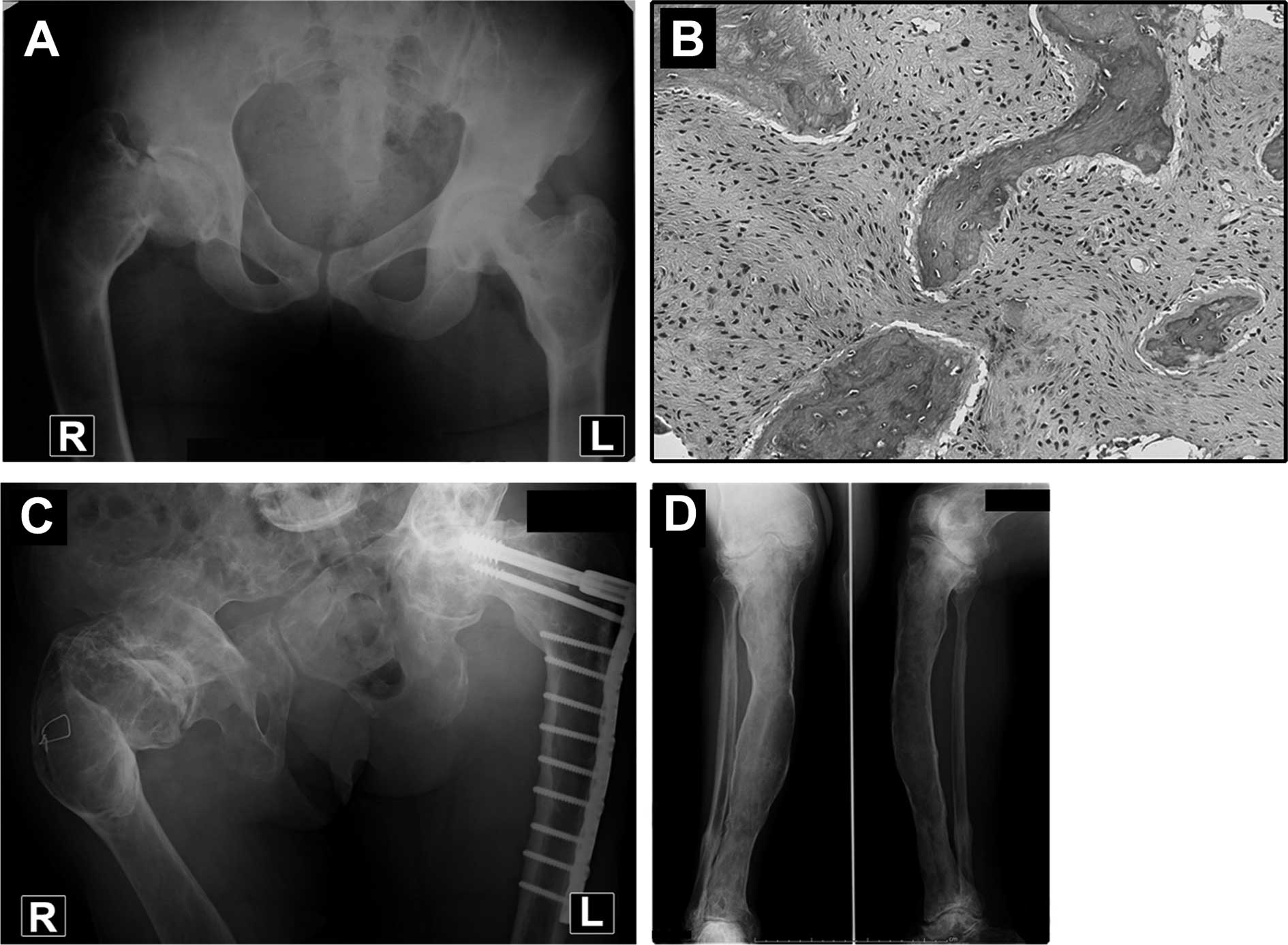
A female patient had developed a limp in her right leg at 12 years of age (1943). At the age of 16 (1947), moderate bone pain had started in her right lower leg, and subsequently, chronic bone pain developed in her bilateral hip, thigh and left lower leg. At 27 years of age (1958), she first presented to Niigata University due to persistent severe bone pain and a distinct deformity of her right hip (Fig. 1A). She was diagnosed as having PFD and received a subtrochanteric osteotomy of her right femur. At the age of 33 (1964), the patient sustained a pathological fracture of her right proximal femur and was successfully treated by cast immobilization. At the age of 37 (1969), she experienced another fracture in the left femoral neck, and this fracture was treated by nail plate fixation with a fibular bone graft. The pathological examination of biopsy tissues showed the characteristic pattern of FD. Mild to moderate (sometimes severe) bone pain in multiple sites lasted for over 33 years.

Figure 1

Radiological and histological findings. (A) An anteroposterior radiograph of the pelvis and proximal femur in a female patient with polyostotic fibrous dysplasia taken at the patient's first presentation (at the age of 27). There is a classic shepherd's crook deformity of the right femur with cortical thinning and a typical ground-glass appearance in the bilateral femur. (B) The histological appearance of the bone lesion of the right femoral neck (at the age of 70) shows typical fibroblastic stroma and immature woven bones without rimming of osteoblasts (hematoxylin-eosin; ×100). (C and D) Radiographs taken at 102 months after starting oral alendronate therapy (at the age of 79). (C) An anteroposterior view of the pelvis and proximal femur, and (D) an anteroposterior (left panel) and lateral (right panel) view of the right tibia revealed no significant cortical thickening or bone formation.

In 2001, at the age of 70, the patient developed dysbasia and severe bone pain again in her left hip that lasted more than 4 months due to the subcutaneous prominence of the nail and an incomplete cortical fracture. The original plate was replaced by an AO condyle dynamic screw plate. Tissue from the intraoperative biopsy showed an activating mutation of the GNAS1 (Gsα) gene, and there was no maturation in the non-lamellar woven bone or in the fibrous matrix (Fig. 1B). Following the last surgery the patient was able to walk outside with a T-cane, although the multiple sites of bone pain continued to interfere with her daily activities. Since 2002, at 71 years of age, she has been receiving oral alendronate sodium at 5 mg/day 102 months as of the writing of this manuscript). The changes in bone pain were evaluated using the visual pain analog scale (0–10) at every visit. Biochemical measurements, including serum total alkaline phosphatase (ALP), calcium and phosphate, were performed at approximately 2-month intervals. Serum bone alkaline phosphatase (BAP) and urine N-terminal cross-linked telopeptide of type I collagen (NTX) were also examined 79–102 months following initiation of therapy. Radiographs of the involved bone lesions were taken at one-year intervals. Changes in the lumber spine (L2–L4) bone mineral density (BMD) were measured using dual-energy X-ray absorptiometry (DEXA).

On physical examination prior to alendronate treatment, there were moderate restrictions of the patient's range of motion in both sides of her hip joints, but she had no reduction in muscle force of the extremities. She had tenderness in her bilateral proximal femora and right tibia. The pain levels were moderate in the bilateral hips and right lower leg, and were mild in the left knee and the right ankle (Table I).

Table I

Changes in pain levels after 102 months of oral alendronate treatment.

Table I

Changes in pain levels after 102 months of oral alendronate treatment.

Visual analog pain scale

SitesBefore treatmentPosttreatment
Left hip61
Right hip51
Left knee30
Right lower leg51
Right ankle30

Radiological examinations at pretreatment indicated that the deformity of the right femur and the radiolucent lesions in multiple sites had progressed compared to her first visit. Fibrous dysplastic lesions were also detected in her skull, right first rib, right humerus, right ulna, right hand, pubic bones, left tibia and right foot by 99mTc-methylene diphosphonate (MDP) bone scan. The lumber spine BMD value was 0.900 g/cm2 (T-score, −0.4) at pretreatment (Table II).

Table II

Changes in the lumbar spine (L2–L4) BMD after 89 months of oral alendronate treatment.

Table II

Changes in the lumbar spine (L2–L4) BMD after 89 months of oral alendronate treatment.

Age (years)BMD (g/cm2)Mean T-scoreBMD changes vs. baseline
Pretreatment710.900−0.4
Posttreatment (6 months)710.971−0.17.9%
Posttreatment (89 months)781.1351.126.2%

[i] BMD, bone mineral density.

The patient's bone turnover markers prior to treatment showed high levels of serum ALP, 602 IU/l (reference range 125–259 by the JSCC method); BAP, 88.3 U/l (reference range 9.6–35.4); and urine NTX, 281.7 nmol BCE/mmol Cr (reference range 8.3–69.9 nmol BCE/mmol Cr). The levels of serum calcium and serum phosphate at pretreatment were slightly lower than the normal range, 8.4 mg/dl (normal range 8.7–10.0 mg/dl) and 2.4 mg/dl (normal range 2.5–4.6 mg/dl), respectively. No other abnormalities were found during the biochemical analysis.

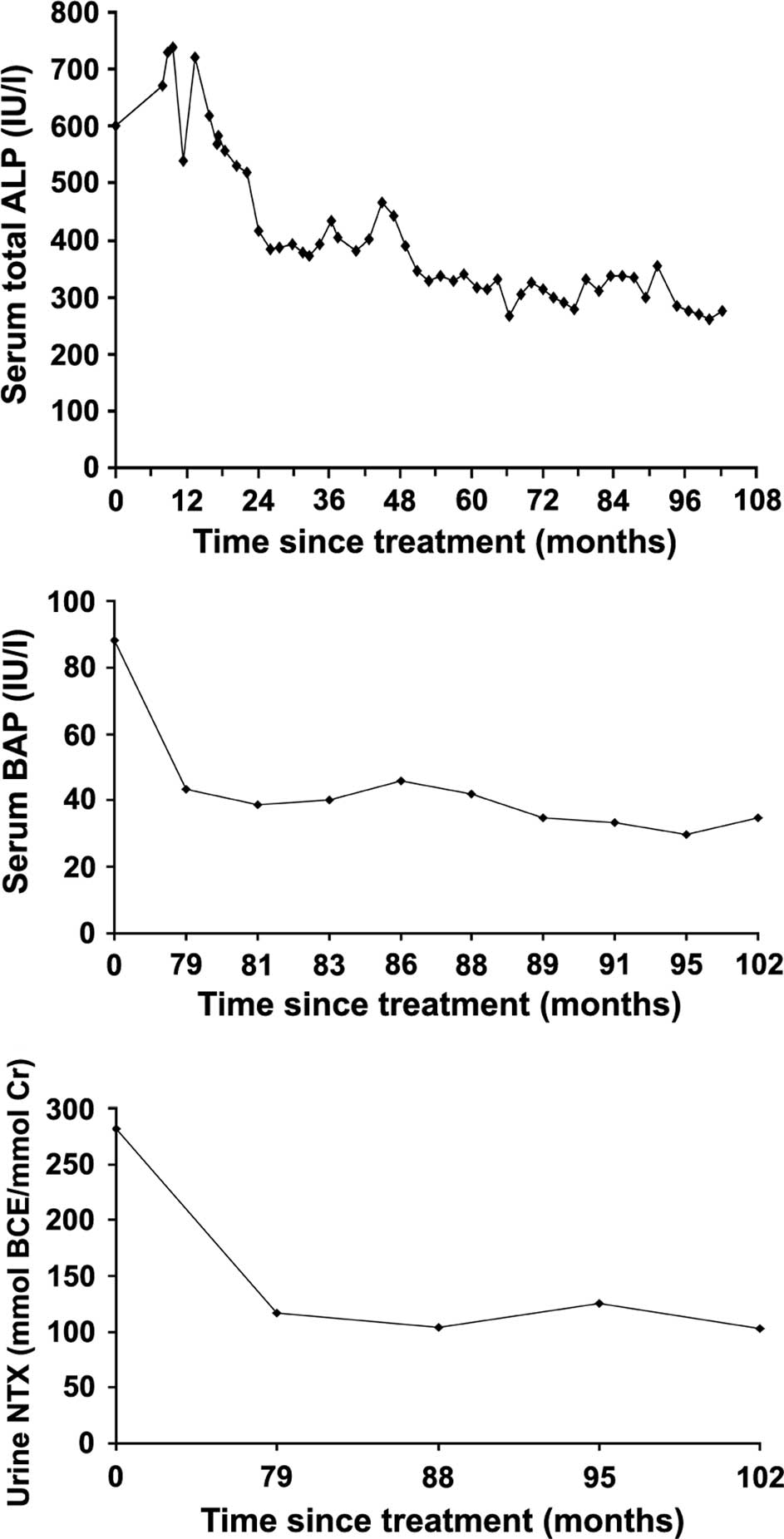
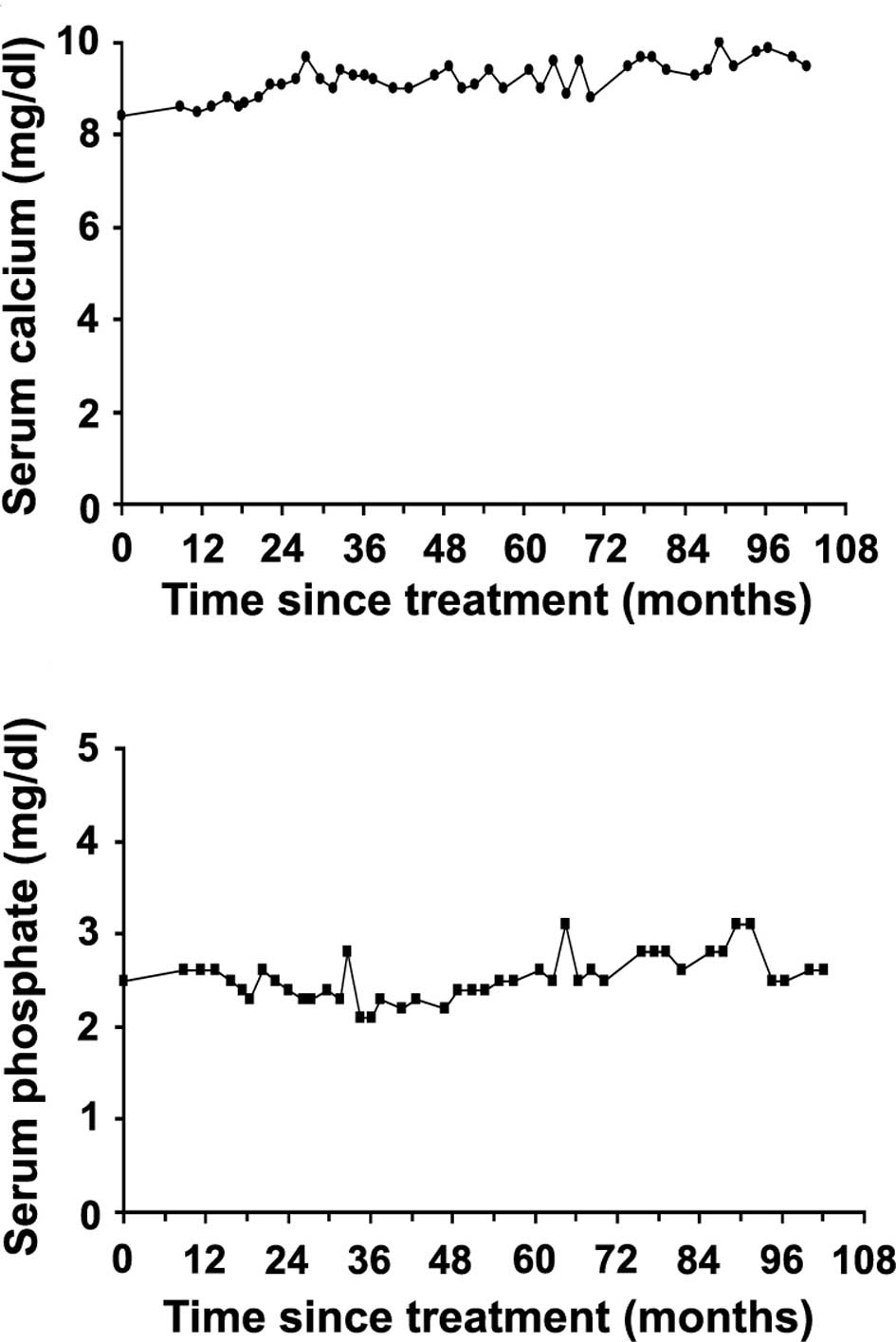
Following oral alendronate treatment, the bone pain in her multiple sites was markedly reduced during the first 8 months, and was then completely relieved or has remained at a mild level up to the most recent follow-up (Table I). The high pretreatment level of serum ALP decreased by 24 months after treatment initiation and then decreased gradually to a near normal level (275 IU/l at the final examination) (Fig. 2A). The high pretreatment level of serum BAP was decreased to within the normal range after 102 months of initiating the treatment (35 U/l at the final examination) (Fig. 2B). The urine NTX also markedly decreased from a high pretreatment level to a lower one at 102 months posttreatment (102.5 nmol BCE/mmol Cr at the final examination) (Fig. 2C). The serum calcium level was slightly lower than the normal level during the first 17 months of treatment, but was then maintained consistently at a normal level (Fig. 3A). The serum phosphate level oscillated between normal and slightly low levels between 17 and 55 months after treatment was initiated, but remained stable within the normal range following treatment (Fig. 3B).

Figure 2

Changes in bone turnover markers during the 102 months of oral alendronate treatment. (A) The high pretreatment level of serum total alkaline phosphatase (ALP) decreased rapidly during the 13–24 month period following alendronate treatment, followed by a slower and continued decrease up to 102 months after initiation of treatment. (B) The high level of pretreatment serum bone alkaline phosphatase (BAP) was markedly decreased and remained persistently within the normal range at 89–102 months posttreatment. (C) The urine N-terminal cross-linked telopeptide of type I collagen (NTX) level was decreased to significantly below the pretreatment level during the course of alendronate treatment. Data for the serum BAP and the urine NTX after 0–79 months of treatment were not available.

Figure 3

Changes in the serum levels of calcium and phosphate during the 102 months of oral alendronate treatment. (A) The value of serum calcium was slightly lower than the normal range during the first 17 months of the treatment, but was then maintained consistently within the normal range. (B) The value of serum phosphate fluctuated between the normal level and slightly lower levels during the period between 17 and 55 months after the initiation of treatment, and stabilized within the normal range by 102 months posttreatment.

Following 89 months of alendronate treatment, the value of BMD had increased by 26.2% (mean BMD, 1.135 g/cm2; T-score, 1.1) when compared with the pretreatment value (Table II). Although there was no clear evidence of cortical thickening or refilling of the fibrocystic bone lesions during the 102 months of alendronate treatment (Fig. 1C and D), the patient has not suffered from any pathological fractures during the treatment, and is capable of walking outside with a T-cane for several hours without resting. No adverse drug reactions occurred following oral alendronate administration, and the medication is currently being continued.

Discussion

Few case reports exist on the long-term follow-up of elderly patients with long-standing symptomatic PFD (11–13), and there are also few studies on the ambulation of elderly PFD patients with severe lower extremity deformities (11,13). Although some of these patients had fairly severe deformities, they were functionally active and were able to walk with aids (11,13). In the present case, total follow-up has continued for over 52 years since the first diagnosis of PFD and, in spite of the severe shepherd's crook deformity in her later years, the patient was able to walk outside using a cane for a considerable amount of time. However, multiple sites of chronic bone pain had lasted for over 55 years until she received oral bisphosphonate therapy.

Nitrogen-containing bisphosphonates such as pamidronate and alendronate are drugs that prevent osteoclast-mediated bone resorption, and are widely used to treat osteoporosis and similar diseases, such as Paget's disease of the bone. Numerous open clinical studies with high-dose intravenous infusions of pamidronate have shown that they may yield favorable results in patients with symptomatic FD (3–6). Successful outcomes have also been reported for the use of oral alendronate without combination with intravenous infusion in a few patients with PFD (3,7–10). These patients were treated with different doses of alendronate: 70 mg weekly in a 10.5-year-old female (10); 20 mg daily in a 22-year-old male (7); 10 mg daily in 34- and 39-year-old females (3); 5 mg daily in a 3-year-old female (8) and a 45-year-old premenopausal female (9). These regimens led to significant improvements in pain relief and substantial reductions in the levels of bone turnover markers, with the exception of 2 adult patients who did not show any changes in urine NTX (3,9). A distinct increase in BMD by bone scanning was also noted (7,8). However, improvements in cortical thickening and filling of the bone lesions were not apparent (3,9). In the present study, the patient was treated with low-dose (5 mg/day) oral alendronate alone for more than 102 months (8.5 years) since the age of 71, and this treatment period was far longer than that of previous studies, in which a maximum period of 2 years was recorded. To the best of our knowledge, this is the first report of the use of long-term oral alendronate treatment in a postmenopausal elderly patient with PFD. The patient's long-standing bone pain was almost completely relieved during the period beginning 8 months after starting oral alendronate therapy.

The levels of total serum ALP and serum BAP are frequently elevated in patients with PFD and MAS, and in certain cases, these bone formation markers are significantly higher than in normal subjects (4,11). In the present case, the pretreatment levels of serum ALP and BAP were also relatively high, but the levels markedly declined to near normal and normal ranges, respectively, during oral alendronate treatment. The urinary NTX, which is known to be one of the most sensitive predictors of bone resorption in bisphosphonate therapy, also decreased significantly following alendronate treatment. Along with the decrease in the levels of bone turnover markers, the mean BMD value at the lumbar spine was increased markedly by 26.2%. However, the BMD at the involved lesions was not available in this study. By contrast, no clear effects were noted on cortical thickening and filling of lytic lesions in the radiographic aspects. This negative radiological finding following long-term alendronate treatment in our case was similar to the findings described in previous studies, indicating that the intravenous administration of pamidronate did not result in any clear improvement in the radiological appearance (14) and had no effect on the skeletal burden (15). However, our patient has not suffered from any pathological fractures during the alendronate treatment period.

In conclusion, the data from the current case suggest that long-term daily administration of low-dose alendronate alone is capable of providing satisfactory results with regard to reduction of bone pain and bone turnover, and may increase the BMD in patients with PFD. Although it appears likely that oral alendronate alone cannot cure FD itself, this regimen is a preferred option for the treatment of patients exhibiting PFD symptoms, particularly those patients with long-standing bone pain.

References

1 

Marie PJ, de Pollak C, Chanson P and Lomri A: Increased proliferation of osteoblastic cells expressing the activating Gs alpha mutation in monostotic and polyostotic fibrous dysplasia. Am J Pathol. 150:1059–1069. 1997.

2 

Riminucci M, Kuznetsov SA, Cherman N, Corsi A, Bianco P and Gehron Robey P: Osteoclastogenesis in fibrous dysplasia of bone: In situ and in vitro analysis of IL-6 expression. Bone. 33:434–442. 2003. View Article : Google Scholar : PubMed/NCBI

3 

Lane JM, Khan SN, O'Connor WJ, et al: Bisphosphonate therapy in fibrous dysplasia. Clin Orthop. 382:6–12. 2001. View Article : Google Scholar : PubMed/NCBI

4 

Isaia GC, Lala R, Defilippi C, et al: Bone turnover in children and adolescents with McCune-Albright syndrome treated with pamidronate for bone fibrous dysplasia. Calcif Tissue Int. 71:121–128. 2002. View Article : Google Scholar : PubMed/NCBI

5 

Chapurlat RD, Hugueny P, Delmas PD and Meunier PJ: Treatment of fibrous dysplasia of bone with intravenous pamidronate: long-term effectiveness and evaluation of predictors of response to treatment. Bone. 35:235–242. 2004. View Article : Google Scholar : PubMed/NCBI

6 

Chapurlat RD: Medical therapy in adults with fibrous dysplasia of bone. J Bone Miner Res. 21(Suppl 2): 114–119. 2006. View Article : Google Scholar : PubMed/NCBI

7 

Yamomoto T, Ozono K, Shima M, Yoshikawa H and Okada S: Alendronate and pharmacological doses of 1 alpha OHD3 therapy in a patient with McCune-Albright syndrome and accompanying hypophosphatemia. J Bone Miner Metab. 20:170–173. 2002. View Article : Google Scholar : PubMed/NCBI

8 

Khadilkar VV, Khadilkar AV and Maskati GB: Oral bisphosphonates in polyostotic fibrous dysplasia. Indian Pediatr. 40:894–896. 2003.PubMed/NCBI

9 

Kitagawa Y, Tamai K and Ito H: Oral alendronate treatment for polyostotic fibrous dysplasia: a case report. J Orthop Sci. 9:521–525. 2004. View Article : Google Scholar : PubMed/NCBI

10 

Aragão AL and Silva IN: Oral Alendronate Treatment for Severe Polyostotic Fibrous Dysplasia due to McCune-Albright Syndrome in a Child: A Case Report. Int J Pediatr Endocrinol. Oct 4–2010.(E-pub ahead of print).

11 

Harris WH, Dudley HR Jr and Barry RJ: The natural history of fibrous dysplasia. An orthopaedic, pathological, and roentgenographic study. J Bone Joint Surg Am. 44:A207–A233. 1962.PubMed/NCBI

12 

Sissons HA and Malcolm AJ: Fibrous dysplasia of bone: case report with autopsy study 80 years after the original clinical recognition of the bone lesions. Skeletal Radiol. 26:177–183. 1997.PubMed/NCBI

13 

Szendrói M, Rahóty P, Antal I and Kiss J: Fibrous dysplasia associated with intramuscular myxoma (Mazabraud's syndrome): a long-term follow-up of three cases. J Cancer Res Clin Oncol. 124:401–406. 1998.

14 

Plotkin H, Rauch F, Zeitlin L, Munns C, Travers R and Glorieux FH: Effect of pamidronate treatment in children with polyostotic fibrous dysplasia of bone. J Clin Endocrinol Metab. 88:4569–4575. 2003. View Article : Google Scholar : PubMed/NCBI

15 

Collins MT, Kushner H, Reynolds JC, et al: An instrument to measure skeletal burden and predict functional outcome in fibrous dysplasia of bone. J Bone Miner Res. 20:219–226. 2005. View Article : Google Scholar : PubMed/NCBI

Related Articles

  • Abstract
  • View
  • Download
  • Twitter
Copy and paste a formatted citation
Spandidos Publications style
Li G, Ogose A, Hotta T, Kawashima H, Ariizumi T, Xu Y and Endo N: Long-term efficacy of oral alendronate therapy in an elderly patient with polyostotic fibrous dysplasia: A case report. Oncol Lett 2: 1239-1242, 2011.
APA
Li, G., Ogose, A., Hotta, T., Kawashima, H., Ariizumi, T., Xu, Y., & Endo, N. (2011). Long-term efficacy of oral alendronate therapy in an elderly patient with polyostotic fibrous dysplasia: A case report. Oncology Letters, 2, 1239-1242. https://doi.org/10.3892/ol.2011.369
MLA
Li, G., Ogose, A., Hotta, T., Kawashima, H., Ariizumi, T., Xu, Y., Endo, N."Long-term efficacy of oral alendronate therapy in an elderly patient with polyostotic fibrous dysplasia: A case report". Oncology Letters 2.6 (2011): 1239-1242.
Chicago
Li, G., Ogose, A., Hotta, T., Kawashima, H., Ariizumi, T., Xu, Y., Endo, N."Long-term efficacy of oral alendronate therapy in an elderly patient with polyostotic fibrous dysplasia: A case report". Oncology Letters 2, no. 6 (2011): 1239-1242. https://doi.org/10.3892/ol.2011.369
Copy and paste a formatted citation
x
Spandidos Publications style
Li G, Ogose A, Hotta T, Kawashima H, Ariizumi T, Xu Y and Endo N: Long-term efficacy of oral alendronate therapy in an elderly patient with polyostotic fibrous dysplasia: A case report. Oncol Lett 2: 1239-1242, 2011.
APA
Li, G., Ogose, A., Hotta, T., Kawashima, H., Ariizumi, T., Xu, Y., & Endo, N. (2011). Long-term efficacy of oral alendronate therapy in an elderly patient with polyostotic fibrous dysplasia: A case report. Oncology Letters, 2, 1239-1242. https://doi.org/10.3892/ol.2011.369
MLA
Li, G., Ogose, A., Hotta, T., Kawashima, H., Ariizumi, T., Xu, Y., Endo, N."Long-term efficacy of oral alendronate therapy in an elderly patient with polyostotic fibrous dysplasia: A case report". Oncology Letters 2.6 (2011): 1239-1242.
Chicago
Li, G., Ogose, A., Hotta, T., Kawashima, H., Ariizumi, T., Xu, Y., Endo, N."Long-term efficacy of oral alendronate therapy in an elderly patient with polyostotic fibrous dysplasia: A case report". Oncology Letters 2, no. 6 (2011): 1239-1242. https://doi.org/10.3892/ol.2011.369
Follow us
  • Twitter
  • LinkedIn
  • Facebook
About
  • Spandidos Publications
  • Careers
  • Cookie Policy
  • Privacy Policy
How can we help?
  • Help
  • Live Chat
  • Contact
  • Email to our Support Team