Spandidos Publications Logo
  • About
    • About Spandidos
    • Aims and Scopes
    • Abstracting and Indexing
    • Editorial Policies
    • Reprints and Permissions
    • Job Opportunities
    • Terms and Conditions
    • Contact
  • Journals
    • All Journals
    • Oncology Letters
      • Oncology Letters
      • Information for Authors
      • Editorial Policies
      • Editorial Board
      • Aims and Scope
      • Abstracting and Indexing
      • Bibliographic Information
      • Archive
    • International Journal of Oncology
      • International Journal of Oncology
      • Information for Authors
      • Editorial Policies
      • Editorial Board
      • Aims and Scope
      • Abstracting and Indexing
      • Bibliographic Information
      • Archive
    • Molecular and Clinical Oncology
      • Molecular and Clinical Oncology
      • Information for Authors
      • Editorial Policies
      • Editorial Board
      • Aims and Scope
      • Abstracting and Indexing
      • Bibliographic Information
      • Archive
    • Experimental and Therapeutic Medicine
      • Experimental and Therapeutic Medicine
      • Information for Authors
      • Editorial Policies
      • Editorial Board
      • Aims and Scope
      • Abstracting and Indexing
      • Bibliographic Information
      • Archive
    • International Journal of Molecular Medicine
      • International Journal of Molecular Medicine
      • Information for Authors
      • Editorial Policies
      • Editorial Board
      • Aims and Scope
      • Abstracting and Indexing
      • Bibliographic Information
      • Archive
    • Biomedical Reports
      • Biomedical Reports
      • Information for Authors
      • Editorial Policies
      • Editorial Board
      • Aims and Scope
      • Abstracting and Indexing
      • Bibliographic Information
      • Archive
    • Oncology Reports
      • Oncology Reports
      • Information for Authors
      • Editorial Policies
      • Editorial Board
      • Aims and Scope
      • Abstracting and Indexing
      • Bibliographic Information
      • Archive
    • Molecular Medicine Reports
      • Molecular Medicine Reports
      • Information for Authors
      • Editorial Policies
      • Editorial Board
      • Aims and Scope
      • Abstracting and Indexing
      • Bibliographic Information
      • Archive
    • World Academy of Sciences Journal
      • World Academy of Sciences Journal
      • Information for Authors
      • Editorial Policies
      • Editorial Board
      • Aims and Scope
      • Abstracting and Indexing
      • Bibliographic Information
      • Archive
    • International Journal of Functional Nutrition
      • International Journal of Functional Nutrition
      • Information for Authors
      • Editorial Policies
      • Editorial Board
      • Aims and Scope
      • Abstracting and Indexing
      • Bibliographic Information
      • Archive
    • International Journal of Epigenetics
      • International Journal of Epigenetics
      • Information for Authors
      • Editorial Policies
      • Editorial Board
      • Aims and Scope
      • Abstracting and Indexing
      • Bibliographic Information
      • Archive
    • Medicine International
      • Medicine International
      • Information for Authors
      • Editorial Policies
      • Editorial Board
      • Aims and Scope
      • Abstracting and Indexing
      • Bibliographic Information
      • Archive
  • Articles
  • Information
    • Information for Authors
    • Information for Reviewers
    • Information for Librarians
    • Information for Advertisers
    • Conferences
  • Language Editing
Spandidos Publications Logo
  • About
    • About Spandidos
    • Aims and Scopes
    • Abstracting and Indexing
    • Editorial Policies
    • Reprints and Permissions
    • Job Opportunities
    • Terms and Conditions
    • Contact
  • Journals
    • All Journals
    • Biomedical Reports
      • Information for Authors
      • Editorial Policies
      • Editorial Board
      • Aims and Scope
      • Abstracting and Indexing
      • Bibliographic Information
      • Archive
    • Experimental and Therapeutic Medicine
      • Information for Authors
      • Editorial Policies
      • Editorial Board
      • Aims and Scope
      • Abstracting and Indexing
      • Bibliographic Information
      • Archive
    • International Journal of Epigenetics
      • Information for Authors
      • Editorial Policies
      • Editorial Board
      • Aims and Scope
      • Abstracting and Indexing
      • Bibliographic Information
      • Archive
    • International Journal of Functional Nutrition
      • Information for Authors
      • Editorial Policies
      • Editorial Board
      • Aims and Scope
      • Abstracting and Indexing
      • Bibliographic Information
      • Archive
    • International Journal of Molecular Medicine
      • Information for Authors
      • Editorial Policies
      • Editorial Board
      • Aims and Scope
      • Abstracting and Indexing
      • Bibliographic Information
      • Archive
    • International Journal of Oncology
      • Information for Authors
      • Editorial Policies
      • Editorial Board
      • Aims and Scope
      • Abstracting and Indexing
      • Bibliographic Information
      • Archive
    • Medicine International
      • Information for Authors
      • Editorial Policies
      • Editorial Board
      • Aims and Scope
      • Abstracting and Indexing
      • Bibliographic Information
      • Archive
    • Molecular and Clinical Oncology
      • Information for Authors
      • Editorial Policies
      • Editorial Board
      • Aims and Scope
      • Abstracting and Indexing
      • Bibliographic Information
      • Archive
    • Molecular Medicine Reports
      • Information for Authors
      • Editorial Policies
      • Editorial Board
      • Aims and Scope
      • Abstracting and Indexing
      • Bibliographic Information
      • Archive
    • Oncology Letters
      • Information for Authors
      • Editorial Policies
      • Editorial Board
      • Aims and Scope
      • Abstracting and Indexing
      • Bibliographic Information
      • Archive
    • Oncology Reports
      • Information for Authors
      • Editorial Policies
      • Editorial Board
      • Aims and Scope
      • Abstracting and Indexing
      • Bibliographic Information
      • Archive
    • World Academy of Sciences Journal
      • Information for Authors
      • Editorial Policies
      • Editorial Board
      • Aims and Scope
      • Abstracting and Indexing
      • Bibliographic Information
      • Archive
  • Articles
  • Information
    • For Authors
    • For Reviewers
    • For Librarians
    • For Advertisers
    • Conferences
  • Language Editing
Login Register Submit
  • This site uses cookies
  • You can change your cookie settings at any time by following the instructions in our Cookie Policy. To find out more, you may read our Privacy Policy.

    I agree
Search articles by DOI, keyword, author or affiliation
Search
Advanced Search
presentation
Oncology Letters
Join Editorial Board Propose a Special Issue
Print ISSN: 1792-1074 Online ISSN: 1792-1082
Journal Cover
March 2012 Volume 3 Issue 3

Full Size Image

Sign up for eToc alerts
Recommend to Library

Journals

International Journal of Molecular Medicine

International Journal of Molecular Medicine

International Journal of Molecular Medicine is an international journal devoted to molecular mechanisms of human disease.

International Journal of Oncology

International Journal of Oncology

International Journal of Oncology is an international journal devoted to oncology research and cancer treatment.

Molecular Medicine Reports

Molecular Medicine Reports

Covers molecular medicine topics such as pharmacology, pathology, genetics, neuroscience, infectious diseases, molecular cardiology, and molecular surgery.

Oncology Reports

Oncology Reports

Oncology Reports is an international journal devoted to fundamental and applied research in Oncology.

Experimental and Therapeutic Medicine

Experimental and Therapeutic Medicine

Experimental and Therapeutic Medicine is an international journal devoted to laboratory and clinical medicine.

Oncology Letters

Oncology Letters

Oncology Letters is an international journal devoted to Experimental and Clinical Oncology.

Biomedical Reports

Biomedical Reports

Explores a wide range of biological and medical fields, including pharmacology, genetics, microbiology, neuroscience, and molecular cardiology.

Molecular and Clinical Oncology

Molecular and Clinical Oncology

International journal addressing all aspects of oncology research, from tumorigenesis and oncogenes to chemotherapy and metastasis.

World Academy of Sciences Journal

World Academy of Sciences Journal

Multidisciplinary open-access journal spanning biochemistry, genetics, neuroscience, environmental health, and synthetic biology.

International Journal of Functional Nutrition

International Journal of Functional Nutrition

Open-access journal combining biochemistry, pharmacology, immunology, and genetics to advance health through functional nutrition.

International Journal of Epigenetics

International Journal of Epigenetics

Publishes open-access research on using epigenetics to advance understanding and treatment of human disease.

Medicine International

Medicine International

An International Open Access Journal Devoted to General Medicine.

Journal Cover
March 2012 Volume 3 Issue 3

Full Size Image

Sign up for eToc alerts
Recommend to Library

  • Article
  • Citations
    • Cite This Article
    • Download Citation
    • Create Citation Alert
    • Remove Citation Alert
    • Cited By
  • Similar Articles
    • Related Articles (in Spandidos Publications)
    • Similar Articles (Google Scholar)
    • Similar Articles (PubMed)
  • Download PDF
  • Download XML
  • View XML
Article

Partial hydatidiform mole progression into invasive mole with lung metastasis following in vitro fertilization

  • Authors:
    • Xi Zhou
    • Yongli Chen
    • Yongmei Li
    • Zhao Duan
  • View Affiliations / Copyright

    Affiliations: Department of Obstetrics and Gynecology, Renmin Hospital, Hubei University of Medicine, Shiyan, Hubei 442000, P.R. China, Department of Obstetrics and Gynecology, The Second Affiliated Hospital of Xi'an Jiaotong University, Xi'an, Shaanxi 710004, P.R. China
  • Pages: 659-661
    |
    Published online on: December 28, 2011
       https://doi.org/10.3892/ol.2011.542
  • Expand metrics +
Metrics: Total Views: 0 (Spandidos Publications: | PMC Statistics: )
Metrics: Total PDF Downloads: 0 (Spandidos Publications: | PMC Statistics: )
Cited By (CrossRef): 0 citations Loading Articles...

This article is mentioned in:


Abstract

In the present study, the case of a 34-year-old Chinese female who underwent in vitro fertilization resulting in a twin pregnancy was reported. Following in vitro fertilization, the patient was found to have a partial hydatidiform mole (PHM) with a co-existing twin by transvaginal sonography (TVS). At 16 weeks, the pregnancy was terminated and a normal-looking fetus with a HM placenta was delivered, in addition to a normal fetus with a normal placenta. Following termination of the pregnancy, the PHM progressed into an invasive mole with lung metastasis, a rare event. Serum human chorionic gonadotrophin (hCG) concentrations decreased in the first week following delivery, but over the following 21 days hCG levels showed a continuous increase. Following 2 cycles of combinative chemotherapy consisting of fluorouracil (5-FU) and dactinomycin (KSM), hCG concentrations decreased to normal levels. The patient was then administered 1 cycle of repeated chemotherapy and hCG levels remained negative for the following 2 years.

Introduction

Gestational trophoblastic disease (GTD) is known to be associated with increased maternal age and is more commonly observed in Asia. GTD has been subdivided into partial hydatidiform mole (PHM) with a fetal pole, often with triploidy, which refers to the combination of a fetus with localized hydatidiform placenta, and complete HM (CHM) without fetal tissue, which is typically diploid but derived entirely from the paternal genome (1). CHM pregnancy is more common than PHM (1). A few cases of CHM with twin pregnancy have been reported (2–4), with certain couples choosing to continue the pregnancy until 28 weeks of gestation and deliver by Caesarean section, resulting in some healthy babies (2–4). In this study, we present the first reported case of a patient who was found to have PHM with a co-existing twin following in vitro fertilization, resulting in an invasive mole that progressed and metastasized to the lung.

Case report

This study was approved by the Medical Ethics Committee of Hubei University of Medicine. The patient provided informed written consent. A 34-year-old, gravida 2, para 1, patient was known to have pelvic inflammatory disease. The patient's first pregnancy was a healthy girl delivered when the patient was 20 years old. The patient then divorced at 24 and remarried at 27. The patient's husband also had a healthy girl from his first marriage. No pregnancy occurred in the first 5 years of marriage, even though the couple were not using any contraceptive methods. The patient was then referred for assisted conception after she was diagnosed with blockage of the fallopian tubes. Following ovarian suppression with a gonadotropin-releasing hormone (GnRH) analogue, follicular growth was stimulated using purified Gn and ovulation was induced with human chorionic gonadotropin (hCG). Six oocytes were retrieved under transvaginal ultrasound guidance and these oocytes were then inseminated with spermatozoa at a concentration of 25,000 motile spermatozoa per oocyte. Fertilization was confirmed the following day, with 6 oocytes observed to be normally fertilized (2 pronuclei observed). Two 4-cell stage embryos were transferred into the uterus 48 h following egg collection. Progesterone intramuscular injection was used for luteal support. Six weeks following embryo transfer, 2 fetal poles, each with a positive fetal heart, were observed. At 10 weeks the 2 fetuses appeared to have a human form, as identified via transvaginal sonography (TVS).

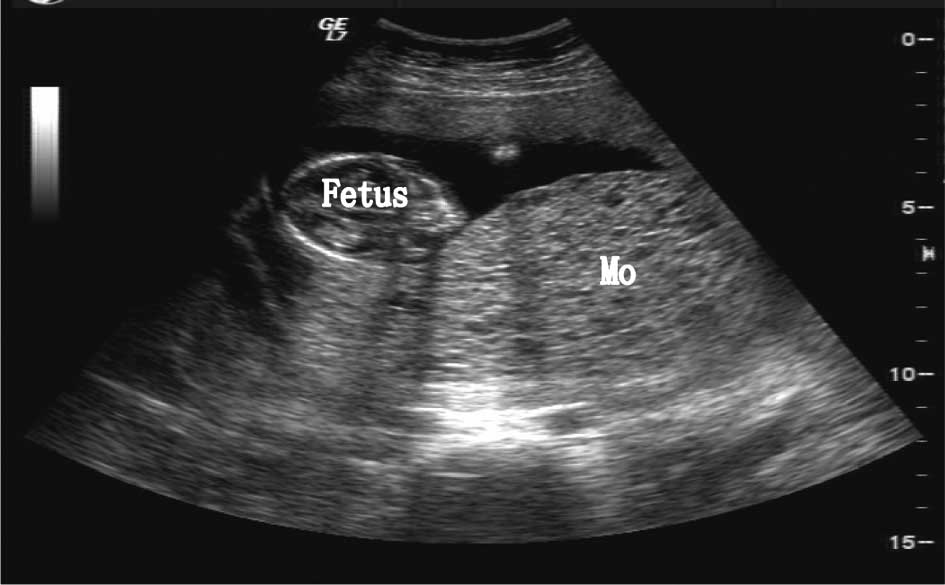
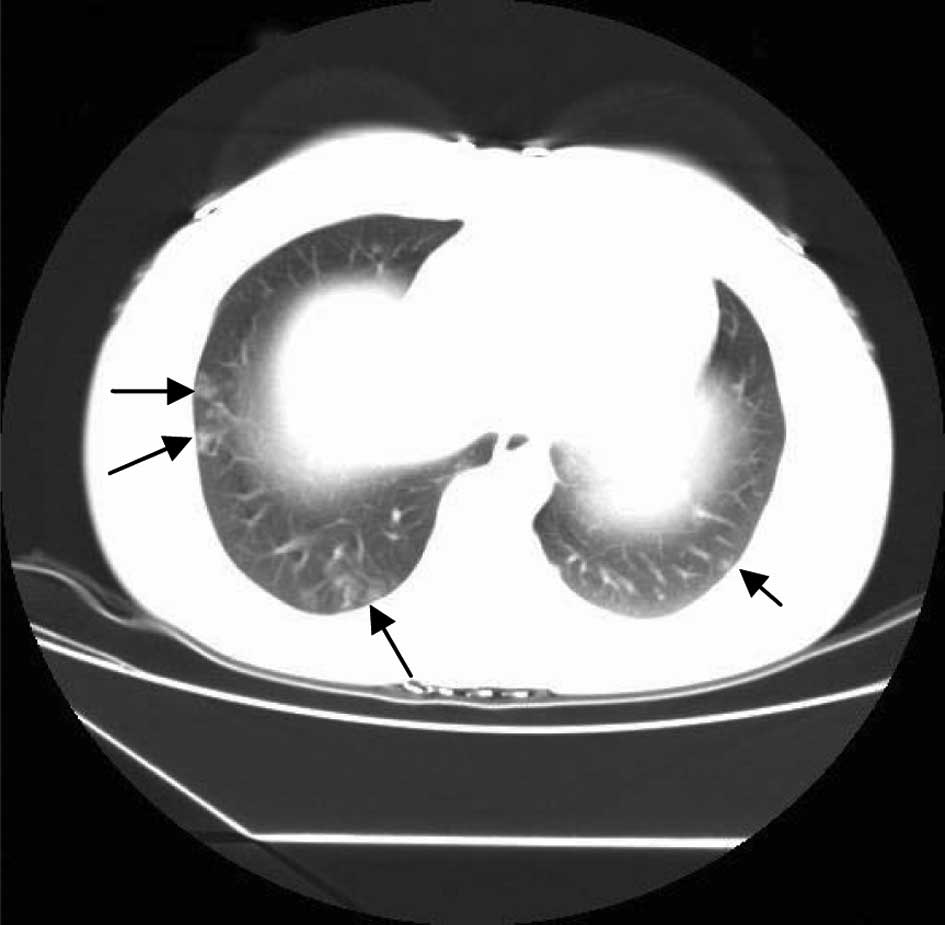
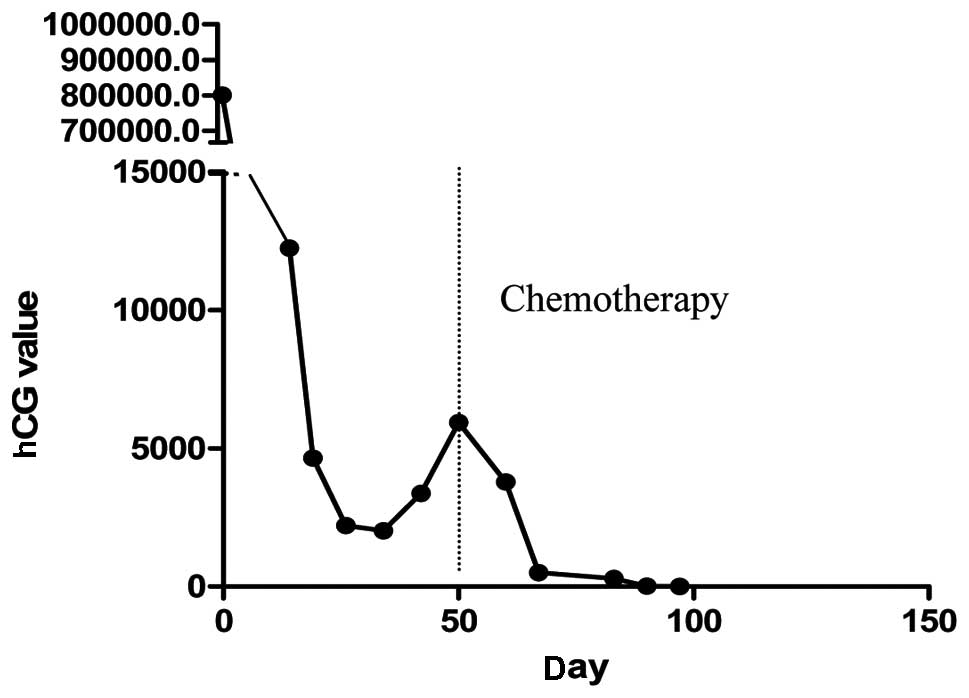
The patient experienced vaginal bleeding at 16 weeks, and repeated TVS revealed 2 viable fetuses; however, 1 placenta was found to be cystic (Fig. 1). Serum hCG levels were found to be elevated at 800,842 mIU/ml. Following careful consideration, the couple decided to terminate the pregnancy and delivery was induced with rivanol. After 37 h, 2 fetuses (230 and 249 g), a normal placenta (200 g) and a partial cystic placenta (290 g) were delivered. Histological examination confirmed the clinical impression of 1 normal placenta and a second partial HM (69, XXY). Three weeks following curettage, serial serum hCG concentrations increased continually, and TVS indicated that the trophoblast had invaded the uterine myometrium. An X-ray computed tomography (CT) chest scan indicated that the trophoblast had metastasized (Fig. 2). Following 3 cycles of chemotherapy consisting of fluorouracil (5-Fu) (26 mg/kg/day, 8 day/cycle) and dactinomycin (KSM) (6 ug/kg/day, 8 day/cycle), the metastases disappeared and hCG levels became negative, remaining normal for 1 year (Fig. 3).

Figure 1

TVS image of the uterus showing the vesicular tissue (Mo) and the fetus. TVS, transvaginal sonography.

Figure 2

CT chest scan showing the lung metastasis of the trophoblast. Arrows indicate metastatic tumors. CT, computed tomography.

Figure 3

Serial measurements of serum human chorionic gonadotrophin (hCG) concentrations prior to delivery. The first hCG value was 800,842 mIU/ml. Following chemotherapy, hCG values remained in the normal range.

Discussion

HM results in abnormal pregnancy with excessive proliferation of placental villi but severely stunted or absent embryonic development. HMs should be regarded as premalignant lesions since 15–20% of CHMs and 1% of PHMs undergo malignant transformation into invasive moles, choriocarcinomas or, in rare cases, placental-site trophoblastic tumors (PSTTs) (5). Metastases in gestational trophoblastic neoplasia (GTN) develop in approximately 4% of cases following the evacuation of CHMs, while fewer than 5% of PHMs are likely to develop postmolar GTN. Metastases rarely occur and a histopathological diagnosis of choriocarcinoma has not previously been confirmed following a partial mole (5). A total of 10–17% of HMs result in an invasive mole, and approximately 15% of these metastasize to the lungs or vagina (6).

Although recent advances in TVS may help to diagnose a twin molar pregnancy commencing at the end of the first trimester, diagnosis of PHM based on morphological observation is sometimes difficult and inaccurate (5–6). However, in the present case, the TVS scan clearly revealed a normal placenta and sharply defined molar tissue. An invasive mole is most often clinically diagnosed rather than pathologically, based on persistent hCG elevation following molar evacuation, and is frequently treated with chemotherapy without a histopathological diagnosis (5). In China, combination chemotherapy consisting of 5-FU and KSM is used as an effective treatment for GTN (7).

Assisted reproductive technology has enhanced the fertility of older females, which may increase the proportion of GTD cases in this age group. This increase is of concern since malignant sequelae occur more frequently in older patients (8). However, it is most likely that certain clinical factors (advanced maternal/paternal age and/or poor oocyte quality) that precipitate in vitro fertilization (IVF) treatment also predispose these patients to GTD. For instance, if 2 spermatozoa or a diploid sperm enter an oocyte, the result is triploid tissue. It has been established that some spermatozoa remain diploid, particularly as paternal age increases.

Following the diagnosis of HM and co-existing fetus, the decision to terminate or continue the pregnancy was a difficult one. However, a previous study has demonstrated that only three patients out of 14 (21%) delivered a healthy child in those circumstances, and that these patients potentially face a higher risk of GTN than CHM (4). For patients with PHM with a co-existing fetus, few have full-term infants (4). It has been suggested that medical induction of labor and hysterotomy are not recommended for molar evacuation since these methods increase maternal morbidity, including blood loss, incomplete evacuation requiring dilation and curettage, and the requirement for Caesarean delivery in subsequent pregnancies. These treatments also increase trophoblastic dissemination and the development of postmolar GTN requiring chemotherapy (9–10). However, since bones of the fetus have formed, a bone spur may penetrate the uterus or cervix and cause severe and/or heavy bleeding during clamping. These possibilities should also be considered. We hypothesize that rivanol induction contributes to patient progression into invasive mole and metastasis of the lung. Therefore, determination of the best method for terminating these pregnancies requires further investigation.

Twin pregnancies with a molar pregnancy and co-existing viable fetus have been described (4,11–13). The majority of pregnancies were terminated once the diagnosis was made. However, a few reports have shown that these patients completed a successful pregnancy following CHM diagnosis. It remains unclear as to whether a greater risk of postmolar disease is associated with more aggressive behavior of the molar tissue or with delayed delivery. Certain reports suggest that prolonging gestation does not appear to increase HM malignant changes (5). Since PHM results in milder clinical symptoms and a reduced incidence of malignant transformation than CHM, we suggest that it may be safe to continue these pregnancies, provided that the fetal karyotype is normal and maternal complications are controlled.

References

1 

Vassilakos P and Kajii T: Letter: Hydatidiform mole: two entities. Lancet. 1:2591976. View Article : Google Scholar

2 

Montes-de-Oca-Valero F, Macara L and Shaker A: Twin pregnancy with a complete hydatidiform mole and co-existing fetus following in-vitro fertilization: case report. Hum Reprod. 14:2905–2907. 1999. View Article : Google Scholar : PubMed/NCBI

3 

Lee SW, Kim MY, Chung JH, Yang JH, Lee YH and Chun YK: Clinical findings of multiple pregnancy with a complete hydatidiform mole and coexisting fetus. J Ultrasound Med. 29:271–280. 2010.PubMed/NCBI

4 

Massardier J, Golfier F, Journet D, et al: Twin pregnancy with complete hydatidiform mole and coexistent fetus: obstetrical and oncological outcomes in a series of 14 cases. Eur J Obstet Gynecol Reprod Biol. 143:84–87. 2009. View Article : Google Scholar : PubMed/NCBI

5 

Seckl MJ, Sebire NJ and Berkowitz RS: Gestational trophoblastic disease. Lancet. 376:717–729. 2010. View Article : Google Scholar

6 

Lurain JR: Gestational trophoblastic disease I: epidemiology, pathology, clinical presentation and diagnosis of gestational trophoblastic disease, and management of hydatidiform mole. Am J Obstet Gynecol. 203:531–539. 2010. View Article : Google Scholar

7 

Zhao Y, Zhang W and Duan W: Management of gestational trophoblastic neoplasia with 5-fluorouracil and actinomycin D in northern China. J Reprod Med. 54:88–94. 2009.PubMed/NCBI

8 

Tsukamoto N, Iwasaka T, Kashimura Y, Uchino H, Kashimura M and Matsuyama T: Gestational trophoblastic disease in women aged 50 or more. Gynecol Oncol. 20:53–61. 1985. View Article : Google Scholar : PubMed/NCBI

9 

Soper JT: Surgical therapy for gestational trophoblastic disease. J Reprod Med. 39:168–174. 1994.PubMed/NCBI

10 

Tidy JA, Gillespie AM, Bright N, Radstone CR, Coleman RE and Hancock BW: Gestational trophoblastic disease: a study of mode of evacuation and subsequent need for treatment with chemotherapy. Gynecol Oncol. 78:309–312. 2000. View Article : Google Scholar : PubMed/NCBI

11 

Kajii T and Ohama K: Androgenetic origin of hydatidiform mole. Nature. 268:633–634. 1977. View Article : Google Scholar : PubMed/NCBI

12 

Kim CH, Kim YH, Kim JW, et al: Triplet pregnancy with partial hydatidiform mole coexisting with two fetuses: a case report. J Obstet Gynaecol Res. 34:641–644. 2008. View Article : Google Scholar : PubMed/NCBI

13 

Niemann I, Bolund L and Sunde L: Twin pregnancies with diploid hydatidiform mole and co-existing normal fetus may originate from one oocyte. Hum Reprod. 23:2031–2035. 2008. View Article : Google Scholar : PubMed/NCBI

Related Articles

  • Abstract
  • View
  • Download
  • Twitter
Copy and paste a formatted citation
Spandidos Publications style
Zhou X, Chen Y, Li Y and Duan Z: Partial hydatidiform mole progression into invasive mole with lung metastasis following in vitro fertilization. Oncol Lett 3: 659-661, 2012.
APA
Zhou, X., Chen, Y., Li, Y., & Duan, Z. (2012). Partial hydatidiform mole progression into invasive mole with lung metastasis following in vitro fertilization. Oncology Letters, 3, 659-661. https://doi.org/10.3892/ol.2011.542
MLA
Zhou, X., Chen, Y., Li, Y., Duan, Z."Partial hydatidiform mole progression into invasive mole with lung metastasis following in vitro fertilization". Oncology Letters 3.3 (2012): 659-661.
Chicago
Zhou, X., Chen, Y., Li, Y., Duan, Z."Partial hydatidiform mole progression into invasive mole with lung metastasis following in vitro fertilization". Oncology Letters 3, no. 3 (2012): 659-661. https://doi.org/10.3892/ol.2011.542
Copy and paste a formatted citation
x
Spandidos Publications style
Zhou X, Chen Y, Li Y and Duan Z: Partial hydatidiform mole progression into invasive mole with lung metastasis following in vitro fertilization. Oncol Lett 3: 659-661, 2012.
APA
Zhou, X., Chen, Y., Li, Y., & Duan, Z. (2012). Partial hydatidiform mole progression into invasive mole with lung metastasis following in vitro fertilization. Oncology Letters, 3, 659-661. https://doi.org/10.3892/ol.2011.542
MLA
Zhou, X., Chen, Y., Li, Y., Duan, Z."Partial hydatidiform mole progression into invasive mole with lung metastasis following in vitro fertilization". Oncology Letters 3.3 (2012): 659-661.
Chicago
Zhou, X., Chen, Y., Li, Y., Duan, Z."Partial hydatidiform mole progression into invasive mole with lung metastasis following in vitro fertilization". Oncology Letters 3, no. 3 (2012): 659-661. https://doi.org/10.3892/ol.2011.542
Follow us
  • Twitter
  • LinkedIn
  • Facebook
About
  • Spandidos Publications
  • Careers
  • Cookie Policy
  • Privacy Policy
How can we help?
  • Help
  • Live Chat
  • Contact
  • Email to our Support Team