Spandidos Publications Logo
  • About
    • About Spandidos
    • Aims and Scopes
    • Abstracting and Indexing
    • Editorial Policies
    • Reprints and Permissions
    • Job Opportunities
    • Terms and Conditions
    • Contact
  • Journals
    • All Journals
    • Oncology Letters
      • Oncology Letters
      • Information for Authors
      • Editorial Policies
      • Editorial Board
      • Aims and Scope
      • Abstracting and Indexing
      • Bibliographic Information
      • Archive
    • International Journal of Oncology
      • International Journal of Oncology
      • Information for Authors
      • Editorial Policies
      • Editorial Board
      • Aims and Scope
      • Abstracting and Indexing
      • Bibliographic Information
      • Archive
    • Molecular and Clinical Oncology
      • Molecular and Clinical Oncology
      • Information for Authors
      • Editorial Policies
      • Editorial Board
      • Aims and Scope
      • Abstracting and Indexing
      • Bibliographic Information
      • Archive
    • Experimental and Therapeutic Medicine
      • Experimental and Therapeutic Medicine
      • Information for Authors
      • Editorial Policies
      • Editorial Board
      • Aims and Scope
      • Abstracting and Indexing
      • Bibliographic Information
      • Archive
    • International Journal of Molecular Medicine
      • International Journal of Molecular Medicine
      • Information for Authors
      • Editorial Policies
      • Editorial Board
      • Aims and Scope
      • Abstracting and Indexing
      • Bibliographic Information
      • Archive
    • Biomedical Reports
      • Biomedical Reports
      • Information for Authors
      • Editorial Policies
      • Editorial Board
      • Aims and Scope
      • Abstracting and Indexing
      • Bibliographic Information
      • Archive
    • Oncology Reports
      • Oncology Reports
      • Information for Authors
      • Editorial Policies
      • Editorial Board
      • Aims and Scope
      • Abstracting and Indexing
      • Bibliographic Information
      • Archive
    • Molecular Medicine Reports
      • Molecular Medicine Reports
      • Information for Authors
      • Editorial Policies
      • Editorial Board
      • Aims and Scope
      • Abstracting and Indexing
      • Bibliographic Information
      • Archive
    • World Academy of Sciences Journal
      • World Academy of Sciences Journal
      • Information for Authors
      • Editorial Policies
      • Editorial Board
      • Aims and Scope
      • Abstracting and Indexing
      • Bibliographic Information
      • Archive
    • International Journal of Functional Nutrition
      • International Journal of Functional Nutrition
      • Information for Authors
      • Editorial Policies
      • Editorial Board
      • Aims and Scope
      • Abstracting and Indexing
      • Bibliographic Information
      • Archive
    • International Journal of Epigenetics
      • International Journal of Epigenetics
      • Information for Authors
      • Editorial Policies
      • Editorial Board
      • Aims and Scope
      • Abstracting and Indexing
      • Bibliographic Information
      • Archive
    • Medicine International
      • Medicine International
      • Information for Authors
      • Editorial Policies
      • Editorial Board
      • Aims and Scope
      • Abstracting and Indexing
      • Bibliographic Information
      • Archive
  • Articles
  • Information
    • Information for Authors
    • Information for Reviewers
    • Information for Librarians
    • Information for Advertisers
    • Conferences
  • Language Editing
Spandidos Publications Logo
  • About
    • About Spandidos
    • Aims and Scopes
    • Abstracting and Indexing
    • Editorial Policies
    • Reprints and Permissions
    • Job Opportunities
    • Terms and Conditions
    • Contact
  • Journals
    • All Journals
    • Biomedical Reports
      • Information for Authors
      • Editorial Policies
      • Editorial Board
      • Aims and Scope
      • Abstracting and Indexing
      • Bibliographic Information
      • Archive
    • Experimental and Therapeutic Medicine
      • Information for Authors
      • Editorial Policies
      • Editorial Board
      • Aims and Scope
      • Abstracting and Indexing
      • Bibliographic Information
      • Archive
    • International Journal of Epigenetics
      • Information for Authors
      • Editorial Policies
      • Editorial Board
      • Aims and Scope
      • Abstracting and Indexing
      • Bibliographic Information
      • Archive
    • International Journal of Functional Nutrition
      • Information for Authors
      • Editorial Policies
      • Editorial Board
      • Aims and Scope
      • Abstracting and Indexing
      • Bibliographic Information
      • Archive
    • International Journal of Molecular Medicine
      • Information for Authors
      • Editorial Policies
      • Editorial Board
      • Aims and Scope
      • Abstracting and Indexing
      • Bibliographic Information
      • Archive
    • International Journal of Oncology
      • Information for Authors
      • Editorial Policies
      • Editorial Board
      • Aims and Scope
      • Abstracting and Indexing
      • Bibliographic Information
      • Archive
    • Medicine International
      • Information for Authors
      • Editorial Policies
      • Editorial Board
      • Aims and Scope
      • Abstracting and Indexing
      • Bibliographic Information
      • Archive
    • Molecular and Clinical Oncology
      • Information for Authors
      • Editorial Policies
      • Editorial Board
      • Aims and Scope
      • Abstracting and Indexing
      • Bibliographic Information
      • Archive
    • Molecular Medicine Reports
      • Information for Authors
      • Editorial Policies
      • Editorial Board
      • Aims and Scope
      • Abstracting and Indexing
      • Bibliographic Information
      • Archive
    • Oncology Letters
      • Information for Authors
      • Editorial Policies
      • Editorial Board
      • Aims and Scope
      • Abstracting and Indexing
      • Bibliographic Information
      • Archive
    • Oncology Reports
      • Information for Authors
      • Editorial Policies
      • Editorial Board
      • Aims and Scope
      • Abstracting and Indexing
      • Bibliographic Information
      • Archive
    • World Academy of Sciences Journal
      • Information for Authors
      • Editorial Policies
      • Editorial Board
      • Aims and Scope
      • Abstracting and Indexing
      • Bibliographic Information
      • Archive
  • Articles
  • Information
    • For Authors
    • For Reviewers
    • For Librarians
    • For Advertisers
    • Conferences
  • Language Editing
Login Register Submit
  • This site uses cookies
  • You can change your cookie settings at any time by following the instructions in our Cookie Policy. To find out more, you may read our Privacy Policy.

    I agree
Search articles by DOI, keyword, author or affiliation
Search
Advanced Search
presentation
Oncology Letters
Join Editorial Board Propose a Special Issue
Print ISSN: 1792-1074 Online ISSN: 1792-1082
Journal Cover
February 2013 Volume 5 Issue 2

Full Size Image

Sign up for eToc alerts
Recommend to Library

Journals

International Journal of Molecular Medicine

International Journal of Molecular Medicine

International Journal of Molecular Medicine is an international journal devoted to molecular mechanisms of human disease.

International Journal of Oncology

International Journal of Oncology

International Journal of Oncology is an international journal devoted to oncology research and cancer treatment.

Molecular Medicine Reports

Molecular Medicine Reports

Covers molecular medicine topics such as pharmacology, pathology, genetics, neuroscience, infectious diseases, molecular cardiology, and molecular surgery.

Oncology Reports

Oncology Reports

Oncology Reports is an international journal devoted to fundamental and applied research in Oncology.

Experimental and Therapeutic Medicine

Experimental and Therapeutic Medicine

Experimental and Therapeutic Medicine is an international journal devoted to laboratory and clinical medicine.

Oncology Letters

Oncology Letters

Oncology Letters is an international journal devoted to Experimental and Clinical Oncology.

Biomedical Reports

Biomedical Reports

Explores a wide range of biological and medical fields, including pharmacology, genetics, microbiology, neuroscience, and molecular cardiology.

Molecular and Clinical Oncology

Molecular and Clinical Oncology

International journal addressing all aspects of oncology research, from tumorigenesis and oncogenes to chemotherapy and metastasis.

World Academy of Sciences Journal

World Academy of Sciences Journal

Multidisciplinary open-access journal spanning biochemistry, genetics, neuroscience, environmental health, and synthetic biology.

International Journal of Functional Nutrition

International Journal of Functional Nutrition

Open-access journal combining biochemistry, pharmacology, immunology, and genetics to advance health through functional nutrition.

International Journal of Epigenetics

International Journal of Epigenetics

Publishes open-access research on using epigenetics to advance understanding and treatment of human disease.

Medicine International

Medicine International

An International Open Access Journal Devoted to General Medicine.

Journal Cover
February 2013 Volume 5 Issue 2

Full Size Image

Sign up for eToc alerts
Recommend to Library

  • Article
  • Citations
    • Cite This Article
    • Download Citation
    • Create Citation Alert
    • Remove Citation Alert
    • Cited By
  • Similar Articles
    • Related Articles (in Spandidos Publications)
    • Similar Articles (Google Scholar)
    • Similar Articles (PubMed)
  • Download PDF
  • Download XML
  • View XML
Case Report

Digestive tract hemorrhage due to complications with gastrointestinal stromal tumor treated with sunitinib: A case report

  • Authors:
    • Yan Liu
    • He-Long Zhang
    • Ye Zhang
    • Jia-Zhuan Mei
    • Hong-Wei Lin
    • Yan‑Wei  Guo
    • Rui-Jun Li
    • Xiang-Rui Meng
    • Gui-Ju Liu
    • Min Li
    • Peng Xiao
    • Hua Bai
  • View Affiliations / Copyright

    Affiliations: Department of Oncology, Zhengzhou People's Hospital, Southern Medical University, Zhengzhou, Henan 450003, P.R. China, Department of Oncology, Tangdu Hospital, Fourth Military Medical University, Xi'an, Shaanxi 710038, P.R. China, Center of Diagnosis and Treatment for Infectious Diseases, Tangdu Hospital, Fourth Military Medical University, Xi'an, Shaanxi 710038, P.R. China
  • Pages: 699-701
    |
    Published online on: November 28, 2012
       https://doi.org/10.3892/ol.2012.1050
  • Expand metrics +
Metrics: Total Views: 0 (Spandidos Publications: | PMC Statistics: )
Metrics: Total PDF Downloads: 0 (Spandidos Publications: | PMC Statistics: )
Cited By (CrossRef): 0 citations Loading Articles...

This article is mentioned in:


Abstract

Gastrointestinal stromal tumors (GISTs) are rare, and account for 1% of all gastrointestinal neoplasms. GISTs are the most frequent mesenchymal tumors of the gastrointestinal tract. However, the clinical and pathological characteristics of these neoplasms are not adequately understood. The best treatment approach for GISTs remains unclear. In the present study, we report a case of a GIST originating from the stomach. A digestive tract hemorrhage occurred as a complication of sunitinib treatment. This is the first report of a digestive tract hemorrhage due to sunitinib treatment.

Introduction

Gastrointestinal stromal tumors (GISTs) are a type of cancer that develops in supportive or connective tissues of the digestive system (1). The disease generally affects adults aged 50–70 years, but gender predilection is unclear. The most frequent site of occurrence is the stomach (60% of cases), followed by the small bowel (35%) and other sites (colon, rectum and esophagus; <5%) (2). They primarily arise from mesenchymal tumors of the gastrointestinal tract. Previous evidence demonstrated that most GISTs originate from Cajal pacemaker cells; however, the presence of receptors in omental, mesentery and uterine tumors has raised doubts about the exclusivity of their origin from pacemaker cells (3–5). GISTs express the cell surface transmembrane receptor KIT, which leads to uncontrolled cell proliferation and resistance to apoptosis upon activation (6–9). Tumor resection is one option for treating the localized disease, but recurrence is common. Tyrosine kinase inhibitors (TKIs) such as imatinib and sunitinib are the standard therapy for metastatic or unresectable GISTs (10,11). Usually, Response Evaluation Criteria in Solid Tumors (RECIST) combined with imaging data (CT scan and PET) are used to assess tumor response to treatment (12,13).

Case report

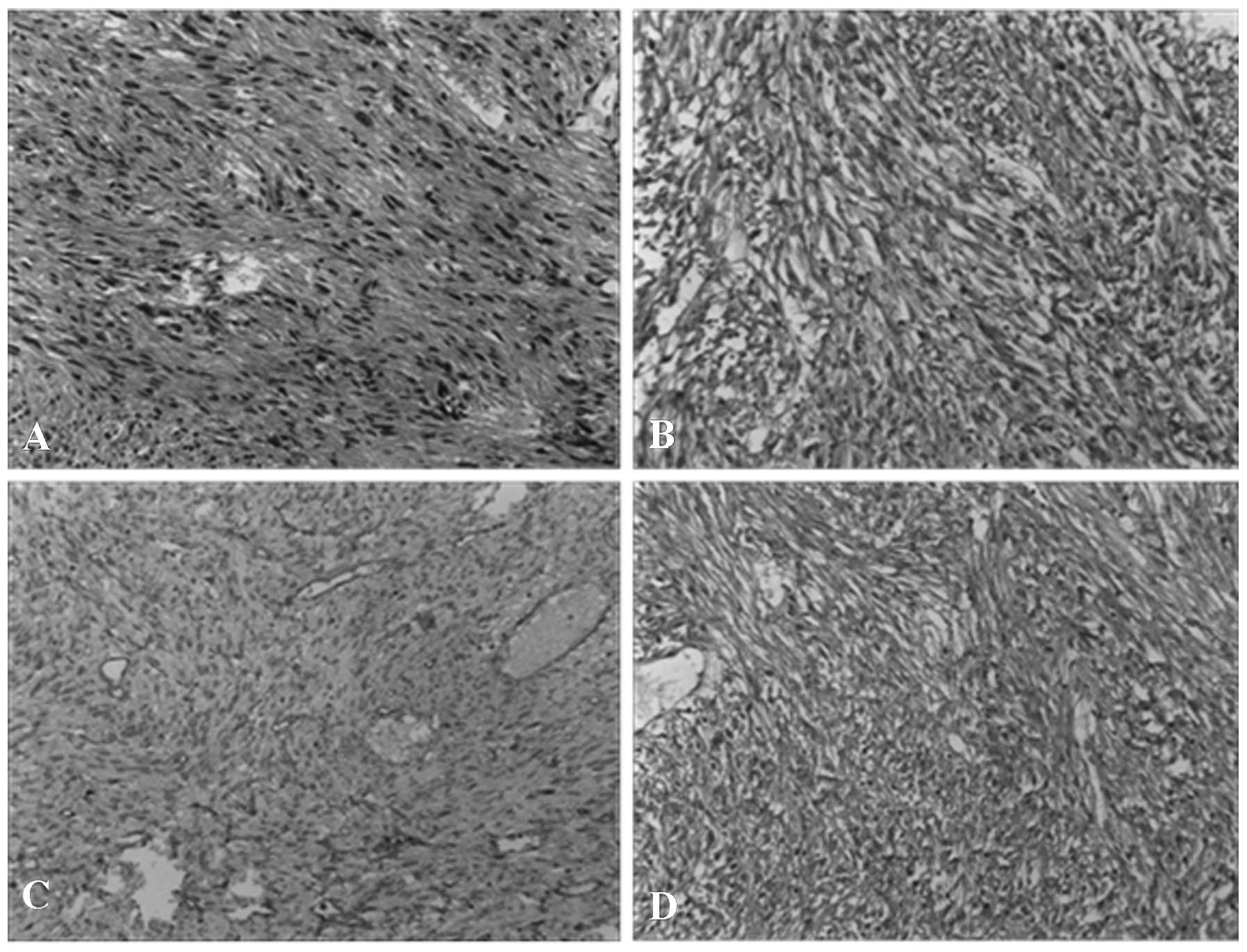
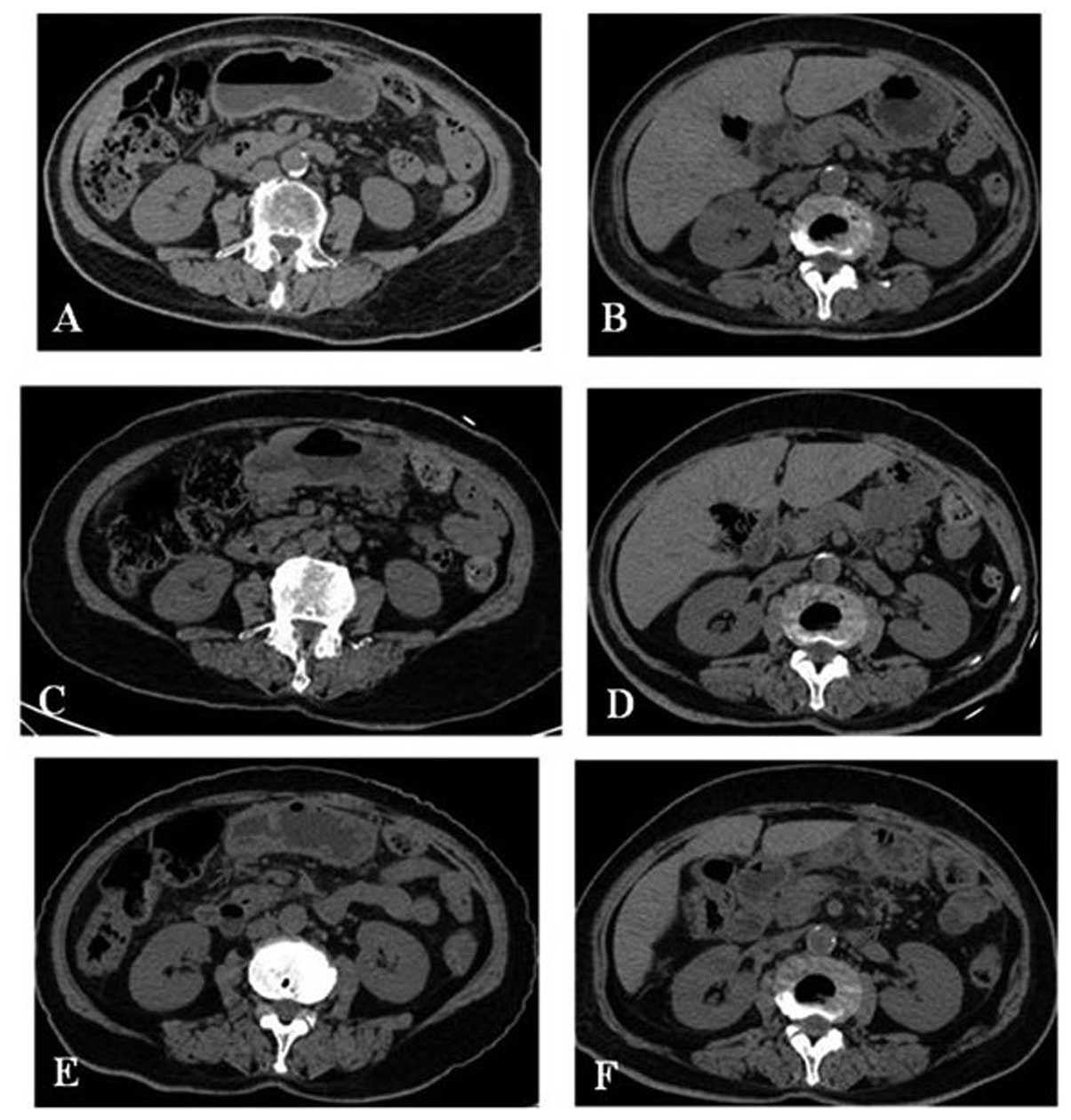
An 80-year-old female underwent several examinations in August 2009 for a gall stone. A CT scan disclosed a gastric mass. The patient underwent a partial gastric resection in September 2009 (Fig. 1A). The tumor size was 7.5×5 cm, and the immunohistochemical analysis revealed the tumor was positive for CD117 (Fig. 1B), CD34 (Fig. 1C) and DOG-1 (Fig. 1D), but negative for S100. The patient started imatinib treatment at 400 mg/day and was examined every three months (Fig. 2A and B). She remained well, and stopped imatinib treatment in March 2011. In June 2011, when the patient was referred to Zhengzhou People’s Hospital, recurrence was documented in the gastric remnant (Fig. 2C and D). Beginning in July 2011, she was treated with sunitinib (37.5 mg/day), but demonstrated poor tolerance. She experienced frequent lack of hunger, fatigue, somnolence, nausea and vomiting. In August 2011, she was hospitalized for fatigue. A CT scan presented reductions in the size of the gastric mass and enlarged lymph nodes (Fig. 2E and F). In August 2011, the patient began to exhibit hematemesis and was hospitalized. Later, she presented with digestive tract hemorrhage, and following this, melena and bloody stool occurred. On September 4, 2011, the patient’s hemoglobin concentration was 102 g/l. By September 6, 2011, the hemoglobin concentration was down to 76 g/l. Therefore, conservative medical management was adopted. Hemorrhage stopped gradually. Although the patient experienced gastrointestinal bleeding complications, her treatment was effective. Thus, we suggested continuing sunitinib treatment at a reduced dose or participating in clinical trials of new drugs. The patient rejected these suggestions. She is currently receiving best supportive care (BSC), and follow-up is in progress. Written informed consent was obtained from the patient for publication of this case report and accompanying images.

Figure 1.

(A) Hematoxylin and eosin staining of gastrointestinal stromal tumors (GIST). The immunohistochemistry study of the GIST revealed positive results for CD117 (B), CD34 (C) and DOG-1 (D).

Figure 2.

(A) Stomach CT following surgery. (B) CT demonstrated no lymph node metastasis in the abdominal cavity. (C) Stomach CT showed recurrence. (D) CT demonstrated lymph node metastasis in the abdominal cavity. (E) Stomach CT showed that the mass was reducing in size. (F) CT demonstrated that the abdominal cavity lymph node was reducing in size.

Discussion

Pathogenetic mechanisms of GISTs are poorly understood. KIT and PDGFRA mutations drive mesenchymal tumors, including GISTs (gastrointestinal tract sarcomas). Histologically, GISTs vary from spindled to epitheloid and mixed cell tumors. The pathological features are different according to different sites. Gastric GISTs appear as spindle cells and epitheloid cells, but most small intestinal GISTs are spindle cells. Mutations in KIT or PDGFRA lead to increased cellular proliferation and decreased apoptosis. Approximately 85% of GISTs have mutations in KIT or PDGFRA (14–17). Tumors with kinase mutations in exon 11 or 9 have a higher overall response to therapy with receptor tyrosine kinase; therefore, these patients have a significantly longer overall survival.

GISTs are often presented with related symptoms such as anemia or mucosal ulcerations. The diagnostic evaluation is determined by pathological examination. KIT (CD117) is a transmembrane receptor which is a part of the tyrosine kinase receptor complex. GISTs are typically immunoreactive for KIT, thus the presence of CD117 confirms GIST diagnosis by immunohistochemistry. Approximately 90–100% of GISTs express CD117, and 70–80% are positive for CD34, which is the hematopoietic progenitor cell antigen (3,18,19).

GISTs are not sensitive to conventional chemotherapy. The response rate to chemotherapy is <10%. However, targeted therapy has shown some promising results. Imatinib mesylate (a TKI) is considered to be the standard first-line agent in the treatment of unresectable or metastatic GISTs (20). Imatinib, formerly known as STI-571, has been shown to decrease the density of tumor cells without causing inflammation or necrosis (21–23). Sunitinib is an oral multi-targeted tyrosine kinase inhibitor with activity against KIT, PDGFRs, VEGFRs, glial cell line-derived neurotrophic factor receptor, colony-stimulating factor 1 receptor (CSF-1R) and FMS-like tyrosine kinase-3 receptor (FLT3) (24–29). Sunitinib appears to be an effective treatment for patients with imatinib-resistant/intolerant GISTs (7).

TKI-associated side effects mainly include nonhematological and hematological toxicities (30). TKI-associated side-effects affect the curative effect. Thus, the appropriate management of TKI-associated side-effects is important. However, systematic research on the management of TKI-related toxicities remains scarce.

In conclusion, the complication of digestive tract hemorrhage in patients treated with sunitinib is rare. However, this case demonstrates that it does occur. Thus, we should be watchful of this complication in the clinic with sunitinib treatment. Its mechanism remains unclear, therefore data on molecular background, risk factors, treatment response and prognostic significance should be collected in a larger patient population and be further defined.

References

1. 

Hauber AB, Gonzalez JM, Coombs J, et al: Patient preferences for reducing toxicities of treatments for gastrointestinal stromal tumor (GIST). Patient Prefer Adherence. 5:307–314. 2011. View Article : Google Scholar : PubMed/NCBI

2. 

Di Scioscio V, Greco L, Pallotti MC, et al: Three cases of bone metastases in patients with gastrointestinal stromal tumors. Rare Tumors. 3:e172011.

3. 

Afuwape OO, Irabor DO and Ladipo JK: Gastrointestinal stromal tumour in Ibadan, Nigeria: a case report and review of current treatment. Afr Health Sci. 11:134–138. 2011.PubMed/NCBI

4. 

Issar P, Dwivedi MK, Issar SK, Pal RK and Dewanagan L: Malignant gastrointestinal stromal tumours. Indian J Radiol Imaging. 16:65–67. 2006. View Article : Google Scholar

5. 

Wingen CB, Pauwels PA, Debiec-Rychter M, van Gemert WG and Vos MC: Uterine gastrointestinal stromal tumours (GIST). Gynecol Oncol. 97:970–972. 2005. View Article : Google Scholar : PubMed/NCBI

6. 

DeMatteo RP, Lewis JJ, Leung D, et al: Two hundred gastrointestinal stromal tumors: recurrence patterns and prognostic factors for survival. Ann Surg. 231:51–58. 2000. View Article : Google Scholar : PubMed/NCBI

7. 

Chen YY, Yeh CN, Cheng CT, et al: Sunitinib for Taiwanese patients with gastrointestinal stromal tumor after imatinib treatment failure or intolerance. World J Gastroenterol. 17:2113–2119. 2011. View Article : Google Scholar : PubMed/NCBI

8. 

Kindblom LG, Remotti HE, Aldenborg F, et al: Gastrointestinal pacemaker cell tumor (GIPACT): gastrointestinal stromal tumors show phenotypic characteristics of the interstitial cells of Cajal. Am J Pathol. 152:1259–1269. 1998.

9. 

Hirota S, Isozaki K, Moriyama Y, et al: Gain-of-function mutations of c-kit in human gastrointestinal stromal tumors. Science. 279:577–580. 1998. View Article : Google Scholar : PubMed/NCBI

10. 

Demetri GD, von Mehren M, Blanke CD, et al: Efficacy and safety of imatinib mesylate in advanced gastronitestinal stromal tumors. N Engl J Med. 347:472–480. 2002. View Article : Google Scholar : PubMed/NCBI

11. 

Demetri GD, van Oosterom AT, Garrett CR, et al: Efficacy and safety of sunitinib in patients with advanced gastrointestinal stromal tumour after failure of imatinib: a randomised controlled trial. Lancet. 368:1329–1338. 2006. View Article : Google Scholar : PubMed/NCBI

12. 

Therasse P, Arbuck SG, Eisenhauer EA, et al: New guidelines to evaluate the response to treatment in solid tumors. J Natl Cancer Inst. 92:205–216. 2000. View Article : Google Scholar : PubMed/NCBI

13. 

Choi H, Charnsangavej C, Faria SC, et al: Correlation of computed tomography and positron emission tomography in patients with metastatic gastrointestinal stromal tumor treated at a single institution with imatinib mesylate: proposal of new computed tomography response criteria. J Clin Oncol. 25:1753–1759. 2007. View Article : Google Scholar

14. 

Miettinen M and Lasota J: Gastrointestinal stromal tumors: review on morphology, molecular pathology, prognosis, and differential diagnosis. Arch Pathol Lab Med. 130:1466–1478. 2006.PubMed/NCBI

15. 

Daniels M, Lurkin I, Pauli R, Erbstösser E, et al: Spectrum of KIT/PDGFRA/BRAF mutations and Phosphatidylinositol-3-Kinase pathway gene alterations in gastrointestinal stromal tumors (GIST). Cancer Lett. 312:43–54. 2011. View Article : Google Scholar : PubMed/NCBI

16. 

Miettinen M and Lasota J: Gastrointestinal stromal tumors: pathology and prognosis at different sites. Semin Diagn Pathol. 23:70–83. 2006. View Article : Google Scholar : PubMed/NCBI

17. 

Corless CL, Fletcher JA, Heinrich MC, et al: Biology of gastrointestinal stromal tumors. J Clin Oncol. 22:3813–3825. 2004. View Article : Google Scholar : PubMed/NCBI

18. 

Bucher P, Villiger P, Egger JF, et al: Management of gastrointestinal stromal tumours: from diagnosis to treatment. Swiss Med Wkly. 134:145–153. 2004.PubMed/NCBI

19. 

Annaberdyev S, Gibbons J and Hardacre JM: Dramatic response of a gastrointestinal stromal tumour to neoadjuvant imatinib therapy. World J Surg Oncol. 7:302009. View Article : Google Scholar : PubMed/NCBI

20. 

Dematteo RP, Ballman KV, Antonescu CR, et al: Adjuvant imatinib mesylate after resection of localised, primary gastrointestinal stromal tumour: a randomised, double-blind, placebo-controlled trial. Lancet. 373:1097–104. 2009. View Article : Google Scholar

21. 

Ibrahim HH, Ahmad MS, Eskaf WA, et al: Malignant gastrointestinal stromal tumor of the tongue: case report and review of the literature. Oral Surg Oral Med Oral Pathol Oral Radiol Endod. 111:e24–e29. 2011. View Article : Google Scholar : PubMed/NCBI

22. 

Nowain A, Bhakta H, Pais S, et al: Gastrointestinal stromal tumors: clinical profile, pathogenesis,treatment strategies and prognosis. J Gastroenterol Hepatol. 20:818–824. 2005. View Article : Google Scholar : PubMed/NCBI

23. 

Arru JM and Richardson JD: Gastrointestinal stromal tumors: pathogenesis and current treatment. J Ky Med Assoc. 103:211–215. 2005.PubMed/NCBI

24. 

Osusky KL, Hallahan DE, Fu A, et al: The receptor tyrosine kinase inhibitor SU11248 impedes endothelial cell migration, tubule formation, and blood vessel formation in vivo, but has little effect on existing tumor vessels. Angiogenesis. 7:225–233. 2004. View Article : Google Scholar

25. 

Abrams TJ, Lee LB, Murray LJ, et al: SU11248 inhibits KIT and platelet-derived growth factor receptor beta in preclinical models of human small cell lung cancer. Mol Cancer Ther. 2:471–478. 2003.PubMed/NCBI

26. 

Mendel DB, Laird AD, Xin X, et al: In vivo antitumor activity of SU11248, a novel tyrosine kinase inhibitor targeting vascular endothelial growth factor and platelet-derived growth factor receptors: determination of a pharmacokinetic/pharmacodynamic relationship. Clin Cancer Res. 9:327–337. 2003.

27. 

Murray LJ, Abrams TJ, Long KR, et al: SU11248 inhibits tumor growth and CSF-1R-dependent osteolysis in an experimental breast cancer bone metastasis model. Clin Exp Metastasis. 20:757–766. 2003. View Article : Google Scholar : PubMed/NCBI

28. 

O’Farrell AM, Abrams TJ, Yuen HA, et al: SU11248 is a novel FLT3 tyrosine kinase inhibitor with potent activity in vitro and in vivo. Blood. 101:3597–3605. 2003.PubMed/NCBI

29. 

Schueneman AJ, Himmelfarb E, Geng L, et al: SU11248 maintenance therapy prevents tumor regrowth after fractionated irradiation of murine tumor models. Cancer Res. 63:4009–4016. 2003.PubMed/NCBI

30. 

Joensuu H, Trent JC and Reichardt P: Practical management of tyrosine kinase inhibitor-associated side effects in GIST. Cancer Treat Rev Feb. 37:75–88. 2011. View Article : Google Scholar : PubMed/NCBI

Related Articles

  • Abstract
  • View
  • Download
  • Twitter
Copy and paste a formatted citation
Spandidos Publications style
Liu Y, Zhang H, Zhang Y, Mei J, Lin H, Guo YW, Li R, Meng X, Liu G, Li M, Li M, et al: Digestive tract hemorrhage due to complications with gastrointestinal stromal tumor treated with sunitinib: A case report. Oncol Lett 5: 699-701, 2013.
APA
Liu, Y., Zhang, H., Zhang, Y., Mei, J., Lin, H., Guo, Y. ... Bai, H. (2013). Digestive tract hemorrhage due to complications with gastrointestinal stromal tumor treated with sunitinib: A case report. Oncology Letters, 5, 699-701. https://doi.org/10.3892/ol.2012.1050
MLA
Liu, Y., Zhang, H., Zhang, Y., Mei, J., Lin, H., Guo, Y., Li, R., Meng, X., Liu, G., Li, M., Xiao, P., Bai, H."Digestive tract hemorrhage due to complications with gastrointestinal stromal tumor treated with sunitinib: A case report". Oncology Letters 5.2 (2013): 699-701.
Chicago
Liu, Y., Zhang, H., Zhang, Y., Mei, J., Lin, H., Guo, Y., Li, R., Meng, X., Liu, G., Li, M., Xiao, P., Bai, H."Digestive tract hemorrhage due to complications with gastrointestinal stromal tumor treated with sunitinib: A case report". Oncology Letters 5, no. 2 (2013): 699-701. https://doi.org/10.3892/ol.2012.1050
Copy and paste a formatted citation
x
Spandidos Publications style
Liu Y, Zhang H, Zhang Y, Mei J, Lin H, Guo YW, Li R, Meng X, Liu G, Li M, Li M, et al: Digestive tract hemorrhage due to complications with gastrointestinal stromal tumor treated with sunitinib: A case report. Oncol Lett 5: 699-701, 2013.
APA
Liu, Y., Zhang, H., Zhang, Y., Mei, J., Lin, H., Guo, Y. ... Bai, H. (2013). Digestive tract hemorrhage due to complications with gastrointestinal stromal tumor treated with sunitinib: A case report. Oncology Letters, 5, 699-701. https://doi.org/10.3892/ol.2012.1050
MLA
Liu, Y., Zhang, H., Zhang, Y., Mei, J., Lin, H., Guo, Y., Li, R., Meng, X., Liu, G., Li, M., Xiao, P., Bai, H."Digestive tract hemorrhage due to complications with gastrointestinal stromal tumor treated with sunitinib: A case report". Oncology Letters 5.2 (2013): 699-701.
Chicago
Liu, Y., Zhang, H., Zhang, Y., Mei, J., Lin, H., Guo, Y., Li, R., Meng, X., Liu, G., Li, M., Xiao, P., Bai, H."Digestive tract hemorrhage due to complications with gastrointestinal stromal tumor treated with sunitinib: A case report". Oncology Letters 5, no. 2 (2013): 699-701. https://doi.org/10.3892/ol.2012.1050
Follow us
  • Twitter
  • LinkedIn
  • Facebook
About
  • Spandidos Publications
  • Careers
  • Cookie Policy
  • Privacy Policy
How can we help?
  • Help
  • Live Chat
  • Contact
  • Email to our Support Team