Spandidos Publications Logo
  • About
    • About Spandidos
    • Aims and Scopes
    • Abstracting and Indexing
    • Editorial Policies
    • Reprints and Permissions
    • Job Opportunities
    • Terms and Conditions
    • Contact
  • Journals
    • All Journals
    • Oncology Letters
      • Oncology Letters
      • Information for Authors
      • Editorial Policies
      • Editorial Board
      • Aims and Scope
      • Abstracting and Indexing
      • Bibliographic Information
      • Archive
    • International Journal of Oncology
      • International Journal of Oncology
      • Information for Authors
      • Editorial Policies
      • Editorial Board
      • Aims and Scope
      • Abstracting and Indexing
      • Bibliographic Information
      • Archive
    • Molecular and Clinical Oncology
      • Molecular and Clinical Oncology
      • Information for Authors
      • Editorial Policies
      • Editorial Board
      • Aims and Scope
      • Abstracting and Indexing
      • Bibliographic Information
      • Archive
    • Experimental and Therapeutic Medicine
      • Experimental and Therapeutic Medicine
      • Information for Authors
      • Editorial Policies
      • Editorial Board
      • Aims and Scope
      • Abstracting and Indexing
      • Bibliographic Information
      • Archive
    • International Journal of Molecular Medicine
      • International Journal of Molecular Medicine
      • Information for Authors
      • Editorial Policies
      • Editorial Board
      • Aims and Scope
      • Abstracting and Indexing
      • Bibliographic Information
      • Archive
    • Biomedical Reports
      • Biomedical Reports
      • Information for Authors
      • Editorial Policies
      • Editorial Board
      • Aims and Scope
      • Abstracting and Indexing
      • Bibliographic Information
      • Archive
    • Oncology Reports
      • Oncology Reports
      • Information for Authors
      • Editorial Policies
      • Editorial Board
      • Aims and Scope
      • Abstracting and Indexing
      • Bibliographic Information
      • Archive
    • Molecular Medicine Reports
      • Molecular Medicine Reports
      • Information for Authors
      • Editorial Policies
      • Editorial Board
      • Aims and Scope
      • Abstracting and Indexing
      • Bibliographic Information
      • Archive
    • World Academy of Sciences Journal
      • World Academy of Sciences Journal
      • Information for Authors
      • Editorial Policies
      • Editorial Board
      • Aims and Scope
      • Abstracting and Indexing
      • Bibliographic Information
      • Archive
    • International Journal of Functional Nutrition
      • International Journal of Functional Nutrition
      • Information for Authors
      • Editorial Policies
      • Editorial Board
      • Aims and Scope
      • Abstracting and Indexing
      • Bibliographic Information
      • Archive
    • International Journal of Epigenetics
      • International Journal of Epigenetics
      • Information for Authors
      • Editorial Policies
      • Editorial Board
      • Aims and Scope
      • Abstracting and Indexing
      • Bibliographic Information
      • Archive
    • Medicine International
      • Medicine International
      • Information for Authors
      • Editorial Policies
      • Editorial Board
      • Aims and Scope
      • Abstracting and Indexing
      • Bibliographic Information
      • Archive
  • Articles
  • Information
    • Information for Authors
    • Information for Reviewers
    • Information for Librarians
    • Information for Advertisers
    • Conferences
  • Language Editing
Spandidos Publications Logo
  • About
    • About Spandidos
    • Aims and Scopes
    • Abstracting and Indexing
    • Editorial Policies
    • Reprints and Permissions
    • Job Opportunities
    • Terms and Conditions
    • Contact
  • Journals
    • All Journals
    • Biomedical Reports
      • Information for Authors
      • Editorial Policies
      • Editorial Board
      • Aims and Scope
      • Abstracting and Indexing
      • Bibliographic Information
      • Archive
    • Experimental and Therapeutic Medicine
      • Information for Authors
      • Editorial Policies
      • Editorial Board
      • Aims and Scope
      • Abstracting and Indexing
      • Bibliographic Information
      • Archive
    • International Journal of Epigenetics
      • Information for Authors
      • Editorial Policies
      • Editorial Board
      • Aims and Scope
      • Abstracting and Indexing
      • Bibliographic Information
      • Archive
    • International Journal of Functional Nutrition
      • Information for Authors
      • Editorial Policies
      • Editorial Board
      • Aims and Scope
      • Abstracting and Indexing
      • Bibliographic Information
      • Archive
    • International Journal of Molecular Medicine
      • Information for Authors
      • Editorial Policies
      • Editorial Board
      • Aims and Scope
      • Abstracting and Indexing
      • Bibliographic Information
      • Archive
    • International Journal of Oncology
      • Information for Authors
      • Editorial Policies
      • Editorial Board
      • Aims and Scope
      • Abstracting and Indexing
      • Bibliographic Information
      • Archive
    • Medicine International
      • Information for Authors
      • Editorial Policies
      • Editorial Board
      • Aims and Scope
      • Abstracting and Indexing
      • Bibliographic Information
      • Archive
    • Molecular and Clinical Oncology
      • Information for Authors
      • Editorial Policies
      • Editorial Board
      • Aims and Scope
      • Abstracting and Indexing
      • Bibliographic Information
      • Archive
    • Molecular Medicine Reports
      • Information for Authors
      • Editorial Policies
      • Editorial Board
      • Aims and Scope
      • Abstracting and Indexing
      • Bibliographic Information
      • Archive
    • Oncology Letters
      • Information for Authors
      • Editorial Policies
      • Editorial Board
      • Aims and Scope
      • Abstracting and Indexing
      • Bibliographic Information
      • Archive
    • Oncology Reports
      • Information for Authors
      • Editorial Policies
      • Editorial Board
      • Aims and Scope
      • Abstracting and Indexing
      • Bibliographic Information
      • Archive
    • World Academy of Sciences Journal
      • Information for Authors
      • Editorial Policies
      • Editorial Board
      • Aims and Scope
      • Abstracting and Indexing
      • Bibliographic Information
      • Archive
  • Articles
  • Information
    • For Authors
    • For Reviewers
    • For Librarians
    • For Advertisers
    • Conferences
  • Language Editing
Login Register Submit
  • This site uses cookies
  • You can change your cookie settings at any time by following the instructions in our Cookie Policy. To find out more, you may read our Privacy Policy.

    I agree
Search articles by DOI, keyword, author or affiliation
Search
Advanced Search
presentation
Oncology Letters
Join Editorial Board Propose a Special Issue
Print ISSN: 1792-1074 Online ISSN: 1792-1082
Journal Cover
March 2012 Volume 3 Issue 3

Full Size Image

Sign up for eToc alerts
Recommend to Library

Journals

International Journal of Molecular Medicine

International Journal of Molecular Medicine

International Journal of Molecular Medicine is an international journal devoted to molecular mechanisms of human disease.

International Journal of Oncology

International Journal of Oncology

International Journal of Oncology is an international journal devoted to oncology research and cancer treatment.

Molecular Medicine Reports

Molecular Medicine Reports

Covers molecular medicine topics such as pharmacology, pathology, genetics, neuroscience, infectious diseases, molecular cardiology, and molecular surgery.

Oncology Reports

Oncology Reports

Oncology Reports is an international journal devoted to fundamental and applied research in Oncology.

Experimental and Therapeutic Medicine

Experimental and Therapeutic Medicine

Experimental and Therapeutic Medicine is an international journal devoted to laboratory and clinical medicine.

Oncology Letters

Oncology Letters

Oncology Letters is an international journal devoted to Experimental and Clinical Oncology.

Biomedical Reports

Biomedical Reports

Explores a wide range of biological and medical fields, including pharmacology, genetics, microbiology, neuroscience, and molecular cardiology.

Molecular and Clinical Oncology

Molecular and Clinical Oncology

International journal addressing all aspects of oncology research, from tumorigenesis and oncogenes to chemotherapy and metastasis.

World Academy of Sciences Journal

World Academy of Sciences Journal

Multidisciplinary open-access journal spanning biochemistry, genetics, neuroscience, environmental health, and synthetic biology.

International Journal of Functional Nutrition

International Journal of Functional Nutrition

Open-access journal combining biochemistry, pharmacology, immunology, and genetics to advance health through functional nutrition.

International Journal of Epigenetics

International Journal of Epigenetics

Publishes open-access research on using epigenetics to advance understanding and treatment of human disease.

Medicine International

Medicine International

An International Open Access Journal Devoted to General Medicine.

Journal Cover
March 2012 Volume 3 Issue 3

Full Size Image

Sign up for eToc alerts
Recommend to Library

  • Article
  • Citations
    • Cite This Article
    • Download Citation
    • Create Citation Alert
    • Remove Citation Alert
    • Cited By
  • Similar Articles
    • Related Articles (in Spandidos Publications)
    • Similar Articles (Google Scholar)
    • Similar Articles (PubMed)
  • Download PDF
  • Download XML
  • View XML
Article

Cotreatment with dichloroacetate and omeprazole exhibits a synergistic antiproliferative effect on malignant tumors

  • Authors:
    • Tatsuaki Ishiguro
    • Miyu Ishiguro
    • Ryumei Ishiguro
    • Sayuri Iwai
  • View Affiliations / Copyright

    Affiliations: Department of Experimental Therapeutics, Kamui Medical Co., Ltd., Tokyo 1120002, Japan
  • Pages: 726-728
    |
    Published online on: January 3, 2012
       https://doi.org/10.3892/ol.2012.552
  • Expand metrics +
Metrics: Total Views: 0 (Spandidos Publications: | PMC Statistics: )
Metrics: Total PDF Downloads: 0 (Spandidos Publications: | PMC Statistics: )
Cited By (CrossRef): 0 citations Loading Articles...

This article is mentioned in:


Abstract

It has been reported that treating cancer cells with dichloroacetate (DCA), an approved treatment for congenital lactic acidosis, reverses the Warburg effect and inhibits tumor growth). Furthermore, omeprazole (OMP) is a well-known agent that enhances the effects of anticancer drugs. The aim of this study was to find clinically-used drugs that enhance the effects of DCA. The combination of DCA and OMP exhibited a more potent antitumor activity than DCA alone in HT1080 fibrosarcoma cells and RKO colon cancer cells, while the drugs did not affect the proliferation of WI-38 human fibroblasts. The inhibitory effect of DCA combined with OMP was reversed with vitamin E and Z-VAD-FMK; therefore conventional caspase-dependent cell growth inhibition through superoxide production was suggested as the mechanism for inhibition. The combination of these drugs also had an effect on HT1080 fibrosarcoma cells inoculated into mice. Since OMP and DCA may be administered orally and have been used clinically for several years without major side effects, we believe that this combination therapy could be readily translated to treat malignant tumors.

Introduction

Warburg first observed that even in the presence of sufficient oxygen, cancer cells prefer to metabolize glucose and produce lactic acid (1–4). The concomitant increase in glucose uptake may be exploited clinically for the detection of most solid malignant tumors by fluorodeoxyglucose positron emission tomography (FDG-PET). One possible reason for cancers adopting this less efficient pathway for producing adenosine triphosphate (ATP) compared with oxidative phosphorylation is its advantage for survival and proliferation in the unique hypoxic tumor environment (5). This preference for anaerobic respiration is also considered to be the reason for the resistance cancer cells exhibit to anticancer drugs which induce apoptosis via the mitochondrial pathway. Bonnet et al have reported that treating cancer cells with dichloroacetate (DCA), an approved treatment for congenital lactic acidosis, reverses the Warburg effect and inhibits tumor growth (3,4,6–8). DCA increases the flux of pyruvate into the mitochondria by inhibiting the pyruvate dehydrogenase kinase and promotes glucose oxidation over glycolysis. As a result, DCA decreases the production of lactic acid by the tumor and increases the intracellular pH. DCA induces apoptosis via two pathways, one in the mitochondria, where depolarization and superoxide (SOD) production activates mitochondria-dependent apoptosis, and the other at the plasmalemmal level, where activation/upregulation of Kv1.5 channels decreases the (K+)i, activating caspases (6). DCA is a promising anticancer drug due to the convenience of its oral administration, low cost, few side effects and long experience of clinical use (7,8). Although it appeared to be a promising treatment for malignant tumors, its effect is limited in an ongoing report of clinical trials. Therefore, we aimed to find clinically-used drugs that enhance the effects of DCA.

Omeprazole (OMP) is a proton pump inhibitor (PPI) and is also known to enhance the effects of anticancer drugs (9). OMP inhibits the activity of V-ATPase besides targeting the gastric acid pump. It was reported to inhibit the proliferation of tumor cells, possibly by alkalinization of lysosomes and permeabilization of lysosome membranes, followed by the production of reactive oxygen species (ROS) (10,11).

As described, DCA and OMP are thought to inhibit tumor cell growth through the common pathway of ROS production by influencing the intracellular pH levels. Since these two drugs are used clinically with minor side effects, we believe that their combination is a promising protocol for cancer treatment.

Materials and methods

Chemicals

DCA and vitamin E (tocopherol acetate) were purchased from Wako Chemical Industries, Ltd. (Tokyo, Japan). OMP was purchased from Astra Zeneca Japan (Osaka, Japan). Z-VAD-FMK was purchased from the Peptide Institute, Inc. (Osaka, Japan).

Cell culture

HT1080 human fibrosarcoma cells, WI-38 human fibroblast cells and RKO colon cancer cells were seeded and grown in Dulbecco's modified Eagle's medium containing 10% fetal bovine serum (FBS) and maintained in an incubator at 37˚C and 5% CO2. For the cell proliferation experiments, cells were seeded in 12-well plates and incubated under the same conditions. After 7 days, the cells were treated with trypsin-EDTA and counted under a microscope.

Animal experiments

HT1080 cells (5×10⁶) were inoculated subcutaneously into nude mice (8w female). The drugs were added to the drinking water in order to achieve a daily dose similar to that used clinically (DCA 50 mg/kg, OMP 2 mg/kg). The size of each tumor was measured with a caliper and the tumor volume was calculated by the multiplication of three diameters.

Results

Combined treatment of DCA and OMP inhibited cell proliferation

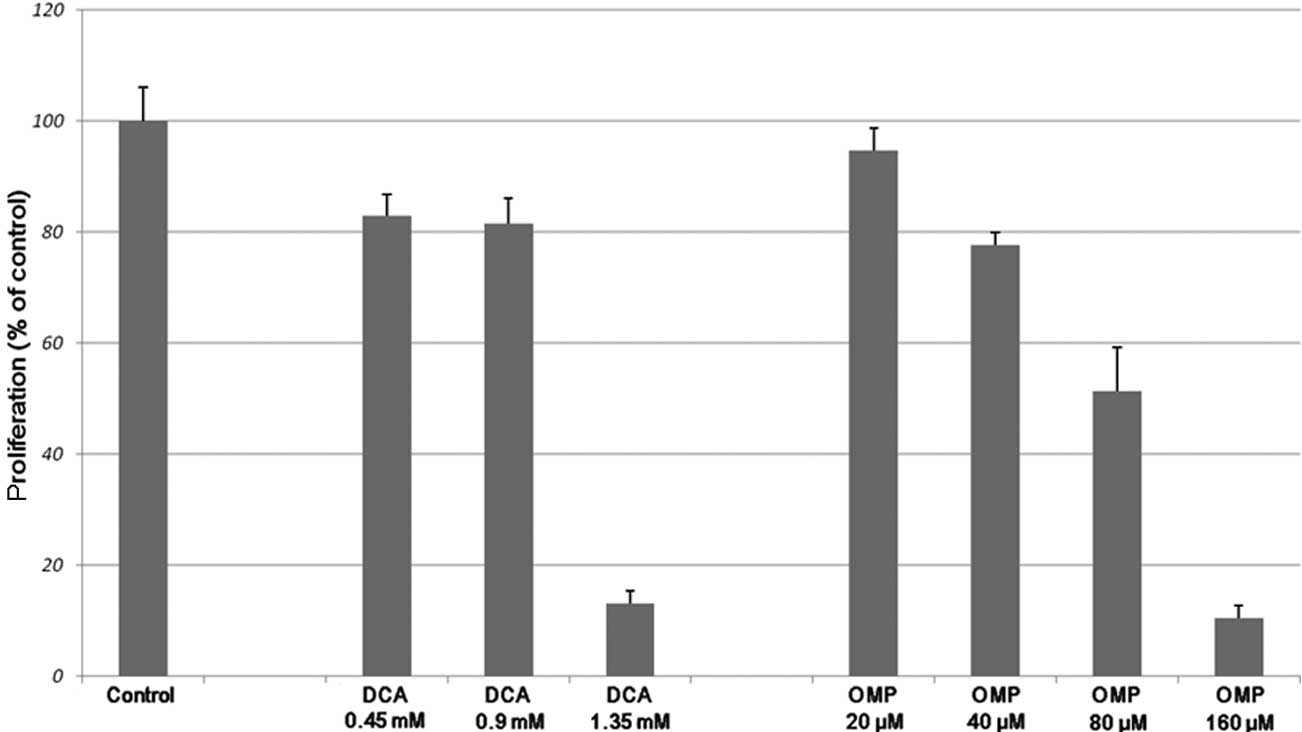
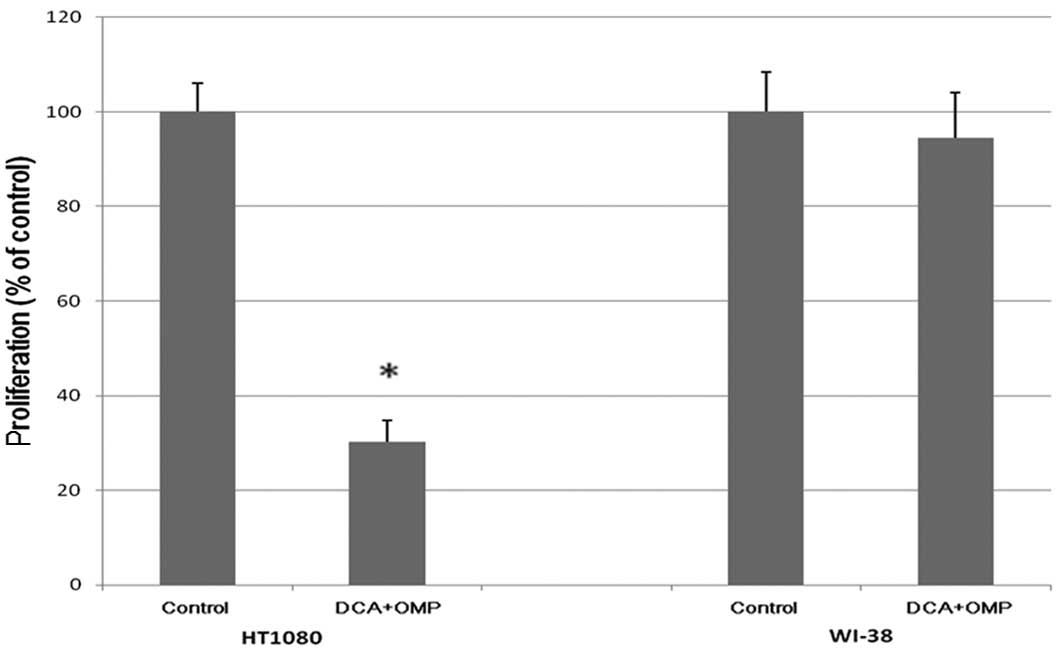
HT1080 human fibrosarcoma cells were cultured with increasing concentrations of DCA and OMP for 7 days, which resulted in a dose-dependent inhibition of proliferation (Fig. 1). As shown in Fig. 2A, the combination of DCA and OMP markedly blocked the proliferation of HT1080 fibrosarcoma cells, while the same combination did not affect the proliferation of WI-38 normal human fibroblast cells.

Figure 1

Dose-dependent inhibition of HT1080 fibrosarcoma cell proliferation by DCA and OMP. HT1080 human cells (5×10³) were cultured with increasing concentrations of DCA (0.45–1.35 mM) and OMP (20–160 μM). The cells were harvested after 7 days and counted under a microscope. DCA, dichloroacetate; OMP, omeprazole.

Figure 2

(A) Effect of the combined treatment of DCA and OMP on HT1080 fibrosarcoma cells and WI-38 normal human fibroblasts. HT1080 fibrosarcoma cells (5×10³) or WI-38 normal human fibroblasts were cultured with 0.9 mM DCA and 40 μM OMP. The cells were harvested after 7 days and counted under a microscope. *P<0.05 versus control. (B) Effects of vitamin E and Z-VAD-FMK on the cell growth inhibitory effects of DCA and OMP. HT1080 fibrosarcoma cells (5×10³) were cultured with 1.2 mM DCA or 40 μM OMP. Vitamin E (10 μM) or Z-VAD-FMK (50 μM) was added. The cells were harvested after 7 days and counted under a microscope. *P<0.05 versus DCA alone, +p<0.05 versus OMP alone. DCA, dichloroacetate; OMP, omeprazole; Vit E, vitamin E.

Vitamin E inhibited the effects of DCA and OMP

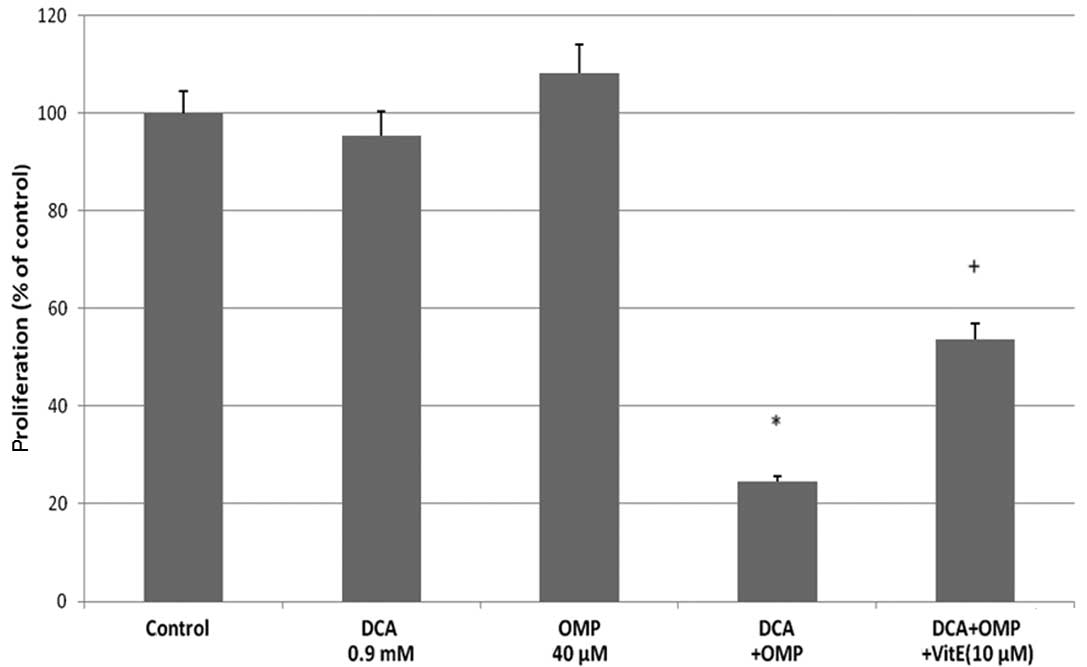
Although there has been controversy over the mechanism of the caspase-dependent cell growth inhibition by OMP (10,11), DCA and OMP have been reported to inhibit tumor cell growth through the production of SODs (6,10). To establish whether the same mechanism applied in the HT1080 fibrosarcoma cells, we used vitamin E as an inhibitor of SOD. Vitamin E successfully inhibited the effects of DCA and OMP, thus SOD production was thought to be involved in the inhibition of tumor cell growth (Fig. 2B). The pan-caspase inhibitor Z-VAD-FMK also inhibited the effects of these drugs; therefore a caspase-dependent antitumor mechanism was thought to be involved, at least in part, in these processes (Fig. 2B). Taken together, DCA and OMP inhibit the growth of HT1080 fibrosarcoma cells, possibly through a caspase-dependent pathway by SOD production. As a result, the drugs may exhibit a synergistic effect when combined. This synergistic effect and the inhibitory effect with vitamin E was also observed in RKO colon cancer cells (Fig. 3).

Figure 3

Effect of the combined treatment of DCA and OMP on RKO colon cancer cells. RKO colon cancer cells (5×10³) were cultured with 0.9 mM DCA, 40 μM OMP, 0.9 mM DCA+40 μM OMP or 0.9 mM DCA+40 μM OMP+10 μM vitamin E. The cells were harvested after 7 days and counted under a microscope. *P<0.05 versus control, +p<0.05 versus DCA+OMP. DCA, dichloroacetate; OMP, omeprazole; Vit E, vitamin E.

We performed animal experiments to investigate the effects of DCA and OMP in vivo

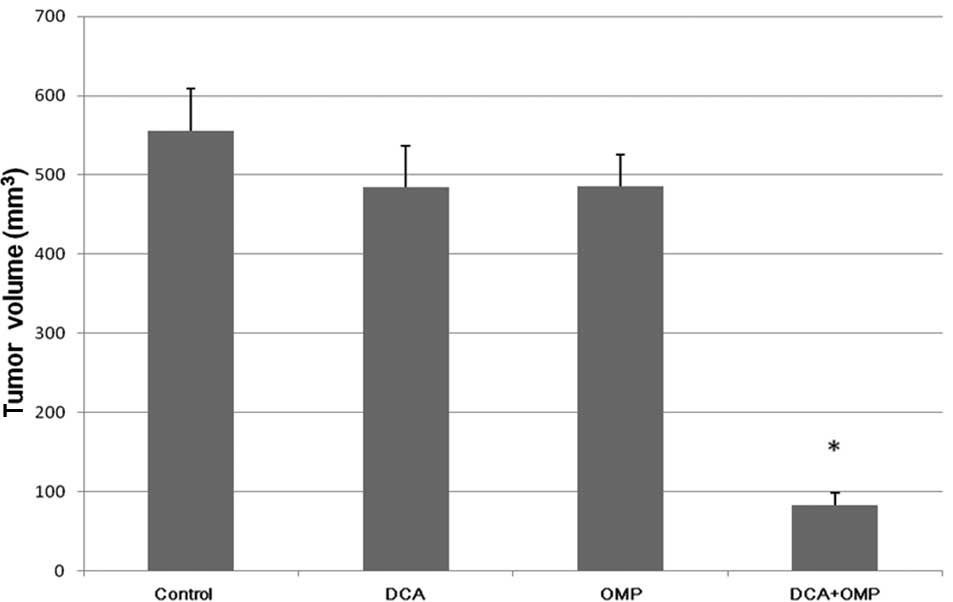
As shown in Fig. 4, the antitumor effect of the combination of DCA and OMP was also greater than that of either drug alone.

Figure 4

HT1080 cells (5×10⁶) were inoculated subcutaneously into nude mice. The drugs were added to the drinking water to achieve a daily dose similar to that used clinically (DCA 50 mg/kg, OMP 2 mg/kg). The size of each tumor was measured with a caliper and the tumor volume was calculated by the multiplication of three diameters. *P<0.05 versus control. DCA, dichloroacetate; OMP, omeprazole.

Discussion

We have shown that a combined treatment of DCA and OMP is more effective than treatment with either drug alone in HT1080 human fibrosarcoma cells and RKO colon cancer cells. The combined therapy was also effective in animal experiments.

DCA and OMP have been used safely for a number of years but are not classified as anticancer drugs. DCA has been used to treat congenital metabolic acidosis and OMP has been used to treat acid-related diseases, both without major side effects (7,8,12, 13). The combination of DCA and OMP is expected to reduce the necessary dose of each drug and the accompanying risks.

Oral doses of 20 mg OMP once daily have been reported to lead to a maximum plasma concentration in patients of ~2.5 μg/ml (7 μM) 2 h after administering the dose (14). A dose of 120 mg OMP three times a day has been used for the treatment of Zollinger-Ellison syndrome, with only rare and mild side effects even following long-term use (15,16). This dose corresponds with a hypothetical in vivo peak concentration of ~15 μg/ml (42 μM). Overdoses of up to 2,400 mg [a hypothetical plasma peak concentration of 300 μg/ml (840 μM)] have been tolerated with minor side effects (17). DCA is already established in clinical practice. The Cmax value of DCA in adults following 6 months of continuous treatment (oral doses of 25 mg/kg/day) was 53±18 μg/ml (0.35±0.12 mM) (18). Patients were safely treated chronically with DCA at the maximum dose of 50 mg/kg/day (19). A number of children with lactic acidosis were administered >100 mg/kg DCA daily for a long period (8). From these data we consider that the necessary dose of the two drugs is tolerable. Moreover, candidate analogs of DCA with less toxicity and better binding affinity have been developed (20). Thus, the combination of DCA and OMP is considered a potential therapeutic option for malignant tumors and may lead to the development of a new therapeutic strategy.

Abbreviations:

DCA

dichloroacetate

PPI

proton pump inhibitor

OMP

omeprazole

SOD

superoxide

ROS

reactive oxygen species

References

1 

Warburg O: Ueber den Stoffwechsel der Tumoren. Constable; London: 1930

2 

Warburg O: On the origin of cancer cells. Science. 123:309–314. 1956. View Article : Google Scholar : PubMed/NCBI

3 

Hsu PP and Sabatini DM: Cancer cell metabolism: Warburg and beyond. Cell. 134:703–707. 2008. View Article : Google Scholar : PubMed/NCBI

4 

Michelakis ED, Webster L and Mackey LR: Dichloroacetate (DCA) as a potential metabolic-targeting therapy for cancer. Br J Cancer. 99:989–994. 2008. View Article : Google Scholar : PubMed/NCBI

5 

Plas DR and Thompson CB: Cell metabolism in the regulation of programmed cell death. Trends Endocrinol Metab. 13:75–78. 2002. View Article : Google Scholar : PubMed/NCBI

6 

Bonnet S, Archer SL, Allalunis-Turner J, Haromy A, Beaulieu C, Thompson R, Lee CT, Lopaschuk GD, Puttagunta L, Bonnet S, et al: A mitochondria-K+ channel axis is suppressed in cancer and its normalization promotes apoptosis and inhibits cancer growth. Cancer Cell. 11:37–51. 2007.

7 

Stacpoole PW: The pharmacology of dichloroacetate. Metabolism. 38:1124–1144. 2006. View Article : Google Scholar

8 

Stacpoole PW, Gilbert LR, Neiberger RE, Carney PR, Valenstein E, Theriaque DW and Shuster JJ: Evaluation of long-term treatment of children with congenital lactic acidosis with dichloroacetate. Pediatrics. 121:1223–1228. 2008. View Article : Google Scholar : PubMed/NCBI

9 

Luciani F, Spada M, Milito AD, Molinari A, Rivoltini L, Montinaro A, Marra M, Lugini L, Logozzi M, Lozupone F, et al: Effect of proton pump inhibitor pretreatment on resistance of solid tumors to cytotoxic drugs. J Natl Cancer Inst. 96:1702–1713. 2004. View Article : Google Scholar : PubMed/NCBI

10 

Milito AD, Iessi E, Logozzi M, Lozupone F, Spada M, Marino ML, Federici C, Perdicchio M, Matarrese P, Lugini L, et al: Proton pump inhibitors induce apoptosis of human B-cell tumors through a caspase-independent mechanism involving reactive oxygen species. Cancer Res. 67:5408–5417. 2007. View Article : Google Scholar : PubMed/NCBI

11 

De Milito A, Canese R, Marino ML, Borghi M, Iero M, Villa A, Venturi G, Lozupone F, Iessi E, Logozzi M, et al: pH-dependent antitumor activity of proton pump inhibitors against human melanoma is mediated by inhibition of tumor acidity. Int J Cancer. 27:207–219. 2010.PubMed/NCBI

12 

Michelakis ED, Sutendra G, Dromparis P, Webster L, Haromy A, Niven E, Maguire C, Gammer TL, Mackey JR, Fulton D, et al: Metabolic modulation of glioblastoma with dichloroacetate. Sci Trasl Med. 2:31–34. 2010.PubMed/NCBI

13 

Shi S and Klotz U: Proton pump inhibitors: an update of their clinical use and pharmacokinetics. Eur J Clin Pharmacol. 64:935–951. 2008. View Article : Google Scholar : PubMed/NCBI

14 

Katagiri F, Inoue S, Itoh H and Takayema M: Omeprazole raises somatostatin and motilin in human plasma. Biol Pharm Bull. 28:370–372. 2005. View Article : Google Scholar : PubMed/NCBI

15 

Frucht H, Maton PN and Jensen RT: Use of omeprazole in patients with Zollinger-Ellison syndrome. Dig Dis Sci. 36:394–404. 1991. View Article : Google Scholar : PubMed/NCBI

16 

Thomson ABR, Sauve MD, Kassam N and Kamitakahara H: Safety of the long-term use of proton pump inhibitors. World J Gastroenterol. 16:2323–2330. 2010. View Article : Google Scholar : PubMed/NCBI

17 

Udelnow A, Kreyes A, Ellinger S, Landfester K, Walther P, Klapperstueck T, Wohlrab J, Henne-Bruns D, Knippschild U and Würl P: Omeprazole inhibits proliferation and modulates autophagy in pancreatic cancer cells. PLoS One. 6:e201432011. View Article : Google Scholar : PubMed/NCBI

18 

Shroads AL, Guo X, Dixit V, Liu HP, James MO and Stacpoole PW: Age-dependent kinetics and metabolism of dichloroacetate: possible relevance to toxicity. J Pharmacol Exp Ther. 324:1163–1171. 2008. View Article : Google Scholar : PubMed/NCBI

19 

Stacpoole PW, Henderson GN, Yan Z, Cornett R and James MO: Pharmacokinetics, metabolism and toxicology of dichloroacetate. Drug Metab Rev. 30:499–539. 1998. View Article : Google Scholar : PubMed/NCBI

20 

Subramanian K and Ramaian AS: Development of a less toxic dichloroacetate analogue by docking and descriptor analysis. Bioinformation. 5:73–76. 2010. View Article : Google Scholar : PubMed/NCBI

Related Articles

  • Abstract
  • View
  • Download
  • Twitter
Copy and paste a formatted citation
Spandidos Publications style
Ishiguro T, Ishiguro M, Ishiguro R and Iwai S: Cotreatment with dichloroacetate and omeprazole exhibits a synergistic antiproliferative effect on malignant tumors. Oncol Lett 3: 726-728, 2012.
APA
Ishiguro, T., Ishiguro, M., Ishiguro, R., & Iwai, S. (2012). Cotreatment with dichloroacetate and omeprazole exhibits a synergistic antiproliferative effect on malignant tumors. Oncology Letters, 3, 726-728. https://doi.org/10.3892/ol.2012.552
MLA
Ishiguro, T., Ishiguro, M., Ishiguro, R., Iwai, S."Cotreatment with dichloroacetate and omeprazole exhibits a synergistic antiproliferative effect on malignant tumors". Oncology Letters 3.3 (2012): 726-728.
Chicago
Ishiguro, T., Ishiguro, M., Ishiguro, R., Iwai, S."Cotreatment with dichloroacetate and omeprazole exhibits a synergistic antiproliferative effect on malignant tumors". Oncology Letters 3, no. 3 (2012): 726-728. https://doi.org/10.3892/ol.2012.552
Copy and paste a formatted citation
x
Spandidos Publications style
Ishiguro T, Ishiguro M, Ishiguro R and Iwai S: Cotreatment with dichloroacetate and omeprazole exhibits a synergistic antiproliferative effect on malignant tumors. Oncol Lett 3: 726-728, 2012.
APA
Ishiguro, T., Ishiguro, M., Ishiguro, R., & Iwai, S. (2012). Cotreatment with dichloroacetate and omeprazole exhibits a synergistic antiproliferative effect on malignant tumors. Oncology Letters, 3, 726-728. https://doi.org/10.3892/ol.2012.552
MLA
Ishiguro, T., Ishiguro, M., Ishiguro, R., Iwai, S."Cotreatment with dichloroacetate and omeprazole exhibits a synergistic antiproliferative effect on malignant tumors". Oncology Letters 3.3 (2012): 726-728.
Chicago
Ishiguro, T., Ishiguro, M., Ishiguro, R., Iwai, S."Cotreatment with dichloroacetate and omeprazole exhibits a synergistic antiproliferative effect on malignant tumors". Oncology Letters 3, no. 3 (2012): 726-728. https://doi.org/10.3892/ol.2012.552
Follow us
  • Twitter
  • LinkedIn
  • Facebook
About
  • Spandidos Publications
  • Careers
  • Cookie Policy
  • Privacy Policy
How can we help?
  • Help
  • Live Chat
  • Contact
  • Email to our Support Team