Spandidos Publications Logo
  • About
    • About Spandidos
    • Aims and Scopes
    • Abstracting and Indexing
    • Editorial Policies
    • Reprints and Permissions
    • Job Opportunities
    • Terms and Conditions
    • Contact
  • Journals
    • All Journals
    • Oncology Letters
      • Oncology Letters
      • Information for Authors
      • Editorial Policies
      • Editorial Board
      • Aims and Scope
      • Abstracting and Indexing
      • Bibliographic Information
      • Archive
    • International Journal of Oncology
      • International Journal of Oncology
      • Information for Authors
      • Editorial Policies
      • Editorial Board
      • Aims and Scope
      • Abstracting and Indexing
      • Bibliographic Information
      • Archive
    • Molecular and Clinical Oncology
      • Molecular and Clinical Oncology
      • Information for Authors
      • Editorial Policies
      • Editorial Board
      • Aims and Scope
      • Abstracting and Indexing
      • Bibliographic Information
      • Archive
    • Experimental and Therapeutic Medicine
      • Experimental and Therapeutic Medicine
      • Information for Authors
      • Editorial Policies
      • Editorial Board
      • Aims and Scope
      • Abstracting and Indexing
      • Bibliographic Information
      • Archive
    • International Journal of Molecular Medicine
      • International Journal of Molecular Medicine
      • Information for Authors
      • Editorial Policies
      • Editorial Board
      • Aims and Scope
      • Abstracting and Indexing
      • Bibliographic Information
      • Archive
    • Biomedical Reports
      • Biomedical Reports
      • Information for Authors
      • Editorial Policies
      • Editorial Board
      • Aims and Scope
      • Abstracting and Indexing
      • Bibliographic Information
      • Archive
    • Oncology Reports
      • Oncology Reports
      • Information for Authors
      • Editorial Policies
      • Editorial Board
      • Aims and Scope
      • Abstracting and Indexing
      • Bibliographic Information
      • Archive
    • Molecular Medicine Reports
      • Molecular Medicine Reports
      • Information for Authors
      • Editorial Policies
      • Editorial Board
      • Aims and Scope
      • Abstracting and Indexing
      • Bibliographic Information
      • Archive
    • World Academy of Sciences Journal
      • World Academy of Sciences Journal
      • Information for Authors
      • Editorial Policies
      • Editorial Board
      • Aims and Scope
      • Abstracting and Indexing
      • Bibliographic Information
      • Archive
    • International Journal of Functional Nutrition
      • International Journal of Functional Nutrition
      • Information for Authors
      • Editorial Policies
      • Editorial Board
      • Aims and Scope
      • Abstracting and Indexing
      • Bibliographic Information
      • Archive
    • International Journal of Epigenetics
      • International Journal of Epigenetics
      • Information for Authors
      • Editorial Policies
      • Editorial Board
      • Aims and Scope
      • Abstracting and Indexing
      • Bibliographic Information
      • Archive
    • Medicine International
      • Medicine International
      • Information for Authors
      • Editorial Policies
      • Editorial Board
      • Aims and Scope
      • Abstracting and Indexing
      • Bibliographic Information
      • Archive
  • Articles
  • Information
    • Information for Authors
    • Information for Reviewers
    • Information for Librarians
    • Information for Advertisers
    • Conferences
  • Language Editing
Spandidos Publications Logo
  • About
    • About Spandidos
    • Aims and Scopes
    • Abstracting and Indexing
    • Editorial Policies
    • Reprints and Permissions
    • Job Opportunities
    • Terms and Conditions
    • Contact
  • Journals
    • All Journals
    • Biomedical Reports
      • Information for Authors
      • Editorial Policies
      • Editorial Board
      • Aims and Scope
      • Abstracting and Indexing
      • Bibliographic Information
      • Archive
    • Experimental and Therapeutic Medicine
      • Information for Authors
      • Editorial Policies
      • Editorial Board
      • Aims and Scope
      • Abstracting and Indexing
      • Bibliographic Information
      • Archive
    • International Journal of Epigenetics
      • Information for Authors
      • Editorial Policies
      • Editorial Board
      • Aims and Scope
      • Abstracting and Indexing
      • Bibliographic Information
      • Archive
    • International Journal of Functional Nutrition
      • Information for Authors
      • Editorial Policies
      • Editorial Board
      • Aims and Scope
      • Abstracting and Indexing
      • Bibliographic Information
      • Archive
    • International Journal of Molecular Medicine
      • Information for Authors
      • Editorial Policies
      • Editorial Board
      • Aims and Scope
      • Abstracting and Indexing
      • Bibliographic Information
      • Archive
    • International Journal of Oncology
      • Information for Authors
      • Editorial Policies
      • Editorial Board
      • Aims and Scope
      • Abstracting and Indexing
      • Bibliographic Information
      • Archive
    • Medicine International
      • Information for Authors
      • Editorial Policies
      • Editorial Board
      • Aims and Scope
      • Abstracting and Indexing
      • Bibliographic Information
      • Archive
    • Molecular and Clinical Oncology
      • Information for Authors
      • Editorial Policies
      • Editorial Board
      • Aims and Scope
      • Abstracting and Indexing
      • Bibliographic Information
      • Archive
    • Molecular Medicine Reports
      • Information for Authors
      • Editorial Policies
      • Editorial Board
      • Aims and Scope
      • Abstracting and Indexing
      • Bibliographic Information
      • Archive
    • Oncology Letters
      • Information for Authors
      • Editorial Policies
      • Editorial Board
      • Aims and Scope
      • Abstracting and Indexing
      • Bibliographic Information
      • Archive
    • Oncology Reports
      • Information for Authors
      • Editorial Policies
      • Editorial Board
      • Aims and Scope
      • Abstracting and Indexing
      • Bibliographic Information
      • Archive
    • World Academy of Sciences Journal
      • Information for Authors
      • Editorial Policies
      • Editorial Board
      • Aims and Scope
      • Abstracting and Indexing
      • Bibliographic Information
      • Archive
  • Articles
  • Information
    • For Authors
    • For Reviewers
    • For Librarians
    • For Advertisers
    • Conferences
  • Language Editing
Login Register Submit
  • This site uses cookies
  • You can change your cookie settings at any time by following the instructions in our Cookie Policy. To find out more, you may read our Privacy Policy.

    I agree
Search articles by DOI, keyword, author or affiliation
Search
Advanced Search
presentation
Oncology Letters
Join Editorial Board Propose a Special Issue
Print ISSN: 1792-1074 Online ISSN: 1792-1082
Journal Cover
May 2012 Volume 3 Issue 5

Full Size Image

Sign up for eToc alerts
Recommend to Library

Journals

International Journal of Molecular Medicine

International Journal of Molecular Medicine

International Journal of Molecular Medicine is an international journal devoted to molecular mechanisms of human disease.

International Journal of Oncology

International Journal of Oncology

International Journal of Oncology is an international journal devoted to oncology research and cancer treatment.

Molecular Medicine Reports

Molecular Medicine Reports

Covers molecular medicine topics such as pharmacology, pathology, genetics, neuroscience, infectious diseases, molecular cardiology, and molecular surgery.

Oncology Reports

Oncology Reports

Oncology Reports is an international journal devoted to fundamental and applied research in Oncology.

Experimental and Therapeutic Medicine

Experimental and Therapeutic Medicine

Experimental and Therapeutic Medicine is an international journal devoted to laboratory and clinical medicine.

Oncology Letters

Oncology Letters

Oncology Letters is an international journal devoted to Experimental and Clinical Oncology.

Biomedical Reports

Biomedical Reports

Explores a wide range of biological and medical fields, including pharmacology, genetics, microbiology, neuroscience, and molecular cardiology.

Molecular and Clinical Oncology

Molecular and Clinical Oncology

International journal addressing all aspects of oncology research, from tumorigenesis and oncogenes to chemotherapy and metastasis.

World Academy of Sciences Journal

World Academy of Sciences Journal

Multidisciplinary open-access journal spanning biochemistry, genetics, neuroscience, environmental health, and synthetic biology.

International Journal of Functional Nutrition

International Journal of Functional Nutrition

Open-access journal combining biochemistry, pharmacology, immunology, and genetics to advance health through functional nutrition.

International Journal of Epigenetics

International Journal of Epigenetics

Publishes open-access research on using epigenetics to advance understanding and treatment of human disease.

Medicine International

Medicine International

An International Open Access Journal Devoted to General Medicine.

Journal Cover
May 2012 Volume 3 Issue 5

Full Size Image

Sign up for eToc alerts
Recommend to Library

  • Article
  • Citations
    • Cite This Article
    • Download Citation
    • Create Citation Alert
    • Remove Citation Alert
    • Cited By
  • Similar Articles
    • Related Articles (in Spandidos Publications)
    • Similar Articles (Google Scholar)
    • Similar Articles (PubMed)
  • Download PDF
  • Download XML
  • View XML
Article

Tanshinone IIA arrests cell cycle and induces apoptosis in 786-O human renal cell carcinoma cells

  • Authors:
    • Xianli Wei
    • Lunbin Zhou
    • Liangyong Hu
    • Yaoxiong Huang
  • View Affiliations / Copyright

    Affiliations: Department of Biomedical Engineering, Jinan University, Guangzhou, Guangdong 510632, P.R. China, Guangzhou Institute of Measuring and Testing Technology, Guangzhou, Guangdong 510030, P.R. China
  • Pages: 1144-1148
    |
    Published online on: February 29, 2012
       https://doi.org/10.3892/ol.2012.626
  • Expand metrics +
Metrics: Total Views: 0 (Spandidos Publications: | PMC Statistics: )
Metrics: Total PDF Downloads: 0 (Spandidos Publications: | PMC Statistics: )
Cited By (CrossRef): 0 citations Loading Articles...

This article is mentioned in:


Abstract

Tanshinone IIA (Tan IIA), isolated from the Chinese medicinal herb Danshen, has been reported to have anticancer effects in several tumor models, while its effects on renal cell carcinoma have not been studied. In the present study, we evaluated the effects of Tan IIA on growth inhibition and apoptosis in the renal cancer cell line 786-O and its mechanism of action. Results of the MTT assay indicated that the treatment of 786-O cells with Tan IIA resulted in a concentration-dependent decrease in cell viability. Flow cytometry analysis revealed that Tan IIA treatment caused apoptosis following cell cycle perturbation. Furthermore, we examined the expression of cell cycle and apoptosis-related proteins using immunoblotting, which indicated an upregulation of p53, p21, bax and caspase-3 in Tan IIA-treated cells compared with Tan IIA-untreated cells. These results suggest that the activation of p53 and the upregulation of its target genes, including p21 and bax, may be involved in the mitochondrial apoptosis induced by Tan IIA in 786-O cells.

Introduction

Renal cell cancer (RCC) is a cause of mortality worldwide and its incidence rate continues to rise. Although several therapeutic approaches have been applied to the treatment of RCC, including surgery, immunological therapies and vaccine treatment (1), further improvements are needed. Notably, the modulation of the apoptotic response provides new prospects for therapeutic strategies in cancer (2,3). Thus, novel and promising anticancer drugs may be identified by further investigations into the induction of apoptosis.

Tanshinone IIA (Tan IIA, 14,16-epoxy-20-nor-5(10),6,8,13,15-abietapentaene-11,12-dione), one of the phytochemical compounds isolated from the Chinese medicinal herb Danshen (root of Salvia miltiorrhiza Bunge), possesses anti-inflammatory (4,5) and antioxidant properties (6,7). Tan IIA has also been shown to have anticancer activity through the induction of apoptosis in a variety of cancers (8–10). However, it remains unclear whether Tan IIA is capable of inhibiting cell growth and inducing apoptosis in human RCC cells. In the present study, we investigated the effect of Tan IIA on human RCC 786-O cells in vitro and the mechanisms by which it functions.

Materials and methods

Reagents

Tan IIA (>99% pure) and MTT were purchased from Sigma Chemical Co. (St. Louis, MO, USA). The annexin V-FITC apoptosis detection kit was purchased from BD Biosciences (San Jose, CA, USA). The antibodies used in this study were: monoclonal anti-p53 (sc-126, Santa Cruz Biotechnology, Inc., Santa Cruz, CA, USA), polyclonal anti-p21 (71–1000, Zymed Laboratories, San Francisco, CA, USA), polyclonal anti-bax (2772, Cell Signaling Technology, Inc., MA, USA), polyclonal anti-caspase-3 (Upstate Biotechnology, Lake Placid, NY, USA) and monoclonal anti-actin (ms-1295-po, NeoMarkers, Fremont, CA, USA).

Cell culture

The human RCC cell line 786-O was provided by Dr Jun Hu (Sun Yat-sen University, Guangzhou, China) and cultured in Dulbecco's modified Eagle's medium (DMEM) supplemented with 10% fetal bovine serum (FBS) and 100 U/ml penicillin and streptomycin.

MTT assay

786-O cells were seeded in 96-well microtitre plates with 1×10³ cells/well and incubated for 24 h in 100 μl culture medium. The cells in the experimental group were then treated with 1, 2, 4 or 8 μg/ml of Tan II-A for 24 h. MTT [100 μl (5 g/l)] was added to the cells which were then cultivated for a further 4 h. Following the removal of the supernatant fluid, 100 μl/well DMSO was added to the cells which were agitated for 15 min. The absorbance was measured at 570 nm by an ELISA reader. The untreated 786-O cells served as controls. Each assay was repeated three times.

Immunoblotting (IB)

The cell lysates were boiled with 3X SDS loading buffer and then fractionated by SDS-PAGE. The proteins were transferred to a PVDF membrane, which was then incubated with a primary specific antibody in 5% milk, followed by horse radish peroxidase (HRP)-conjugated anti-mouse or anti-rabbit antibodies and ECL detection reagent (Amersham Life Science, Piscataway, NJ, USA).

Cell cycle distribution analysis

Cells were plated in 6-well culture dishes at concentrations determined to yield 60–70% confluence within 24 h. The cells were then treated with Tan IIA (0, 2, 4 or 8 μg/ml). After 24 h, the cells were washed twice with PBS and then centrifuged. The pellet was fixed with 70% ethanol at 4°C. The ethanol was washed away and the cells were treated with 40 mg/ml propidium iodide (PI) and 0.1 mg/ml RNase (Boehringer, Germany) for 30 min at 37°C. The cells (2×10⁴) were analyzed and the DNA content was measured using a FACStar cytofluorometer (BD Biosciences) equipped with an argon-ion laser at 488 nm.

Apoptosis assessed by flow cytometry

The extent of apoptosis was evaluated by annexin V-FITC and flow cytometry. The cells were grown at a density of 1×10⁶ cells in 6-well culture dishes and were treated with Tan IIA (0, 2, 4 or 8 μg/ml) for 24 h. Following treatment, the cells were harvested, washed twice with pre-chilled PBS and resuspended in 1X binding buffer at a concentration of 1×10⁶ cells/ml. This solution (100 μl) was mixed with 5 μl annexin V-FITC and 5 μl PI for 15 min, then 400 μl 1X binding buffer was added. The analysis was carried out using a FACStar cytofluorometer with CXP software.

Statistical analysis

Values are presented as the mean ± SD of the control. The Student's t-test was used to analyze the statistical significance between the Tan IIA-treated and control groups. P<0.05 was considered to indicate a statistically significant result.

Results

The effects of Tan IIA on the viability of 786-O cells

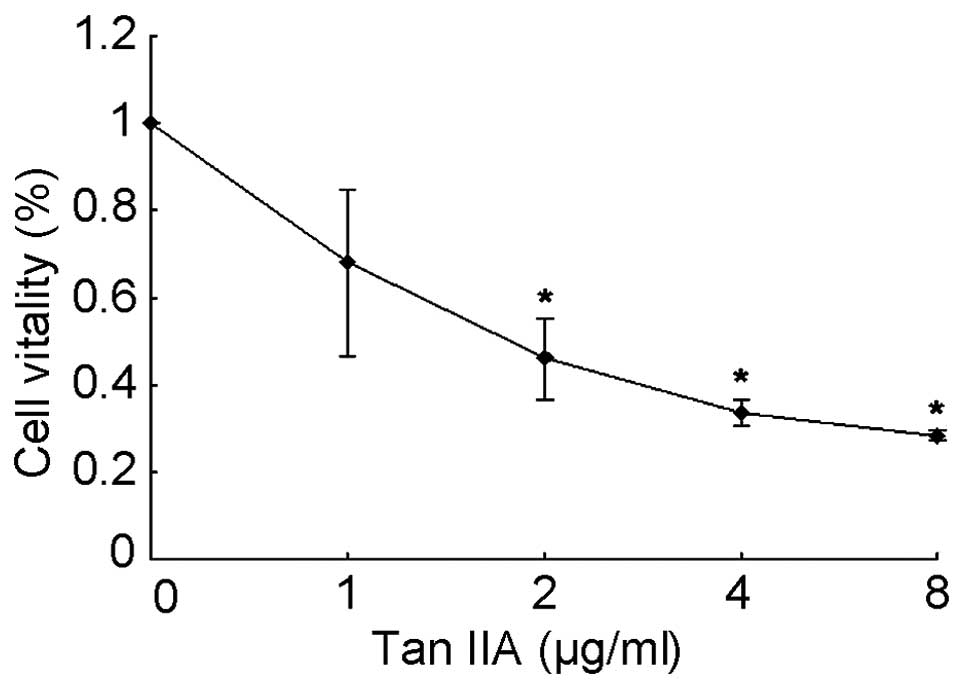
To examine the cytotoxicity of Tan IIA on the human RCC cell line 786-O, 786-O cells were cultured and treated with Tan IIA. The cytotoxicity of Tan IIA in 786-O cells was detected using the MTT assay. The percentages of viable cells relative to the control (DMSO)-treated cells were 68.2, 46.4, 33.4 and 28.3% when cultured with Tan IIA (1, 2, 4 and 8 μg/ml, respectively) for 24 h. The half maximal inhibitory concentration (IC50) value for Tan IIA treatment for 24 h was estimated to be 2 μg/ml. The results show that Tan IIA treatment induced a marked dose-dependent inhibition of the growth of 786-O cells (Fig. 1).

Figure 1

Cytotoxicity effects of Tan IIA on 786-O cells. 786-O cells were treated with Tan IIA (0, 1, 2, 4 and 8 μg/ml) for 24 h. Cell viability was measured by MTT assay. The data are presented as the mean ± SD. *P<0.05. Tan IIA, tanshinone IIA.

Tan IIA induces 786-O cell cycle arrest in the S phase

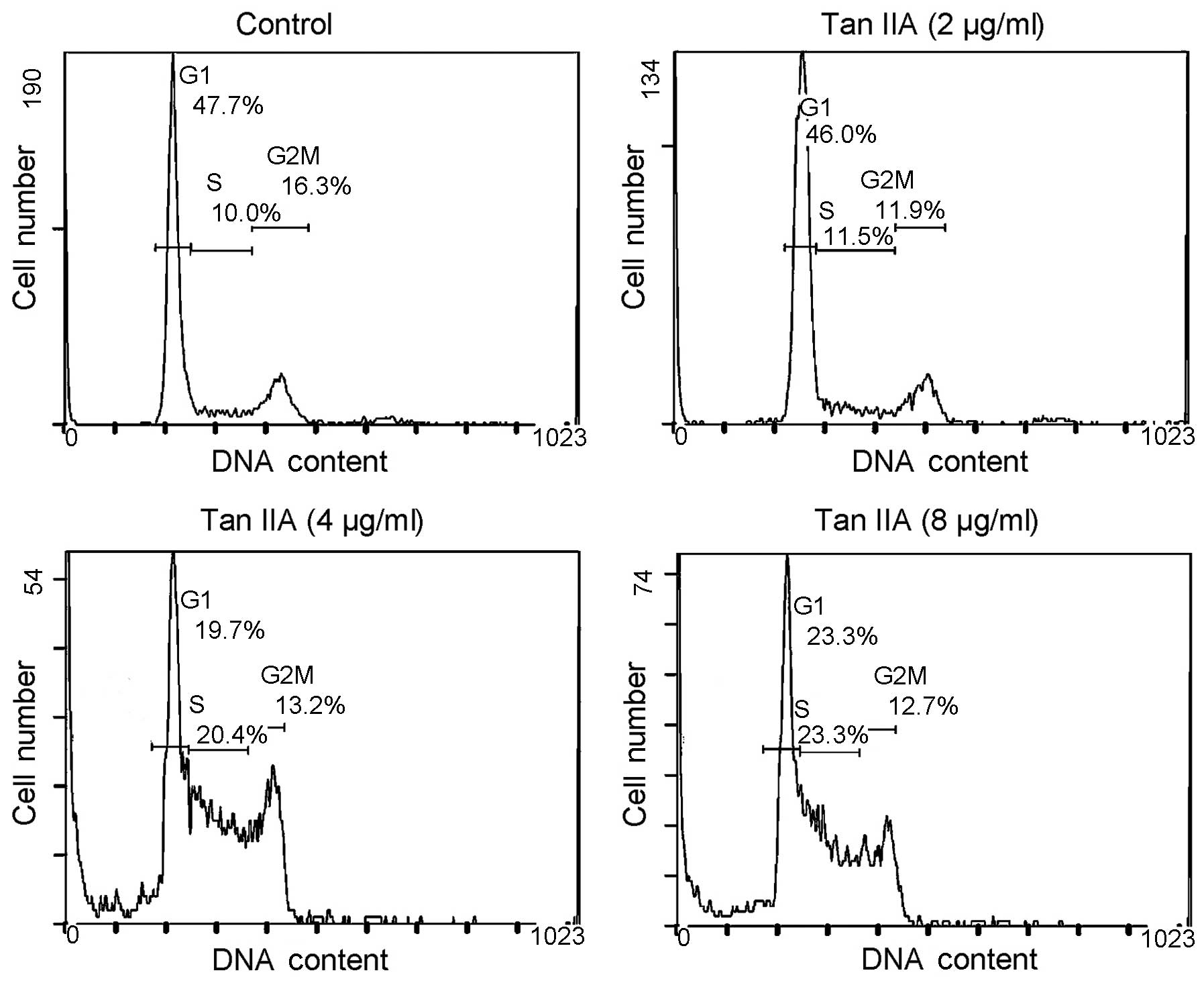
To determine the effect of Tan IIA on the growth of 786-O cells, the cell cycle distribution was analyzed by flow cytometry. When 786-O cells were treated with Tan IIA (0, 2, 4 and 8 μg/ml) for 24 h, the percentage of cells in the S phase was 10.0, 11.5, 20.4 and 23.3%, respectively (Fig. 2). The results indicate the inhibition of the growth of 786-O cells following treatment with Tan IIA.

Figure 2

Cell cycle analysis of 786-O cells treated with Tan IIA. Cells were cultured with different concentrations of Tan IIA for 24 h and then stained with propidium iodide. The DNA content was analyzed by flow cytometry. The S phase arrest was enhanced with increasing concentrations of Tan IIA. Tan IIA, tanshinone IIA.

Tan IIA-induced apoptosis of 786-O cells

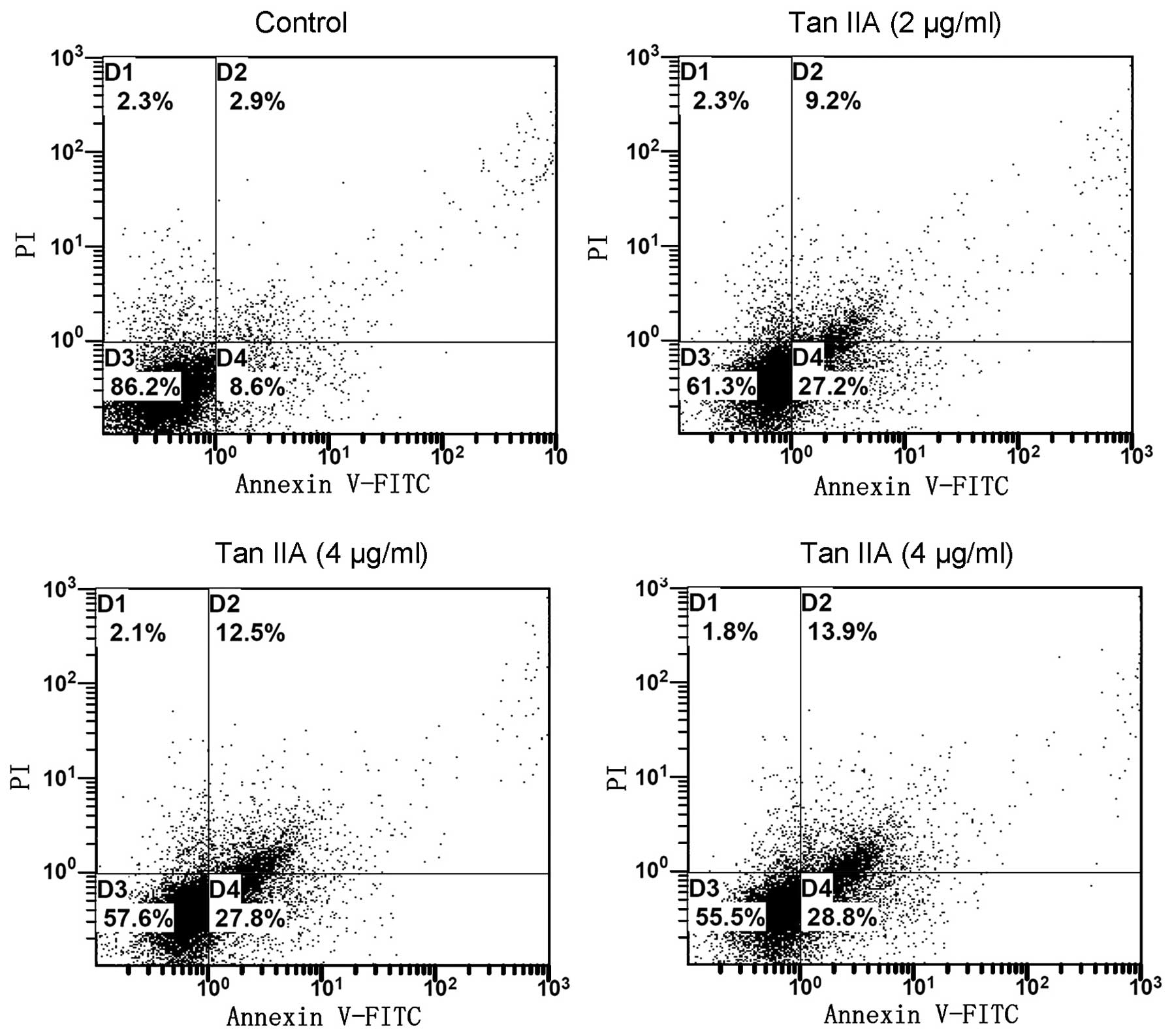
Since cell cycle perturbations may mediate the induction of apoptosis, we examined the effect of Tan IIA on the apoptosis of 786-O cells using the annexin V/PI approach. It was observed that, following the treatment of 786-O cells for 24 h with Tan IIA (0, 2, 4 and 8 μg/ml), the number of early apoptotic cells increased to 8.6, 27.2, 27.8 and 28.8%, respectively. The number of late apoptotic cells increased to 2.9, 9.2, 12.5 and 13.9%, respectively. The total percentage of apoptotic cells was directly related to the Tan IIA concentration, increasing from 11.5% (control) to 36.4, 40.3 and 42.7% (2, 4 and 8 μg/ml Tan IIA, respectively;Fig. 3), consistent with the results of the cytotoxicity assay. The results revealed that Tan IIA induced cell apoptosis of 786-O cells in a concentration-dependent manner.

Figure 3

Dose-dependent apoptosis induced by treatment with Tan IIA in 786-O cells. Cells treated with various concentrations of Tan IIA were double-stained with annexin V and PI and analyzed by flow cytometry. The gate setting distinguished between living (bottom left), necrotic (top left), early apoptotic (bottom right), and late apoptotic (top right) cells. Tan IIA, tanshinone IIA; PI, propidium iodide.

Gene expression profile correlated with growth inhibition and apoptosis following Tan IIA treatment

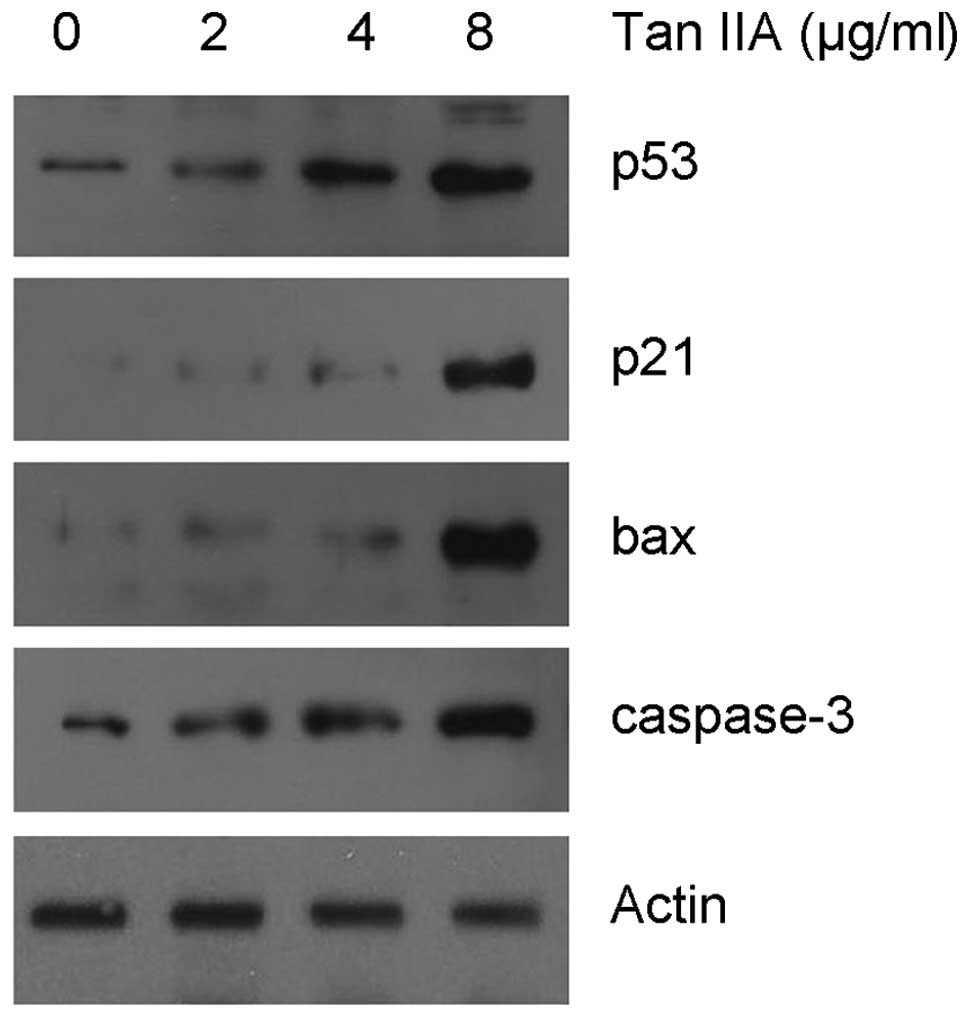
Since Tan IIA treatment caused S phase cell cycle arrest, we examined the effect of Tan IIA on cell cycle regulatory molecules which are active in the S phase. IB indicated that Tan IIA treatment induced the upregulation of the p21 protein, a key regulator of S phase cell cycle transition (11), in a dose-dependent manner. In order to establish the involvement of a mitochondrial apoptotic event, the level of the bax and caspase-3 proteins was measured. As shown in Fig. 4, Tan IIA treatment resulted in a significant dose-dependent increase in the level of bax and caspase-3.

Figure 4

Expression of the proteins changed in 786-O cells treated with different concentrations of Tan IIA for 24 h. Tan IIA treatment resulted in the upregulation of p53 and its target genes, p21 and bax. Subsequently, caspase-3 was increased with the induction of apoptosis by Tan IIA. Tan IIA, tanshinone IIA.

p53, an upstream regulator of p21 and bax (12), is involved in cell cycle arrest and apoptotic induction in response to cell stress. In the present study, we also assessed the level of p53 expression by IB following Tan IIA treatment. The data indicate that the level of the p53 protein increased markedly following treatment with Tan IIA.

Discussion

Tan IIA, traditionally administered to treat cardiovascular disease (13), has gained much attention for its anticancer properties in cell culture and animal carcinogenesis models (8–10). Although previous studies have shown the chemochemical/therapeutic potential of Tan IIA against several cancer types, information regarding the apoptotic effects of Tan IIA in human RCC cells is unavailable. The present study provides evidence for the first time that Tan IIA has an anticancer effect on human RCC.

A number of studies have demonstrated that Tan IIA is able to reduce cell vitality due to its cytotoxic properties (14). The results of the MTT assay in our study also showed that treatment with Tan IIA resulted in a marked and dose-dependent inhibition of the growth of 786-O cells. We observed a slight enhancement of vitality of 786-O cells following trace Tan IIA (<0.05 μg/ml) treatment compared with untreated cells. Tan IIA is a well-established antioxidant present in the Chinese medicinal herb Danshen (root of Salvia miltiorrhiza Bunge) (15). Therefore, trace amounts of Tan IIA may promote cell growth. By contrast, treatment with a high dose of Tan IIA generally exerts cytotoxicity, resulting in a reduction of cell vitality. Furthermore, the analysis of the cell cycle distribution revealed that Tan IIA treatment induced S phase arrest in 786-O cells. As p21, a cyclin-dependent kinase (CDK) inhibitor, is crucial in retarding S phase (11), we analysed its expression and found that it was dose-dependently upregulated following Tan IIA treatment. Moreover, Tan IIA treatment led to a concentration-dependent increase in the levels of p53, paralleling the accumulation of p21. These results suggest that the observed p21 accumulation may be due to p53 activation, since p53 (wild-type) upregulates p21 expression (16). It should be noted that it is possible that the level of p21 was altered via a p53-independent pathway.

In addition to promoting cell cycle arrest, p53 targets genes with apoptotic activity, among them the bax gene (12). The expression level of bax was assessed using IB. The results revealed that bax was upregulated in parallel with p53 activation in Tan IIA-induced apoptosis in RCC cells, suggesting that the mitochondrial apoptotic pathway is involved in Tan IIA-induced cell death. The mitochondrial apoptotic process eventually leads to the activation of the caspases, which are both initiators and effectors of the apoptotic programmed cell death. Similar to the observations of bax, treatment with Tan IIA significantly increased the expression level of caspase-3 in 786-O cells (Fig. 4). Notably, p53 targets the Fas gene, which is involved in the mitochondria-independent pathway of apoptosis (17). In our study, we did not detect any change in the level of expression of Fas, indicating that the specific cell death signals used by Tan IIA appear to be dependent on the cell type.

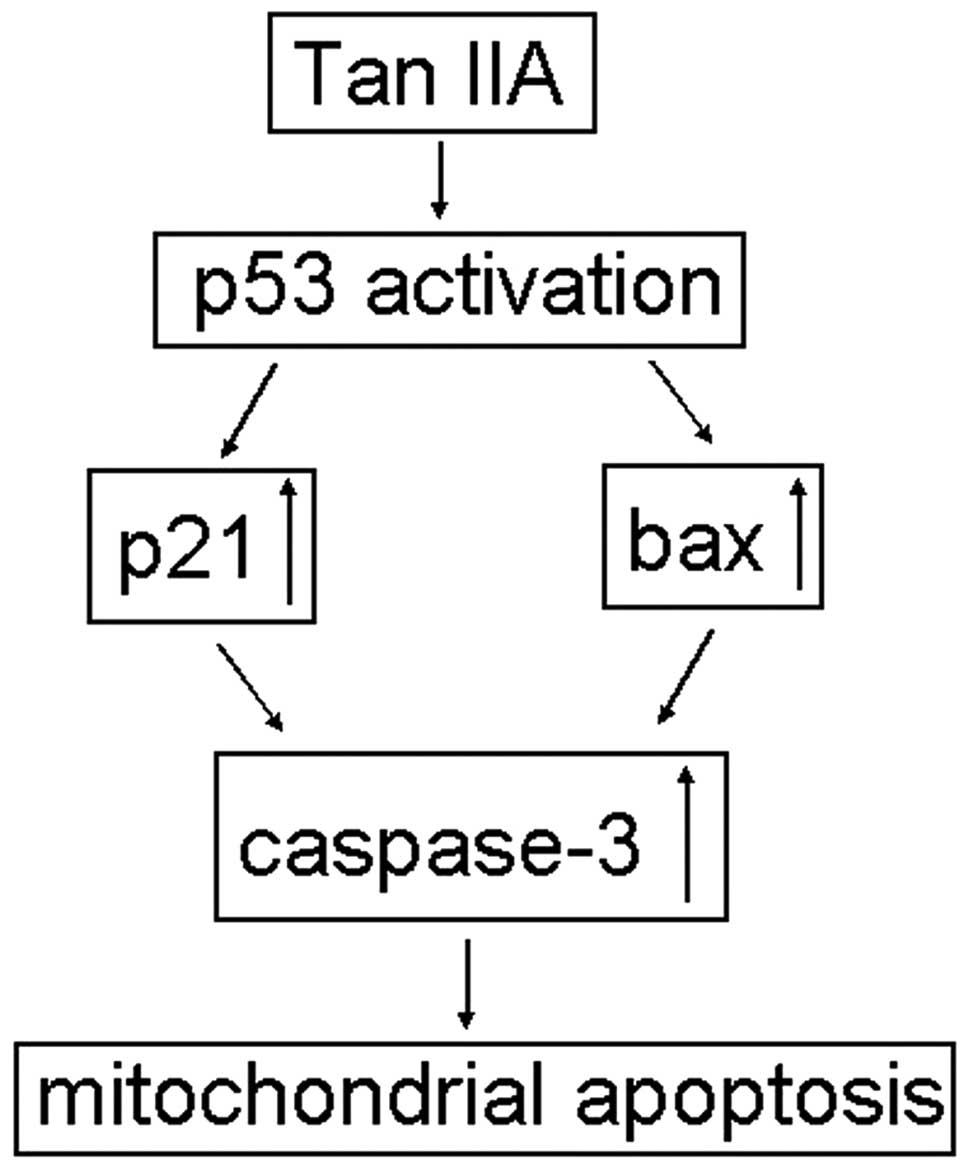
In conclusion, we report that human RCC 786-O cells in culture respond to Tan IIA treatment by showing a reduction in growth and an increase in apoptotic cell death. Furthermore, IB results revealed that Tan IIA activates p53 expression and subsequently induces the upregulation of p21 and bax. These findings suggest that Tan IIA induced apoptosis in 786-O cells, possibly through both the p21-mediated cell cycle perturbation and the mitochondrial-mediated intrinsic cell-death pathways (Fig. 5). These findings suggest the efficacy of Tan IIA as a chemopreventive candidate to exert antigrowth and proapoptotic actions on human RCC.

Figure 5

Schematic model for the mechanism of Tan IIA-induced apoptosis in 786-O cells. Tan IIA, tanshinone IIA.

Acknowledgements

We thank Dr Jun Hu (Sun Yat-sen University, Guangzhou, China) for providing the human RCC cell line 786-O cells. This study was supported by the National Natural Science Foundation of China (no. 30772492).

References

1 

Bird J and Hayter M: A review of the literature on the impact of renal cancer therapy on quality of life. J Clin Nurs. 18:2783–2800. 2009. View Article : Google Scholar : PubMed/NCBI

2 

Kyprianou N, Martikainen P, Davis L, English HF and Isaacs JT: Programmed cell death as a new target for prostatic cancer therapy. Cancer Surv. 11:265–277. 1991.PubMed/NCBI

3 

Kyprianou N, Bains AK and Jacobs SC: Induction of apoptosis in androgen-independent human prostate cancer cells undergoing thymineless death. Prostate. 25:66–75. 1994. View Article : Google Scholar : PubMed/NCBI

4 

Jang SI, Kim HJ, Kim YJ, Jeong SI and You YO: Tanshinone IIA inhibits LPS-induced NF-kappaB activation in RAW 264.7 cells: possible involvement of the NIK-IKK, ERK1/2, p38 and JNK pathways. Eur J Pharmacol. 542:1–7. 2006. View Article : Google Scholar : PubMed/NCBI

5 

Li W, Li J, Ashok M, et al: A cardiovascular drug rescues mice from lethal sepsis by selectively attenuating a late-acting proinflammatory mediator, high mobility group box 1. J Immunol. 178:3856–3864. 2007. View Article : Google Scholar : PubMed/NCBI

6 

Lin R, Wang WR, Liu JT, Yang GD and Han CJ: Protective effect of tanshinone IIA on human umbilical vein endothelial cell injured by hydrogen peroxide and its mechanism. J Ethnopharmacol. 108:217–222. 2006. View Article : Google Scholar : PubMed/NCBI

7 

Wang AM, Sha SH, Lesniak W and Schacht J: Tanshinone (Salviae miltiorrhizae extract) preparations attenuate aminoglycoside-induced free radical formation in vitro and ototoxicity in vivo. Antimicrob Agents Chemother. 47:1836–1841. 2003.

8 

Wang X, Wei Y, Yuan S, et al: Potential anticancer activity of tanshinone IIA against human breast cancer. Int J Cancer. 116:799–807. 2005. View Article : Google Scholar : PubMed/NCBI

9 

Wang J, Wang X, Jiang S, et al: Growth inhibition and induction of apoptosis and differentiation of tanshinone IIA in human glioma cells. J Neurooncol. 82:11–21. 2007. View Article : Google Scholar : PubMed/NCBI

10 

Chiu TL and Su CC: Tanshinone IIA induces apoptosis in human lung cancer A549 cells through the induction of reactive oxygen species and decreasing the mitochondrial membrane potential. Int J Mol Med. 25:231–236. 2010.PubMed/NCBI

11 

Ogryzko VV, Wong P and Howard BH: WAF1 retards S-phase progression primarily by inhibition of cyclin-dependent kinases. Mol Cell Biol. 17:4877–4882. 1997.PubMed/NCBI

12 

el-Deiry WS: Regulation of p53 downstream genes. Semin Cancer Biol. 8:345–357. 1998. View Article : Google Scholar

13 

Sun J, Tan BK, Huang SH, Whiteman M and Zhu YZ: Effects of natural products on ischemic heart diseases and cardiovascular system. Acta Pharmacol Sin. 23:1142–1151. 2002.PubMed/NCBI

14 

Lu Q, Zhang P, Zhang X and Chen J: Experimental study of the anti-cancer mechanism of tanshinone IIA against human breast cancer. Int J Mol Med. 24:773–780. 2009.PubMed/NCBI

15 

Cao EH, Liu XQ, Wang JJ and Xu NF: Effect of natural antioxidant tanshinone II-A on DNA damage by lipid peroxidation in liver cells. Free Radic Biol Med. 20:801–806. 1996. View Article : Google Scholar : PubMed/NCBI

16 

Yu C, Friday BB, Lai JP, et al: Cytotoxic synergy between the multikinase inhibitor sorafenib and the proteasome inhibitor bortezomib in vitro: induction of apoptosis through Akt and c-Jun NH2-terminal kinase pathways. Mol Cancer Ther. 5:2378–2387. 2006. View Article : Google Scholar

17 

Müller M, Wilder S, Bannasch D, et al: p53 activates the CD95 (APO-1/Fas) gene in response to DNA damage by anticancer drugs. J Exp Med. 188:2033–2045. 1998.PubMed/NCBI

Related Articles

  • Abstract
  • View
  • Download
  • Twitter
Copy and paste a formatted citation
Spandidos Publications style
Wei X, Zhou L, Hu L and Huang Y: Tanshinone IIA arrests cell cycle and induces apoptosis in 786-O human renal cell carcinoma cells. Oncol Lett 3: 1144-1148, 2012.
APA
Wei, X., Zhou, L., Hu, L., & Huang, Y. (2012). Tanshinone IIA arrests cell cycle and induces apoptosis in 786-O human renal cell carcinoma cells. Oncology Letters, 3, 1144-1148. https://doi.org/10.3892/ol.2012.626
MLA
Wei, X., Zhou, L., Hu, L., Huang, Y."Tanshinone IIA arrests cell cycle and induces apoptosis in 786-O human renal cell carcinoma cells". Oncology Letters 3.5 (2012): 1144-1148.
Chicago
Wei, X., Zhou, L., Hu, L., Huang, Y."Tanshinone IIA arrests cell cycle and induces apoptosis in 786-O human renal cell carcinoma cells". Oncology Letters 3, no. 5 (2012): 1144-1148. https://doi.org/10.3892/ol.2012.626
Copy and paste a formatted citation
x
Spandidos Publications style
Wei X, Zhou L, Hu L and Huang Y: Tanshinone IIA arrests cell cycle and induces apoptosis in 786-O human renal cell carcinoma cells. Oncol Lett 3: 1144-1148, 2012.
APA
Wei, X., Zhou, L., Hu, L., & Huang, Y. (2012). Tanshinone IIA arrests cell cycle and induces apoptosis in 786-O human renal cell carcinoma cells. Oncology Letters, 3, 1144-1148. https://doi.org/10.3892/ol.2012.626
MLA
Wei, X., Zhou, L., Hu, L., Huang, Y."Tanshinone IIA arrests cell cycle and induces apoptosis in 786-O human renal cell carcinoma cells". Oncology Letters 3.5 (2012): 1144-1148.
Chicago
Wei, X., Zhou, L., Hu, L., Huang, Y."Tanshinone IIA arrests cell cycle and induces apoptosis in 786-O human renal cell carcinoma cells". Oncology Letters 3, no. 5 (2012): 1144-1148. https://doi.org/10.3892/ol.2012.626
Follow us
  • Twitter
  • LinkedIn
  • Facebook
About
  • Spandidos Publications
  • Careers
  • Cookie Policy
  • Privacy Policy
How can we help?
  • Help
  • Live Chat
  • Contact
  • Email to our Support Team