Spandidos Publications Logo
  • About
    • About Spandidos
    • Aims and Scopes
    • Abstracting and Indexing
    • Editorial Policies
    • Reprints and Permissions
    • Job Opportunities
    • Terms and Conditions
    • Contact
  • Journals
    • All Journals
    • Oncology Letters
      • Oncology Letters
      • Information for Authors
      • Editorial Policies
      • Editorial Board
      • Aims and Scope
      • Abstracting and Indexing
      • Bibliographic Information
      • Archive
    • International Journal of Oncology
      • International Journal of Oncology
      • Information for Authors
      • Editorial Policies
      • Editorial Board
      • Aims and Scope
      • Abstracting and Indexing
      • Bibliographic Information
      • Archive
    • Molecular and Clinical Oncology
      • Molecular and Clinical Oncology
      • Information for Authors
      • Editorial Policies
      • Editorial Board
      • Aims and Scope
      • Abstracting and Indexing
      • Bibliographic Information
      • Archive
    • Experimental and Therapeutic Medicine
      • Experimental and Therapeutic Medicine
      • Information for Authors
      • Editorial Policies
      • Editorial Board
      • Aims and Scope
      • Abstracting and Indexing
      • Bibliographic Information
      • Archive
    • International Journal of Molecular Medicine
      • International Journal of Molecular Medicine
      • Information for Authors
      • Editorial Policies
      • Editorial Board
      • Aims and Scope
      • Abstracting and Indexing
      • Bibliographic Information
      • Archive
    • Biomedical Reports
      • Biomedical Reports
      • Information for Authors
      • Editorial Policies
      • Editorial Board
      • Aims and Scope
      • Abstracting and Indexing
      • Bibliographic Information
      • Archive
    • Oncology Reports
      • Oncology Reports
      • Information for Authors
      • Editorial Policies
      • Editorial Board
      • Aims and Scope
      • Abstracting and Indexing
      • Bibliographic Information
      • Archive
    • Molecular Medicine Reports
      • Molecular Medicine Reports
      • Information for Authors
      • Editorial Policies
      • Editorial Board
      • Aims and Scope
      • Abstracting and Indexing
      • Bibliographic Information
      • Archive
    • World Academy of Sciences Journal
      • World Academy of Sciences Journal
      • Information for Authors
      • Editorial Policies
      • Editorial Board
      • Aims and Scope
      • Abstracting and Indexing
      • Bibliographic Information
      • Archive
    • International Journal of Functional Nutrition
      • International Journal of Functional Nutrition
      • Information for Authors
      • Editorial Policies
      • Editorial Board
      • Aims and Scope
      • Abstracting and Indexing
      • Bibliographic Information
      • Archive
    • International Journal of Epigenetics
      • International Journal of Epigenetics
      • Information for Authors
      • Editorial Policies
      • Editorial Board
      • Aims and Scope
      • Abstracting and Indexing
      • Bibliographic Information
      • Archive
    • Medicine International
      • Medicine International
      • Information for Authors
      • Editorial Policies
      • Editorial Board
      • Aims and Scope
      • Abstracting and Indexing
      • Bibliographic Information
      • Archive
  • Articles
  • Information
    • Information for Authors
    • Information for Reviewers
    • Information for Librarians
    • Information for Advertisers
    • Conferences
  • Language Editing
Spandidos Publications Logo
  • About
    • About Spandidos
    • Aims and Scopes
    • Abstracting and Indexing
    • Editorial Policies
    • Reprints and Permissions
    • Job Opportunities
    • Terms and Conditions
    • Contact
  • Journals
    • All Journals
    • Biomedical Reports
      • Information for Authors
      • Editorial Policies
      • Editorial Board
      • Aims and Scope
      • Abstracting and Indexing
      • Bibliographic Information
      • Archive
    • Experimental and Therapeutic Medicine
      • Information for Authors
      • Editorial Policies
      • Editorial Board
      • Aims and Scope
      • Abstracting and Indexing
      • Bibliographic Information
      • Archive
    • International Journal of Epigenetics
      • Information for Authors
      • Editorial Policies
      • Editorial Board
      • Aims and Scope
      • Abstracting and Indexing
      • Bibliographic Information
      • Archive
    • International Journal of Functional Nutrition
      • Information for Authors
      • Editorial Policies
      • Editorial Board
      • Aims and Scope
      • Abstracting and Indexing
      • Bibliographic Information
      • Archive
    • International Journal of Molecular Medicine
      • Information for Authors
      • Editorial Policies
      • Editorial Board
      • Aims and Scope
      • Abstracting and Indexing
      • Bibliographic Information
      • Archive
    • International Journal of Oncology
      • Information for Authors
      • Editorial Policies
      • Editorial Board
      • Aims and Scope
      • Abstracting and Indexing
      • Bibliographic Information
      • Archive
    • Medicine International
      • Information for Authors
      • Editorial Policies
      • Editorial Board
      • Aims and Scope
      • Abstracting and Indexing
      • Bibliographic Information
      • Archive
    • Molecular and Clinical Oncology
      • Information for Authors
      • Editorial Policies
      • Editorial Board
      • Aims and Scope
      • Abstracting and Indexing
      • Bibliographic Information
      • Archive
    • Molecular Medicine Reports
      • Information for Authors
      • Editorial Policies
      • Editorial Board
      • Aims and Scope
      • Abstracting and Indexing
      • Bibliographic Information
      • Archive
    • Oncology Letters
      • Information for Authors
      • Editorial Policies
      • Editorial Board
      • Aims and Scope
      • Abstracting and Indexing
      • Bibliographic Information
      • Archive
    • Oncology Reports
      • Information for Authors
      • Editorial Policies
      • Editorial Board
      • Aims and Scope
      • Abstracting and Indexing
      • Bibliographic Information
      • Archive
    • World Academy of Sciences Journal
      • Information for Authors
      • Editorial Policies
      • Editorial Board
      • Aims and Scope
      • Abstracting and Indexing
      • Bibliographic Information
      • Archive
  • Articles
  • Information
    • For Authors
    • For Reviewers
    • For Librarians
    • For Advertisers
    • Conferences
  • Language Editing
Login Register Submit
  • This site uses cookies
  • You can change your cookie settings at any time by following the instructions in our Cookie Policy. To find out more, you may read our Privacy Policy.

    I agree
Search articles by DOI, keyword, author or affiliation
Search
Advanced Search
presentation
Oncology Letters
Join Editorial Board Propose a Special Issue
Print ISSN: 1792-1074 Online ISSN: 1792-1082
Journal Cover
August 2012 Volume 4 Issue 2

Full Size Image

Sign up for eToc alerts
Recommend to Library

Journals

International Journal of Molecular Medicine

International Journal of Molecular Medicine

International Journal of Molecular Medicine is an international journal devoted to molecular mechanisms of human disease.

International Journal of Oncology

International Journal of Oncology

International Journal of Oncology is an international journal devoted to oncology research and cancer treatment.

Molecular Medicine Reports

Molecular Medicine Reports

Covers molecular medicine topics such as pharmacology, pathology, genetics, neuroscience, infectious diseases, molecular cardiology, and molecular surgery.

Oncology Reports

Oncology Reports

Oncology Reports is an international journal devoted to fundamental and applied research in Oncology.

Experimental and Therapeutic Medicine

Experimental and Therapeutic Medicine

Experimental and Therapeutic Medicine is an international journal devoted to laboratory and clinical medicine.

Oncology Letters

Oncology Letters

Oncology Letters is an international journal devoted to Experimental and Clinical Oncology.

Biomedical Reports

Biomedical Reports

Explores a wide range of biological and medical fields, including pharmacology, genetics, microbiology, neuroscience, and molecular cardiology.

Molecular and Clinical Oncology

Molecular and Clinical Oncology

International journal addressing all aspects of oncology research, from tumorigenesis and oncogenes to chemotherapy and metastasis.

World Academy of Sciences Journal

World Academy of Sciences Journal

Multidisciplinary open-access journal spanning biochemistry, genetics, neuroscience, environmental health, and synthetic biology.

International Journal of Functional Nutrition

International Journal of Functional Nutrition

Open-access journal combining biochemistry, pharmacology, immunology, and genetics to advance health through functional nutrition.

International Journal of Epigenetics

International Journal of Epigenetics

Publishes open-access research on using epigenetics to advance understanding and treatment of human disease.

Medicine International

Medicine International

An International Open Access Journal Devoted to General Medicine.

Journal Cover
August 2012 Volume 4 Issue 2

Full Size Image

Sign up for eToc alerts
Recommend to Library

  • Article
  • Citations
    • Cite This Article
    • Download Citation
    • Create Citation Alert
    • Remove Citation Alert
    • Cited By
  • Similar Articles
    • Related Articles (in Spandidos Publications)
    • Similar Articles (Google Scholar)
    • Similar Articles (PubMed)
  • Download PDF
  • Download XML
  • View XML
Case Report

Bortezomib-based treatment for relapsed and refractory angioimmunoblastic T-cell lymphoma: Case report and literature review

  • Authors:
    • Shuyan Liu
    • Zhengang Yuan
    • Chunyang Zhang
    • Weijun Fu
    • Jian Hou
  • View Affiliations / Copyright

    Affiliations: Department of Hematology, Shanghai Changzheng Hospital, The Second Military Medical University, Shanghai 200003, P.R. China
  • Pages: 262-264
    |
    Published online on: May 21, 2012
       https://doi.org/10.3892/ol.2012.724
  • Expand metrics +
Metrics: Total Views: 0 (Spandidos Publications: | PMC Statistics: )
Metrics: Total PDF Downloads: 0 (Spandidos Publications: | PMC Statistics: )
Cited By (CrossRef): 0 citations Loading Articles...

This article is mentioned in:


Abstract

Angioimmunoblastic T-cell lymphoma (AITL) is a distinct peripheral T-cell lymphoma (PTCL) subtype, accounting for 15‑20% of PTCL and 2% of all non‑Hodgkin lymphoma (NHL), with a poor prognosis. In the present study, we describe a 76-year-old patient with AITL who failed to respond to conventional chemotherapy but responded to bortezomib-based treatment and demonstrated persistent clinical improvement at the 18-month follow-up. These data suggest that bortezomib-based treatment may be a reliable, safe and effective alternative for treating relapsed/refractory AITL.

Introduction

Angioimmunoblastic T-cell lymphoma (AITL) is a distinct peripheral T-cell lymphoma (PTCL) subtype with uncommon clinical and pathological features, accounting for 15–20% of PTCL and 2% of all non-Hodgkin lymphoma (NHL). However, there is no consensus with regard to the best approach for treating patients with AITL and the disease often follows an aggressive clinical course. AITL portends a poor prognosis, the median survival time is less than three years and the five-year overall survival (OS) rate is only approximately 30% in most studies, even when treated intensively. However, AITL is not always lethal, with 30% of patients being long-term survivors (1,2).

In the present study, the first case in which a relapsed and refractory AITL patient is successfully treated with a combination of bortezomib, mitoxantrone and dexamethasone (PAD regimen) is reported. The diagnosis, clinical features and bortezomib-based treatment of AITL according to this case are described and previously published data are also discussed. The study was approved by Ethical Principles for Conducting Research With Humans and Other Animals committee of The Second Military Medical University, Shanghai.

Case report

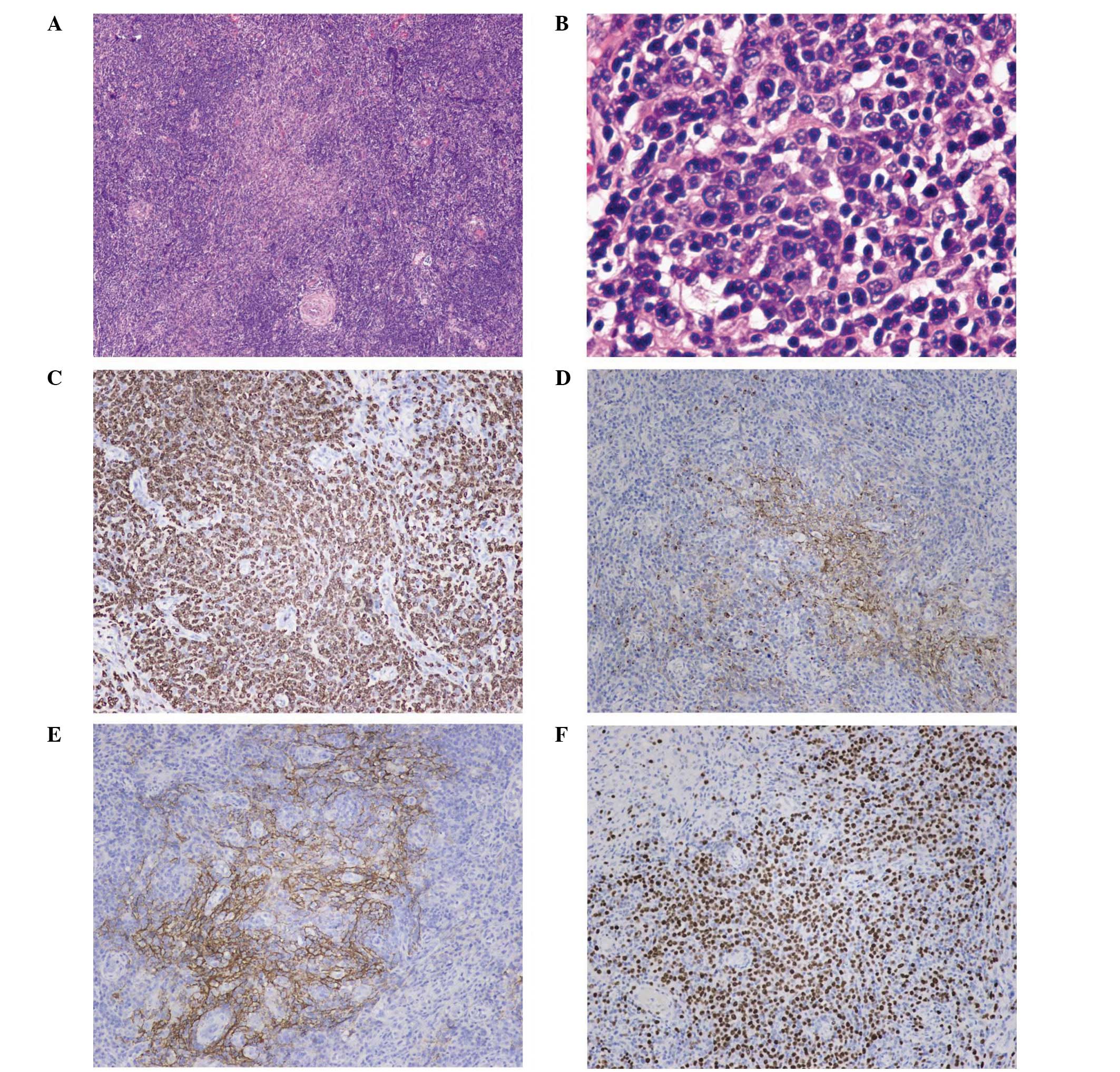
In September 2008, a 76-year-old female individual first visited an otorhinolaryngology clinic with the chief complaints of dyspnea and painful swelling of the throat. Physical examination revealed that her bilateral tonsils were projected beyond the midline with an irregular surface. Pharyngeal stenosis and lymphoid follicular hyperplasia were observed in the posterior wall of the pharynx. The bilateral cervical, axillary and inguinal lymph nodes were enlarged with moderate hardness and limited motion, as well as splenomegaly. A computed tomography (CT) scan of the chest showed multiple swollen lymph nodes in the mediastinal and bilateral axillary areas. Bone marrow cytomorphological examination and biopsy at that time were normal. A diagnosis of AITL was confirmed by biopsy of the enlarged cervical lymph node and bilateral tonsils. Immunohistochemical staining of the tumor cells showed CD4(+), CD8(+), CD10(±), Ki-67(+), CD15(+), CD30(−), CD3(+), CD31+ (vascular), CD34+ (vascular), CXCL13(+) and follicular dendritic cell meshworks expressing CD21 (Fig. 1). T-cell receptor (TCR) γ gene rearrangement (+) and immunoglobulin (Ig) genes rearrangement (−) of the lymph nodes were detected by the polymerase chain reaction (PCR).

Figure 1

Lymph node biopsy. (A) Classical morphology with effacement of normal architecture and marked vascular proliferation associated with aggregates of atypical lymphoid cells (H&E staining; ×40 magnification). (B) The infiltrate is composed of medium to large lymphoid cells with abundant clear cytoplasm (H&E staining; ×400 magnification). (C and D) The characteristic phenotype of tumor cells expressing (C) CD3, (D) CXCL13. (E) CD21 immunostaining emphasizes marked follicular dendritic entrapping high endothelial venules. (F) Immunohistochemistry shows homogeneous staining for Ki67.

The patient was diagnosed with AITL IIIB. The patient achieved a partial response to the initial treatment with two cycles of CHOP (cyclophosphamide, doxorubicin, vincristine and prednisolone) and three cycles of CHOEP (cyclophosphamide, doxorubicin, vincristine, etoposide and prednisolone). However, after four months the disease had progressed. The patient then received two cycles of salvage therapy with EDCP (cisplatin, etoposide, cyclophosphamide and dexamethasone). The patient also received cyclosporine and thalidomide for two months. No response was observed. Between March 2009 and July 2009, the patient received five 28-day cycles of PAD regimen comprising 1.3 mg/m2 bortezomib, 2 mg/m2 mitoxantrone and 40 mg dexamethasone on days 1, 4, 8 and 11, after signed informed consent was obtained. At the 18-month follow-up, the patient showed persistent clinical improvement, weight gain, disappearance of lymphadenopathy, improvement of performance status and no B symptoms, and complete response was achieved. The patient did not receive therapy until October 2010 when the patient was diagnosed as relapsed by positron emission tomography (PET). Subsequently, one cycle of COP and PAD were performed. However, severe myelosuppression and minor therapeutic effects were observed. The patient succumbed to a severe pulmonary infection in March 2011.

Discussion

AITL is a rare and aggressive malignancy which affects elderly adults at an age ranging from 59 to 65 years, clinically characterized by a sudden onset of constitutional symptoms, lymphadenopathy, hepatosplenomegaly, skin rash, bone marrow involvement, anemia (often hemolytic and Coombs-positive), polyclonal hypergammaglobulinemia and hypereosinophilia. Using PCR techniques, the detection of monoclonal or oligoclonal rearrangement of the TCR was found to be present in the majority of cases. In addition, the rearrangement of the Ig gene(s) was observed in up to one-third of patients (3). As yet, the standard therapeutic option for patients with AITL has not been clearly established. Various treatment strategies, which range from the CHOP or CHOP-like therapy to chemotherapy with autologous stem cell transplantation, even allogeneic transplantation, have proved to be largely unsuccessful in curing the disease. The lack of a demonstrated improvement in OS supports the development of novel approaches, including alemtuzumab (4), zanolimumab (5), denileukin diftitox (6), pralatrexate (7), histone deacetylase (HDAC) inhibitors (8), cyclosporine (9), thalidomide (10), gemcitabine (11) and bortezomib (12).

Bortezomib is a dipeptide boronic acid that selectively and potently inhibits the proteasome 26S complex, exerting antitumor activity mainly via the inhibition of the NF-κB pathway components correlated with cell proliferation, apoptosis and angiogenesis (13). It has been reported that abnormal PRDM1β expression reflected poor prognosis in T-cell lymphoma, and that bortezomib is able to downregulate PRDM1β through NF-κB inactivation (14). In vitro and in vivo studies demonstrated that bortezomib has the ability to eliminate tumor cell interaction with endothelial cells in T-cell leukemia/lymphoma by affecting the expression of genes associated with the adhesion cascades (15). Therefore, bortezomib may play a special therapeutic role and be safe from the emergence of acute toxicity, which is important considering that AITL patients tend to be elderly adults with a number of concomitant medical problems.

A PAD regimen is commonly used to treat patients with multiple myeloma. To the best of our knowledge, this is the first reported case of the successful management of relapsed and refractory AITL with a combination of bortezomib, mitoxantrone and dexamethasone (PAD regimen). This combination was well tolerated and induced a complete and relatively sustained remission in this patient. We believe bortezomib was involved in the therapy of this patient since no response to anthracyclines and high-dose glucocorticoid was observed. Martínez-Delgado et al differentiated two subgroups of PTCL characterized by a high or reduced expression of the NF-κB pathway genes (16). Furthermore, Martínez-Delgado et al observed that a low expression of the NF-κB pathway genes was significantly associated with short OS and may be an independent prognostic factor. Bortezomib not only acted on tumor cells themselves through NF-κB inactivation, but also removed tumor cell interaction with endothelial cells (14,15). Therefore, we suggest that NF-κB-positive AITL patients treated with bortezomib have better results to treatment than NF-κB-negative AITL patients.

Considering that heavy chemotherapy may cause serious adverse events in elderly adults, the use of the PAD regimen may be a reliable, safe and effective alternative for treating relapsed/refractory AITL. However, the efficacy of bortezomib should be elucidated in further larger-sized clinical trials with an extended follow-up. Furthermore, continued preclinical and clinical research is required to identify more effective treatment options for patients with relapsed/refractory AITL.

References

1 

Vose J, Armitage J and Weisenburger D; International T-Cell Lymphoma Project. International peripheral T-cell and natural killer/T-cell lymphoma study: pathology findings and clinical outcomes. J Clin Oncol. 26:4124–4130. 2008. View Article : Google Scholar : PubMed/NCBI

2 

Mourad N, Mounier N, Brière J, Raffoux E, Delmer A, Feller A, Meijer CJ, Emile JF, Bouabdallah R, Bosly A, Diebold J, Haioun C, Coiffier B, Gisselbrecht C and Gaulard P; Groupe d’Etude des Lymphomes de l’Adulte. Clinical, biologic, and pathologic features in 157 patients with angioimmunoblastic T-cell lymphoma treated within the Groupe d’Etude des Lymphomes de l’Adulte (GELA) trials. Blood. 111:4463–4470. 2008.PubMed/NCBI

3 

de Leval L, Gisselbrecht C and Gaulard P: Advances in the understanding and management of angioimmunoblastic T-cell lymphoma. Br J Haematol. 148:673–689. 2010.PubMed/NCBI

4 

Gallamini A, Zaja F, Patti C, Billio A, Specchia MR, Tucci A, Levis A, Manna A, Secondo V, Rigacci L, et al: Alemtuzumab (Campath-1H) and CHOP chemotherapy as first-line treatment of peripheral T-cell lymphoma: results of a GITIL (Gruppo Italiano Terapie Innovative nei Linfomi) prospective multicenter trial. Blood. 110:2316–2323. 2007. View Article : Google Scholar

5 

d’Amore F, Radford J, Relander T, Jerkeman M, Tilly H, Osterborg A, Morschhauser F, Gramatzki M, Dreyling M, Bang B and Hagberg H: Phase II trial of zanolimumab (HuMax-CD4) in relapsed or refractory non-cutaneous peripheral T cell lymphoma. Br J Haematol. 150:565–573. 2010.PubMed/NCBI

6 

Dang NH, Pro B, Hagemeister FB, Samaniego F, Jones D, Samuels BI, Rodriguez MA, Goy A, Romaguera JE, McLaughlin P, et al: Phase II trial of denileukin diftitox for relapsed/refractory T-cell non-Hodgkin lymphoma. Br J Haematol. 136:439–447. 2007. View Article : Google Scholar : PubMed/NCBI

7 

O’Connor OA, Pro B, Pinter-Brown L, Bartlett N, Popplewell L, Coiffier B, Lechowicz MJ, Savage KJ, Shustov AR, Gisselbrecht C, et al: Pralatrexate in patients with relapsed or refractory peripheral T-cell lymphoma: results from the pivotal PROPEL study. J Clin Oncol. 29:1182–1189. 2011.

8 

Piekarz RL, Frye R, Prince HM, Kirschbaum MH, Zain J, Allen SL, Jaffe ES, Ling A, Turner M, Peer CJ, et al: Phase 2 trial of romidepsin in patients with peripheral T-cell lymphoma. Blood. 117:5827–5834. 2011. View Article : Google Scholar : PubMed/NCBI

9 

Advani R, Horwitz S, Zelenetz A and Horning SJ: Angioimmunoblastic T cell lymphoma: treatment experience with cyclosporine. Leuk Lymphoma. 48:521–525. 2007. View Article : Google Scholar : PubMed/NCBI

10 

Gottardi M, Danesin C, Canal F, Dei Tos AP, Stefani PM, Calistri E, Salvadori U and Gherlinzoni F: Complete remission induced by thalidomide in a case of angioimmunoblastic T-cell lymphoma refractory to autologous stem cell transplantation. Leuk Lymphoma. 49:1836–1838. 2008. View Article : Google Scholar : PubMed/NCBI

11 

Arkenau HT, Chong G, Cunningham D, Watkins D, Sirohi B, Chau I, Wotherspoon A, Norman A, Horwich A and Matutes E: Gemcitabine, cisplatin and methylprednisolone for the treatment of patients with peripheral T-cell lymphoma: the Royal Marsden Hospital experience. Haematologica. 92:271–272. 2007. View Article : Google Scholar : PubMed/NCBI

12 

Lee J, Suh C, Kang HJ, Ryoo BY, Huh J, Ko YH, Eom HS, Kim K, Park K and Kim WS: Phase I study of proteasome inhibitor bortezomib plus CHOP in patients with advanced, aggressive T-cell or NK/T-cell lymphoma. Ann Oncol. 19:2079–2083. 2008. View Article : Google Scholar : PubMed/NCBI

13 

Sunwoo JB, Chen Z, Dong G, Yeh N, Crowl Bancroft C, Sausville E, Adams J, Elliott P and Van Waes C: Novel proteasome inhibitor PS-341 inhibits activation of nuclear factor-kappa B, cell survival, tumor growth, and angiogenesis in squamous cell carcinoma. Clin Cancer Res. 7:1419–1428. 2001.PubMed/NCBI

14 

Zhao WL, Liu YY, Zhang QL, Wang L, Leboeuf C, Zhang YW, Ma J, Garcia JF, Song YP, Li JM, et al: PRDM1 is involved in chemoresistance of T-cell lymphoma and down-regulated by the proteasome inhibitor. Blood. 111:3867–3871. 2008. View Article : Google Scholar : PubMed/NCBI

15 

Shi WY, Wang L, Xiao D, Yao Y, Yang F, Jiang XX, Leboeuf C, Janin A, Chen SJ and Zhao WL: Proteasome inhibitor bortezomib targeted tumor-endothelial cell interaction in T-cell leukemia/lymphoma. Ann Hematol. 90:53–58. 2011. View Article : Google Scholar : PubMed/NCBI

16 

Martínez-Delgado B, Cuadros M, Honrado E, Ruiz de la Parte A, Roncador G, Alves J, Castrillo JM, Rivas C and Benítez J: Differential expression of NF-kappaB pathway genes among peripheral T-cell lymphomas. Leukemia. 19:2254–2263. 2005.PubMed/NCBI

Related Articles

  • Abstract
  • View
  • Download
  • Twitter
Copy and paste a formatted citation
Spandidos Publications style
Liu S, Yuan Z, Zhang C, Fu W and Hou J: Bortezomib-based treatment for relapsed and refractory angioimmunoblastic T-cell lymphoma: Case report and literature review. Oncol Lett 4: 262-264, 2012.
APA
Liu, S., Yuan, Z., Zhang, C., Fu, W., & Hou, J. (2012). Bortezomib-based treatment for relapsed and refractory angioimmunoblastic T-cell lymphoma: Case report and literature review. Oncology Letters, 4, 262-264. https://doi.org/10.3892/ol.2012.724
MLA
Liu, S., Yuan, Z., Zhang, C., Fu, W., Hou, J."Bortezomib-based treatment for relapsed and refractory angioimmunoblastic T-cell lymphoma: Case report and literature review". Oncology Letters 4.2 (2012): 262-264.
Chicago
Liu, S., Yuan, Z., Zhang, C., Fu, W., Hou, J."Bortezomib-based treatment for relapsed and refractory angioimmunoblastic T-cell lymphoma: Case report and literature review". Oncology Letters 4, no. 2 (2012): 262-264. https://doi.org/10.3892/ol.2012.724
Copy and paste a formatted citation
x
Spandidos Publications style
Liu S, Yuan Z, Zhang C, Fu W and Hou J: Bortezomib-based treatment for relapsed and refractory angioimmunoblastic T-cell lymphoma: Case report and literature review. Oncol Lett 4: 262-264, 2012.
APA
Liu, S., Yuan, Z., Zhang, C., Fu, W., & Hou, J. (2012). Bortezomib-based treatment for relapsed and refractory angioimmunoblastic T-cell lymphoma: Case report and literature review. Oncology Letters, 4, 262-264. https://doi.org/10.3892/ol.2012.724
MLA
Liu, S., Yuan, Z., Zhang, C., Fu, W., Hou, J."Bortezomib-based treatment for relapsed and refractory angioimmunoblastic T-cell lymphoma: Case report and literature review". Oncology Letters 4.2 (2012): 262-264.
Chicago
Liu, S., Yuan, Z., Zhang, C., Fu, W., Hou, J."Bortezomib-based treatment for relapsed and refractory angioimmunoblastic T-cell lymphoma: Case report and literature review". Oncology Letters 4, no. 2 (2012): 262-264. https://doi.org/10.3892/ol.2012.724
Follow us
  • Twitter
  • LinkedIn
  • Facebook
About
  • Spandidos Publications
  • Careers
  • Cookie Policy
  • Privacy Policy
How can we help?
  • Help
  • Live Chat
  • Contact
  • Email to our Support Team