Spandidos Publications Logo
  • About
    • About Spandidos
    • Aims and Scopes
    • Abstracting and Indexing
    • Editorial Policies
    • Reprints and Permissions
    • Job Opportunities
    • Terms and Conditions
    • Contact
  • Journals
    • All Journals
    • Oncology Letters
      • Oncology Letters
      • Information for Authors
      • Editorial Policies
      • Editorial Board
      • Aims and Scope
      • Abstracting and Indexing
      • Bibliographic Information
      • Archive
    • International Journal of Oncology
      • International Journal of Oncology
      • Information for Authors
      • Editorial Policies
      • Editorial Board
      • Aims and Scope
      • Abstracting and Indexing
      • Bibliographic Information
      • Archive
    • Molecular and Clinical Oncology
      • Molecular and Clinical Oncology
      • Information for Authors
      • Editorial Policies
      • Editorial Board
      • Aims and Scope
      • Abstracting and Indexing
      • Bibliographic Information
      • Archive
    • Experimental and Therapeutic Medicine
      • Experimental and Therapeutic Medicine
      • Information for Authors
      • Editorial Policies
      • Editorial Board
      • Aims and Scope
      • Abstracting and Indexing
      • Bibliographic Information
      • Archive
    • International Journal of Molecular Medicine
      • International Journal of Molecular Medicine
      • Information for Authors
      • Editorial Policies
      • Editorial Board
      • Aims and Scope
      • Abstracting and Indexing
      • Bibliographic Information
      • Archive
    • Biomedical Reports
      • Biomedical Reports
      • Information for Authors
      • Editorial Policies
      • Editorial Board
      • Aims and Scope
      • Abstracting and Indexing
      • Bibliographic Information
      • Archive
    • Oncology Reports
      • Oncology Reports
      • Information for Authors
      • Editorial Policies
      • Editorial Board
      • Aims and Scope
      • Abstracting and Indexing
      • Bibliographic Information
      • Archive
    • Molecular Medicine Reports
      • Molecular Medicine Reports
      • Information for Authors
      • Editorial Policies
      • Editorial Board
      • Aims and Scope
      • Abstracting and Indexing
      • Bibliographic Information
      • Archive
    • World Academy of Sciences Journal
      • World Academy of Sciences Journal
      • Information for Authors
      • Editorial Policies
      • Editorial Board
      • Aims and Scope
      • Abstracting and Indexing
      • Bibliographic Information
      • Archive
    • International Journal of Functional Nutrition
      • International Journal of Functional Nutrition
      • Information for Authors
      • Editorial Policies
      • Editorial Board
      • Aims and Scope
      • Abstracting and Indexing
      • Bibliographic Information
      • Archive
    • International Journal of Epigenetics
      • International Journal of Epigenetics
      • Information for Authors
      • Editorial Policies
      • Editorial Board
      • Aims and Scope
      • Abstracting and Indexing
      • Bibliographic Information
      • Archive
    • Medicine International
      • Medicine International
      • Information for Authors
      • Editorial Policies
      • Editorial Board
      • Aims and Scope
      • Abstracting and Indexing
      • Bibliographic Information
      • Archive
  • Articles
  • Information
    • Information for Authors
    • Information for Reviewers
    • Information for Librarians
    • Information for Advertisers
    • Conferences
  • Language Editing
Spandidos Publications Logo
  • About
    • About Spandidos
    • Aims and Scopes
    • Abstracting and Indexing
    • Editorial Policies
    • Reprints and Permissions
    • Job Opportunities
    • Terms and Conditions
    • Contact
  • Journals
    • All Journals
    • Biomedical Reports
      • Information for Authors
      • Editorial Policies
      • Editorial Board
      • Aims and Scope
      • Abstracting and Indexing
      • Bibliographic Information
      • Archive
    • Experimental and Therapeutic Medicine
      • Information for Authors
      • Editorial Policies
      • Editorial Board
      • Aims and Scope
      • Abstracting and Indexing
      • Bibliographic Information
      • Archive
    • International Journal of Epigenetics
      • Information for Authors
      • Editorial Policies
      • Editorial Board
      • Aims and Scope
      • Abstracting and Indexing
      • Bibliographic Information
      • Archive
    • International Journal of Functional Nutrition
      • Information for Authors
      • Editorial Policies
      • Editorial Board
      • Aims and Scope
      • Abstracting and Indexing
      • Bibliographic Information
      • Archive
    • International Journal of Molecular Medicine
      • Information for Authors
      • Editorial Policies
      • Editorial Board
      • Aims and Scope
      • Abstracting and Indexing
      • Bibliographic Information
      • Archive
    • International Journal of Oncology
      • Information for Authors
      • Editorial Policies
      • Editorial Board
      • Aims and Scope
      • Abstracting and Indexing
      • Bibliographic Information
      • Archive
    • Medicine International
      • Information for Authors
      • Editorial Policies
      • Editorial Board
      • Aims and Scope
      • Abstracting and Indexing
      • Bibliographic Information
      • Archive
    • Molecular and Clinical Oncology
      • Information for Authors
      • Editorial Policies
      • Editorial Board
      • Aims and Scope
      • Abstracting and Indexing
      • Bibliographic Information
      • Archive
    • Molecular Medicine Reports
      • Information for Authors
      • Editorial Policies
      • Editorial Board
      • Aims and Scope
      • Abstracting and Indexing
      • Bibliographic Information
      • Archive
    • Oncology Letters
      • Information for Authors
      • Editorial Policies
      • Editorial Board
      • Aims and Scope
      • Abstracting and Indexing
      • Bibliographic Information
      • Archive
    • Oncology Reports
      • Information for Authors
      • Editorial Policies
      • Editorial Board
      • Aims and Scope
      • Abstracting and Indexing
      • Bibliographic Information
      • Archive
    • World Academy of Sciences Journal
      • Information for Authors
      • Editorial Policies
      • Editorial Board
      • Aims and Scope
      • Abstracting and Indexing
      • Bibliographic Information
      • Archive
  • Articles
  • Information
    • For Authors
    • For Reviewers
    • For Librarians
    • For Advertisers
    • Conferences
  • Language Editing
Login Register Submit
  • This site uses cookies
  • You can change your cookie settings at any time by following the instructions in our Cookie Policy. To find out more, you may read our Privacy Policy.

    I agree
Search articles by DOI, keyword, author or affiliation
Search
Advanced Search
presentation
Oncology Letters
Join Editorial Board Propose a Special Issue
Print ISSN: 1792-1074 Online ISSN: 1792-1082
Journal Cover
2014-March Volume 7 Issue 3

Full Size Image

Sign up for eToc alerts
Recommend to Library

Journals

International Journal of Molecular Medicine

International Journal of Molecular Medicine

International Journal of Molecular Medicine is an international journal devoted to molecular mechanisms of human disease.

International Journal of Oncology

International Journal of Oncology

International Journal of Oncology is an international journal devoted to oncology research and cancer treatment.

Molecular Medicine Reports

Molecular Medicine Reports

Covers molecular medicine topics such as pharmacology, pathology, genetics, neuroscience, infectious diseases, molecular cardiology, and molecular surgery.

Oncology Reports

Oncology Reports

Oncology Reports is an international journal devoted to fundamental and applied research in Oncology.

Experimental and Therapeutic Medicine

Experimental and Therapeutic Medicine

Experimental and Therapeutic Medicine is an international journal devoted to laboratory and clinical medicine.

Oncology Letters

Oncology Letters

Oncology Letters is an international journal devoted to Experimental and Clinical Oncology.

Biomedical Reports

Biomedical Reports

Explores a wide range of biological and medical fields, including pharmacology, genetics, microbiology, neuroscience, and molecular cardiology.

Molecular and Clinical Oncology

Molecular and Clinical Oncology

International journal addressing all aspects of oncology research, from tumorigenesis and oncogenes to chemotherapy and metastasis.

World Academy of Sciences Journal

World Academy of Sciences Journal

Multidisciplinary open-access journal spanning biochemistry, genetics, neuroscience, environmental health, and synthetic biology.

International Journal of Functional Nutrition

International Journal of Functional Nutrition

Open-access journal combining biochemistry, pharmacology, immunology, and genetics to advance health through functional nutrition.

International Journal of Epigenetics

International Journal of Epigenetics

Publishes open-access research on using epigenetics to advance understanding and treatment of human disease.

Medicine International

Medicine International

An International Open Access Journal Devoted to General Medicine.

Journal Cover
2014-March Volume 7 Issue 3

Full Size Image

Sign up for eToc alerts
Recommend to Library

  • Article
  • Citations
    • Cite This Article
    • Download Citation
    • Create Citation Alert
    • Remove Citation Alert
    • Cited By
  • Similar Articles
    • Related Articles (in Spandidos Publications)
    • Similar Articles (Google Scholar)
    • Similar Articles (PubMed)
  • Download PDF
  • Download XML
  • View XML
Case Report

Undifferentiated carcinoma of the pituitary gland: A case report and review of the literature

  • Authors:
    • Hsun‑Hwa Lee
    • Shih‑Han Hung
    • Te‑Ming Tseng
    • Yun‑Ho Lin
    • Ju‑Chuan Cheng
  • View Affiliations / Copyright

    Affiliations: Department of Neurology, Taipei Medical University‑Shuang Ho Hospital, Taipei, Taiwan, R.O.C., Department of Otolaryngology, Taipei Medical University Hospital, Taipei, Taiwan, R.O.C., Department of Pathology, Taipei Medical University Hospital, Taipei, Taiwan, R.O.C., Department of Ophthalmology, Taipei Medical University Wan Fang Hospital, Taipei, Taiwan, R.O.C.
  • Pages: 778-780
    |
    Published online on: January 14, 2014
       https://doi.org/10.3892/ol.2014.1796
  • Expand metrics +
Metrics: Total Views: 0 (Spandidos Publications: | PMC Statistics: )
Metrics: Total PDF Downloads: 0 (Spandidos Publications: | PMC Statistics: )
Cited By (CrossRef): 0 citations Loading Articles...

This article is mentioned in:


Abstract

Primary pituitary gland cancer is extremely rare. The current study presents the case of a patient diagnosed with pituitary cancer three months after completing surgery and post‑operative chemoradiotherapy for hypopharyngeal cancer. In this report we discuss 57-year-old patient who presented with diplopia and ptosis four months following the completion of treatment for hypopharyngeal cancer. A poorly-differentiated pituitary carcinoma was located. Despite aggressive treatment and surgical excision with postoperative chemoradiotherapy, the disease progressed rapidly and the patient succumbed due to multiple metastases and organ failure. This case report indicates a possible correlation between irradiation and the development of pituitary cancer.

Introduction

Primary pituitary gland cancers are rarely observed, and when they occur, they usually arise from pre-existing, secreting, invasive macro-adenoma (1). Adrenocorticotropic hormone (ACTH)- and prolactin (PRL)-secreting tumours are the most common (1). Overall, <140 pituitary carcinomas have been reported in the related English literature. The undifferentiated type of pituitary carcinomas are reported even less. Thus, despite the study by Furth et al which implied that there was correlation between radiotherapy and pituitary tumors, the true correlation between radiotherapy and pituitary cancer remains undetermined (2). The present study describes the case of a patient diagnosed with pituitary cancer four months after completing surgery and post-operative chemoradiotherapy for hypopharyngeal cancer.

Case report

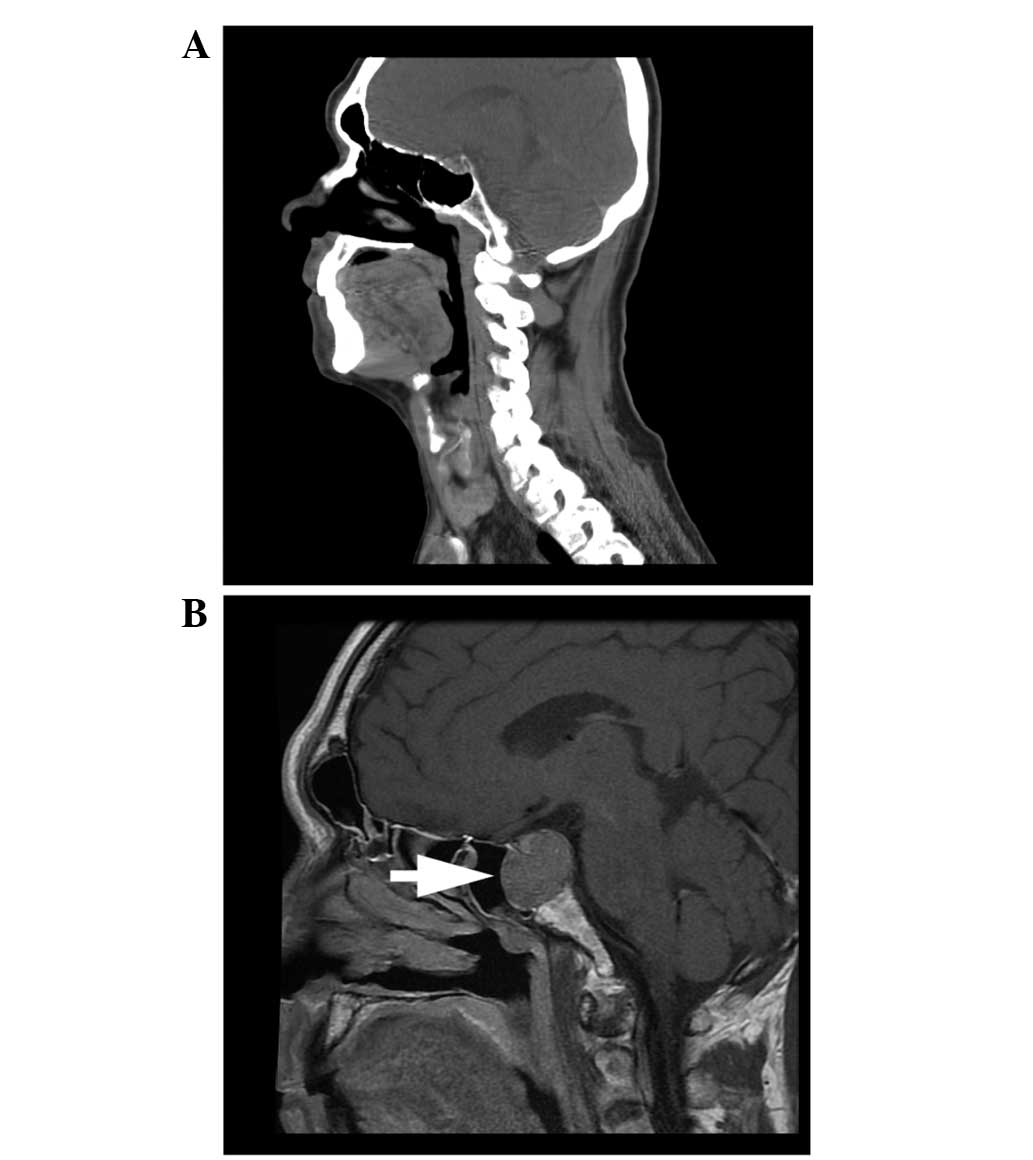
A 57-year-old male was consulted at Taipei Medical University Hospital, Taipei, Taiwan) for initial presentations of odynophagia and dysphagia. The patient was later diagnosed with stage IV hypopharyngeal squamous cell carcinoma. The patient underwent a laryngopharyngectomy with left radical neck dissection followed by post-operative concurrent chemoradiotherapy with cisplatin 3.85 mg/kg (total dose 250 mg) and irradiation of 6,600 cGy in 33 fractions. Imaging studies prior to and during treatment showed no abnormalities in the skull base region. However, four months after completing the treatment, the patient developed the symptoms of double vision and ptosis within a few days. Upon examination, there was limited medial motion of the left eye. Subsequent magnetic resonance imaging (MRI) revealed a well-defined mass at the pituitary fossa that partially obliterated the posterior lobe (Fig. 1). Surgical removal of the tumour was performed through a transnasal endoscopic approach.

Figure 1

Sagittal view on T2-weighted magnetic resonance imaging at (A) two and (B) four months after completing treatment for hypopharyngeal carcinoma. A well-defined tumour in the pituitary fossa was revealed in subsequent imaging (arrow).

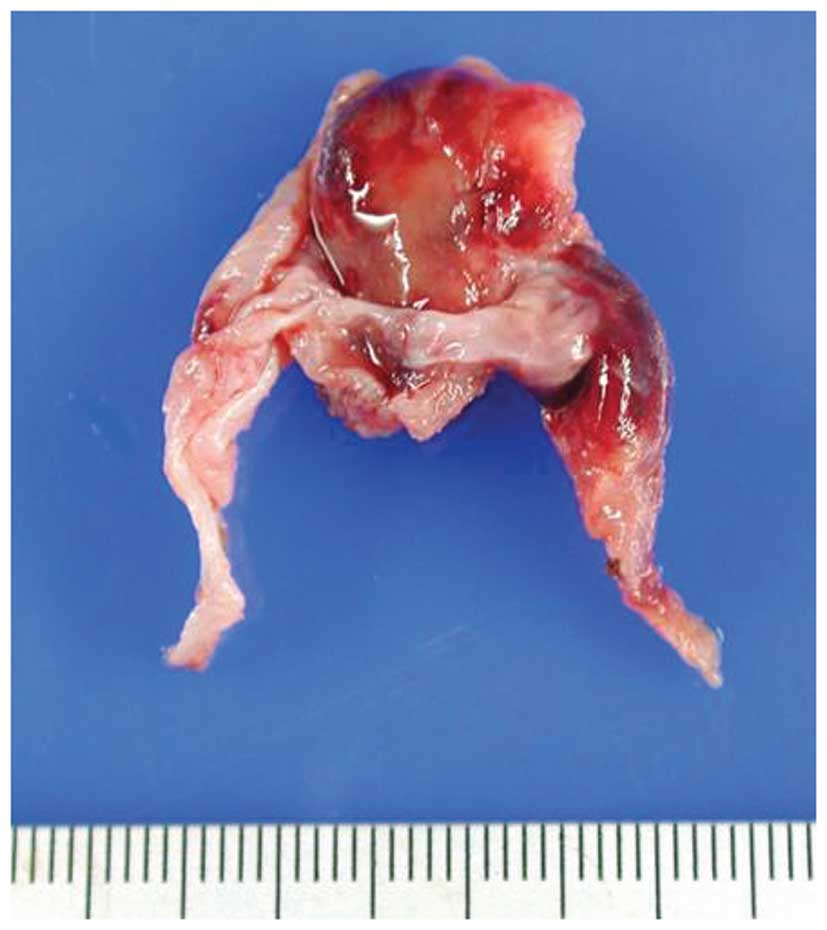
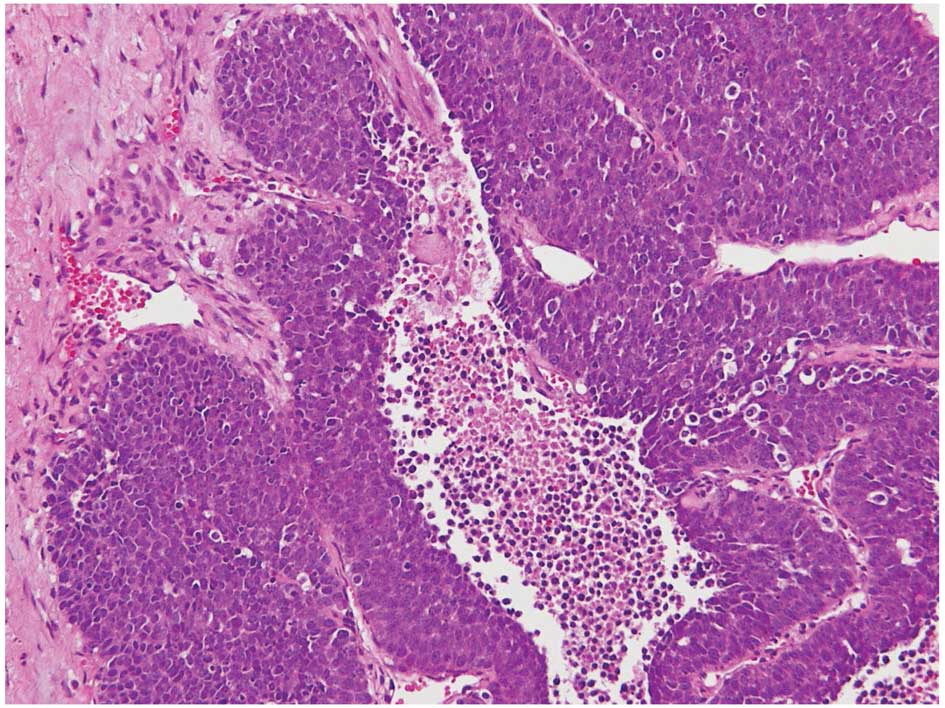
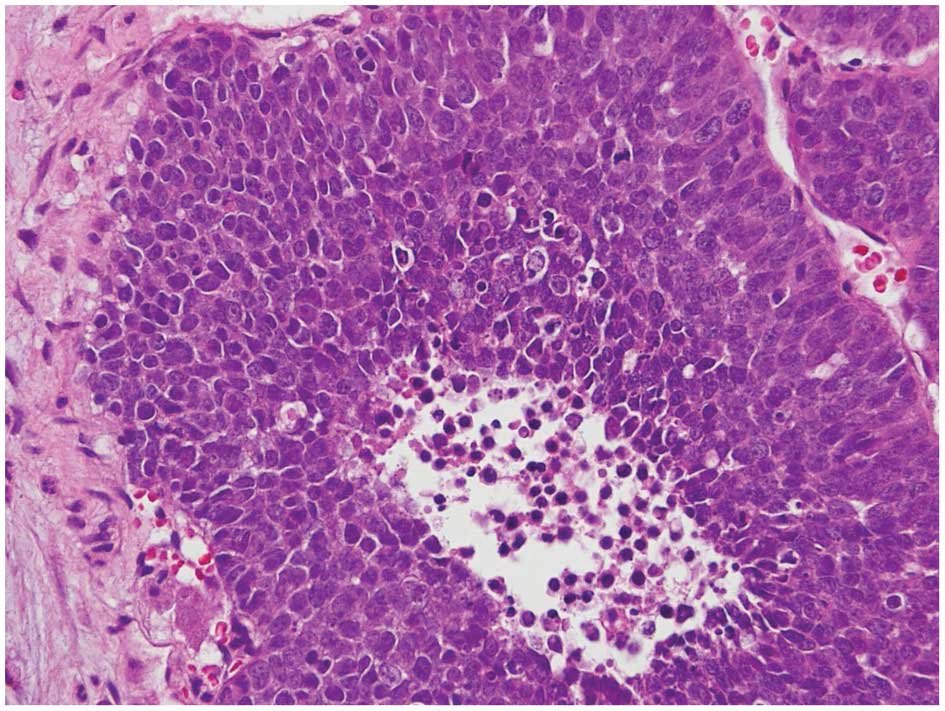
Grossly, the tumour appeared brown and soft (Fig. 2). Microscopically, it contained small blue round tumour cells in a solid sheet pattern, with focal tumour necrosis (Fig. 3). Focal haemorrhage and multi-nucleated giant cell formation within the stroma were also observed. The tumour cells revealed a high nucleo-cytoplasmic ratio, hyperchromatic nuclei, occasional nucleoli and frequent mitoses (Fig. 4). As observed using immunohistochemistry, the tumour cells were diffusely weak to moderately positive for cytokeratin, diffusely positive for cluster of differentiation (CD)117, focally positive for CD56 and negative for cytokeratin (CK)7, CK20, chromogranin, synaptophysin, CK5/6, p63, S-100 and CD99 (Fig. 5). Based on the morphology and immunoprofile, the diagnosis was of a poorly-differentiated carcinoma with focal neuroendocrine differentiation.
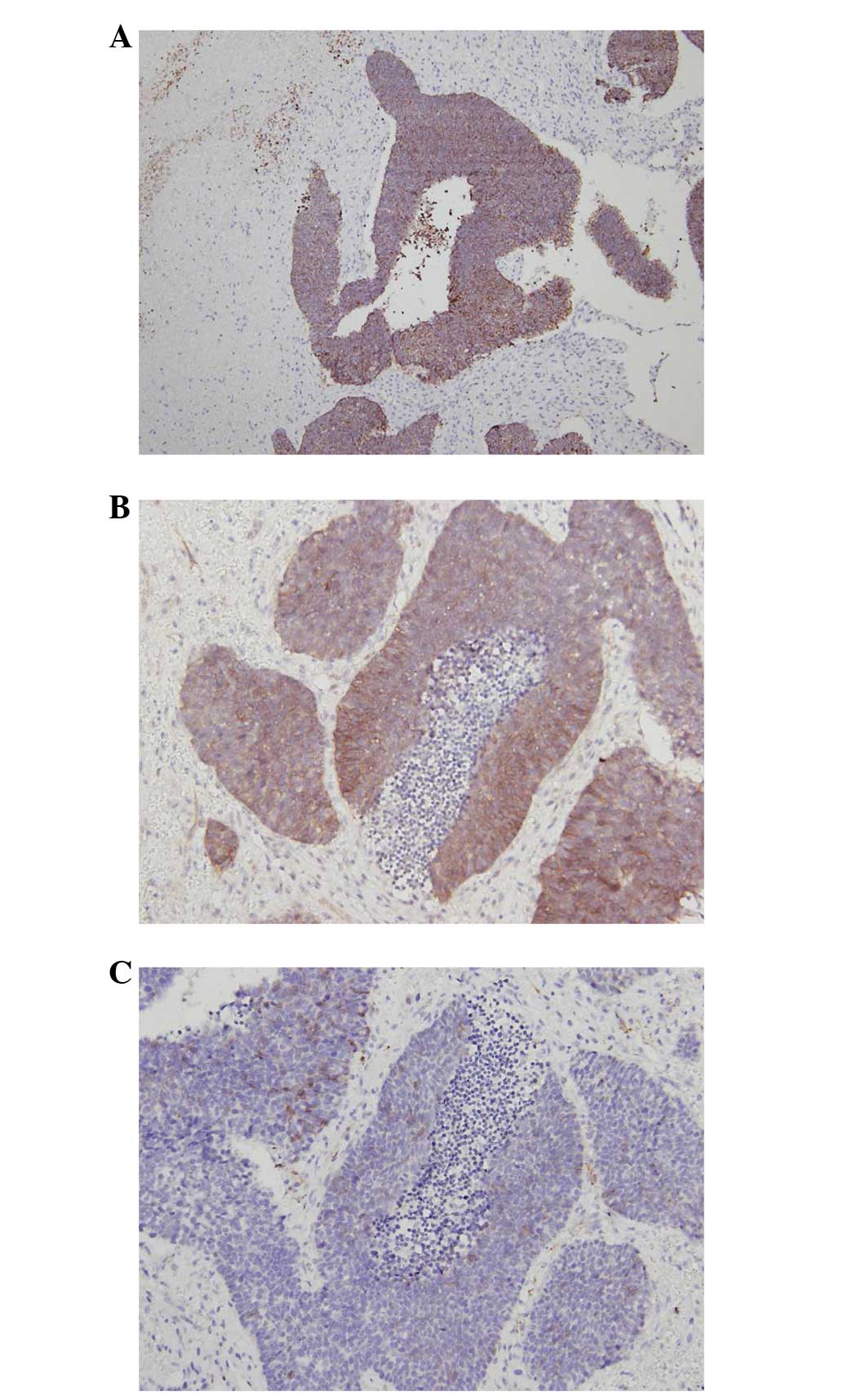
Figure 2

Gross appearance of the surgical specimen. Grossly, the tumour appeared brown and soft.

Figure 3

Microscopically, the tumour contained small round tumour cells in a solid sheet pattern, with focal tumour necrosis (H&E; magnification, ×200).

Figure 4

Tumour cells revealed a high nucleo-cytoplasmic ratio, hyper-chromatic nuclei, occasional nucleoli and frequent mitoses (H&E; magnification, ×400).

Figure 5

By immunohistochemistry, the tumour cells were diffusely weak to moderately positive for cytokeratin (A), diffusely positive for cluster of differentiation (CD)117 (magnification, ×100), (B) focally positive for CD56 (magnification, ×200) and (C) negative for cytokeratin (CK)7, CK20, chromogranin, synaptophysin, CK5/6, p63, S-100 and CD99 (magnification, ×200).

Following resection of the pituitary tumour, the patient received six cycles of chemotherapy with dacarbazine, epirubicin and cisplatin, and adjuvant irradiation to the skull base of up to 5,000 cGy in 25 fractions. The tumour did not appear to be responsive to the treatment. Primary tumour progression was noted during the post-operative treatment, and the patient developed bilateral vocal fold paralysis and intermittent, but massive, nasal bleeding. Whole spine MRI revealed several bone metastases complicated by pathological compression fractures at the T4–T5 level, with spinal cord compression. The patient’s general condition continued to deteriorate until he succumbed due to multiple organ failure. Written informed consent was obtained from the patient’s family.

Discussion

In total, ~10–20% of the general population may have pituitary tumours (3). Of all pituitary tumours, the most common type is a pituitary adenoma. The diagnosis of benign, non-invasive pituitary tumours also includes hyperplasia, adenomas, cranio-pharyngiomas, meningiomas and pituicytomas. The prevalence of benign pituitary adenomas is ~16.7% (4). Pituitary malignancies include primary and metastatic cancers. Pituitary carcinomas are extremely rare, accounting for only 0.1–0.2% of all pituitary tumours (5). Common sites of metastasis include local areas such as the brain, spinal cord, lepto-meninges and cervical lymph nodes, or systemic areas, such as the liver, ovaries and bone (5). The majority of metastatic pituitary carcinomas originate from the breast and lungs, although other origins include the thyroid, prostate and salivary gland (6).

Pituitary tumours, both benign and malignant, are usually found with the following clinical observations: i) Oversecretion of certain hormones; and ii) subsequent ‘mass effects’ causing visual field impairment, headaches, diplopia or other neurological deficits (7). However, diagnoses occasionally turn out to be based on an incidental finding, with no clinical signs or symptoms.

Similar to benign pituitary adenomas, pituitary carcinomas are classified into hormone-secreting, invasive macro-adenomas and non-secreting carcinomas. Non-secreting pituitary carcinomas usually result in symptoms caused by mass effect. Among the secreting pituitary carcinomas, 42% produce ACTH while others produce PRL, growth hormone (GH), luteinizing hormone, follicle-stimulating hormone and thyroid-stimulating hormone (1). Histological features for primary pituitary carcinomas are significant nuclear pleomorphism and/or hyper-chromasia with increased proliferative activity, cytological activity and mitosis (5). Overexpression of the tumour suppressor oncoproteins p53 and Ki-67 is noted in pituitary carcinomas and adenomas (8). Compared with pituitary adenomas, pituitary carcinomas present with increased apoptosis, cyclooxygenase-2 expression and hypoxia-inducible factor-1α expression, and lower B-cell lymphoma 2 (anti-apoptotic factor) and p27 KIP1 levels (9).

Treatment options include tumour resection, hormone therapy, radiotherapy and chemotherapy. Surgical resection may not prolong survival, but it is important for providing the immediate relief of symptoms, particularly when the mass effect is a major concern. Surgery also aids in the accurate establishment of the pathological diagnosis. Nonetheless, early recurrence with rapid local growth, even after initial pituitary tumour resection, is common. Radiotherapy may be considered for additional local tumour control (3).

Hormone therapy with dopamine agonists (for PRL-producing tumours) and somatostatin analogs (for GH-producing tumours) are used to control the biochemical secretions. The chemotherapy commonly used for pituitary carcinomas is cyclohexyl-chloroethyl-nitrosourea, combined with 5-fluorouracil and/or temozolomide (3).

Pituitary carcinomas are generally associated with a poor prognosis. The mean survival time for patients is two years; however, the majority of patients succumb within one year of the discovery of the pituitary carcinoma (1,9).

Since the majority of pituitary malignancies arise from pre-existing benign pituitary lesions, the pathogenesis of the undifferentiated pituitary carcinoma of this case report is quite difficult to understand. In the post-treatment follow-up of the hypopharyngeal tumour, computed tomography revealed that two months prior to the diagnosis of pituitary cancer, the pituitary fossa appeared to be completely normal. Thus, there is suspicion of a link between irradiation and the pituitary cancer. Post-radiation sarcomas are already known as rare and long-term complications of radiotherapy (10); however, few studies discuss the topic of radiation-induced non-sarcomatous tumours (11,12).

In the present case, the radiation exposure of the pituitary gland during the treatment for hypopharyngeal cancer was relatively low. Moreover, there was only a three-month latency period for the pituitary cancer. Considering the differing nature of sarcomas and undifferentiated carcinomas, there be a yet unknown correlation between irradiation and the development of pituitary cancer in this patient. More studies are warranted to clarify this association. In the meantime, physicians should be more alert, as irradiation may cause more damage than previously expected.

References

1 

Ragel BT and Couldwell WT: Pituitary carcinoma: a review of the literature. Neurosurg Focus. 16:E72004. View Article : Google Scholar : PubMed/NCBI

2 

Furth J, Buffett RF and Haran-Ghera N: Pathogenesis and character of radiation-induced pituitary tumors. Acta Unio Int Contra Cancrum. 16:138–142. 1960.PubMed/NCBI

3 

Kaltsas GA, Nomikos P, Kontogeorgos G, Buchfelder M and Grossman AB: Clinical review: Diagnosis and management of pituitary carcinomas. J Clin Endocrinol Metab. 90:3089–3099. 2005. View Article : Google Scholar : PubMed/NCBI

4 

Ezzat S, Asa SL, Couldwell WT, et al: The prevalence of pituitary adenomas: a systematic review. Cancer. 101:613–619. 2004. View Article : Google Scholar : PubMed/NCBI

5 

Pernicone PJSB: Invasive pituitary adenoma and pituitary carcinoma. Diagnosis and Management of Pituitary Tumors. Thapar K, Kovacs K, Scheithauer BW and Lloyd RV: Humana Press; Totowa, NJ: pp. 369–386. 2001

6 

Komninos J, Vlassopoulou V, Protopapa D, et al: Tumors metastatic to the pituitary gland: case report and literature review. J Clin Endocrinol Metab. 89:574–580. 2004. View Article : Google Scholar

7 

Lake MG, Krook LS and Cruz SV: Pituitary adenomas: an overview. Am Fam Physician. 88:319–327. 2013.PubMed/NCBI

8 

Scheithauer BW, Kurtkaya-Yapicier O, Kovacs KT, Young WF Jr and Lloyd RV: Pituitary carcinoma: a clinicopathological review. Neurosurgery. 56:1066–1074. 2005.PubMed/NCBI

9 

Sav A, Rotondo F, Syro LV, Scheithauer BW and Kovacs K: Biomarkers of pituitary neoplasms. Anticancer Res. 32:4639–4654. 2012.PubMed/NCBI

10 

Cahan WG: Radiation-induced sarcoma - 50 years later. Cancer. 82:6–7. 1998.

11 

Kurwale NS, Ahmad FU, Satyarthi G, Suri A and Mahapatra AK: Can radiation induce pituitary tumors? Giant prolactinoma after radiation exposure. J Clin Neurosci. 15:1287–1288. 2008. View Article : Google Scholar

12 

Lin KC, Cheng TJ, Yung JM and Kuo JR: Malignant astrocytoma following radiation for nasopharyngeal carcinoma: case report and review of the literature. Acta Neurol Taiwan. 16:27–32. 2007.PubMed/NCBI

Related Articles

  • Abstract
  • View
  • Download
  • Twitter
Copy and paste a formatted citation
Spandidos Publications style
Lee HH, Hung SH, Tseng TM, Lin YH and Cheng JC: Undifferentiated carcinoma of the pituitary gland: A case report and review of the literature. Oncol Lett 7: 778-780, 2014.
APA
Lee, H., Hung, S., Tseng, T., Lin, Y., & Cheng, J. (2014). Undifferentiated carcinoma of the pituitary gland: A case report and review of the literature. Oncology Letters, 7, 778-780. https://doi.org/10.3892/ol.2014.1796
MLA
Lee, H., Hung, S., Tseng, T., Lin, Y., Cheng, J."Undifferentiated carcinoma of the pituitary gland: A case report and review of the literature". Oncology Letters 7.3 (2014): 778-780.
Chicago
Lee, H., Hung, S., Tseng, T., Lin, Y., Cheng, J."Undifferentiated carcinoma of the pituitary gland: A case report and review of the literature". Oncology Letters 7, no. 3 (2014): 778-780. https://doi.org/10.3892/ol.2014.1796
Copy and paste a formatted citation
x
Spandidos Publications style
Lee HH, Hung SH, Tseng TM, Lin YH and Cheng JC: Undifferentiated carcinoma of the pituitary gland: A case report and review of the literature. Oncol Lett 7: 778-780, 2014.
APA
Lee, H., Hung, S., Tseng, T., Lin, Y., & Cheng, J. (2014). Undifferentiated carcinoma of the pituitary gland: A case report and review of the literature. Oncology Letters, 7, 778-780. https://doi.org/10.3892/ol.2014.1796
MLA
Lee, H., Hung, S., Tseng, T., Lin, Y., Cheng, J."Undifferentiated carcinoma of the pituitary gland: A case report and review of the literature". Oncology Letters 7.3 (2014): 778-780.
Chicago
Lee, H., Hung, S., Tseng, T., Lin, Y., Cheng, J."Undifferentiated carcinoma of the pituitary gland: A case report and review of the literature". Oncology Letters 7, no. 3 (2014): 778-780. https://doi.org/10.3892/ol.2014.1796
Follow us
  • Twitter
  • LinkedIn
  • Facebook
About
  • Spandidos Publications
  • Careers
  • Cookie Policy
  • Privacy Policy
How can we help?
  • Help
  • Live Chat
  • Contact
  • Email to our Support Team